Japanese Quail
Coturnix japonica
鹌鹑
Introduction
The Japanese quail (Coturnix japonica) is a small gamebird native to East Asia. Previously classified as a subspecies of the common quail (C. coturnix), it is now recognized as a distinct species based on non-overlapping ranges where contact occurs and reduced fertility in hybrids. Body length ranges from 16-18 cm. Domestication began by the 12th century in Japan, originally for song competitions before egg production value was recognized. Commercial strains produce up to 300 eggs annually with a feed conversion ratio of 2.62:1. Following severe population declines during World War II, remnant birds became the foundation for all commercial and laboratory lines globally. The species is now widely farmed in Japan, India, China, Italy, Russia, and the United States for meat and egg production. In biomedical research, it serves as a model organism for genetics, embryology, and pathology studies. Japanese quail eggs have successfully incubated and hatched aboard Soviet and Russian space stations, contributing to developmental studies under microgravity conditions.
Description
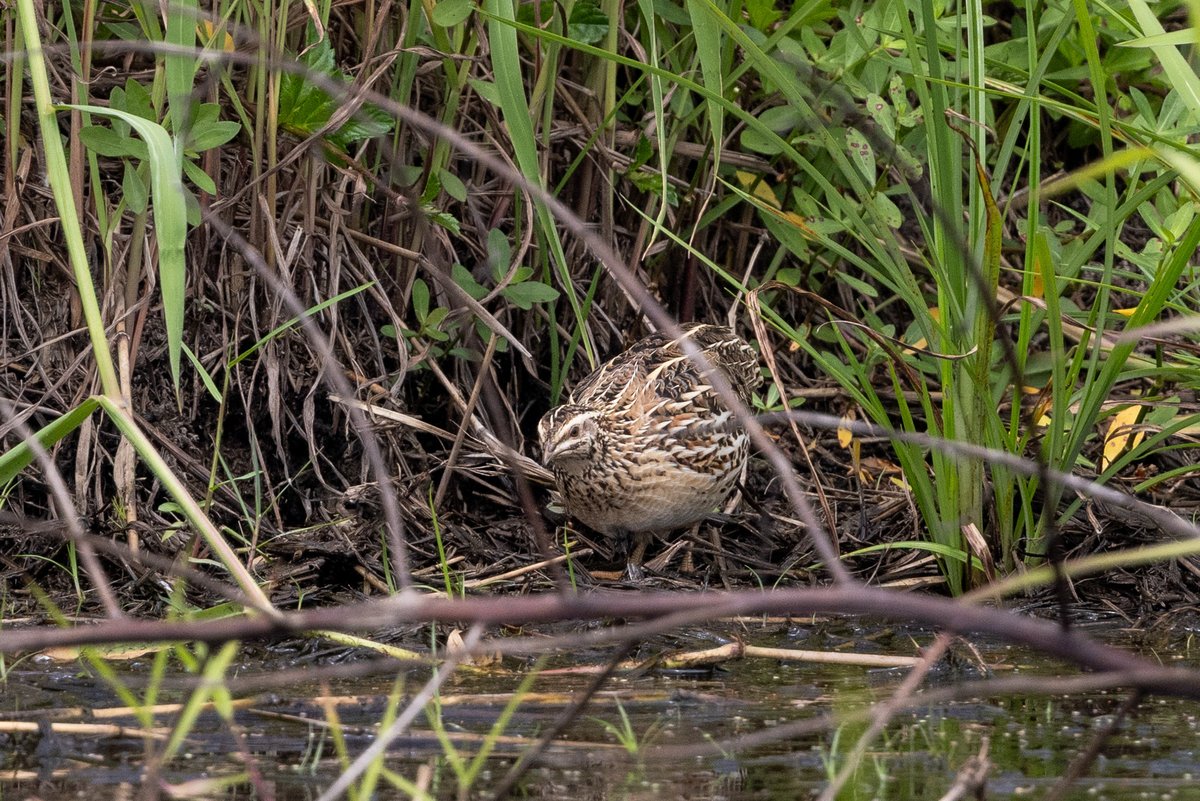
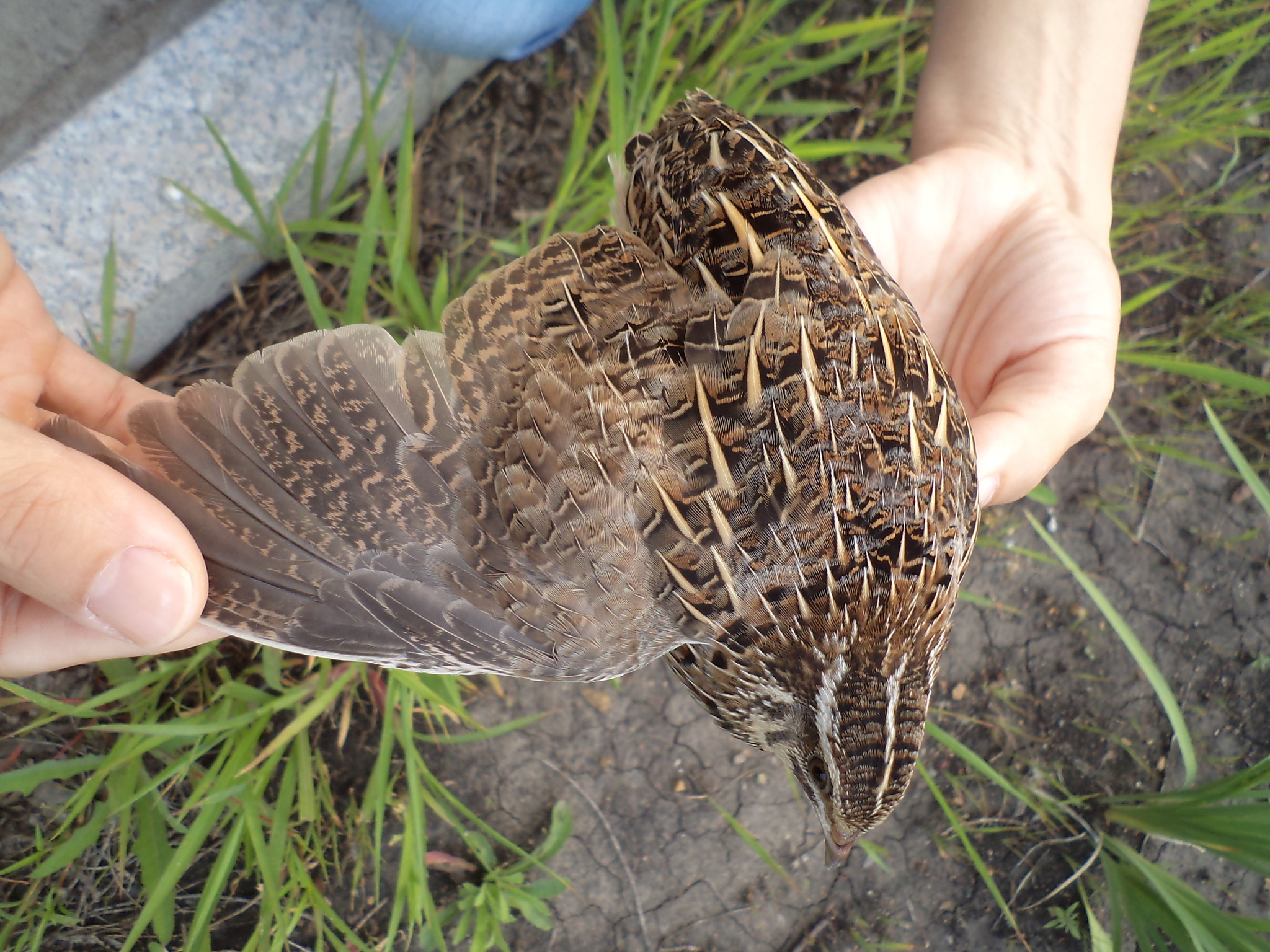
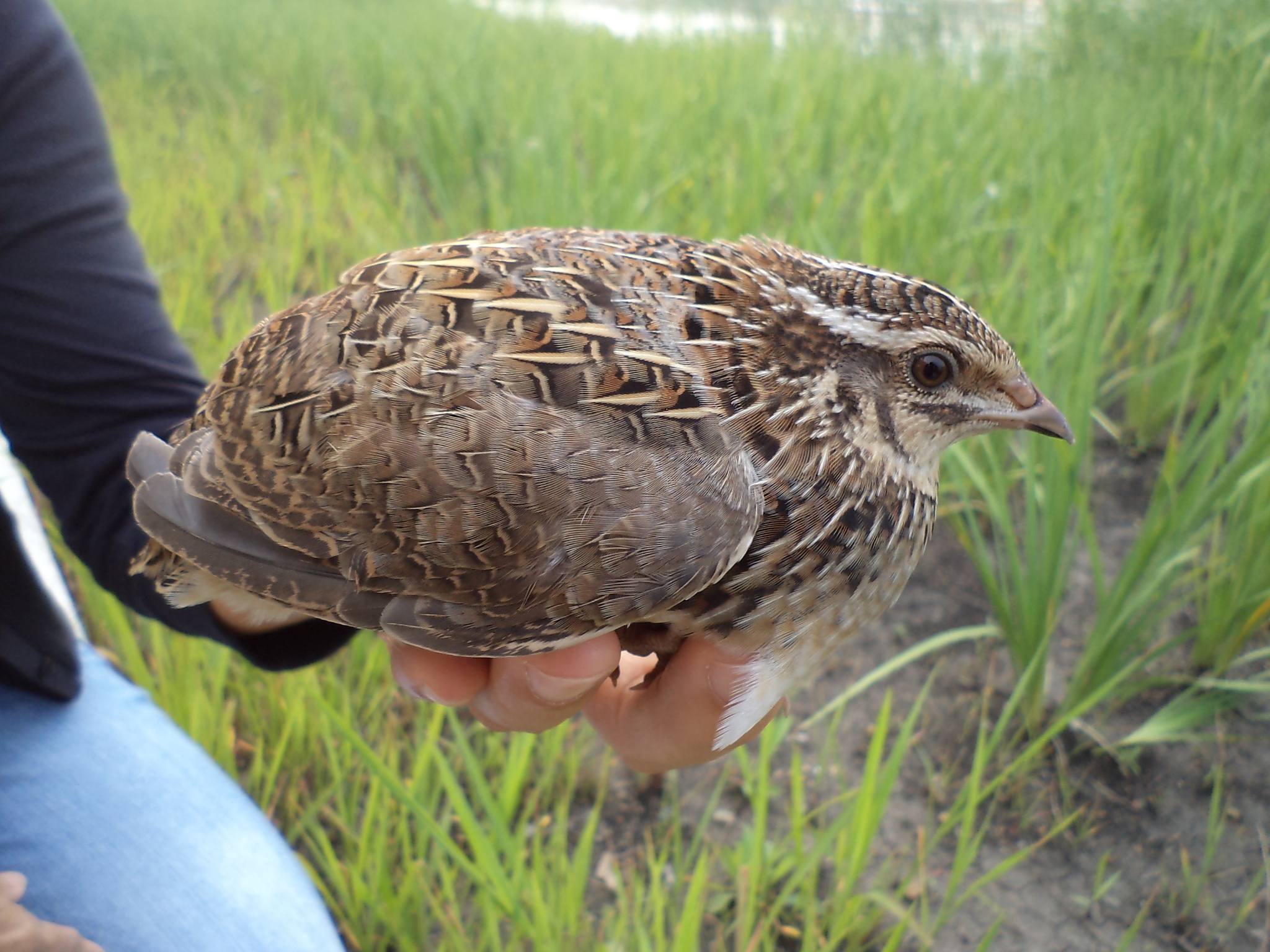
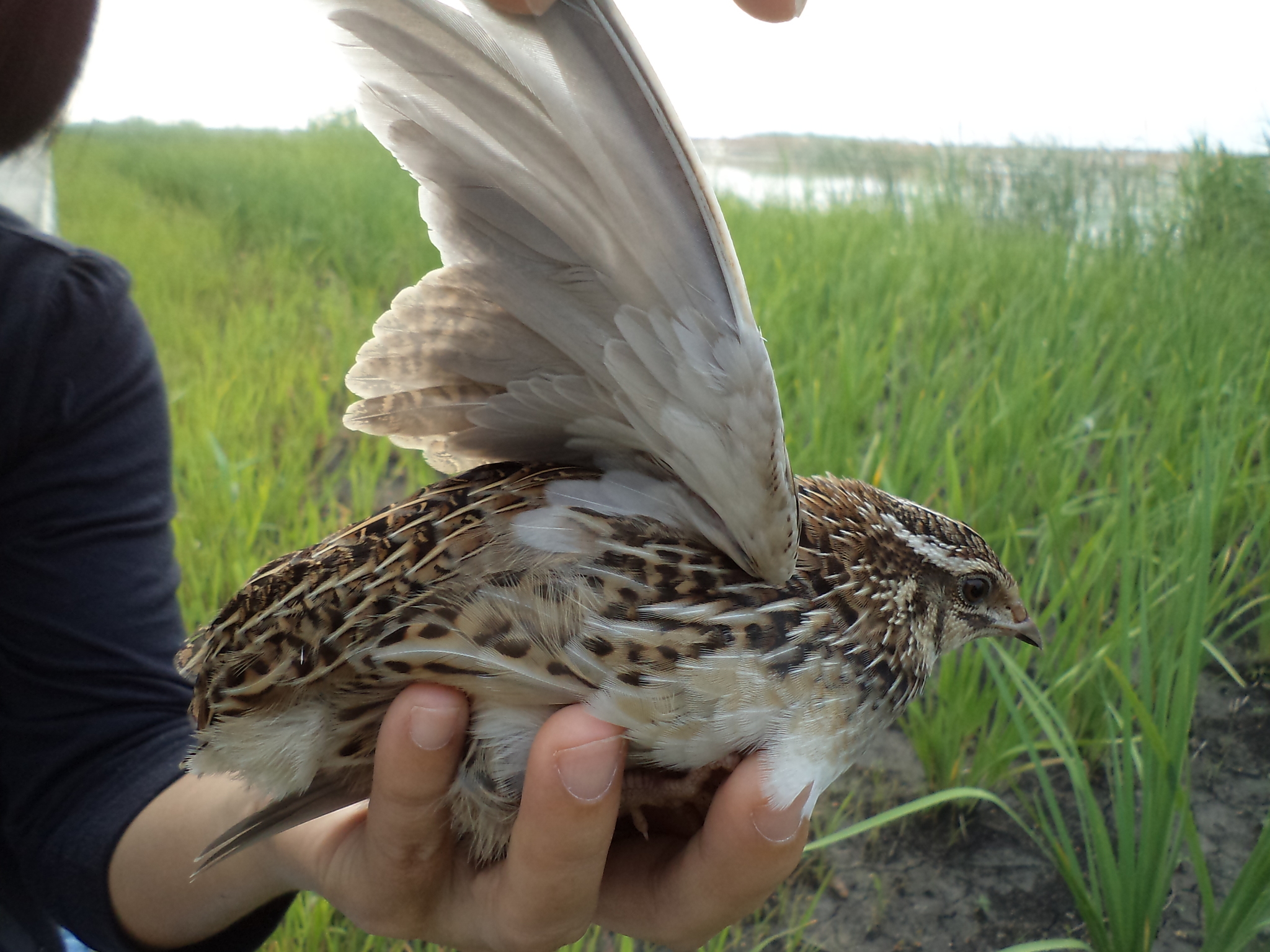
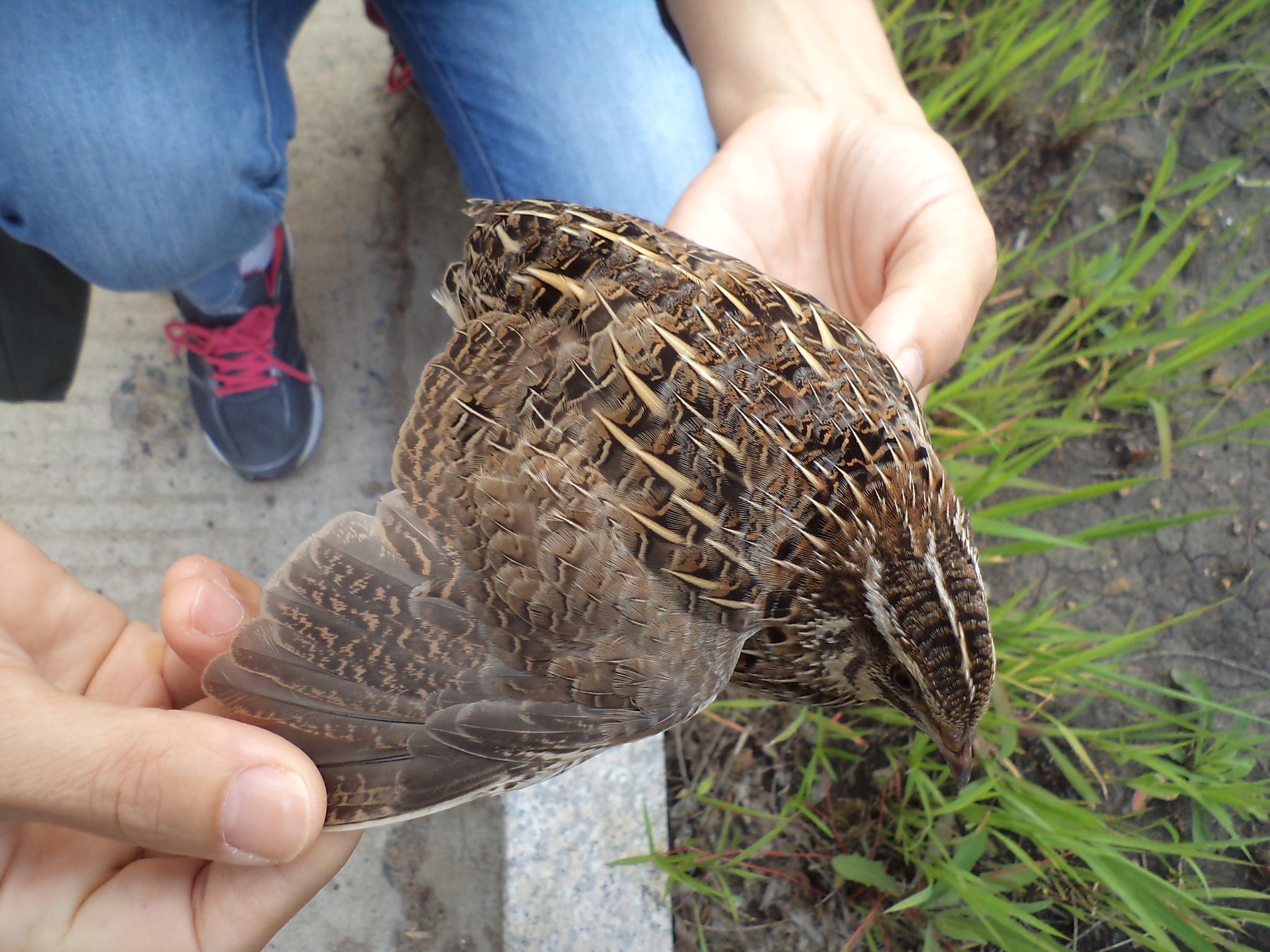
This small quail exhibits distinct color patterns that change with age and sex. Chicks display tawny heads with small black patches above the beak, pale brown wings and back marked with four brown stripes, and a pale yellow-brown stripe bordered by black running along the crown. Adults are sexually dimorphic despite both sexes wearing predominantly brown plumage. Females show dark spots scattered among pale breast feathers and cream-colored cheeks, while males possess uniform dark reddish-brown breast feathers without spots, reddish-brown cheek feathers, and some develop a distinctive white collar. Wild adults weigh 90-100 grams, though domesticated birds typically reach 100-120 grams, and commercial meat strains can exceed 300 grams. The species has darker, more contrasting upperparts than the common quail and appears deeper rufous below.
Identification
Males are distinguished during breeding season by distinctive rufous throat feathers, which are replaced by long pale feathers in non-breeding season—a feature absent in the common quail. The breeding male also lacks the white supercilium typically seen in common quail. Females are best identified by their spotted breast feathers against pale backgrounds, contrasting with the uniform reddish-brown male breast. In flight, the darker overall coloration and deeper rufous underparts help distinguish this species from its common quail relative. Sexing is straightforward in most wild-type birds, though some domestic strains like Texas A&M, English White, and Tuxedo cannot be distinguished by plumage alone.
Distribution & Habitat
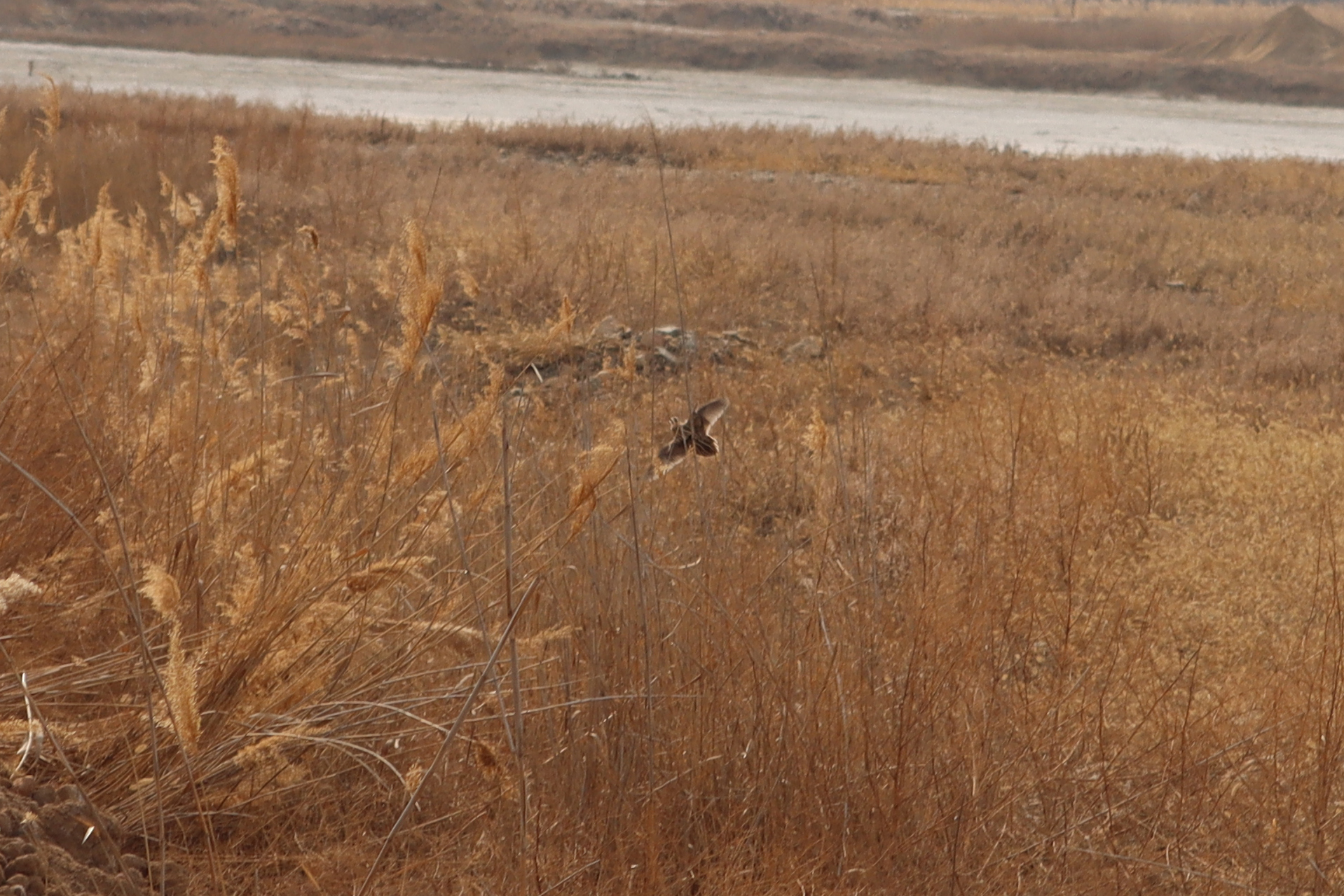
This species inhabits East Asia and Russia, including India, Korea, Japan, and China, with breeding populations in Manchuria, southeastern Siberia, northern Japan, and the Korean Peninsula. While some resident populations winter in Japan, most migrate south to Vietnam, Cambodia, Laos, and southern China. The species also occurs across much of Africa, including Tanzania, Malawi, Kenya, Namibia, Madagascar, and the Nile River Valley from Kenya to Egypt, with sporadic breeding records in parts of Europe and Turkey. It primarily inhabits grassy fields, riverbank thickets, and agricultural lands planted with oats, rice, and barley, favoring open steppes, meadows, and mountain slopes near water sources where dense vegetation provides cover from predators.
Behavior & Ecology
The species exhibits complex vocalizations with at least 28 distinct call types that differ between sexes and develop after five weeks, though they remain changeable until sexual maturity. The characteristic male crow consists of two short parts preceding a final major trill, and male vocalizations actually accelerate female gonadal development—exposed females reach maturity earlier than those not hearing crowing. Mating patterns include both monogamous and polygamous relationships, with a distinctive ritual where the male grasps the female's neck, mounts, and attempts cloacal contact. Females control mating success through posture, either facilitating access by squatting or resisting by standing tall and running. Females perform nearly all incubation over an average 16.5 days and provide all parental care, eventually driving the male away before hatching. Dust bathing occurs multiple times daily for feather maintenance and parasite removal. The diet consists of grass seeds including white millet and panicum, plus insects, larvae, and other invertebrates, with feeding concentrated at dawn and dusk following the photoperiod.
Conservation
The species remains abundant across most of its extensive range, with healthy populations throughout East Asia, Russia, and Africa. However, wild common quail populations in Europe have declined significantly, prompting hybridization programs where this species is crossed with common quail to restock hunting populations. Countries including Greece, France, Spain, Portugal, England, Scotland, Canada, China, Australia, and Italy release thousands of such hybrids annually. Concerns exist that these hybridizations could threaten native common quail genetics, as the hybrids are nearly indistinguishable from pure common quail. No formal IUCN assessment is provided, but the species' adaptability to captivity and commercial farming ensures its numerical security regardless of wild population fluctuations.
Culture
This quail has maintained a significant role in Japanese culture since the 12th century, when it was first domesticated as a songbird and regularly used in singing contests. The species' aesthetic and musical value preceded its later economic importance in egg and meat production. In the modern era, its cultural significance has expanded beyond Japan to become a globally farmed species providing food security in developing nations and an alternative protein source in developed countries. Beyond practical uses, the species has contributed to scientific advancement, with quail eggs participating in space research programs aboard Soviet and Russian satellites and space stations, including successful incubation and hatching experiments aboard the Mir space station in 1990—demonstrating the species' role not just in traditional culture but in humanity's broader scientific and exploratory endeavors.
Source: Wikipedia · CC BY-SA 3.0
Taxonomy
- Order
- Galliformes
- Family
- Phasianidae
- Genus
- Coturnix
- eBird Code
- japqua
Distribution
Eastern Palearctic; winters to southeastern Asia and eastern China
Data Sources
Species description from Wikipedia, licensed under CC BY-SA 3.0.
Bird images and sounds sourced from GBIF, contributed by citizen scientists worldwide under Creative Commons licenses.
Taxonomy data from AviList 2025.