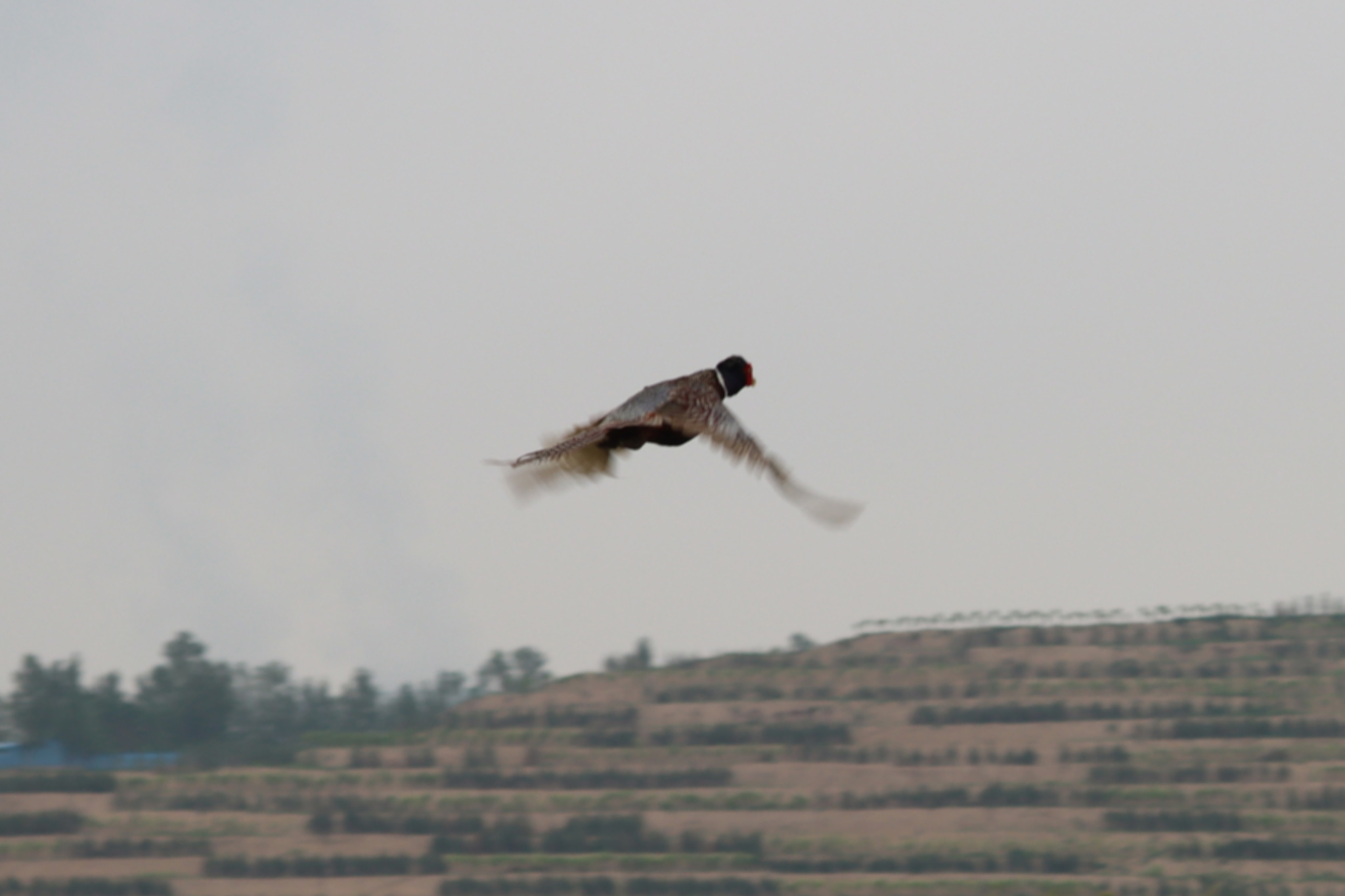
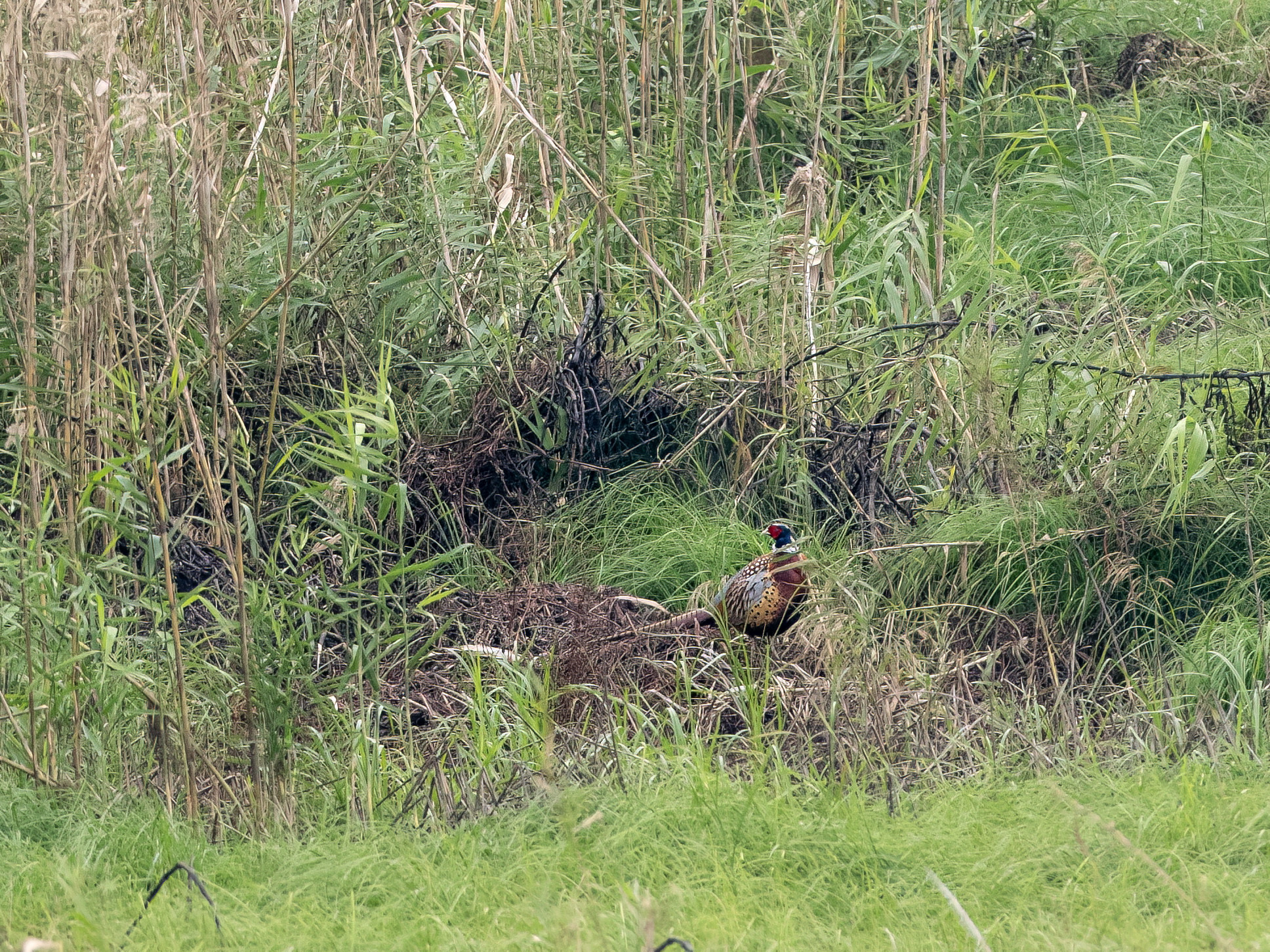
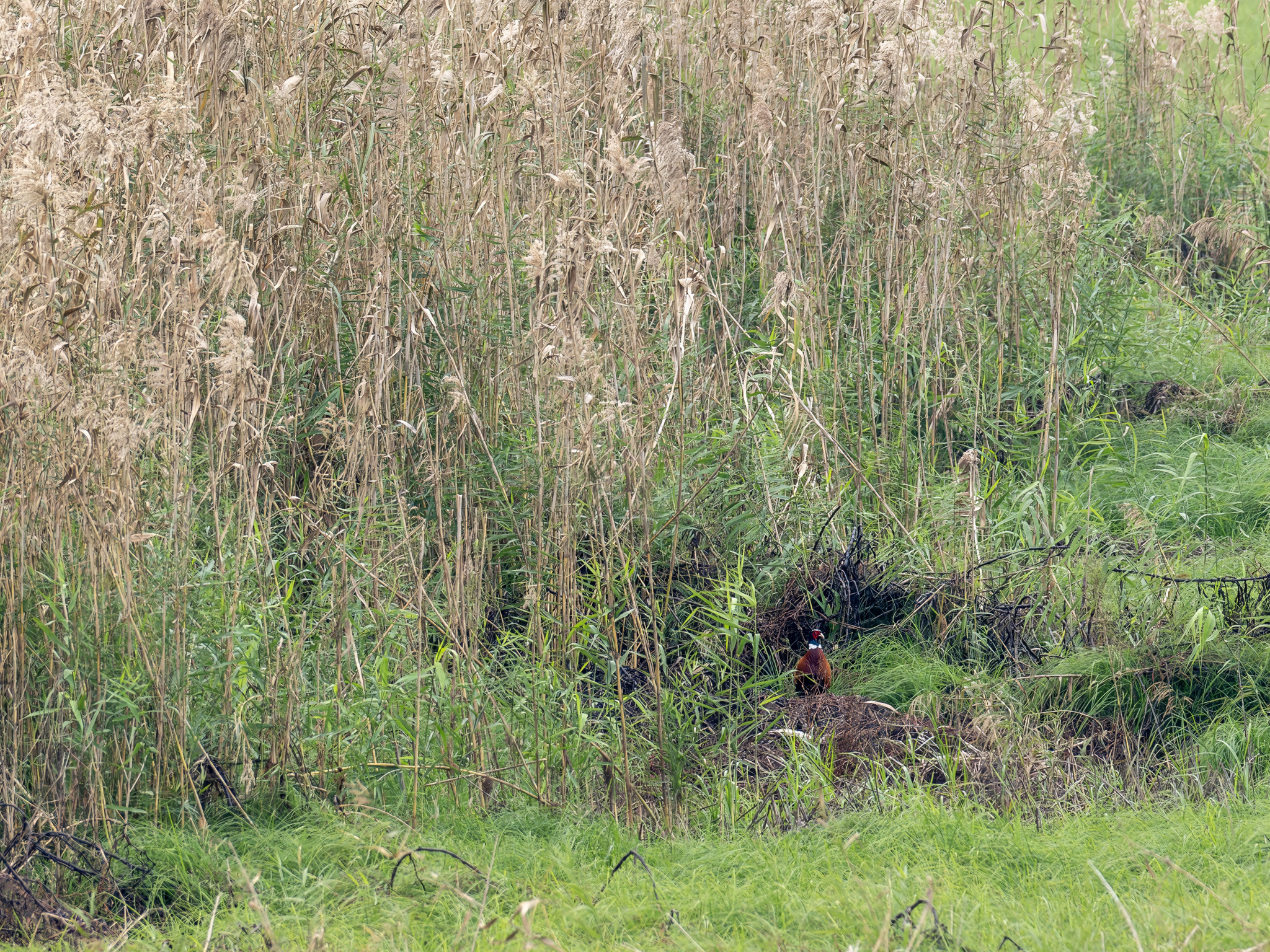
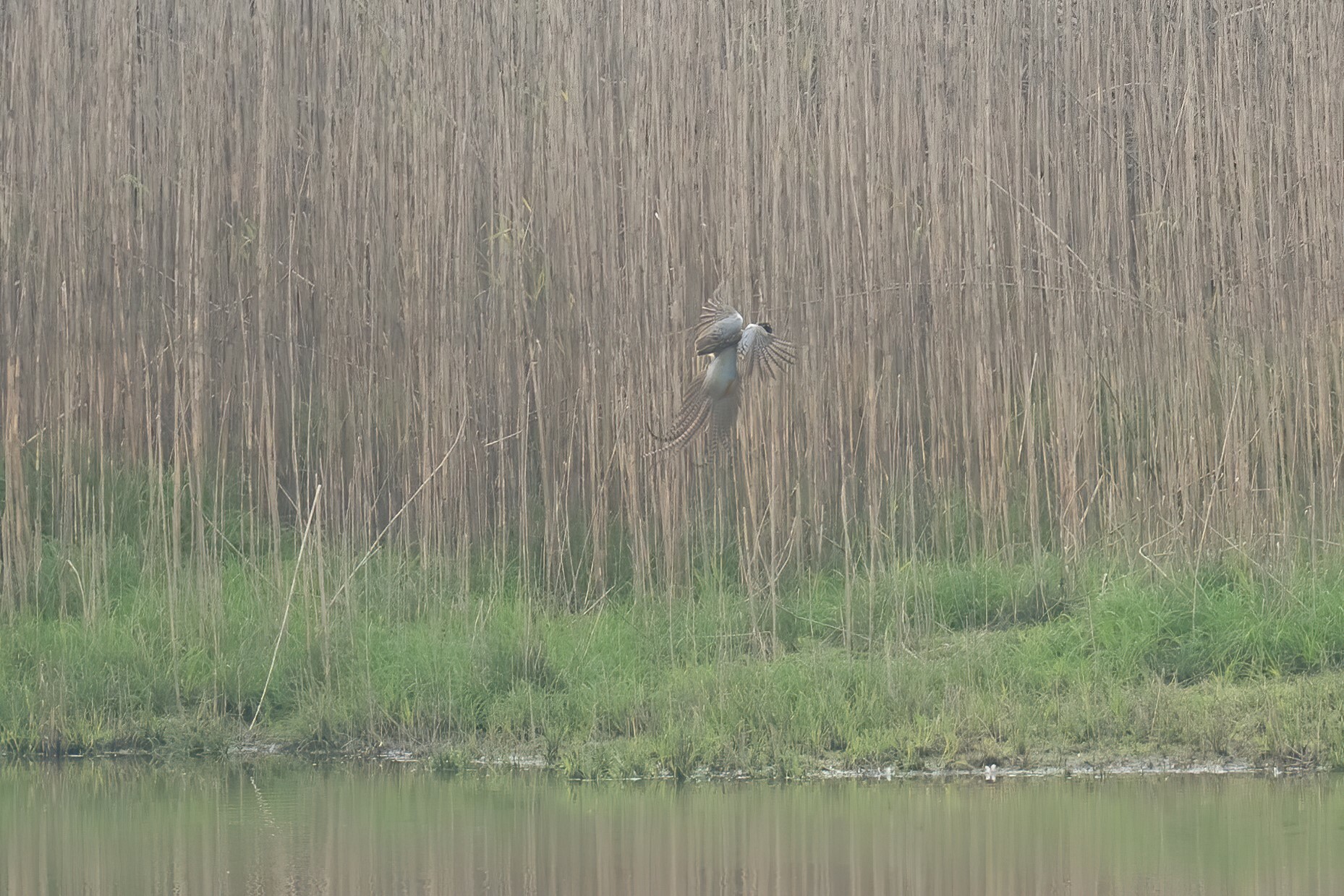
环颈雉
Phasianus colchicus
Common Pheasant
简介
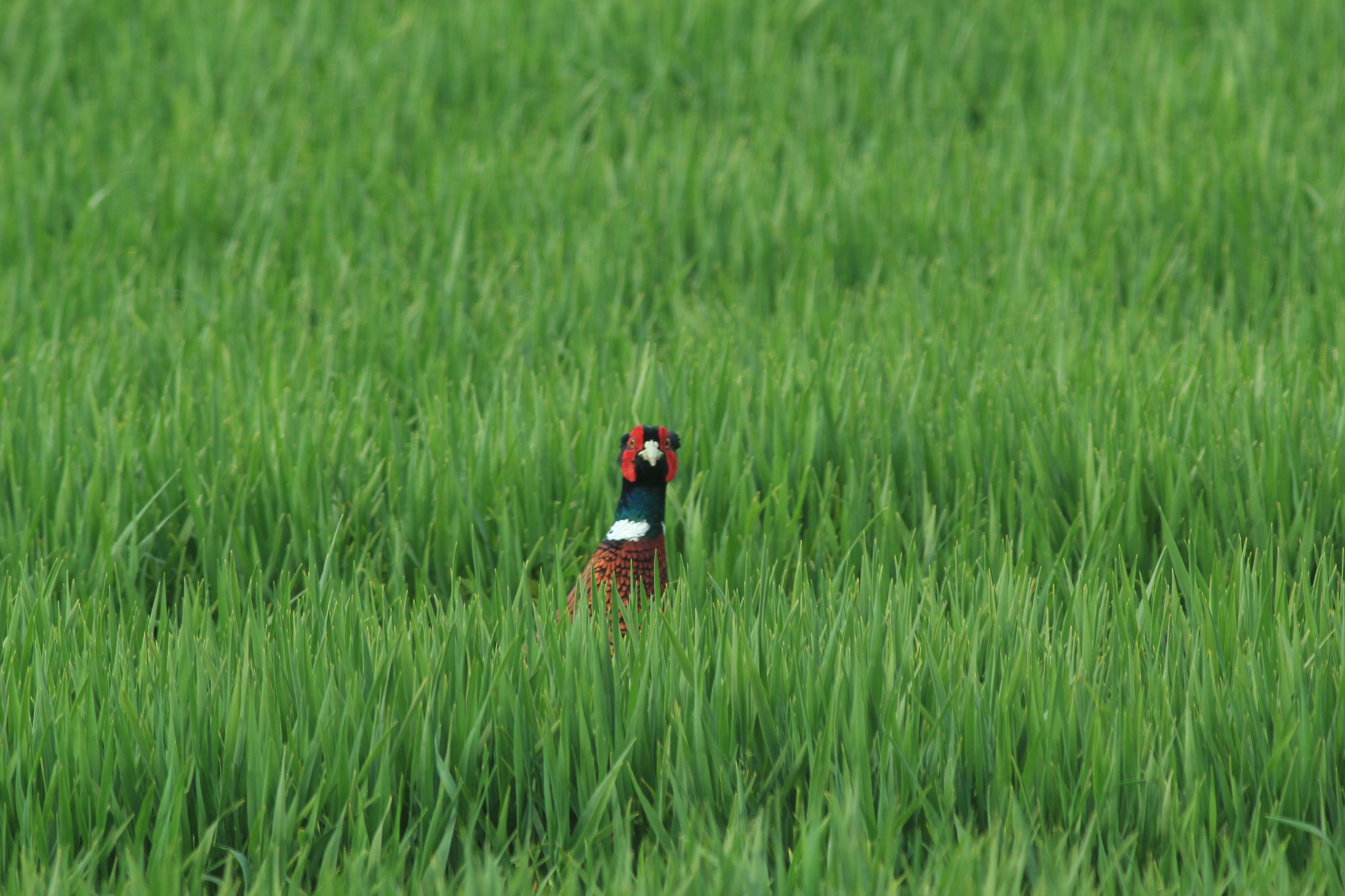
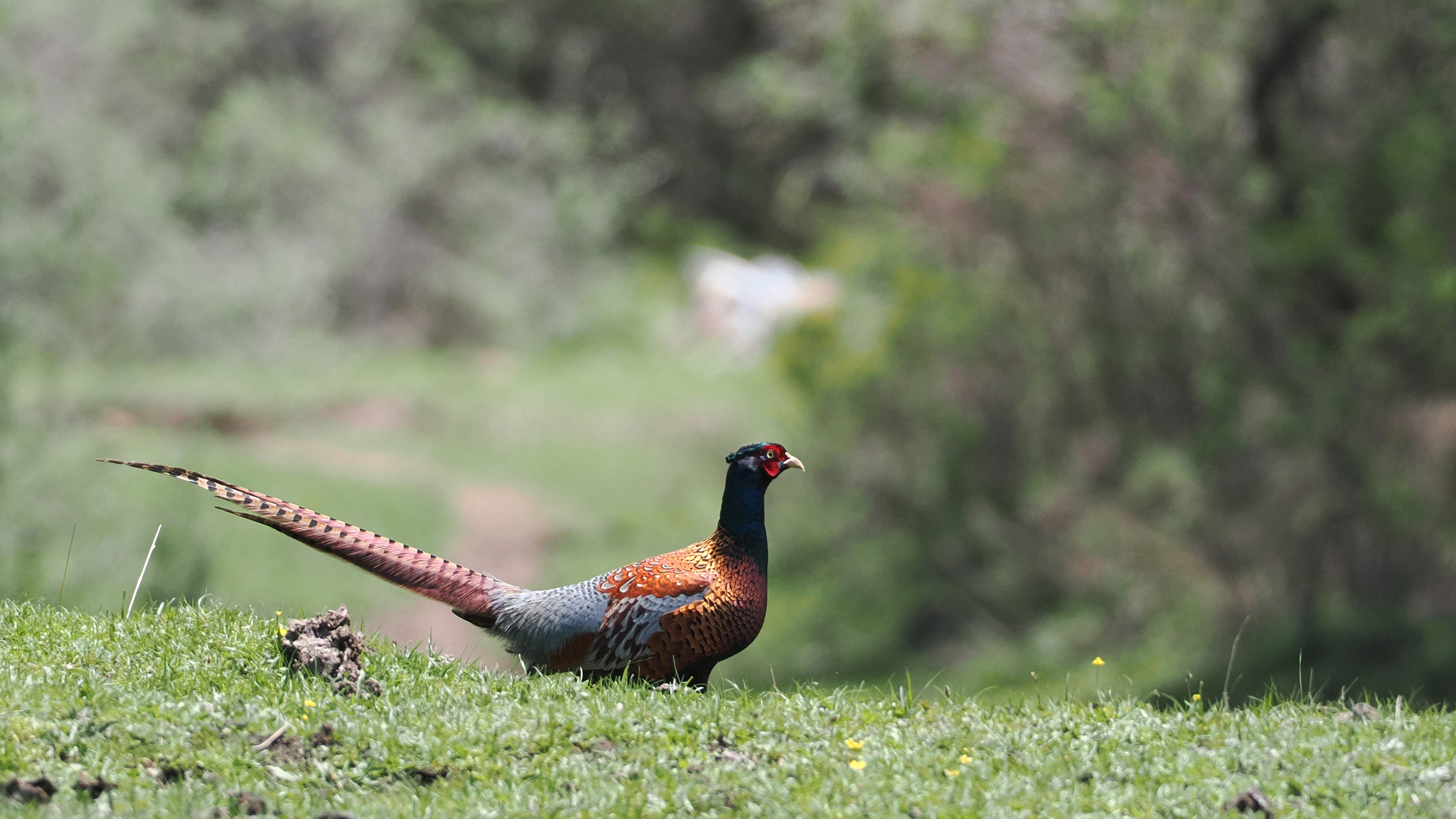
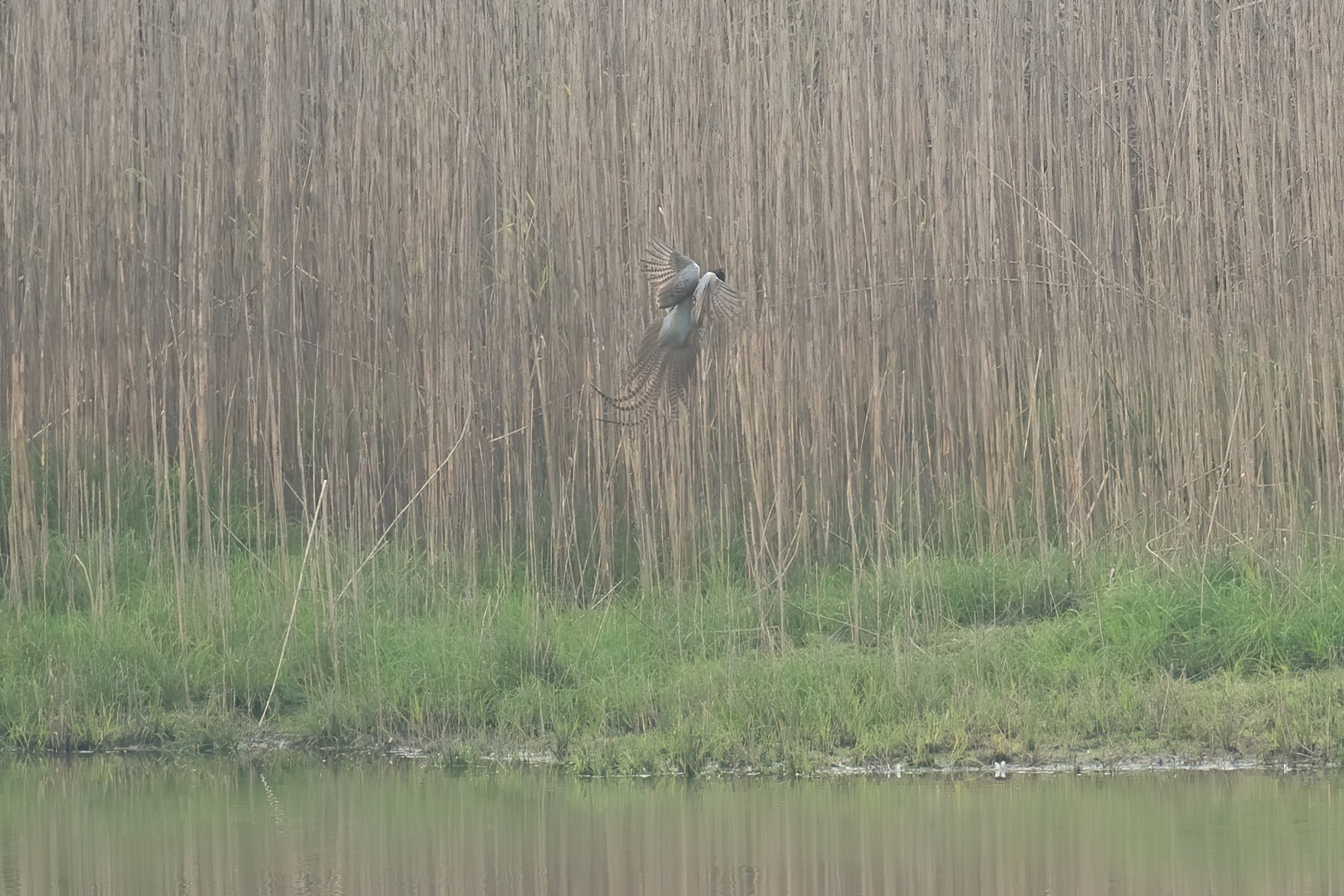
环颈雉,雉科鸟类,原产于亚洲,现被引入至世界各地并在北美和欧洲形成野生种群。雄鸟头部呈瓶绿色,具红色肉垂,体羽具金属光泽,为金色、铜红色和栗褐色相间的条纹,尾羽修长。雌鸟为斑驳的棕色。栖息于开阔农田、草地、林地边缘和灌丛。受惊时先奔跑,被逼急则突然起飞并发出振翅声。体长约80厘米,翼展约56厘米。
形态特征
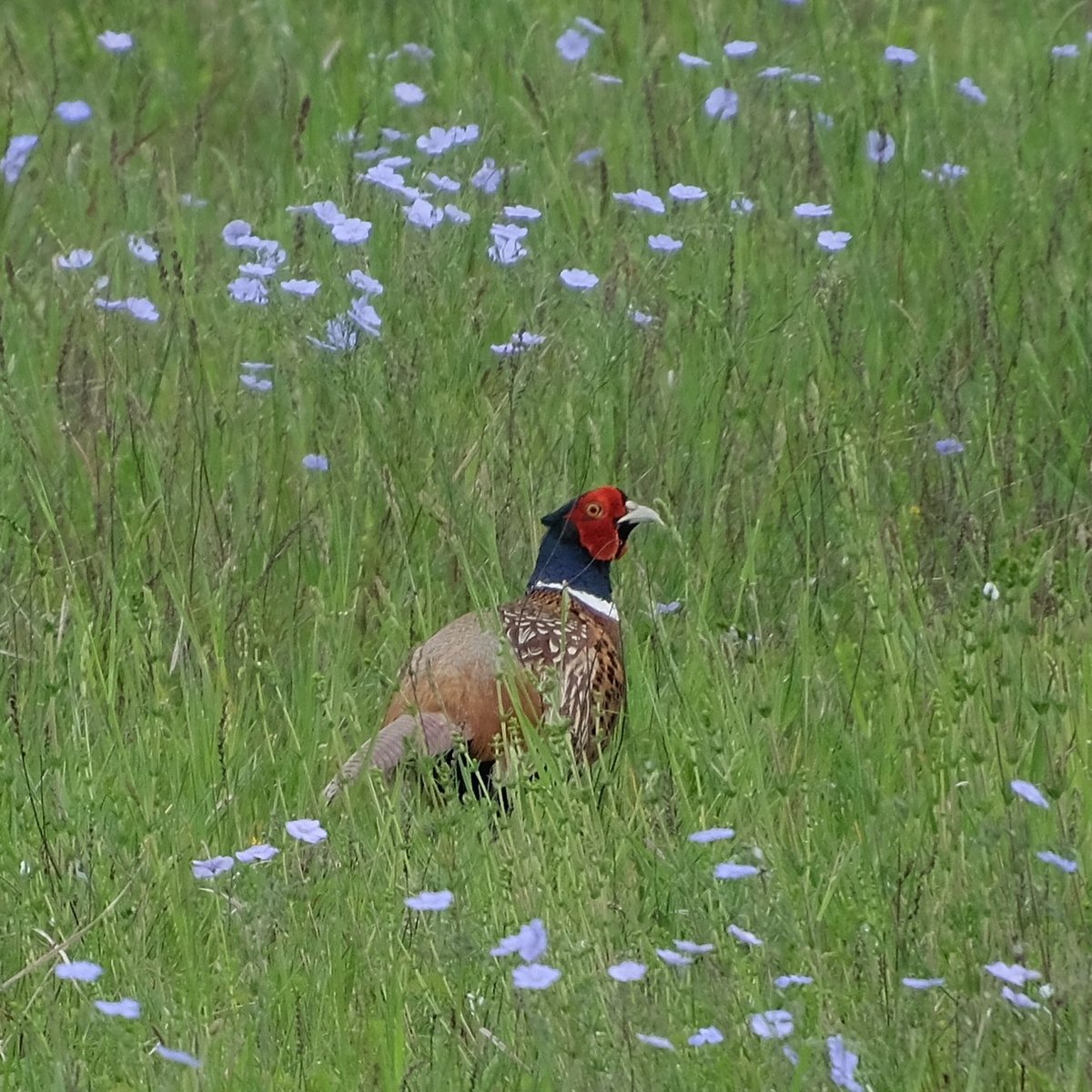
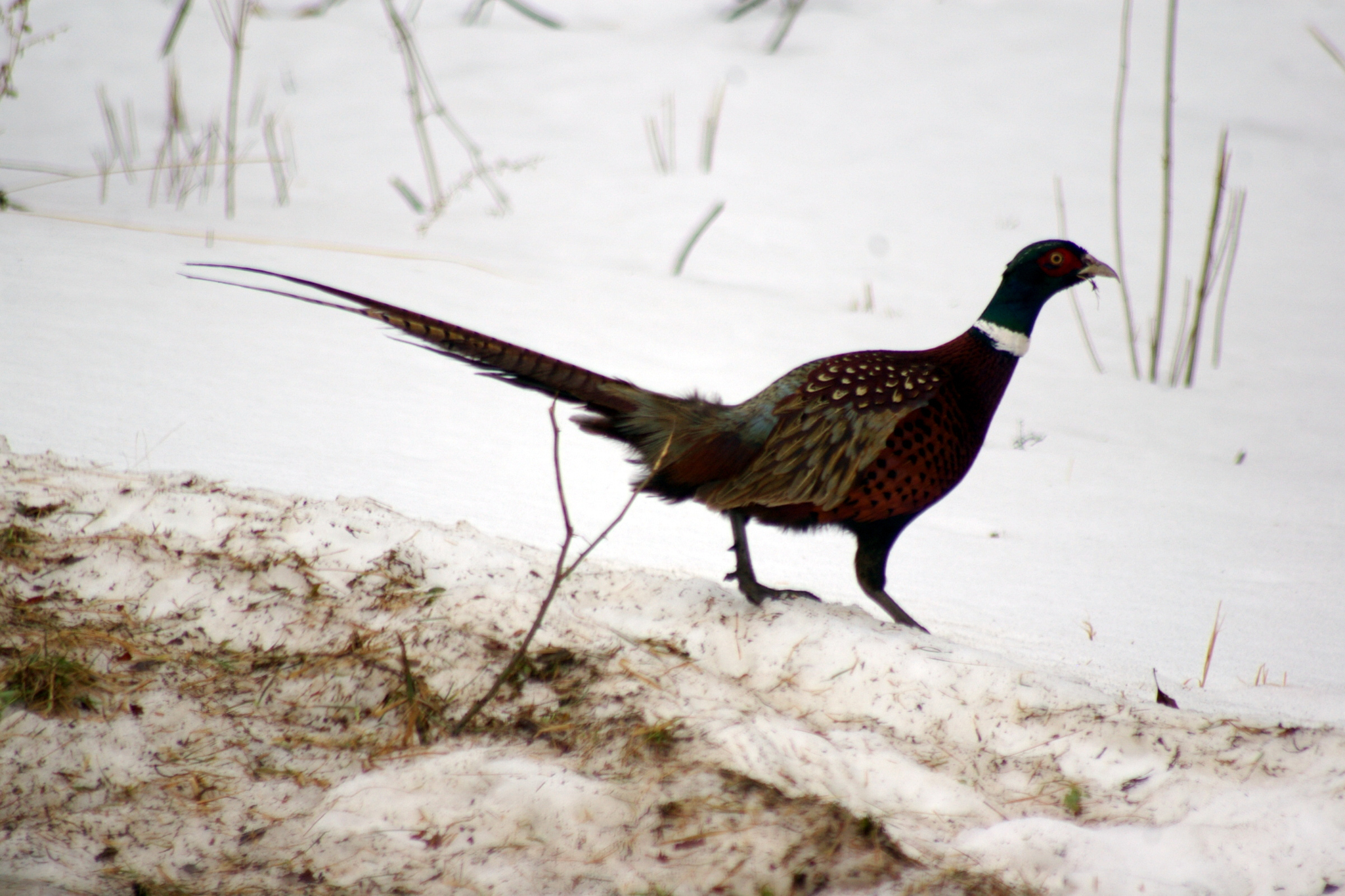
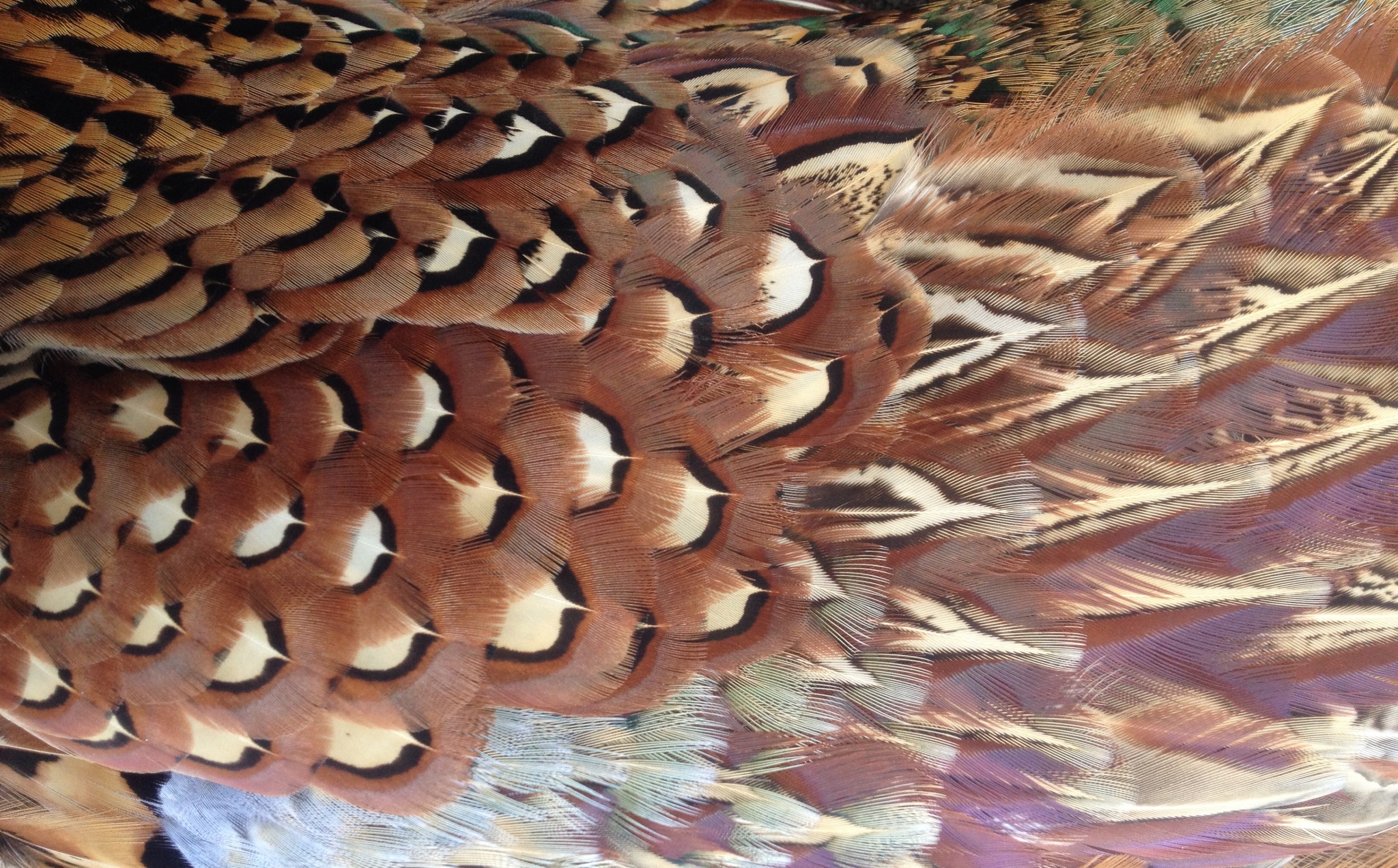
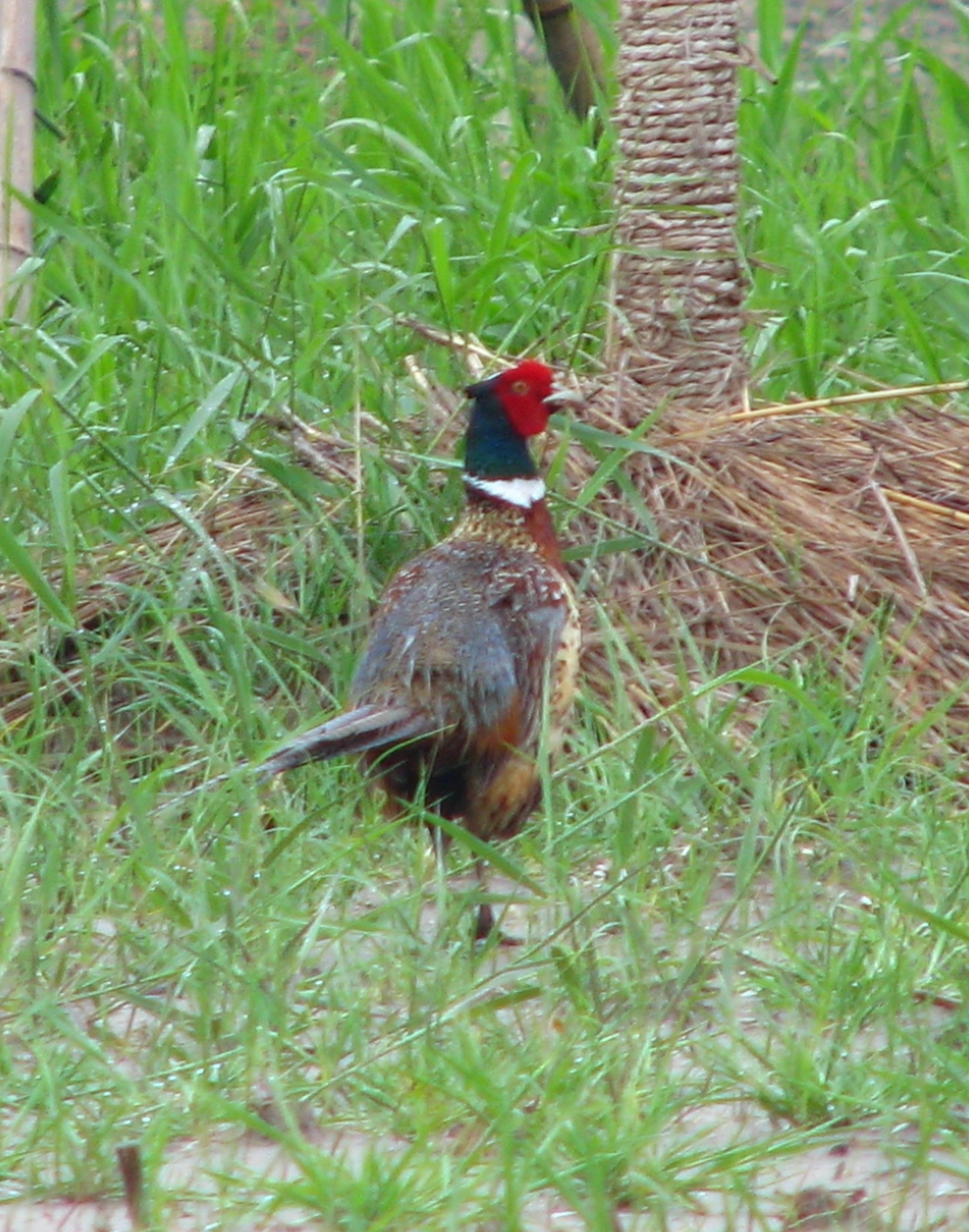
这是一种体型健硕的中大型雉类。雄鸟体长60至89厘米,其中修长的尾羽就占了近一半的长度;雌鸟体型较小,体长50至63厘米。雄鸟体重0.5至3公斤,平均约1.2公斤;雌鸟平均约0.9公斤。翅展范围在56至86厘米之间。雄鸟的羽色极为华丽,身体和翅膀覆盖着明亮的金色或铜红色羽毛,上面有黑色条纹,并带有绿色和紫色的金属光泽。头部呈瓶绿色,具小型羽冠和鲜红色的肉垂。部分亚种在颈部有白色环纹。雌鸟和幼鸟全身为暗淡的斑驳棕色,具保护和伪装作用。
如何辨识
野外辨识时,首先关注体型和尾羽长度——这是区别于其他雉类的关键特征。雄鸟的瓶绿色头部和红色肉垂极具辨识度,雌鸟则可通过其相对较长的尾羽和全身的斑驳棕色图案来识别。与近似种绿雉相比,这种鸟类的雄鸟通常尾羽较长,胸腹部不呈均匀的深绿色,且部分种群具有白色颈环。需要注意的是,欧洲、北美和澳大利亚常见的所谓'环颈'个体实际上是多个亚种和绿雉杂交后代的混合群体,羽色变异很大,不能简单对应某一特定分类单元。
分布与栖息地
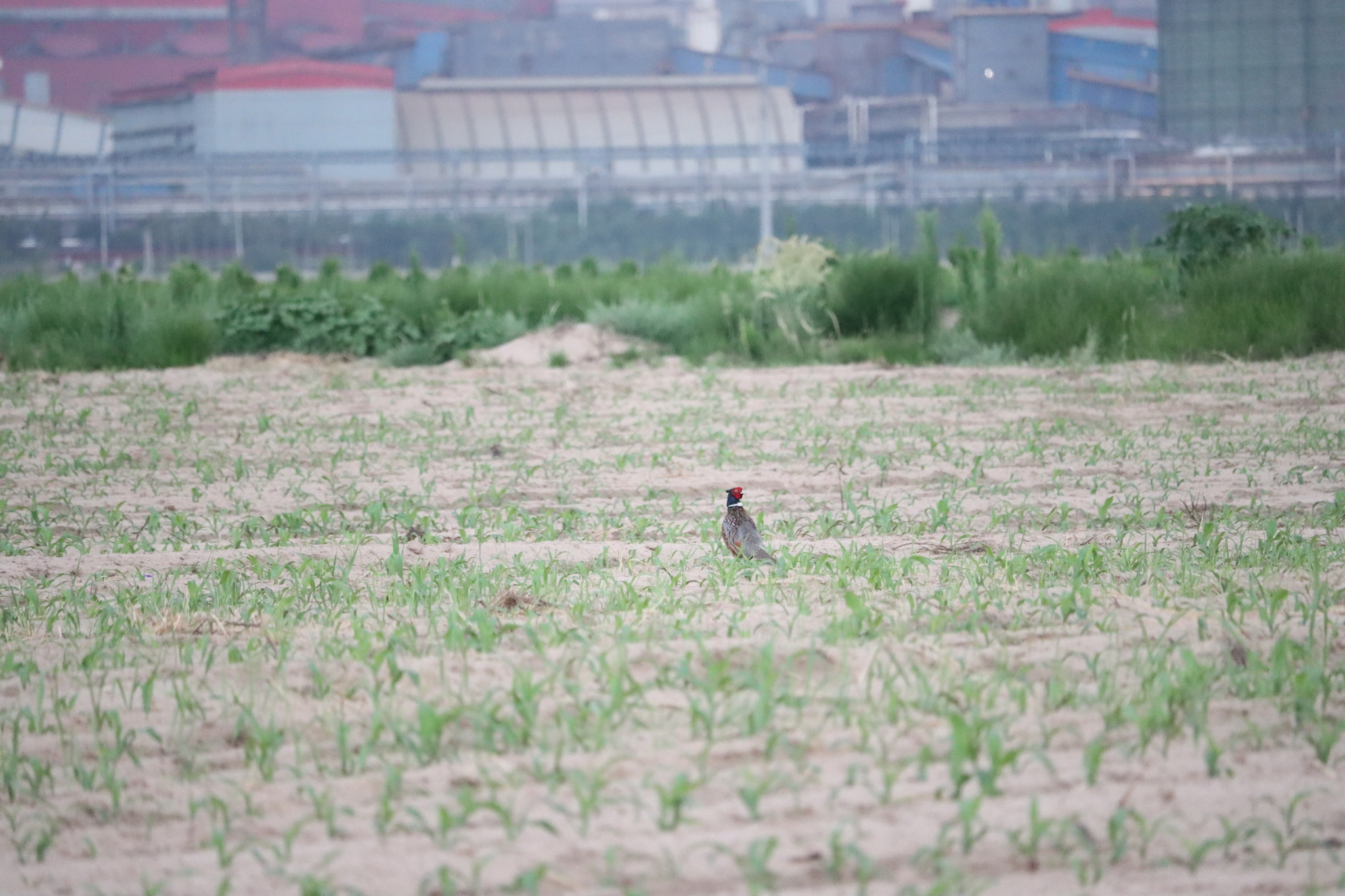
其原产于亚洲,从黑海和里海沿岸向东分布至西伯利亚、朝鲜半岛、中国大陆、台湾和日本。在欧洲,仅限于高加索山脉北麓的极端东南端。由于作为猎鸟被广泛引入,它已在北美、新西兰、澳大利亚、南非、南美部分地区以及英国等地归化。在英国,环颈雉最早于公元1059年自然归化,但在17世纪初曾一度灭绝,18世纪又重新引入。在美国,俄勒冈州于1881年首次大规模放养,此后逐步扩散至大部分州份,尤其集中在中部大平原和农业发达地区。它偏好林地边缘、农田、灌木丛和湿地边缘环境。
习性与生态
这种鸟类在非繁殖期结成松散的群体活动,但人工饲养的个体常表现出明显的性别分离现象。它们更倾向于奔跑而非飞行,但当受到惊吓时能突然高速起飞,发出独特的'呼呼'振翅声,并以'kok kok kok'的叫声提醒同伴。飞行速度在每小时43至61公里之间,被追逐时可达到每小时90公里。繁殖季节从4月开始,雄鸟实行一雄多雌制。雌鸟在地面凹陷处筑巢,每窝产8至15枚橄榄褐色的卵,孵化期23至25天。雏鸟生长迅速,12至14天即能飞行。它们是典型的杂食性鸟类,食物包括种子、谷物、水果、浆果以及各类昆虫、蚯蚓、蛞蝓等无脊椎动物,偶亦捕食小型脊椎动物如蜥蜴和田鼠。
生存状况
尽管在全球范围内数量众多且分布广泛,但多个亚种面临灭绝风险。欧洲最后一批纯种高加索亚种约100至250只,分布于希腊内斯托斯河流域。由于与引进的东部亚种杂交,巴尔干半岛的原生种群已在保加利亚消失。在英国,每年放养约5000万只饲养个体,种群数量在夏季高达5000万,但到次年6月仅剩不足500万,大幅波动明显。美国农业部监测显示,该物种在过去30年间种群数量持续下降,主要原因包括农业实践改变、农药使用、栖息地破碎化以及农作物类型变化导致适宜营巢的草本植被减少。
文化
在台湾,排湾族原住民将这种雉鸟的形象(称为'tiativ')装饰在房屋梁柱上,象征着勇气和技能。雉鸡羽毛不仅是平民猎人的荣誉象征,在现代甚至被排湾族政治人物佩戴以示尊崇,与之形成对比的是,山鹰羽毛仅限世袭头人使用。在美国,它是南达科他州的州鸟,是少数被选为州鸟的非本土物种之一。历史上,19世纪英国的贵族将猎捕这种鸟类视为昂贵的运动消遣,著名作家罗尔德·达尔在其小说《丹尼·冠军》中也描绘了英国乡间偷猎雉鸡的情节。
改写自: 英文维基百科 · CC BY-SA 3.0
分类信息
- 目
- 鸡形目 Galliformes
- 科
- 雉科 Phasianidae
- 属
- 雉属 Phasianus
- eBird 代码
- rinphe1
- CBR 编号
- #100
亚种 (30)
-
Phasianus colchicus alaschanicus
north-central China, in the foothills of the Helan (Alashan) Mountains
-
Phasianus colchicus bianchii
upper valley of the Amu Darya River in southern Uzbekistan, southwestern Tajikistan, and extreme northern Afghanistan
-
Phasianus colchicus chrysomelas
Amu Darya Delta, in western Uzbekistan and adjacent northern Turkmenistan
-
Phasianus colchicus colchicus
eastern Georgia to northeastern Azerbaijan, southern Armenia, and northwestern Iran; a mixture of colchicus, torquatus, and other subspecies now widely introduced, including across Europe, New Zealand, the Hawaiian Islands, North America, and South America (southern Chile)
-
Phasianus colchicus decollatus
central China (Sichuan to Liaoning, northeastern Yunnan, and Guizhou)
-
Phasianus colchicus edzinensis
south-central Mongolia
-
Phasianus colchicus elegans
west-central China (western Sichuan)
-
Phasianus colchicus formosanus
Taiwan
-
Phasianus colchicus hagenbecki
western Mongolia (Kobdo Valley)
-
Phasianus colchicus karpowi
northeastern China (southern Manchuria and northern Liaoning) to Korea
-
Phasianus colchicus kiangsuensis
northeastern China (northern Shanxi and Shaanxi) to southeastern Mongolia
-
Phasianus colchicus mongolicus
northern Tian Shan in northern Kyrgyzstan northward through eastern Kazakhstan to Lake Balkhash, and eastward to northwestern Xinjiang and Urumchi (western China)
-
Phasianus colchicus pallasi
southeastern Siberia and northeastern China
-
Phasianus colchicus persicus
southwestern Turkmenistan and northeastern Iran
-
Phasianus colchicus principalis
southeastern Turkmenistan, far northeastern Iran, and northwestern Afghanistan
-
Phasianus colchicus rothschildi
southwestern China (eastern Yunnan) and northern Vietnam
-
Phasianus colchicus satscheuensis
north-central China (far western Gansu)
-
Phasianus colchicus septentrionalis
northern Caucasus from Dagestan to north of the Volga Delta (Russia)
-
Phasianus colchicus shawii
western Tarim Basin (Xinjiang), in western China
-
Phasianus colchicus sohokhotensis
north-central China (Sohokhoto Oasis and Qilian Shan)
-
Phasianus colchicus strauchi
central China (southern Shaanxi and southern Gansu)
-
Phasianus colchicus suehschanensis
west-central China (northwestern Sichuan)
-
Phasianus colchicus takatsukasae
southern China and northern Vietnam
-
Phasianus colchicus talischensis
southeastern Transcaucasia (Azerbaijan and north-central Iran)
-
Phasianus colchicus tarimensis
eastern and southern Tarim Basin, in western China
-
Phasianus colchicus torquatus
eastern China (Shandong) to Vietnam border. Pheasants representing a mixture of colchicus, torquatus, and other subspecies now are widely introduced around the world, including across Europe, on New Zealand, the Hawaiian Islands, and North America
-
Phasianus colchicus turcestanicus
southern Kazakhstan (Syr Darya Valley) southeastward to the Fergana Basin in eastern Uzbekistan and the borders of Kyrgyzstan
-
Phasianus colchicus vlangalii
north-central China (northern Qinghai)
-
Phasianus colchicus zarudnyi
central valleys of the Amu Darya River on the eastern Turkmenistan–Uzbekistan border
-
Phasianus colchicus zerafschanicus
southern Uzbekistan (Bukhara and Zerafshan Valley)
数据来源
物种描述来自维基百科,以 CC BY-SA 3.0 许可证发布。
鸟类图片与鸣声来自 GBIF,由全球公民科学家贡献,遵循各自 Creative Commons 许可证。
分类数据来自 AviList 2025。