Passeriformes / Zosteropidae / Zosterops
Indian White-eye
Zosterops palpebrosus · 灰腹绣眼鸟
Introduction
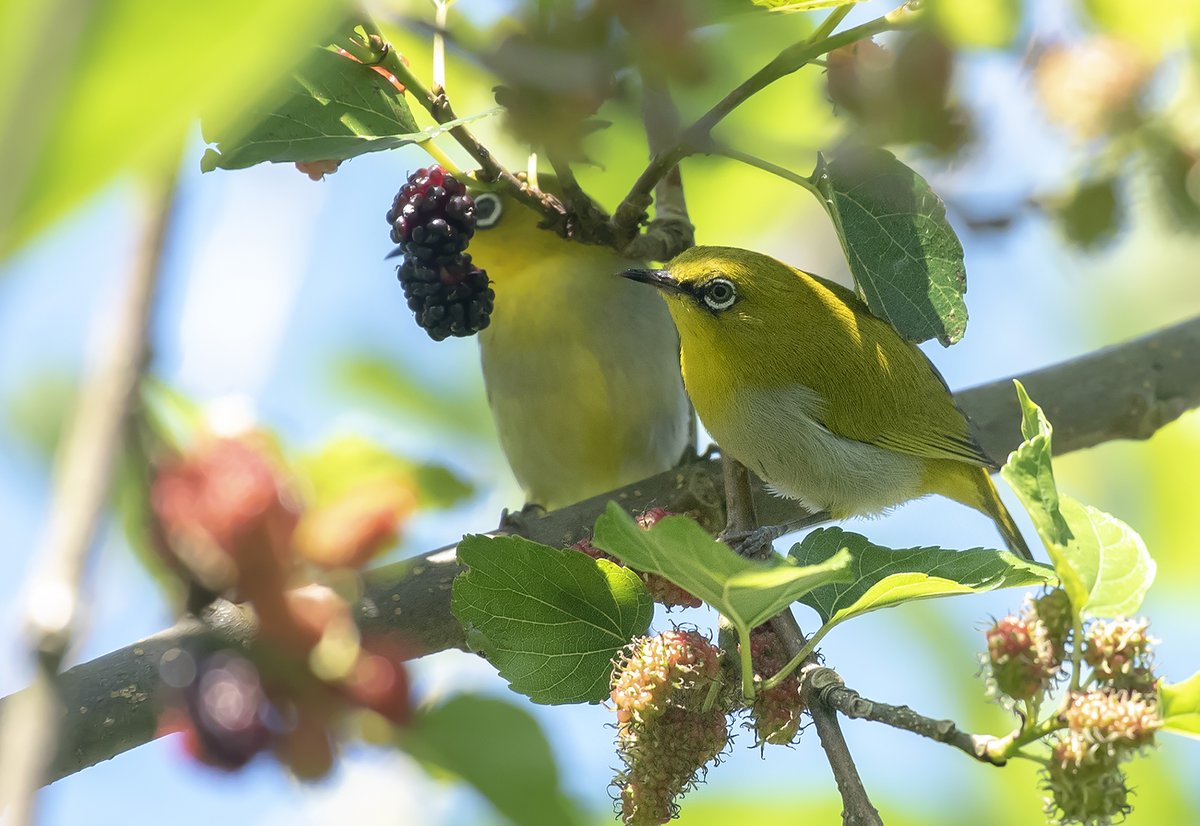
A small passerine in the white-eye family, resident in open woodland across the Indian subcontinent. Distinctive for its white eye-ring and yellowish upperparts. It forages in small groups on nectar and insects.
Description
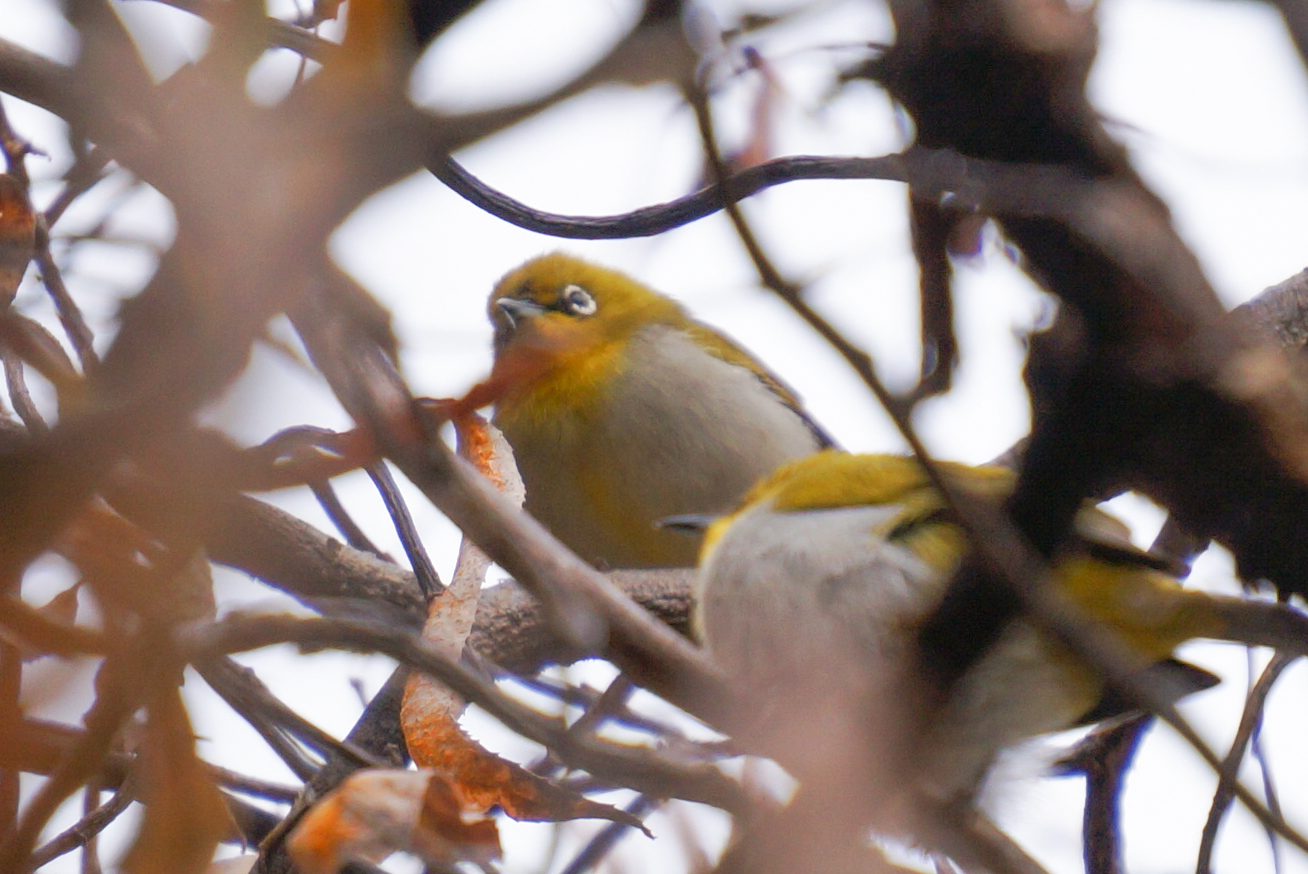
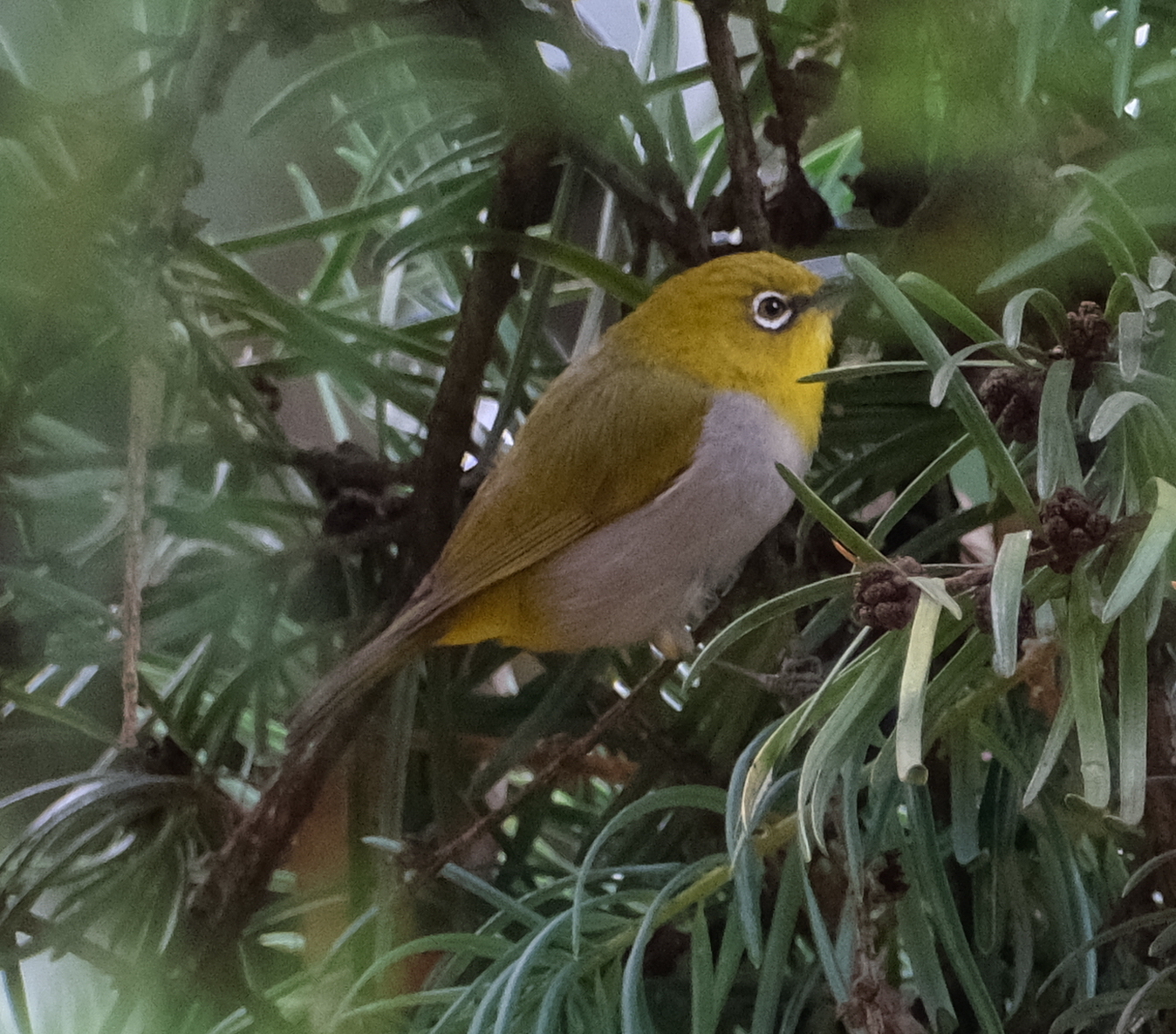
Small bird, about 8–9 cm long. Features yellowish olive upper parts, a white eye ring, a yellow throat, and a yellow vent. The belly is whitish-grey, though it may be yellow in some subspecies. Sexes are similar. Subspecies vary: the occidentis race has dark green upper sides with brown-tinged flanks; salimalii has a shorter bill and brighter yellow-green upper parts; the Sri Lankan egregia race is smaller with a brighter back and throat.
Identification
Identified by the conspicuous white ring of feathers around the eyes and overall yellowish upperparts. In Maharashtra, the forehead may appear orange due to pollen staining. Distinguished from the endemic Sri Lanka white-eye (Zosterops ceylonensis) by being smaller with a brighter back and throat.
Distribution & Habitat
Resident breeder in open woodland, scrub, moist forest, and mangroves on the Indian subcontinent, extending into Oman, Arabia, Afghanistan, northern India, China, and northern Myanmar. Rare in drier desert regions of western India. A feral population detected in San Diego, California, in the 1980s was eradicated.
Behavior & Ecology
Sociable, forming flocks that separate during the breeding season (February to September, peaking in April). Highly arboreal, rarely descending to ground. Builds compact cup nests from cobwebs, lichens, and plant fibre in branch forks; construction takes about 4 days. Lays two pale blue eggs, hatching in ~10 days; chicks fledge in ~10 days. Both sexes brood. Diet includes insects, nectar, and fruits; acts as a pollinator. Contact call is a soft nasal 'cheer'. Observed bathing in dew, mobbing palm squirrels, stealing nest material, and interspecific feeding of paradise flycatcher chicks. Predators include bats and white-throated kingfishers.
Culture
The English name was changed from 'Oriental white-eye' to 'Indian white-eye' to accurately reflect the geographic range after taxonomic reorganization separated Southeast Asian populations into new species.
Source: Wikipedia · CC BY-SA 3.0
Taxonomy
- Order
- Passeriformes
- Family
- Zosteropidae
- Genus
- Zosterops
Vocalizations
Subspecies (7)
-
Zosterops palpebrosus egregius
Sri Lanka
Data Sources
Species description from Wikipedia, licensed under CC BY-SA 3.0.
Bird images and sounds sourced from GBIF, contributed by citizen scientists worldwide under Creative Commons licenses.
Taxonomy data from AviList 2025.