
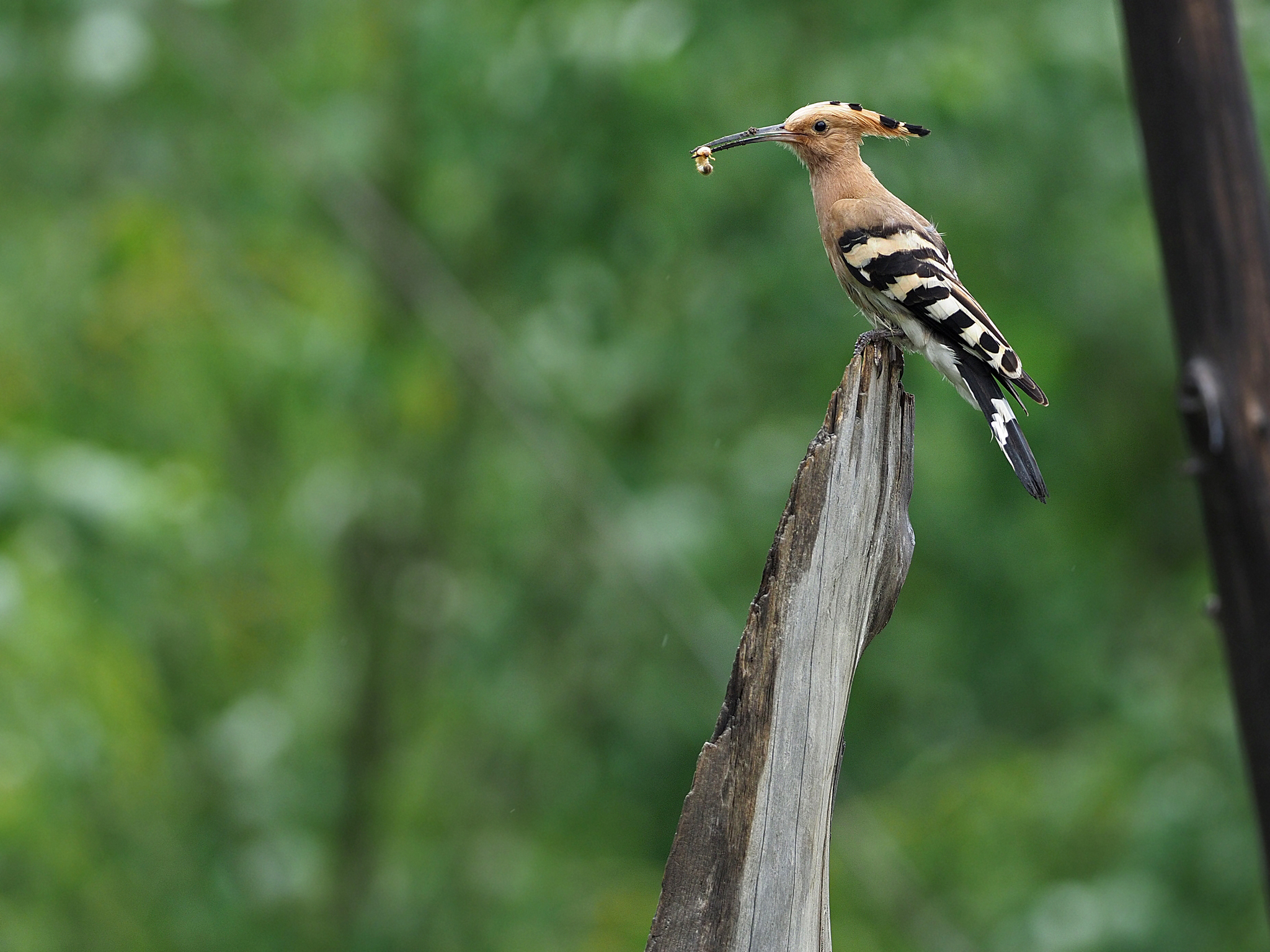
Common Hoopoe
Upupa epops
戴胜
Introduction
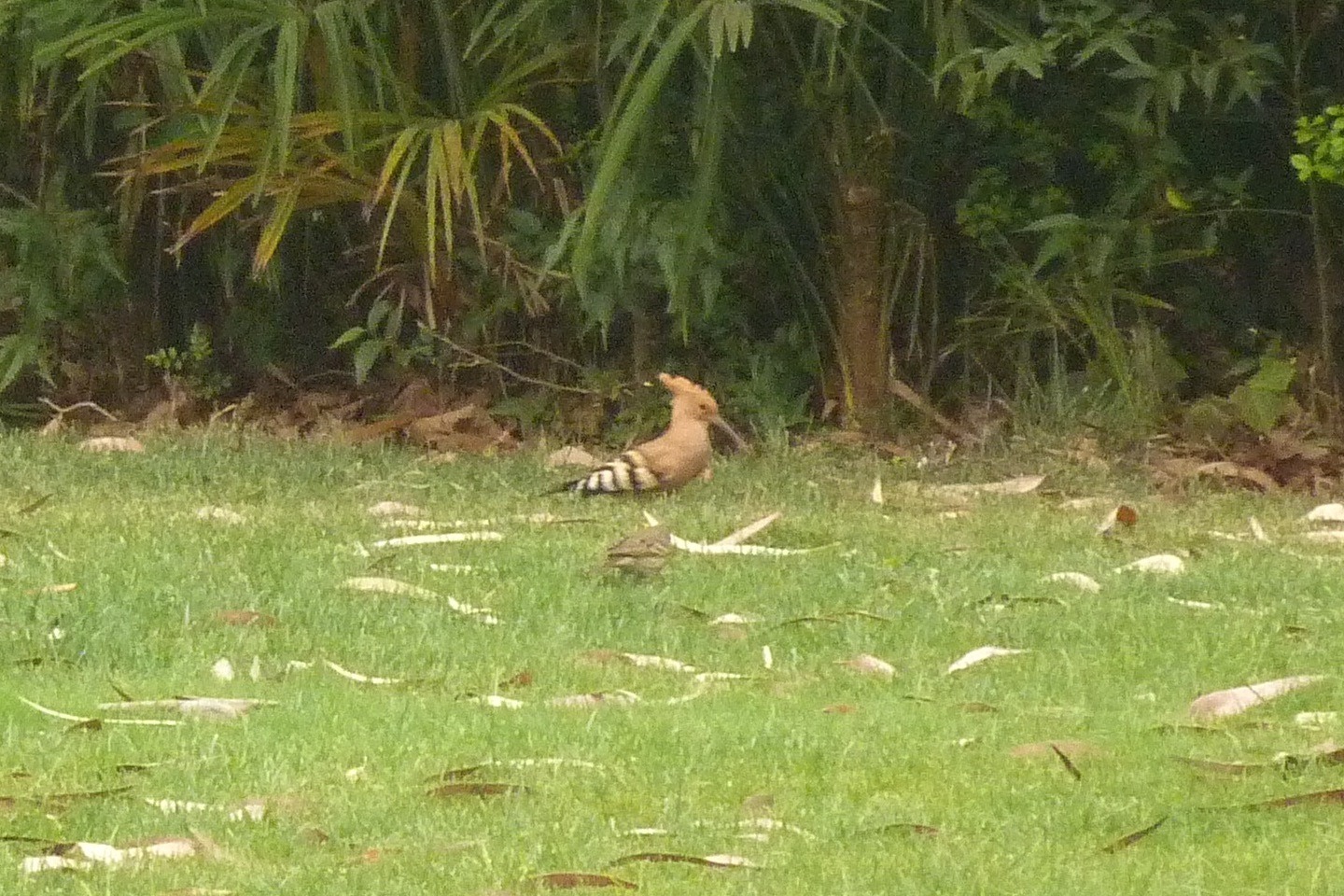
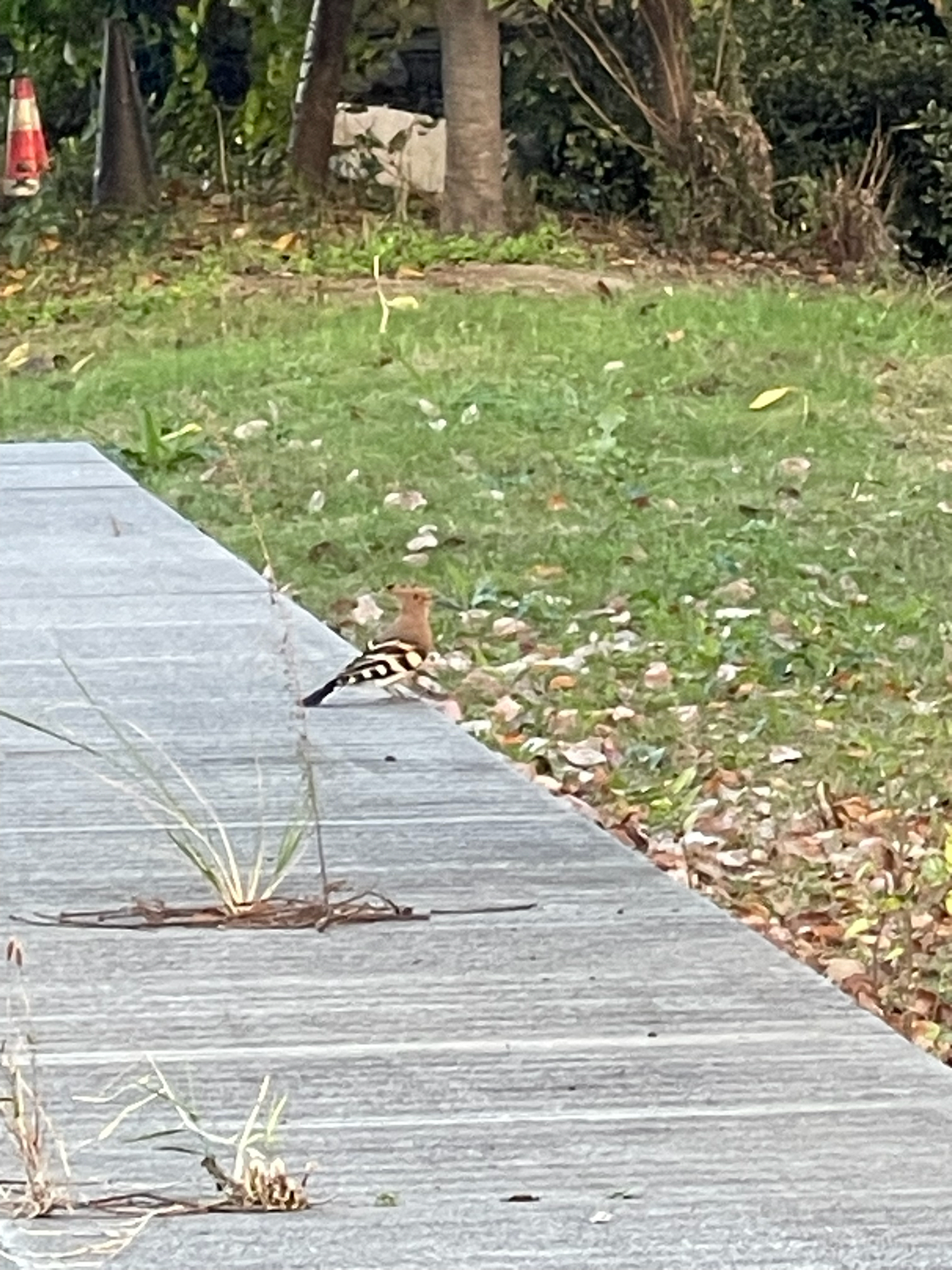
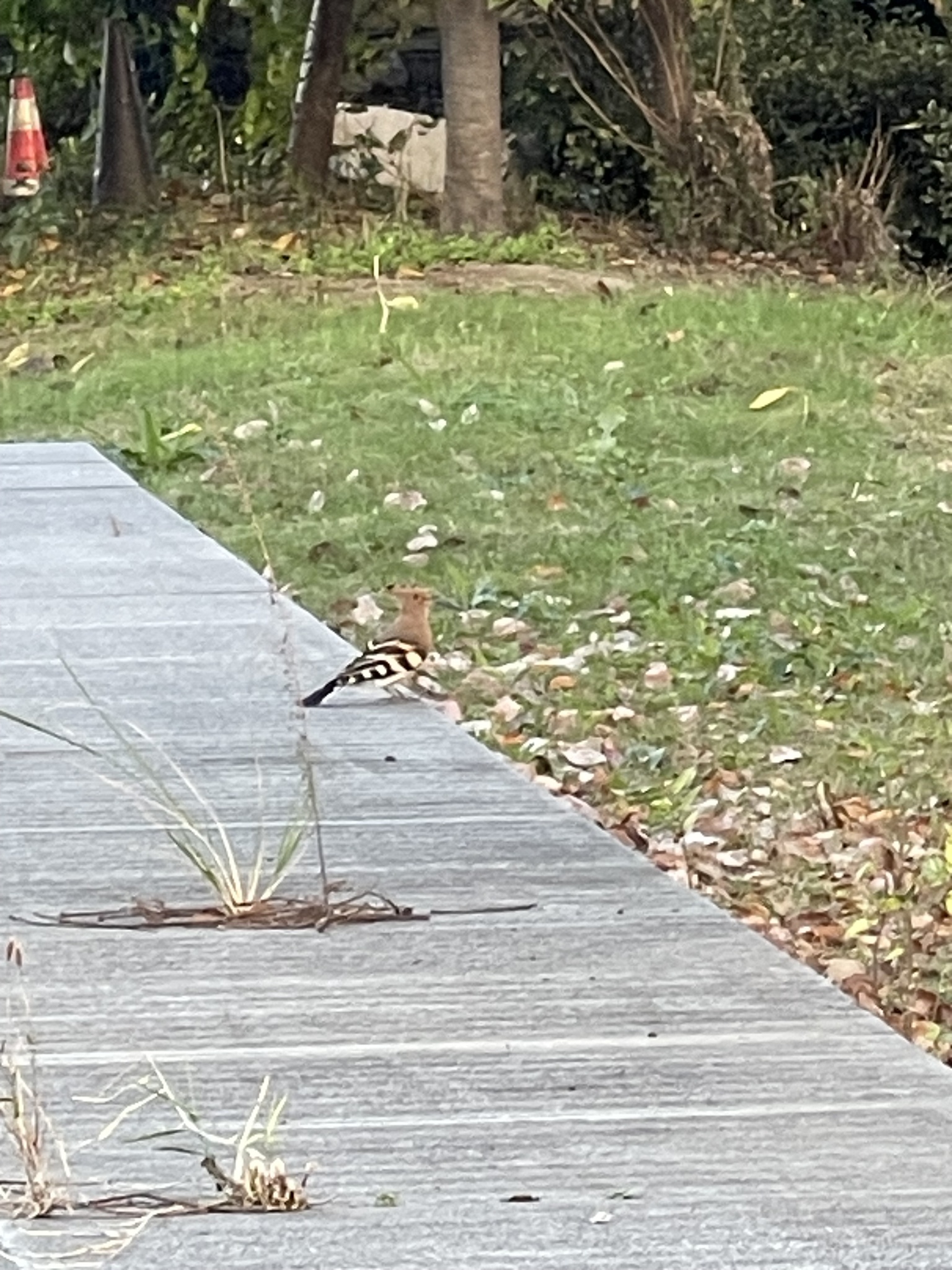
Range spans Europe, Asia, and North Africa. Inhabits heathland, wooded steppes, savannas, grasslands, forest glades, olive groves, orchards, vineyards, parkland, and farmland. Forages by walking in long strides with pauses to probe ground with decurved bill. Displays sunbathing posture with wings and tail spread flat against ground. Produces resonant calls during breeding season.
Description
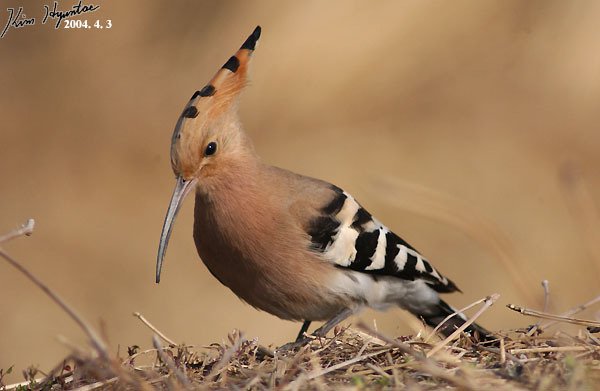
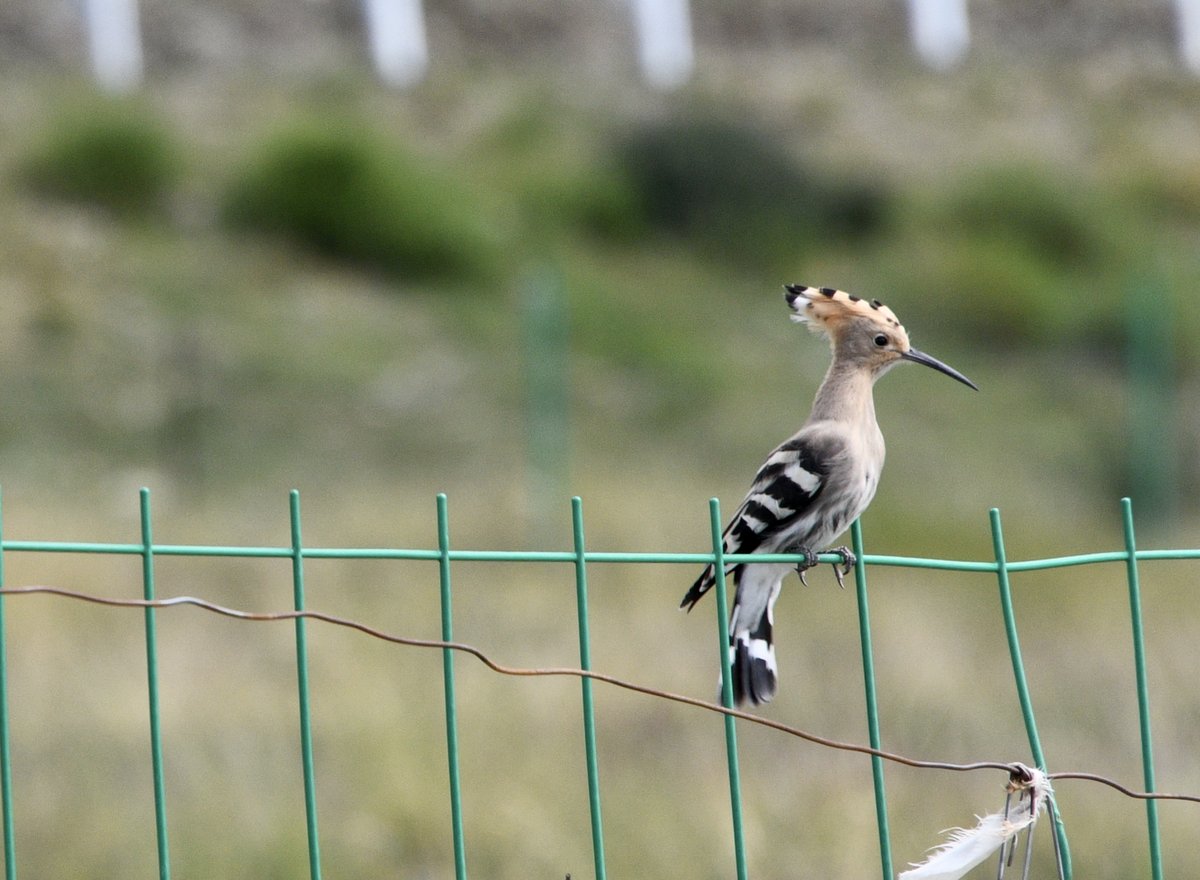
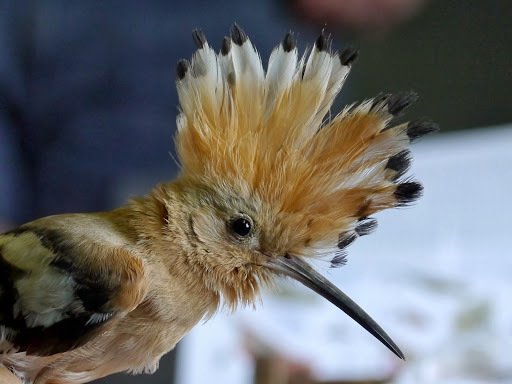
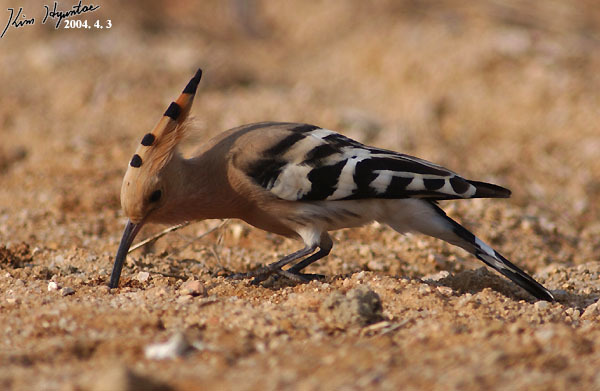
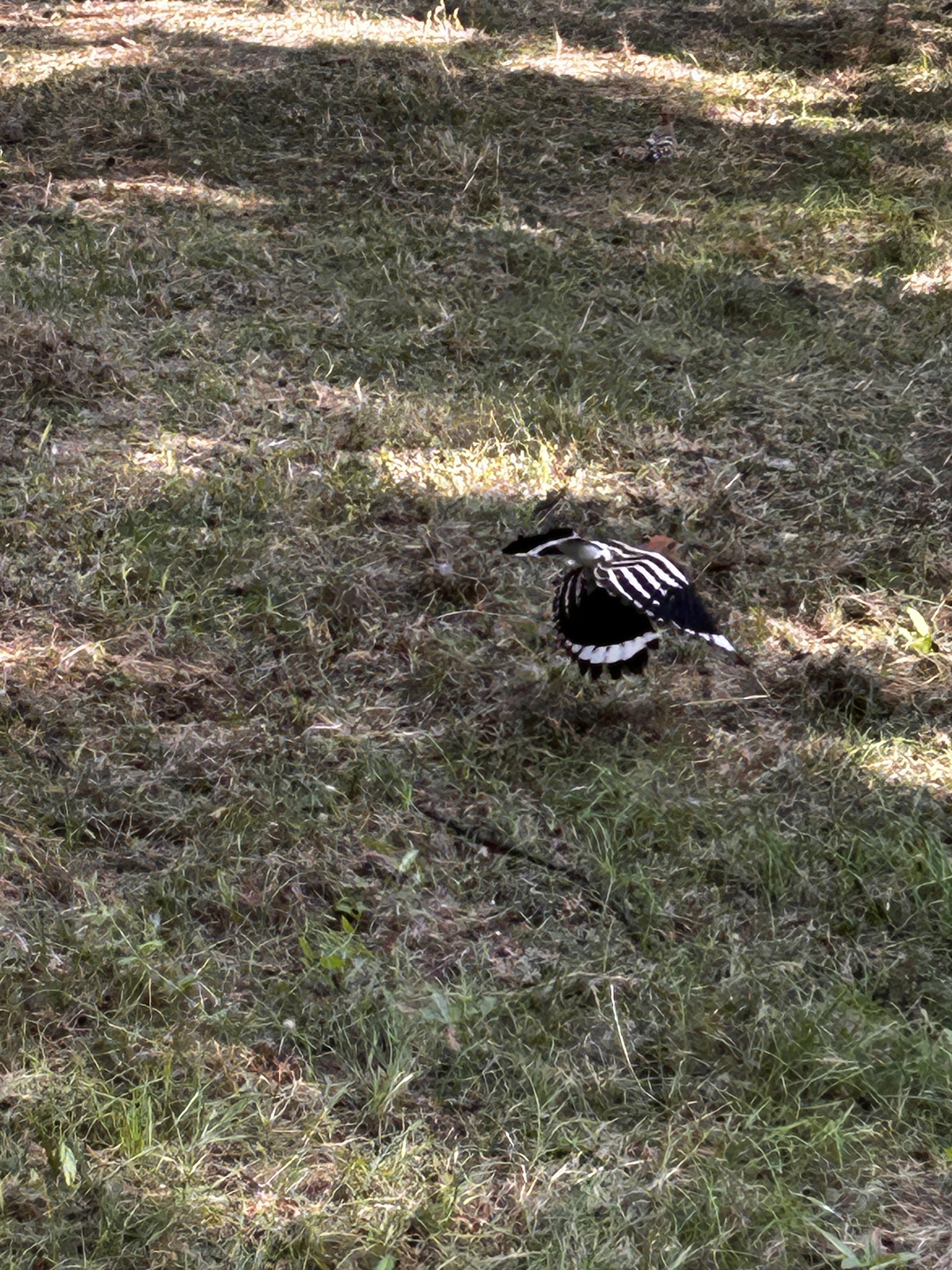
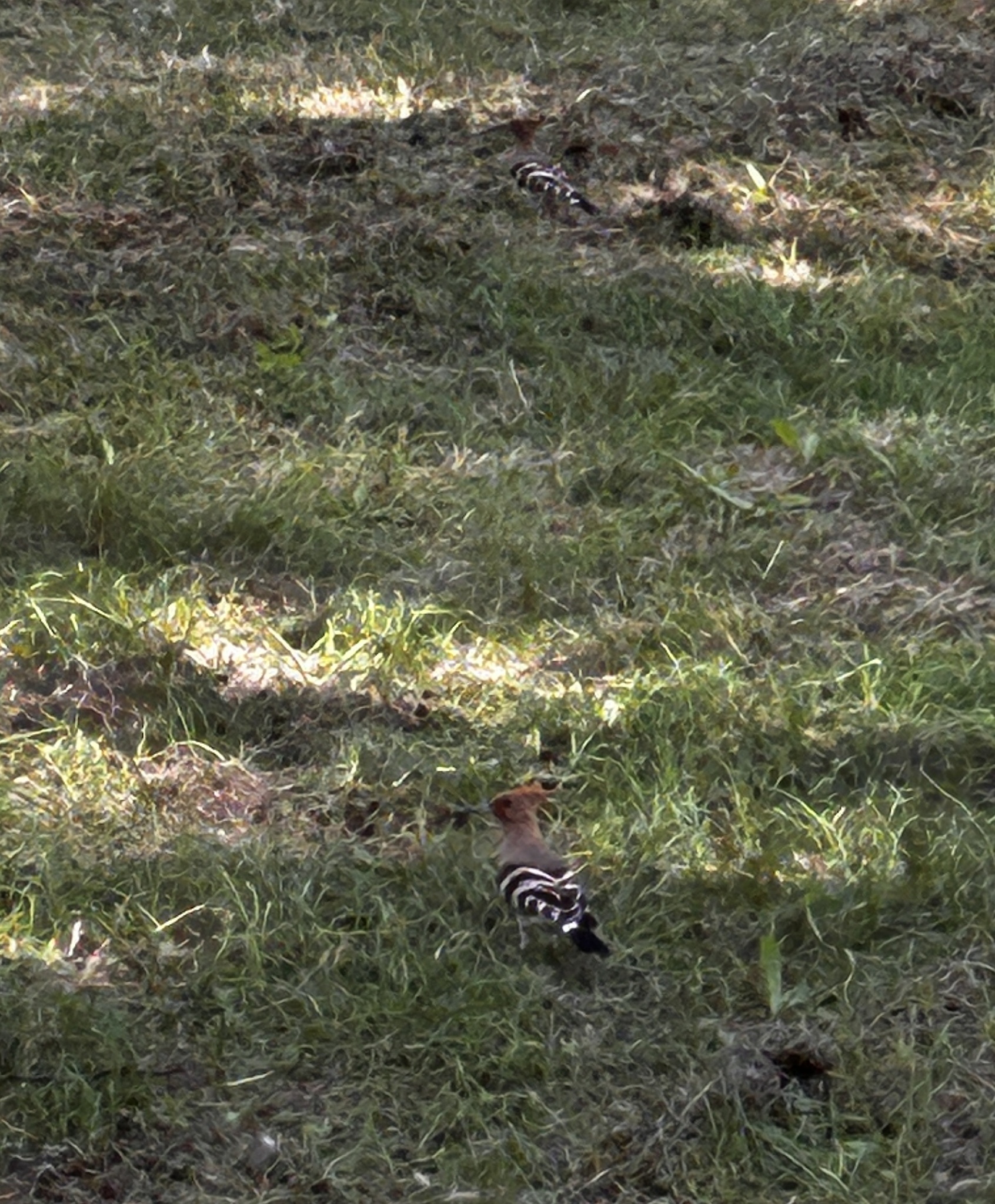
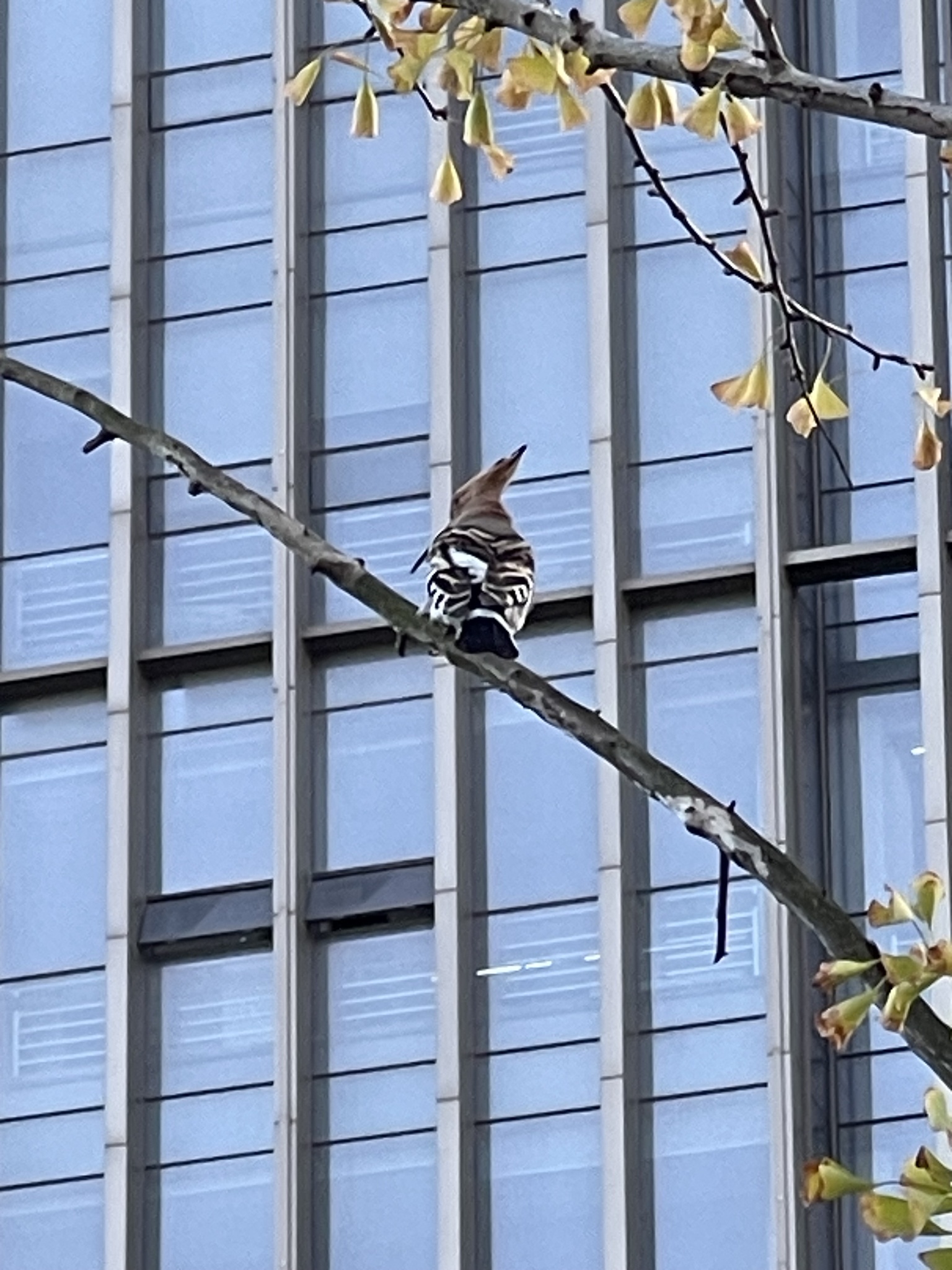
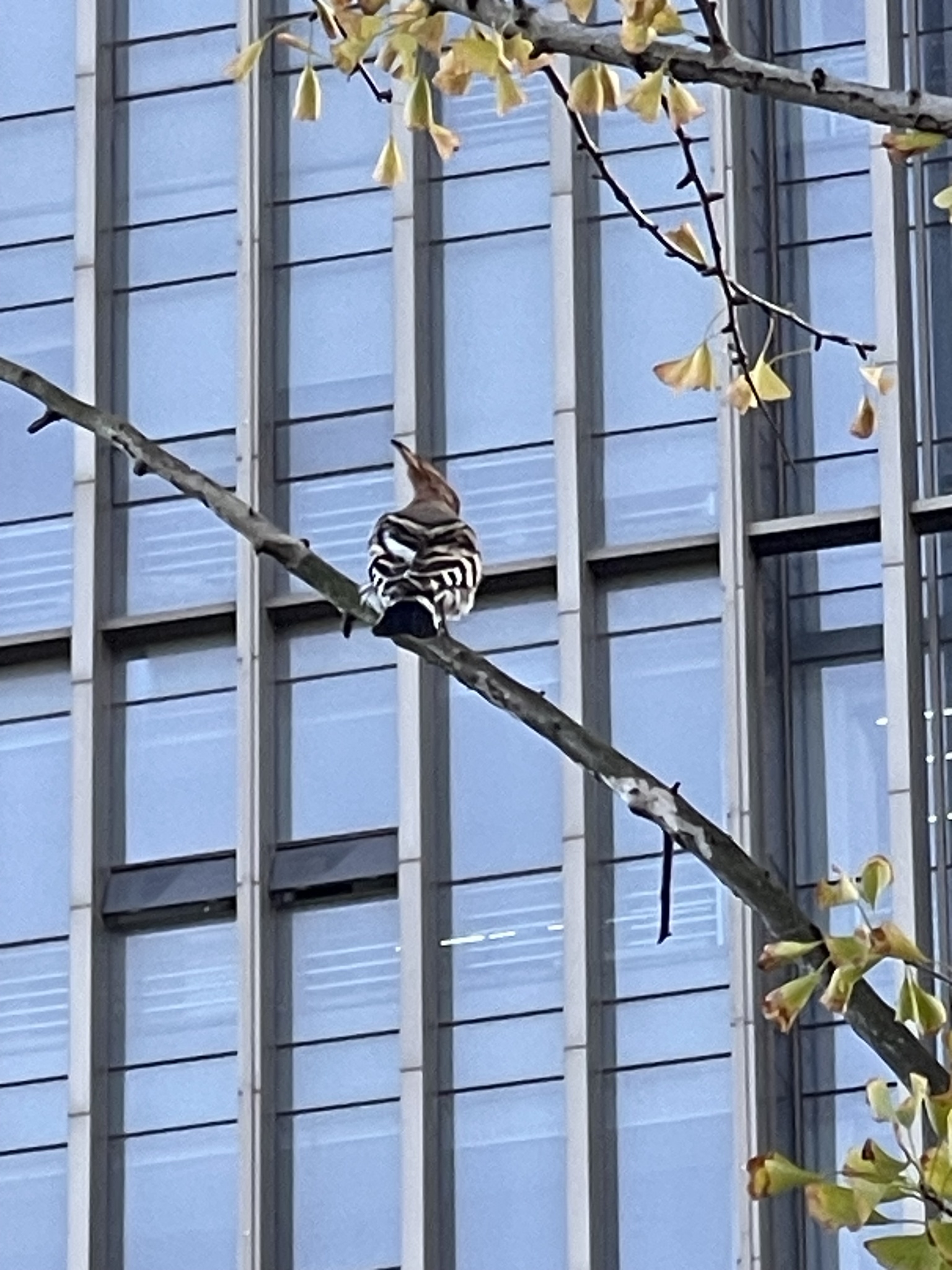
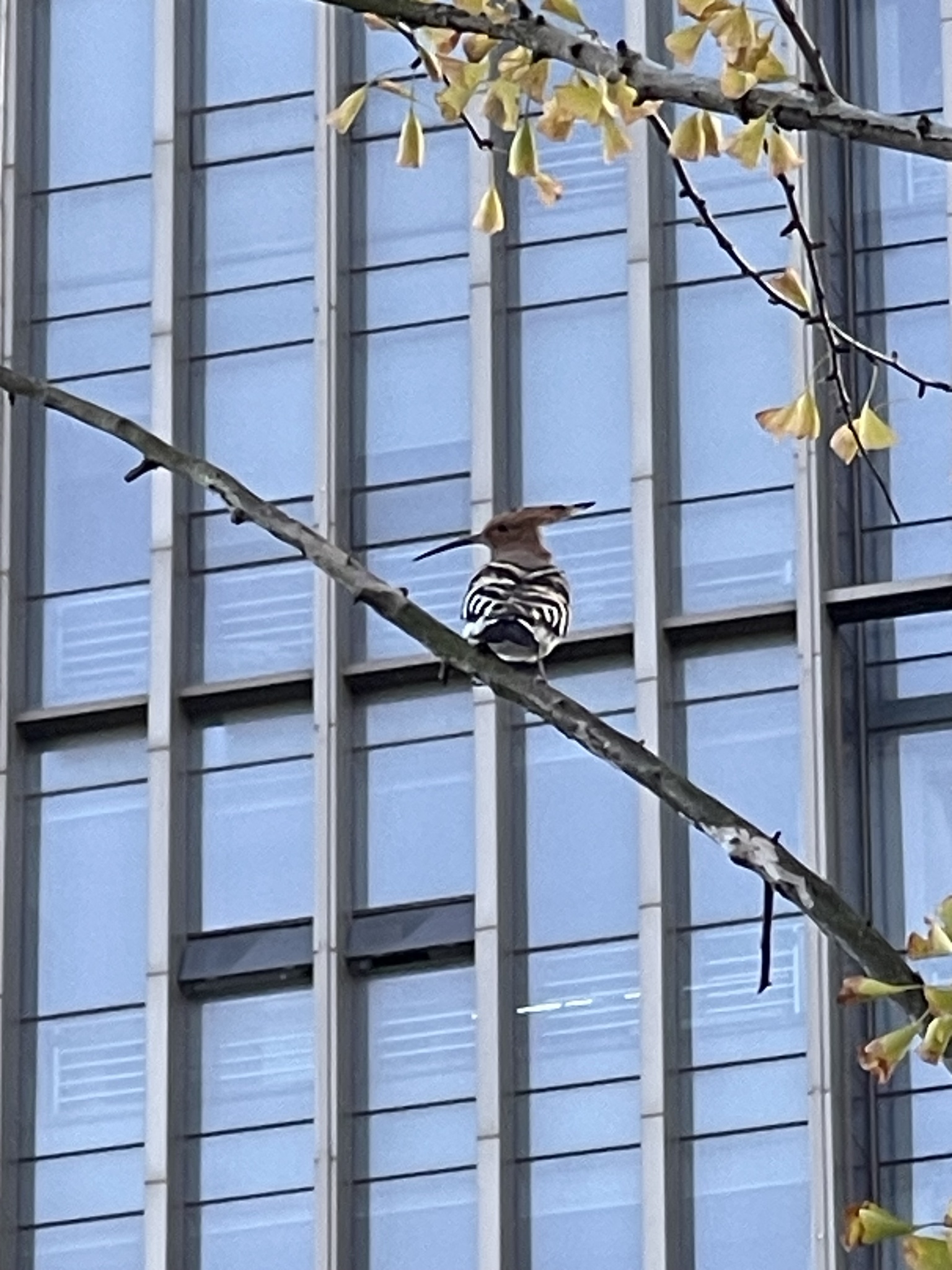
This medium-sized bird presents a striking silhouette with its long, thin, decurved bill and distinctive erectile crest. The plumage features a warm cinnamon to rufous body, contrasting sharply with black and white barred wings and tail that create a dramatic pattern in flight. The head and neck display the characteristic orange-brown coloration, while the underparts show a paler buff tone. A broad black band crosses the white rump, and the tail bears a distinctive white bar. The crest consists of long, narrow feathers that can be raised into a fan or lowered flat against the head, serving as an important visual signal in social interactions. The legs are relatively short and sturdy, built for terrestrial foraging. The species measures approximately 25-32 centimeters in length with a wingspan of 44-48 centimeters, though precise measurements vary across its extensive range.
Identification
The hoopoe presents no serious identification challenges within its range due to its unique combination of features. The distinctive decurved bill and prominent crest are diagnostic field marks visible at considerable distances. In flight, the alternating black and white wing bars against the rufous body create an unmistakable pattern. The African hoopoe (U. africana) is considered by some authorities to represent a separate species from the Eurasian hoopoe, differing in having a shorter crest and different vocalizations. The Saint Helena hoopoe, now extinct, was a larger, island-dwelling form. No similar species overlap significantly with the hoopoe's range, though the wood hoopoes of Africa share distant family ties and some structural similarities. The combination of orange-brown plumage, black and white wings, long curved bill, and erectile crest distinguishes this species uniquely.
Distribution & Habitat
The hoopoe enjoys an extensive distribution across the Palearctic, Afrotropical, and Oriental regions. It breeds across most of Europe and temperate Asia, extending into North Africa and across Sub-Saharan Africa to Madagascar. Most European and northern Asian populations are migratory, moving to tropical regions for the winter months, while African populations remain sedentary year-round. The species has reached Alaska as a rare vagrant, with documented records from the Yukon Delta. Habitat requirements center on two essential features: bare or lightly vegetated ground for foraging and vertical surfaces with cavities for nesting. This adaptable species exploits a wide range of ecosystems including heathland, wooded steppes, savannas, grasslands, and forest glades. The Madagascar population utilizes denser primary forest. Agricultural modification has actually expanded the species' range into olive groves, orchards, vineyards, and farmland, though intensive farming practices have reduced local populations in some areas. Birds migrate at high altitudes, with individuals recorded at approximately 6,400 meters during Himalayan crossings.
Behavior & Ecology
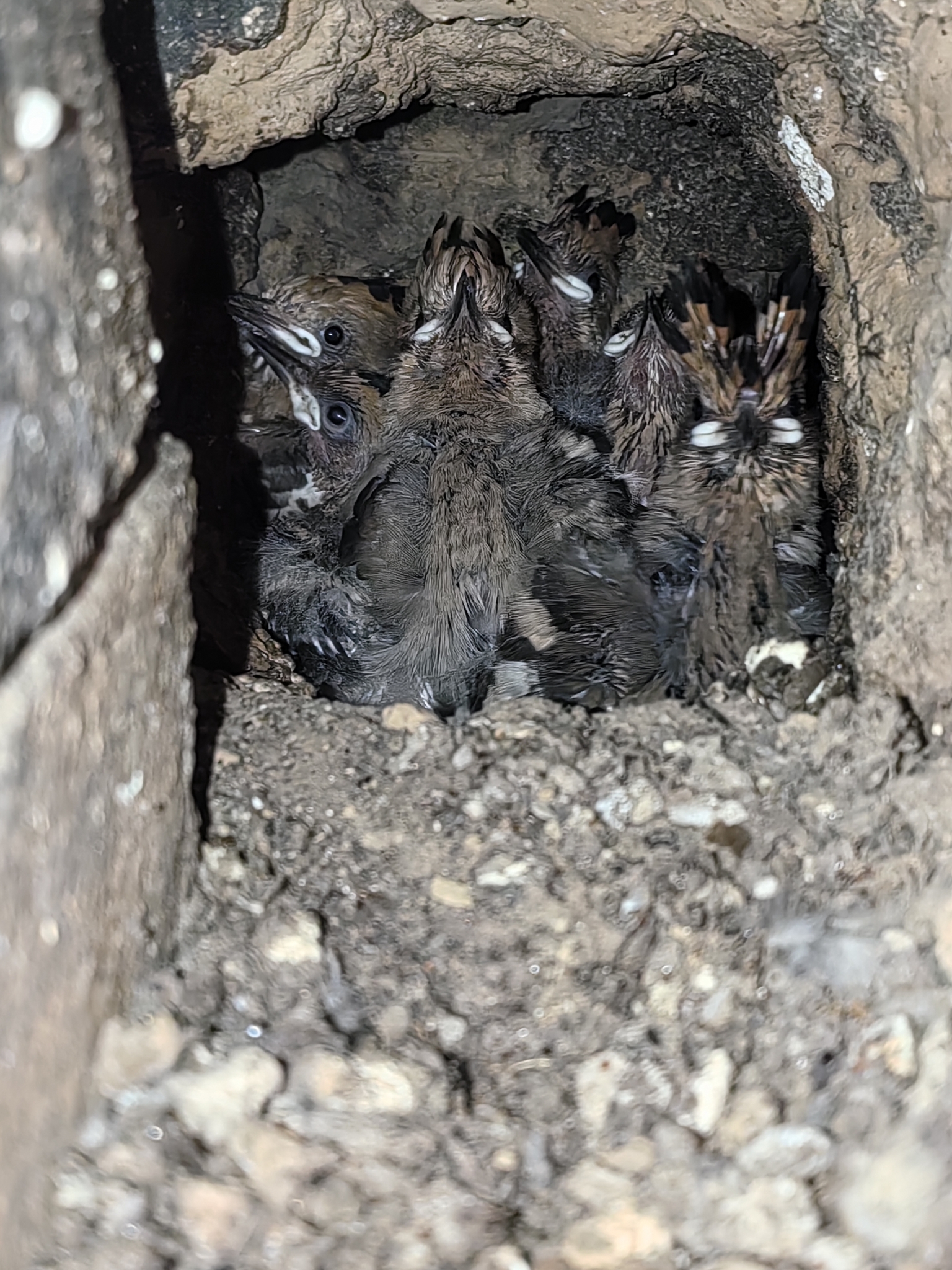
The hoopoe practices a solitary foraging strategy, typically moving across open ground in distinctive long strides before pausing to probe the soil with its specialized bill. This bill, perfectly adapted for extracting insect larvae, pupae, and mole crickets, also enables the bird to overturn stones, flip bark, and capture surface insects. Diet consists primarily of insects ranging from 10 to 150 millimeters, with a preference for prey around 20-30 millimeters, though the species occasionally takes small reptiles, frogs, seeds, and berries. The breeding system is monogamous, though pair bonds typically last only a single season. Males defend territories vigorously through frequent calling, aerial displays, and sometimes brutal physical confrontations where rivals may be stabbed with bills. The nest occupies tree cavities, wall holes, or similar sites with narrow entrances, often remaining unlined. The female incubates a clutch of 4-12 eggs—larger at higher latitudes—while the male provides food. Both parents feed the young, which fledge in 26-29 days. The species possesses remarkable anti-predator defenses, including foul-smelling secretions from the uropygial gland and the ability of nestlings to direct streams of feces at intruders while hissing snake-like.
Conservation
The hoopoe maintains a conservation assessment of Least Concern on the IUCN Red List, reflecting its extensive range and large global population. However, concerning regional trends have emerged, particularly in Western Europe where numbers have declined significantly, likely due to agricultural intensification and habitat loss. Conversely, populations at the tip of South Sinai around Sharm el-Sheikh have increased, with dozens of nesting pairs now remaining resident year-round. Hunting pressure in southern Europe and Asia poses ongoing concerns for local populations. The species has benefited from legal protection in many countries, partly due to its consumption of agricultural pests such as processional moth pupae, which few other birds will eat. Agricultural expansion has created new habitat in some regions, though intensive farming practices reduce suitable habitat in others. Continued monitoring of European populations remains important given documented declining trends in western parts of the range.
Culture
The hoopoe holds profound significance across numerous cultures and religious traditions spanning millennia. In Ancient Egypt, the bird served symbolic purposes in iconography, representing inheritance and succession. The Minoan civilization of Crete also assigned it symbolic standing. Within Islamic tradition, the hoopoe (hudhud) features prominently in the Quran's Surah Al-Naml, where it serves King Solomon and brings news of the Queen of Sheba, establishing its status as a bird of wisdom. Persian tradition viewed hoopoes as symbols of virtue, and the bird appears as a leader in Attar's famous poem 'The Conference of the Birds.' In the Vainakh religion of the Caucasus, the hoopoe was sacred to the goddess Tusholi, known as 'Tusholi's hen' and could only be hunted with the high priest's permission for medicinal purposes. European traditions were less favorable, with the hoopoe viewed as a thief and harbinger of war in Scandinavian folklore, while Estonian tradition strongly connects the bird with death and the underworld. In medieval magical traditions, the hoopoe was considered an evil bird, appearing in grimoires like the Munich Manual of Demonic Magic. The species was designated Israel's national bird in 2008 following a national survey, chosen for its beauty and distinctive character. The hoopoe appears on the logo of the University of Johannesburg and serves as its sports mascot, while several European municipalities include the bird in their heraldry.
Source: Wikipedia · CC BY-SA 3.0
Taxonomy
- Order
- Bucerotiformes
- Family
- Upupidae
- Genus
- Upupa
- eBird Code
- hoopoe
Vocalizations
Subspecies (8)
-
Upupa epops africana
southern Democratic Republic of the Congo to Uganda and Kenya, southward to South Africa
-
Upupa epops ceylonensis
central and southern India and Sri Lanka
-
Upupa epops epops
breeds western Africa (eastward to Libya), Canary Islands, and central and southern Europe southward to Lebanon, Jordan, and Israel (as far southward as northern Negev), and eastward to south-central Russia (Ob–Yenisey watershed), northwestern China (Xinjiang), and northwestern India; probably this race breeding in northern, central, and eastern Arabia; wintering grounds poorly known, but western European breeders probably mainly in western Africa, while central and eastern European breeders farther eastward
-
Upupa epops longirostris
Assam to Malay Peninsula, Indochina, and Sumatra
-
Upupa epops major
Egypt (Nile Valley to Suez Canal)
-
Upupa epops saturata
breeds south-central Russia (east of Yenisey River) eastward to Russian Far East, Korea, and occasionally Japan, and southward to central China and Tibet; northern populations migratory
-
Upupa epops senegalensis
Senegambia to Ethiopia, Somalia, and Uganda
-
Upupa epops waibeli
Chad to Cameroon (Adamawa Plateau), northern Uganda, and Kenya
Data Sources
Species description from Wikipedia, licensed under CC BY-SA 3.0.
Bird images and sounds sourced from GBIF, contributed by citizen scientists worldwide under Creative Commons licenses.
Taxonomy data from AviList 2025.