Mistle Thrush
Turdus viscivorus
槲鸫
Introduction
The mistle thrush (Turdus viscivorus) is a large thrush species in the family Turdidae. It is common across much of Europe, temperate Asia, and North Africa. The species is a year-round resident in much of its range, but northern and eastern populations migrate south for winter, often in small flocks. It is the largest thrush native to Europe. Found in open woods, parks, hedges, and cultivated land, it feeds on invertebrates, seeds, and berries, with particular preference for mistletoe, holly, rowan, and yew. Males deliver a loud, far-carrying song even in wet and windy weather, historically earning it the name 'stormcock'. The species showed range expansion in the 18th and early 19th centuries, though populations have declined slightly in recent decades. Given its high numbers and extensive range, it is classified as Least Concern by the IUCN.
Description
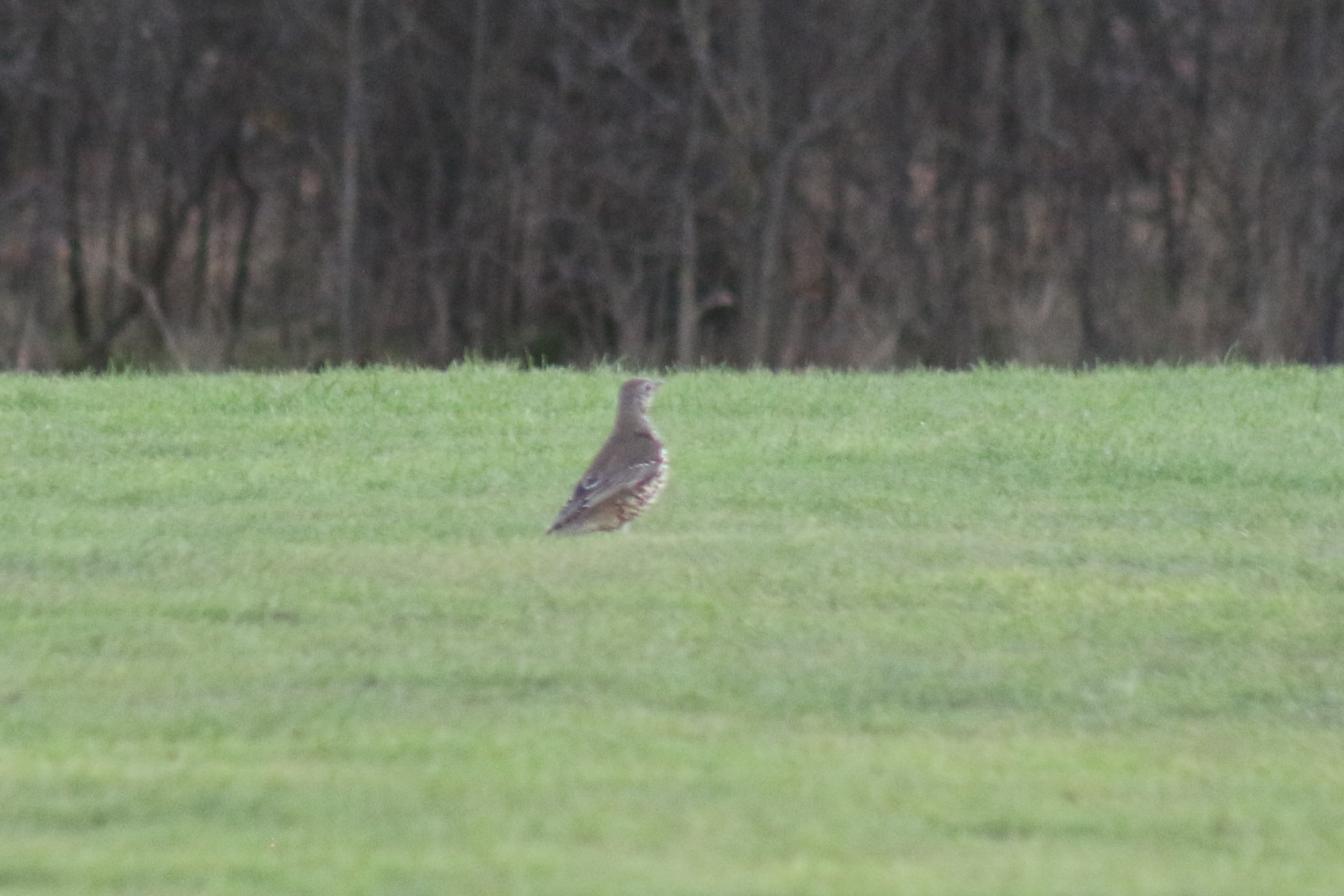
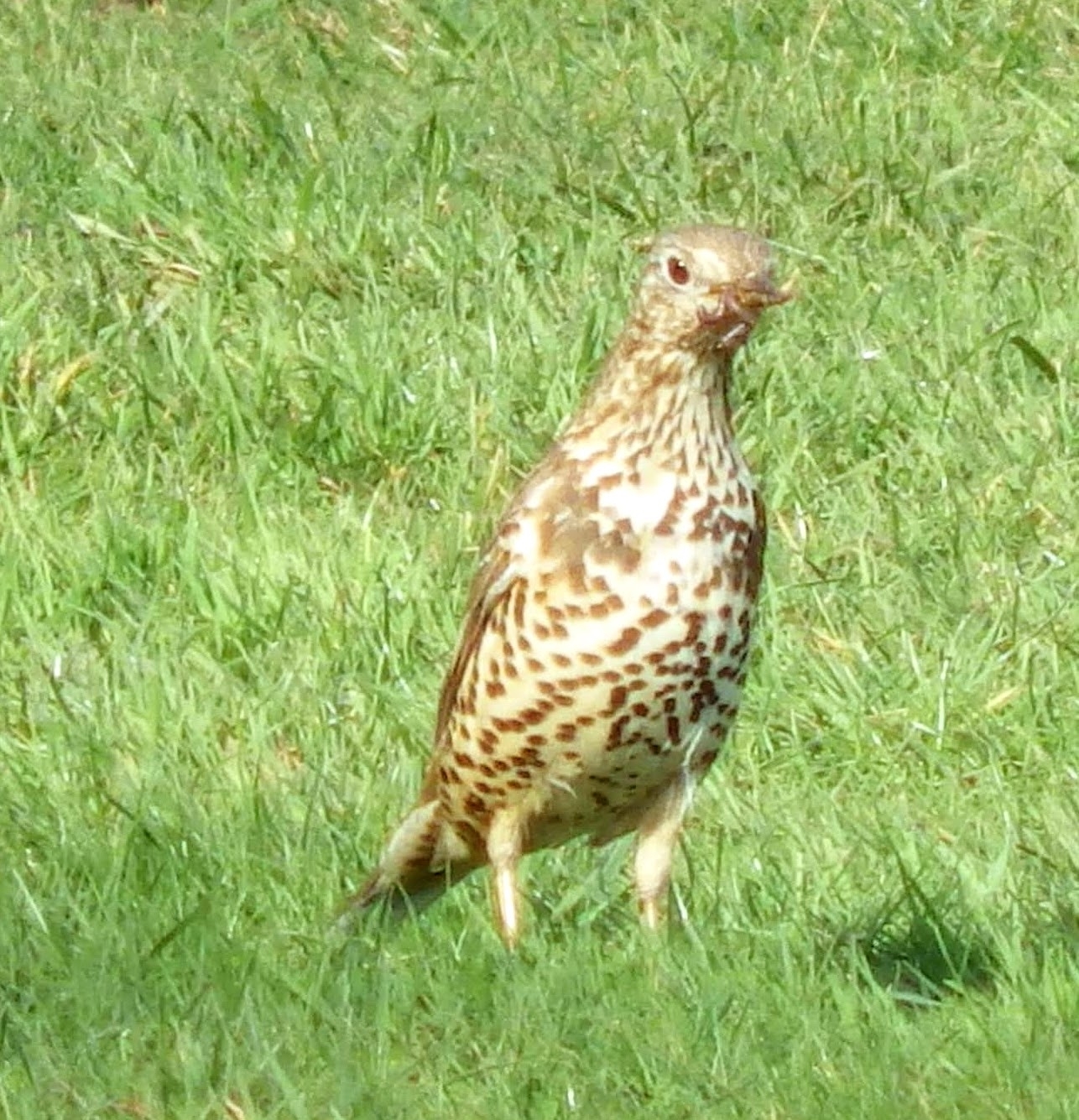
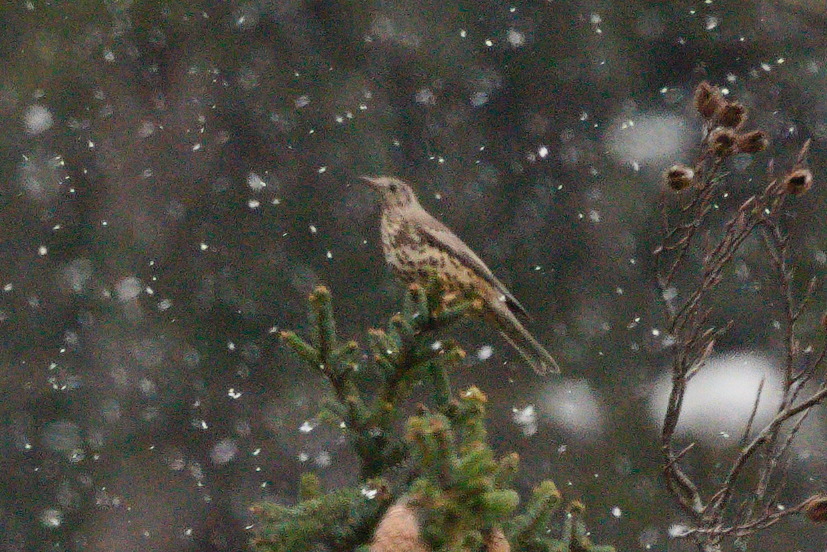
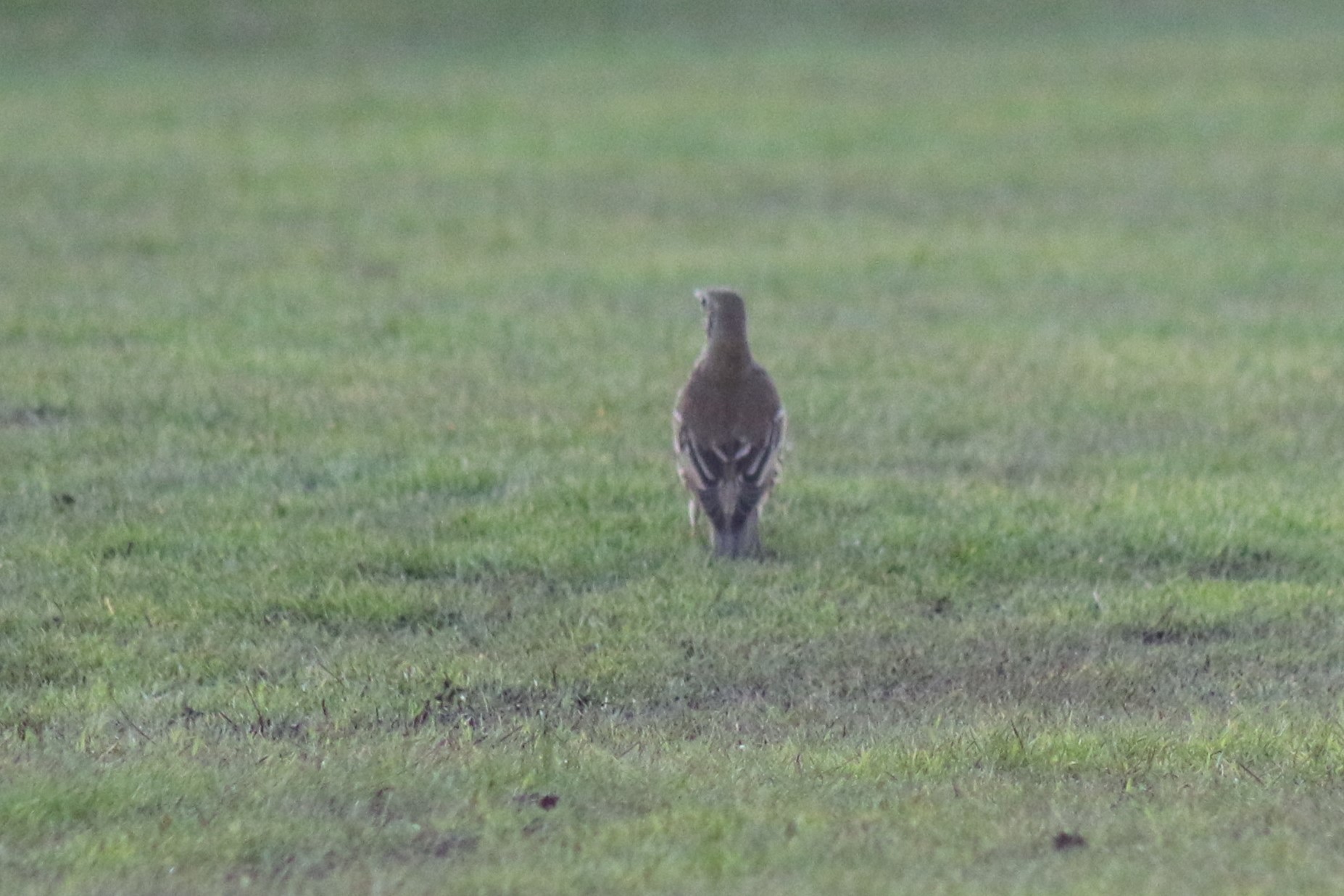
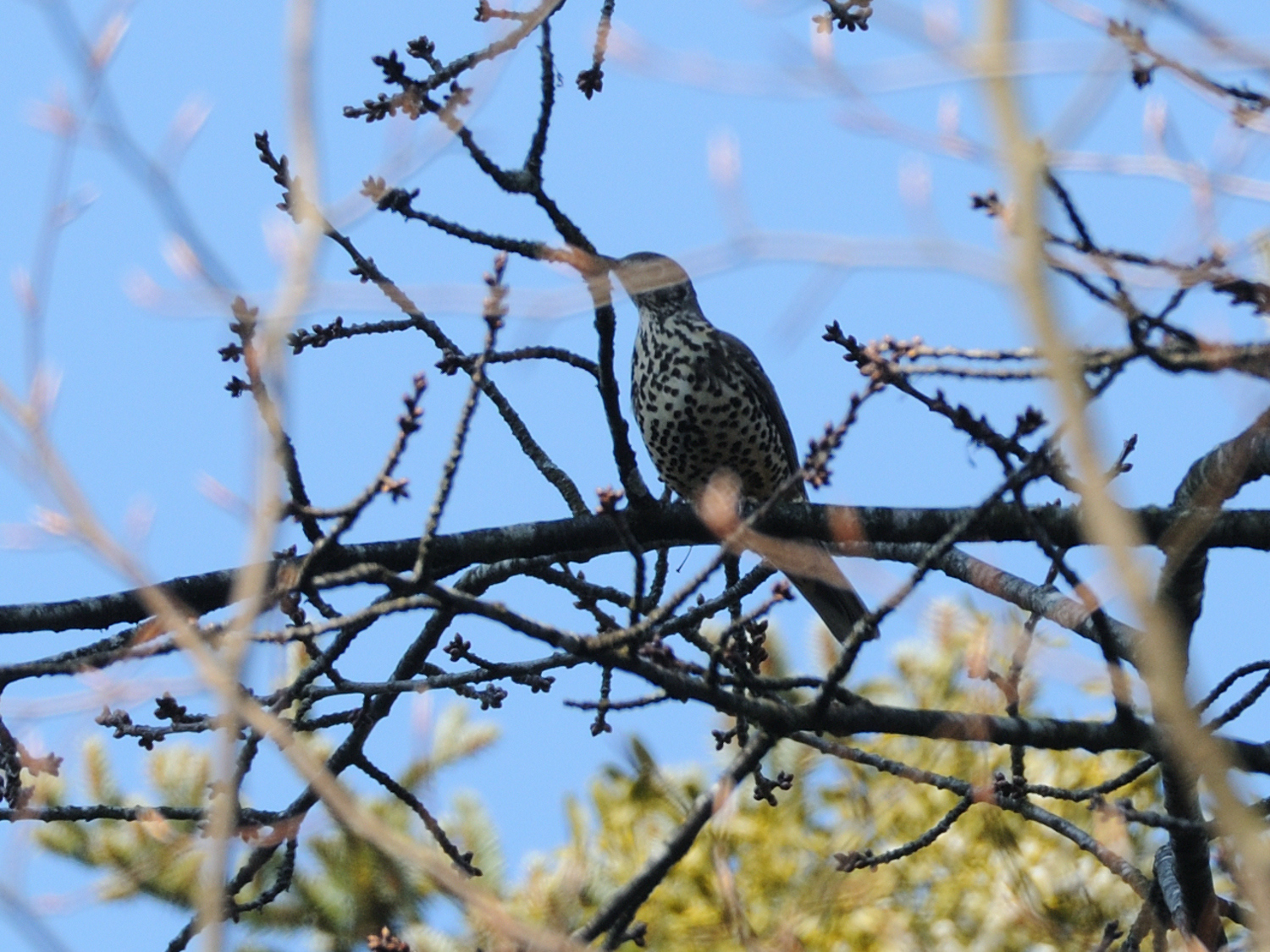
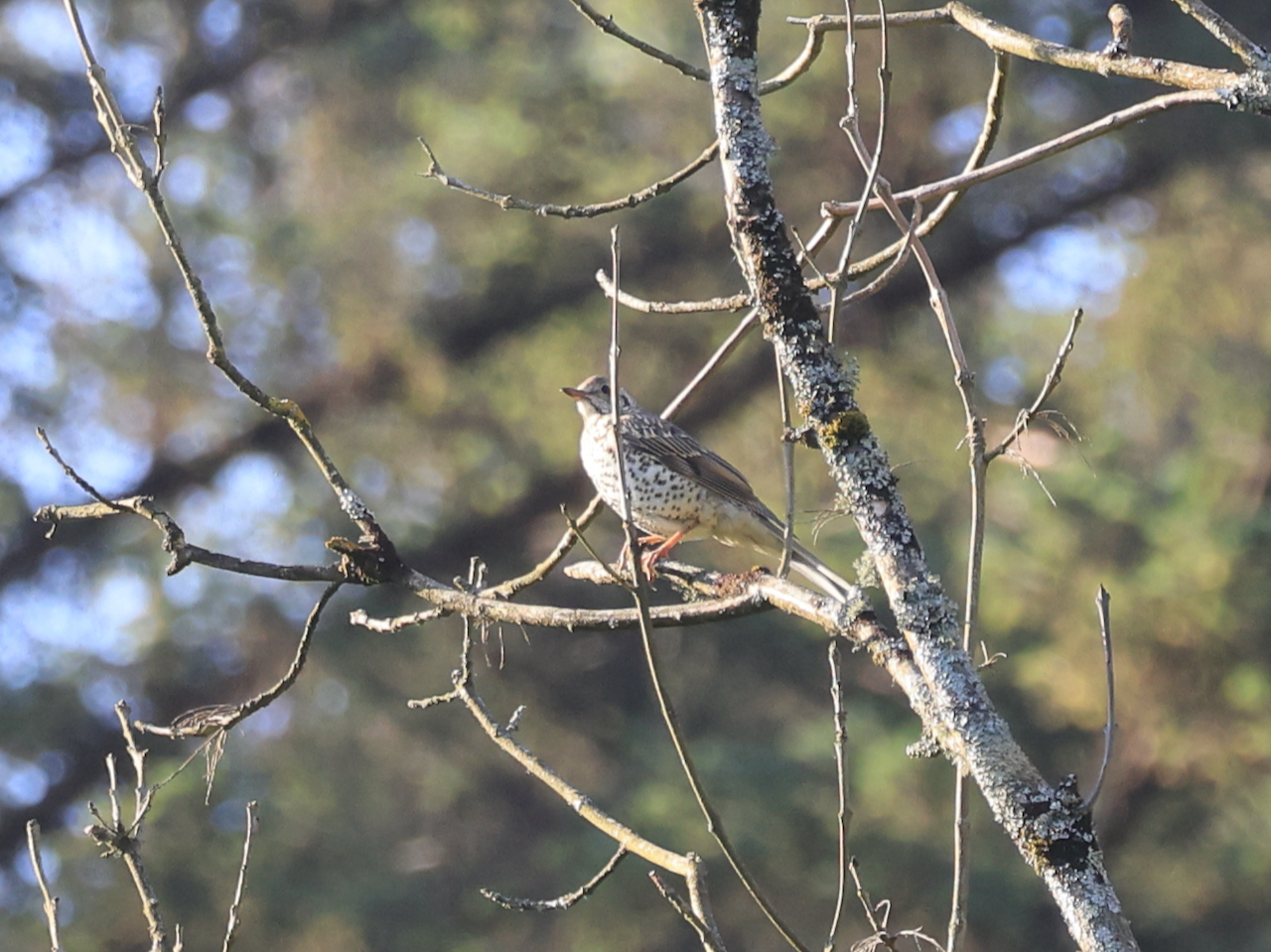
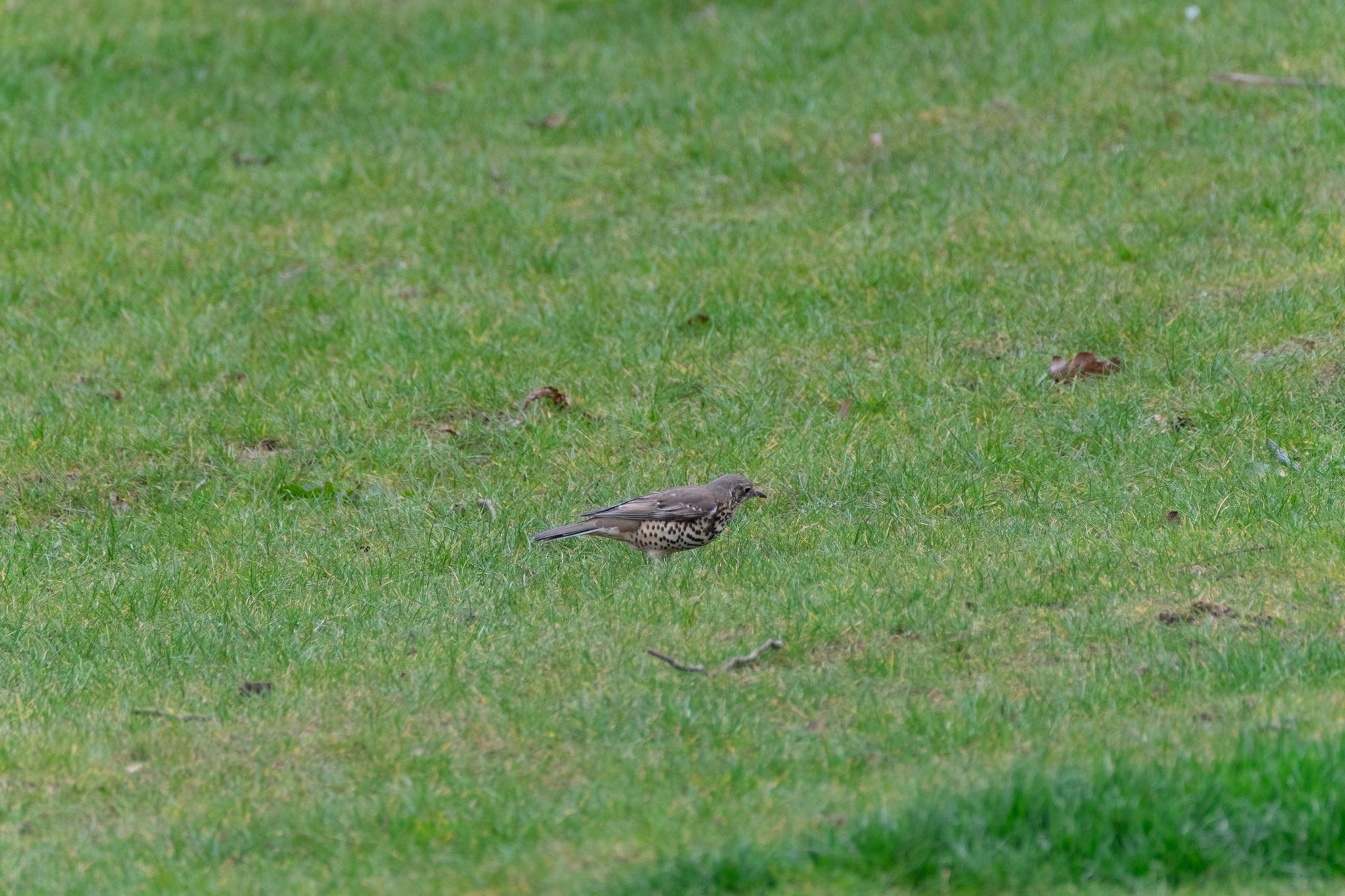
The largest thrush native to Europe, the nominate subspecies measures 27–28 cm in length with a 45 cm wingspan and weighs 93–167 g, averaging around 130 g. It has pale grey-brown upperparts, a greyish-white chin and throat, and yellowish-buff breast and off-white belly marked with round black spots that become denser on the lower chest. The long tail has white tips on the outer feathers, and the underwing coverts are white. The dark brown eyes contrast with a blackish bill that has a yellowish base to the lower mandible. Legs and feet are yellowish-brown. Sexes are similar in plumage. Juveniles resemble adults but have paler upperparts with creamy teardrop centres to many feathers and smaller spots on the underparts. Three subspecies exist with minimal differences: T. v. viscivorus (Europe to western Siberia), T. v. bonapartei (Central Asia, larger and paler), and T. v. deichleri (North Africa and Mediterranean islands).
Identification
Larger, paler, and longer-tailed than the sympatric song thrush. In the western Himalayas, it could be confused with plain-backed and long-tailed thrushes, but the plain-backed thrush lacks obvious wing bars, is more rufous above, and is barred rather than spotted below. The long-tailed thrush has olive-toned upperparts, bars on the breast, and two wing bars. Juvenile mistle thrushes superficially resemble White's thrush, but that species has golden-yellow plumage, scalloped underparts, and a distinctive underwing pattern. Key distinguishing features include the pale grey-brown upperparts, heavy spotting on underparts, white tail tips, and large size.
Distribution & Habitat
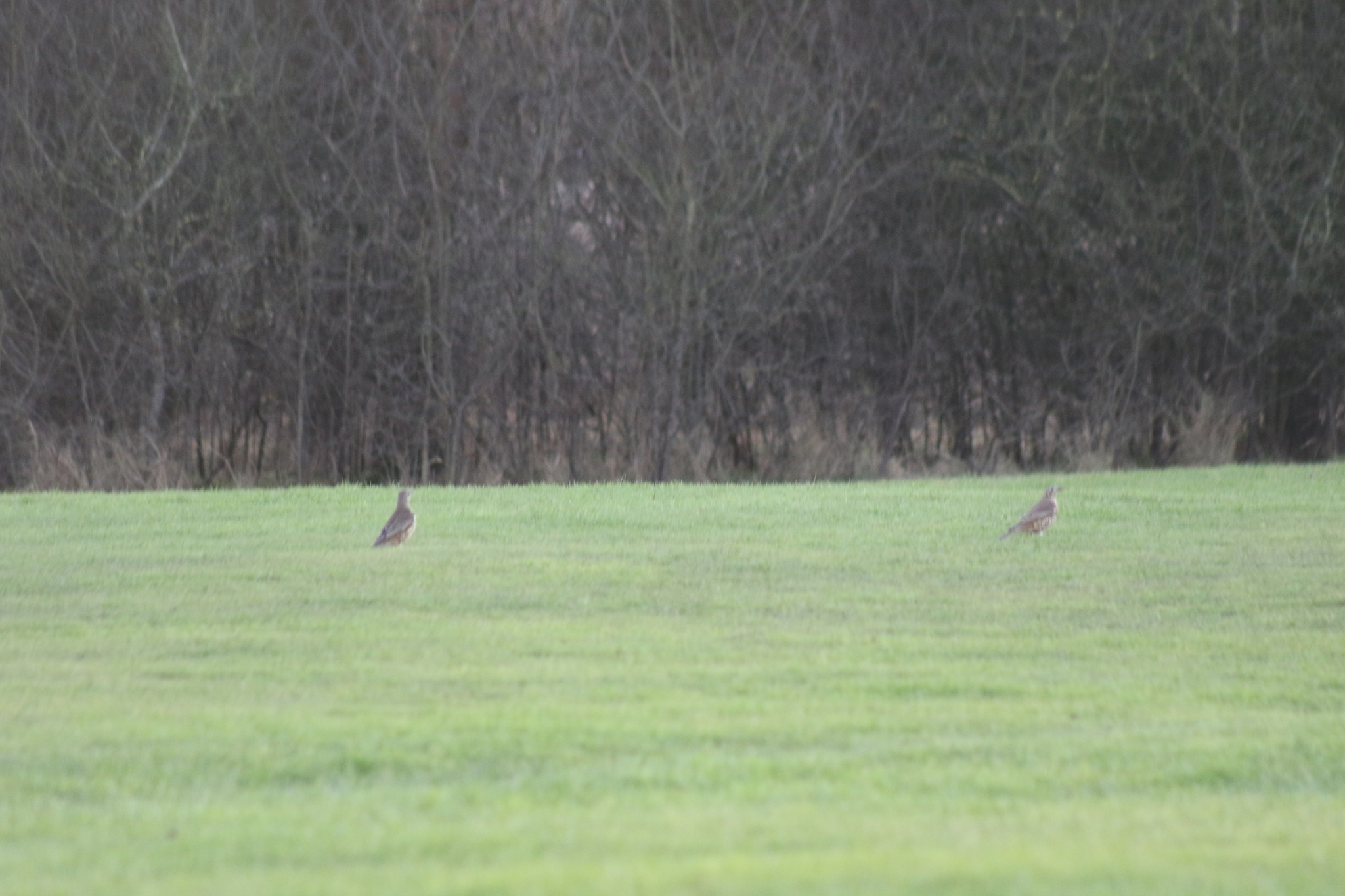
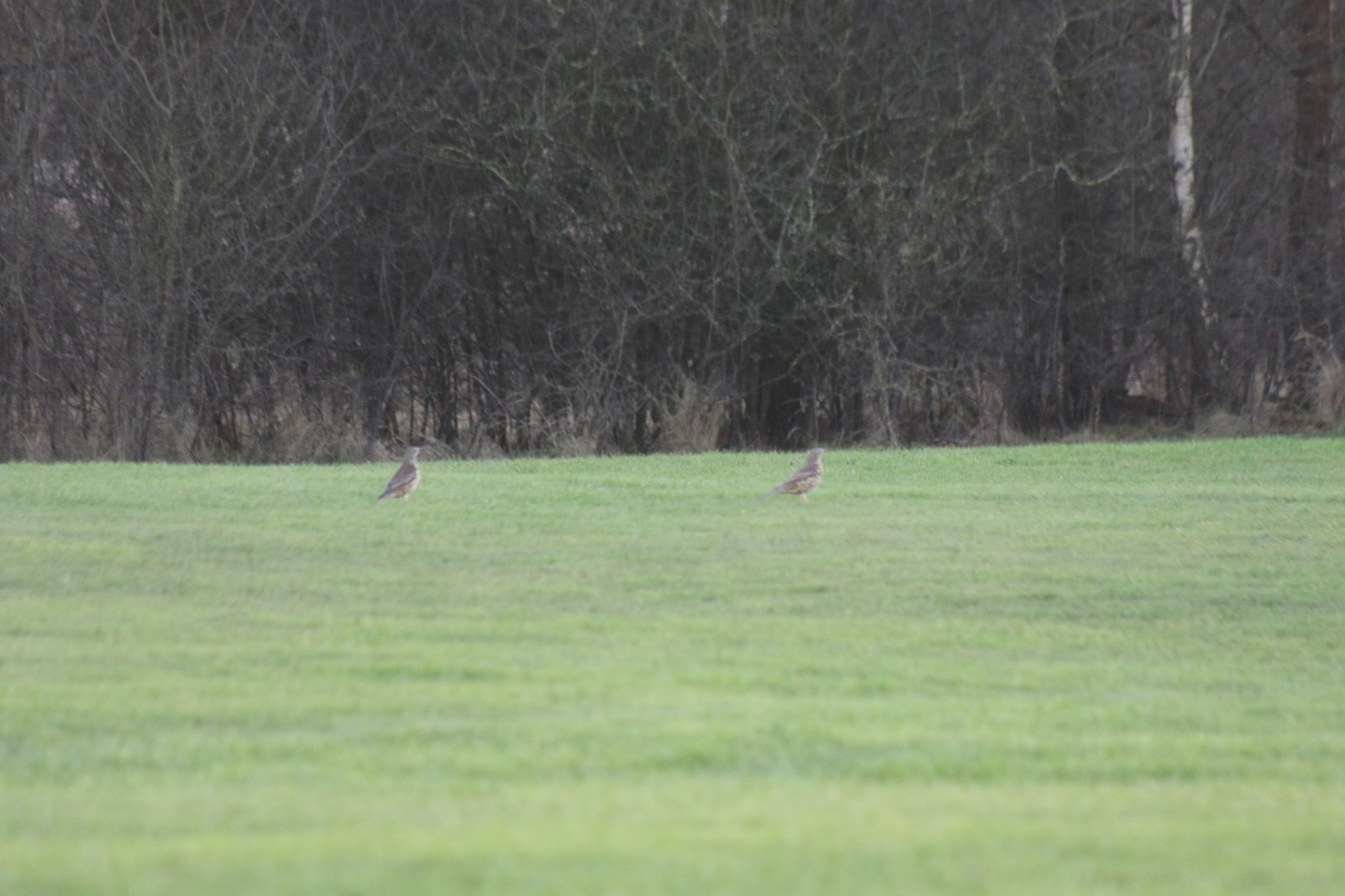
Breeds across much of Europe and temperate Asia, absent from the treeless far north, with discontinuous range in southeast Europe, Turkey, and the Middle East where it inhabits milder uplands and coastal regions. Northern and eastern populations are partial migrants, wintering in milder areas of Europe and North Africa. Scandinavian and Russian birds move south from mid-September, crossing the Strait of Gibraltar in large numbers between mid-October and November. British and northwest European breeding birds are resident or move only short distances. Breeding occurs up to 600 m in North African mountains and to 1,700 m in Europe. In winter and on migration, it uses more open habitats including agricultural land, moors, and grassy hills. Vagrants have occurred in the Azores, Faroe Islands, Iceland, Japan, and North America (first North American record in New Brunswick, December 2017).
Behavior & Ecology
Feeds mainly on invertebrates, fruit, and berries. Animal prey includes earthworms, insects, arthropods, slugs, and snails; plant food includes mistletoe, holly, yew, rowan, ivy, and other fruits. Forages on the ground and from low bushes, sometimes using stones as anvils to smash snails. Monogamous, breeding in the year after hatching. Territories are large: 0.6 ha for nesting, 15–17 ha for feeding. Nest is an open cup built in a tree fork or against a trunk, 2–9 m high. Clutch is 3–5 eggs, incubated 12–15 days mainly by female. Chicks fledge in 14–16 days; normally two broods per season. Young dependent for 15–20 days after fledging. In winter, individuals or pairs defend fruit-bearing trees (especially mistletoe clumps) as food reserves, chasing off other thrushes and fruit-eating birds. Main call is a dry chattering krrrr; song is loud and melodious with fluted whistles, audible up to 2 km away.
Conservation
IUCN Least Concern due to extensive range and high numbers. European breeding population estimated at 9–22.2 million birds; global total 12.2–44.4 million. Range expanded rapidly in the 18th and early 19th centuries. Current population appears to be declining, though not rapidly enough to trigger vulnerability criteria. In Britain, added to UK Red List in 2015 after 62% decline between 1967–2022. Threats include agricultural intensification, loss of invertebrate-rich pastures and mixed farms, and in Finland, loss of ancient forests. Adult survival, clutch size, and fledging success are all lower in arable landscapes than in areas with extensive pasture. Maximum longevity recorded is 21 years and 3 months.
Culture
Mentioned in Desiderius Erasmus's 16th-century collection of Latin proverbs: 'Turdus malum sibi ipse cacat' (the thrush himself excretes his own trouble), referring to mistletoe berries used in birdlime. Featured in a 16th-century sketch by Giovanni da Udine for Raphael's studio. Appears in early Renaissance poem 'The Harmony of Birds'. Described in Thomas Hardy's 'Darkling Thrush' and Edward Thomas's 'The Thrush'. Frances Hodgson Burnett's 1911 novel 'The Secret Garden' compares a character's secrecy to a mistle thrush defending its nest. Roy Harper's 1971 album 'Stormcock' (featuring Jimmy Page) is named after the species. Referenced in Jethro Tull's 'Jack-in-the-Green' and The Decemberists' 'Won't Want for Love (Margaret in the Taiga)'. Old names include 'stormcock', 'screech', 'shrite', 'gawthrush', and 'holm thrush', reflecting its loud call and habitat preferences.
Source: Wikipedia · CC BY-SA 3.0
Taxonomy
- Order
- Passeriformes
- Family
- Turdidae
- Genus
- Turdus
- eBird Code
- misthr1
Subspecies (3)
-
Turdus viscivorus bonapartei
breeds eastern Siberia to central Asia and the Himalayas; winters to northern India
-
Turdus viscivorus deichleri
northwestern Africa, Corsica, and Sardinia
-
Turdus viscivorus viscivorus
breeds Western Palearctic (except range of deichleri) to western Siberia; winters to northern Africa and southwestern Asia
Data Sources
Species description from Wikipedia, licensed under CC BY-SA 3.0.
Bird images and sounds sourced from GBIF, contributed by citizen scientists worldwide under Creative Commons licenses.
Taxonomy data from AviList 2025.