Passeriformes / Turdidae / Turdus
Common Blackbird
Turdus merula · 欧乌鸫
Introduction
A species of true thrush breeding in Europe, western Asia, and North Africa, and introduced to Australia and New Zealand. Depending on latitude, it may be resident, partially migratory, or fully migratory. It inhabits woods and gardens, constructing cup-shaped nests bound with mud. The species is omnivorous, feeding on insects, earthworms, berries, and fruits. Both sexes are territorial on breeding grounds but gregarious during migration and winter.
Description
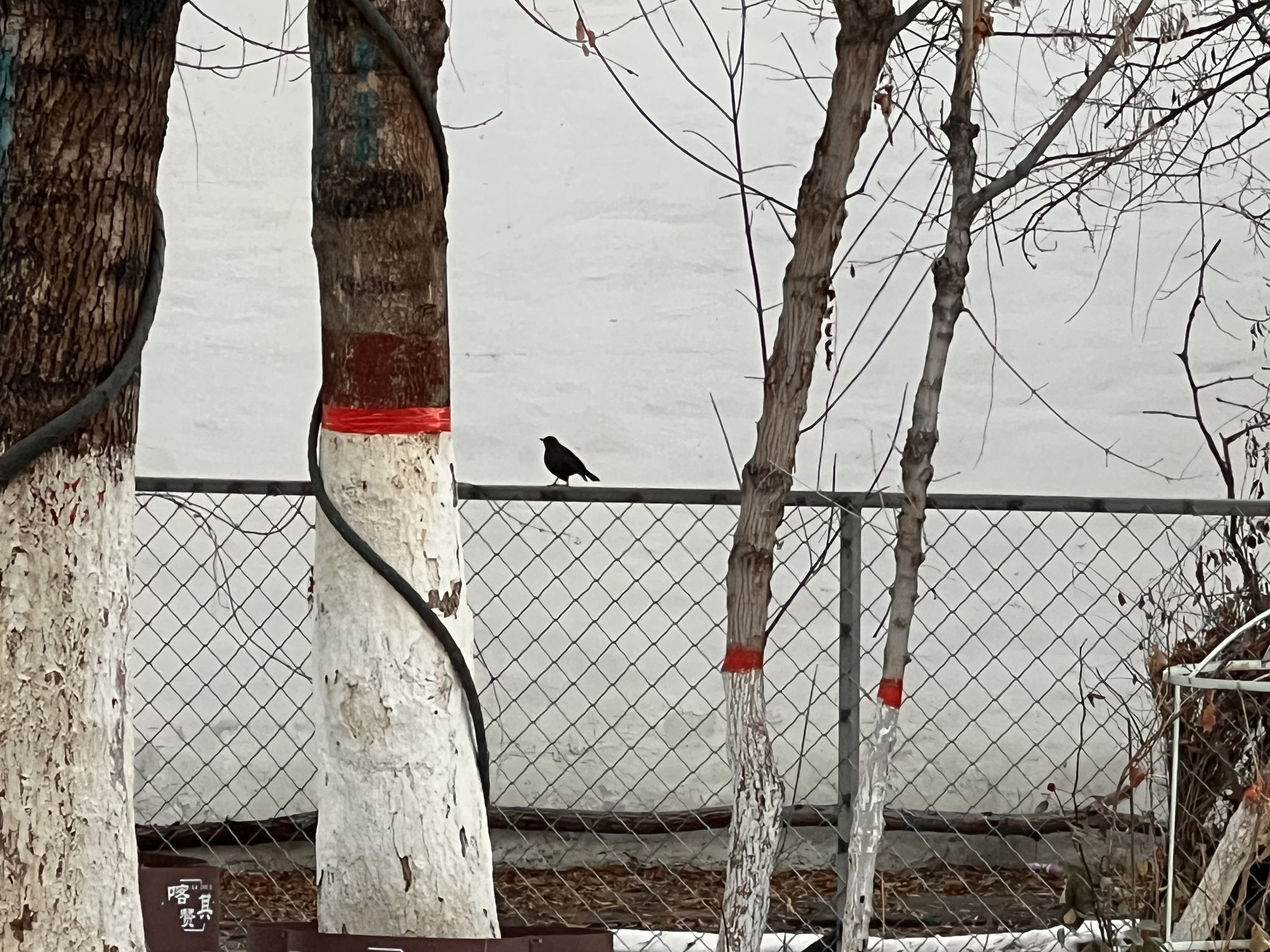
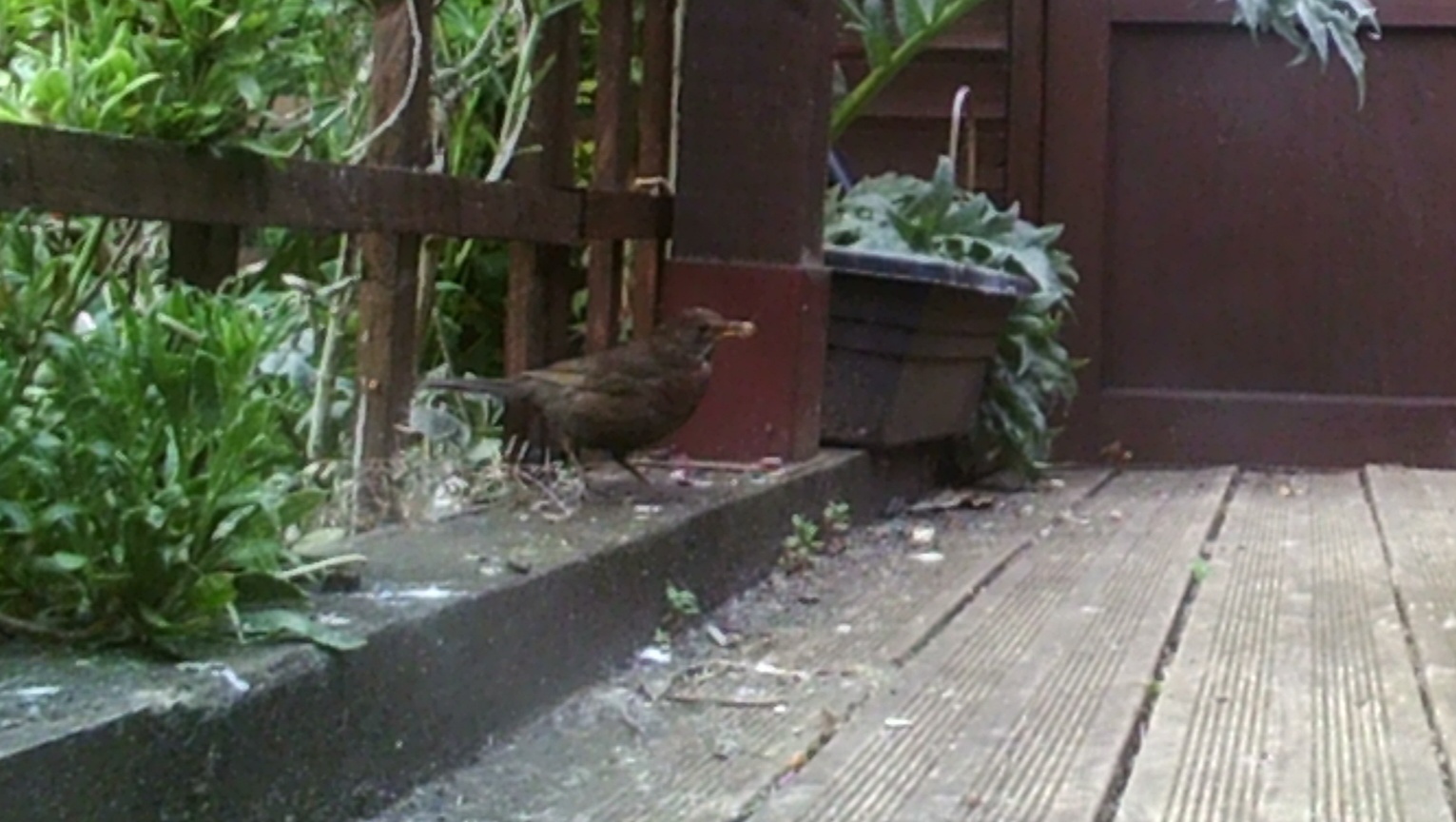
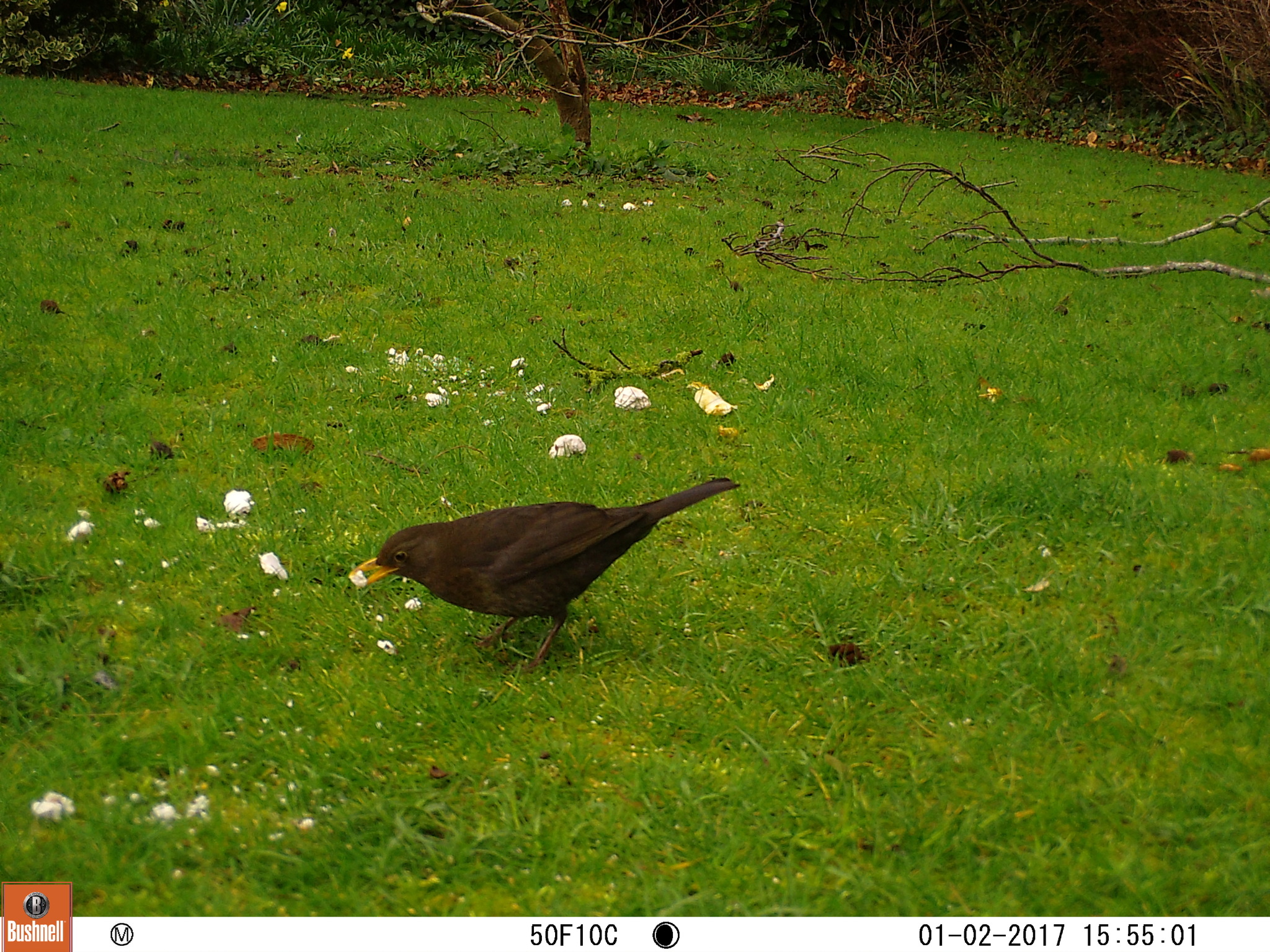
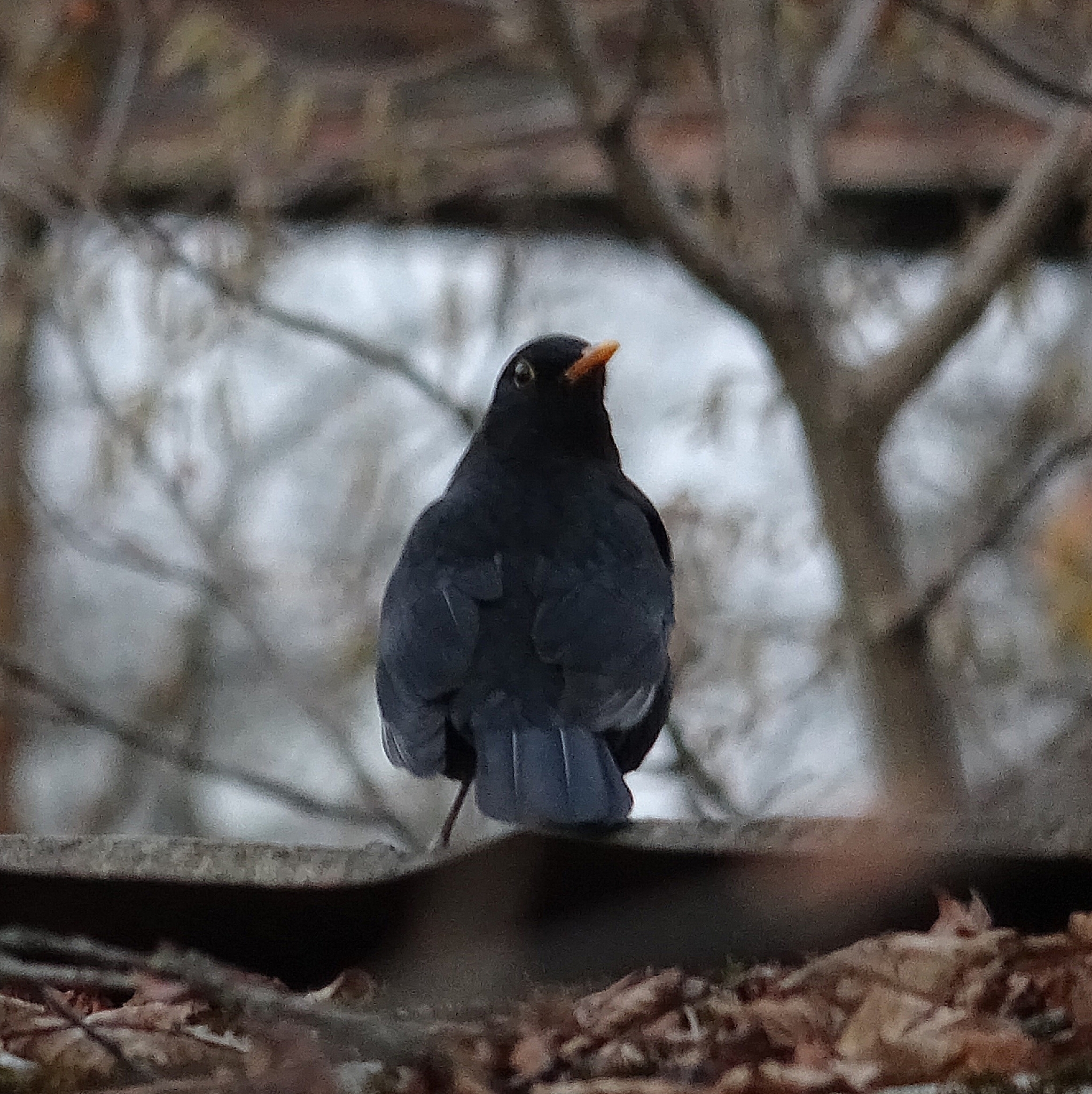
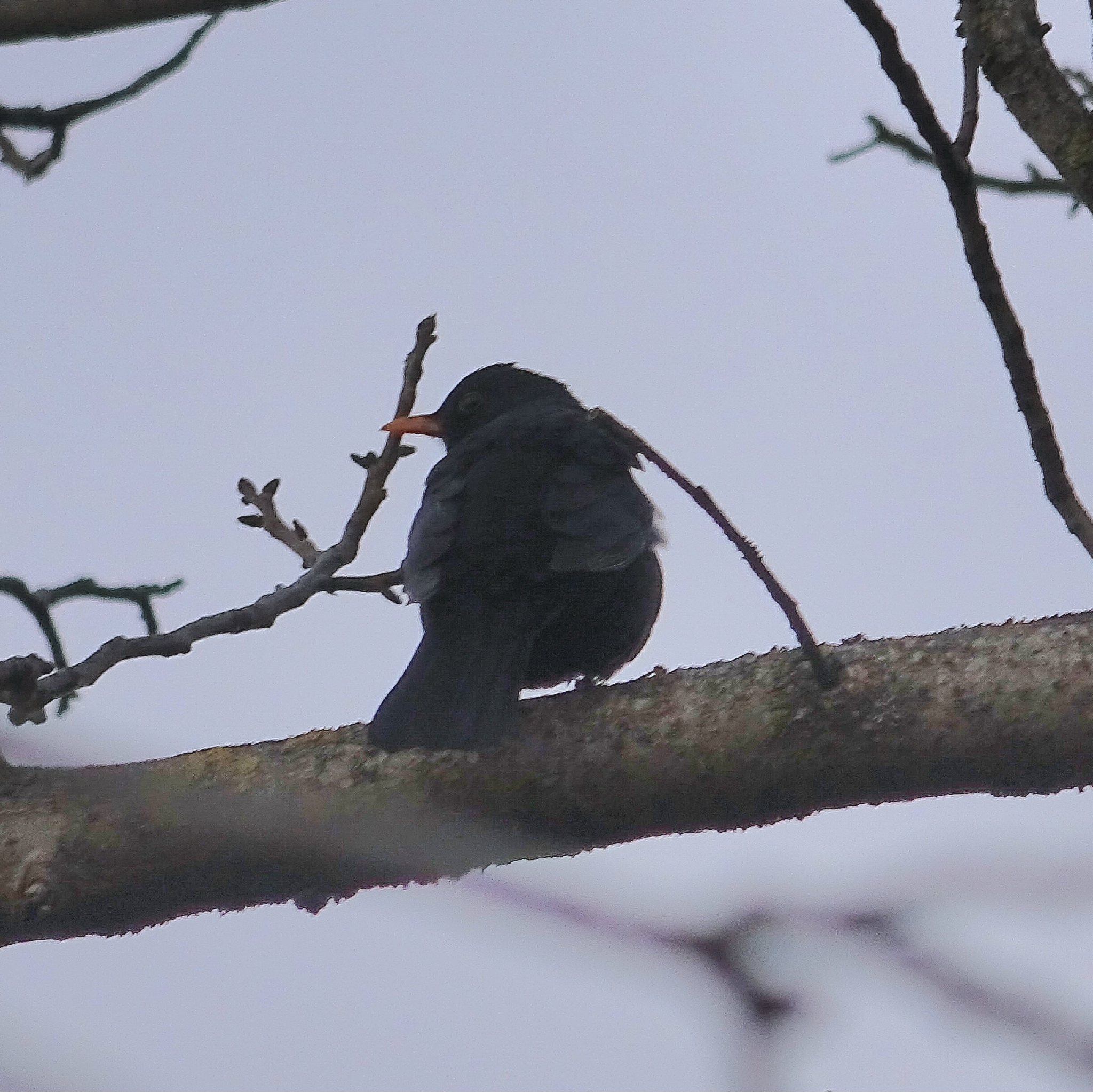
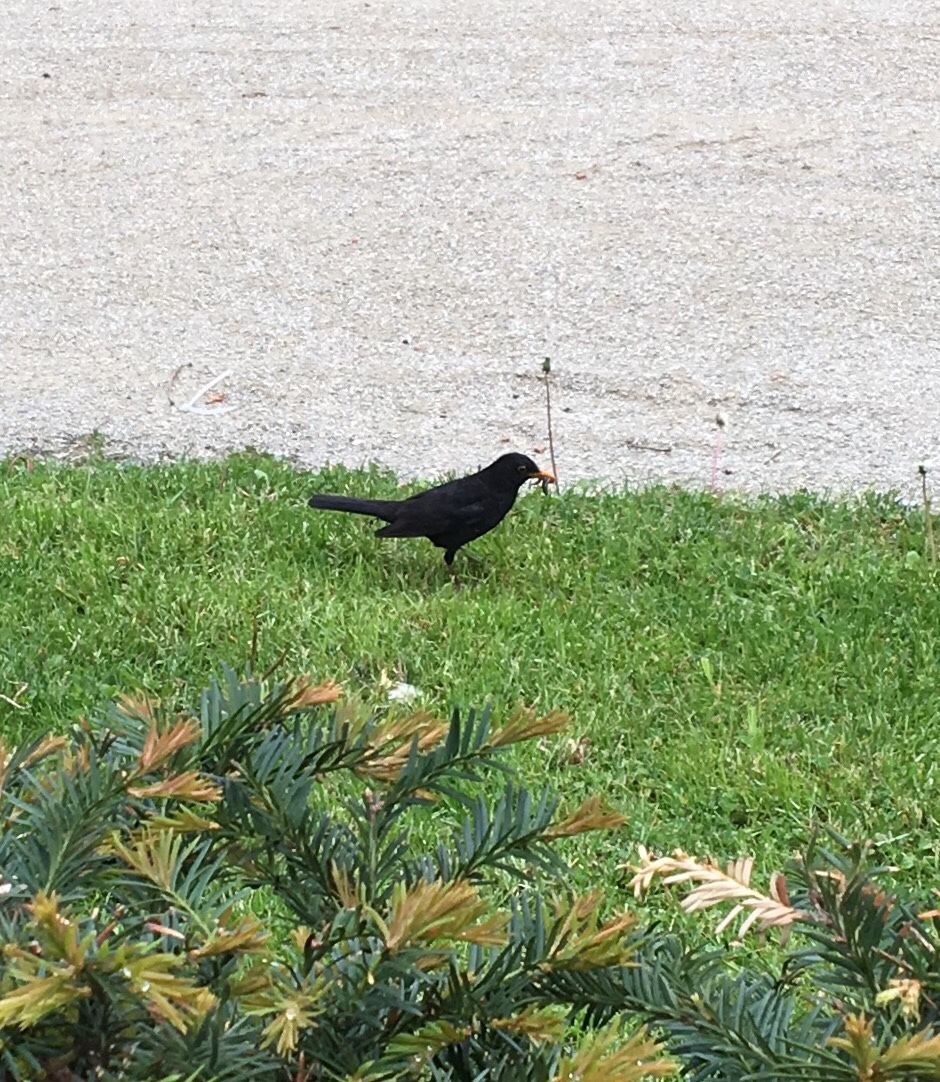
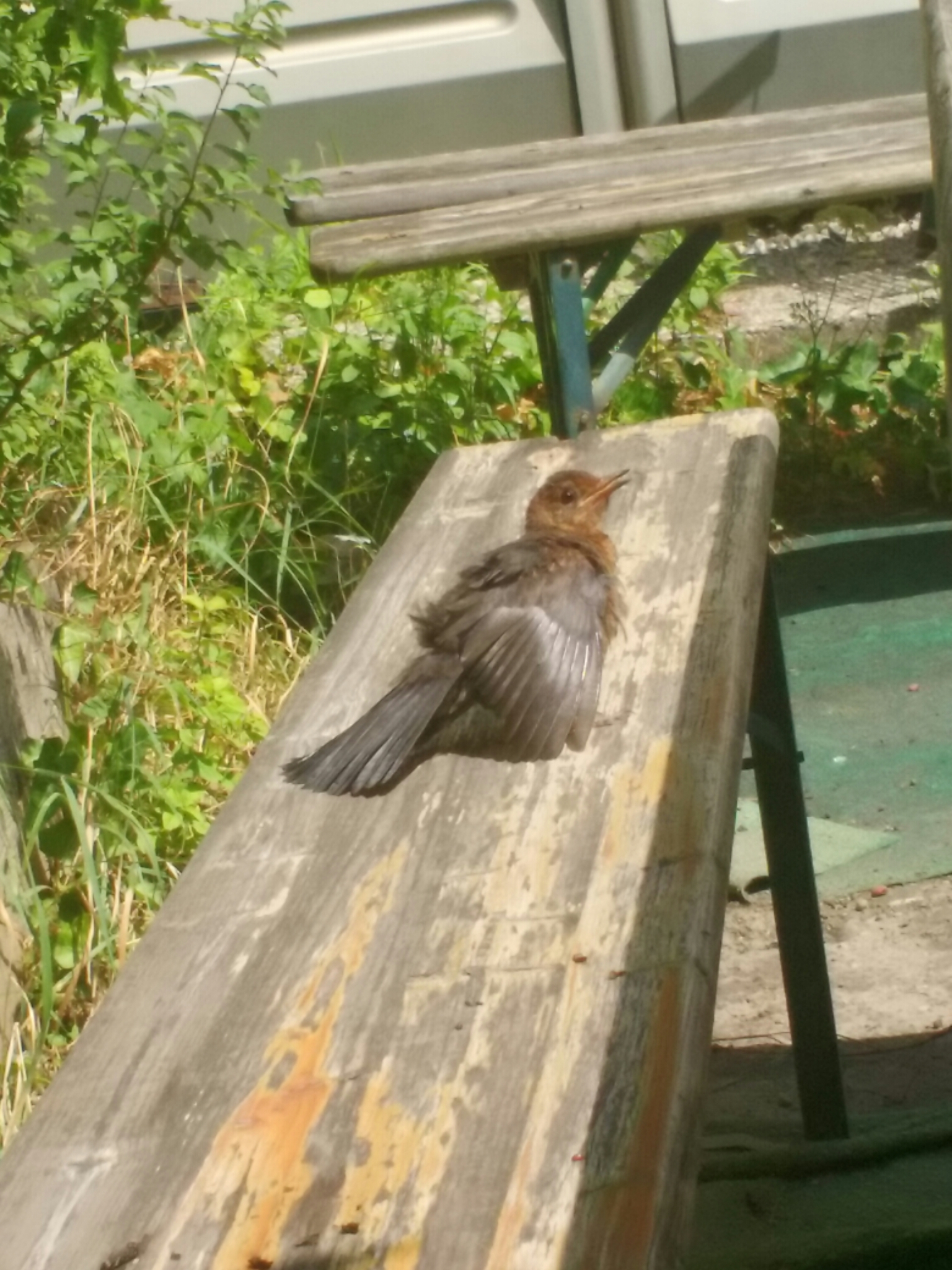
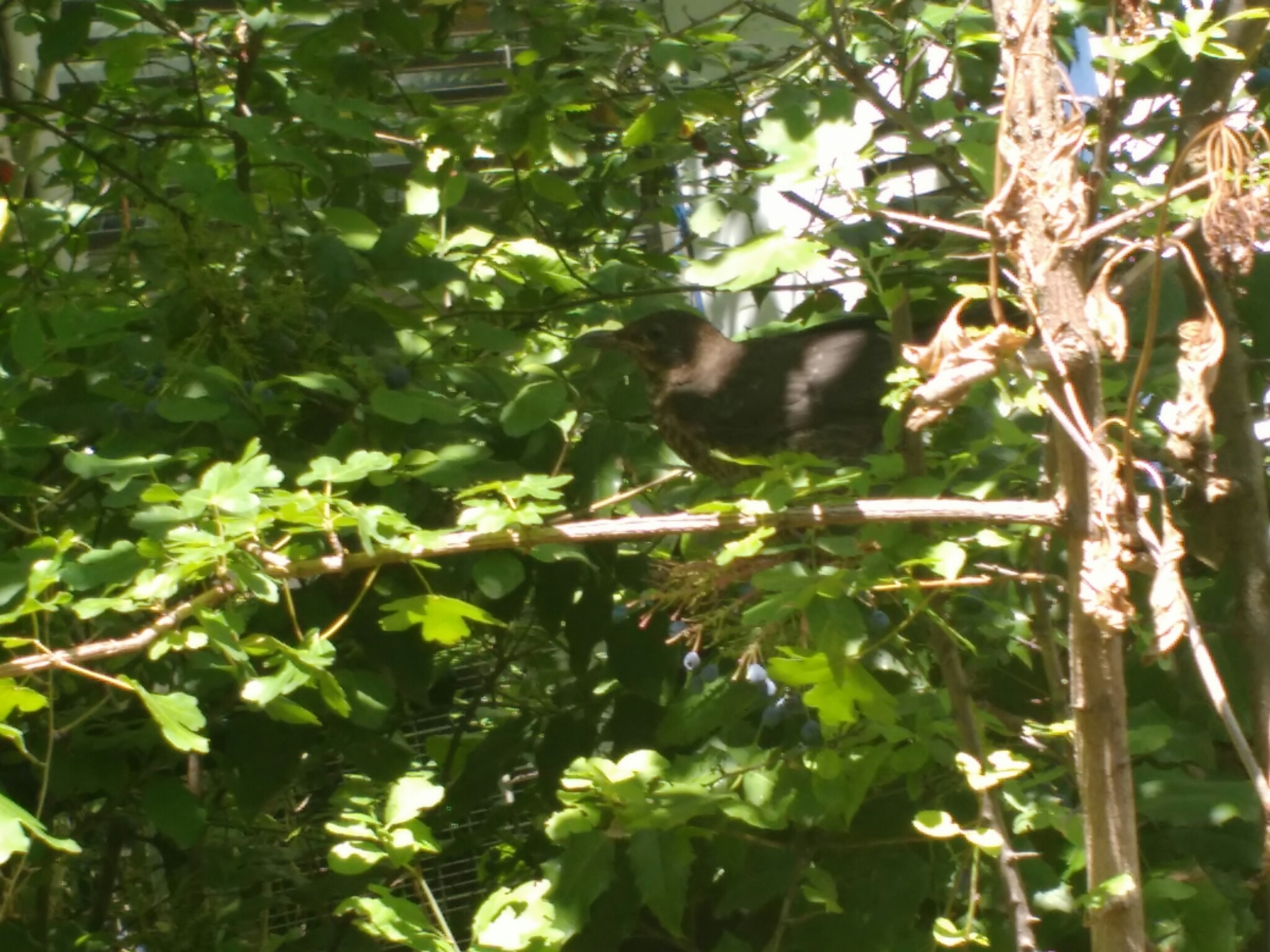
The nominate subspecies is 23.5–29 cm (9.3–11.4 in) in length and weighs 80–125 g (2.8–4.4 oz). The adult male has glossy black plumage, blackish-brown legs, a yellow eye-ring, and an orange-yellow bill that darkens in winter. The adult female is sooty-brown with a dull yellowish-brownish bill, a brownish-white throat, and weak breast mottling. Juveniles resemble females but have pale spots on upperparts and speckled breasts. First-year males resemble adults but have a dark bill, weaker eye ring, and brown folded wings.
Identification
In Europe, it can be confused with the paler-winged first-winter ring ouzel or the common starling. Key marks for the adult male include all-black plumage, a yellow eye-ring, and an orange-yellow bill. Females and juveniles are mainly dark brown. Flight style involves bursts of rapid wing beats interspersed with level or diving movement, differing from the normal fast, agile flight.
Distribution & Habitat
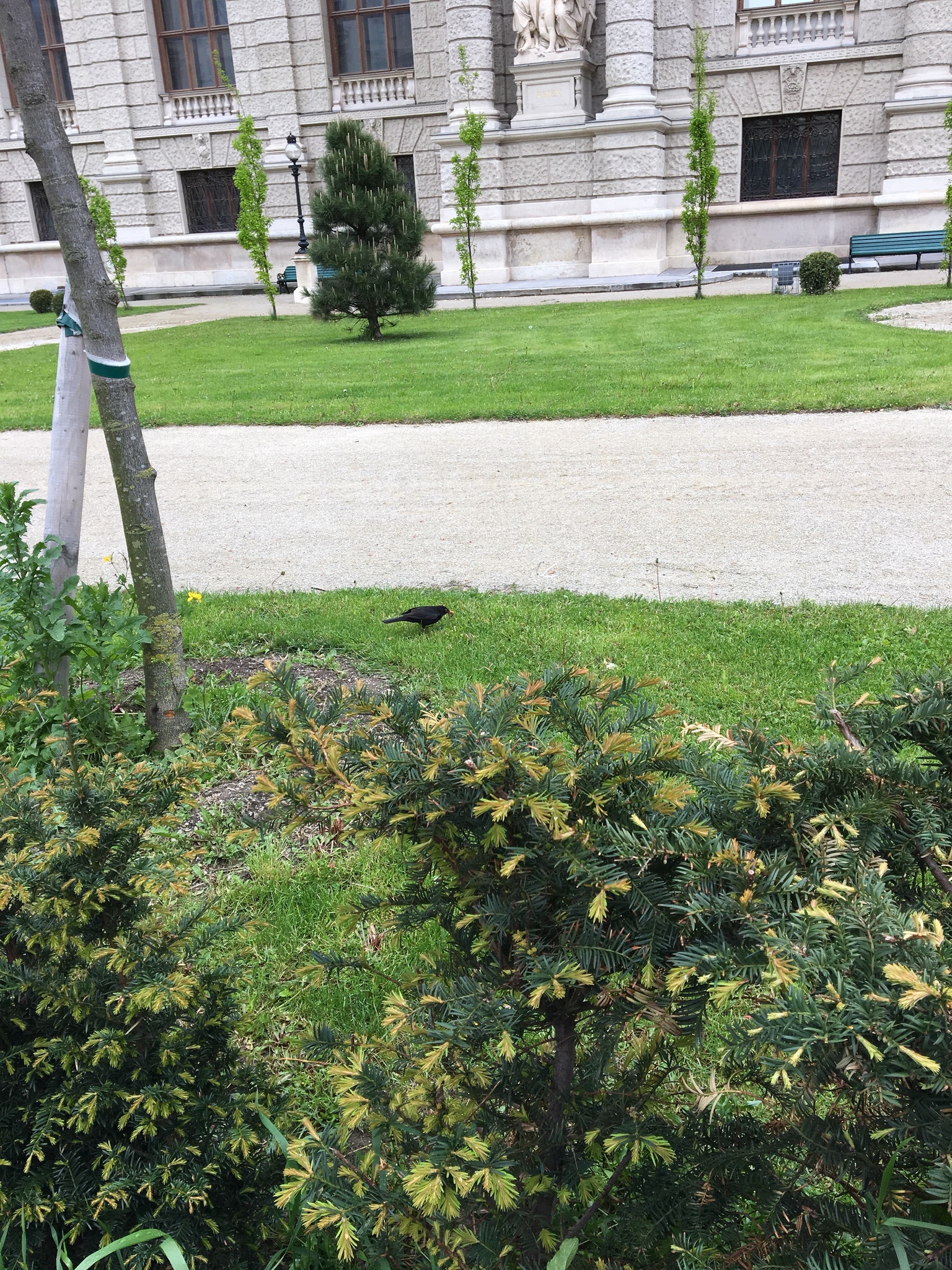
Breeds in temperate Eurasia, North Africa, the Canary Islands, and South Asia. Introduced to Australia and New Zealand. Southern and western populations are sedentary; northern birds migrate south to northern Africa and tropical Asia. Urban males often overwinter in cooler climes. Occurs at elevations up to 1,000 m in Europe, 2,300 m in North Africa, and higher in the Himalayas. Prefers deciduous trees with dense undergrowth, gardens, parks, and hedgerows.
Behavior & Ecology
Males defend territory with a 'bow and run' display; females compete aggressively for nesting sites. Monogamous pairs often stay together, though extra-pair paternity occurs. Nests are cup-shaped, built by females in creepers or bushes using grass, leaves, and mud. Clutches contain 3–5 bluish-green eggs marked with reddish-brown blotches. Incubation lasts 12–14 days; fledging takes 10–19 days. Omnivorous diet includes insects, earthworms, seeds, and berries. Males sing a melodious warble from March to June and mimic environmental sounds.
Conservation
Categorized as Least Concern by the IUCN due to an extensive range and large population (estimated 79–160 million individuals in Europe). Populations in the western Palearctic are generally stable or increasing, though local declines occur on farmland due to hedgerow removal and pesticide use. The Usutu virus, spread by mosquitoes, has significantly reduced numbers in parts of Europe.
Culture
National bird of Sweden. Featured in the nursery rhyme 'Sing a song of sixpence' and the Christmas carol 'The Twelve Days of Christmas' (originally 'four colly birds'). Symbolized resignation in 'The Duchess of Malfi' and vigilance in folklore. French composer Olivier Messiaen transcribed its songs, notably in 'Le merle noir'. Its song appears in The Beatles' 'Blackbird'.
Source: Wikipedia · CC BY-SA 3.0
Taxonomy
- Order
- Passeriformes
- Family
- Turdidae
- Genus
- Turdus
Subspecies (7)
-
Turdus merula aterrimus
southeastern Europe to Crete, Rhodes, Caucasus, Transcaucasia, and northern Iran
Data Sources
Species description from Wikipedia, licensed under CC BY-SA 3.0.
Bird images and sounds sourced from GBIF, contributed by citizen scientists worldwide under Creative Commons licenses.
Taxonomy data from AviList 2025.