Common Blackbird
Turdus merula
欧乌鸫
Introduction
A Turdus thrush species native to Europe, western Asia, and North Africa, introduced to Australia and New Zealand. Breeds in woods and gardens, constructing cup-shaped nests bound with mud. Omnivorous diet includes insects, earthworms, berries, and fruits. Both sexes are territorial during breeding but gregarious during migration and winter. Depending on latitude, populations may be resident, partially migratory, or fully migratory. IUCN Least Concern with extensive range of 32.4 million km² and European population of 79-160 million individuals.
Description
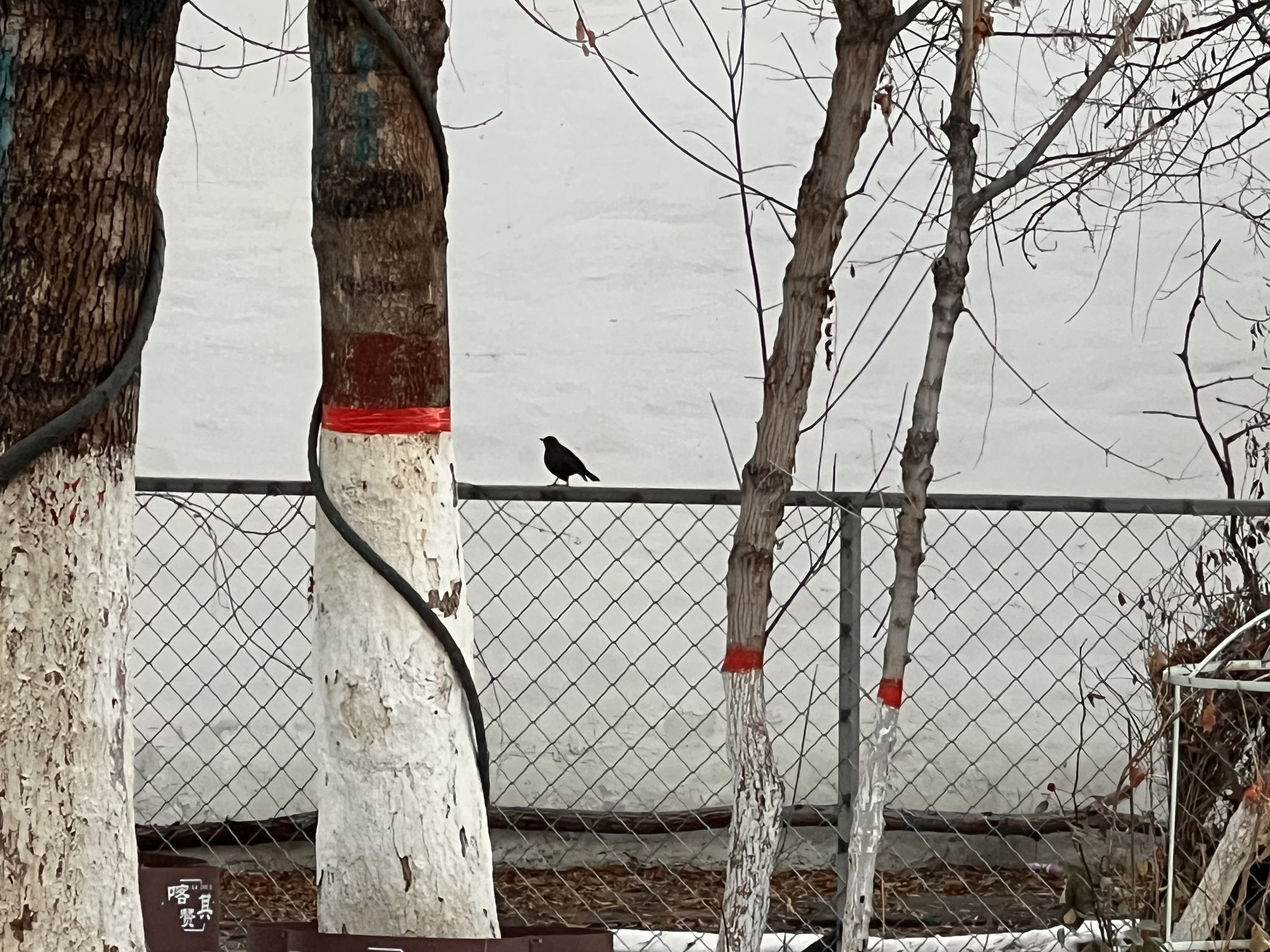
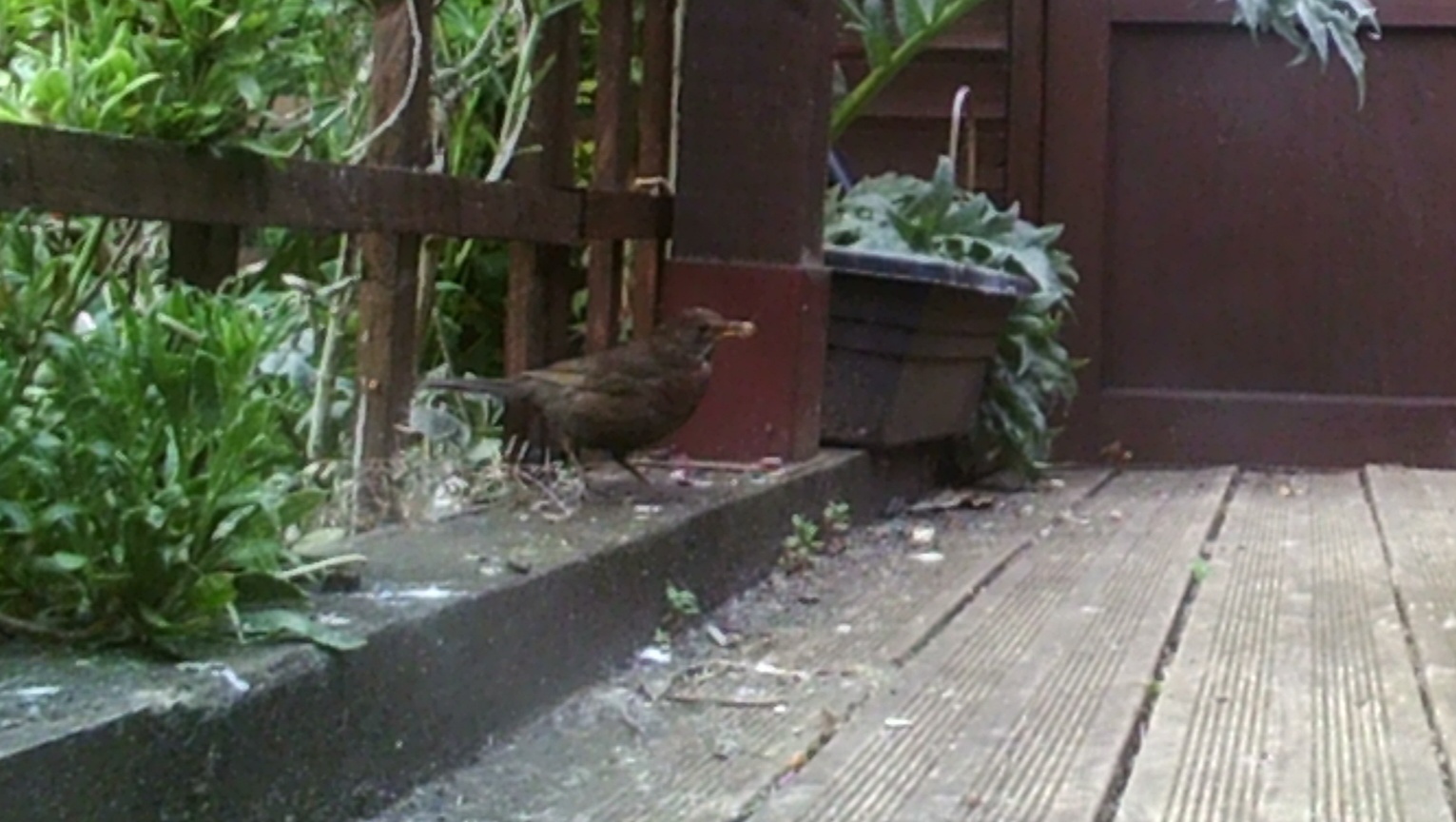
Length 23.5–29 cm, weight 80–125 g, with a long tail. Adult male has glossy black plumage, blackish-brown legs, yellow eye-ring, and orange-yellow bill (darkens in winter). Adult female is sooty-brown with dull yellowish-brown bill, brownish-white throat, and weak breast mottling. Juvenile resembles female but has pale spots on upperparts and speckled breast. First-year male has dark bill, weaker eye-ring, and brown folded wing.
Identification
Adult male is unmistakable with all-black plumage and bright yellow eye-ring and bill. Female and juvenile are sooty-brown with dull yellowish-brown bills, differing from the paler-winged first-winter ring ouzel (Turdus torquatus) and the speckled, triangular-winged common starling (Sturnus vulgaris). The combination of uniform dark plumage and yellow orbital area distinguishes it from similar thrushes.
Distribution & Habitat
Breeds across temperate Eurasia, North Africa, Canary Islands, and South Asia. Introduced to Australia and New Zealand. Southern and western populations are sedentary; northern birds migrate south to northern Africa and tropical Asia. Urban males are more likely to overwinter than rural males. Favours deciduous woodland with dense undergrowth; gardens support highest breeding density (up to 7.3 pairs per hectare). Occurs up to 1,000 m in Europe and 2,300 m in North Africa.
Behavior & Ecology
Omnivorous forager, primarily ground-feeding by running and hopping. Takes insects, earthworms, seeds, and berries. Male performs courtship display with oblique runs and head-bowing. Monogamous, with pair separation up to 20% after poor breeding seasons; up to 17% extra-pair paternity. Female builds cup nest in creeper or bush; lays 3-5 bluish-green eggs. Incubation 12-14 days; fledging 10-19 days. Produces melodious varied warble from elevated perches, plus seee alarm calls, pook-pook-pook predator warnings, and chink-chink territorial calls. Life expectancy 2.4 years; maximum recorded age 21 years 10 months.
Conservation
IUCN Least Concern; does not approach population decline thresholds. Western Palearctic populations generally stable or increasing, though local farmland declines occur due to hedgerow removal, drainage, and pesticides. Introduced Australian populations are considered pests damaging orchards and spreading weeds. Usutu virus, spread by mosquitoes, has significantly reduced European populations since 1996. The species is the most widespread avian seed disperser in New Zealand.
Culture
Regarded as sacred in Classical Greek folklore but said to die if consuming pomegranates. Referenced in the nursery rhyme 'Sing a song of sixpence' and the carol 'The Twelve Days of Christmas' (originally 'four colly birds'). Edward Thomas mentions its song in the poem 'Adlestrop'. Symbolises resignation in 'The Duchess of Malfi' and vigilance in English folklore. National bird of Sweden with 1-2 million breeding pairs. Featured on stamps in multiple countries. French composer Olivier Messiaen transcribed its songs, notably in 'Le merle noir' (1952). Referenced in the Beatles song 'Blackbird' as a civil rights symbol.
Source: Wikipedia · CC BY-SA 3.0
Taxonomy
- Order
- Passeriformes
- Family
- Turdidae
- Genus
- Turdus
- eBird Code
- eurbla
Subspecies (7)
-
Turdus merula aterrimus
southeastern Europe to Crete, Rhodes, Caucasus, Transcaucasia, and northern Iran
-
Turdus merula azorensis
Azores
-
Turdus merula cabrerae
Madeira and western Canary Islands
-
Turdus merula intermedius
breeds central Asia to northeastern Afghanistan, Pamirs, and Xinjiang; winters to southern Iraq
-
Turdus merula mauritanicus
North Africa (Morocco to Tunisia)
-
Turdus merula merula
western Europe; introduced southeastern Australia (southeastern Queensland to Eyre Peninsula, Tasmania, Lord Howe and Norfolk islands (east of Australia), New Zealand (including subantarctic islands)
-
Turdus merula syriacus
southern Türkiye to Syria, northern Iraq, and southern Iran
Data Sources
Species description from Wikipedia, licensed under CC BY-SA 3.0.
Bird images and sounds sourced from GBIF, contributed by citizen scientists worldwide under Creative Commons licenses.
Taxonomy data from AviList 2025.