Japanese Thrush
Turdus cardis
乌灰鸫
Introduction
The Japanese thrush (Turdus cardis) is a migratory thrush species. It breeds in central China and Japan, arriving on breeding grounds in late April or early May. Winter range includes coastal southern China, Hainan Island, northern Laos, and Vietnam. It occurs as a passage migrant in Taiwan and has been recorded as a rare vagrant in Thailand. The species inhabits forested habitats, both natural and secondary, preferring woodland edges and shaded areas.
Description
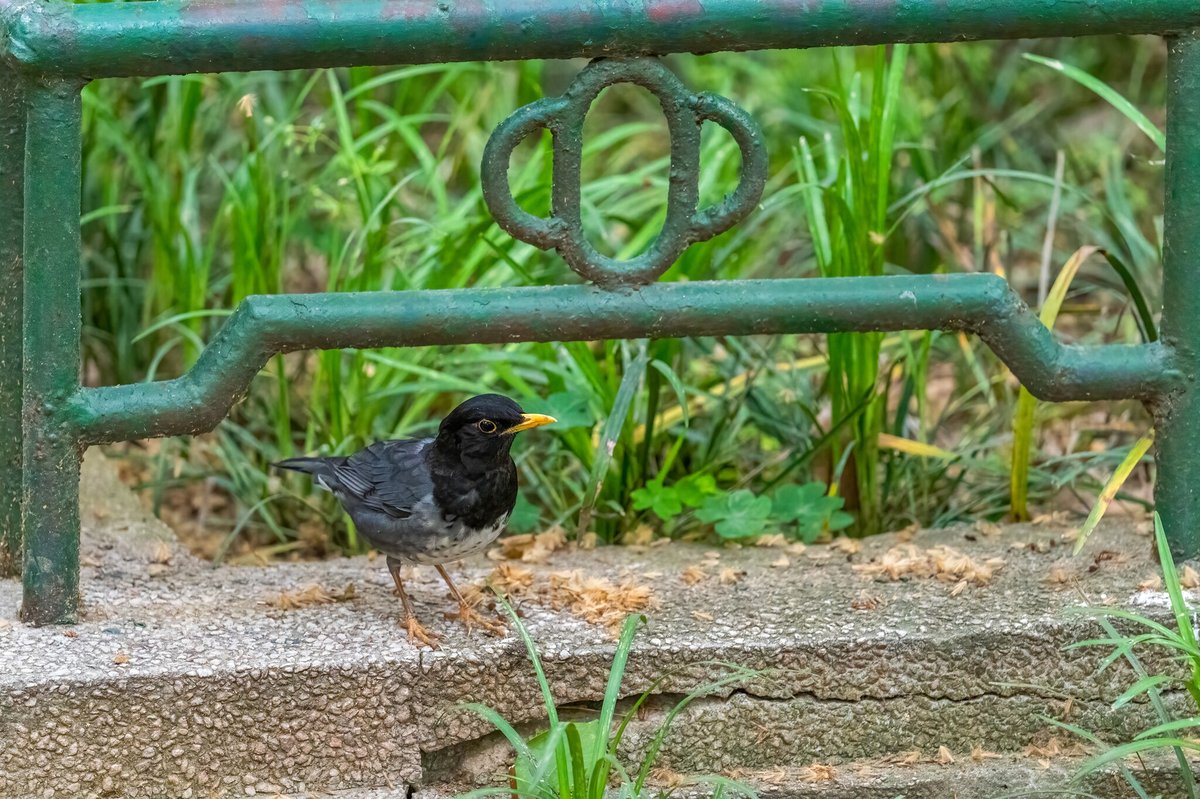
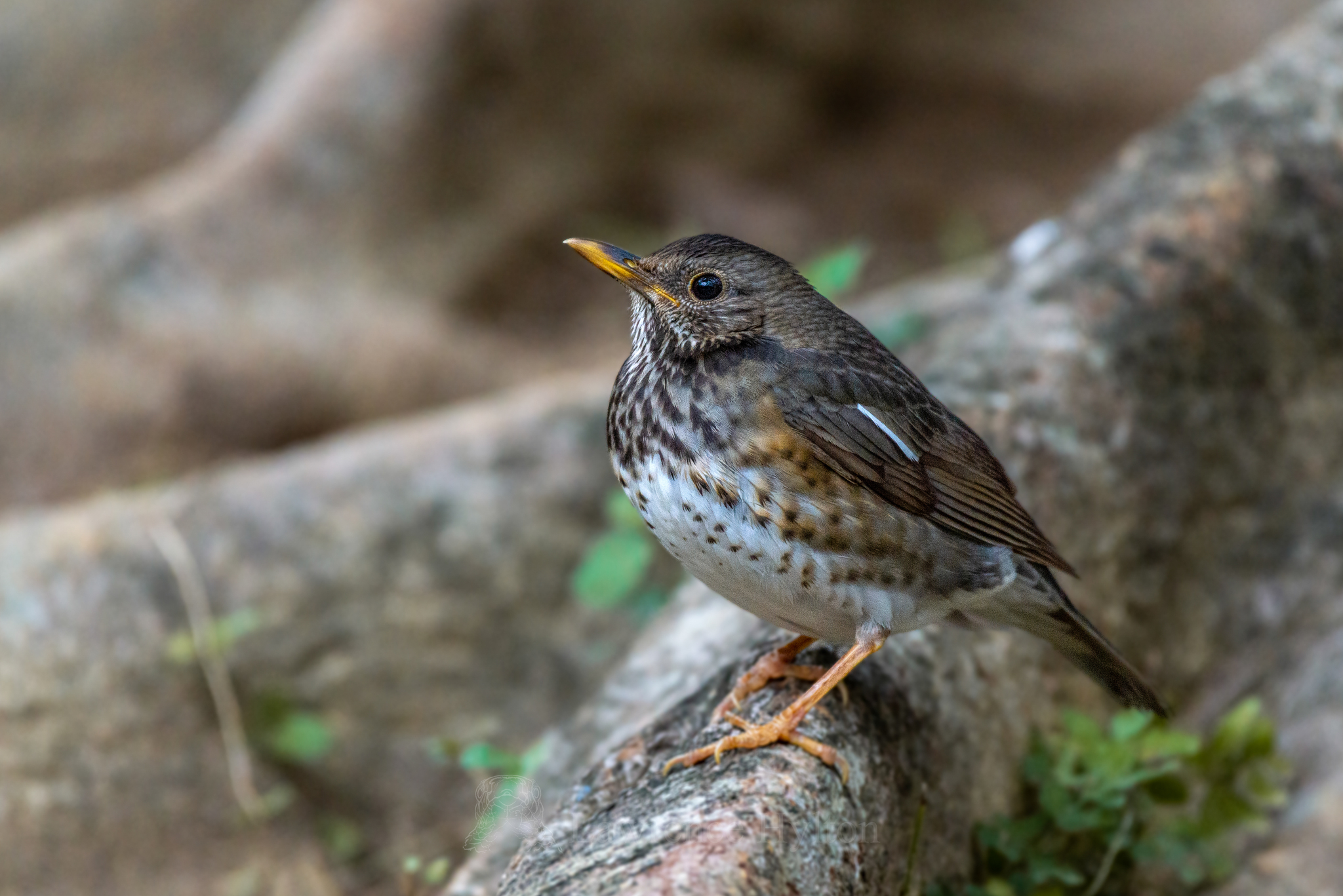
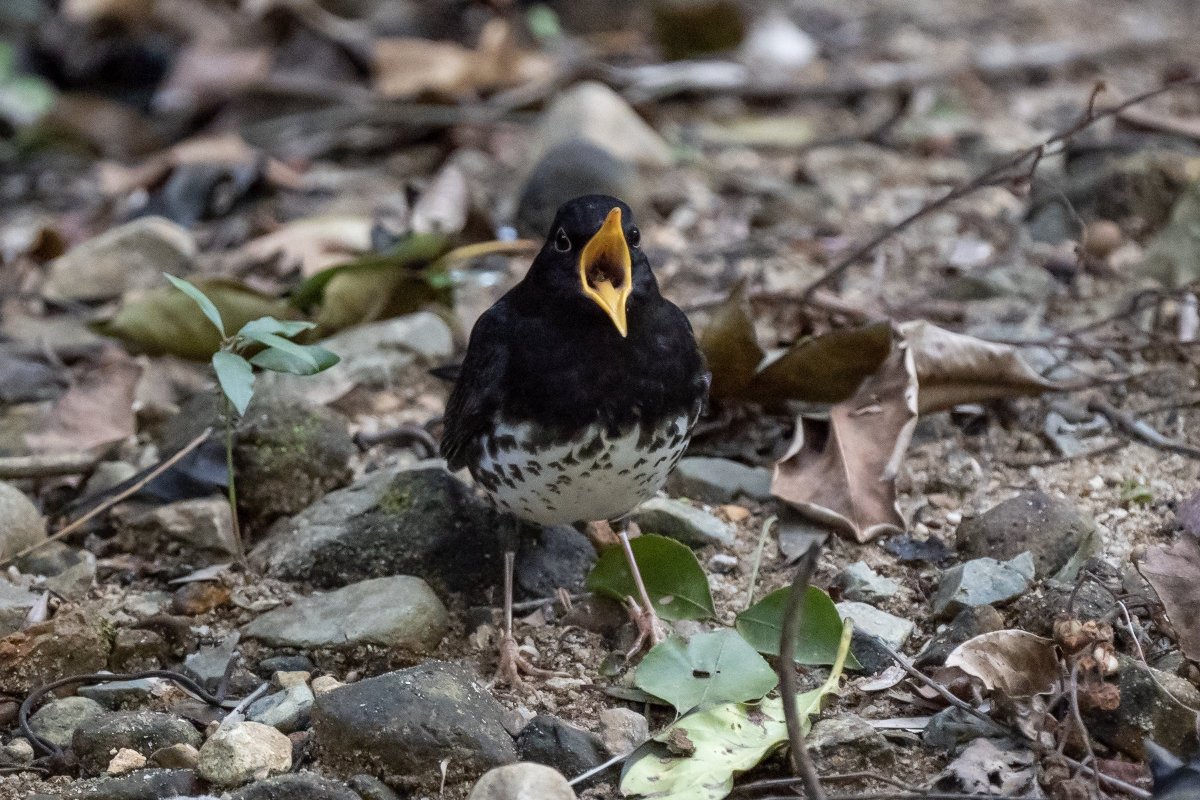
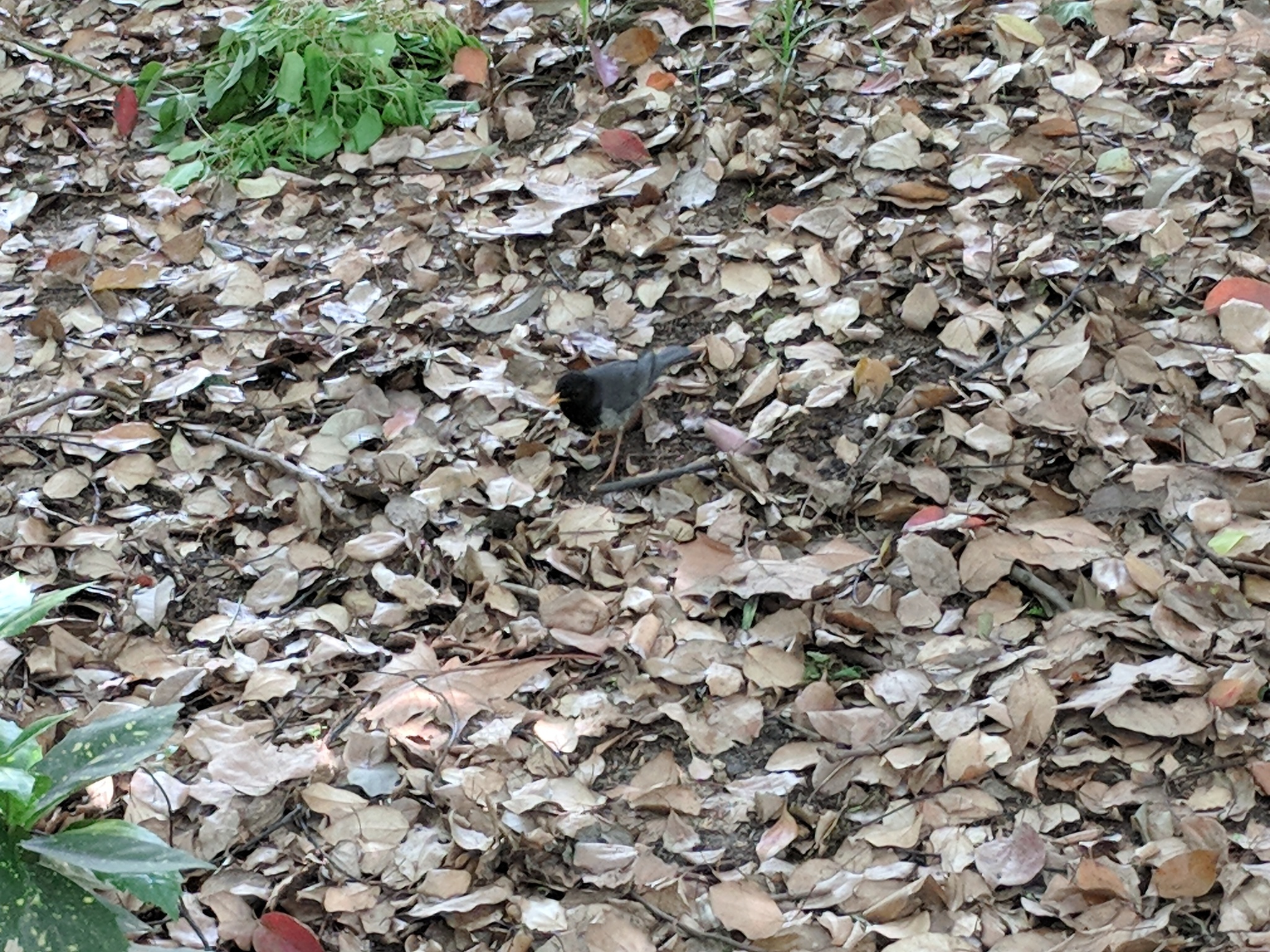
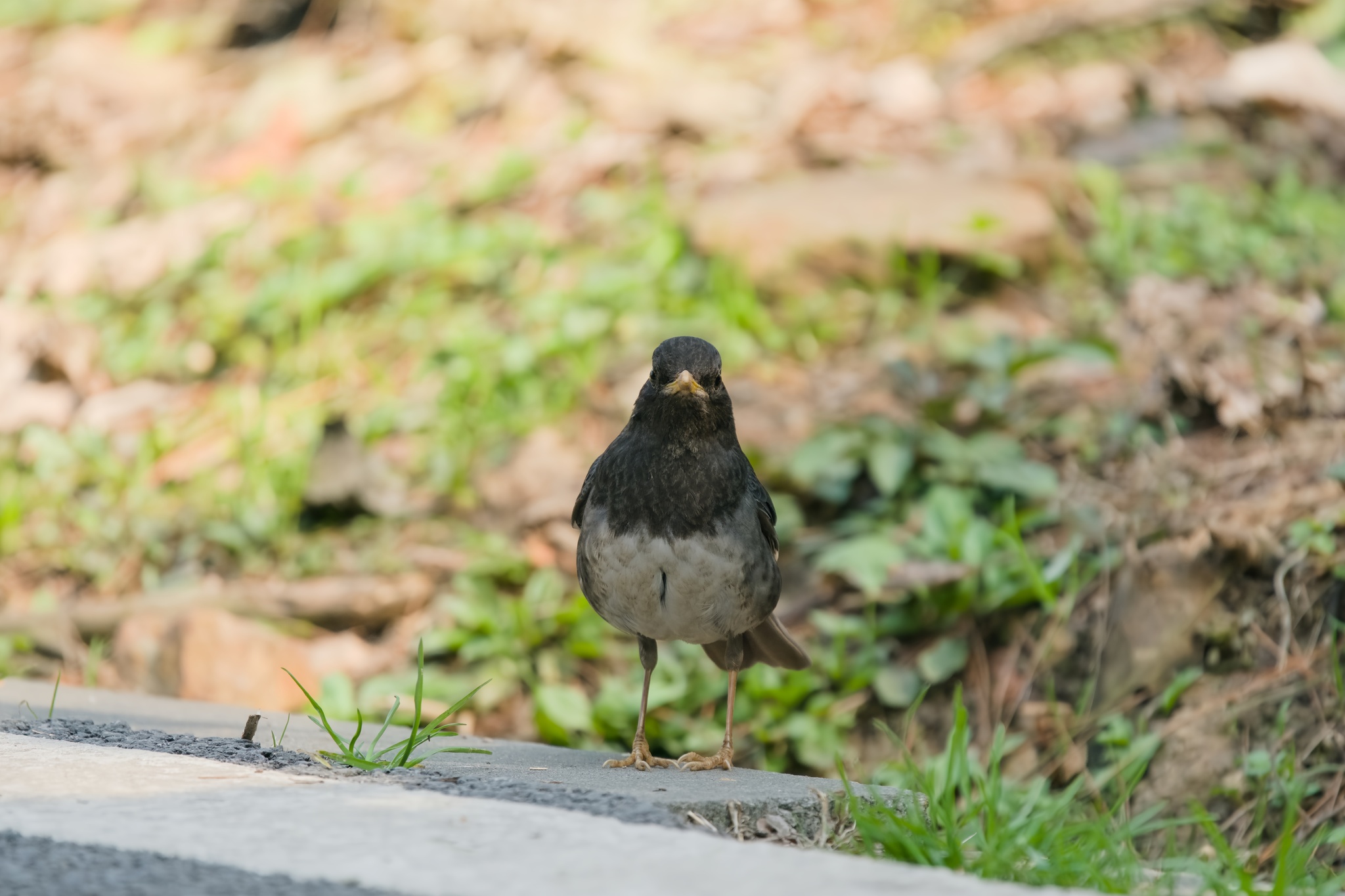
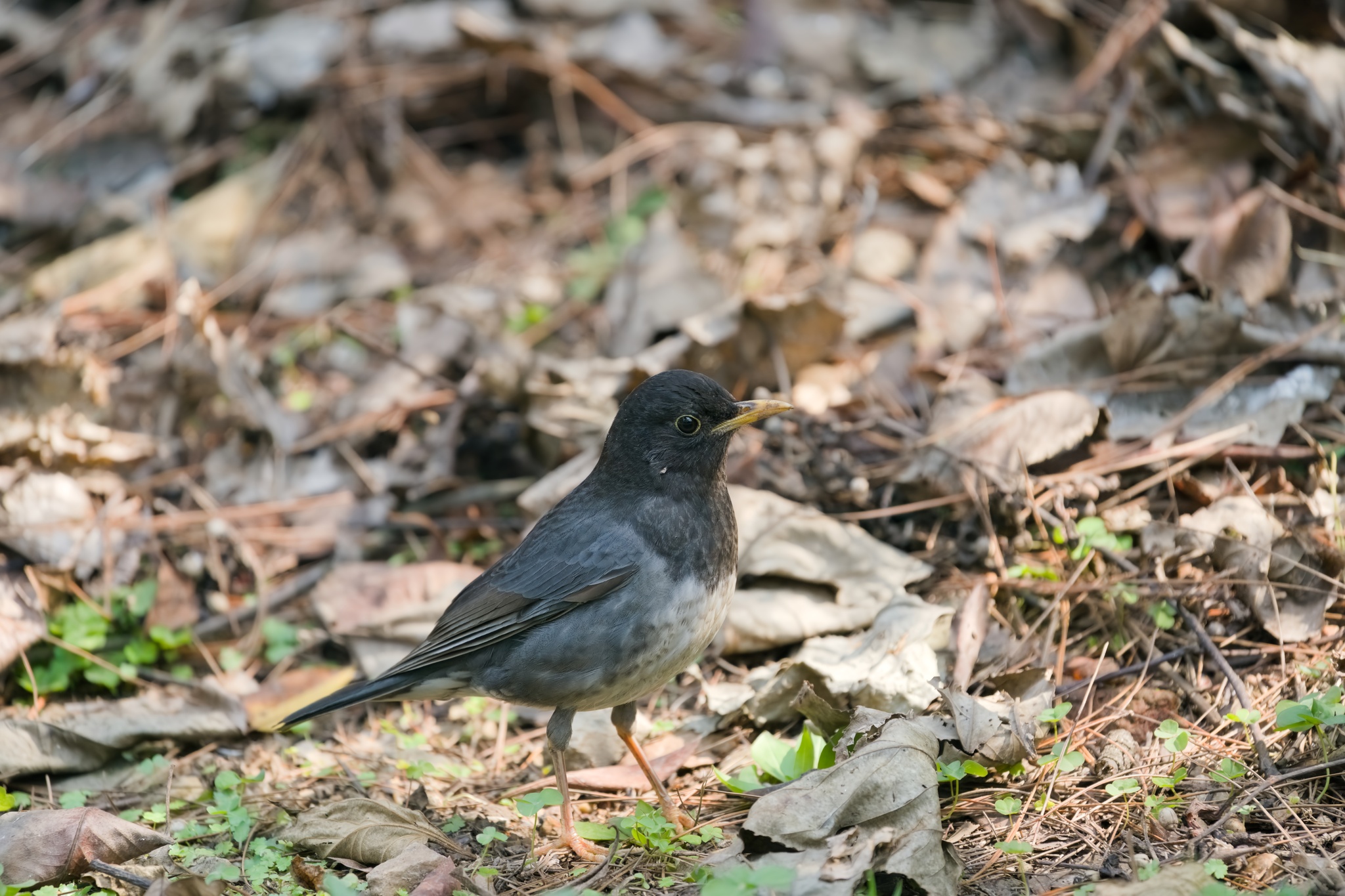
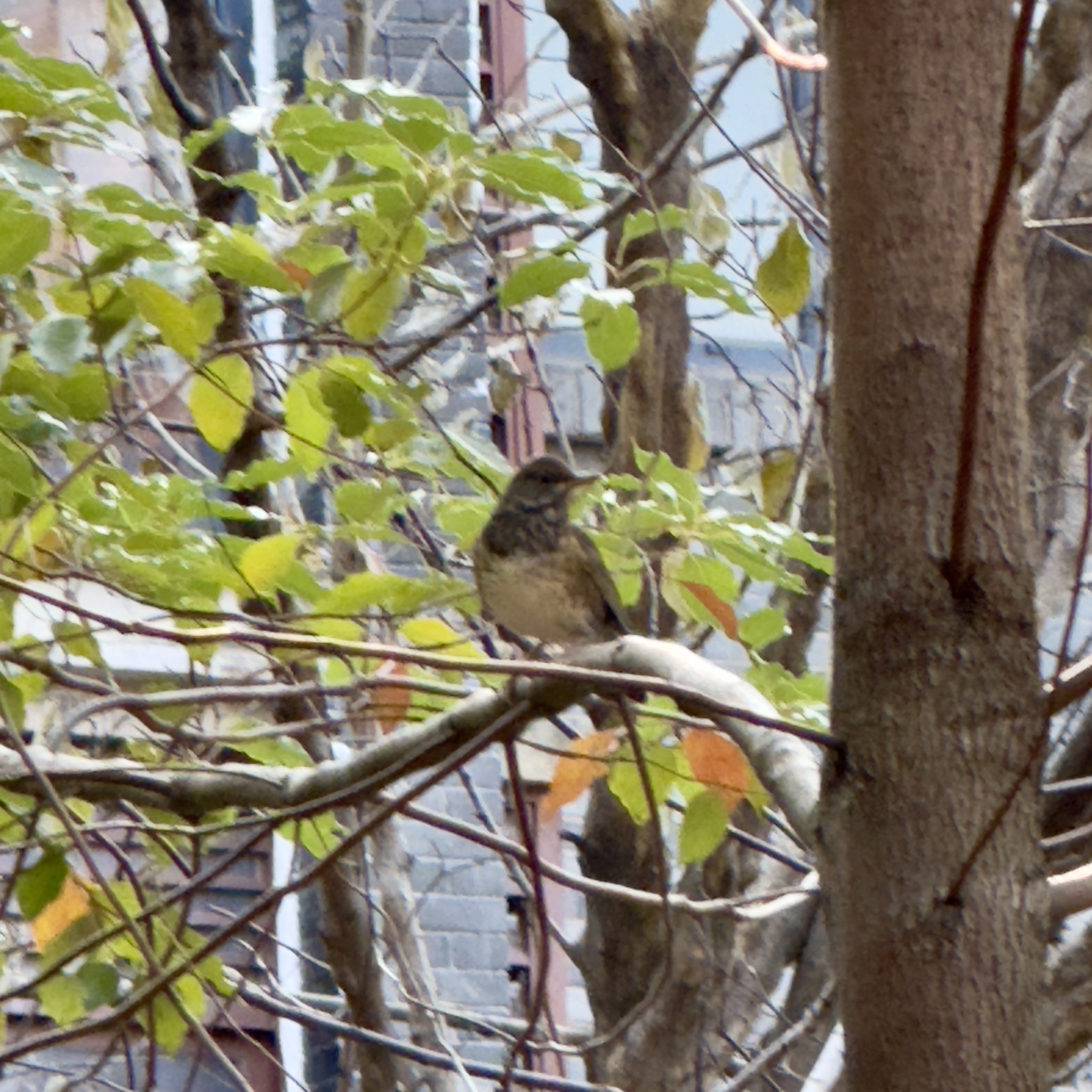
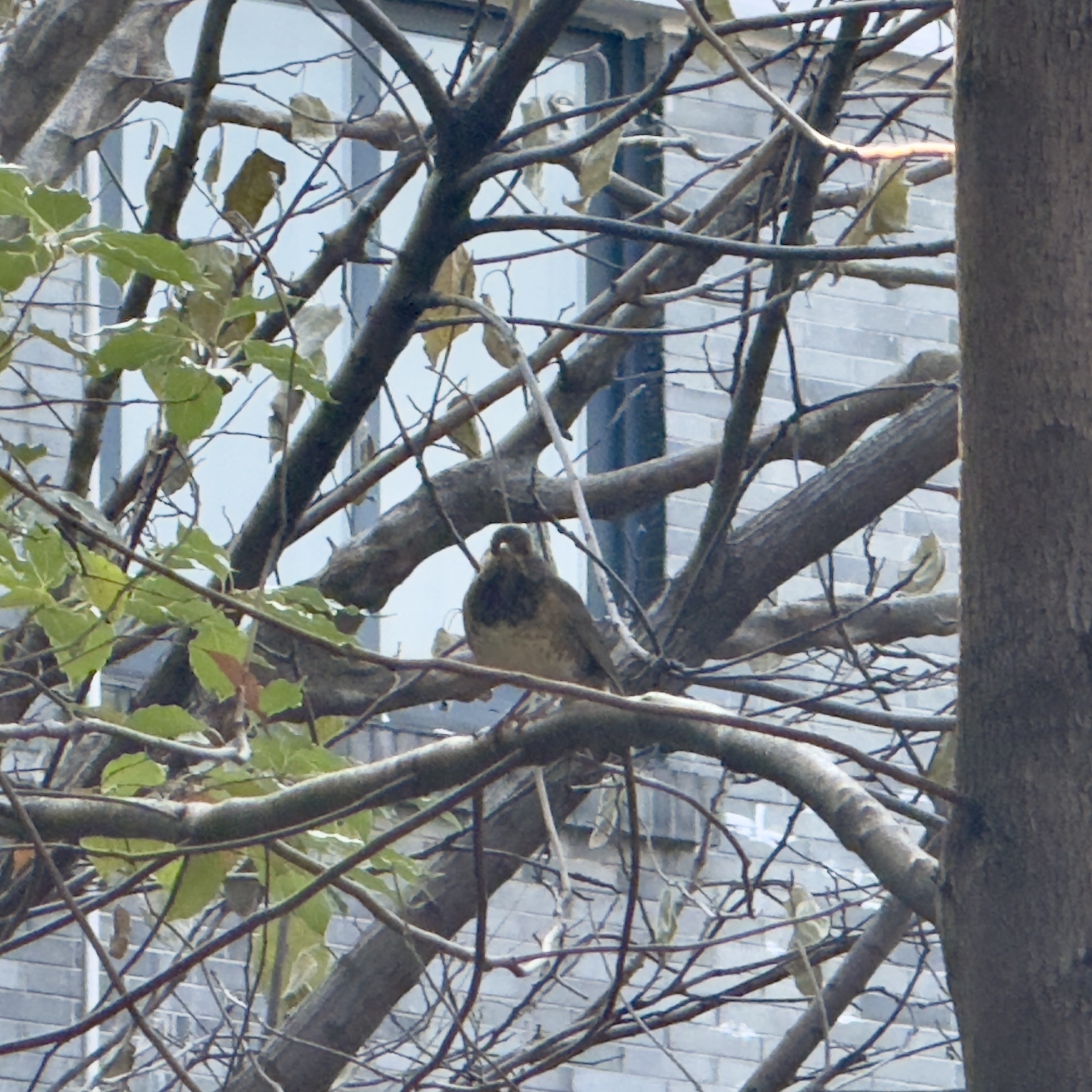
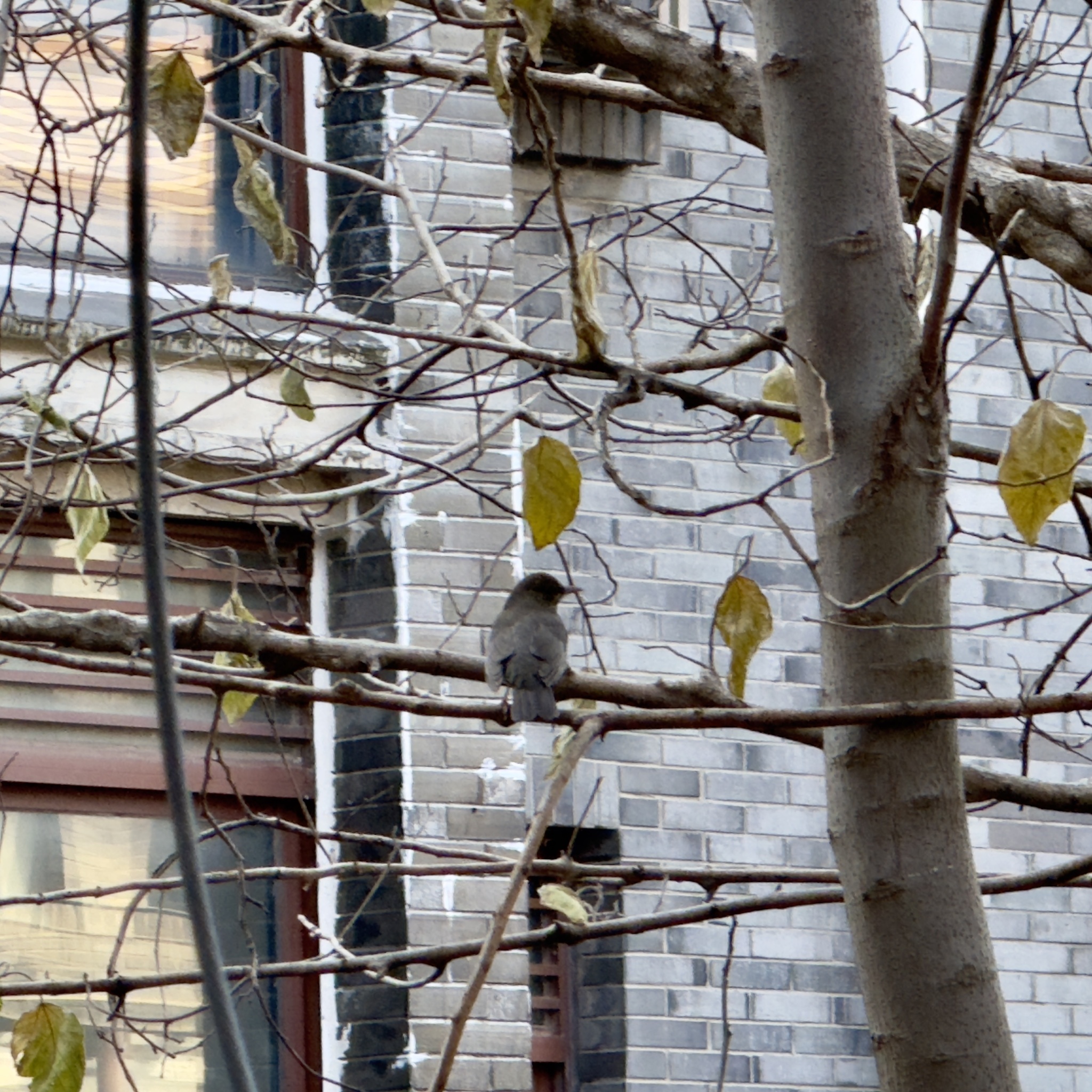
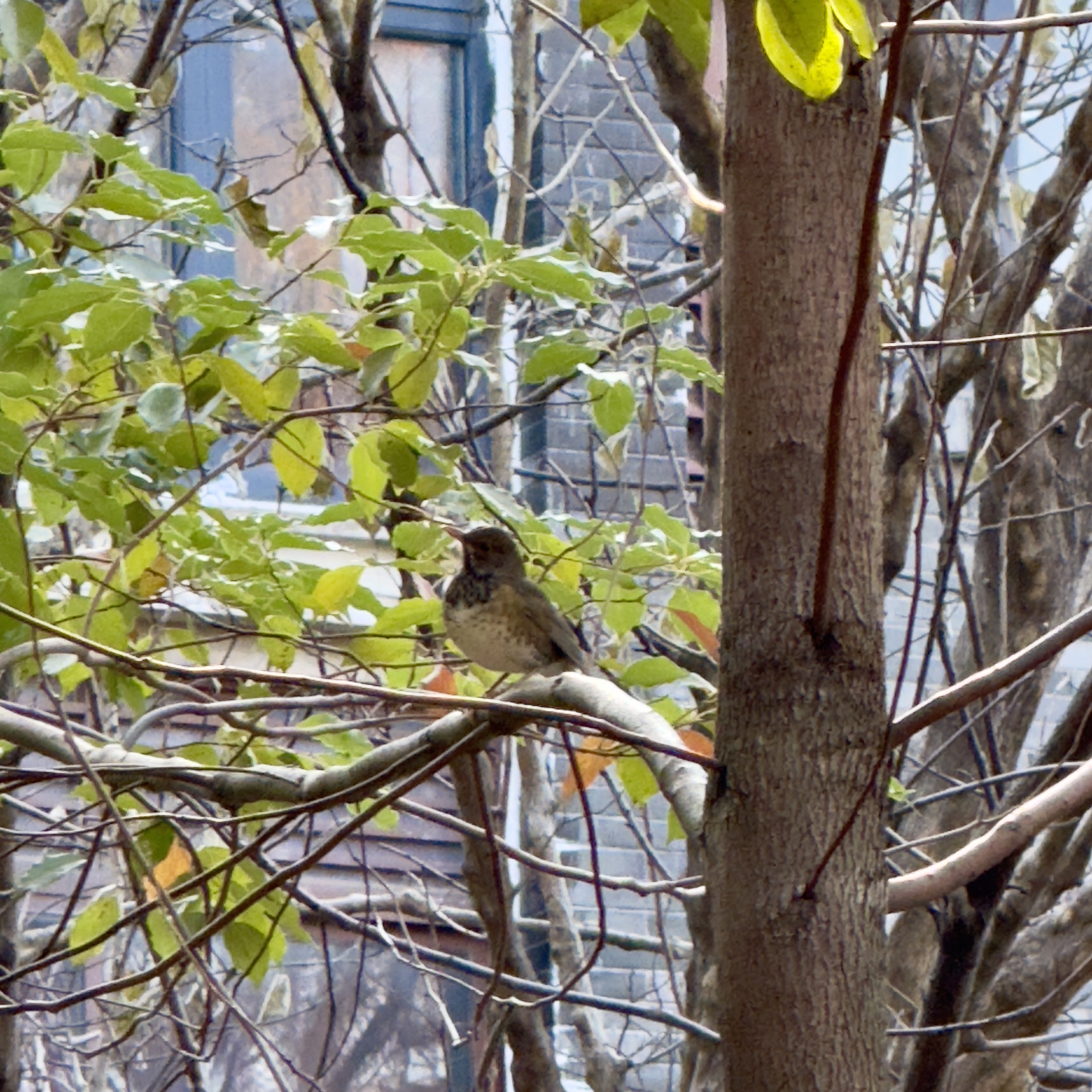
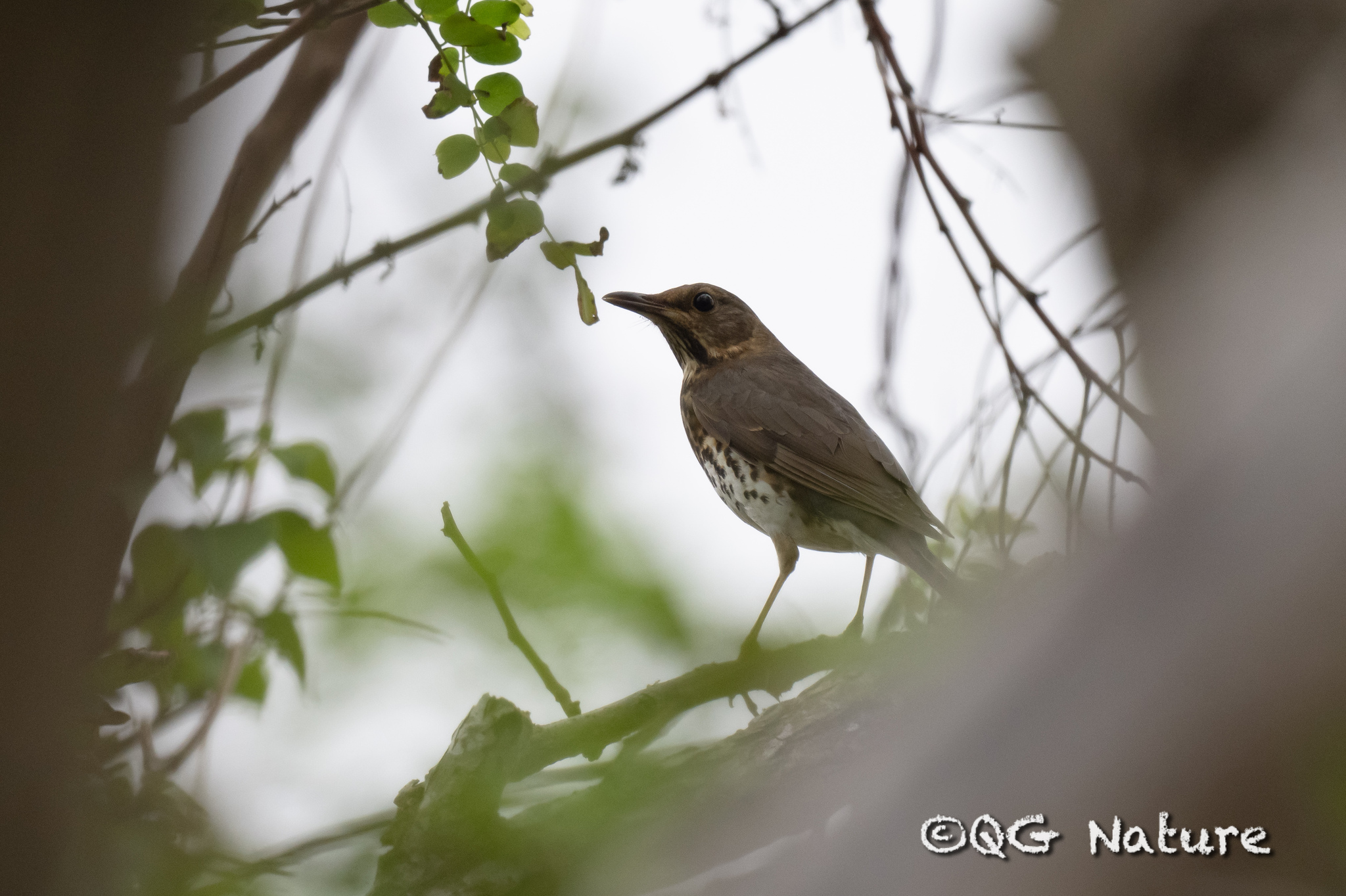
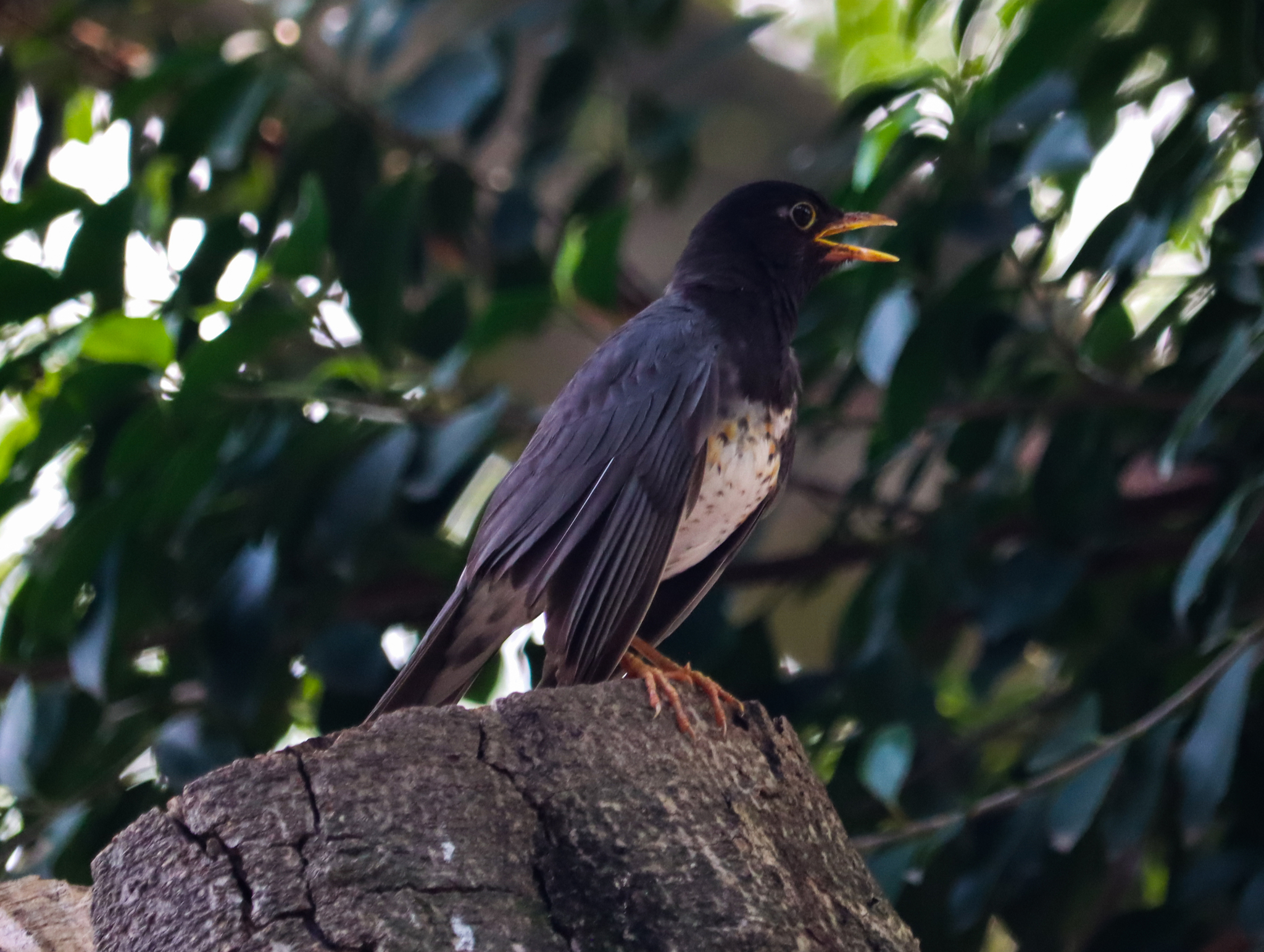
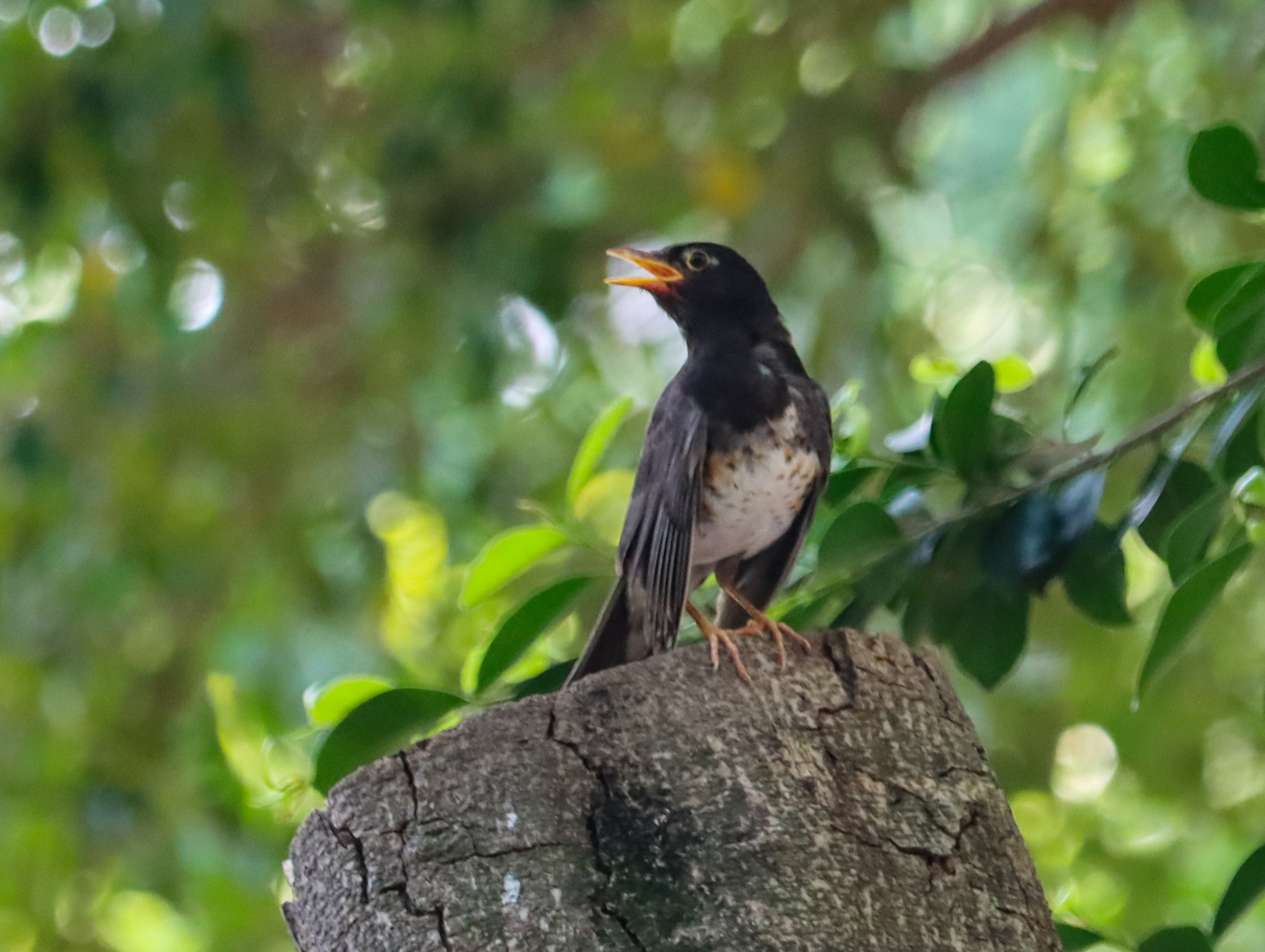
This mid-sized thrush exhibits remarkable sexual dimorphism in its plumage. The male presents a mostly black appearance, with a black head, breast, back, wings, and tail, contrasting sharply with a white underside that features black spotting concentrated on the upper belly and flanks. Its yellow legs, yellow bill, and thin yellow eye-ring provide distinctive facial highlights. The female is more subdued in coloration, being brown above with a white throat, breast, and belly. Her flanks are washed with rusty orange and marked with black spots, giving her a warmer appearance than the dark male.
Identification
The species can be identified by its striking plumage differences between sexes. Males are distinctive among East Asian thrushes due to their almost entirely black upperparts contrasting with the white-spotted belly. Females may be confused with other brown thrushes but can be recognized by the characteristic rusty-orange wash on the flanks and the white underparts with dark spotting. The yellow eye-ring and leg color are helpful identifying features in both sexes, though more conspicuous in males.
Distribution & Habitat
The breeding range extends across central China and Japan. In Japan, the species arrives by April or May to breed in deciduous and mixed deciduous-coniferous forests, also utilizing secondary woodland, gardens, and parks. For winter, it migrates to coastal southern China, including Hainan Island, and to northern Laos and Vietnam, departing breeding grounds around October. Taiwan serves as a occasional passage migrant site, while Thailand has recorded only rare vagrant individuals.
Behavior & Ecology
This thrush forages primarily on the ground, methodically scratching through leaf litter to locate insects, earthworms, and other invertebrates. It also consumes various fruits when available. The breeding season involves building a nest of twigs and moss, bound with mud and lined with hair and rootlets. The female lays a clutch of 2-5 eggs, which she incubates for 12-13 days. Both parents likely participate in rearing the young, which remain in the nest for approximately 14 days after hatching. The species is double-brooded, with the female beginning a new clutch soon after the first brood fledges.
Source: Wikipedia · CC BY-SA 3.0
Taxonomy
- Order
- Passeriformes
- Family
- Turdidae
- Genus
- Turdus
- eBird Code
- japthr1
Distribution
breeds central China and Japan; winters to southern China and Indochina
Vocalizations
Data Sources
Species description from Wikipedia, licensed under CC BY-SA 3.0.
Bird images and sounds sourced from GBIF, contributed by citizen scientists worldwide under Creative Commons licenses.
Taxonomy data from AviList 2025.