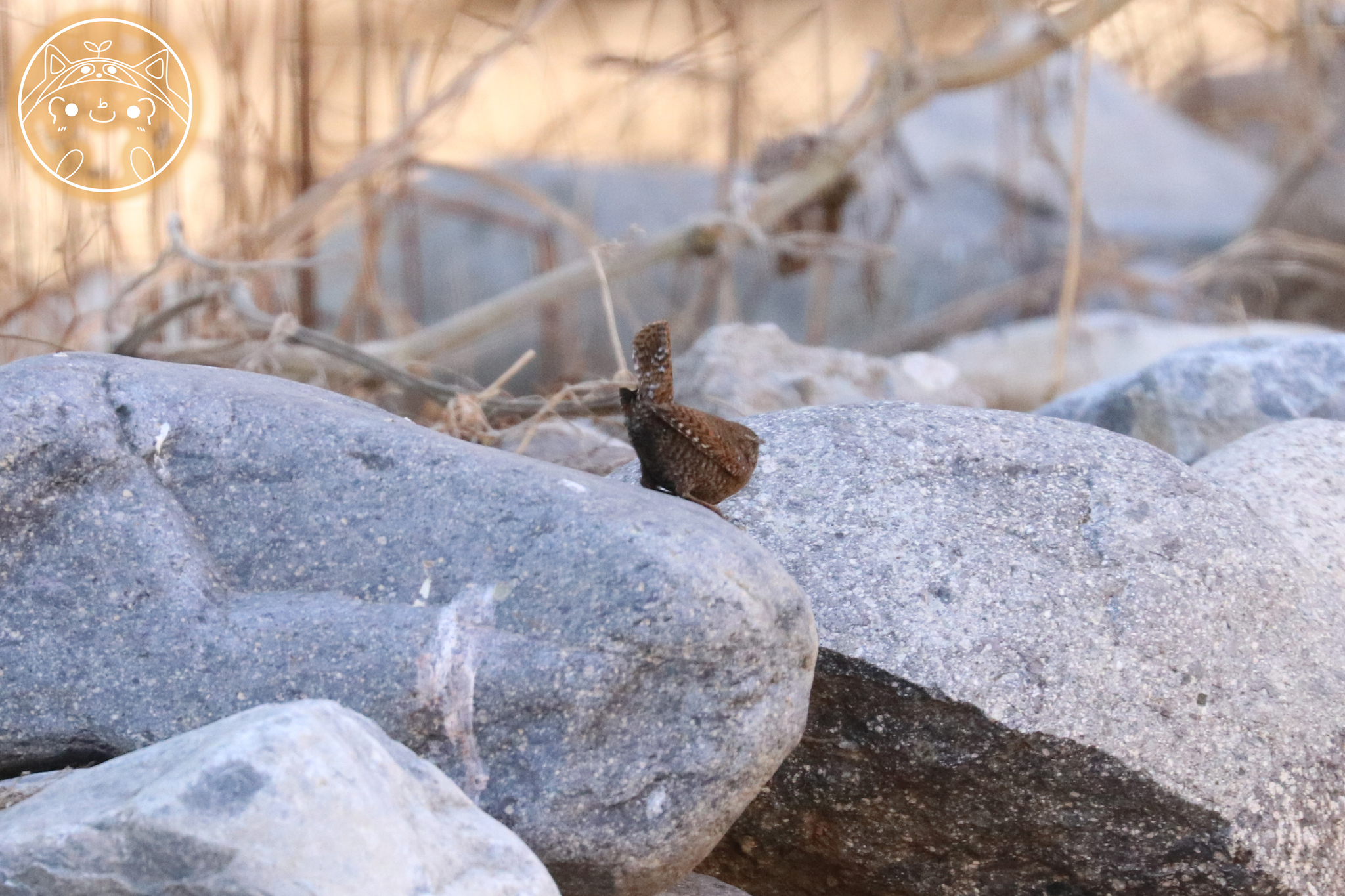
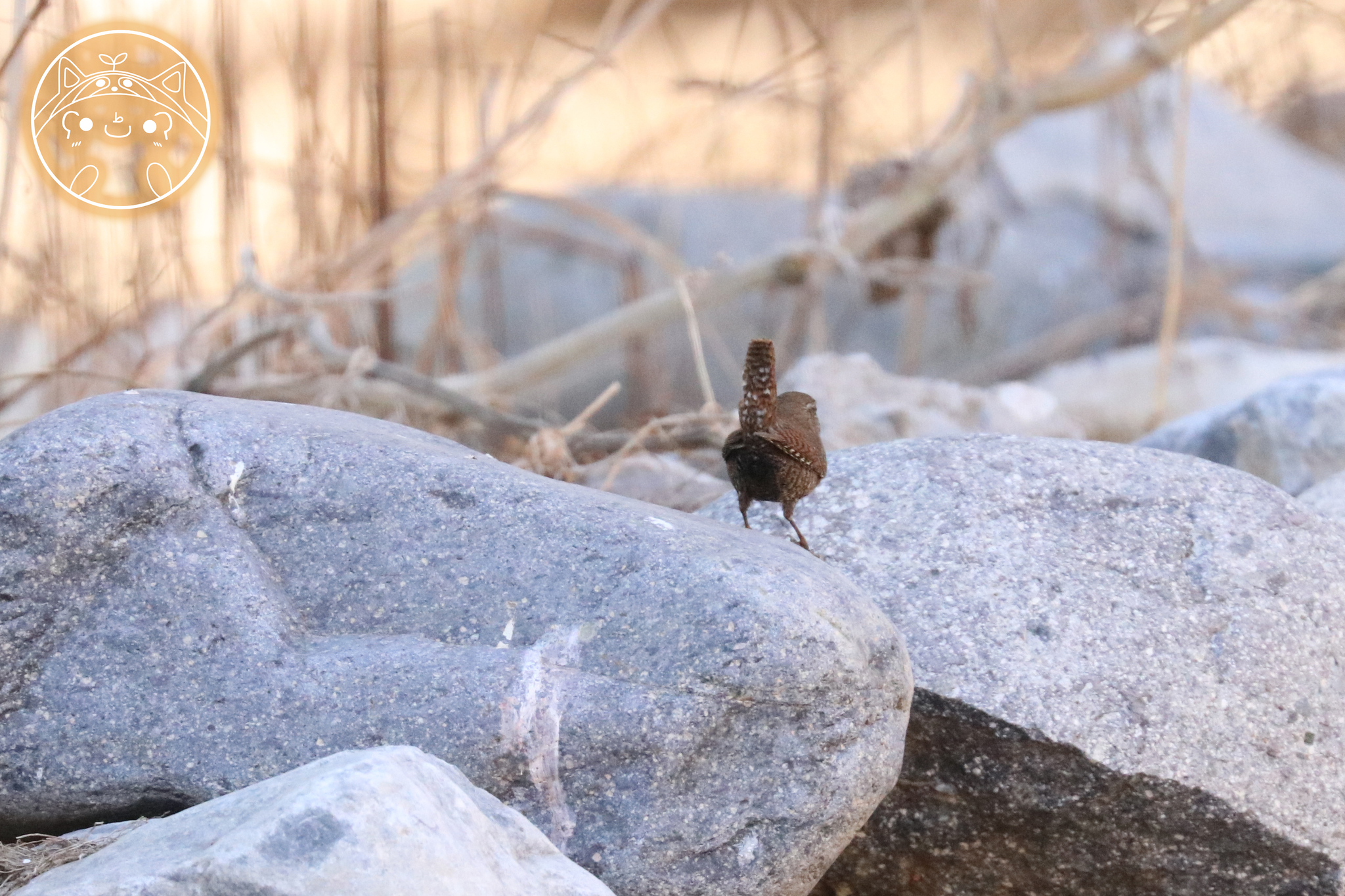
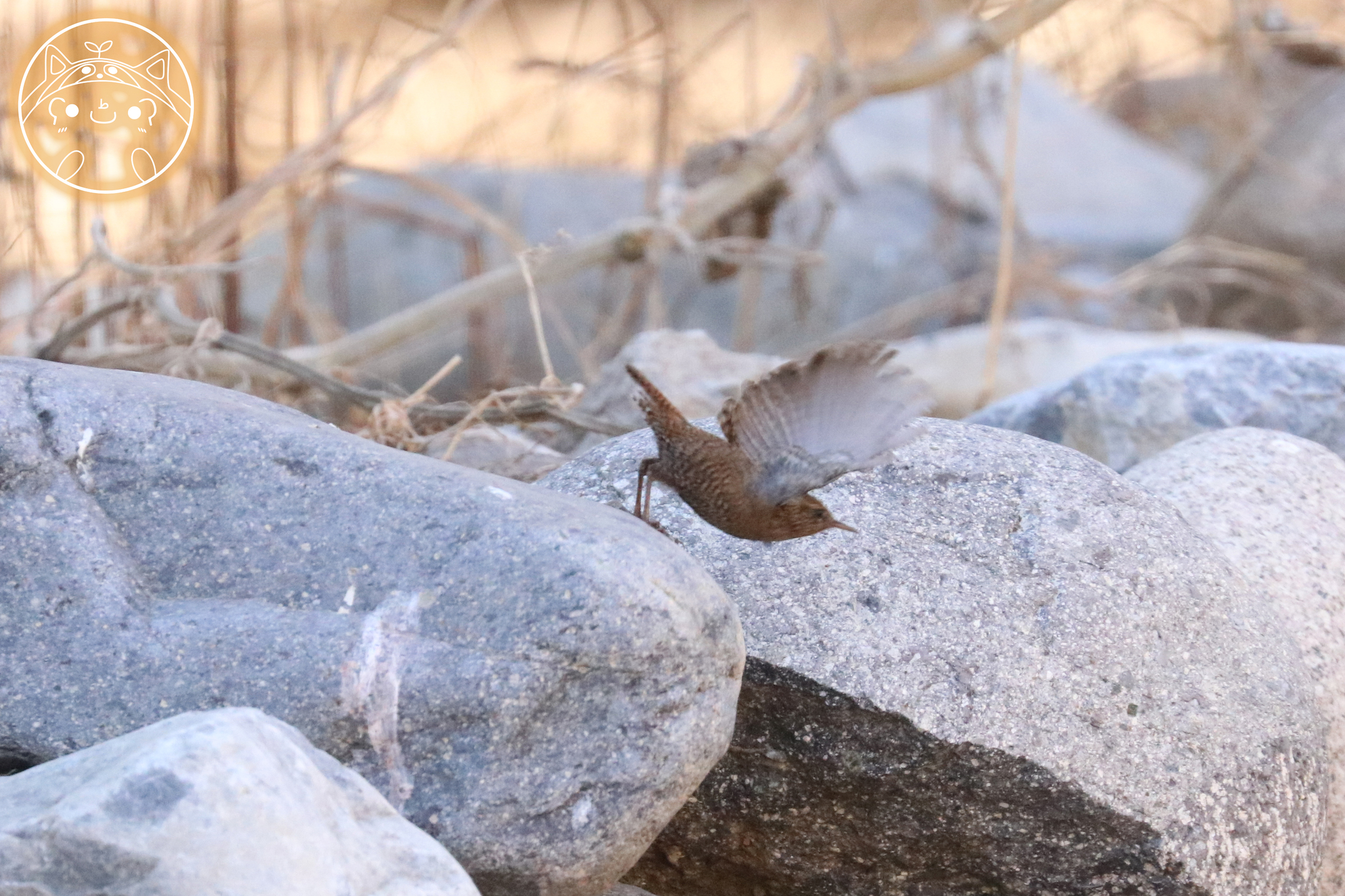
Eurasian Wren
Troglodytes troglodytes
鹪鹩
Introduction
A small passerine bird in the wren family (Troglodytidae), the only wren species found in the Old World. Its range extends across Eurasia and northwest Africa, from Iceland and the Faroe Islands east to Japan, and south to the Maghreb region. Northern populations are migratory, moving south for winter. It occupies diverse habitats including woodlands, hedgerows, gardens, reed beds, moorland, and rocky coastal areas. Notable traits include its disproportionately loud song relative to its tiny size and a highly polygynous mating system unusual for passerines. The species is classified as Least Concern on the IUCN Red List, with an estimated European breeding population of 32.7 to 56.5 million pairs.
Description
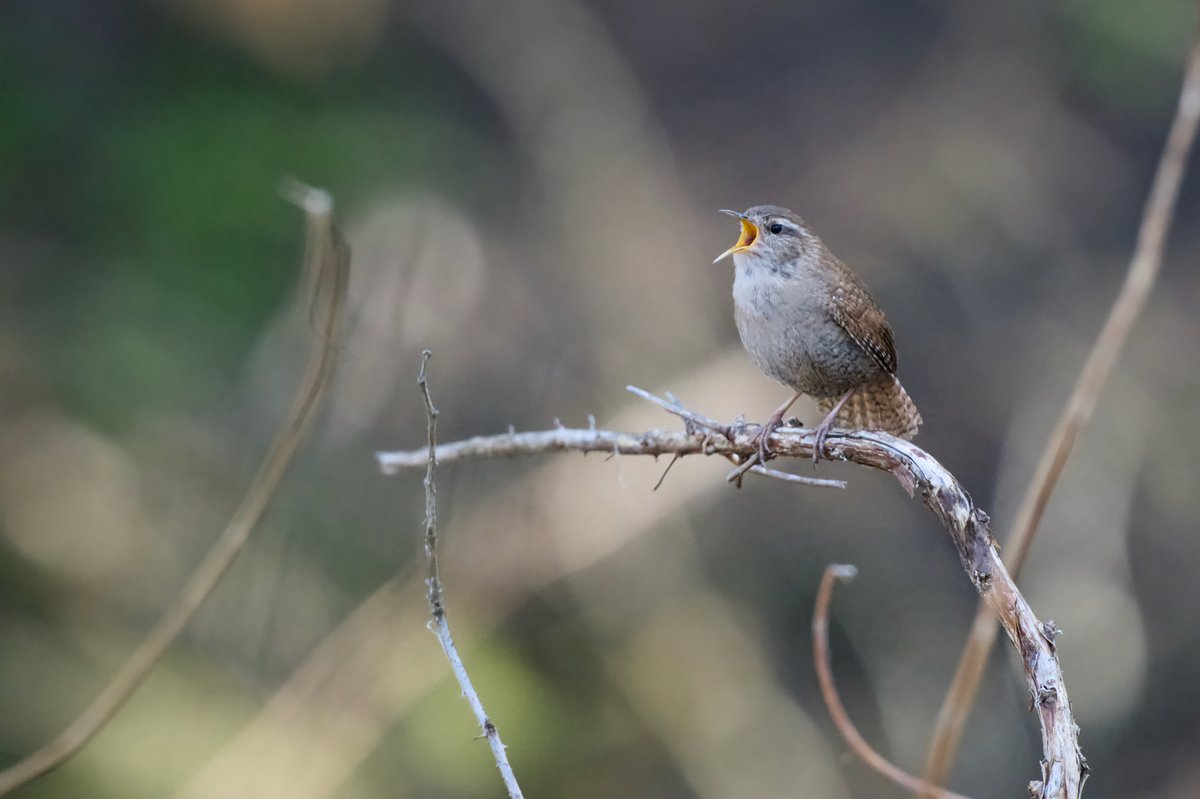
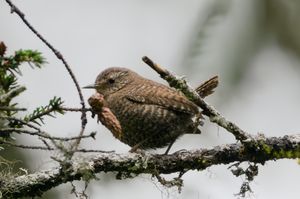
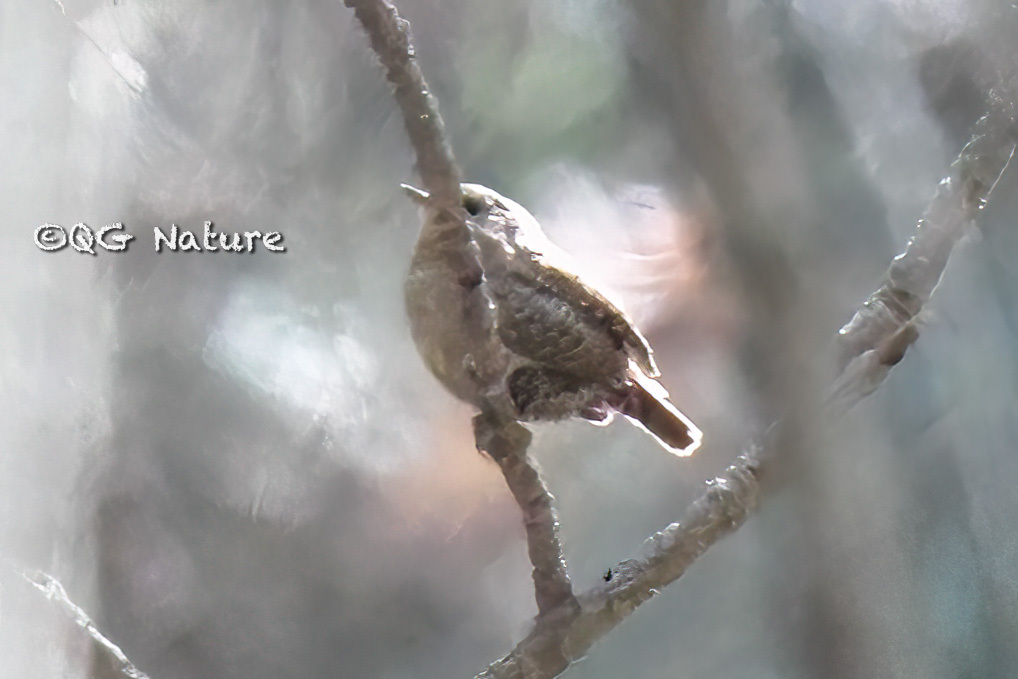
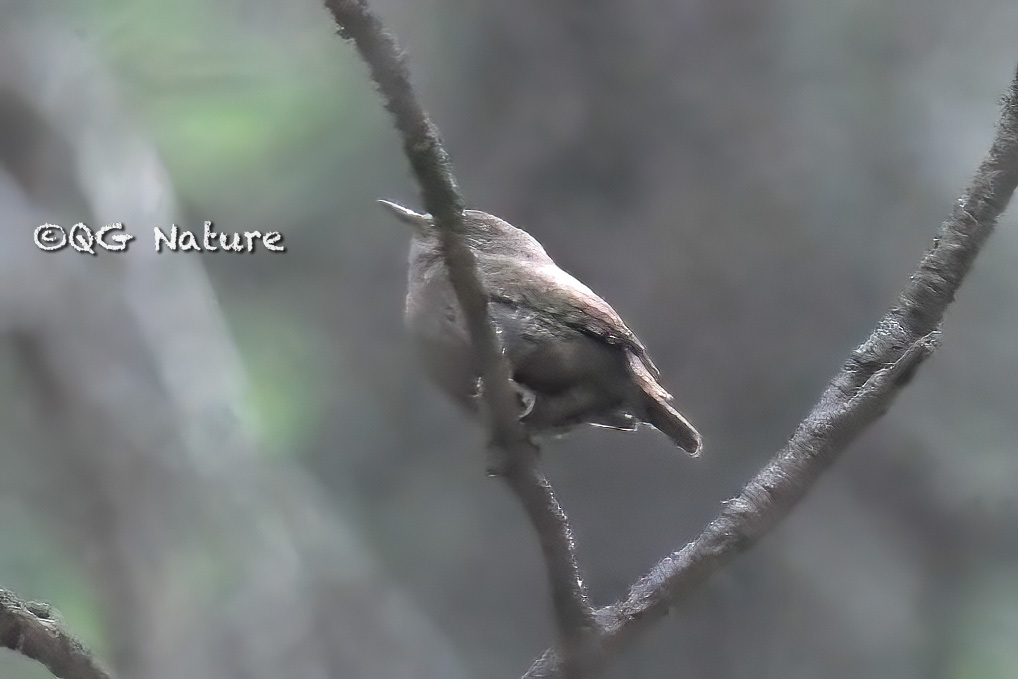
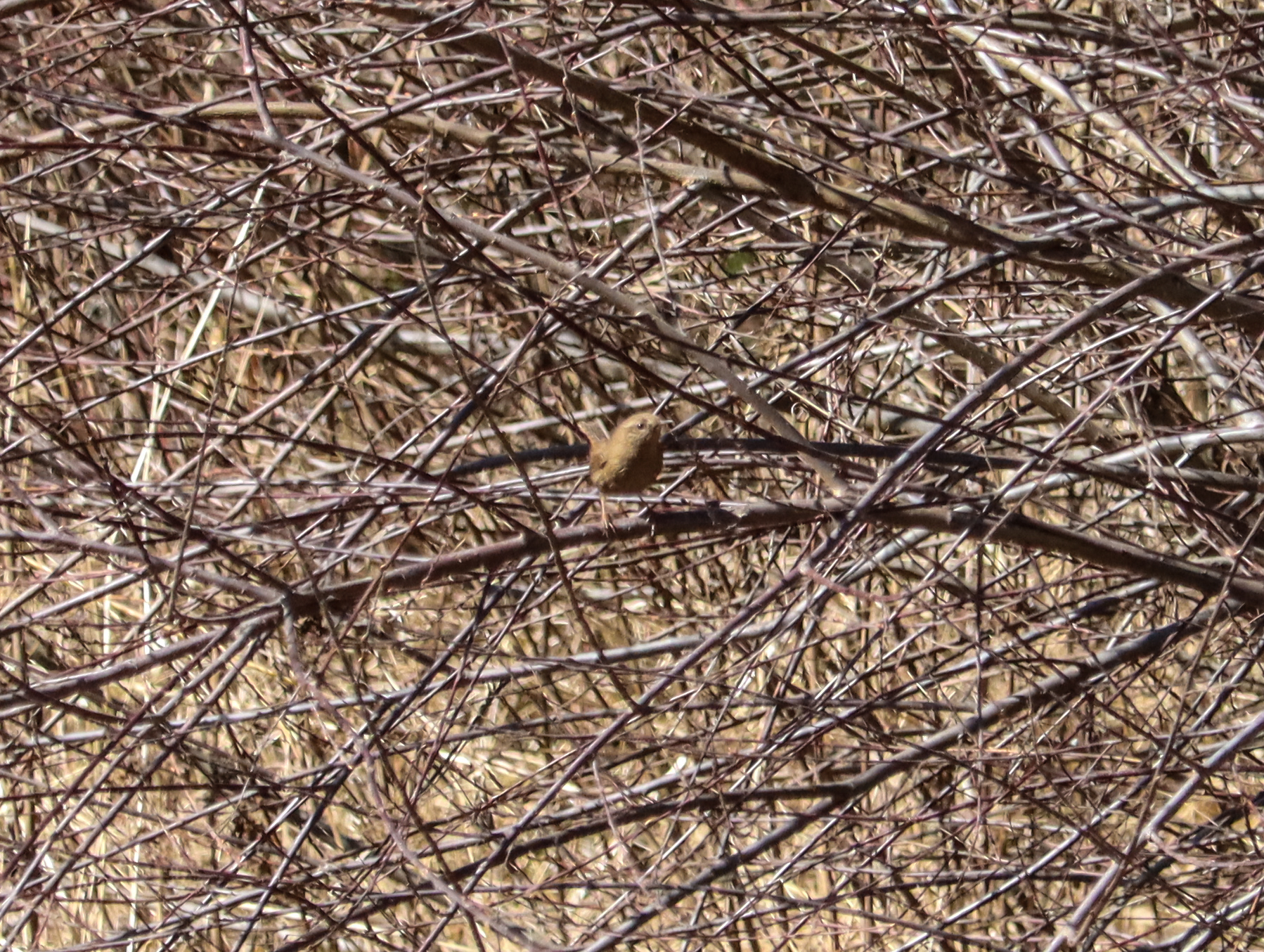
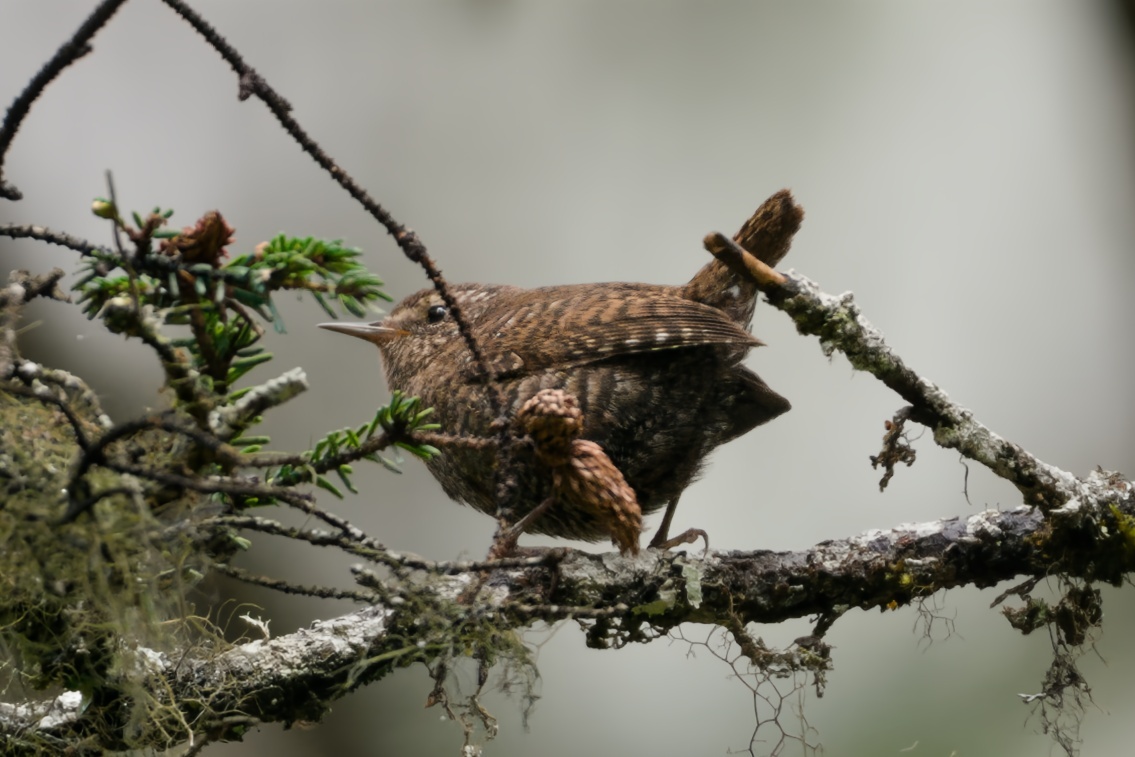
A plump, stout bird with rounded wings and a short tail usually held erect. Adults measure 9 to 10 cm in length with a wingspan of 13 to 17 cm and weigh approximately 10 grams. The plumage is russet brown above, greyer below, with indistinct darker barring on the wings, tail, and underparts. A cream-buff stripe (supercilium) runs above the eye. The dark brown bill is thin and relatively long, while the legs are pale brown with strong claws and a large hind toe. The sexes are identical in appearance. Juveniles show less distinct barring and have mottled underparts. Considerable plumage variation exists across the 28 recognized subspecies.
Identification
The most distinctive identification features are its tiny size, short cocking tail, and exceptionally loud song for a bird of only 10 grams. The common call is a sharp, rapid 'tic-tic-tic' note. The song is a prolonged, gushing burst of clear, shrill trills that can last for seconds. It differs from the dunnock by having repeated trill sounds in the song, whereas the dunnock produces a shorter, weaker warble without trills. Compared to the robin, the wren's call is faster with less isolated notes. The plumage is uniformly brown without the bright orange breast of the robin. The mouse-like foraging behavior and preference for dense understory vegetation help distinguish it from similar species.
Distribution & Habitat
A Palearctic species breeding across Europe from northern Norway (67°N) to the Mediterranean, and east through Russia to Japan. Southern limits include northern Spain, Italy, Sicily, and Syria. It occurs throughout the British Isles, Iceland, the Faroe Islands, and various Mediterranean islands including the Balearics, Corsica, Sardinia, Crete, and Cyprus. In Africa, it breeds only in the Maghreb region. It occupies a wide range of habitats from sea cliffs and moorland to woodland, hedgerows, gardens, and reed beds, typically requiring bushes and low ground cover. Only northern populations migrate, moving south to winter in temperate regions.
Behavior & Ecology
An active, restless forager that constantly moves through dense vegetation searching for insects. It probes crevices, examines fallen logs, and occasionally behaves like a nuthatch by climbing tree trunks. Short flights are swift and direct with whirring wings. Diet consists primarily of insect larvae (butterflies, moths, beetles, flies), spiders, and some seeds. The breeding system is highly polygynous, with males maintaining multiple females simultaneously. Males construct several 'cock nests' in their territory; females select mates based on nest quantity. The neatly domed nest with a side entrance is built from grass, moss, and lichen in crevices, walls, brambles, or abandoned nests. Clutches of 5-6 eggs are laid from April, incubated by the female for 14-15 days. Fledging occurs after approximately 16 days with usually two broods per season.
Conservation
Classified as Least Concern on the IUCN Red List due to its extremely large range, increasing population trend, and substantial global population size. The European breeding population is estimated at 32.7 to 56.5 million pairs (65.3 to 113 million mature individuals). No significant threats have been identified, as the species is adaptable to various habitats including human-modified landscapes. Its conservation status is favorable across its range.
Culture
The wren holds significant cultural importance in European folklore, traditionally considered 'king of the birds' from Aesop's fable where cleverness defeats strength. This is reflected in names like German 'Zaunkönig' (king of the fence), Dutch 'winterkoning' (winter king), and Greek 'basileus' (king). It was sacred to Druids and used in divination. The bird features in the legend of Saint Stephen, first Christian martyr, supposedly betraying him to enemies, leading to the tradition of 'Hunting the Wren' on Saint Stephen's Day (December 26). In Japan, it is king of the winds. Suetonius recorded it foretelling Caesar's assassination. It appears in Kipling's 'The Jungle Book' and has been featured on postage stamps from multiple countries and the British farthing coin (1937-1960) as Britain's smallest bird.
Source: Wikipedia · CC BY-SA 3.0
Taxonomy
- Order
- Passeriformes
- Family
- Troglodytidae
- Genus
- Troglodytes
- eBird Code
- winwre4
Subspecies (28)
-
Troglodytes troglodytes borealis
Faroe Islands (northern Atlantic Ocean)
-
Troglodytes troglodytes cypriotes
Crete, Rhodes, Cyprus, and Near East
-
Troglodytes troglodytes dauricus
eastern Siberia to Sakhalin, Manchuria, and Korea
-
Troglodytes troglodytes fridariensis
Fair Isle (Scotland)
-
Troglodytes troglodytes fumigatus
southern Kuril Islands and Japan
-
Troglodytes troglodytes hebridensis
Outer Hebrides Islands (Scotland)
-
Troglodytes troglodytes hirtensis
St. Kilda Island (Scotland)
-
Troglodytes troglodytes hyrcanus
Crimean Peninsula to Caucasus Mountains, northern Iraq, and Iran
-
Troglodytes troglodytes idius
northern China (southern Hebei to Shandong)
-
Troglodytes troglodytes indigenus
Ireland, Inner Hebrides, Orkneys, Scotland, and England
-
Troglodytes troglodytes islandicus
Iceland
-
Troglodytes troglodytes juniperi
northwestern Libya
-
Troglodytes troglodytes kabylorum
Balearic Islands, southern Spain, and northwestern Africa (Morocco to Tunisia)
-
Troglodytes troglodytes koenigi
Corsica and Sardinia
-
Troglodytes troglodytes kurilensis
northern Kuril Islands (Shasukotan and Ushichi)
-
Troglodytes troglodytes magrathi
mountains on borders of Pakistan and Afghanistan
-
Troglodytes troglodytes mosukei
Izu Islands and Daito Islands
-
Troglodytes troglodytes neglectus
western Himalayas (Gilgit to western Nepal)
-
Troglodytes troglodytes nipalensis
Himalayas of Nepal to northeastern Assam and southern Tibet
-
Troglodytes troglodytes ogawae
southern Japan (Tanegashima and Yakushima)
-
Troglodytes troglodytes pallescens
Kamchatka Peninsula and Komandorskiye Islands
-
Troglodytes troglodytes subpallidus
Himalayas of Afghanistan
-
Troglodytes troglodytes szetschuanus
southwestern China (southern Shaanxi and Sichuan eastward to Hupei)
-
Troglodytes troglodytes taivanus
Taiwan
-
Troglodytes troglodytes talifuensis
western China (southern Sichuan to western Yunnan) and northeastern Myanmar
-
Troglodytes troglodytes tianschanicus
mountains from Tien Shan (possibly from Altai) southward to Pamir and northeastern Afghanistan
-
Troglodytes troglodytes troglodytes
continental Europe and Türkiye
-
Troglodytes troglodytes zetlandicus
Shetland Islands (Scotland)
Data Sources
Species description from Wikipedia, licensed under CC BY-SA 3.0.
Bird images and sounds sourced from GBIF, contributed by citizen scientists worldwide under Creative Commons licenses.
Taxonomy data from AviList 2025.