Nordmann's Greenshank
Tringa guttifer
小青脚鹬
Introduction
The critically endangered shorebird has an estimated global population of 500–1,000 individuals. Its breeding range is highly restricted in the Asia-Pacific region, and many aspects of its distribution and migration patterns remain poorly understood. Adults in breeding plumage have black and white upperparts, a slightly upturned bicoloured bill, and short yellow legs, distinguishing it from other large sandpipers. Recent records from Australia include an individual that returned to Cairns Esplanade for multiple consecutive seasons. The species is a priority for shorebird conservation efforts in East Asia.
Description
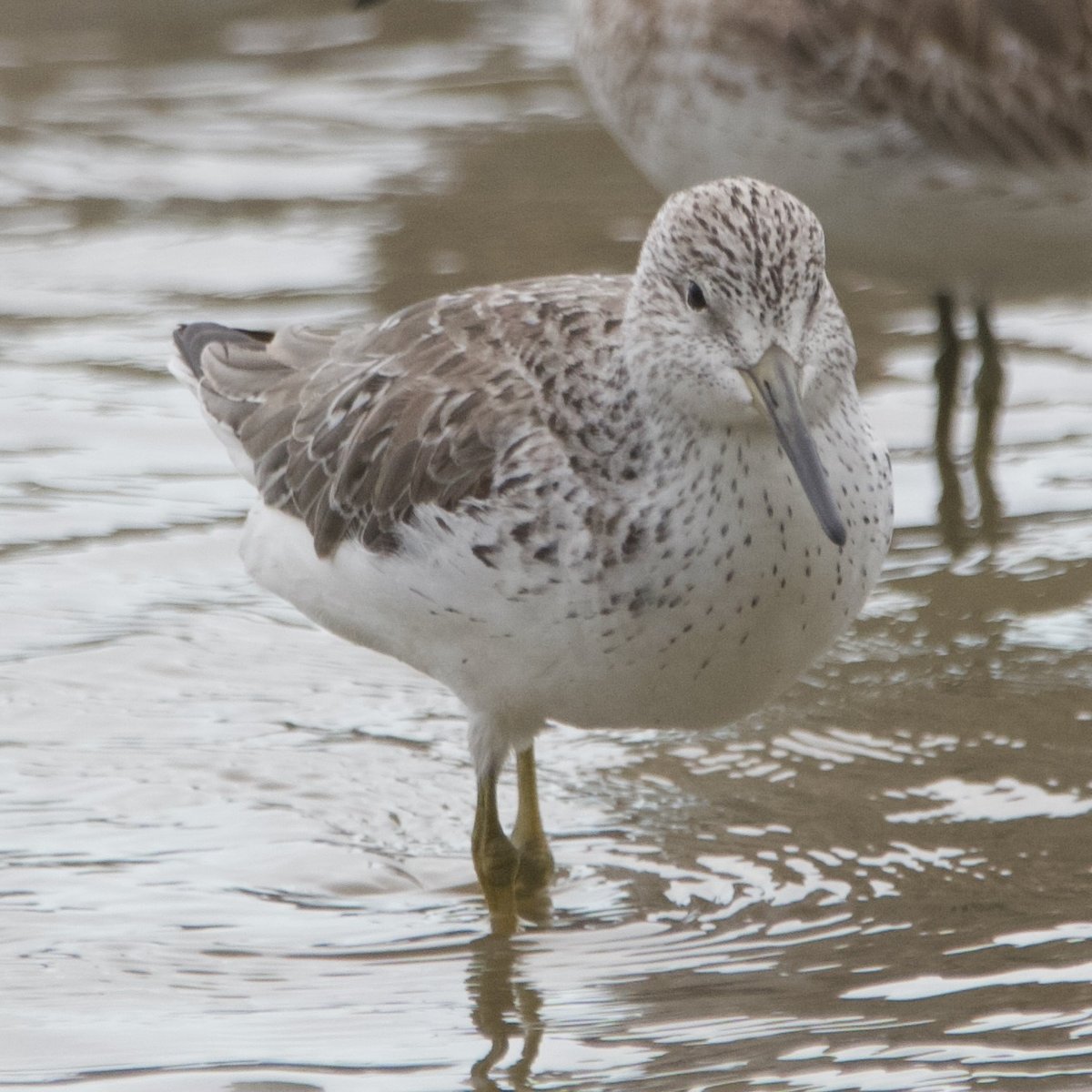
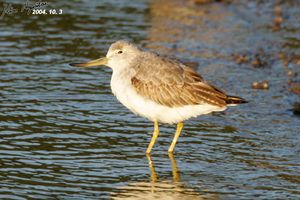
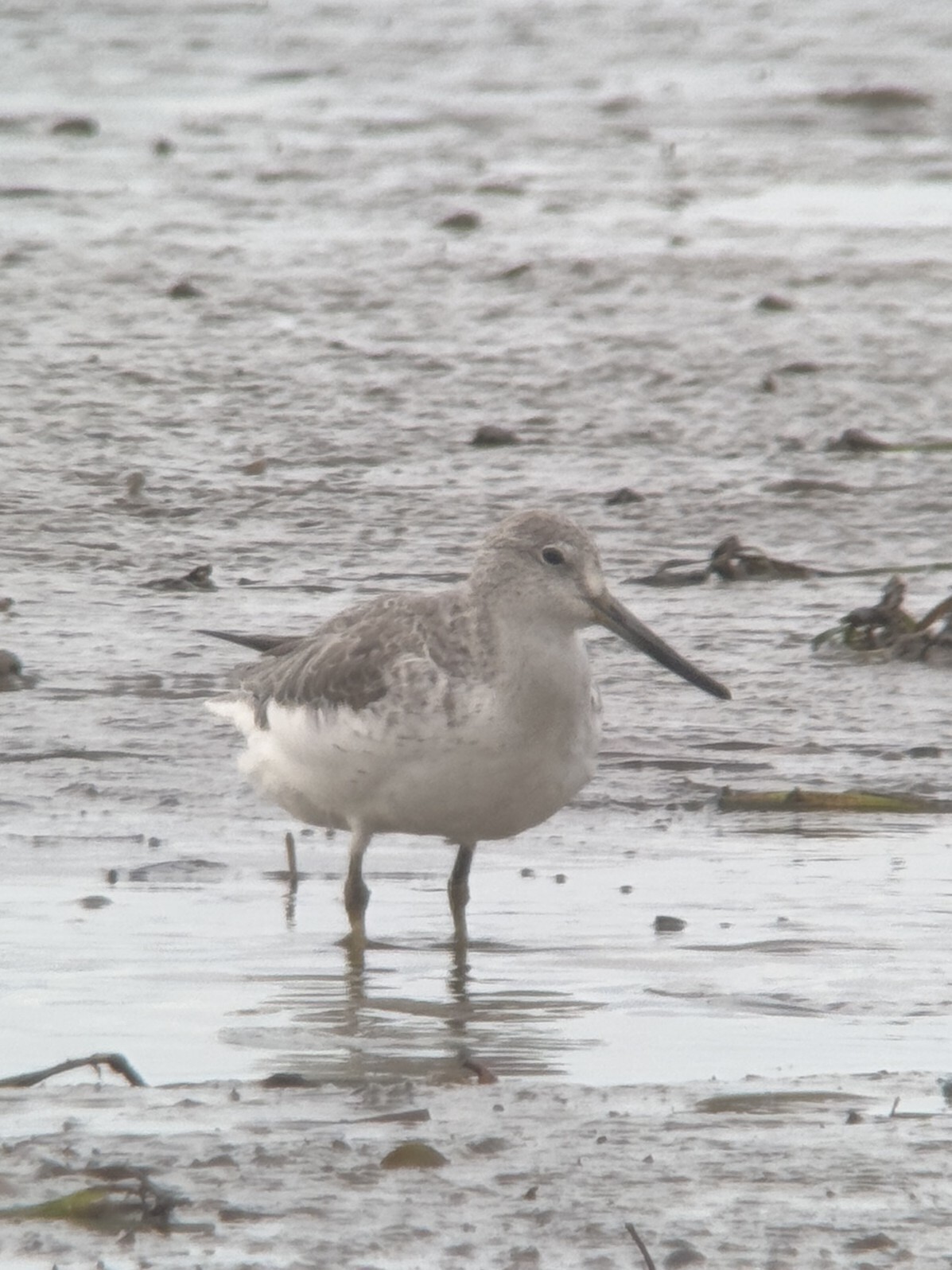
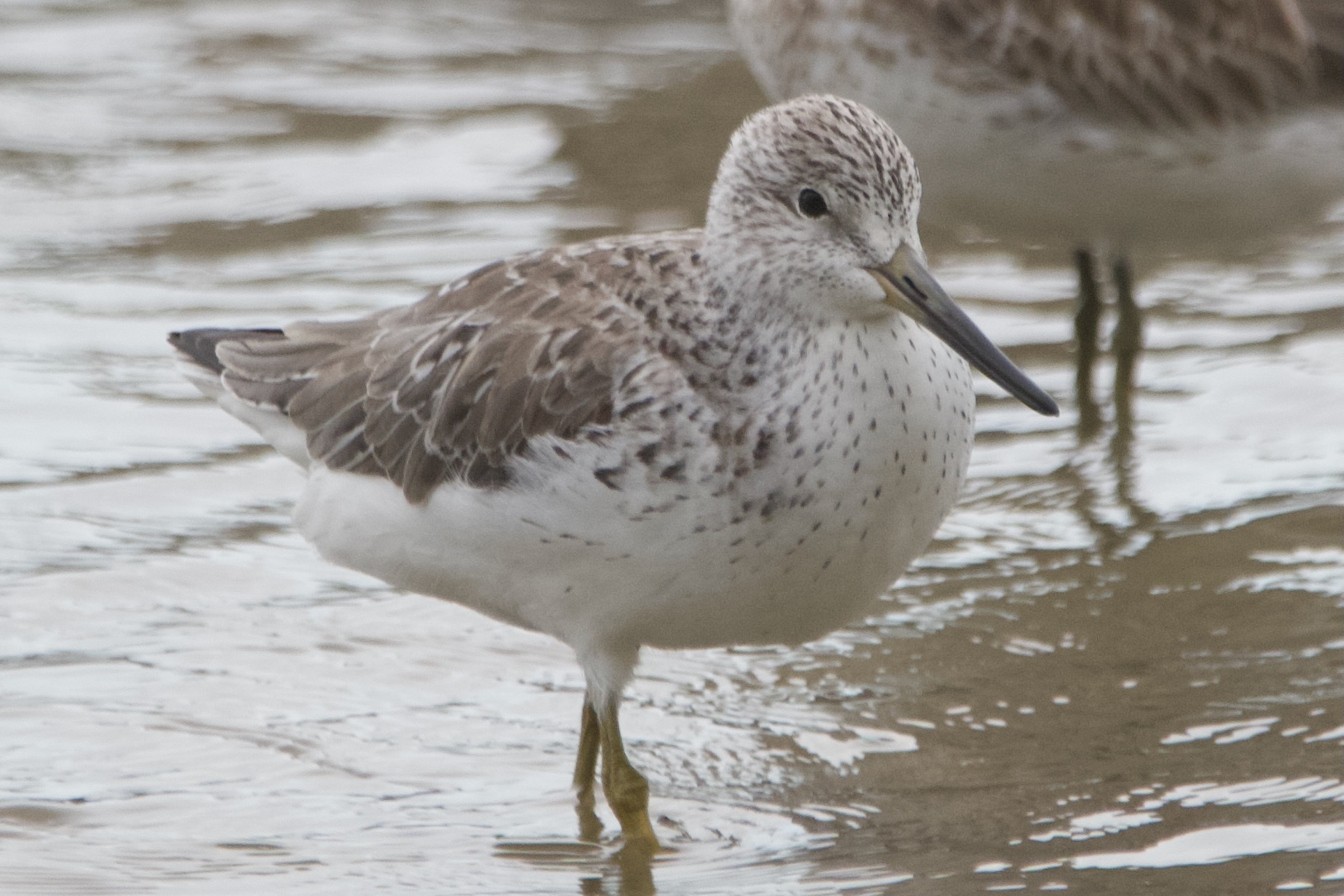
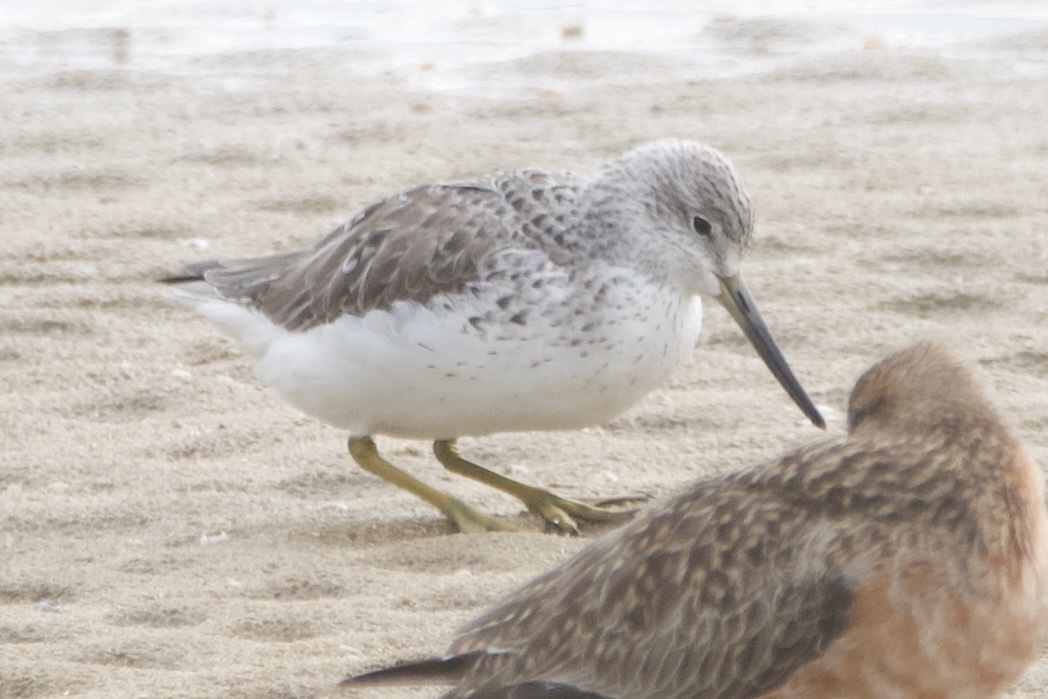
A medium-sized sandpiper measuring 29–32 cm in length with a distinctive slightly upturned bill that is bicoloured—dark at the tip and pale at the base. The relatively short legs are a bright yellow, noticeably shorter than those of many related species. Breeding adults display striking plumage: the upperparts are black with bold whitish spots and spangling, while the head and upper neck are heavily streaked. The lower neck and breast feature broad, blackish, crescentic markings against a lighter background, and the lores are dark. These bold markings make breeding adults relatively distinctive in good viewing conditions, though the species can be challenging to identify in non-breeding plumage.
Identification
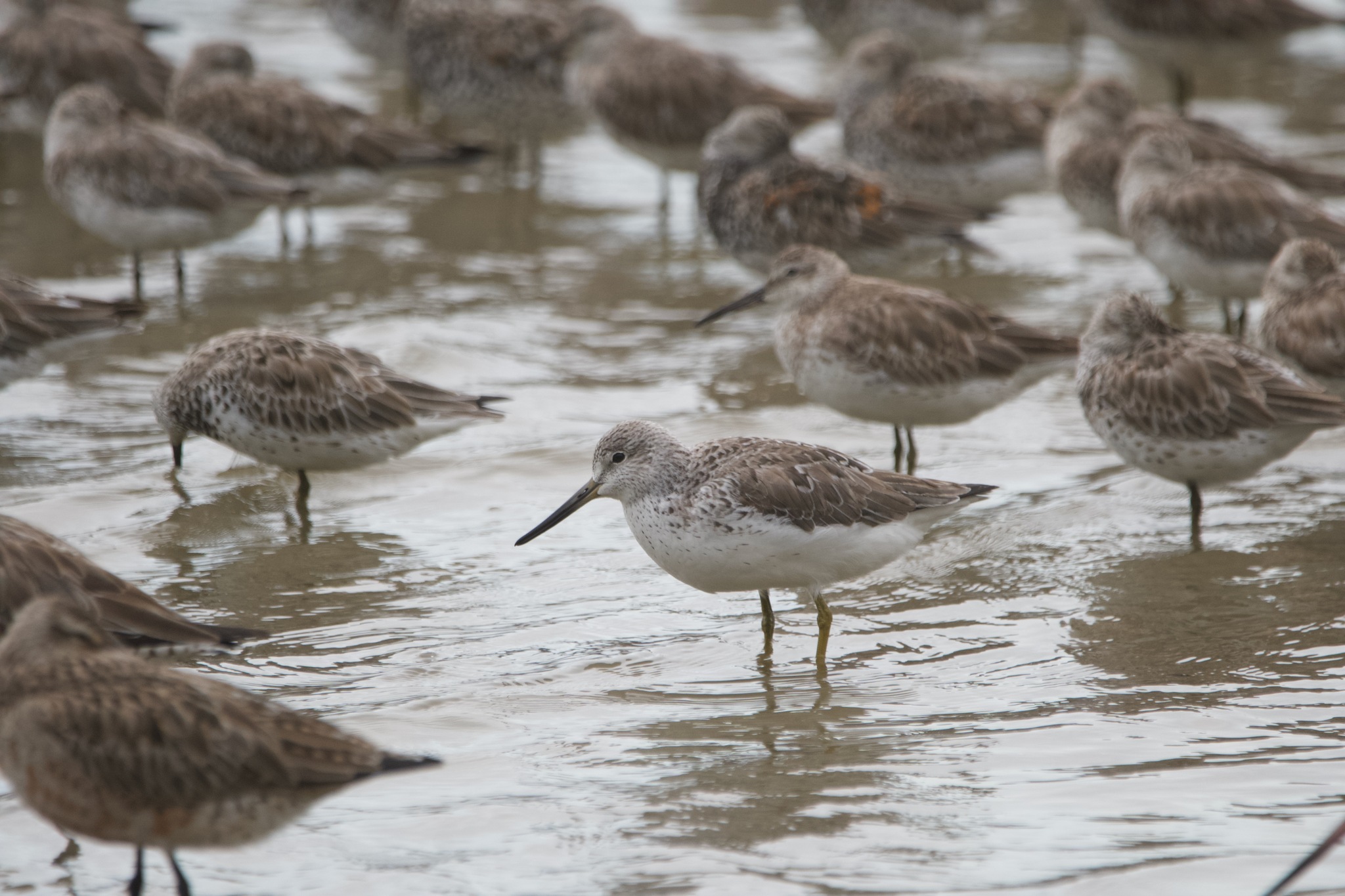
The combination of medium size, slightly upturned bicoloured bill, and short yellow legs is key to identifying this species. It is most easily confused with common greenshank and greater yellowlegs, but the shorter legs, more compact structure, and the distinctive bill shape help distinguish it. The heavily spotted upperparts of breeding birds are distinctive, though in non-breeding plumage, careful attention to leg length, bill structure, and overall jizz is required. The species appears stockier and shorter-legged than common greenshank, with a more pronounced upward curve to the bill than greater yellowlegs.
Distribution & Habitat
This species breeds in a highly restricted range along the south-western and northern coasts of the Sea of Okhotsk in eastern Russia and on Sakhalin Island. Its wintering range extends through Bangladesh, Thailand, Cambodia, Vietnam, and Peninsular Malaysia, with significant numbers recorded on passage in South Korea, mainland China, Hong Kong, and Taiwan. It has been recorded as a visitor or winter visitor in Japan, North Korea, India, Sri Lanka, Myanmar, Singapore, the Philippines, and Indonesia, with unconfirmed records from Nepal and Guam. Remarkably, individuals have been recorded in Western Australia, including multiple sightings at an 80-mile beach and a notable bird that over-wintered at Cairns Esplanade in Queensland from December 2020 to May 2021 and returned for at least four consecutive seasons through 2023.
Behavior & Ecology
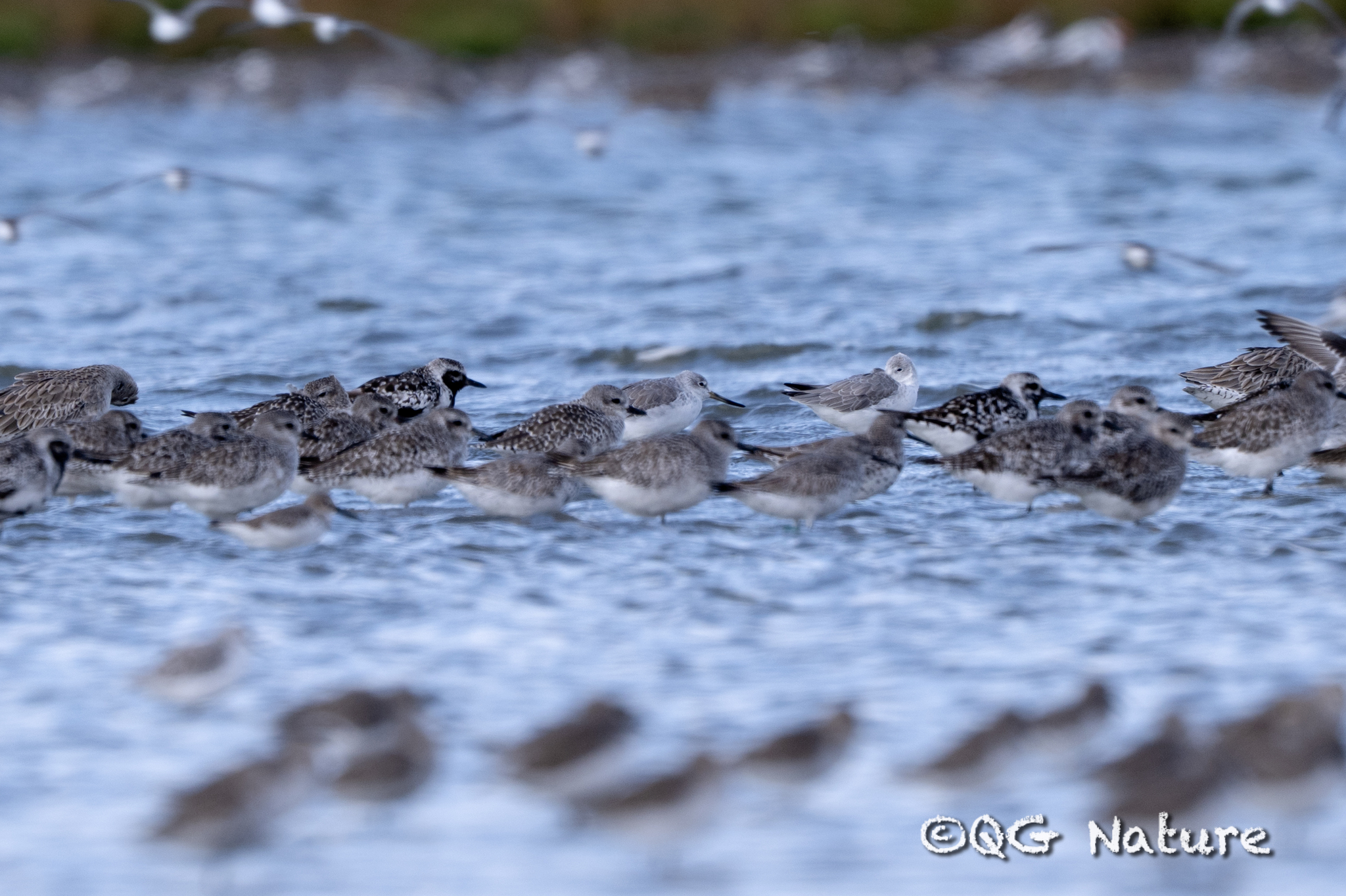
This species frequents coastal habitats, particularly mudflats, estuaries, and shallow waters where it forages in the typical snipe-like manner of sandpipers. While specific details of its diet are not well documented, like other Tringa species it likely feeds on small invertebrates, crustaceans, and molluscs. The breeding behaviour follows the pattern of other northern waders, with nesting occurring in the restricted Russian breeding grounds during the summer months. Its vocalizations are not extensively described in available literature, though like other greenshanks it probably gives diagnostic piping calls. The species appears to be somewhat solitary outside the breeding season, though small flocks may gather at important staging and wintering sites.
Conservation
Classified as Endangered with a global population estimated at only 500–1,000 individuals. This makes it one of the rarest and most threatened waders in the world. The primary threats include habitat loss and degradation throughout its range, particularly the destruction of coastal wetlands in East and Southeast Asia for aquaculture, agriculture, and development. The species' highly restricted breeding range and dependence on specific stopover and wintering sites make it particularly vulnerable to environmental changes and human disturbance. Conservation efforts focus on protecting key habitats throughout its migratory range and raising awareness about its precarious status among birdwatchers and local communities.
Culture
While this species does not feature prominently in cultural traditions or folklore, its rarity and endangered status have made it significant within the birdwatching and conservation communities. It has become something of a celebrity bird among Asian birders, with sightings attracting significant attention and contributing to ecotourism in areas where it occurs. Its status as an endangered species has also made it a focus of international conservation efforts and cooperative monitoring programmes across its range.
Source: Wikipedia · CC BY-SA 3.0
Taxonomy
- Order
- Charadriiformes
- Family
- Scolopacidae
- Genus
- Tringa
- eBird Code
- norgre1
Distribution
breeds coastal larch forest of western and southern coastal Sea of Okhotsk, Tatar Strait (west of Sakhalin), and Sakhalin (eastern Siberia); winters coastal mudflats and saltpans of southeastern Bangladesh, southern Myanmar, southern Thailand, Malayan Peninsula, Sumatra, and southwestern Borneo
Data Sources
Species description from Wikipedia, licensed under CC BY-SA 3.0.
Bird images and sounds sourced from GBIF, contributed by citizen scientists worldwide under Creative Commons licenses.
Taxonomy data from AviList 2025.