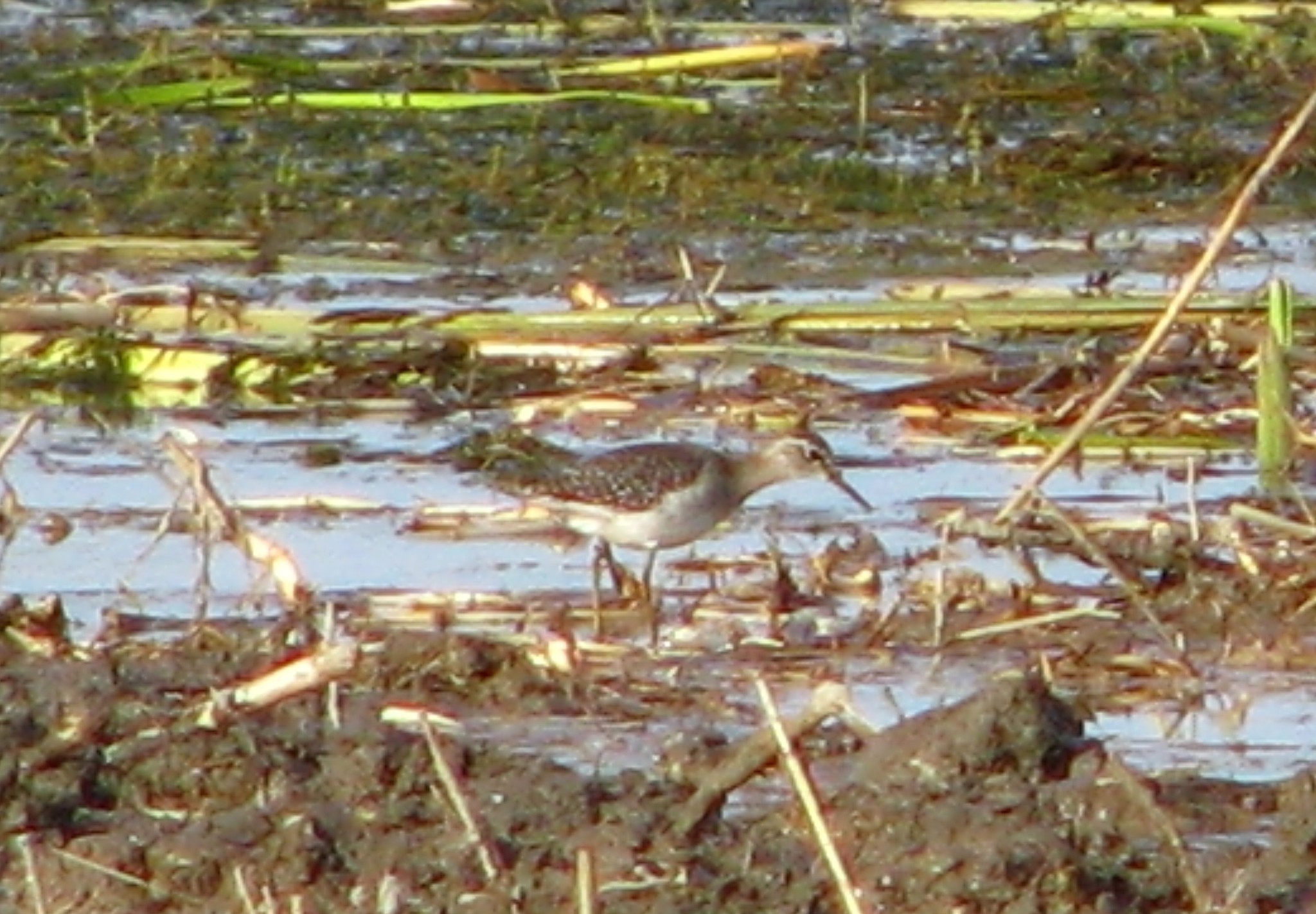
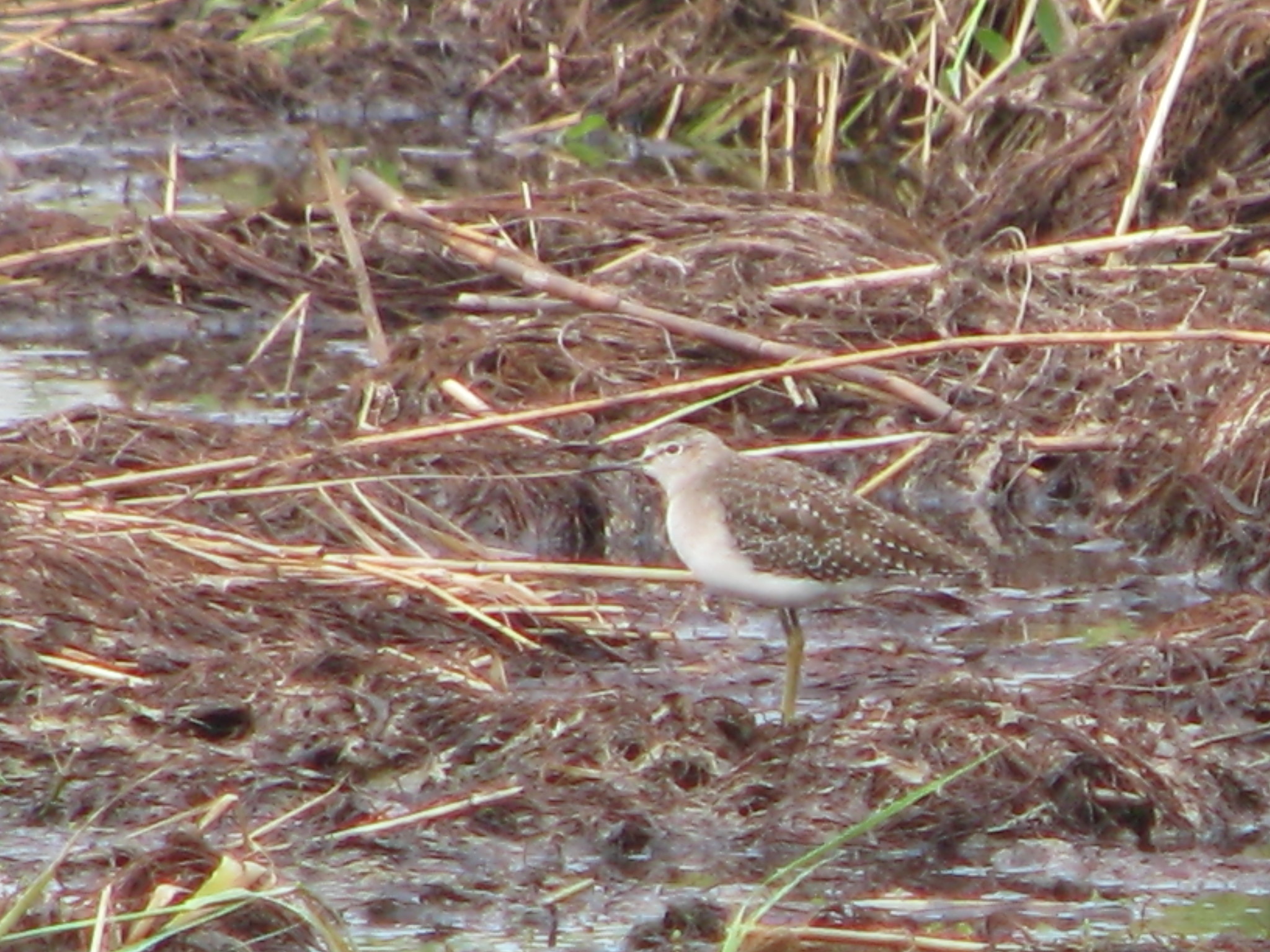
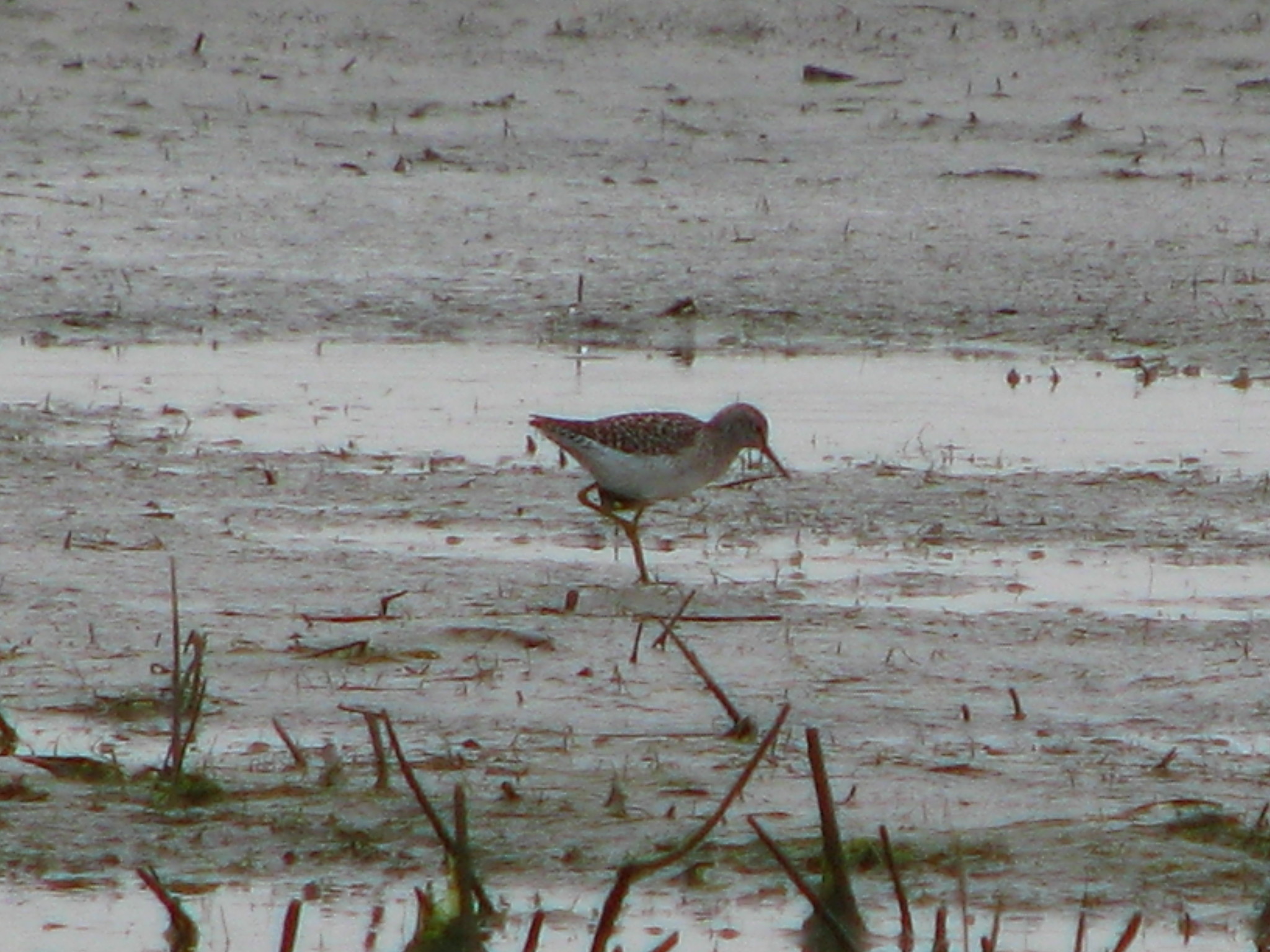
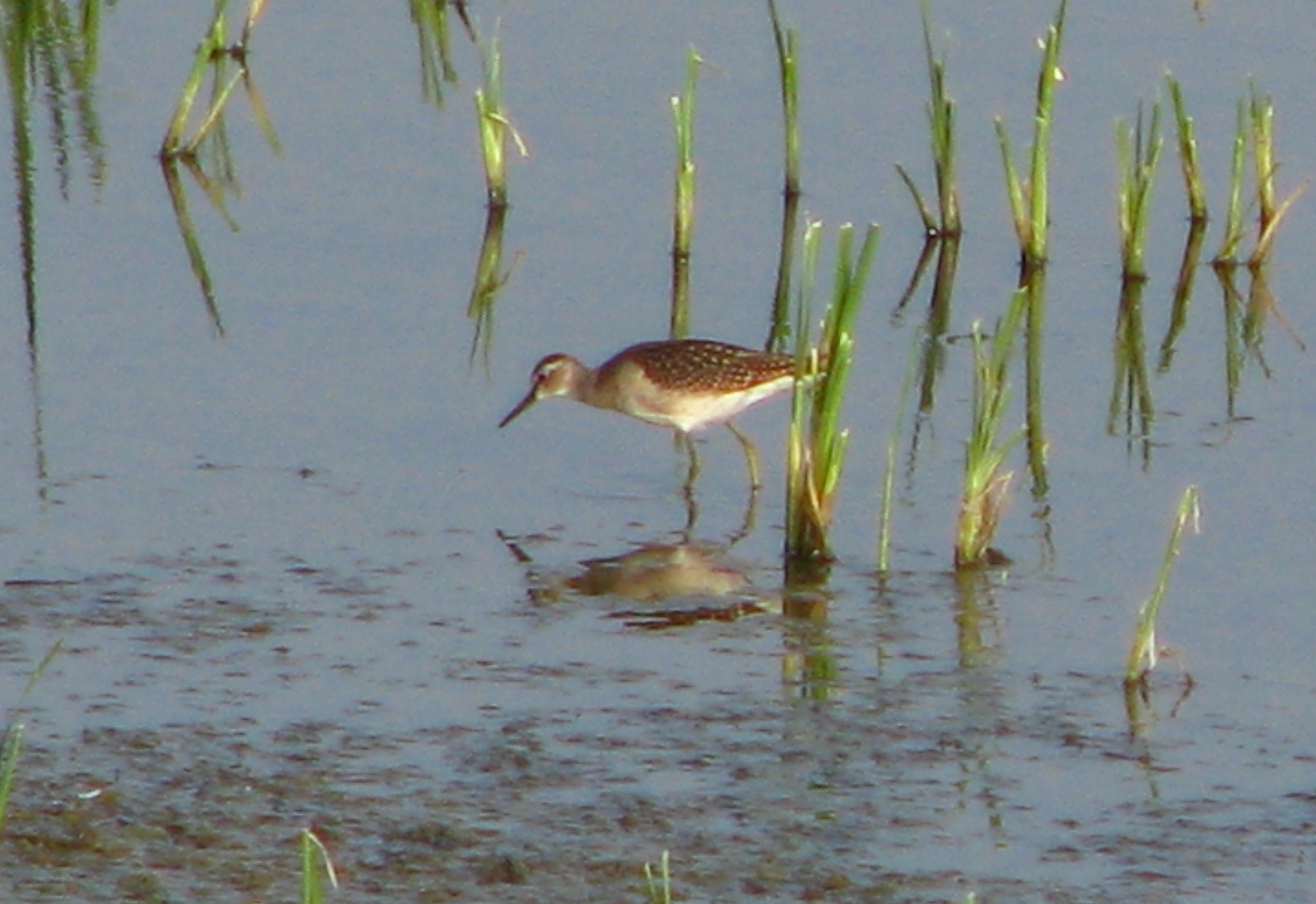

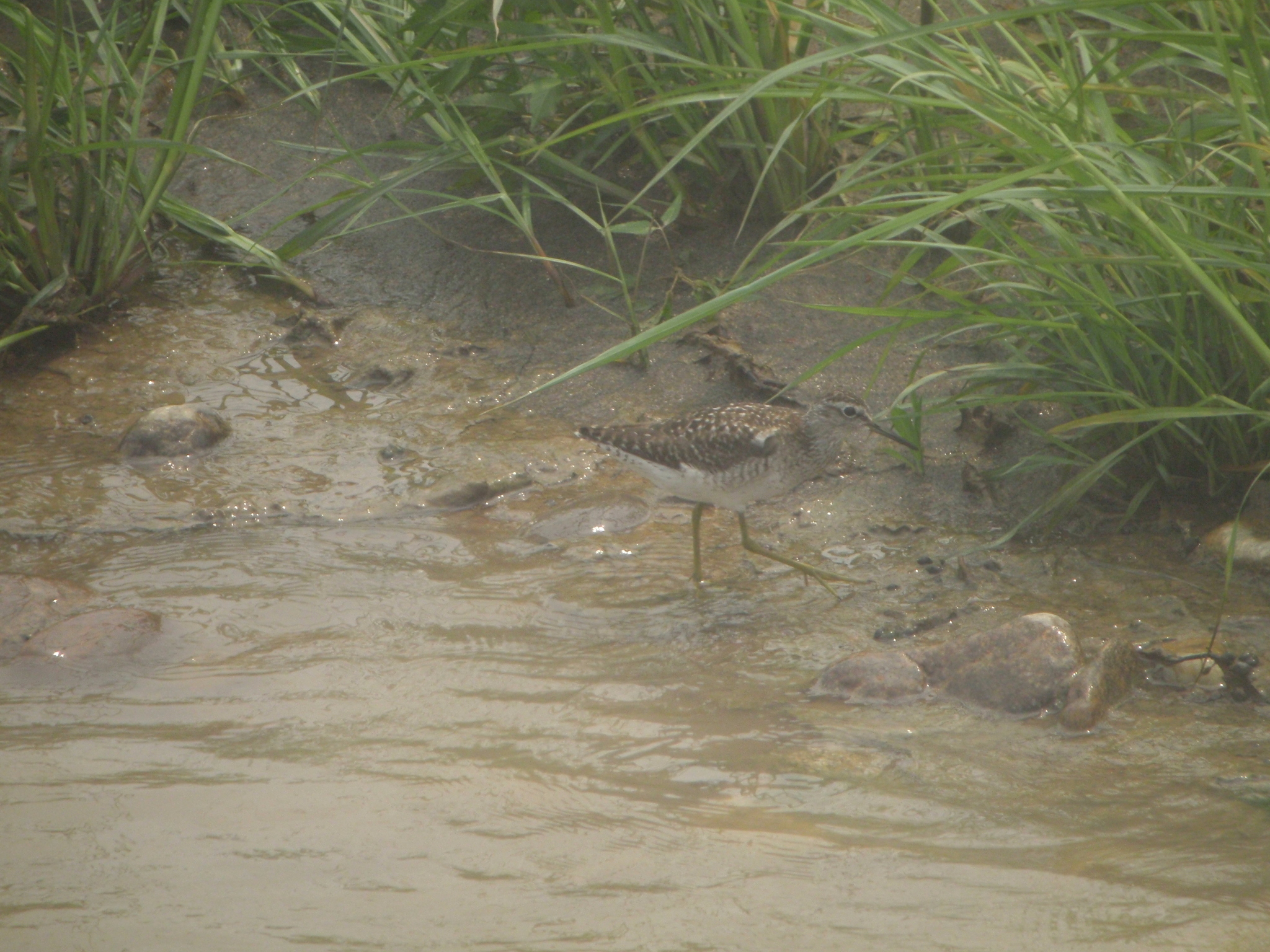
Wood Sandpiper
Tringa glareola
林鹬
Introduction
The wood sandpiper (Tringa glareola) is a small wader in the shank group, inhabiting freshwater wetlands across Eurasia. During migration, it occurs at inland freshwater sites throughout Europe, Africa, South Asia, and Australia. A small resident population has bred in Britain since the 1950s. It forages by probing muddy shorelines and wading through shallow waters in search of invertebrates. Taxonomically, it belongs to the Tringa genus and is closely related to the common redshank and marsh sandpiper.
Description
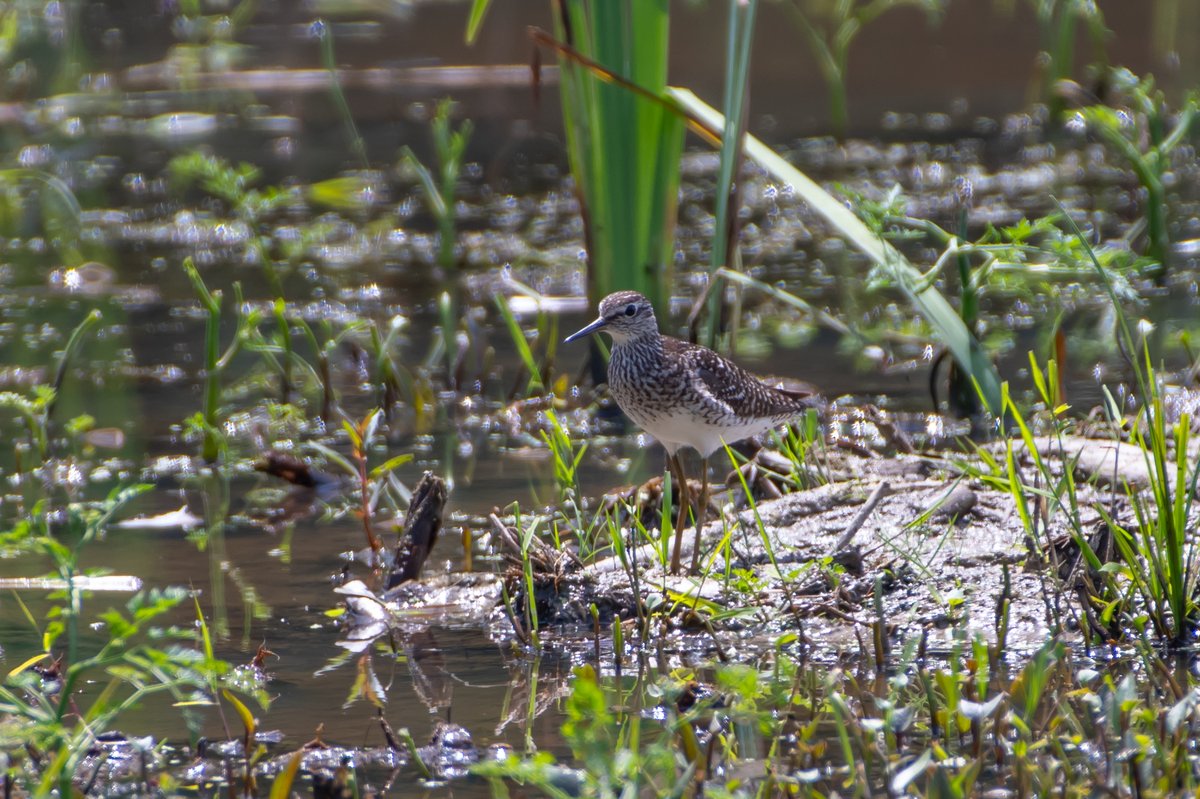
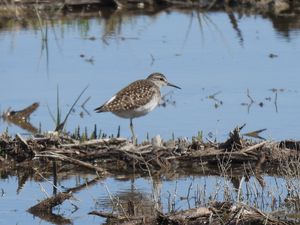
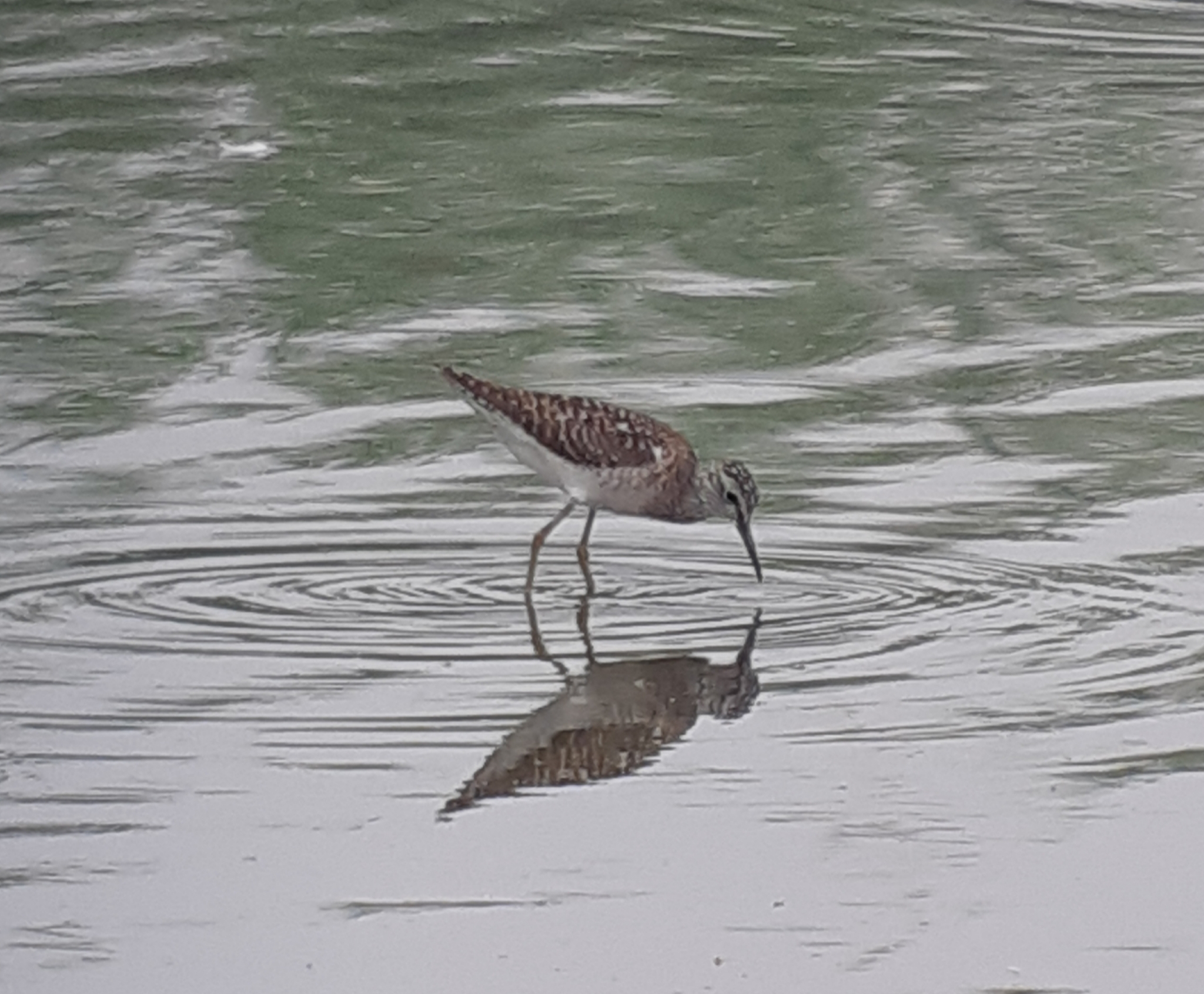
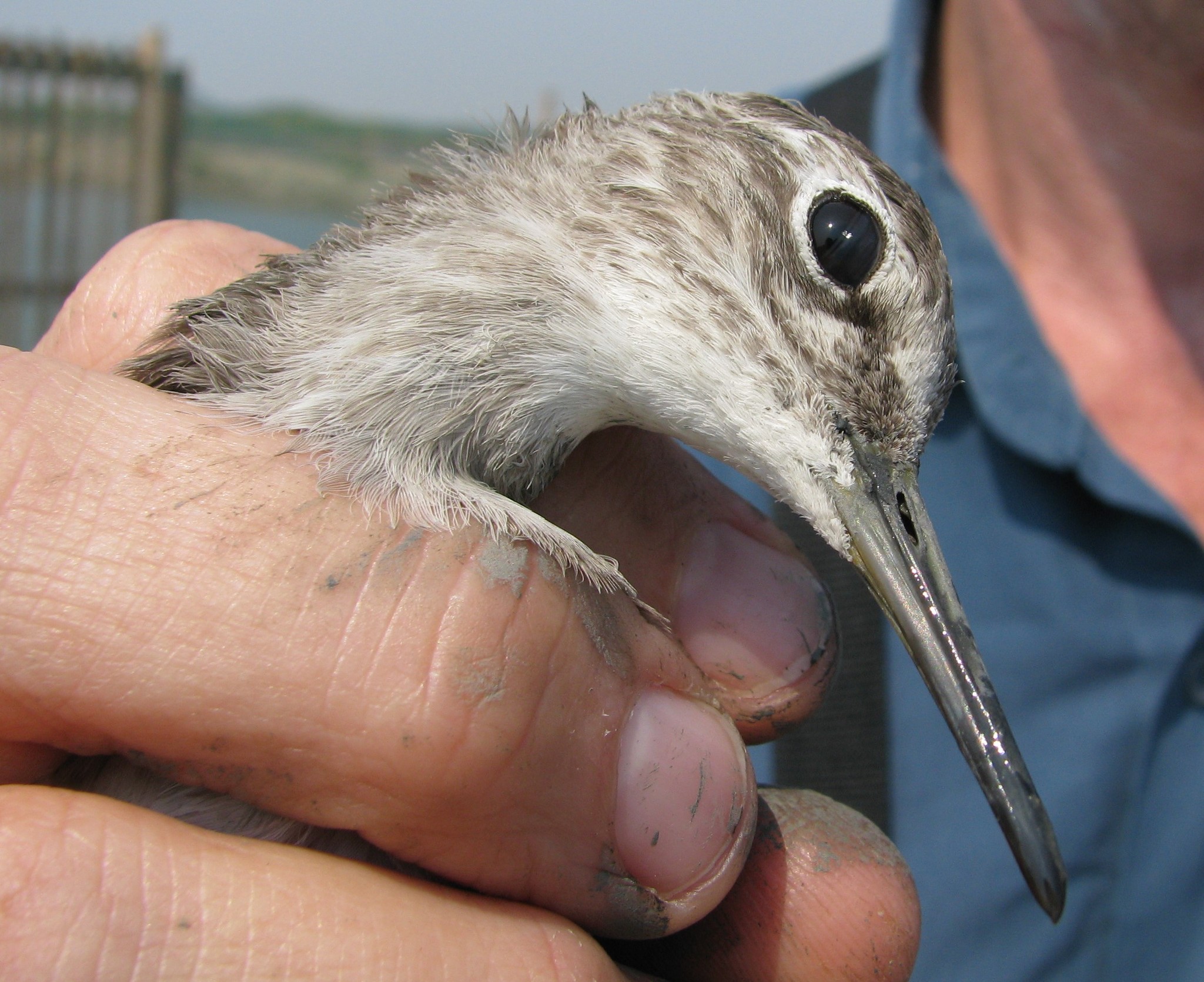
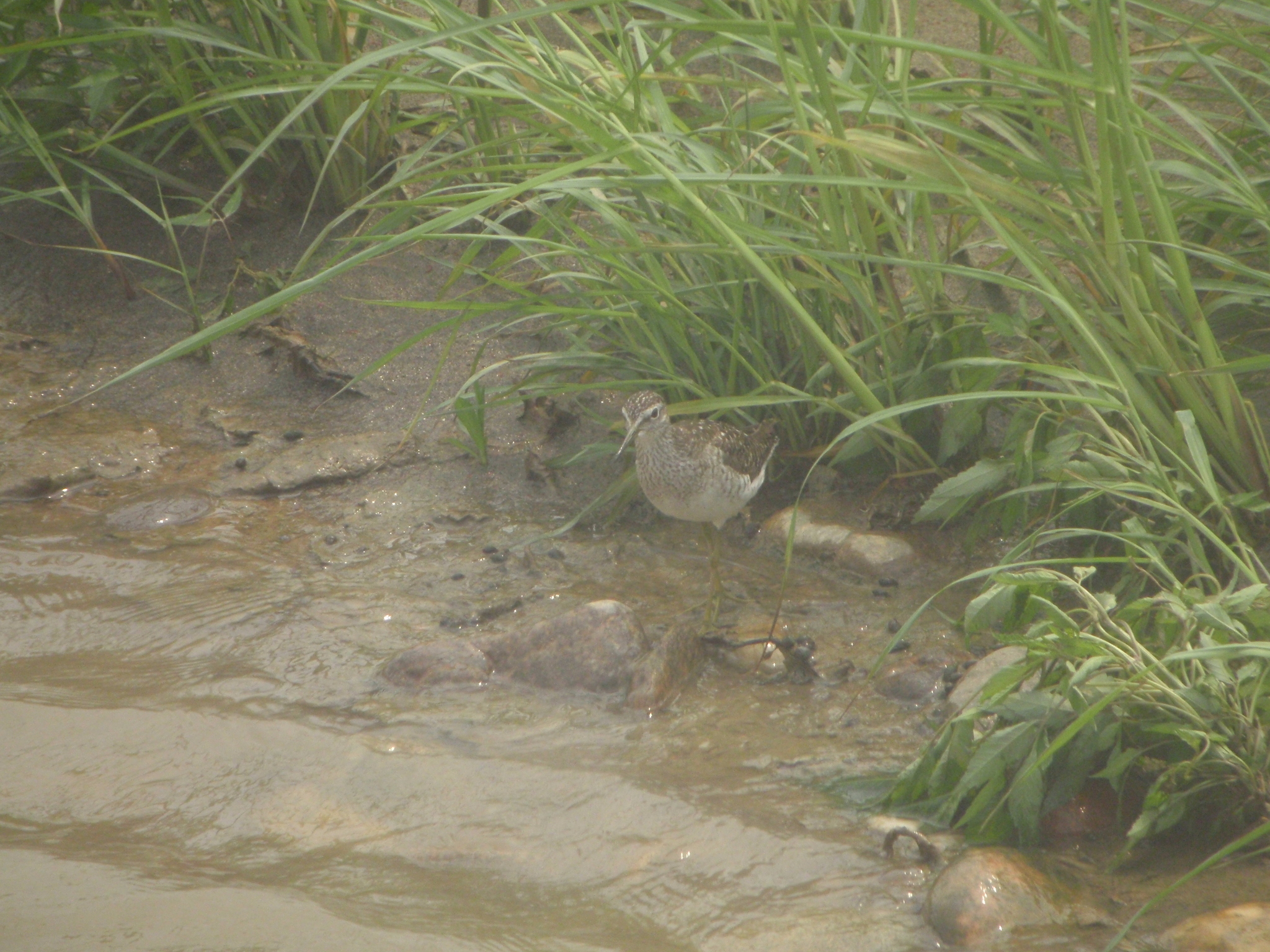
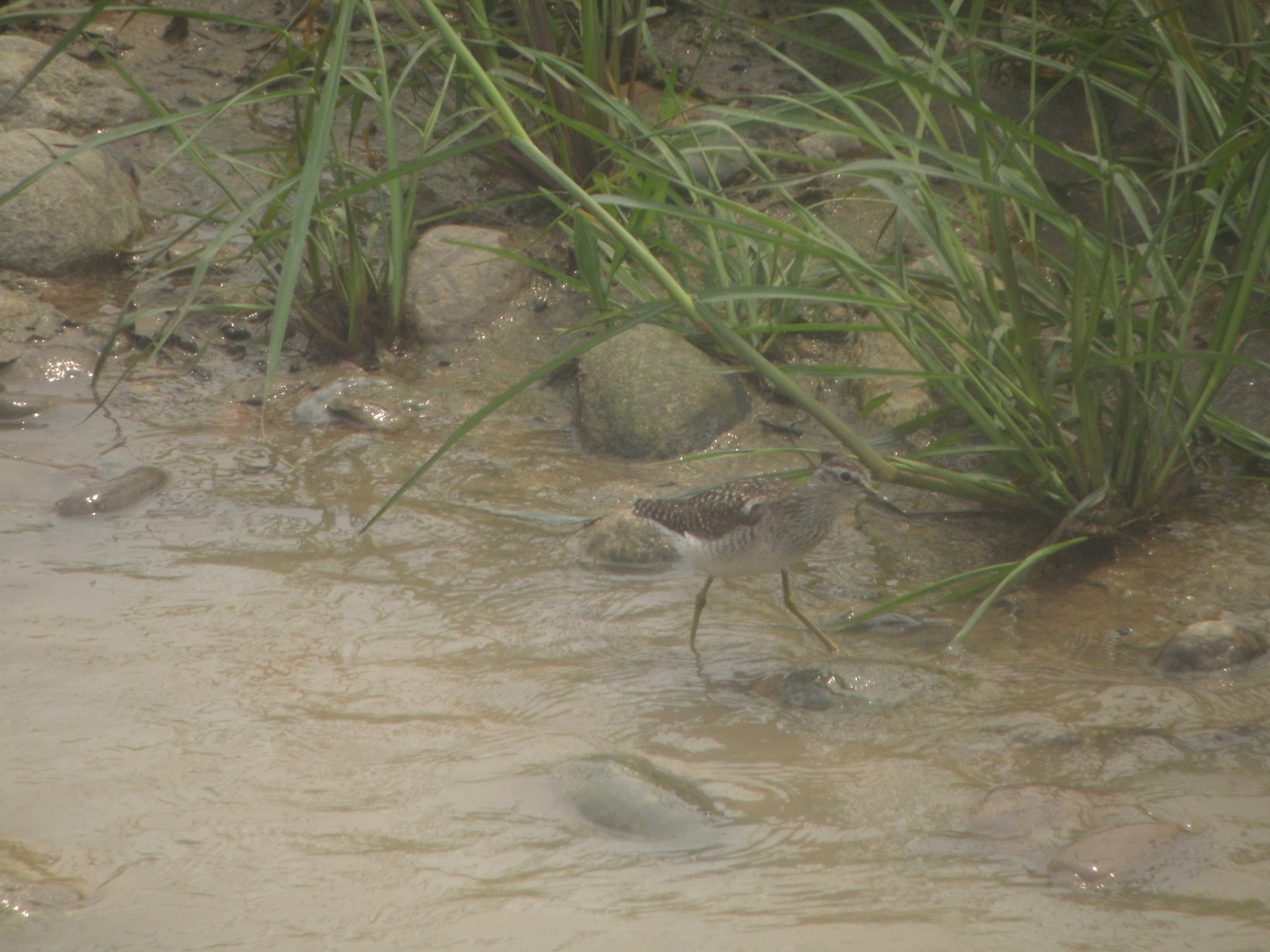
This small wader presents a refined, delicate silhouette compared to other shanks, with a notably slender build and proportionally long legs in striking yellow. The bill is shorter and finer than similar species, while the upperparts display a subdued light-brown coloration marked with darker mottling. The underparts feature a pattern of smaller, diffuse brownish spots concentrated on the breast and neck. The white rump-patch is present but significantly less conspicuous than that of the green sandpiper, appearing more restrained and less contrasting in comparison.
Identification
Field identification centers on several key distinguishing features. Unlike the green sandpiper, this species shows a smaller and less prominent white rump-patch. The solitary sandpiper lacks any white rump-patch entirely, providing a clear distinction. The combination of longer yellowish legs, a brown back, and a shorter, finer bill helps separate it from both these lookalikes. The overall impression is of a longer-legged, more delicate bird than the green sandpiper, yet not as robust as larger shanks.
Distribution & Habitat
Breeding occurs across subarctic wetlands from the Scottish Highlands eastward through Eurasia and the Palearctic. The species undertakes long-distance migration to wintering grounds in Africa, South Asia (particularly India), and Australia. Vagrant individuals have reached the Hawaiian Islands, while regular migration through Micronesia includes Palau and the Mariana Islands, with flocks up to 32 birds recorded. A small resident breeding population has existed in Scotland since the 1950s. The species favors freshwater habitats during migration and winter, avoiding coastal areas.
Behavior & Ecology
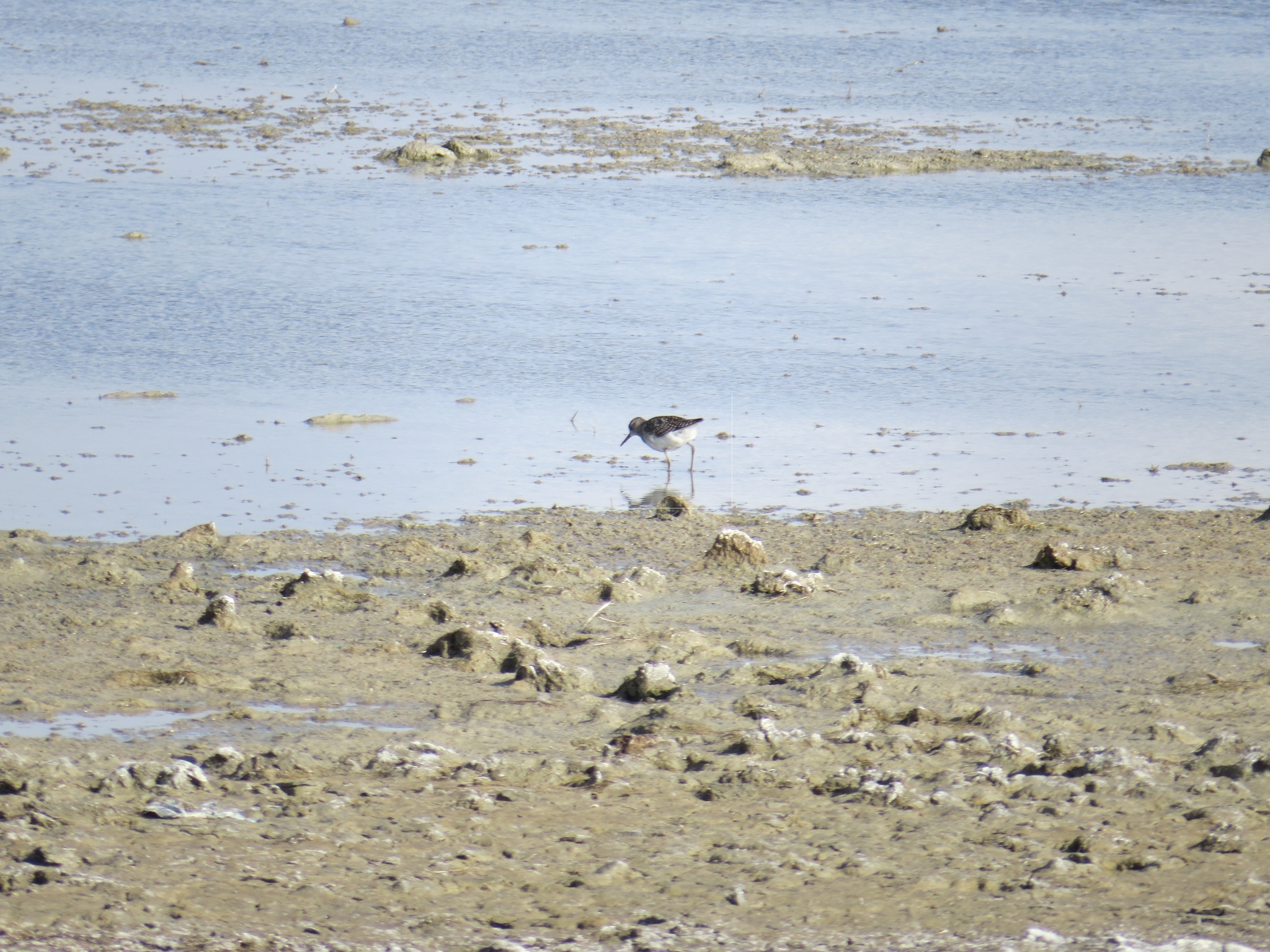
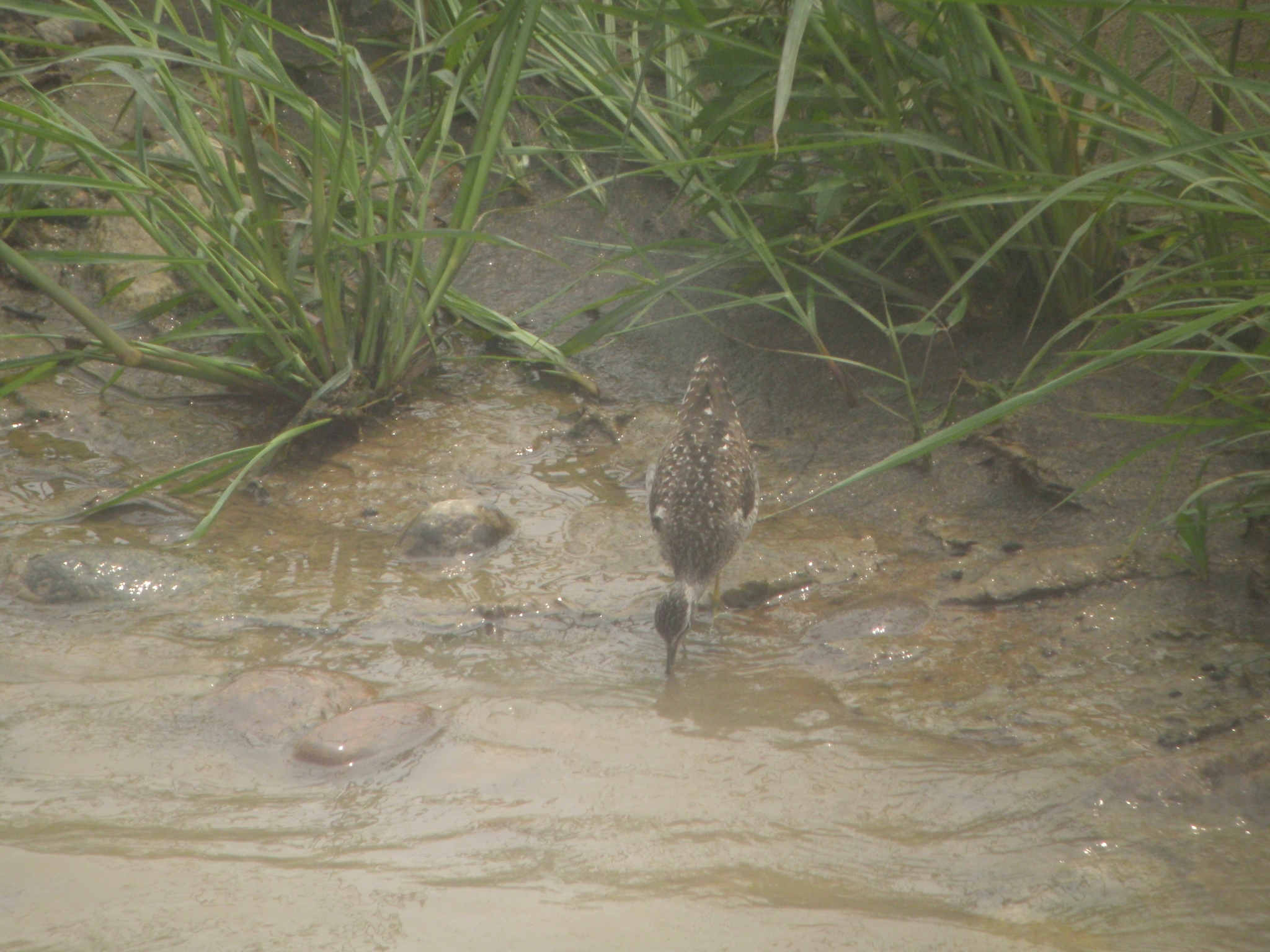
Foraging involves probing bills in shallow water or wet mud along lakeshores and riverbanks, targeting aquatic insects, crustaceans, arthropods, worms, and other small prey. Breeding begins between March and May, with nests located on the ground or in abandoned tree nests of other species such as fieldfares. Four pale-green eggs are laid, incubated by both parents over 22-23 days. Both parents initially care for the young, though the female typically departs after a few days; the chicks feed themselves and fledge around 30 days. Adults undergo complete primary feather moult between August and December, while juveniles are more flexible in their moult timing.
Conservation
The species holds a status of Least Concern on the IUCN Red List, with an apparently stable and healthy global population. It is protected under the Agreement on the Conservation of African-Eurasian Migratory Waterbirds (AEWA), reflecting its extensive migratory range and international importance for conservation. No significant population declines have been reported, though wetland degradation throughout its range could pose future concerns.
Culture
No significant cultural or folklore associations are documented for this species.
Source: Wikipedia · CC BY-SA 3.0
Taxonomy
- Order
- Charadriiformes
- Family
- Scolopacidae
- Genus
- Tringa
- eBird Code
- woosan
Distribution
breeds wooded wetlands from Scotland and Scandinavia eastward through inland northern Russia to eastern Siberia and northeastern China, in south through northern Mongolia to Commander Islands (southeastern Russia); winters small wetlands from Africa eastward to southern Japan and southward to Australia
Data Sources
Species description from Wikipedia, licensed under CC BY-SA 3.0.
Bird images and sounds sourced from GBIF, contributed by citizen scientists worldwide under Creative Commons licenses.
Taxonomy data from AviList 2025.