Galliformes / Phasianidae / Tragopan
Cabot's Tragopan
Tragopan caboti · 黄腹角雉
Introduction
A pheasant endemic to mountain ranges in southeastern China. It inhabits subtropical evergreen forests and mixed deciduous-coniferous woodlands at altitudes of 600 to 1,800 meters. The species exhibits limited dispersal ability, with populations fragmented by forest gaps exceeding 500 meters. It is assessed as a vulnerable species by the IUCN.
Description
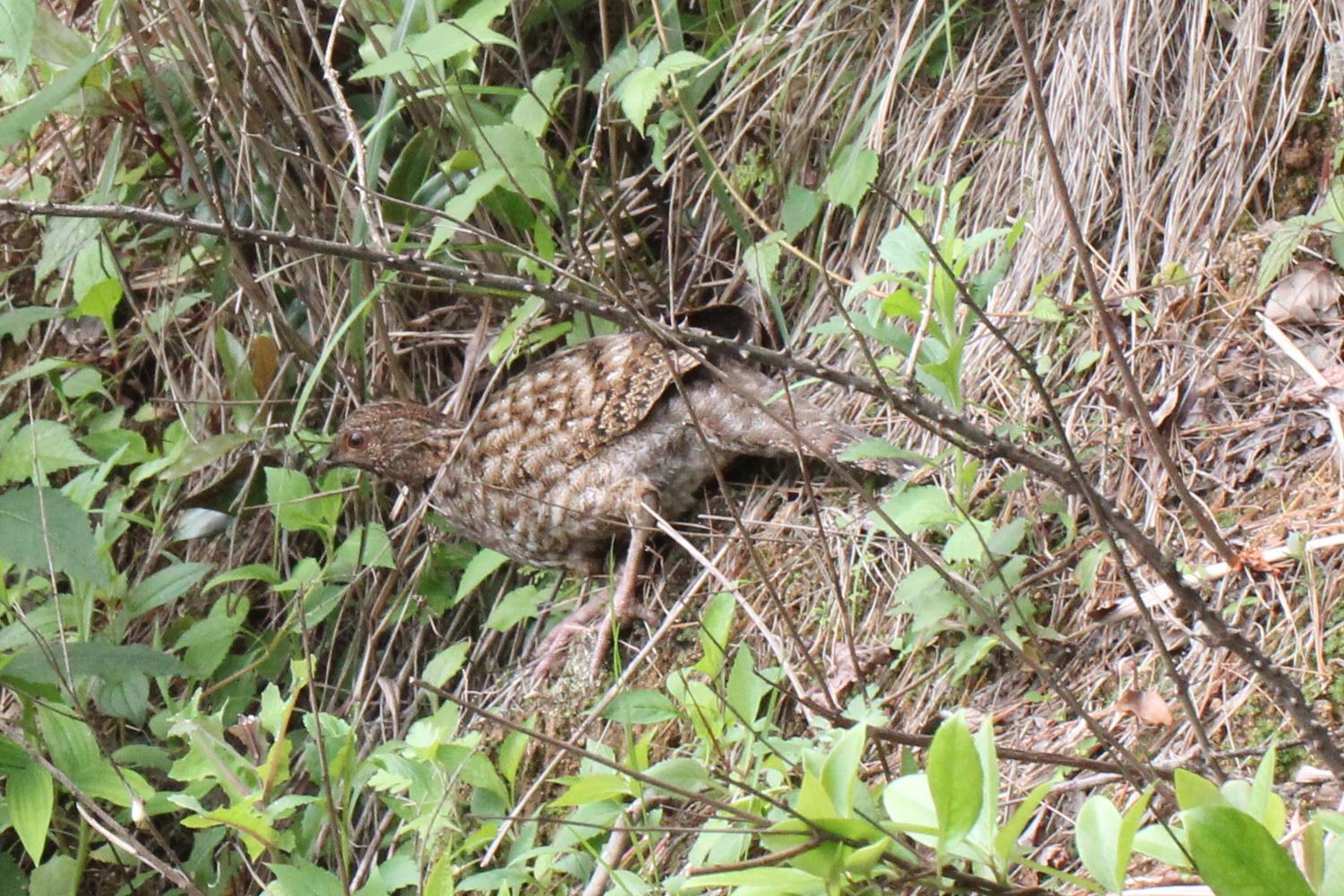
A plump ground-dwelling bird with relatively short legs. Males reach about 60 cm (24 in) in length and weigh around 1.4 kg (3 lb). The male has a black head with reddish-orange streaks on the sides and neck, bare reddish-orange skin on the cheeks and around the eye, blue and orange inflatable wattles below the beak, and fleshy blue horns over the eyes. Upper parts are reddish-brown with large buff markings; underparts are straw-coloured. Females are about 10 cm (4 in) shorter, weigh around 0.9 kg (2 lb), and are less colourful. The female's head and upper parts are reddish-brown spotted with black and marked with triangular white patches; underparts are greyish-brown with white markings.
Identification
Males are distinguished by black heads with reddish-orange streaks, bare facial skin, inflatable blue and orange wattles, and blue horns. Females are identified by reddish-brown plumage spotted with black and marked with triangular white patches on the upper parts, and greyish-brown underparts with white markings.
Distribution & Habitat
Endemic to southeastern China, occurring in Fujian, Jiangxi, Zhejiang, Guangdong, northeastern Guangxi, and southern Hunan. Two subspecies are recognized: T. c. caboti in the southeast and T. c. guangxiensis in Guangxi and south-central China. Habitat includes subtropical evergreen forest and mixed forests at 600 to 1,800 meters (2,000 to 5,900 ft), sometimes above the treeline.
Behavior & Ecology
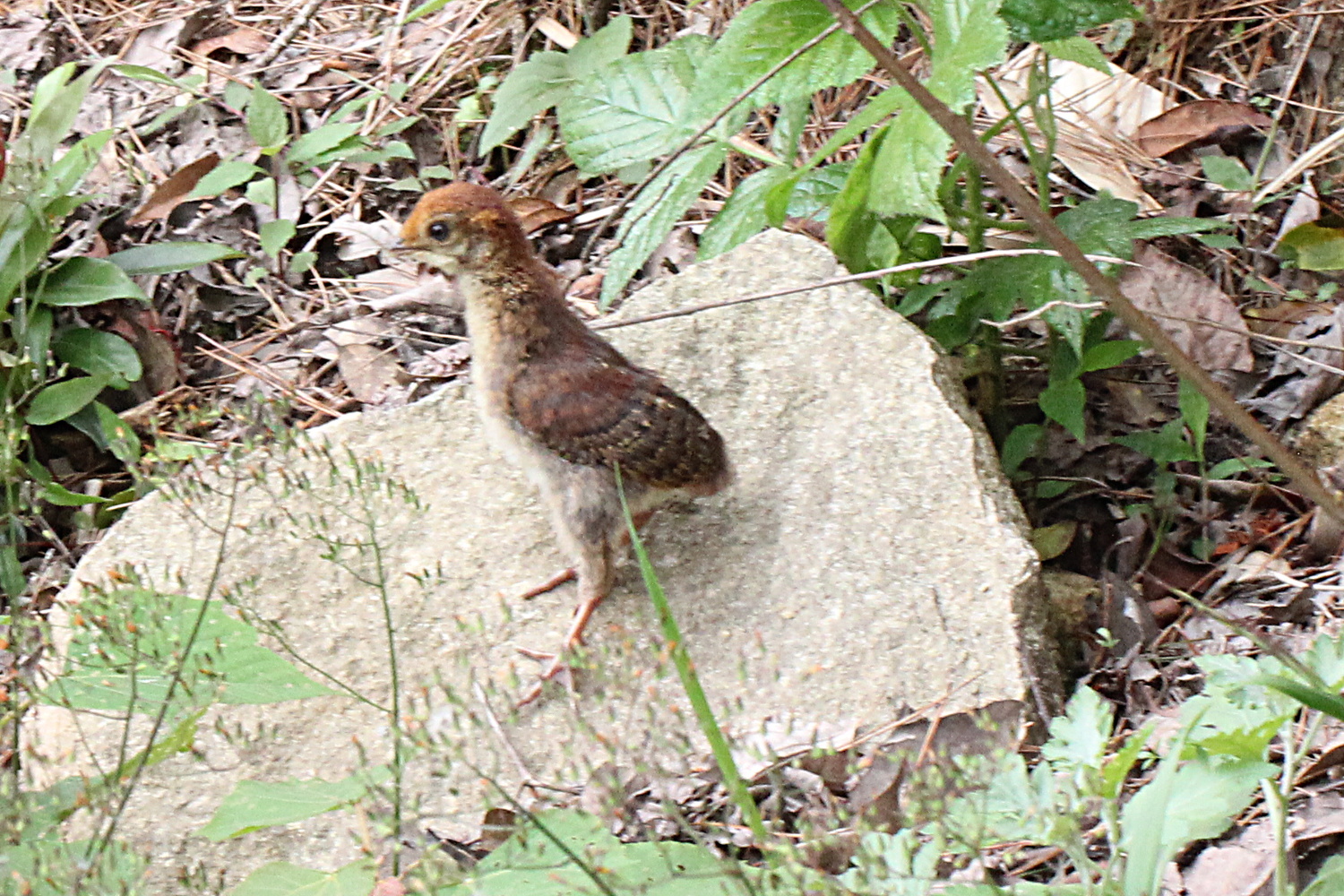
Feeds mostly on the ground on roots, shoots, buds, flowers, fruits, seeds, and small invertebrates; favors Daphniphyllum macropodum for food and night roosting. Breeding occurs in spring with elaborate courtship rituals. Nests are built off the ground in tree forks using grasses, mosses, feathers, and leaves, or occasionally use empty nests of other species. The female lays a clutch of two to six eggs and incubates them alone for about twenty-eight days. She broods the young for two to three days post-hatching before the family leaves the nest. Chicks can fly soon after hatching and remain with the family through winter, possibly joining small groups.
Conservation
Assessed as a vulnerable species by the IUCN. The population is estimated at fewer than ten thousand individuals and is decreasing. Major threats include habitat loss due to conversion of natural forest to agricultural land or conifer and bamboo plantations, which reduces suitable nesting sites. Illegal hunting persists in some areas. Conservation measures include the provision of artificial nesting platforms and presence in some small protected areas.
Source: Wikipedia · CC BY-SA 3.0
Taxonomy
- Order
- Galliformes
- Family
- Phasianidae
- Genus
- Tragopan
Subspecies (2)
-
Tragopan caboti caboti
foothill forest of southeastern China
Data Sources
Species description from Wikipedia, licensed under CC BY-SA 3.0.
Bird images and sounds sourced from GBIF, contributed by citizen scientists worldwide under Creative Commons licenses.
Taxonomy data from AviList 2025.