
Charadriiformes / Laridae / Thalasseus
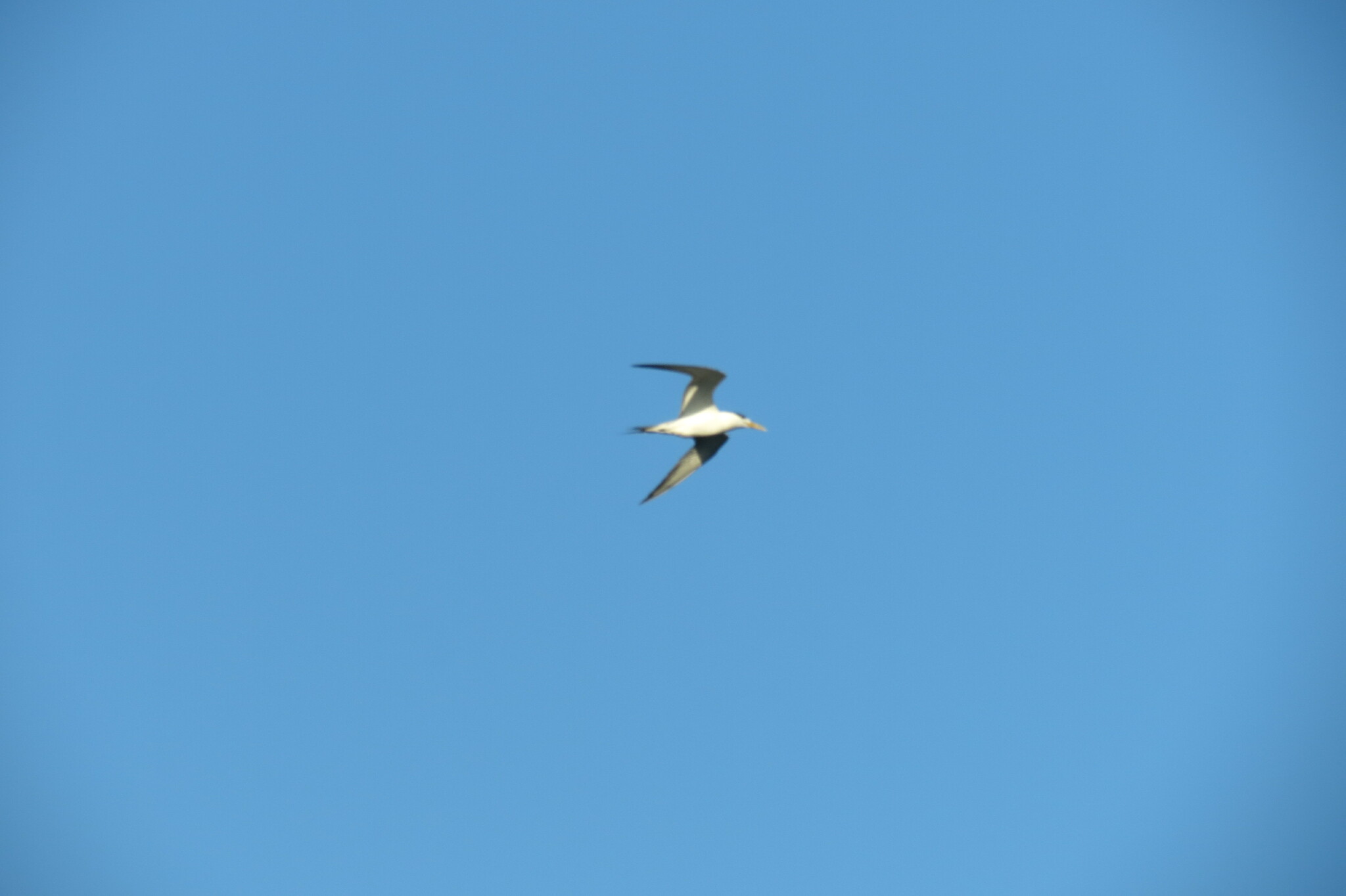
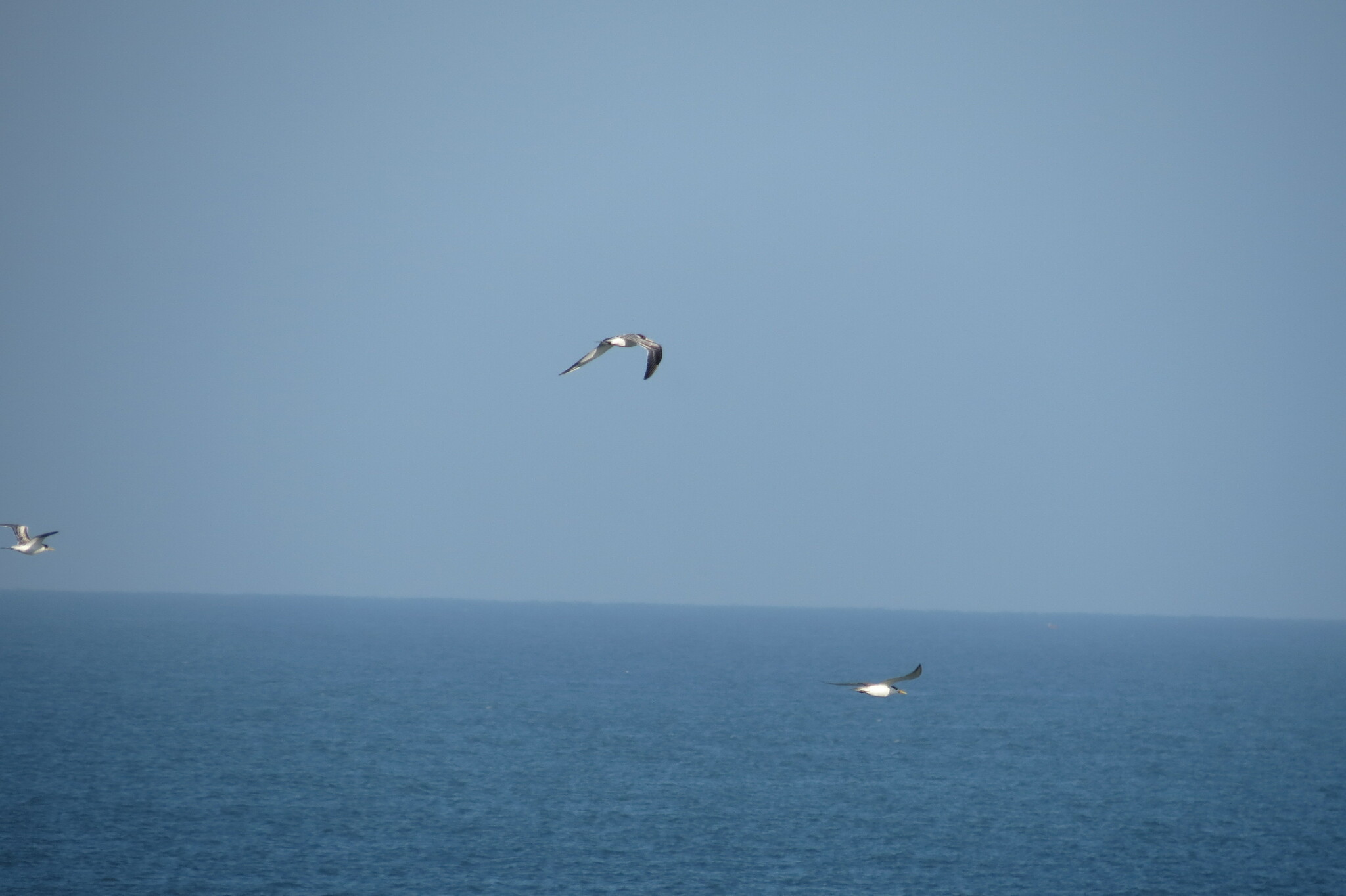
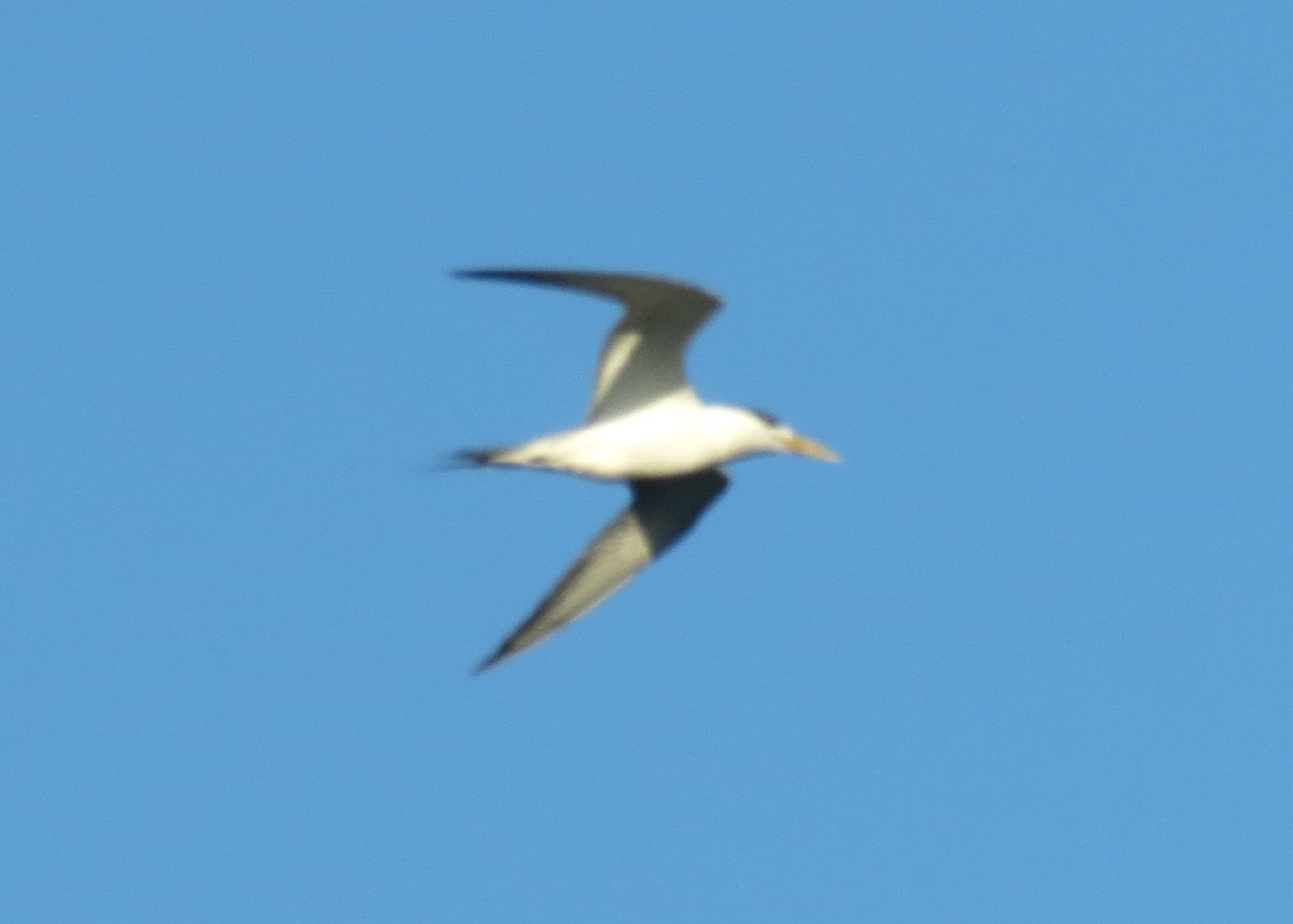
Greater Crested Tern
Thalasseus bergii · 大凤头燕鸥
Introduction
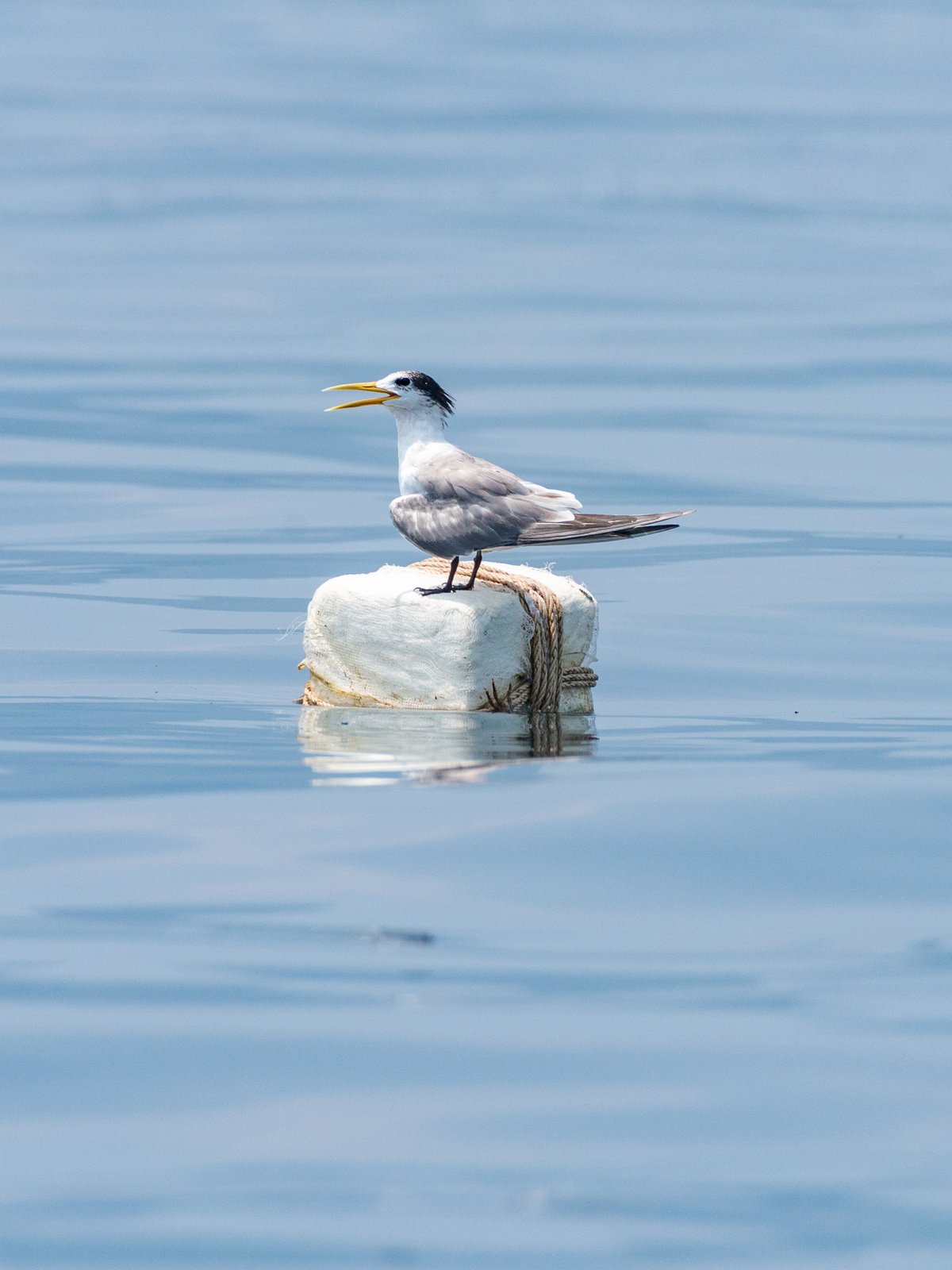
A large tern in the family Laridae, nesting in dense colonies on coastlines and islands across the tropical and subtropical Old World. It is distinguished by darker battleship-grey upperparts, a white forehead even in breeding plumage, and a greenish-tinged yellow bill. The species is highly adaptable, utilizing artificial nest sites and following fishing boats for food. It is evaluated as Least Concern globally with a stable population exceeding 500,000 individuals.
Description
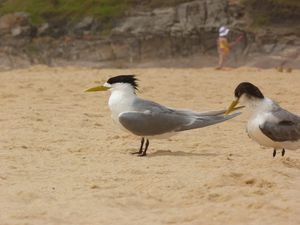
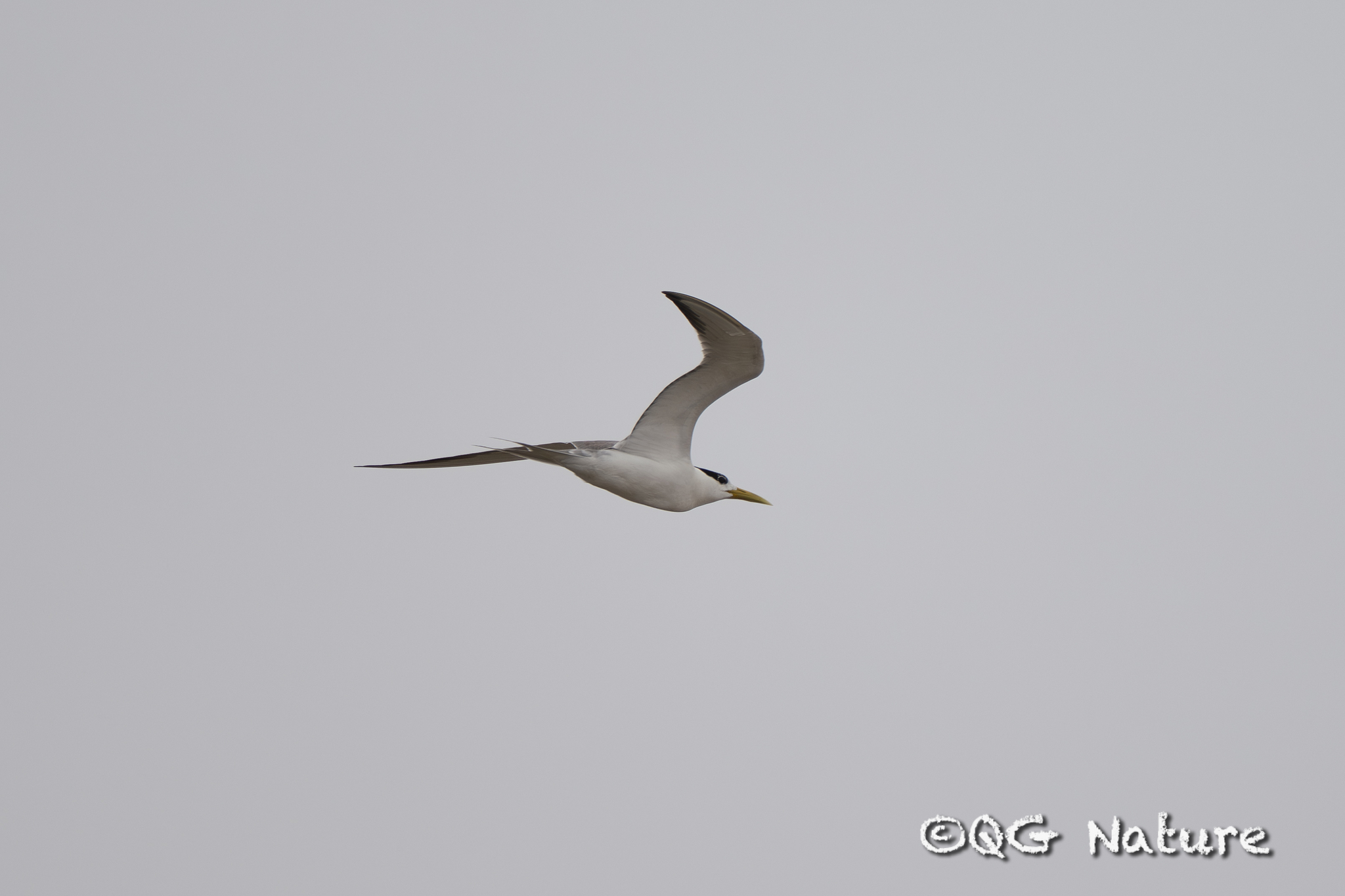
Length 46–49 cm, wingspan 125–130 cm, weight 325–397 g. Features dark grey upperparts, white underparts, black legs, and a long (5.4–6.5 cm) yellow bill. The breeding adult has a glossy, shaggy black crest. In winter, the crown becomes white, merging into a peppered black crest and mask, while upperparts fade to paler grey. Juveniles display strongly patterned grey, brown, and white plumage with dark bars on closed wings. Adults of both sexes are identical.
Identification
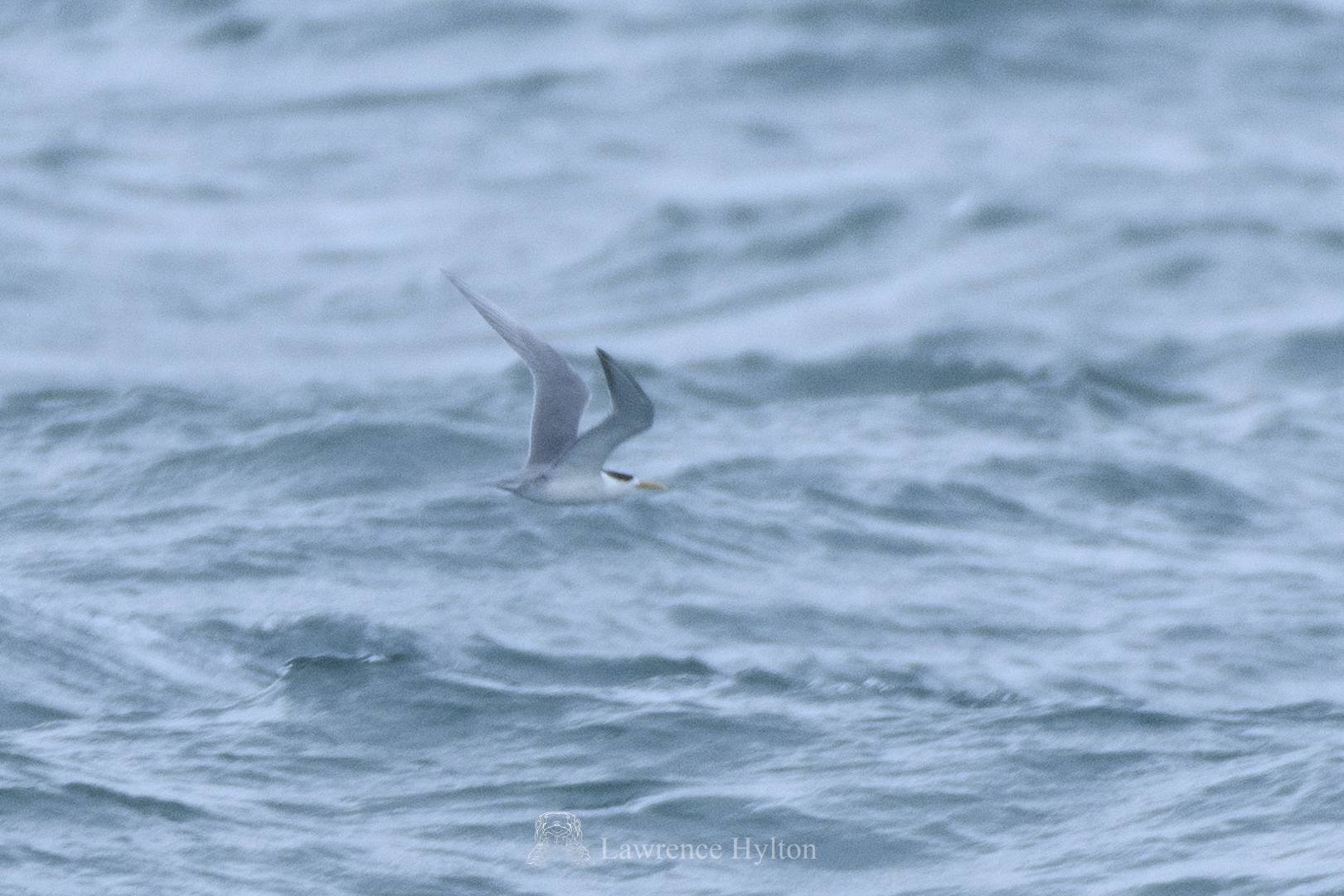
Distinguished from the similar royal tern by a proportionately longer, yellow (not orange) bill, darker back, and lighter build. It is 25% larger than the lesser crested tern, which has an orange-tinted bill and less variegated immature plumage. Key field marks include the white forehead in all plumages and battleship-grey upperparts. Flight is fast and buoyant with long pointed wings and a deeply forked tail.
Distribution & Habitat
Breeds from South Africa around the Indian Ocean to the central Pacific and Australia. Subspecies T. b. bergii breeds in southern Africa; T. b. velox in Somalia, the Red Sea, and Persian Gulf; T. b. thalassinus on Indian Ocean islands; and T. b. cristatus in the Pacific, China, Southeast Asia, and Australia. Nests on low-lying sandy, rocky, or coral islands, as well as building roofs and artificial islands. Populations disperse widely after breeding, with some movements exceeding 2,000 km. Vagrants recorded in Hawaii, New Zealand, North Korea, Jordan, and Israel.
Behavior & Ecology
Feeds primarily on fish (nearly 90% of diet) by plunge diving up to 1 m deep or dipping from the surface; also takes cephalopods and crustaceans. Actively follows trawlers, with discards constituting up to 70% of diet during fishing seasons. Breeds in monogamous pairs within large colonies, sometimes exceeding 15,000 pairs. Courtship involves head-raising displays and fish offerings. Nests are shallow scrapes in sand; 1–2 cream eggs with blackish streaks are incubated for 25–30 days. Chicks fledge at 38–40 days but remain dependent for about four months. Highly vocal, with calls including a raucous kerrak and wep wep.
Conservation
Evaluated as Least Concern by the IUCN with a global population over 500,000. Local declines occur due to egg harvesting, shooting, and disturbance by predators such as gulls and ibises. Commercial fisheries have mixed effects: trawl discards boost juvenile survival and population growth in some areas, while purse-seine fishing reduces prey availability. All subspecies except T. b. cristatus are covered under the Agreement on the Conservation of African-Eurasian Migratory Waterbirds (AEWA).
Culture
The specific epithet bergii commemorates Karl Heinrich Bergius, a Prussian pharmacist and botanist who collected the first specimens near Cape Town.
Source: Wikipedia · CC BY-SA 3.0
Taxonomy
- Order
- Charadriiformes
- Family
- Laridae
- Genus
- Thalasseus
Vocalizations
Subspecies (4)
-
Thalasseus bergii bergii
coastal southern Africa (Namibia to Mozambique)
Data Sources
Species description from Wikipedia, licensed under CC BY-SA 3.0.
Bird images and sounds sourced from GBIF, contributed by citizen scientists worldwide under Creative Commons licenses.
Taxonomy data from AviList 2025.