Hazel Grouse
Tetrastes bonasia
花尾榛鸡
Introduction
A small Palearctic grouse species (Tetrastes bonasia) in the family Phasianidae. Occurs across Eurasia from eastern and central Europe east to Hokkaido, inhabiting dense, damp, mixed coniferous woodlands with spruce. A sedentary species that remains year-round in its woodland territory. Notable for being extremely difficult to observe due to shy behavior and dense habitat; often detected only by distinctive calls. Conservation status not specified.
Description
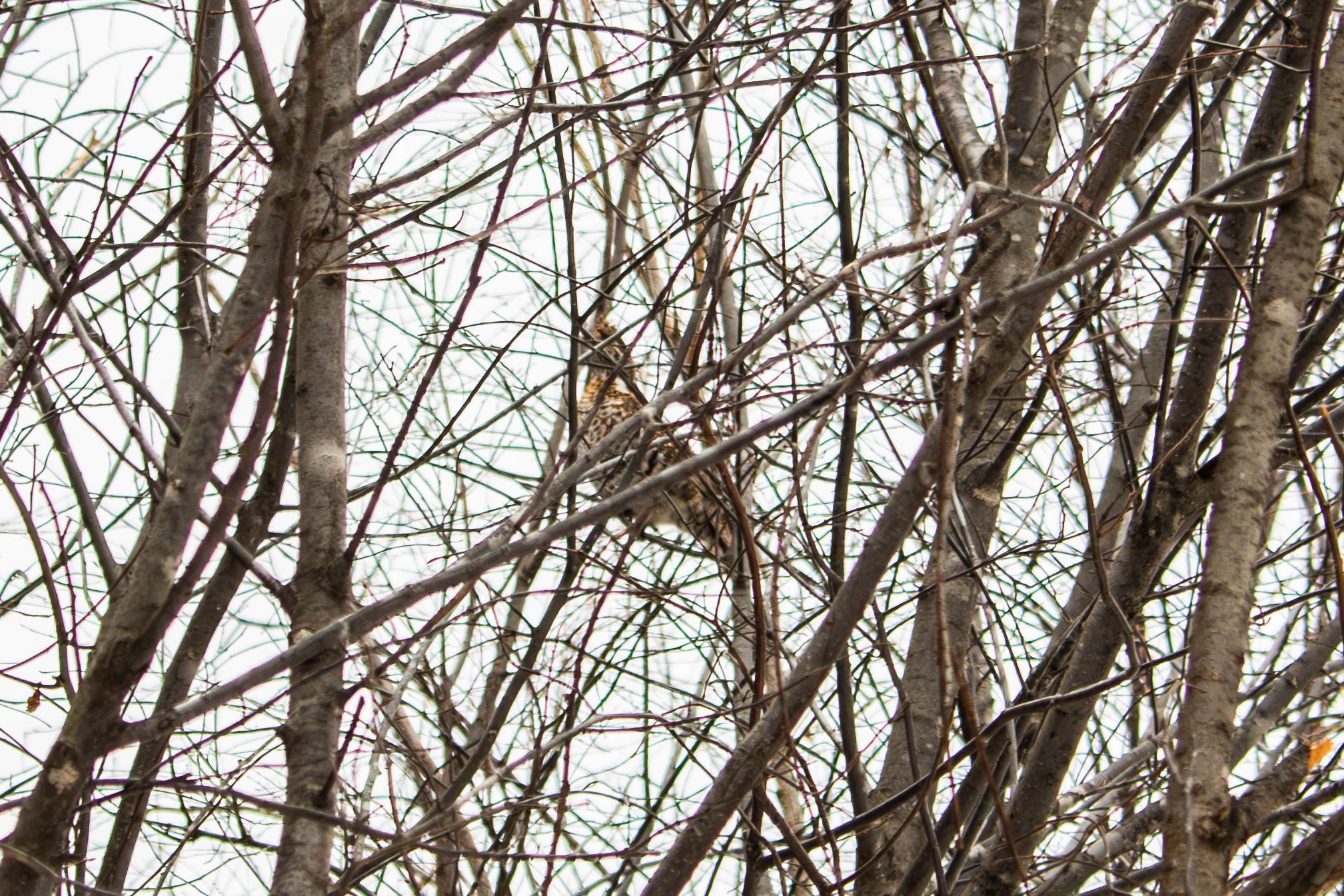
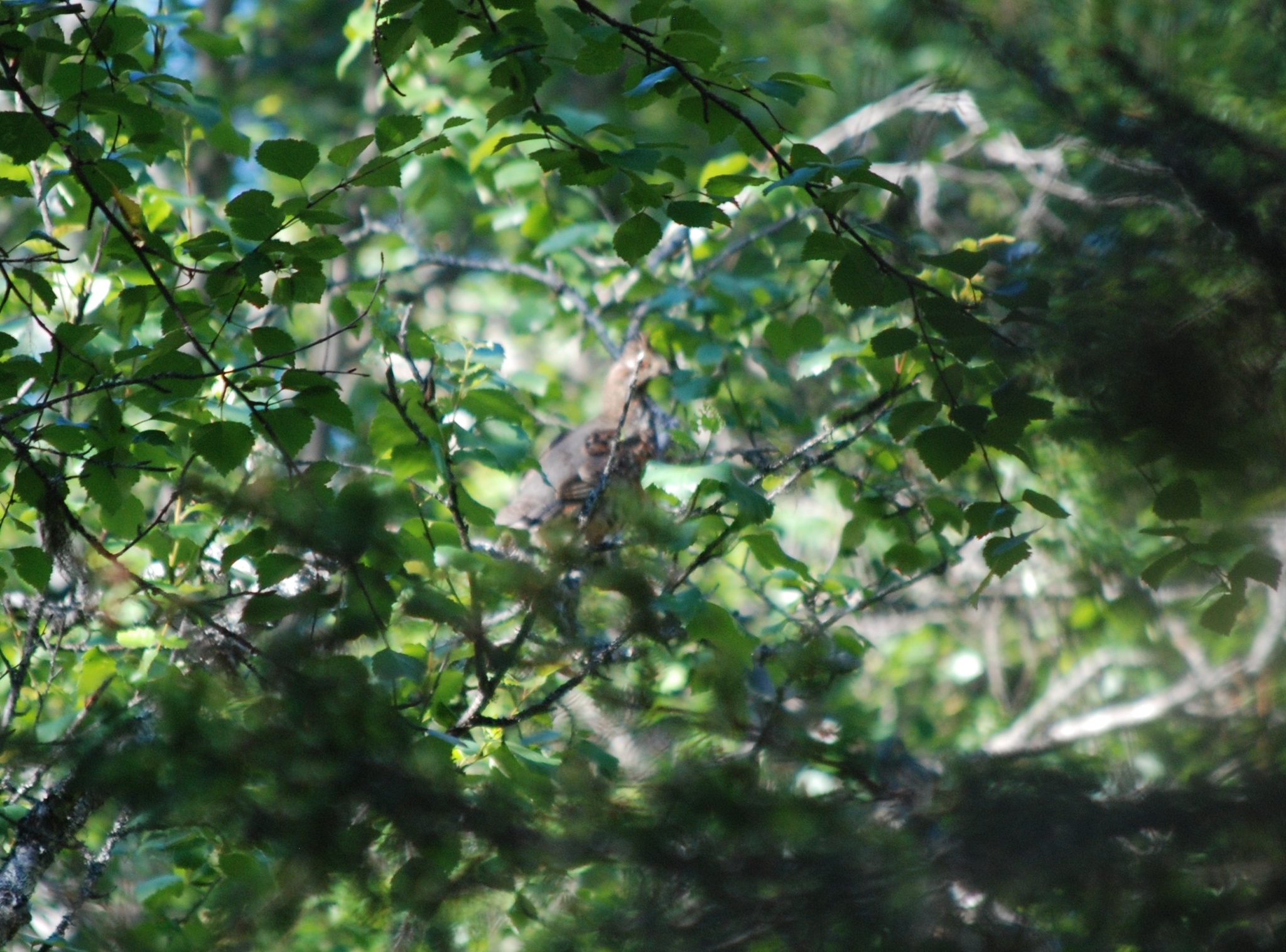
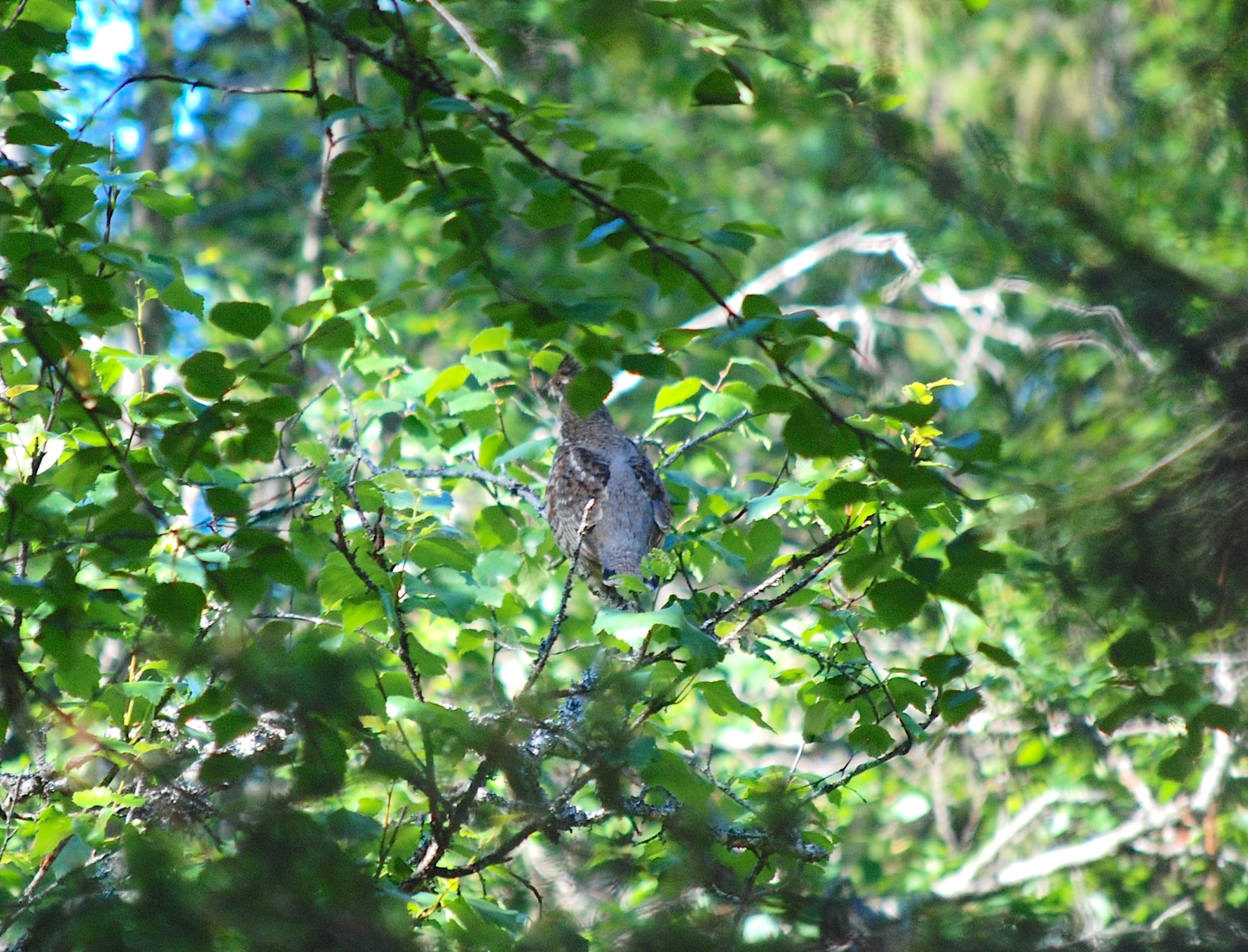
A compact grouse measuring 35-39 cm in length with a plump body. Plumage is finely patterned overall: grey upperparts, brown wings, and white underparts with chestnut flecking. Males possess a short erectile crest and a distinctive white-bordered black throat, while females have a shorter crest and lack the black throat patch. In flight, the tail appears grey with a black tip. Overall coloration provides excellent camouflage in forest environments.
Identification
The combination of small size, grey and brown plumage with chestnut flecking, and black-tipped grey tail aids identification. Males are distinguished by the erectile crest and black throat with white border. The species is best detected by sound: the male's high-pitched ti-ti-ti-ti-ti call and female's liquid tettettettettet. Extreme shyness and preference for dense coniferous cover make visual identification challenging; birds are often heard but not seen.
Distribution & Habitat
Occurs across the Palearctic from eastern and central Europe (west) to Hokkaido, Japan (east). Inhabits dense, damp, mixed coniferous woodland, with preference for stands containing spruce. A sedentary species with no migration; year-round resident throughout its extensive range. Eleven subspecies are recognized across different portions of the range.
Behavior & Ecology
Forages on the ground, consuming mainly plant material supplemented by insects during breeding season. Nests on the ground with a typical clutch of 3-6 eggs; the female alone incubates and raises the chicks. Males produce a high-pitched ti-ti-ti-ti-ti call, while females give a liquid tettettettettet. The soft burr of wingbeats in flight and distinctive calls often provide the only evidence of presence due to the bird's secretive nature and dense woodland habitat.
Conservation
Information not provided in source text.
Culture
Known as 'rabchick' (from рябчик) among early 20th century English-speaking travelers to Russia. No additional cultural significance or folklore mentioned in source text.
Source: Wikipedia · CC BY-SA 3.0
Taxonomy
- Order
- Galliformes
- Family
- Phasianidae
- Genus
- Tetrastes
- eBird Code
- hazgro1
Vocalizations
Subspecies (11)
-
Tetrastes bonasia amurensis
southern Amurland and Little Khingan Mountains to northern Korea
-
Tetrastes bonasia bonasia
western and southern Scandinavia and central Poland eastward to the Ural Mountains (western Russia)
-
Tetrastes bonasia griseonota
northern Sweden
-
Tetrastes bonasia kolymensis
far eastern Siberia to Sea of Okhotsk
-
Tetrastes bonasia rhenanus
northeastern France, Luxembourg, Belgium, and West Germany
-
Tetrastes bonasia rupestris
southern Germany, Bohemia, and Sudety Mountains
-
Tetrastes bonasia schiebeli
Balkan Peninsula
-
Tetrastes bonasia sibiricus
Siberia to Altai Mountains, Sayan Mountains, and northern Mongolia
-
Tetrastes bonasia styriacus
Jura Mountains, Alps, Hungary, Slovakia, and southern Poland
-
Tetrastes bonasia vicinitas
Hokkaido (northern Japan)
-
Tetrastes bonasia yamashinai
Sakhalin (Russia)
Data Sources
Species description from Wikipedia, licensed under CC BY-SA 3.0.
Bird images and sounds sourced from GBIF, contributed by citizen scientists worldwide under Creative Commons licenses.
Taxonomy data from AviList 2025.