Indian Paradise Flycatcher
Terpsiphone paradisi
印度寿带
Introduction
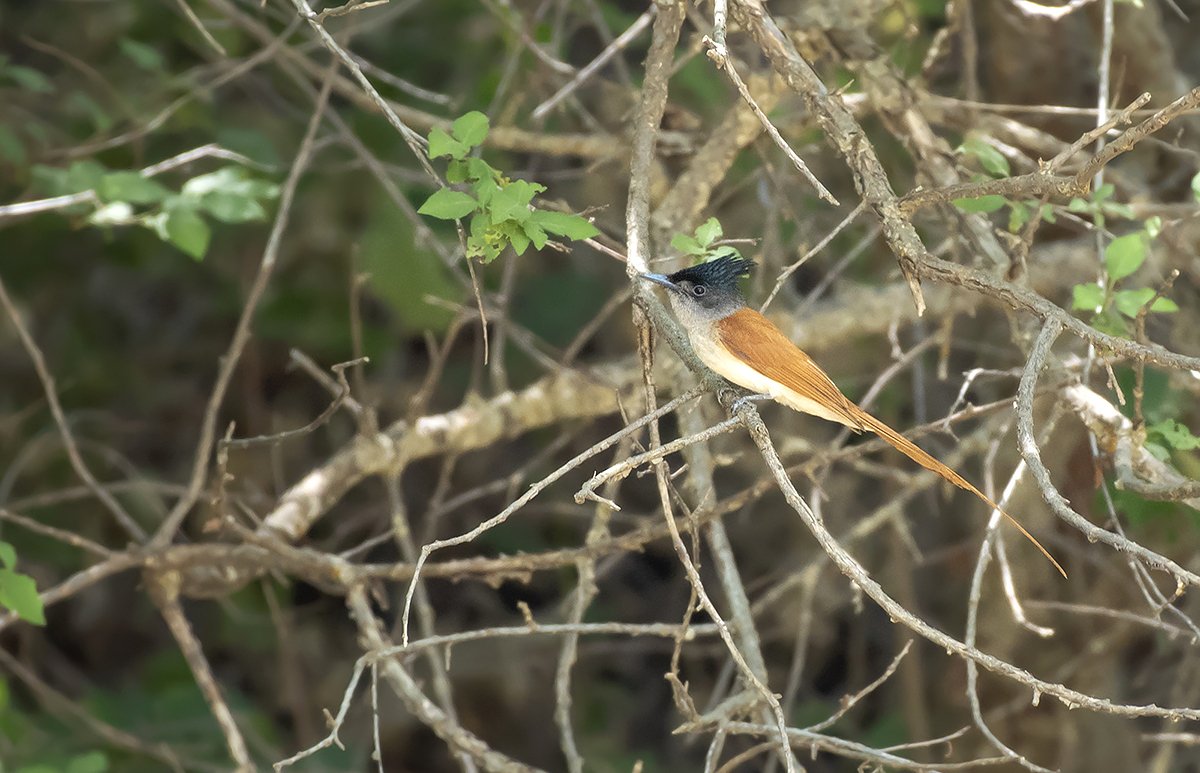
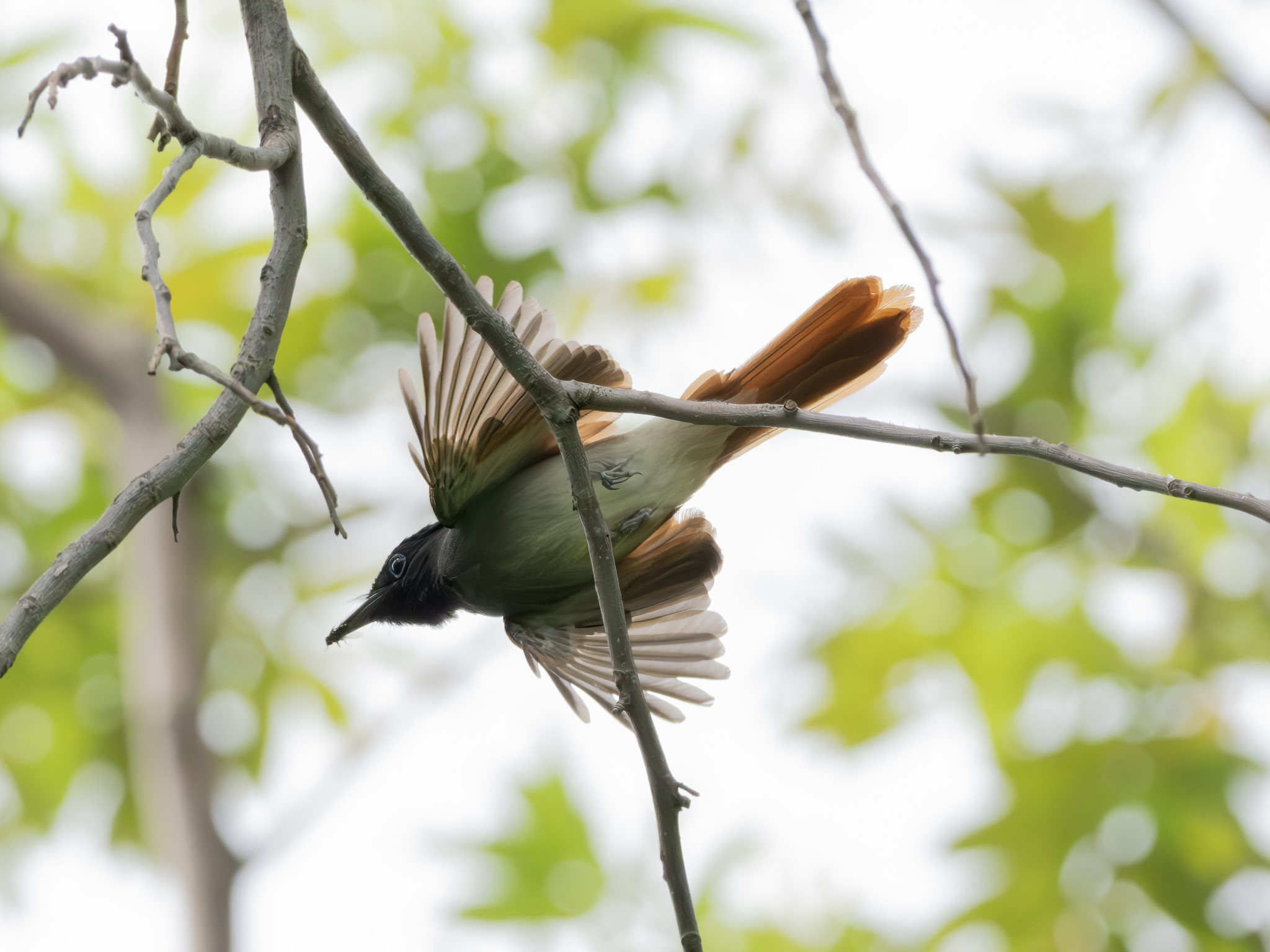
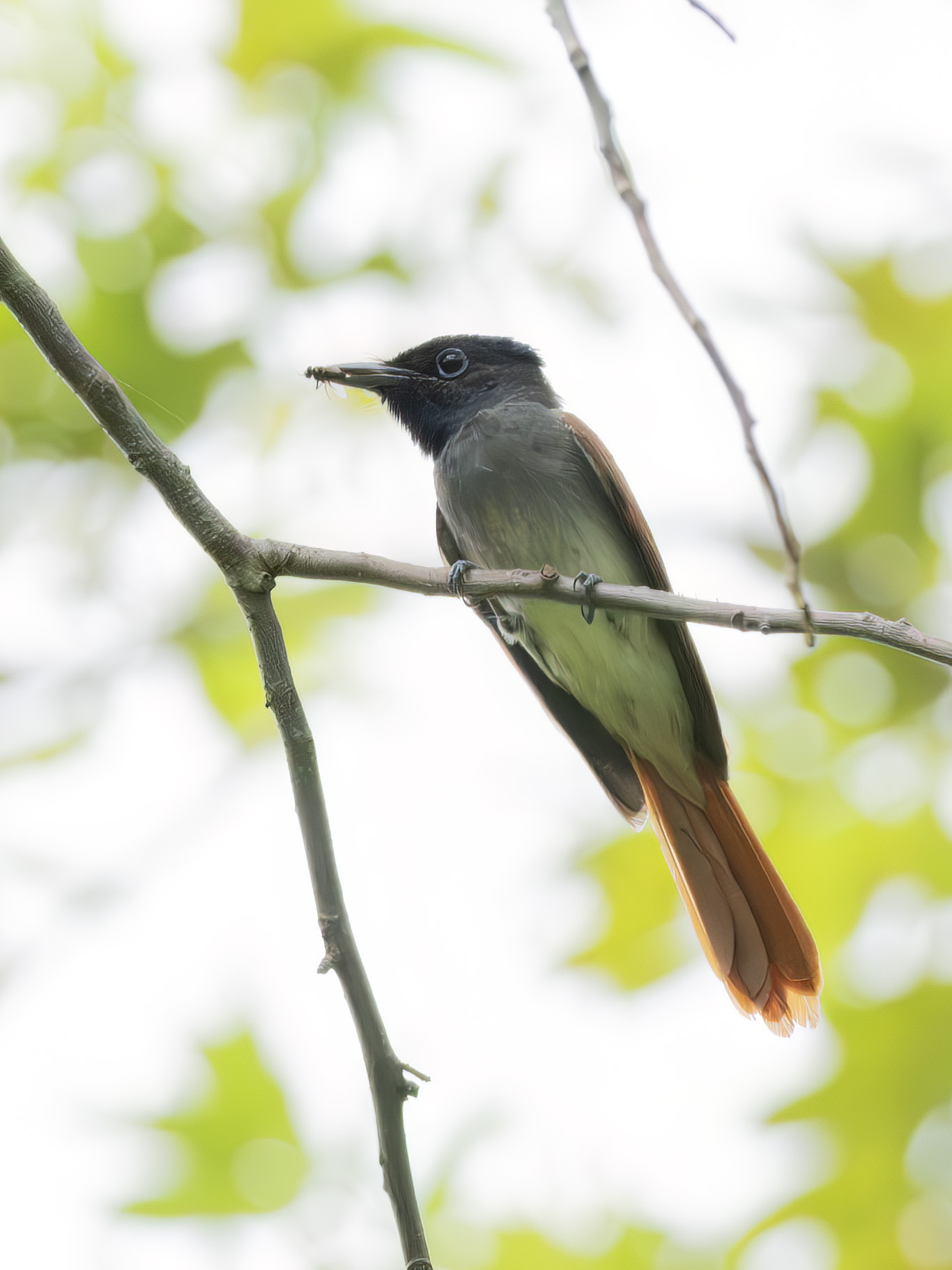
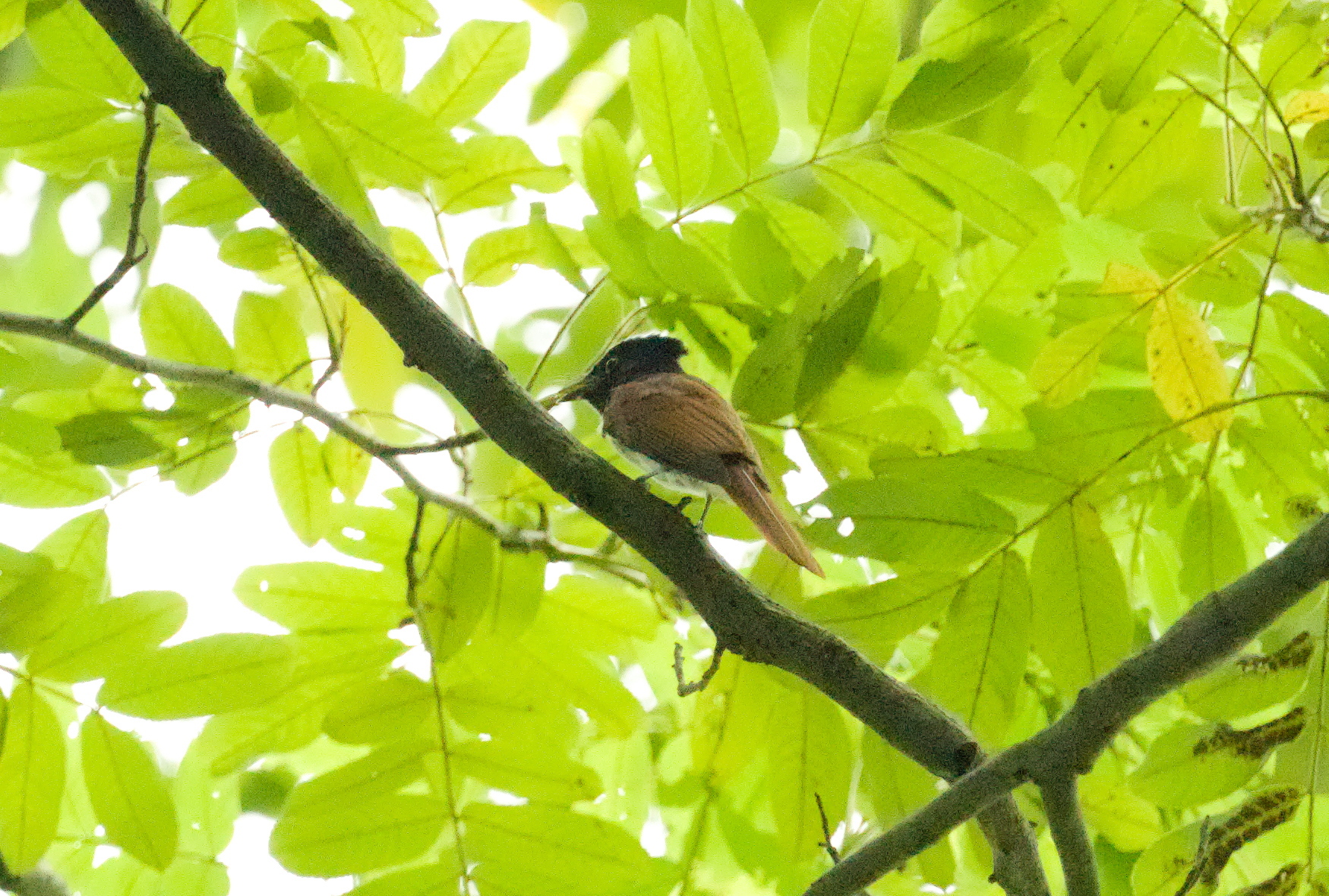
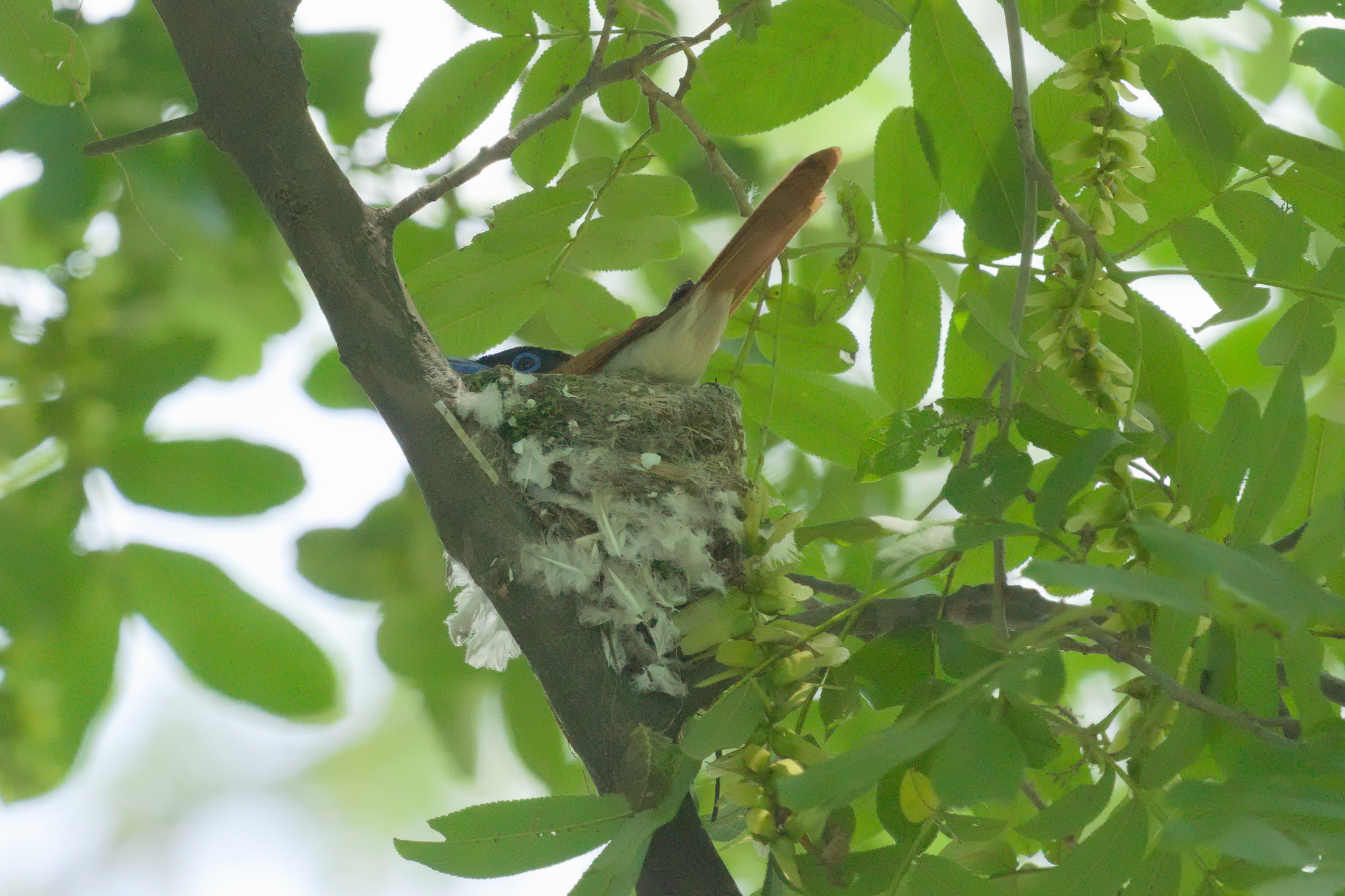
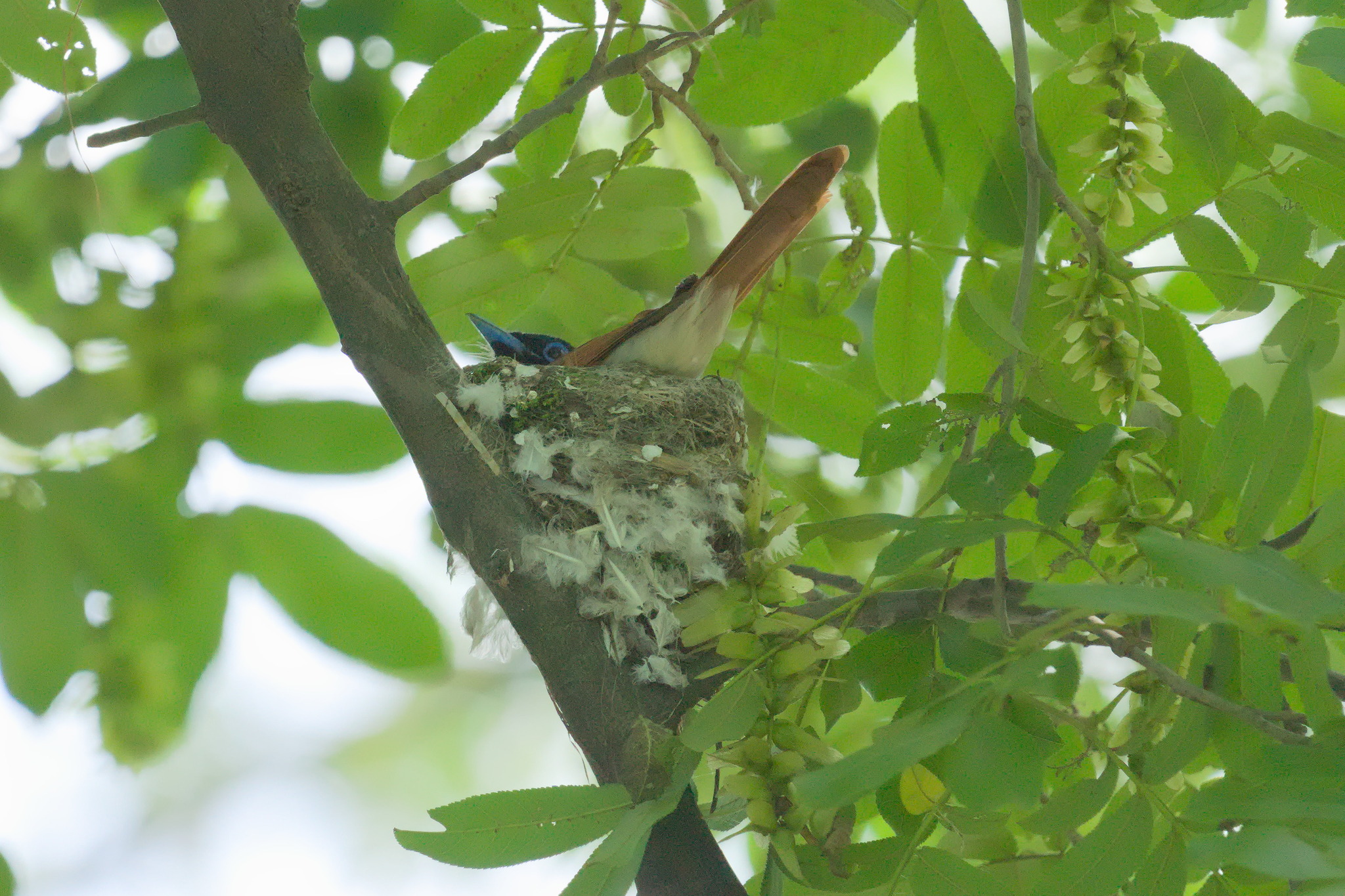
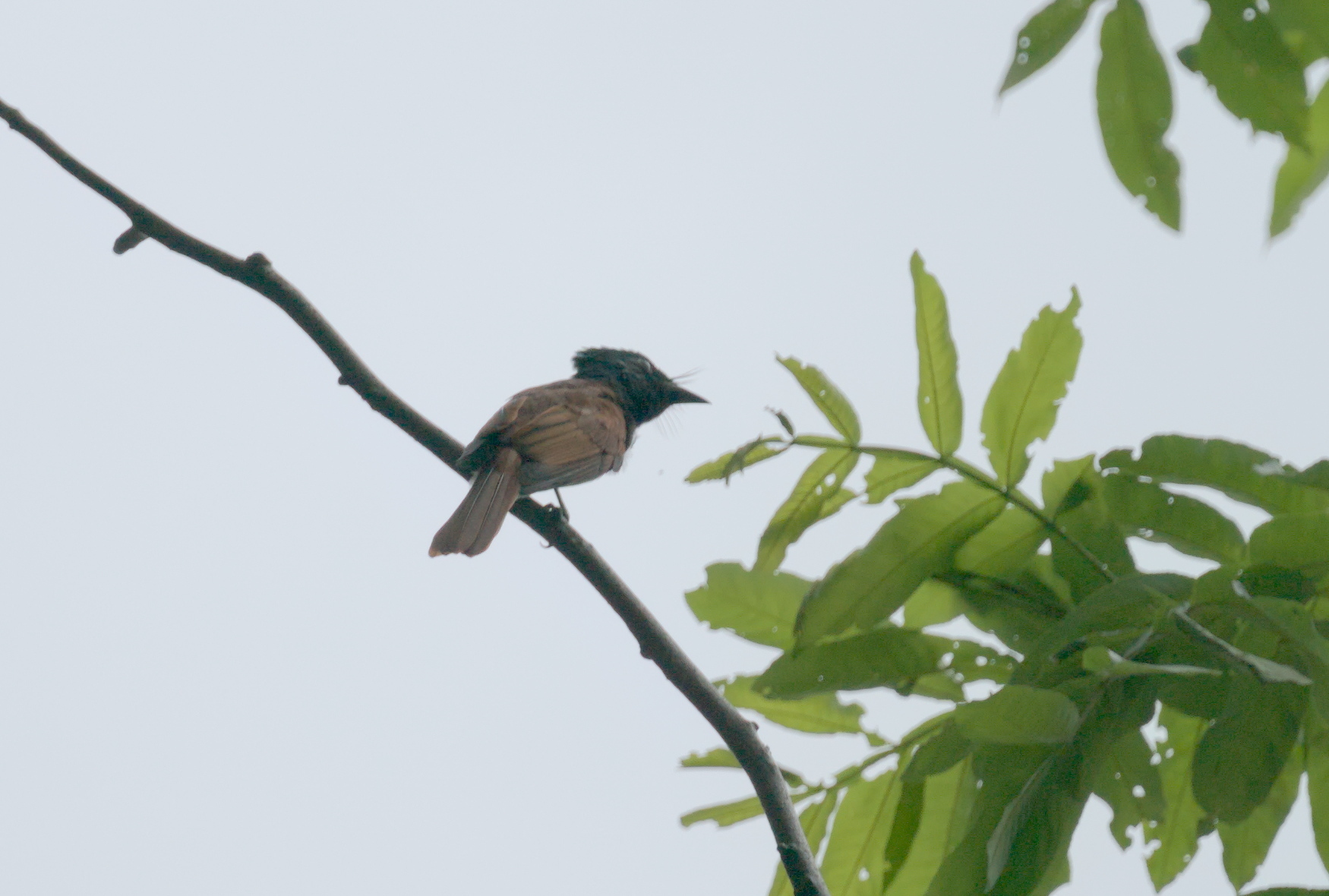
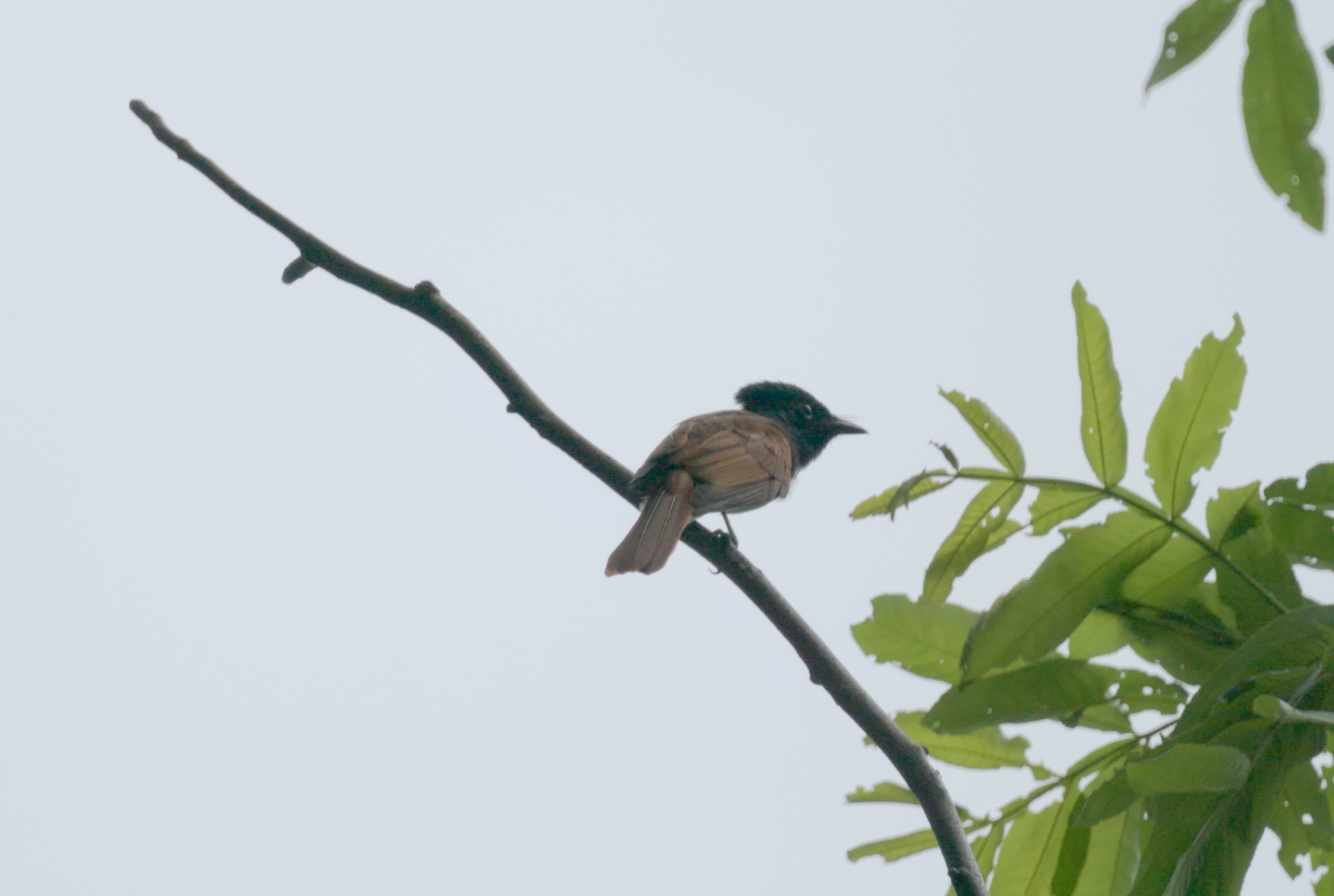
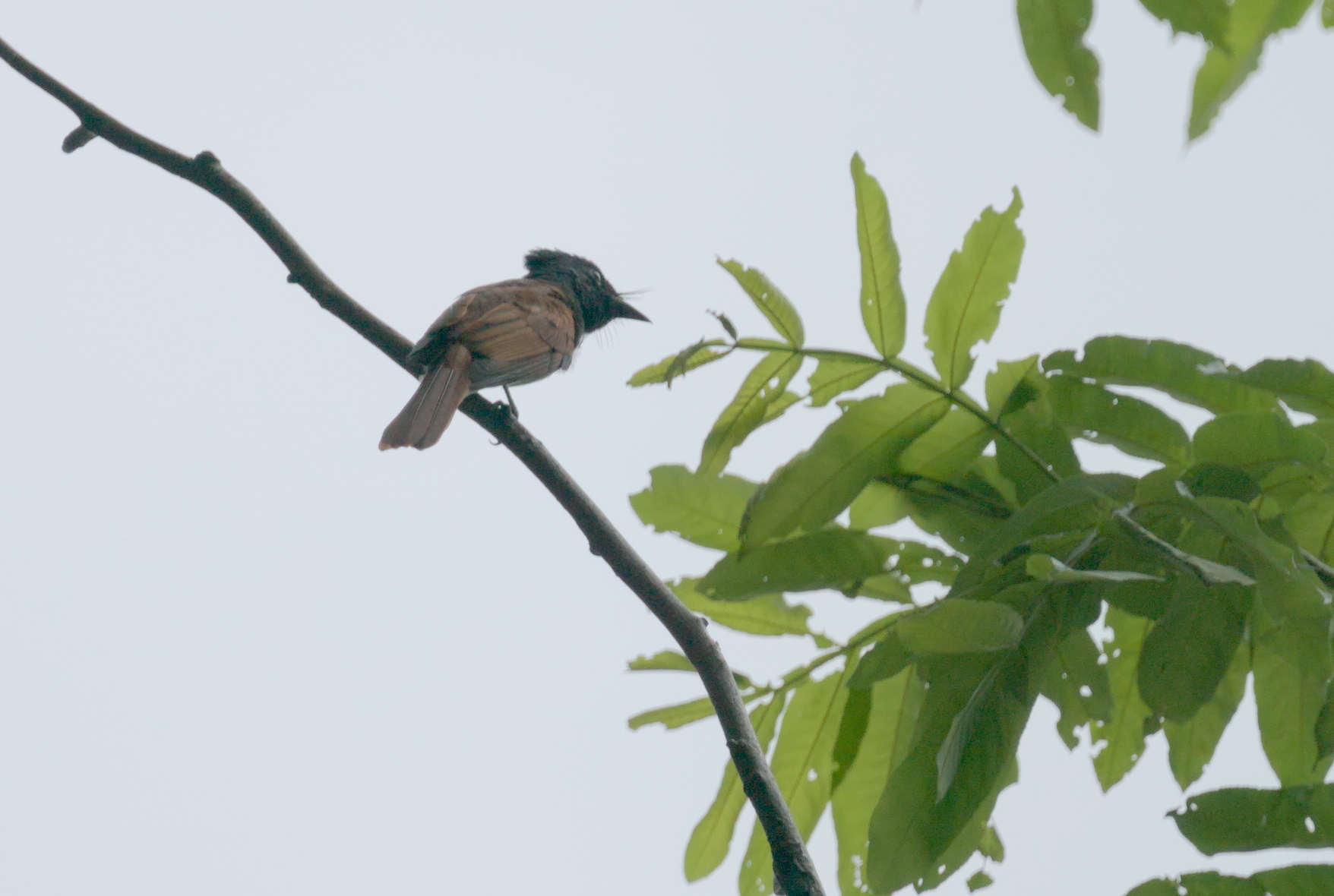
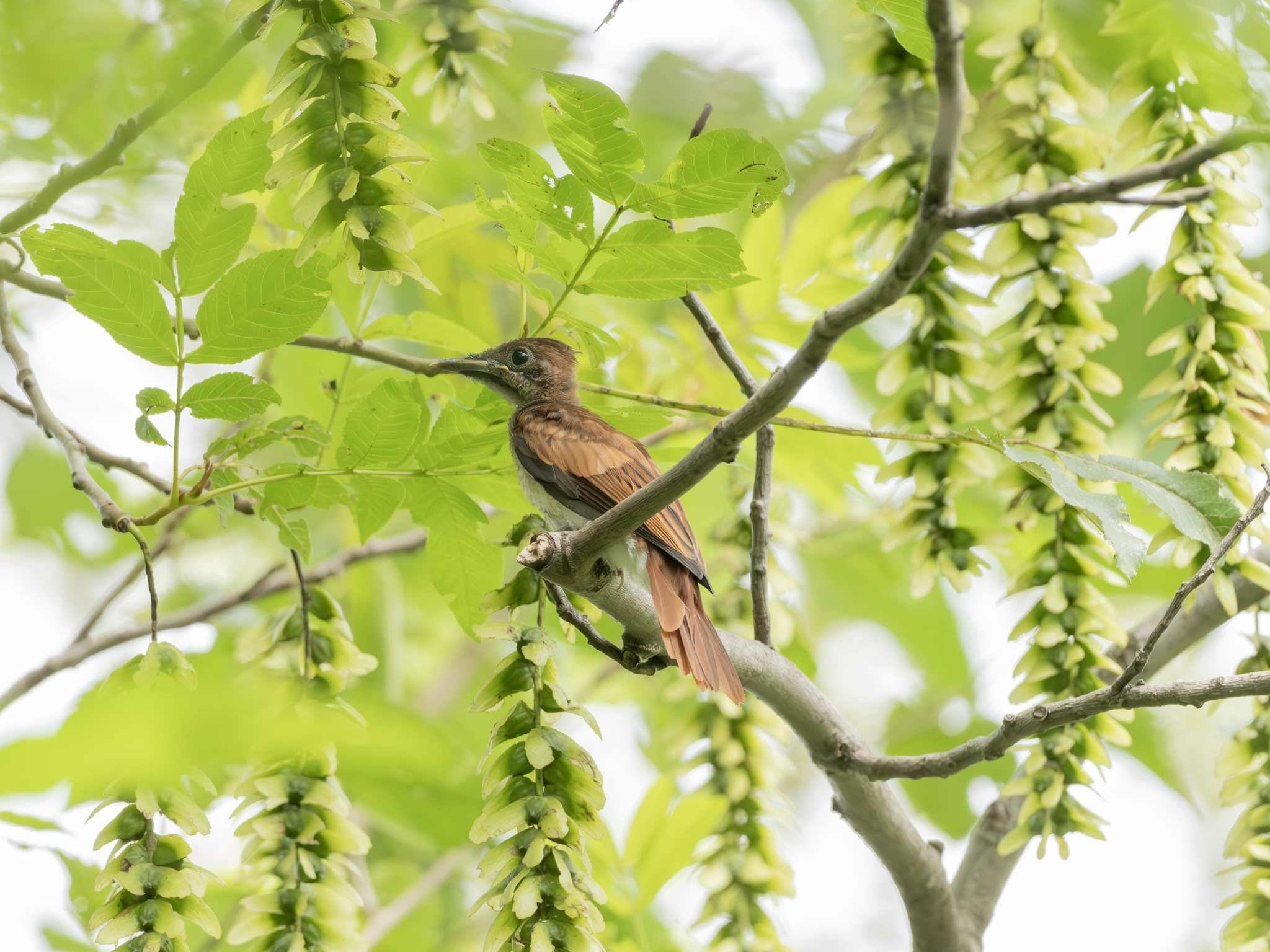
A medium-sized passerine endemic to the Indian subcontinent. Males possess central tail feathers extending up to 30 centimeters beyond the body during breeding season. Two color morphs occur: rufous plumage with black heads, and white plumage with black-shafted feathers. Females exhibit rufous wings and backs, black heads, and greyish underparts. Inhabits forested areas, parks, and gardens. Forages in the mid-canopy. Displays aerial courtship rituals and becomes more vocal during the breeding season.
Description
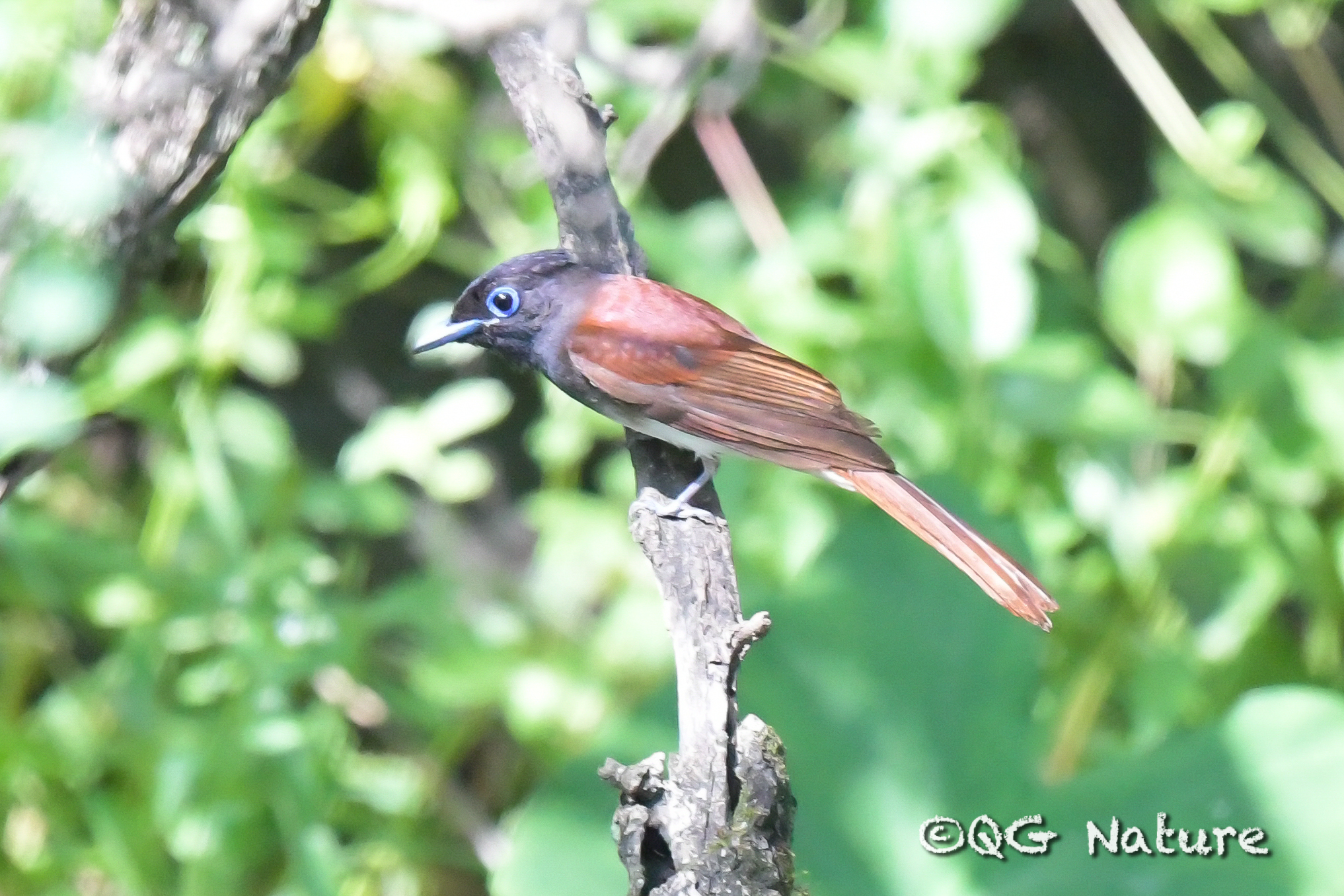
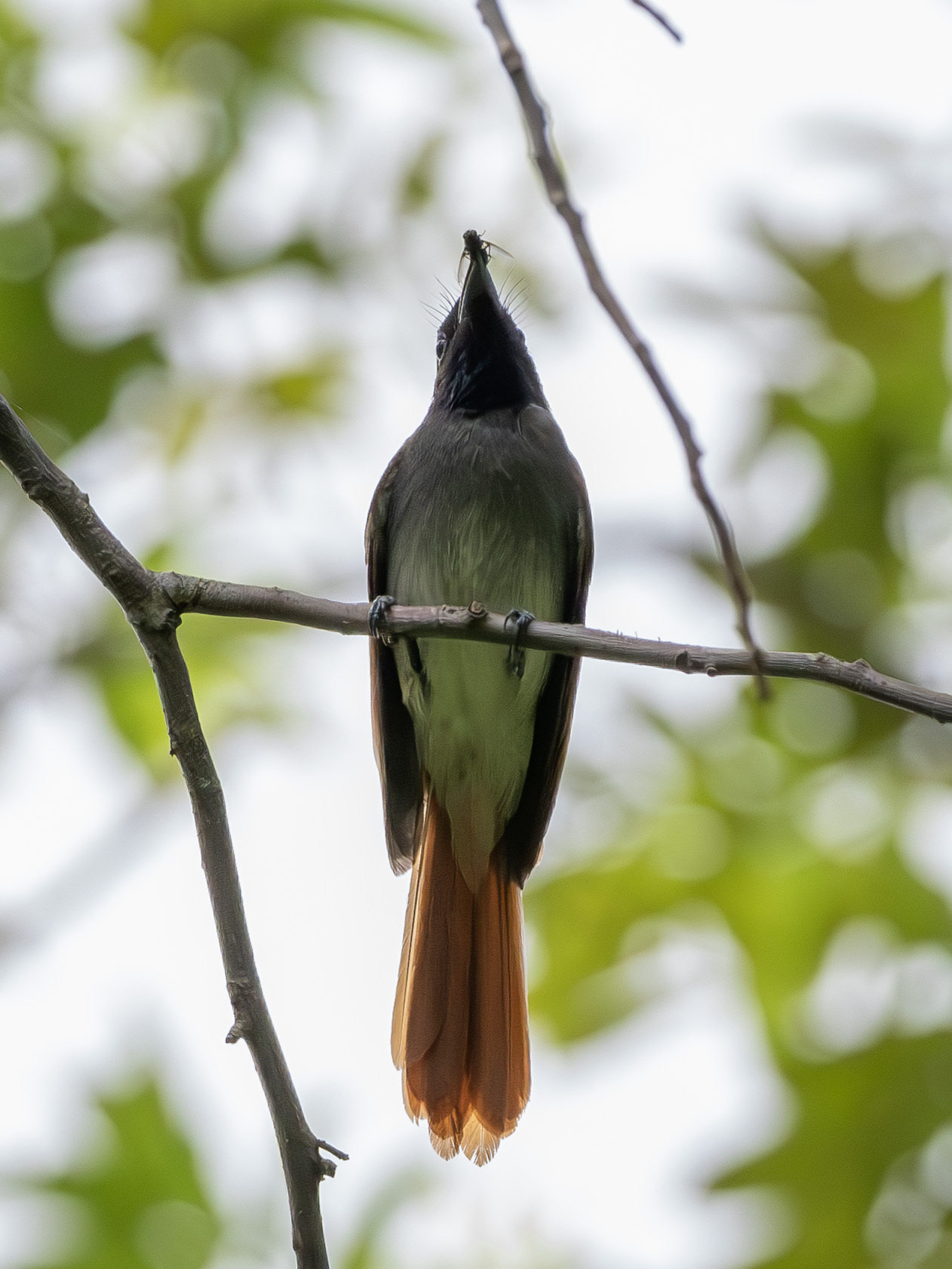
Adults measure 19-22 centimeters in body length, though males can appear much larger due to their elongated tail streamers, which collectively add significant length. The head is glossy black with a distinctive crown and crest. The bill is black, notably round and sturdy compared to other flycatchers. Eyes are black. Females have rufous upperparts and wings measuring 86-92 mm, with greyish throat and underparts. Young males resemble females but show a black throat and distinctive blue-ringed eyes. Adult males develop their full tail ornaments in their second or third year, growing two central feathers up to 30 cm long that droop gracefully. Plumage polymorphism exists, with some populations predominantly rufous and others predominantly white, and various intermediate patterns occur across the range.
Identification
The combination of glossy black head with crest and either bright rufous or pure white body plumage is diagnostic for adult males. The exceptionally long central tail streamers, unique among Asian flycatchers, clinch identification. Females and young males are identified by their rufous wings and backs contrasting with black heads and grey underparts, lacking the long tail feathers. They differ from other monarch flycatchers by their rufous wing patches and black-headed appearance. The white morph can be distinguished from other white birds by the black shaft streaks on wing and tail feathers.
Distribution & Habitat
This species occupies a broad range across the Indian subcontinent, with resident and breeding populations throughout most of Bangladesh, India, and Sri Lanka, plus parts of Afghanistan, Bhutan, China, Myanmar, Nepal, Pakistan, Tajikistan, and Turkmenistan. Three subspecies are recognized: the nominate in central and southern India, central Bangladesh, and southwestern Myanmar; T. p. leucogaster in the western Tian Shan, Afghanistan, northern Pakistan, and northwestern and central India; and T. p. ceylonensis in Sri Lanka. It inhabits deciduous and evergreen forests, wooded areas, parks, and gardens, typically staying below dense canopy.
Behavior & Ecology
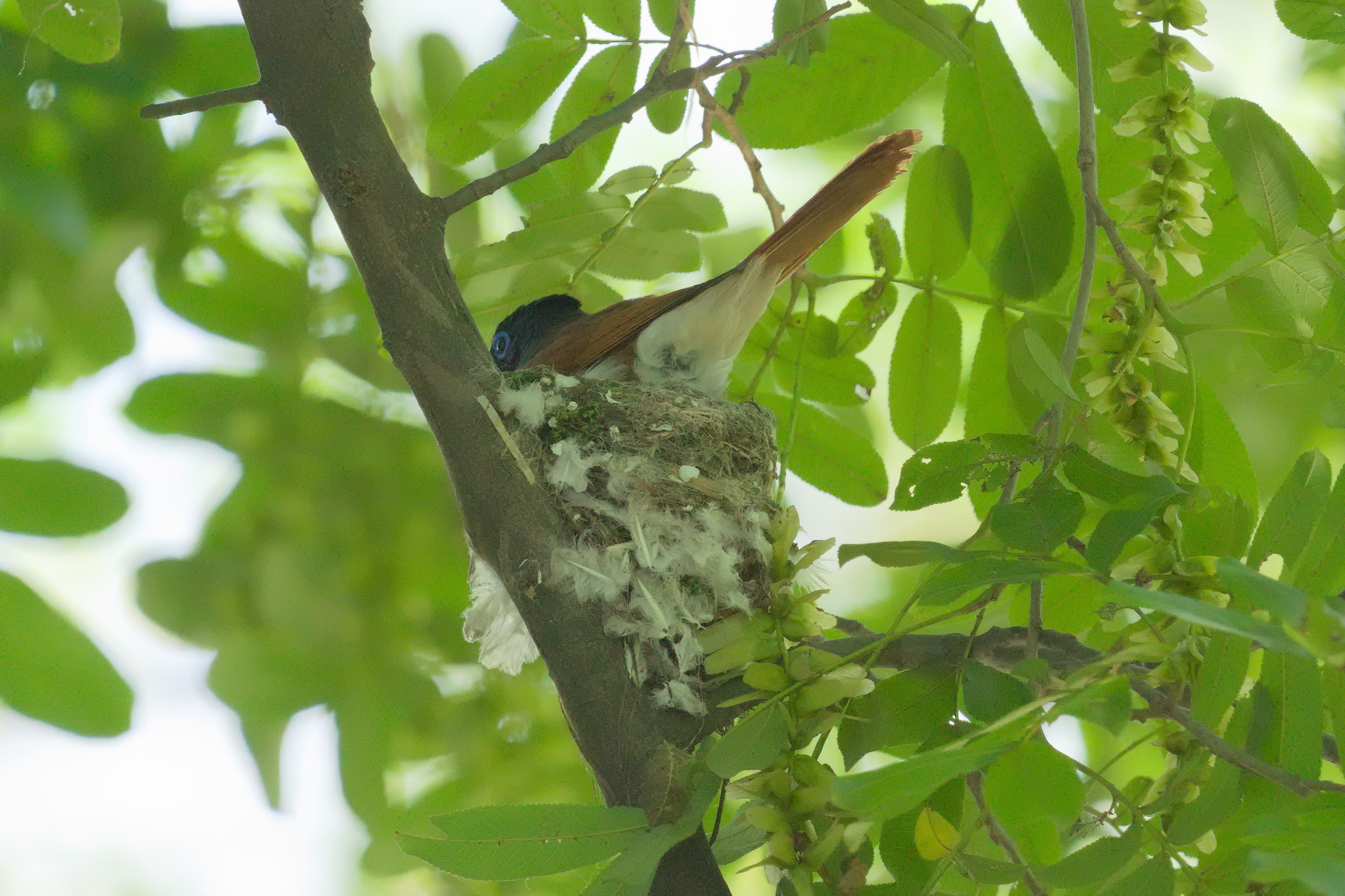
Breeding occurs from May to July. The species is socially monogamous, with both parents sharing duties of nest-building, incubation, brooding, and feeding. Nests are neat cup structures made of twigs and spider webs, placed on low branches, often near drongo pairs that provide predator protection. The female lays up to four eggs, incubating them for 14-16 days, with chicks fledging after 9-12 days. Diet consists entirely of insects including grasshoppers, butterflies, praying mantises, and flies. They capture prey in aerial sallies, then kill it by striking against rocks before consuming. Feeding often occurs below densely canopied trees.
Conservation
Listed as Least Concern on the IUCN Red List since 2004, with the global population considered stable. No significant population declines have been documented, and the species maintains a wide distribution across its range. While specific threats are not detailed in the source, potential concerns include habitat loss and degradation across its broad range, though current populations appear secure.
Culture
This species holds official recognition as the state bird of Madhya Pradesh, a central Indian state. Locally, it is referred to as Doodhraj, reflecting its cultural significance in the region. Its striking appearance has made it a favorite among birdwatchers and photographers throughout its range.
Source: Wikipedia · CC BY-SA 3.0
Taxonomy
- Order
- Passeriformes
- Family
- Monarchidae
- Genus
- Terpsiphone
- eBird Code
- aspfly1
Vocalizations
Subspecies (3)
-
Terpsiphone paradisi ceylonensis
Sri Lanka
-
Terpsiphone paradisi leucogaster
mountains of Afghanistan, Pakistan, and western India
-
Terpsiphone paradisi paradisi
breeds central and southern India; winters to Sri Lanka
Data Sources
CBR Notes: 中文名由印缅寿带改为印度寿带
Species description from Wikipedia, licensed under CC BY-SA 3.0.
Bird images and sounds sourced from GBIF, contributed by citizen scientists worldwide under Creative Commons licenses.
Taxonomy data from AviList 2025.