Strigiformes / Strigidae / Taenioptynx
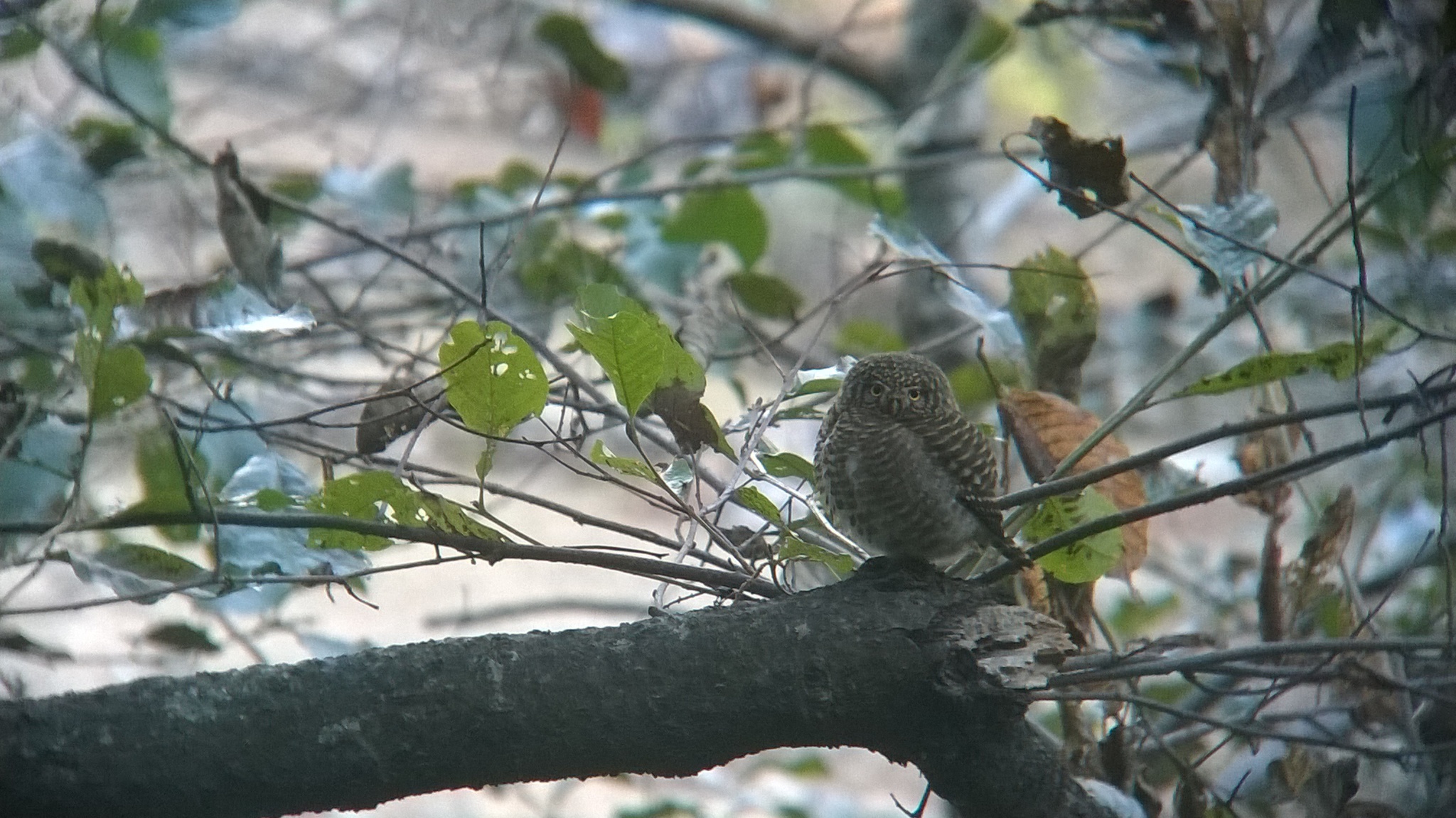
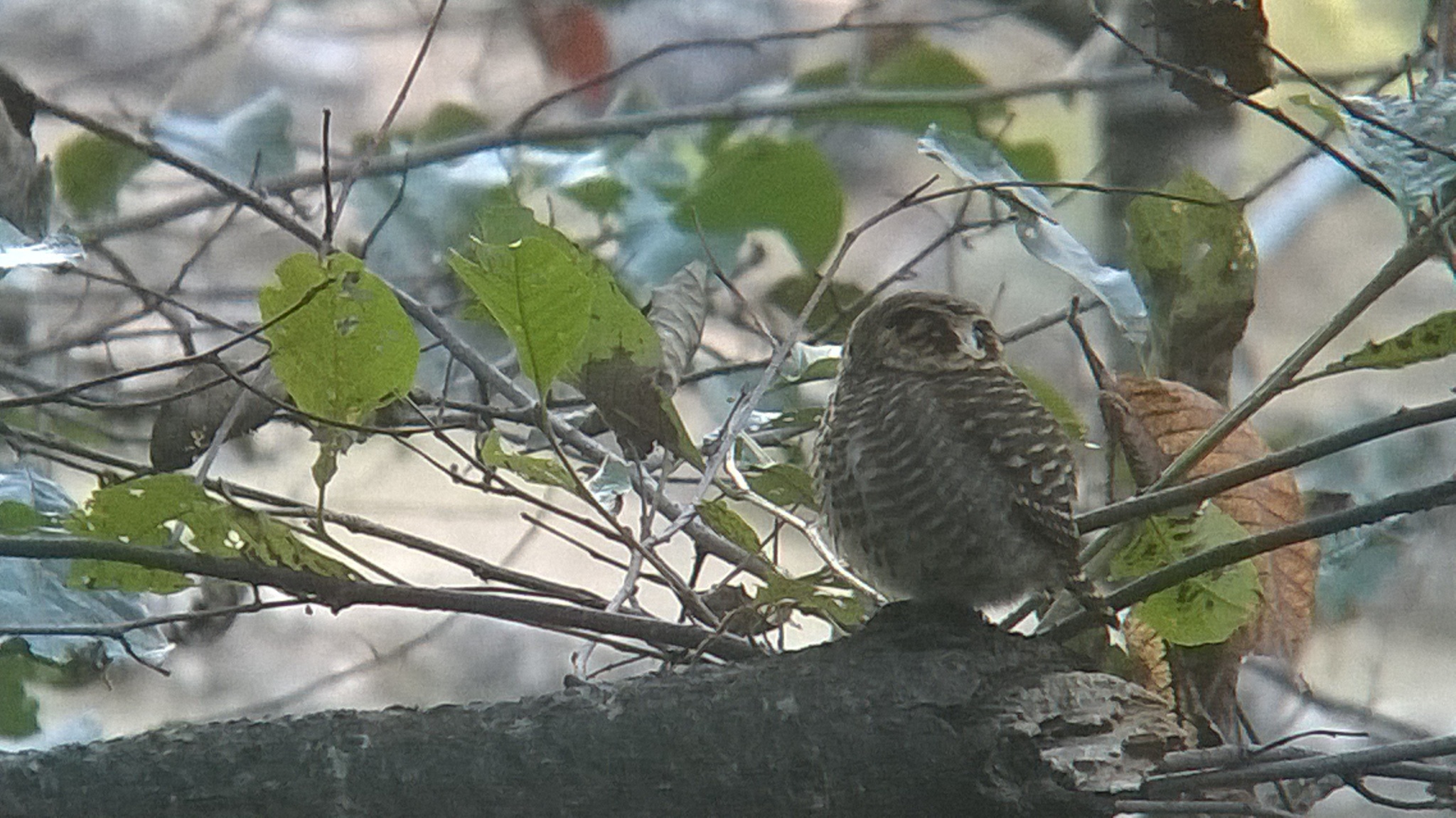
Collared Owlet
Taenioptynx brodiei · 领鸺鹠
Introduction
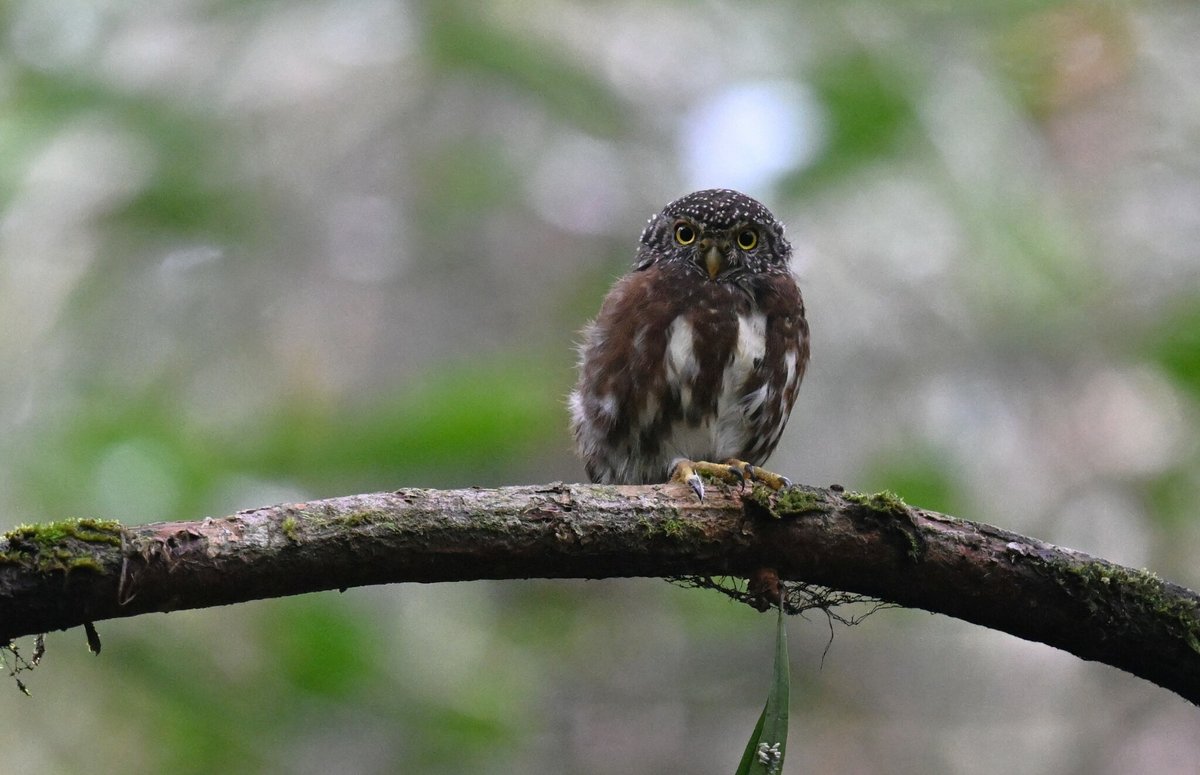
A species of owl in the family Strigidae, distributed throughout oriental Asia. It inhabits submontane and montane forests with open spaces. Notable as the smallest owl in Asia, it is diurnal and possesses a distinctive occipital face pattern. The IUCN Red List assesses its conservation status as Least Concern.
Description
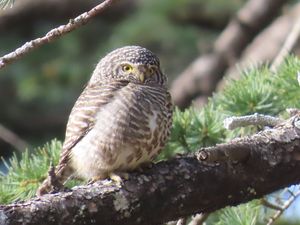
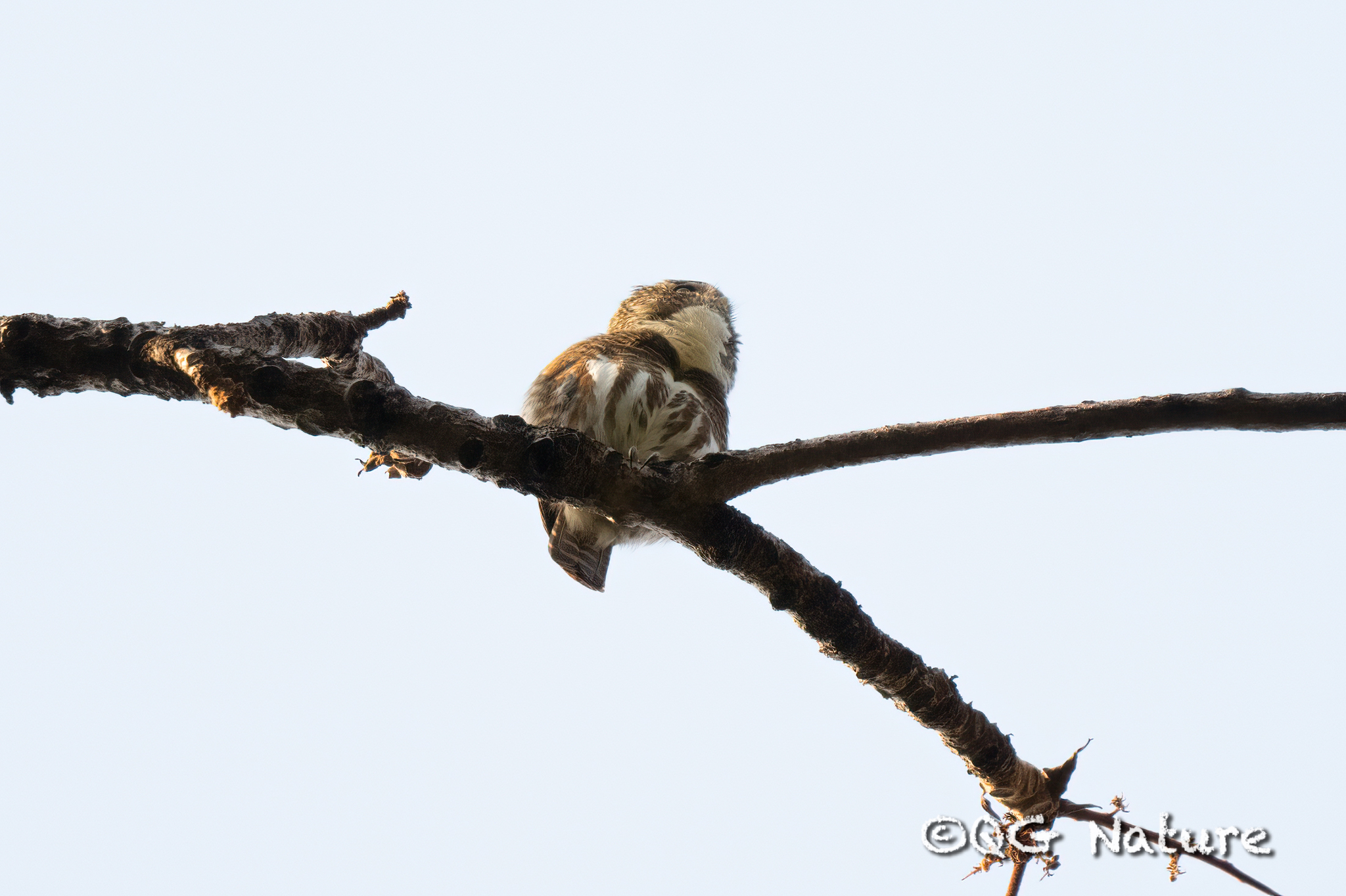
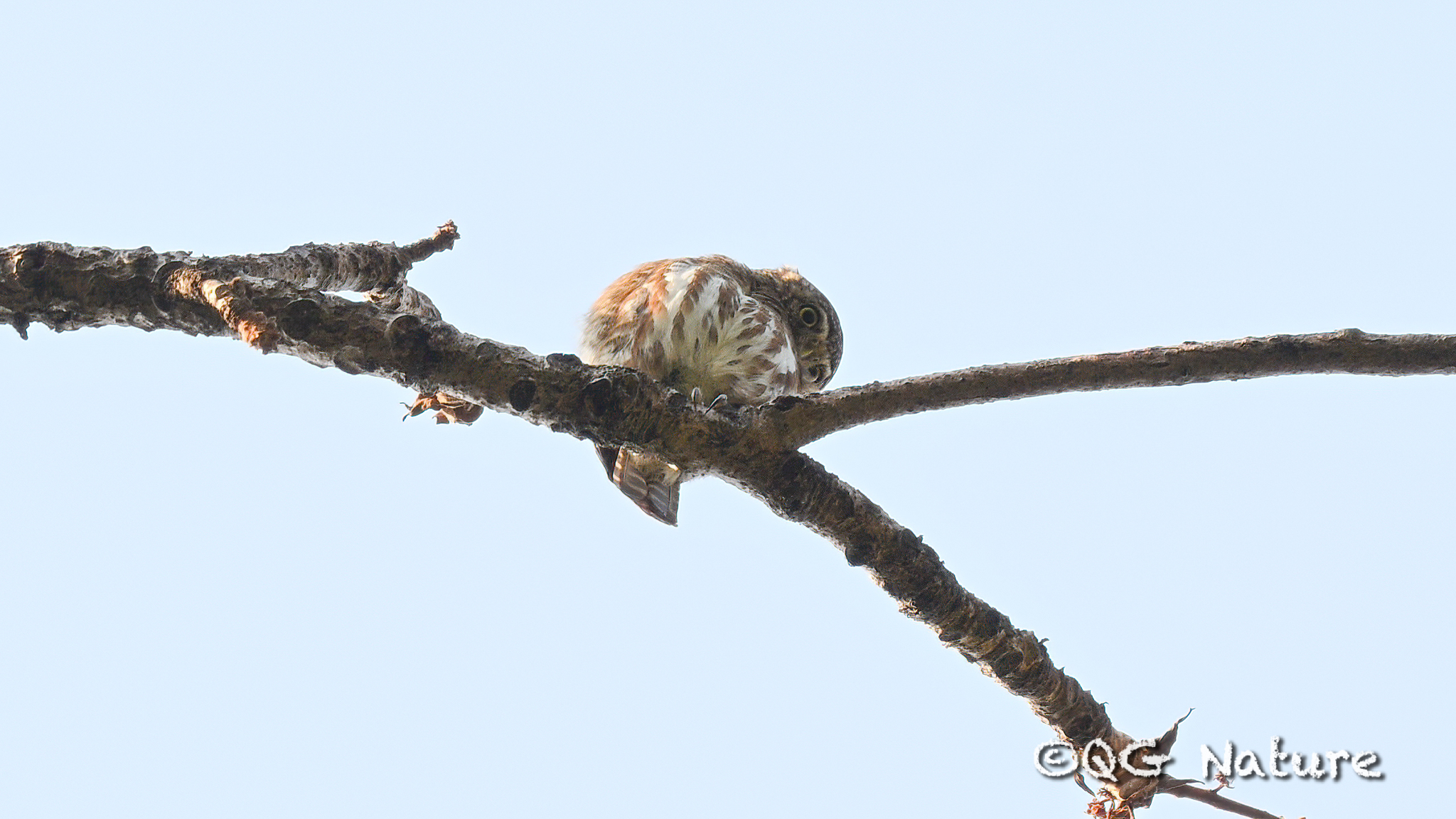
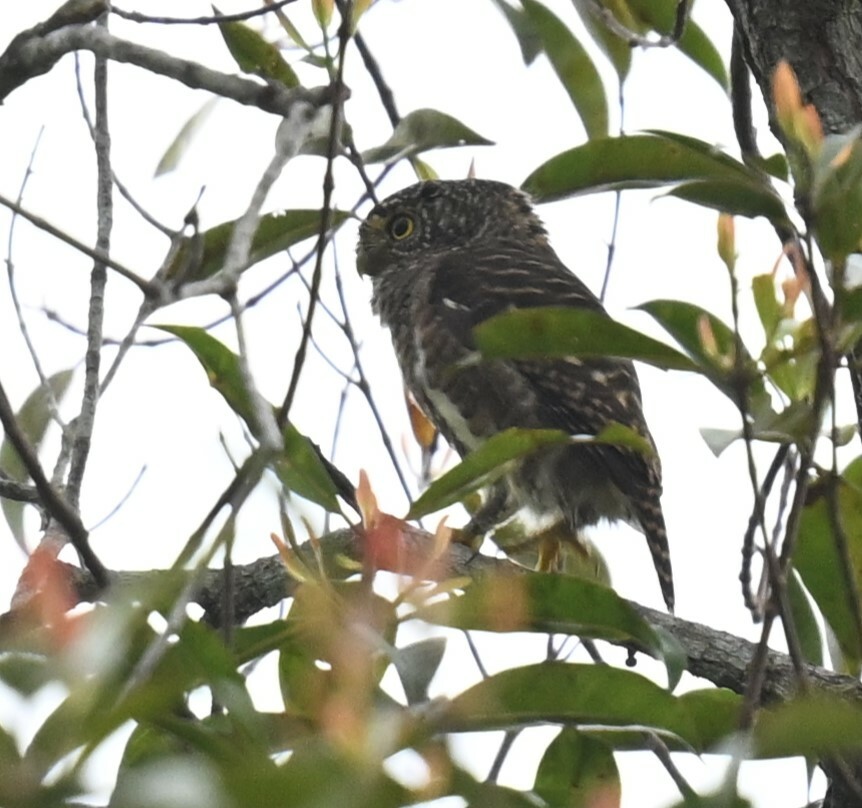
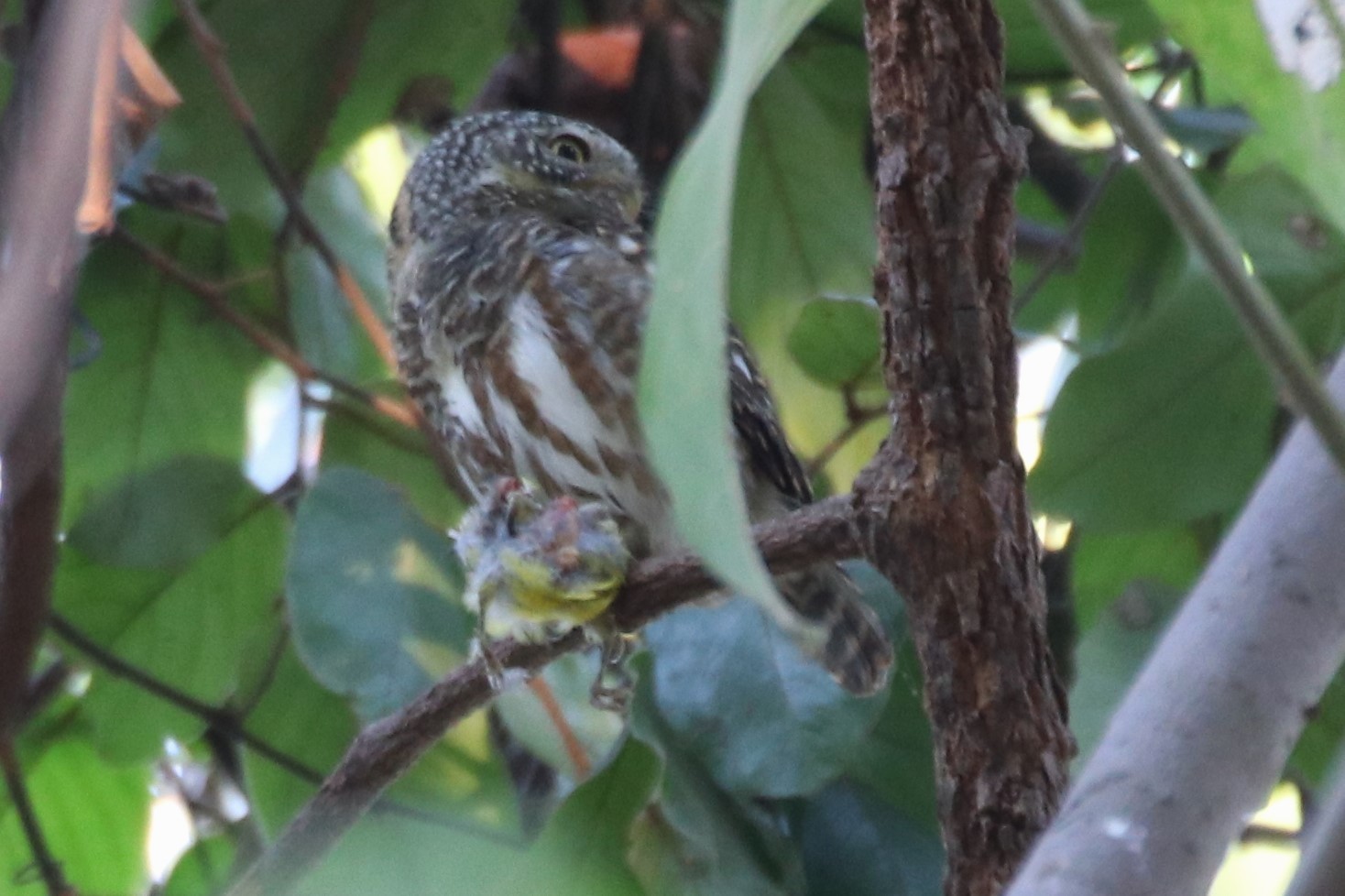
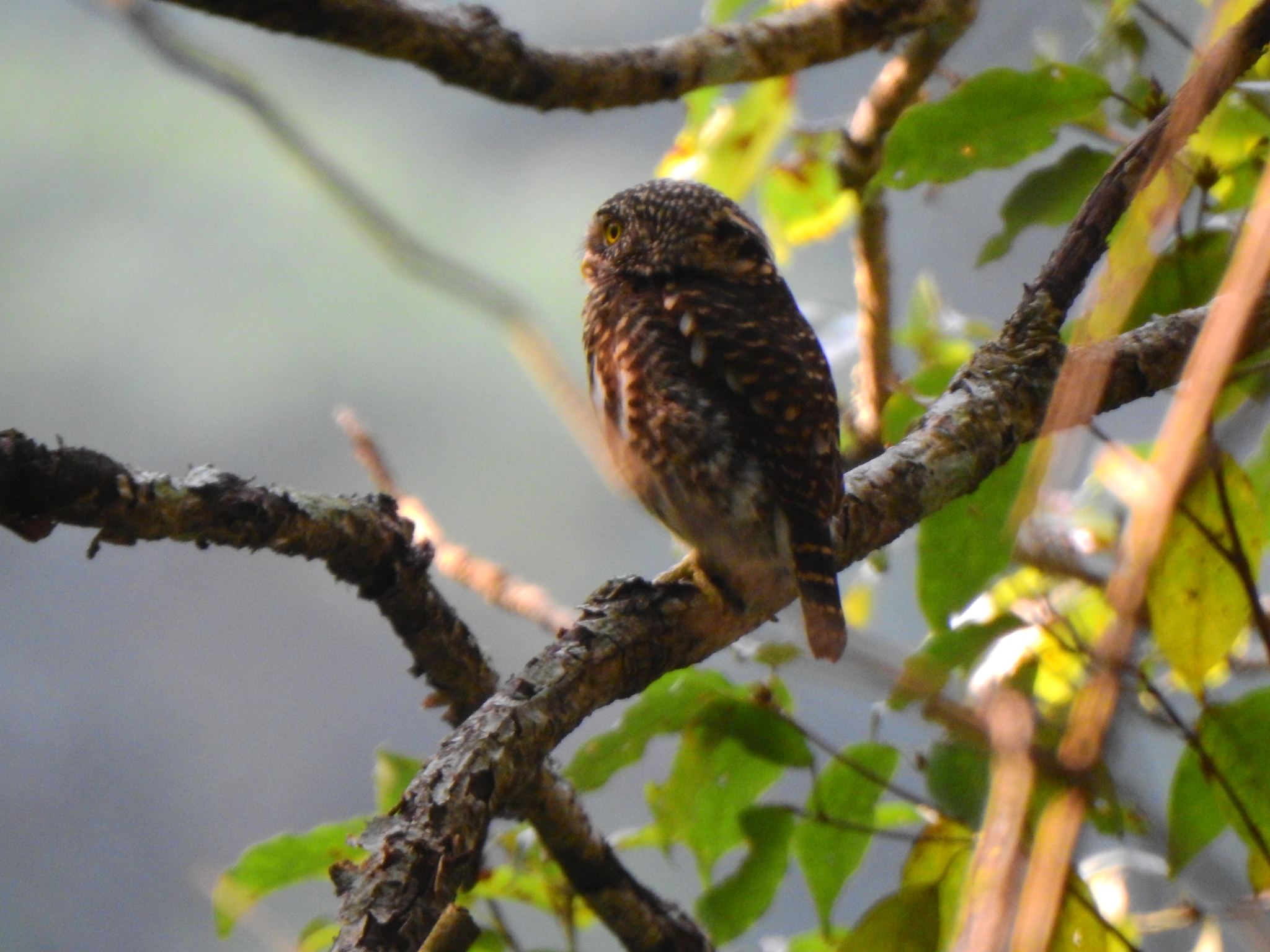
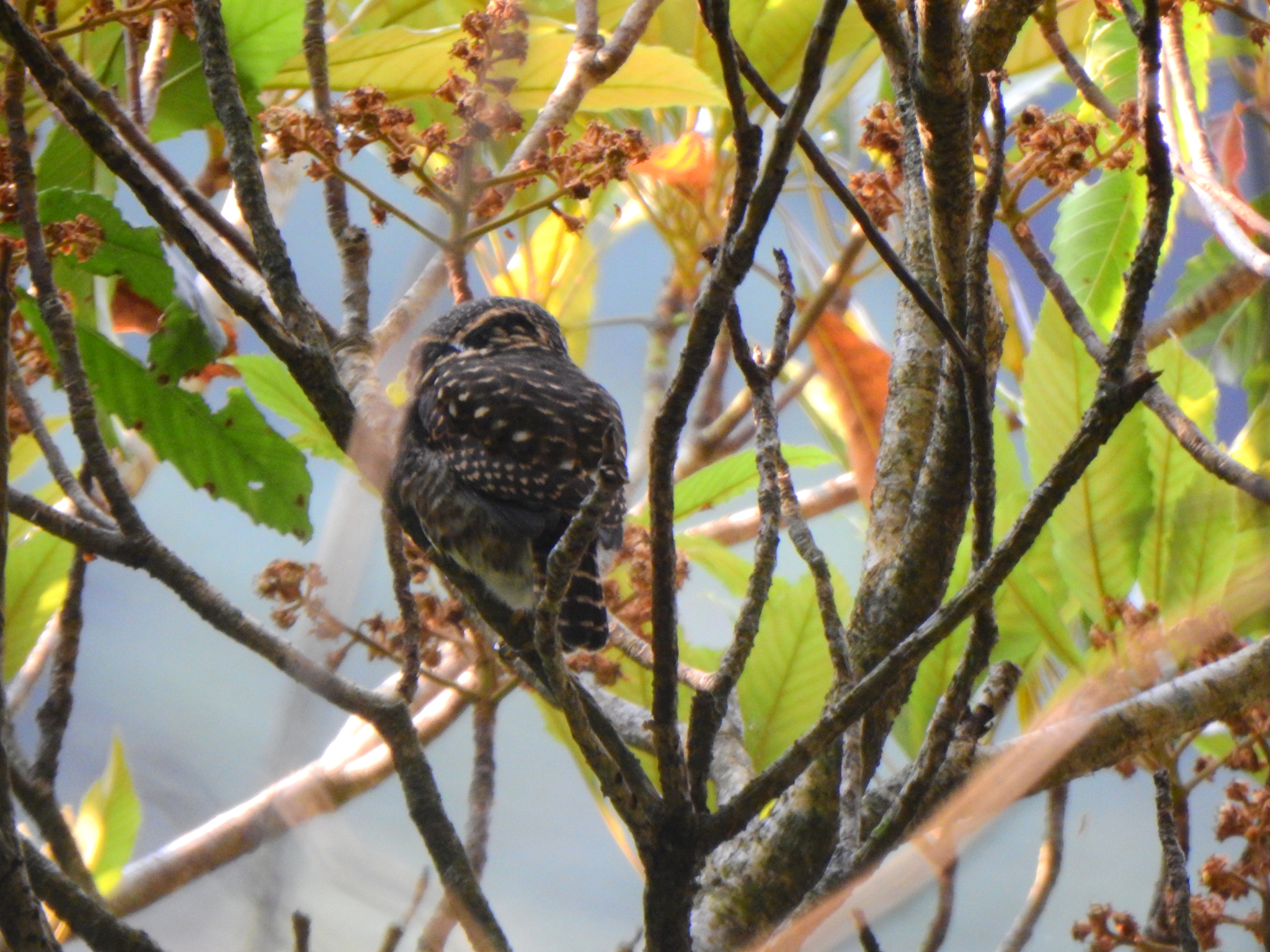
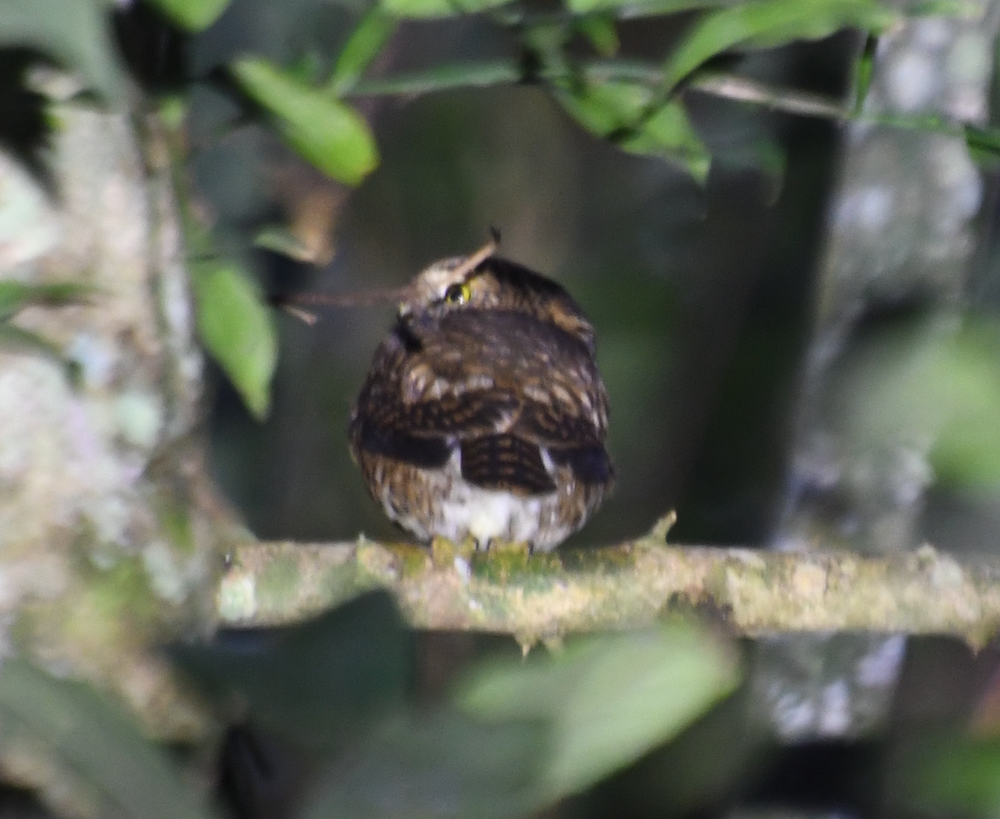
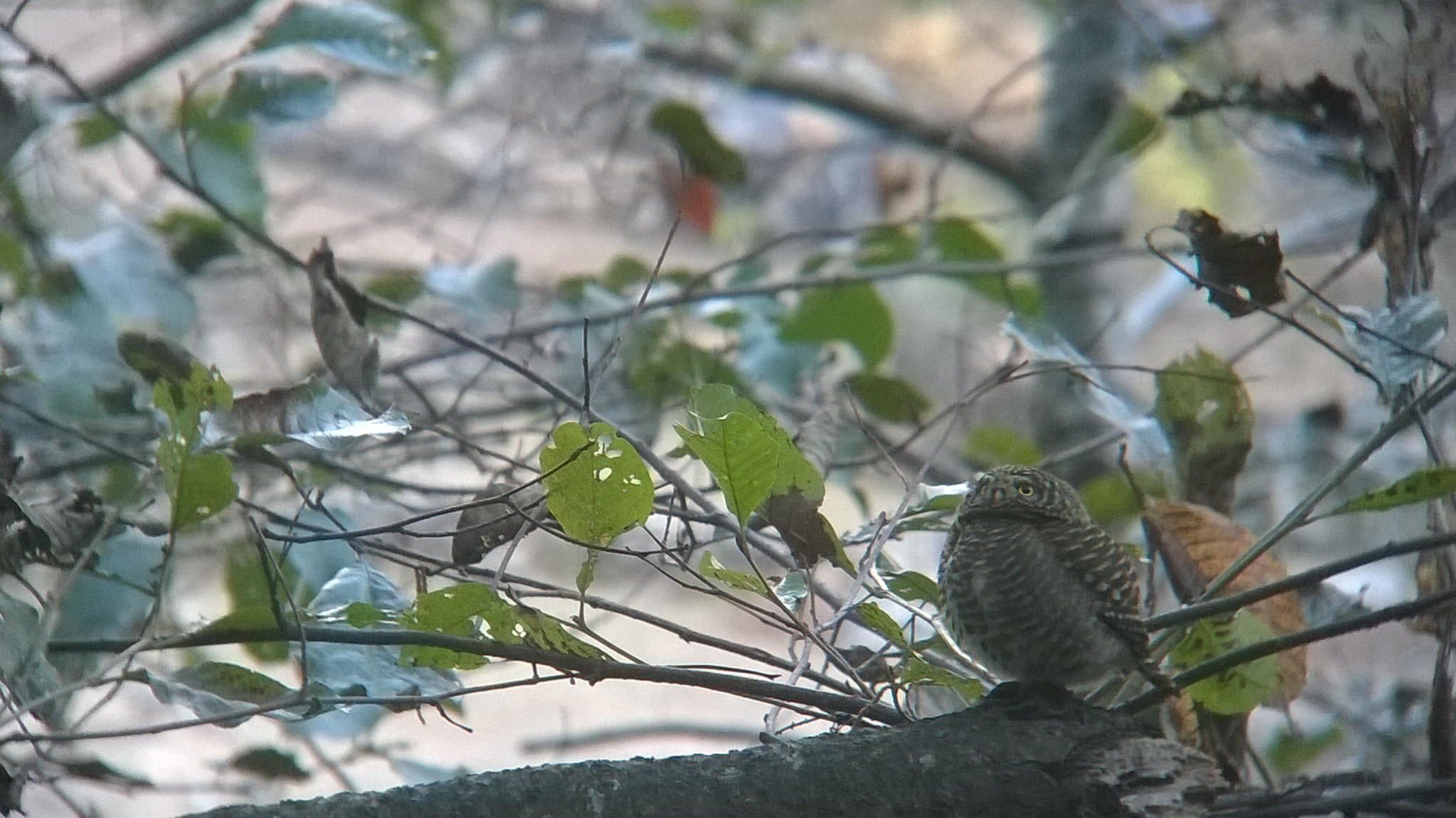
Measures 15–17 cm in length. Females weigh approximately 63 g, while males weigh 52 g. Plumage is grey-brown with a barred back and flanks; the head is more spotted than barred. Features include prominent white eyebrows, vibrant lemon-yellow eyes, a white throat patch, and a mostly white chin, center breast, and belly. A pale collar and two black spots on each side of the nape create an 'occipital face.' It lacks ear-tufts and has a greyish-brown pale-spotted pectoral band on the upper breast. Colour morphs transition with age: fledglings have fewer spots and barring, juveniles display a rufous morph, and adults exhibit a final grey morph.
Identification
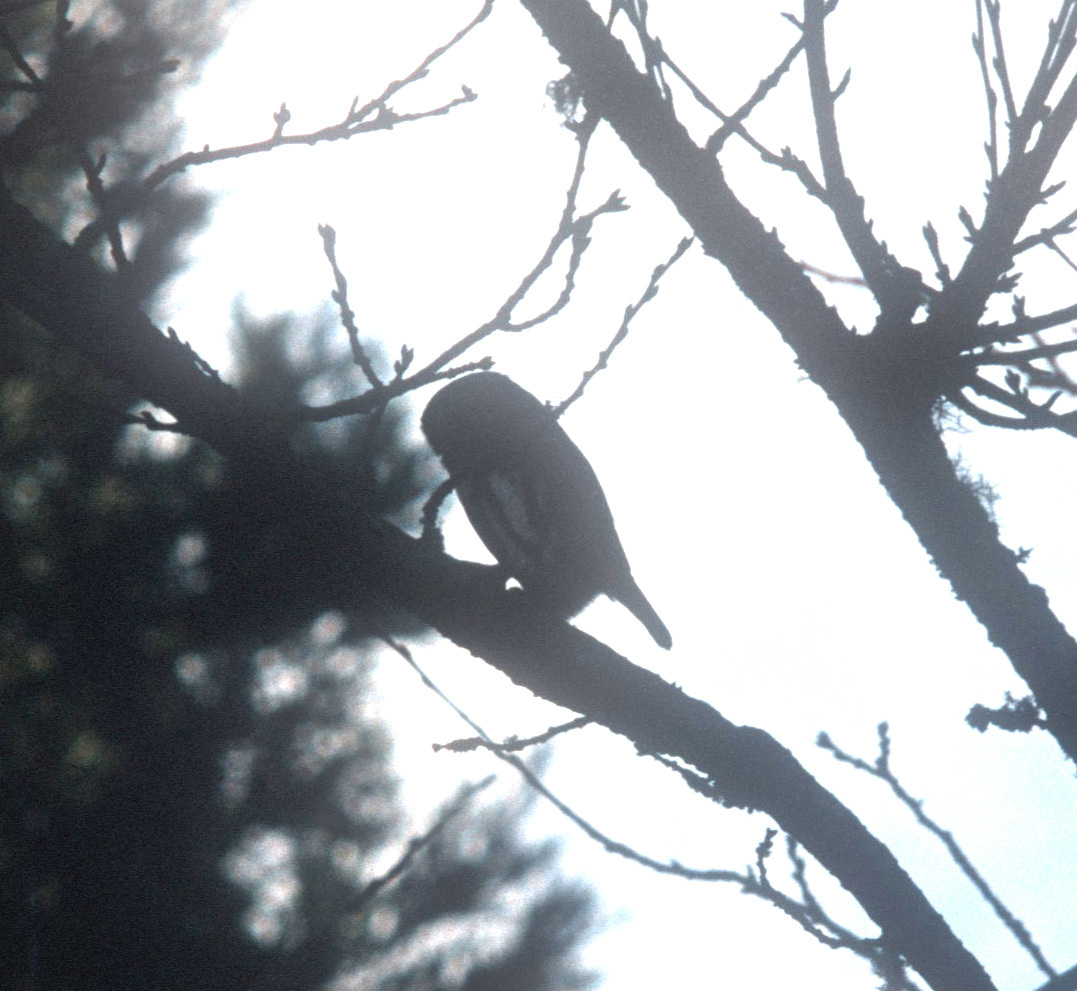
Key marks include the 'occipital face' formed by a pale collar and black nape spots, prominent white eyebrows, and lemon-yellow eyes. In flight, the tail appears longer than that of most pygmy owls, accompanied by rapid wingbeats. Vocalizations consist of a distinctive 4-note phrase 'wüp-wüwü-wüp' repeated at intervals, sometimes ending in 'wüwü.' Calls start mellow and become shriller, creating a ventriloquial effect that makes location difficult.
Distribution & Habitat
Range extends from the Himalayas of northern Pakistan to eastern China and Taiwan, south through Indochina, the Malay Peninsula, and Malaysia. Found in Bhutan, Brunei Darussalam, Cambodia, China, India, Laos, Malaysia, Myanmar, Nepal, Pakistan, Taiwan, Thailand, and Vietnam. Two subspecies are recognized: T. b. brodiei (Himalayas to south China, Indochina, Malay Peninsula) and T. b. pardalotus (Taiwan). Habitat includes evergreen forests, forest edges, mixed deciduous-evergreen forests with oak, rhododendron, and fir, and open woodlands with scrub. Altitude ranges from 1,350–2,750 meters, occasionally as low as 700 meters near cultivated lands.
Behavior & Ecology
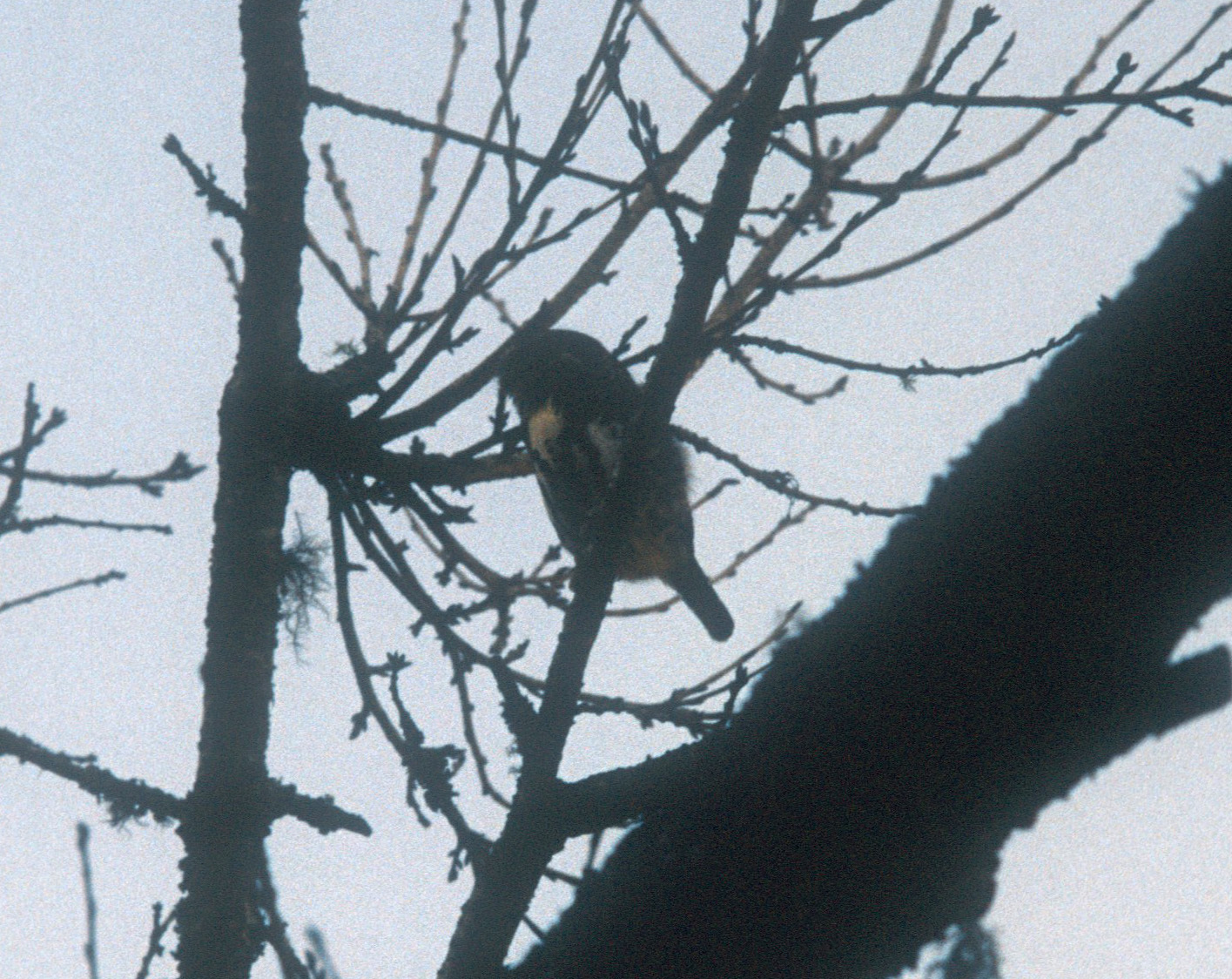
Diurnal, active during most parts of the day and sometimes at night. Often mobbed by other small birds when roosting. Nests in natural tree hollows or chambers created by woodpeckers and barbets, typically in rotten trunks high in trees within clearings. Breeding season occurs from March to April. Clutch size varies from 3 to 5 round, white eggs, laid between late April and mid-June. Young fledge from mid-June to early August. Diet consists mainly of small birds, insects, lizards, invertebrates, and small mammals. Captures prey as large as itself, tearing it up with upward pulls of the bill while perched.
Conservation
Assessed as Least Concern on the IUCN Red List. The main threat is habitat loss. Studies indicate the species is absent from forest fragments smaller than 100 hectares, suggesting susceptibility to anthropogenic pressures such as deforestation.
Source: Wikipedia · CC BY-SA 3.0
Taxonomy
- Order
- Strigiformes
- Family
- Strigidae
- Genus
- Taenioptynx
Taxonomy Changes
Glaucidium brodiei → Taenioptynx brodiei
Genus transfer — GBIF Backbone Taxonomy uses the former name; AviList 2025 uses the current name.
Vocalizations
Subspecies (2)
-
Taenioptynx brodiei brodiei
Pakistan to southern China, southeastern Tibet, northern Indochina, and Malay Peninsula
Data Sources
Species description from Wikipedia, licensed under CC BY-SA 3.0.
Bird images and sounds sourced from GBIF, contributed by citizen scientists worldwide under Creative Commons licenses.
Taxonomy data from AviList 2025.