Anseriformes / Anatidae / Tadorna
Ruddy Shelduck
Tadorna ferruginea · 赤麻鸭
Introduction
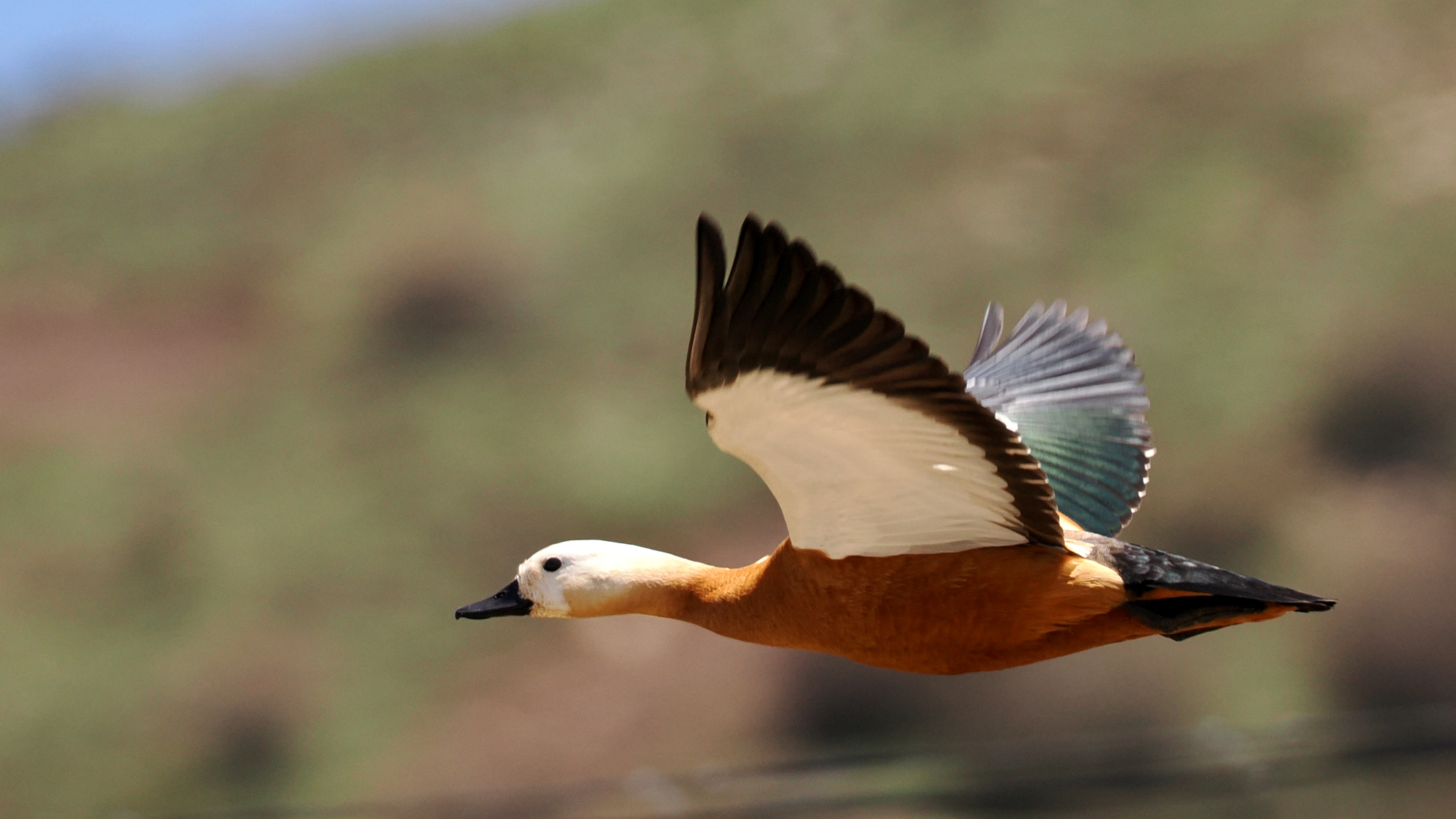
A species in the family Anatidae, this waterfowl measures 58 to 70 cm in length with a wingspan of 110 to 135 cm. It is migratory, breeding in southeastern Europe and central Asia and wintering in the Indian subcontinent, with small resident populations in North Africa. Distinctive traits include orange-brown plumage, black flight feathers contrasting with white wing-coverts, and nesting in crevices or holes away from water. The International Union for Conservation of Nature assesses its conservation status as least concern.
Description
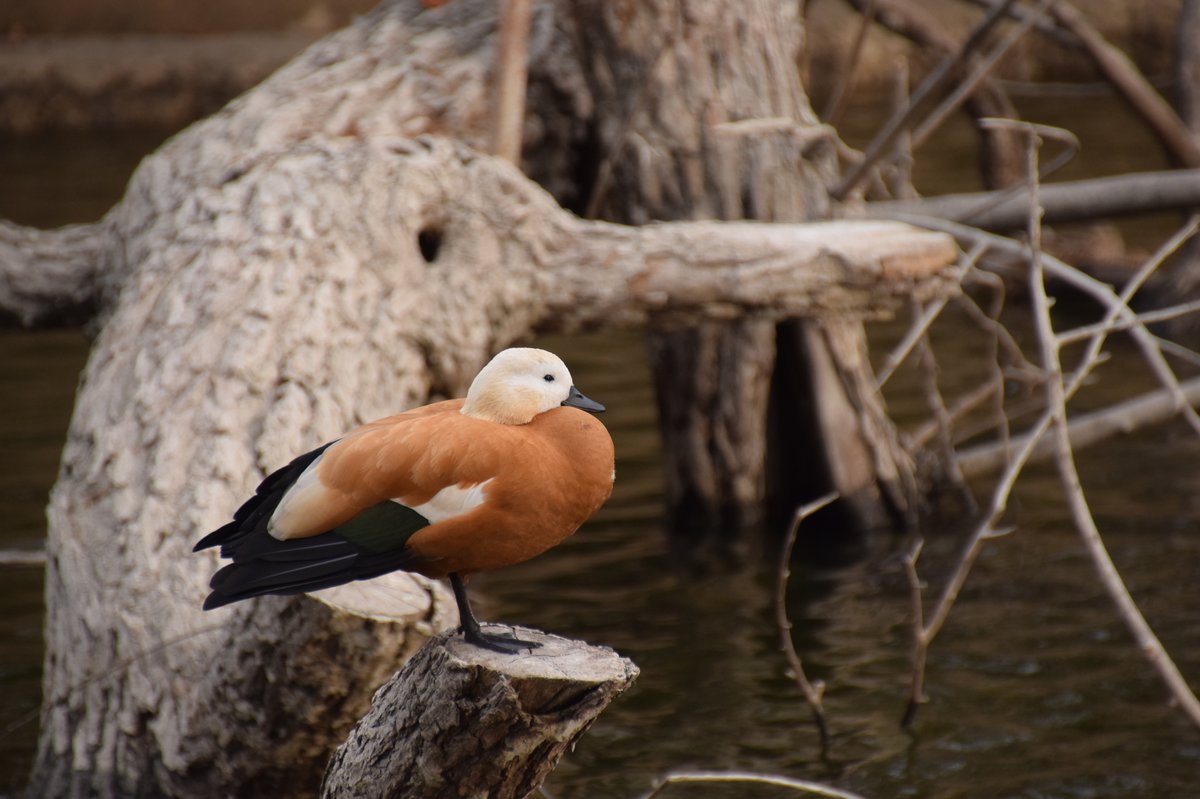
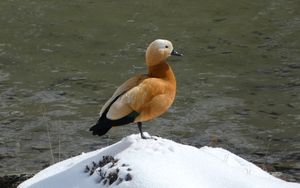
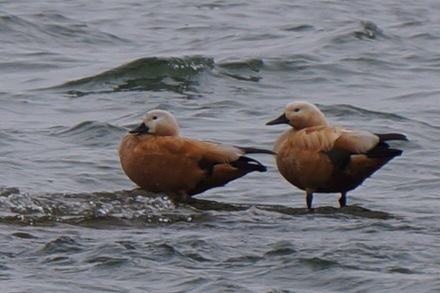
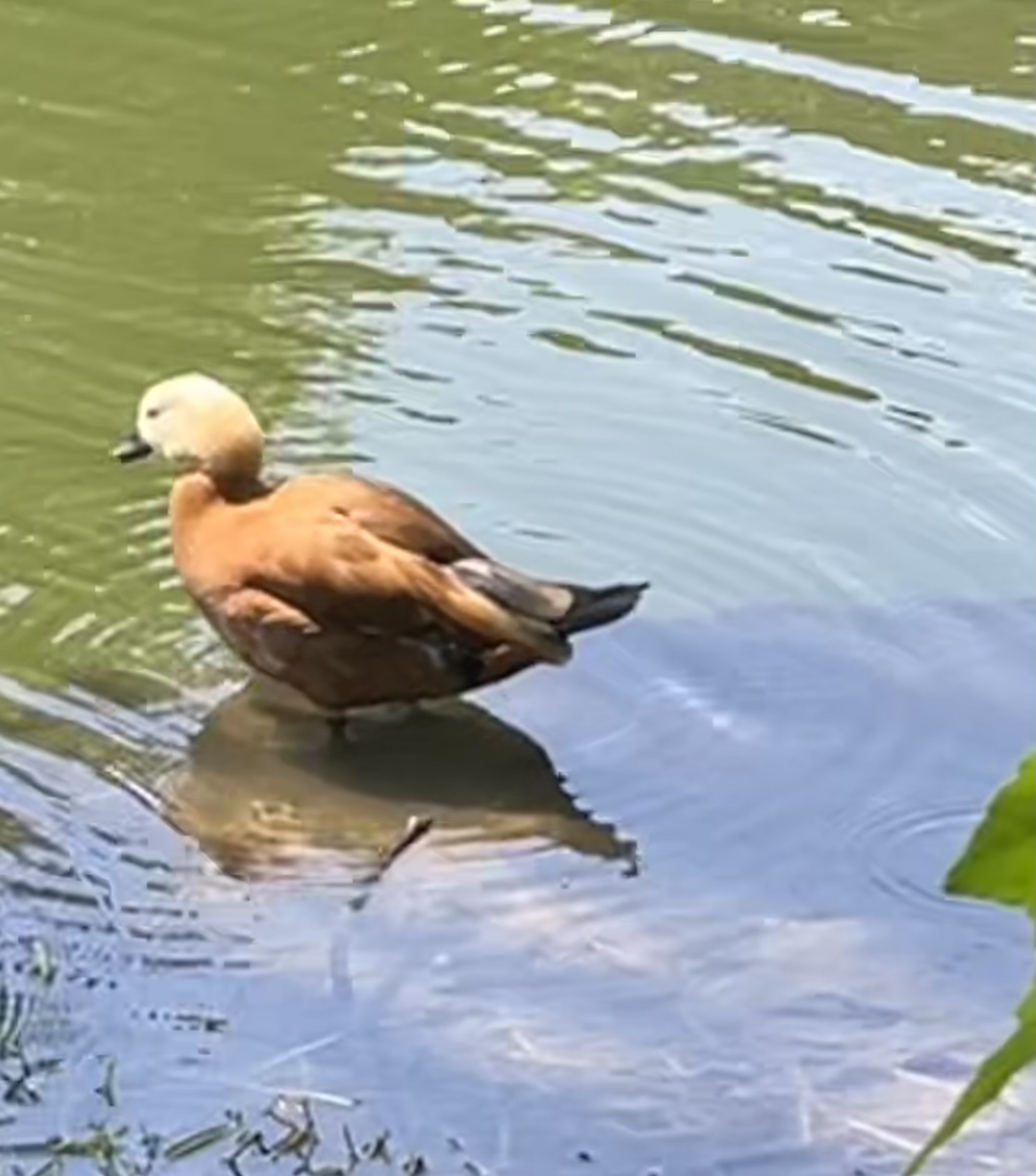
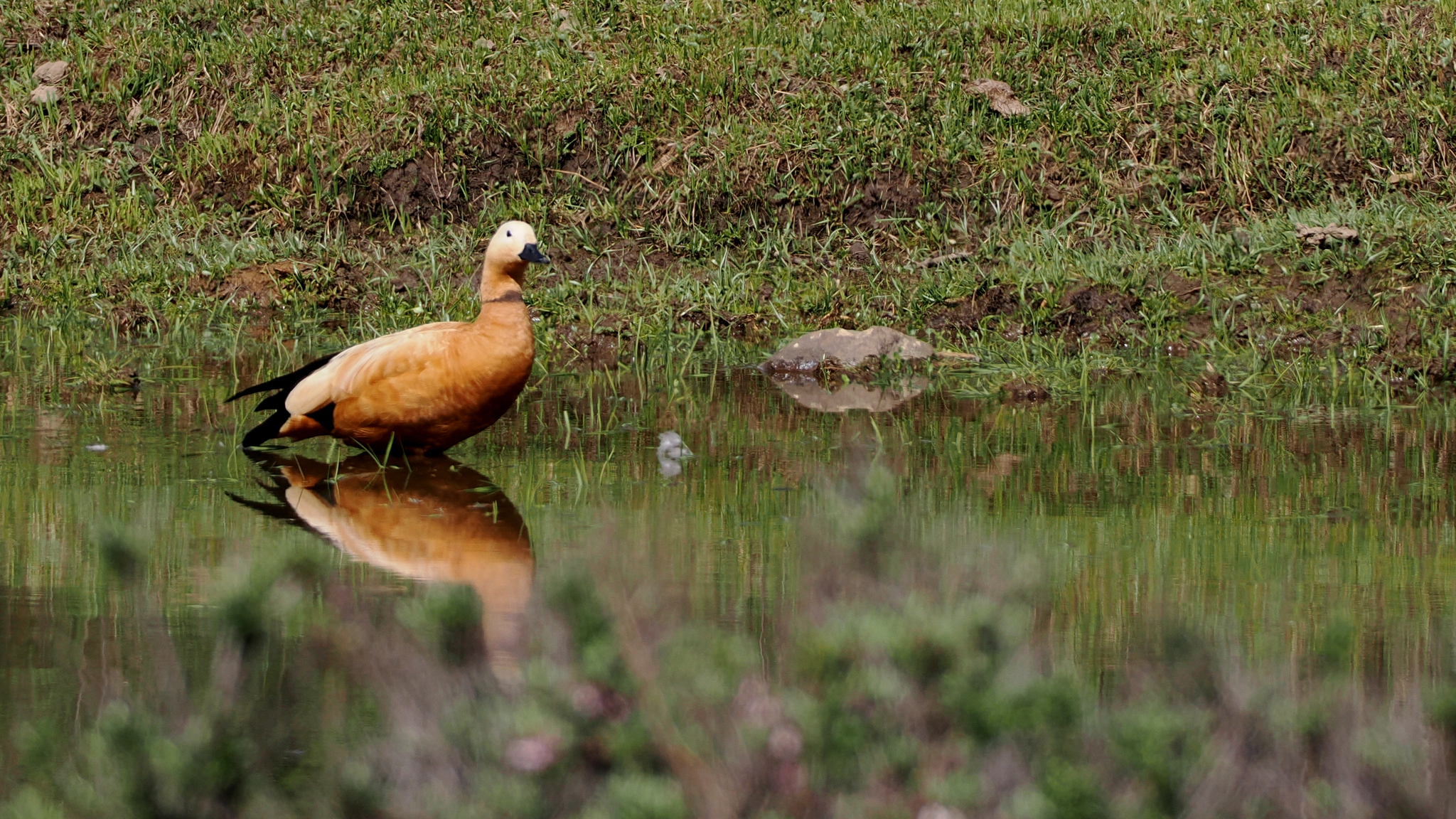
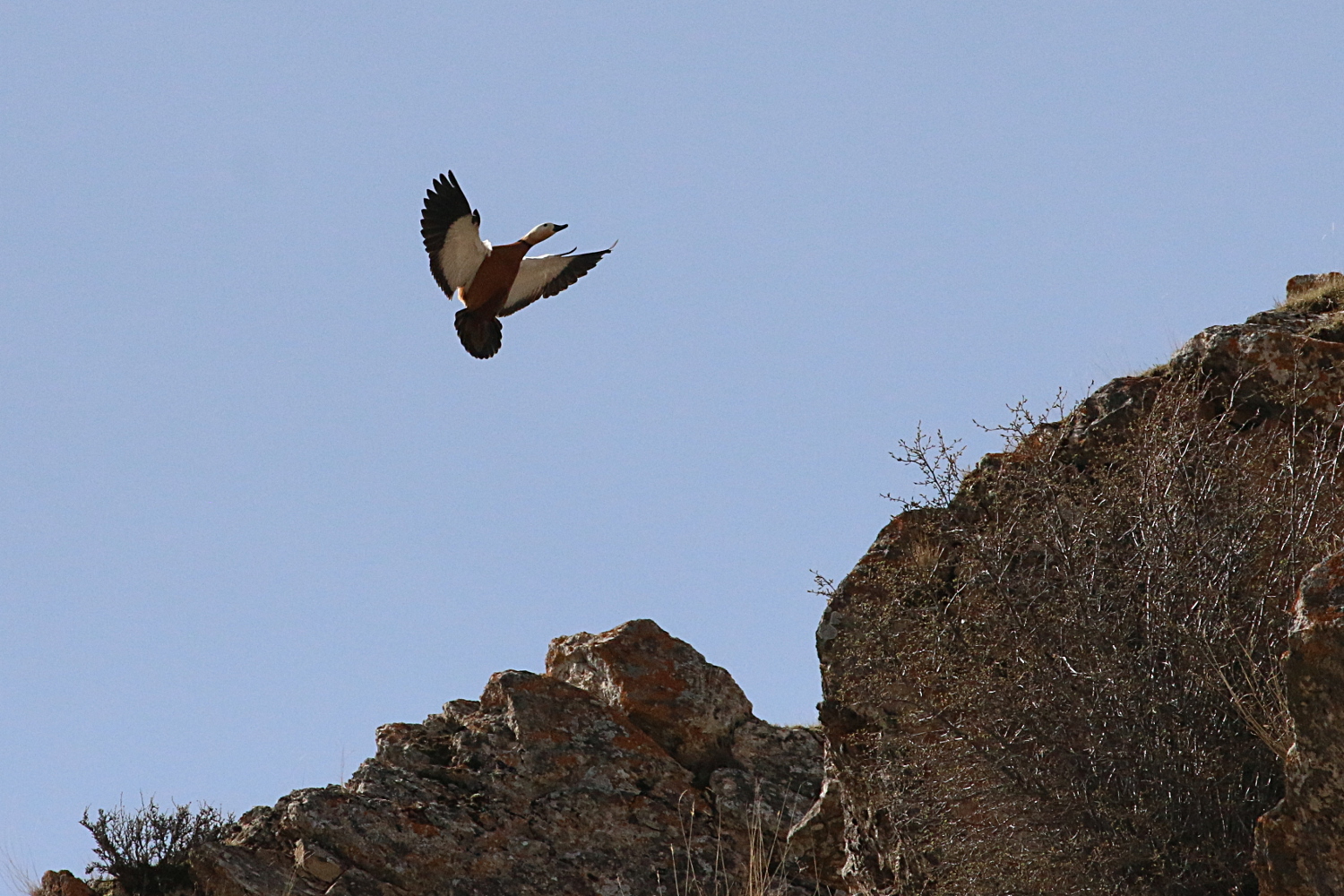
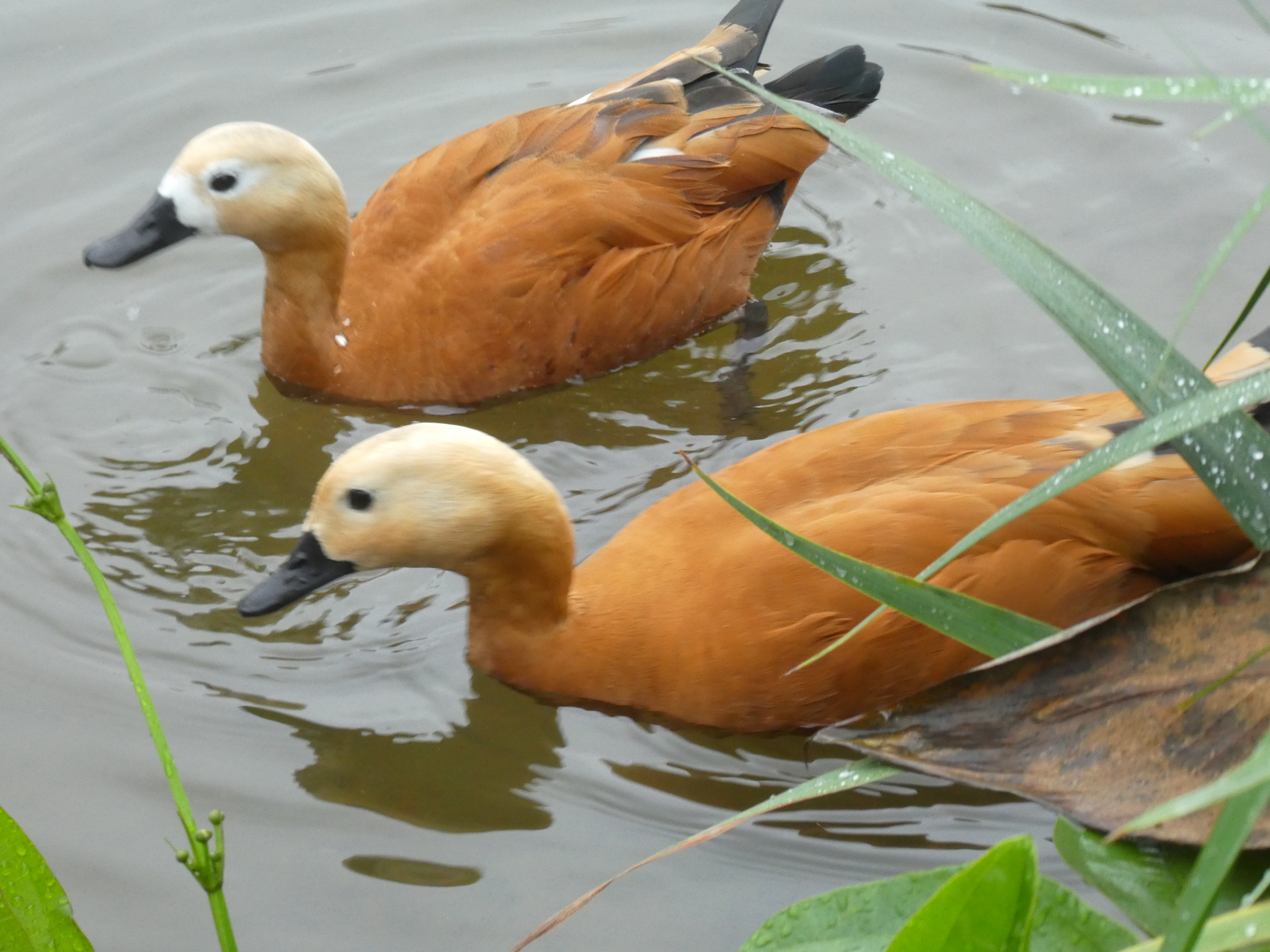
Length is 58 to 70 cm with a 110–135 cm wingspan. The male has orange-brown body plumage and a paler head and neck, separated by a narrow black collar. The rump, flight feathers, tail-coverts, and tail are black, with iridescent green speculum feathers on the inner wings. Upper and lower wing-coverts are white. The bill is black and legs are dark grey. The female is similar but has a pale, whitish head and neck and lacks the black collar. Juveniles resemble the female but are darker brown. Plumage color fades with age.
Identification
Key marks include orange-brown body, black tail and flight feathers, and prominent white wing-coverts visible in flight. Males have a black collar absent in females. Flight reveals white coverts contrasting with black primaries. Vocalizations consist of loud, nasal honking notes, with distinguishable differences between sexes.
Distribution & Habitat
Breeds from southeast Europe across the Palearctic to Lake Baikal, Mongolia, and western China. Eastern populations migrate to winter in the Indian subcontinent. Small resident populations exist in Northwest Africa and Ethiopia. It colonized Fuerteventura in the Canary Islands. Feral populations exist in Europe, including Switzerland and Moscow. Habitat includes inland lakes, reservoirs, rivers, mud flats, and shingle banks during breeding; lowland streams, marshes, and brackish lagoons outside breeding season. It inhabits altitudes up to 5,000 m in central Asia.
Behavior & Ecology
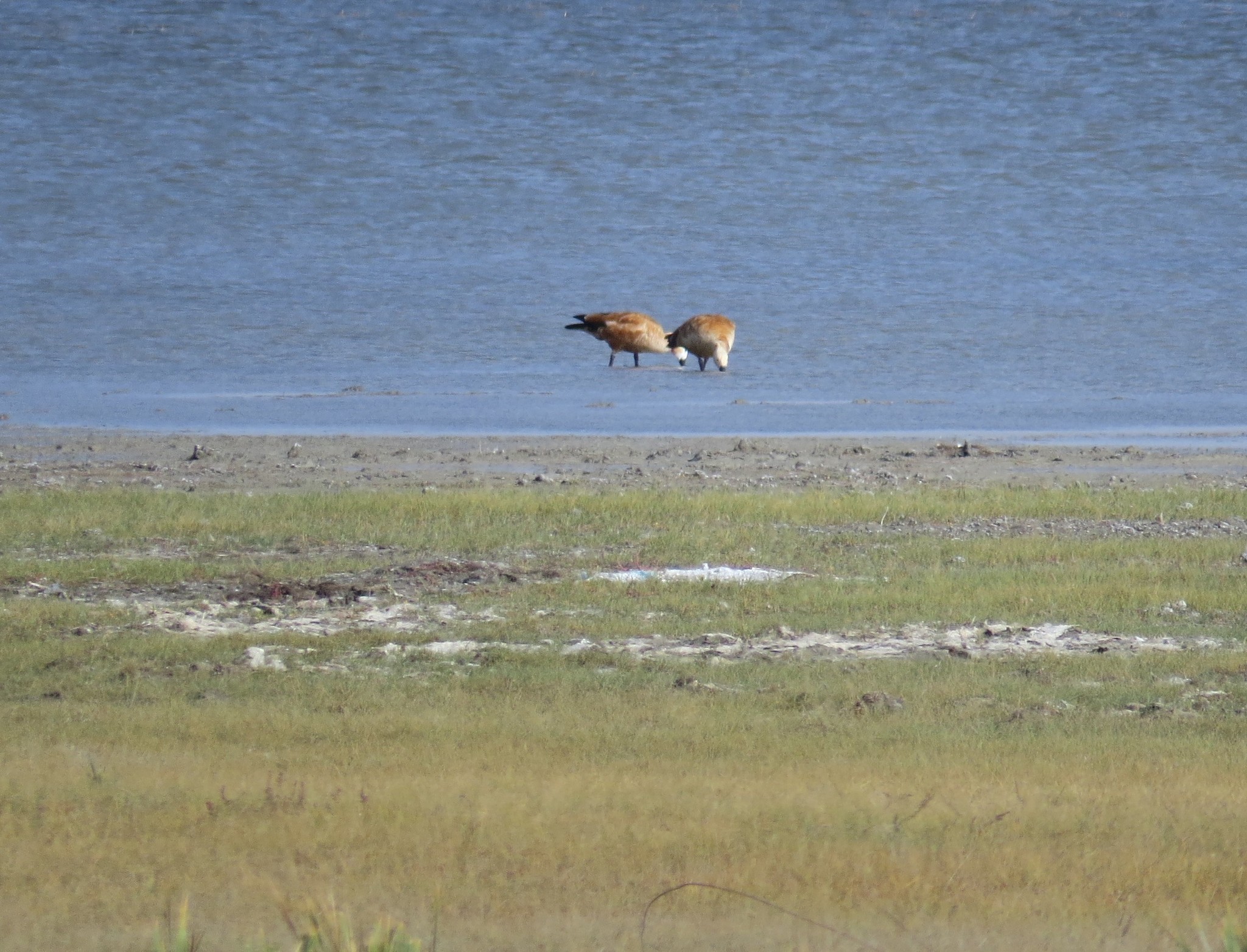
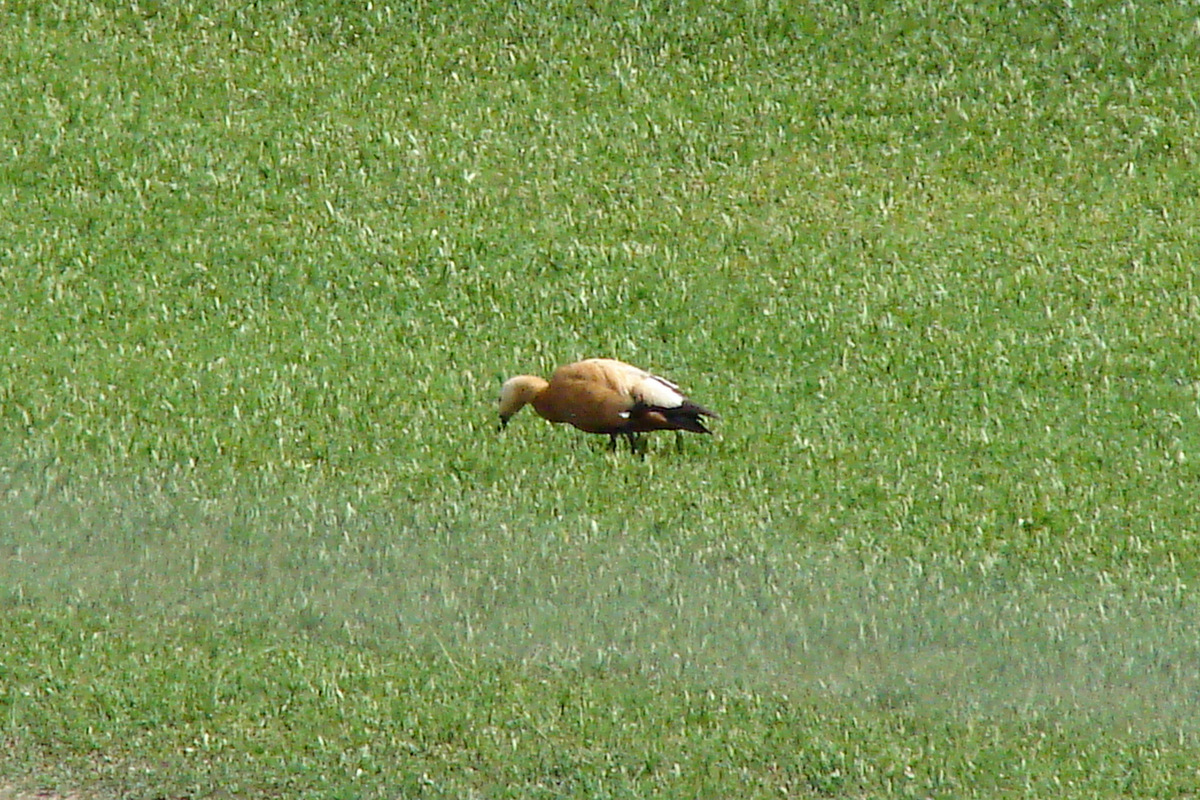
Mainly nocturnal and omnivorous, feeding on grasses, plant shoots, grain, water plants, and invertebrates by grazing, dabbling, or up-ending. Usually found in pairs or small groups, though large flocks form during moult and winter. Pairs bond for life. Breeding occurs March to June; nests are located in tree holes, cliff crevices, or burrows, often far from water. The female incubates a clutch of six to twelve eggs for about 28 days. Both parents care for young, which fledge in 55 days. Adults moult after breeding, losing flight for about a month.
Conservation
Assessed as least concern by the IUCN with an estimated population of 170,000 to 225,000 individuals. Populations are steady or rising in central and eastern Asia but generally declining in Europe due to wetland drainage and hunting. It is protected in Europe and Italy. The species is listed under the Agreement on the Conservation of African-Eurasian Migratory Waterbirds (AEWA). In Switzerland, it is considered an invasive species, with numbers increasing from 211 to 1,250 between 2006 and 2016.
Culture
Regarded as sacred by Buddhists in central and eastern Asia, providing some protection. Selected as the flagship species of Arjan International Wetland in Iran in 2023.
Source: Wikipedia · CC BY-SA 3.0
Taxonomy
- Order
- Anseriformes
- Family
- Anatidae
- Genus
- Tadorna
Distribution
breeds Iberian Peninsula and Mediterranean northern Africa eastward through southern Russia to eastern China and in the south through Türkiye to Tibetan Plateau including Ladakh; winters to Ethiopia, southern India, and southeastern Asia; introduced in central Europe and the Canary Islands, and appears frequently elsewhere
Data Sources
Species description from Wikipedia, licensed under CC BY-SA 3.0.
Bird images and sounds sourced from GBIF, contributed by citizen scientists worldwide under Creative Commons licenses.
Taxonomy data from AviList 2025.