Little Grebe
Tachybaptus ruficollis
小䴙䴘
Introduction
The smallest European grebe, measuring 23 to 29 centimeters in length. Its range extends from western Europe through Asia to New Guinea and across most of Africa. It inhabits vegetated freshwater lakes, ponds, and slow-moving rivers with emergent vegetation. During winter, it moves to more open waters and sheltered coastal bays. It is a strong diver, submerging quickly when disturbed.
Description
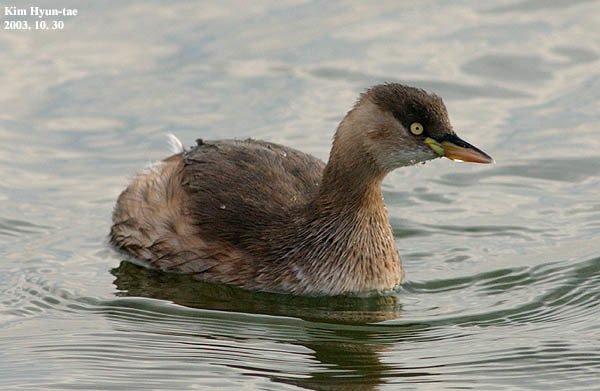
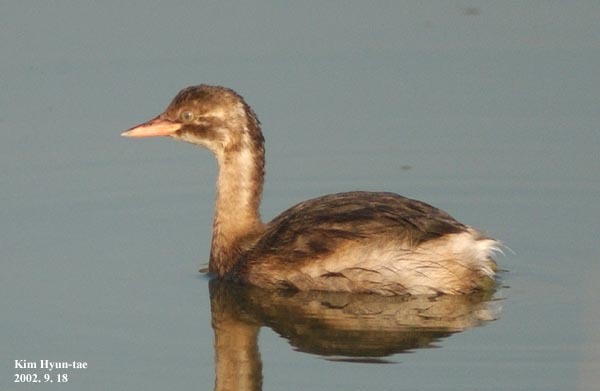
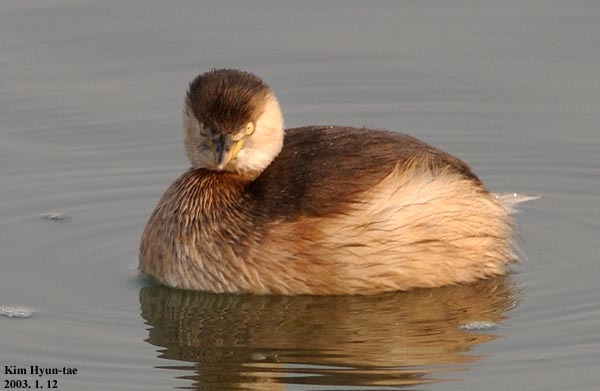
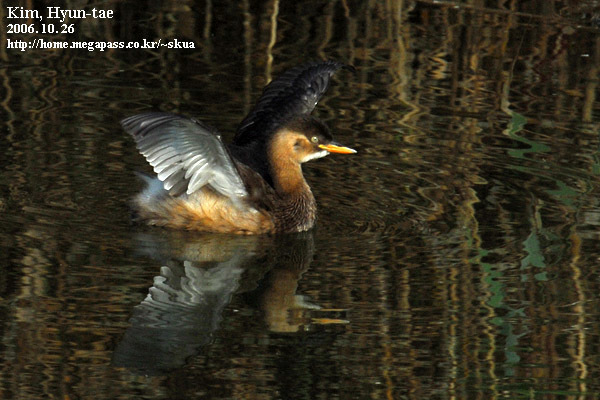
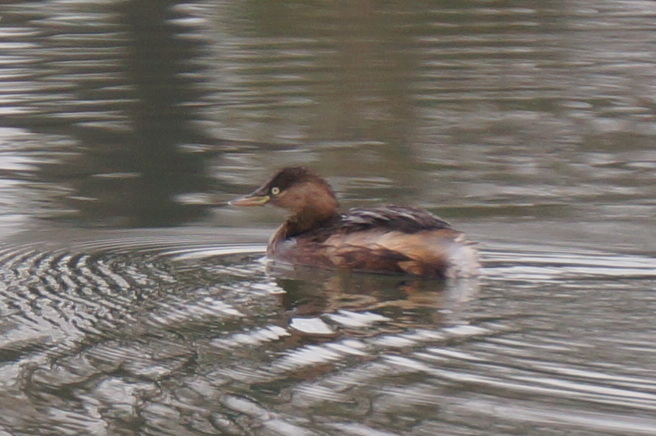
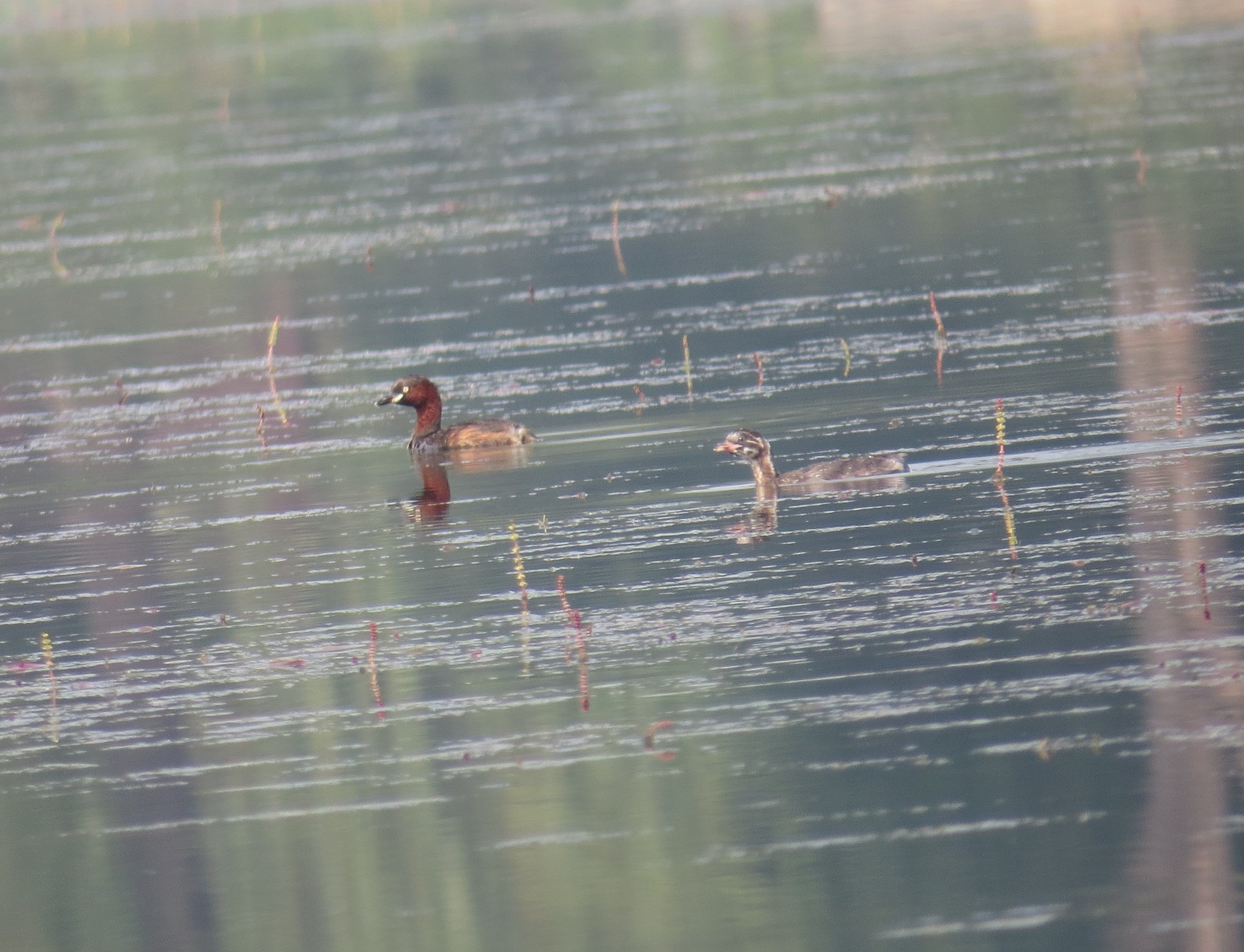
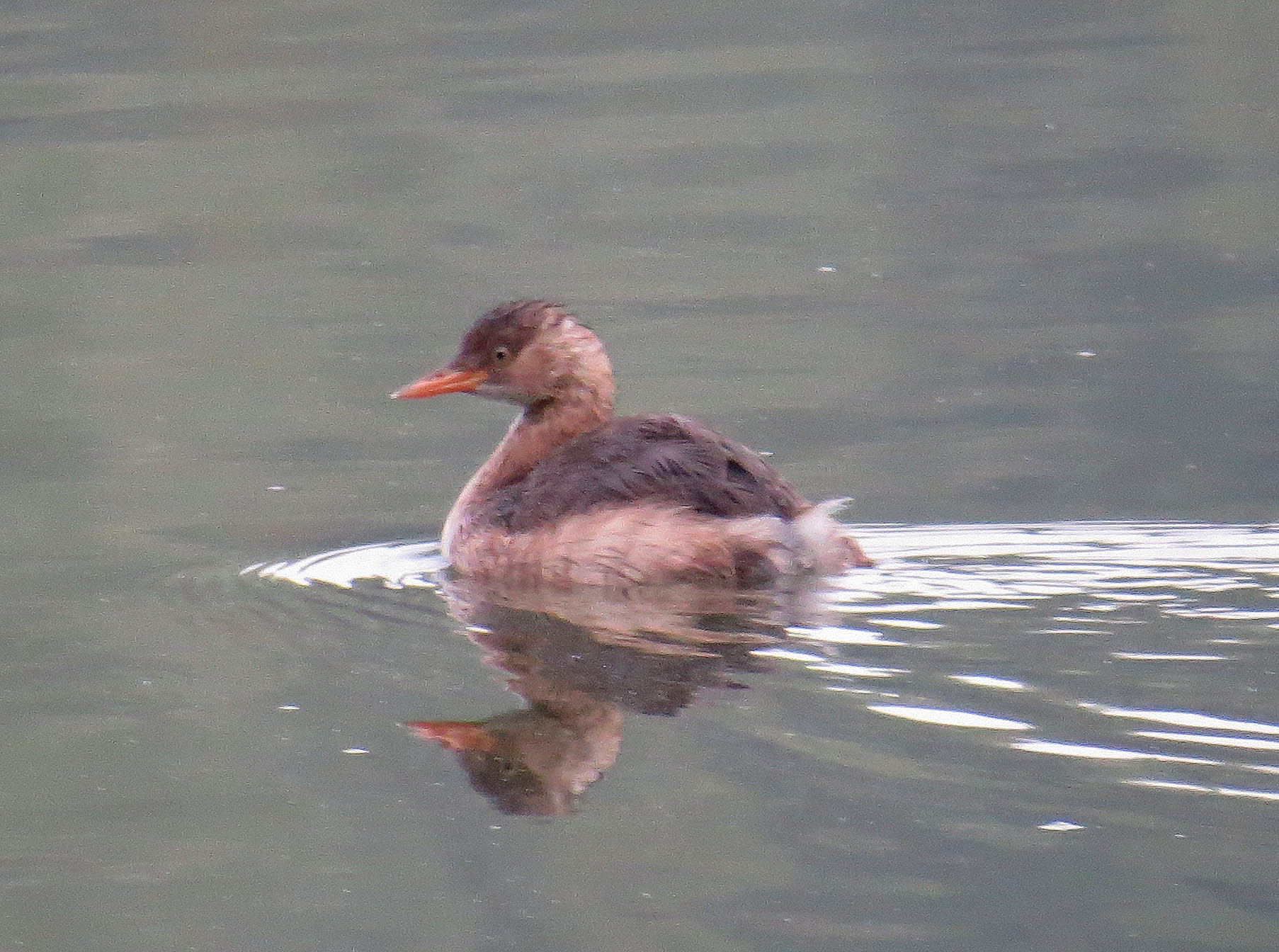
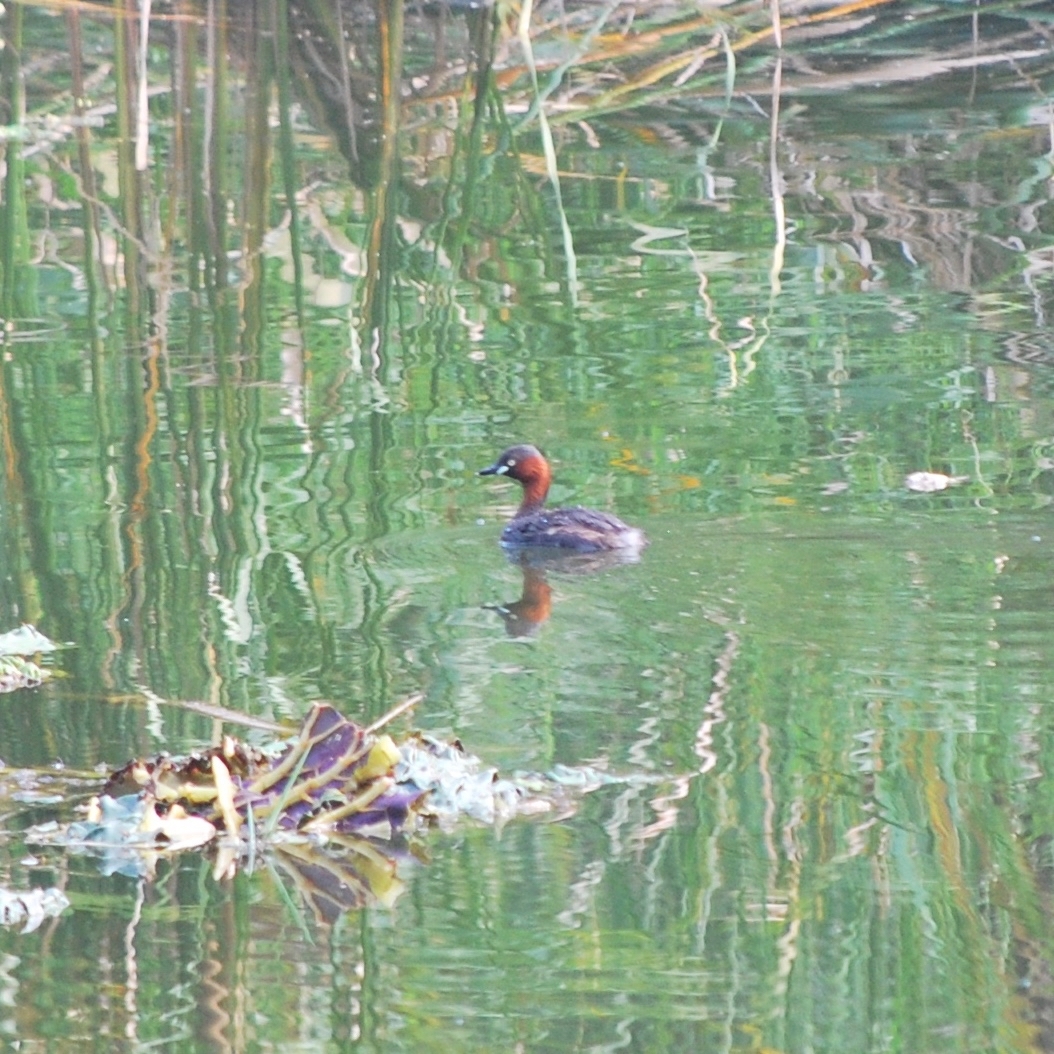
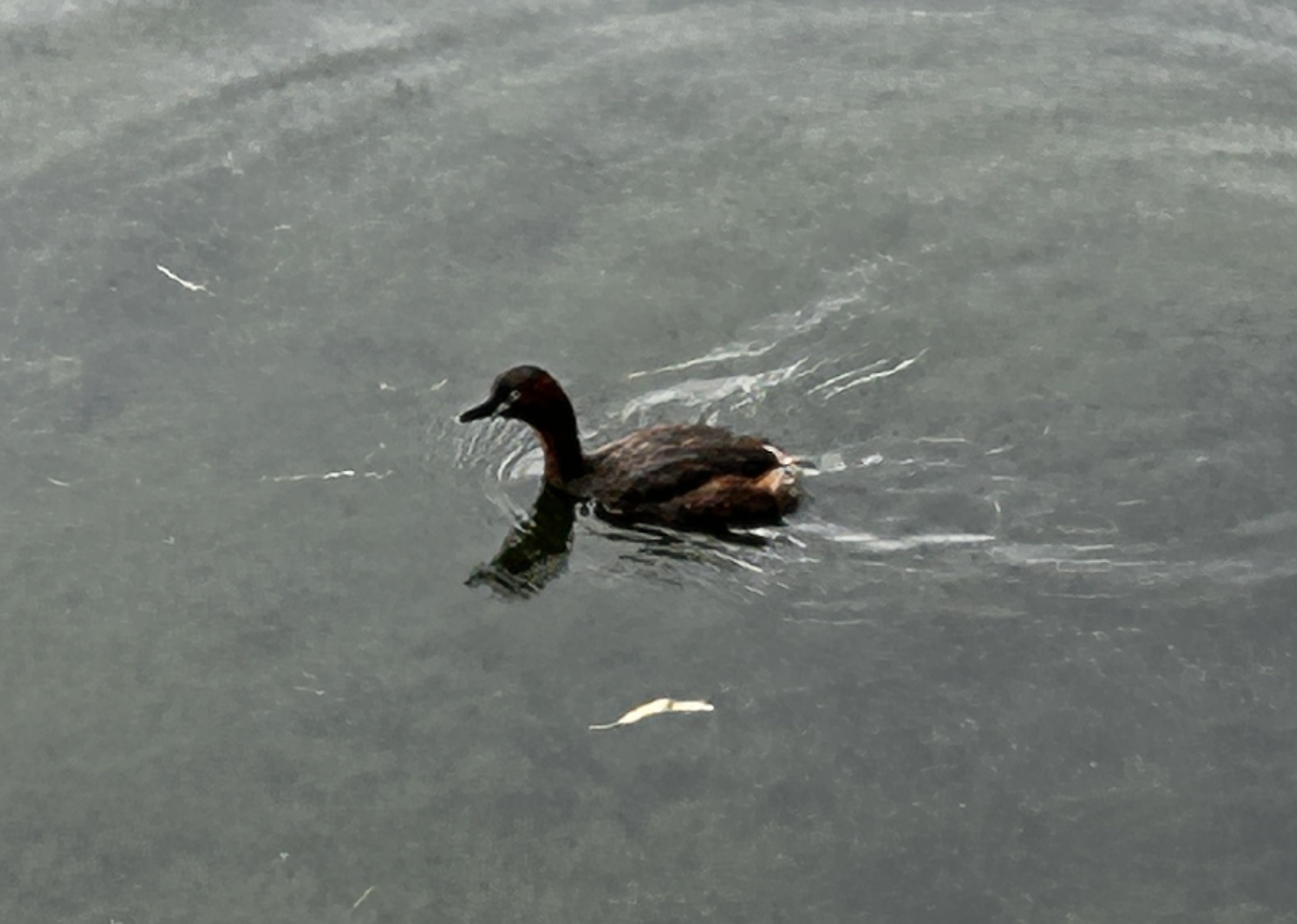
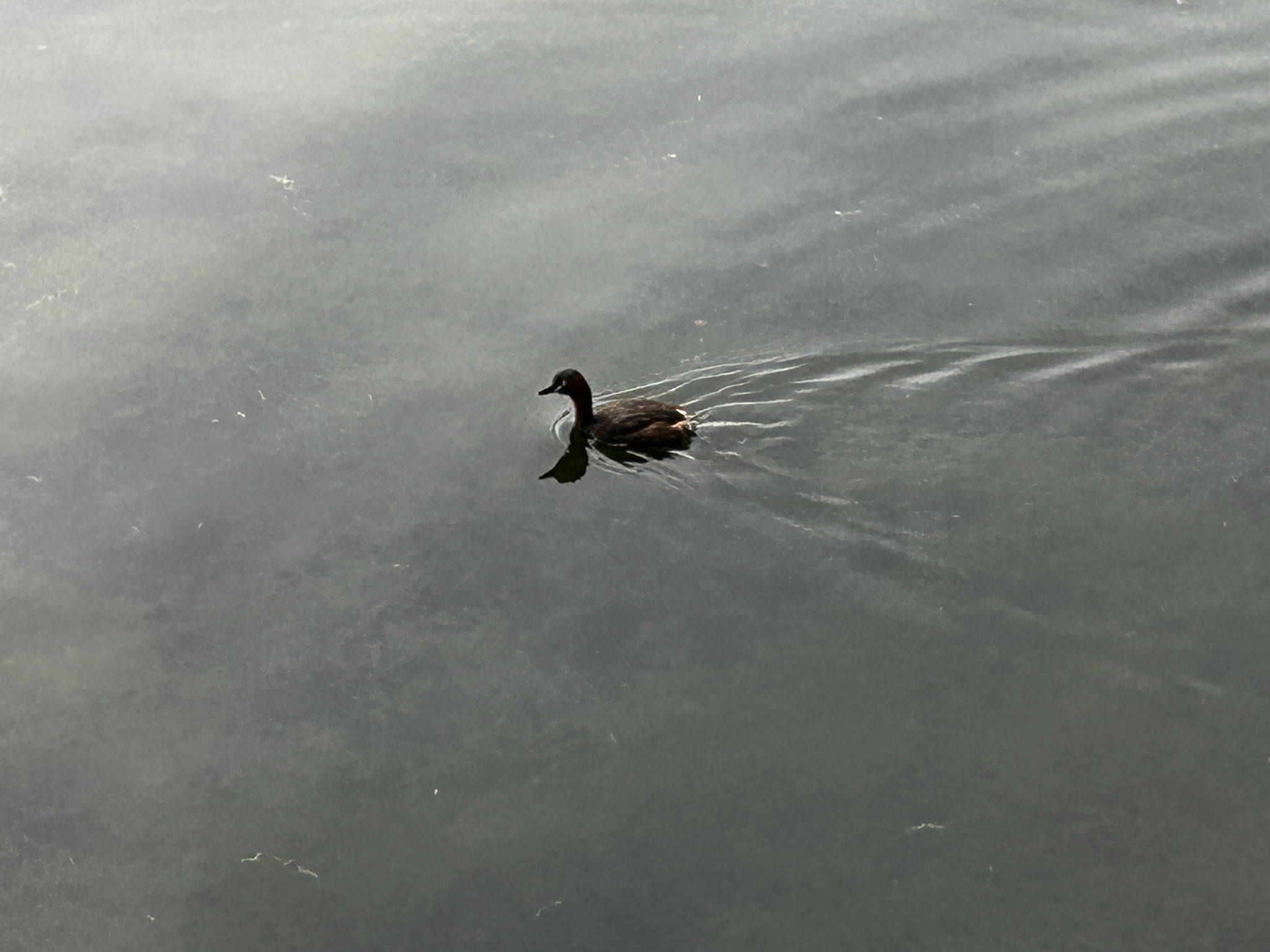
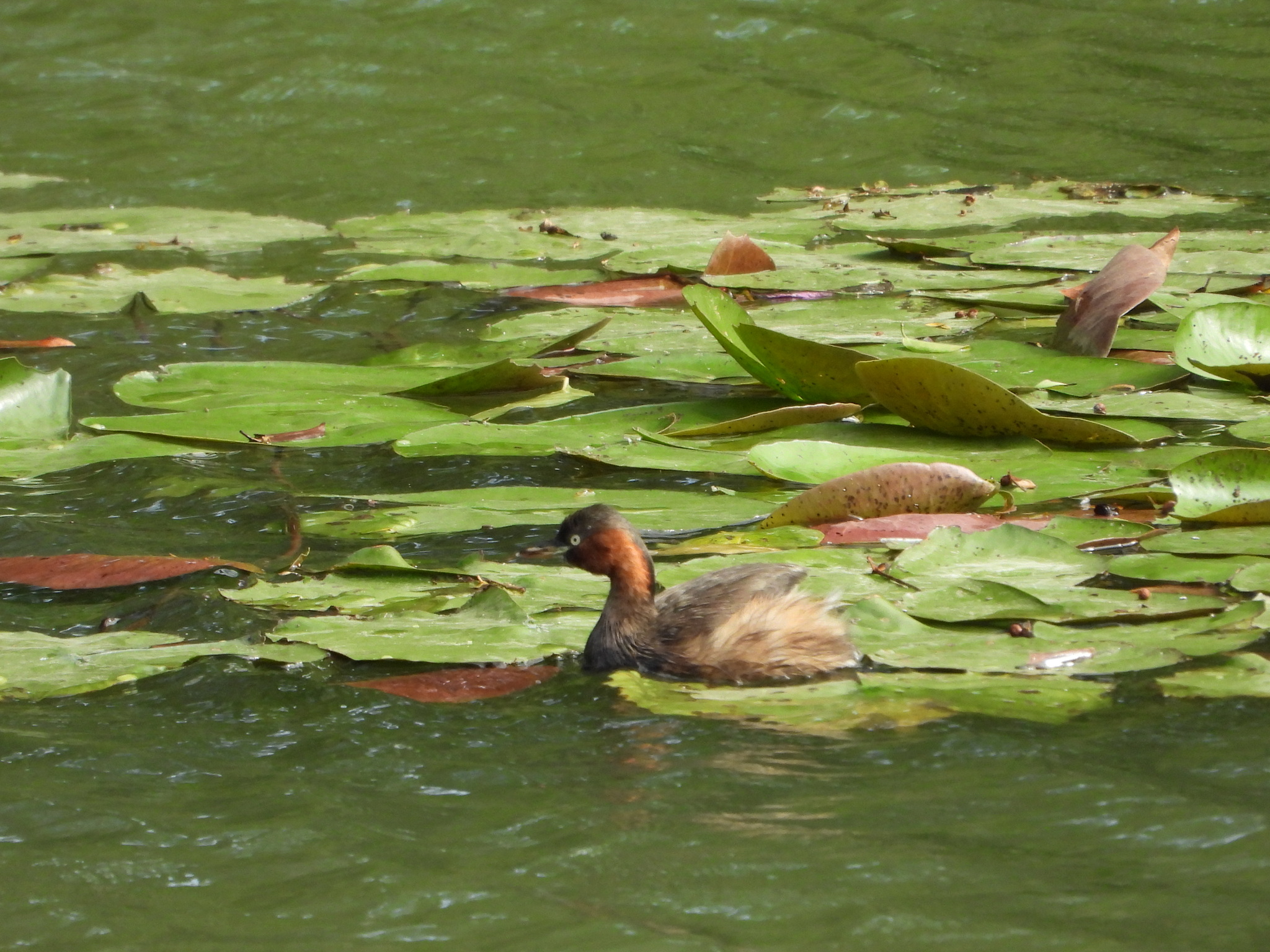
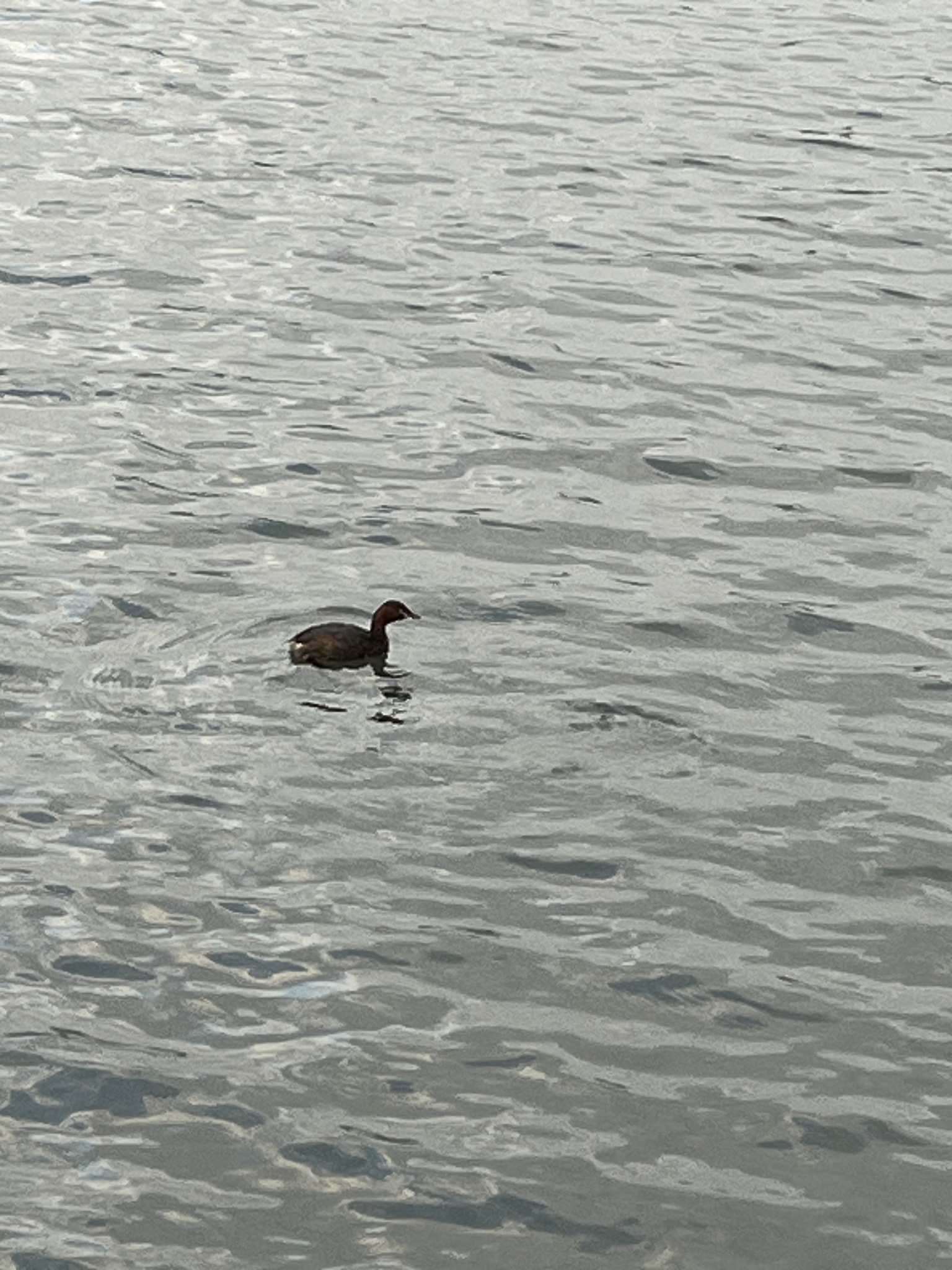
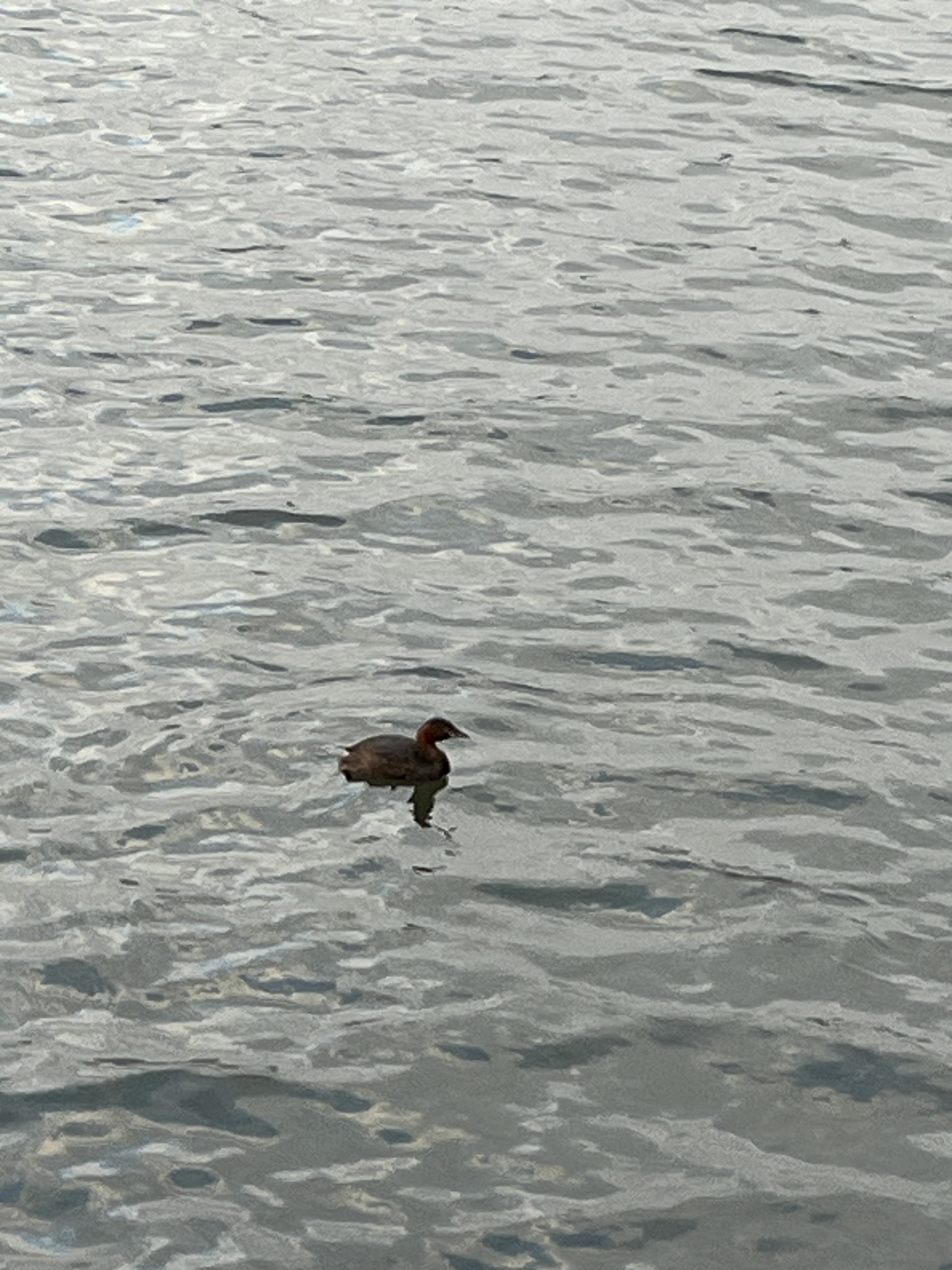
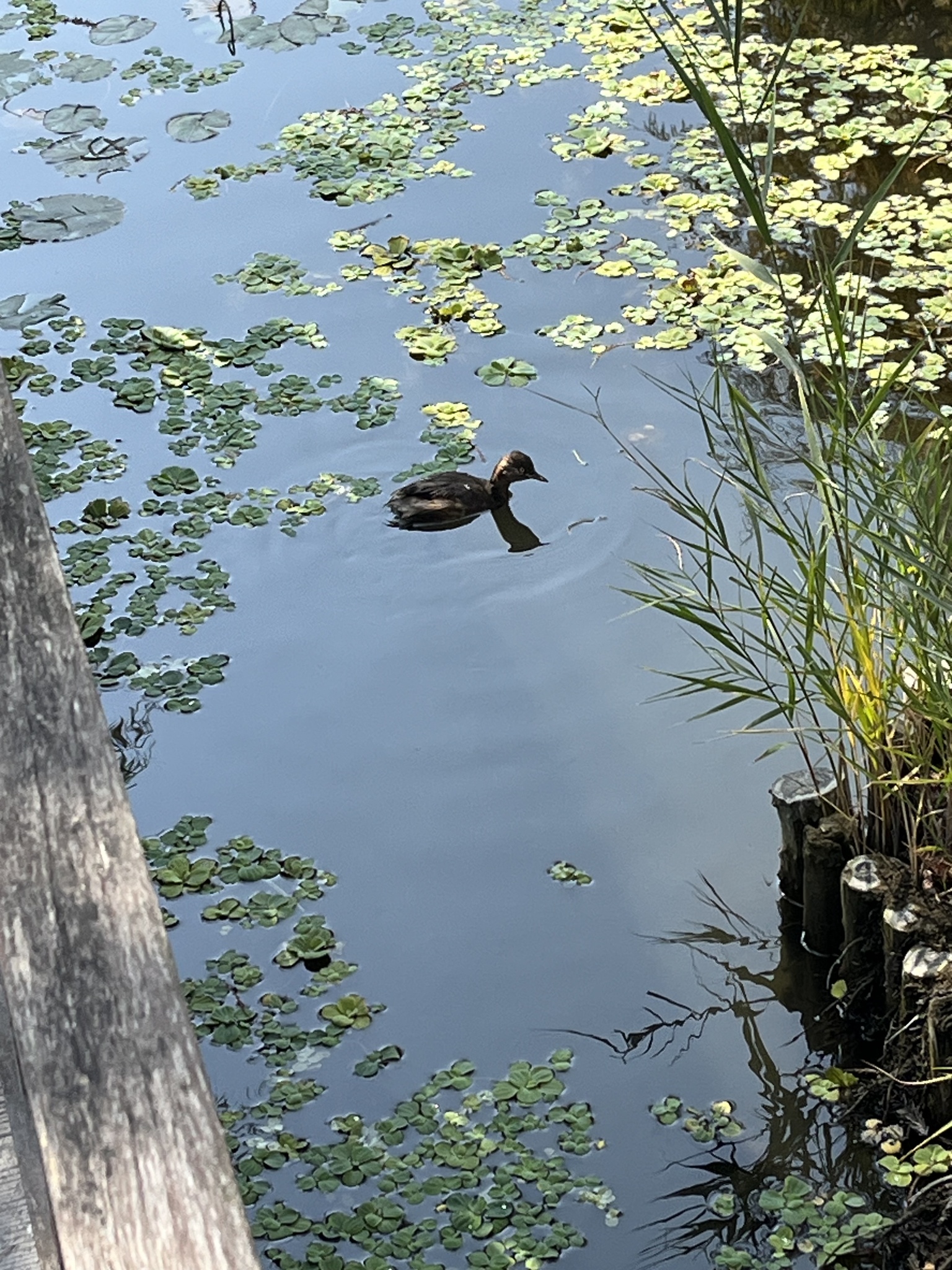
This is a diminutive water bird with a sleek, rounded body and a sharp, pointed bill suited for catching fish. In breeding plumage, the adult is unmistakable: predominantly dark brown above with a rich, rufous coloration on the neck, cheeks, and flanks, complemented by a bright yellow gape that flashes conspicuously when the bird calls. Non-breeding adults and juveniles lose this striking coloring, adopting a more subdued dirty brownish-grey appearance overall. Juveniles additionally show black and white streaks on the cheeks and neck sides, and possess a yellow bill with a small black tip that darkens with age. In winter plumage, the bird shows buff-toned underparts with a darker back and cap, and its characteristic 'powder puff' rear end, formed by fluffy undertail coverts, aids identification.
Identification
As Europe's smallest grebe, size alone helps distinguish this species from its relatives. In breeding plumage, the combination of dark upperparts, rich rufous neck and flanks, and bright yellow gape is unique among European grebes. In winter, identification relies on its small size, buff plumage with darker back and cap, and the distinctive fluffy appearance of the rear end. The trilled breeding call, a repeated 'weet-weet-weet' or 'wee-wee-wee' that sounds remarkably like a horse whinnying, is an excellent identification aid, often given singly or as a duet between pairs.
Distribution & Habitat
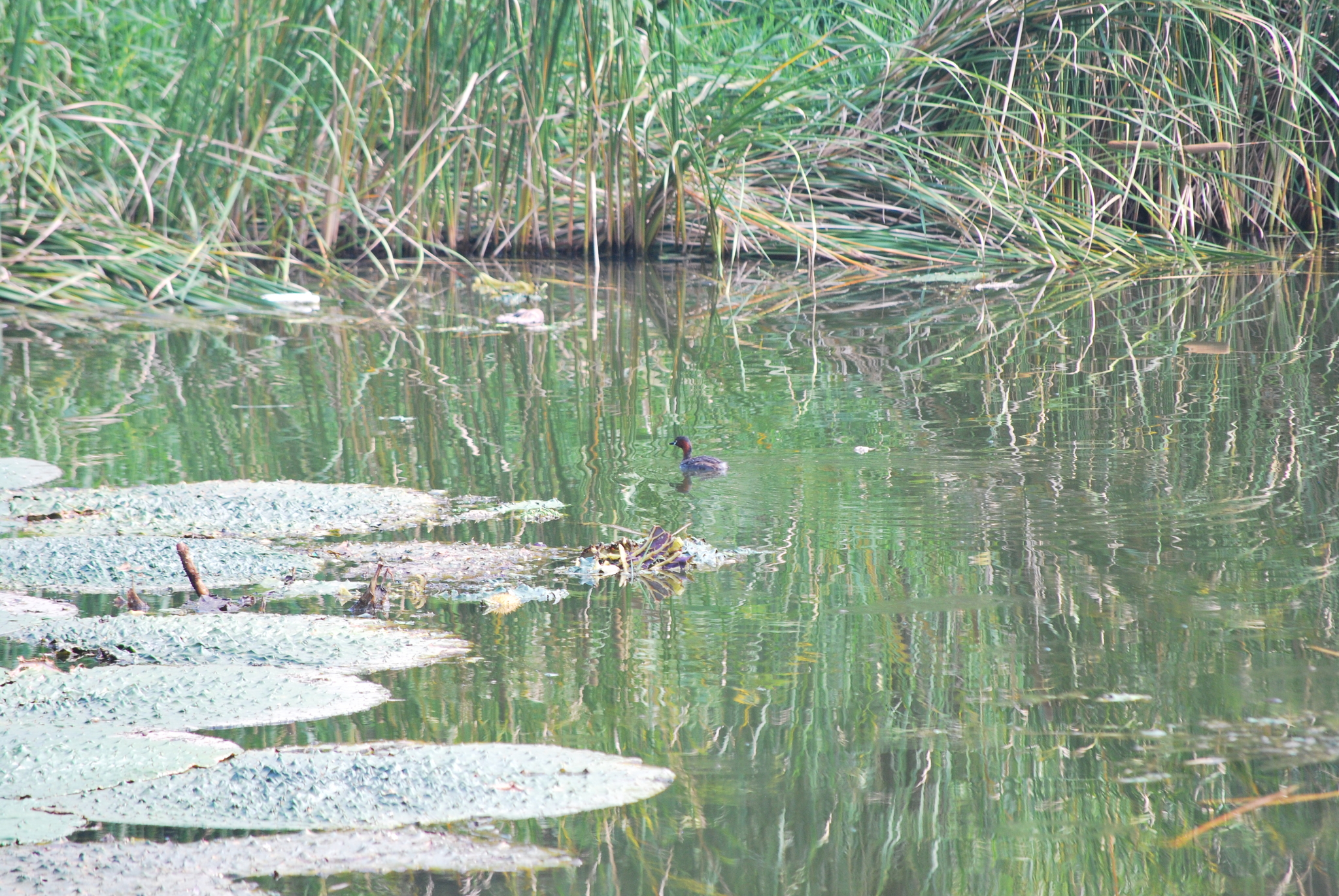
This species breeds across an extensive range that encompasses most of Europe, much of Asia extending down to New Guinea, and most of Africa. It occupies heavily vegetated areas of freshwater lakes, large ponds, and slow-moving rivers, where colonies form among emergent vegetation. Most populations move to more open or coastal waters during winter, though true migration occurs only in regions where freshwater freezes completely. Outside the breeding season, birds disperse to larger, more open waterbodies and may even appear in small coastal bays, though they remain primarily a freshwater species.
Behavior & Ecology
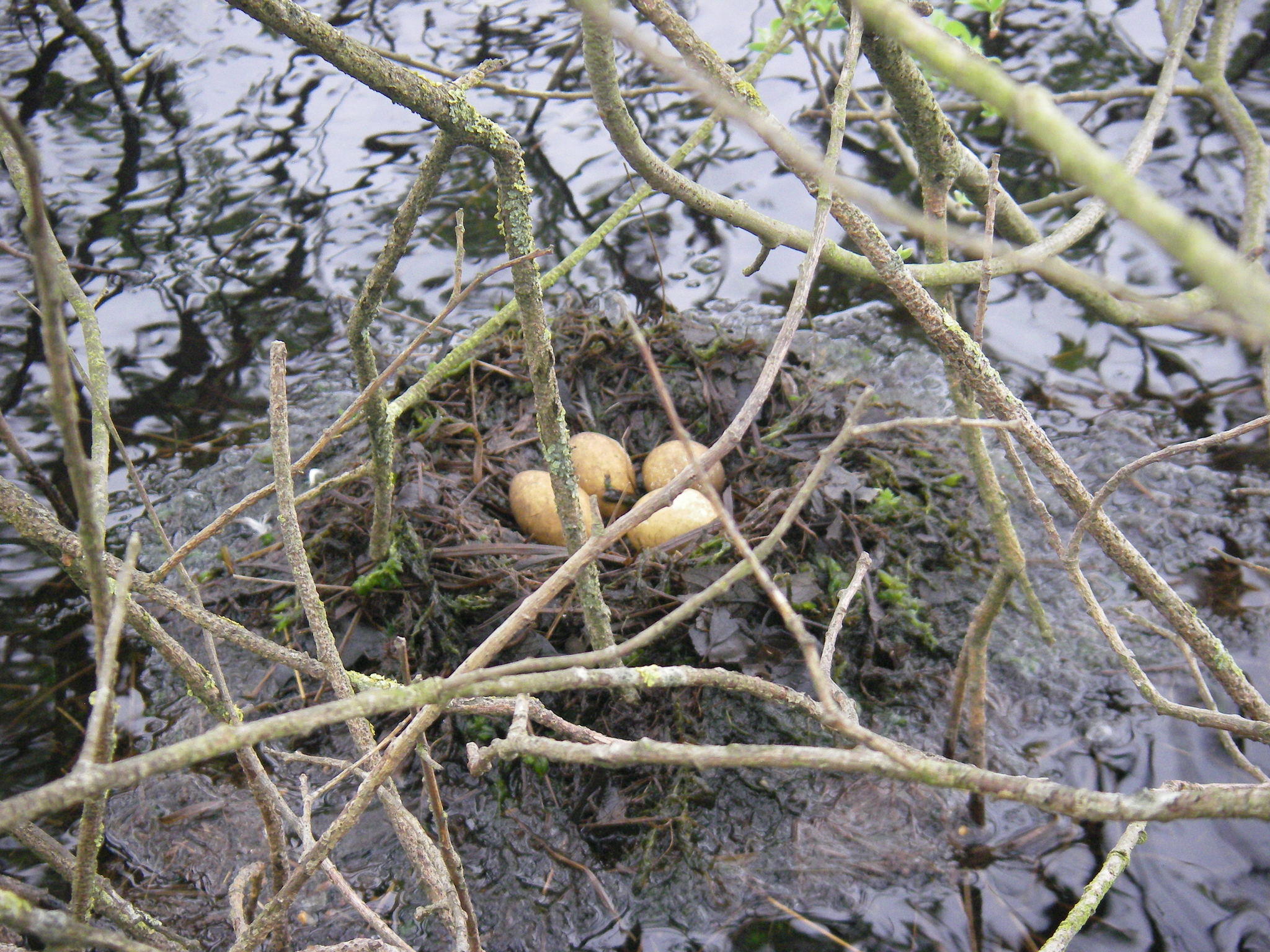
An exceptional swimmer and diver, this grebe pursues fish and aquatic invertebrates underwater with great skill, using submerged vegetation as natural cover to approach prey undetected. Like all grebes, it is poorly adapted for walking on land due to its legs being set very far back on the body, so it nests at the water's edge. The nest is a floating platform anchored to emergent vegetation. Four to seven eggs are laid, and when the adult leaves the nest, it carefully covers the eggs with weeds to conceal them from predators. Chicks are remarkably precocious, leaving the nest and swimming soon after hatching, and they are frequently carried on the backs of swimming adults. In India, breeding coincides with the rainy season.
Conservation
This species is currently assessed as Least Concern by the IUCN, reflecting its extensive range and generally stable population numbers across much of its distribution. Its ability to utilize a variety of freshwater habitats has helped maintain healthy populations, though localized threats from habitat degradation, pollution, and disturbance at breeding sites may affect certain populations.
Culture
The genus name derives from Ancient Greek, meaning 'fast sinker', reflecting this bird's characteristic diving behavior and rapid disappearance beneath the water's surface when disturbed.
Source: Wikipedia · CC BY-SA 3.0
Taxonomy
- Order
- Podicipediformes
- Family
- Podicipedidae
- Genus
- Tachybaptus
- eBird Code
- litgre1
Subspecies (10)
-
Tachybaptus ruficollis albescens
partial resident Caucasus eastward to eastern Kazakhstan, southward to India, Sri Lanka, and Myanmar
-
Tachybaptus ruficollis capensis
Africa, primarily south of the Sahara but breeding north to Egypt in the east; also the Comoros and Madagascar
-
Tachybaptus ruficollis collaris
northeastern New Guinea to Bougainville (northern Solomon Islands)
-
Tachybaptus ruficollis cotabato
Mindanao (southern Philippines)
-
Tachybaptus ruficollis iraquensis
Iraq and southwestern Iran
-
Tachybaptus ruficollis philippensis
northern Philippines
-
Tachybaptus ruficollis poggei
partial resident southeastern to northeastern Asia including Kurile Islands, Japan, Hainan, and Taiwan
-
Tachybaptus ruficollis ruficollis
partial resident Europe eastward to the Ural Mountains, wintering southward to Egypt; also breeds northwestern Africa from Western Sahara eastward to Tunisia; populations in Libya and the Nile Delta not assigned to subspecies
-
Tachybaptus ruficollis tricolor
Sulawesi to New Guinea and Lesser Sundas
-
Tachybaptus ruficollis vulcanorum
Java to Tanimbar
Data Sources
Species description from Wikipedia, licensed under CC BY-SA 3.0.
Bird images and sounds sourced from GBIF, contributed by citizen scientists worldwide under Creative Commons licenses.
Taxonomy data from AviList 2025.