Yellow-browed Tit
Sylviparus modestus
黄眉林雀
Introduction
A small songbird in the Paridae family, monotypic in genus Sylviparus. It is the smallest member of its family, measuring 9-10 cm in length and weighing 5-9 g. Native to the southern Himalayas, Northeast India, and southern China, with smaller populations in Southeast Asia. Inhabits subtropical or tropical moist lowland and montane forests.
Description
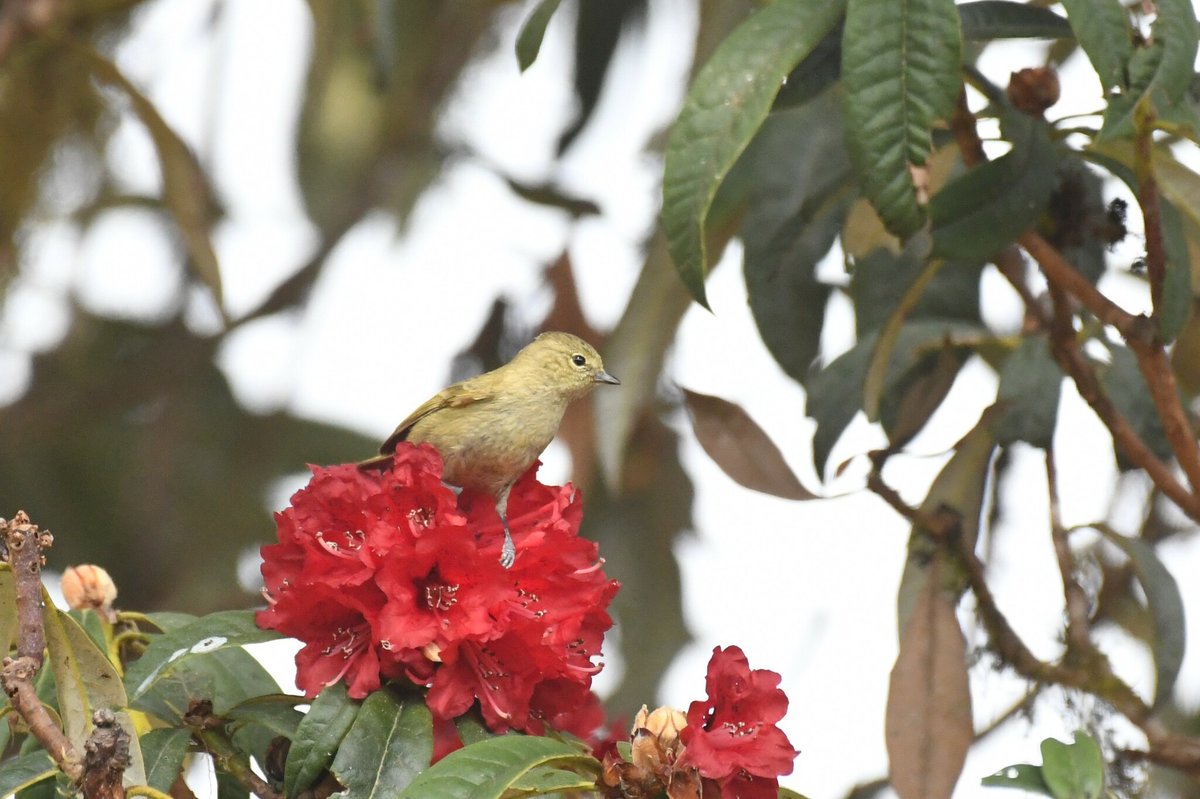
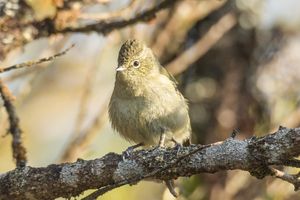
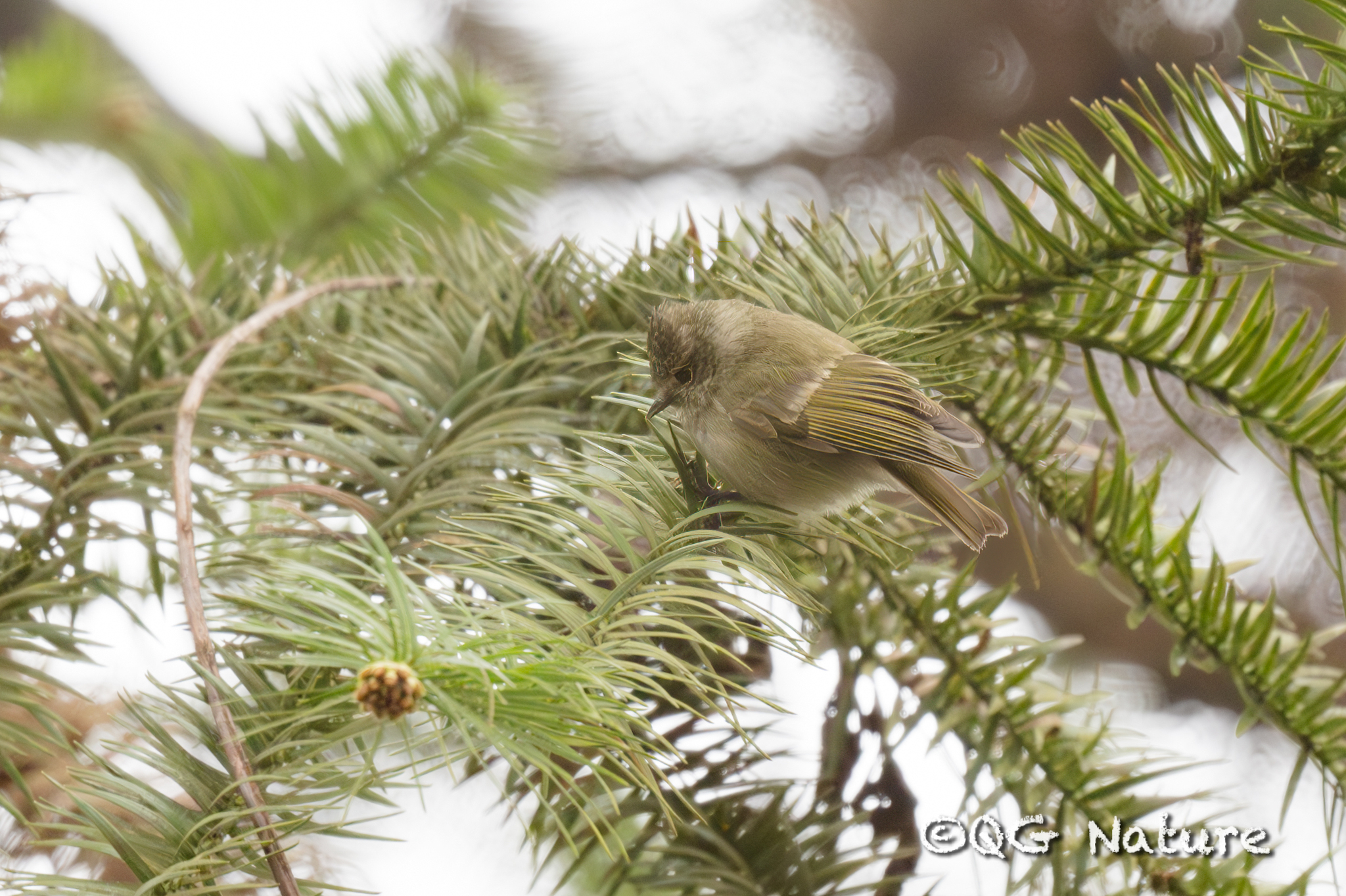
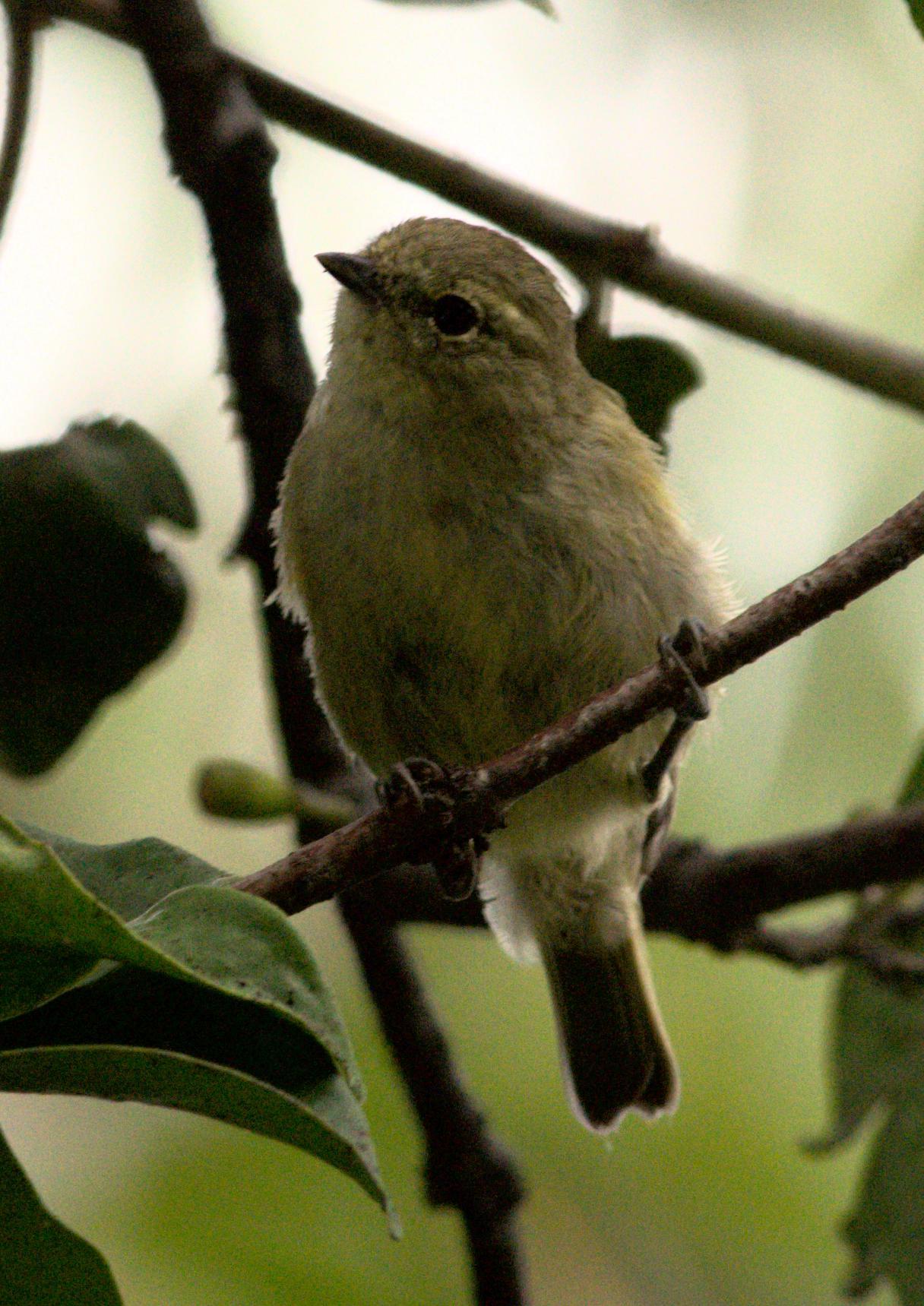
A diminutive tit with a small bill, short tail, and strong legs. Upperparts are olive-green from crown to back, with a slightly greyer forehead. The face shows olive-green plumage with yellow flecks, featuring a faint yellow line above the eye and a thin yellow eye-ring. Wings and tail are greyish brown with green edges and a faint yellow at the tail base. Underparts are dull olive-yellow, paler on the belly. Sexes are identical. Juveniles resemble adults but have more pointed tail feathers. Plumage appears duller when worn, with reduced eyebrow marking and browner wings.
Distribution & Habitat
Ranges across the southern Himalayas, Northeast India, and southern China, with smaller populations in Southeast Asia. Inhabits temperate mountain forests, favoring oak and mixed tree types at higher elevations where it frequents mossy forests and scrub near the tree line. In southern China, it occupies spruce and fir forests. Outside the breeding season, it moves to deciduous and evergreen forests, gardens, and hillside bushes at lower elevations: 1200-2400 m in Western Kashmir; 1500-2800 m, occasionally to 4265 m, in Nepal; and down to 900 m in the Eastern Himalayas.
Behavior & Ecology
Diet is poorly documented but likely includes small invertebrates, larvae, and some seeds. Forages actively in the middle and upper levels of trees and tall bushes, moving quickly and restlessly while sometimes hanging from twigs and leaves. In autumn and winter, joins mixed flocks with Green-backed Tits, Black-throated Tits, various Babblers, Eurasian Treecreepers, Goldcrests, and Blyths leaf-warblers. Breeding occurs from April to May, typically seen alone, in pairs, or small groups. Clutch size is four to six eggs. Both parents feed chicks and exhibit defensive behavior when protecting young.
Conservation
No IUCN assessment or conservation status mentioned in source material.
Source: Wikipedia · CC BY-SA 3.0
Taxonomy
- Order
- Passeriformes
- Family
- Paridae
- Genus
- Sylviparus
- eBird Code
- yebtit3
Vocalizations
Subspecies (3)
-
Sylviparus modestus klossi
southern Vietnam (Da Lat Plateau)
-
Sylviparus modestus modestus
Nepal to northeastern India, northern Myanmar, southwestern China, Thailand, and northern Laos
-
Sylviparus modestus simlaensis
western Himalayas (Kashmir to Uttar Pradesh)
Data Sources
Species description from Wikipedia, licensed under CC BY-SA 3.0.
Bird images and sounds sourced from GBIF, contributed by citizen scientists worldwide under Creative Commons licenses.
Taxonomy data from AviList 2025.