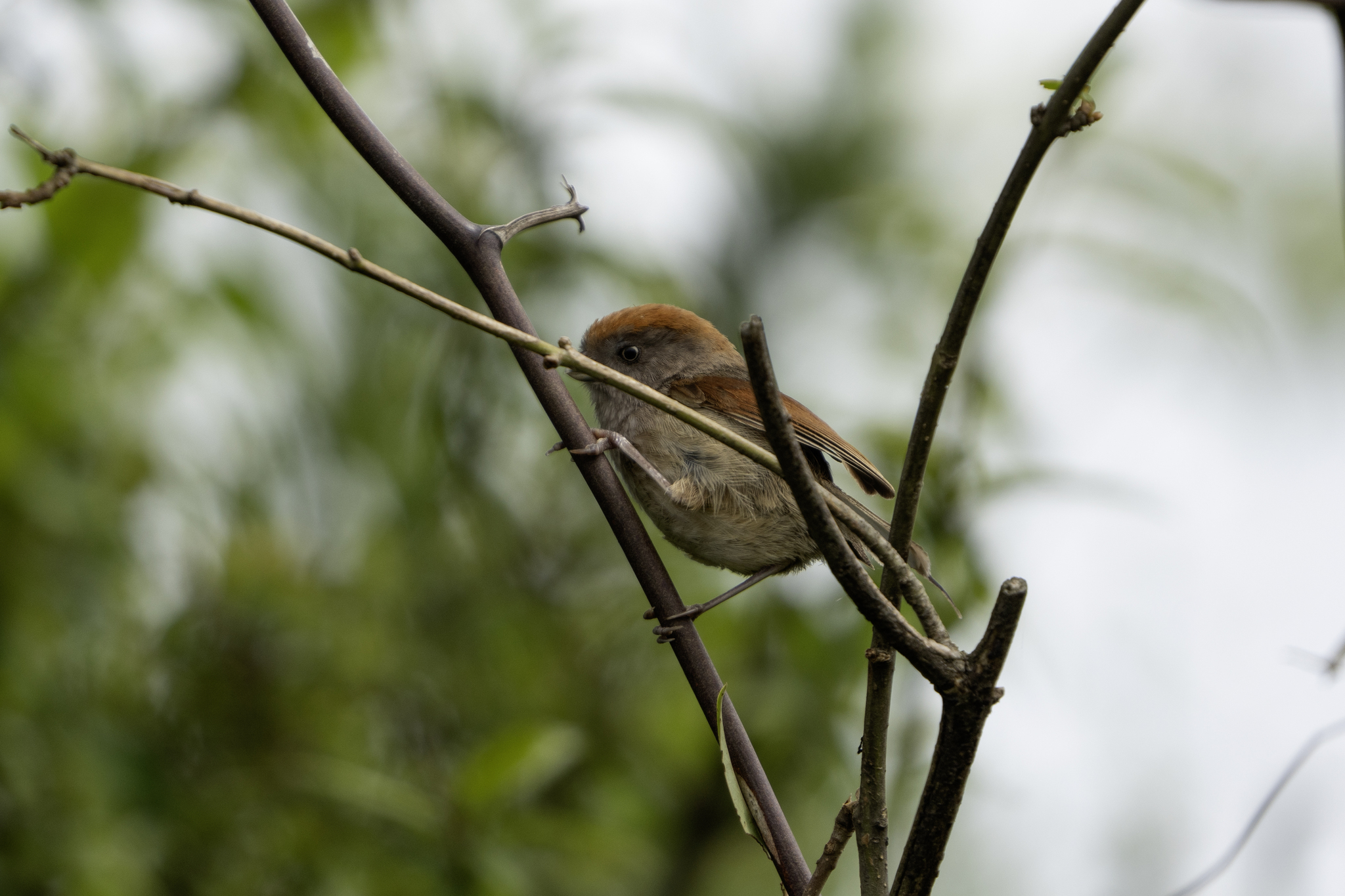
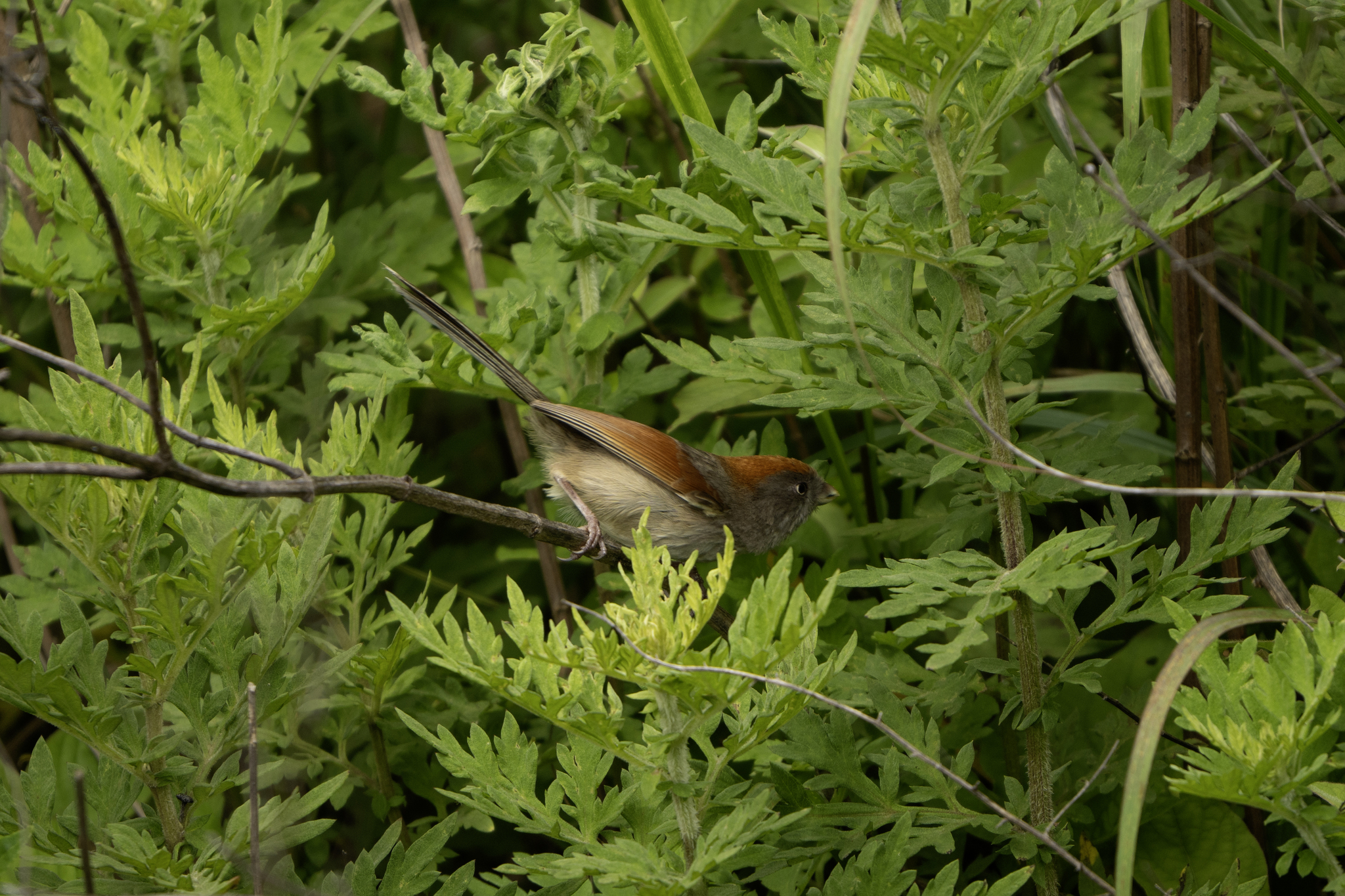
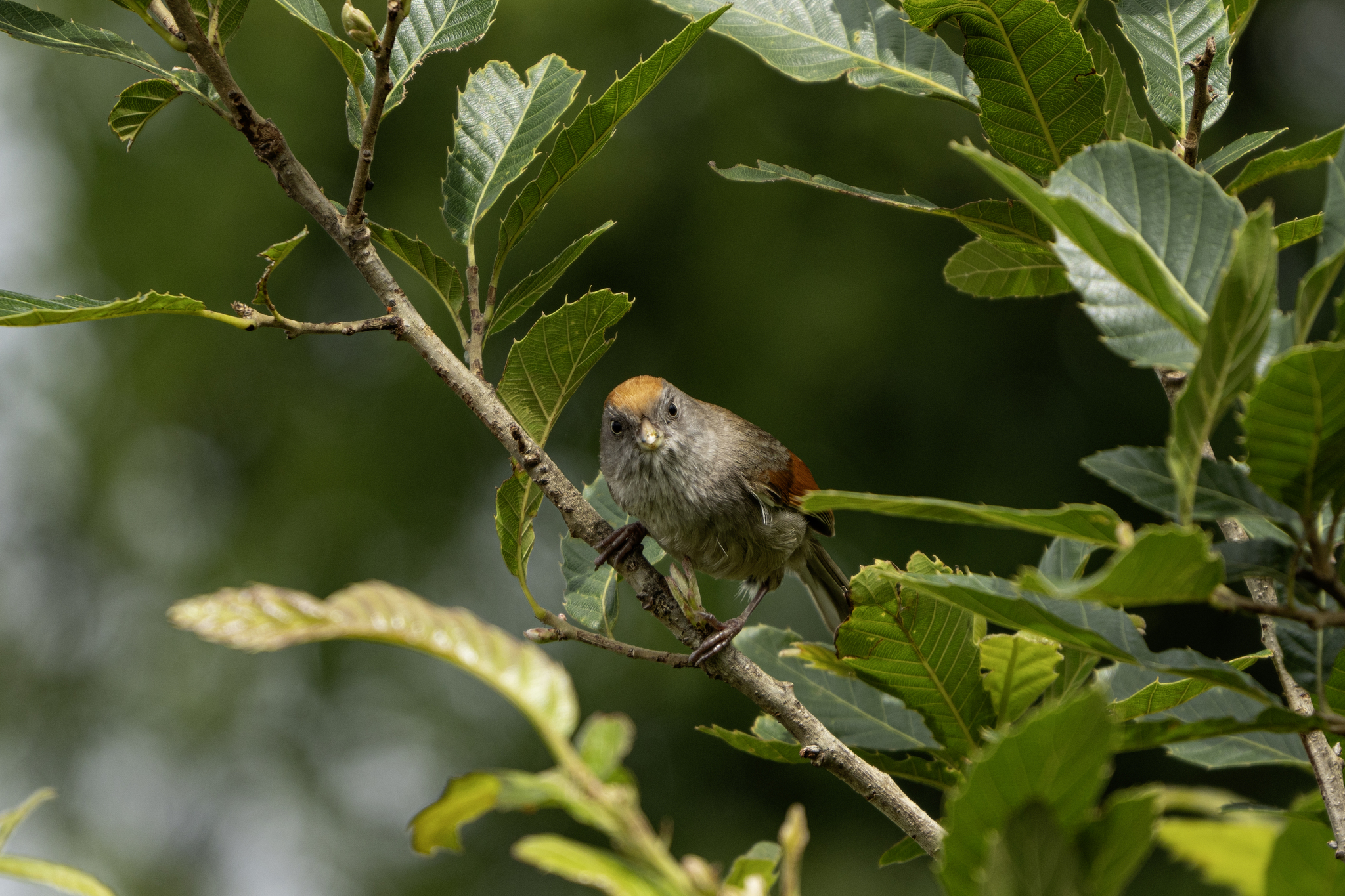
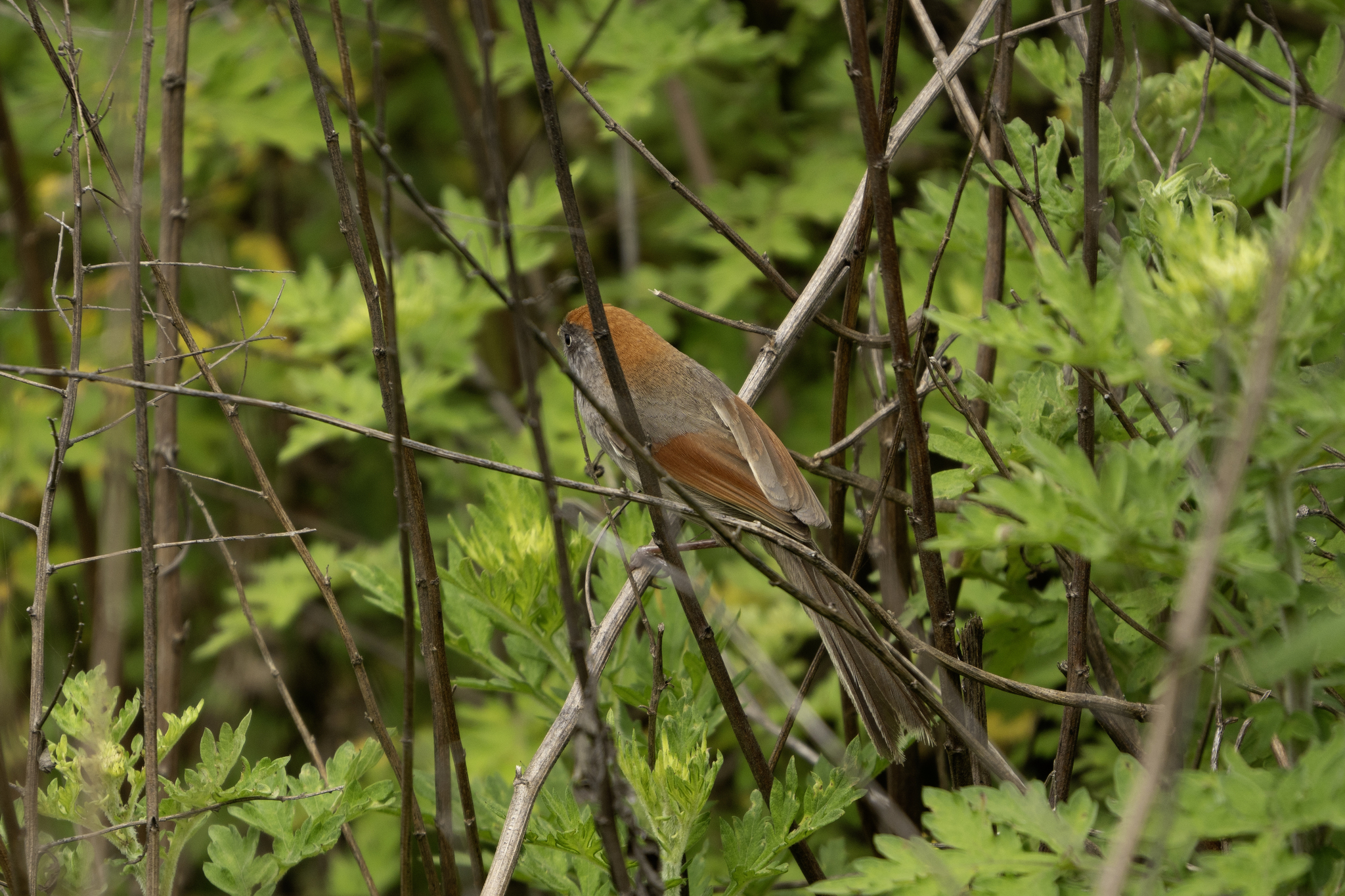
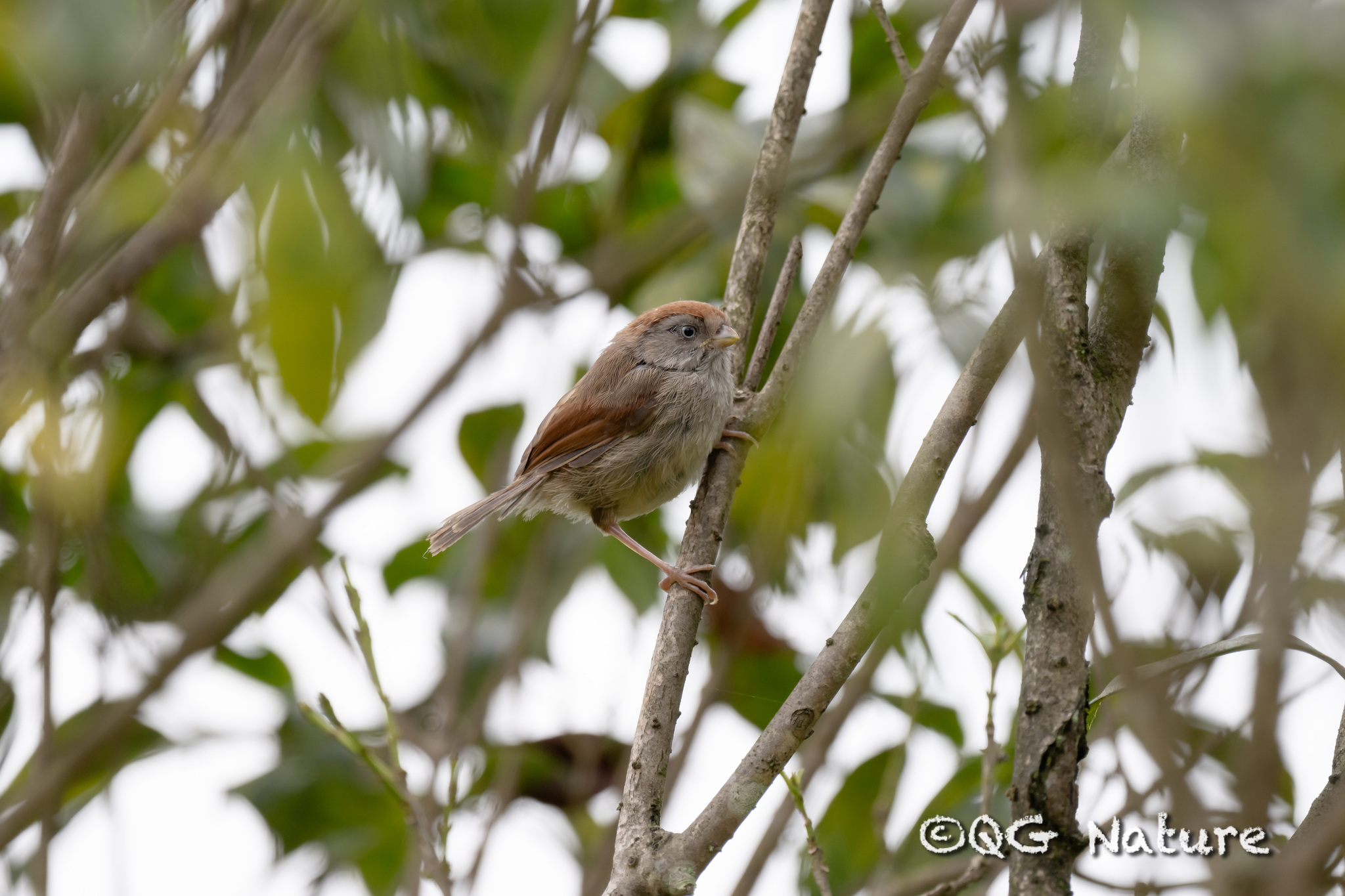
Ashy-throated Parrotbill
Suthora alphonsiana
灰喉鸦雀
Introduction
A small passerine bird in the parrotbill family Paradoxornithidae. Native range extends from southwest China to northern Vietnam, with an introduced population established in northern Italy since the late 1990s. Inhabits bamboo stands, tall grasses, and reed beds, feeding on arthropods, seeds, and buds. Adaptations include a large, conical bill suited to a granivorous diet and habitat specialization in wetland environments. Classified as Least Concern by the IUCN due to considerable range and remote habitat availability.
Description
A medium-sized parrotbill with distinctive tawny-brown plumage throughout most of the body. Possesses the characteristic robust, parrot-like bill that defines the parrotbill family, relatively large compared to body size. Underparts typically show slightly paler coloring than the upperparts, though overall coloration remains uniform tawny-brown. Wings are relatively short and rounded, suited for maneuvering through dense vegetation.
Identification
Similar to other Asian parrotbill species, particularly the vinous-throated parrotbill (S. webbiana) and brown-winged parrotbill (S. brunnea). The Italian population presents identification challenges, as individuals may represent S. alphonsiana, S. webbiana, or hybrids between them. Definitive species identification requires molecular analysis of both nuclear and mitochondrial DNA. Differs from the great parrotbill (Conostoma oemodium) in size and plumage coloration. The ashy-throated name does not reliably indicate throat coloration in field conditions.
Distribution & Habitat
Native distribution spans southwest China through northern Vietnam. An introduced, self-sustaining population exists in northern Italy, first discovered in 1995 at the Riserva naturale Palude Brabbia between Cazzago Brabbia on Lago di Varese and Varano Borghi on Lago di Comabbio. The Italian population expanded to at least 100 individuals by 1999 and became well-established as resident breeders. This represents the only self-sustaining parrotbill population in Europe.
Behavior & Ecology
Omnivorous diet consisting of arthropods, seeds, and buds; winter diet in Italy consists primarily of insects hibernating within reed stalks. Inhabits dense vegetation of reed beds and tall grassy areas, including common reed beds mixed with meadowsweet, grey willow, and giant goldenrod in Italian introduced range. Eggs are small by parrotbill standards, whitish to light blue in color, and unspotted. Social behavior typical of reed-dwelling passerines, moving through dense vegetation in small groups.
Conservation
IUCN Red List assessment: Least Concern. Primary threat is wetland drainage and habitat destruction. However, the species has a considerable range encompassing remote habitats that remain relatively inaccessible. Population in Italy has proven self-sustaining since discovery, representing a range expansion rather than decline. No specific conservation measures in place given current assessment status.
Culture
No specific cultural or folklore information documented in available sources.
Source: Wikipedia · CC BY-SA 3.0
Taxonomy
- Order
- Passeriformes
- Family
- Paradoxornithidae
- Genus
- Suthora
- eBird Code
- astpar1
Subspecies (4)
-
Suthora alphonsiana alphonsiana
central Sichuan (central China)
-
Suthora alphonsiana ganluoensis
Ganluo County (south-central Sichuan, central China)
-
Suthora alphonsiana stresemanni
south-central China
-
Suthora alphonsiana yunnanensis
southern China and northern Vietnam
Data Sources
CBR Notes: 由Sinosuthora属移入Suthora属(Cai et al. 2019)
Species description from Wikipedia, licensed under CC BY-SA 3.0.
Bird images and sounds sourced from GBIF, contributed by citizen scientists worldwide under Creative Commons licenses.
Taxonomy data from AviList 2025.