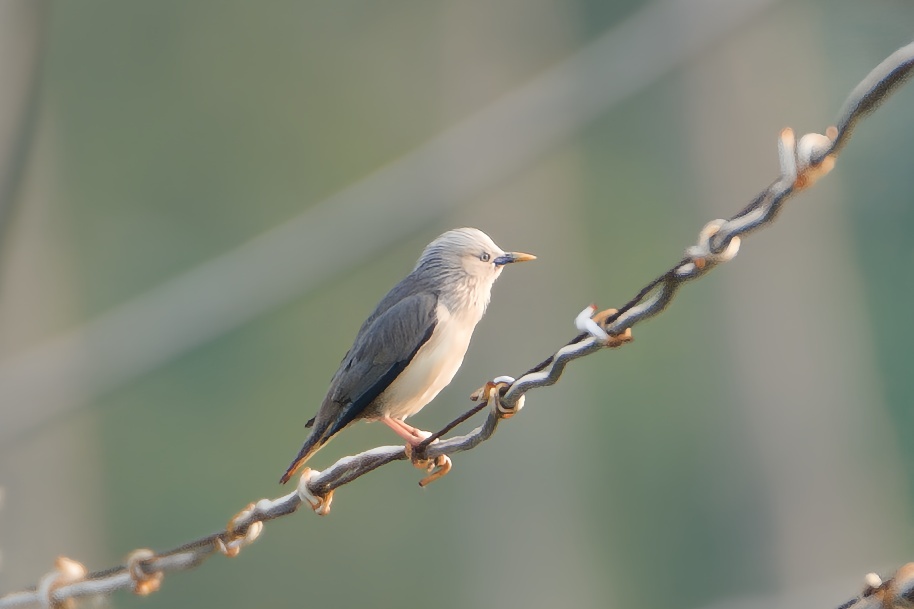
Passeriformes / Sturnidae / Sturnia
Chestnut-tailed Starling
Sturnia malabarica · 灰头椋鸟
Introduction
Member of the starling family found in wooded habitats in India and Southeast Asia. It is a resident or partially migratory species. The taxon formerly known as subspecies blythii is now treated as a full species, the Malabar starling.
Description
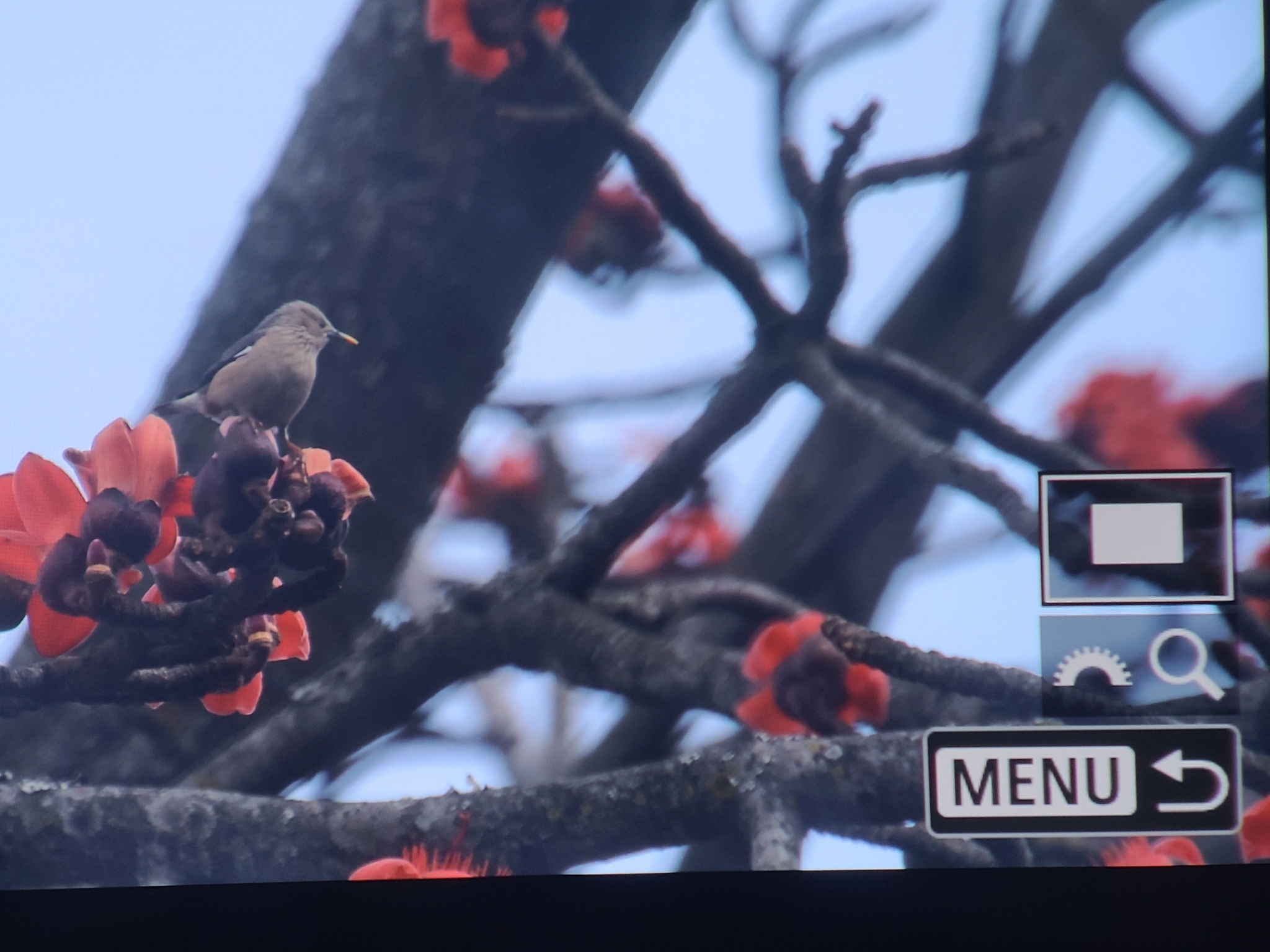
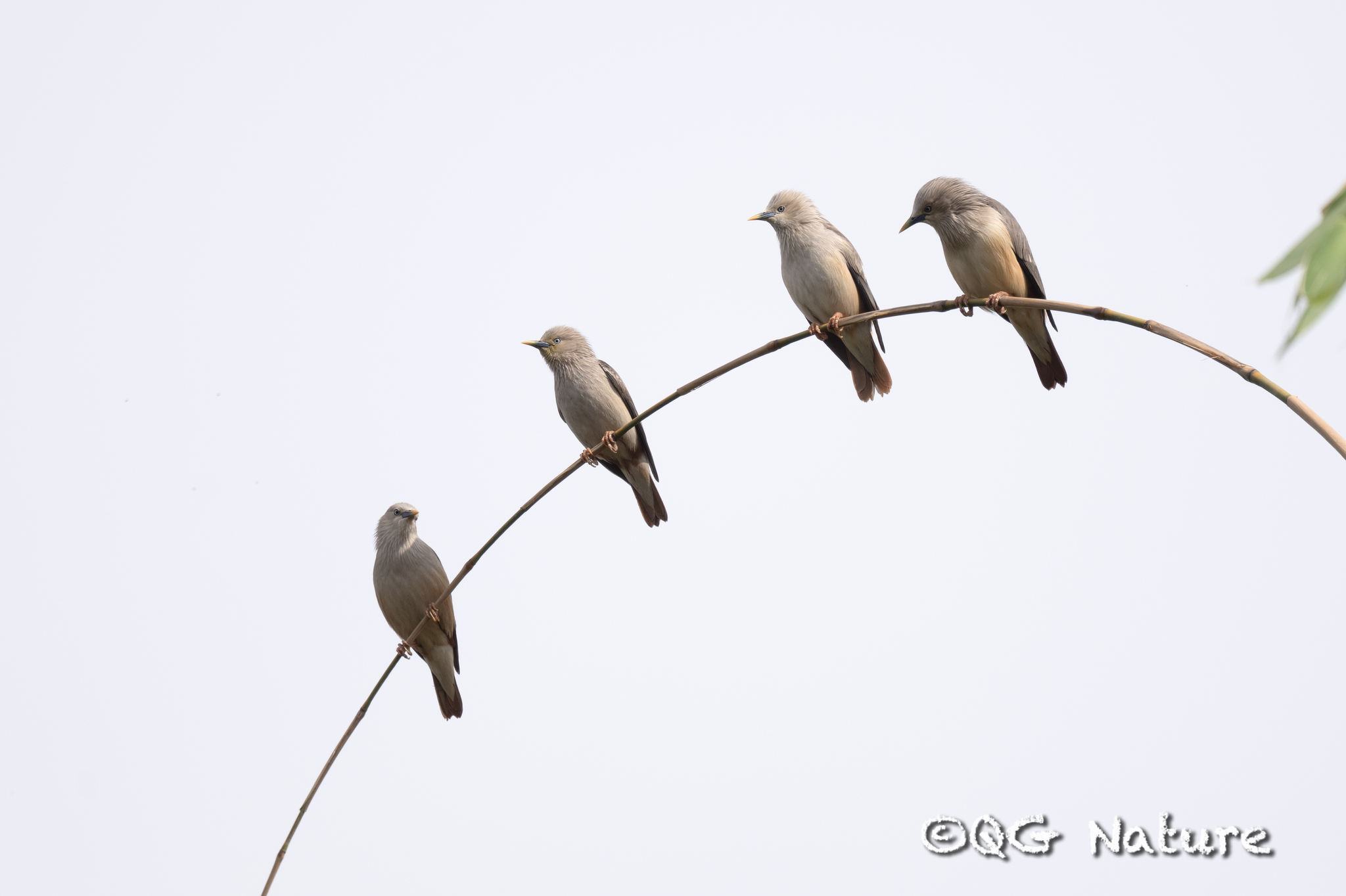
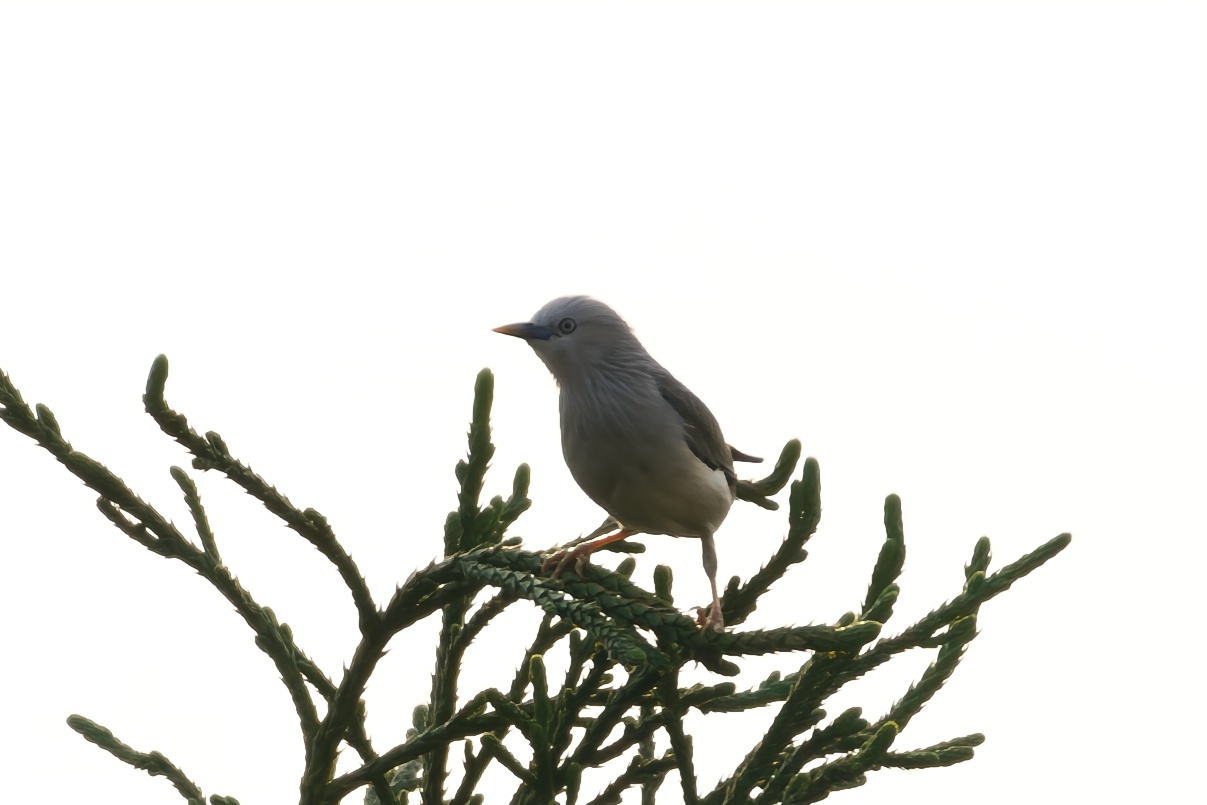
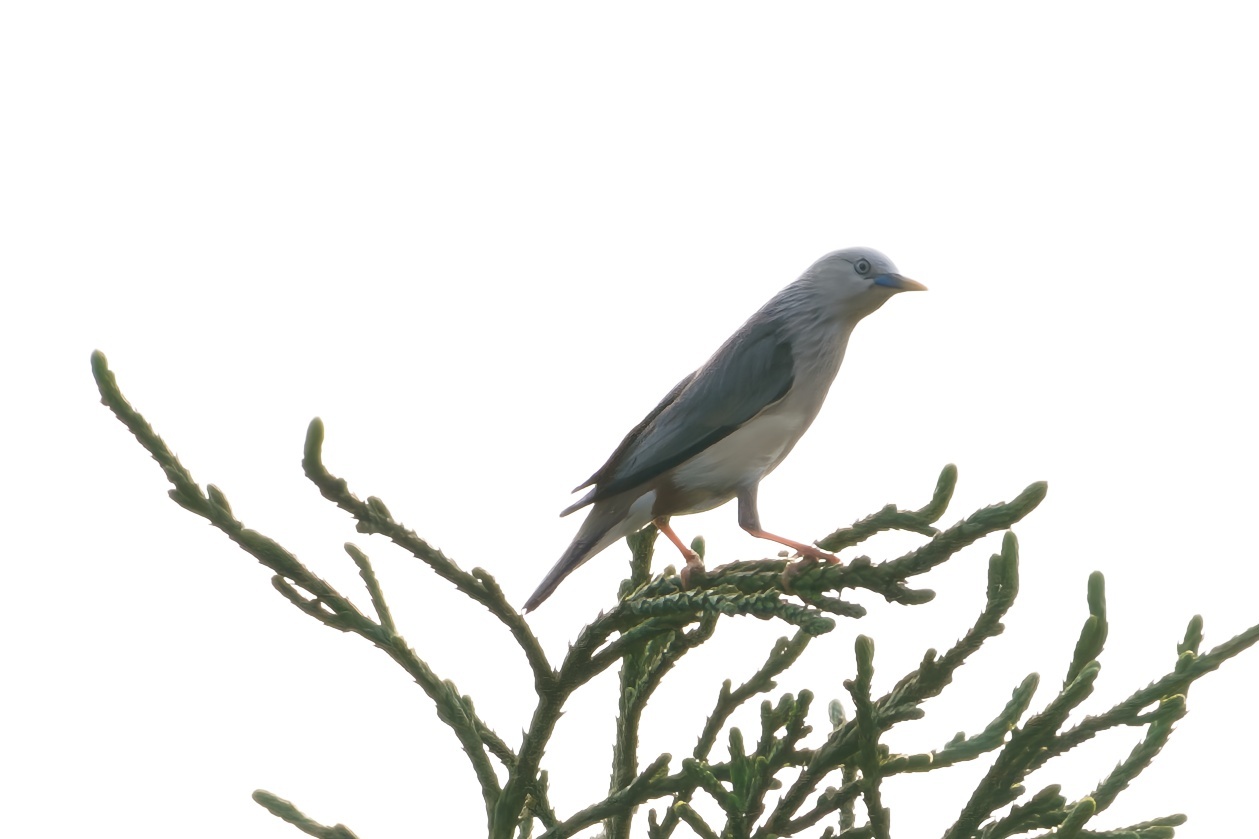
Adults have a total length of approximately 20 cm (7.9 in). They feature grey upperparts, blackish remiges, white irises, and a yellow bill with a pale blue base. The nominate subspecies and nemoricola have a light grey head with whitish streaking on the crown and collar. Underparts are rufous in the nominate subspecies, while nemoricola has whitish underparts tinged rufous on the flanks and crissum. Sexes are similar. Juveniles have whitish underparts and chestnut tips to the tail feathers.
Distribution & Habitat
Found in India (except southwest and northeast), south Nepal, Bangladesh, south Assam, Myanmar, and north to central Indochina. Two subspecies are recognized: S. m. malabarica and S. m. nemoricola. The species performs some poorly understood movements, with records from Pakistan and central and southern India. It acts as a winter visitor to peninsular India.
Behavior & Ecology
Nests in open woodland and cultivation, utilizing old barbet or woodpecker holes in tree trunks 3–12 m (9.8–39.4 ft) high. The nesting season is usually March to June, with a normal clutch of 3-5 pale blue, unmarked eggs. Omnivorous diet includes fruit, nectar, and insects. Flies in tight flocks that rapidly change directions with great synchrony.
Source: Wikipedia · CC BY-SA 3.0
Taxonomy
- Order
- Passeriformes
- Family
- Sturnidae
- Genus
- Sturnia
Vocalizations
Subspecies (3)
-
Sturnia malabarica blythii
southwestern India
Data Sources
Species description from Wikipedia, licensed under CC BY-SA 3.0.
Bird images and sounds sourced from GBIF, contributed by citizen scientists worldwide under Creative Commons licenses.
Taxonomy data from AviList 2025.