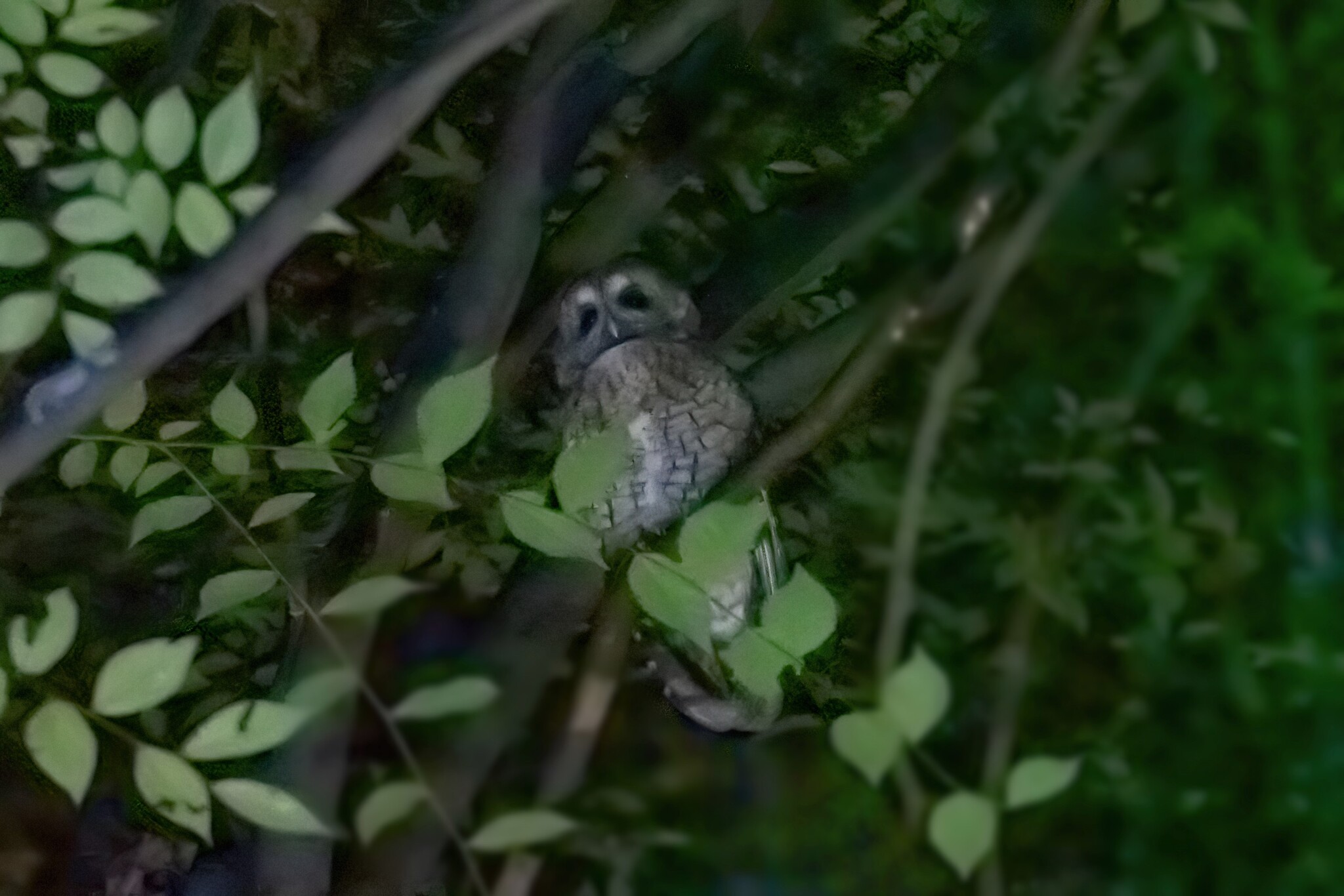
Strigiformes / Strigidae / Strix
Himalayan Owl
Strix nivicolum · 灰林鸮
Introduction
Medium-sized owl in the family Strigidae, genus Strix. Native to forests and mountain ranges of the Himalayas, Taiwan, and Korea. Nocturnal and rarely seen. Listed as Least Concern on the IUCN Red List due to large range and slow population decline.
Description
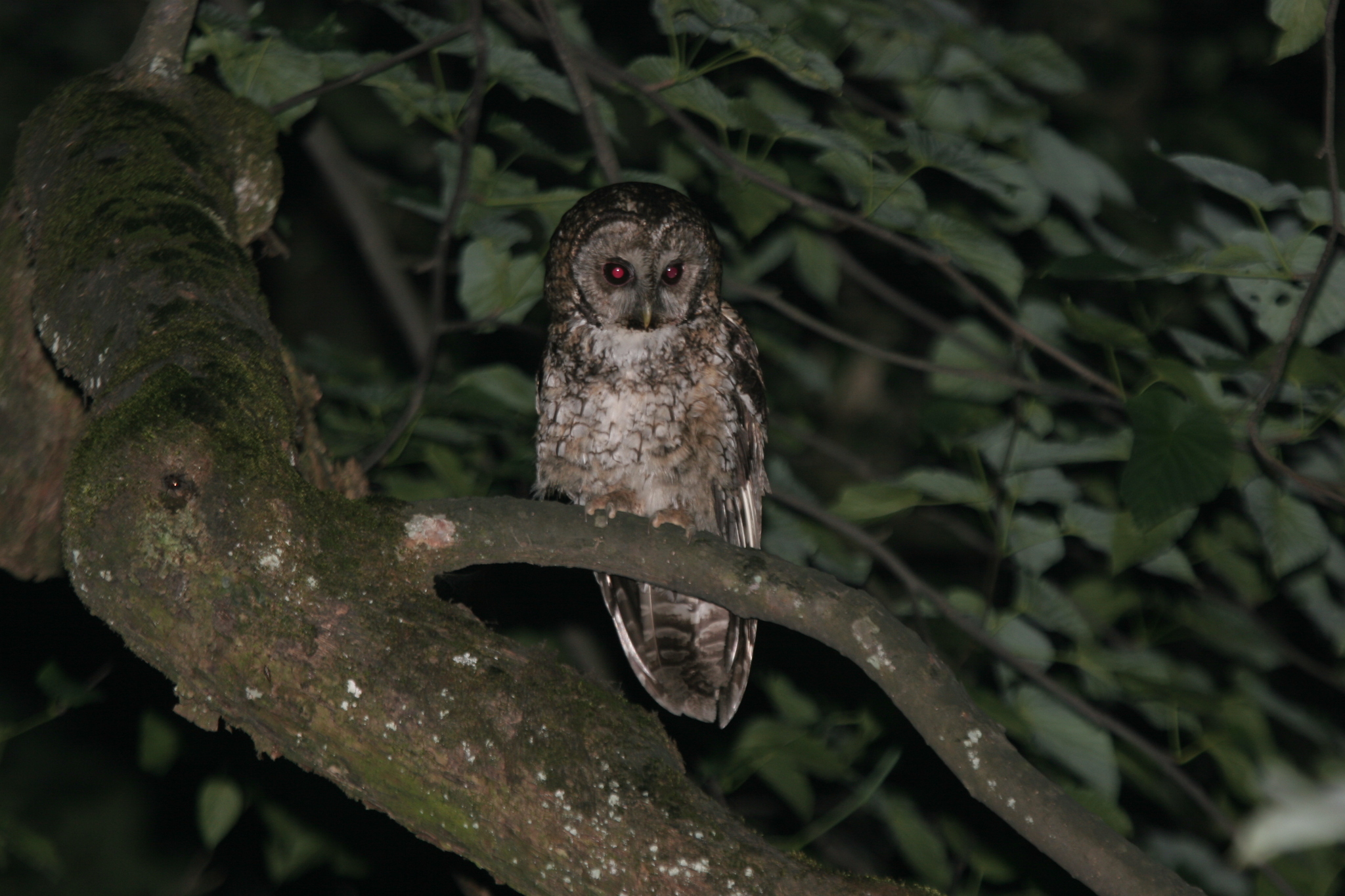
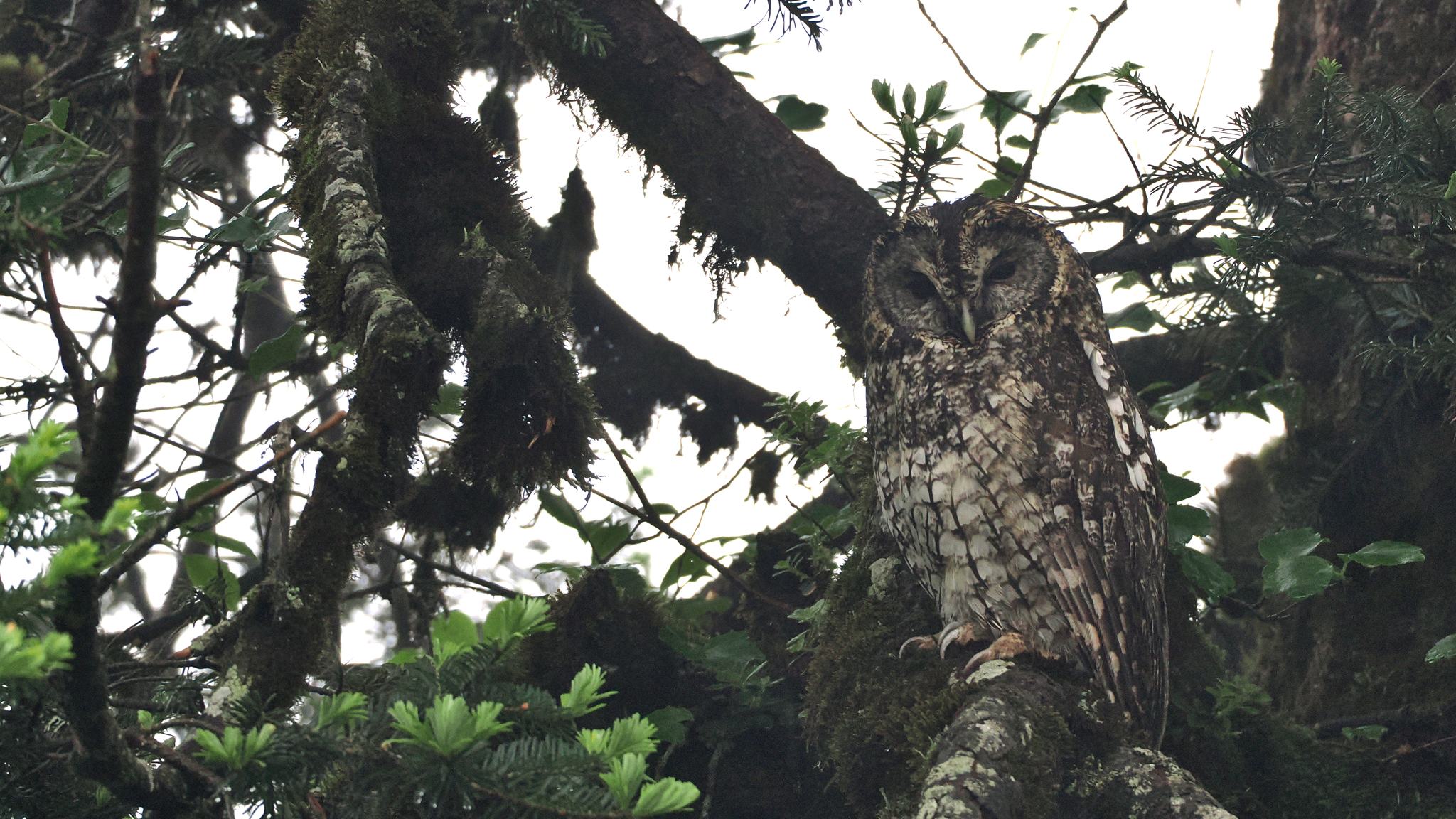
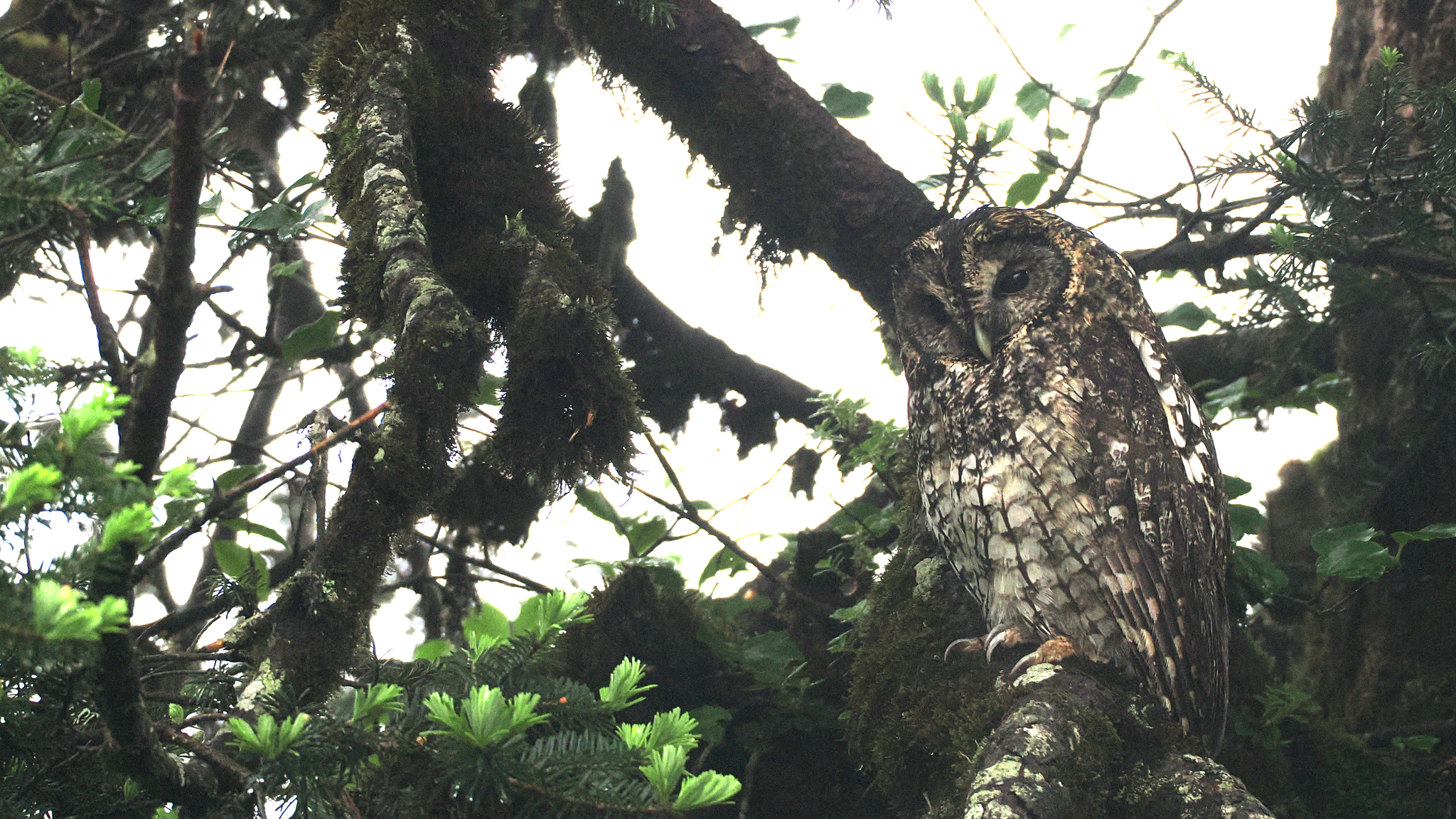
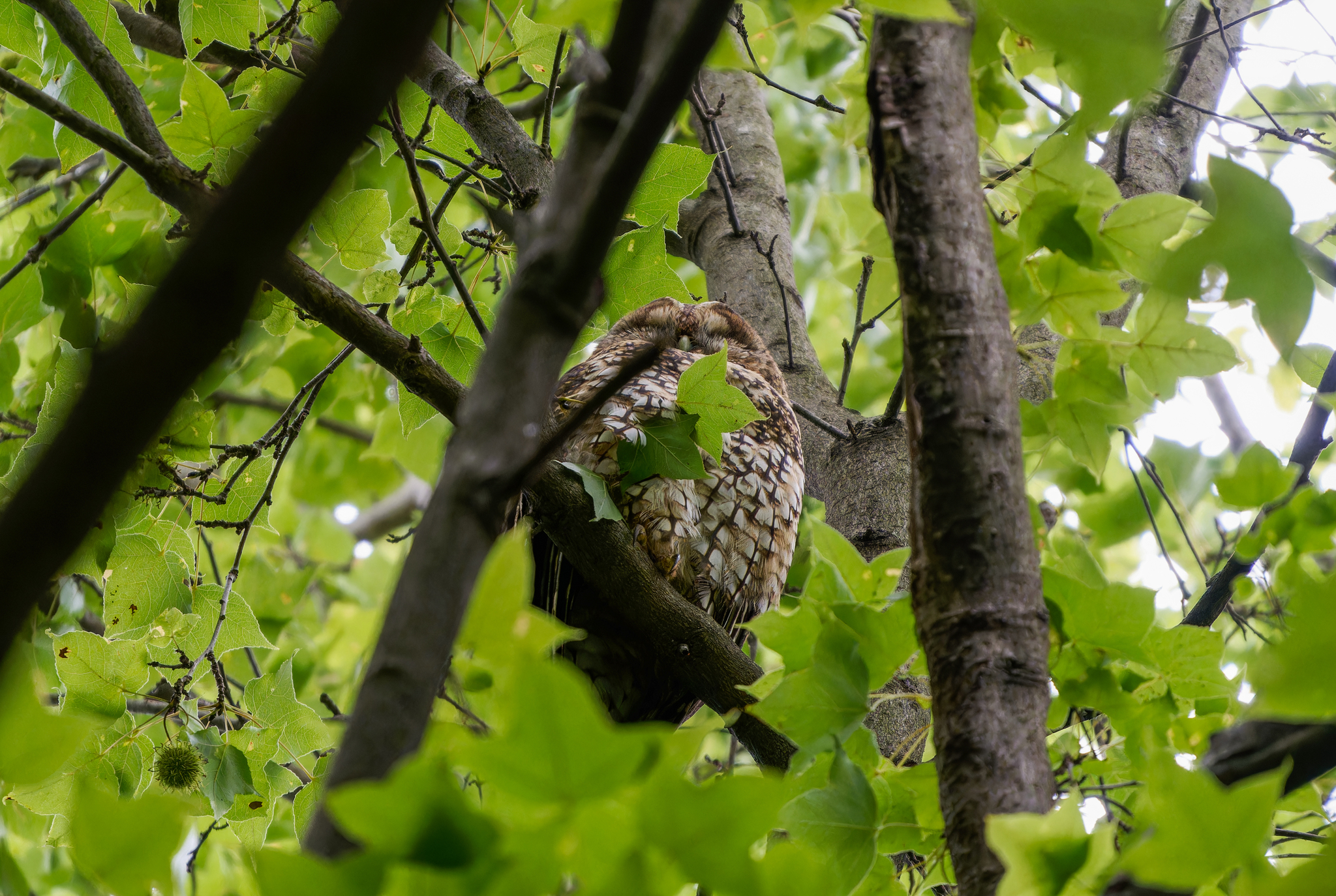
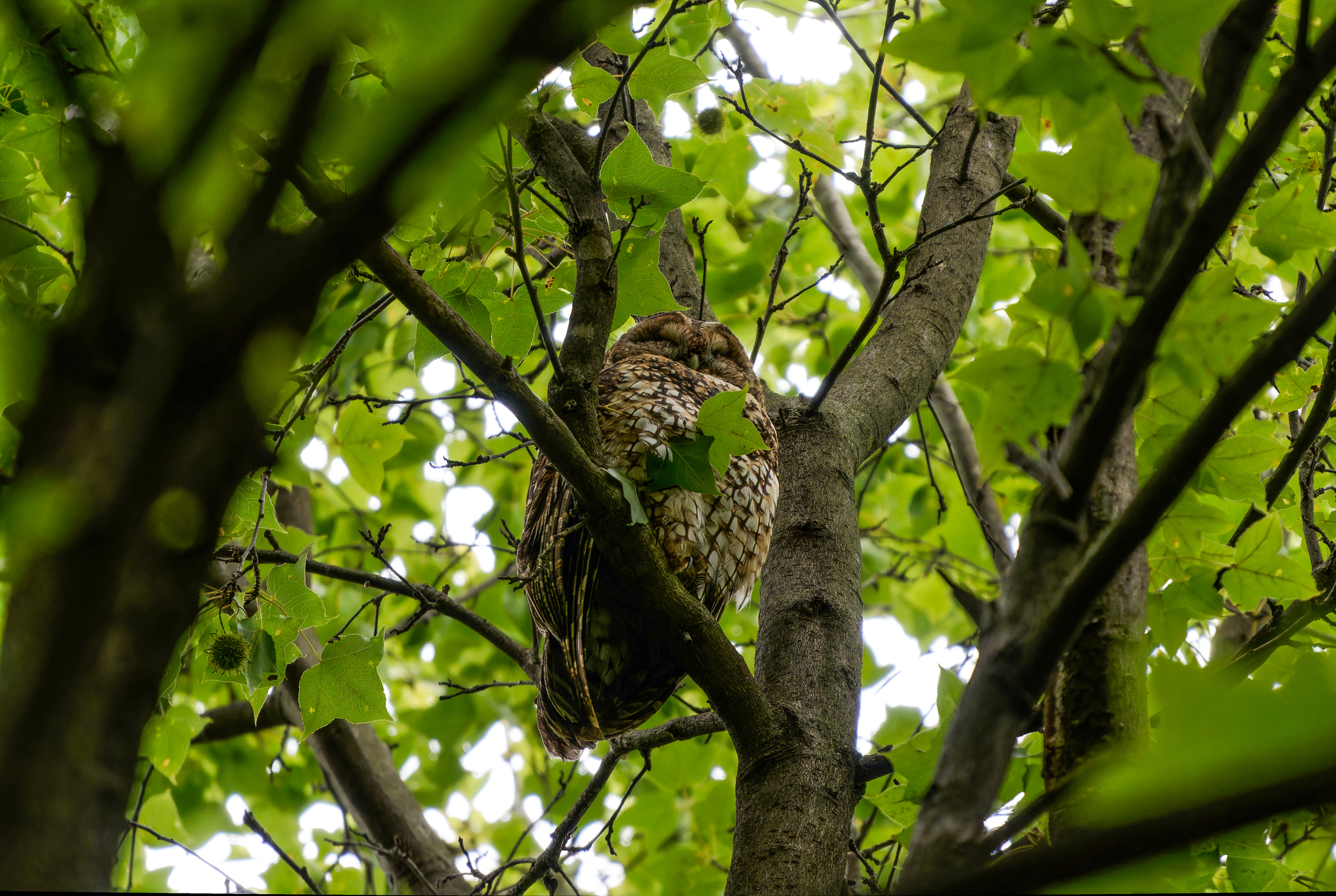
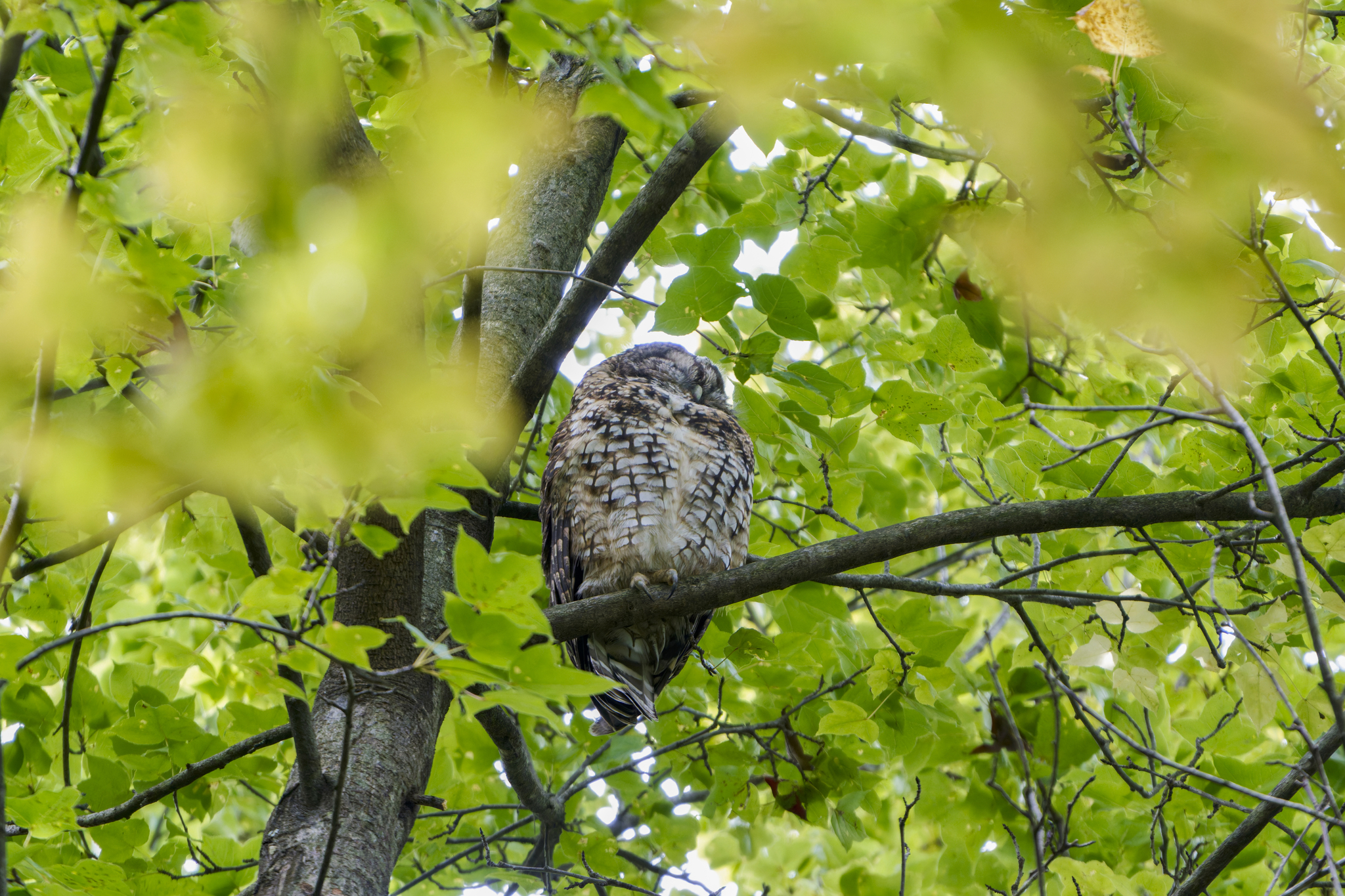
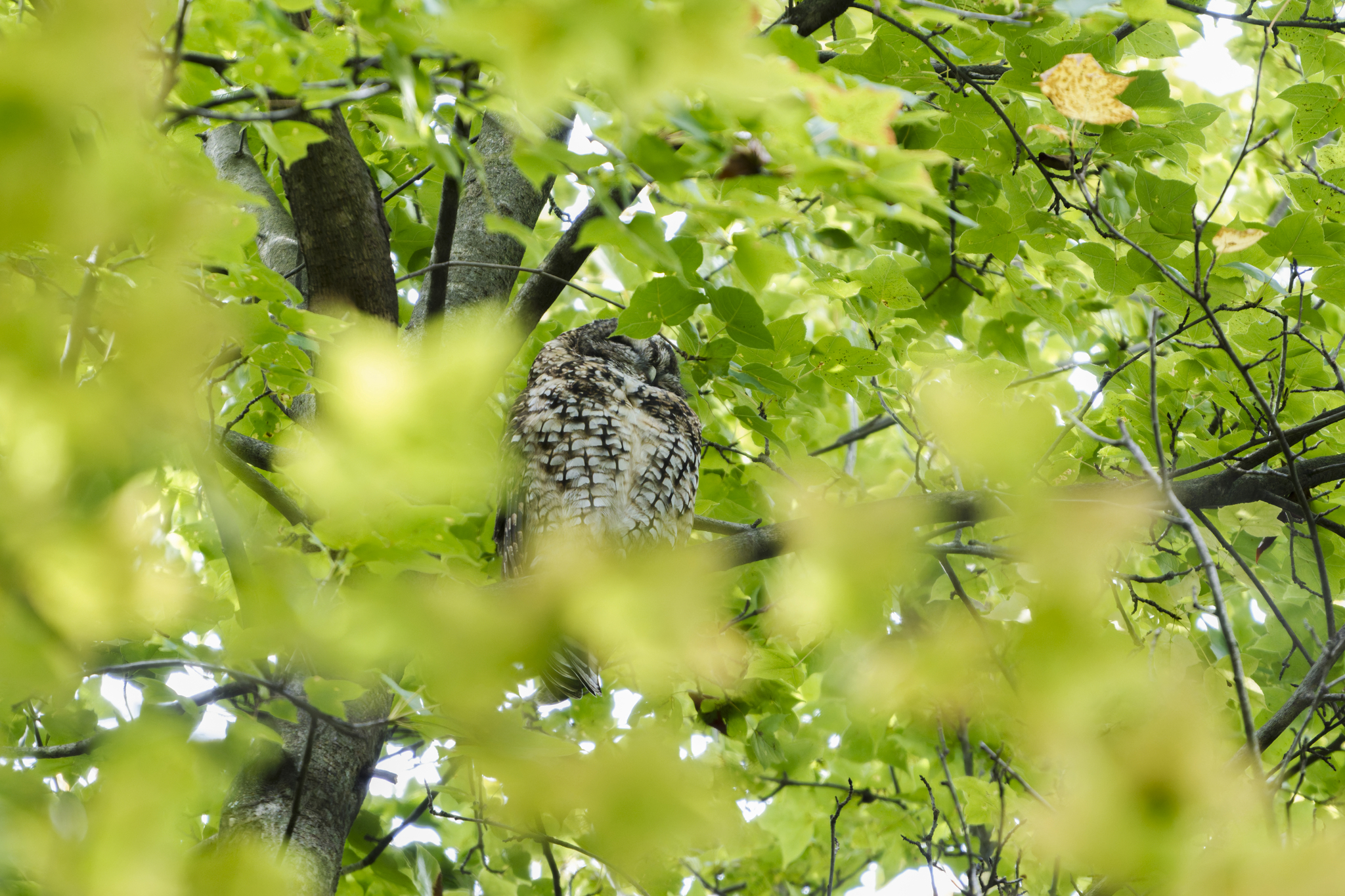
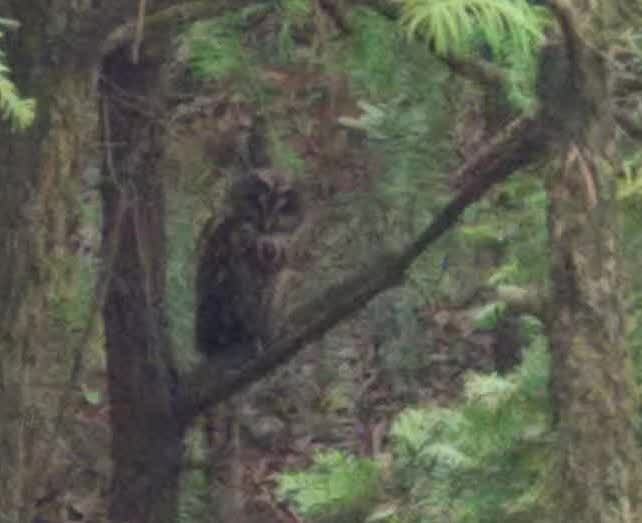
Measures 35–40 cm with a wingspan of approximately 270 mm. Plumage is warm-toned and tawny with light brown, dark brown, and white coloring. Chest features light brown and white with vertical dark brown stripes; wings and tail are darker with white horizontal bands and light patches at tips. Head is round, dark brown with lighter speckling, and lacks ear tufts. Face is paler with a small, hooked, yellow beak. Males and females are morphologically similar. Juveniles resemble adults but have slight white barring on the dark crown.
Identification
Three subspecies show distinct traits: S. n. nivicolum has a larger wingspan up to 312 mm; S. n. ma has a thin light brown facial ring and lighter, greyer body; S. n. yamadae is smaller with a wingspan around 256 mm, yellow nape, black spots, darker face, and paler throat. Vocalizations include a dove-like 'coo-coo' song, a loud high-pitched 'whoo' call, and a three-hoot mating signal.
Distribution & Habitat
Range includes northern Pakistan, northern India, Tibet, Bhutan, Nepal, northern Myanmar, Hebei, Jinan, Shandong provinces of China, Korean peninsula, and Taiwanese mountain ranges. Inhabits coniferous and oak forests and rocky ravines. Generally stationary but descends to lower elevations in winter.
Behavior & Ecology
Nocturnal generalist feeder hunting insects, small birds, and small mammals, primarily rodents like shrews and mice. Nests in tree cavities or rock crevices from late winter through spring. Lays an average of 3 eggs. Both parents incubate and care for young. Chicks fledge around 28 days post-hatching. Uses man-made nest boxes where natural cavities are scarce.
Conservation
Listed as Least Concern on the IUCN Red List. Population estimated to have declined by 1–19% over three generations due to an 8.7% loss of tree cover. Threats include deforestation and artificial filling of tree cavities, particularly in South Korea.
Source: Wikipedia · CC BY-SA 3.0
Taxonomy
- Order
- Strigiformes
- Family
- Strigidae
- Genus
- Strix
Subspecies (3)
-
Strix nivicolum ma
northeastern China and Korea
Data Sources
Species description from Wikipedia, licensed under CC BY-SA 3.0.
Bird images and sounds sourced from GBIF, contributed by citizen scientists worldwide under Creative Commons licenses.
Taxonomy data from AviList 2025.