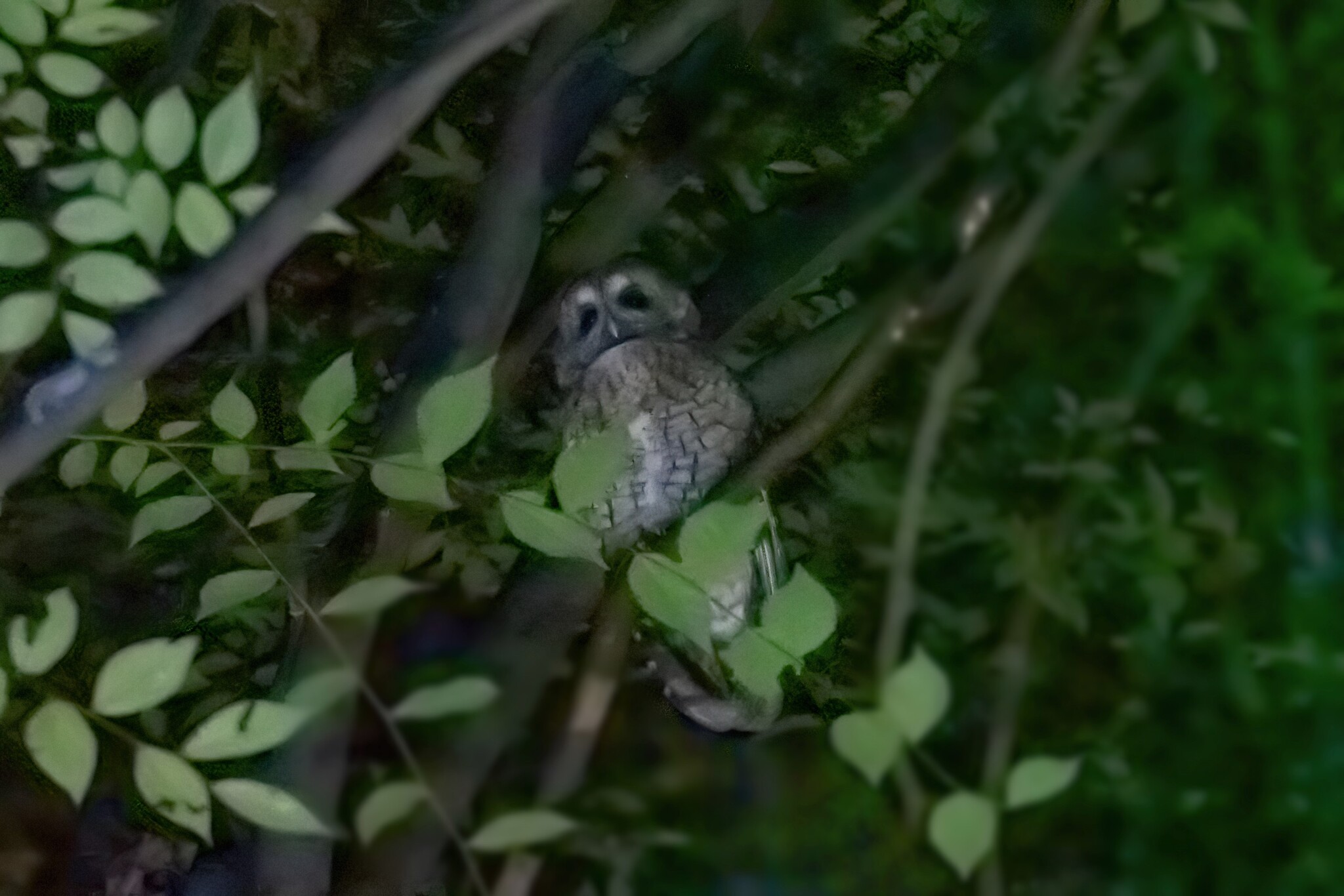
Himalayan Owl
Strix nivicolum
灰林鸮
Introduction
Strix nivicolum is a medium-sized owl species in the Strigidae family, native to the forests and mountain ranges of the Himalayas, Taiwan, and Korea. Once classified as a subspecies of the tawny owl, it was elevated to species status due to genetic diversity, geographic differences, darker plumage, shorter tail, and distinct vocalizations. The species is nocturnal and rarely observed across most of its range. Despite population declines from habitat degradation, it is listed as Least Concern on the IUCN Red List due to its extensive range and slow rate of decrease.
Description
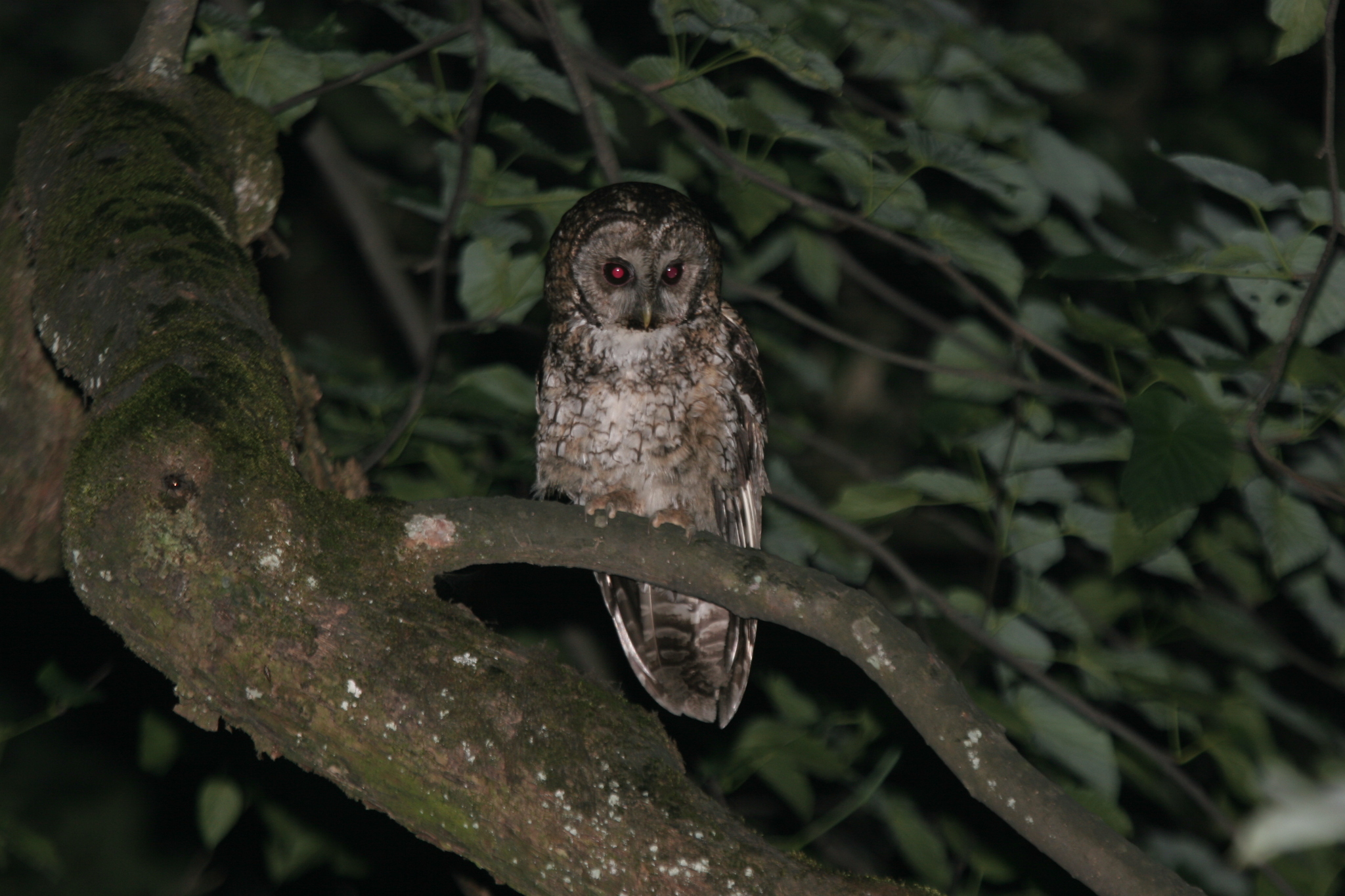
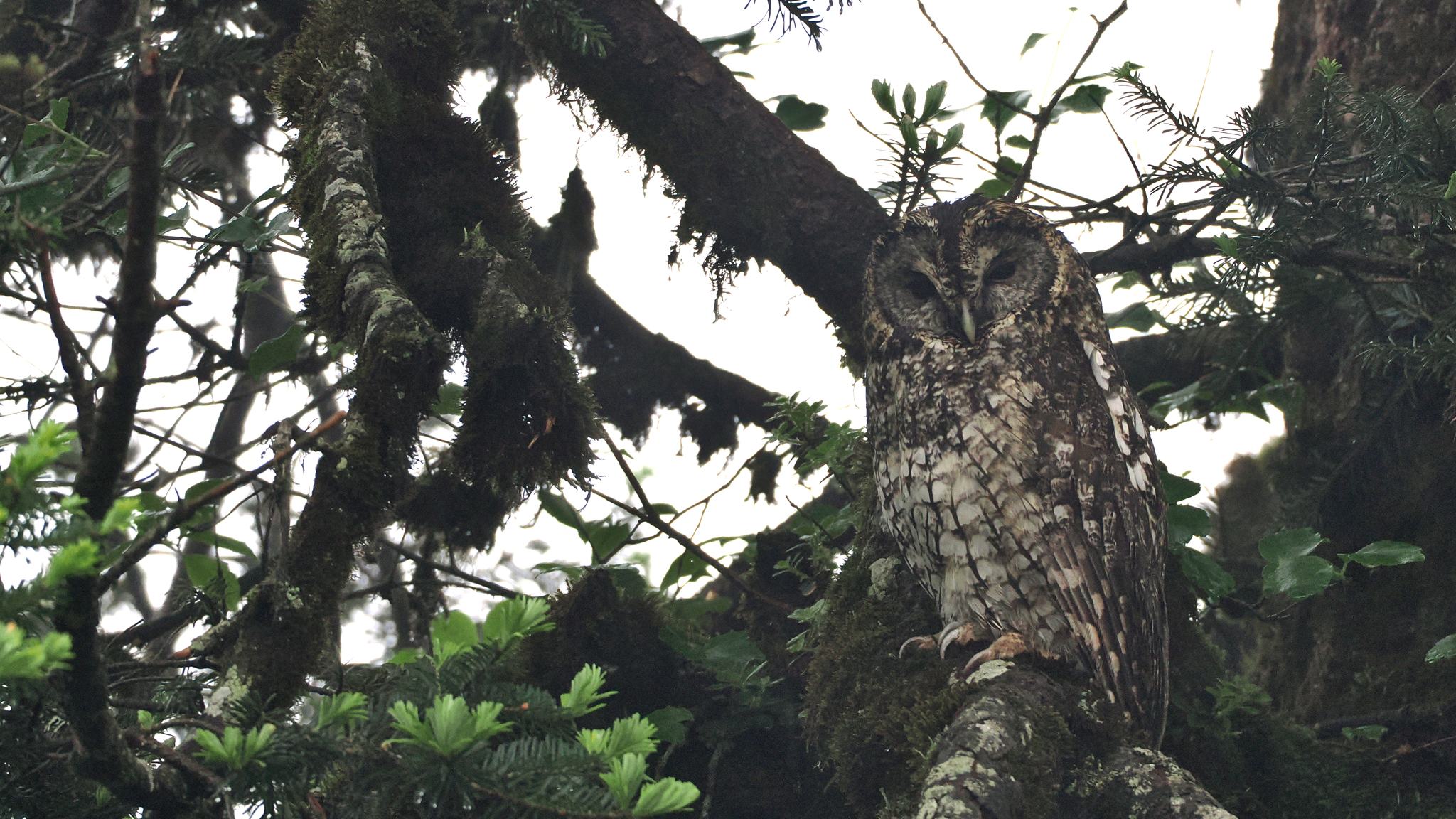
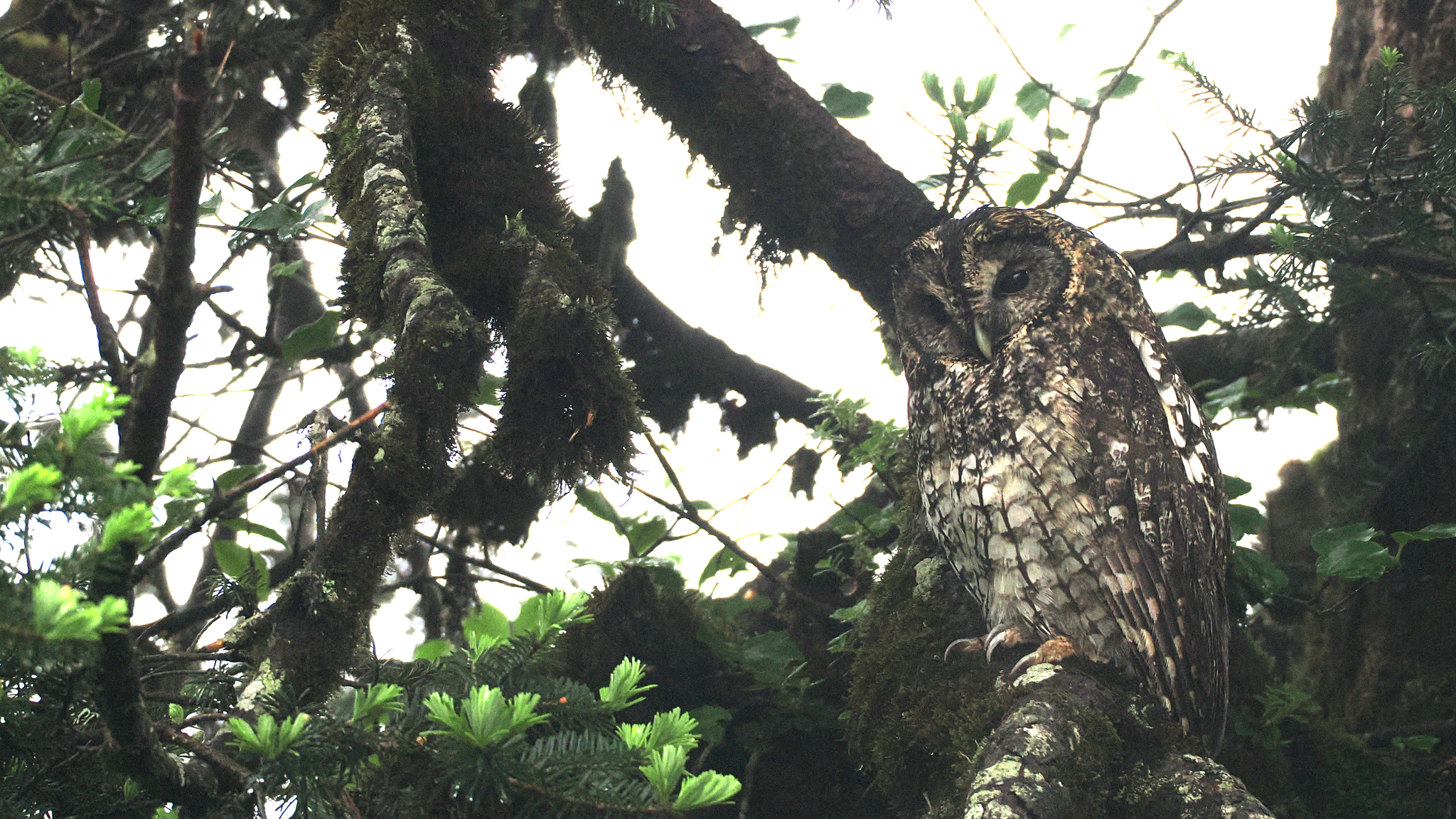
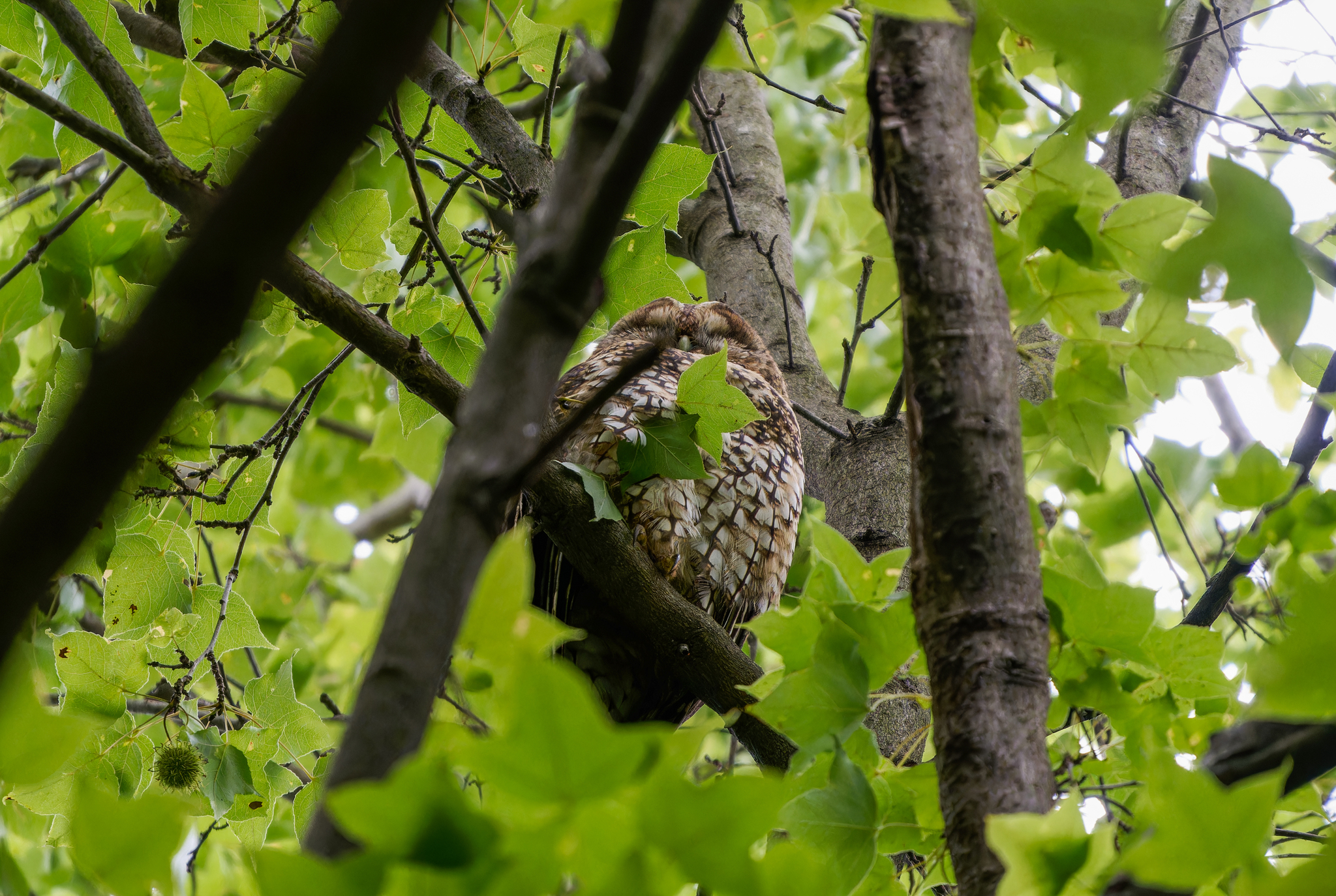
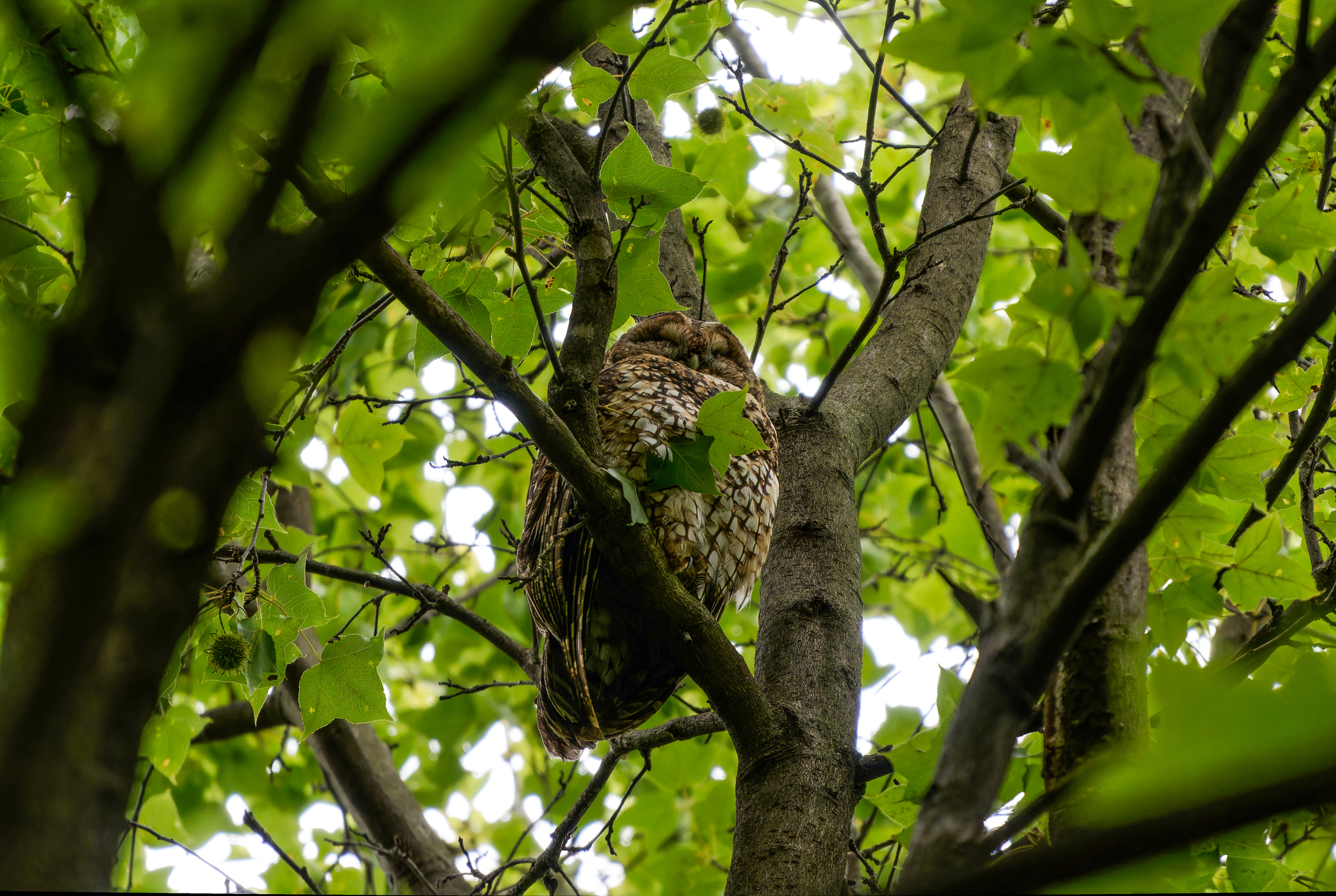
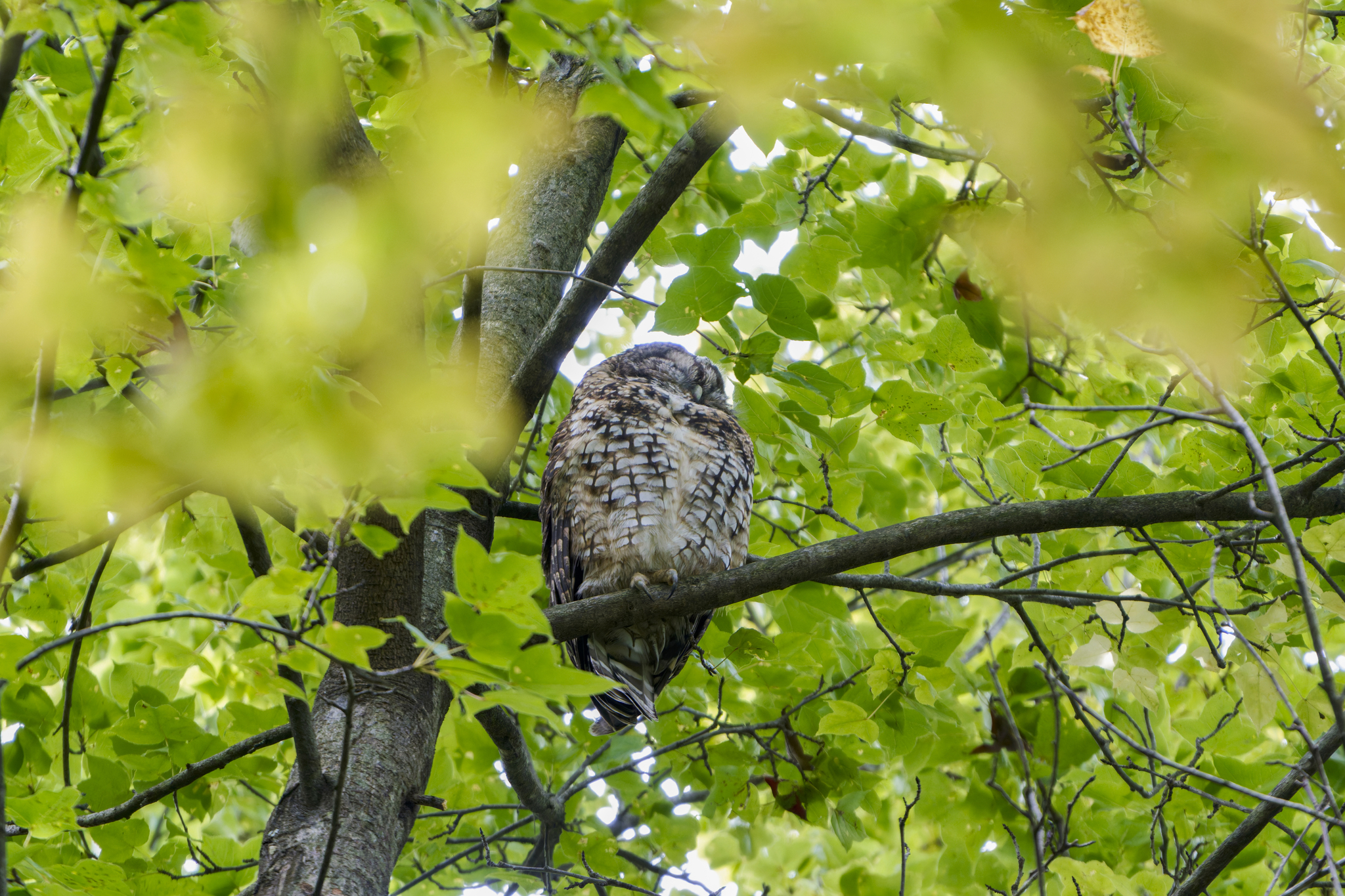
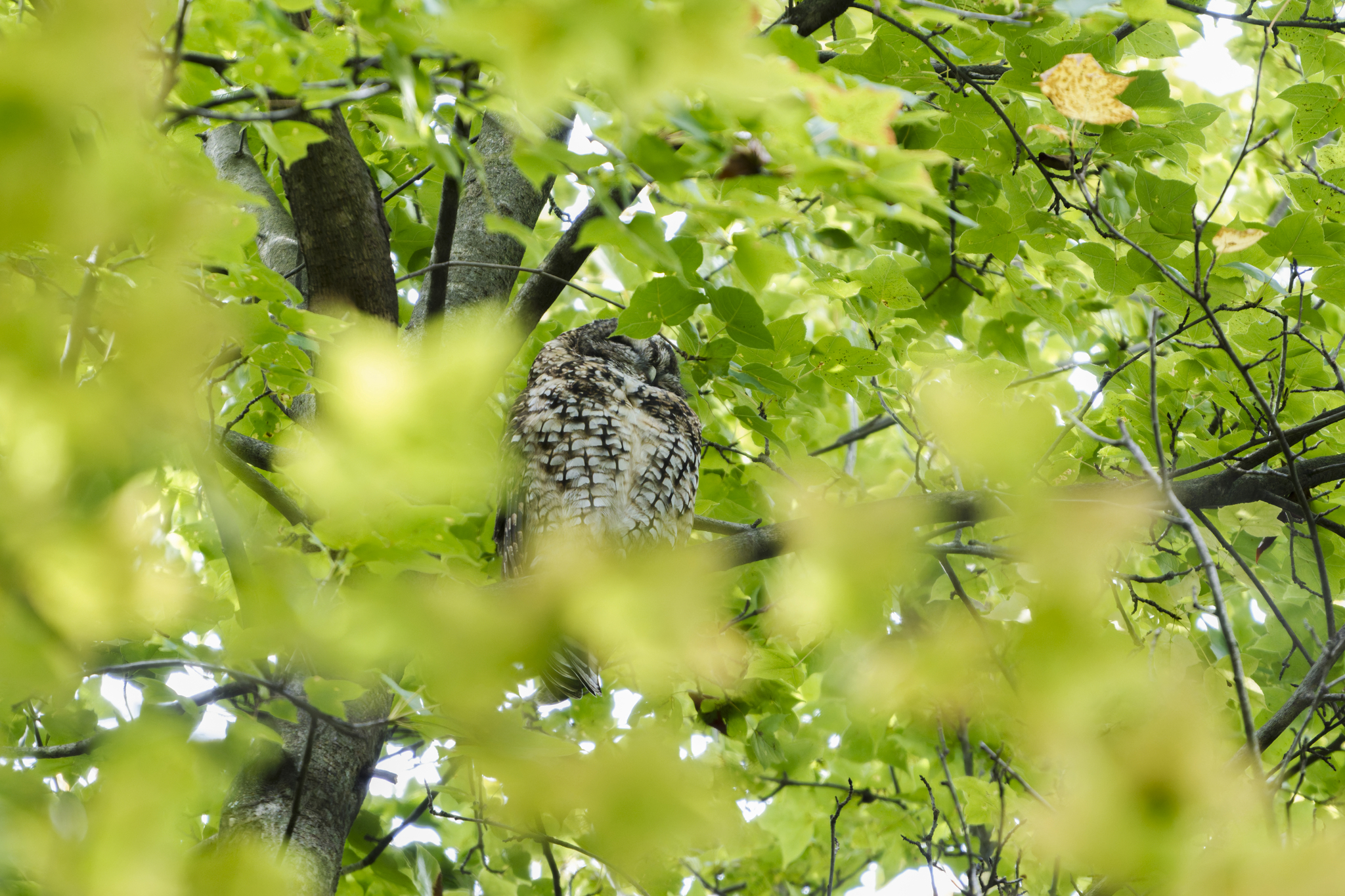
This medium-sized owl measures 35-40 cm in length with a wingspan of approximately 270 mm. The plumage is warm-toned and tawny, combining light brown, dark brown, and white coloration across the body. The chest displays light brown and white feathers with vertical dark brown stripes. Wings and tail feathers are darker with white horizontal bands and light patches toward the tips. The head is round without ear tufts, dark brown with lighter speckling. It has a small, hooked, yellow beak set beneath the eyes on a paler face. Males and females are morphologically identical. Juveniles resemble adults but show white barring on the dark crown.
Identification
The Himalayan owl can be distinguished from the similar tawny owl by its darker plumage, shorter tail, and distinct call. The three subspecies are differentiated by geographic location and minor plumage variations: S. n. nivicolum has a larger wingspan up to 312 mm; S. n. ma displays a thin light brown facial ring and greyer body; S. n. yamadae is smaller with a 256 mm wingspan, yellow nape, black spots, darker face, and paler throat.
Distribution & Habitat
This species occupies a widespread territory throughout East Asia and the Himalayas. Its range includes northern Pakistan, northern India, Tibet, Bhutan, Nepal, northern Myanmar, Hebei, Jinan, and Shandong provinces of China, the Korean peninsula, and Taiwan. The species is non-migratory though it descends to lower elevations in winter. Habitat consists of coniferous and oak forests as well as rocky ravines in mountain ranges.
Behavior & Ecology
The Himalayan owl is nocturnal, hunting at dusk and sleeping during the day. Vocalizations include a dove-like two-note song 'coo-coo', a single loud high-pitched 'whoo' call, a mating sequence of three fast hoots 'whoo-whoo-whoo', and a begging call 'kwek, kwek' during incubation. It is a generalist predator feeding on insects, small birds, and small mammals, with rodents including shrews and mice as primary prey. Breeding occurs from late winter through spring in tree cavities or rock crevices. Females select nests and both parents construct them. Clutches average 3 eggs, incubated about one month with male assistance. Both parents share chick-rearing duties until fledging at approximately 28 days.
Conservation
Listed as Least Concern on the IUCN Red List. The population has not been precisely estimated following taxonomic splits. An estimated 8.7% loss of tree cover has occurred within its range over three generations, suggesting a population decline of roughly 1-19%. Threats include deforestation and loss of tree cavities used for nesting, particularly in South Korea. The species does not meet thresholds for Vulnerable status due to its large range, slow decline rate, and population size not approaching critical levels.
Source: Wikipedia · CC BY-SA 3.0
Taxonomy
- Order
- Strigiformes
- Family
- Strigidae
- Genus
- Strix
- eBird Code
- himowl1
Subspecies (3)
-
Strix nivicolum ma
northeastern China and Korea
-
Strix nivicolum nivicolum
Nepal to southeastern China, northern Myanmar, and northern Indochina
-
Strix nivicolum yamadae
mountains of southern Taiwan
Data Sources
Species description from Wikipedia, licensed under CC BY-SA 3.0.
Bird images and sounds sourced from GBIF, contributed by citizen scientists worldwide under Creative Commons licenses.
Taxonomy data from AviList 2025.