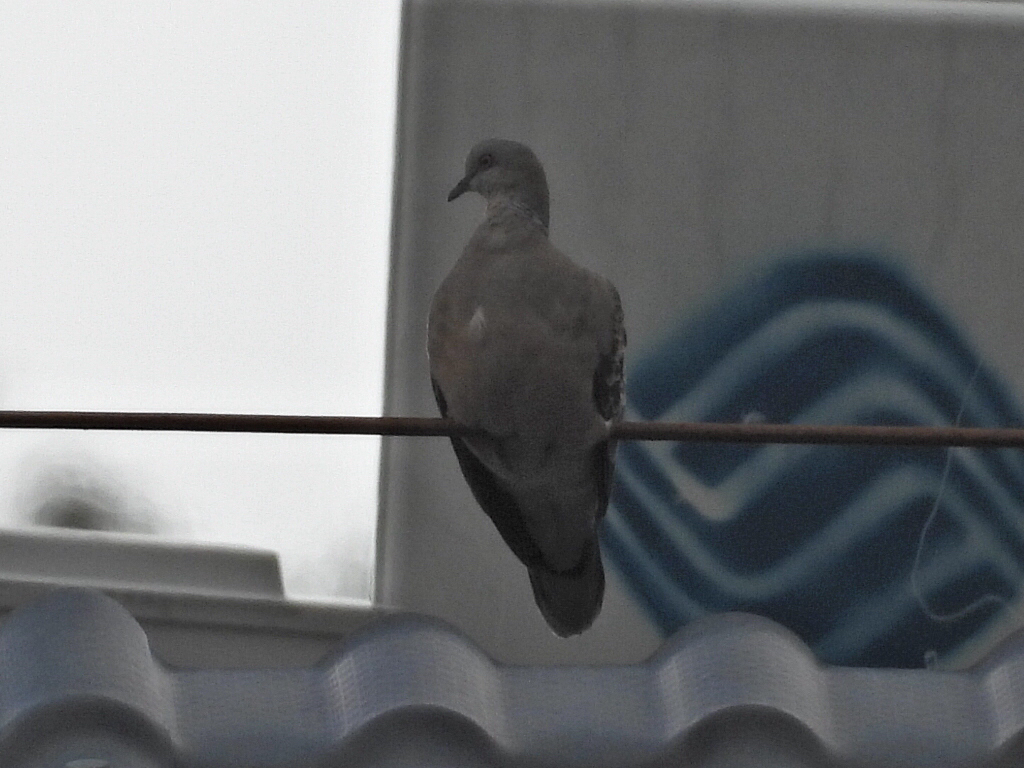
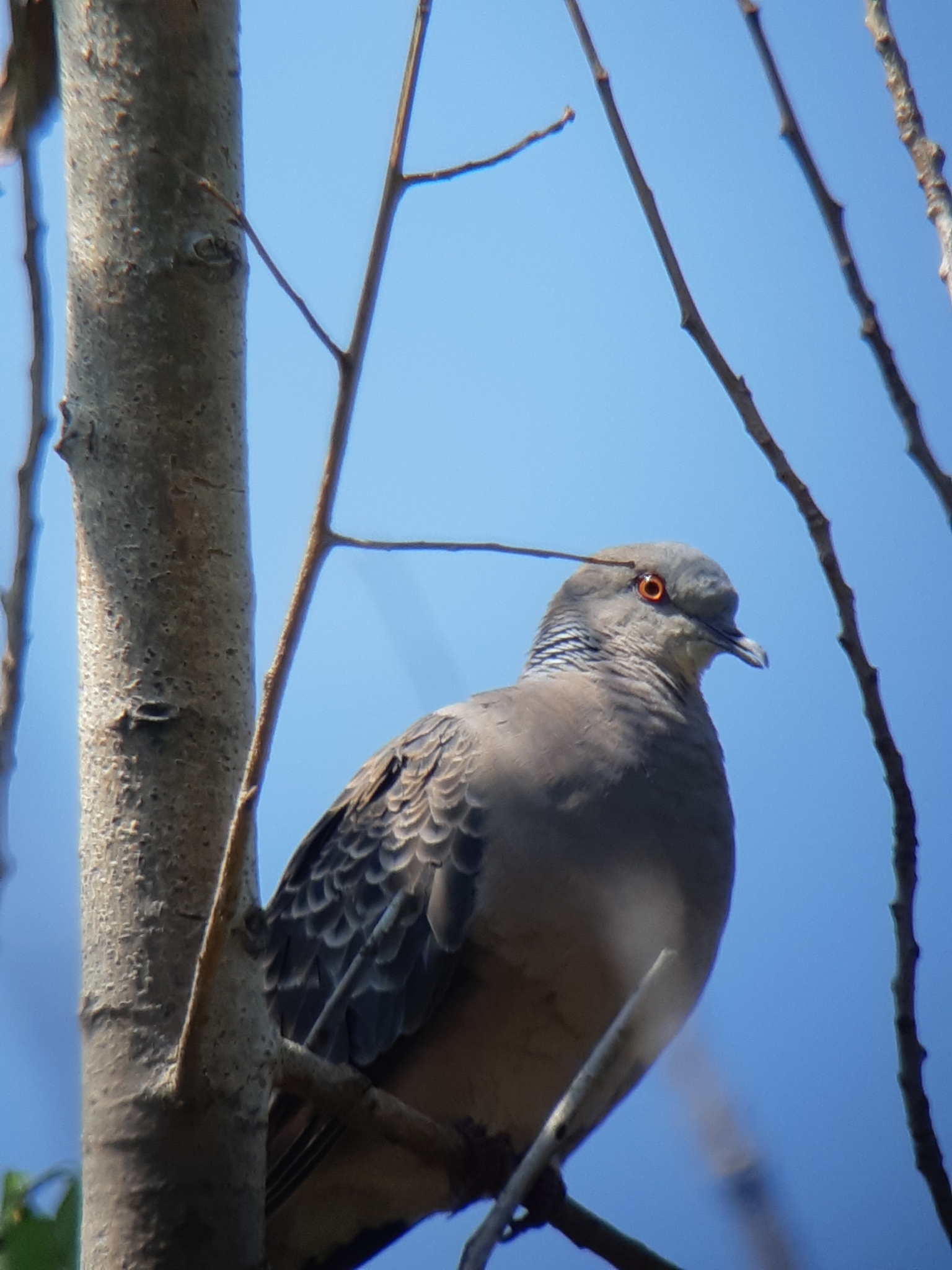
Oriental Turtle Dove
Streptopelia orientalis
山斑鸠
Introduction
The Oriental turtle dove is a widespread columbid species. It inhabits woodlands, farmlands, and gardens across much of Asia, from the taiga forests of Siberia to the tropical forests of southern India. The species exhibits considerable geographic variation, with at least six recognized subspecies displaying differences in tail patterning and overall coloration. Migratory populations move southward in autumn, joining resident birds in wintering areas across the Indian subcontinent, Southeast Asia, and southern Japan. Vagrant individuals occasionally occur in Europe, particularly in Britain. The species has a characteristic four-syllable call, distinctly different from the purring notes of the European turtle dove, and is vocal during the breeding season in spring and summer.
Description
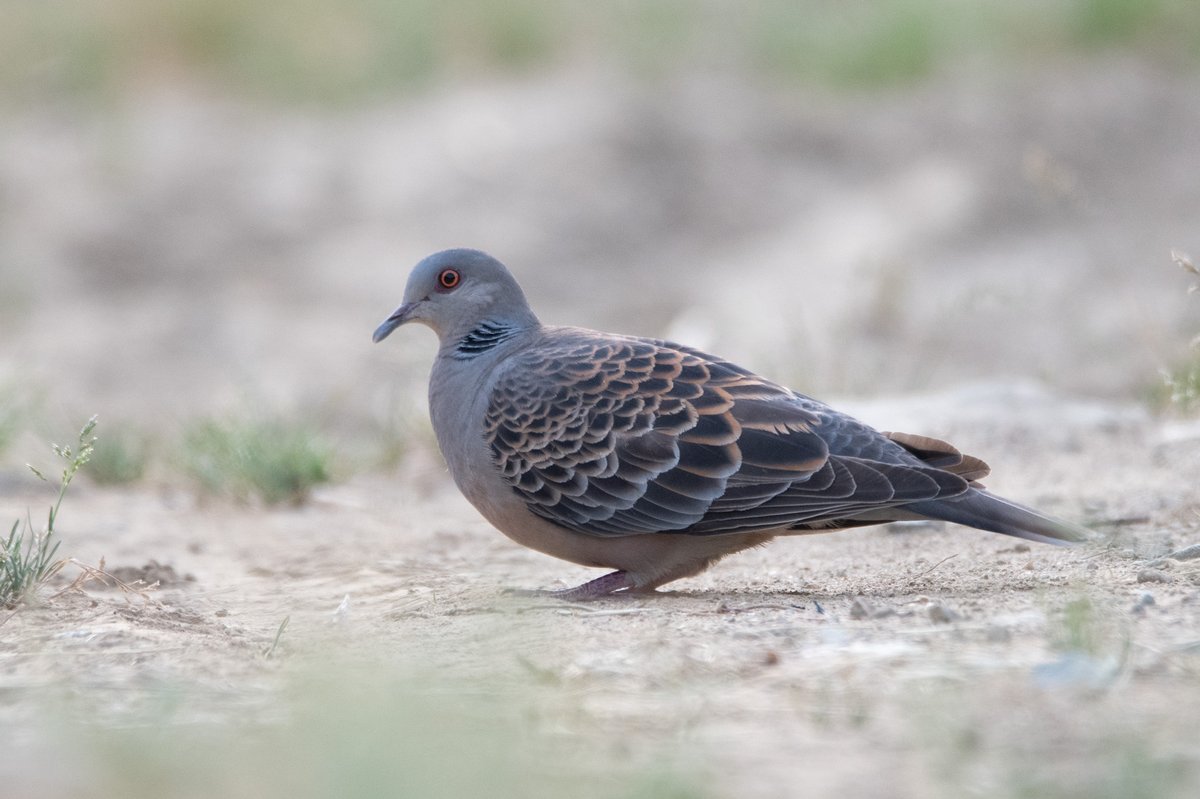
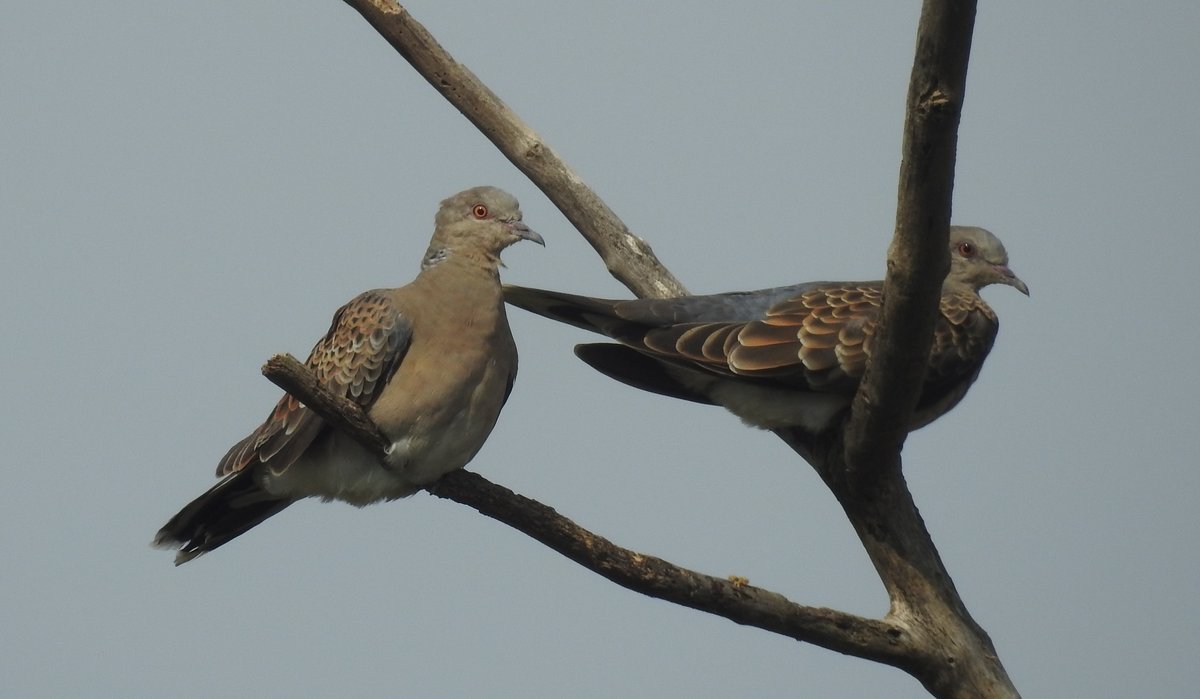
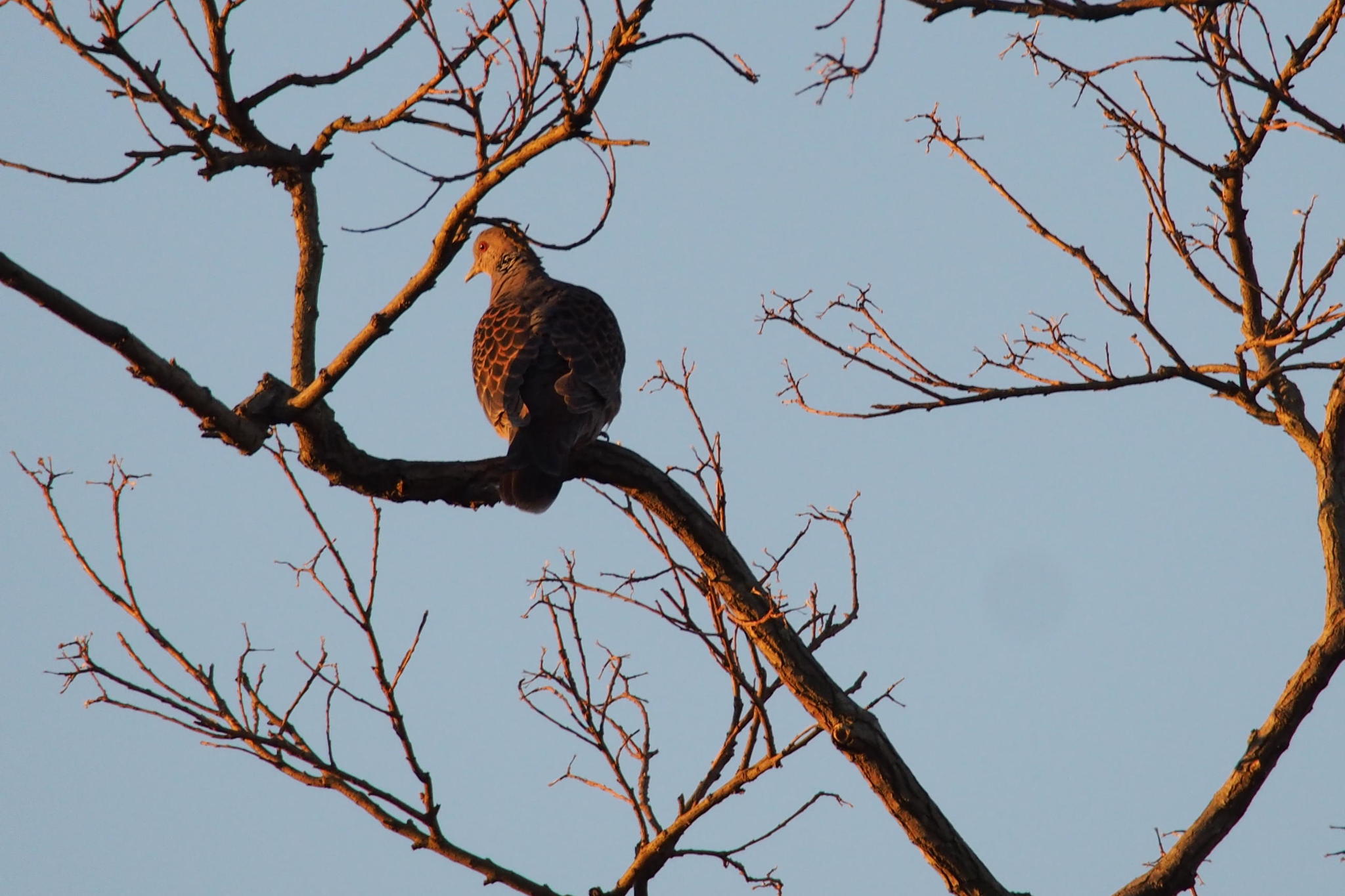
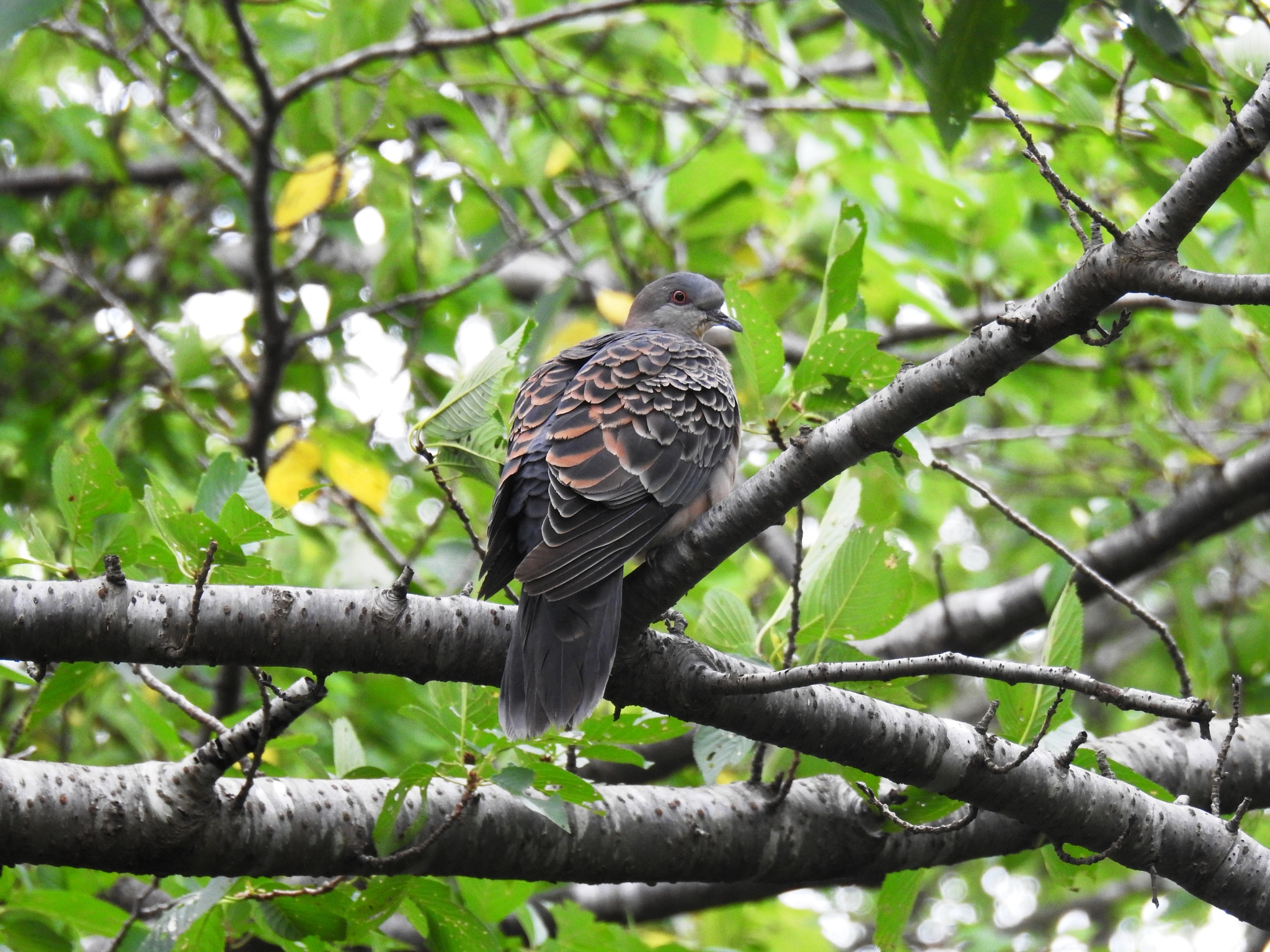
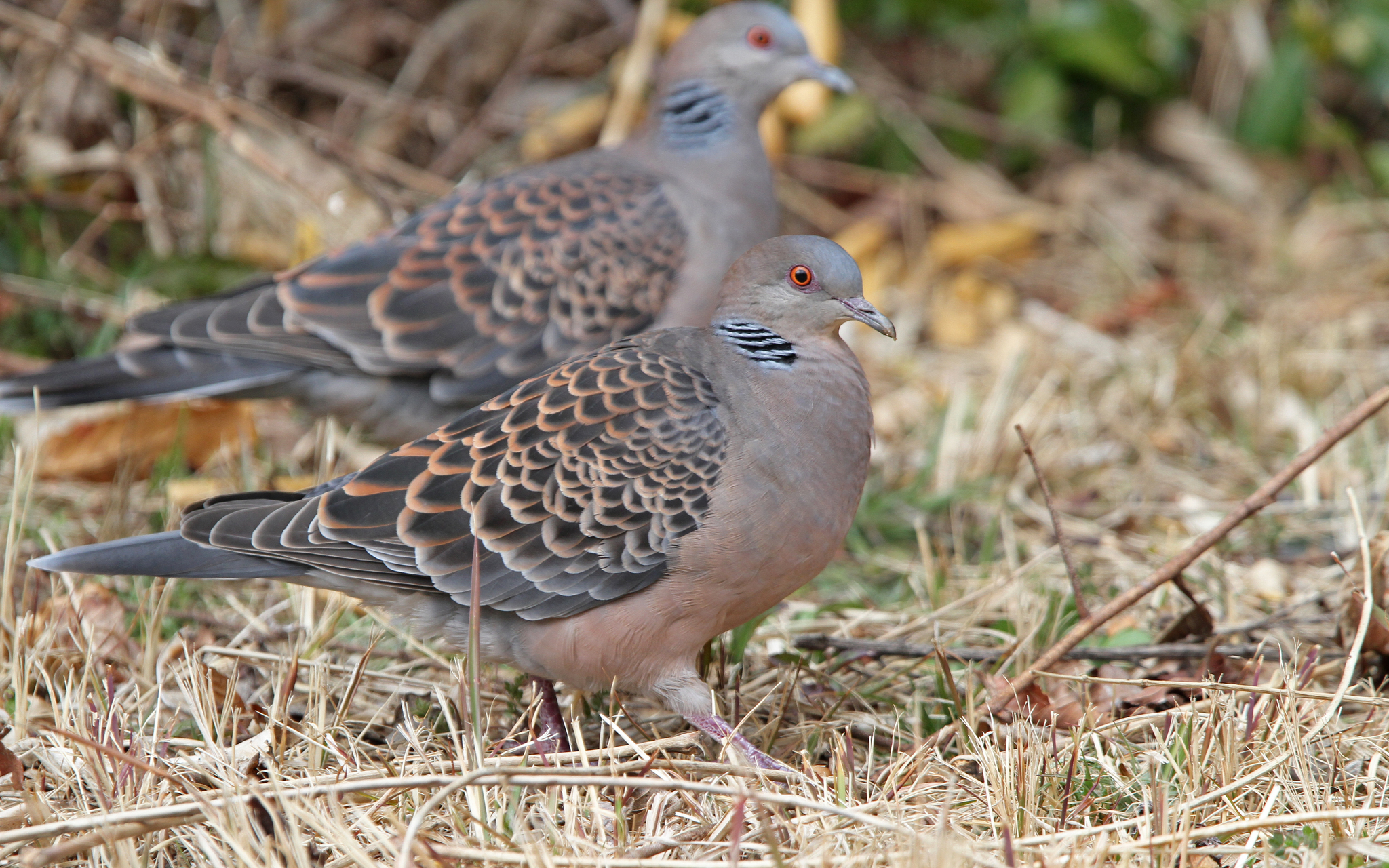
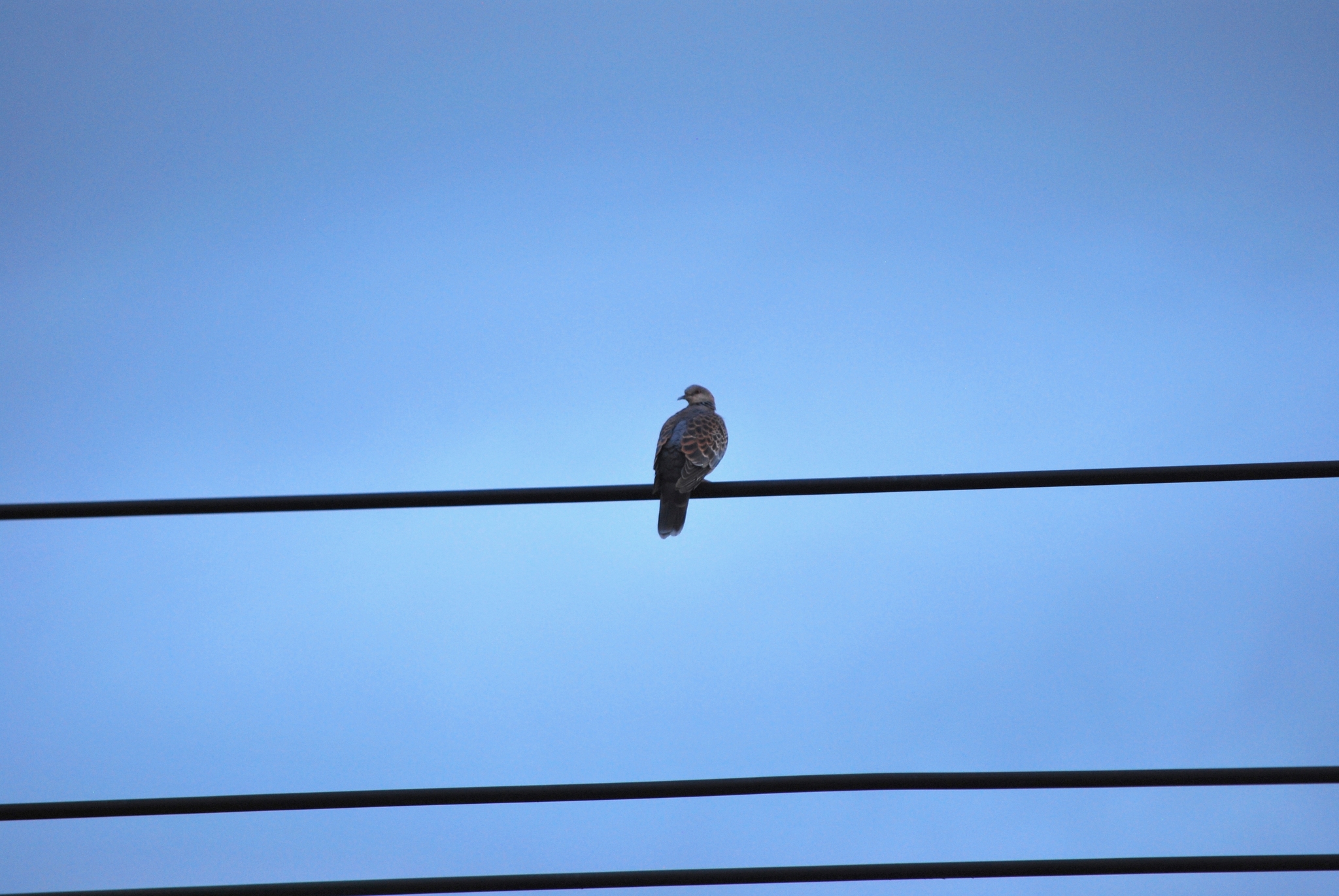
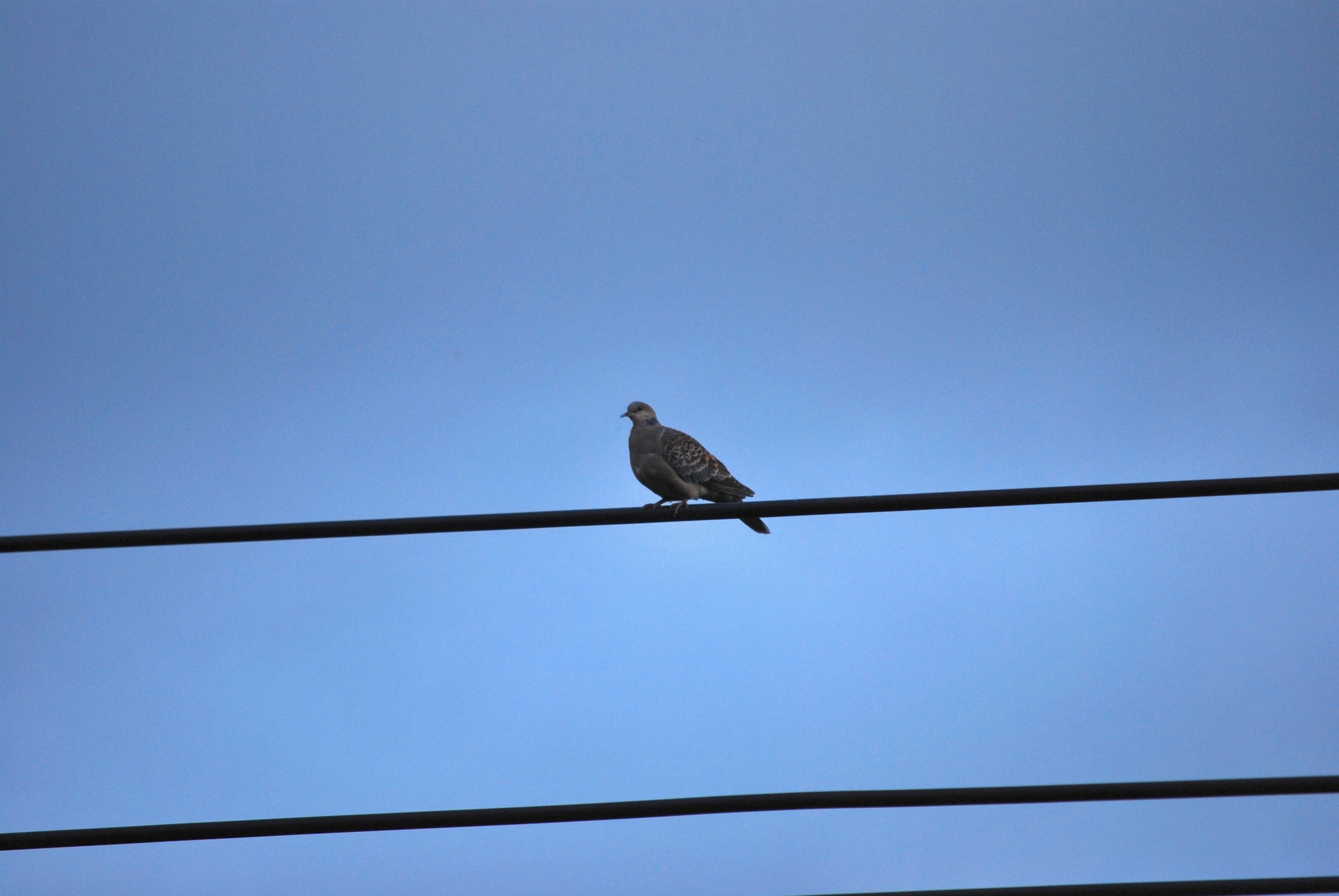
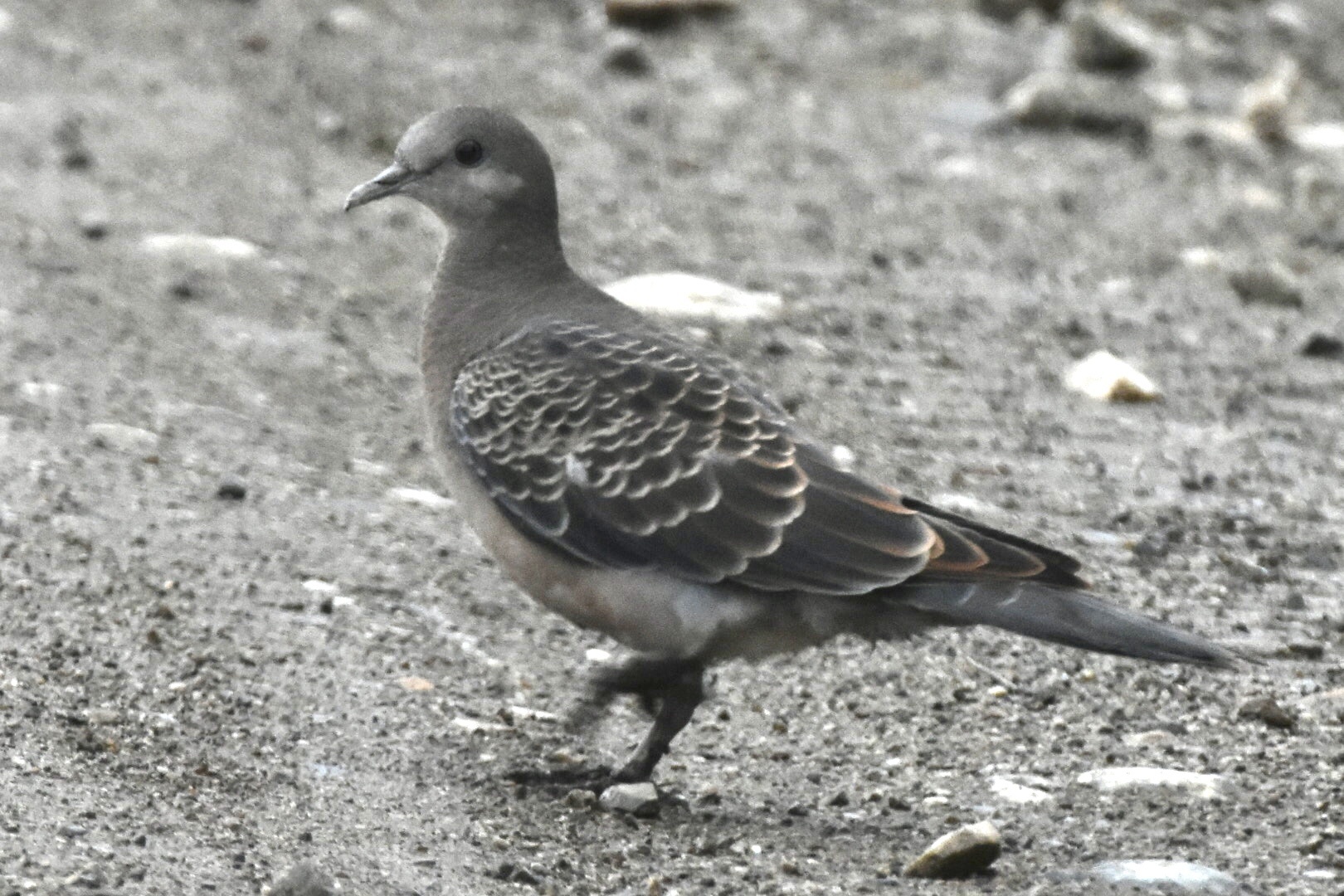
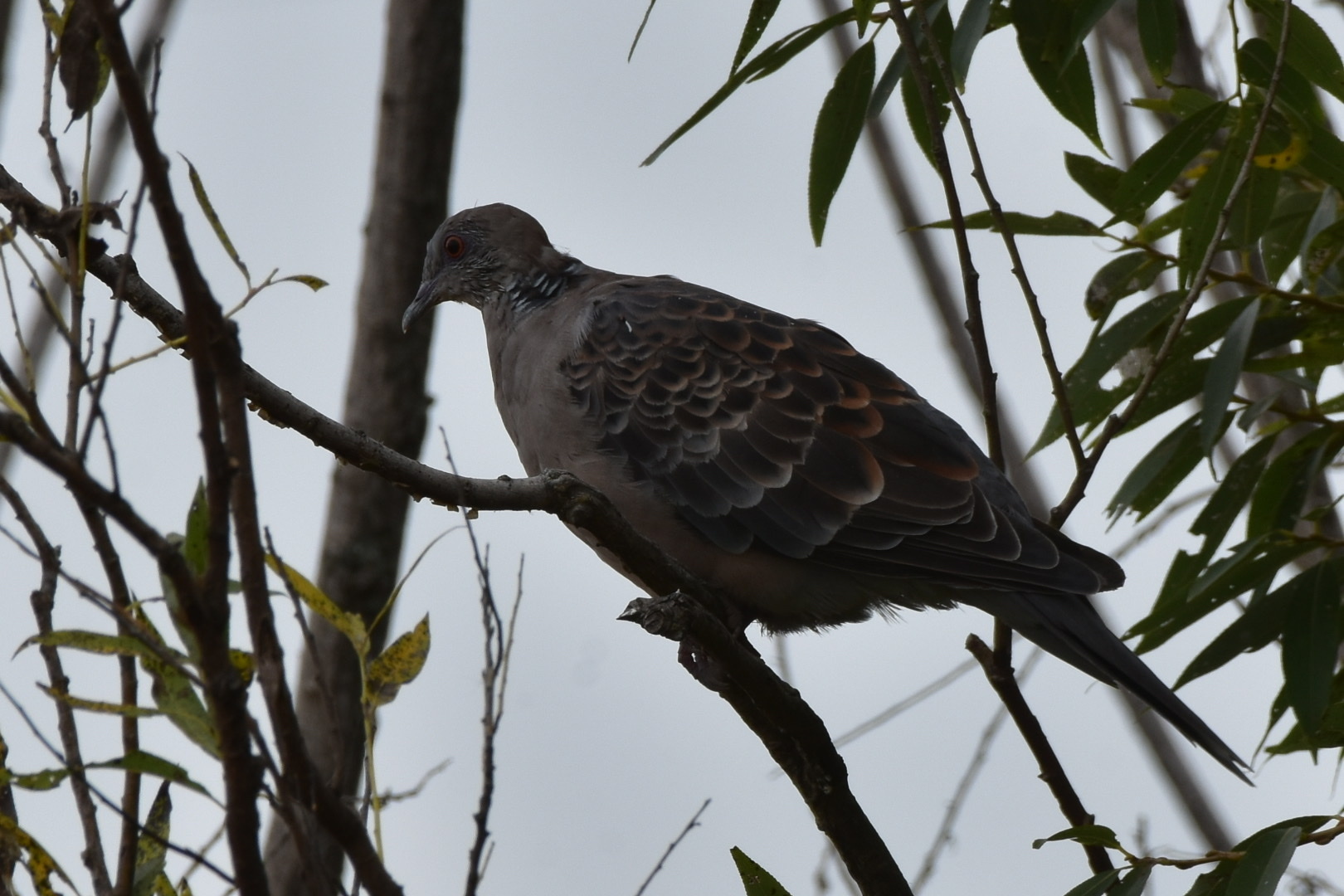
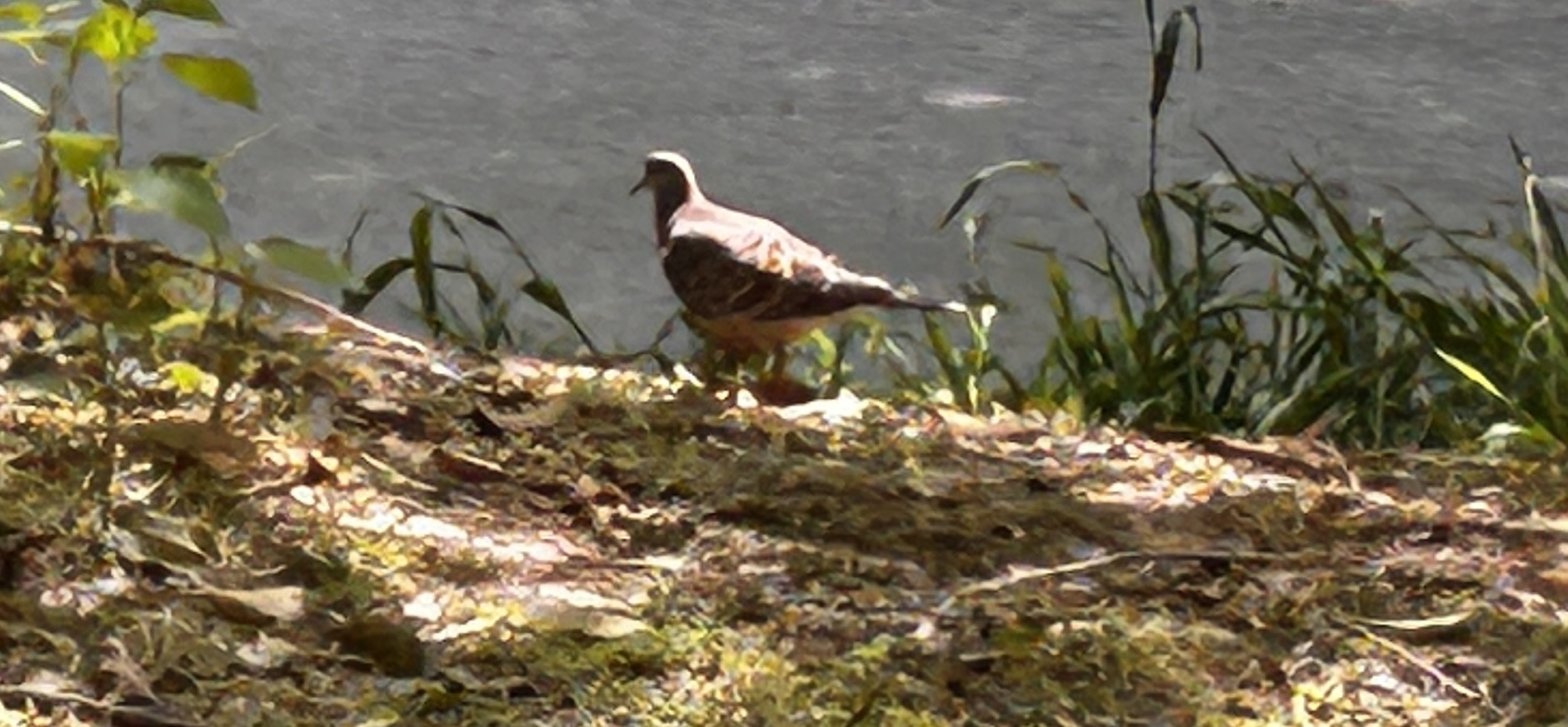
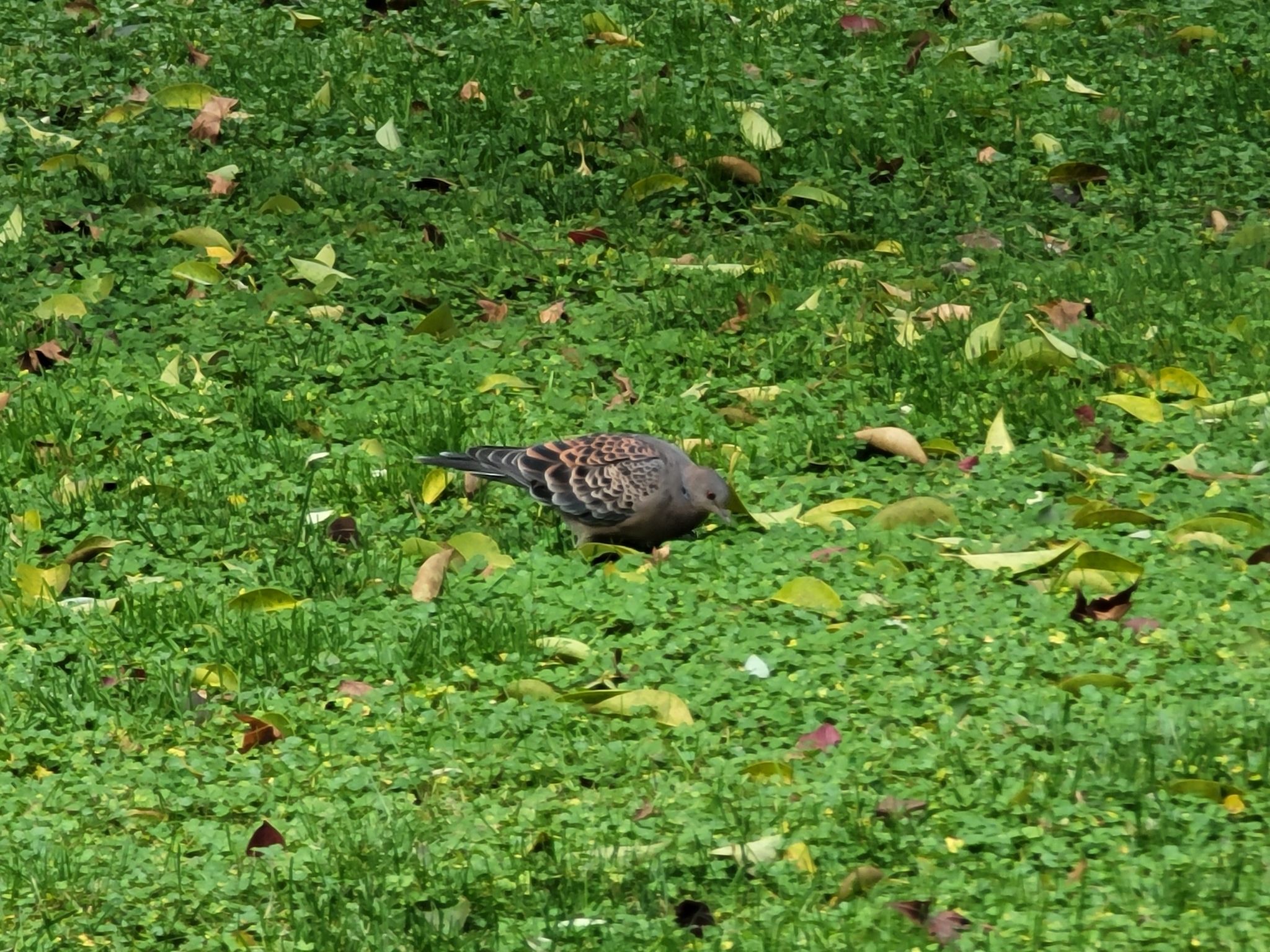
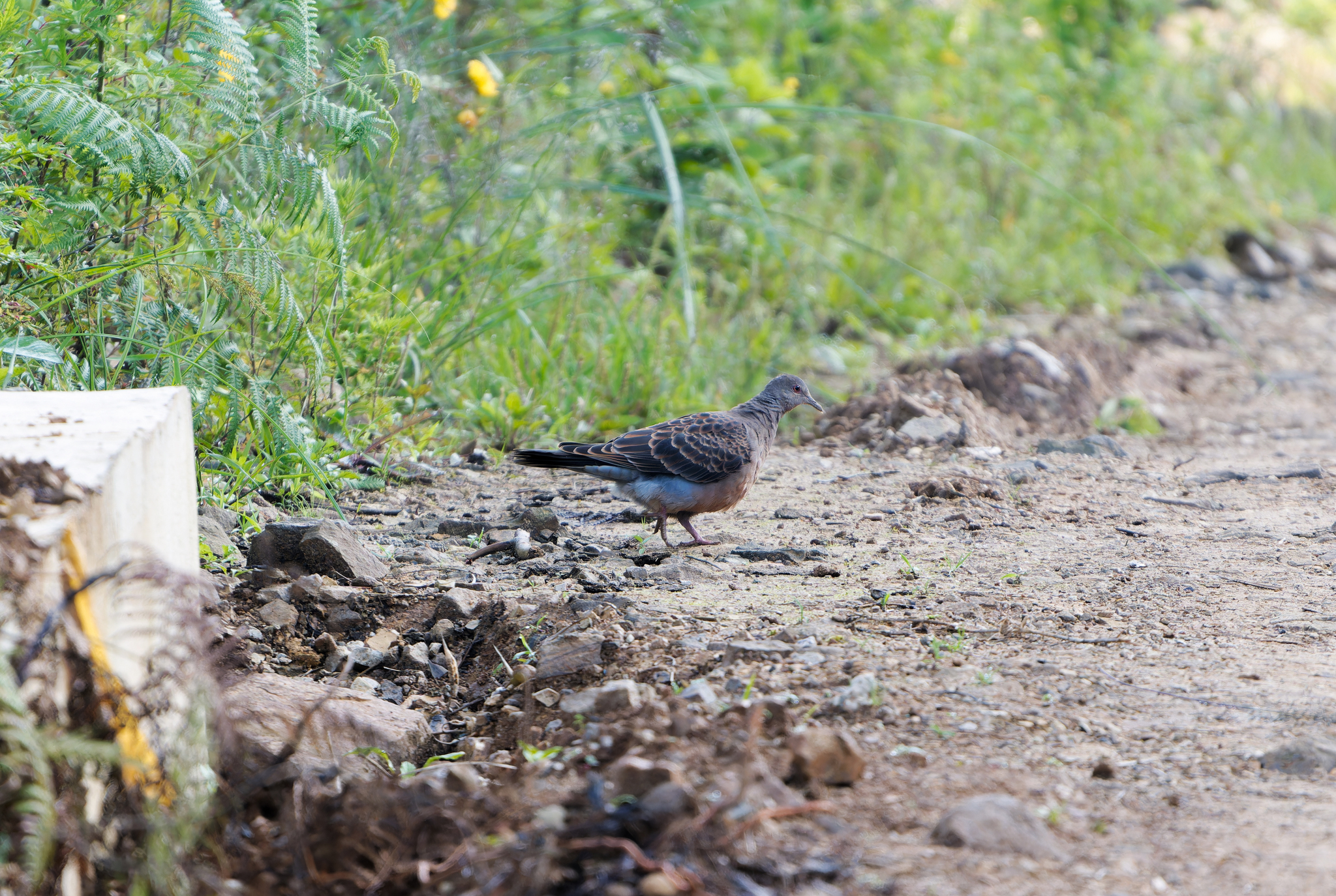
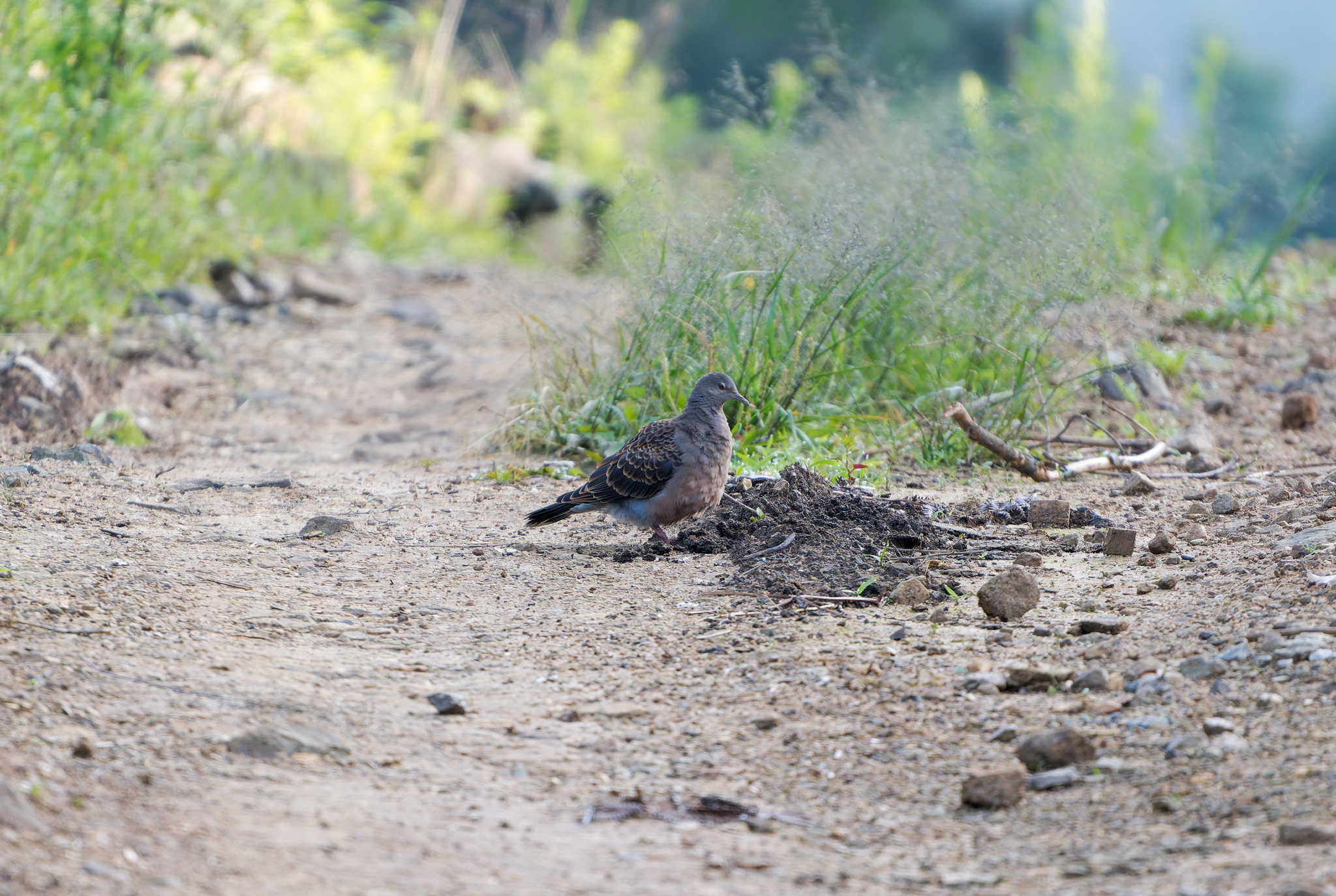
This dove is slightly larger than the European turtle dove, roughly comparable in size to the collared dove. Its plumage is overall more muted than its relative, with the warm orange-brown wing feathers replaced by a browner hue featuring darker centres that create a scaly appearance. The breast shows less pink than the European species. Like its relative, it possesses the distinctive black and white striped patch on the neck composed of silver-tipped feathers. The tail is wedge-shaped, and the species lacks the bare patch of skin around the eyes that characterizes the European turtle dove. The flight is notably more relaxed and direct compared to its relative.
Identification
The primary identification challenge involves separating this species from the European turtle dove, particularly in areas of range overlap. The browner, scaly-winged appearance and the lack of facial skin patches are key distinguishing features. Among the migratory subspecies, tail pattern differences provide useful clues: the eastern orientalis subspecies typically shows a grey tail tip and more black in the outer tail feathers, while the western meena subspecies has a whiter tail tip reminiscent of the European turtle dove. However, caution is needed as these differences are not always consistent. The species' call—a four-syllable her-her-oo-oo—differs markedly from the European turtle dove's purring song.
Distribution & Habitat
This species breeds across a vast range extending from Central Asia eastward through Siberia to Japan, with the westernmost populations reaching into the Western Palearctic region. Its habitat consists of well-wooded but open areas during the breeding season, transitioning to more open terrain with good tree cover in winter. Northern populations migrate south to winter in India, the Maldives, and southern Japan, with individuals occasionally reaching islands such as the Lakshadweep. Southern populations are resident year-round. Vagrants have been recorded in Alaska, British Columbia, and occasionally in northern and western Europe, where sightings generate significant interest among birdwatchers.
Behavior & Ecology
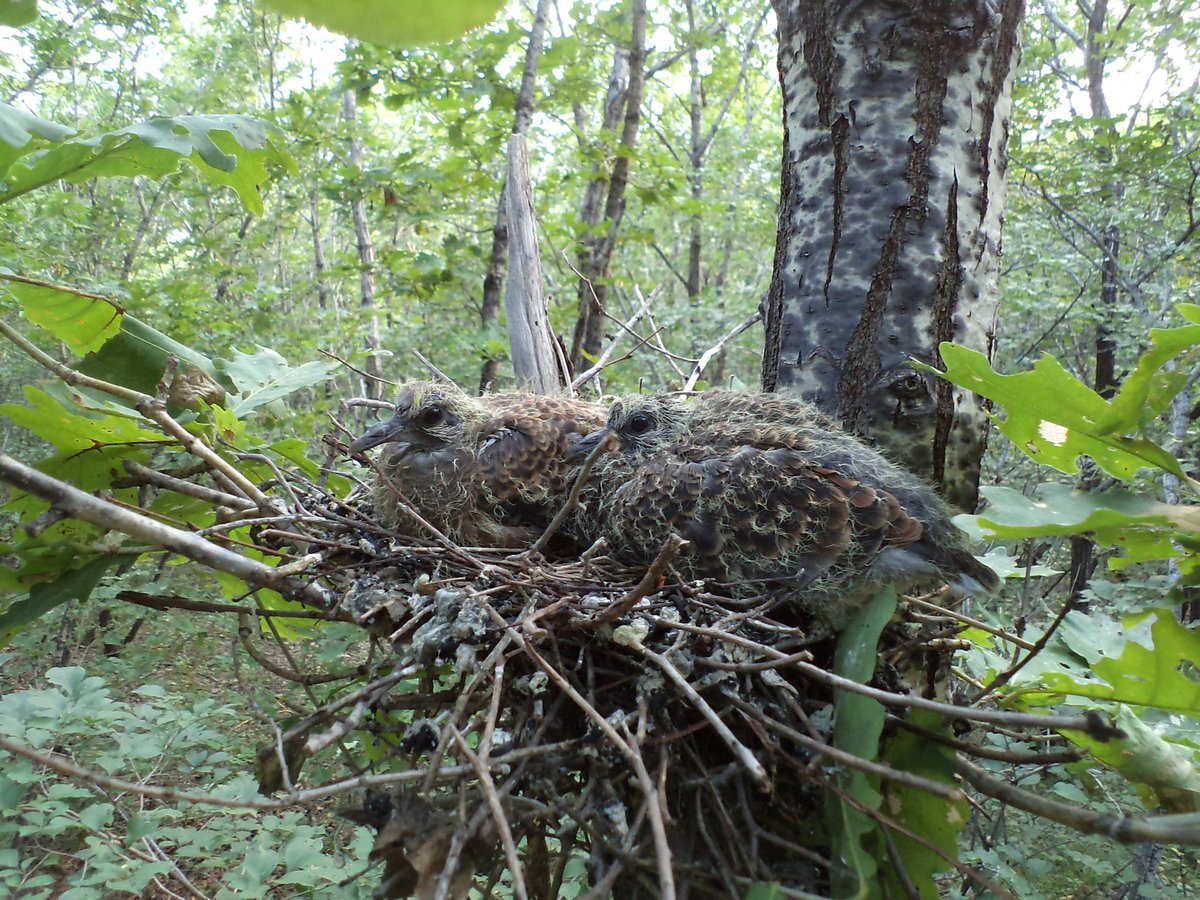
The species is predominantly granivorous, feeding on seeds of hemp, sunflower, wheat, millet, and amaranth, as well as occasional gastropods. Foraging occurs on the ground. Breeding seasons vary geographically, being protracted in temperate zones and occurring during winter in southern India. Males perform a characteristic display flight, noisily flapping upwards before gliding down with outspread tail. Nest construction takes about two days, with the male gathering materials and the female placing them; nests are placed at mid-canopy height and may be reused. Both parents share incubation—males by day, females by night—and both feed chicks with crop milk. Two white eggs are laid, hatching after 15-16 days, with chicks fledging in 15-17 days. Multiple broods may be raised in a season. Principal predators include crows, magpies, and to a lesser extent cats and snakes.
Conservation
This species is listed as Least Concern by the IUCN, reflecting its extremely large range and presumed stable population. While no major population declines have been documented, local pressures may affect specific populations. The species has demonstrated vulnerability to avian pox virus, with recorded mortality events in South Korea. Conservation attention remains relatively limited given the species' current status, though monitoring of regional populations continues.
Culture
The Ainu people of Japan have traditionally interpreted the calls of these doves as elaborate sayings in their own language. For this species, they ascribe a particular four-line saying: 'Turtle dove ploughs, Grandmother draws water, Wife cooks, Little master eats.' This interpretation stems from the dove's ground-foraging behavior, where its habit of digging in fields with its feet creates the impression of ploughing. This cultural interpretation represents a rich tradition of associating avian vocalizations with human activities and domestic scenes.
Source: Wikipedia · CC BY-SA 3.0
Taxonomy
- Order
- Columbiformes
- Family
- Columbidae
- Genus
- Streptopelia
- eBird Code
- ortdov
Vocalizations
Subspecies (5)
-
Streptopelia orientalis agricola
northeastern India to Myanmar and south-central China (western Yunnan and Hainan)
-
Streptopelia orientalis erythrocephala
peninsular India
-
Streptopelia orientalis meena
southwestern Siberia to Iran, Afghanistan, Kashmir, and Nepal
-
Streptopelia orientalis orientalis
breeds central Siberia eastward to Sakhalin and Kurile Islands, and eastern Himalayas to China, Japan, and Taiwan; winters to southern and eastern Asia
-
Streptopelia orientalis stimpsoni
Ryukyu Islands (southern Japan)
Data Sources
Species description from Wikipedia, licensed under CC BY-SA 3.0.
Bird images and sounds sourced from GBIF, contributed by citizen scientists worldwide under Creative Commons licenses.
Taxonomy data from AviList 2025.