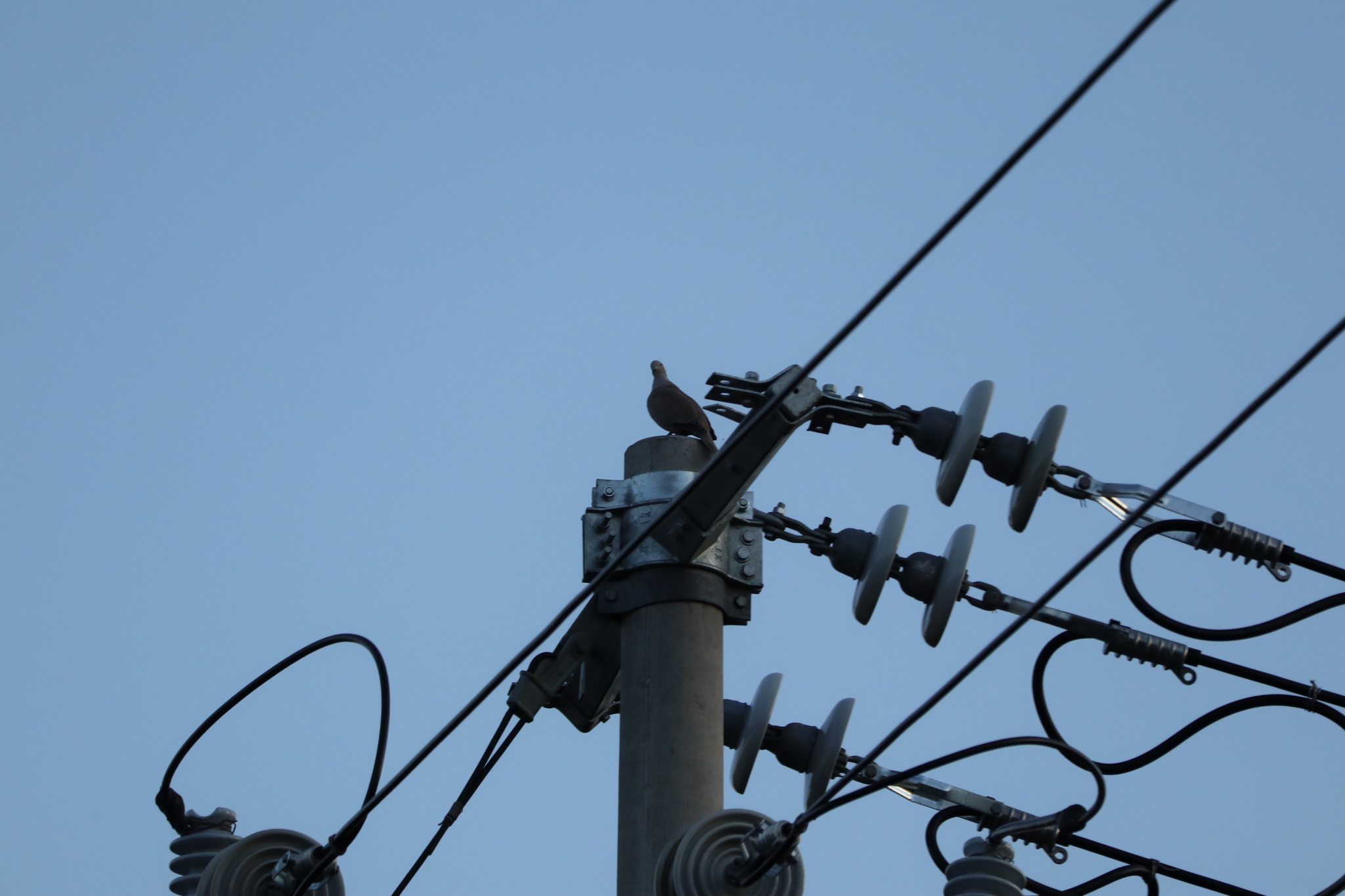
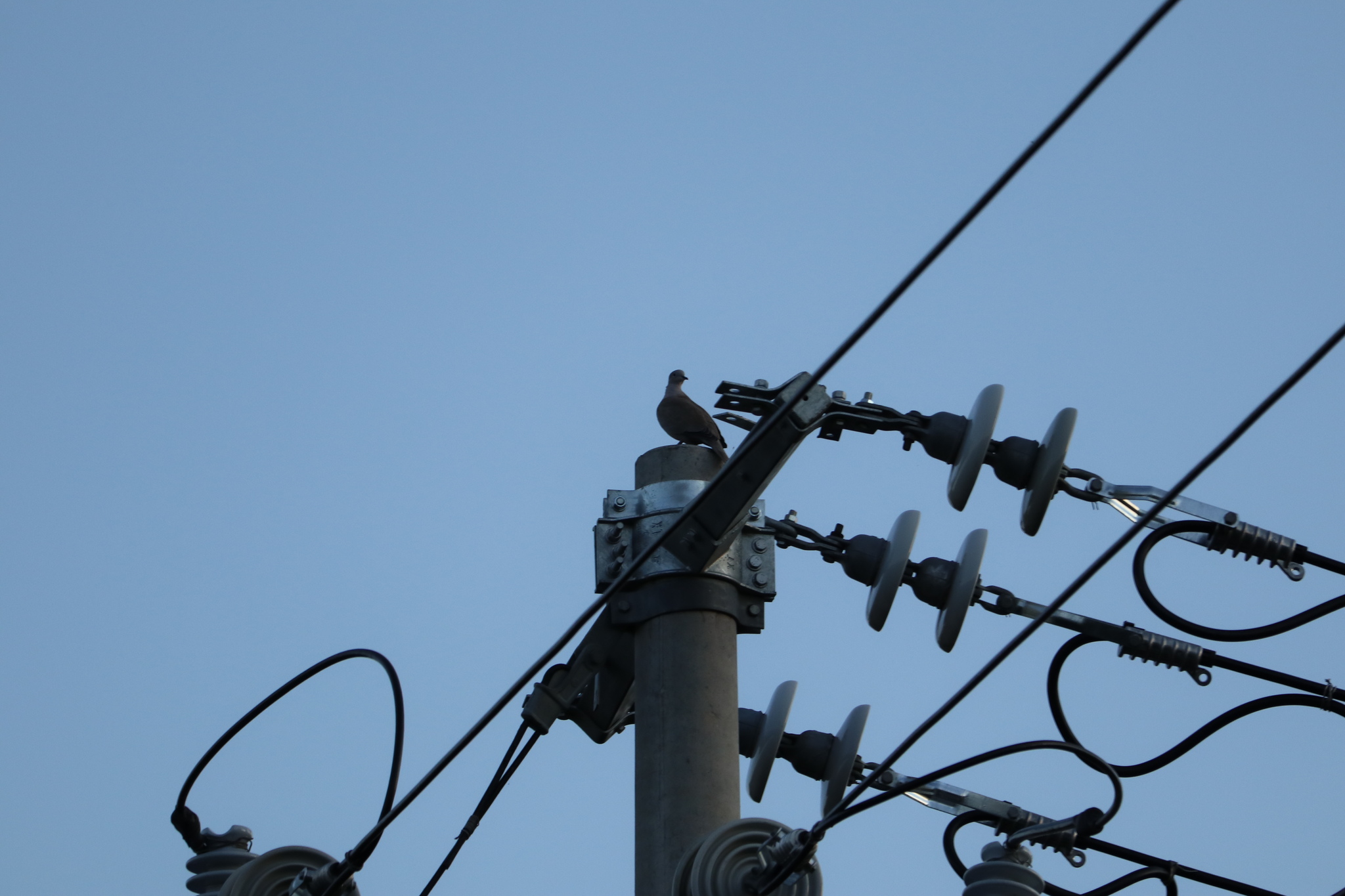
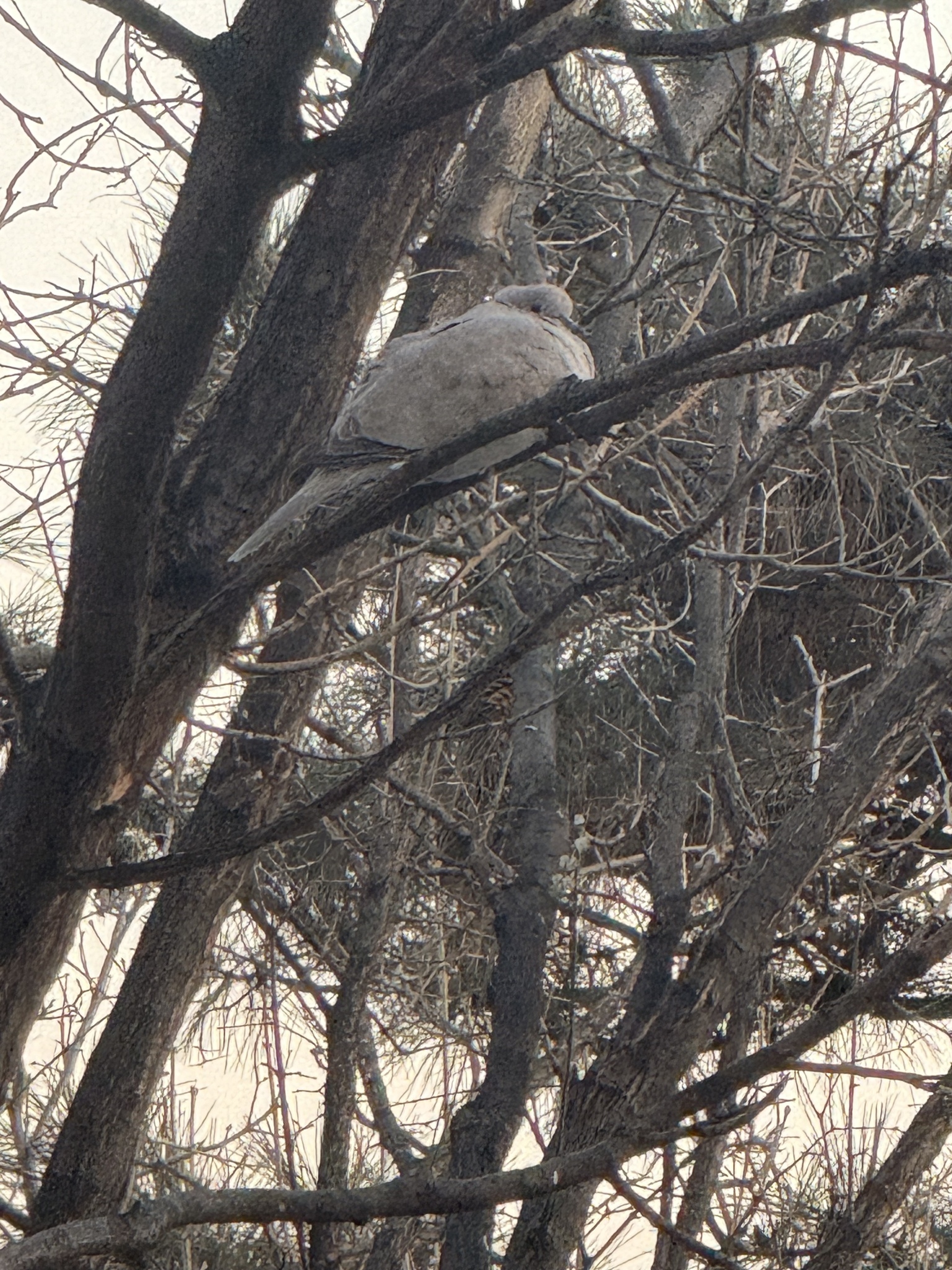
Eurasian Collared Dove
Streptopelia decaocto
灰斑鸠
Introduction
Native range extends from Turkey east to southern China and south through India to Sri Lanka. The species began spreading across Europe in the early 20th century, reaching Britain by 1953 and the Faroe Islands in the early 1970s. In 1974, fewer than 50 birds escaped from captivity in the Bahamas; from there, the species spread to Florida and now inhabits nearly every U.S. state. Populations have stabilised or declined in areas where the species has been long-established, such as Florida, but continue to expand in regions of more recent introduction. The species shows strong adaptability to human-modified landscapes, particularly suburban areas and agricultural zones with grain supplies. It frequently feeds at bird tables and around farms where spilt grain is available.
Description
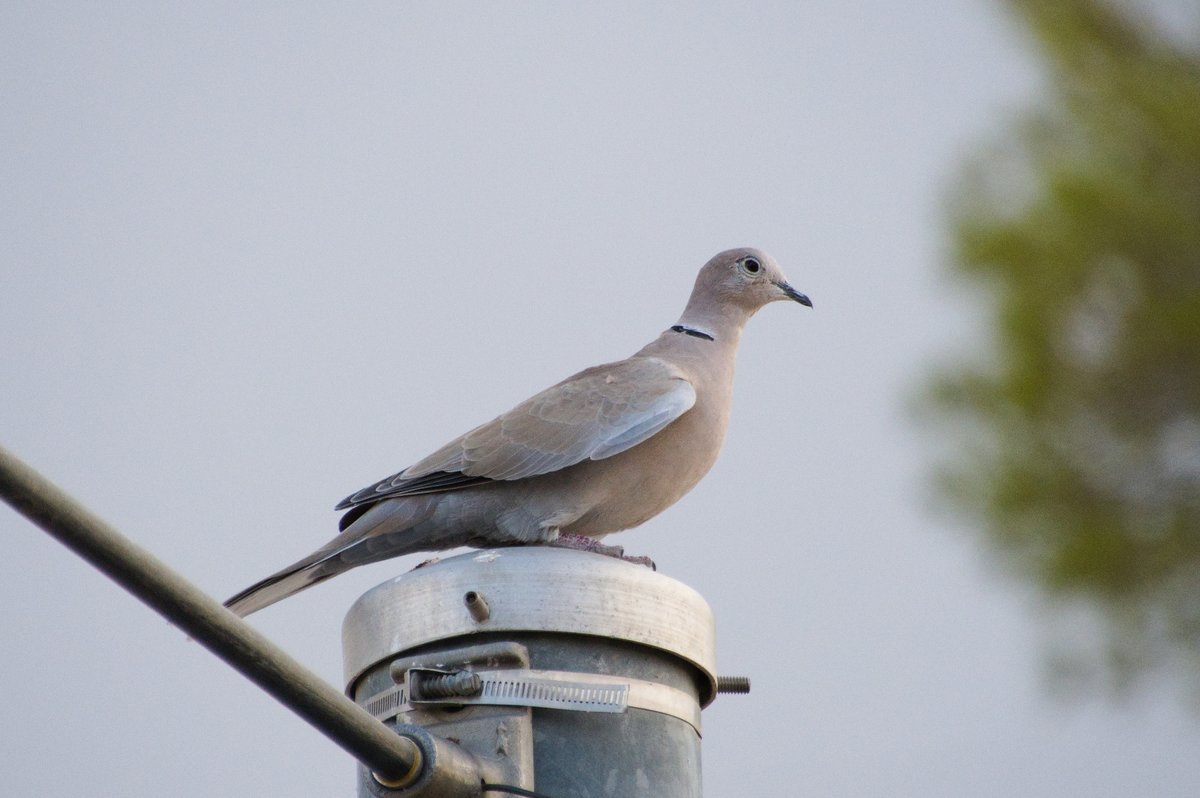
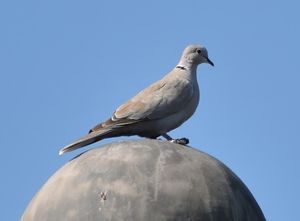
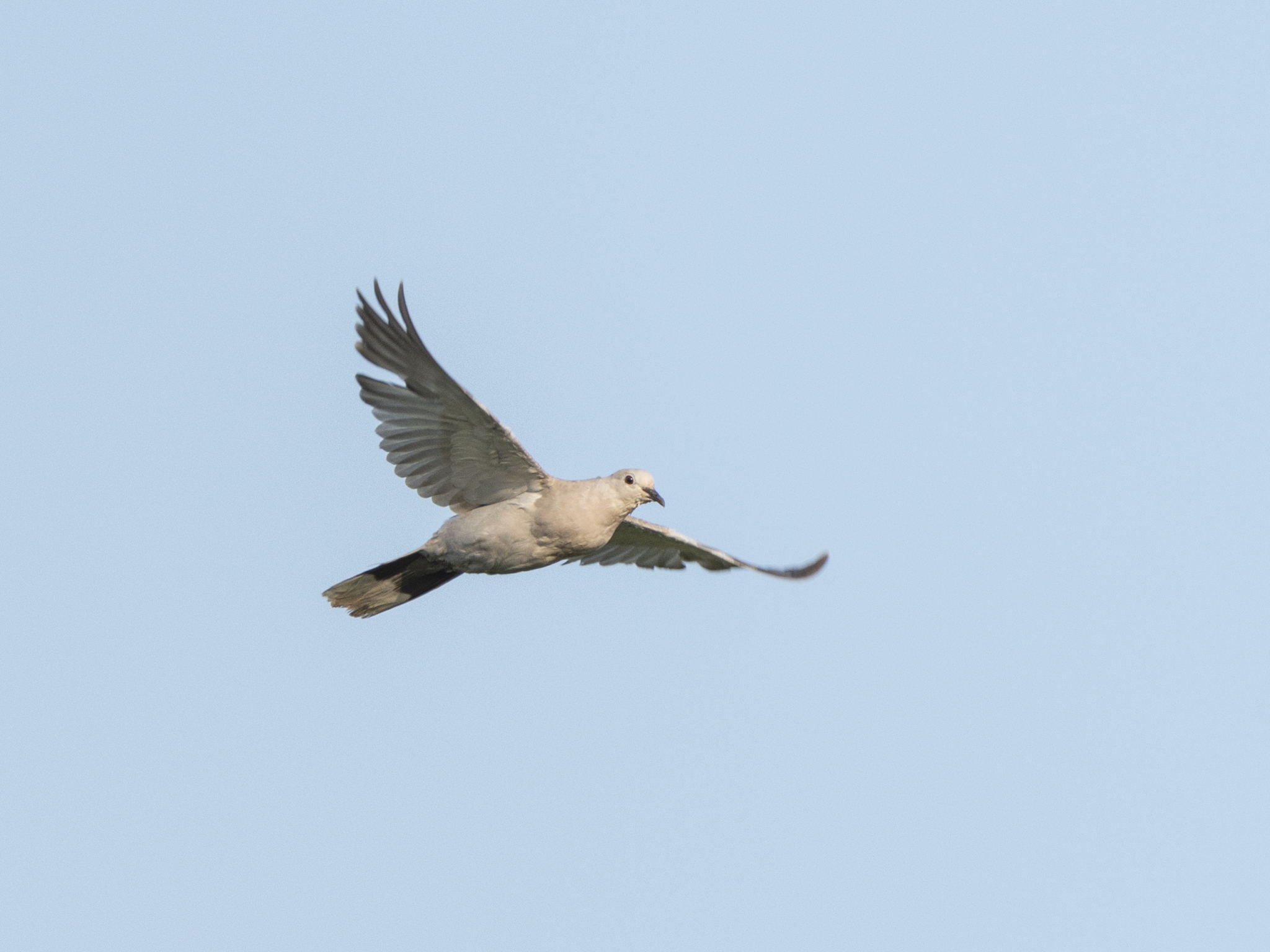
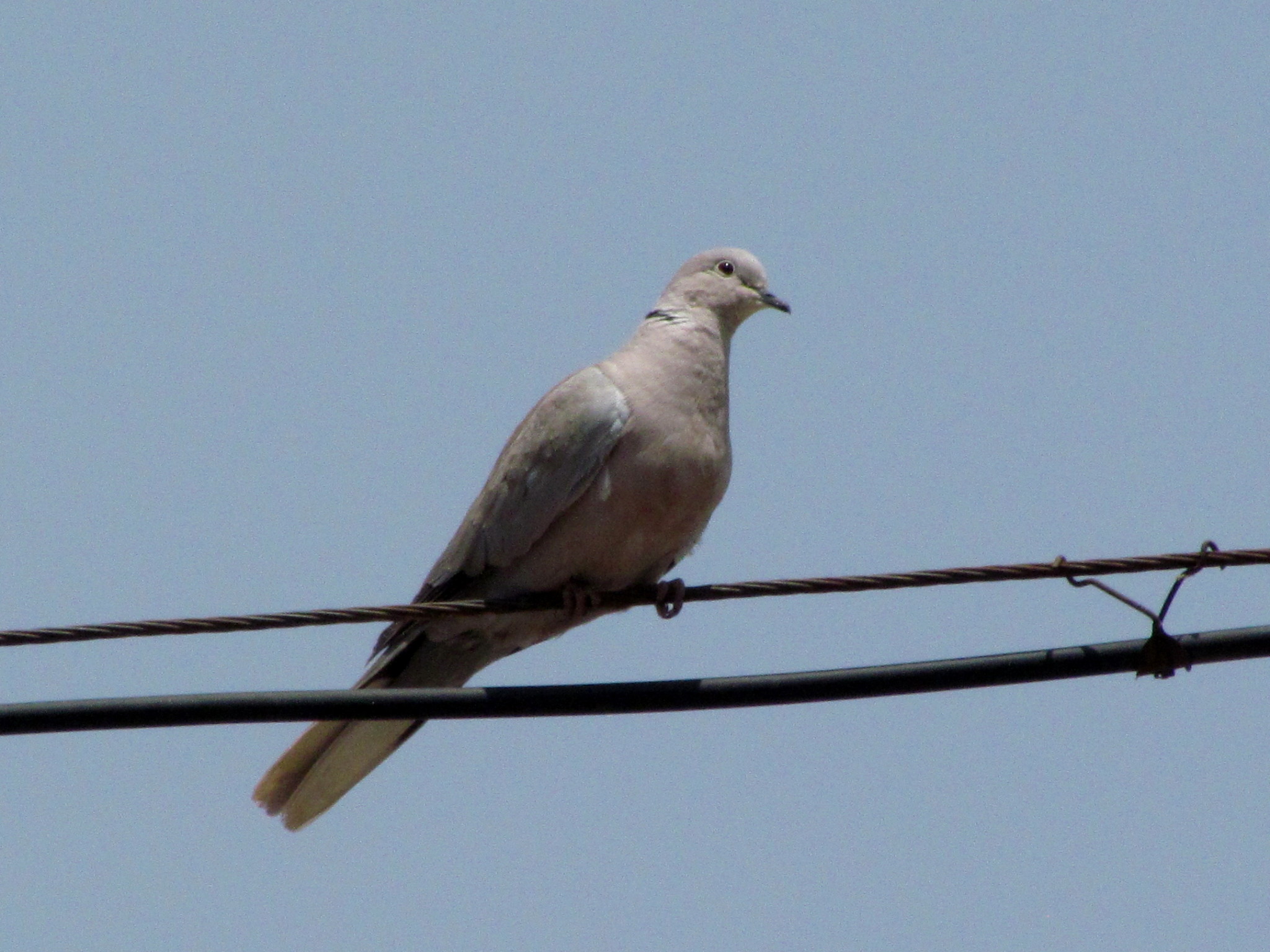
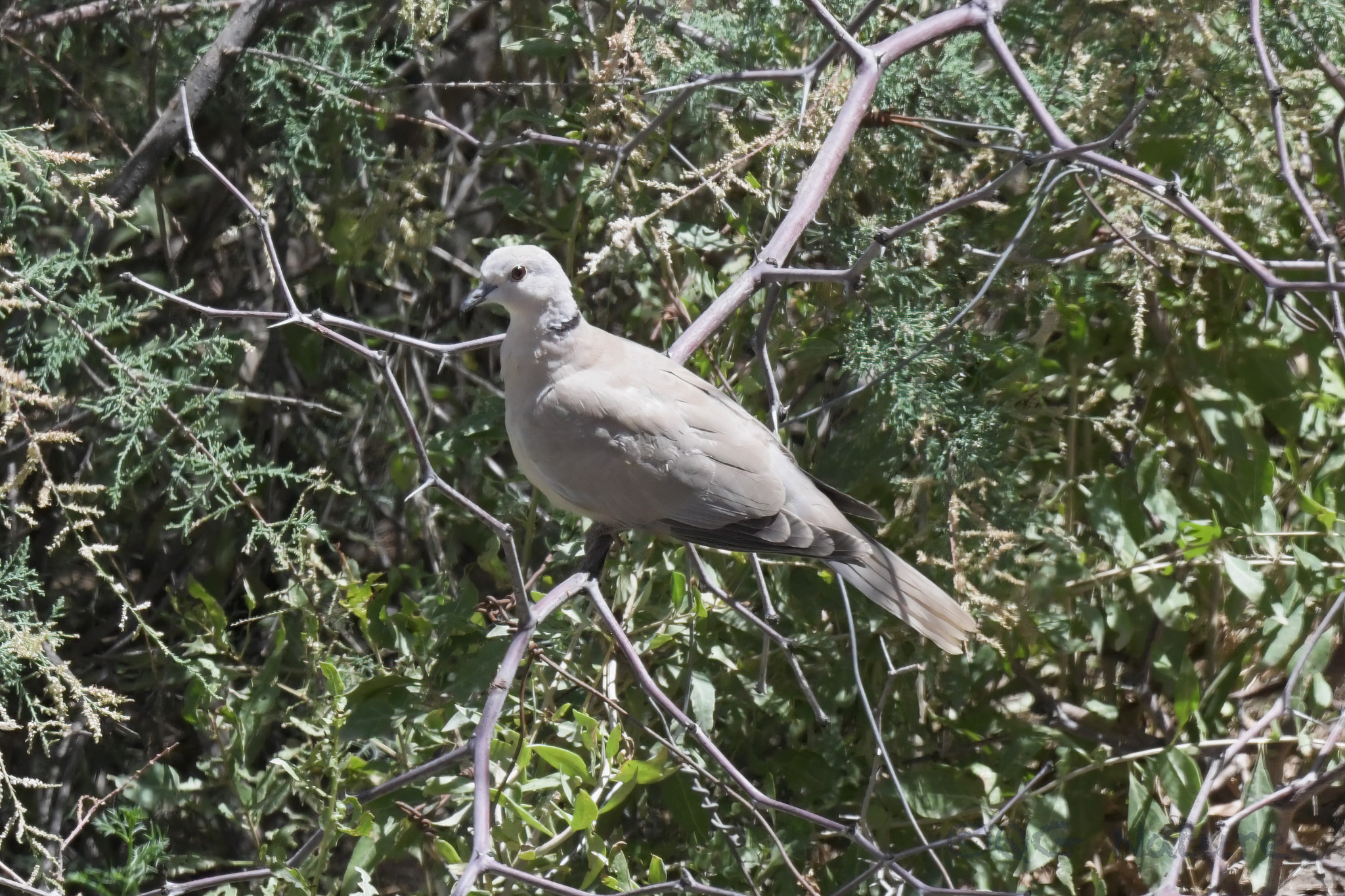
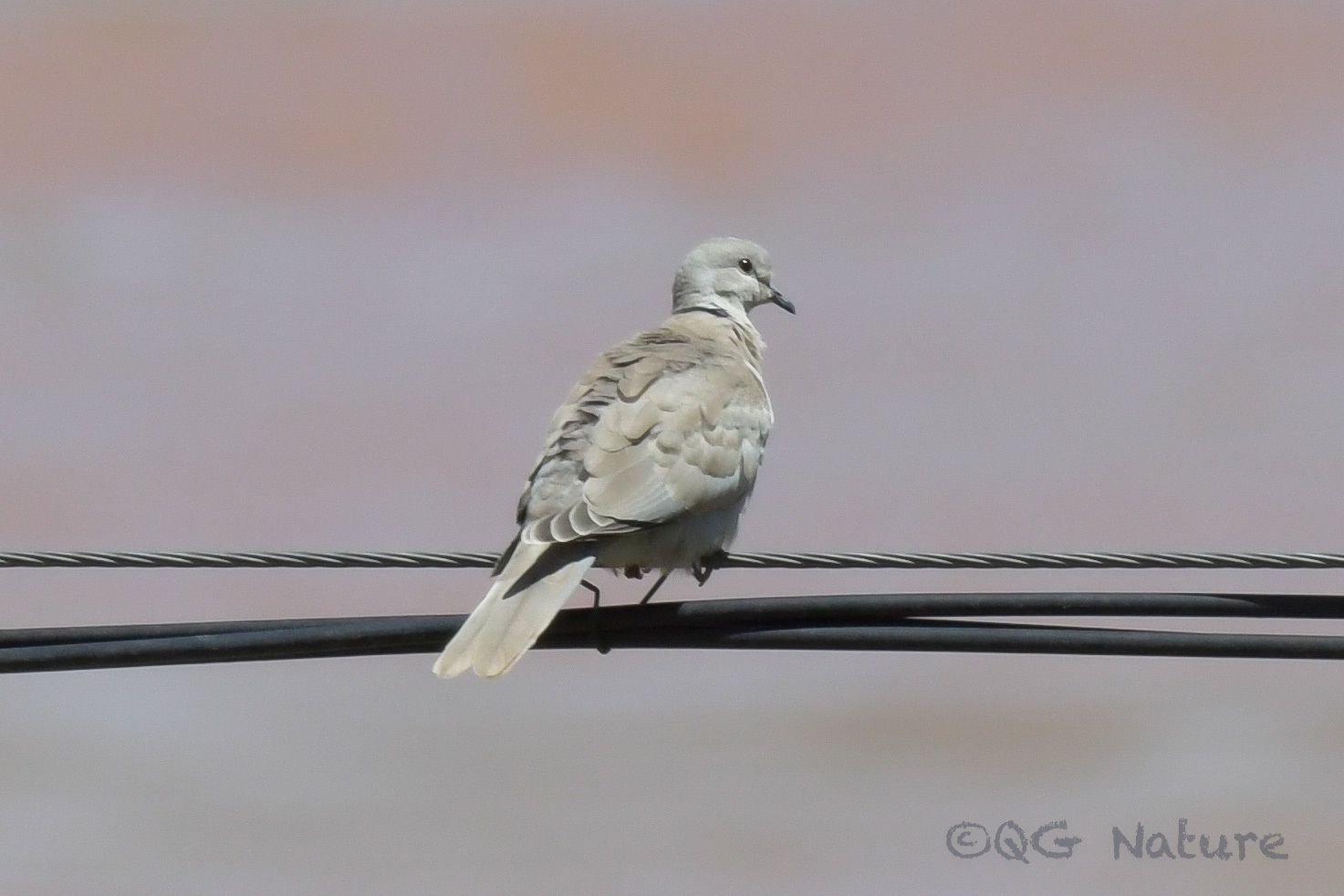
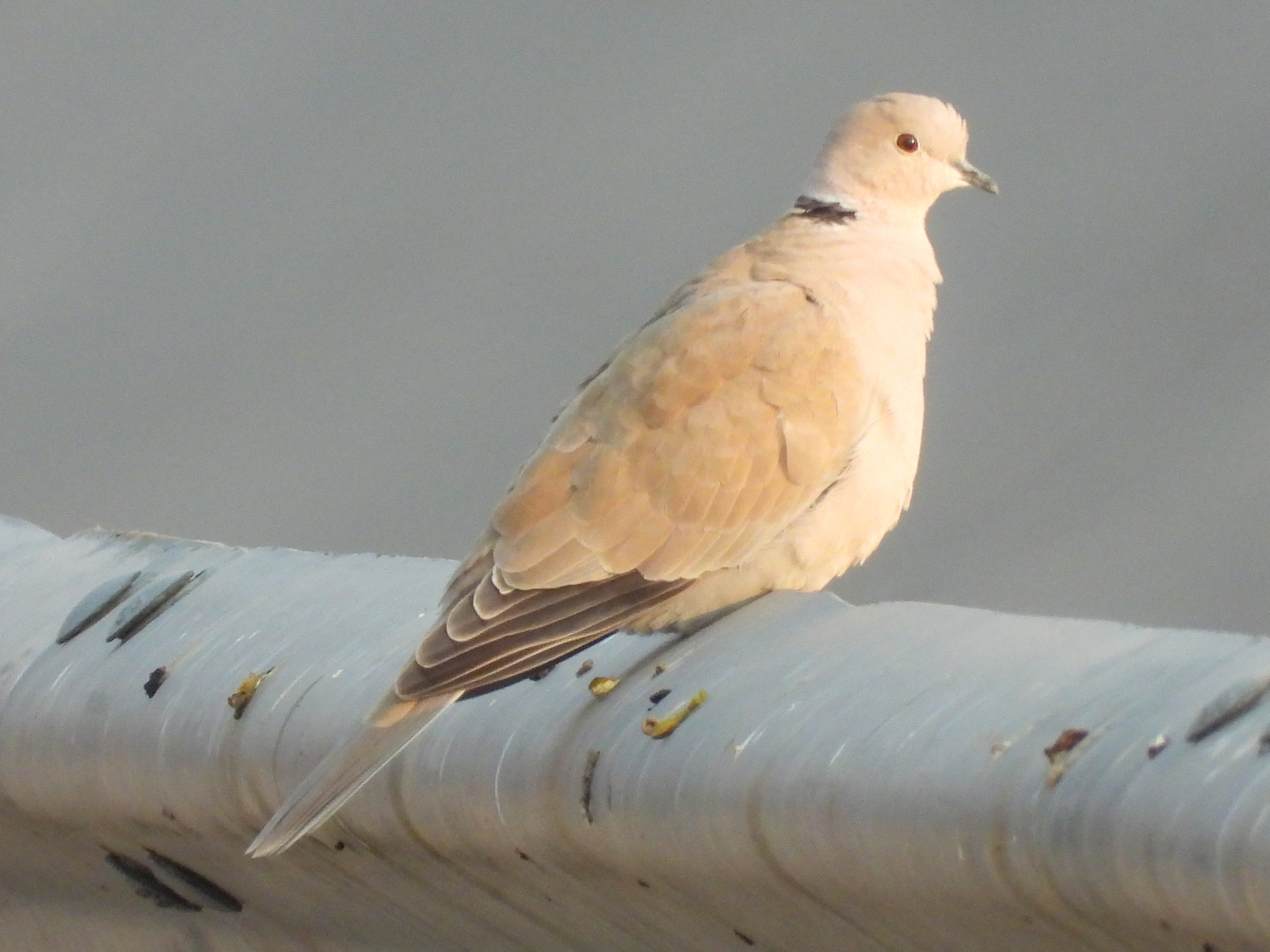
A medium-sized dove distinctly smaller than the wood pigeon, this species matches the rock dove in length but appears slimmer with a longer tail. Adults measure approximately 32 cm from beak tip to tail tip, with a wingspan of 47–55 cm and weighing 125–240 g. The plumage is grey-buff to pinkish-grey, slightly darker on the upperparts than below, with a distinctive blue-grey patch on the underwing. The tail shows grey-buff upper feathers and dark grey feathers tipped with white beneath. The defining feature is the black half-collar edged with white on the nape. The short legs are red and the bill is black, while the red iris appears black from a distance due to the large pupil. A small area of bare skin surrounds the eye, appearing white or yellow. The sexes are virtually identical, while juveniles have a poorly developed collar and brown iris.
Identification
This species is similar in appearance to ring-necked doves and can be very difficult to distinguish from the African collared dove when silent; the African species is marginally smaller and paler. However, the calls are distinctly different: the African collared dove gives a soft, purring 'Cou'crrrrroouw' quite unlike the three-note cooing of this species. The song is a three-syllable 'goo-GOO-goo' with emphasis on the second syllable. A harsh, loud screeching call lasting about two seconds, often described as 'hah-hah', is frequently given in flight just before landing. These cooing calls in early spring are sometimes mistakenly reported as common cuckoos, leading to false reports of the cuckoo's early return.
Distribution & Habitat
Native to Europe, Asia, and northern Africa, this species is not migratory but is strongly dispersive. Its original native range spanned warm temperate and subtropical Asia from Turkey east to southern China, extending south through India to Sri Lanka. By the end of the 19th century, it occupied most of its current European range. The species has colonised Japan and, following the 1974 escape in the Bahamas, much of North and Central America and the Caribbean. It has reached Iceland as a vagrant but has not established there. Highest populations occur in suburban areas and agricultural regions with grain supplies and moderate development. In North America, the species spreads at approximately 100 km per year, double the rate observed during European colonisation.
Behavior & Ecology
Breeding occurs throughout the year when food is abundant, though rarely in winter in cold regions like northeastern Europe. Nests are stick structures placed in trees, almost always within 1 km of human habitation. The female lays two white eggs, incubated by both parents during day and night respectively, hatching after 14–18 days. Fledging occurs after 15–19 days, with three to four broods typical per year, occasionally up to six. The male's mating display involves a rapid vertical climb followed by a circling glide downward with wings held in an inverted V. The diet consists primarily of grain, along with seeds, shoots, and insects. Gregarious by nature, winter flocks of 10 to 50 birds are common, though gatherings of up to 10,000 have been recorded around abundant food sources.
Conservation
The species is not currently considered threatened, though concerns exist regarding its invasive status in North America. While few negative impacts have been demonstrated in Florida where populations are most prolific, there is ongoing concern about potential competition with native birds. One study found these doves are not more aggressive than native mourning doves despite similar dietary preferences. However, the species is a known carrier of Trichomonas gallinae and pigeon paramyxovirus type 1, which can spread to native birds at feeders and when doves are consumed by predators. Pigeon paramyxovirus type 1 poses an emergent threat with potential implications for domestic poultry. Population growth has ceased in areas of long establishment such as Florida, with some evidence of decline, though numbers continue to grow exponentially in regions of recent introduction.
Culture
The scientific name derives from Ancient Greek: streptos meaning 'collar' and peleia meaning 'dove', while decaocto means 'eighteen'. This number connection stems from a Greek myth in which a maid unhappy with her yearly wage of 18 silver coins begged the gods to publicise her mistreatment; Zeus created the collared dove, which has called out 'decaocto' ever since. In several Balkan languages, the word for 18 is three syllables, making it onomatopoeic from the bird's call. As most of its 19th-century European range fell within the Ottoman Empire, many European languages translate its name as 'Turkish dove'—including Danish Tyrkerdue, German Türkentaube, and French Tourterelle turque.
Source: Wikipedia · CC BY-SA 3.0
Taxonomy
- Order
- Columbiformes
- Family
- Columbidae
- Genus
- Streptopelia
- eBird Code
- eucdov
Distribution
Europe to Middle East, India, Sri Lanka, western China, and Korea; introduced in North America, and occurs in the USA (except northeastern), southern Canada (except eastern) and southern Alaska, the West Indies, and northern Mexico locally to southern Mexico
Data Sources
Species description from Wikipedia, licensed under CC BY-SA 3.0.
Bird images and sounds sourced from GBIF, contributed by citizen scientists worldwide under Creative Commons licenses.
Taxonomy data from AviList 2025.