











Common Tern
Sterna hirundo
普通燕鸥
Introduction
A widespread tern species inhabiting coastal and inland waters throughout the Northern Hemisphere. It breeds across temperate and subarctic regions of Europe, Asia, and North America. Characterized by a forked tail and black-capped head, it employs hovering flight over water before plunge-diving for fish. When defending its nest, it mob intruders rather than engaging in direct contact. Colonies can contain thousands of birds, and during breeding season, it produces a loud KEE-yah alarm call. Highly adaptable, it occupies diverse flat, open habitats from tropical shores to taiga lakes and utilizes artificial nesting platforms. Migratory behavior involves traveling to tropical and subtropical waters, with some individuals completing transoceanic journeys.
Description
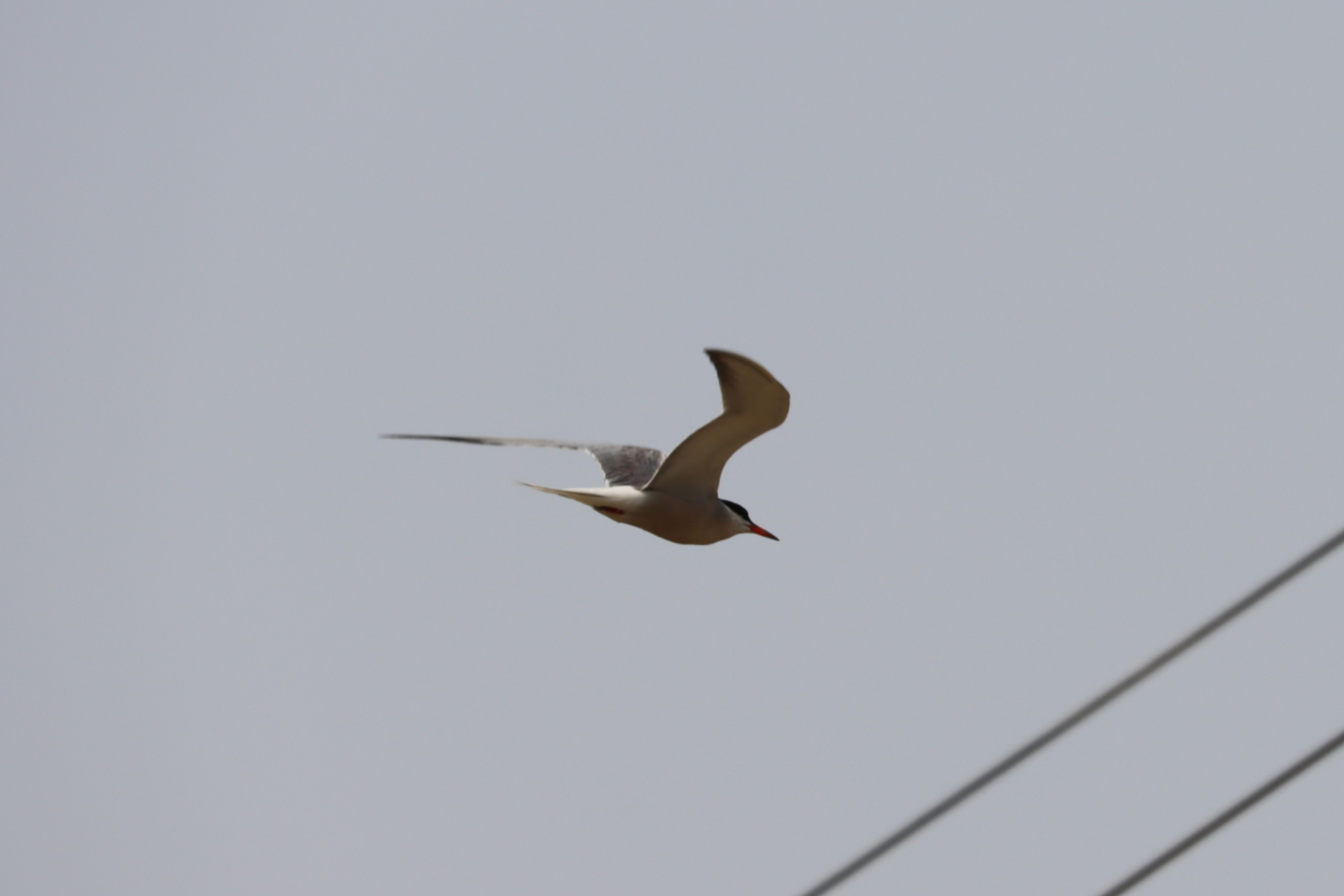
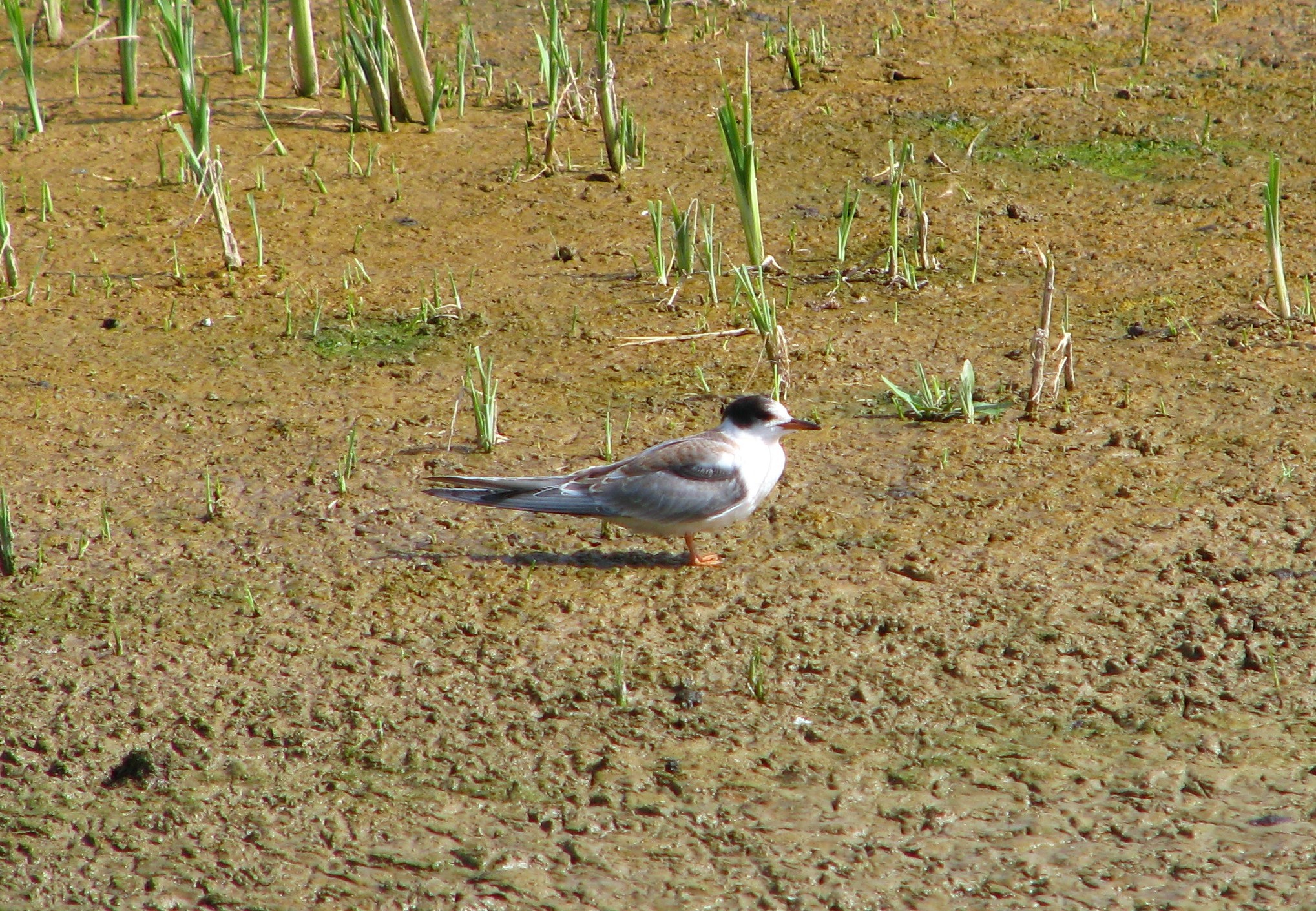
A medium-sized tern measuring 31–35 cm in length with a wingspan of 77–98 cm and weighing 110–141 g. Breeding adults display pale grey upperparts, very pale grey underparts, and a striking black cap. The legs are orange-red, and the slender, pointed bill varies by subspecies—either mostly red with a black tip or entirely black. The upper wings are pale grey, developing a distinctive dark wedge as the breeding season progresses due to exposed dark feather shafts on the outer flight feathers. The rump and tail are white, with the tail not extending beyond the wingtips when perched. Non-breeding adults show white foreheads and underparts with a black or black-and-red bill and darker legs. Juveniles have ginger-tinged upperparts with brown and white scaling, a brown crown and nape, and a pale bill base.
Identification
The most reliable distinction from the similar Arctic tern is the common tern's more powerful build with a larger head, thicker neck, and longer legs. The flight is more direct and less buoyant than the Arctic tern. The common tern shows a dark wedge on the wings as summer progresses, while Arctic terns retain white wings throughout the northern breeding season. The bill is orange-red with a black tip (except in the black-billed longipennis subspecies), and the legs are bright red—darker red in Arctic terns. In flight, the common tern's wings show translucent feathers only on the innermost four, compared to all flight feathers in Arctic terns. The trailing edge of outer flight feathers is thicker and less defined. Roseate terns are paler with longer tail streamers and a mainly black bill. In North America, Forster'sterns are larger with heavier bills and distinct white head patterns in non-breeding plumage.
Distribution & Habitat
This species has a circumpolar distribution with four subspecies breeding across temperate and subarctic regions of Europe, Asia and North America. In North America, it breeds from Labrador to North Carolina and inland across eastern Canada and the Great Lakes region. Small Caribbean populations exist in the Bahamas, Cuba, and Venezuelan islands. Birds winter along both coasts of Central and South America to Argentina and northern Chile. European populations are most abundant in the north and east, with wintering grounds off western and southern Africa. Asian populations spread across the taiga zone with some reaching Sri Lanka and Tibet, wintering in the Indian Ocean and as far as Australia. The species breeds on almost any flat, poorly vegetated surface near water, including beaches, islands, salt marshes, and artificial rafts, from sea level to 4,800 m altitude in Asia.
Behavior & Ecology
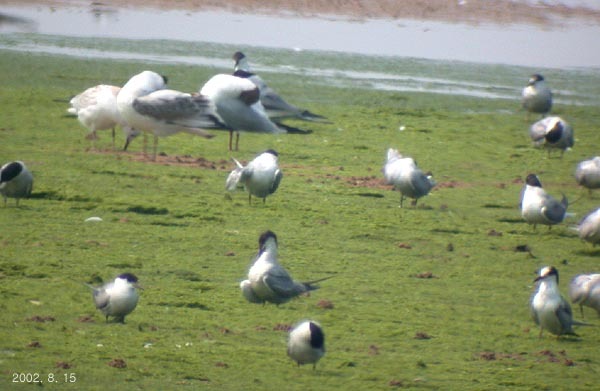
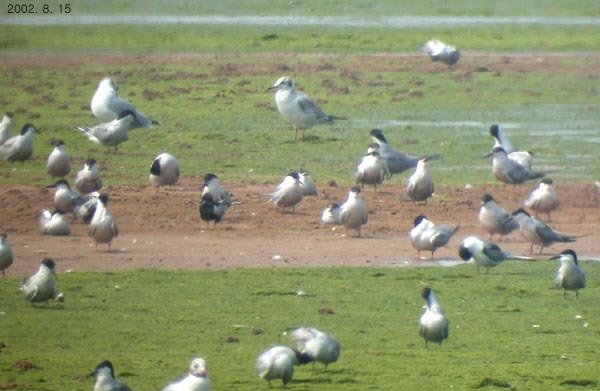
Terns feed exclusively by plunge-diving for fish 5–15 cm long, typically foraging 5–10 km from colonies but sometimes up to 15 km. They also consume molluscs, crustaceans, insects and other invertebrates. When seeking fish, they fly head-down with bills held vertically, often in flocks that increase fishing success by about one-third. They nest in colonies usually under 2,000 pairs, sometimes reaching 20,000. Courtship involves aerial displays with paired circular flights, followed by ground rituals where males present fish to females. The nest is a shallow scrape lined with debris, and both parents incubate 2–3 eggs for 21–22 days. Chicks fledge in 22–28 days and are fed by parents for several weeks, sometimes even during migration. The most distinctive call is a loud KEE-yah alarm, while other vocalizations include keeur (approaching nest with fish), kip (social contact), and kakakakaka (attacking intruders).
Conservation
Classified as Least Concern on the IUCN Red List with a large global population of 1.6 to 3.3 million mature individuals and a vast breeding range of 84,300,000 km². However, North American populations have declined by more than 70% in the last forty years, with fewer than 80,000 breeding pairs and less than 10,000 in the Great Lakes region. Historical population crashes occurred in the 19th century due to the millinery trade. Current threats include habitat loss from development and vegetation growth, pollution (PCBs and DDE), human disturbance of breeding colonies, predation by rats and gulls, and flooding of nest sites. Some Caribbean populations are hunted for food. Conservation measures include artificial nesting rafts, predator control, and habitat management. The species is protected under international legislation including the AEWA agreement and the US-Canada Migratory Bird Treaty Act.
Culture
The name 'tern' derives from Old English 'stearn', recorded in the 10th-century poem The Seafarer, likely referring to the bird's swallow-like appearance. This resemblance gave rise to the informal name 'sea swallow' used since the 17th century. Scots names including 'picktarnie', 'tarrock' and variants are believed to be onomatopoeic, derived from the bird's distinctive calls. The Latin species name hirundo means 'swallow', referencing the similar light build and forked tail of the unrelated swallow. Due to the difficulty distinguishing common and Arctic terns, all traditional common names are shared between the two species. The Swedish zoologist Einar Lönnberg clarified in 1913 that the binomial Sterna hirundo applies specifically to the common tern.
Source: Wikipedia · CC BY-SA 3.0
Taxonomy
- Order
- Charadriiformes
- Family
- Laridae
- Genus
- Sterna
- eBird Code
- comter
Subspecies (4)
-
Sterna hirundo hirundo
breeds Azores to Canary islands, inland Europe (except Arctic) eastward to northwestern Siberia and western China, and locally northwestern Africa, also inland Northwest Territories eastward to southeastern Canada and southward to Montana, Great Lakes, and New England, coastal North Atlantic to South Carolina, Bahamas (erratic), and islands north of Venezuela; migrates to southern oceans
-
Sterna hirundo longipennis
breeds northeastern Siberia to northeastern China; winters southeastern Asia and Philippines to Australia
-
Sterna hirundo minussensis
breeds central Siberia to northern Mongolia; winters to Indian Ocean
-
Sterna hirundo tibetana
breeds central Asia eastward to Inner Mongolia, southward through Tibetan Plateau from eastern Ladakh to Qinghai; winters to eastern Indian Ocean
Data Sources
Species description from Wikipedia, licensed under CC BY-SA 3.0.
Bird images and sounds sourced from GBIF, contributed by citizen scientists worldwide under Creative Commons licenses.
Taxonomy data from AviList 2025.