








Charadriiformes / Laridae / Sterna
Roseate Tern
Sterna dougallii · 粉红燕鸥
Introduction
A species of tern in the family Laridae, genetically most closely related to the white-fronted tern. It has several geographical subspecies differing mainly in bill colour and minor plumage details. Both European and North American populations have experienced long-term decline, though active conservation measures have reversed this trend at some colonies.
Description
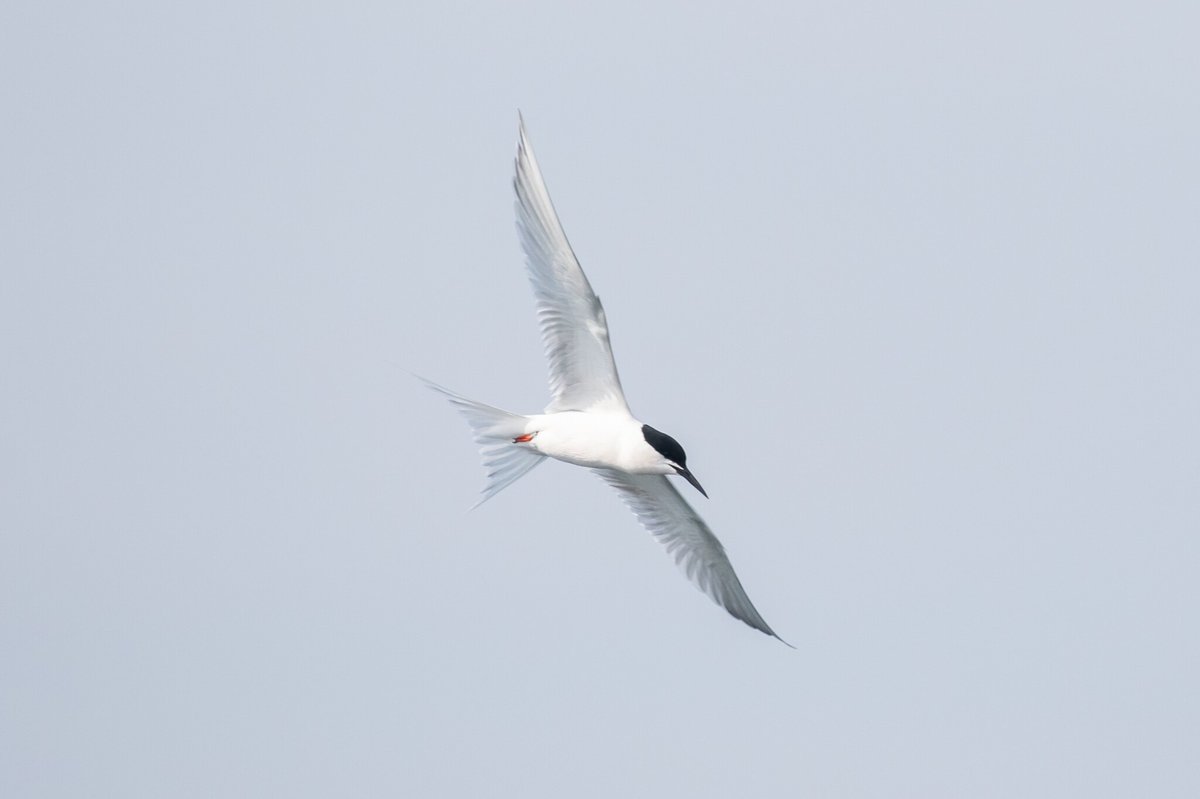
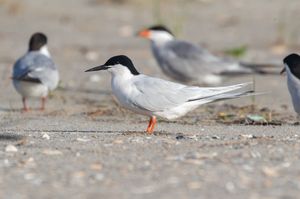
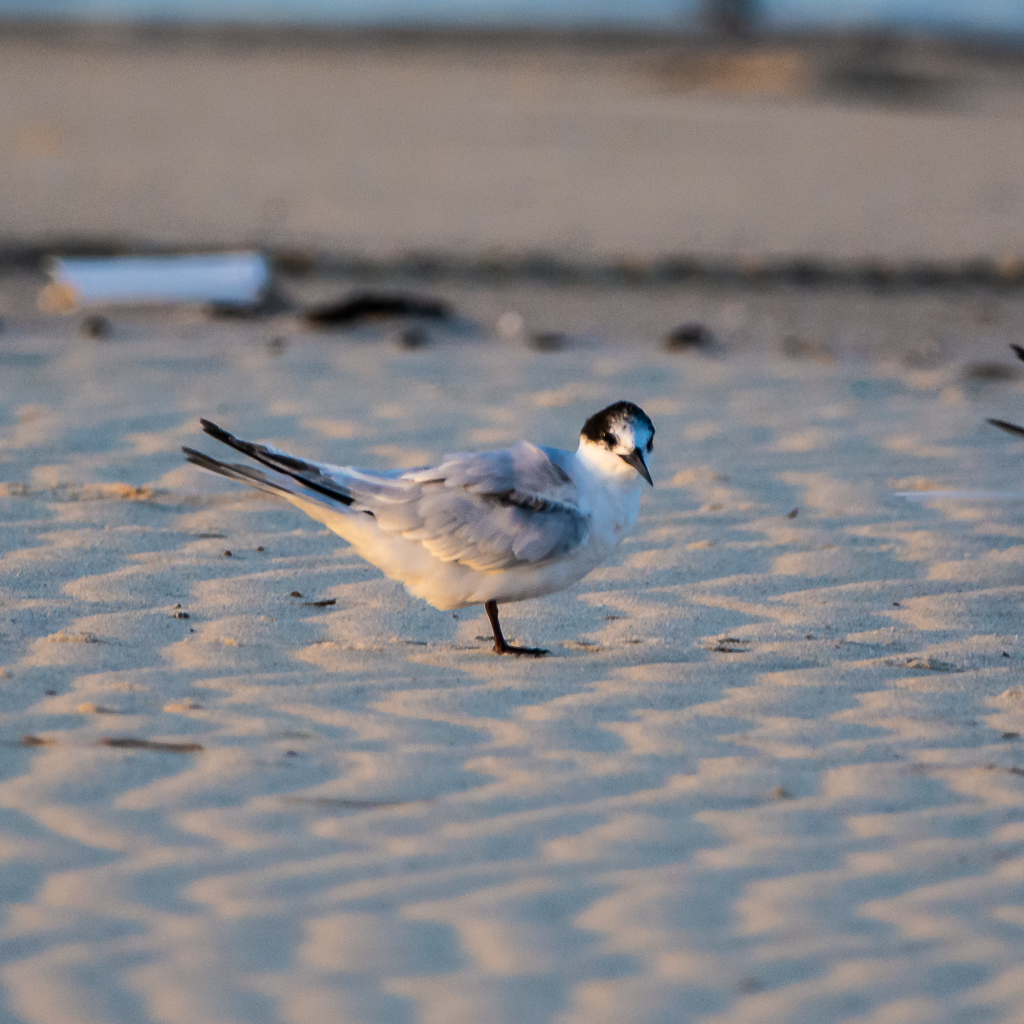
Small-medium tern, 33–36 cm (13–14 in) long with a 67–76 cm (26–30 in) wingspan. Thin sharp bill is black with a red base that develops through the breeding season; more extensive (fully red) in tropical and southern hemisphere subspecies. Upper wings are pale grey, underparts white, appearing very pale in flight. Adults have very long, flexible tail streamers and orange-red legs. In summer, adult underparts take on a pinkish tinge. In winter, the forehead becomes white and the bill black. Juveniles have a scaly appearance and a fuller black cap than similar species.
Identification
Can be confused with common tern, Arctic tern, and Sandwich tern. Shorter-winged with faster wing beats than common or Arctic tern. Outermost primary flight feathers darken during summer. Distinctive call is a 'chuwit', similar to spotted redshank. Juveniles resemble juvenile Sandwich Terns but have a fuller black cap.
Distribution & Habitat
Subspecies S. d. dougallii breeds on Atlantic coasts of Europe and North America, wintering south to the Caribbean and west Africa. Tropical forms S. d. korustes and S. d. bangsi are resident breeders from east Africa across the Indian Ocean to Japan. S. d. gracilis breeds in Australia and New Caledonia. S. d. arideensis populations occur in the north-western Indian Ocean.
Behavior & Ecology
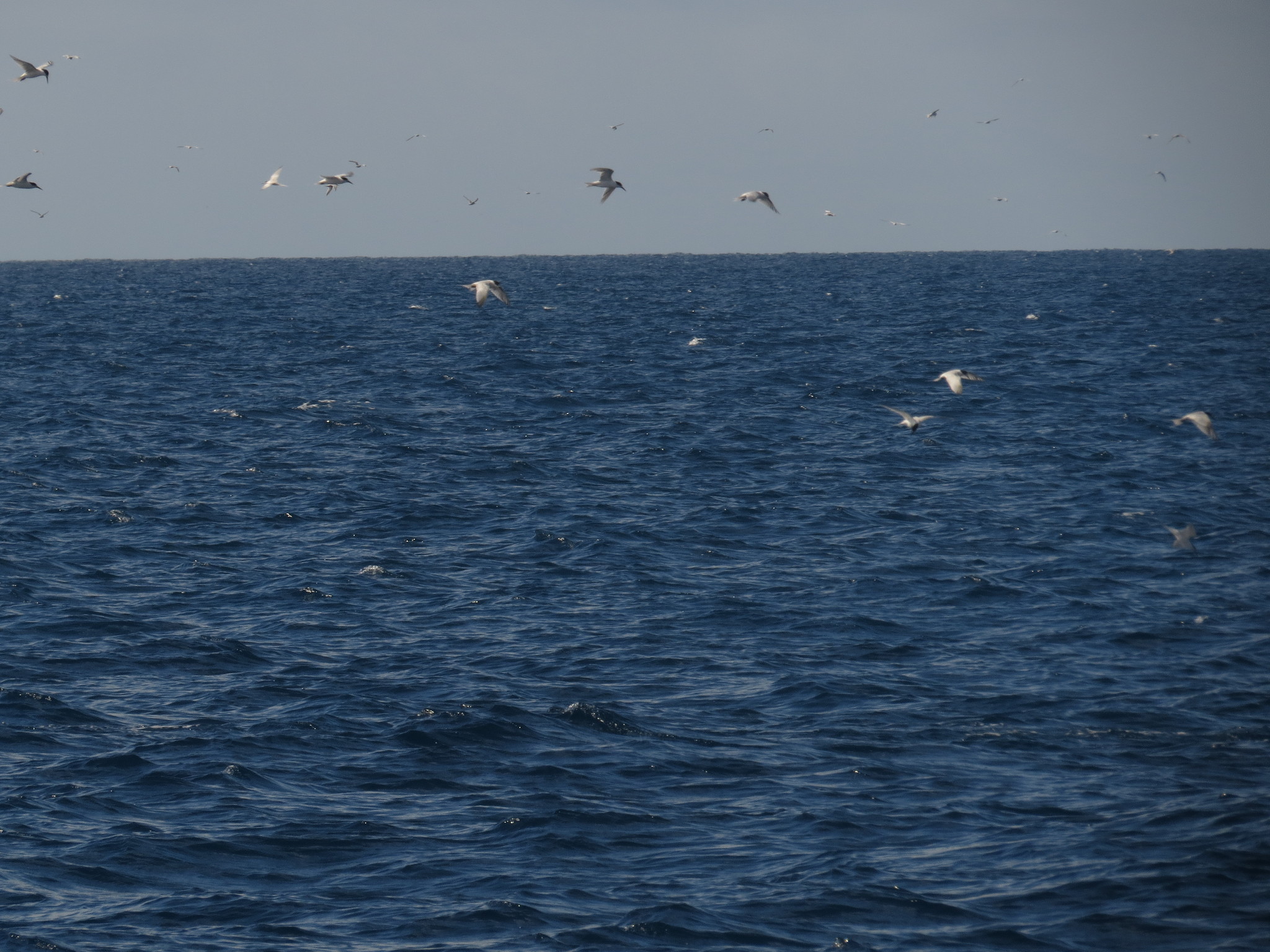
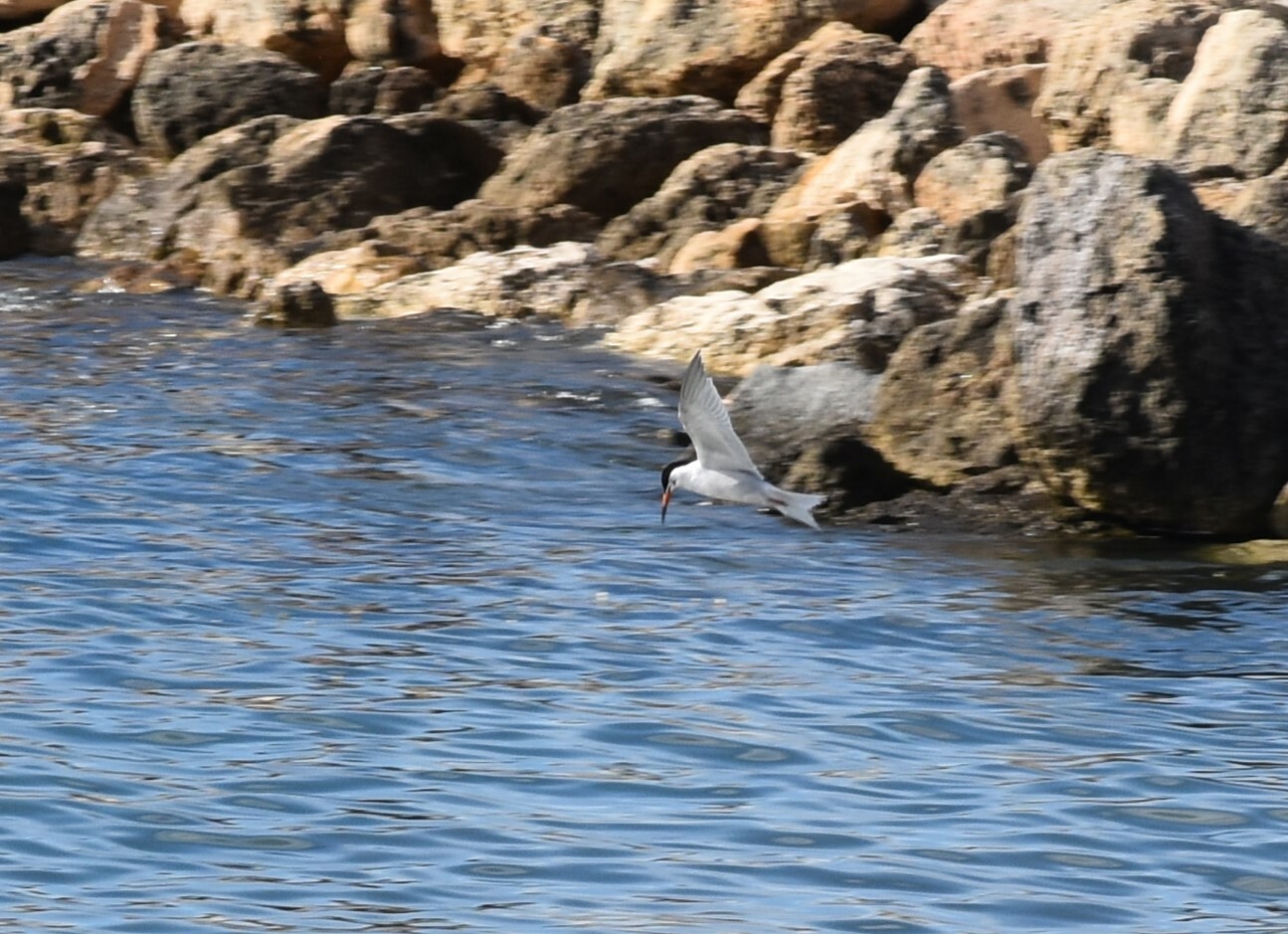
Feeds by plunge-diving for fish, almost invariably from the sea; rarely visits freshwater lagoons. Usually dives directly rather than from a stepped-hover. Exhibits kleptoparasitic behaviour, stealing fish from other seabirds like puffins. Breeds in colonies on coasts and islands, nesting in ground scrapes, often in hollows or under dense vegetation. Lays one or two (rarely three) eggs. Less defensive of nest and young than other white terns, often relying on surrounding Arctic and common terns for defense. Preyed upon by white-bellied sea-eagle, silver gull, turnstone, black rat, and King's skink.
Conservation
Hunted for plumes in the late 19th century. Recent declines in some regions due to competition and predation by large gulls. Designated for protection under the UK Biodiversity Action Plan, with global warming cited as a threat. Listed as Threatened by the Canadian Wildlife Service. The U.S. Department of Interior lists the northeastern population as Endangered and the Caribbean population as Threatened. Applies to the Agreement on the Conservation of African-Eurasian Migratory Waterbirds (AEWA). Conservation measures including nestboxes have increased breeding productivity; for example, the Coquet Island population rose from 25 pairs in 1997 to 154 pairs in 2022.
Source: Wikipedia · CC BY-SA 3.0
Taxonomy
- Order
- Charadriiformes
- Family
- Laridae
- Genus
- Sterna
Subspecies (5)
-
Sterna dougallii arideensis
Seychelles to Madagascar and Rodrigues
Data Sources
Species description from Wikipedia, licensed under CC BY-SA 3.0.
Bird images and sounds sourced from GBIF, contributed by citizen scientists worldwide under Creative Commons licenses.
Taxonomy data from AviList 2025.