Passeriformes / Fringillidae / Spinus
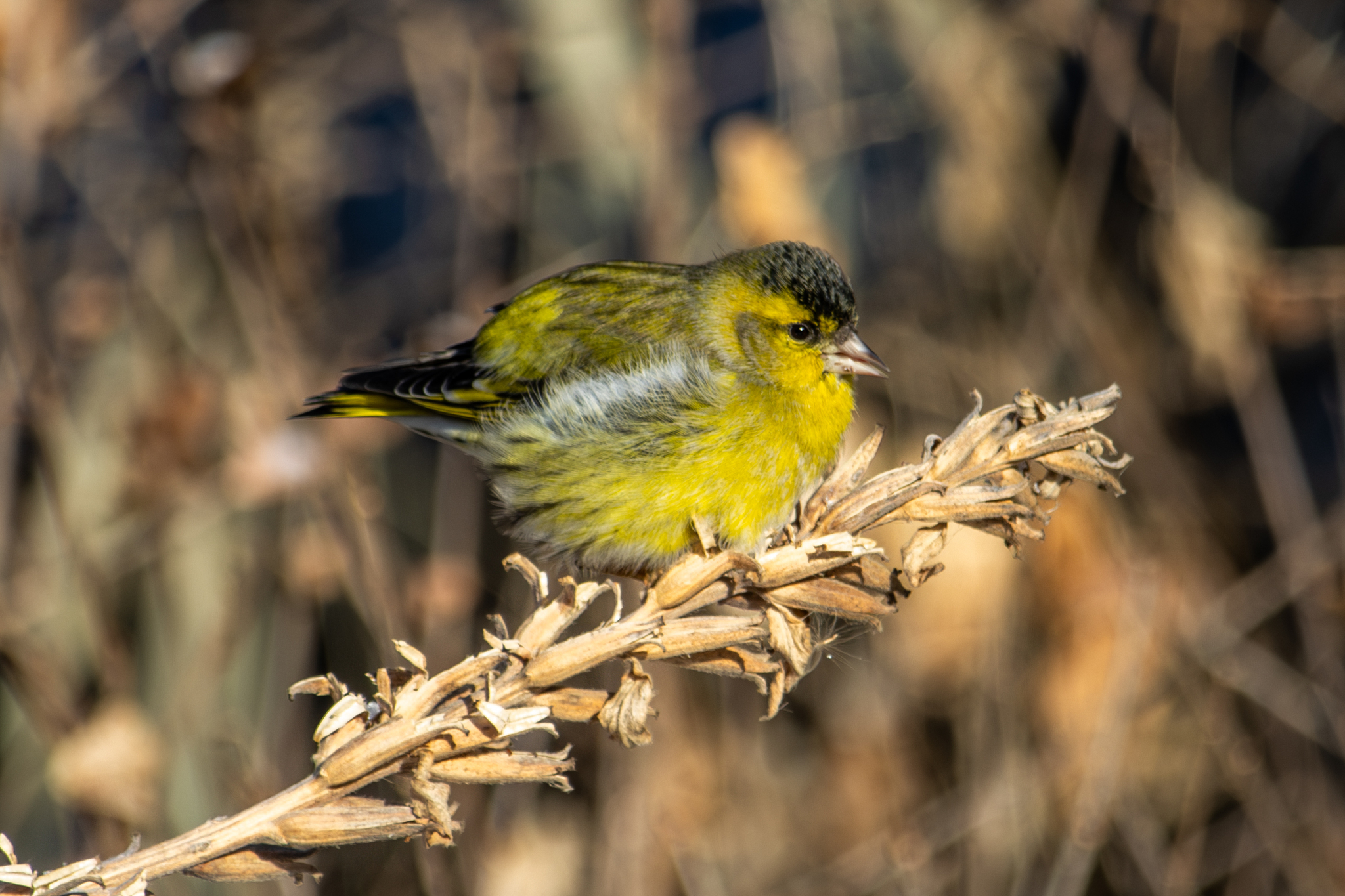
Eurasian Siskin
Spinus spinus · 黄雀
Introduction
A small passerine in the finch family Fringillidae, common throughout Europe and Eurosiberia. It inhabits coniferous and mixed woodlands, feeding primarily on seeds of alder and conifers. The species exhibits an unusual migration pattern, moving south in large numbers every few years based on food availability. It is a monotypic species with no distinct subspecies.
Description
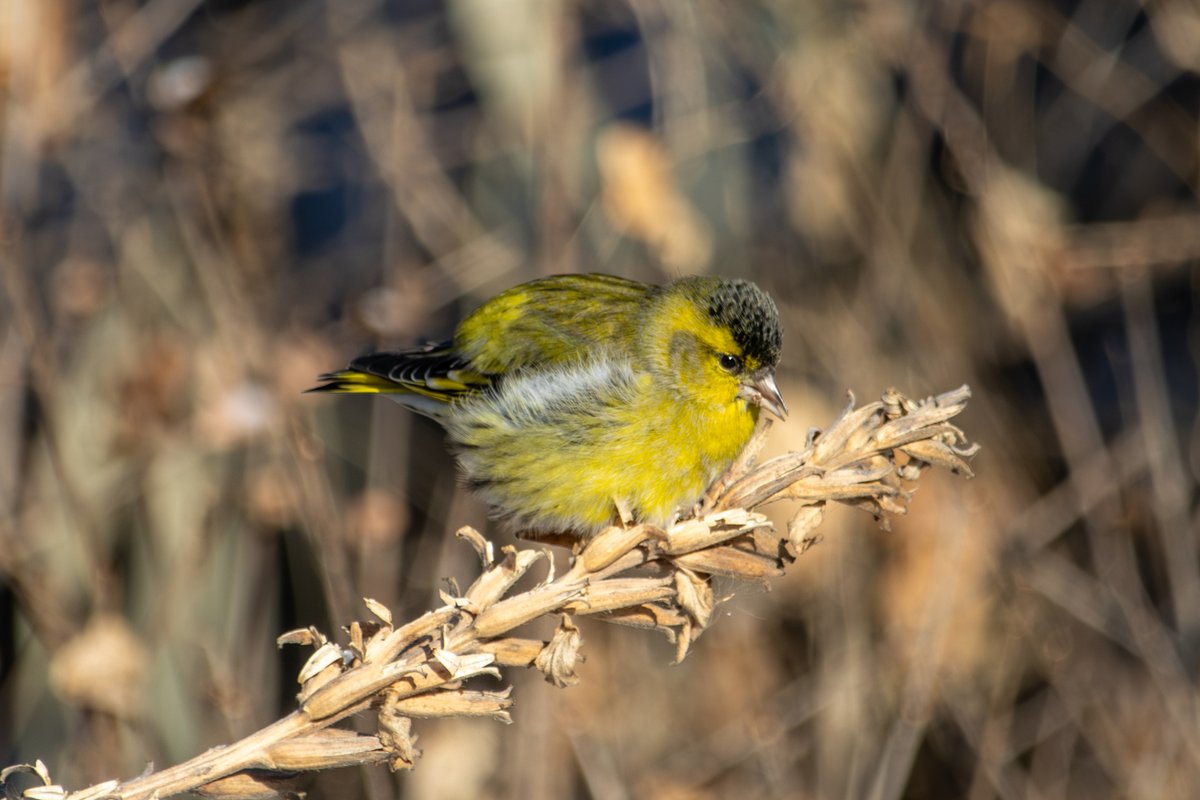
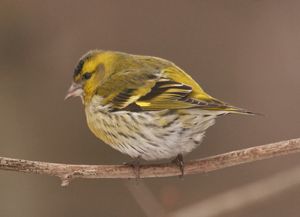
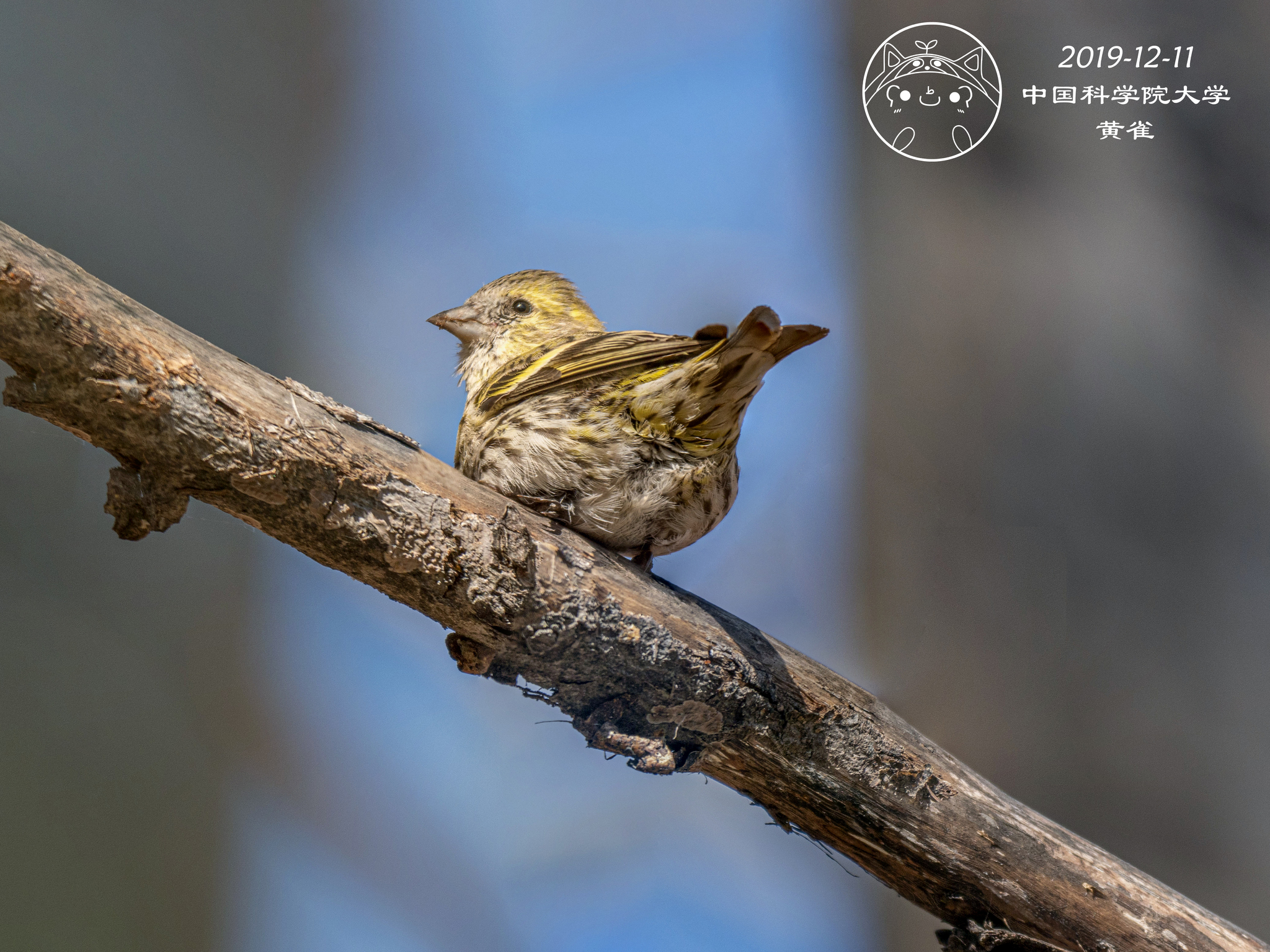
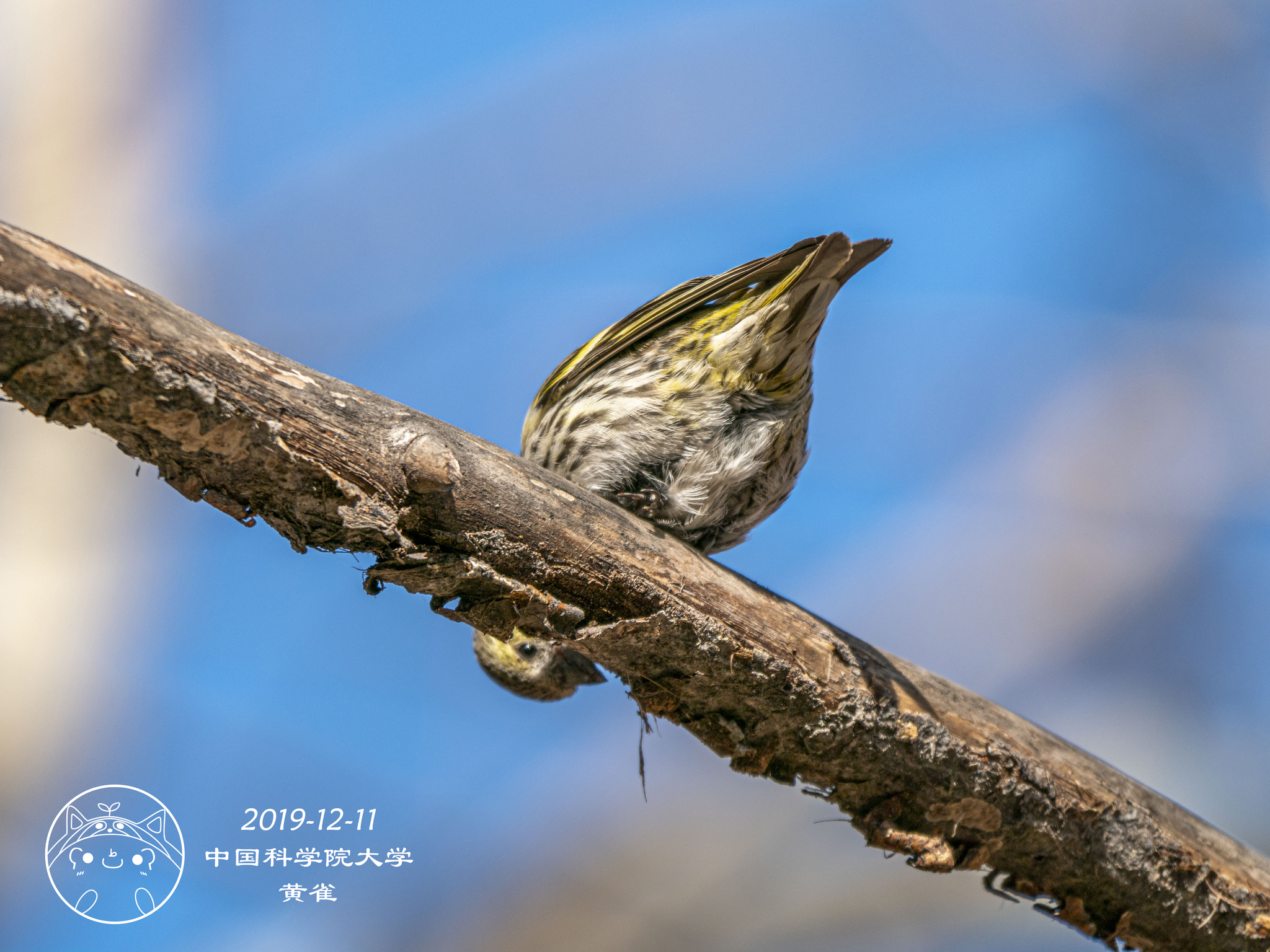
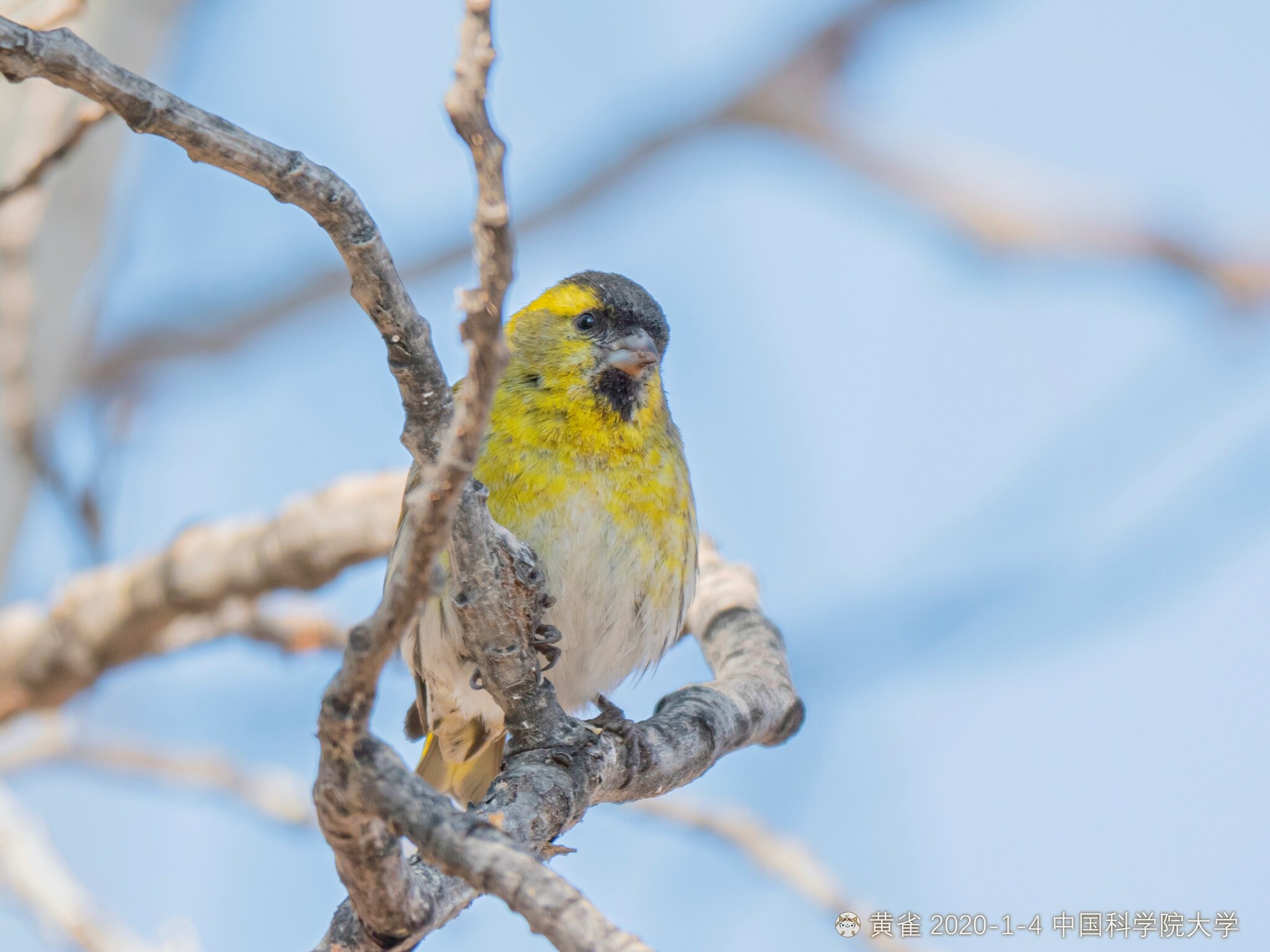
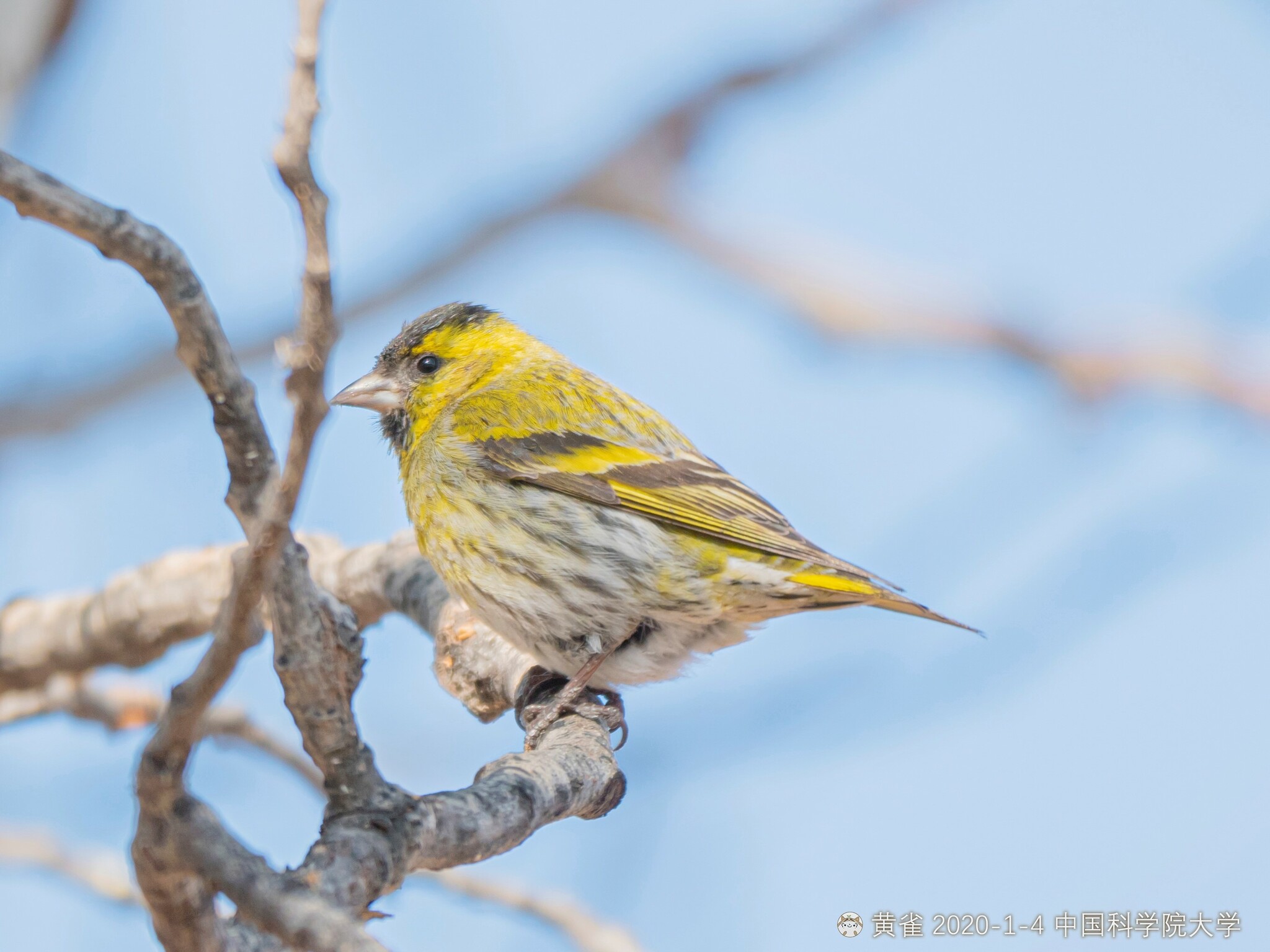
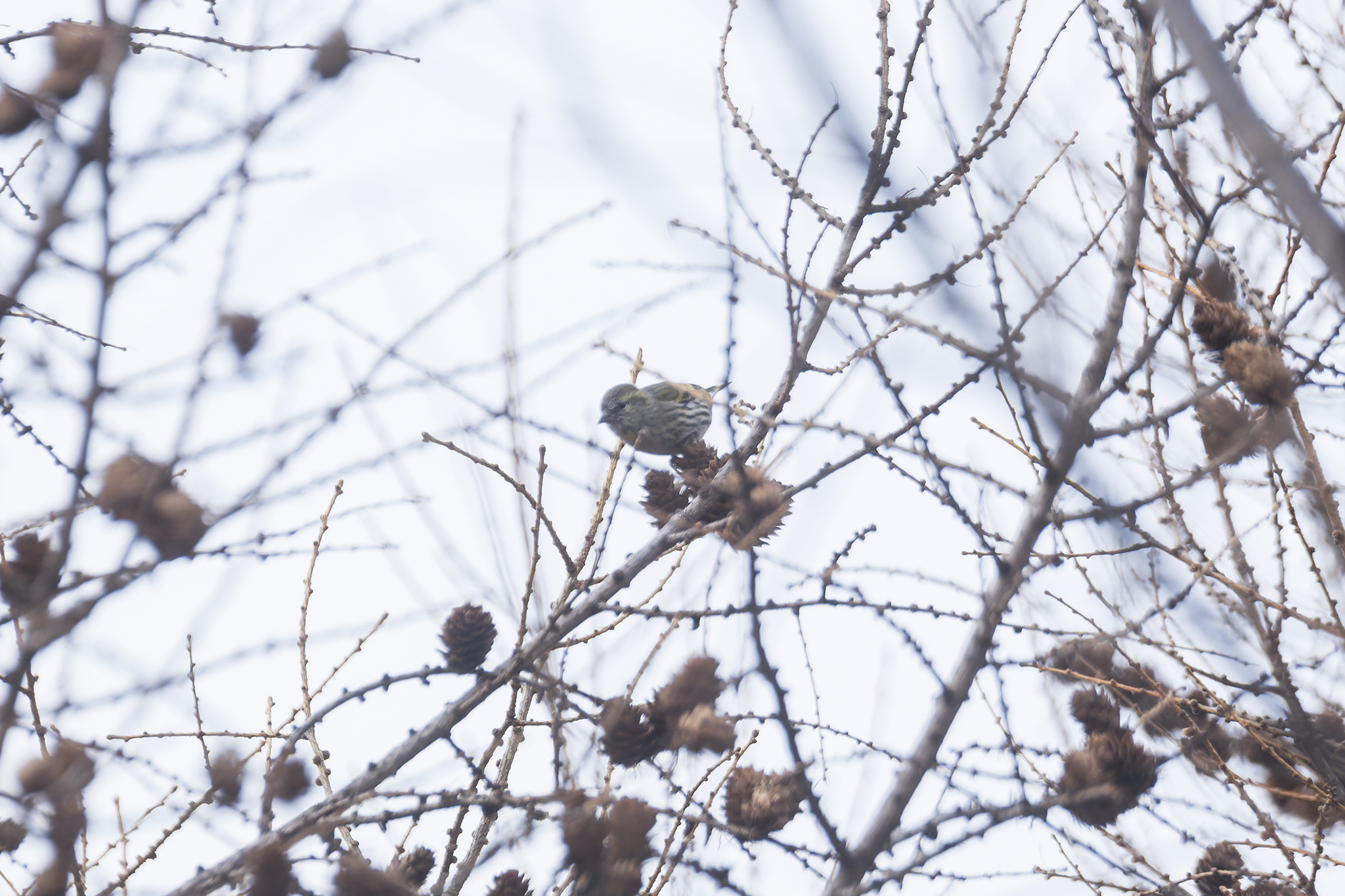
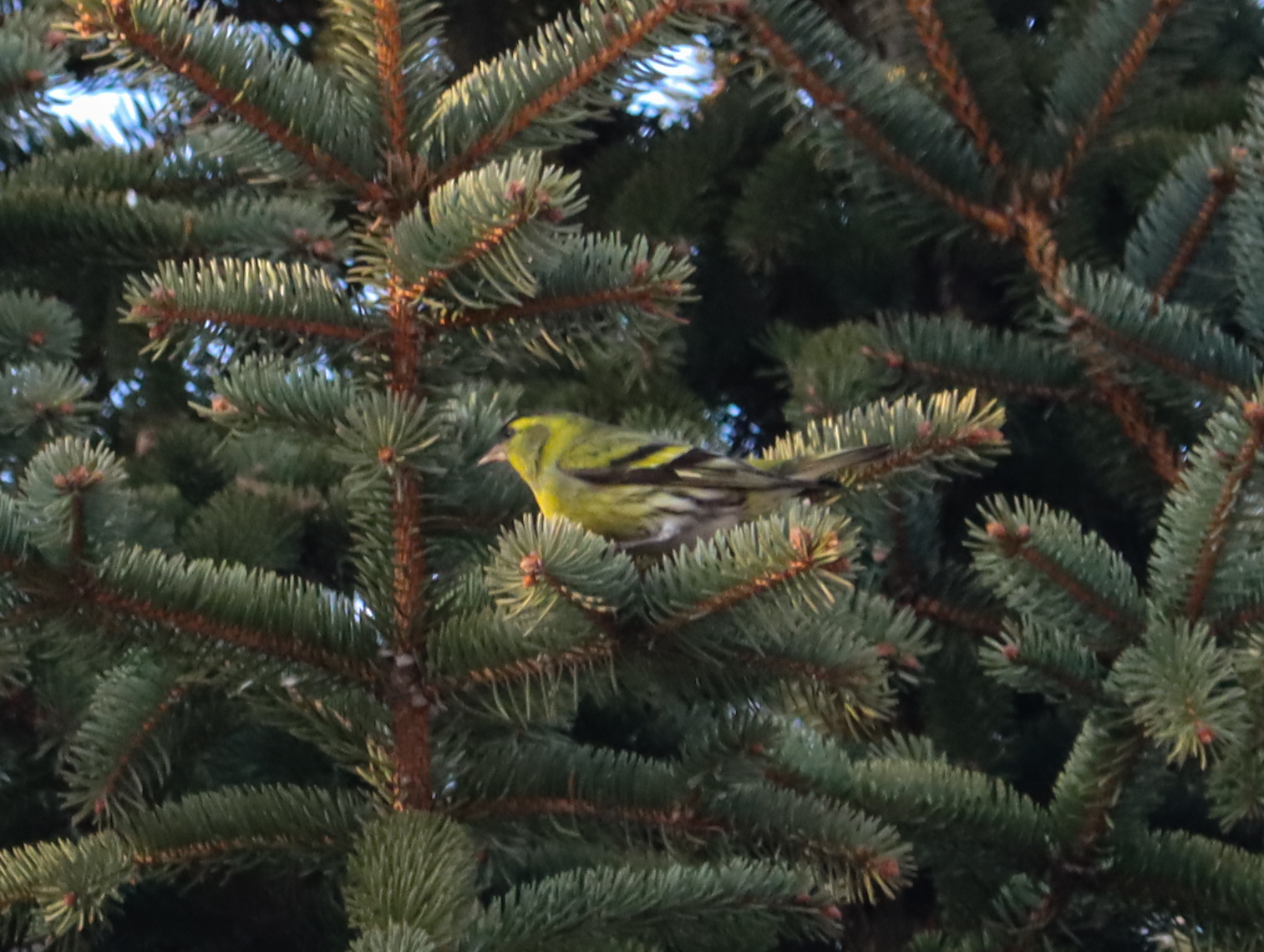
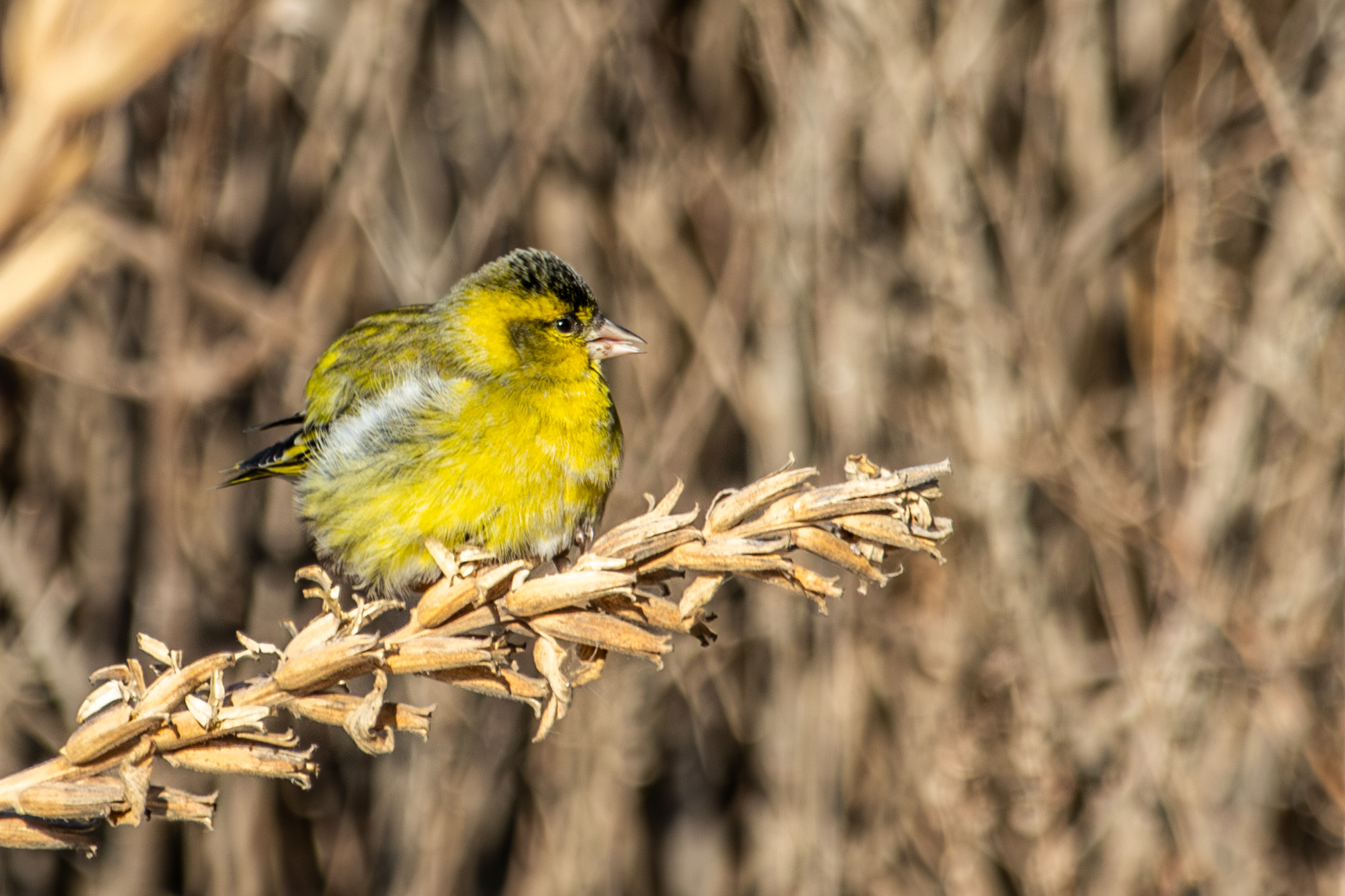
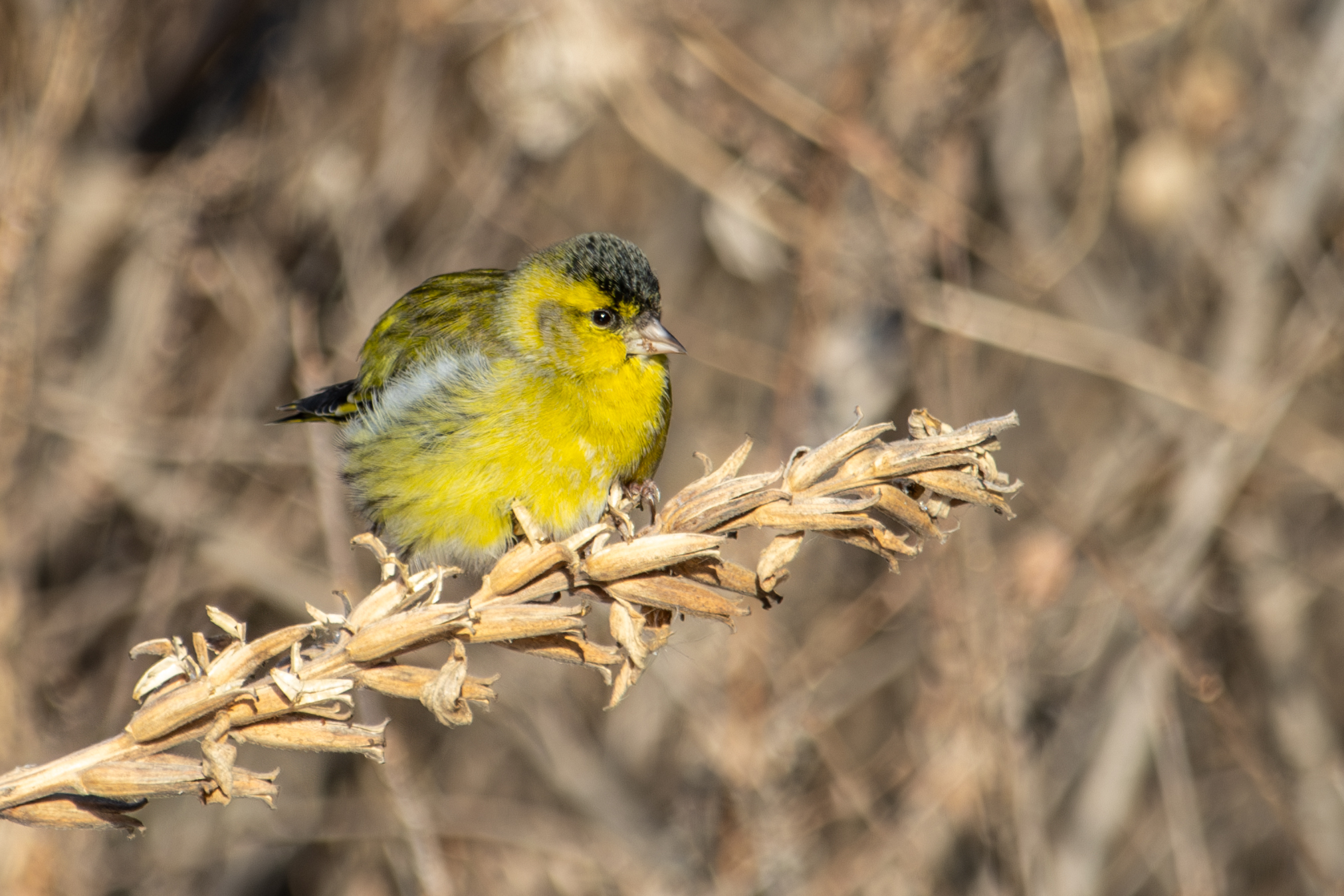
Length 11–12.5 cm (4.3–4.9 in), wingspan 20–23 cm (7.9–9.1 in), weight 12–18 g (0.42–0.63 oz). Upperparts are greyish-green; underparts are grey-streaked white. Wings are black with a striking yellow wing bar; tail is black with yellow sides. Males have a predominantly yellow face and breast, a black cap, black bib, and yellow auriculas. Females and young have greyish-green heads, olive-coloured plumage, no cap, and a white bib. The bill is short with a decurved culmen; legs and feet are dark brown; eyes are black.
Identification
Distinguished from similar finches by greyish-green upperparts, yellow rump, and black wings with broad yellow wing bars tipped with white. Males show a black cap and unstreaked throat; females lack the cap and have greenish tones on the mantle. Flight is rapid and bounding. Calls include descending 'tilu' and ascending 'tluih', plus a harsh rattling chirrup. Song is a smooth, rapid twitter and trill. Can be confused with citril finch, European greenfinch, or European serin.
Distribution & Habitat
Range covers Eurosiberia, northern Africa, central and northern Europe, and the eastern coast of Asia. Breeds in coniferous woodlands, especially spruce, and mixed woodlands. Overwinters in the Mediterranean basin, around the Black Sea, Tibet, Taiwan, and lower Yangtse River valleys. Occasional sightings in North America. Migrates south in large numbers every few years, often linked to Norway spruce seed crops or alder/birch seed failure. Forms large flocks outside breeding season.
Behavior & Ecology
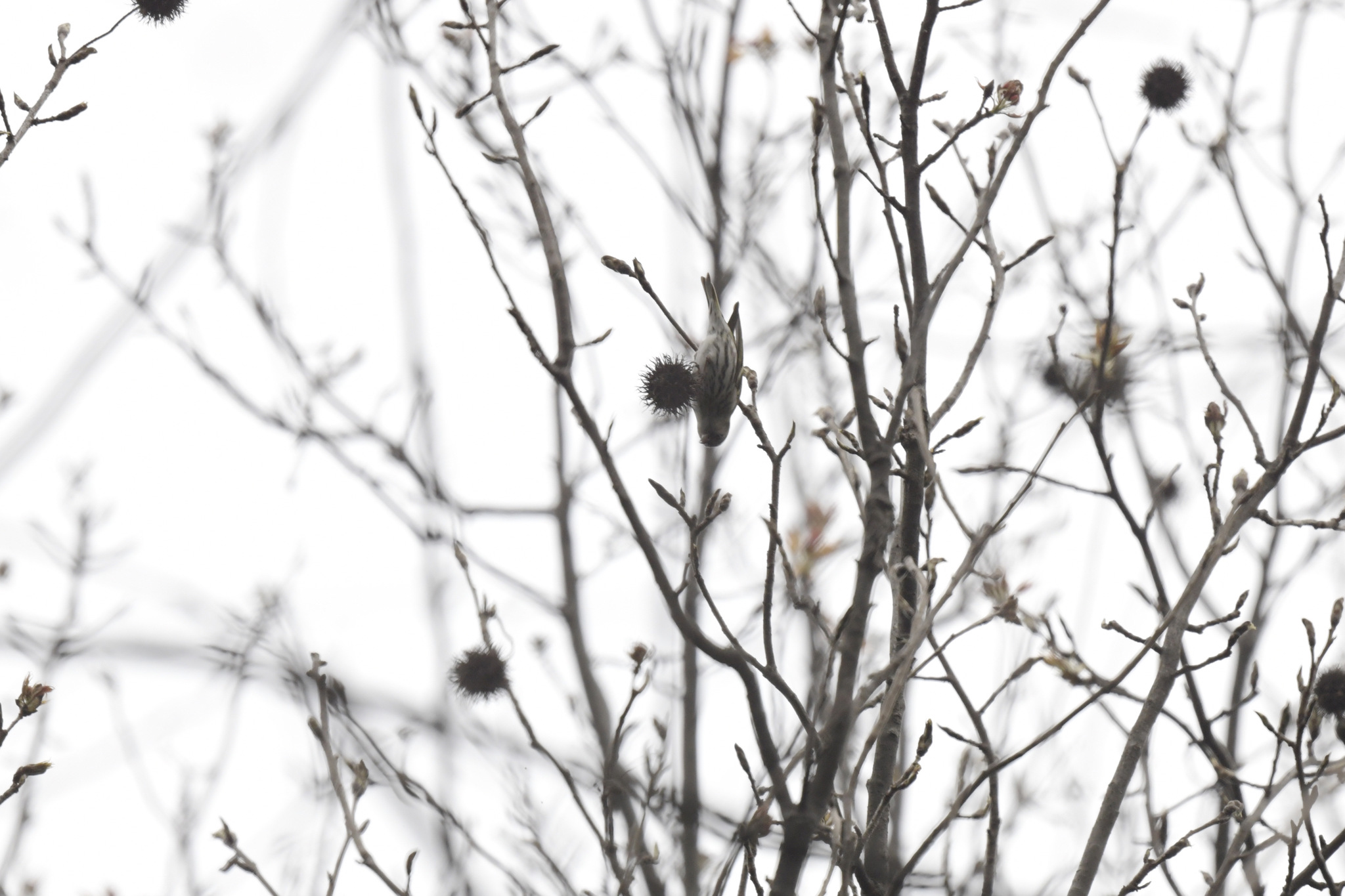
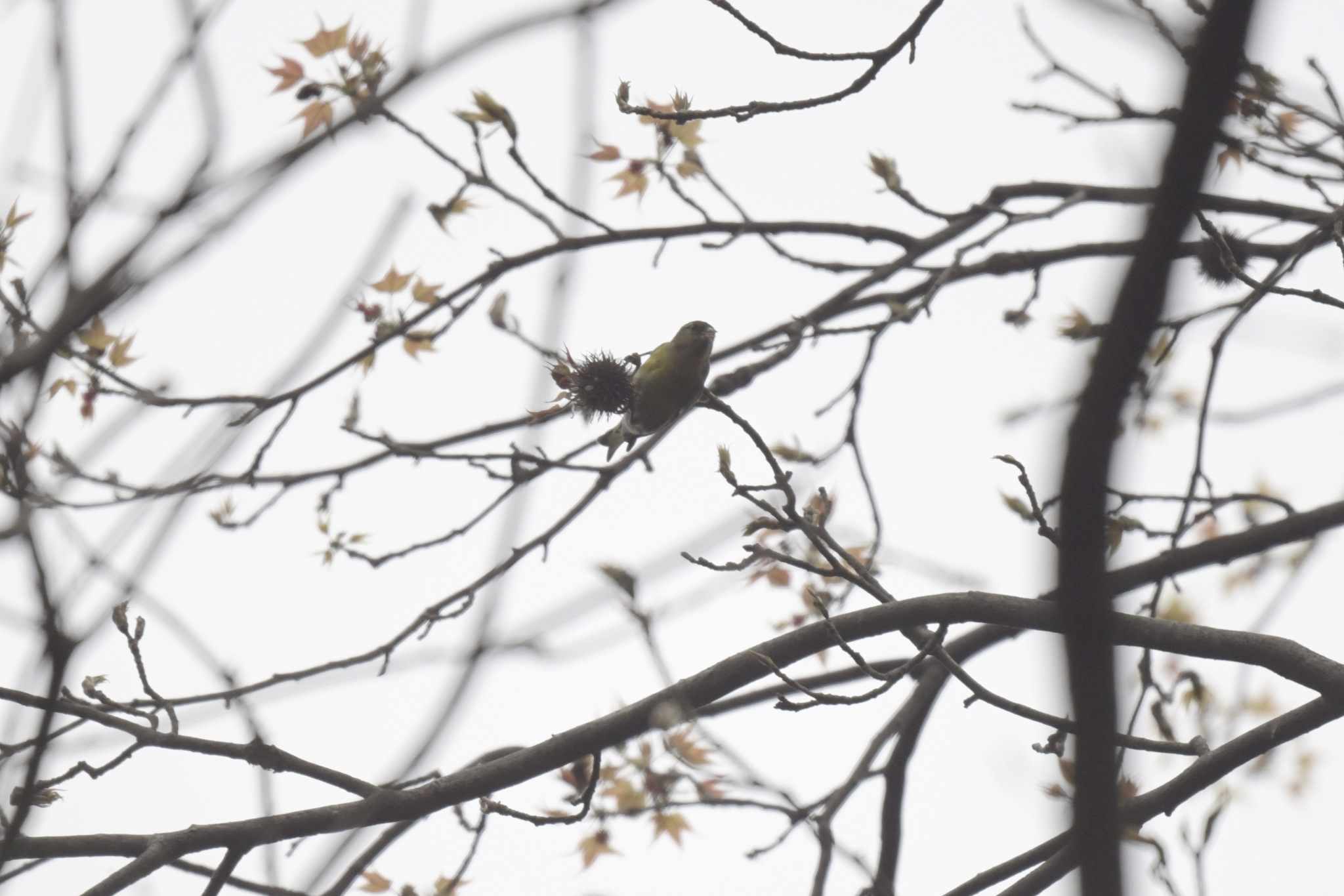
Granivorous, feeding mainly in trees on conifer seeds (spruce, larch) and broadleaf seeds (alder, birch). Diet includes insects like beetles when feeding young. Exhibits allofeeding, where subordinates regurgitate food for dominants. Nests are bowl-shaped, built high in conifers using twigs, grass, moss, and lichen. Lays 2–6 white, grey, or light blue eggs with brown spots (16.5 mm x 12 mm). Incubation lasts 10–14 days by the female alone. Chicks fledge after 15 days. Usually raises two broods per season.
Conservation
Global population estimated at 20–36 million; European population at 2.7–15 million pairs. IUCN status is Least Concern due to stable population numbers. Listed in Annex II of the Berne Convention as a protected species.
Culture
Popular in aviculture for song and appearance; hybrids with canaries occur. Featured on postage stamps in Poland, Gibraltar, Benin, and Belgium. A statue in Saint Petersburg references the bird's colours matching student uniforms, linked to the song 'Chizhik-Pyzhik'. Subject of Czech folk song 'Čížečku, čížečku' and appears in Elif Shafak's novel Three Daughters of Eve.
Source: Wikipedia · CC BY-SA 3.0
Taxonomy
- Order
- Passeriformes
- Family
- Fringillidae
- Genus
- Spinus
Distribution
breeds northern Palearctic; winters Mediterranean region, China, and Ryukyu Islands (southern Japan)
Data Sources
Species description from Wikipedia, licensed under CC BY-SA 3.0.
Bird images and sounds sourced from GBIF, contributed by citizen scientists worldwide under Creative Commons licenses.
Taxonomy data from AviList 2025.