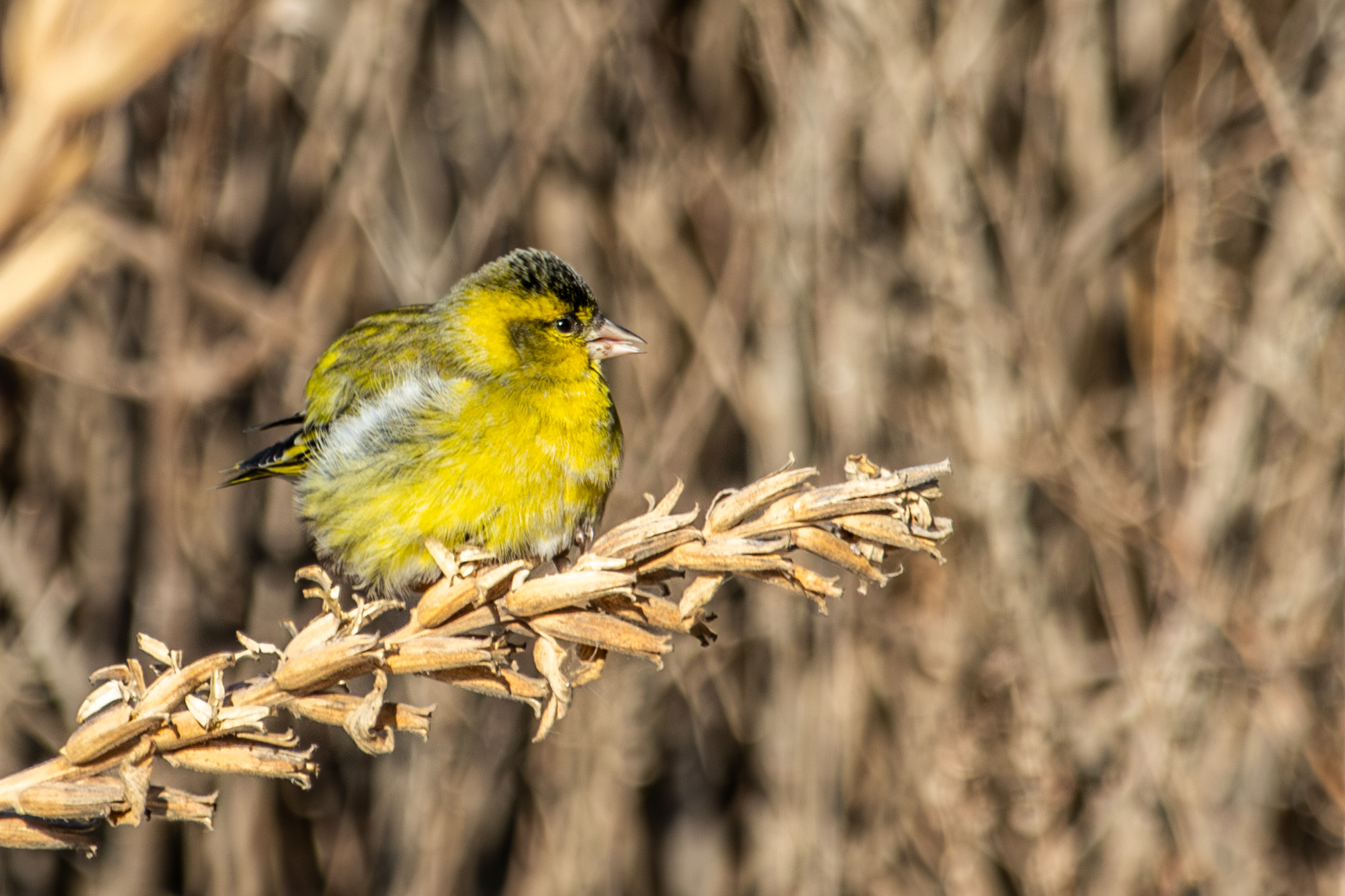
Eurasian Siskin
Spinus spinus
黄雀
Introduction
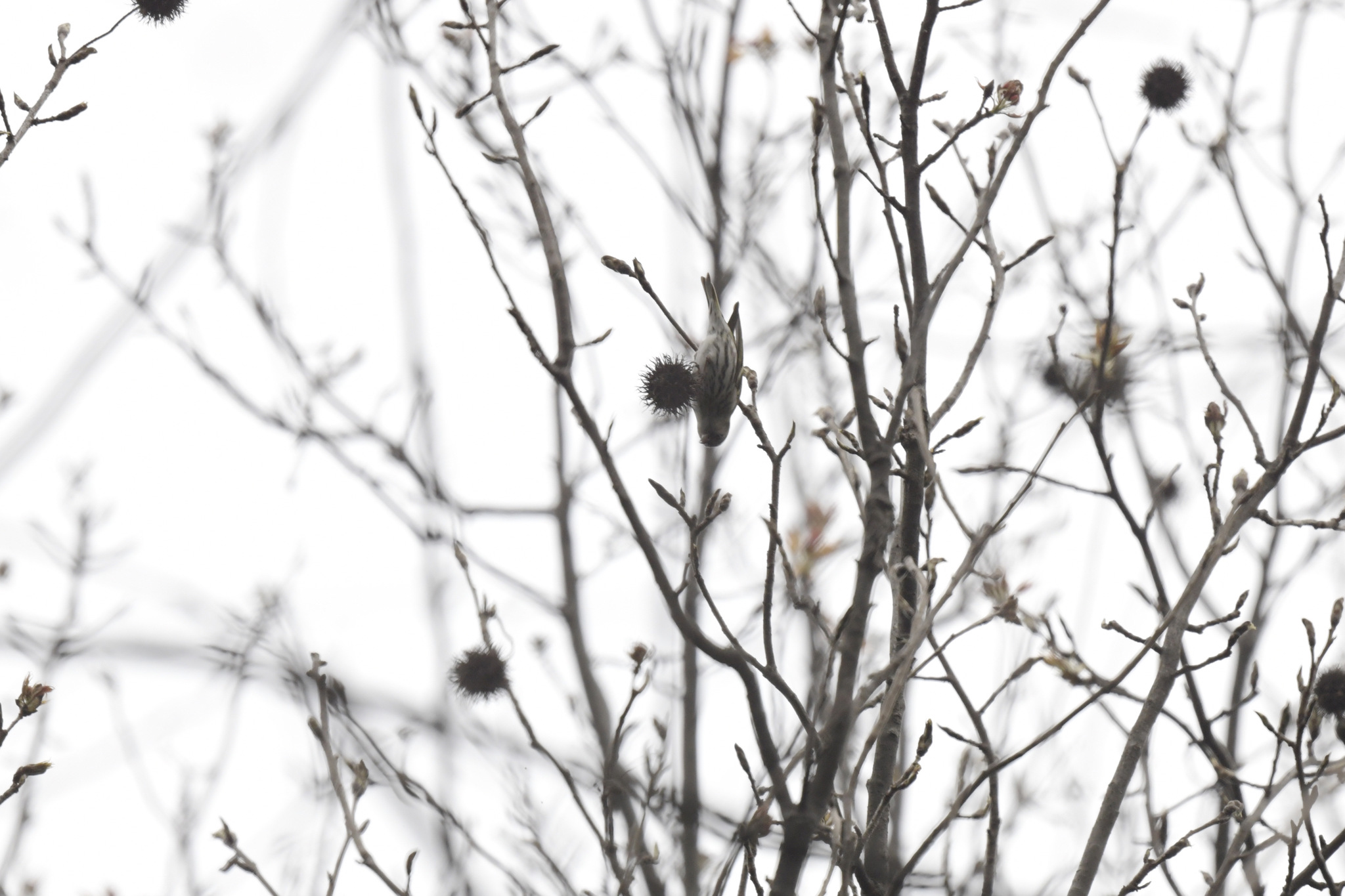
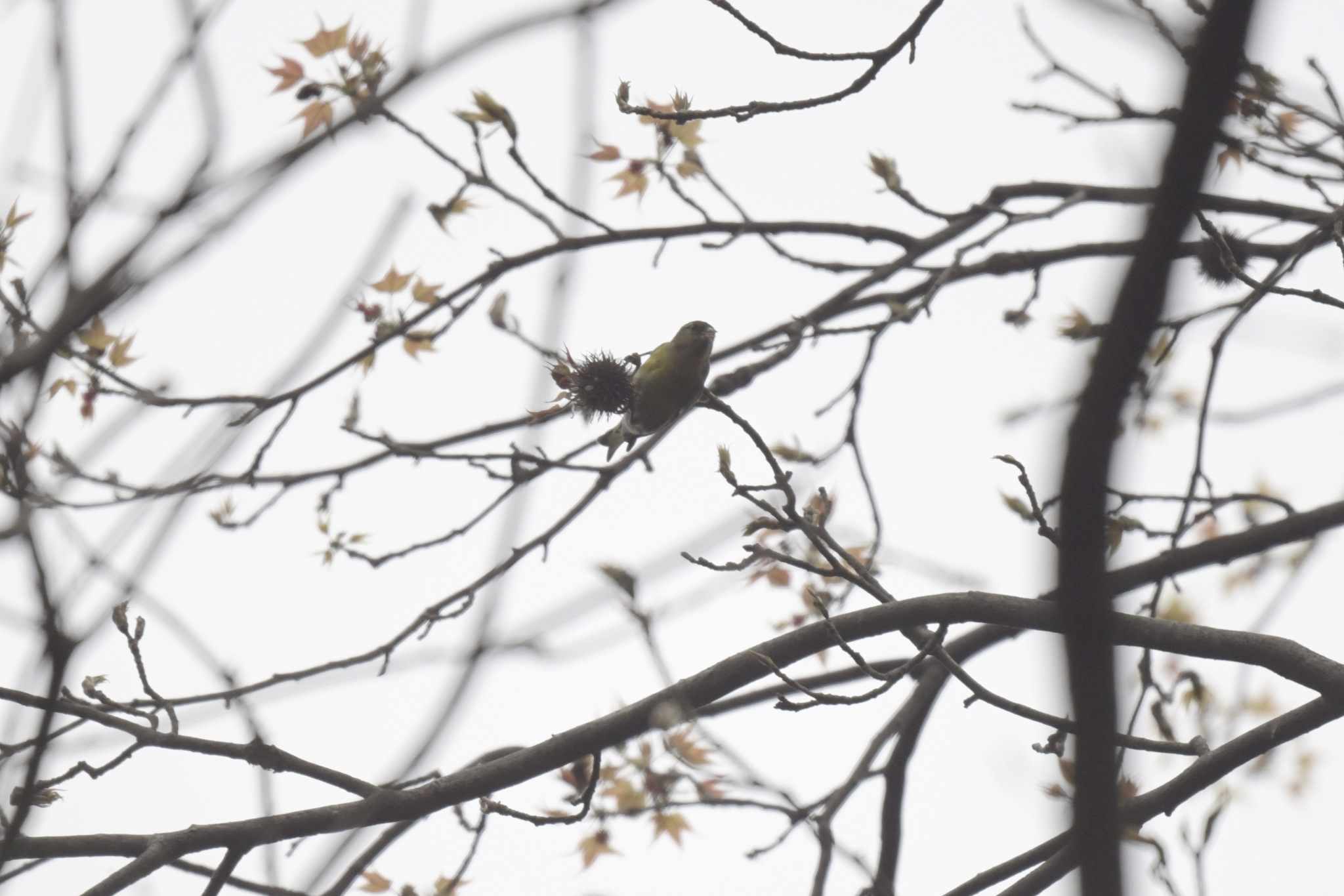
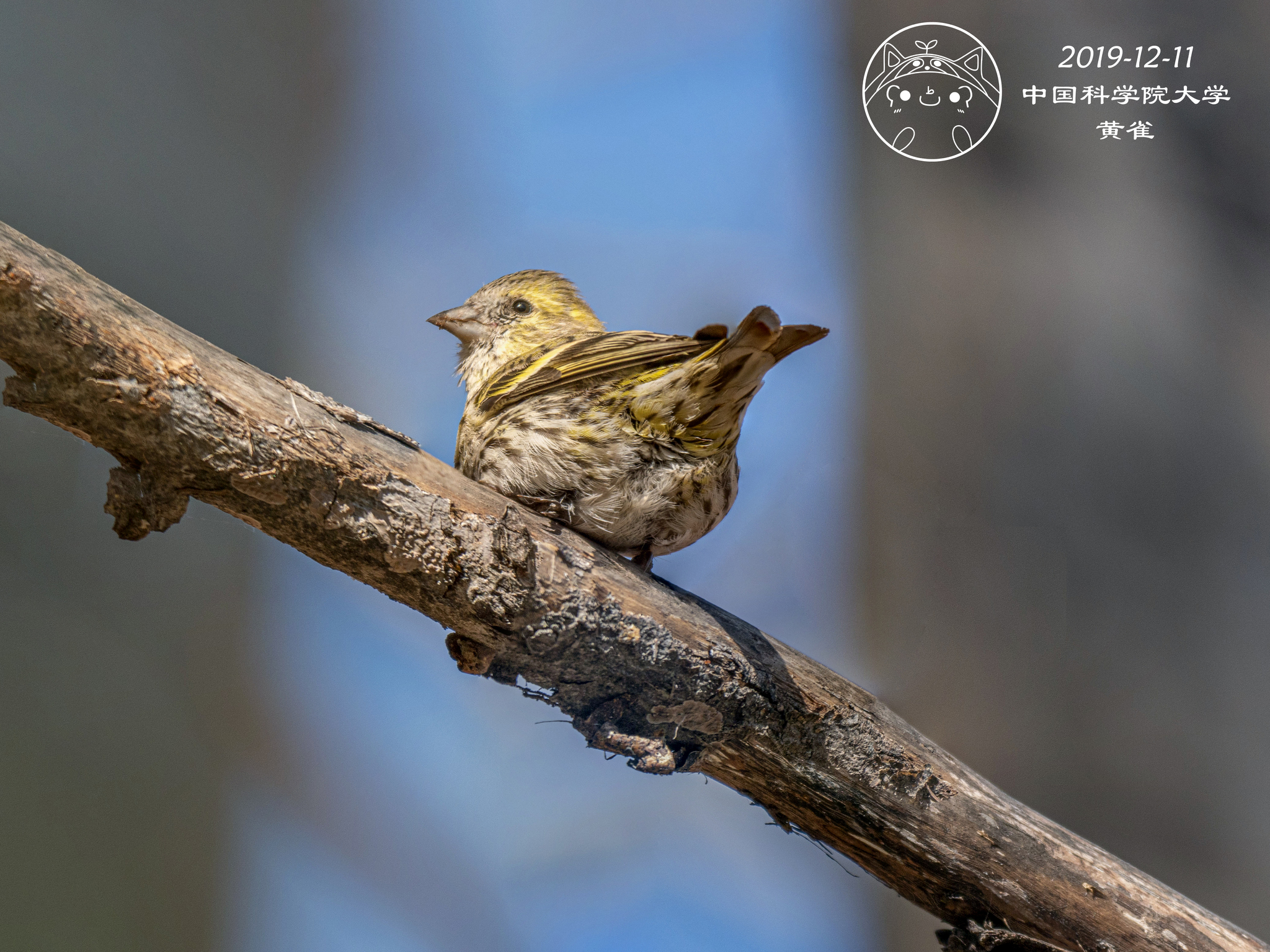
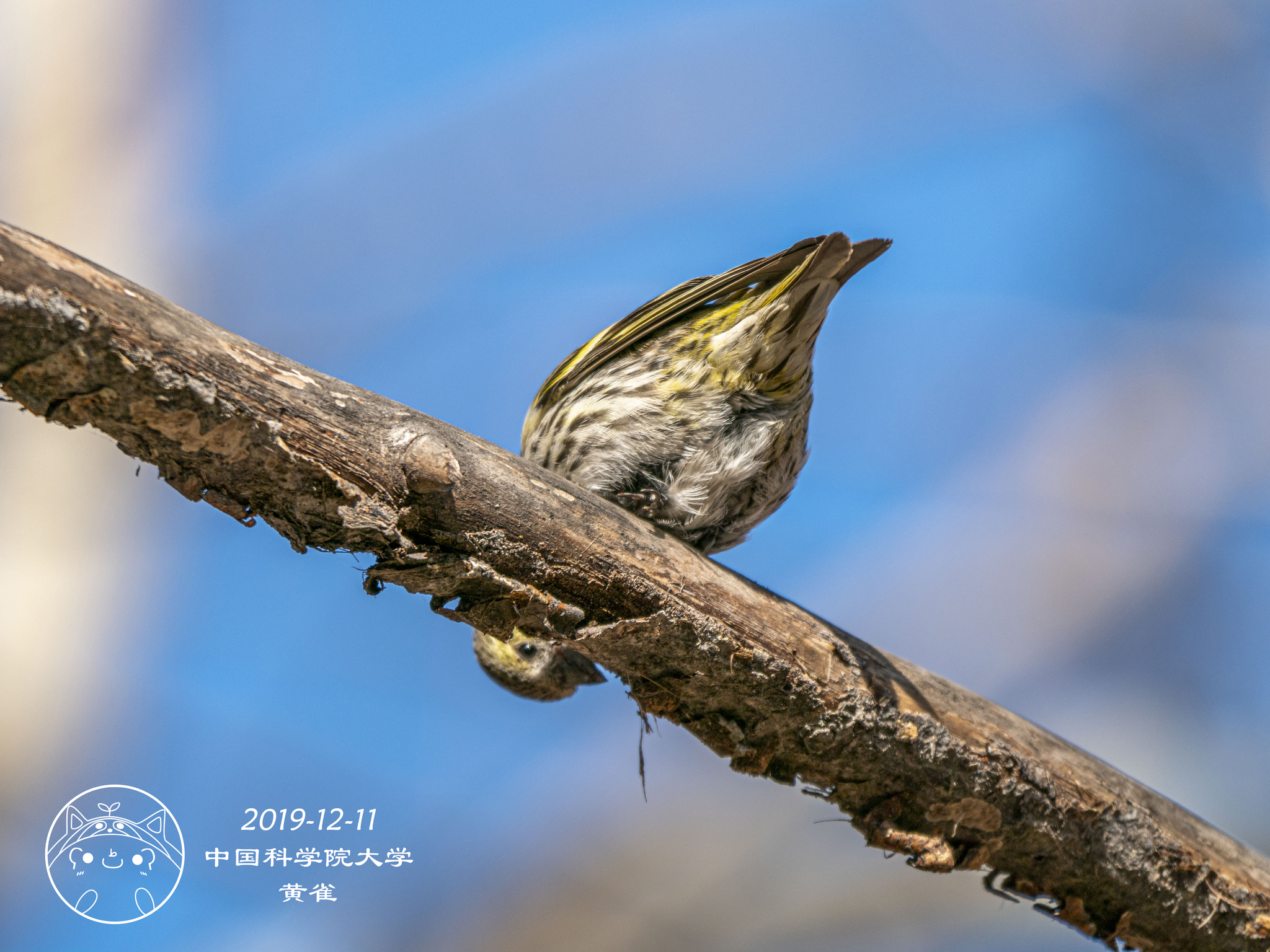
Siskin. Occurs across Europe and Asia. Inhabits coniferous and mixed forests. Feeds primarily on seeds from spruce cones and alder catkins, often feeding acrobatically by hanging upside down from branches. Exhibits an irregular migration pattern with large southward movements occurring every few years, increasing winter populations in southern areas such as the Iberian Peninsula. Will visit garden bird feeders offering nyjer seed.
Description
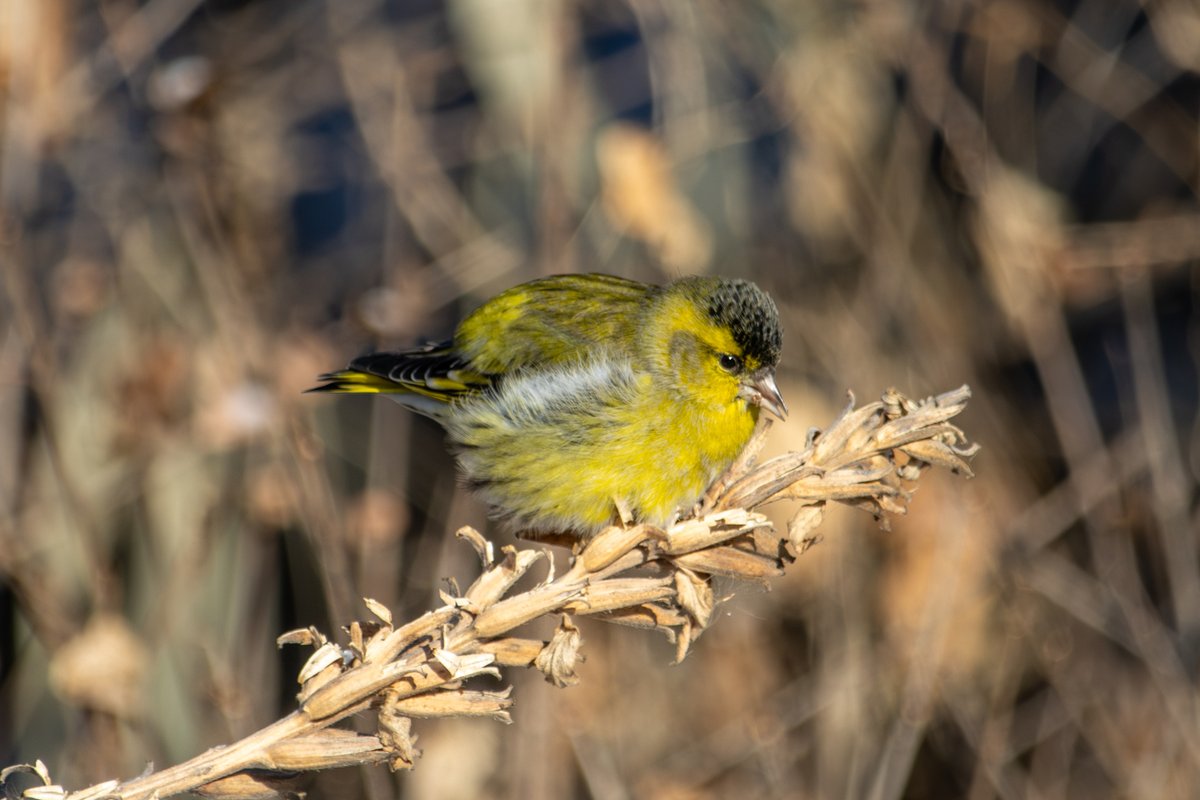
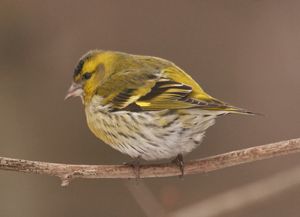
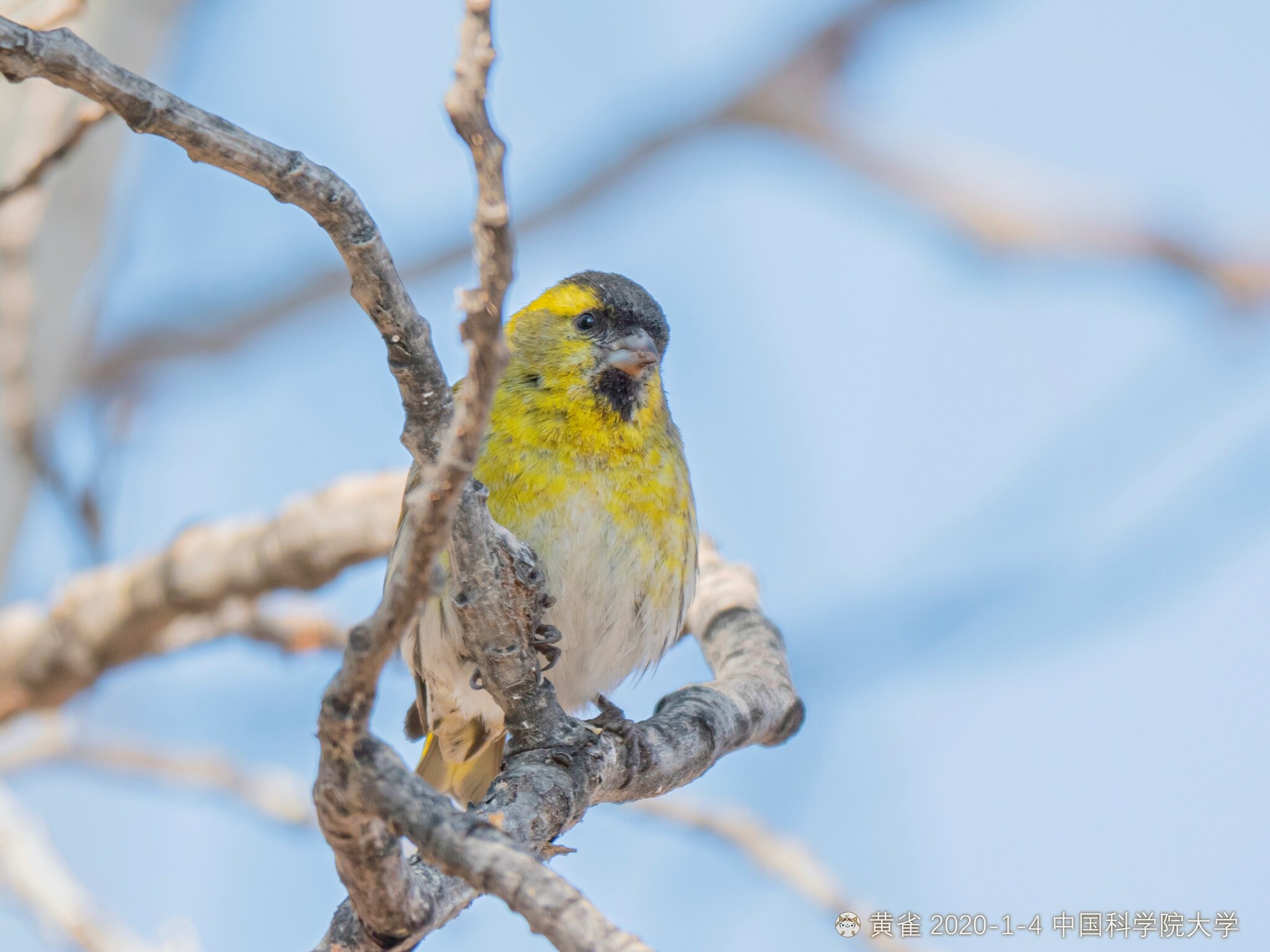
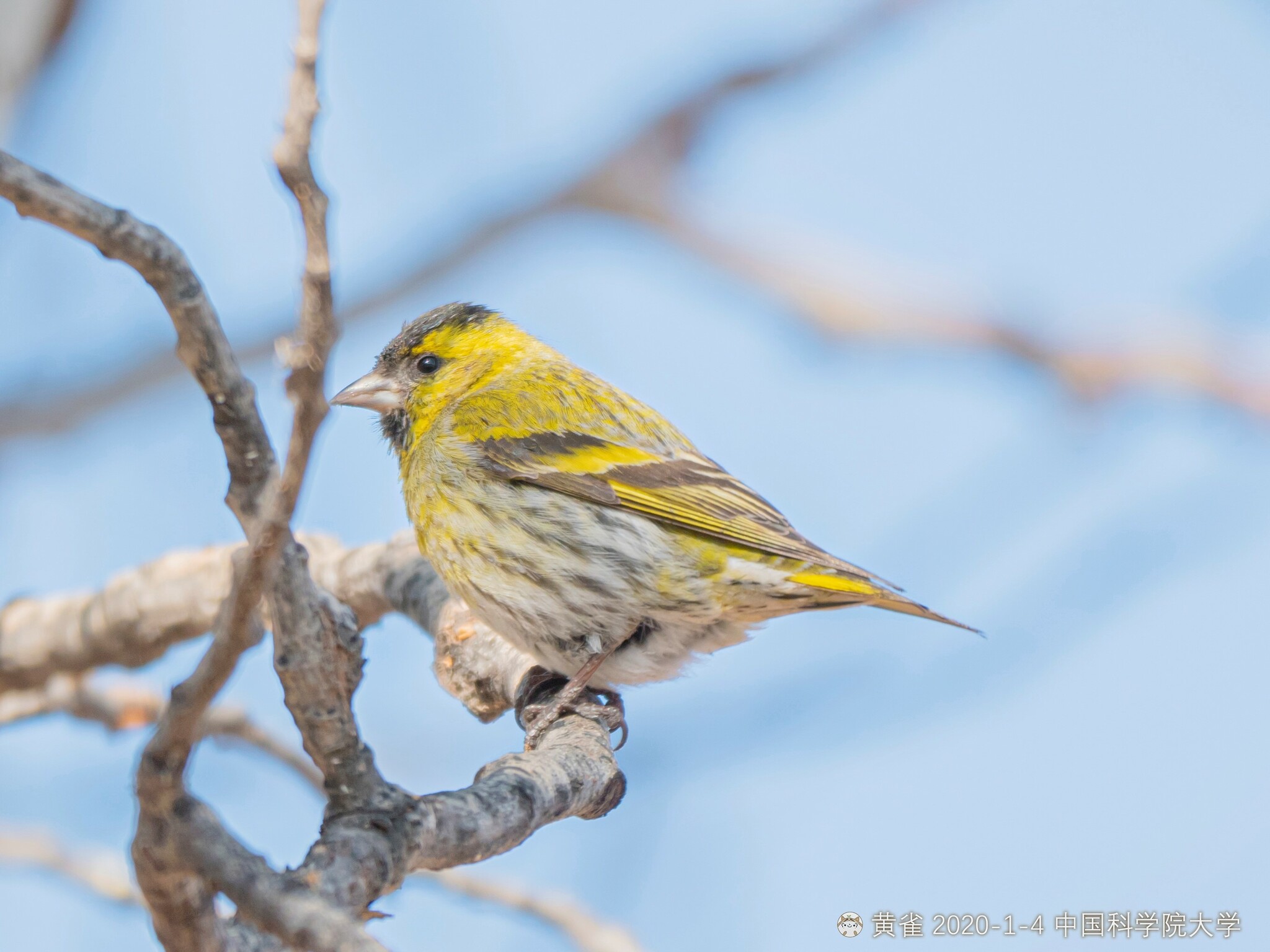
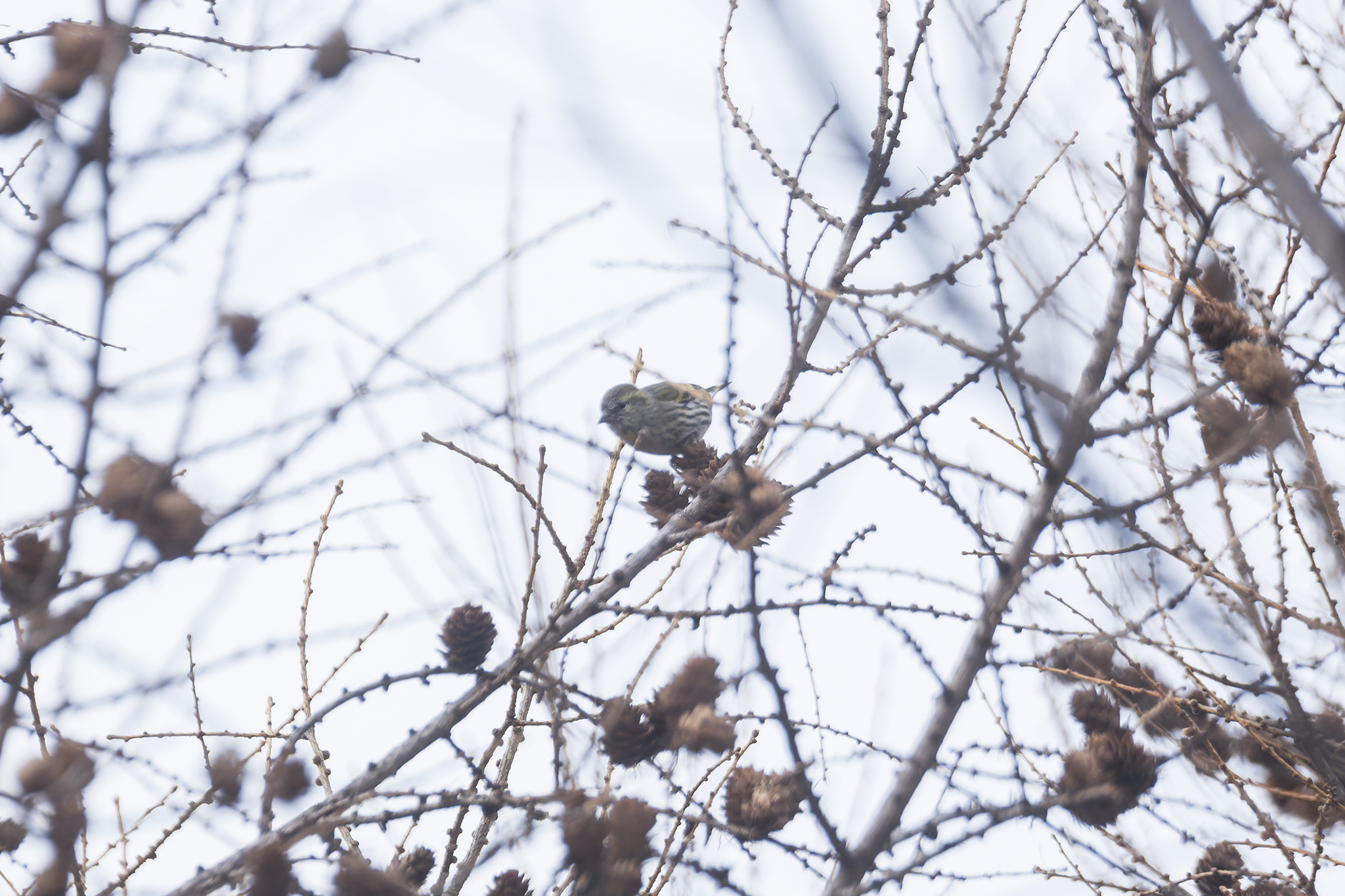
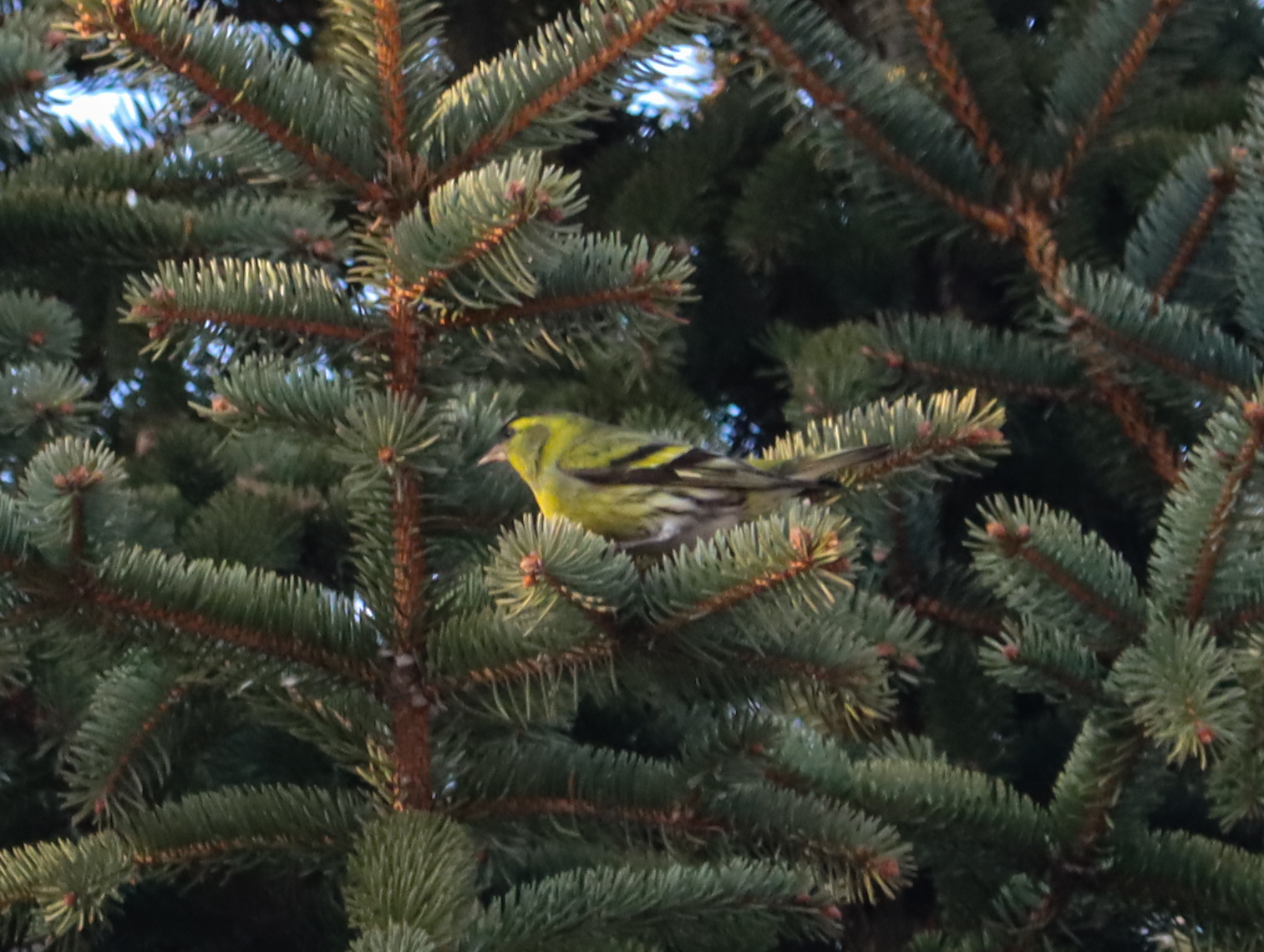
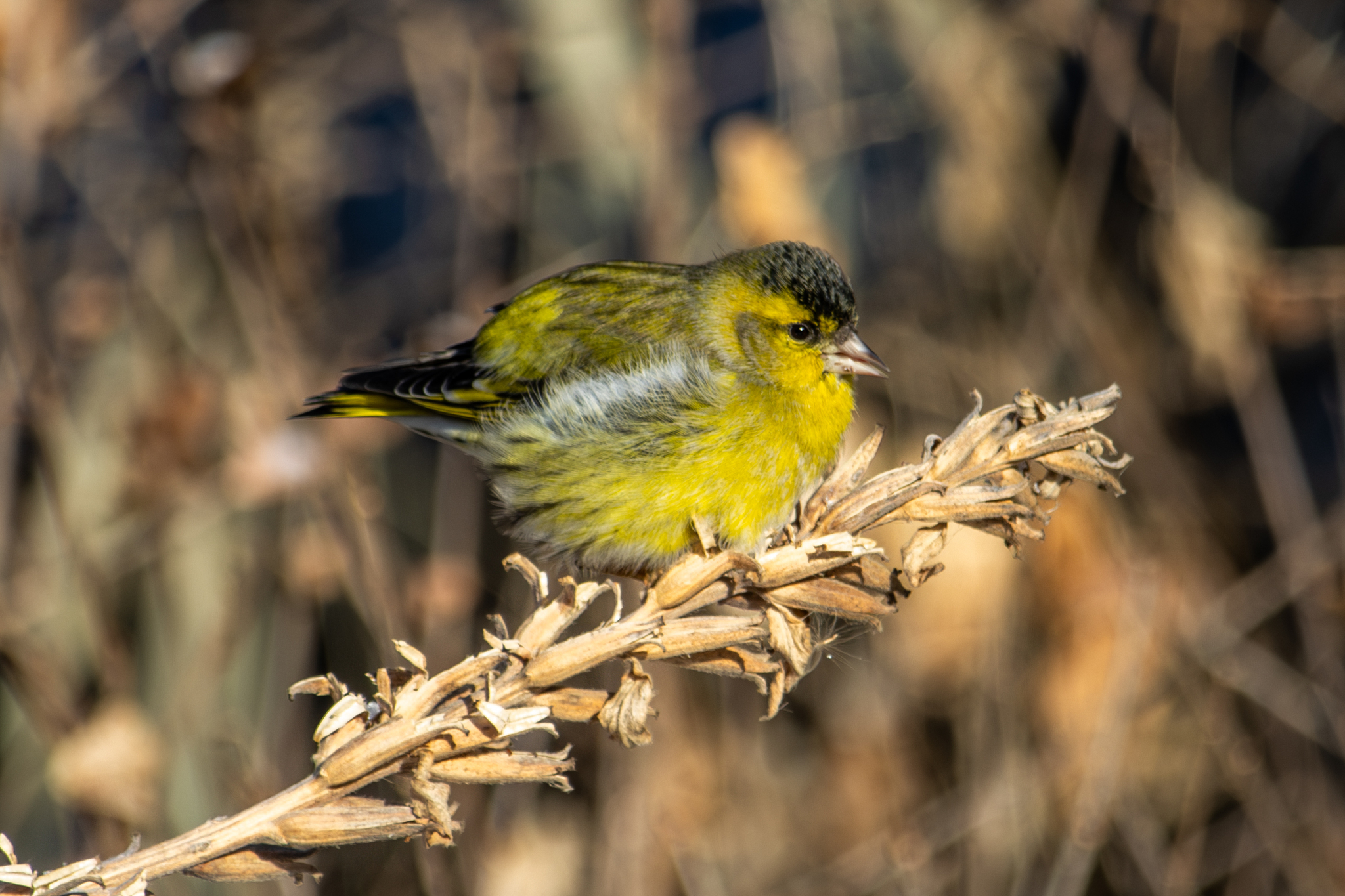
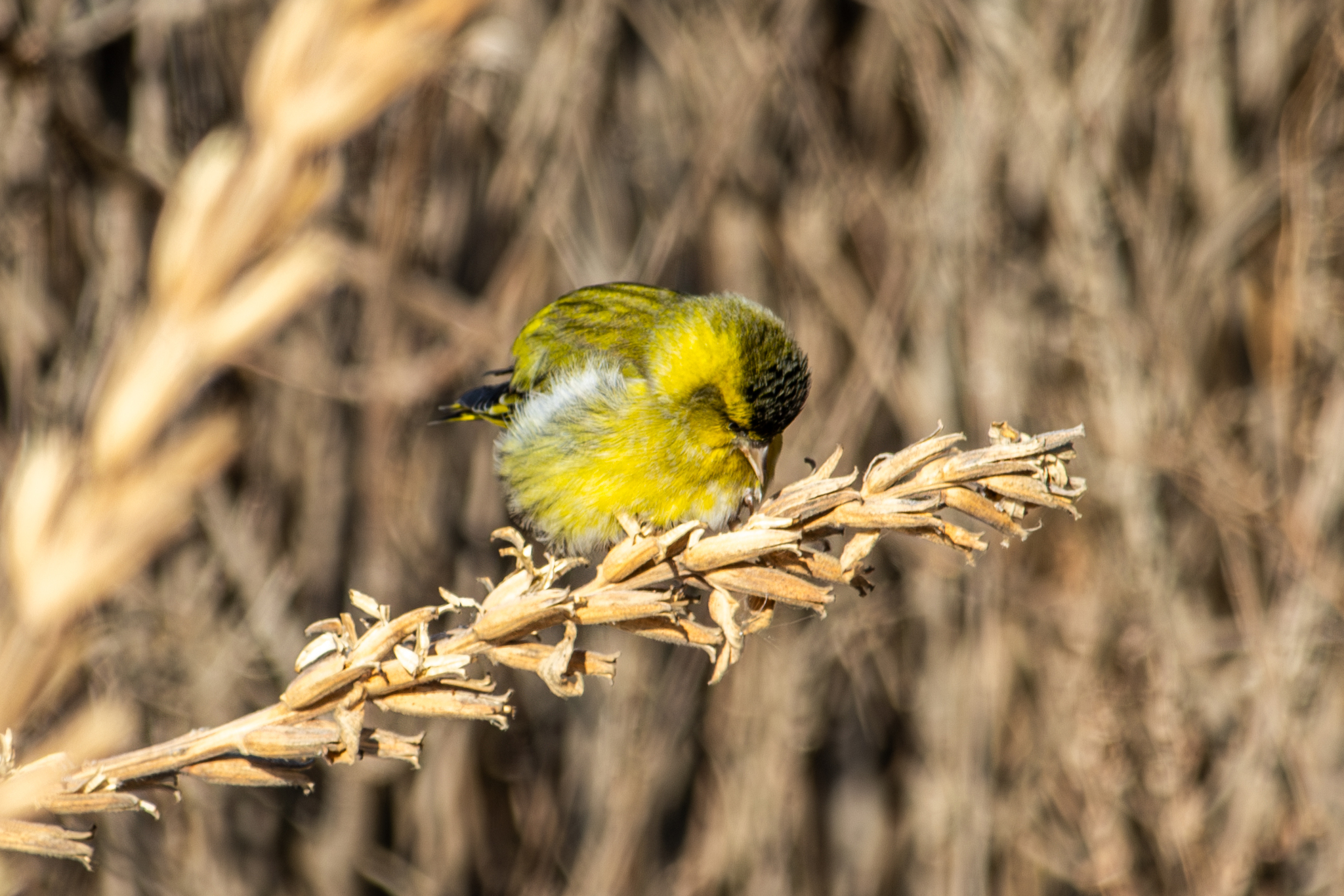
A compact, short-tailed finch measuring 11-12.5 cm in length with a wingspan of 20-23 cm and weighing 12-18 grams. The beak is slender yet sturdy, adapted for extracting seeds from cones and catkins. Males display a greyish-green back, yellow rump, black wings with a conspicuous yellow wing bar, and a black tail with yellow sides. The face and breast are predominantly yellow, offset by a neat black cap and yellow auriculas. Females and juveniles are more olive-green overall, lacking the black cap and showing a white bib with greyish streaking on the underparts. Legs are dark brown and eyes are black.
Identification
The combination of yellow wing bar, yellow-sided black tail, and greenish upperparts distinguishes this species from similar finches. Males are unmistakable with their bright yellow face and breast contrasting sharply with the black cap. Females can be separated from the European greenfinch by their smaller size, greener head, and narrower yellow wing bar, while the European serin shows heavier streaking and a different wing pattern. The bright plumage tones in both sexes, combined with the broad yellow wingbars having white tips and the short, slightly decurved bill, provide reliable field marks.
Distribution & Habitat
Breeds across the greater part of Eurosiberia from central and northern Europe to eastern Asia, including the Khingan Mountains and Jiangsu province in China. Resident populations exist in Central Europe and southern mountain ranges, while northern Scandinavian and Russian birds migrate to the Mediterranean basin and Black Sea region for winter. Favors humid coniferous woodlands, particularly spruce forests, for breeding. Has expanded considerably in Britain due to commercial conifer plantations. In winter, groups move to areas with abundant seed-bearing trees, stubble fields, and agricultural land.
Behavior & Ecology
Very active and restless birds that form small, cohesive flocks outside the breeding season, often mixing with redpolls. They exhibit remarkable acrobatic feeding behavior, frequently hanging upside down to access seeds in cones and catkins. The diet centers on conifer seeds (especially spruce and larch) and broadleaf species like alder and birch, supplemented by Asteraceae seeds in open areas. During breeding, pairs become territorial and solitary. They construct small cup nests of twigs, grass, moss and lichen high in conifers. Females incubate 2-6 eggs for 10-14 days, raising two broods annually. The song is a smooth, rapid twitter and trill, accompanied by distinctive 'tilu' and 'tluih' calls.
Conservation
The global population is estimated at 20-36 million individuals, with 2.7-15 million breeding pairs in Europe. No significant population decline has been recorded, leading to classification as Least Concern on the IUCN Red List. The species receives protection under Annex II of the Berne Convention. While currently secure, monitoring continues given potential threats from habitat changes affecting forest seed production cycles.
Culture
Popular in aviculture for its attractive plumage and pleasant song, adapting well to captivity though breeding success in captivity is limited. It has appeared on postage stamps from Poland, Gibraltar, Benin, and Belgium. In Saint Petersburg, a statue of this bird stands near the First Engineer Bridge, its colors matching the uniform of students from an elite school who are nicknamed 'Chizhik' after the bird featured in the Russian folk song 'Chizhik-Pyzhik'. The species also appears in Czech folk traditions through the song 'Čížečku, čížečku' and is mentioned in Elif Shafak's novel 'Three Daughters of Eve'.
Source: Wikipedia · CC BY-SA 3.0
Taxonomy
- Order
- Passeriformes
- Family
- Fringillidae
- Genus
- Spinus
- eBird Code
- eursis
Distribution
breeds northern Palearctic; winters Mediterranean region, China, and Ryukyu Islands (southern Japan)
Data Sources
Species description from Wikipedia, licensed under CC BY-SA 3.0.
Bird images and sounds sourced from GBIF, contributed by citizen scientists worldwide under Creative Commons licenses.
Taxonomy data from AviList 2025.