
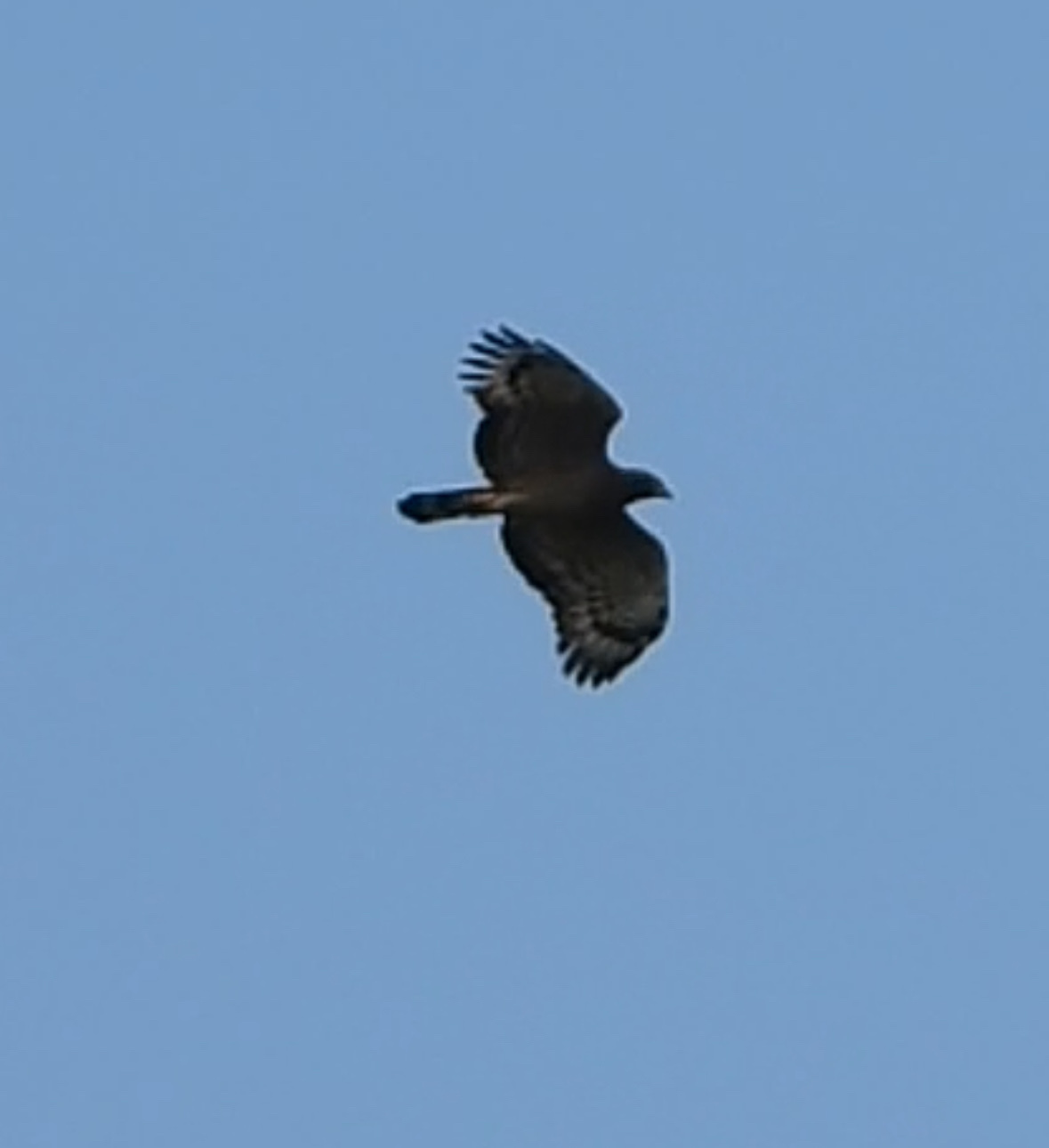
Crested Serpent Eagle
Spilornis cheela
蛇雕
Introduction
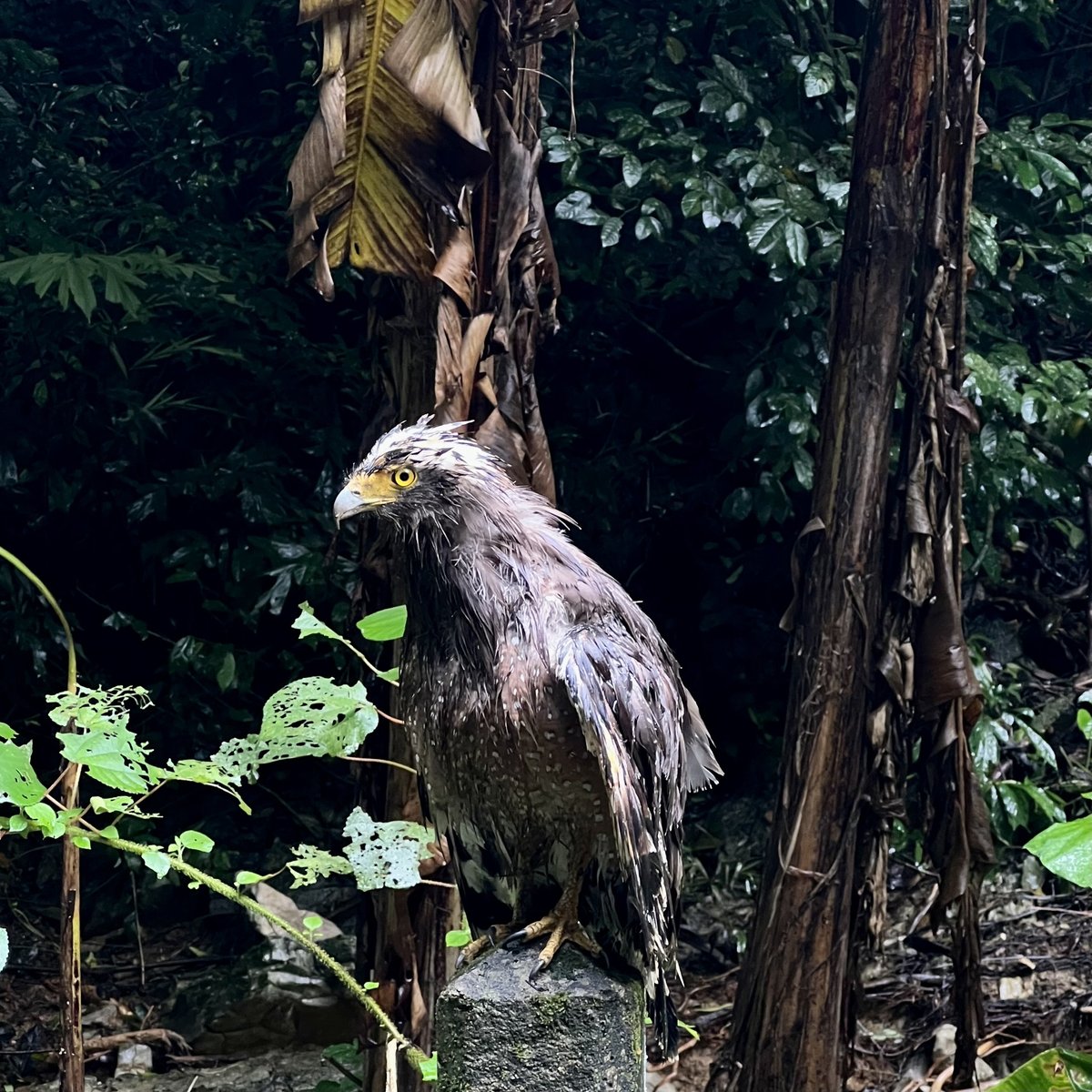
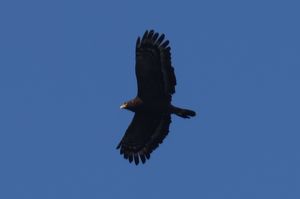
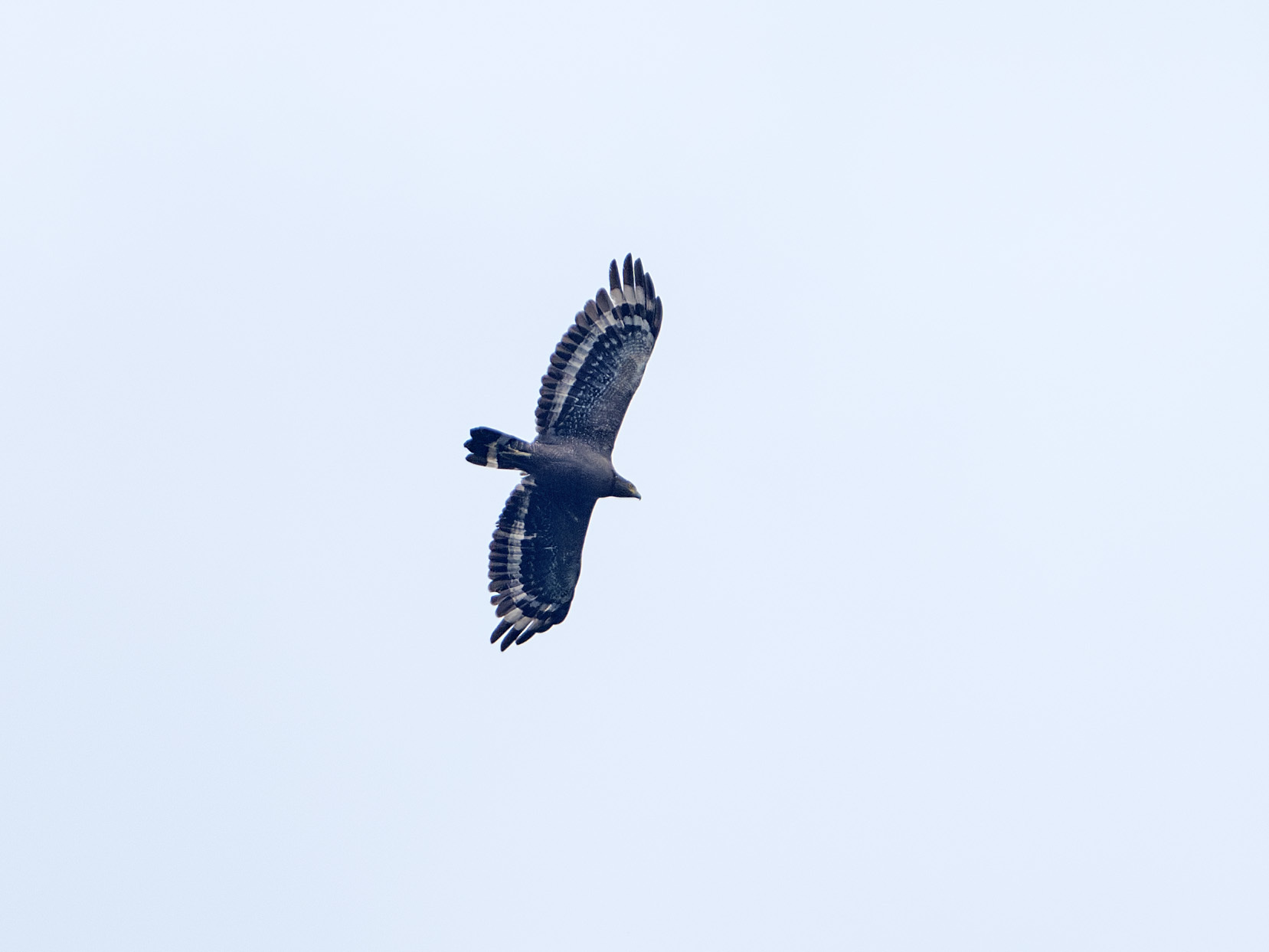
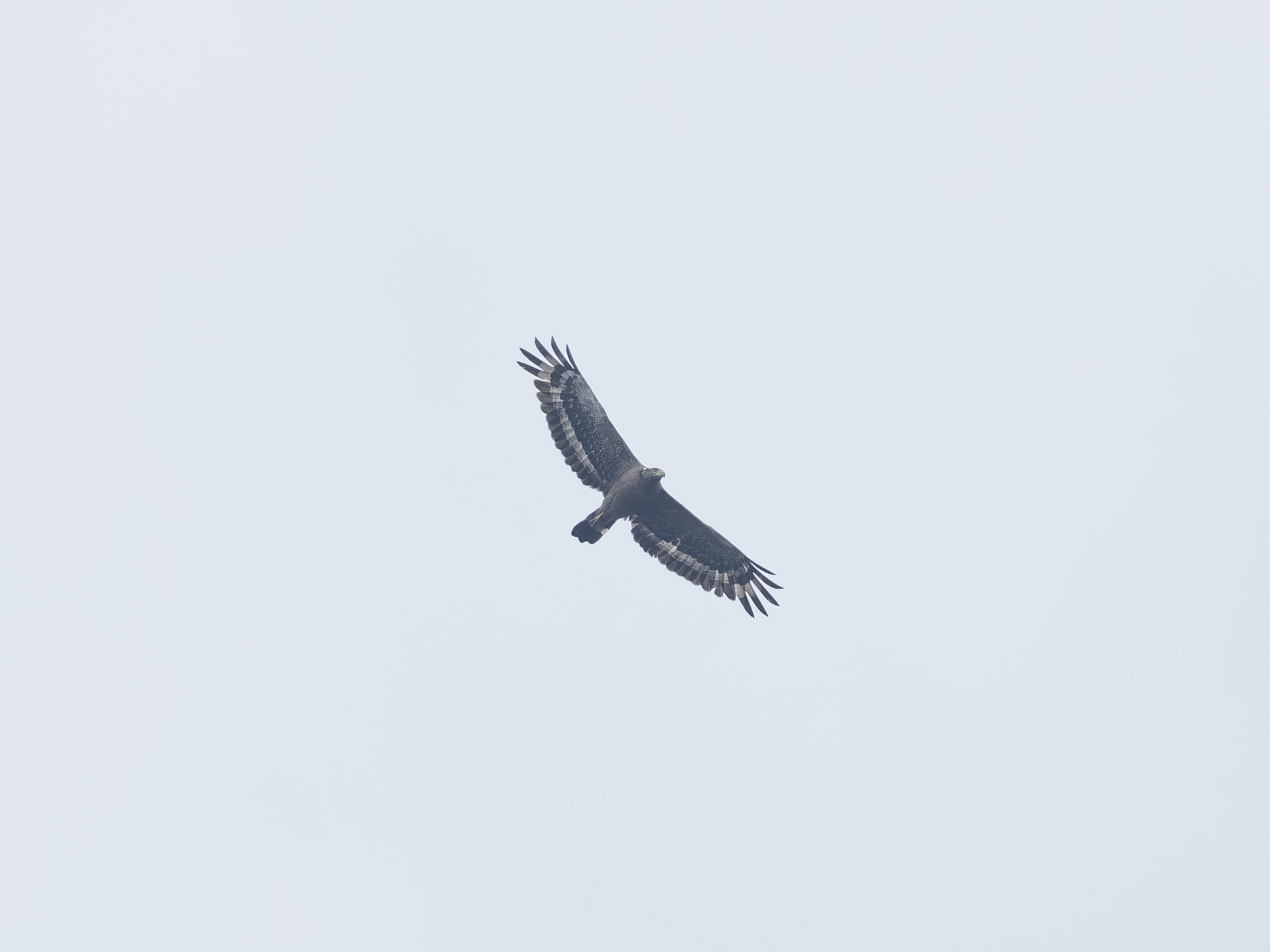
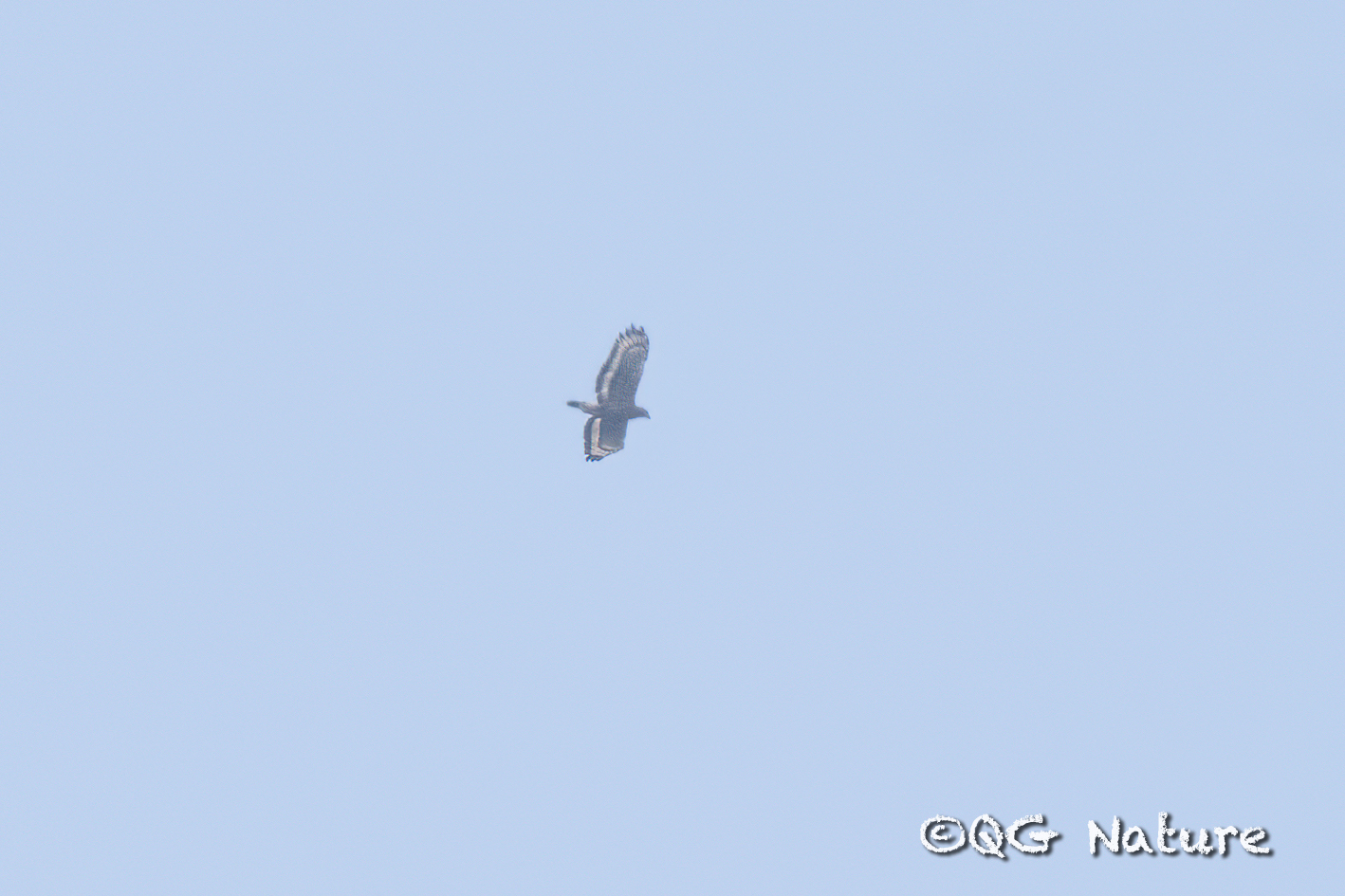
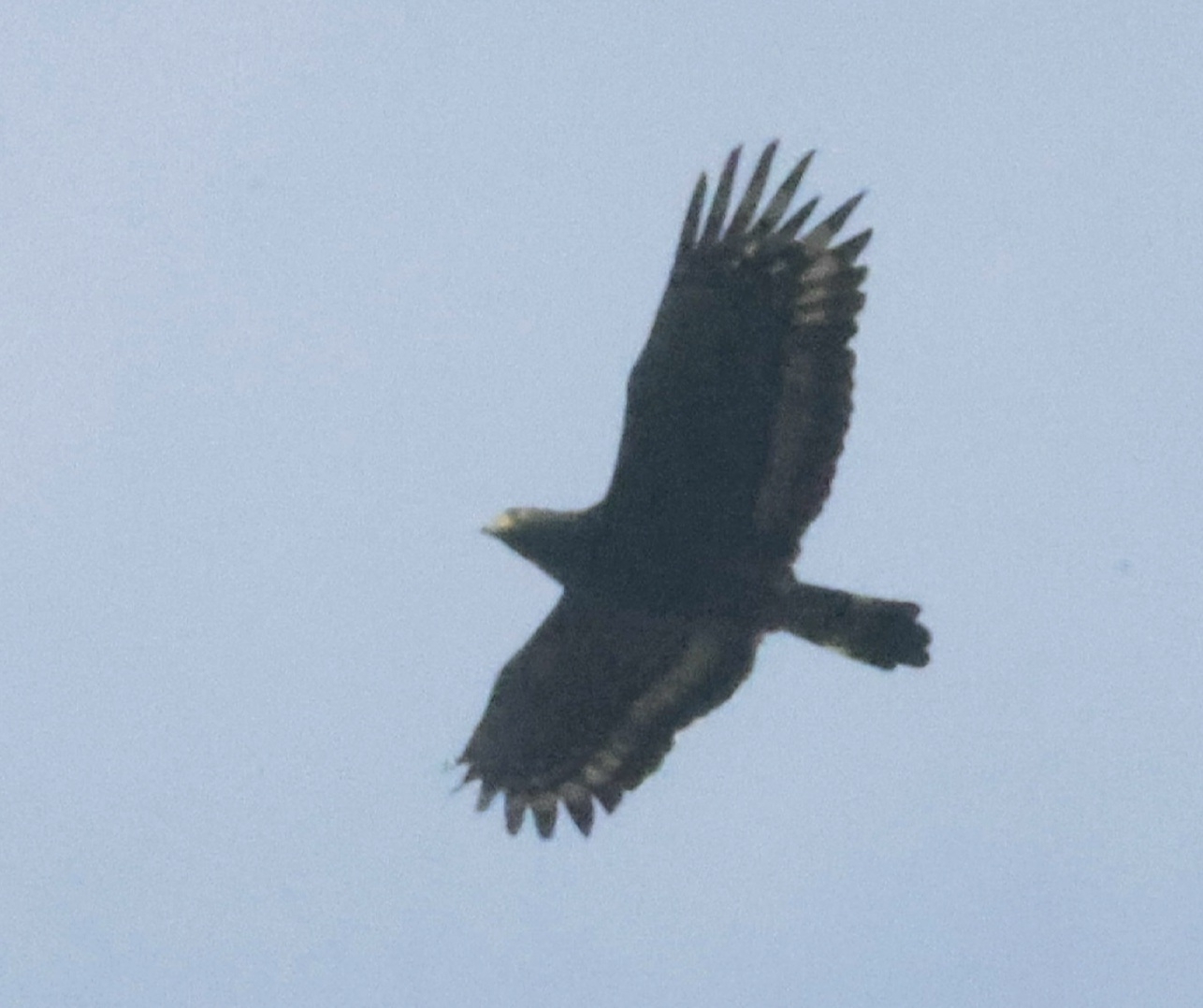
This medium-large bird of prey inhabits forested landscapes across tropical Asia, from the Indian subcontinent through Southeast Asia to East Asia. It has a short black and white fan-shaped crest, bare yellow facial skin, and powerful yellow feet. The build is stocky with rounded wings and a relatively short tail. In flight, it shows broad, paddle-shaped wings held in a shallow V, with black and white barring on the tail and undersides of the flight feathers. The call is a loud, piercing Kluee-wip-wip. Several subspecies are recognized, with taxonomic debate regarding potential species-level distinctions among certain populations.
Description
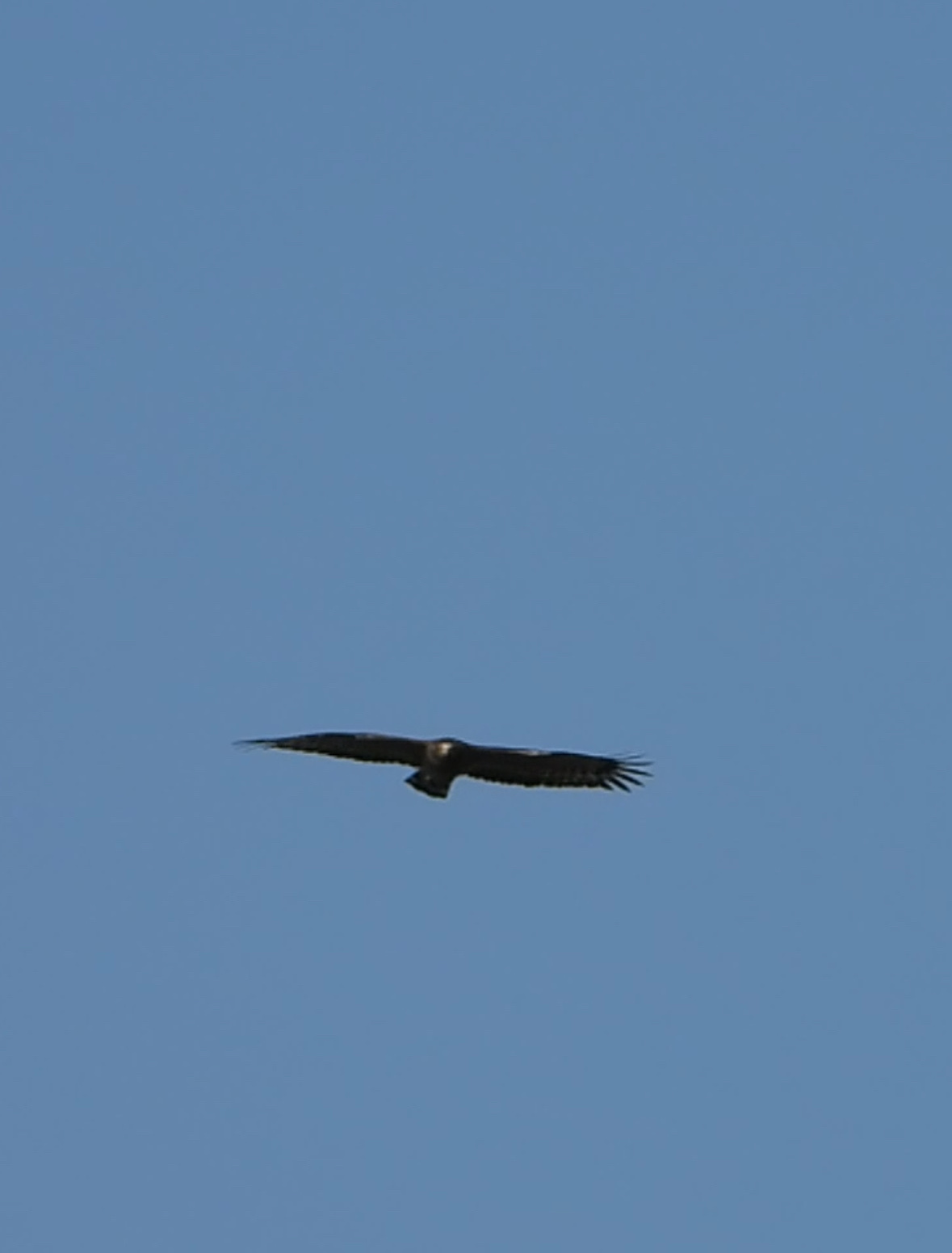
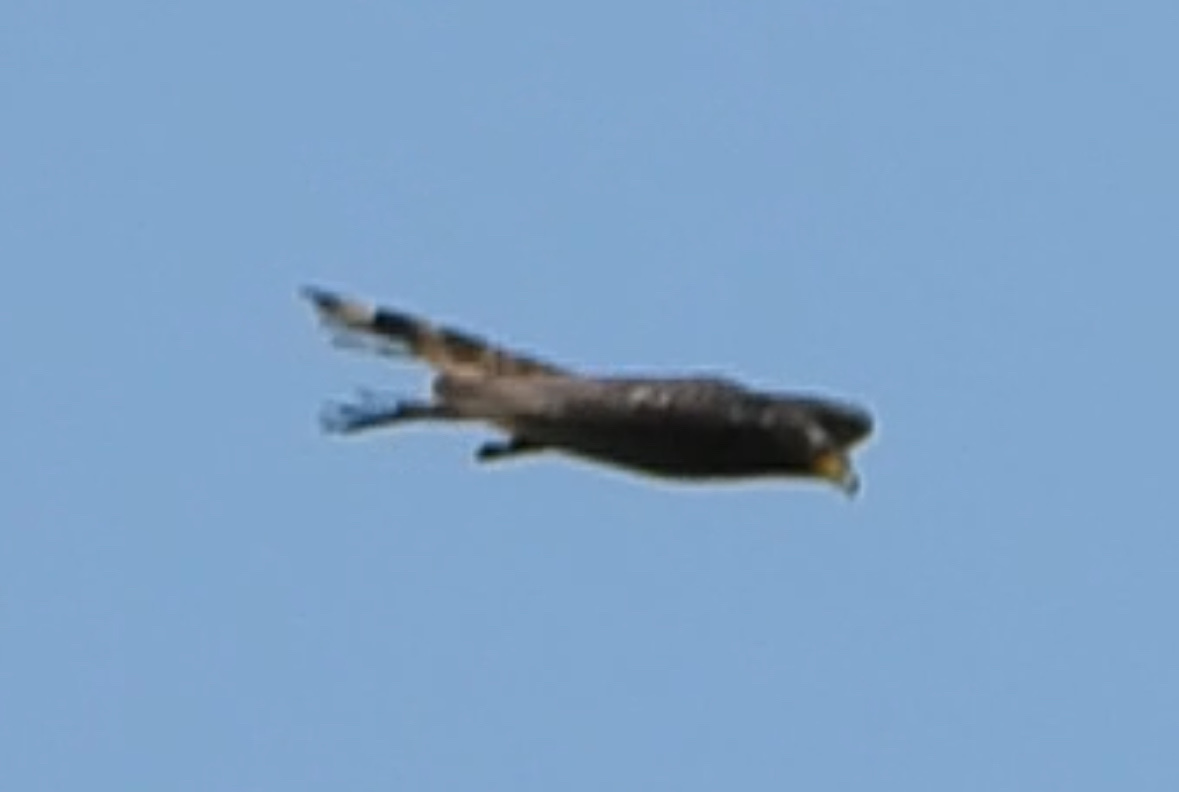
This stocky eagle appears dark brown overall in plumage. The short nuchal crest is black and white, creating a thick-necked silhouette. The bare facial skin and unfeathered feet are a bright yellow, while the underside is mottled with white and yellowish-brown spots. In flight, the broad wings are paddle-shaped and held in a shallow V, with the tail and underwing feathers showing bold black and white bars. Juvenile birds show significantly more white on the head. The tarsus is covered in hexagonal scales, and the upper mandible lacks an overhanging festoon. Considerable size variation exists among subspecies, with total length ranging from 41 to 75 centimeters and wingspan from 89 to 169 centimeters. Weight varies dramatically, from approximately 420 grams in the smallest subspecies to an estimated 2,300 grams in the largest.
Identification
The combination of the prominent crested head, bare yellow face, and stocky dark brown body makes this species relatively distinctive within its range. The broad paddle-shaped wings with black and white bars are characteristic in flight, as is the relatively short tail compared to other eagles. When perched, the wing tips do not reach the tail tip, which can help distinguish it from similar-sized raptors. The yellow facial skin and feet are key identification features, as is the erect crest when the bird is alarmed. The loud, distinctive call—often a rising high note followed by wip-wip—can help locate this often secretive bird perched in the canopy.
Distribution & Habitat
This species inhabits a vast range across tropical Asia, including the Indian subcontinent, Southeast Asia, and East Asia. It occurs from Sri Lanka and India through Myanmar, Thailand, and Malaysia to Indonesia, the Philippines, and southern China, including Taiwan and the Ryukyu Islands. It is a resident of forested habitats, particularly areas with thick vegetation in both low hills and plains, often near wet grasslands. While primarily a resident species, some populations are only present during summer months. The species has adapted to various forest types within its range, though it favors areas with dense canopy cover.
Behavior & Ecology
This raptor is a specialized reptile eater, hunting snakes and lizards over forested areas, but its diet is opportunistic and includes birds, large insects, amphibians, mammals, fish, termites, and earthworms. It employs a sit-and-wait foraging strategy, spending about 98% of the day perched and hunting primarily in the morning. The call is a distinctive Kluee-wip-wip, with the first note being high and rising; birds call frequently in late mornings from their perches. Breeding begins in late winter, with eggs laid in early summer. Both partners build large platform nests high in trees, often in riverine areas, but only the female incubates. The typical clutch is one egg, though two are sometimes laid, and chicks fledge after about two months. Pairs defend their nests aggressively.
Conservation
While the species remains widespread and fairly common overall, some island subspecies face serious conservation concerns. Taxa restricted to small islands are believed to have populations likely numbering only in the hundreds. The Bawean serpent eagle is critically endangered, with a declining population of only about 26 to 37 pairs. Island populations are vulnerable to habitat loss and potential persecution, though the species as a whole is not considered threatened.
Culture
This species holds no significant documented cultural or folklore associations beyond its ecological role in controlling snake populations.
Source: Wikipedia · CC BY-SA 3.0
Taxonomy
- Order
- Accipitriformes
- Family
- Accipitridae
- Genus
- Spilornis
- eBird Code
- crseag1
Vocalizations
Subspecies (21)
-
Spilornis cheela abbotti
Simeulue Island (off western Sumatra)
-
Spilornis cheela asturinus
Nias Island (off western Sumatra)
-
Spilornis cheela batu
southern Sumatra and Batu Islands
-
Spilornis cheela baweanus
Bawean Island (off northern Java)
-
Spilornis cheela bido
Java and Bali
-
Spilornis cheela burmanicus
Myanmar to southwestern China, Thailand, and Indochina
-
Spilornis cheela cheela
northern India and Nepal
-
Spilornis cheela davisoni
Andaman Islands
-
Spilornis cheela hoya
Taiwan
-
Spilornis cheela malayensis
Malay Peninsula, northern Sumatra, and Anambas Islands
-
Spilornis cheela melanotis
Indo-Gangetic plain
-
Spilornis cheela minimus
Nicobar Islands
-
Spilornis cheela natunensis
Natunas and Belitung islands (off Borneo)
-
Spilornis cheela palawanensis
Palawan (southwestern Philippines)
-
Spilornis cheela pallidus
lowlands of northern Borneo
-
Spilornis cheela perplexus
southern Ryukyu Islands (southern Japan)
-
Spilornis cheela richmondi
southern Borneo
-
Spilornis cheela ricketti
southern China and northern Vietnam
-
Spilornis cheela rutherfordi
Hainan (southern China)
-
Spilornis cheela sipora
Mentawai Archipelago (off western Sumatra)
-
Spilornis cheela spilogaster
Sri Lanka
Data Sources
Species description from Wikipedia, licensed under CC BY-SA 3.0.
Bird images and sounds sourced from GBIF, contributed by citizen scientists worldwide under Creative Commons licenses.
Taxonomy data from AviList 2025.