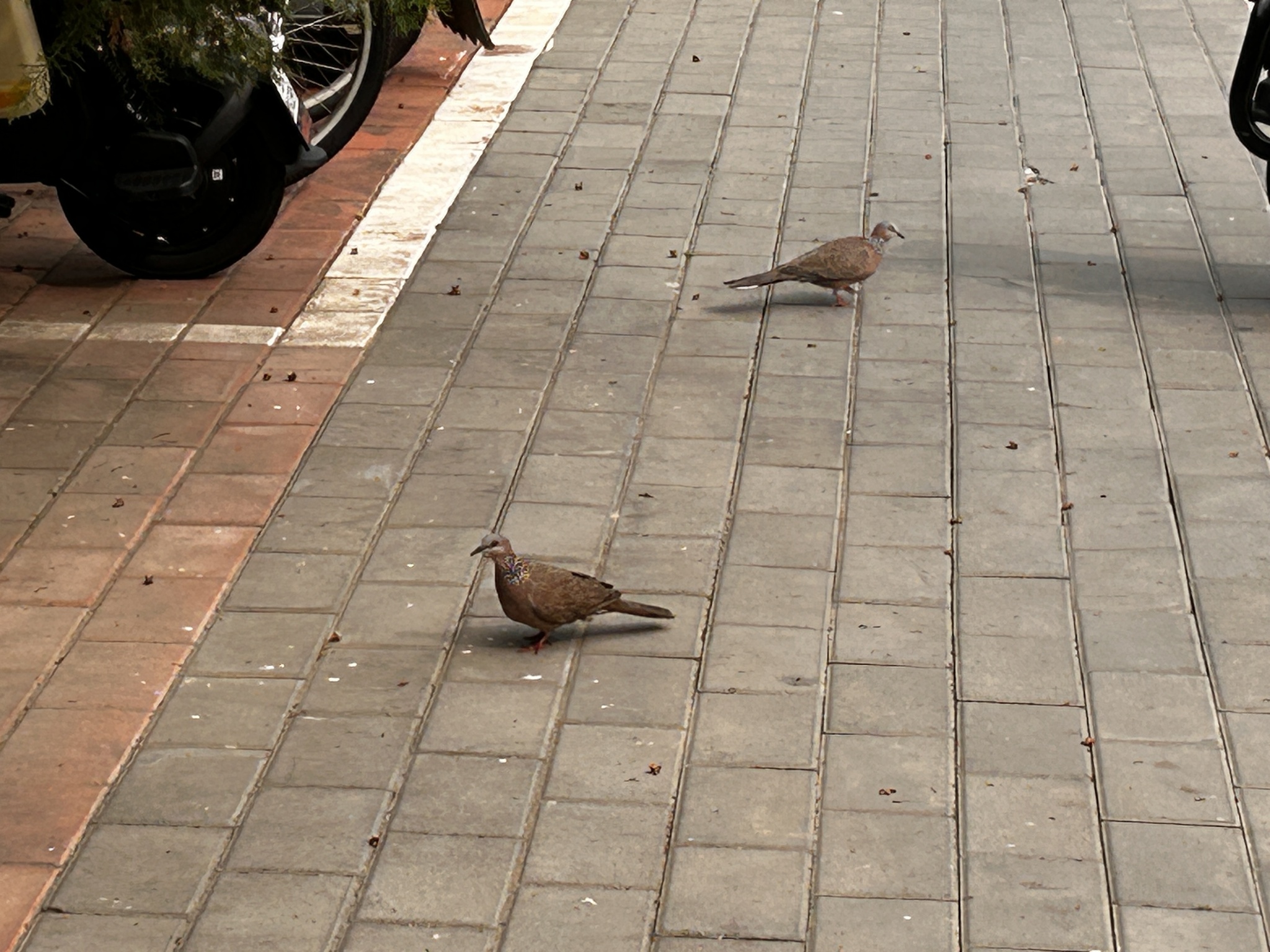
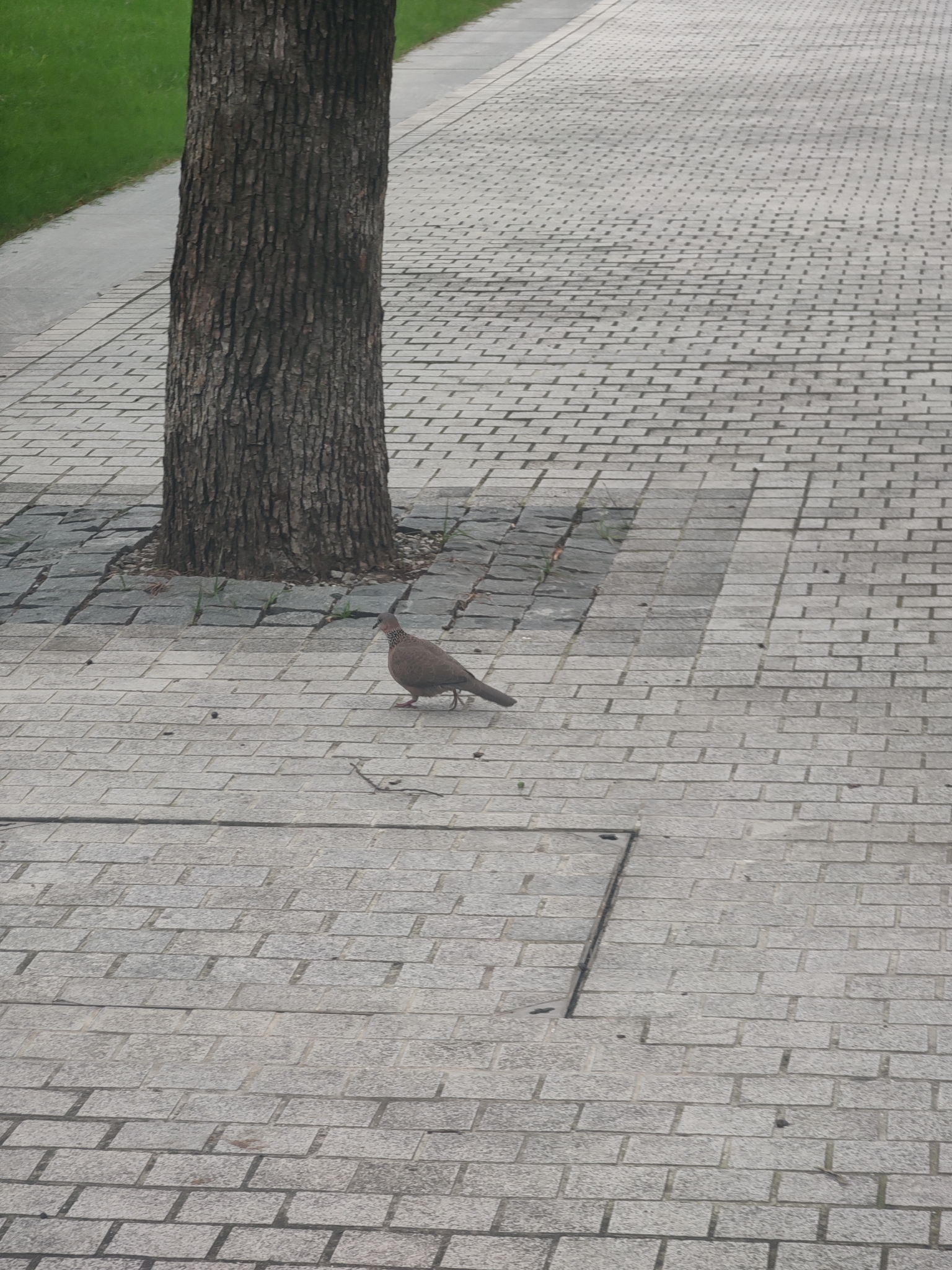
Columbiformes / Columbidae / Spilopelia
Spotted Dove
Spilopelia chinensis · 珠颈斑鸠
Introduction
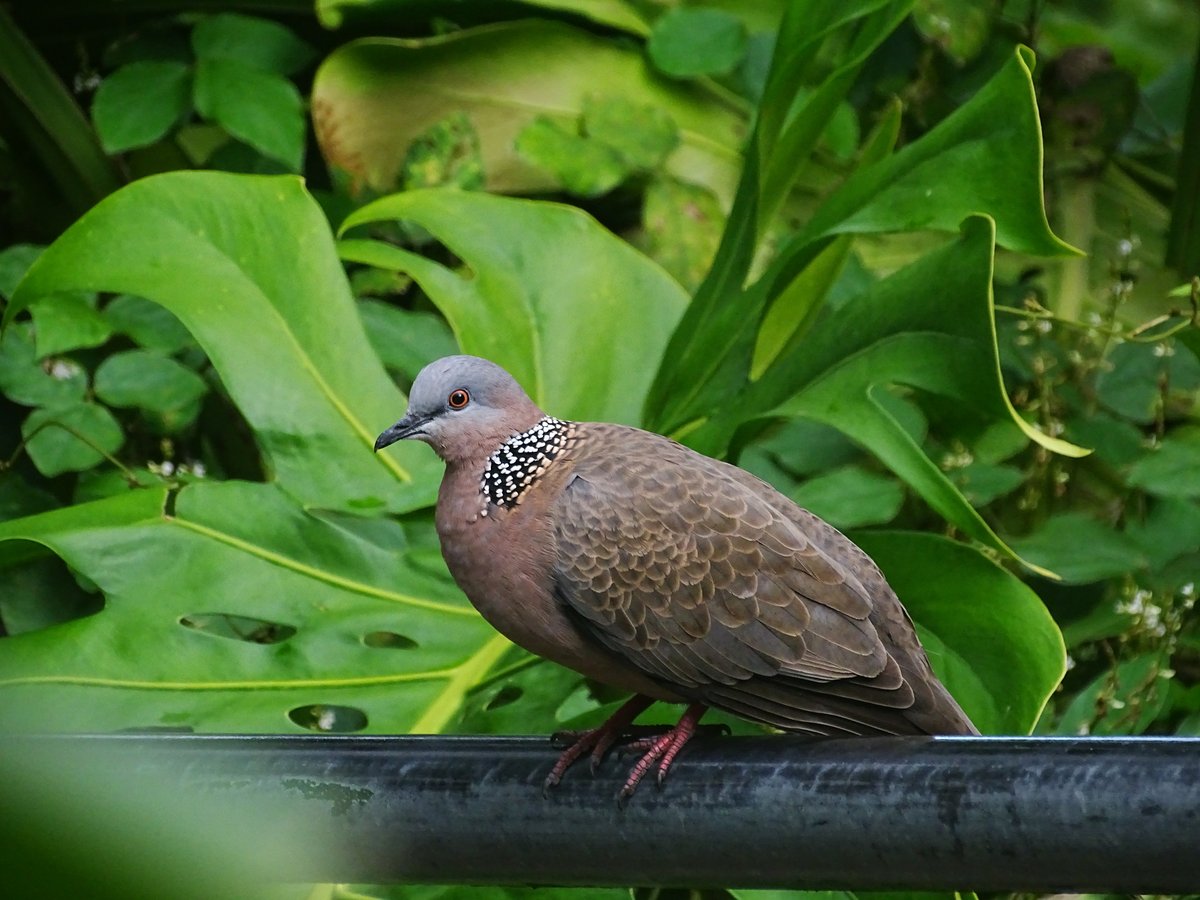
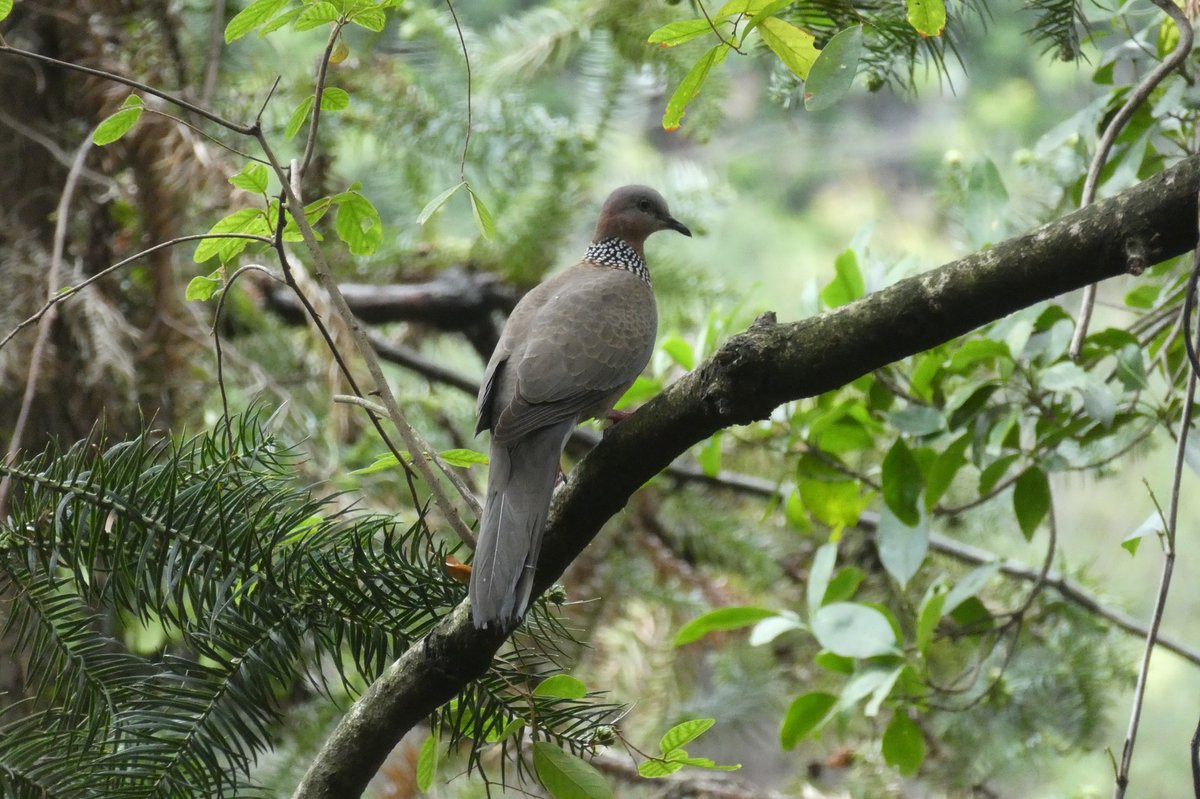
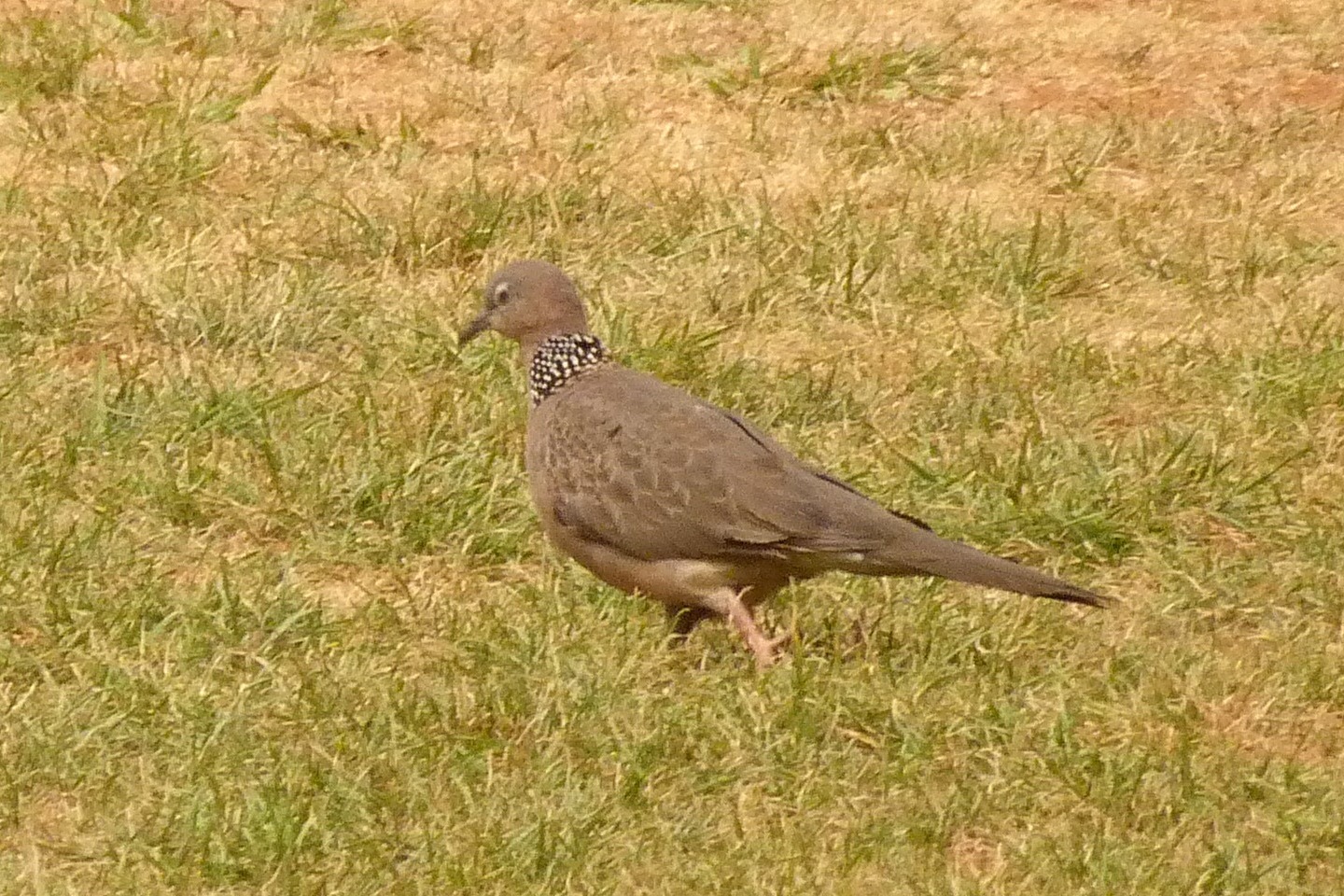
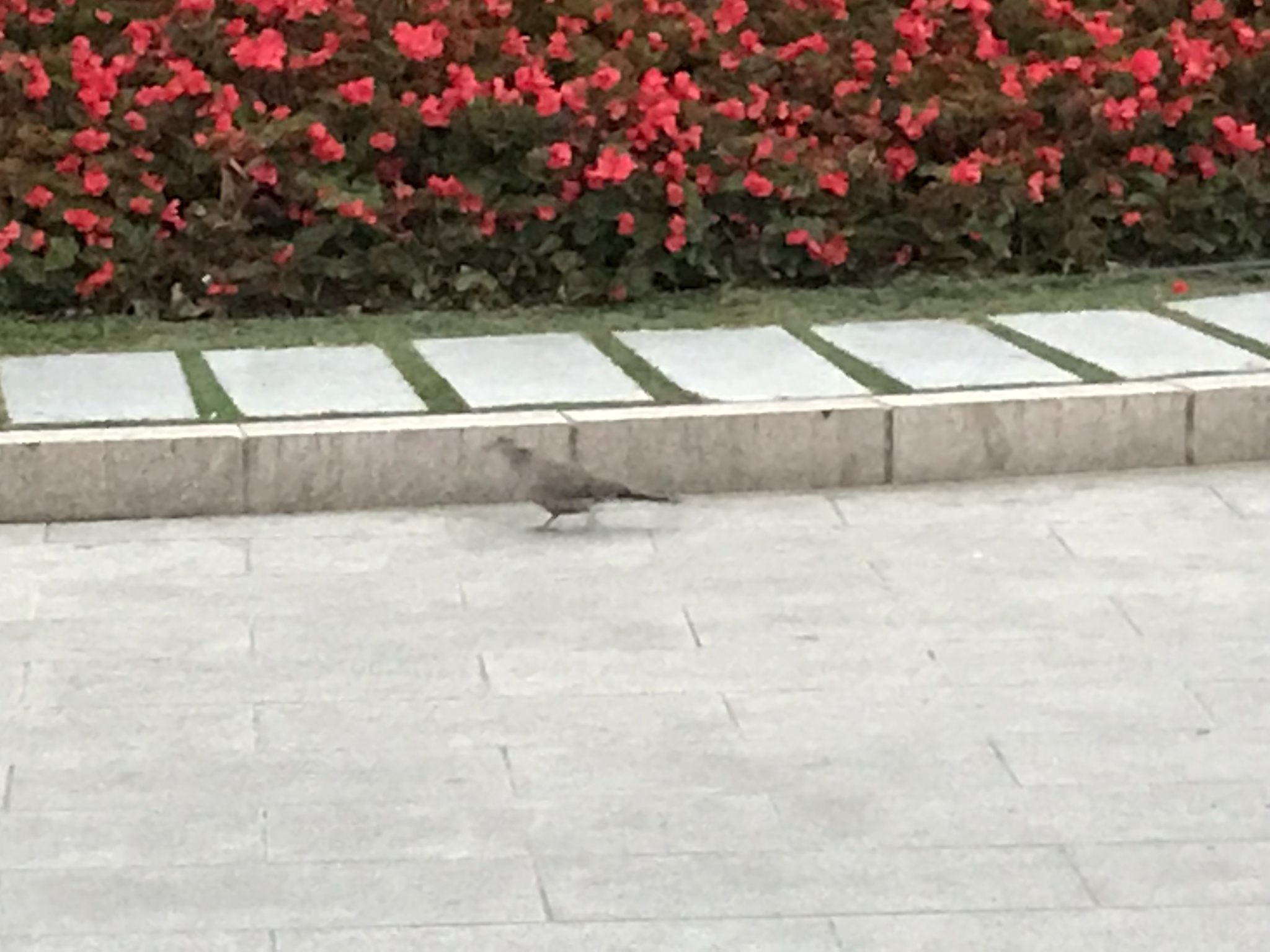
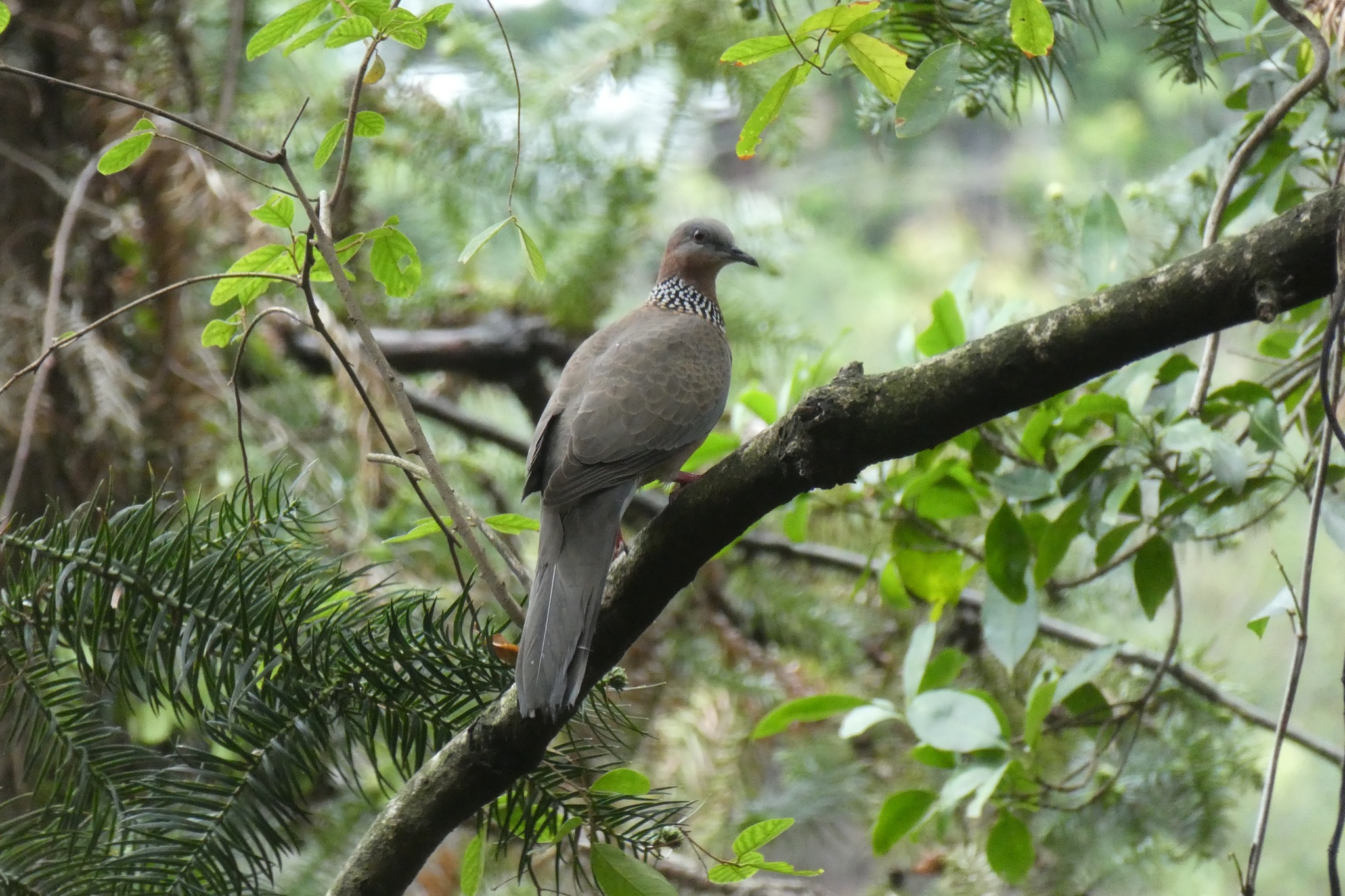
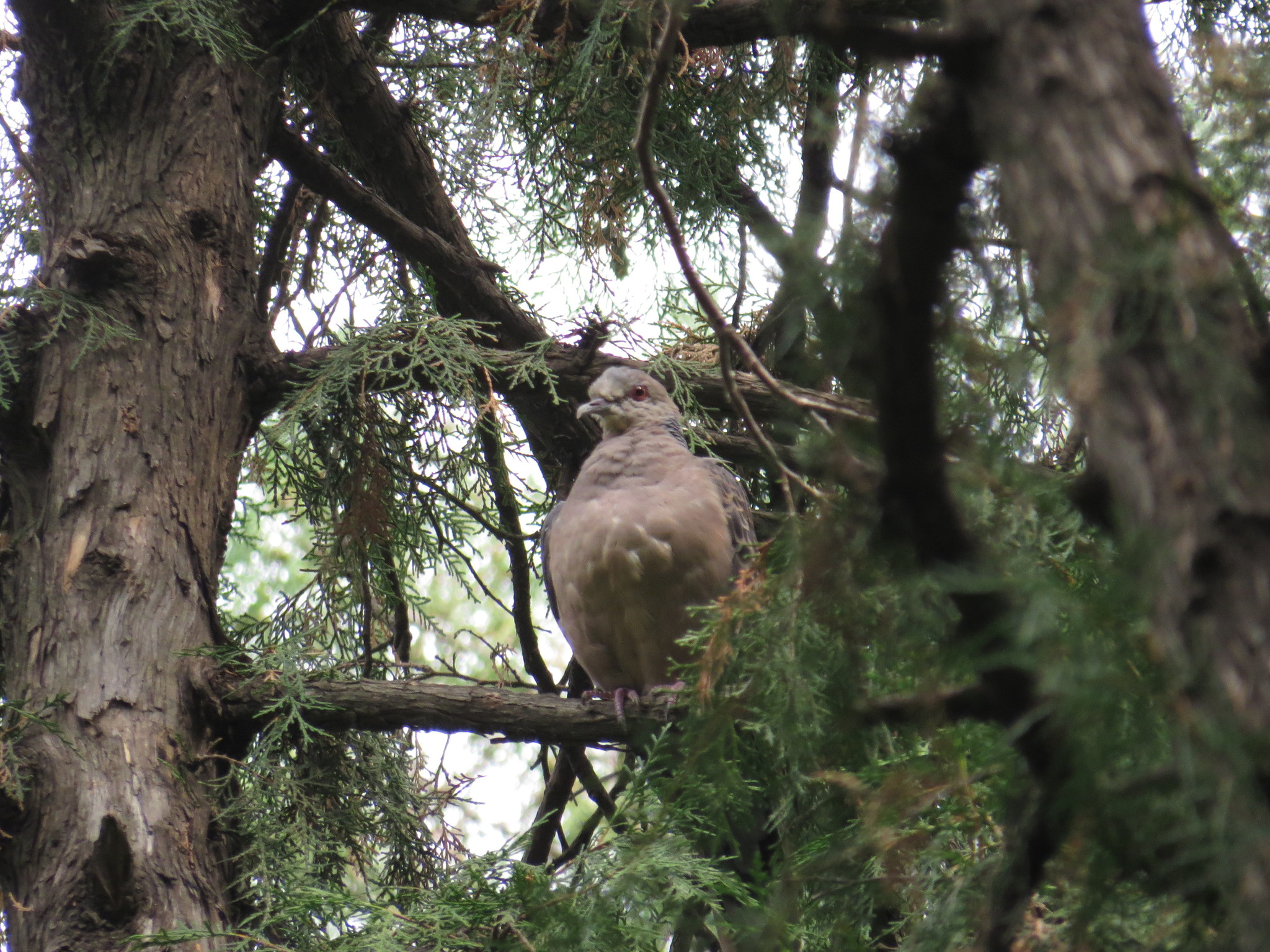
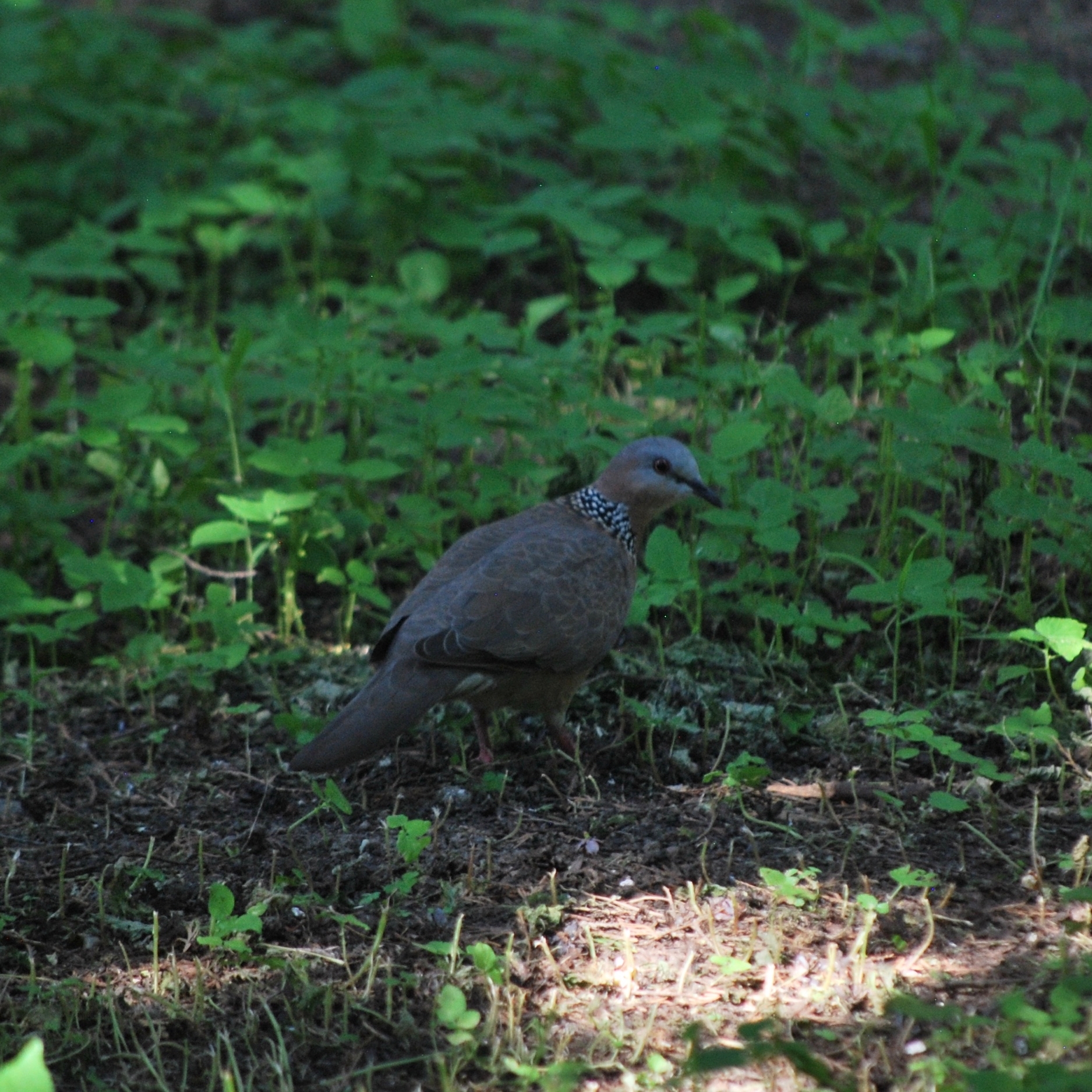
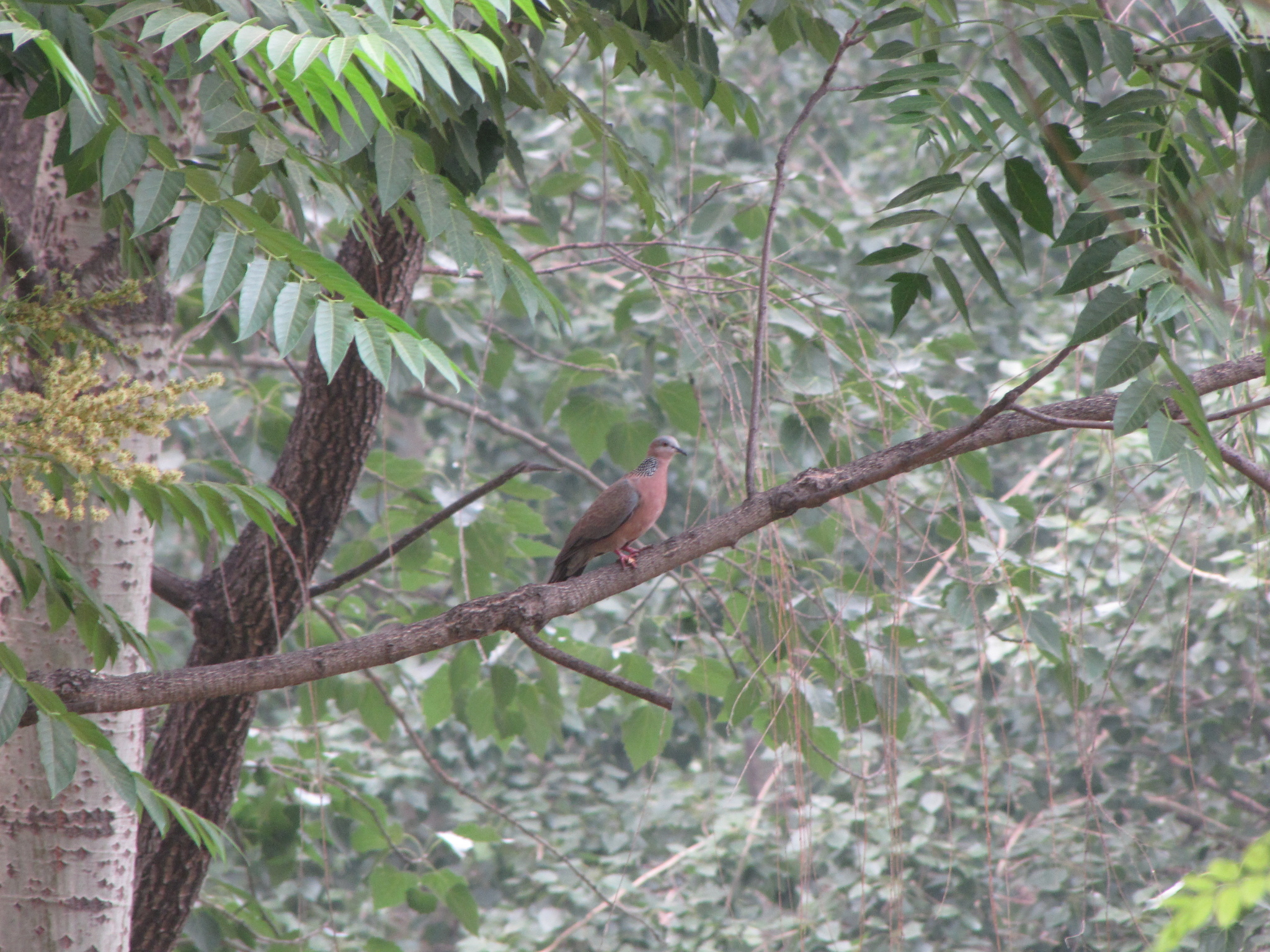
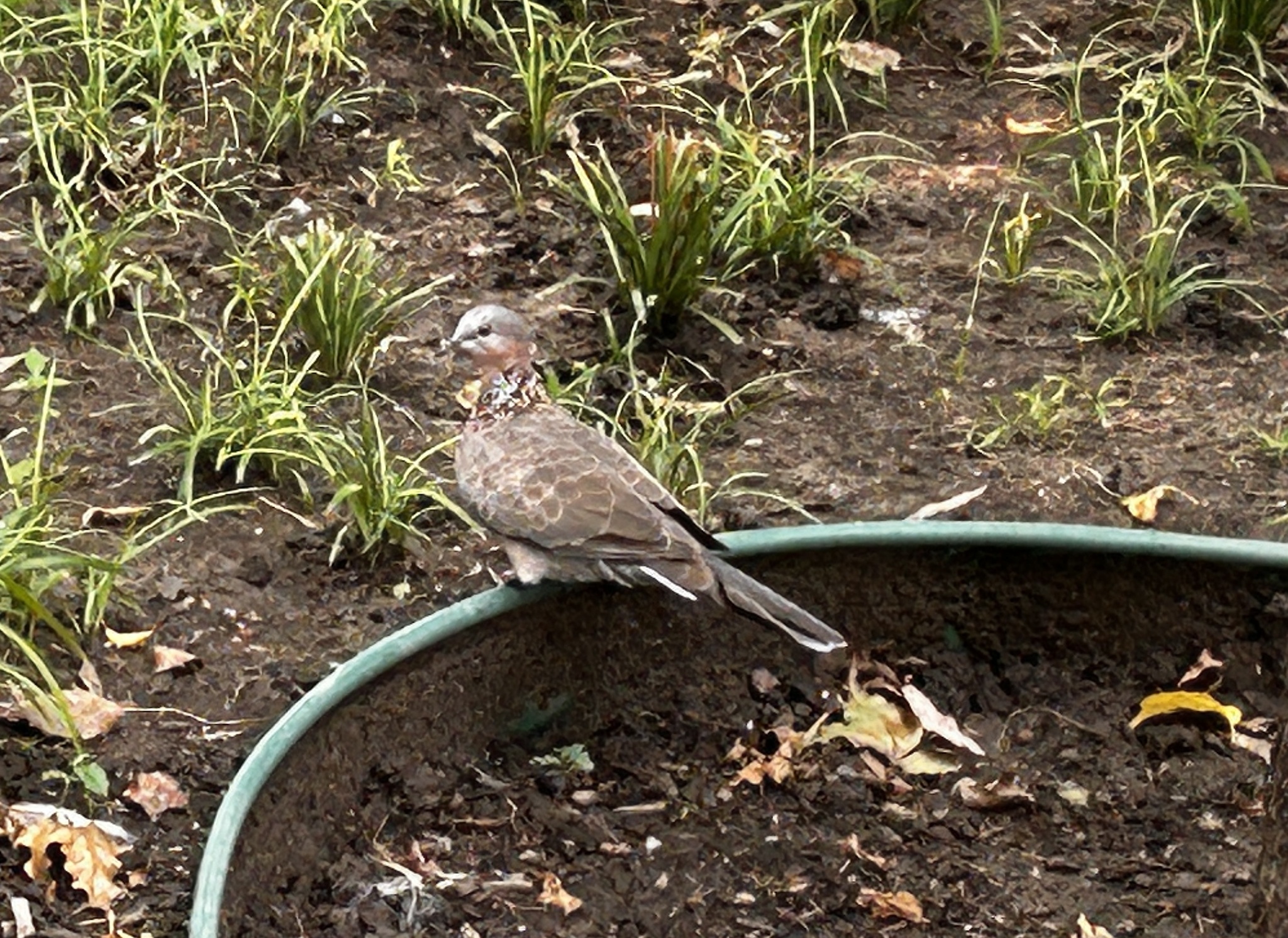
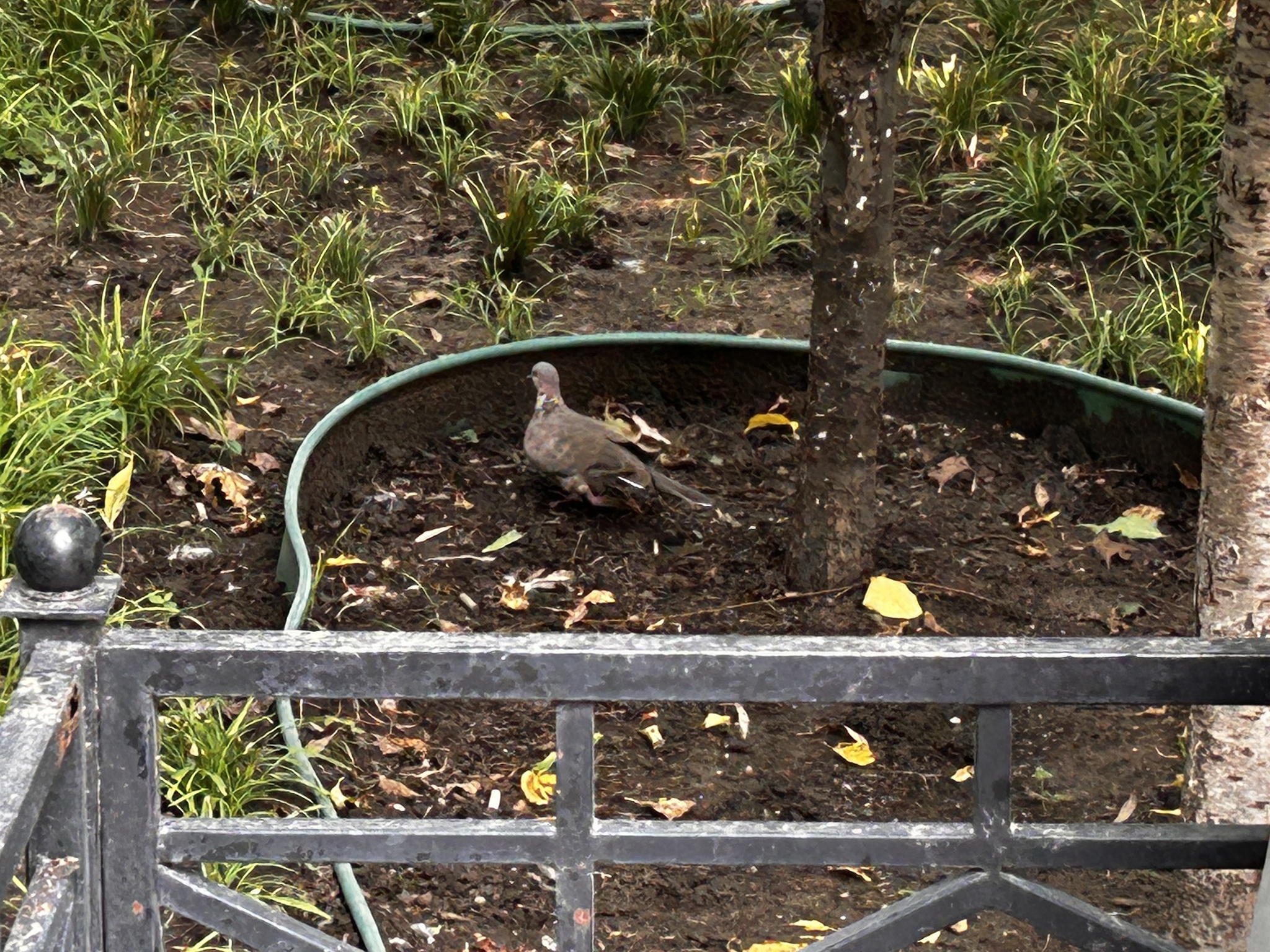
A small, long-tailed pigeon native to the Indian subcontinent, East Asia, and Southeast Asia, with established feral populations globally. Formerly classified in Streptopelia, it now resides in Spilopelia. It inhabits light forests, gardens, and urban areas. Distinctive traits include an explosive takeoff from the ground and a white-spotted black collar patch on the neck.
Description
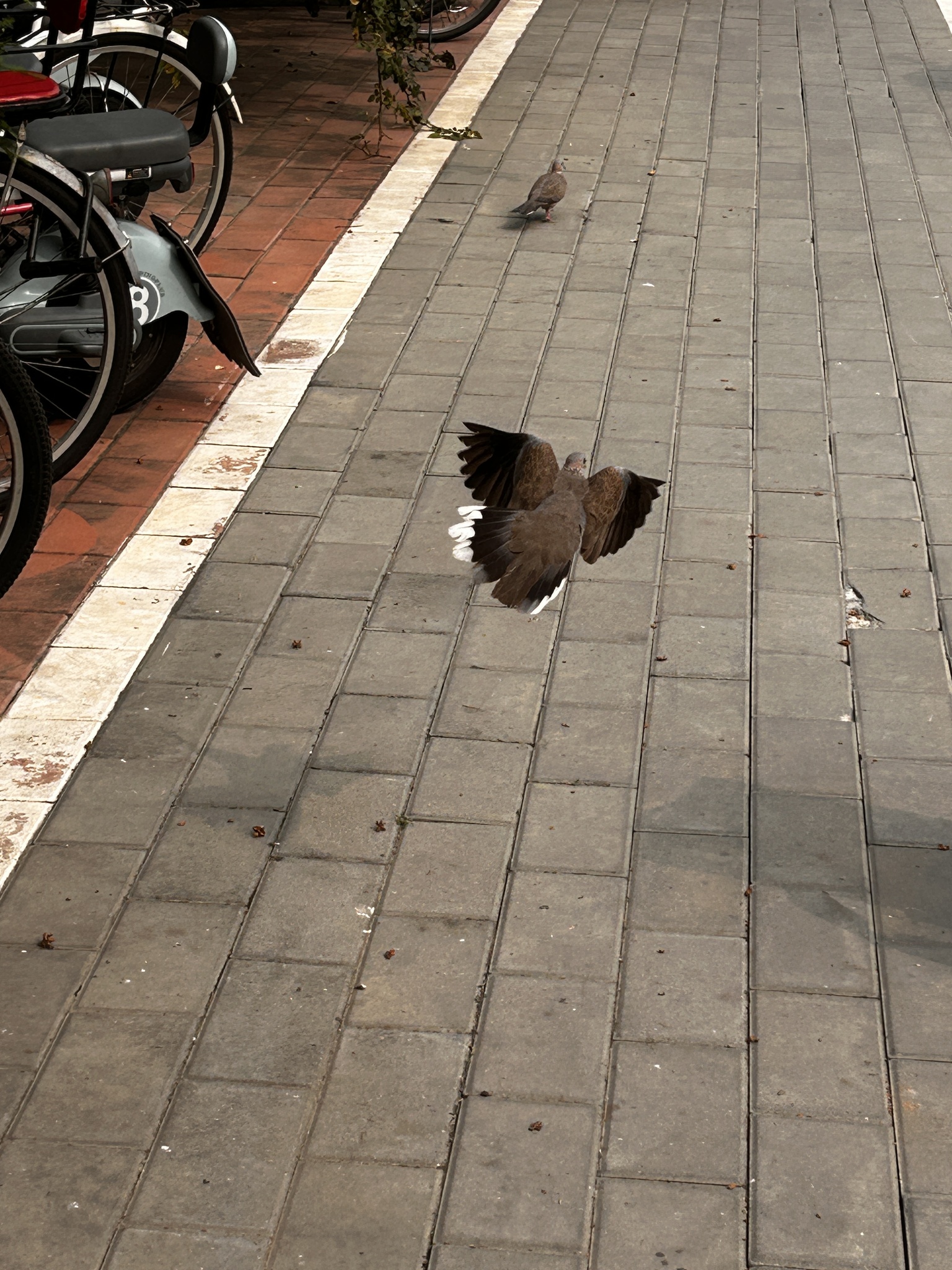
This long, slim dove measures 28 to 32 centimeters (11.2 to 12.8 inches). The ground color is rosy buff below, shading into grey on the head and belly, with a white center of the abdomen and vent. A distinctive half-collar on the back and sides of the neck consists of black feathers that bifurcate, featuring white spots at the two tips. Wing feathers are dark brown with grey edges. In Indian and Sri Lankan subspecies, median coverts have brown feathers tipped with rufous spots divided by a widening grey shaft streak; this spotting is lacking in northern and eastern populations. Outer tail feathers are tipped in white, visible during takeoff. Sexes are similar. Juveniles are duller than adults and lack neck spots until maturity. Abnormal plumages such as leucism occasionally occur.
Identification
Identify by the long tail and the unique black neck patch with white-spotted tips. In flight, white tips on outer tail feathers become visible during explosive takeoffs. Differentiate from the laughing dove, which occupies drier areas in India, whereas this species prefers moister regions. Subspecies vary: Indian and Sri Lankan forms show rufous-spotted wing coverts, while eastern populations like tigrina lack these spots and differ vocally. The flight silhouette is characterized by quick beats with occasional sharp wing flicks, followed by gliding with a spread tail during display.
Distribution & Habitat
Native range covers the Indian subcontinent, East Asia, and Southeast Asia, including Pakistan, India, Nepal, Bhutan, Sri Lanka, Bangladesh, Indochina, Philippines, Sunda Islands, Myanmar, China, Taiwan, and Hainan. Introduced and established in Hawaii, southern California, Mauritius, Australia, and New Zealand. In Australia, introduced to Melbourne in the 1860s, now common in urban and agricultural areas across eastern and southern regions. Habitats include woodland, scrub, farmland, gardens, and urban streets. Five recognized subspecies exhibit geographic variation, with suratensis and ceylonensis in South Asia, tigrina in Southeast Asia, and chinensis and hainana in East Asia.
Behavior & Ecology
Forages on the ground or low vegetation for grass seeds, grains, fallen fruits, and occasionally insects like winged termites. Moves in pairs or small groups. Flight is quick with regular beats. Courtship involves male cooing, bowing, and aerial displays featuring steep takeoffs with loud wing clapping and slow glides with spread tails. Breeding seasons vary: year-round in Hawaii, summer in temperate zones, September to January in southern Australia, and autumn in northern Australia. Nests are flimsy twig cups placed in low vegetation, on the ground, or on structures. Both parents build nests, incubate, and feed young. Clutch size is two whitish eggs, hatching after about 13 days, with fledging occurring after a fortnight. Multiple broods may be raised.
Conservation
Populations can rise and fall rapidly within five-year spans. In the Philippines, it may outcompete Streptopelia dusumieri. In Australia, there is insufficient evidence of competition with native doves. Its habit of flushing into the air when disturbed poses hazards on airfields, leading to collisions with aircraft and potential damage. Feral populations are well-established in many introduced regions.
Source: Wikipedia · CC BY-SA 3.0
Taxonomy
- Order
- Columbiformes
- Family
- Columbidae
- Genus
- Spilopelia
Vocalizations
Subspecies (5)
-
Spilopelia chinensis ceylonensis
Sri Lanka
Data Sources
Species description from Wikipedia, licensed under CC BY-SA 3.0.
Bird images and sounds sourced from GBIF, contributed by citizen scientists worldwide under Creative Commons licenses.
Taxonomy data from AviList 2025.