Spotted Dove
Spilopelia chinensis
珠颈斑鸠
Introduction
This small, long-tailed pigeon ranges across the Indian subcontinent through East and Southeast Asia. It inhabits woodland, scrub, farmland, gardens, and urban areas. Feral populations occur in Hawaii, southern California, Mauritius, Australia, and New Zealand. The species forages on the ground and flushes explosively when disturbed. Concerns exist about potential competition with native dove species in introduced ranges.
Description
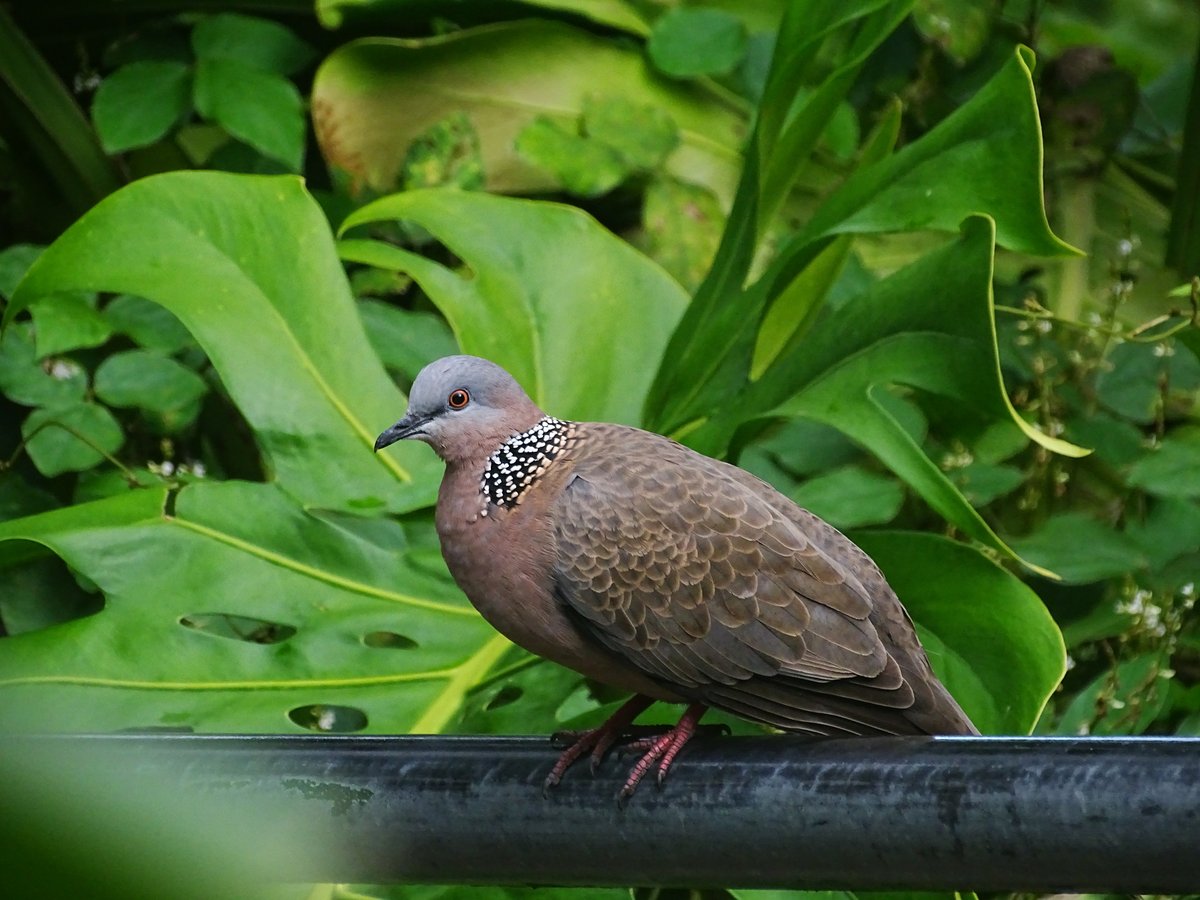
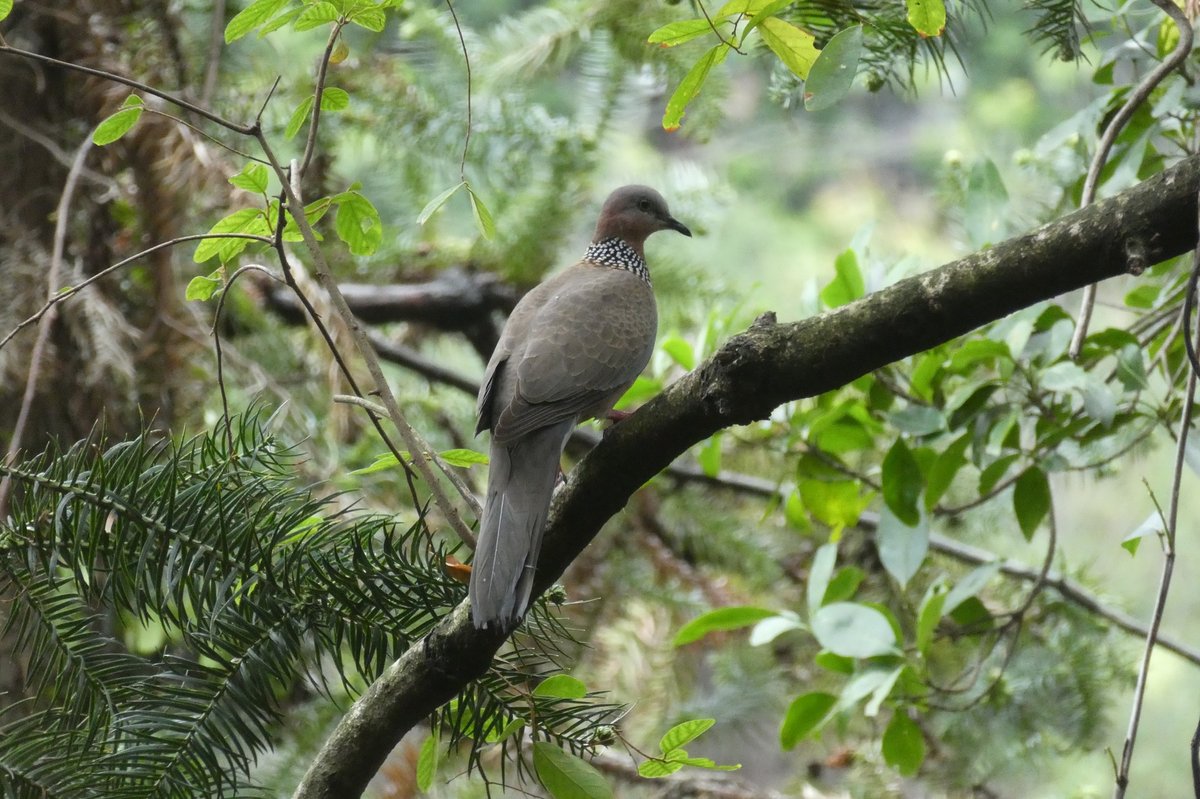
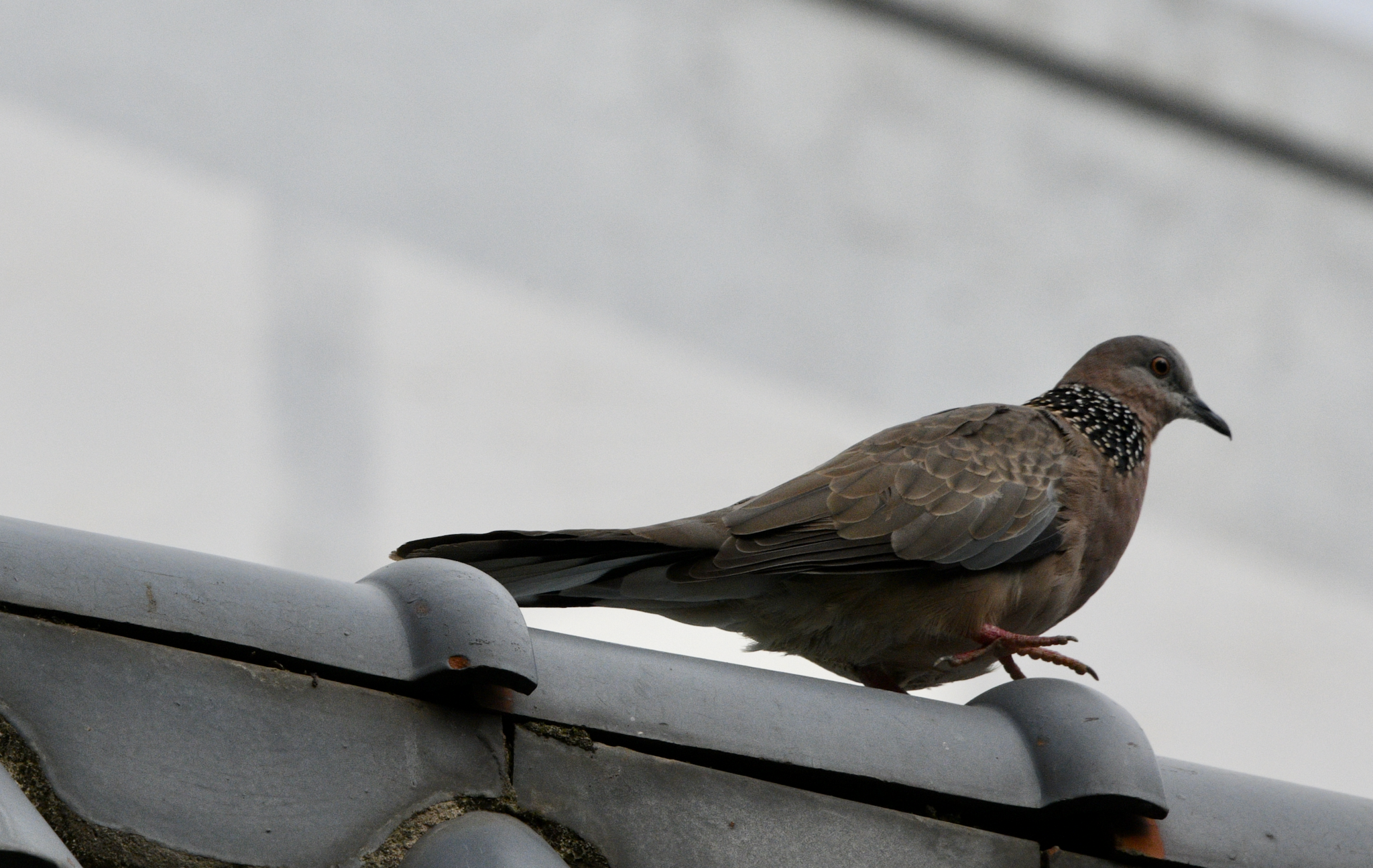
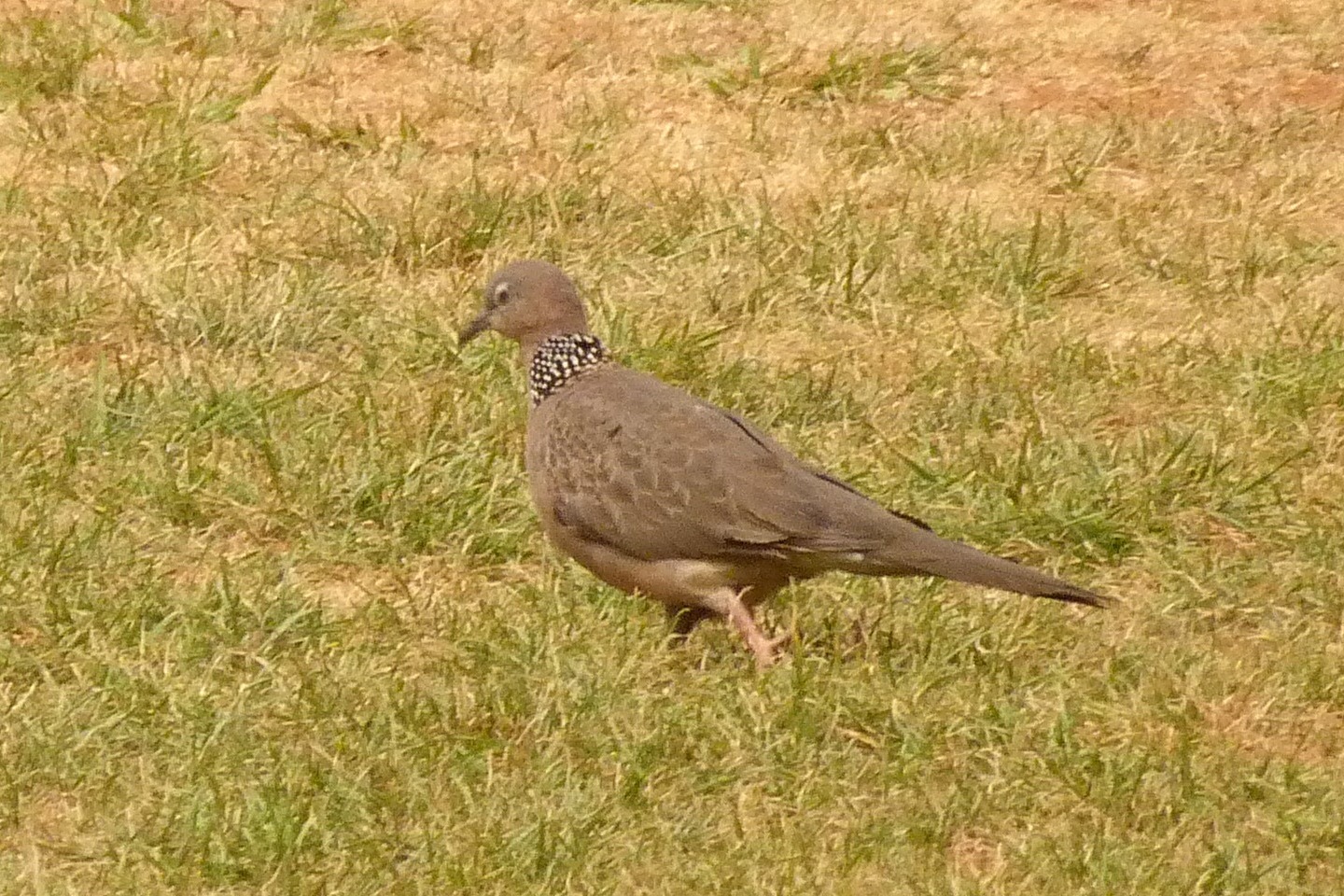
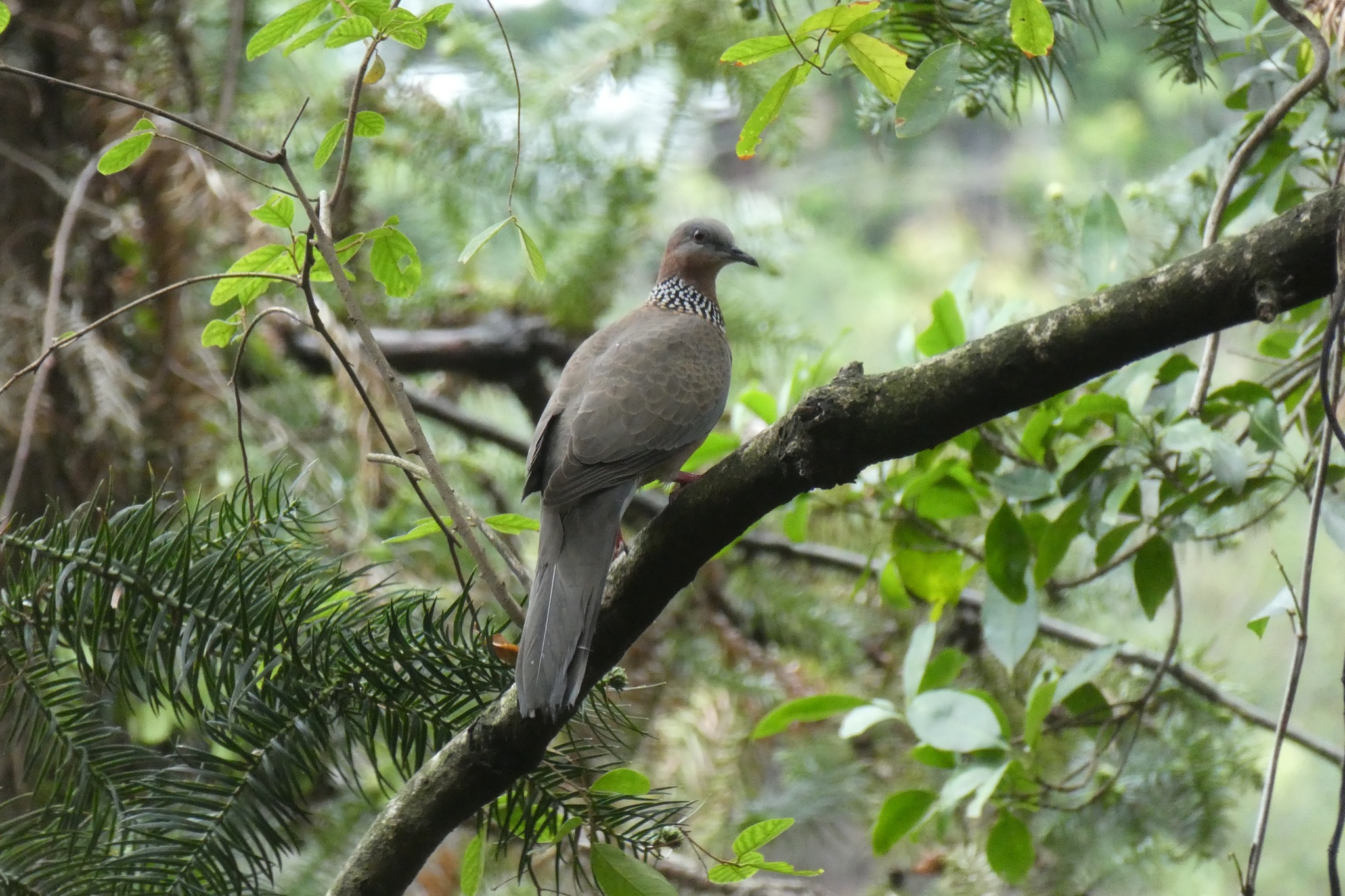
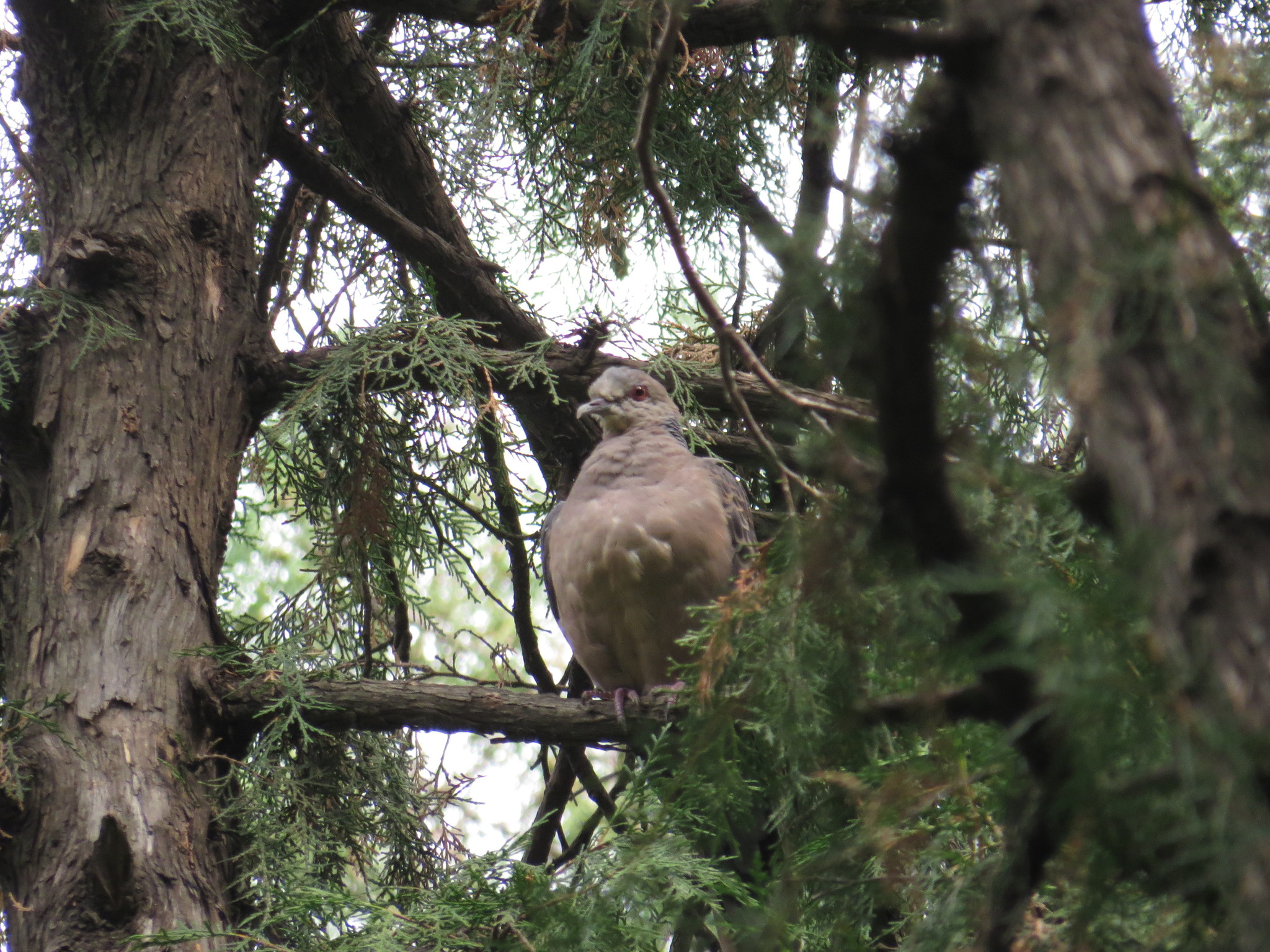
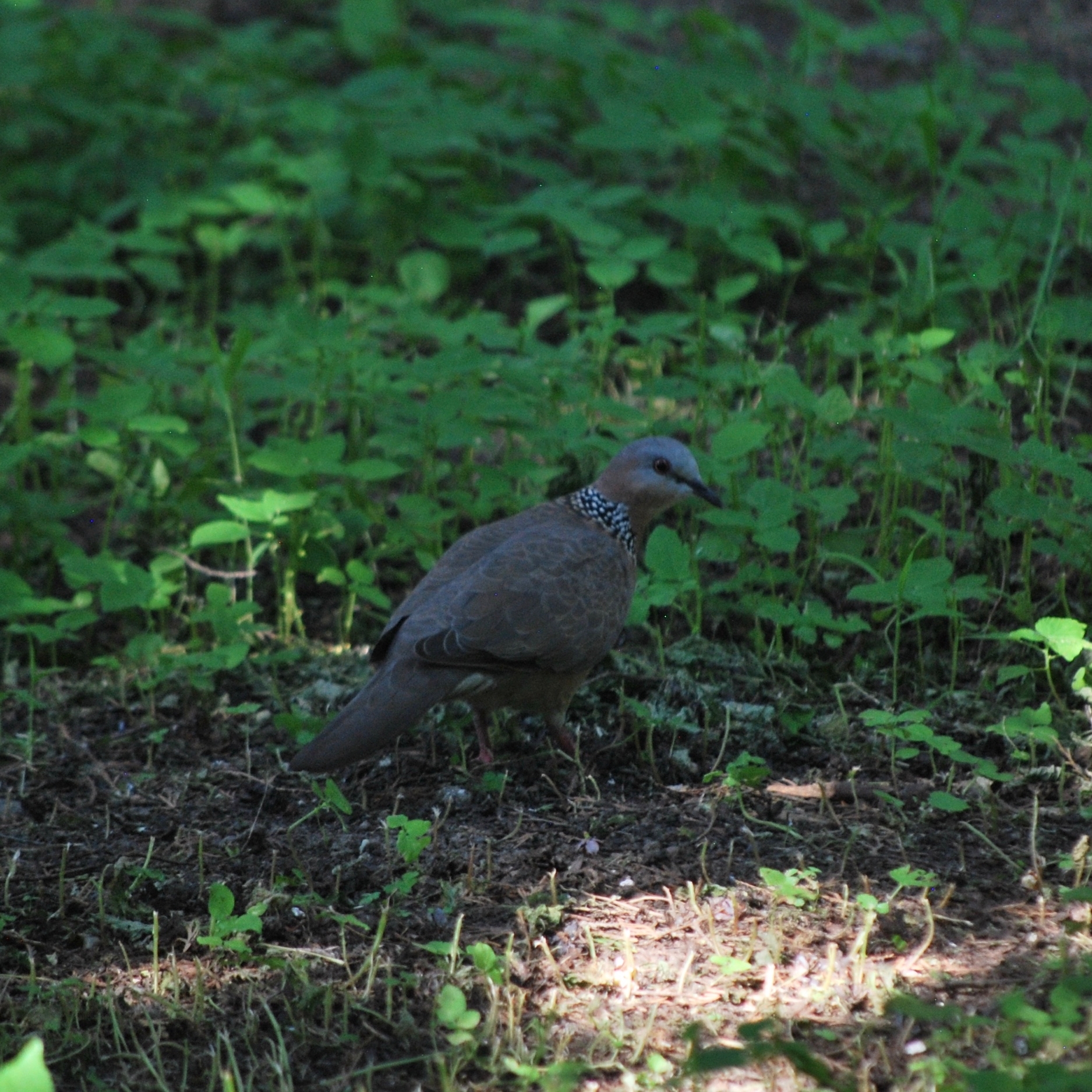
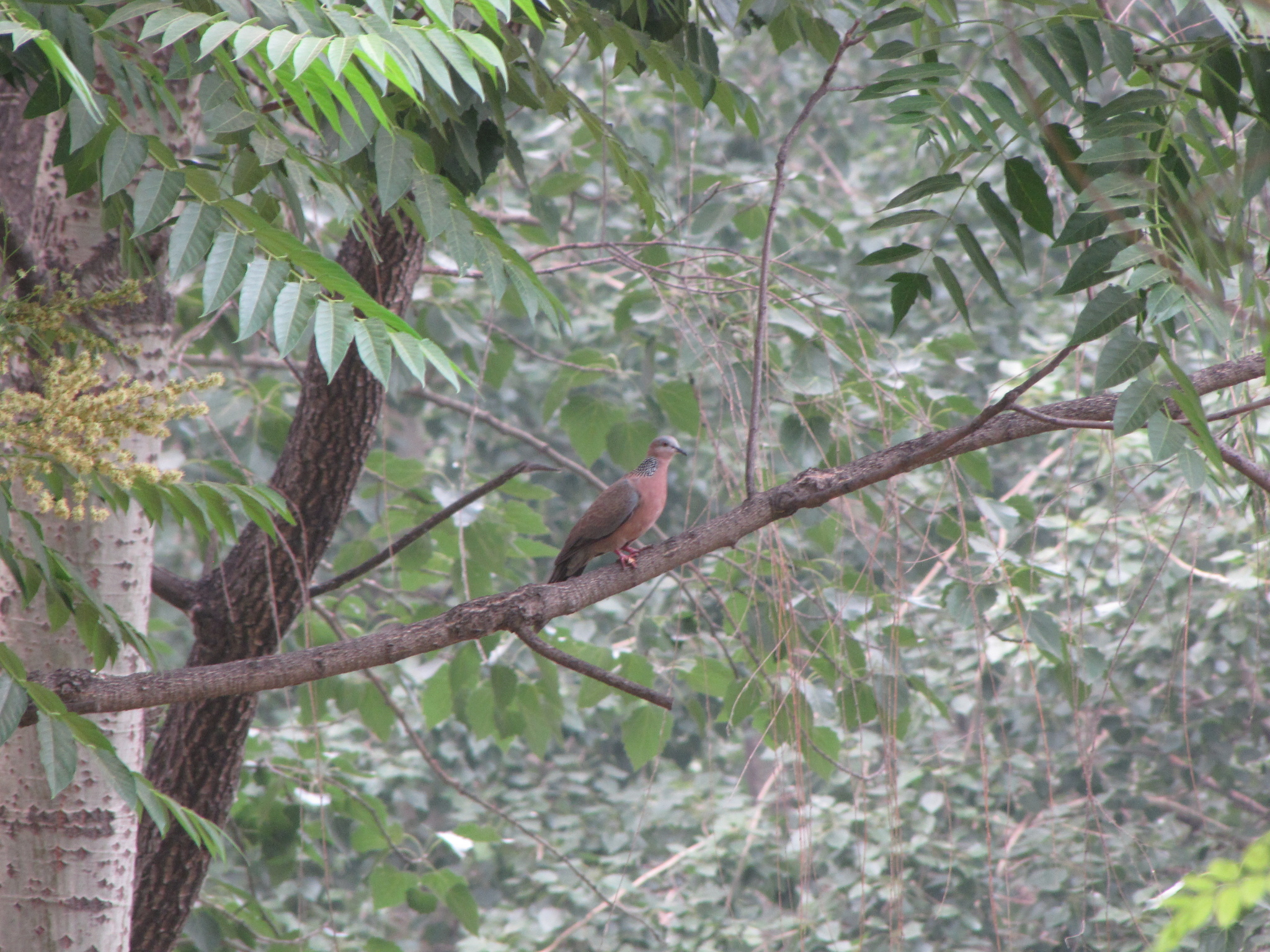
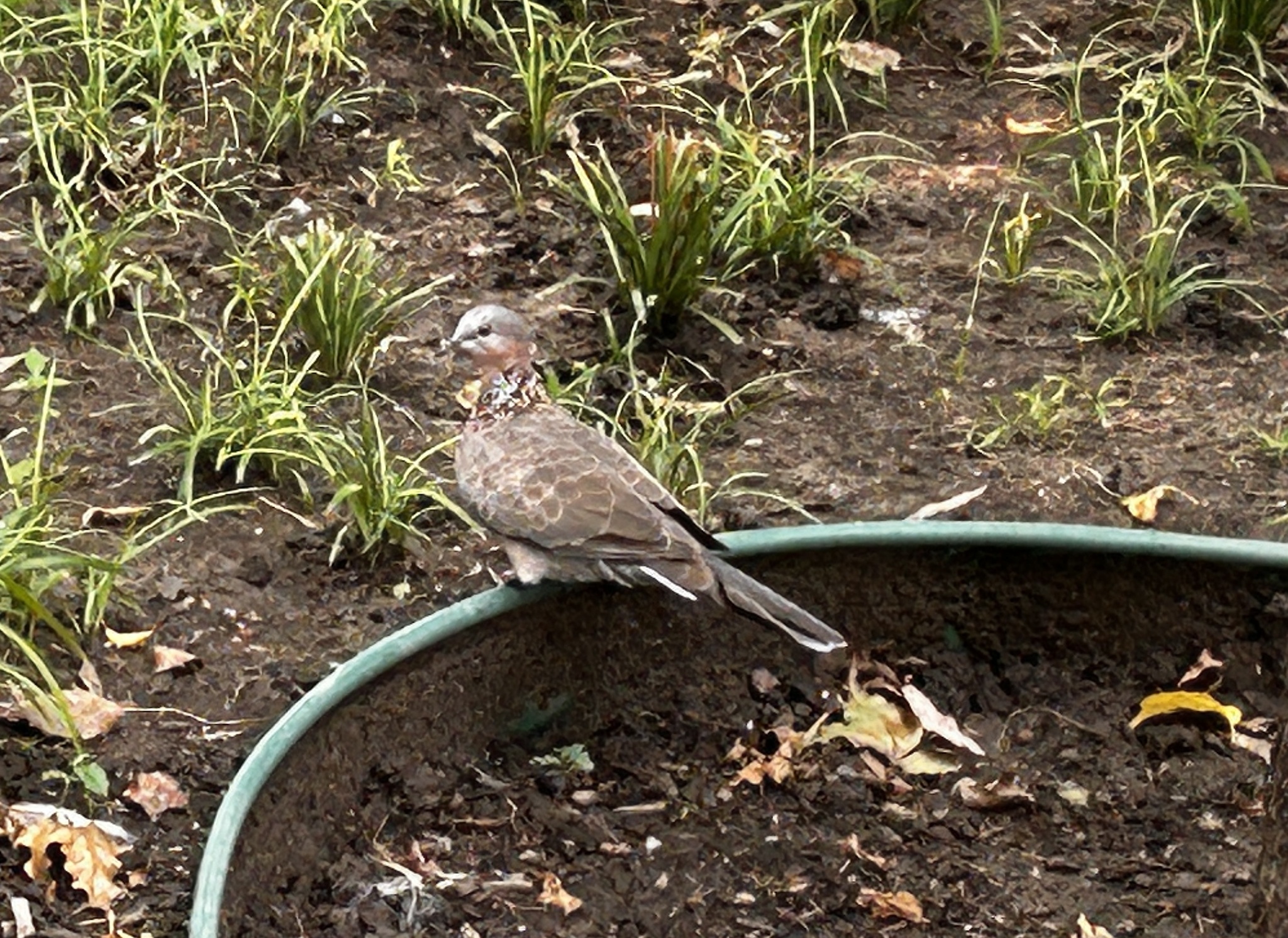
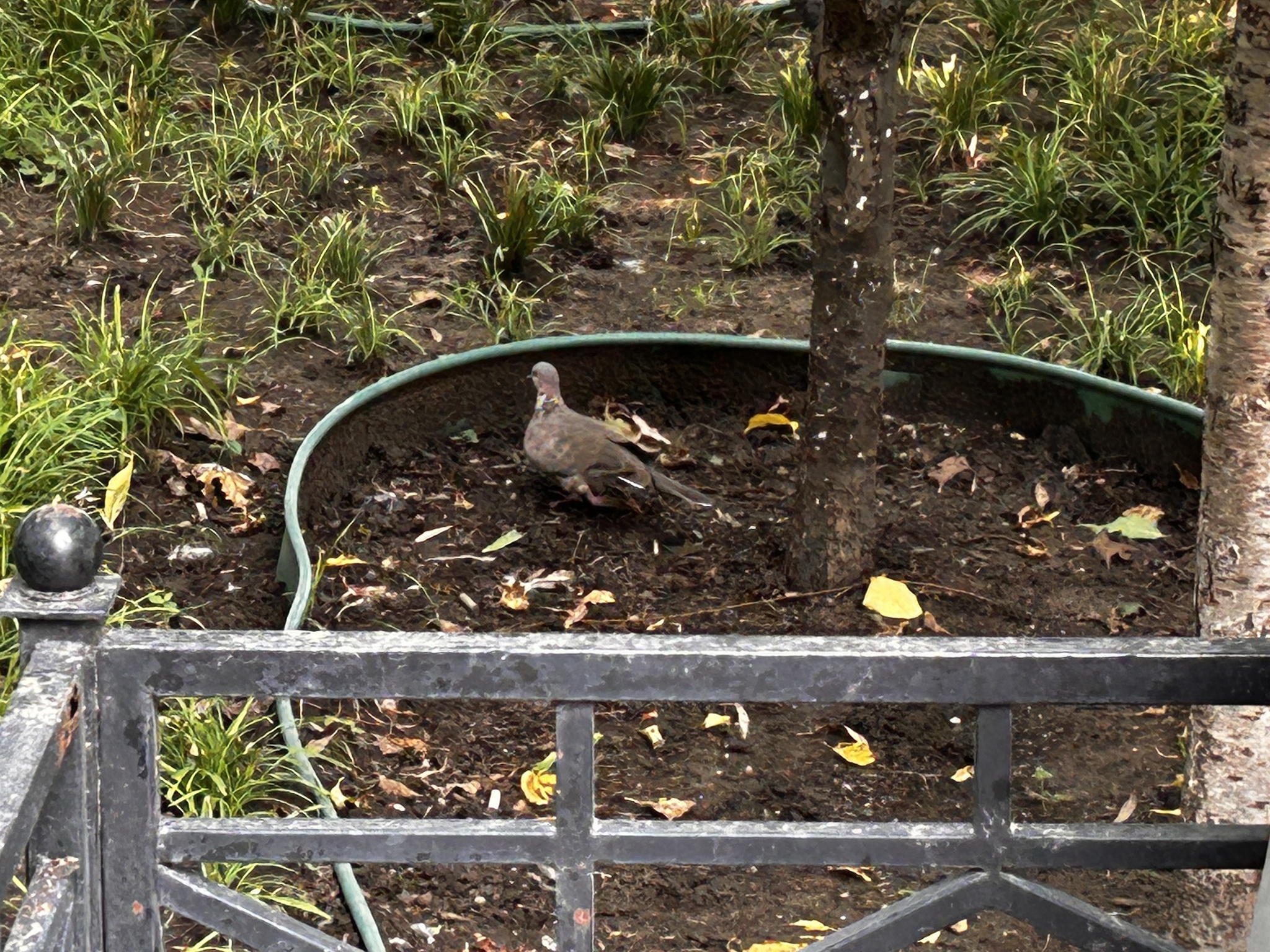
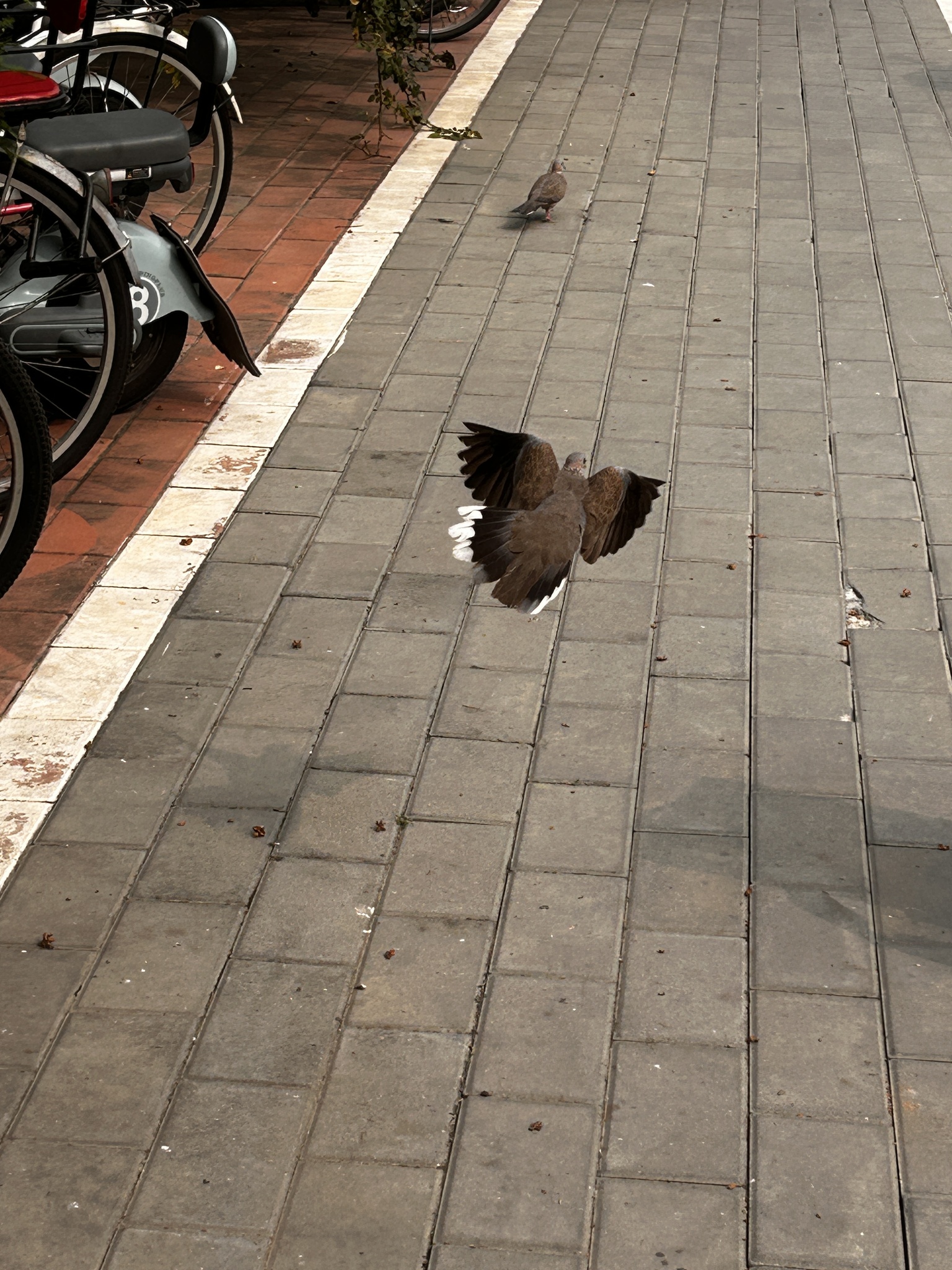
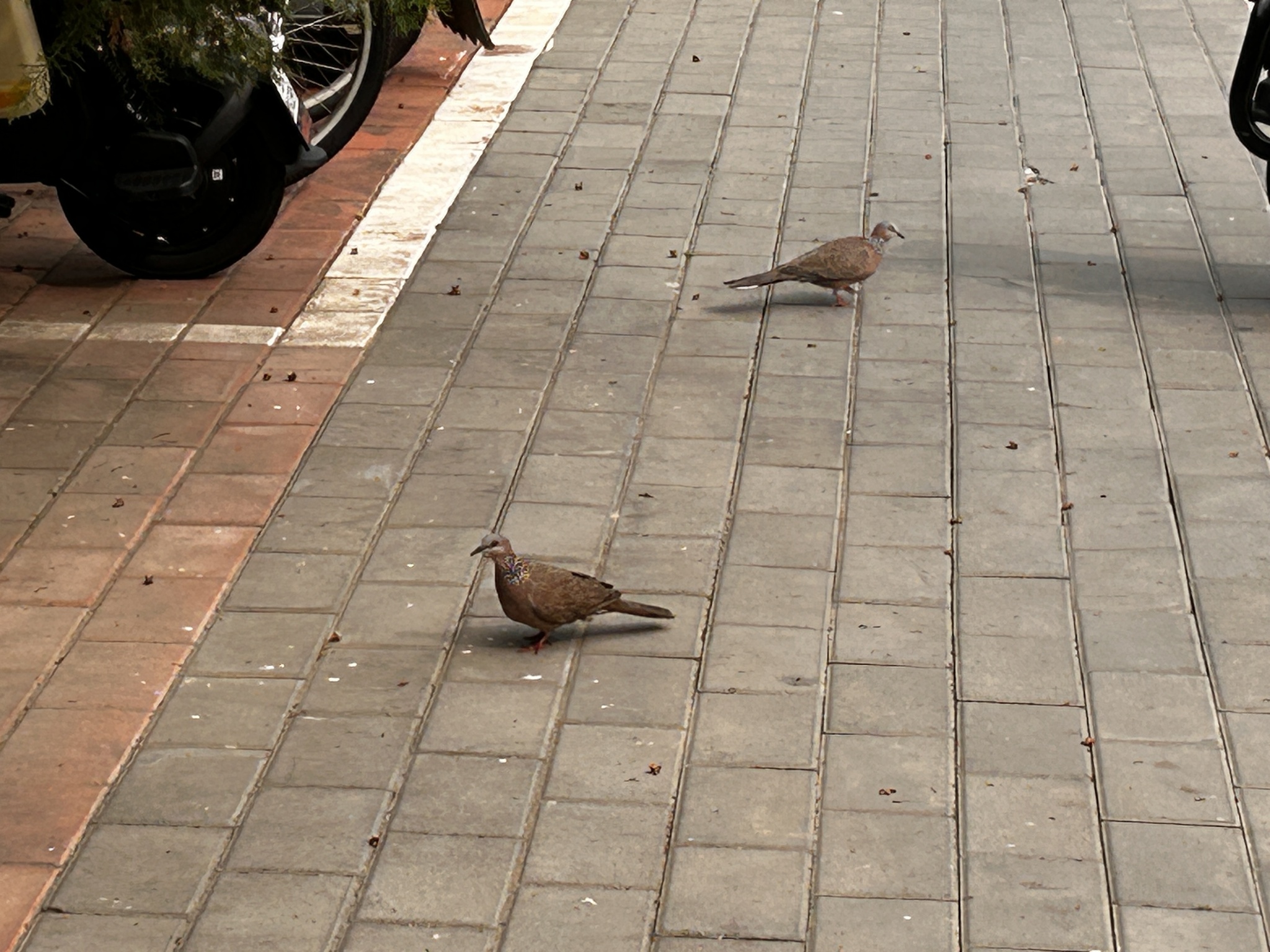
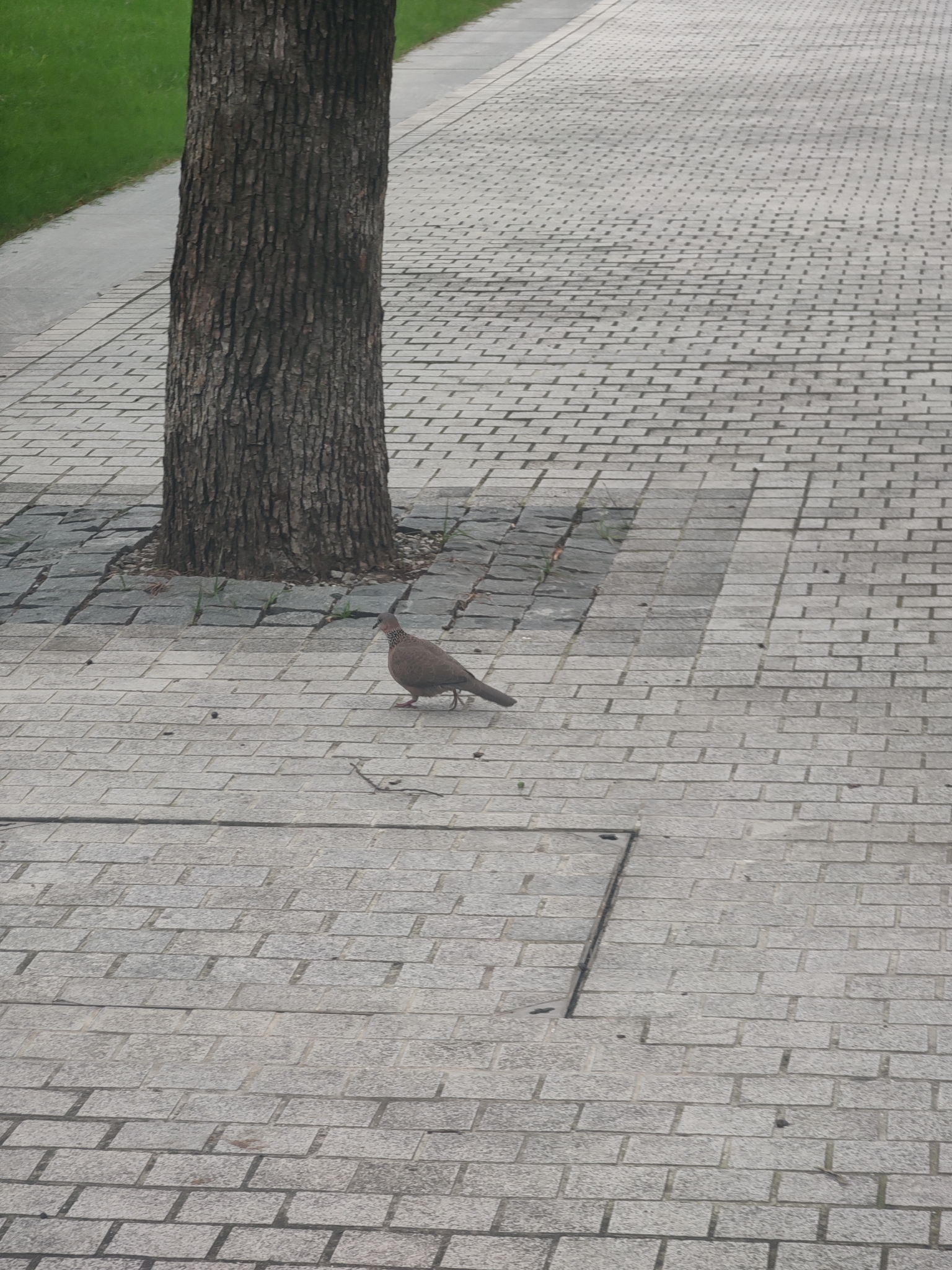
This is a slim, long-tailed dove measuring 28 to 32 centimeters in length. The overall plumage is buff-brown, with rosy-buff underparts shading into grey on the head and belly. The most distinctive feature is the half-collar on the back and sides of the neck, composed of black feathers that fork and carry white spots at their tips. The wing coverts display light buff spots, while the wing feathers themselves are dark brown with grey edges. The center of the abdomen and vent area are white, and the outer tail feathers are prominently tipped in white, becoming visible during takeoff. Sexes appear similar, though juveniles are noticeably duller and lack the characteristic neck spots until they mature. Abnormal plumages including leucism occasionally occur in wild populations.
Identification
The spotted dove is best identified by its combination of a long tail, buff-brown coloration, and the distinctive white-spotted black half-collar on the neck. The white-tipped outer tail feathers provide an obvious field mark when the bird takes flight. The light spotting on the wing coverts and the white belly patch also aid identification. It can be distinguished from the similar laughing dove, which lacks the spotted collar and has a different overall coloration. In India, the spotted dove tends to inhabit moister regions while the laughing dove occupies drier areas, providing useful habitat-based clues for separation. The number of terminal 'kroo' calls varies between populations, with Indian forms giving more notes than eastern populations.
Distribution & Habitat
The native range encompasses the Indian subcontinent and extends through East and Southeast Asia, including Pakistan, India, Nepal, Bhutan, Sri Lanka, Bangladesh, Myanmar, China, Taiwan, Hainan, Southeast Asia, the Philippines, and the Sunda Islands. Five subspecies are recognized across this broad distribution, showing regional variations in plumage and size. The species has been widely introduced beyond its native range, with established populations in Hawaii, southern California, Mauritius, Australia, and New Zealand. In Australia, introduced in Melbourne during the 1860s, it has spread throughout eastern and southern parts of the country. It occupies diverse habitats including woodland, scrub, farmland, and human habitation, showing particular versatility in urban environments where it forages on the ground or perches on low vegetation.
Behavior & Ecology
These doves move about in pairs or small groups as they forage on the ground for grass seeds, grains, fallen fruits, and other plant material, occasionally taking insects including winged termites. The flight is quick with regular wing beats and occasional sharp flicks. During courtship displays, males coo, bow, and perform aerial displays involving a steep takeoff with loud wing clapping followed by a slow glide with spread tail. Breeding seasons vary by region—warm areas see extended breeding while temperate zones concentrate in summer; in southern Australia, breeding occurs mainly from September to January. Both parents share nest-building, incubation, and feeding duties, constructing a flimsy twig cup typically placed in low vegetation. Two whitish eggs are laid, hatching after approximately 13 days with fledging around 14 days. Multiple broods may be raised annually. Vocalizations consist of soft cooing described as 'Krookruk-krukroo... kroo kroo kroo'.
Conservation
The spotted dove is currently assessed as Least Concern by the IUCN, indicating it is not considered globally threatened. Its extensive range, large population, and ability to thrive in human-modified landscapes contribute to its secure status. While populations may fluctuate rapidly within five-year spans, the species has demonstrated resilience and even expanded its range in many parts of the world. In introduced areas such as Australia, evidence suggests the doves do not significantly compete with native dove species. However, concerns exist in the Philippines, where introduced populations may be outcompeting the native Streptopelia dusumieri. The species' habit of flushing into the air when disturbed has created an aviation hazard, with birds sometimes colliding with aircraft at airfields.
Culture
This species is known by several alternative common names reflecting its distinctive appearance, including mountain dove, pearl-necked dove, lace-necked dove, and spotted turtle-dove. These names reference features such as its habitat preferences and the ornate spotted pattern on its neck. The species holds no significant mythological or folklore significance documented in the available literature, though its widespread presence in gardens and urban areas across multiple continents has made it a familiar sight to many people in their daily lives.
Source: Wikipedia · CC BY-SA 3.0
Taxonomy
- Order
- Columbiformes
- Family
- Columbidae
- Genus
- Spilopelia
- eBird Code
- spodov
Vocalizations
Subspecies (5)
-
Spilopelia chinensis ceylonensis
Sri Lanka
-
Spilopelia chinensis chinensis
northeastern Myanmar eastward to central and eastern China and Taiwan
-
Spilopelia chinensis hainana
Hainan (off southeastern China)
-
Spilopelia chinensis suratensis
Pakistan, India, and Nepal eastward to Bhutan and Assam
-
Spilopelia chinensis tigrina
Bangladesh and far northeastern India eastward to southeastern Asia, Philippines, and Greater and Lesser Sundas
Data Sources
Species description from Wikipedia, licensed under CC BY-SA 3.0.
Bird images and sounds sourced from GBIF, contributed by citizen scientists worldwide under Creative Commons licenses.
Taxonomy data from AviList 2025.