Anseriformes / Anatidae / Spatula
Northern Shoveler
Spatula clypeata · 琵嘴鸭
Introduction
A common and widespread duck in the genus Spatula. It breeds in northern Europe, the Palearctic, and North America, wintering in southern Europe, the Indian subcontinent, Southeast Asia, Central America, the Caribbean, and northern South America. It inhabits open wetlands such as marshes and wet grasslands. The species is distinguished by its large spatulate bill used for filter-feeding. Conservation status is Least Concern.
Description
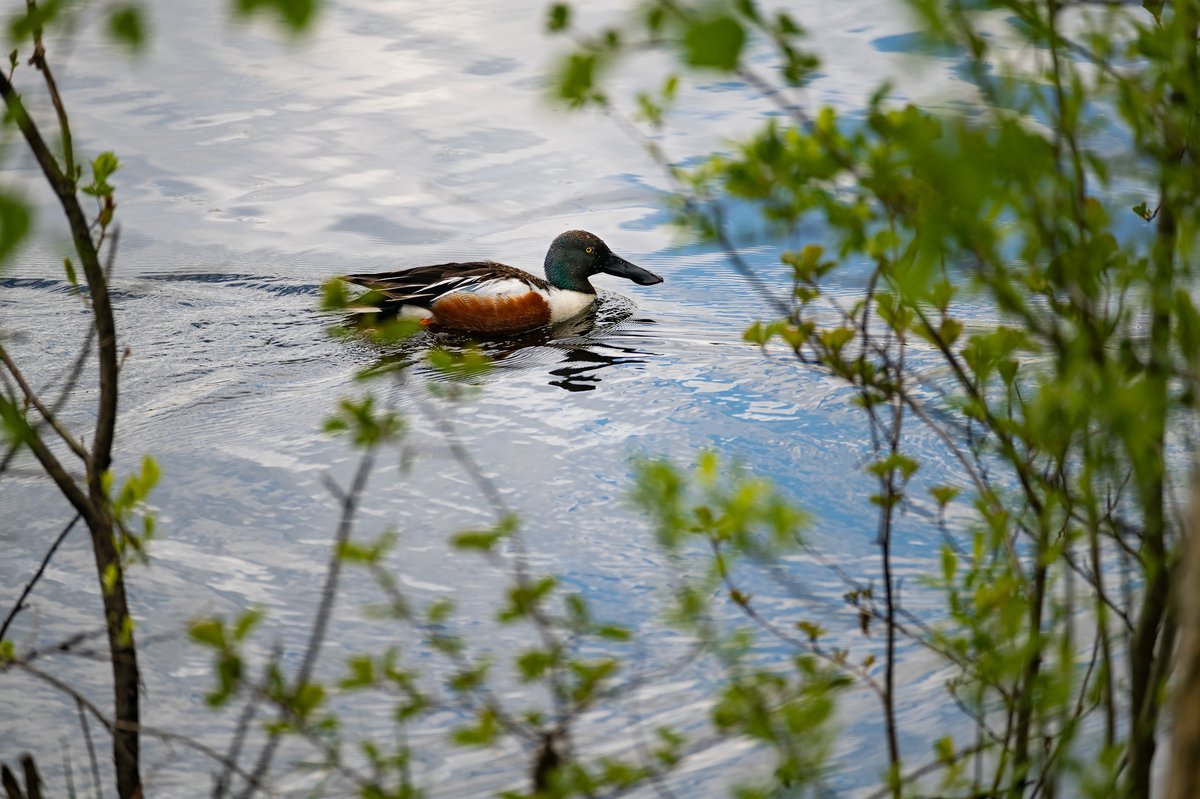
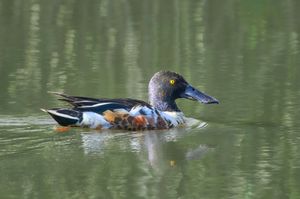
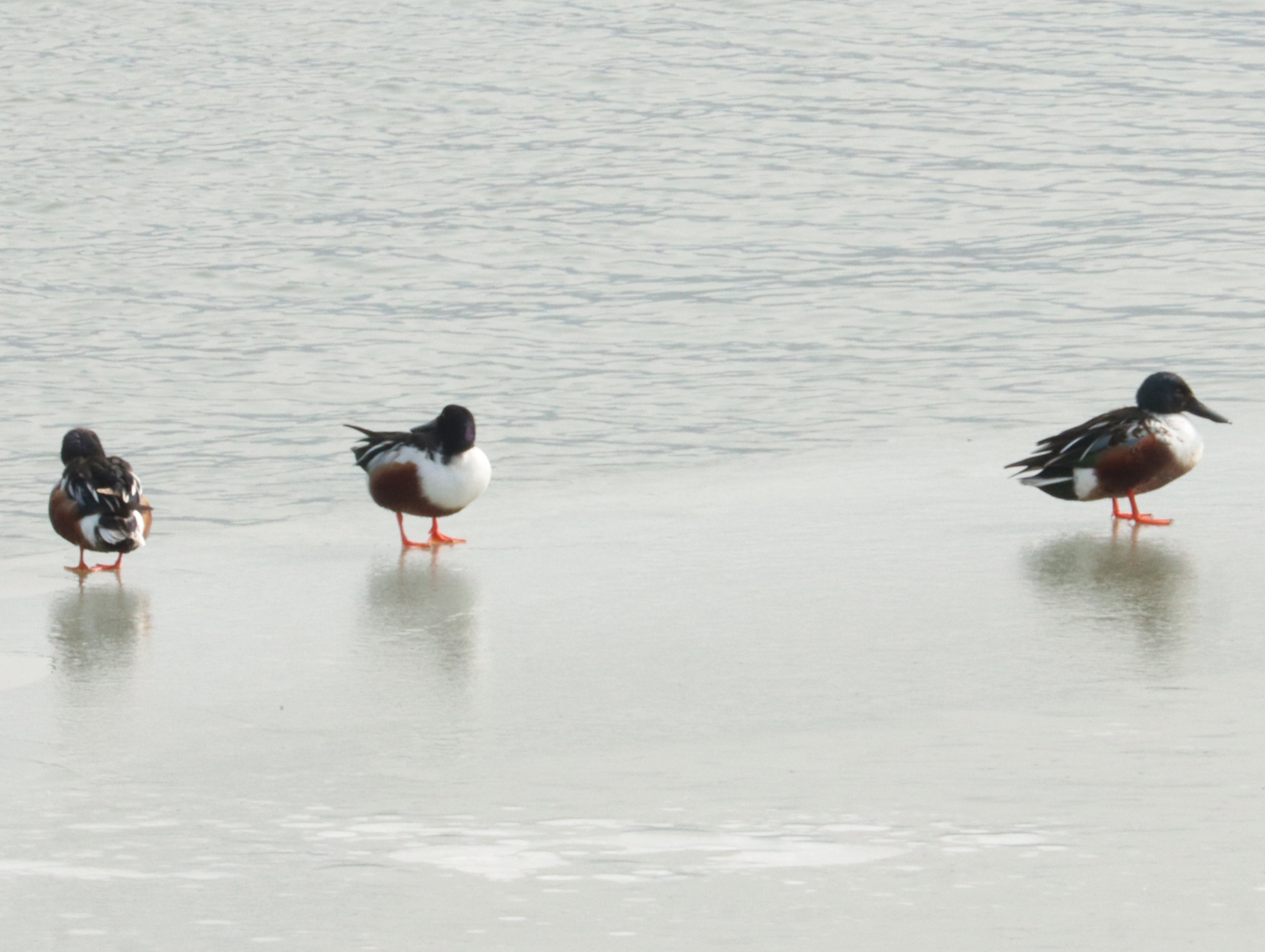
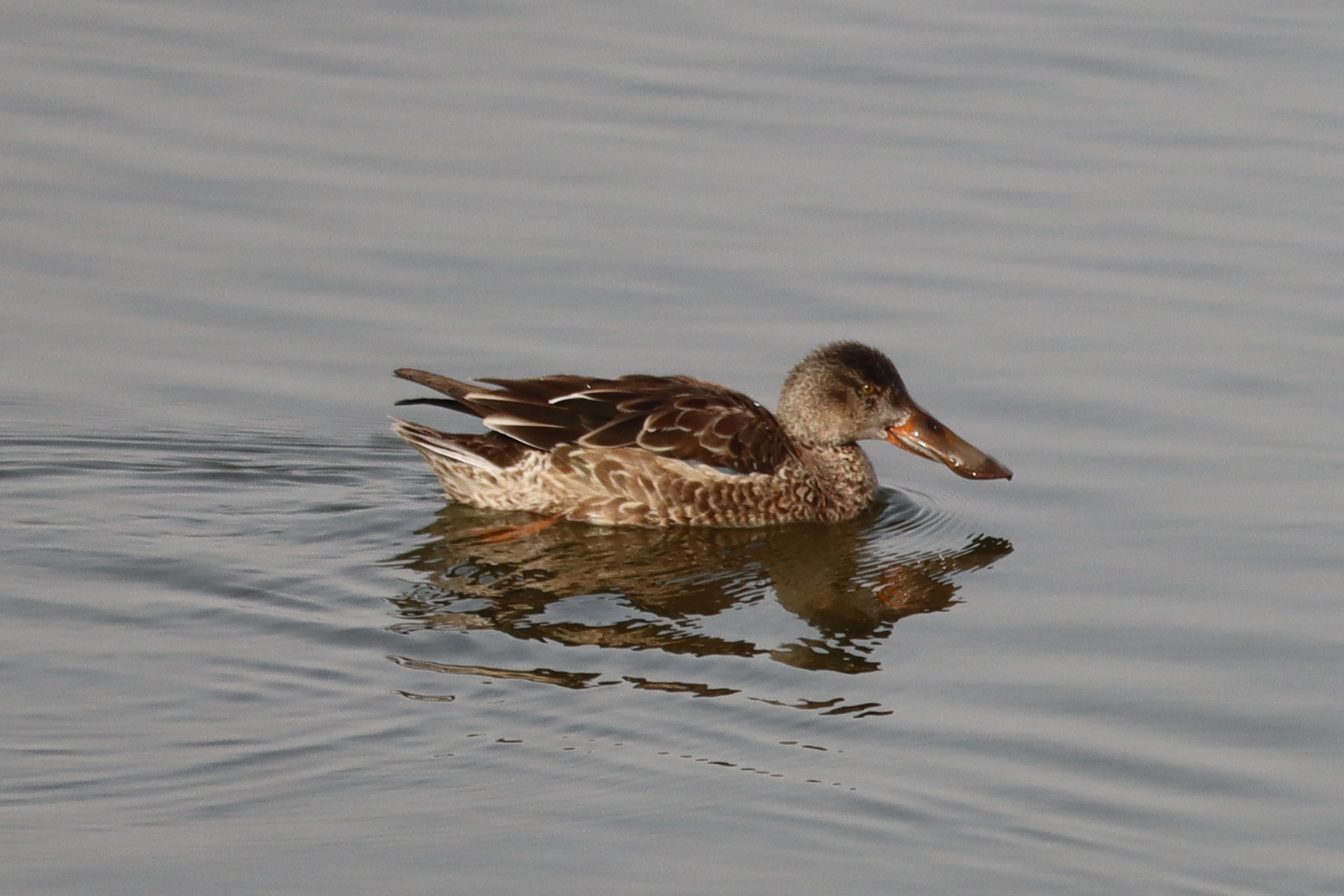
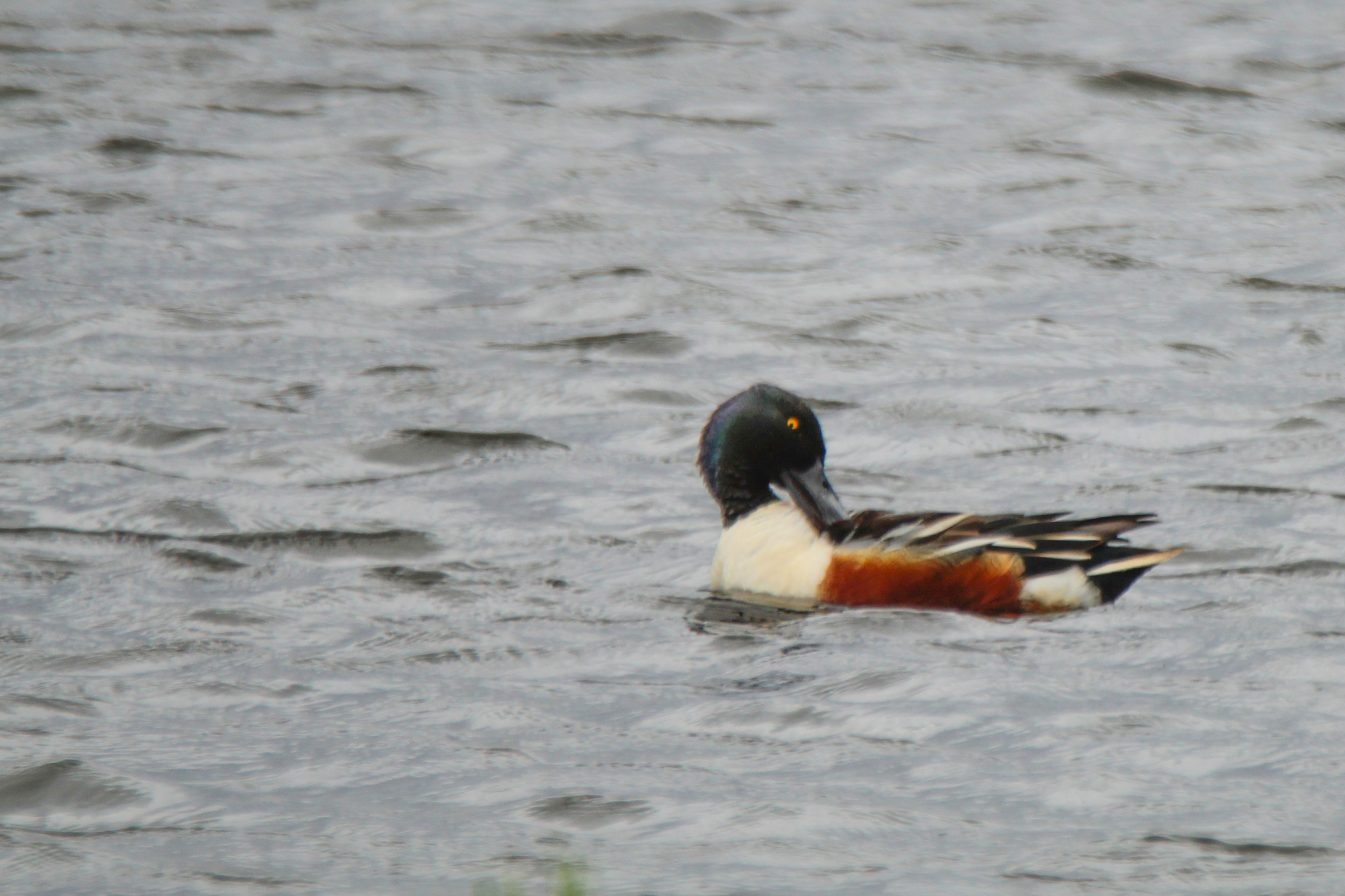
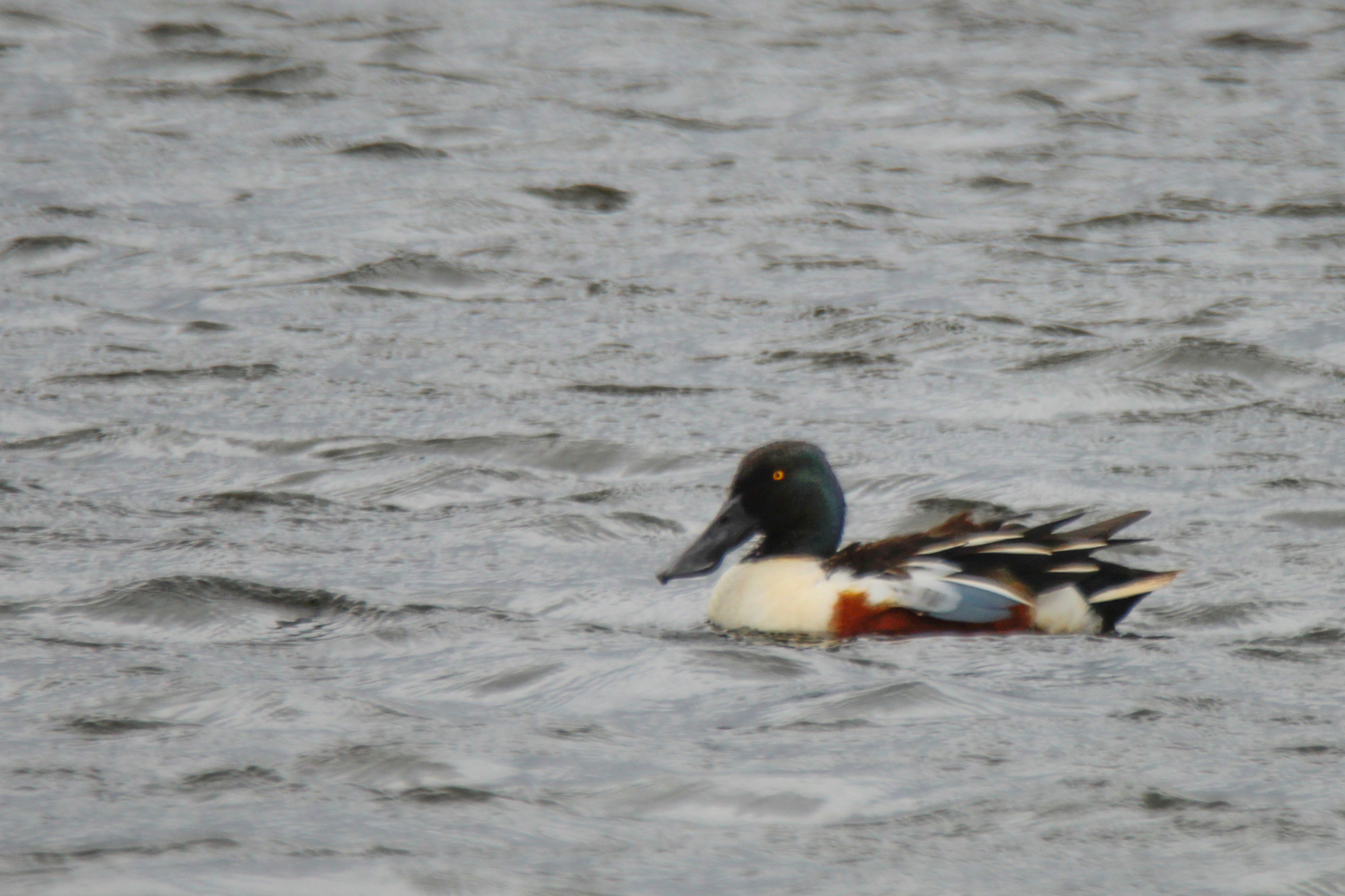
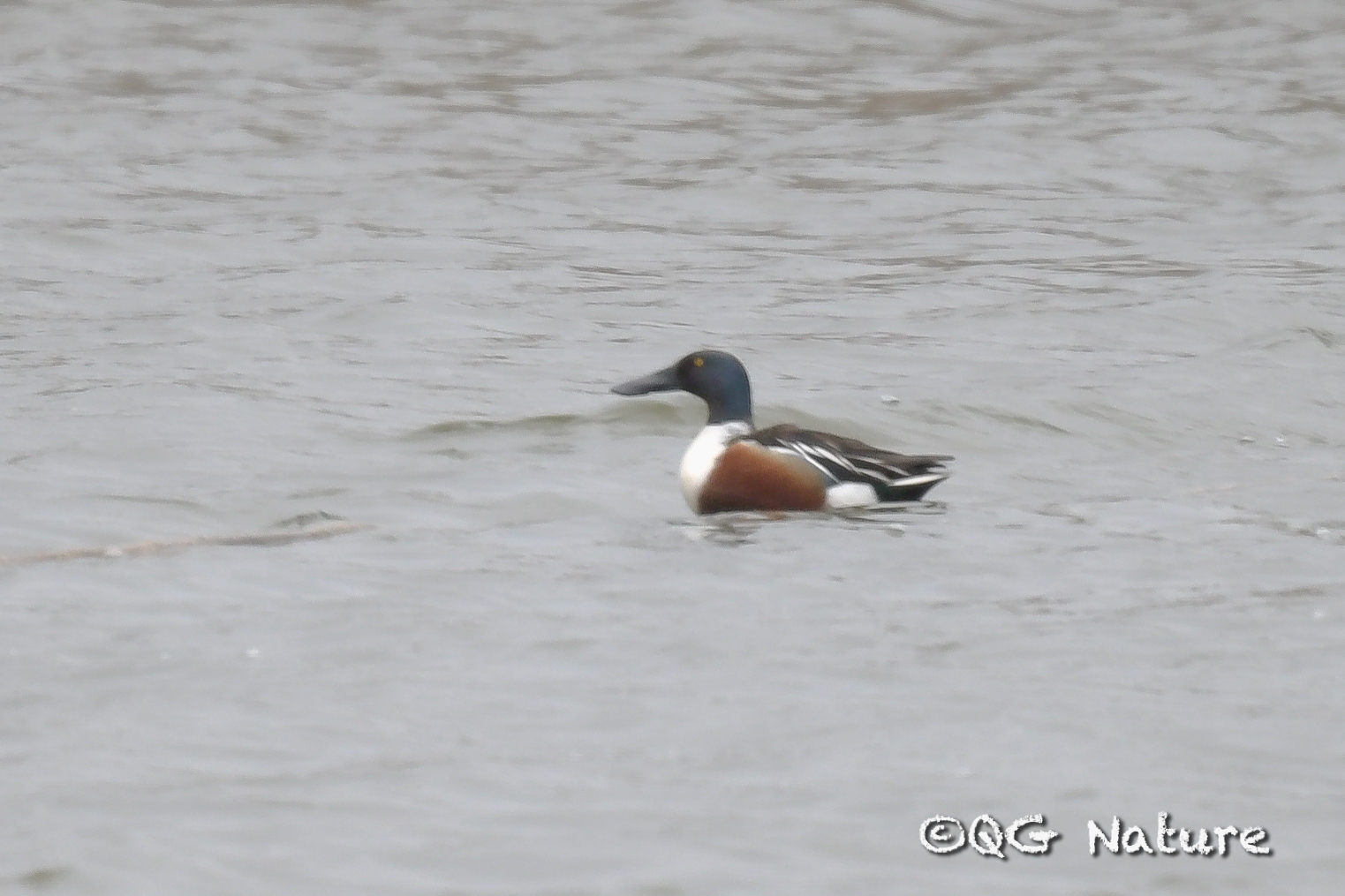
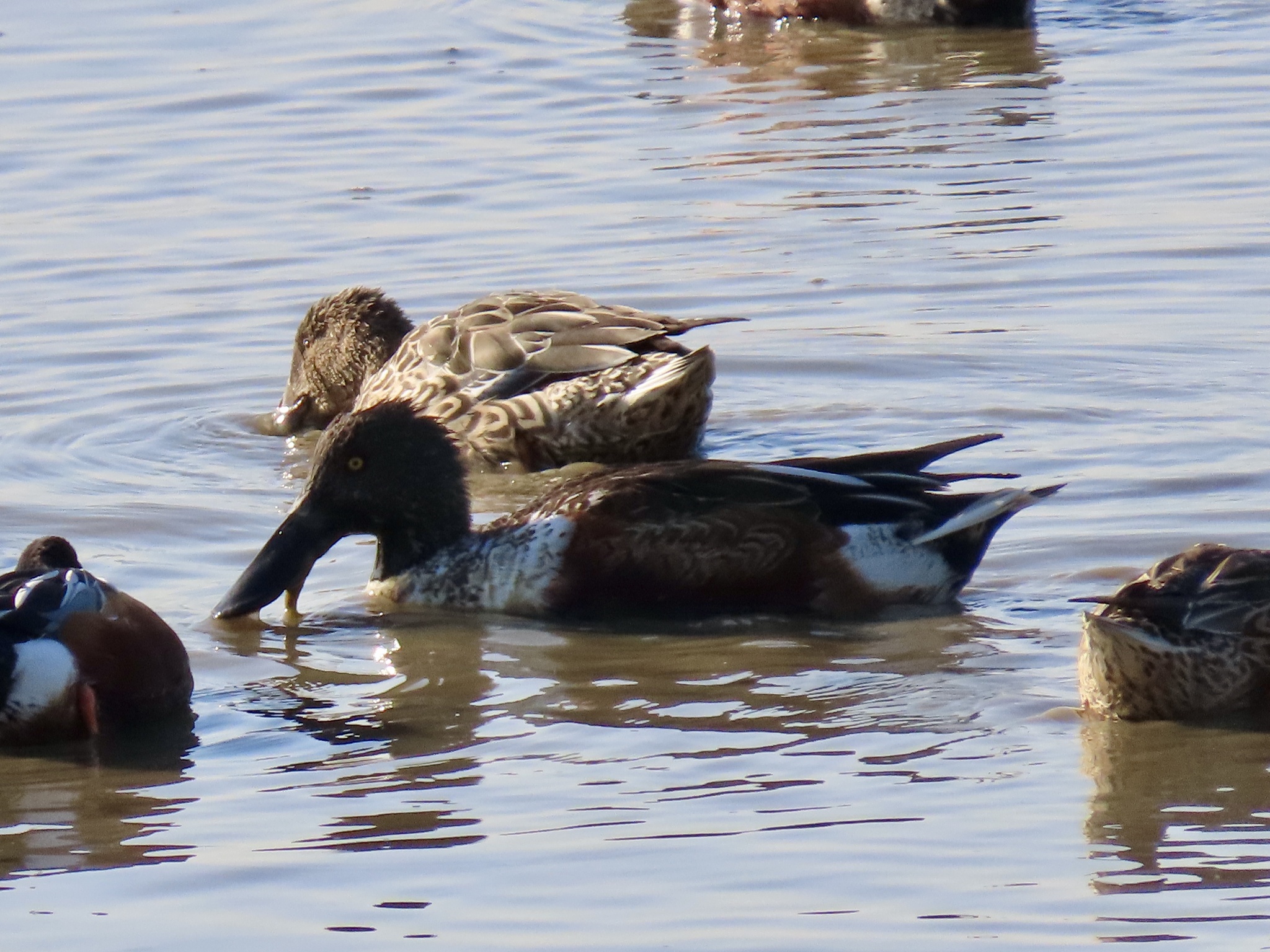
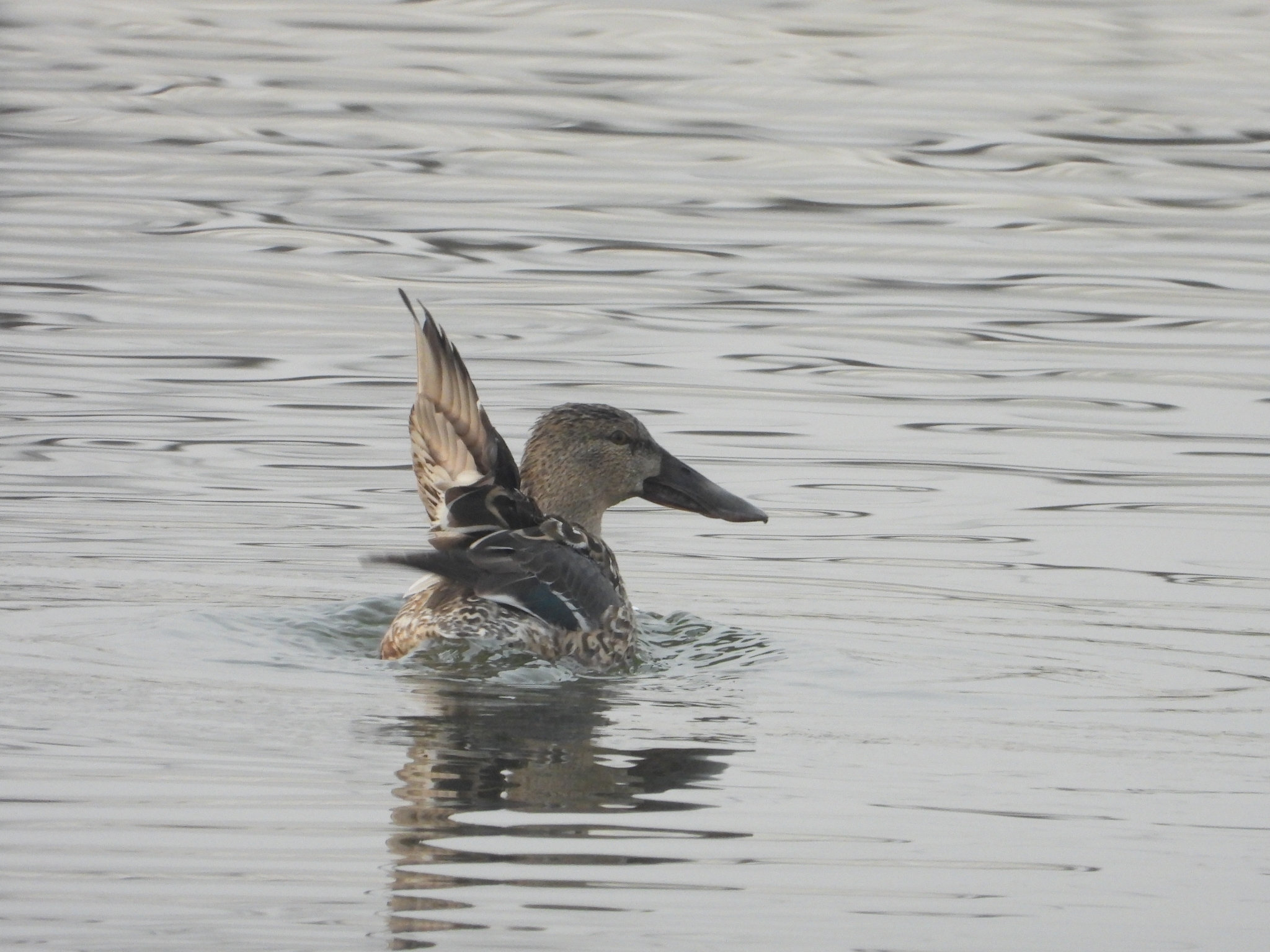
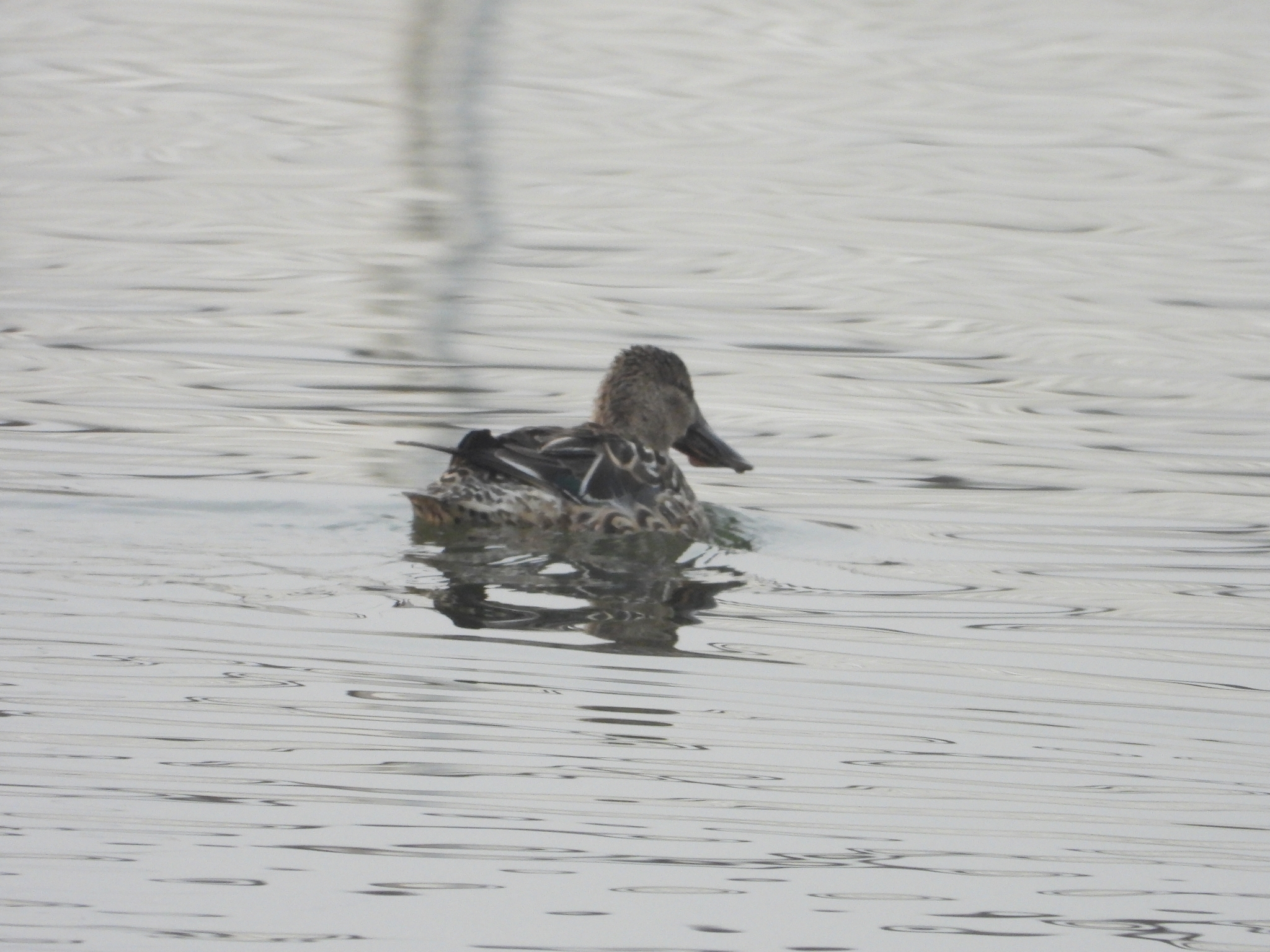
Length 44–52 cm (17.3–20.5 in), wingspan 70–84 cm (27.6–33.1 in), weight 500–800 g (1.1–1.8 lb). Breeding males have an iridescent dark green head, white breast, chestnut belly and flanks, and a black or very dark grey bill. In flight, males show pale blue forewing feathers separated from the green speculum by a white border. Non-breeding males resemble females but retain pale blue forewings; early autumn males display white crescents on the face. Females are dull mottled brown with grey forewings and a long broad bill grey tinged with orange on the cutting edge and lower mandible. Both sexes have bright orange-red legs.
Identification
Unmistakable in the northern hemisphere due to the large spatulate bill. Males are identified by the green head, white breast, chestnut sides, and pale blue forewing patch in flight. Females are distinguished from similar dabbling ducks by the long, broad bill. Vagrants in Australia are difficult to distinguish from the Australasian shoveler, particularly in eclipse plumage.
Distribution & Habitat
Breeds in northern Europe, the Palearctic, and North America (including southern Hudson Bay, Great Lakes, Colorado, Nevada, Oregon). Winters in southern Europe, Indian subcontinent, Southeast Asia, Central America, Caribbean, northern South America, Malay Archipelago, and Japan. In North America, winters south of a line from Washington to Idaho and New Mexico east to Kentucky, and along the Eastern Seaboard to Massachusetts. Strongly migratory; rare vagrant to Australia, New Zealand, and South Africa.
Behavior & Ecology
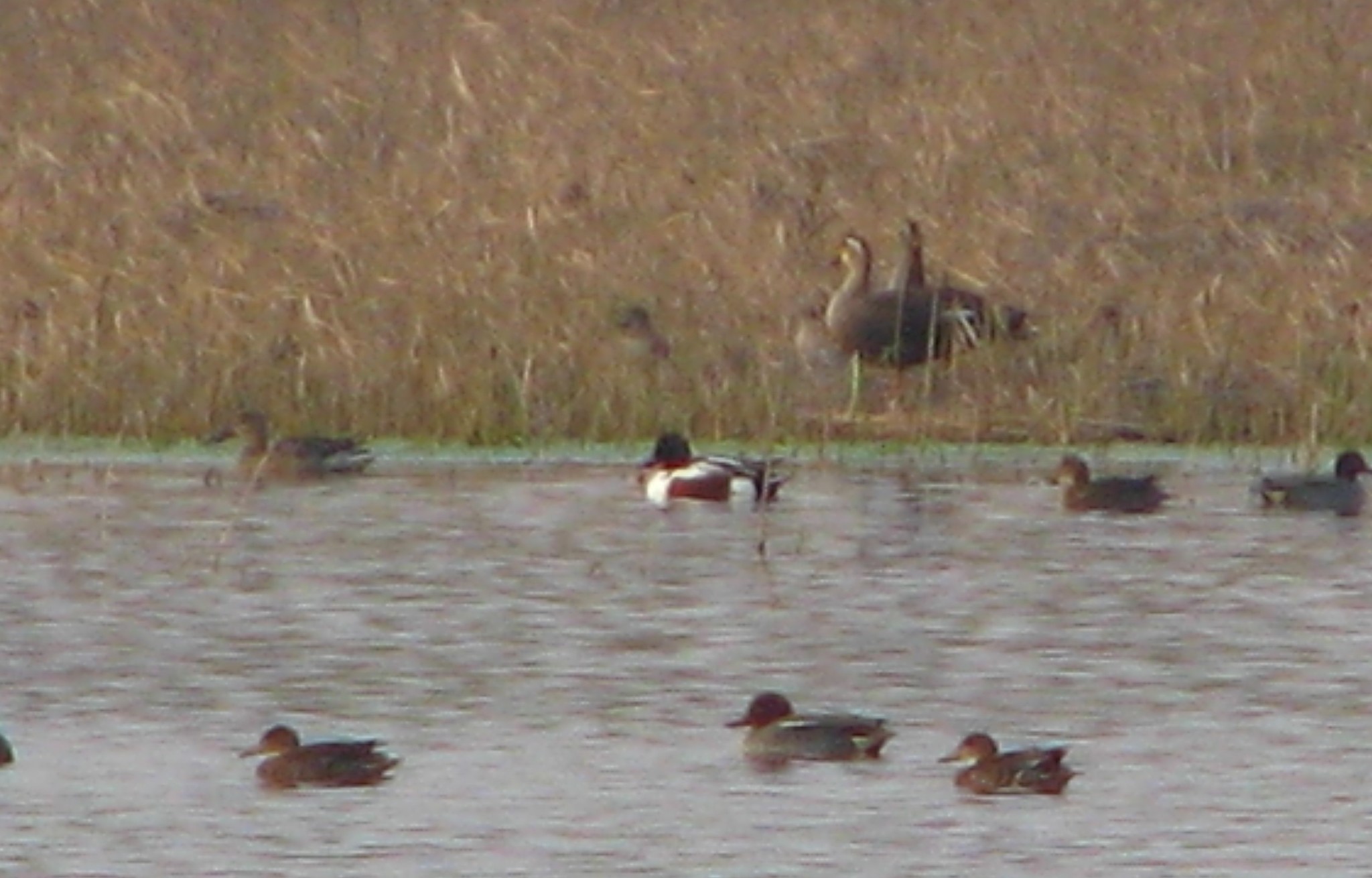
Feeds by dabbling, swinging its bill side-to-side to strain aquatic invertebrates, crustaceans, and plankton using well-developed lamellae. Prefers mud-bottomed marshes rich in invertebrates. Nests in grassy areas away from open water in shallow ground depressions lined with vegetation and down; hens lay about nine eggs. Males are territorial and perform elaborate courtship displays on water and in air. Fairly quiet; males have a clunking call, females have a Mallard-like quack. Forms small flocks outside breeding season.
Conservation
IUCN status is Least Concern. Populations have been healthy since the 1960s and increased to more than 5 million birds by 2015, likely due to favorable habitat conditions. The species is covered by the Agreement on the Conservation of African-Eurasian Migratory Waterbirds (AEWA).
Source: Wikipedia · CC BY-SA 3.0
Taxonomy
- Order
- Anseriformes
- Family
- Anatidae
- Genus
- Spatula
Distribution
breeds Holarctic (except Arctic); winters through eastern Africa, southern and southeastern Asia, the Philippines, the Caribbean, and Central America
Data Sources
Species description from Wikipedia, licensed under CC BY-SA 3.0.
Bird images and sounds sourced from GBIF, contributed by citizen scientists worldwide under Creative Commons licenses.
Taxonomy data from AviList 2025.