Northern Shoveler
Spatula clypeata
琵嘴鸭
Introduction
The Northern Shoveler (Spatula clypeata) is a dabbling duck with a broad, spatula-shaped bill found across the Northern Hemisphere. Its breeding range extends across North America, northern Europe, and Asia, with wintering populations occurring south to Africa, South America, and Southeast Asia. Males display an iridescent green head, white breast, and chestnut belly and flanks. The species inhabits shallow wetlands, marshes, lakes, and agricultural fields. It feeds by sweeping its broad bill side to side through shallow water to filter aquatic invertebrates and seeds. During spring, breeding males perform elaborate courtship displays with multiple males pursuing a single female. It is among the most abundant dabbling ducks in North America, with populations exceeding 5 million individuals.
Description
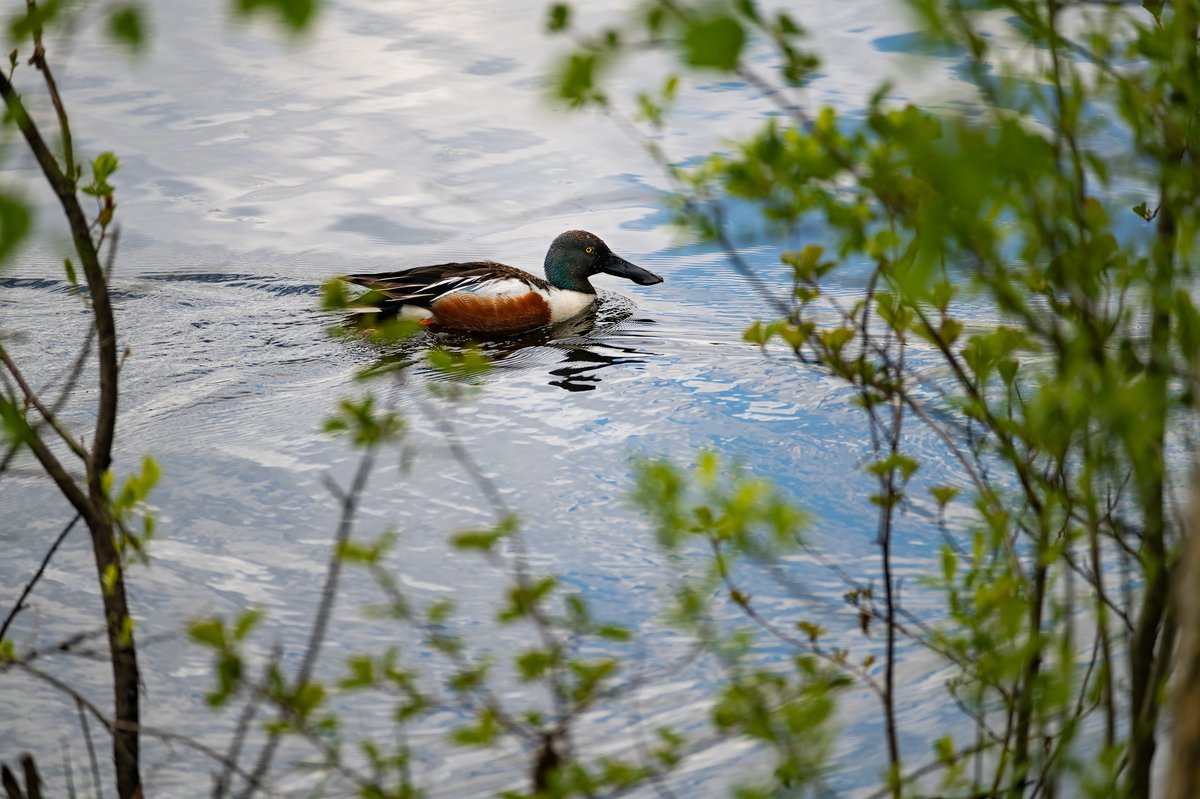
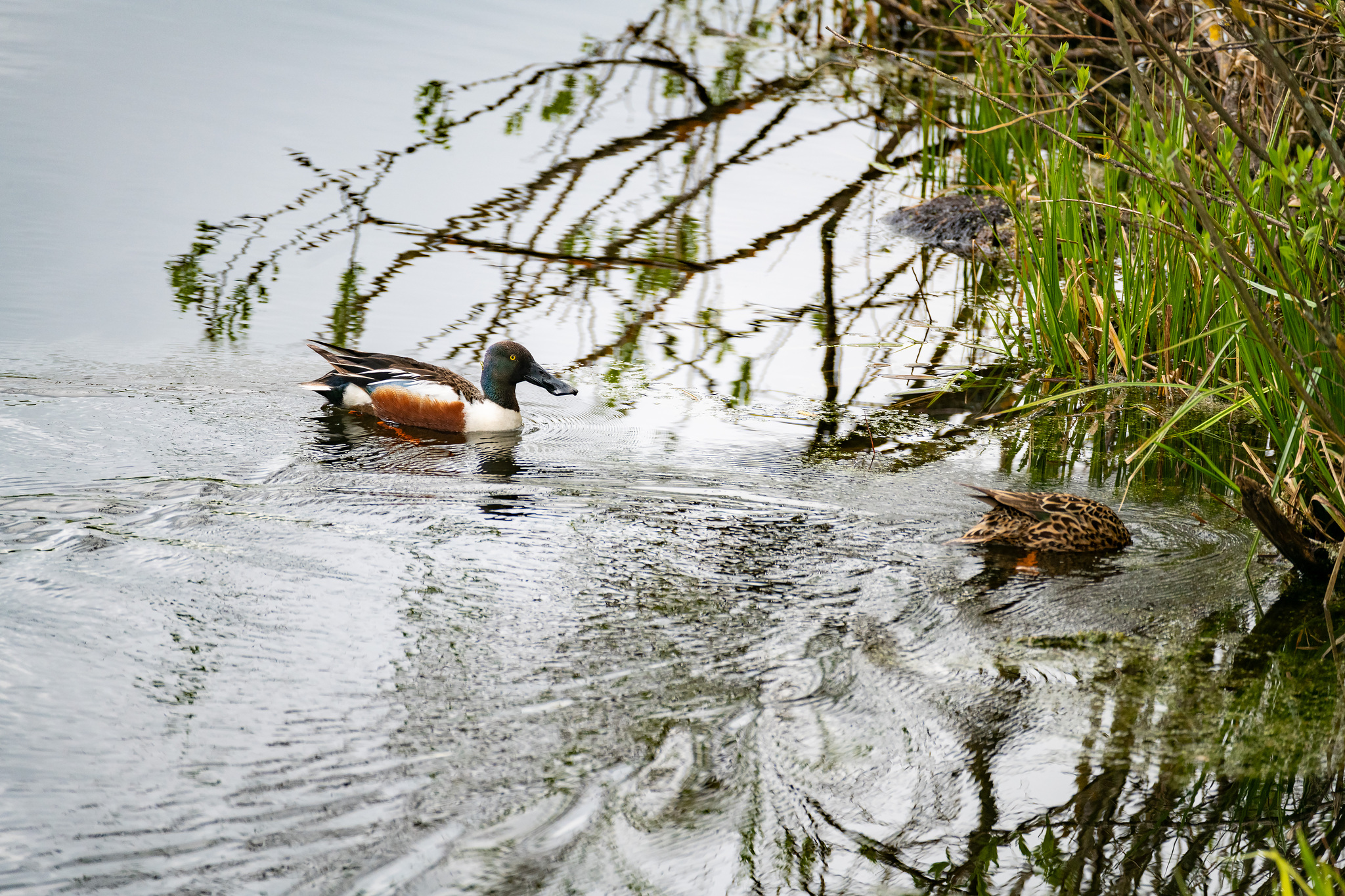
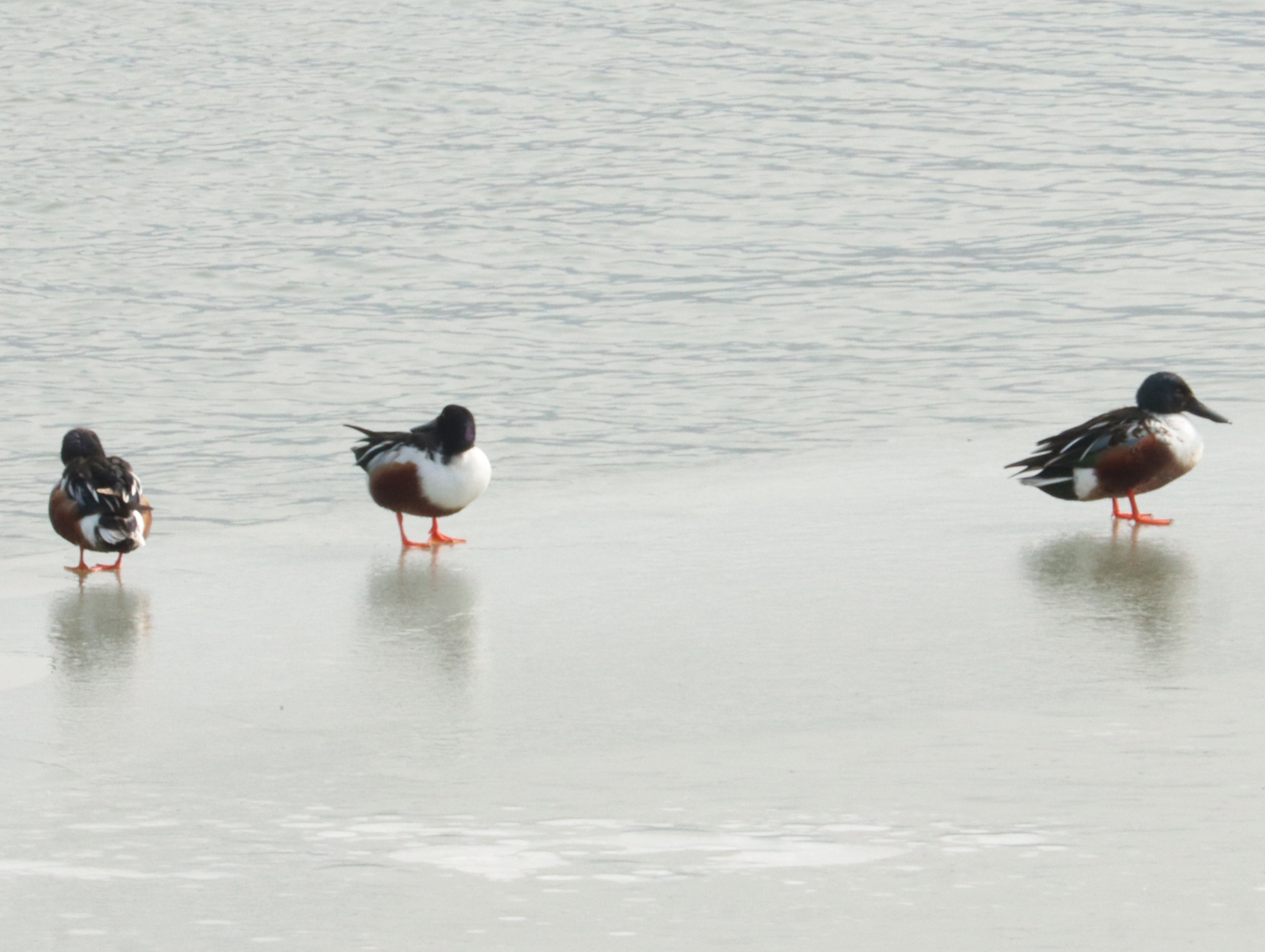
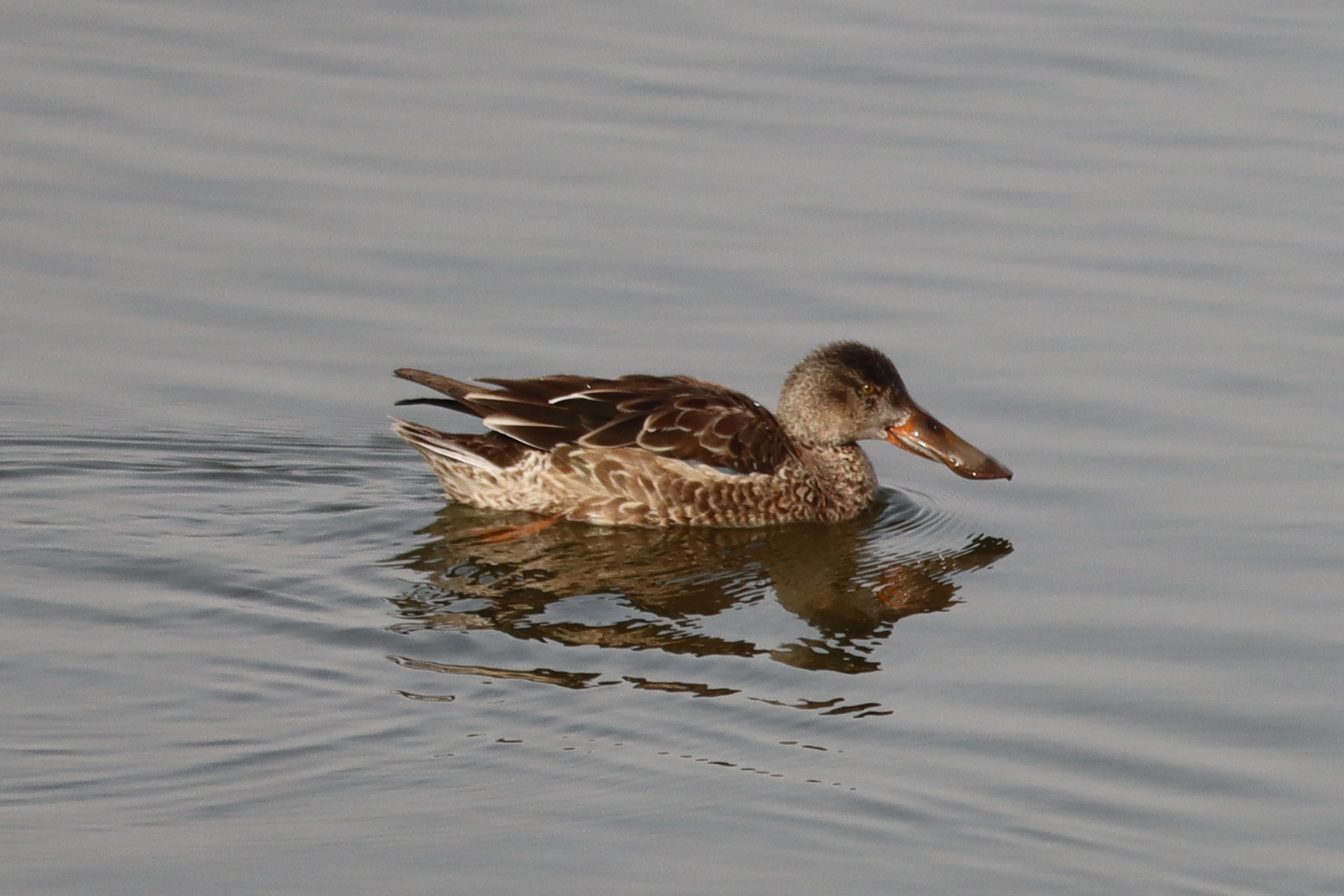
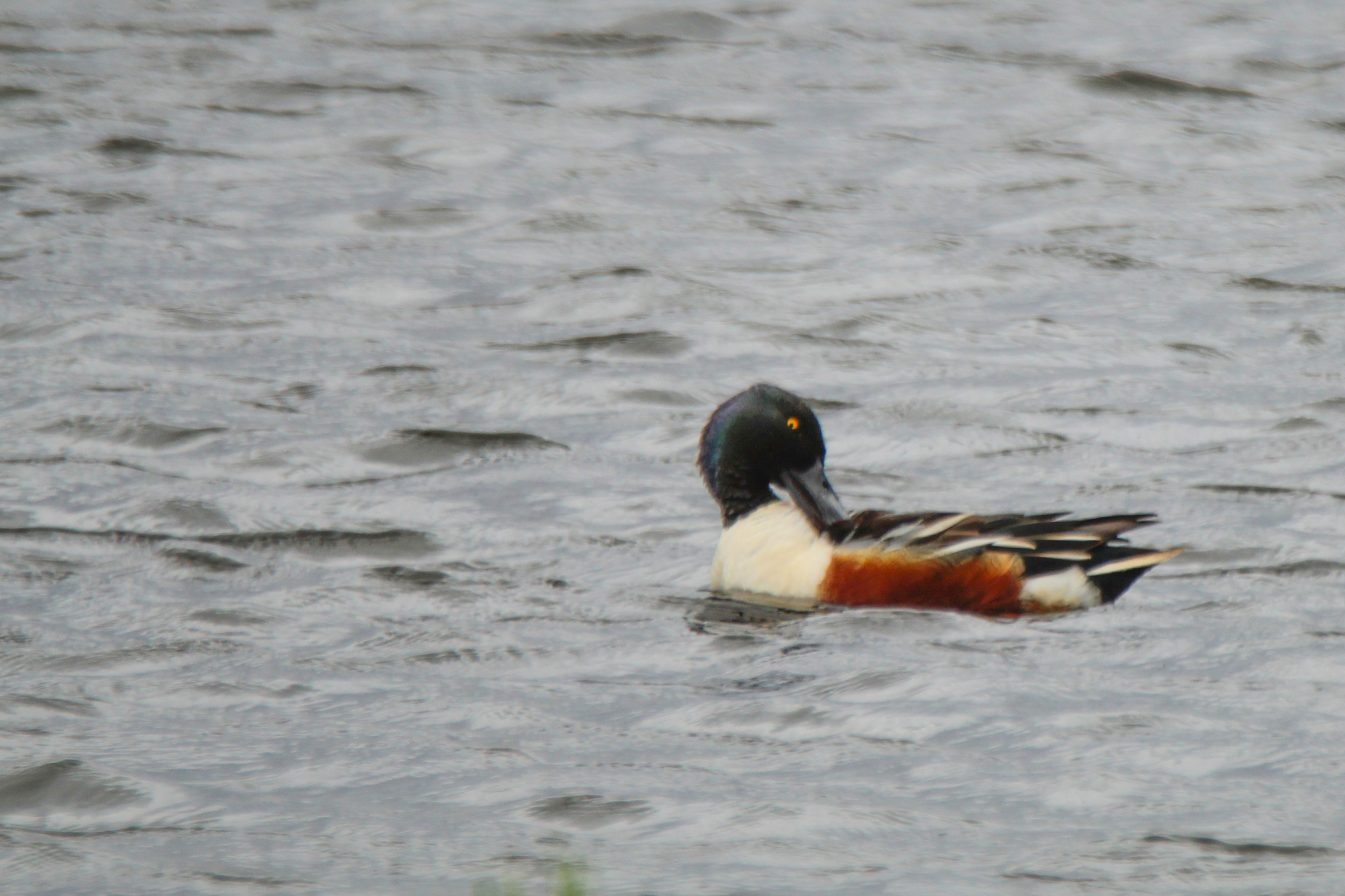
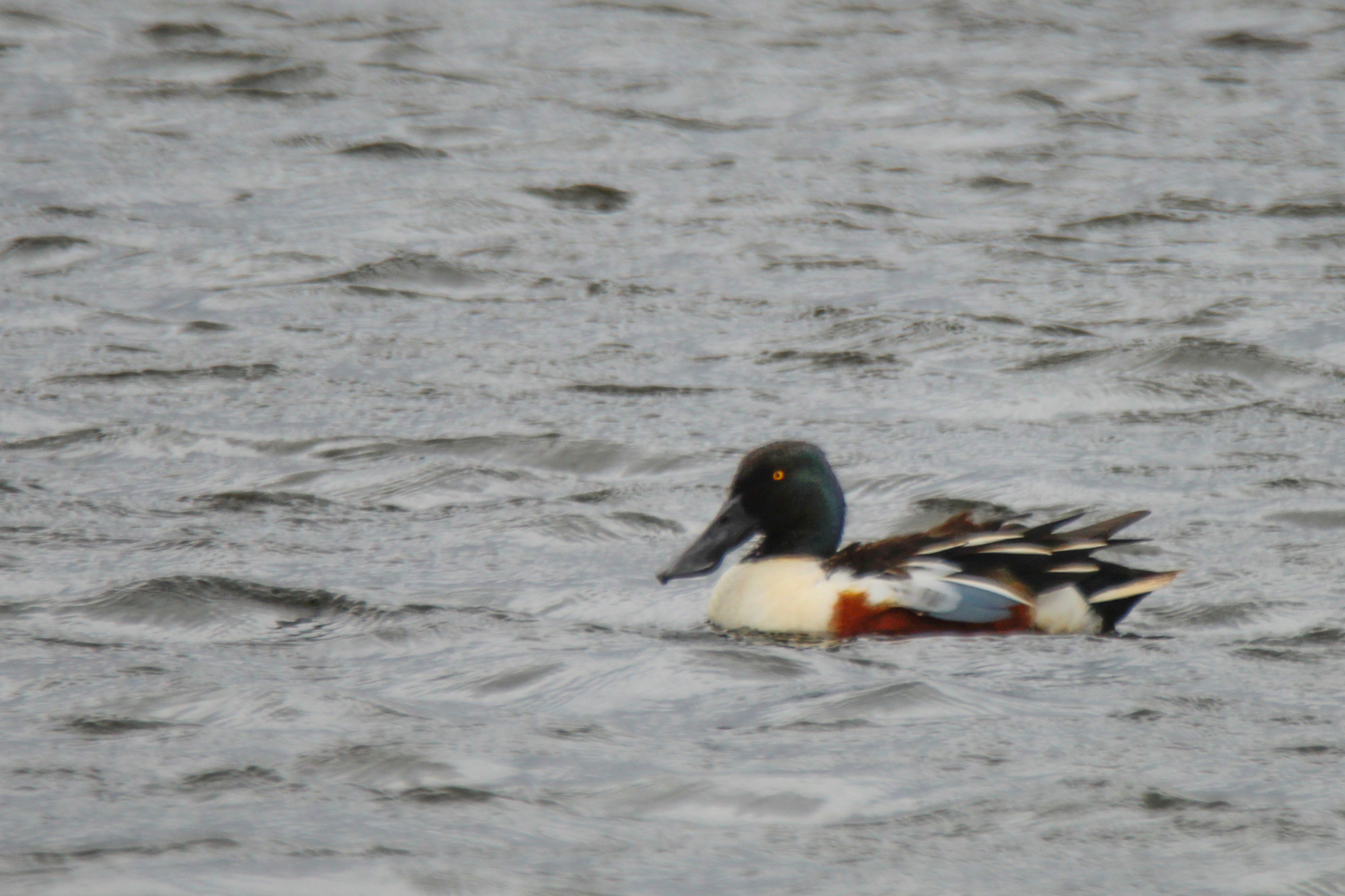
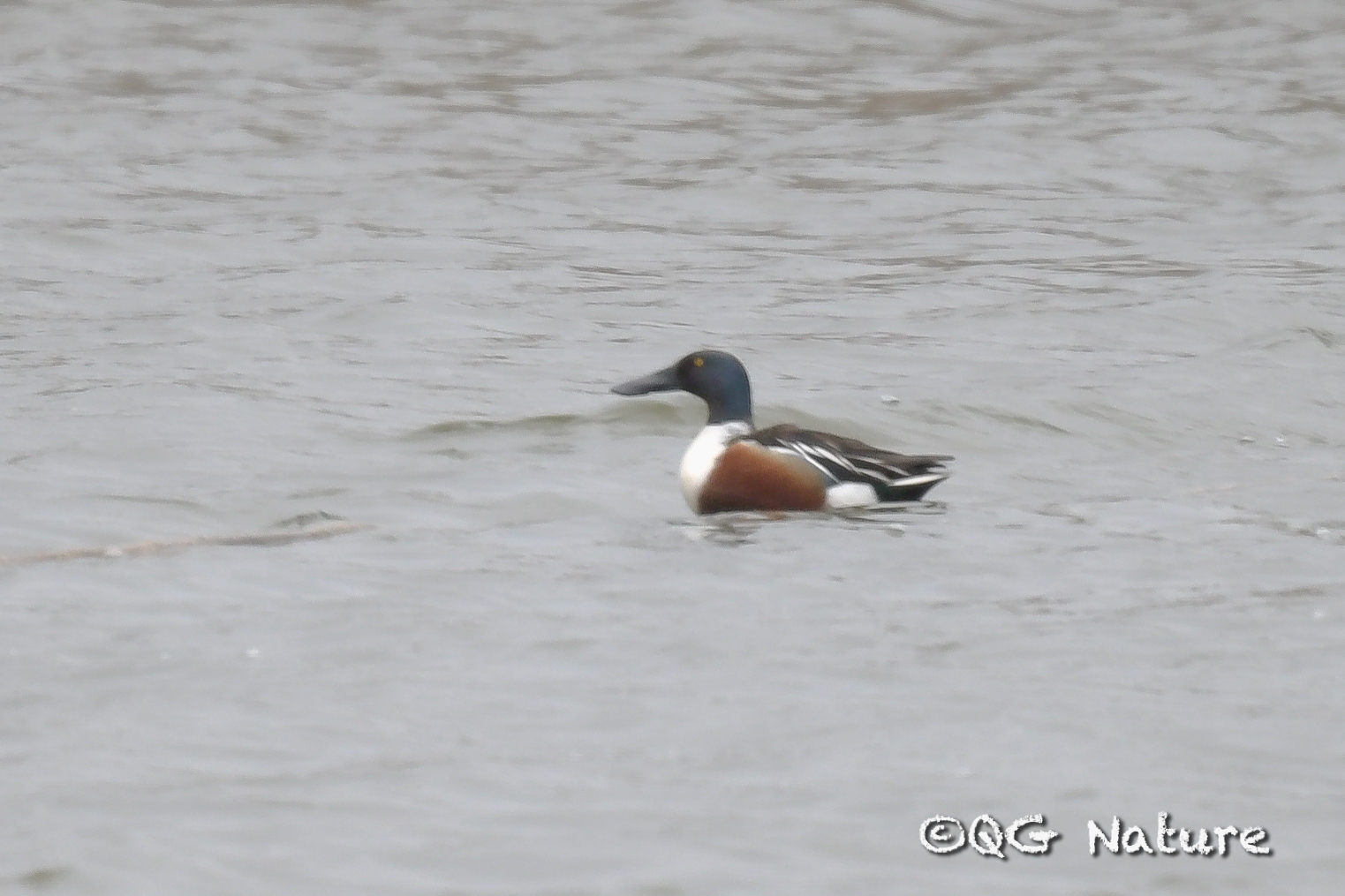
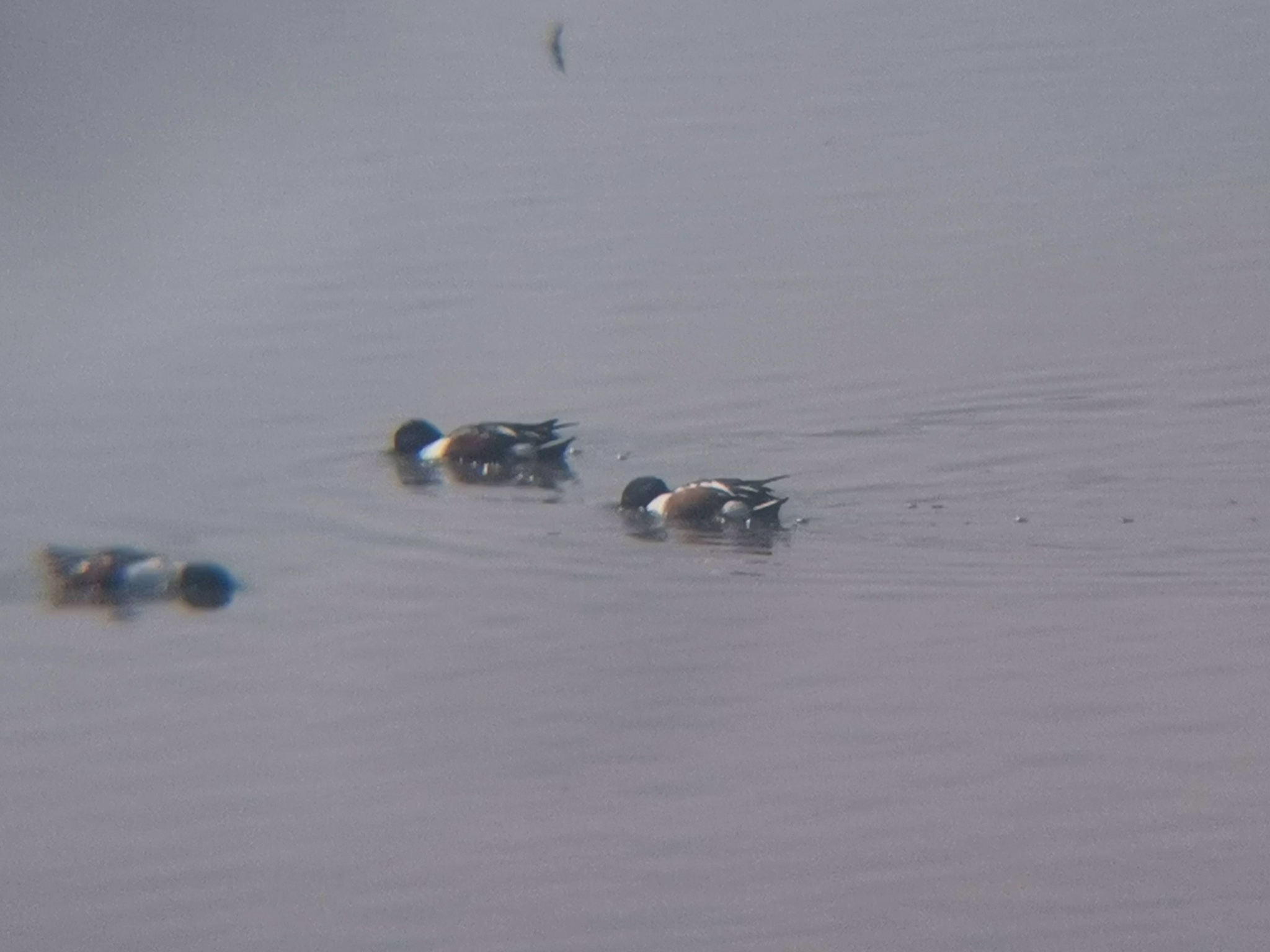
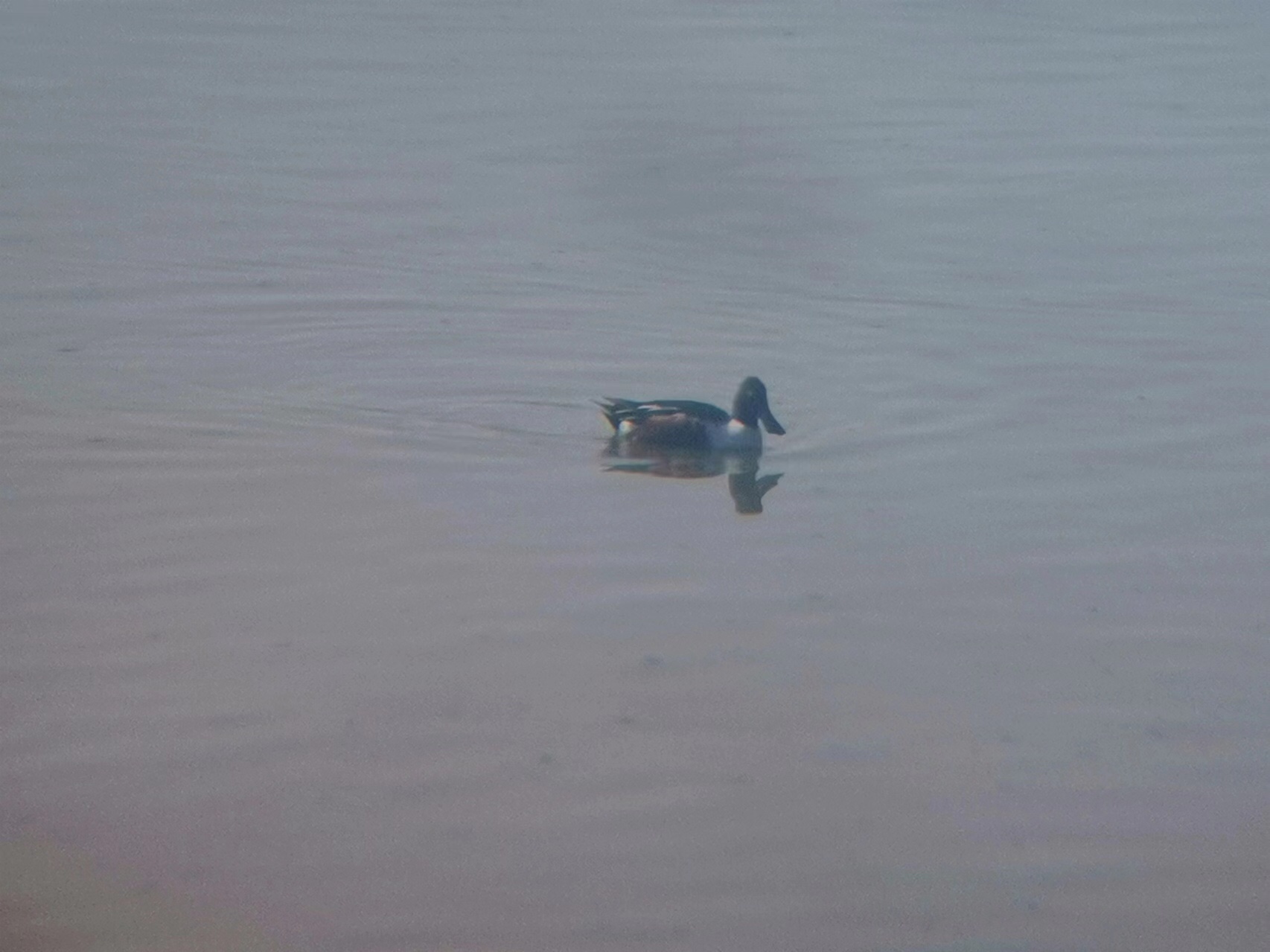
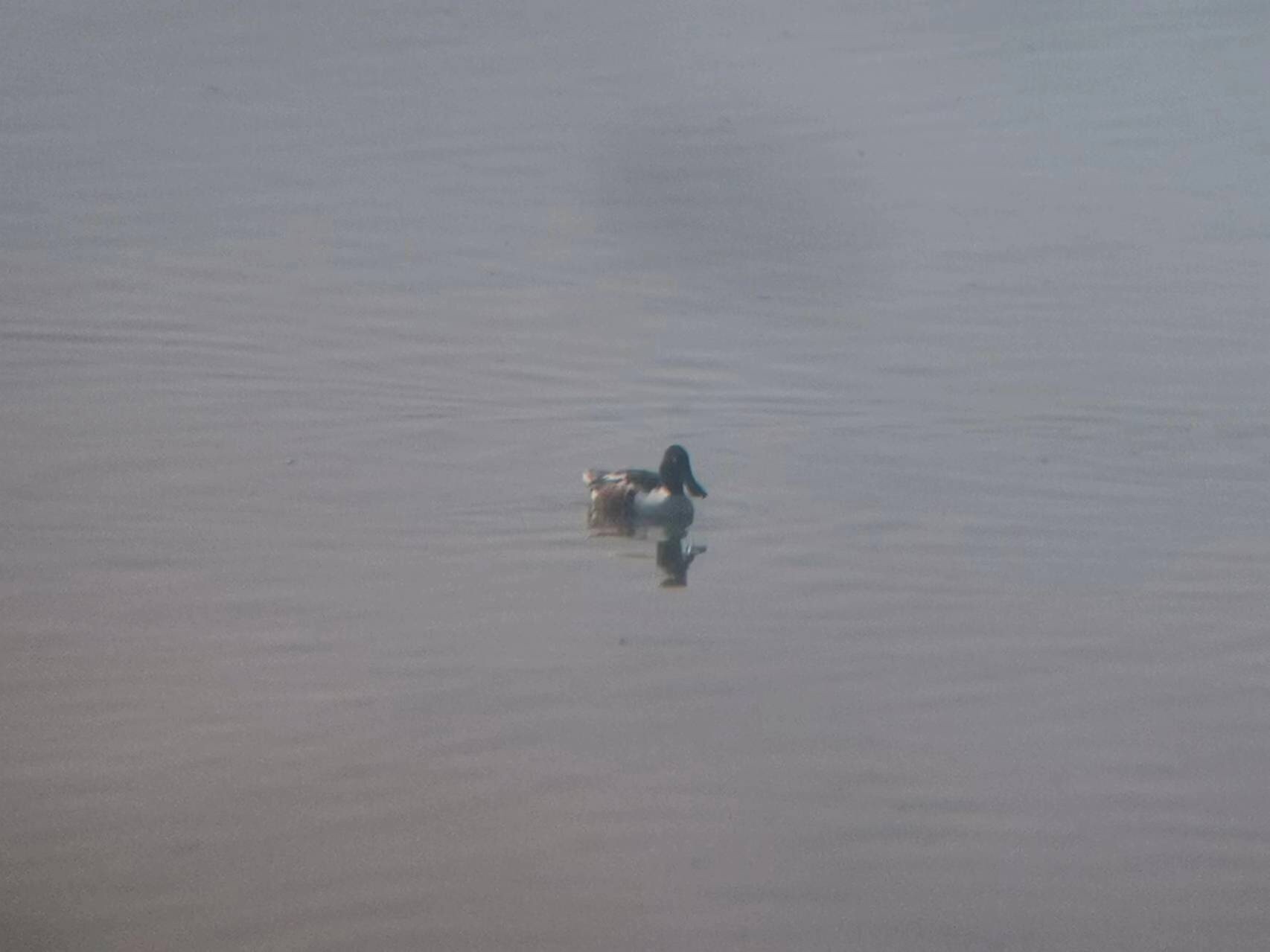
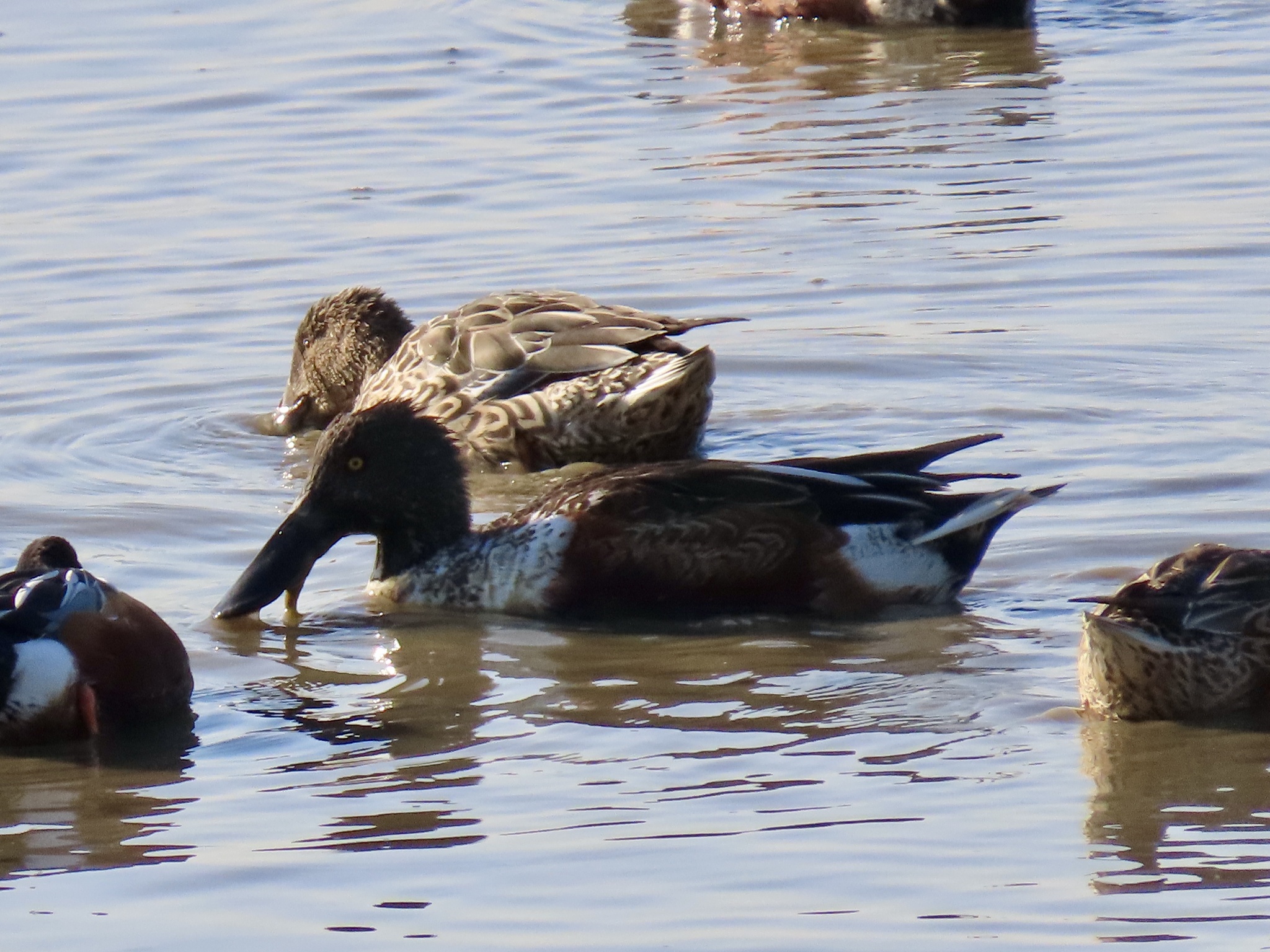
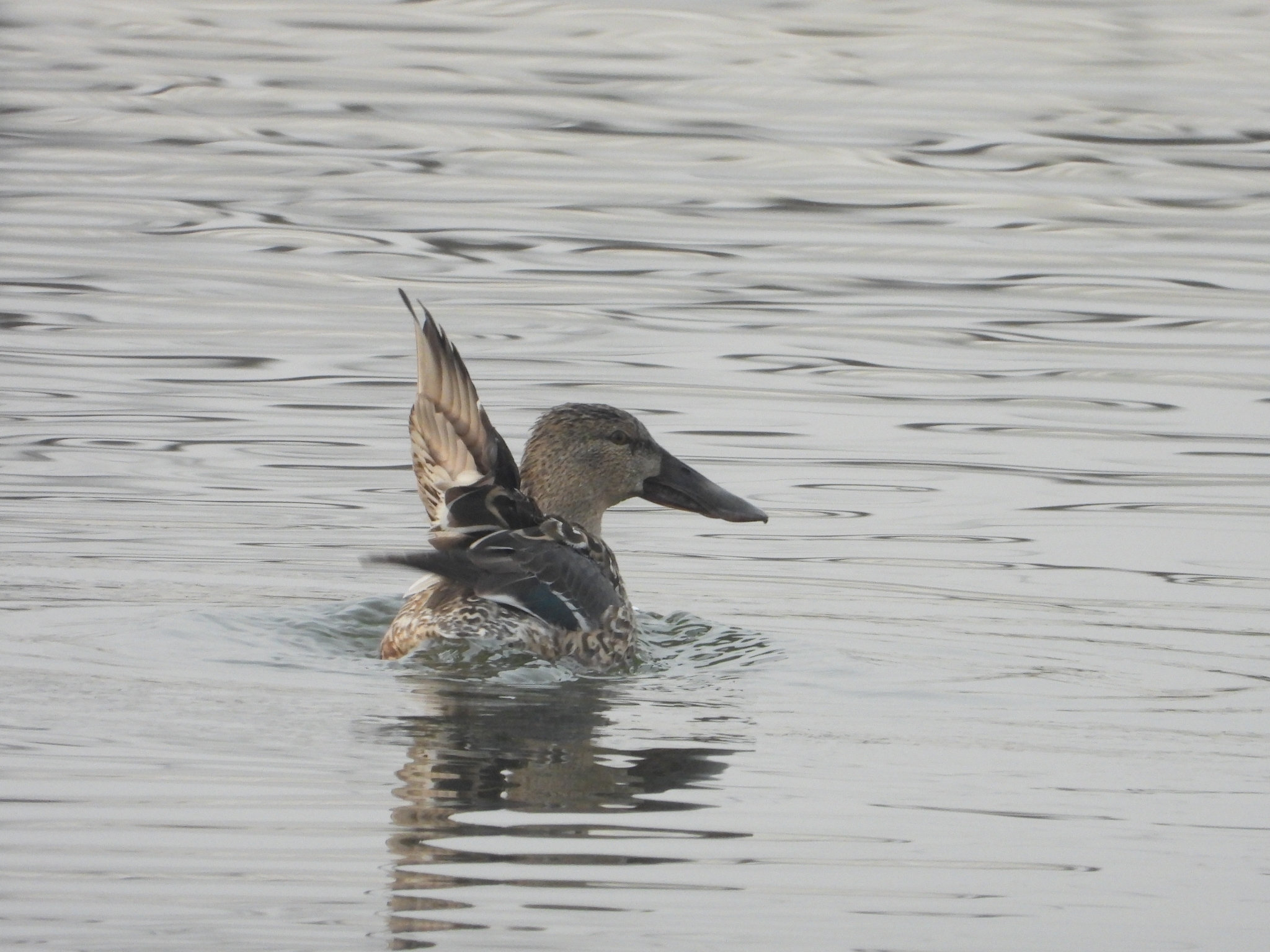
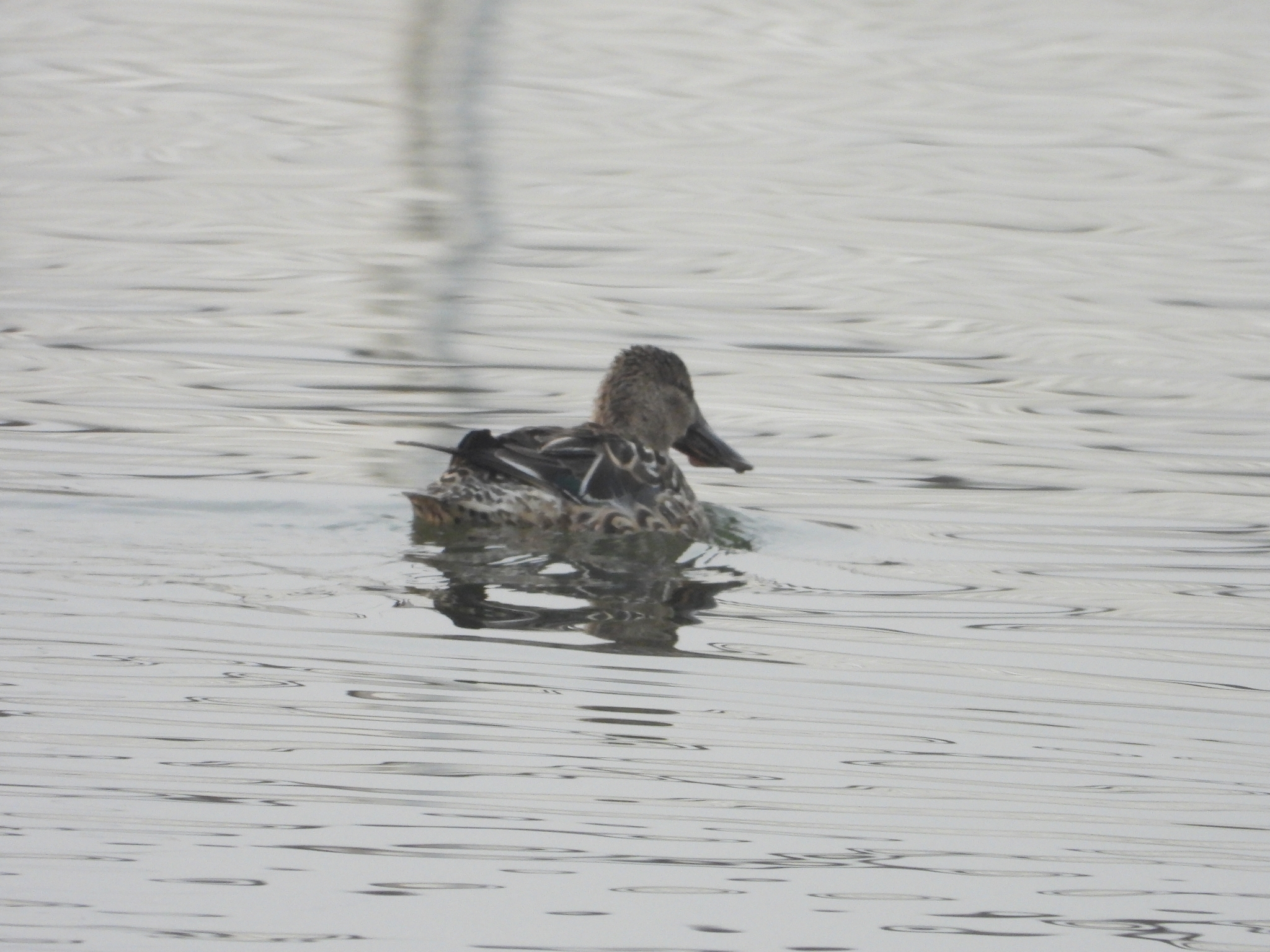
This medium-sized duck measures 44-52 cm in length with a wingspan of 70-84 cm and typically weighs 500-800 grams. The most striking feature is the enormous spatulate bill, which gives the species its name. Breeding males possess an iridescent dark green head that can appear black in poor light, a clean white breast, and rich chestnut belly and flanks. The bill is dark grey, and the legs are a bright orange-red. In flight, pale blue forewing feathers are visible, separated from the green speculum by a distinctive white border. Females are mottled brown overall, similar to female mallards but easily distinguished by their large, grey bill tinged with orange along the cutting edge. Both sexes share the orange-red legs, and females have grey forewings. Males in eclipse plumage resemble females but retain the pale blue forewing patch.
Identification
This species is unmistakable in the Northern Hemisphere due to its unique bill shape alone. The large, broad spatula-like bill distinguishes it from all other dabbling ducks. In breeding plumage, the male's green head, white breast, and chestnut coloring are diagnostic. The pale blue forewing visible in flight, bordered by white and set against a green speculum, provides additional confirmation. Females can be identified by their mallard-like brown plumage combined with the characteristic oversized bill. The only identification challenge arises with vagrant individuals in Australia, where they closely resemble the local Australasian shoveler, particularly in eclipse plumage when the male's distinctive white breast is absent.
Distribution & Habitat
This species breeds across northern Europe and much of the Palearctic, throughout most of North America including the southern edge of Hudson Bay west to the Great Lakes and westward to Colorado, Nevada, and Oregon. It inhabits open wetlands including wet grasslands and marshes with emergent vegetation. The winter range extends through southern Europe, the Indian subcontinent, Southeast Asia, Central America, the Caribbean, and northern South America. Birds wintering in the Indian subcontinent undertake the remarkable journey over the Himalayas. In North America, they winter south from Washington to Idaho and from New Mexico east to Kentucky, also along the Eastern Seaboard north to Massachusetts. They are occasional vagrants to Australia, New Zealand, and South Africa.
Behavior & Ecology
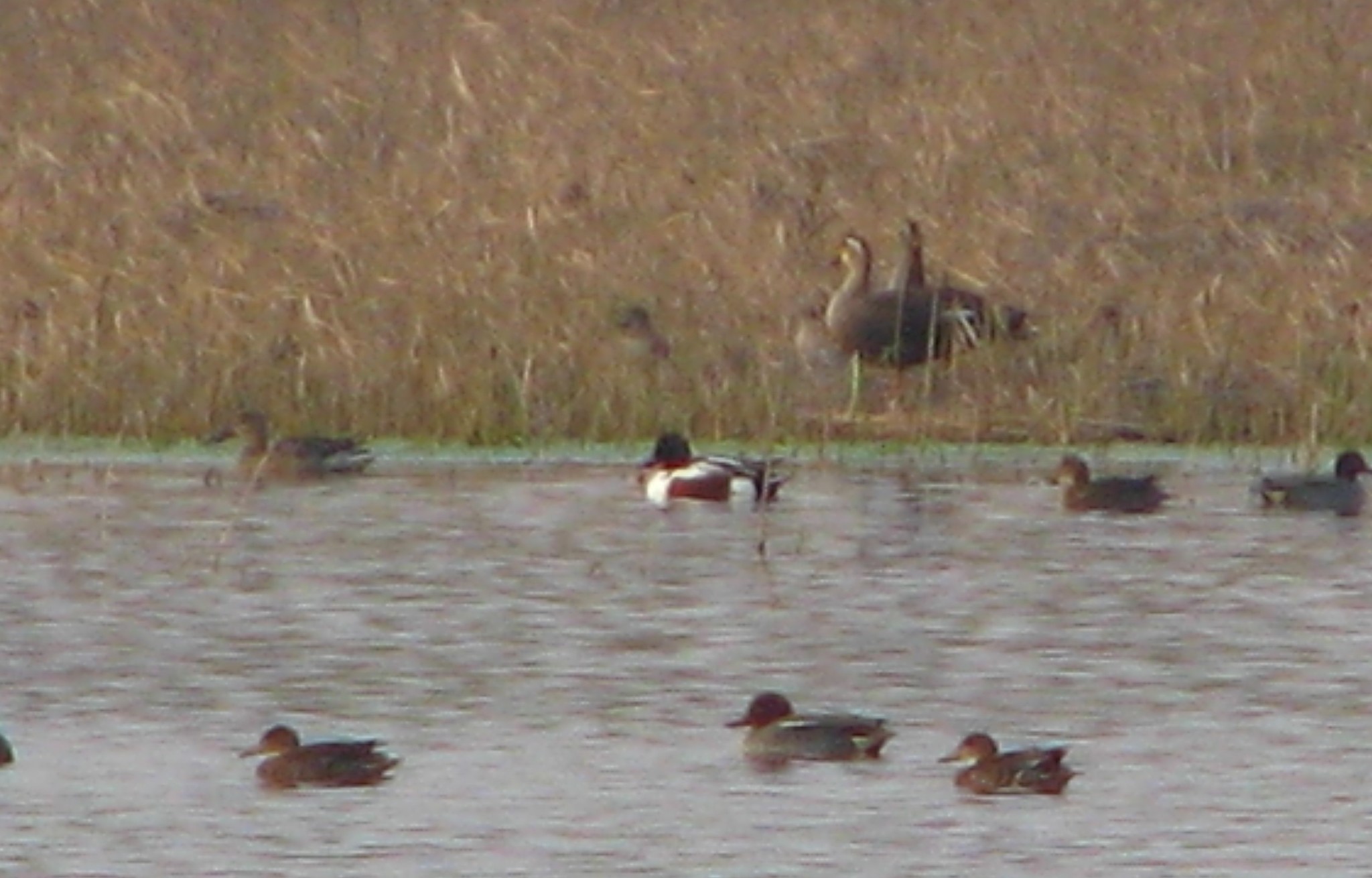
These ducks feed by dabbling, often swinging their distinctive bills side to side while straining food from water. Their specialized bill features comb-like lamellae that function as sieves, allowing them to skim crustaceans and plankton from the water's surface. This adaptation reduces competition with other dabbling ducks. They prefer breeding in grassy areas away from open water, nesting in shallow depressions lined with vegetation and down. Hens lay about nine eggs. Males are highly territorial during breeding season and perform elaborate courtship displays, with multiple males often pursuing a single female. They are not particularly gregarious outside breeding season, forming only small flocks. The male gives a clunking call while the female produces a Mallard-like quack.
Conservation
This species holds an IUCN assessment of Least Concern, reflecting its stable and abundant populations. Numbers have increased since the 1960s, with current estimates exceeding 5 million birds across the range as of 2015. This population growth is attributed to favorable conditions in breeding, migratory, and wintering habitats. The species is protected under the Agreement on the Conservation of African-Eurasian Migratory Waterbirds, which helps ensure its continued conservation across its extensive range. While no specific threats are highlighted in current reports, wetland habitat preservation remains important for maintaining healthy populations.
Culture
This species does not feature prominently in cultural traditions or folklore. Its primary significance lies in ornithology and birdwatching communities, where it is valued for its distinctive appearance and interesting behaviors. The conservation agreement AEWA provides an international framework for its protection, reflecting its importance as a migratory waterbird across multiple continents.
Source: Wikipedia · CC BY-SA 3.0
Taxonomy
- Order
- Anseriformes
- Family
- Anatidae
- Genus
- Spatula
- eBird Code
- norsho
Distribution
breeds Holarctic (except Arctic); winters through eastern Africa, southern and southeastern Asia, the Philippines, the Caribbean, and Central America
Data Sources
Species description from Wikipedia, licensed under CC BY-SA 3.0.
Bird images and sounds sourced from GBIF, contributed by citizen scientists worldwide under Creative Commons licenses.
Taxonomy data from AviList 2025.