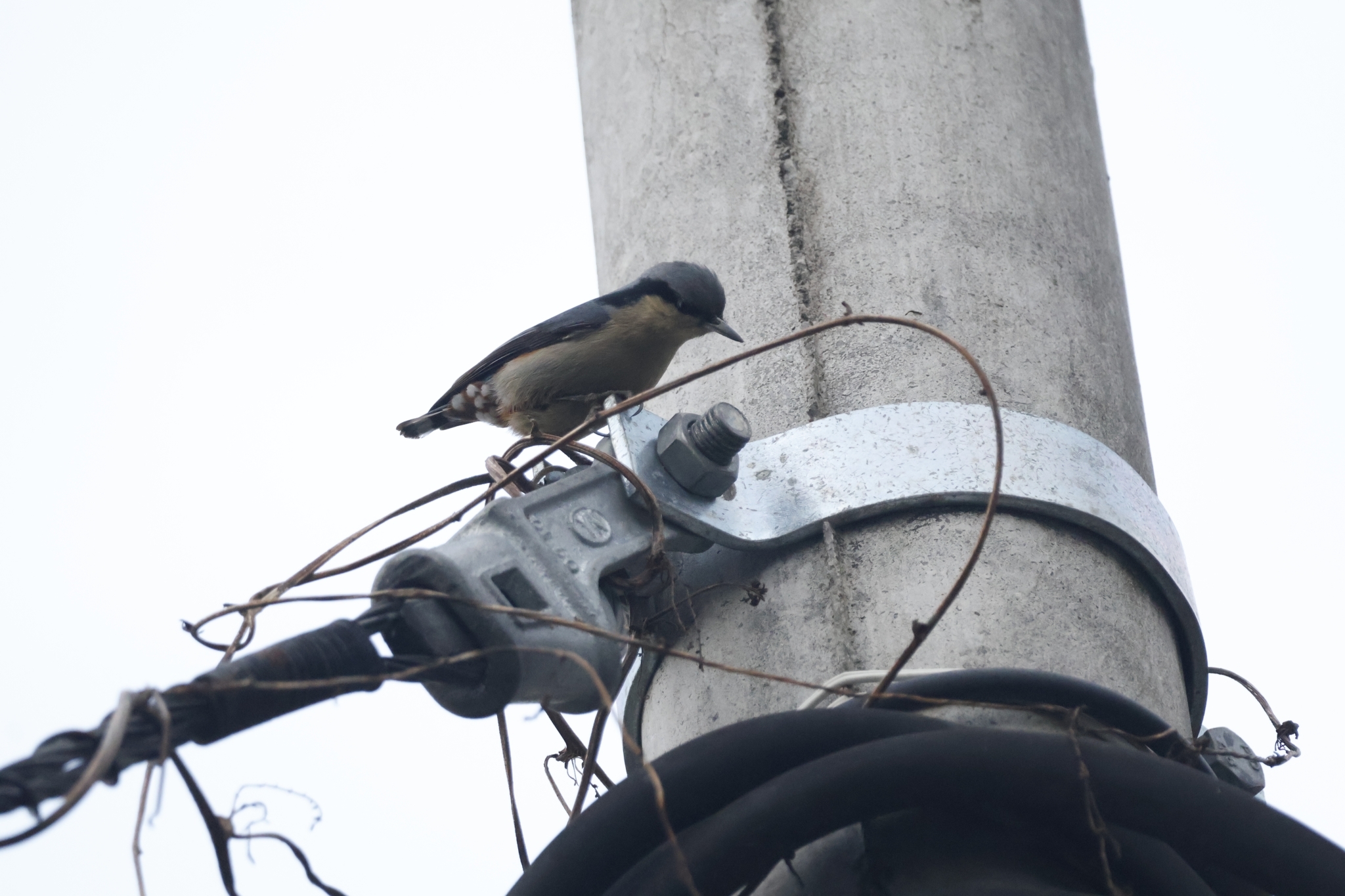
Passeriformes / Sittidae / Sitta
Chestnut-vented Nuthatch
Sitta nagaensis · 栗臀䴓
Introduction
A medium-sized bird in the nuthatch family Sittidae, belonging to the S. europaea group. It inhabits subtropical or tropical moist lowland and montane forests across a wide range in Asia. Distinctive traits include brick-red flanks contrasting with grey-buff underparts and a monotonous crackling song. The species is currently assessed as Least Concern by the IUCN.
Description
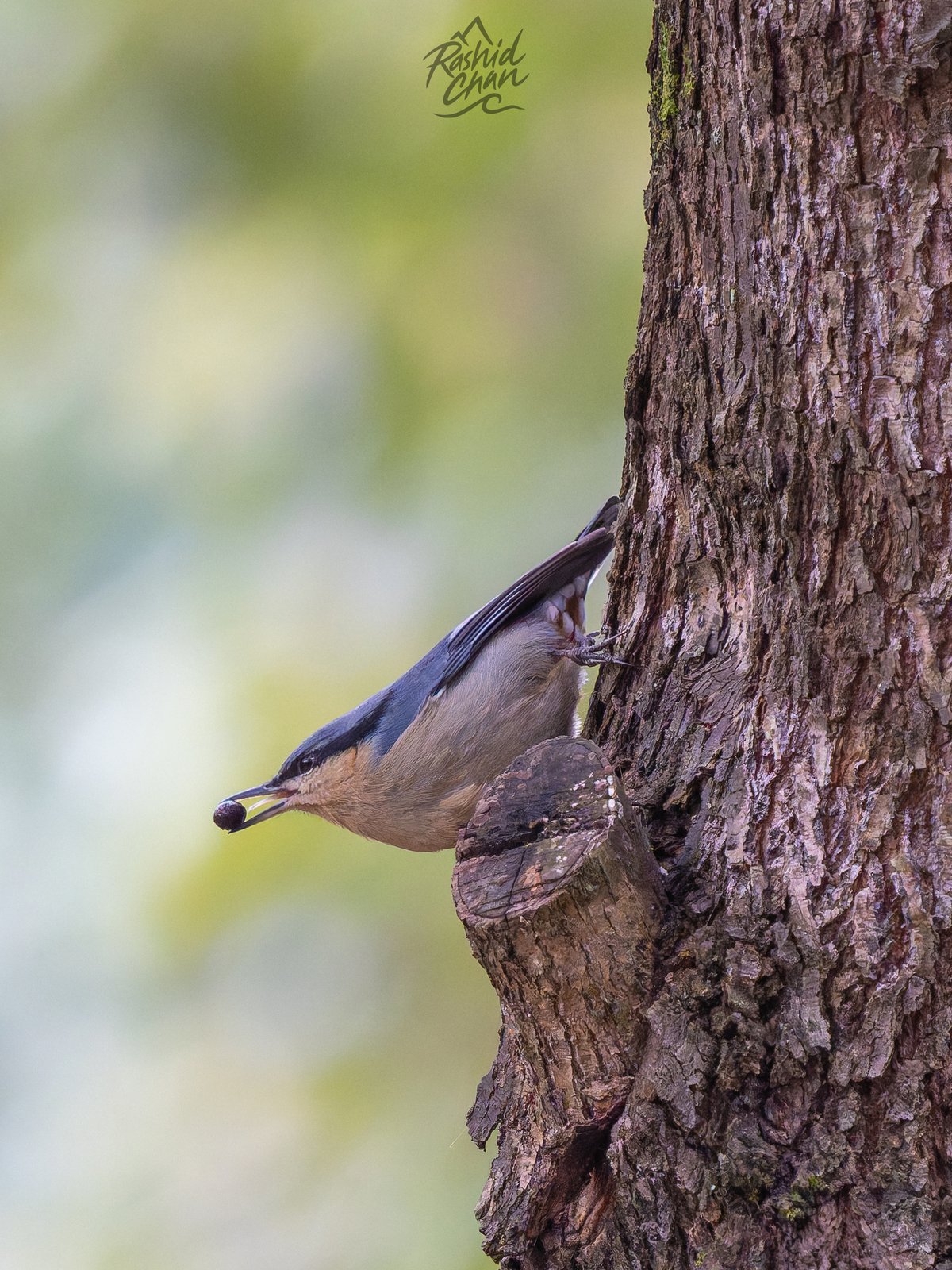
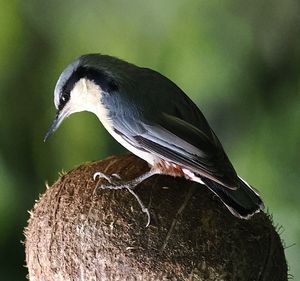
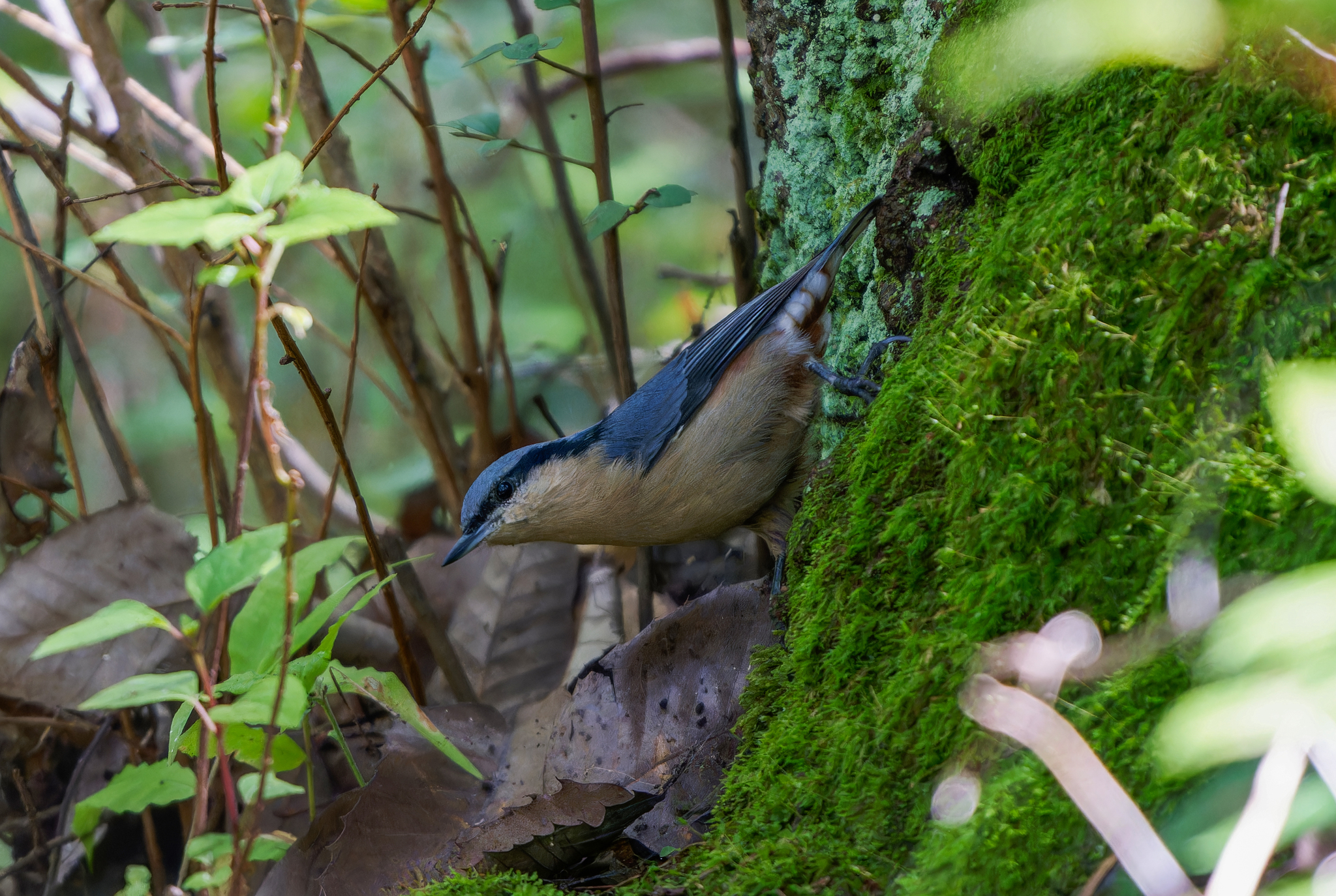
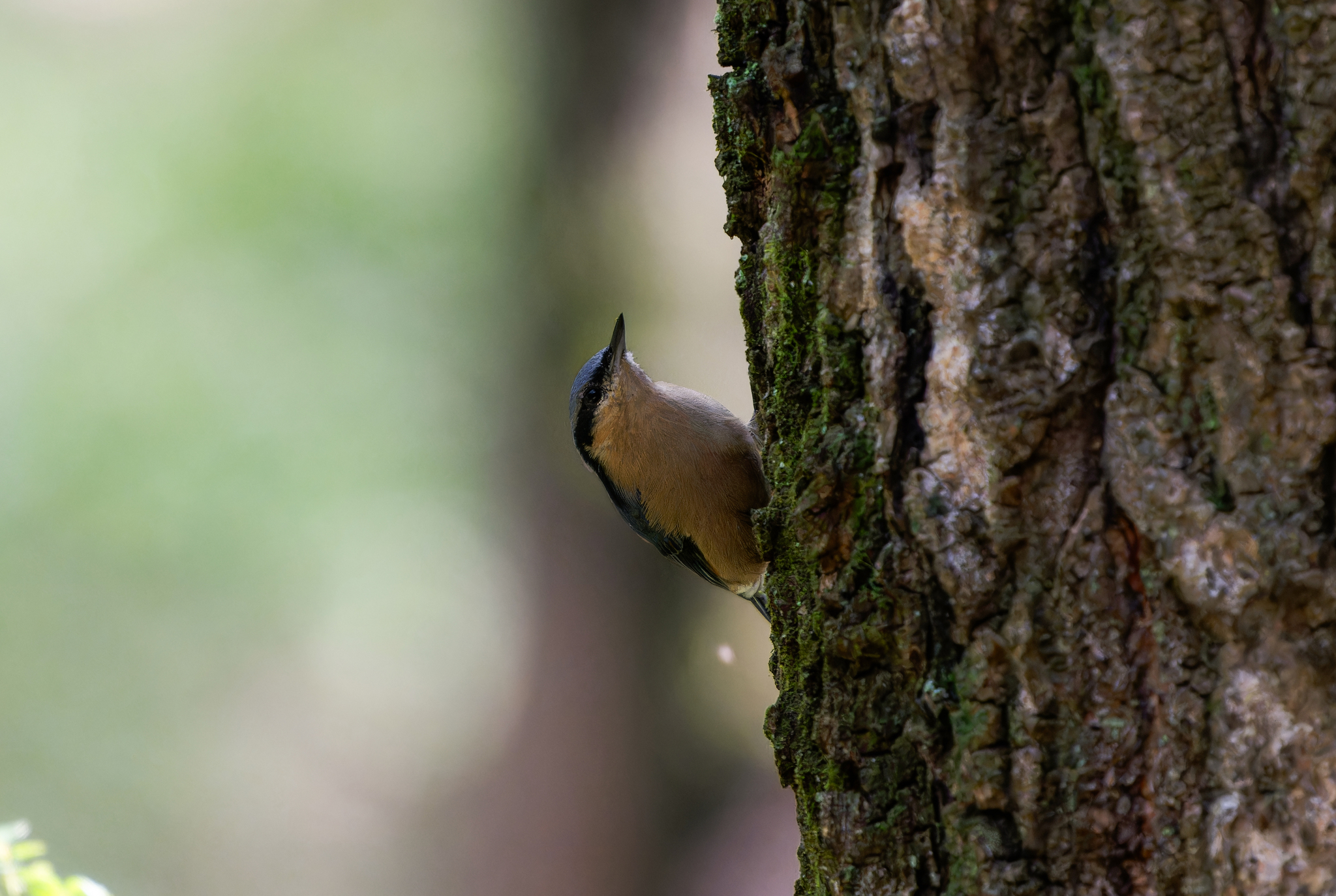
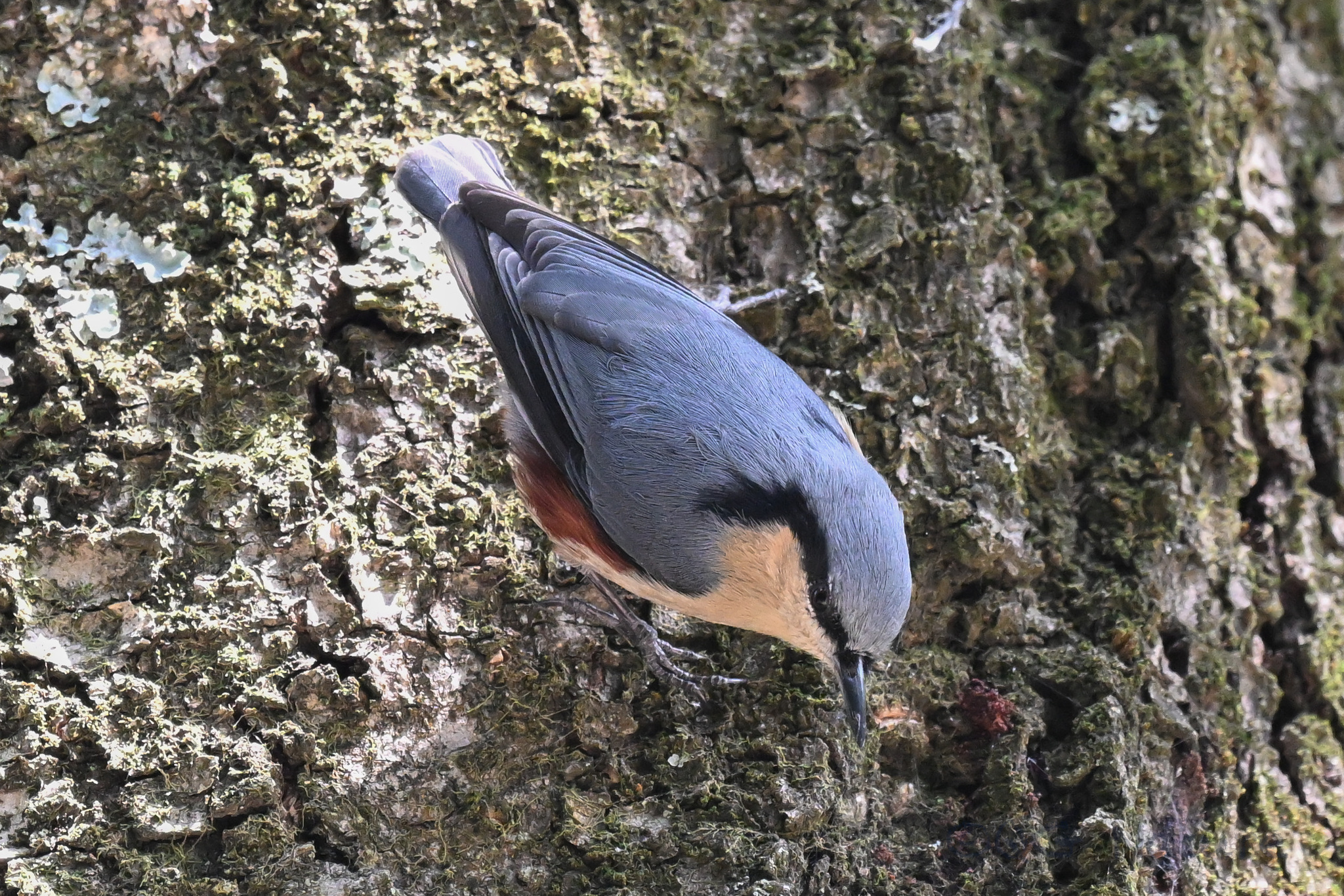
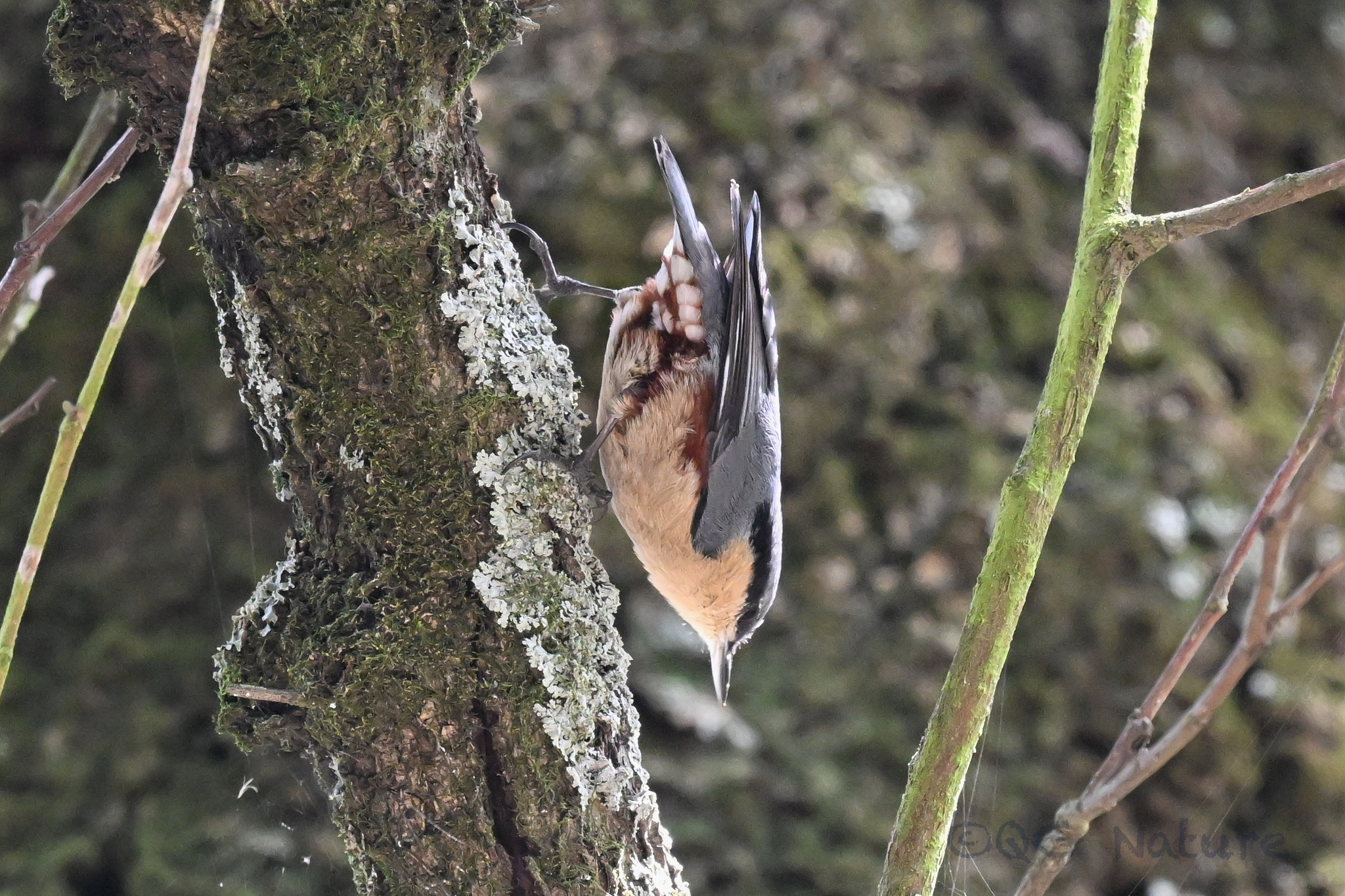
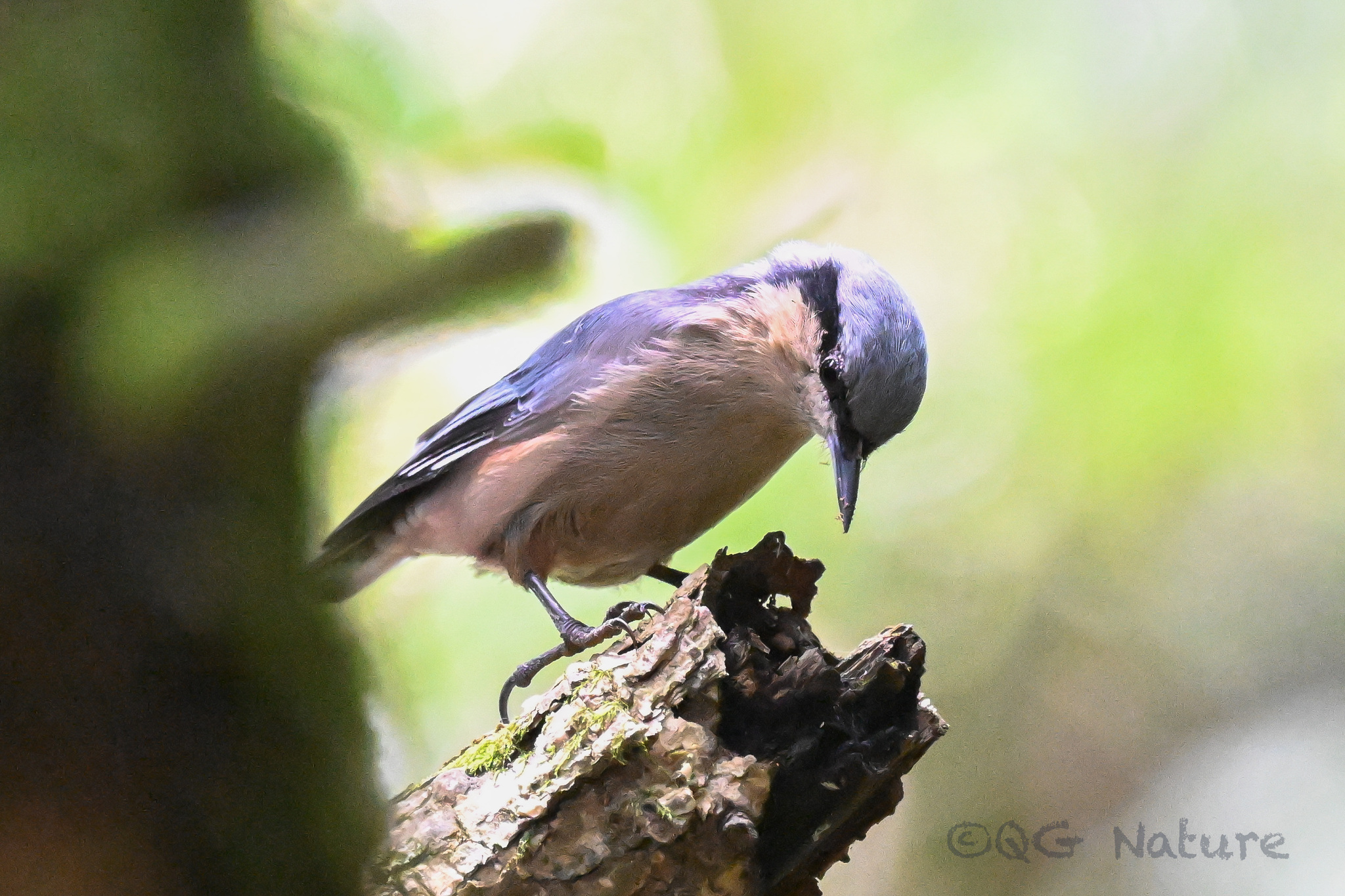
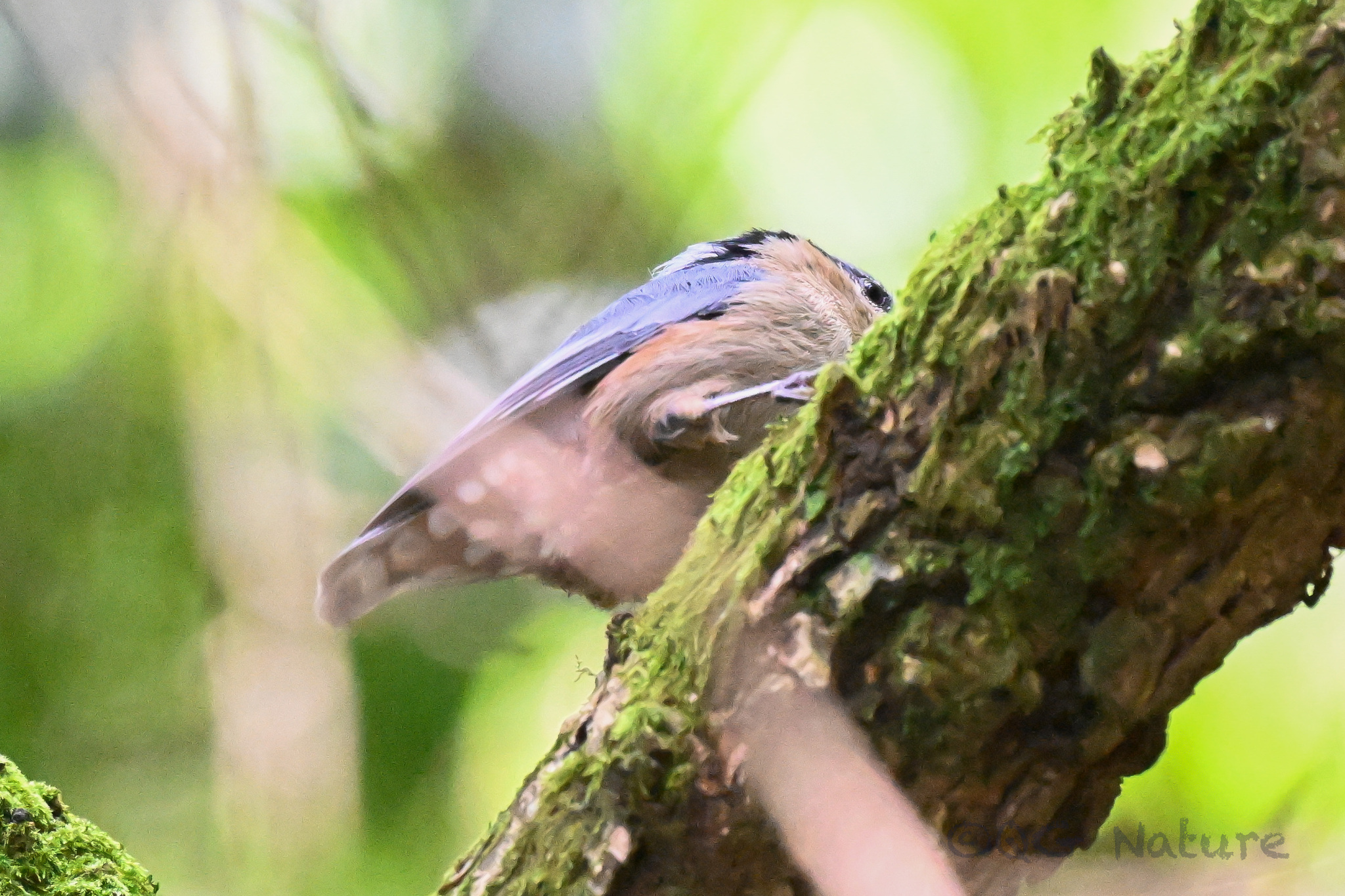
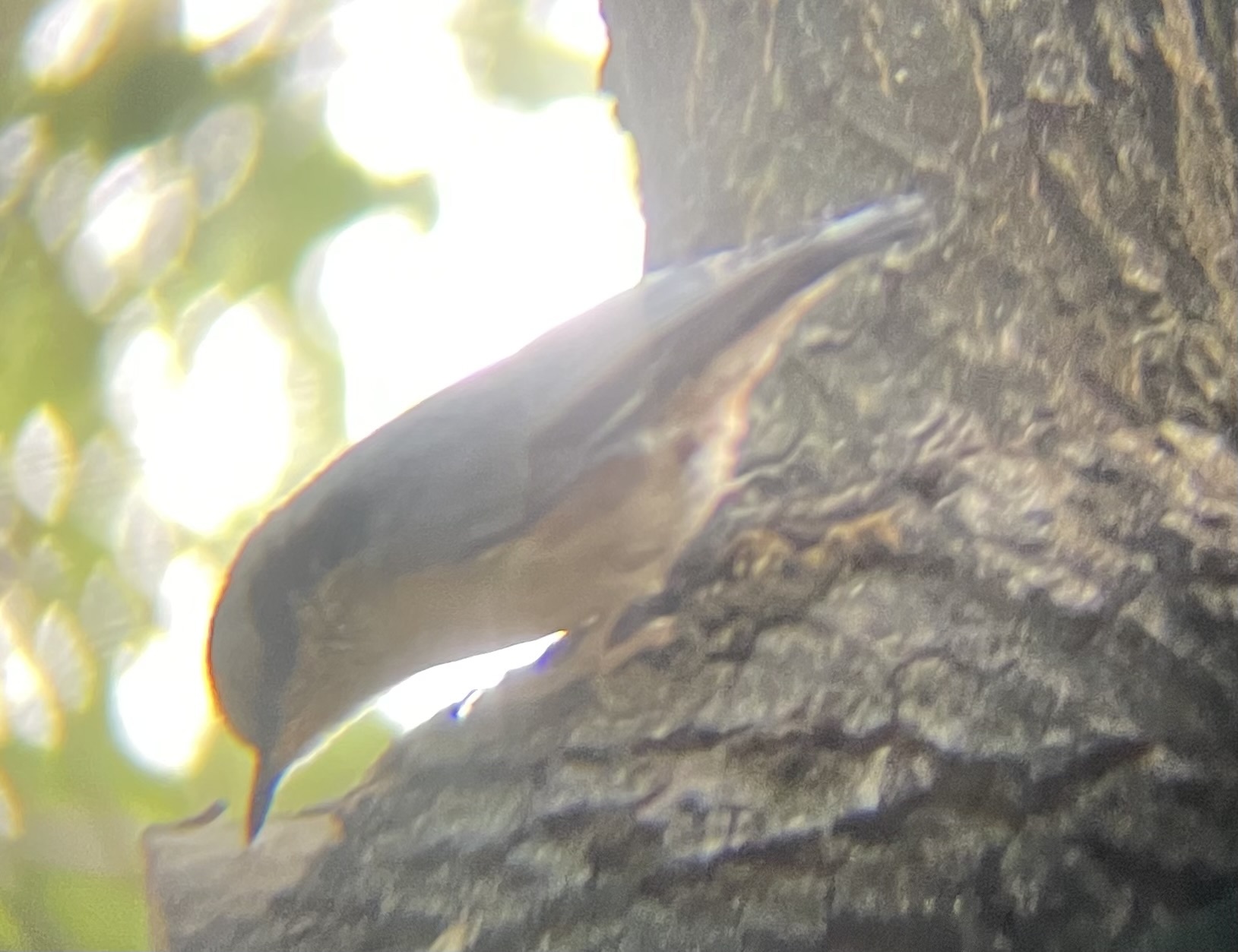
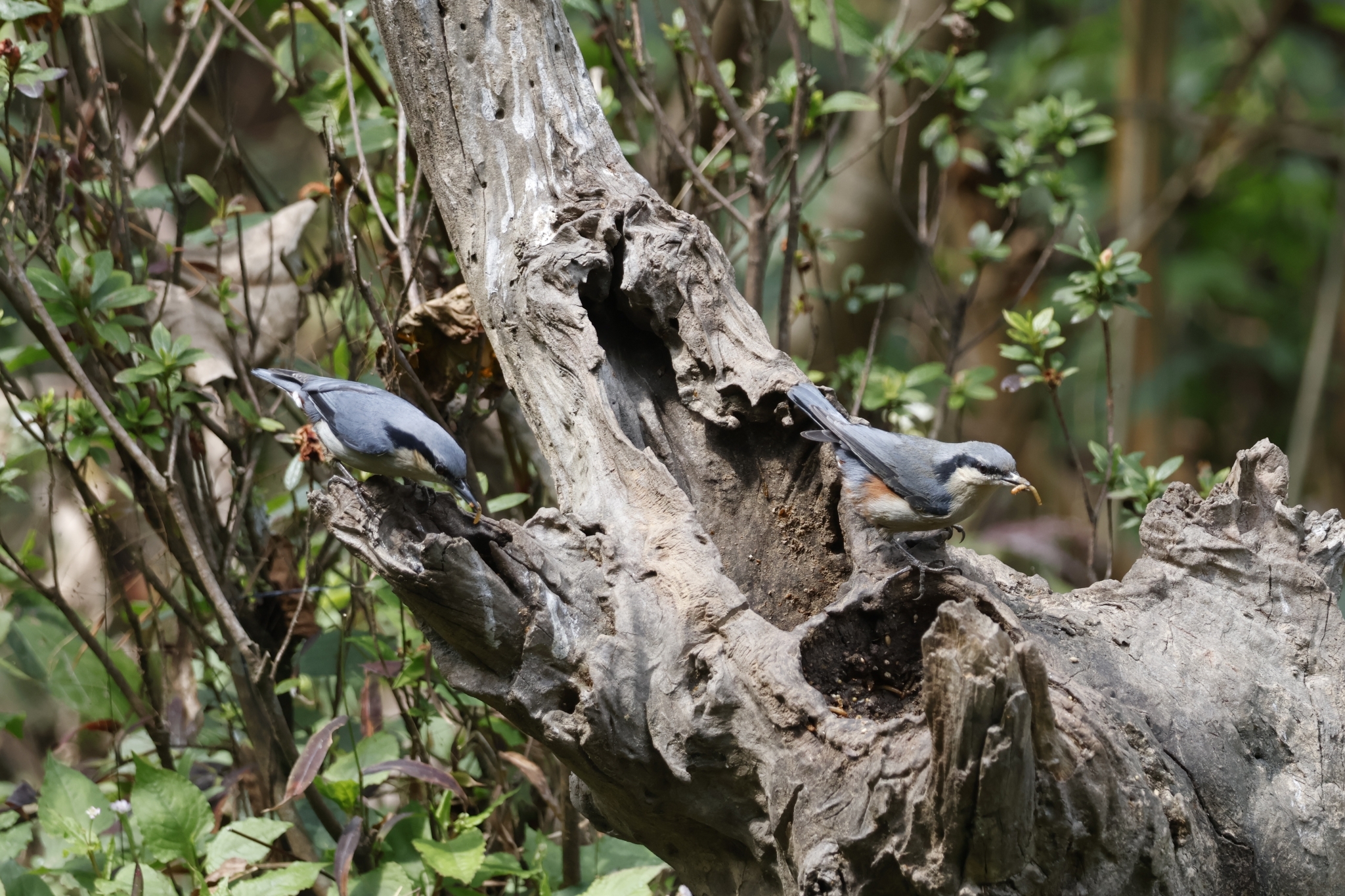
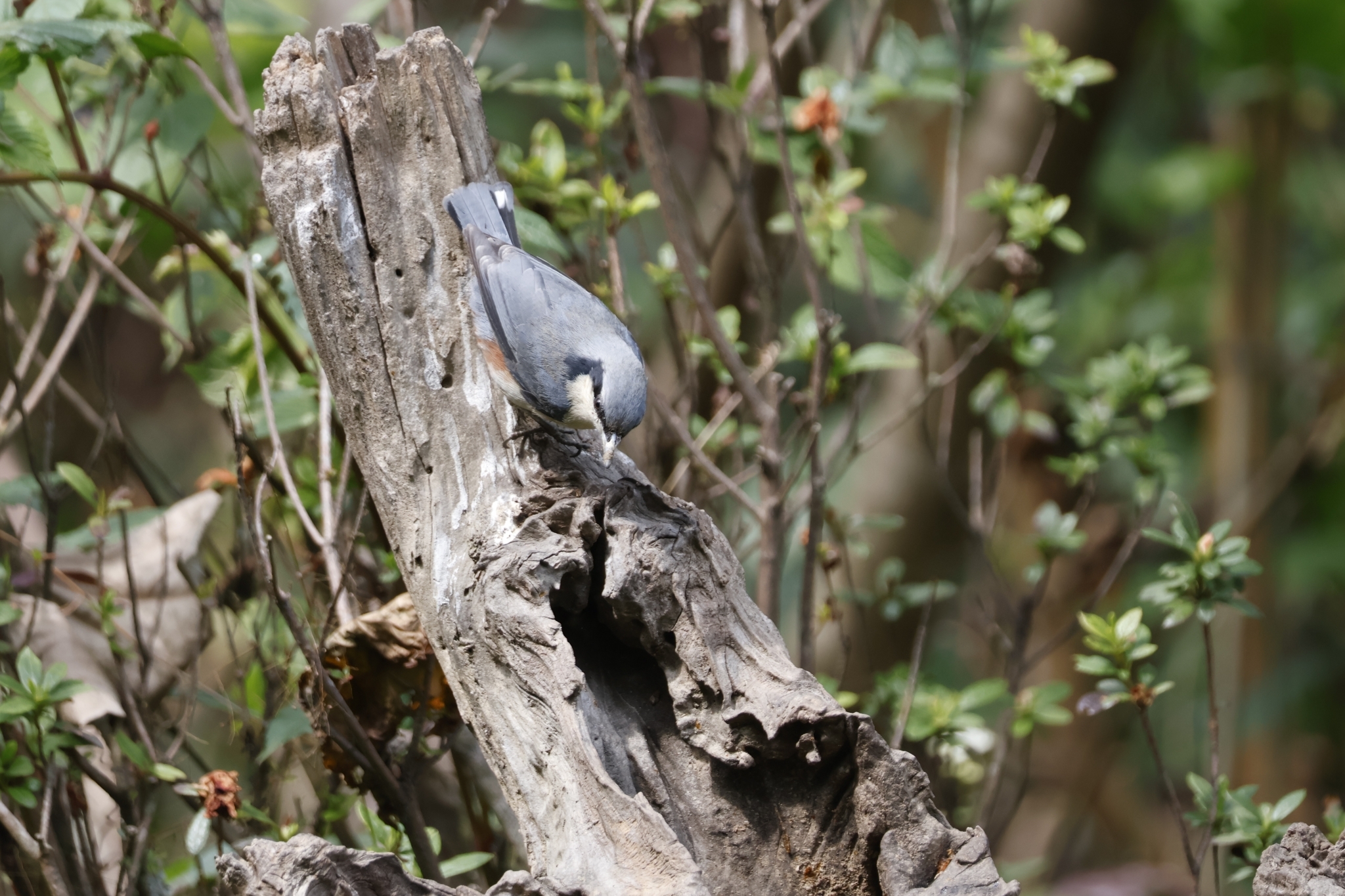
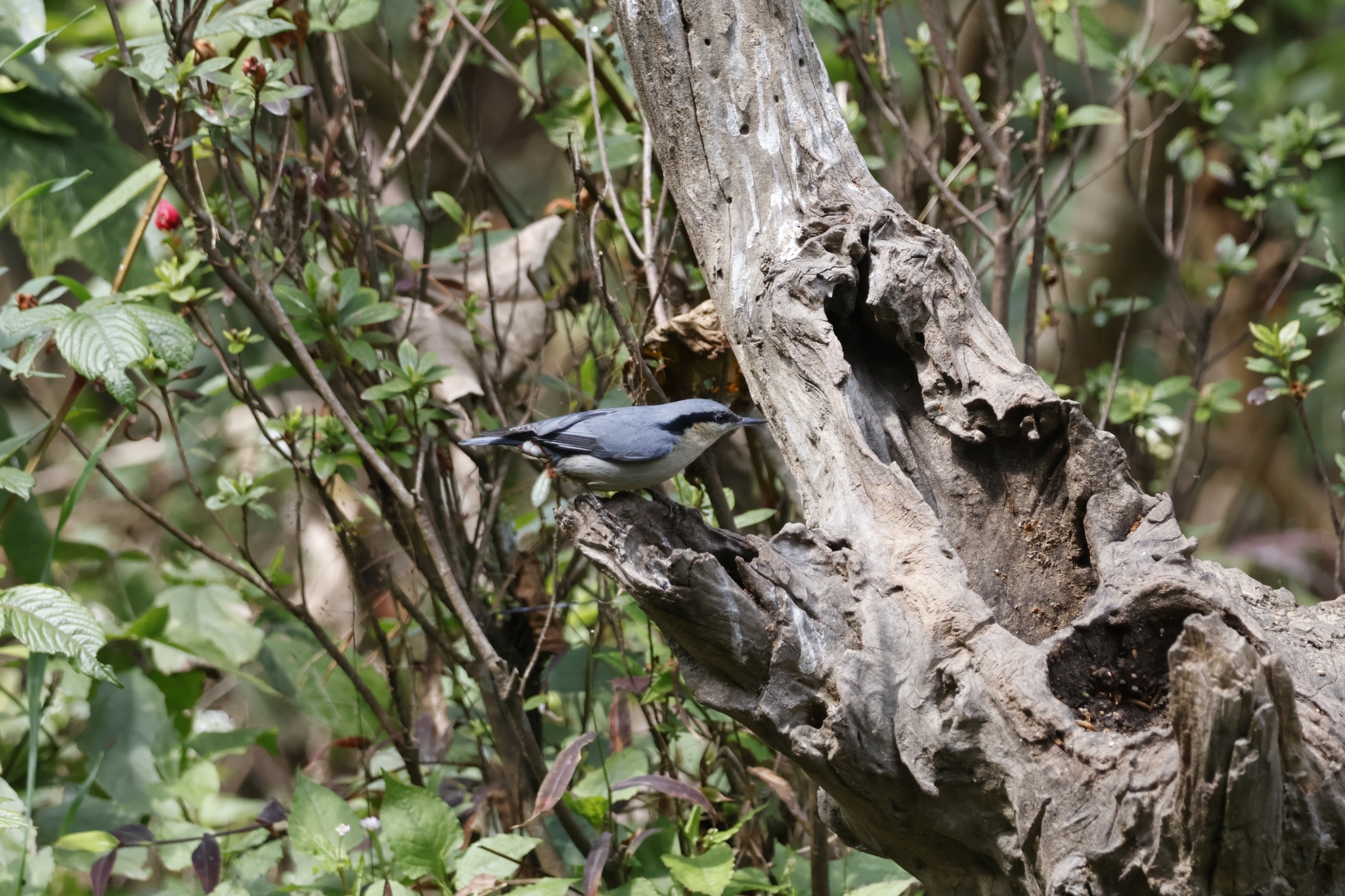
Measures 12.5–14 cm (4.9–5.5 in) in length. Upperparts are solid blue-grey from crown to tail, featuring a marked black loral line extending to the wing base. Underparts are pale grey to buff, with dark brick-red flanks that contrast strongly. Undertail coverts have a large white border or patch near the tip. Males have deeper brick-red flanks than females, whose flanks are rufous and concolorous with the undertail. Females also have duller underparts. Juveniles are more buff than adults. The iris is brown to dark brown; the bill is greyish-black to blackish with a slate-grey or blue-grey base on the lower mandible. Legs are dark brown, greenish, or blue-grey with almost black claws.
Identification
Distinguished from the Burmese nuthatch by uniform grey-buff underparts without contrast between head sides and throat, darker blue upperparts, and undertail feathers edged with red creating a 'scales' pattern. Unlike the Eurasian nuthatch subspecies S. e. sinensis, it lacks whitish cheeks and does not produce the characteristic 'dwip' song. Differentiated from the Yunnan nuthatch by larger size, lack of a white supercilium, and presence of russet flanks. Separated from the white-tailed nuthatch by the absence of a white spot on middle rectrices and the presence of brick-red flanks. Smaller than the giant nuthatch, which has a lighter crown and finer eyestripe.
Distribution & Habitat
Found in northeast India (Arunachal Pradesh, Nagaland, Manipur, Assam, Meghalaya), Tibet, south-central China (Sichuan, Yunnan, Guizhou, Fujian), eastern Myanmar, northwestern Thailand, southern Laos, and southern Vietnam. Three subspecies: S. n. montium in eastern Tibet, southern/eastern China, Myanmar, and northwest Thailand; S. n. nagaensis in Naga Hills (NE India, NW Myanmar); S. n. grisiventris in western Myanmar and southern Vietnam. Inhabits evergreen, pine, mixed, or deciduous forests at altitudes ranging from 915 m to 4,570 m depending on locality.
Behavior & Ecology
Forages alone, in pairs, or in mixed-species flocks with tits, bushtits, woodpeckers, alcippes, and minlas outside the breeding season. Feeds on small arthropods and seeds on the ground, rocks, stumps, or trees. Breeding occurs March–June depending on region. Nests in tree holes or stumps at ~10 m height, often reducing entrance size with mud. Nest lined with bark, moss, and hair. Clutch size is two to five white eggs with reddish-purple mottling and red dots concentrated at the larger end. Vocalizations include squeaky 'sit' calls, dry 'tchip' trills reminiscent of wren alarms, and a monotonous crackling song ('chichichichi').
Conservation
Assessed as Least Concern by the IUCN due to a large estimated range of 3.8 million km². The population is declining due to habitat destruction and fragmentation. Climate change models predict a distribution decrease of 15.9% to 17.4% between the 2040s and 2069.
Source: Wikipedia · CC BY-SA 3.0
Taxonomy
- Order
- Passeriformes
- Family
- Sittidae
- Genus
- Sitta
Subspecies (3)
-
Sitta nagaensis grisiventris
southwestern Myanmar (Mount Victoria, and probably also other mountains of the central and southern Chin Hills), southern Laos (Bolaven Plateau), and southern Vietnam (Da Lat Plateau southward to M'neun Pantar)
Data Sources
Species description from Wikipedia, licensed under CC BY-SA 3.0.
Bird images and sounds sourced from GBIF, contributed by citizen scientists worldwide under Creative Commons licenses.
Taxonomy data from AviList 2025.