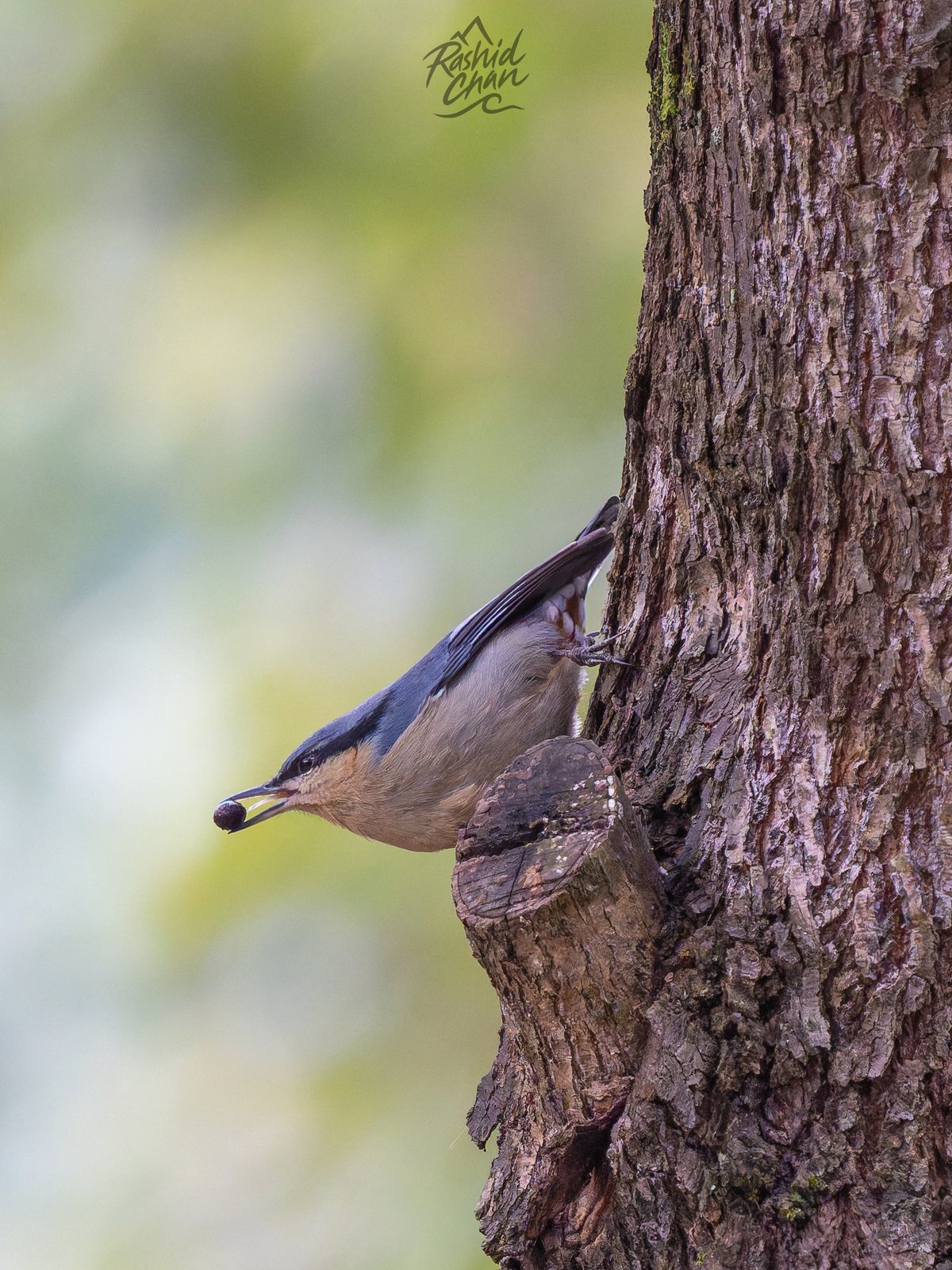
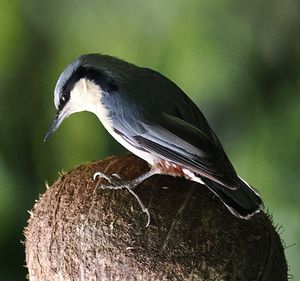
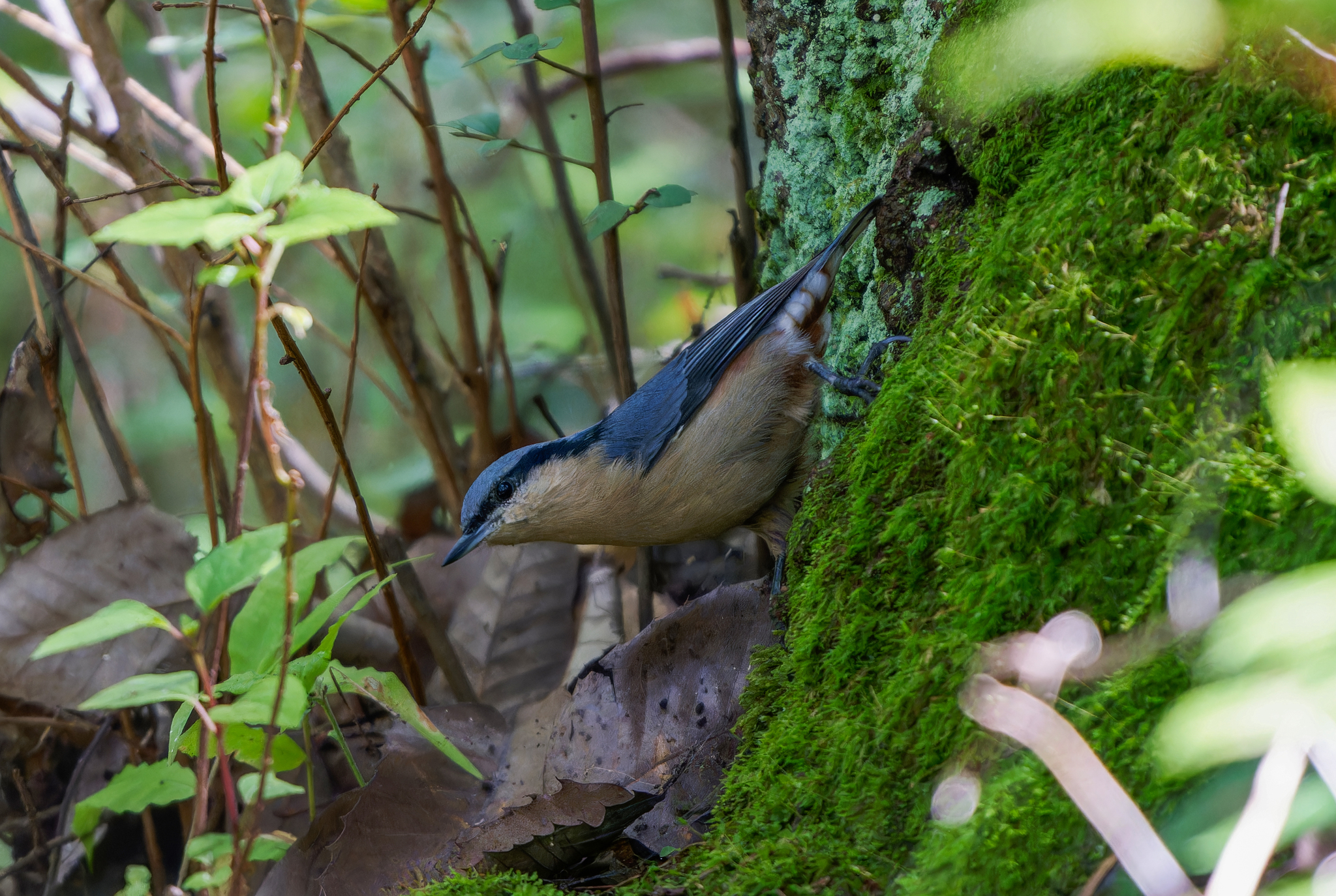
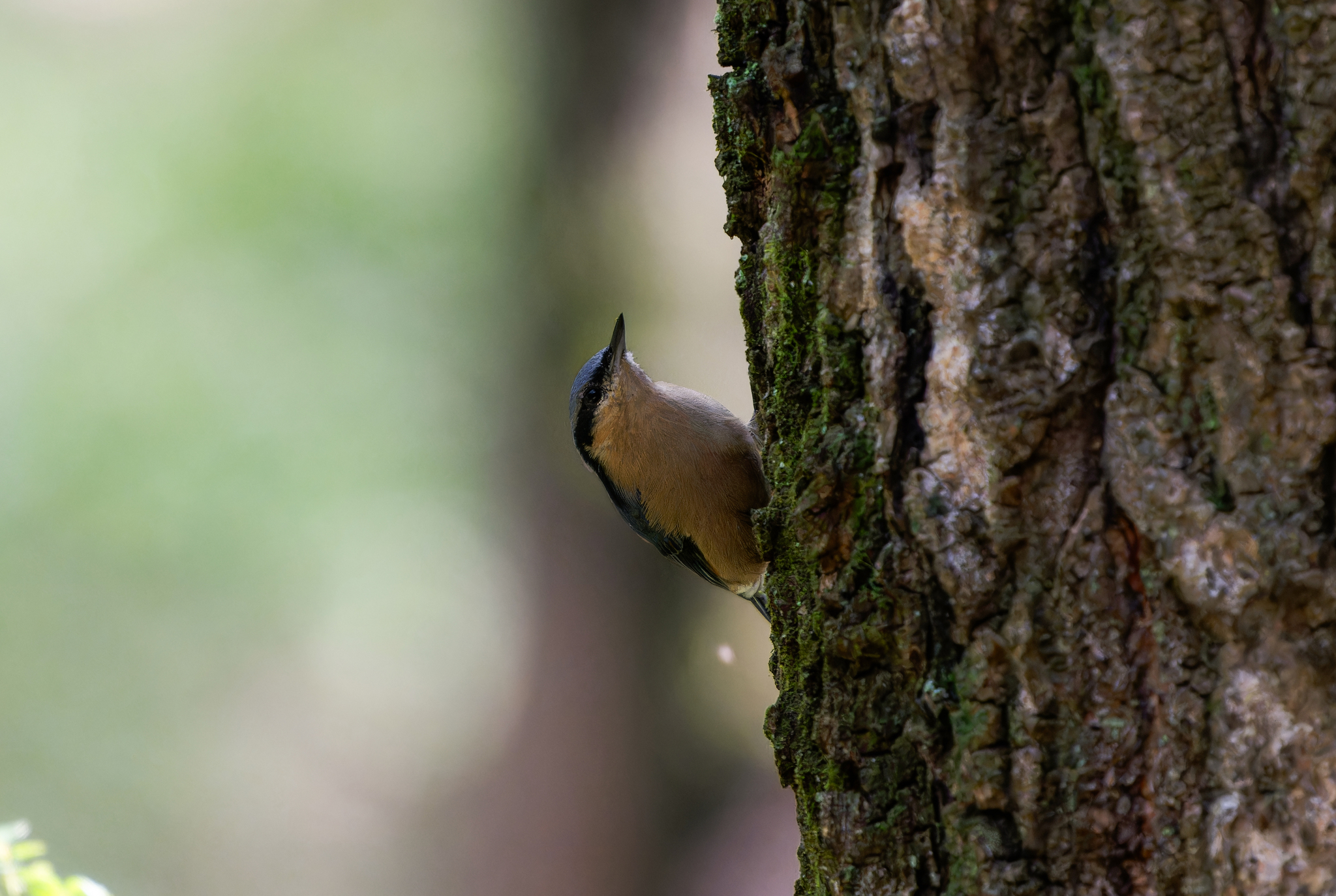
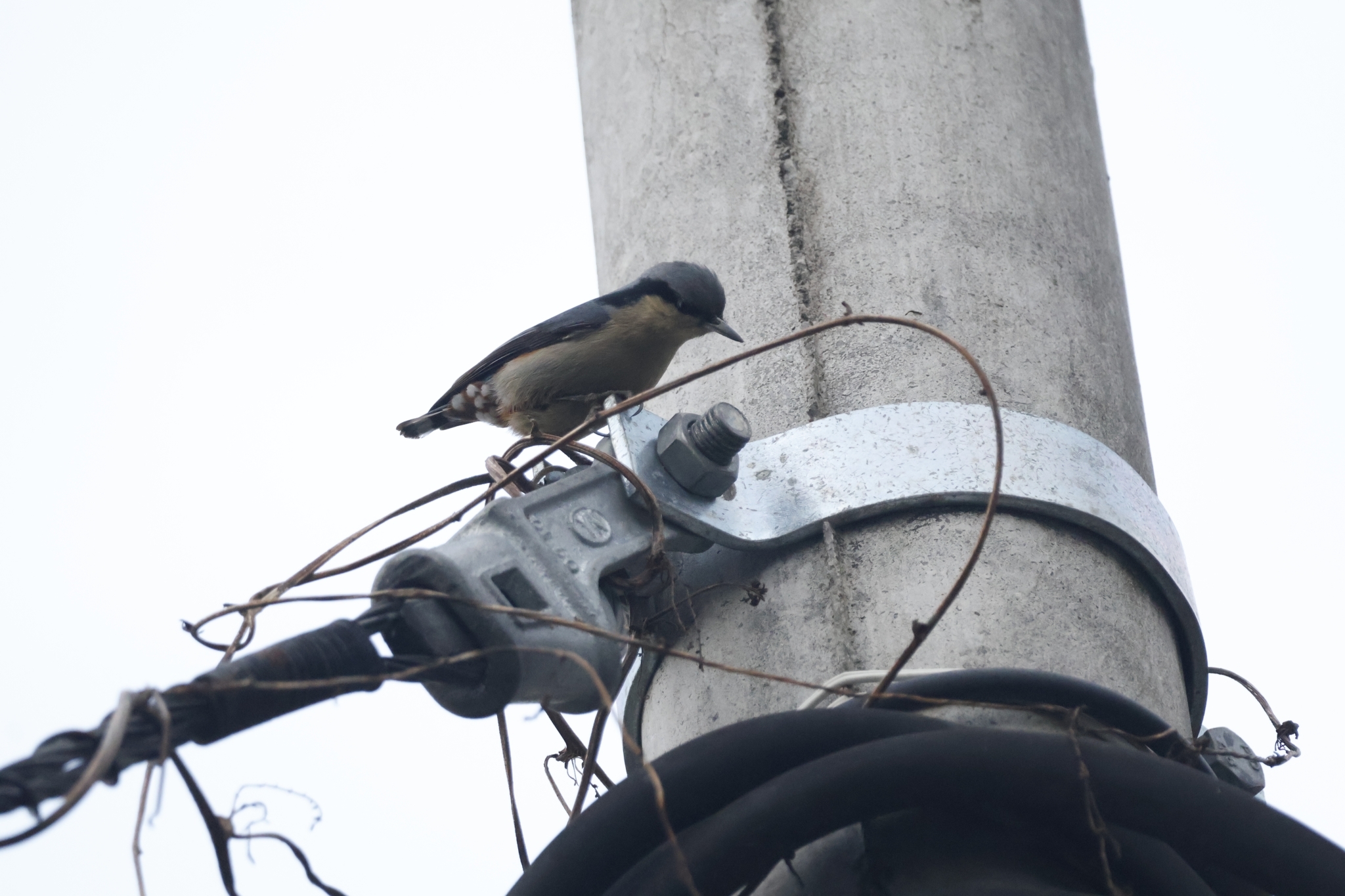
Chestnut-vented Nuthatch
Sitta nagaensis
栗臀䴓
Introduction
A medium-sized nuthatch in the family Sittidae, with a body length of 12.5–14 cm. Found in northeast India, Tibet, south-central China, eastern Myanmar, northwestern Thailand, southern Laos, and Vietnam. Inhabits evergreen forests, pine forests, mixed forests, and deciduous forests at elevations ranging from 915–4,570 m (3,002–14,993 ft). Feeds primarily on small arthropods and seeds. Builds nests in tree cavities, often constructing mud entrances to reduce opening size. Breeding occurs between March and May. The species belongs to the S. europaea group, which includes the Kashmir nuthatch and Eurasian nuthatch. The IUCN lists the species as Least Concern due to its relatively large range of approximately 3.8 million km², though populations are declining due to habitat loss.
Description
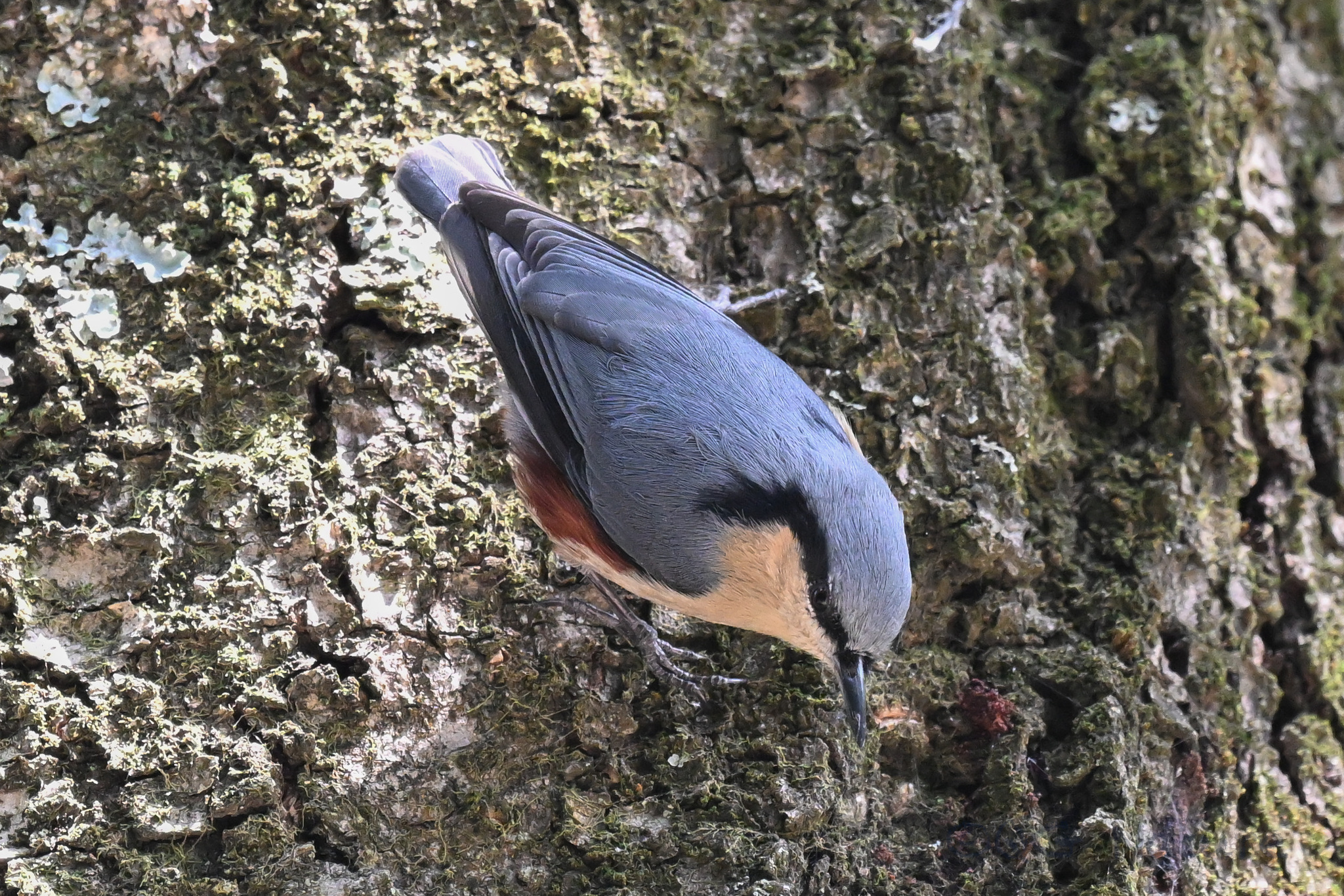
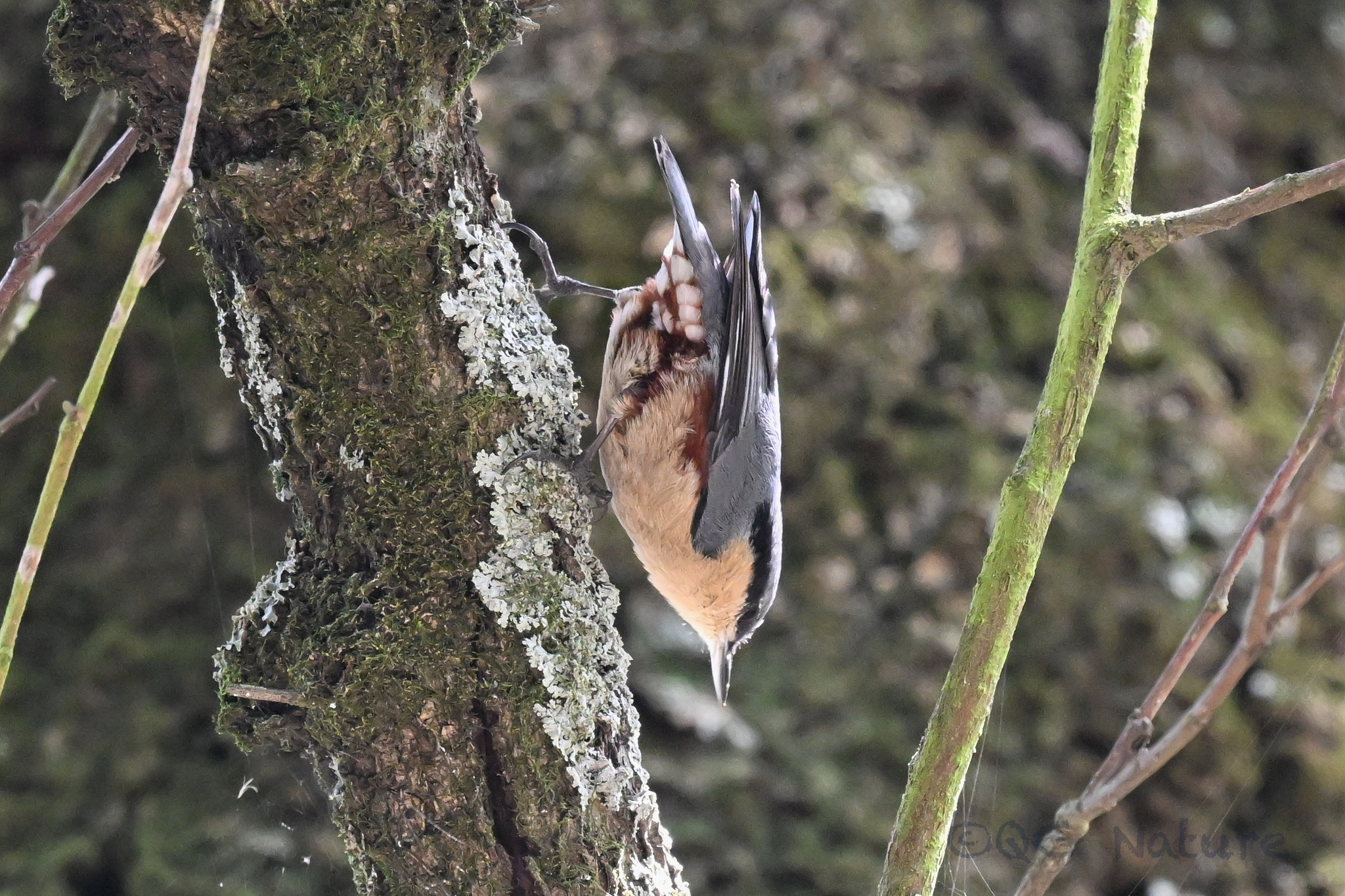
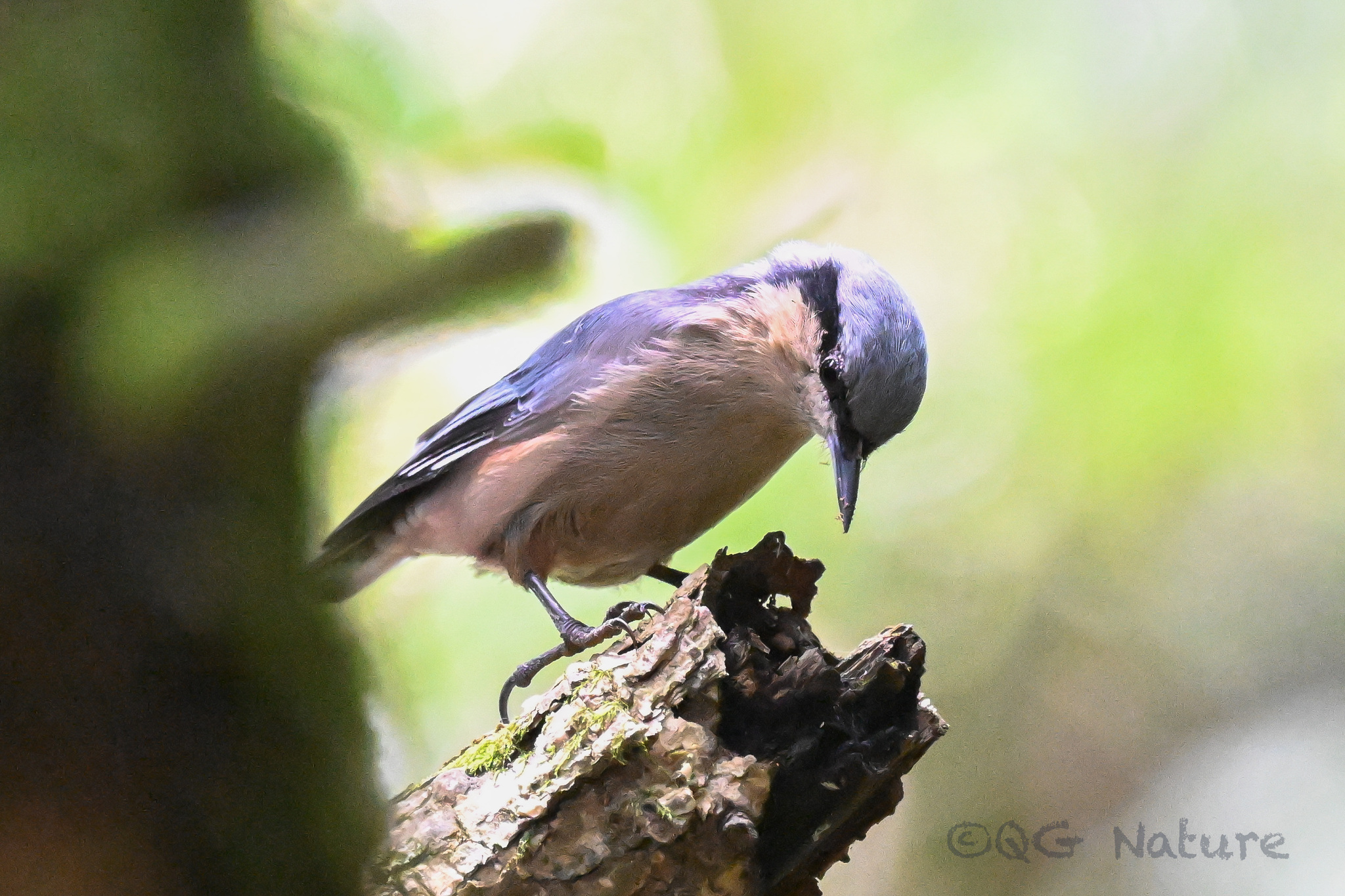
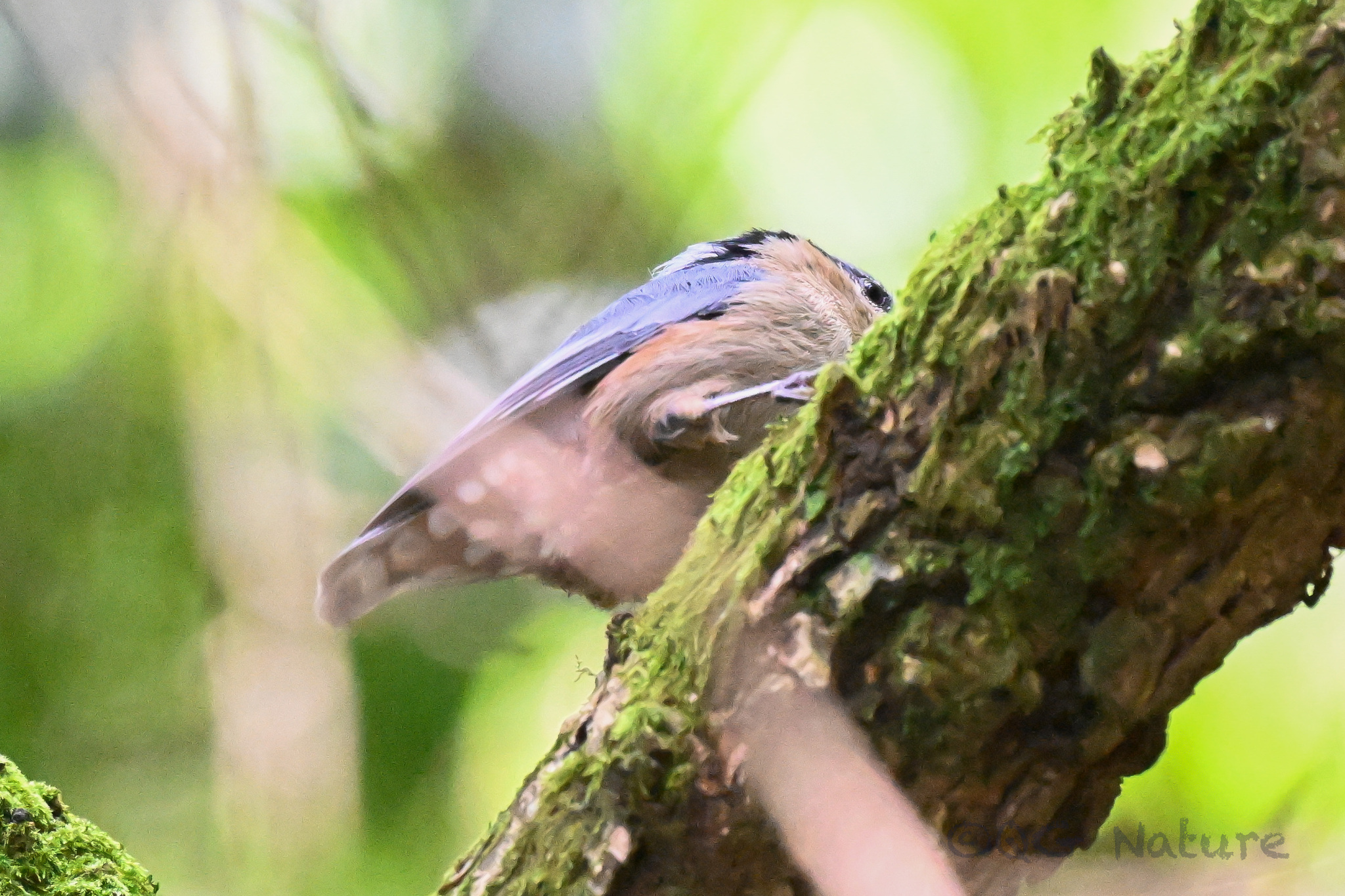
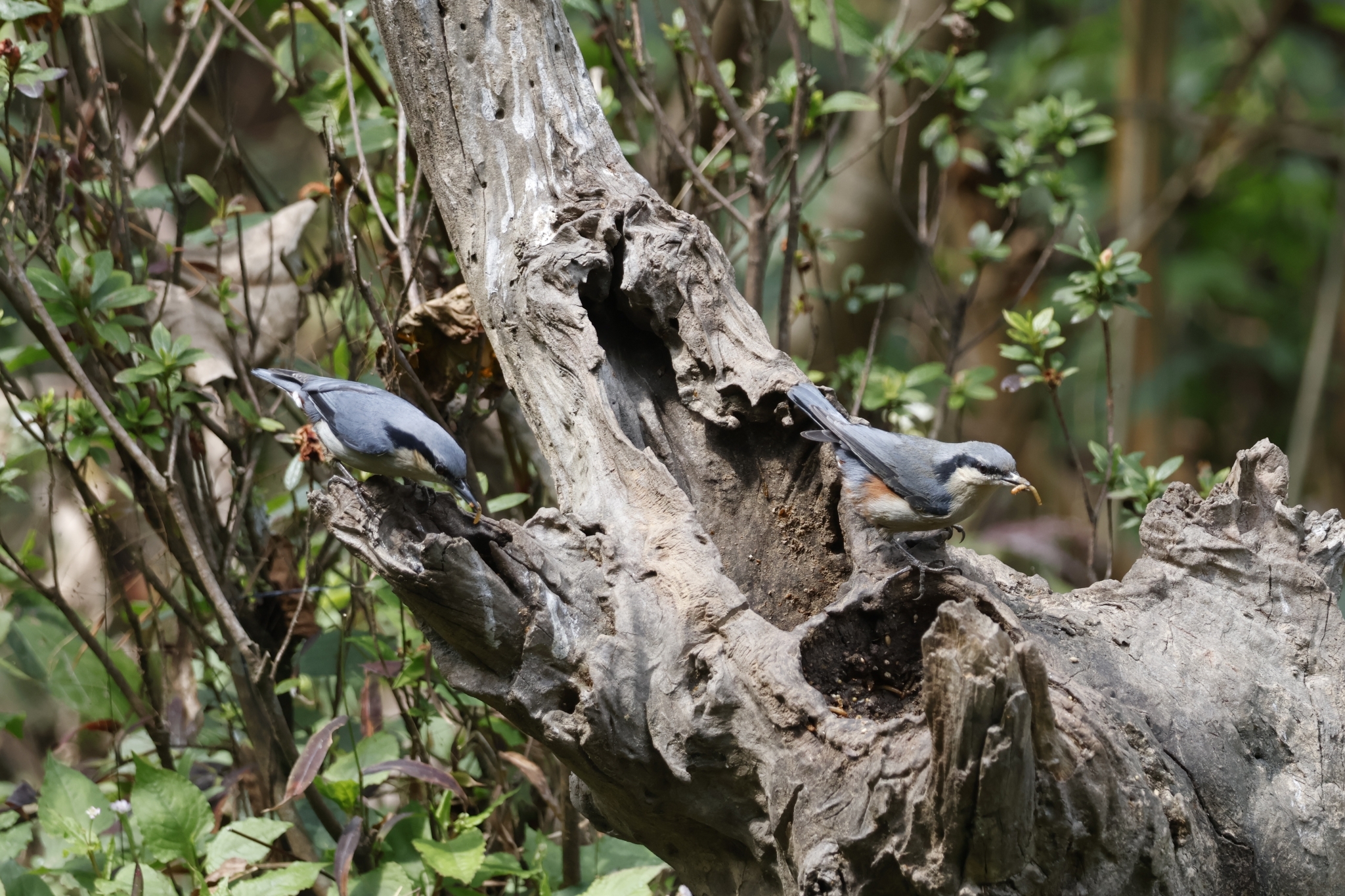
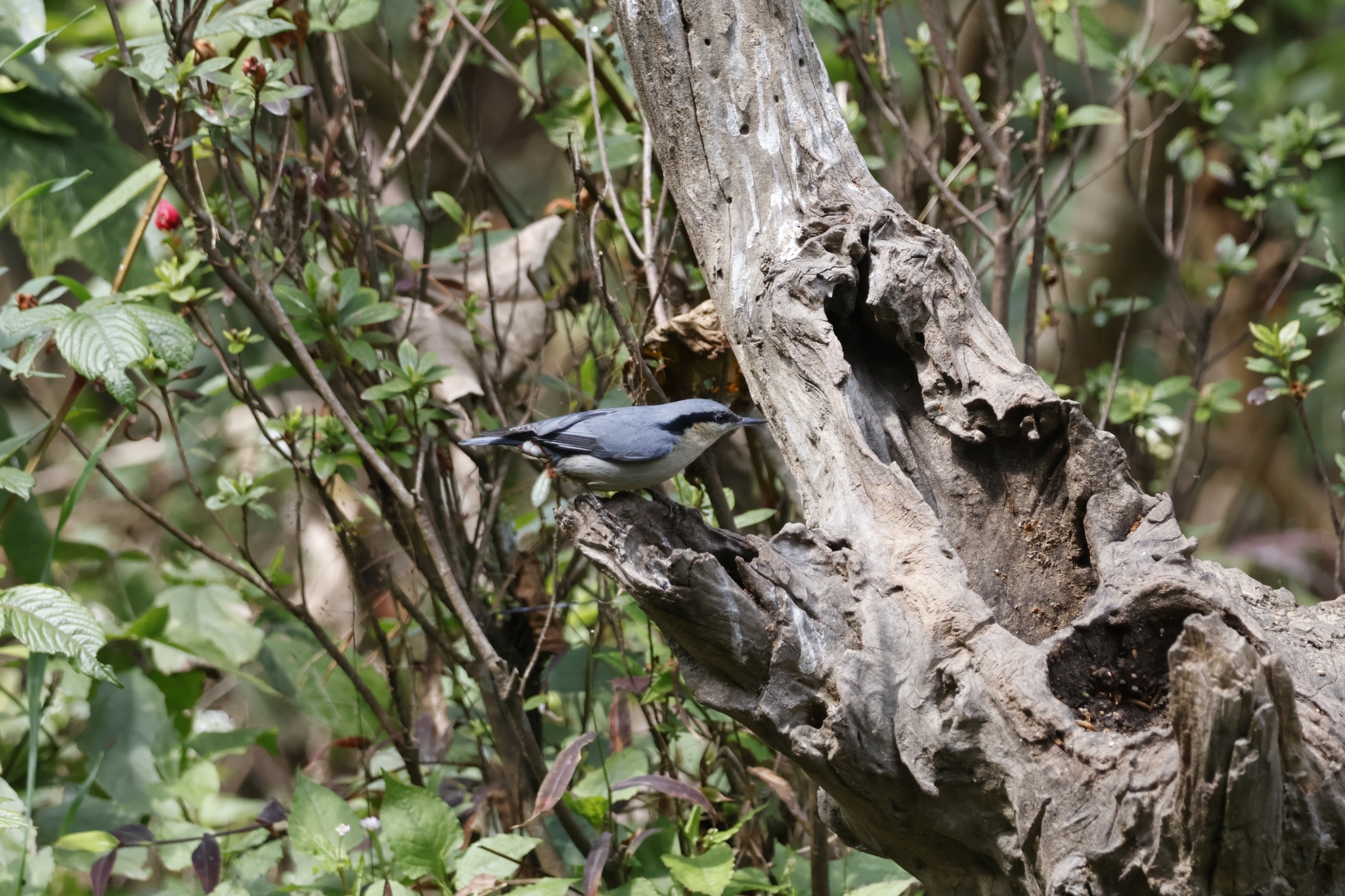
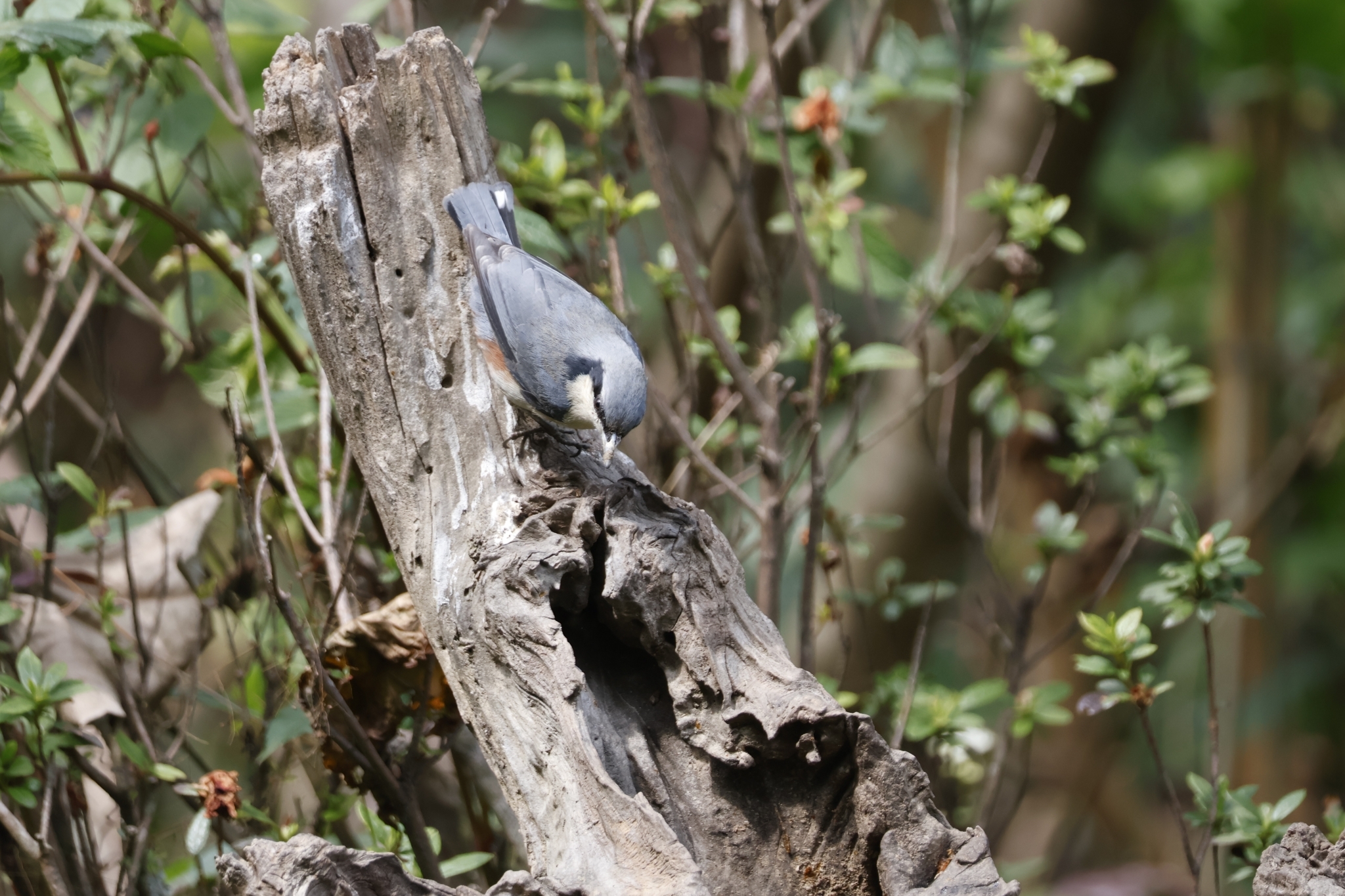
A compact nuthatch with uniform blue-grey upperparts from crown to tail and a distinctive black loral line extending to the wing base. Underparts range from pale grey to buff depending on subspecies and plumage wear, with brick-red flanks providing strong contrast. The undertail coverts are white with red edges creating a scaled appearance. Sexes are similar, though males display deeper brick-red rear flanks compared to the rufous flanks of females, which also have duller underparts. Juveniles are more buff-colored with worn plumage. The iris is brown to dark brown, the bill is greyish-black to blackish with slate-grey at the base, and legs are dark brown, greenish, or blue-grey.
Identification
Distinguished from the sympatric Burmese nuthatch by its uniform underparts without white chin, cheek, and parotid region contrasts. The Burmese nuthatch shows white on the head contrasting with brick-red to orange-brown underparts. The chestnut-vented nuthatch's undertail has a red-edged scales pattern versus nearly uniform white in the Burmese species. Some fresh-plumaged individuals of S. n. montium may appear buff, but darker blue upperparts and red contrasting flanks help separate them. Overlaps with Eurasian nuthatch subspecies S. e. sinensis in Sichuan and Fujian; distinguished by greyer underparts, darker upperparts, and lack of whitish cheeks. Lacks the Eurasian nuthatch's characteristic dwip song.
Distribution & Habitat
Ranges from Tibet and south-central China to the Đà Lạt Plateau in southern Vietnam and the Bolaven Plateau in Laos. In India, restricted to Arunachal Pradesh, Nagaland, Manipur, Assam, and Meghalaya. In Myanmar, found in the Chin Hills and throughout the eastern half from Kachin to Shan States. Occupies evergreen upland forests, dry ridge pine patches, deciduous forests, spruce-fir forests, and rhododendron stands. Altitudinal range varies by region: 1,400–2,600 m in India, Thailand, and Myanmar, occasionally to 3,200 m; 1,050–3,500 m in Tibet and Sichuan, up to 4,570 m in Yunnan; and 915–2,285 m in southern Vietnam.
Behavior & Ecology
Typically solitary or in pairs, joining mixed-species foraging flocks in winter alongside tits, woodhandts, woodpeckers, alcippes, and minlas. Forages on ground, rocks, stumps, and trees. Vocalizations include varied squeaky sit or sit-sit sounds, dry tchip or tchit notes in trills reminiscent of Eurasian wren alarm calls, and nasal quir, kner, or mew sounds. The song is a stereotyped, monotonous rattle or tremolo (chichichichichi) lasting less than a second. Breeding varies regionally: March–May in Thailand, March–June in India, April–early June in eastern Myanmar, and April–May in Fujian. Nests in tree holes about 10 m high, often lining entrances with mud. Clutch size is 2–5 eggs, measuring approximately 18.3–18.6 mm × 13.8–14 mm.
Conservation
IUCN Least Concern status due to extensive range of approximately 3.8 million km² and generally common populations throughout. However, population is declining due to habitat destruction and fragmentation. Climate change modeling predicts a 15.9–17.4% distribution decrease between the 2040s and 2069. No specific population estimates exist, but the species remains relatively common across its range.
Culture
No cultural information provided in source.
Source: Wikipedia · CC BY-SA 3.0
Taxonomy
- Order
- Passeriformes
- Family
- Sittidae
- Genus
- Sitta
- eBird Code
- chvnut1
Subspecies (3)
-
Sitta nagaensis grisiventris
southwestern Myanmar (Mount Victoria, and probably also other mountains of the central and southern Chin Hills), southern Laos (Bolaven Plateau), and southern Vietnam (Da Lat Plateau southward to M'neun Pantar)
-
Sitta nagaensis montium
southern and eastern China (southeastern Xizang, Sichuan, Yunnan, and far southwestern Guizhou; isolated population in higher mountains of northwestern Fujian), northern Laos, northwestern Vietnam (western Tonkin), far northeastern India (northeastern Arunachal Pradesh), eastern Myanmar (northern Kachin southward to Southern Shan State), and northwestern Thailand
-
Sitta nagaensis nagaensis
northeastern India (Patkai Range of southeastern Arunachal Pradesh, Nagaland, Manipur, Cachar Hills of southern Assam and the Khasi Hills of Meghalaya) and western Myanmar (northern Chin Hills)
Data Sources
Species description from Wikipedia, licensed under CC BY-SA 3.0.
Bird images and sounds sourced from GBIF, contributed by citizen scientists worldwide under Creative Commons licenses.
Taxonomy data from AviList 2025.