Passeriformes / Sittidae / Sitta
Velvet-fronted Nuthatch
Sitta frontalis · 绒额䴓
Introduction
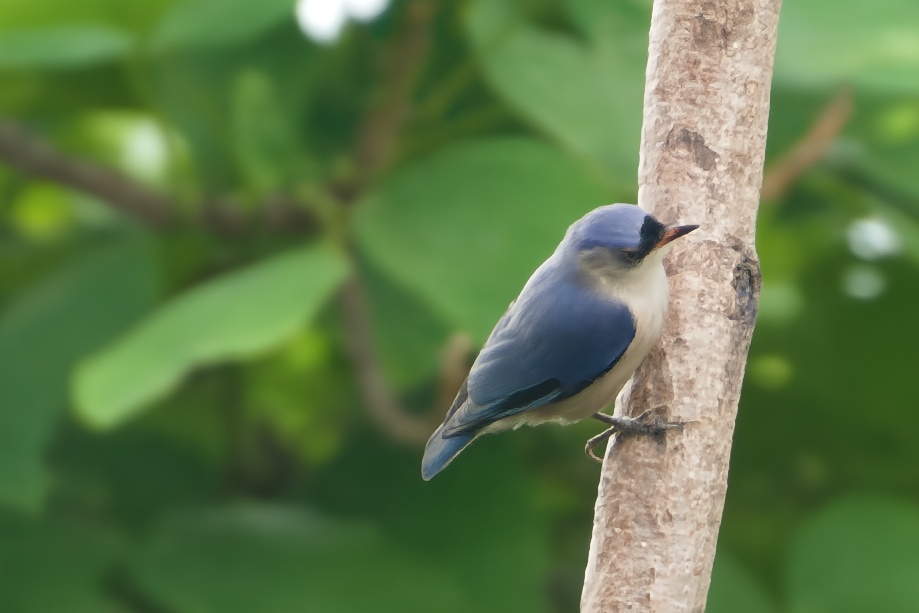
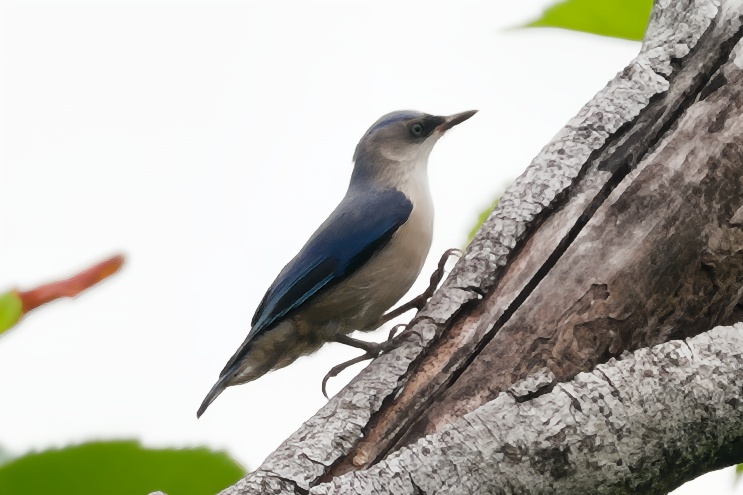
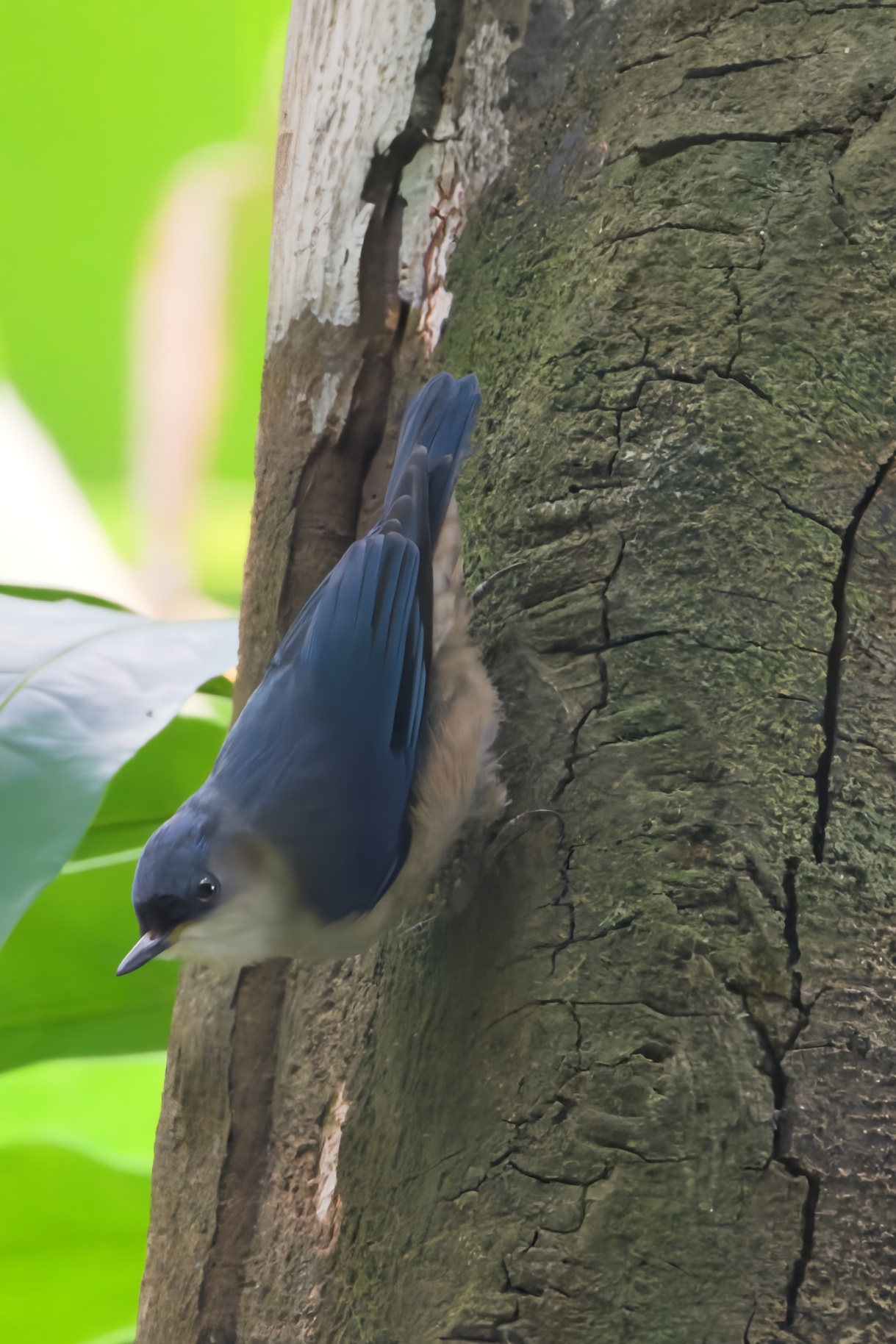
A small passerine in the nuthatch family Sittidae found in southern Asia, from Nepal, India, Sri Lanka, and Bangladesh east to southwestern China and Indonesia. It inhabits forests with good tree cover and feeds on insects in bark, using strongly clawed toes to climb down trunks or move on undersides of branches. Often joins mixed-species foraging flocks.
Description
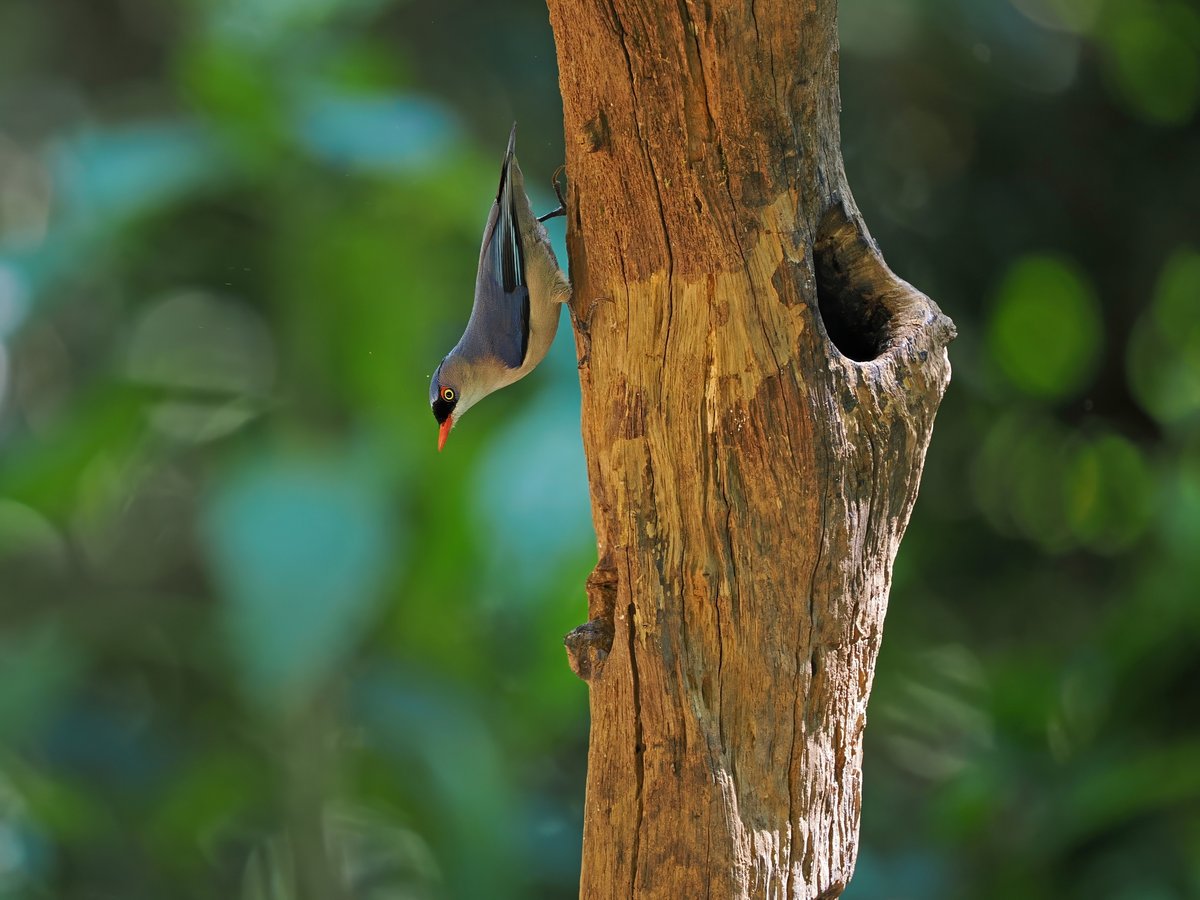
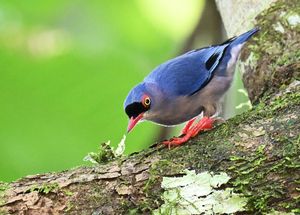
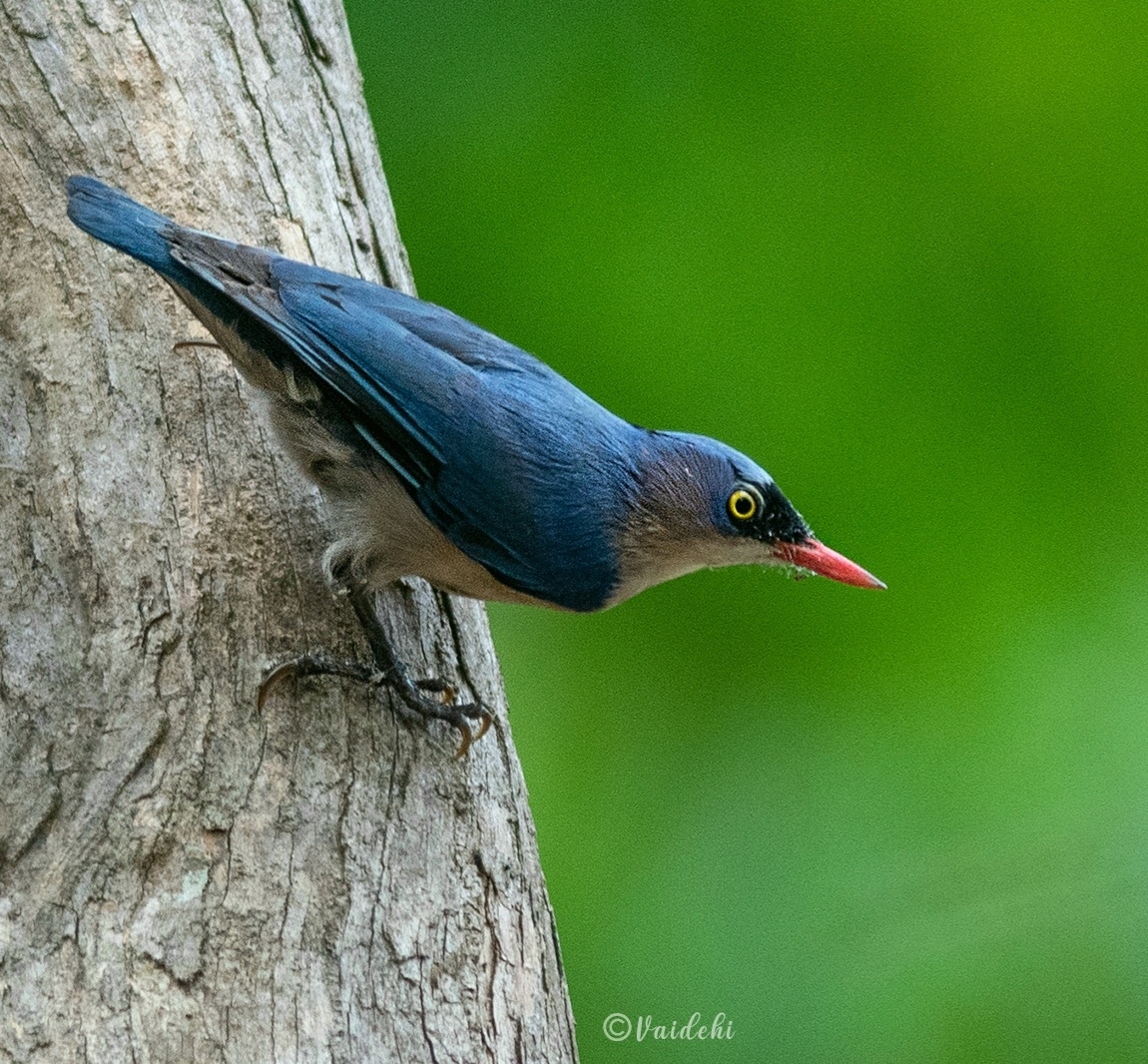
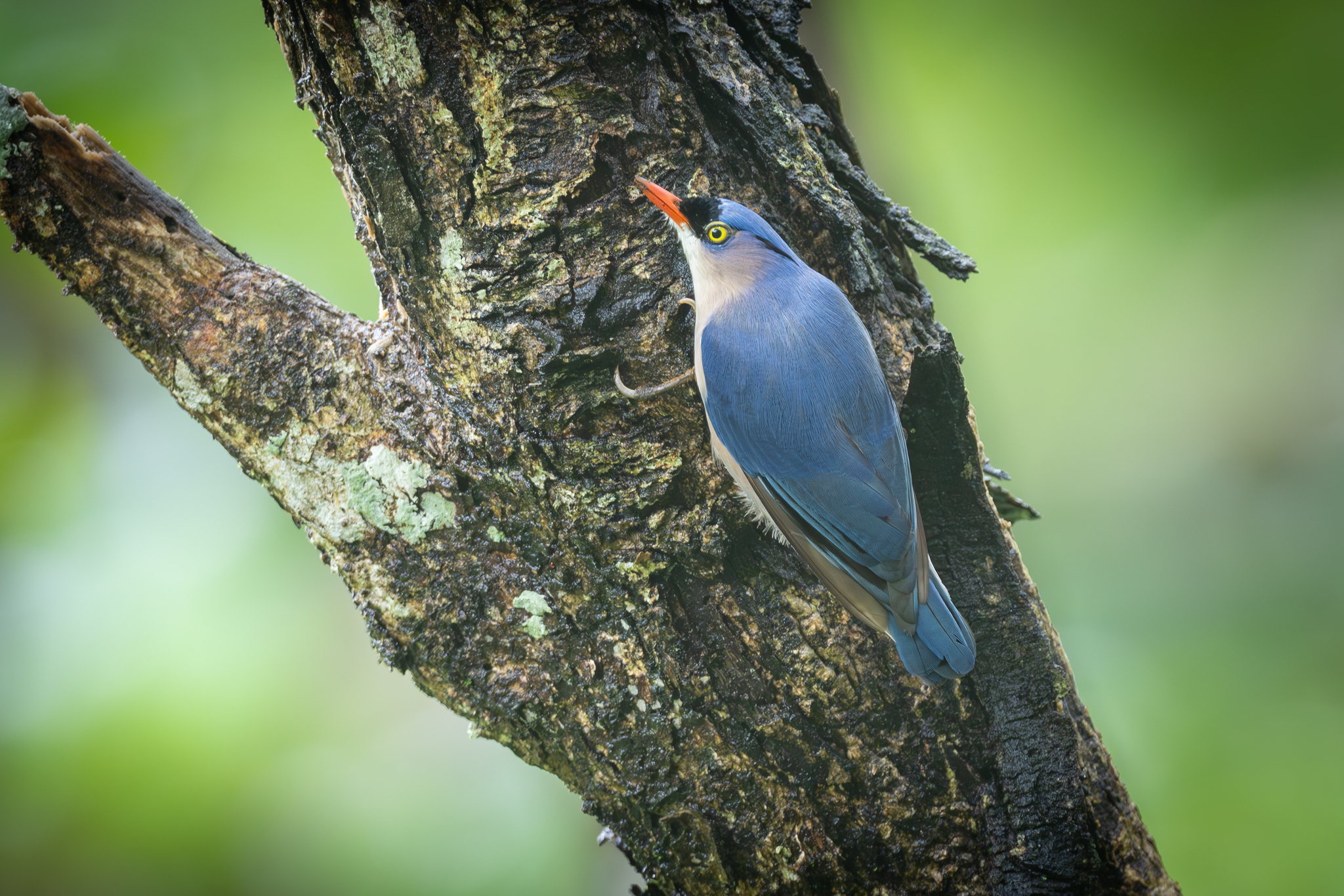
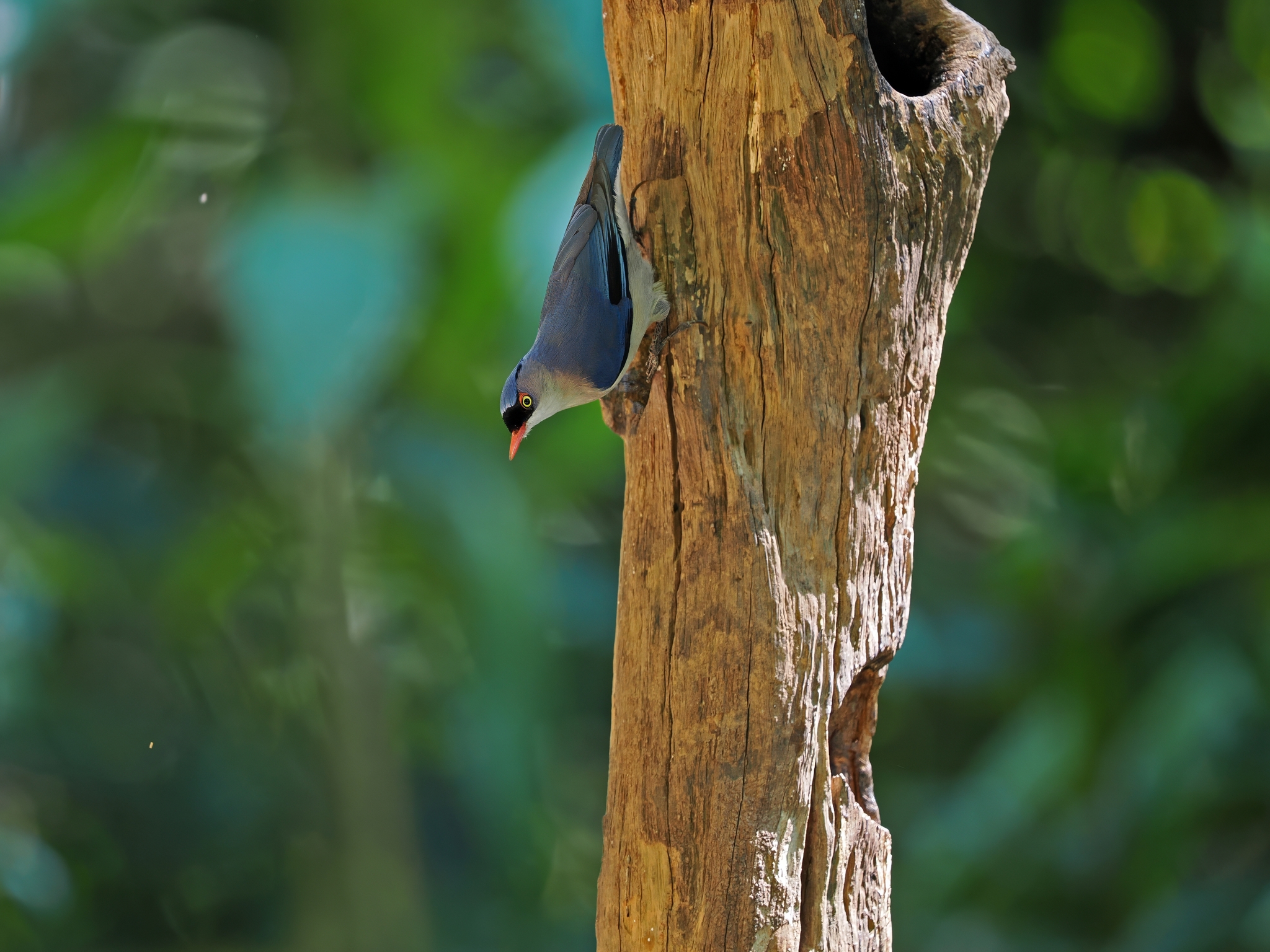
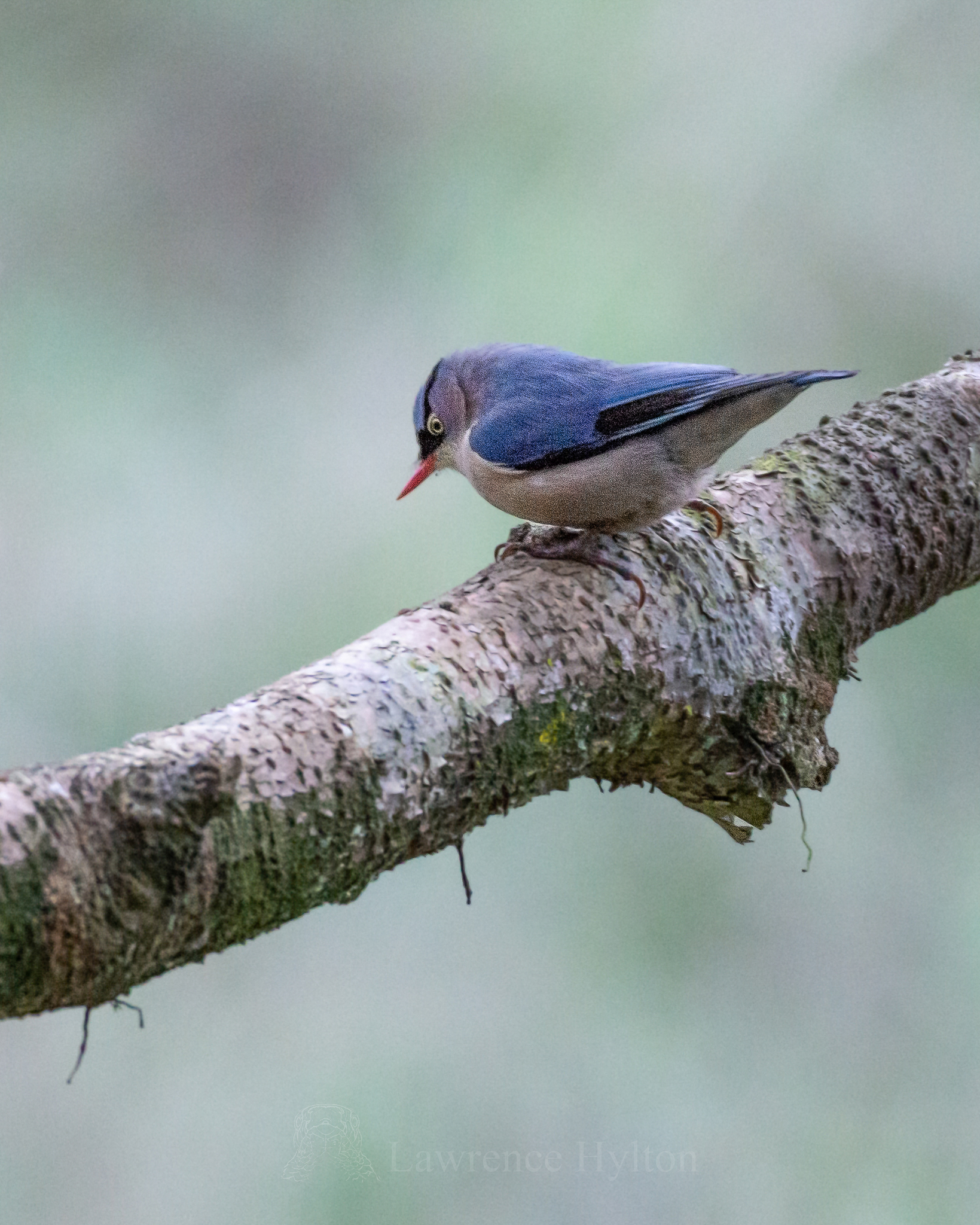
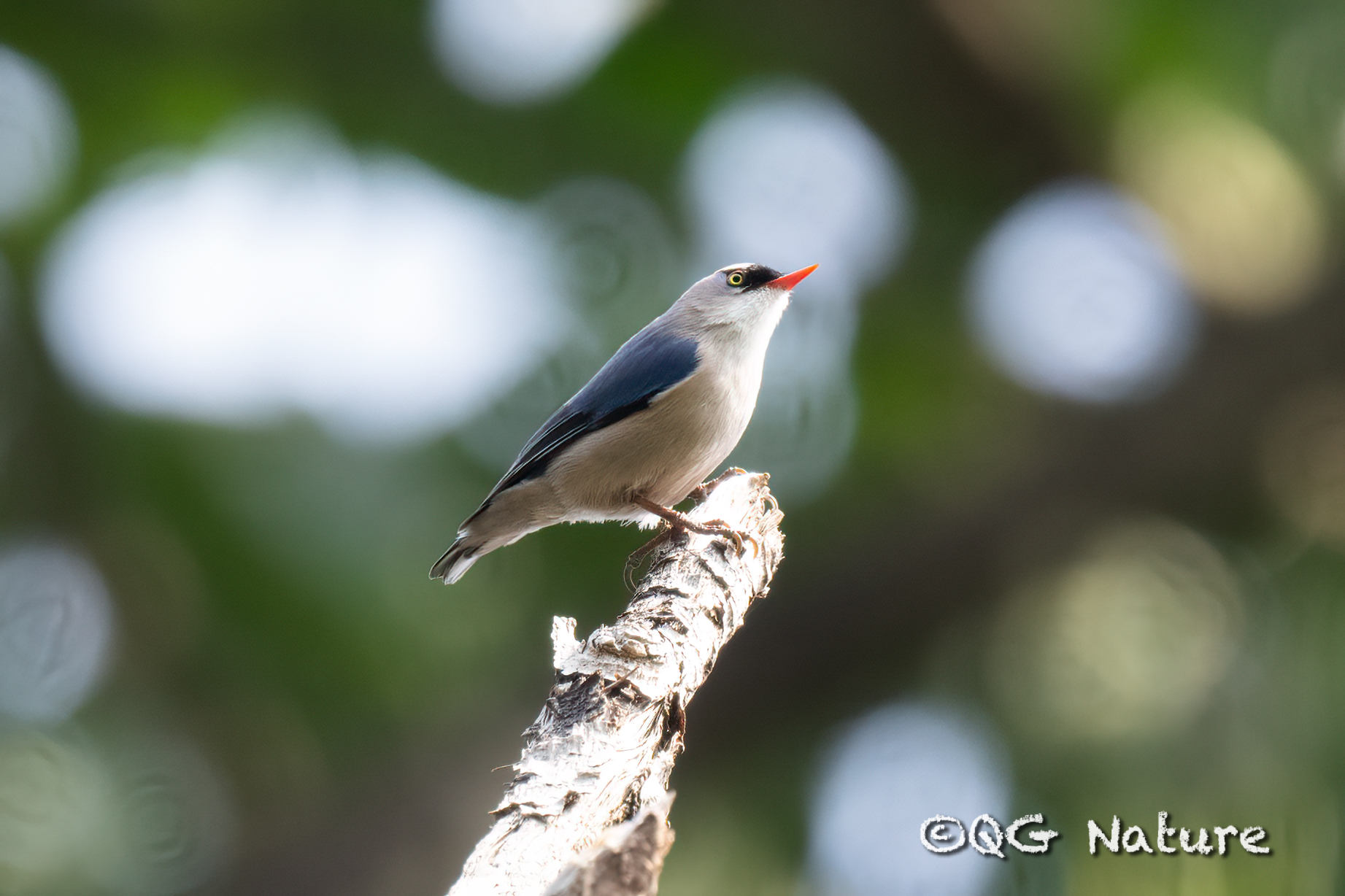
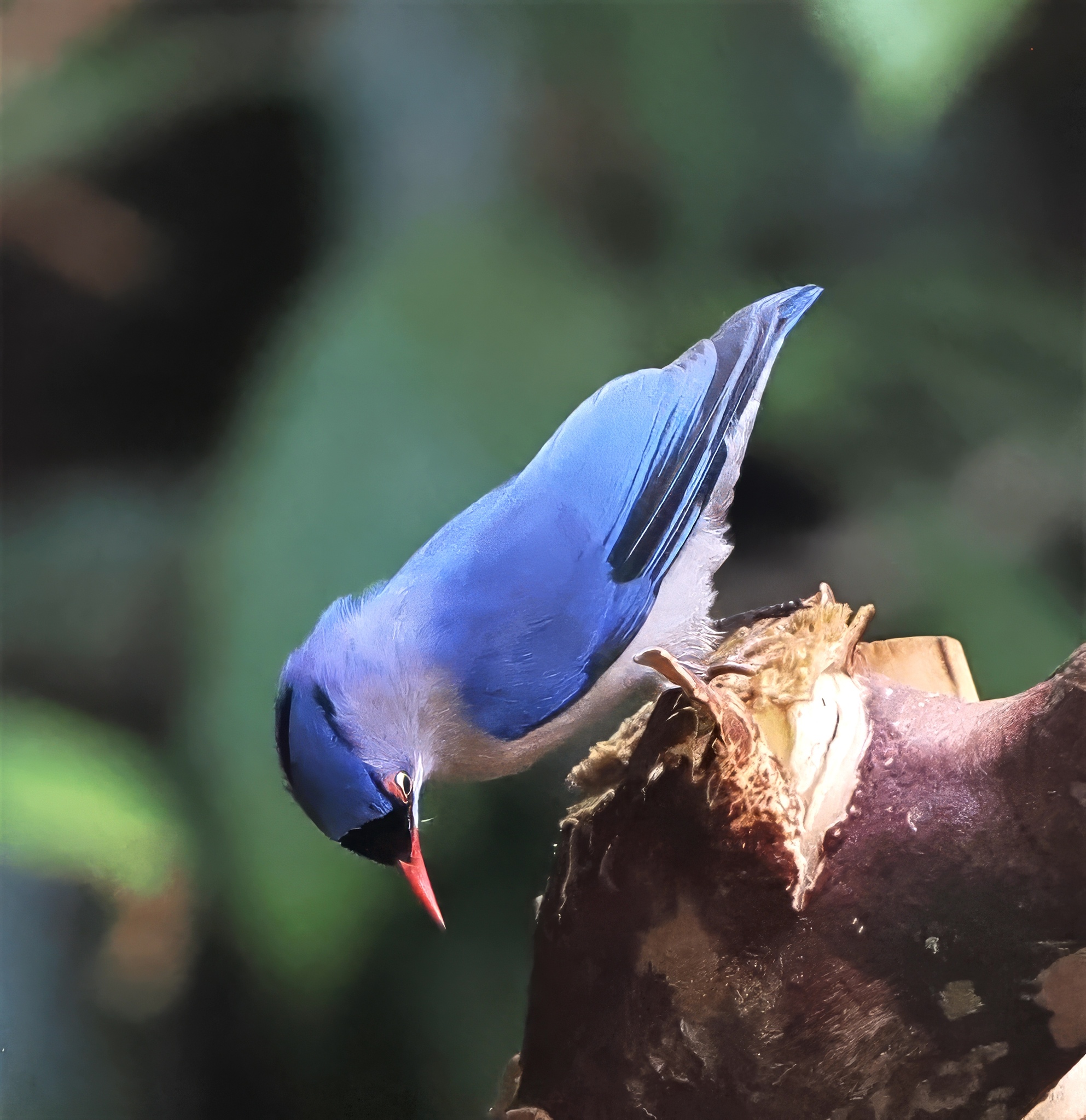
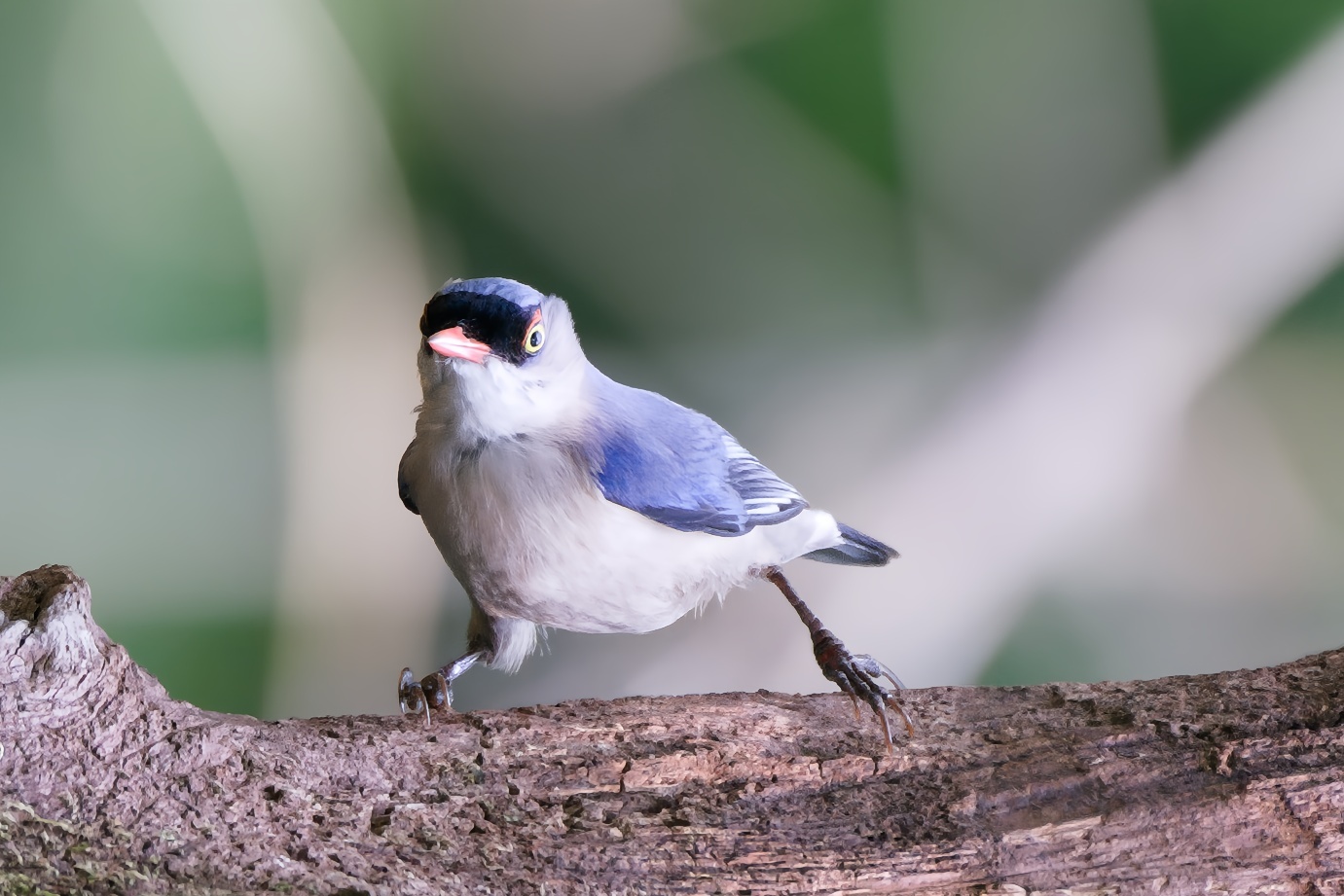
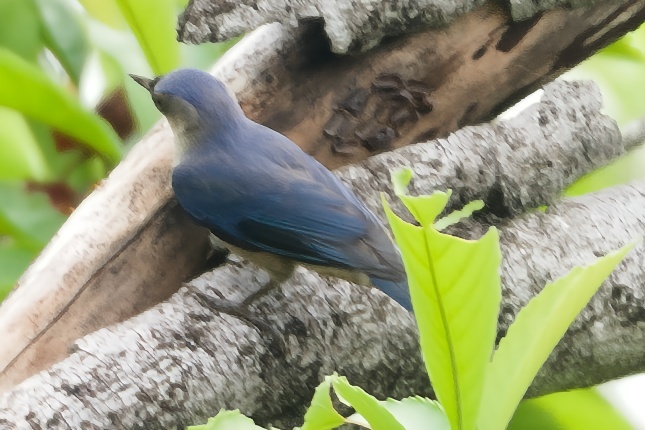
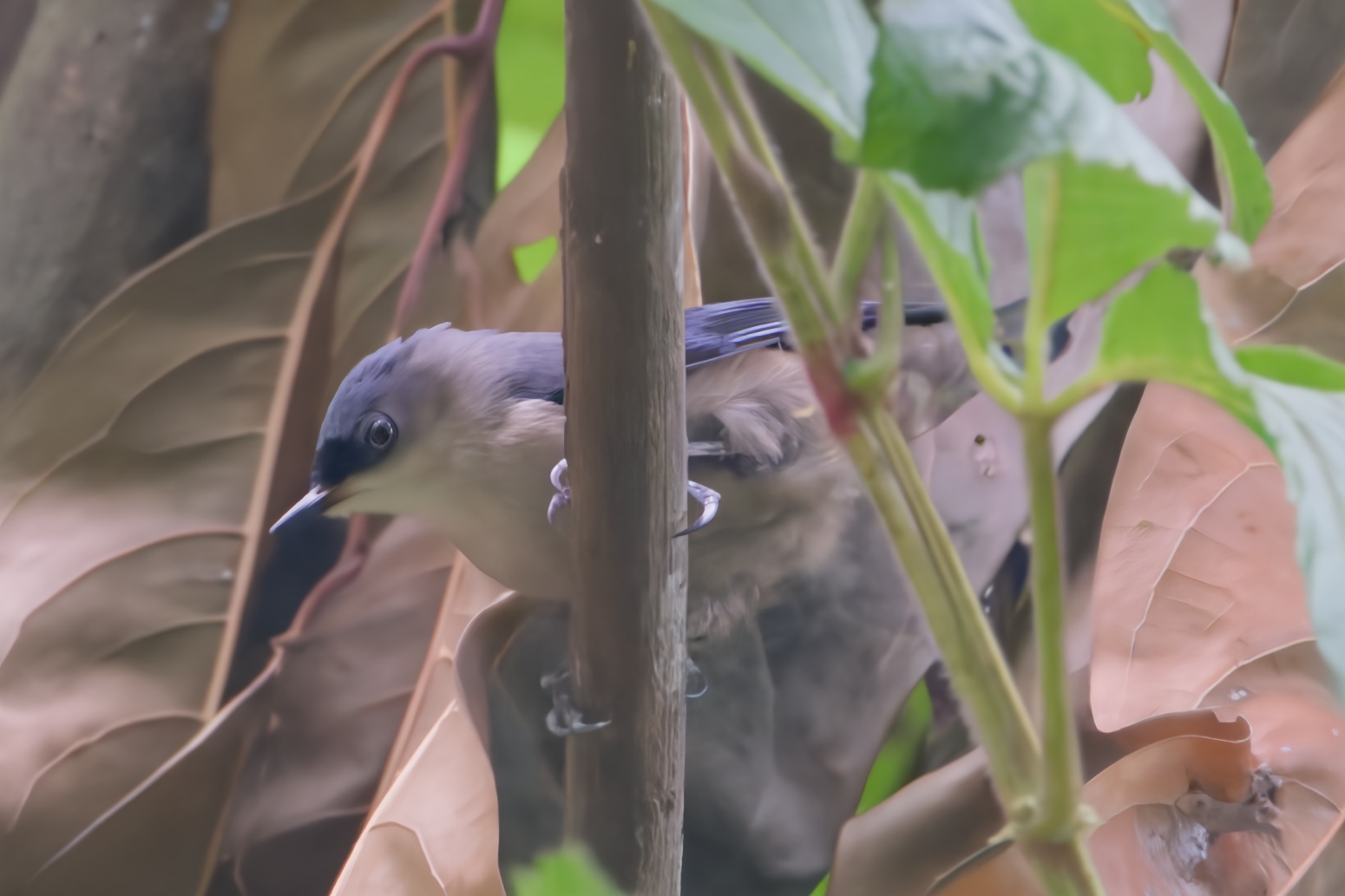
Small nuthatch, 12–13.5 cm long, with typical short tail, powerful bill, and feet. Violet-blue above, lavender cheeks, buffy grey underparts, whitish throat, and distinct pale yellow iris. Bill is orange-red to bright red; adults have a black patch on forehead and lores. Adult males possess a black superciliary stripe running above the eye toward the nape. Females lack this stripe and have warmer underpart coloration. Juveniles are duller, lacking the black frontal band, with dark beaks and dark tips to undertail coverts. Leg color varies by subspecies: yellowish, brownish, bright orange-red, or light brownish.
Identification
Distinguished by violet-blue upperparts, lavender cheeks, and bright red bill. Adult males show a black stripe above the eye; females lack this mark. Yellow eyes are distinctive. Identified in the field by rapid chipping call note, often repeated as 'sit-sit-sit'. Moves jerkily up, down, and around tree trunks and branches.
Distribution & Habitat
Range extends from Nepal, India, Sri Lanka, and Bangladesh east to southwestern China and Indonesia. Five subspecies recognized: S. f. frontalis (hill forests of southern India, Sri Lanka, Himalaya, Indochina, far south China); S. f. saturatior (Malay Peninsula, Singapore, northern Sumatra); S. f. corallipes (Borneo); S. f. palawana (Palawan, Philippines); S. f. velata (Java, southern Sumatra). Himalayan population extends from Uttarakhand to Bangladesh, Thailand, Myanmar, and possibly Hong Kong.
Behavior & Ecology
Resident breeder in deciduous, evergreen, secondary forests, and mangroves. Forages actively for insects and spiders on bark, climbing down vertical trunks using curved claws. Joins mixed feeding flocks. Breeds in tree holes or crevices lined with moss, fur, feathers, or grass, without using mud to narrow entrances. Breeding season is April–June in northern India and January–May in southern India and Sri Lanka. Lays 3–6 white eggs speckled with red. Female incubates more; both parents feed young. Complete postbreeding moult begins late June in northern India.
Culture
Lotha Naga people generally prohibit hunting this bird due to beliefs that killing it brings misfortune and death to the hunter and community. Soliga people call it 'maratotta' or 'tree hopper'.
Source: Wikipedia · CC BY-SA 3.0
Taxonomy
- Order
- Passeriformes
- Family
- Sittidae
- Genus
- Sitta
Vocalizations
Subspecies (5)
-
Sitta frontalis corallipes
Borneo including Maratua Islands
Data Sources
Species description from Wikipedia, licensed under CC BY-SA 3.0.
Bird images and sounds sourced from GBIF, contributed by citizen scientists worldwide under Creative Commons licenses.
Taxonomy data from AviList 2025.