Velvet-fronted Nuthatch
Sitta frontalis
绒额䴓
Introduction
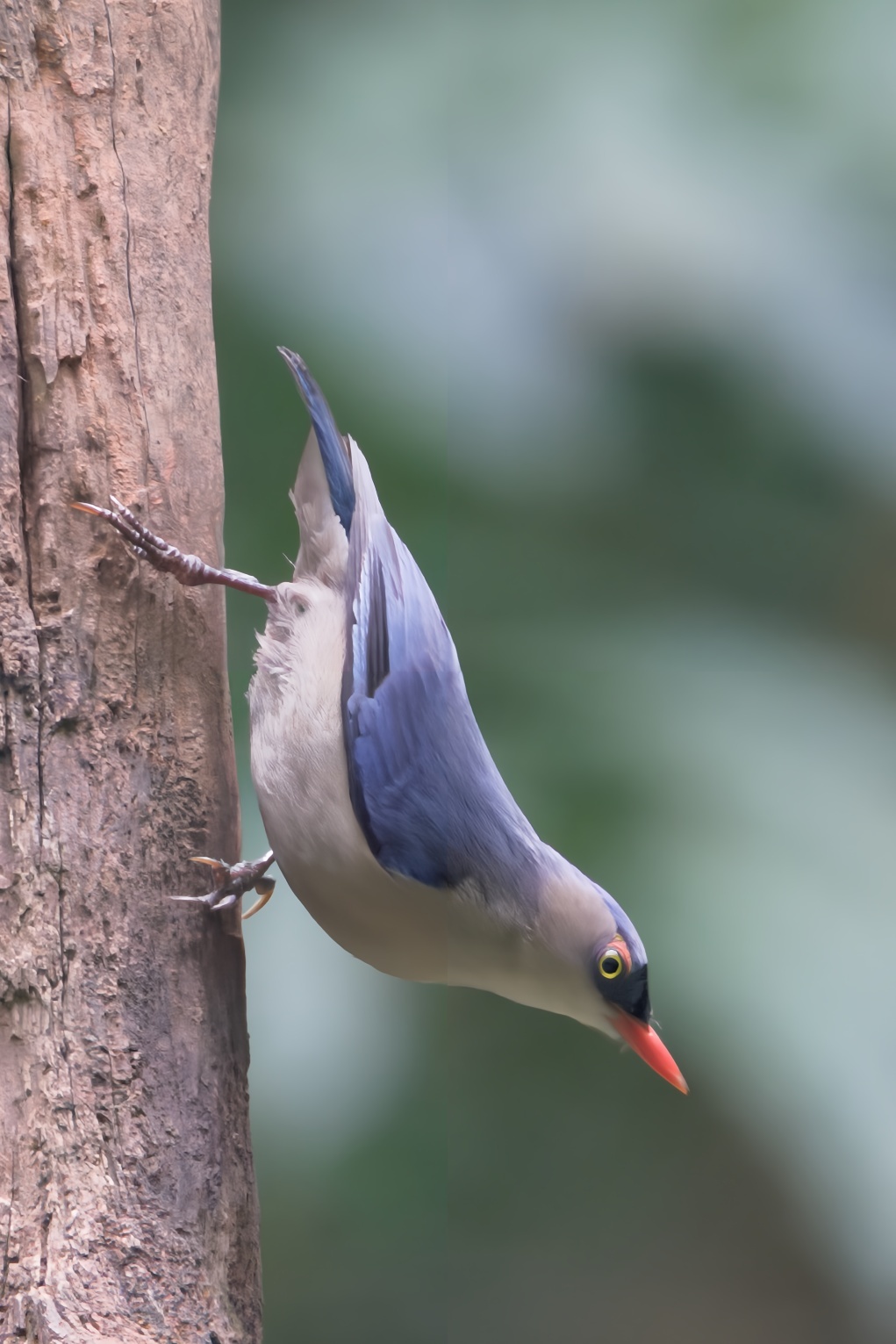
A small passerine bird in the nuthatch family Sittidae. Found across southern Asia from Nepal, India, Sri Lanka, and Bangladesh east through southwestern China to Indonesia. Inhabits all forest types from deciduous to evergreen, including mangrove forests in the Sunderbans and shade trees in coffee plantations. Distinguished by its ability to climb down tree trunks headfirst using strongly curved claws, unlike woodpeckers that only ascend. Forages in mixed-species feeding flocks, feeding on insects gleaned from bark. Exhibits rapid chipping call notes. Conservation status not assessed in the article.
Description
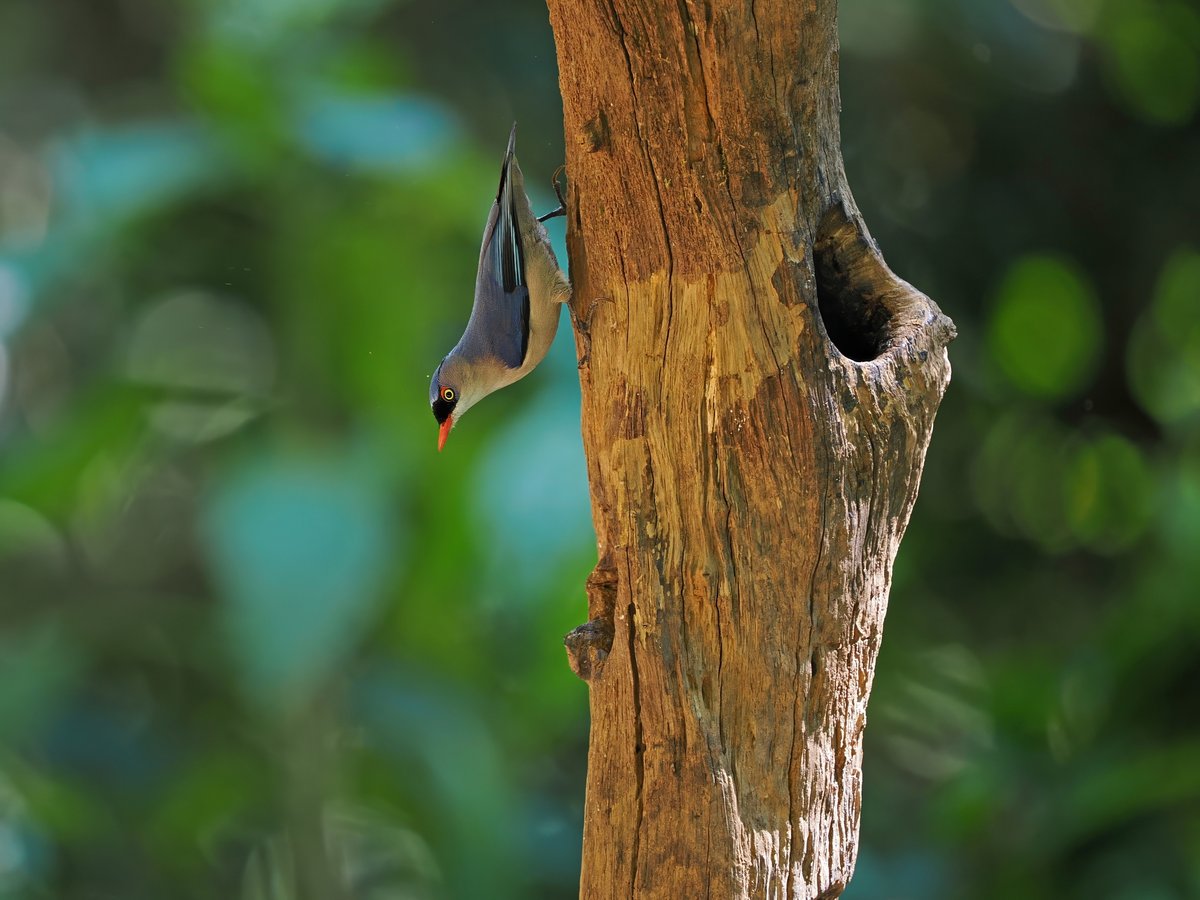
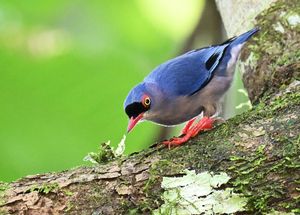
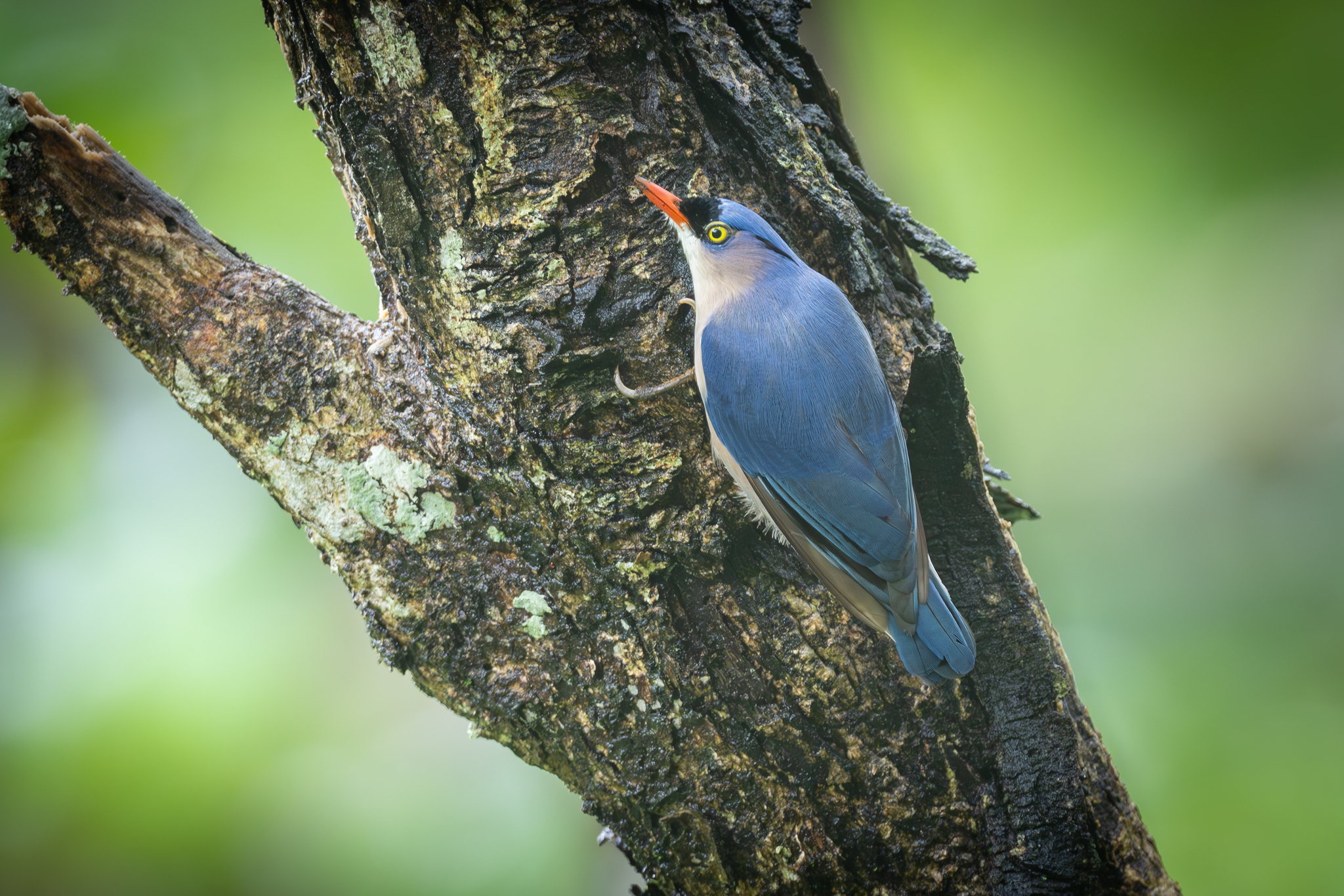
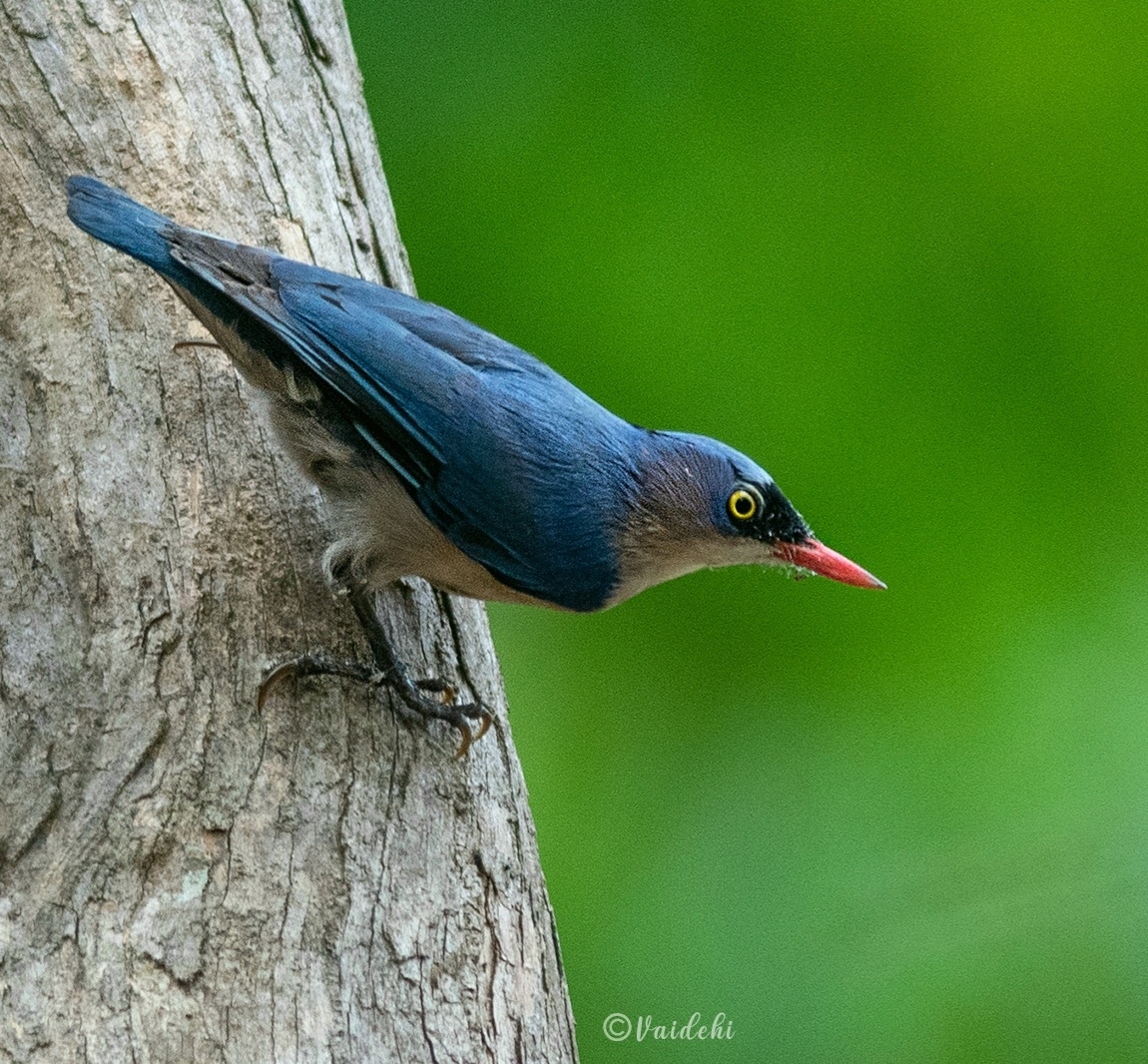
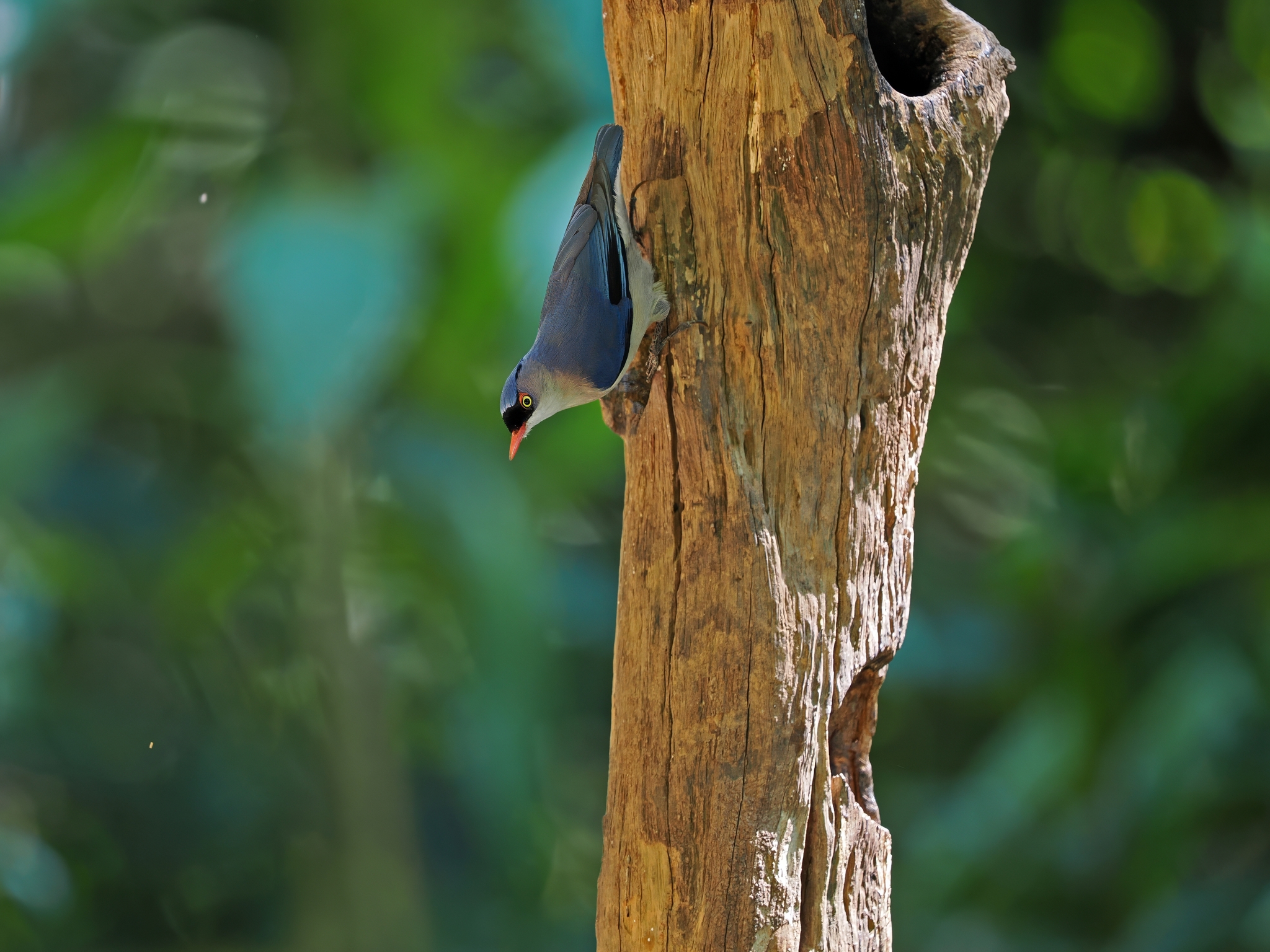
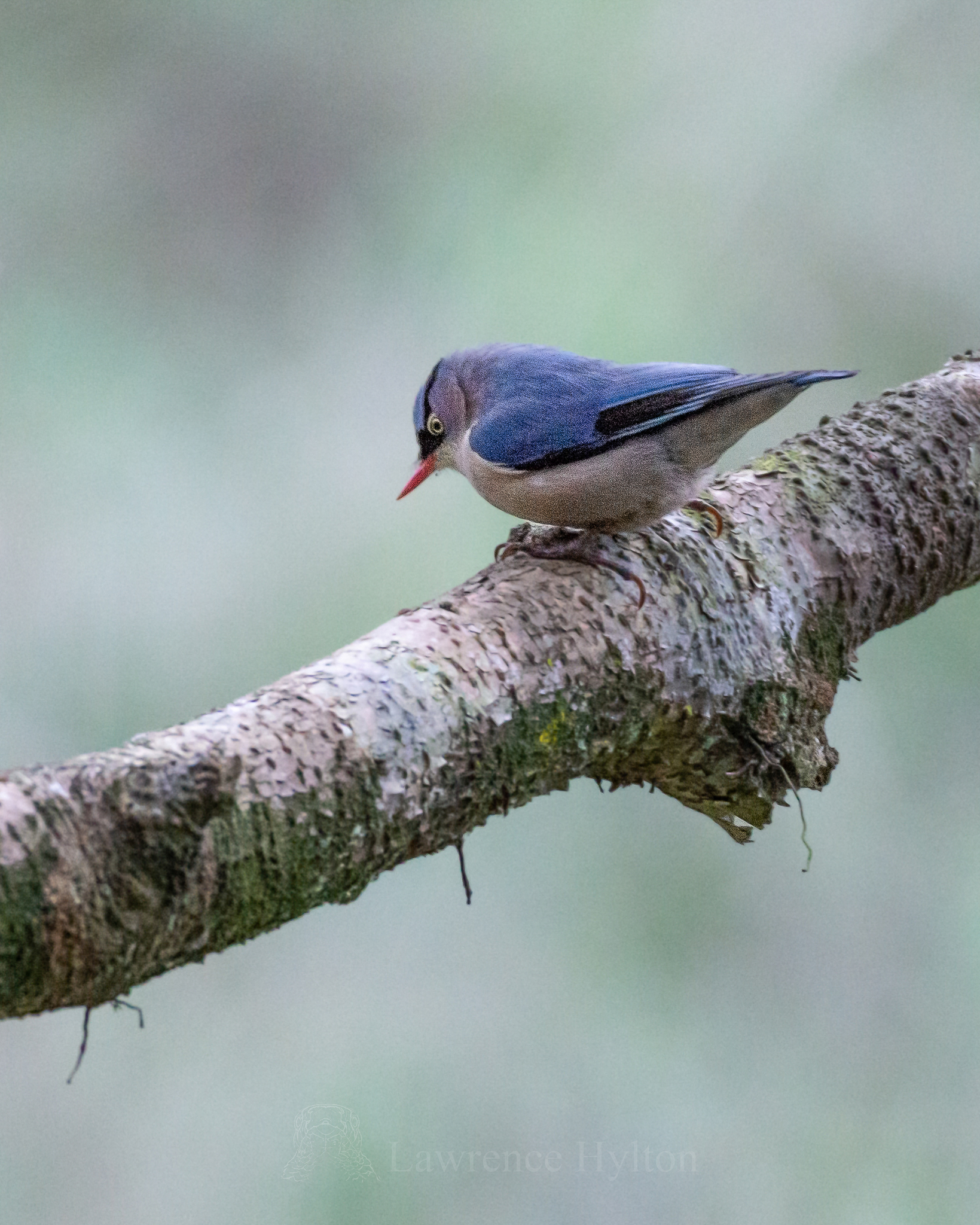
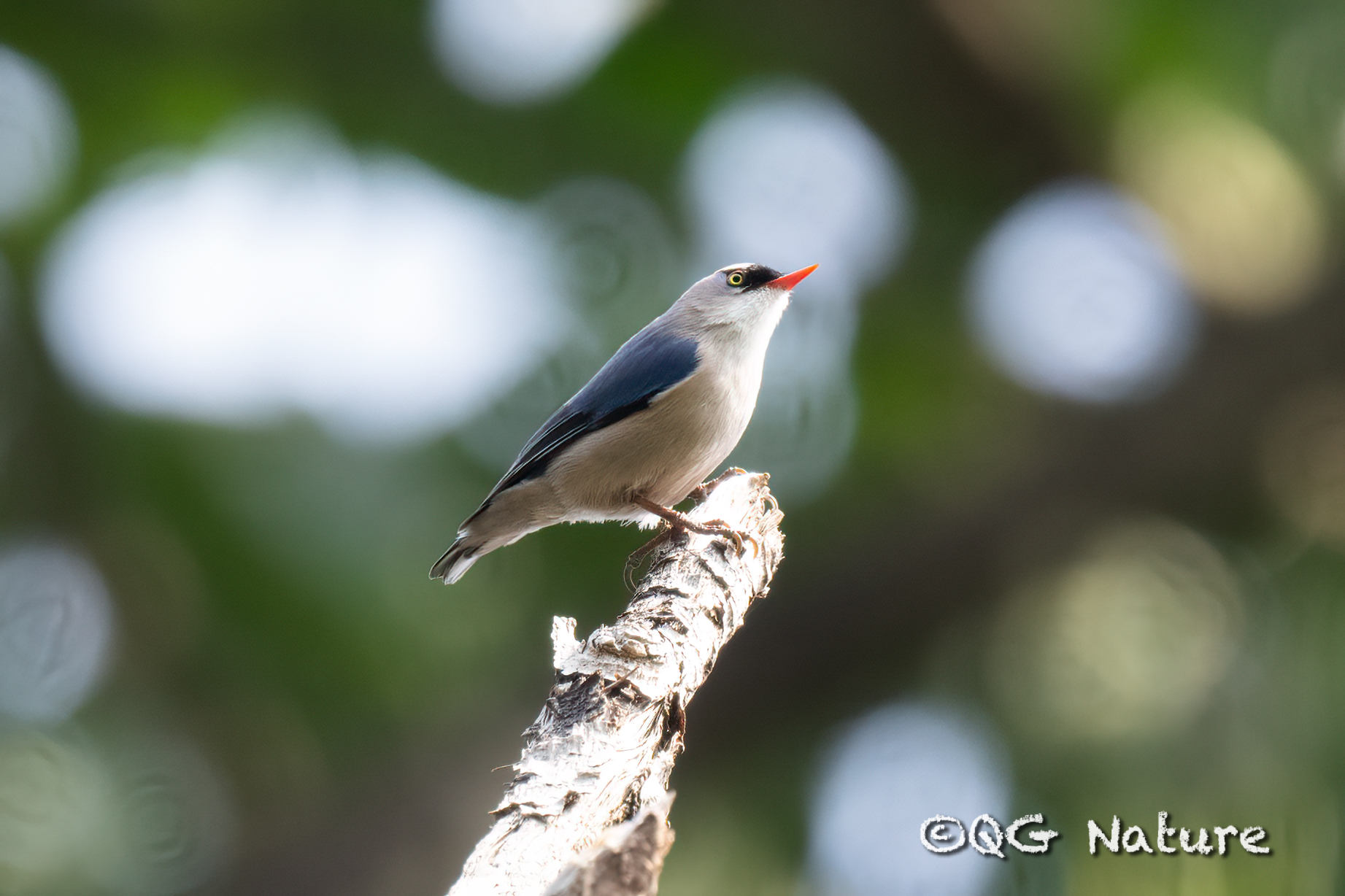
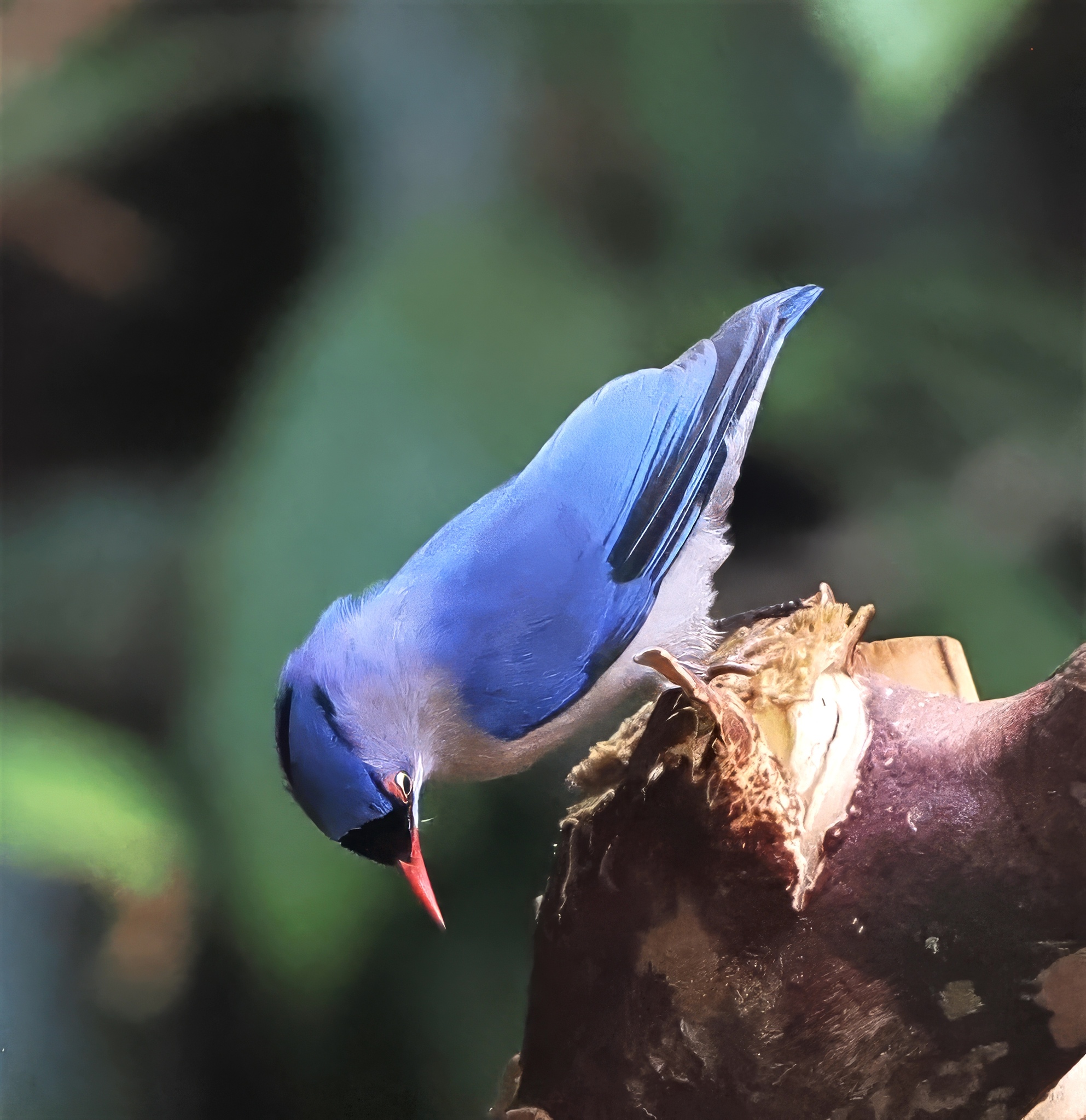
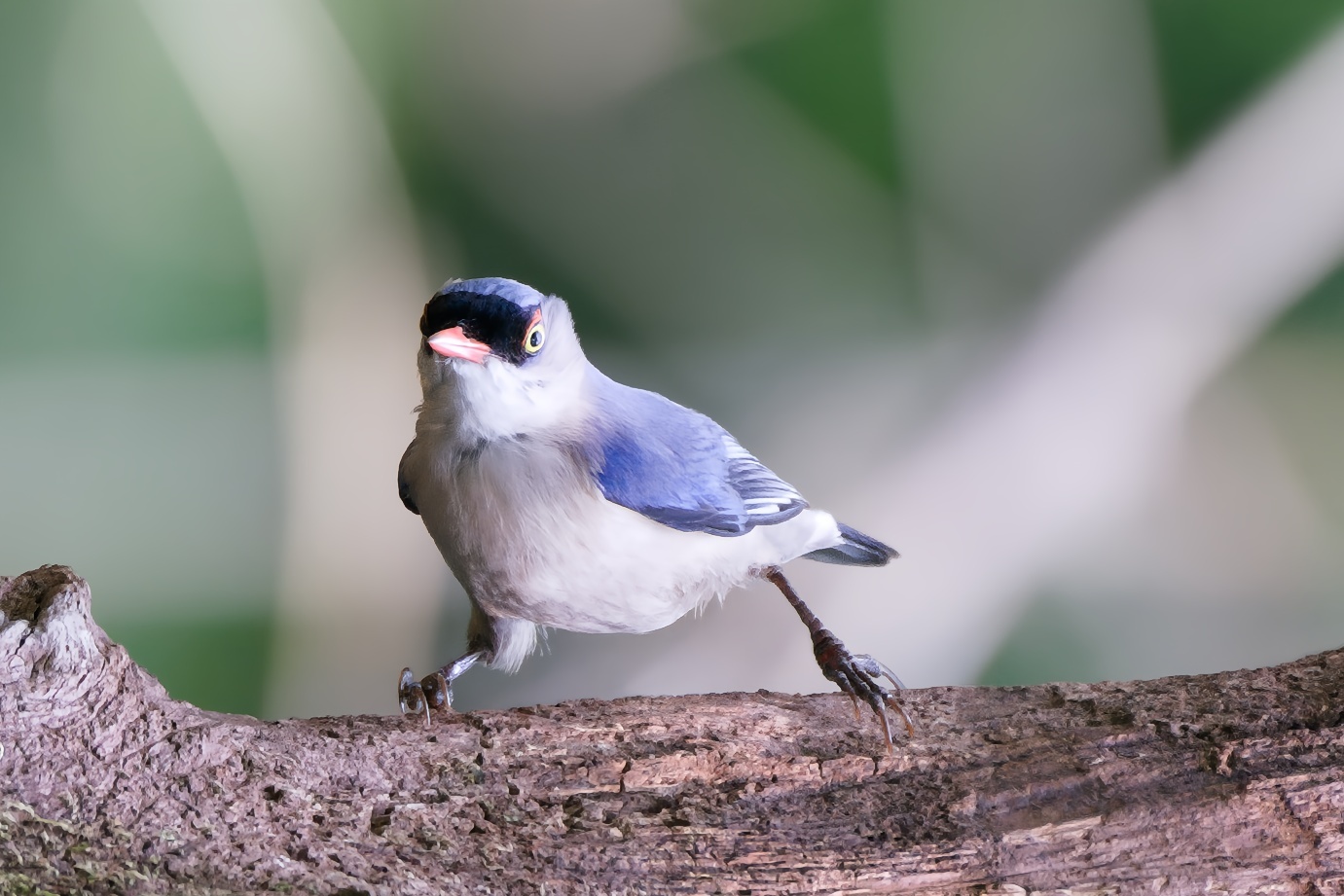
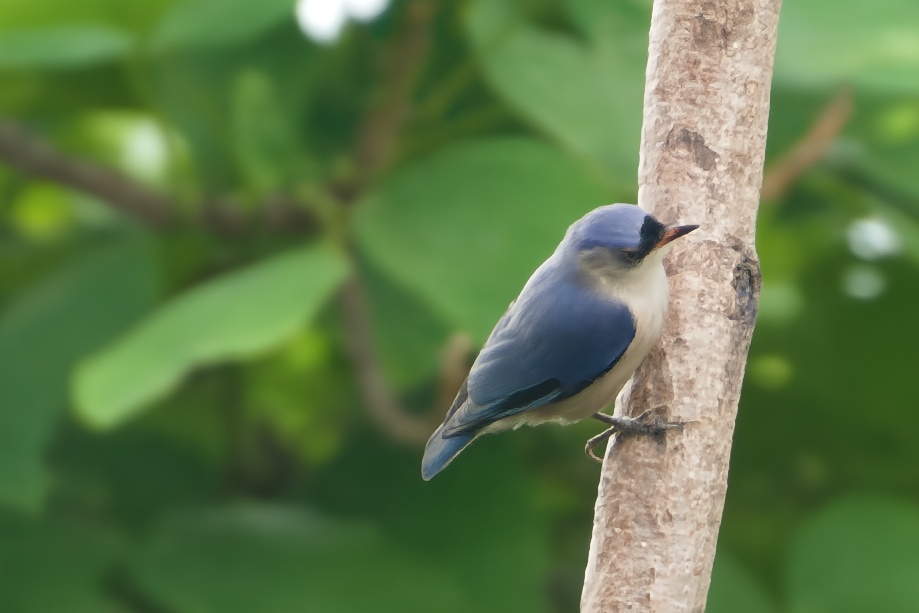
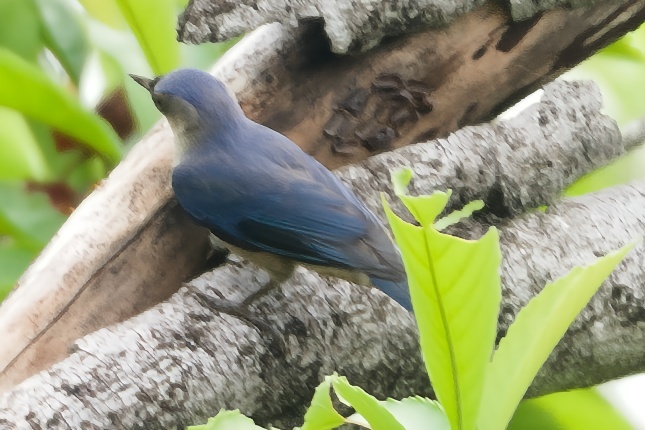
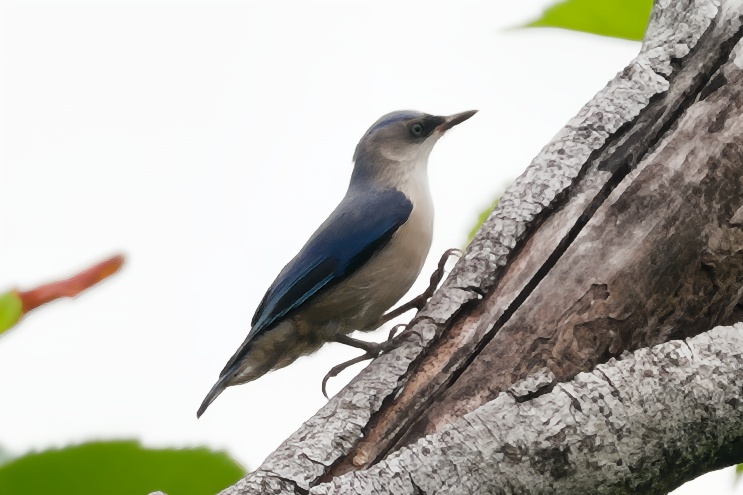
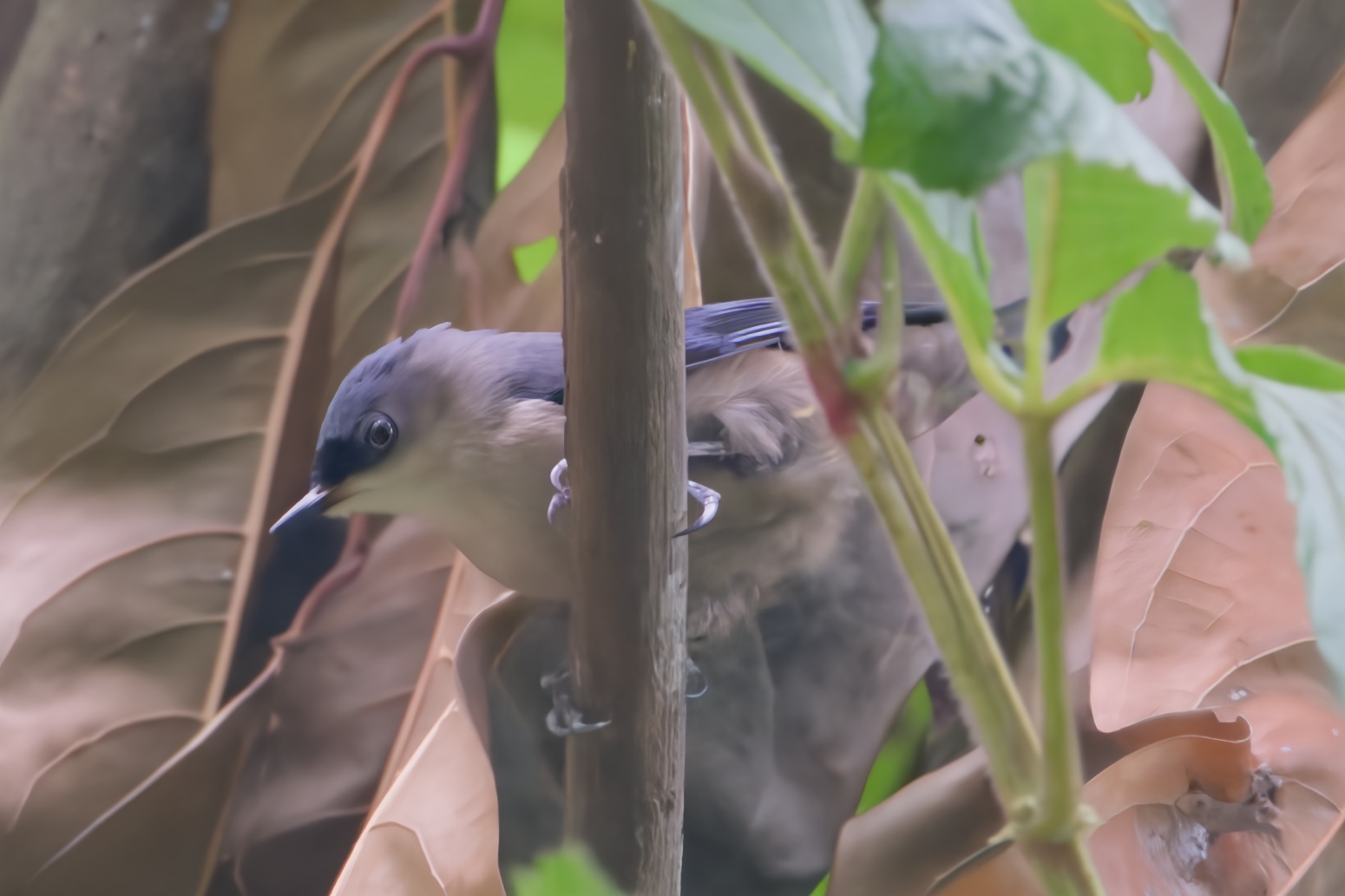
A small nuthatch measuring 12–13.5 cm in length with the typical compact nuthatch form: short tail, robust bill, and powerful feet. Upperparts are violet-blue with lavender cheeks. Underparts are buffy grey. The iris is distinctly pale yellow. The bill is orange-red to bright red. Adults have a black patch on the forehead and lores, more prominent in older individuals. Leg coloration varies by subspecies from yellowish to brownish or orange-red. Juveniles are duller with darker beaks and dark tips to the undertail coverts.
Identification
Adult males are distinguished by a black superciliary stripe running above the eye and extending over the head toward the nape. Females lack this superciliary stripe and show warmer-toned underparts. Juveniles resemble dull adults but lack the black frontal band. The yellow iris and red bill help separate this species from similar nuthatches in its range.
Distribution & Habitat
Resident across southern Asia including the Himalaya, Indian subcontinent, Sri Lanka, Southeast Asia, southern China, and Indonesia. Occurs throughout the Malay Peninsula, Borneo, Java, Sumatra, and the Philippines (Palawan and Balabac). Inhabits forested areas from lowland to hill forests. The Himalayan population extends from Uttarakhand east through Bangladesh, Thailand, Myanmar, and the Isthmus of Kra. May occur in Hong Kong as an introduced species.
Behavior & Ecology
Forages actively on tree trunks and branches, moving jerkily up, down, and around surfaces. Feeds on insects and spiders gleaned from bark. Often joins mixed-species foraging flocks with other passerines; disturbed insects may be taken by racket-tailed drongos. Vocalization is a repeated, loud chipping call described as sit-sit-sit. Breeding occurs April to June in northern India, January to May in the south. Nests in tree cavities lined with moss, fur, and feathers. Lays 3–6 white eggs speckled with red. Both parents share incubation and feeding duties, though female contributes more time to incubation. Unlike other nuthatches, does not use mud to narrow cavity entrances.
Conservation
Conservation status not provided in the article. No population trends or specific threats are documented.
Culture
Known to forest-dwelling tribes in its range. The Lotha Naga people of Nagaland traditionally hunt many birds for food but generally avoid killing this species. They believe killing a velvet-fronted nuthatch brings misfortune, as flock members allegedly stay nearby after a death, and the hunter will soon see people around him die in rapid succession. The Soliga people call the bird maratotta, meaning 'tree hopper.'
Source: Wikipedia · CC BY-SA 3.0
Taxonomy
- Order
- Passeriformes
- Family
- Sittidae
- Genus
- Sitta
- eBird Code
- vefnut1
Vocalizations
Subspecies (5)
-
Sitta frontalis corallipes
Borneo including Maratua Islands
-
Sitta frontalis frontalis
India to peninsular Thailand to Sumatra, Lingga Archipelago, and Bangka Island
-
Sitta frontalis palawana
southern Philippines (Palawan and Balabac)
-
Sitta frontalis saturatior
southern peninsular Thailand through the Thai-Malay Peninsula to Sumatra and Simeulue (off western Sumatra)
-
Sitta frontalis velata
Java
Data Sources
Species description from Wikipedia, licensed under CC BY-SA 3.0.
Bird images and sounds sourced from GBIF, contributed by citizen scientists worldwide under Creative Commons licenses.
Taxonomy data from AviList 2025.