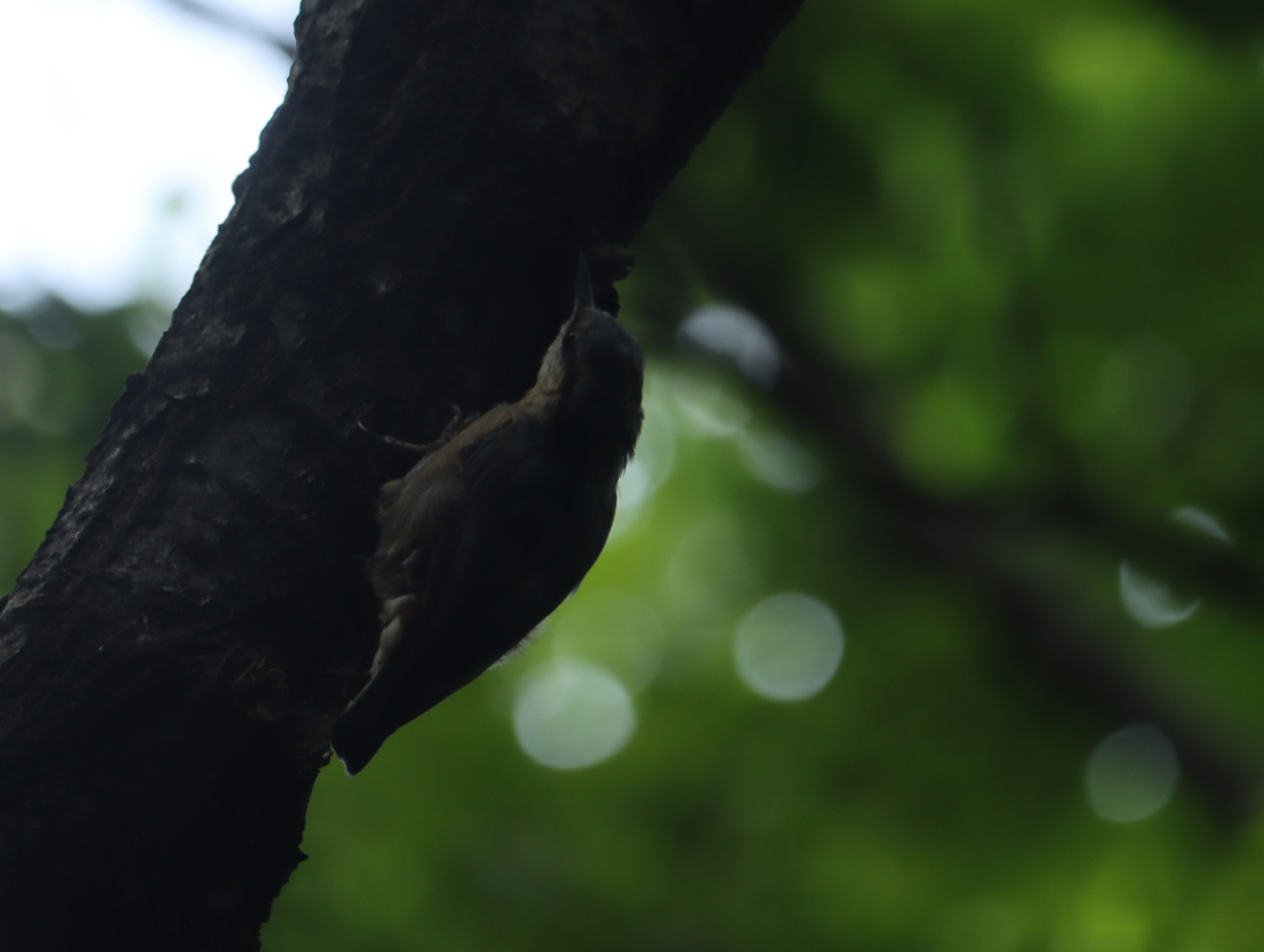
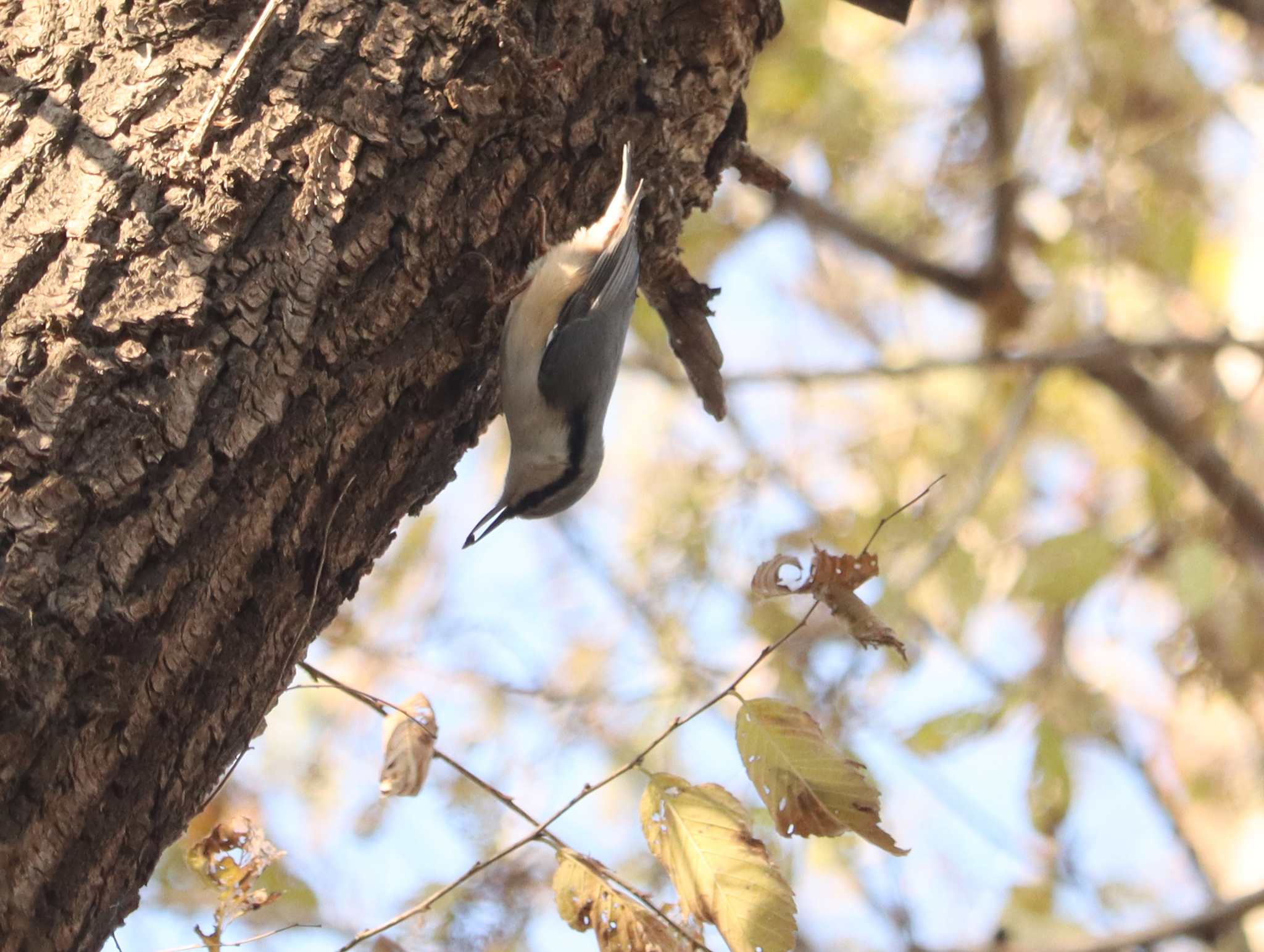
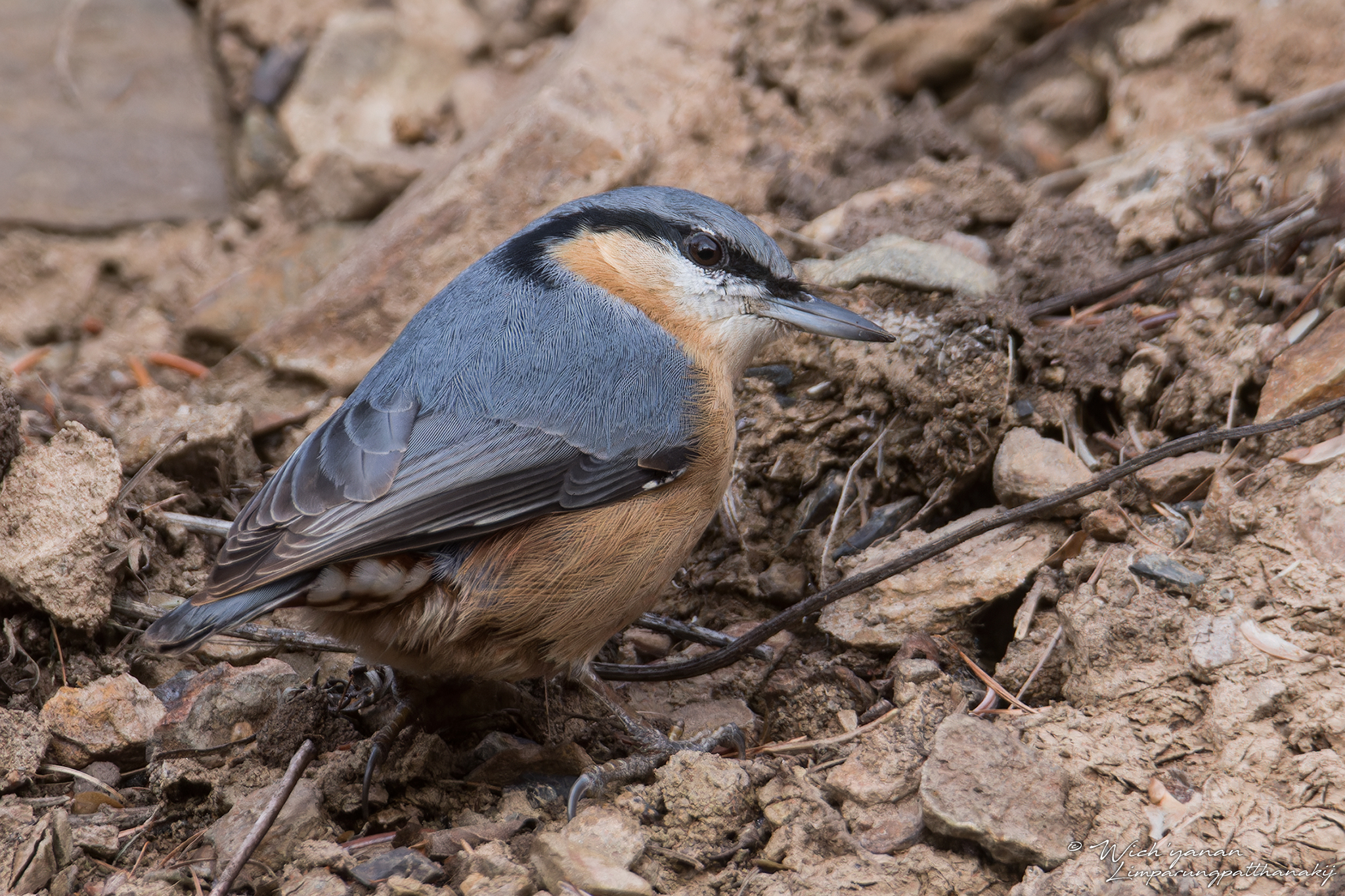
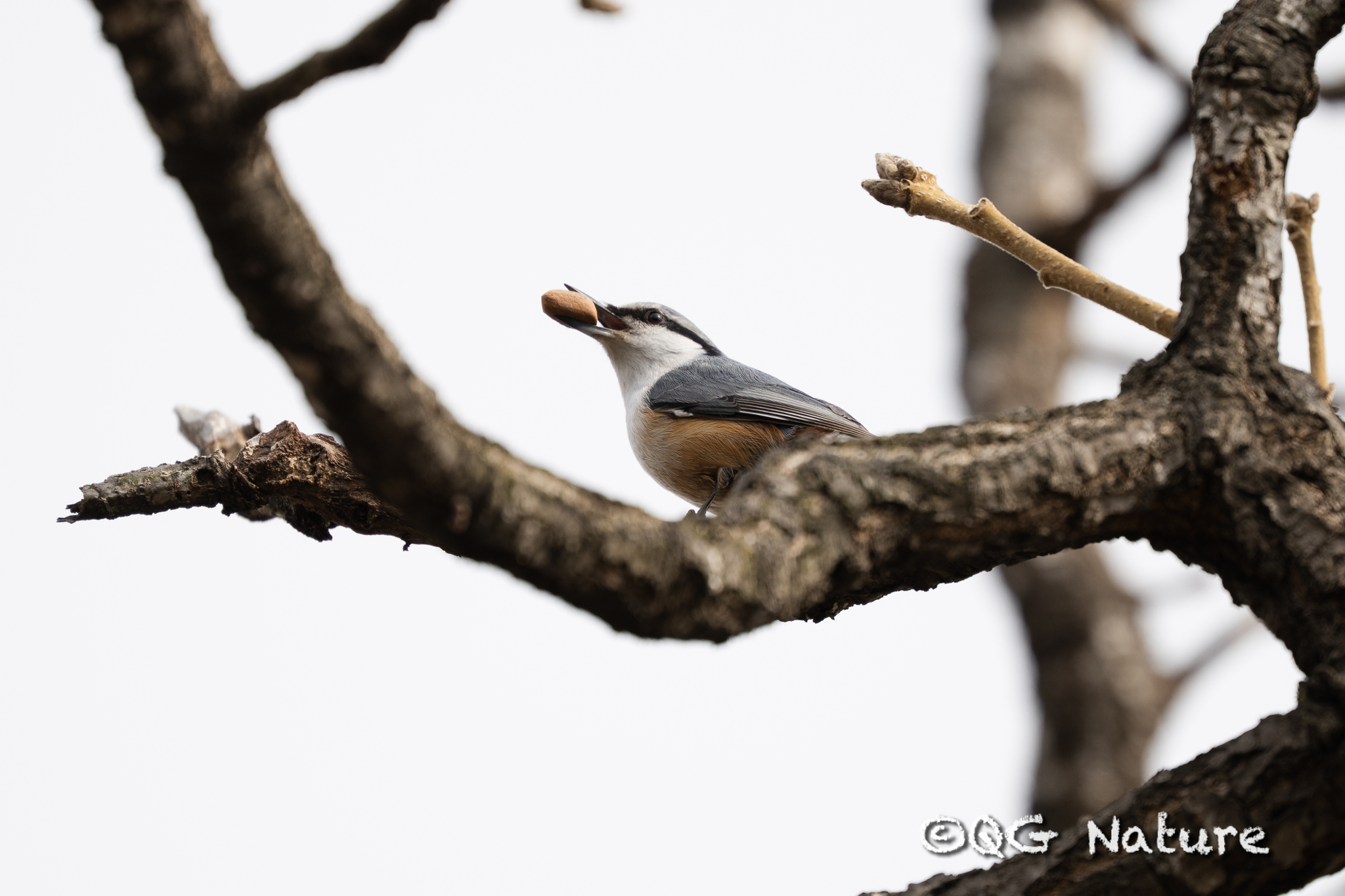
Eurasian Nuthatch
Sitta europaea
普通䴓
Introduction
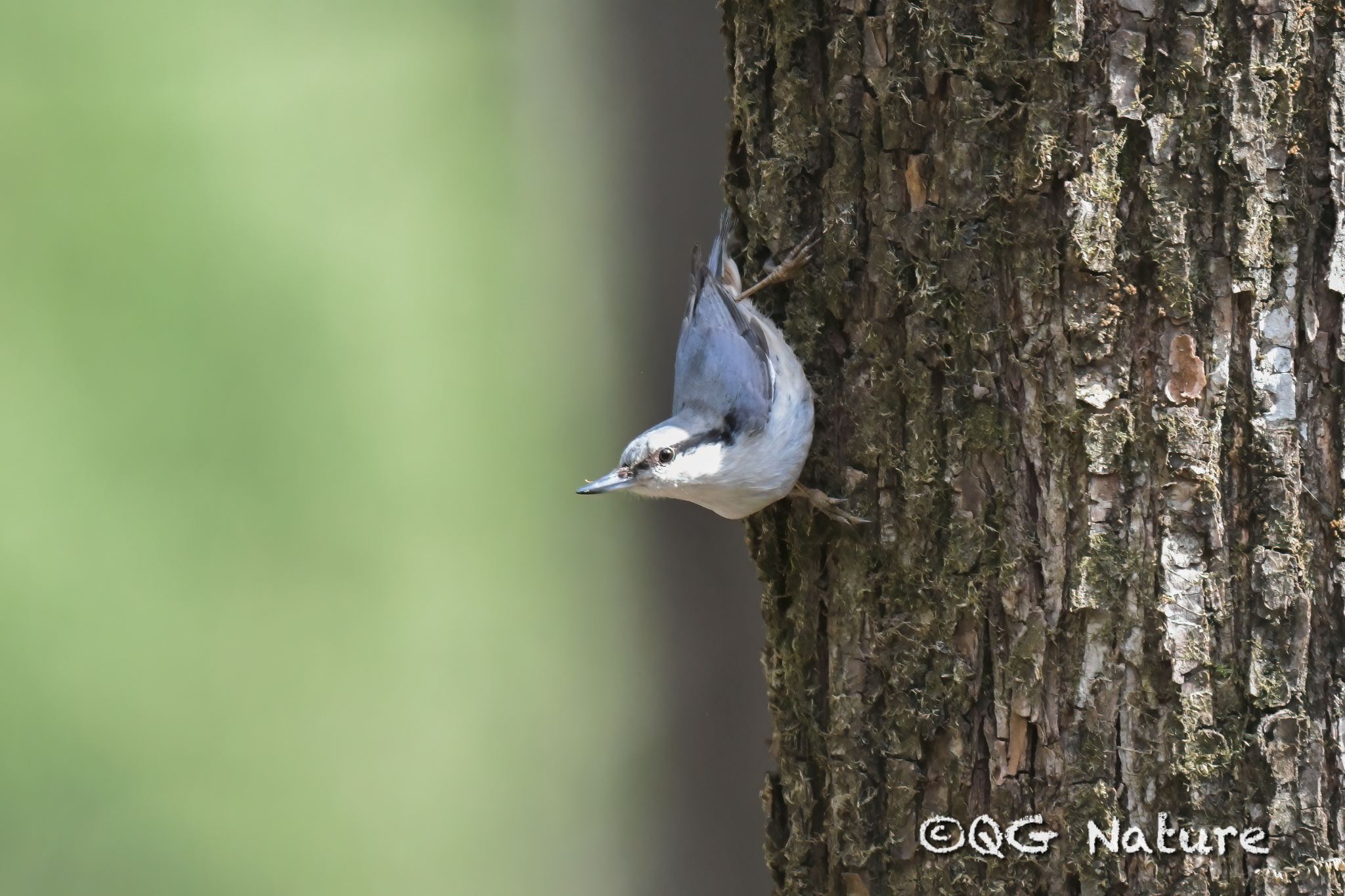
The Eurasian nuthatch (Sitta europaea) is a small passerine bird in the family Sittidae. It breeds across temperate Eurasia from Britain to Japan, between the 16-20°C July isotherms, north to about 64°N in western Russia and 69°N in Siberia. Its preferred habitat is mature deciduous or mixed woodland with large, old trees, particularly oak. This species is distinctive for its ability to descend trees headfirst while foraging, and for its habit of plastering nest cavity entrances with mud to reduce their size. It is an inveterate hoarder, storing food year-round in bark crevices. The International Union for Conservation of Nature classifies it as least concern due to its large population and extensive breeding range.
Description
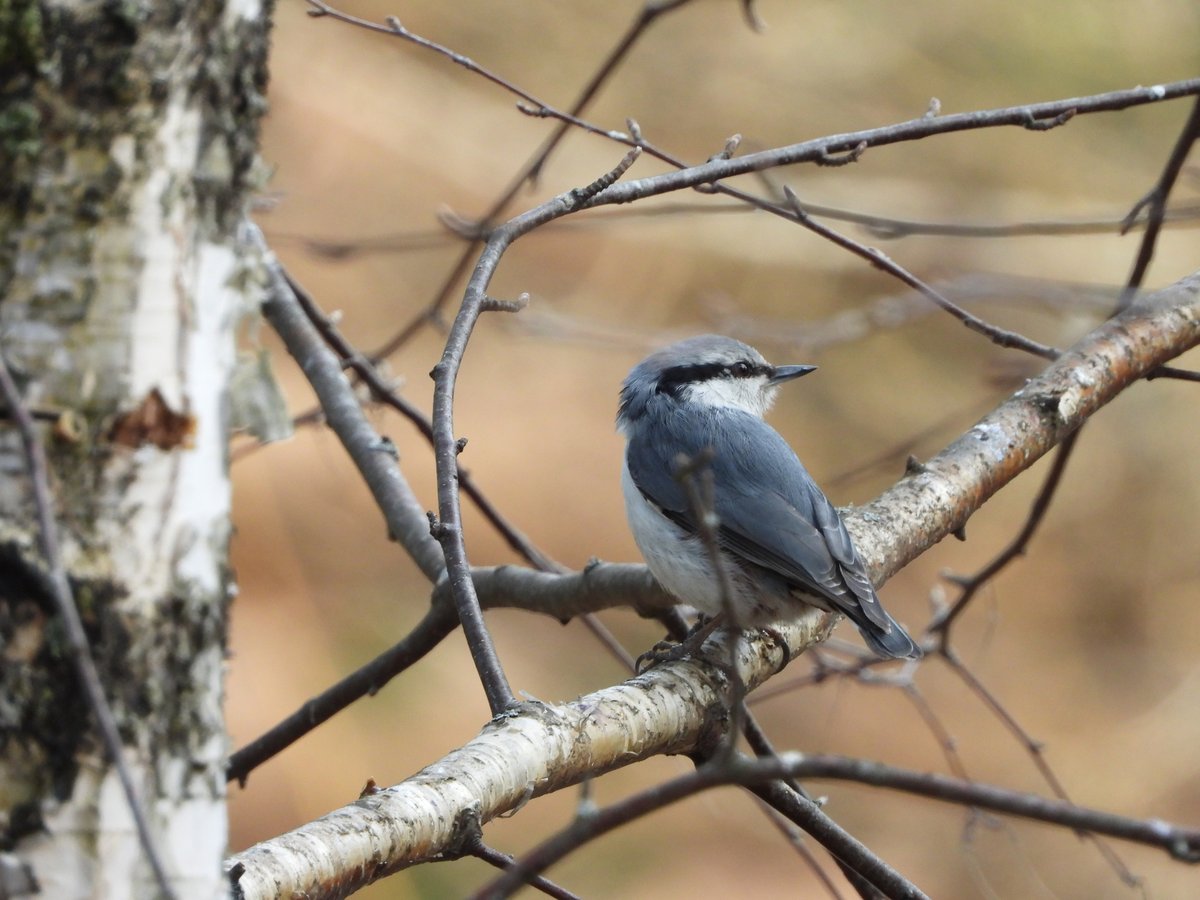
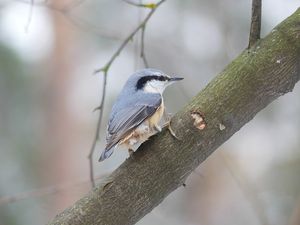
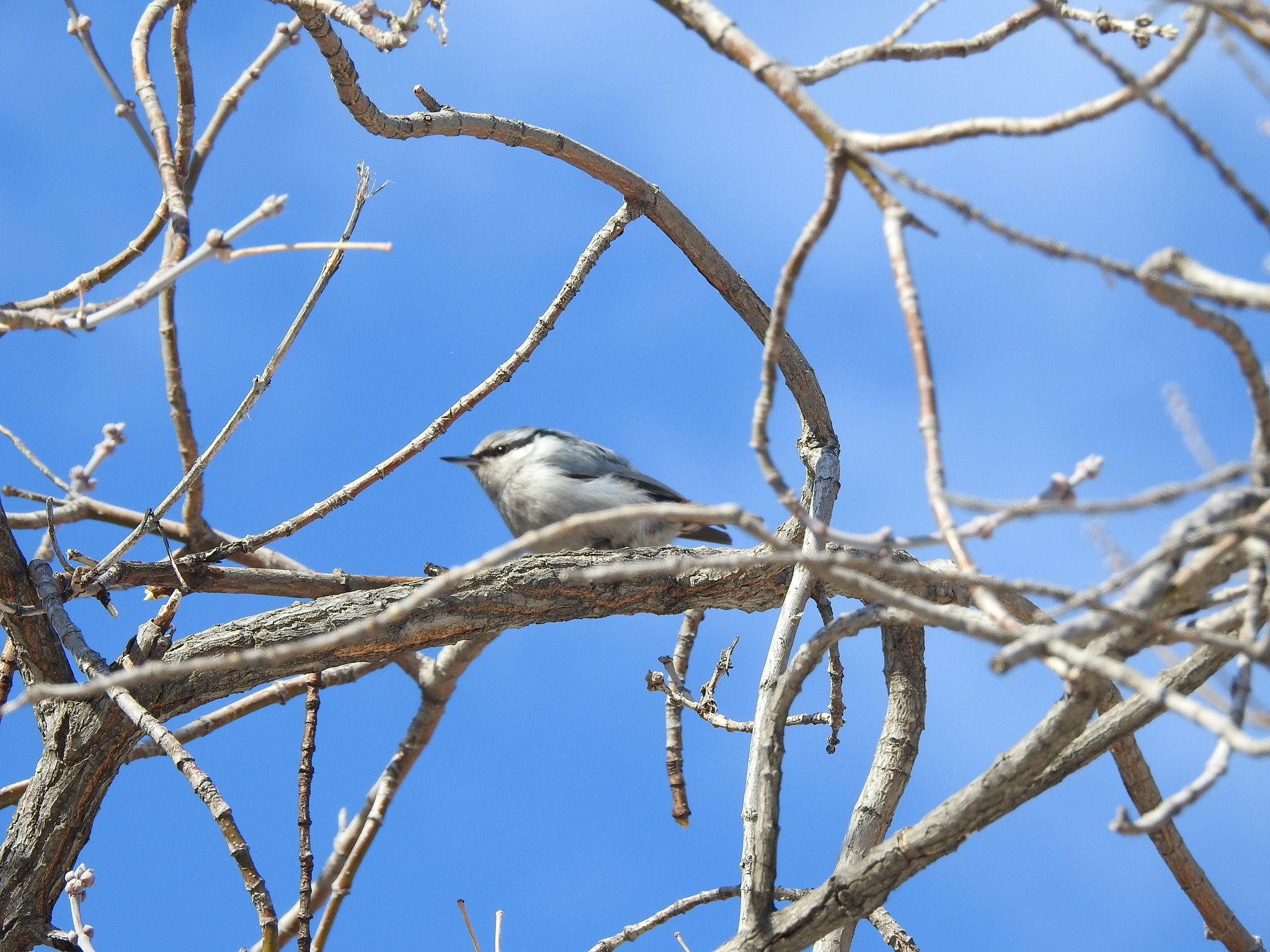
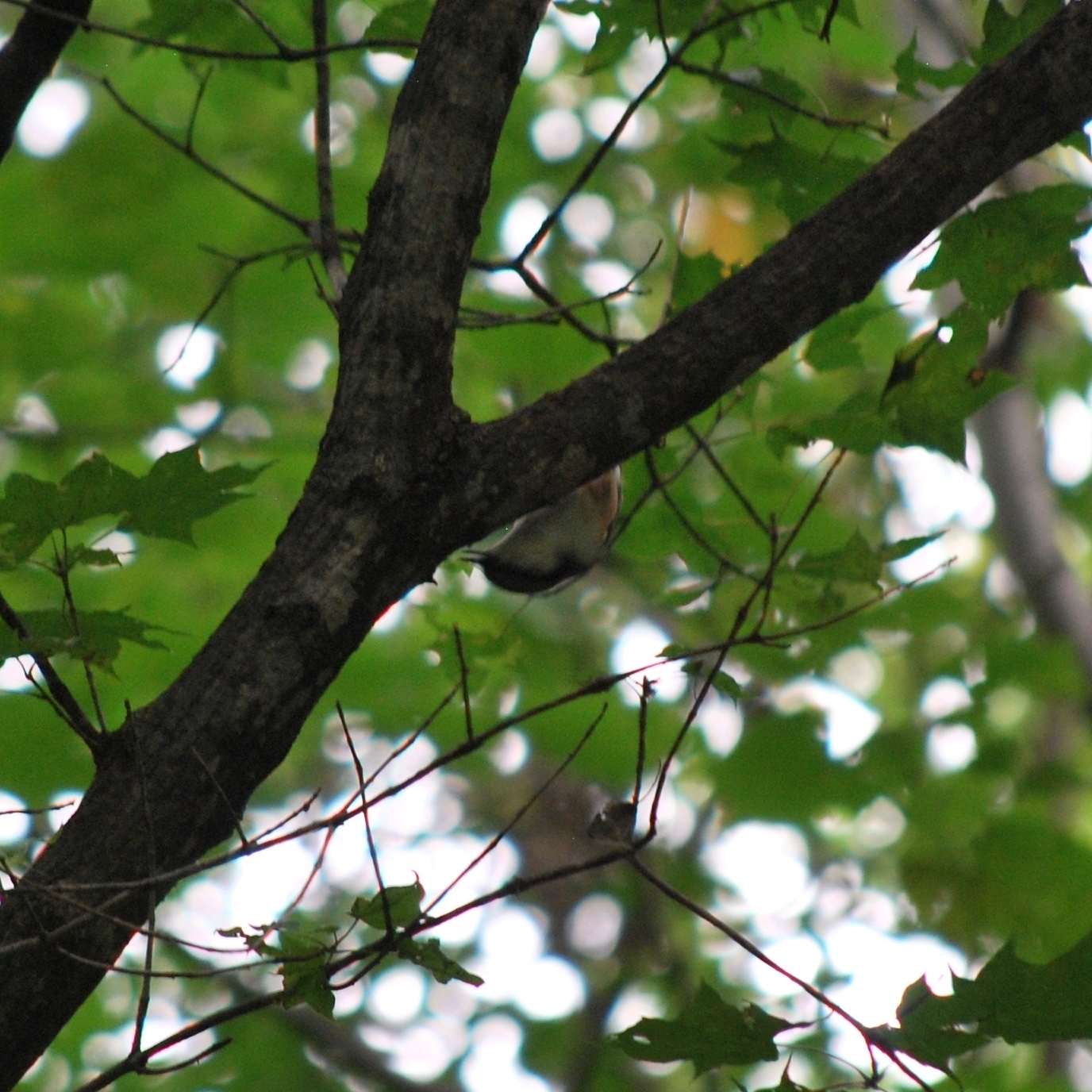
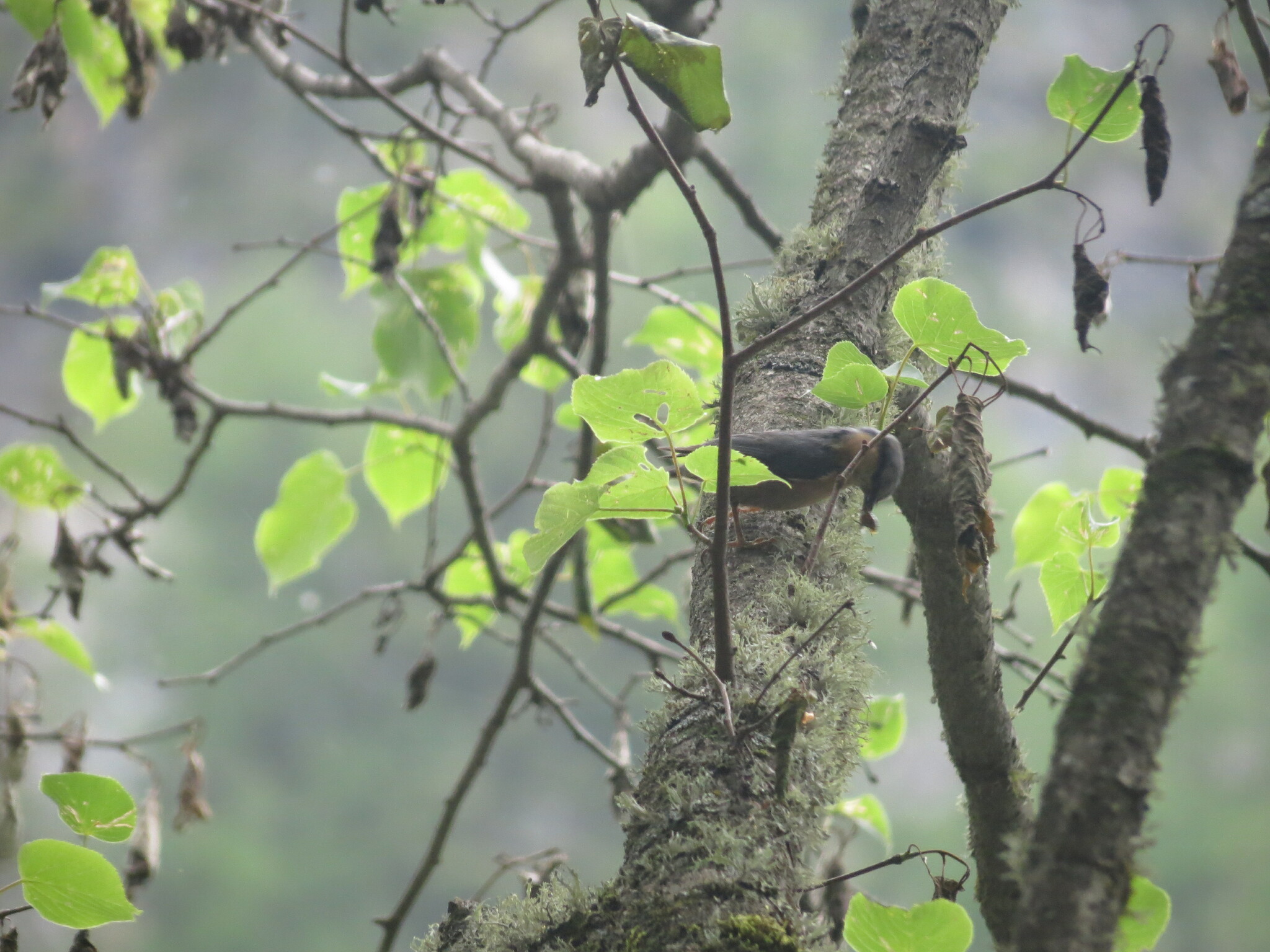
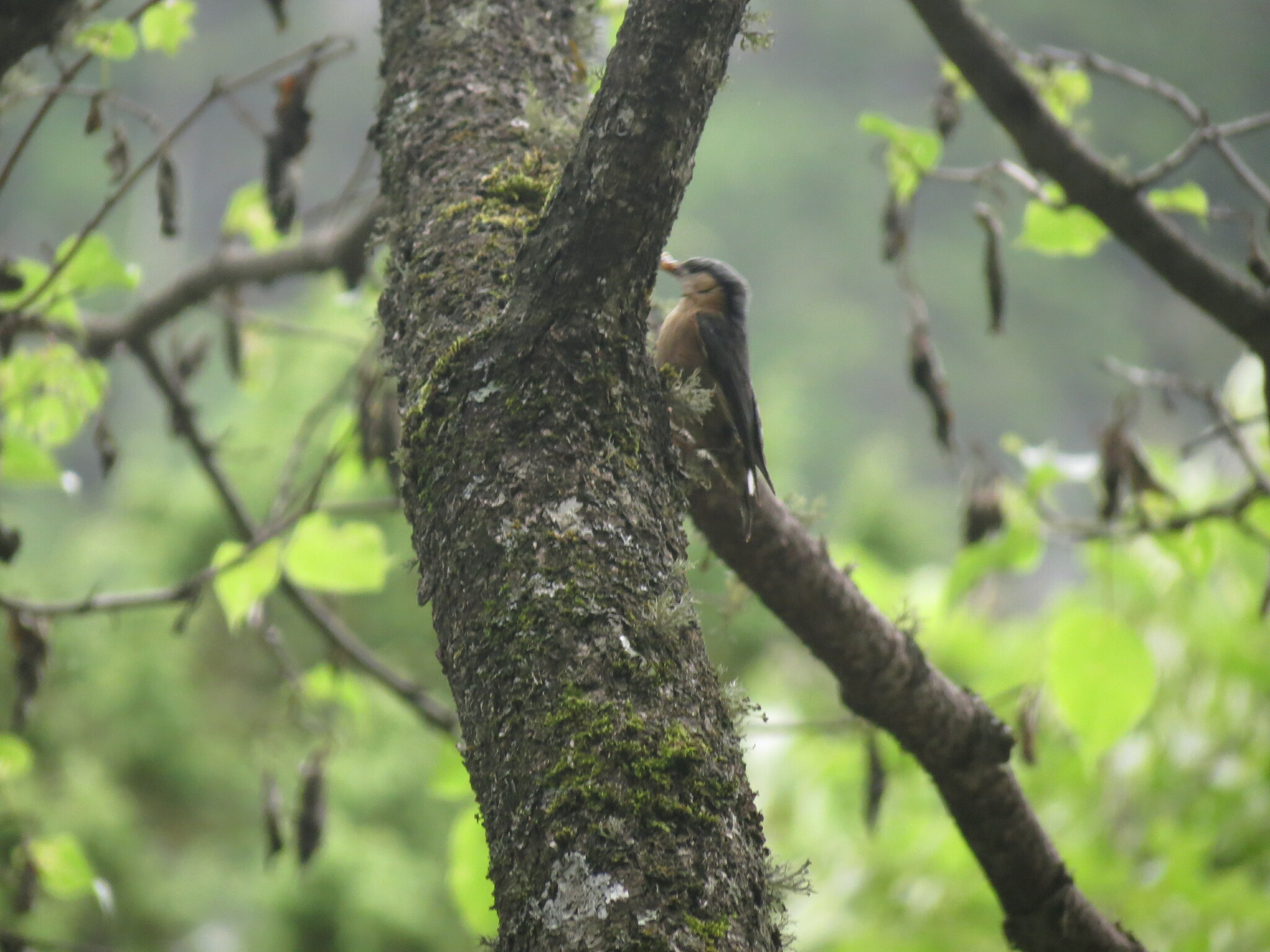
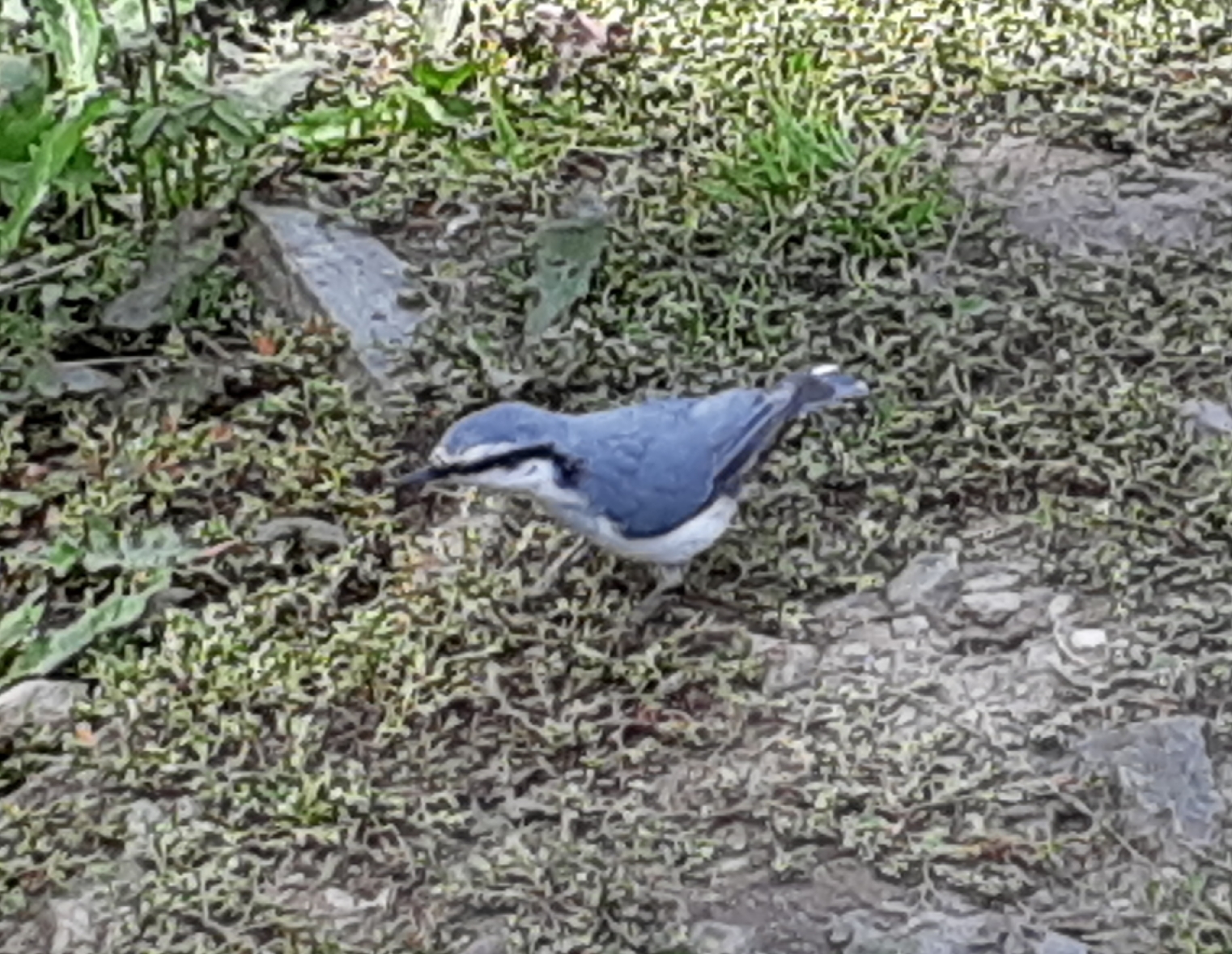
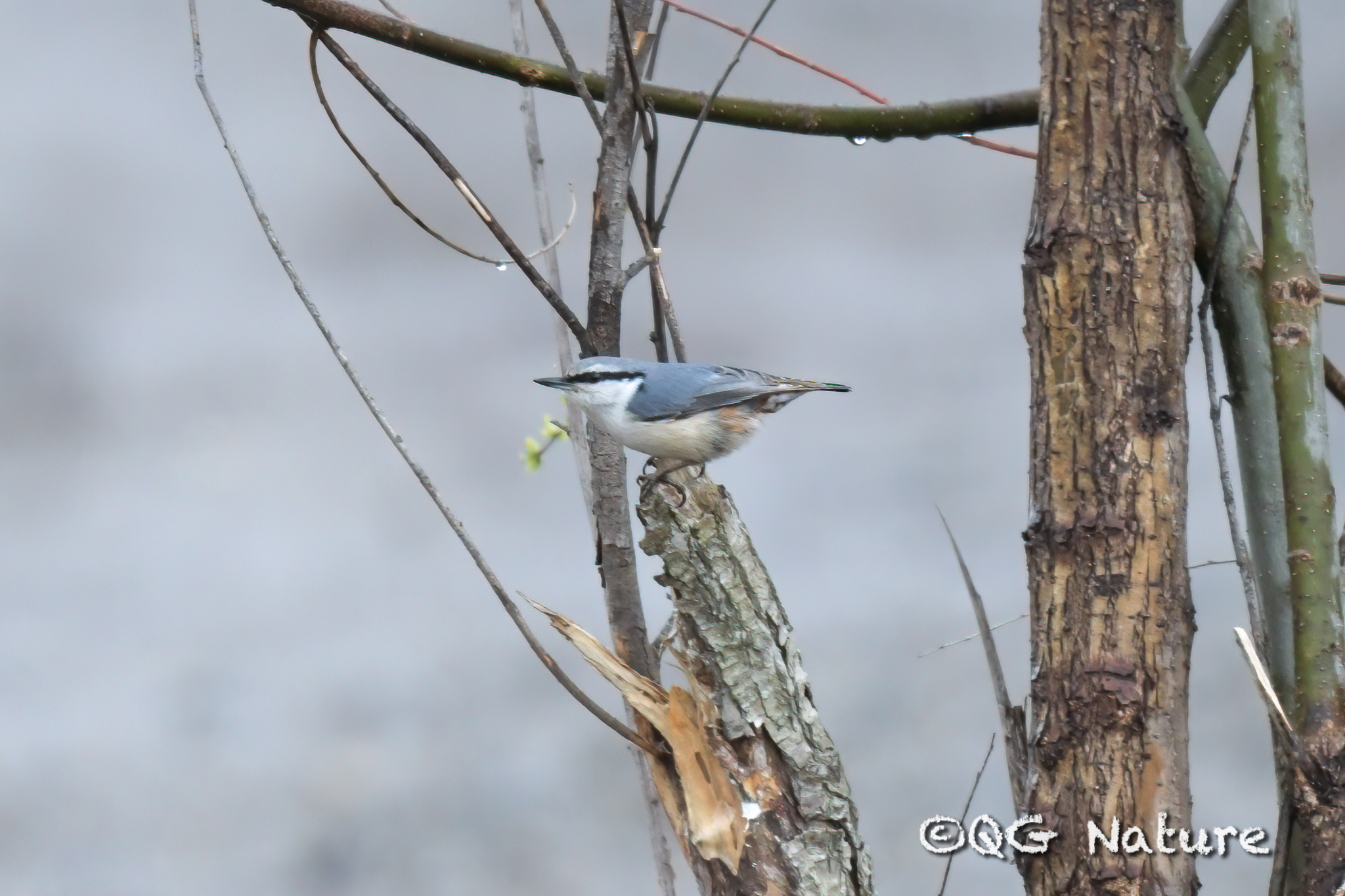
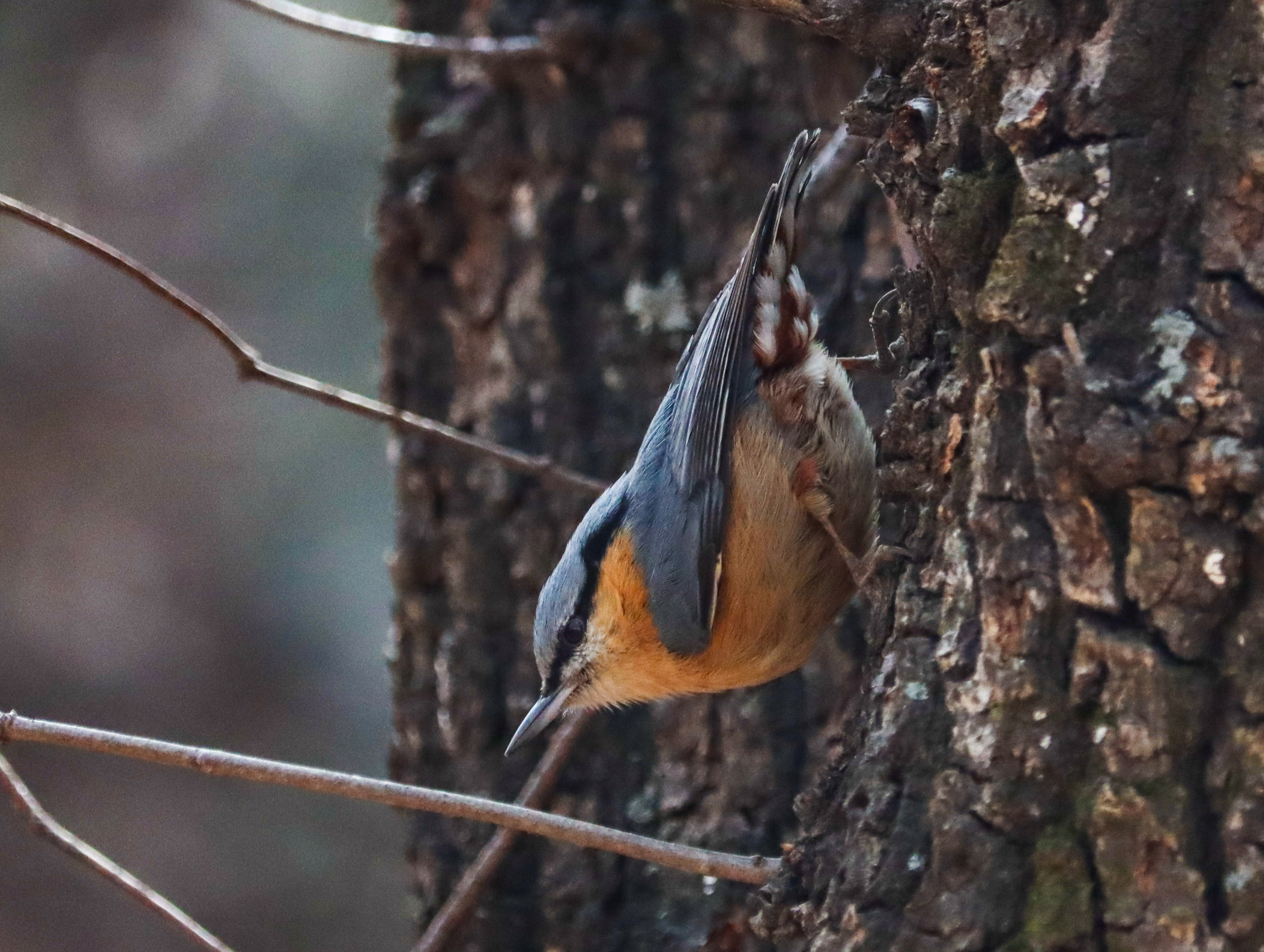
A small compact bird measuring 14 cm in length with a 22.5-27 cm wingspan and weighing 17-28 g. It has blue-grey upperparts and a prominent black eye-stripe. The throat and underparts are whitish, with orange-red flanks and lower belly mottled with white on the undertail. The stout bill is dark grey with a paler area at the base of the lower mandible. The iris is dark brown and the legs and feet are pale brown or greyish. The tail is short and square. Females resemble males but have slightly paler upperparts and a browner eye-stripe.
Identification
In most of its range, this is the only nuthatch species present. It is distinguished from the western rock nuthatch (S. neumayer) of southeastern Europe and western Asia by its woodland habitat and the presence of white spots on the tail. Krüper's nuthatch (S. krueperi) is smaller with a dark crown and russet breast patch. The Siberian nuthatch (S. arctica), formerly considered a subspecies, is larger and paler with more white in the tail and wings. Chestnut-vented nuthatch (S. nagaensis) in southwest China has darker upperparts and less white on the face.
Distribution & Habitat
Breeding range extends across temperate Eurasia from Great Britain (excluding Ireland) to Japan. It occurs between the 16-20°C July isotherms, north to approximately 64°N in western Russia and 69°N in Siberia, south to the Mediterranean in Europe and 54-55°N in Russia. Eastern populations extend through most of China, Taiwan and Korea. Most populations are sedentary, though northern and eastern subspecies may irrupt westward following cone crop failures. Habitat consists of mature woodland with large old trees; in Europe it favors deciduous or mixed forest with oak, while coniferous forest is used in Russia and mountainous regions.
Behavior & Ecology
Monogamous and territorial year-round, with territories ranging from 2-10 ha in Europe to 30 ha in Siberian conifer forests. The nest is in a tree cavity, typically an old woodpecker hole, with the entrance reduced by plastering with mud. The clutch comprises 6-9 red-speckled white eggs incubated for 13-18 days, with chicks fledging after 20-26 days. Diet consists mainly of insects, especially caterpillars and beetles, supplemented by nuts and seeds in autumn and winter. Forages on tree trunks and branches, uniquely able to descend headfirst. Vocalizations include a loud 'dwip' call, shrill alarm call, and a slow whistled song.
Conservation
The IUCN Red List classifies this species as least concern. The European population is estimated at 22.5-57 million birds, suggesting a global total of 45.9-228 million individuals across a breeding area of approximately 23.3 million km². Population trends are stable, and the species has recently expanded its range in Scotland, Wales, northern England, Norway and North Africa. Main threats include woodland fragmentation and the loss of old trees essential for nesting. Competition for cavities with common starlings and introduced ring-necked parakeets occurs locally.
Source: Wikipedia · CC BY-SA 3.0
Taxonomy
- Order
- Passeriformes
- Family
- Sittidae
- Genus
- Sitta
- eBird Code
- eurnut2
Subspecies (21)
-
Sitta europaea albifrons
northeastern Russia (southern Koryak highlands and the Kamchatka Peninsula) and northern Kuril Islands (Paramushir)
-
Sitta europaea amurensis
southeastern Russia to northeastern China, Korea, and Honshu (northern Japan)
-
Sitta europaea asiatica
central Russia eastward to the western shore of Lake Baikal, and southward to Kazakhstan and western Mongolia
-
Sitta europaea baicalensis
southeastern Siberia, from region south and east of Lake Baikal, eastward to the Sea of Okhotsk and northeastern China
-
Sitta europaea bedfordi
Jeju Island (Korea)
-
Sitta europaea caesia
Britain to Denmark, Carpathian Mountains, Pyrenees, and Balkan Peninsula
-
Sitta europaea caucasica
northern and northeastern Türkiye, Caucasus region, and Transcaucasia
-
Sitta europaea cisalpina
southern Switzerland (south of the Alps), mainland Italy, Sicily, and western coastal Balkans, southward to southwestern Montenegro
-
Sitta europaea clara
southern Kuril Islands (Kunashir and Shikotan) and northern Japan (Hokkaido)
-
Sitta europaea europaea
Scandinavia and Russia to Volga and Vyatka basins and Ukraine
-
Sitta europaea formosana
Taiwan
-
Sitta europaea hispaniensis
Portugal, Spain, and northern Morocco
-
Sitta europaea hondoensis
central and southern Japan (Honshu, Shikoku, and northern Kyushu)
-
Sitta europaea levantina
western and southern Türkiye (eastward to Euphrates River) and Levant
-
Sitta europaea persica
Zagros Mountains (southwestern Iran)
-
Sitta europaea roseilia
southern Japan (southern Kyushu)
-
Sitta europaea rubiginosa
southeastern Transcaucasia (Talyshskiye and Gory mountains) to northern Iran
-
Sitta europaea sakhalinensis
Sakhalin (Russia)
-
Sitta europaea seorsa
northwestern China (eastern Tien Shan Mountains of northern Xinjiang)
-
Sitta europaea sinensis
central and eastern China
-
Sitta europaea takatsukasai
southern Kuril Islands (Iturup and Urup)
Data Sources
Species description from Wikipedia, licensed under CC BY-SA 3.0.
Bird images and sounds sourced from GBIF, contributed by citizen scientists worldwide under Creative Commons licenses.
Taxonomy data from AviList 2025.