Baikal Teal
Sibirionetta formosa
花脸鸭
Introduction
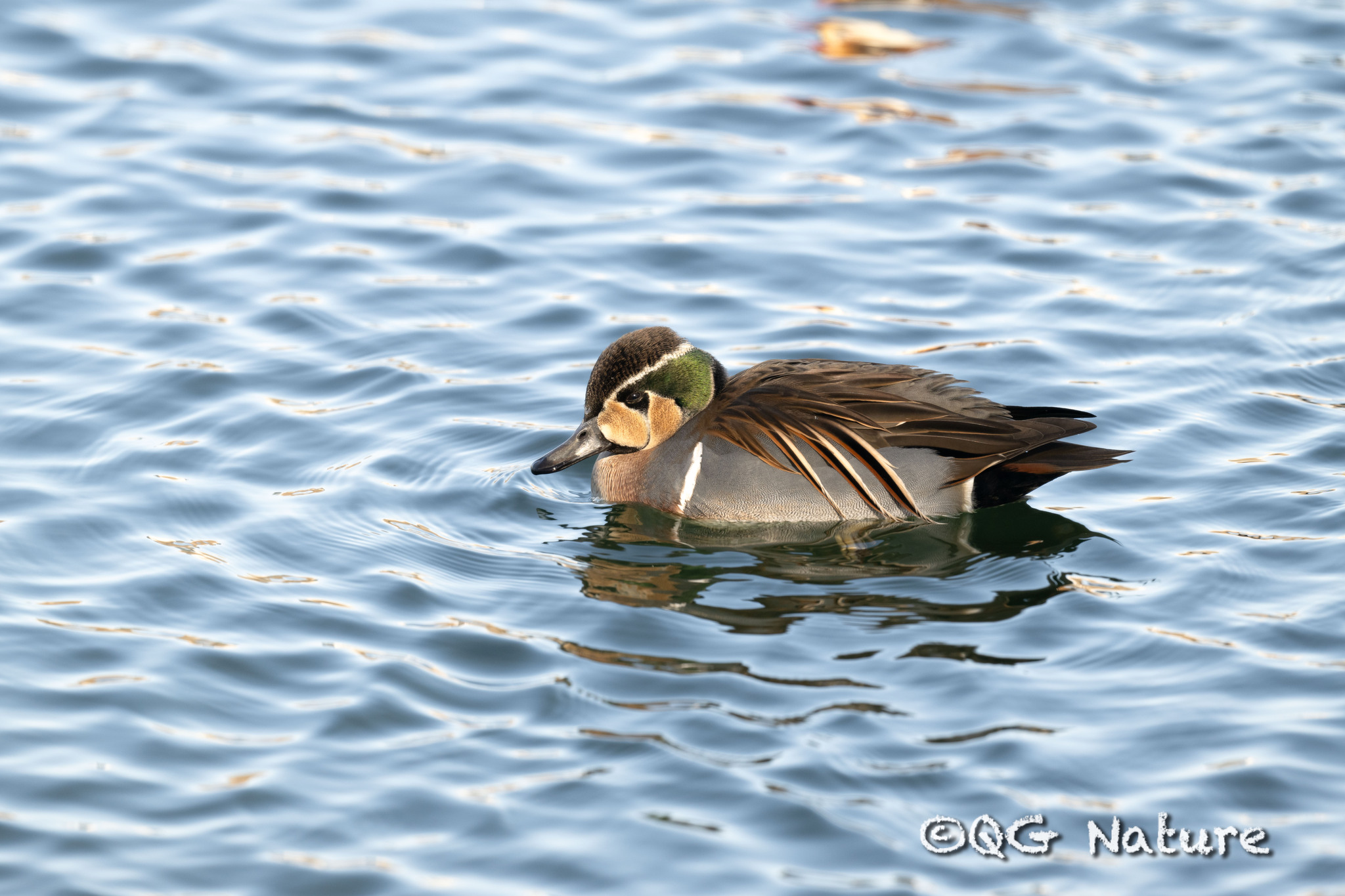
The Baikal Teal is a dabbling duck that breeds in eastern Russia and winters throughout East Asia. The species was formally described in 1775. Males have a distinctive face pattern with yellow and black auriculars, a dark crown, and green nape. Males also have a notably long tail. The species inhabits freshwater lakes and wetlands, where winter flocks can number in the hundreds of thousands. The alternative name 'squawk duck' derives from its distinctive vocalizations.
Description
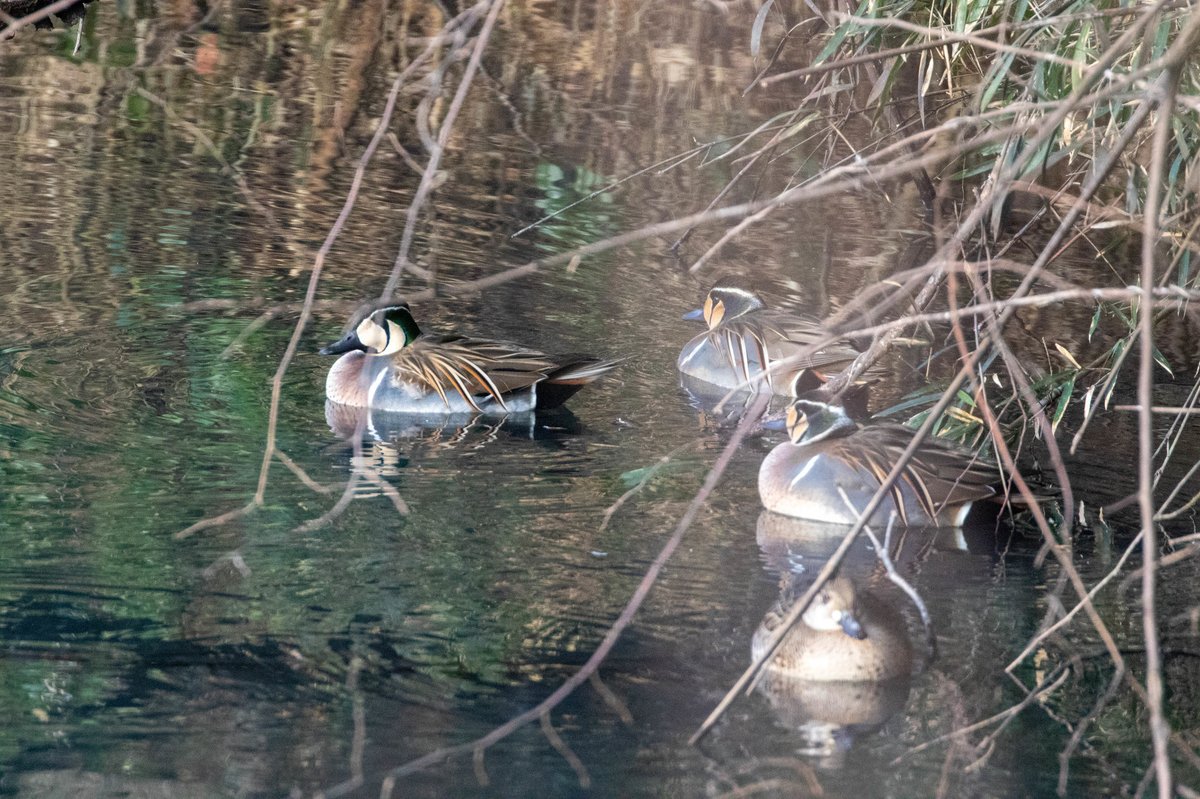
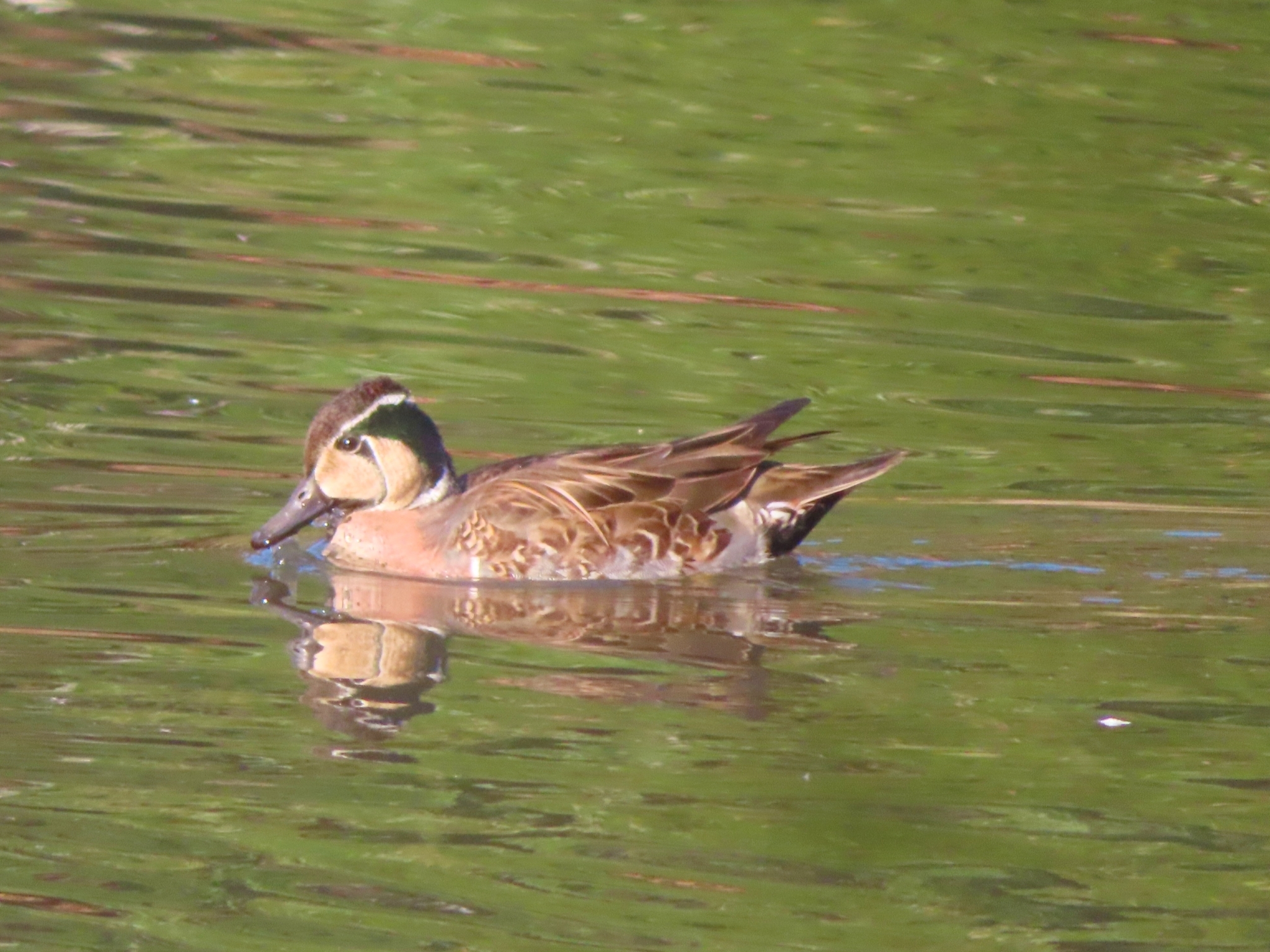
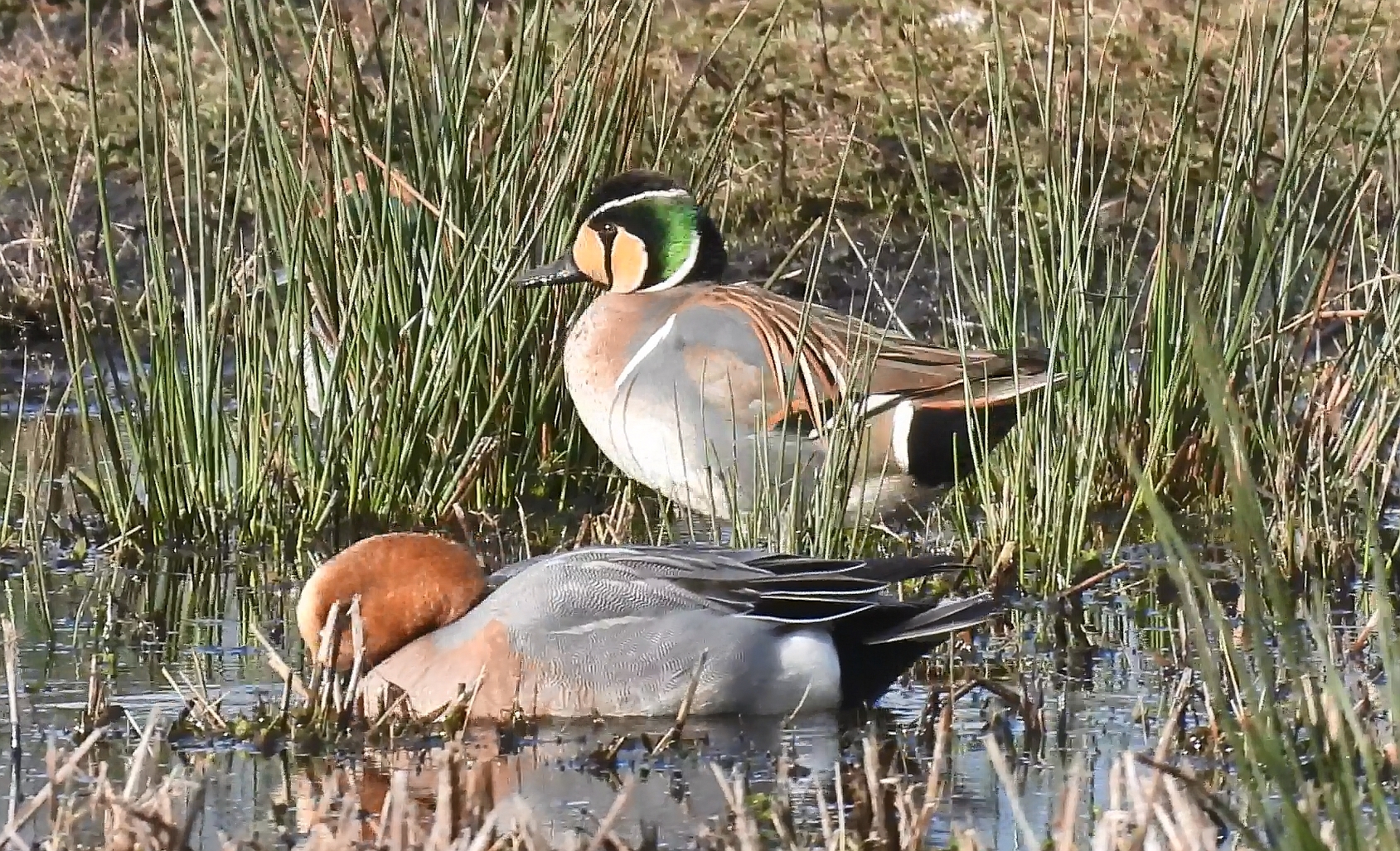
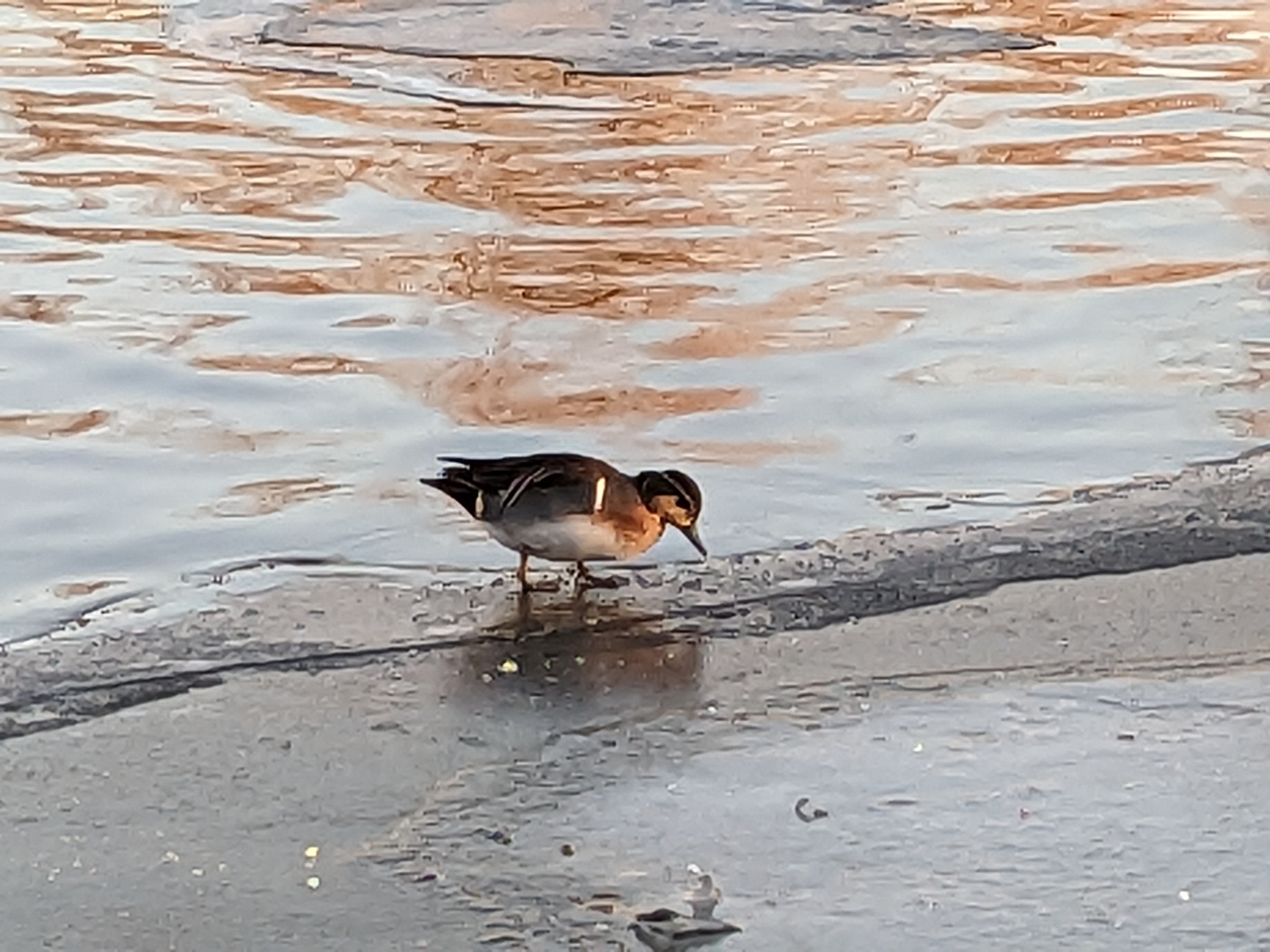
This small dabbling duck measures 39-43 cm (15-17 in) in length, making it slightly larger and notably longer-tailed than the common teal. The breeding male is unmistakable with its dark crown, striking green nape, and bold yellow and black markings on the auriculars, neck, and throat. Its breast is light brown with dark spots, while the grey flanks are accentuated by white bars at both front and rear. The female closely resembles the female green-winged teal but can be distinguished by her longer tail, a distinctive white spot at the bill base, and a white throat that extends toward the back of the eye. She also shows a pale eyebrow bordered by a darker crown. Both sexes display a green speculum with an indistinct cinnamon-buff inner border. In eclipse plumage, males resemble females but display richer reddish-brown coloration overall.
Identification
The breeding male is unique among dabbling ducks and unlikely to be confused with any other species. Females can be separated from the similar green-winged teal by their longer tail, the distinctive white spot at the base of the bill, and the white throat that angles toward the back of the eye. They also show a more pronounced pale eyebrow. Juvenile birds resemble females but can be distinguished from common teal juveniles by their pale loral spot. Some individuals showing 'bridle' facial markings, traditionally thought to be females, may actually be juvenile males acquiring their first adult plumage.
Distribution & Habitat
This migratory duck breeds across the forest zone of eastern Siberia, from the Yenisey basin eastward through Kamchatka, northern Koryak, eastern Magadan Oblast, northern Khabarovsk Krai, southeastern and northern Sakha, east central Irkutsk Oblast, and northern Krasnoyarsk Krai. Its wintering range extends across much of East Asia, including South Korea, Japan, Taiwan, and coastal and northern China from Beijing south to the Vietnam border, westward to Yunnan, and north to Chongqing and Henan. The species breeds in pools on the tundra edge and within swampy forested areas, while wintering primarily on lowland freshwater habitats.
Behavior & Ecology
In winter, this species forms enormous flocks that can number in the hundreds of thousands, particularly at traditional roost sites. The ducks feed by dabbling in shallow waters, consuming a varied diet of seeds, aquatic plants, and invertebrates. During the breeding season, pairs nest near freshwater pools in forested tundra regions. The species is known for its distinctive calls, which have earned it the alternative name 'squawk duck.' Outside the breeding season, these are highly social birds that congregate in large, dense flocks on protected waters.
Conservation
Classified as Least Concern on the IUCN Red List, this species has made a remarkable recovery. It was listed as Vulnerable before 2011 due to hunting pressure and wetland destruction on its wintering grounds, but conservation efforts and protection of key wintering sites have led to a dramatic population increase. Winter surveys in South Korea recorded approximately 1.07 million adults by 2010, representing a massive improvement from the tens of thousands counted in the 1980s and few hundred thousand in the 2000s. Continued habitat protection remains essential to ensure this recovery continues.
Culture
The scientific name Sibirionetta derives from the Latin 'sibiricus' for Siberia and the Ancient Greek 'nētta' meaning duck, while the specific epithet 'formosa' comes from the Latin 'formosus,' meaning beautiful. In East Asia, particularly in South Korea and Japan, this duck holds special significance among waterfowl enthusiasts and birdwatchers, who gather in large numbers during winter to observe the spectacular congregations that form at traditional wintering sites.
Source: Wikipedia · CC BY-SA 3.0
Taxonomy
- Order
- Anseriformes
- Family
- Anatidae
- Genus
- Sibirionetta
- eBird Code
- baitea
Distribution
breeds in northern and eastern Siberia; winters Japan, Korea, and eastern China
Data Sources
Species description from Wikipedia, licensed under CC BY-SA 3.0.
Bird images and sounds sourced from GBIF, contributed by citizen scientists worldwide under Creative Commons licenses.
Taxonomy data from AviList 2025.