
Passeriformes / Muscicapidae / Saxicola
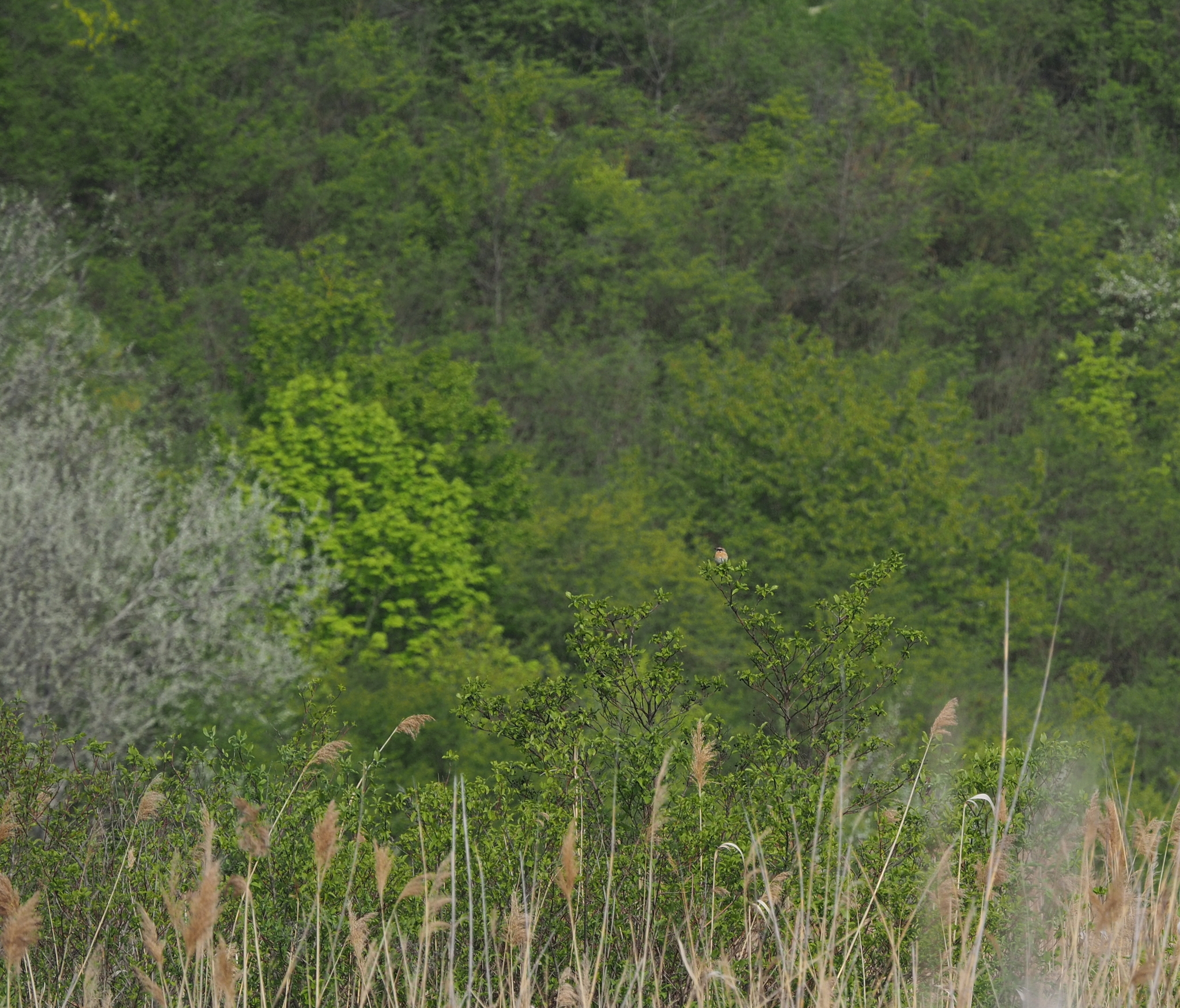
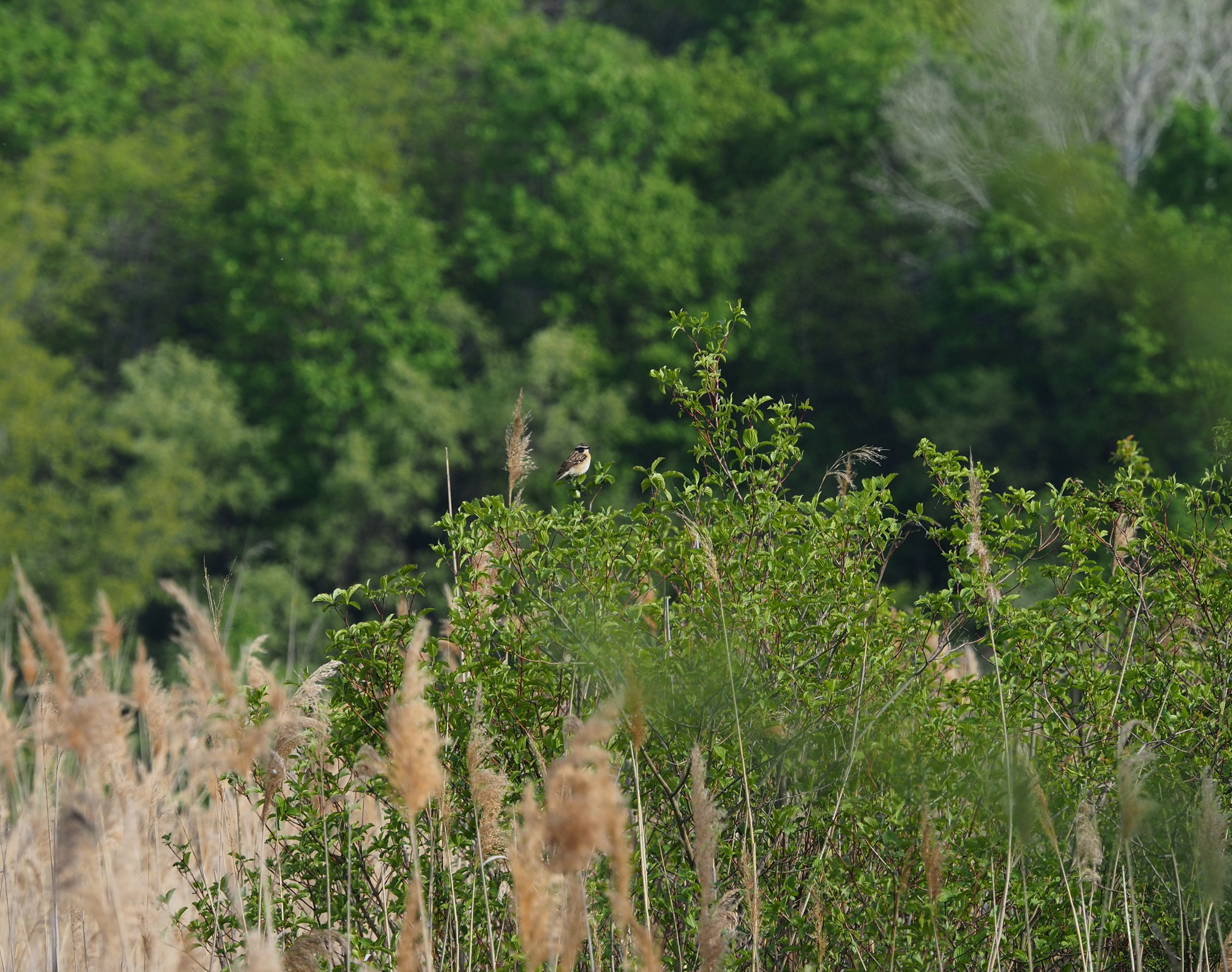
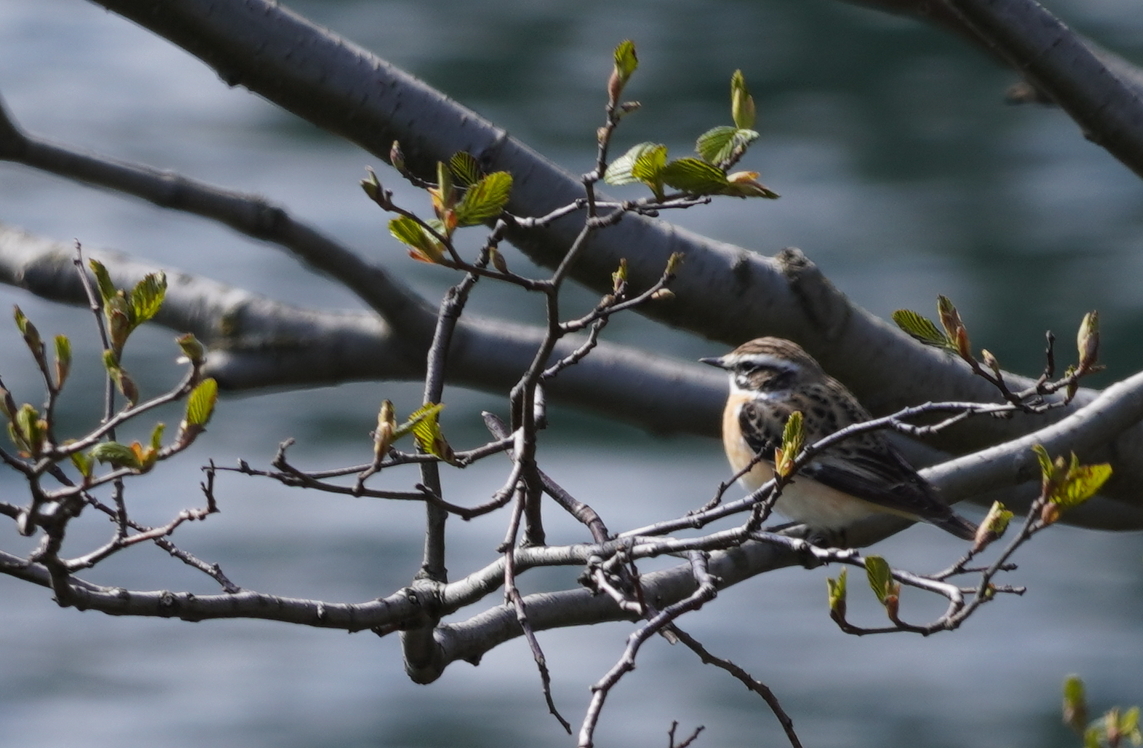
Whinchat
Saxicola rubetra · 草原石䳭
Introduction
A small migratory passerine in the Old World flycatcher family (Muscicapidae), breeding in Europe and western Asia and wintering in central Africa. It favors open grassy country with rough vegetation and scattered shrubs, foraging by perching on elevated spots to pounce on insects. Classified as Least Concern by the IUCN.
Description
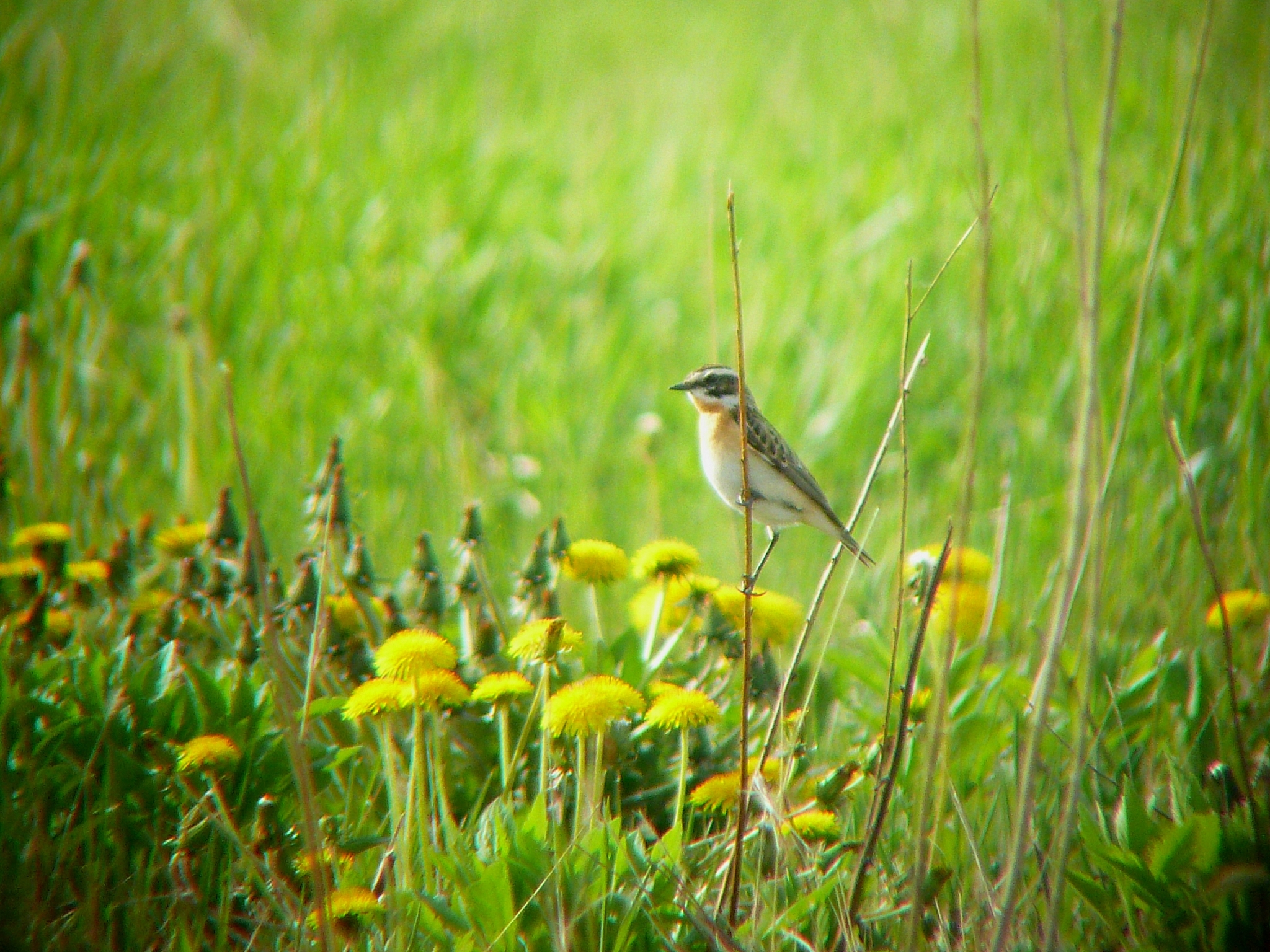
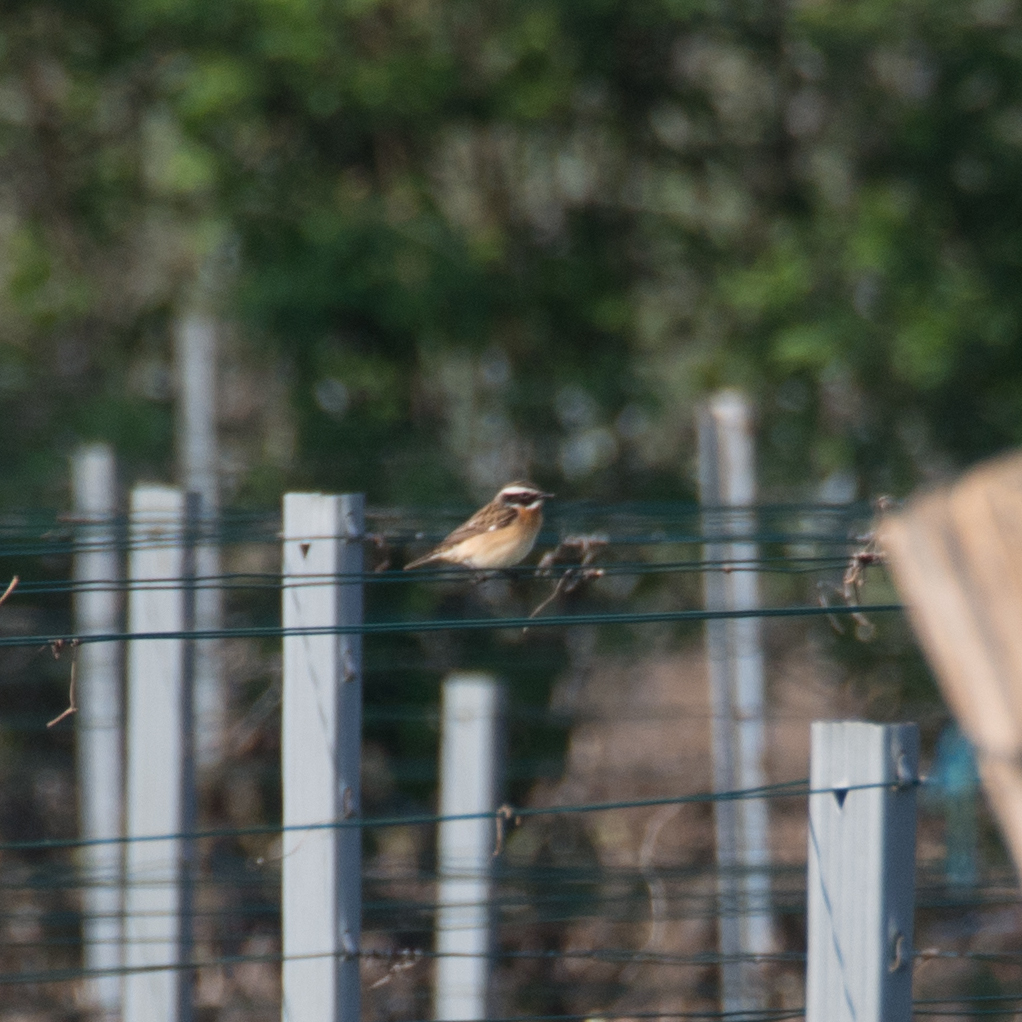
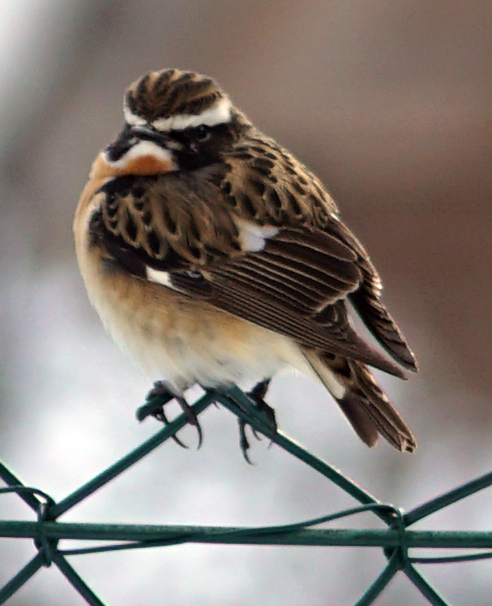
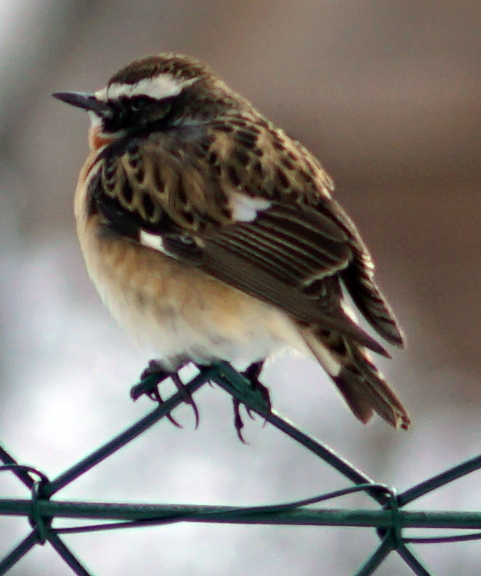
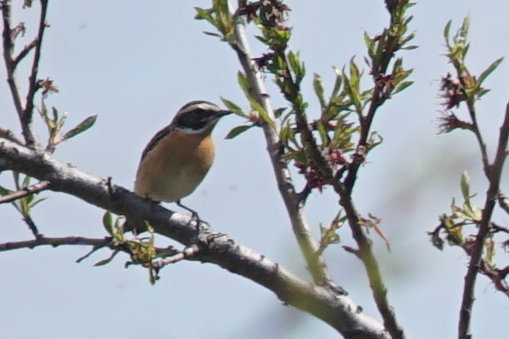
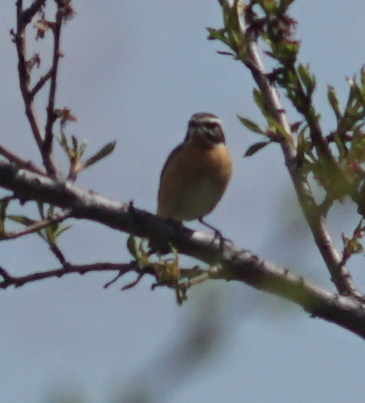
Length 12–14 cm; weight 13–26 g. Short-tailed with brownish upperparts mottled darker, pale throat and breast, and whitish belly. Tail is blackish with white bases to outer feathers. Breeding male has a blackish face mask encircled by a strong white supercilium and malar stripe, bright orange-buff throat and breast, and white wing patches. Female is duller with a browner face mask, buffy-brown breast, and smaller or absent white wing patches. Immature males resemble females but retain white wing patches.
Identification
Distinguished from European stonechat by conspicuous supercilium, whiter belly, paler overall color, slimmer structure, and longer wingtips. Differs from Siberian stonechat by lacking an unmarked pale orange-buff rump (rump is mottled brown like back). Main call is a hue-tac-tac, softer than European stonechat. Song is whistling and crackly, often mimetic of other species.
Distribution & Habitat
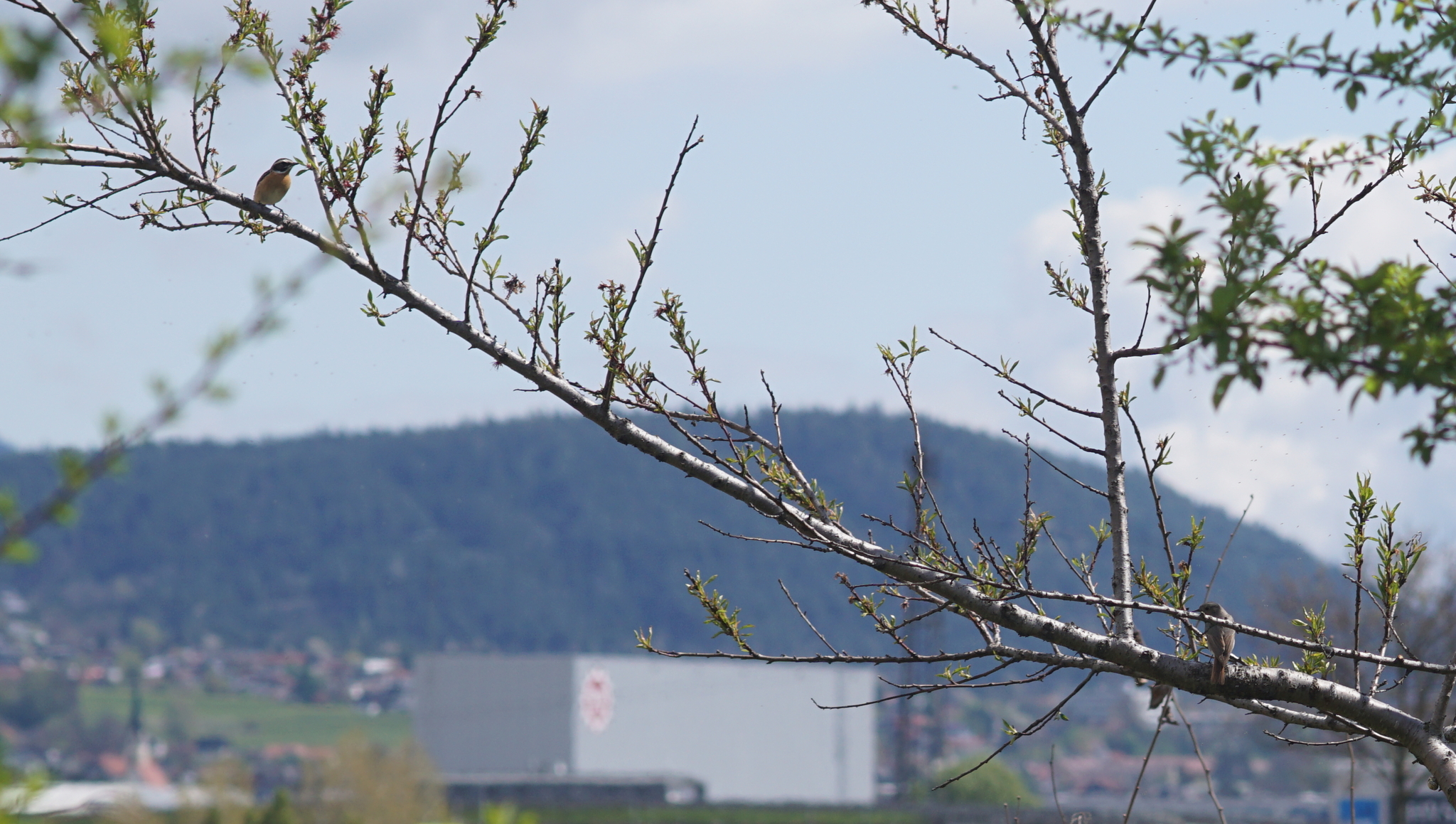
Breeds in Europe and western Asia from Ireland and northern Portugal east to the Ob River basin, and from northern Norway south to central Spain, Italy, northern Greece, and the Caucasus. Winters primarily in sub-Saharan Africa from Senegal to Kenya and Zambia. Small numbers winter in northwestern Africa. Vagrants recorded in Iceland, Canary Islands, Cape Verde, northern South Africa, and India.
Behavior & Ecology
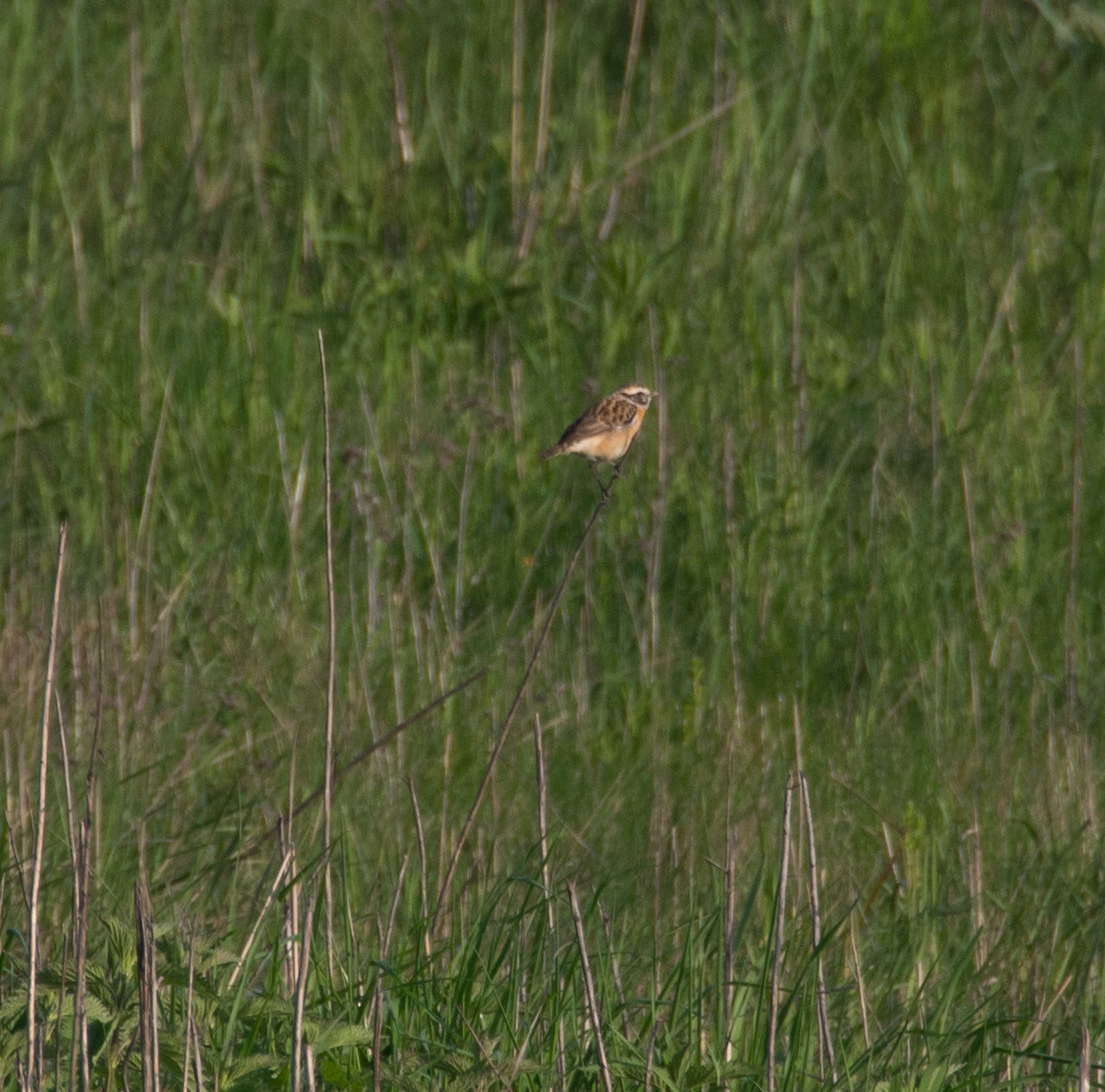
Solitary, favoring rough low vegetation, pasture, and young conifer plantations. Insectivorous (80–90% insects), also eating spiders, snails, worms, and autumn fruit. Forages from elevated perches using sallies. Nest built by female on ground in dense vegetation; clutch of 4–7 eggs incubated 11–14 days. Chicks fledge 17–19 days after hatching. Adults survive typically two years. Moults in late summer and early spring.
Conservation
IUCN status: Least Concern. Populations declining in western Europe (Britain, Ireland, France, Belgium, Netherlands, Denmark, Germany) due to agricultural intensification, particularly silage cutting. Amber-listed in Britain; classified as rare in Ireland.
Source: Wikipedia · CC BY-SA 3.0
Taxonomy
- Order
- Passeriformes
- Family
- Muscicapidae
- Genus
- Saxicola
Distribution
breeds Western Palearctic; winters to tropical and southern Africa
Data Sources
CBR Notes: 2023年5月17日,新疆阿勒泰,李思琪,张雪莲(张雪莲等,2023)
Species description from Wikipedia, licensed under CC BY-SA 3.0.
Bird images and sounds sourced from GBIF, contributed by citizen scientists worldwide under Creative Commons licenses.
Taxonomy data from AviList 2025.