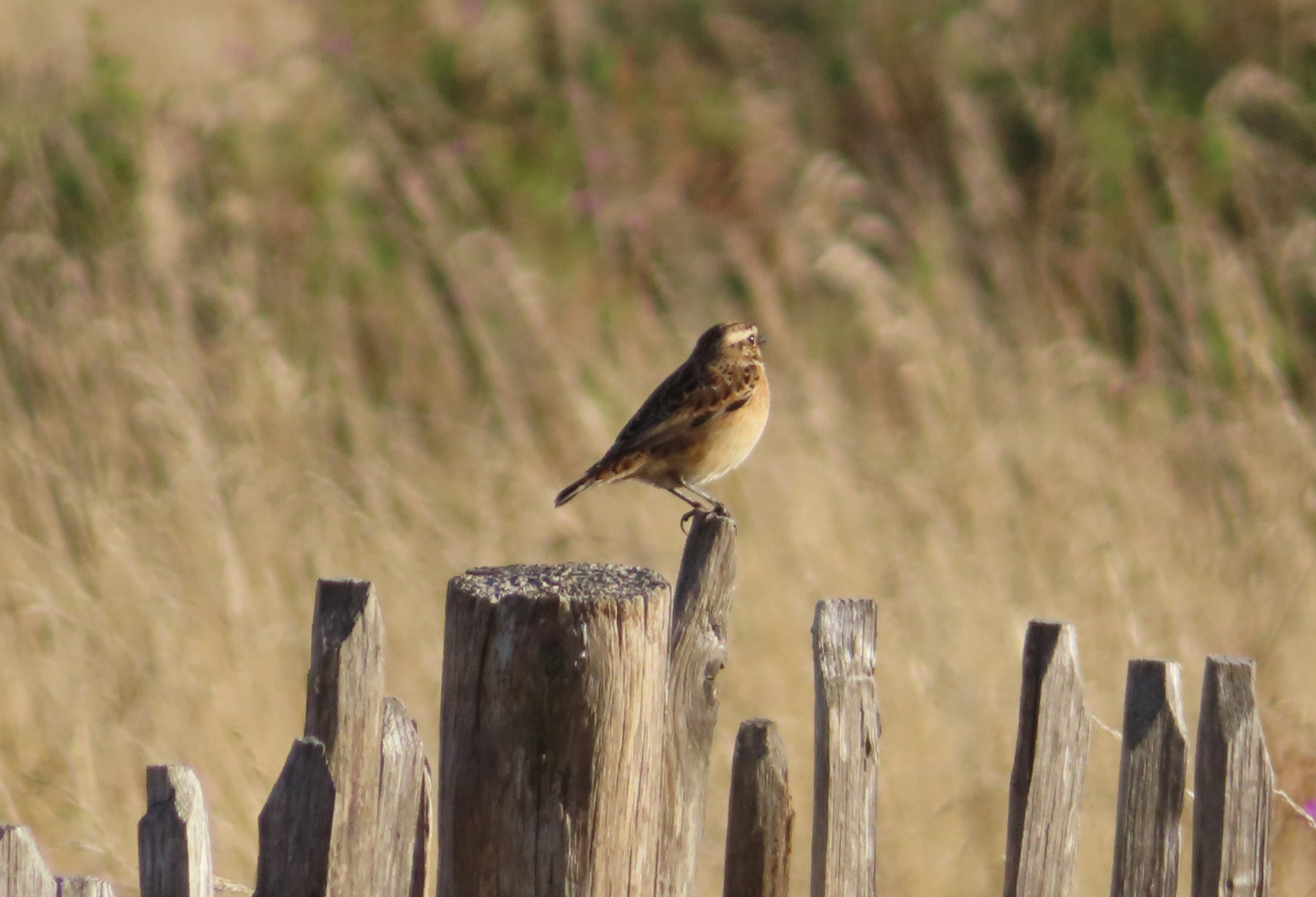
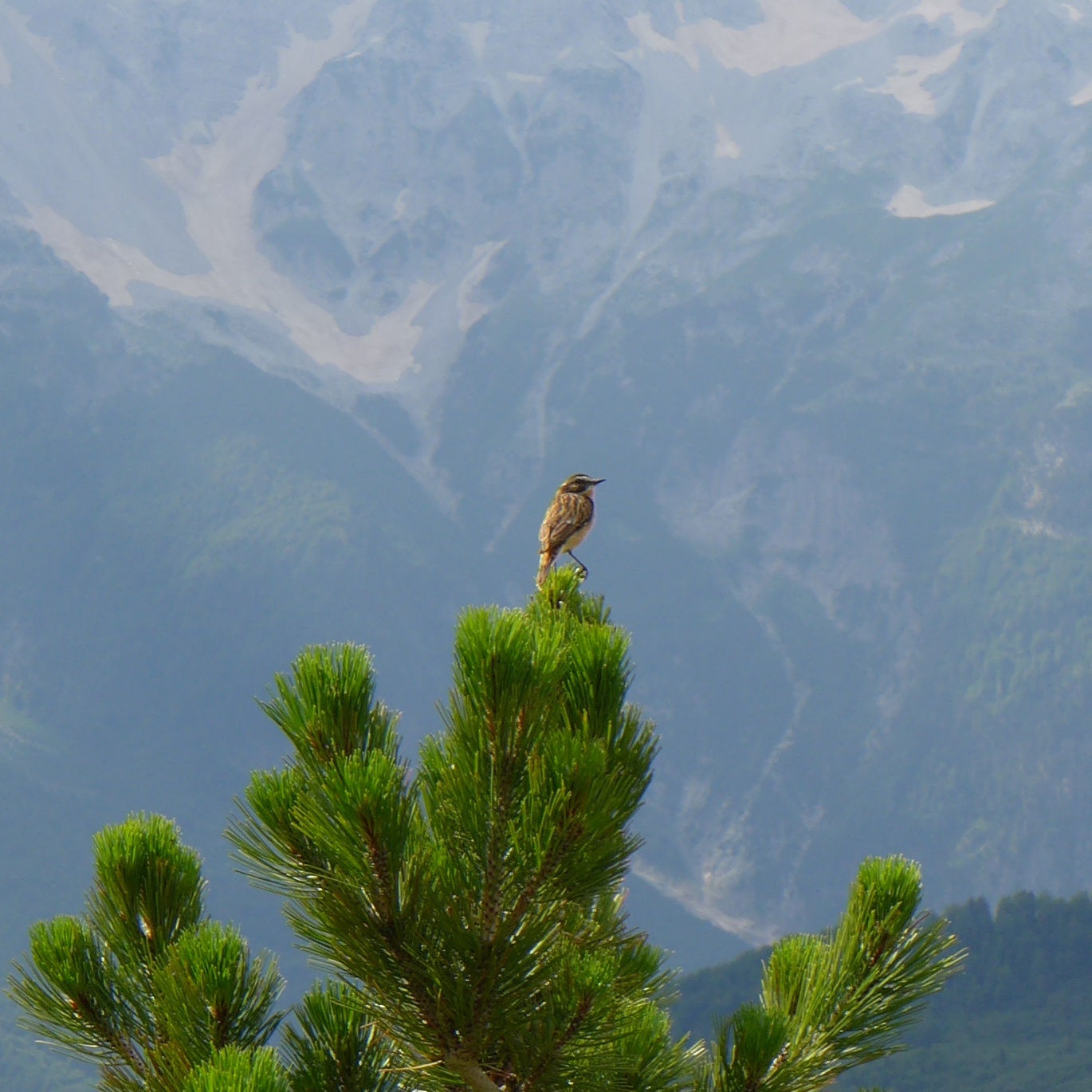
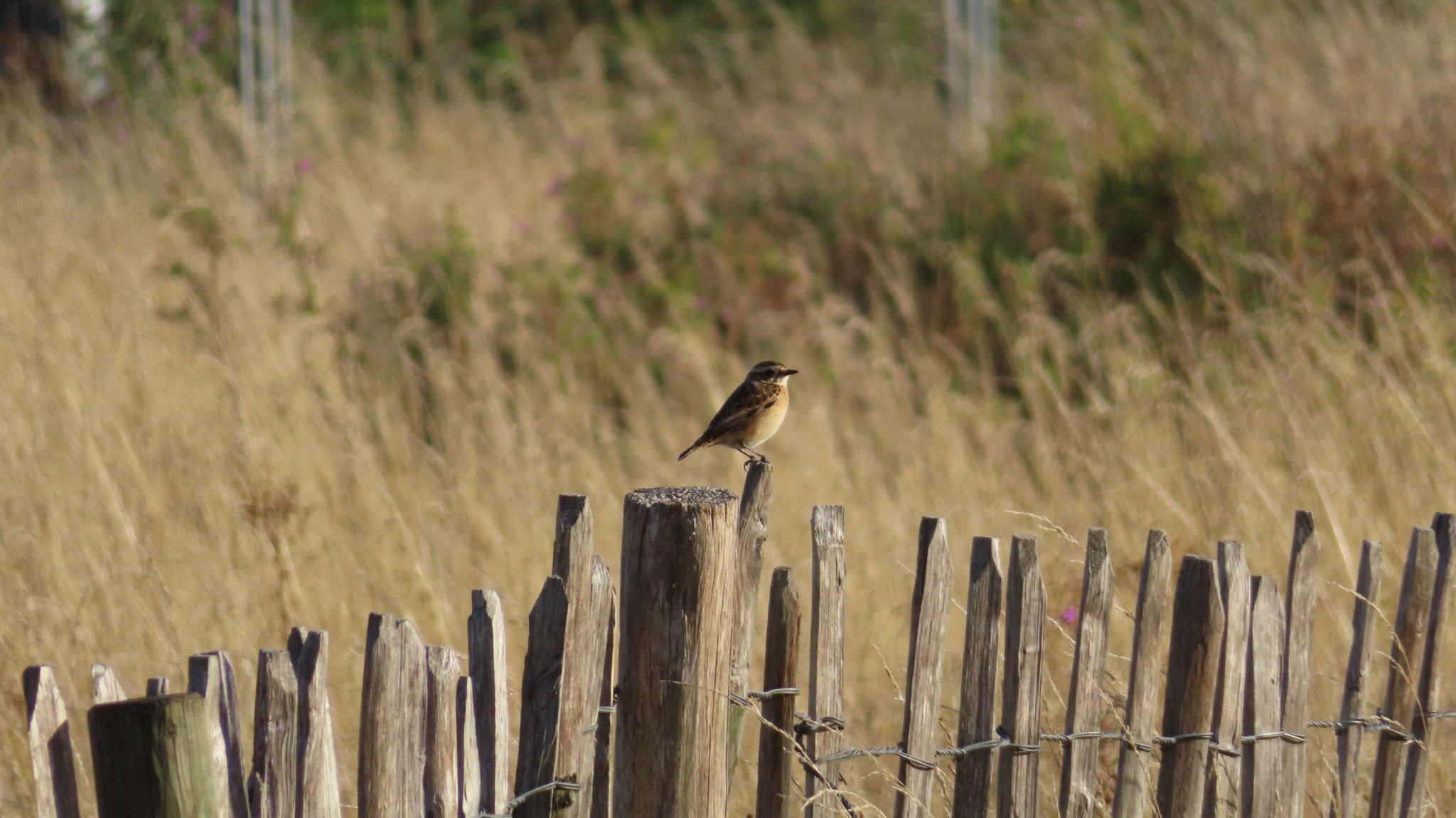
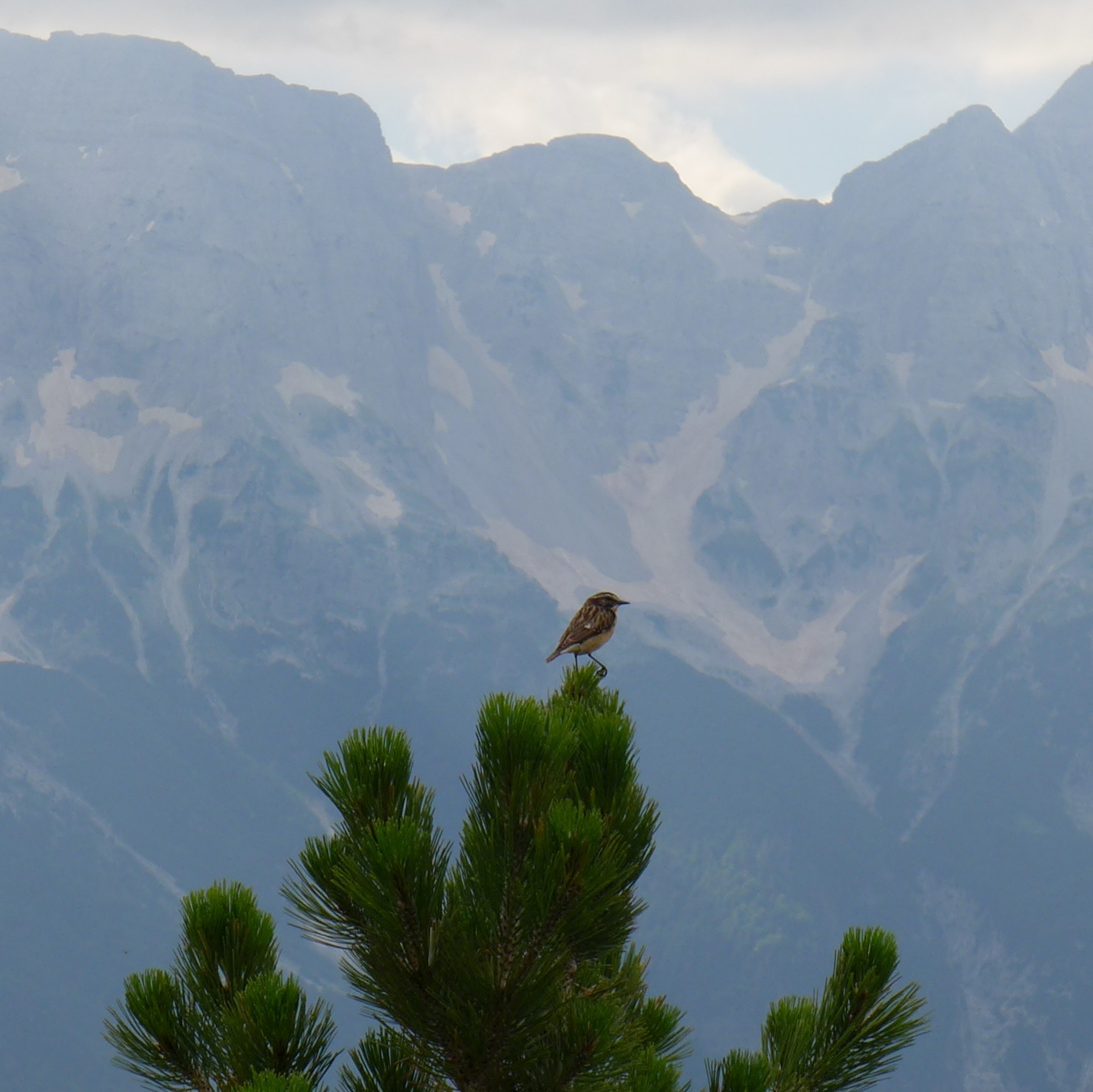
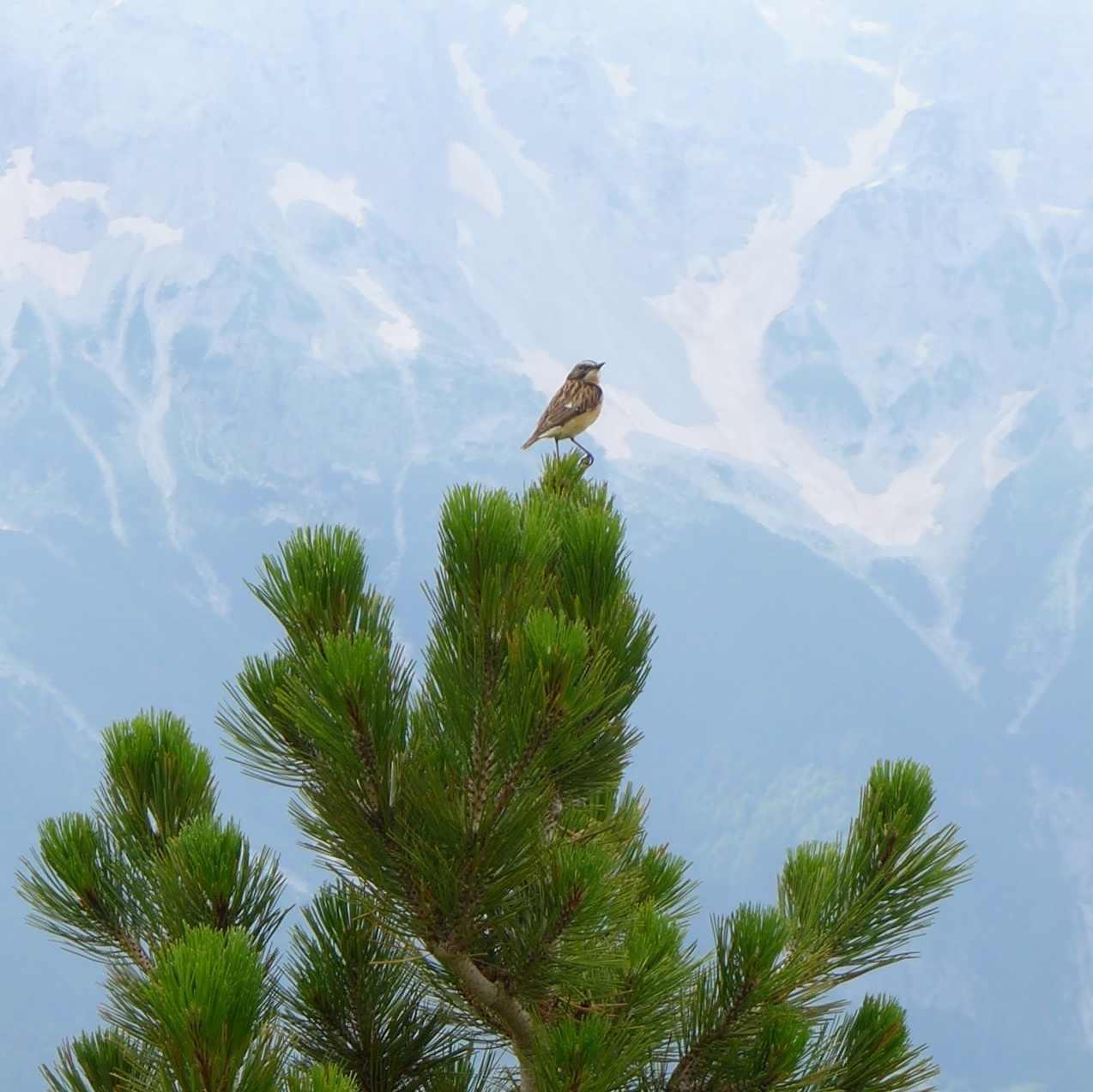
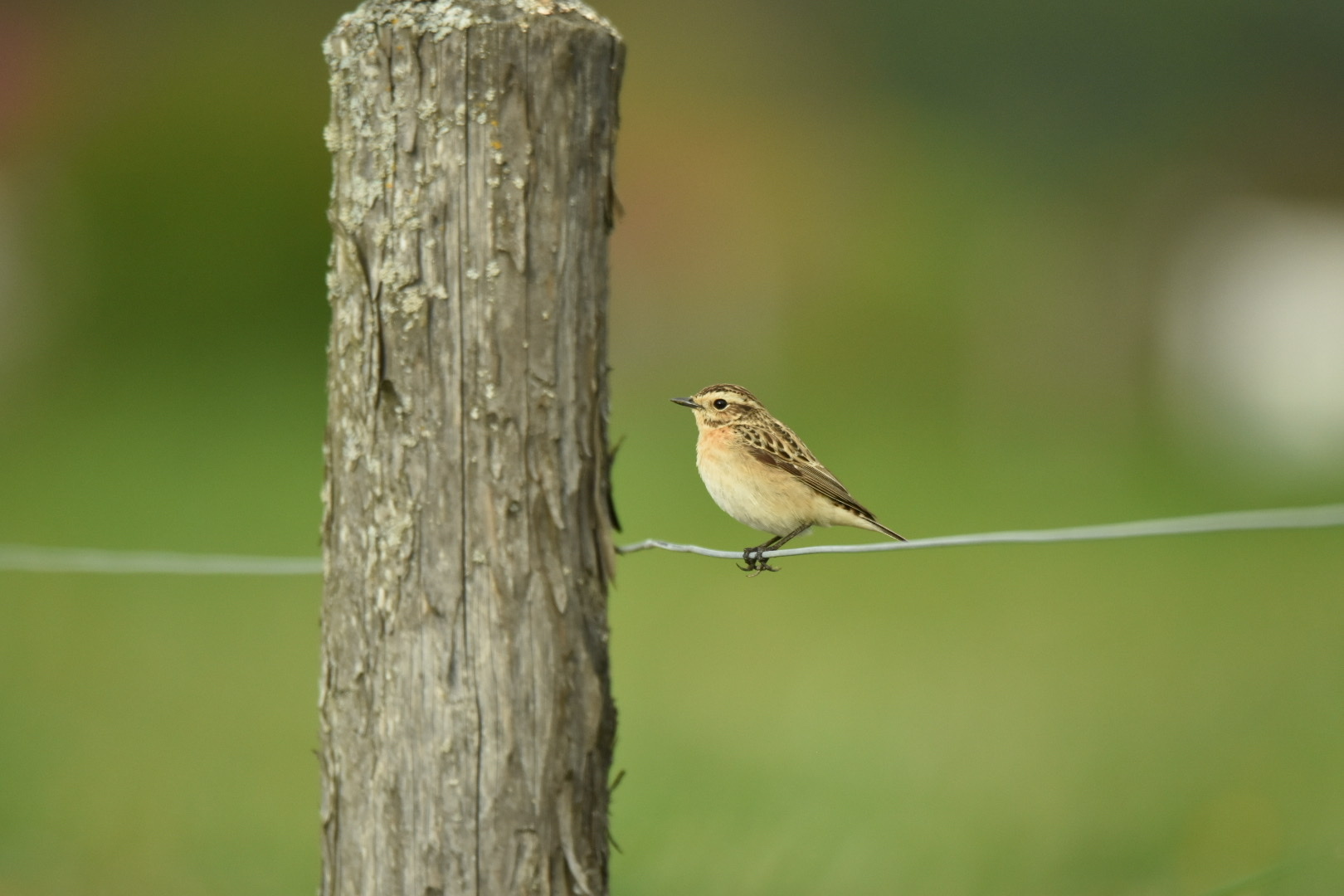
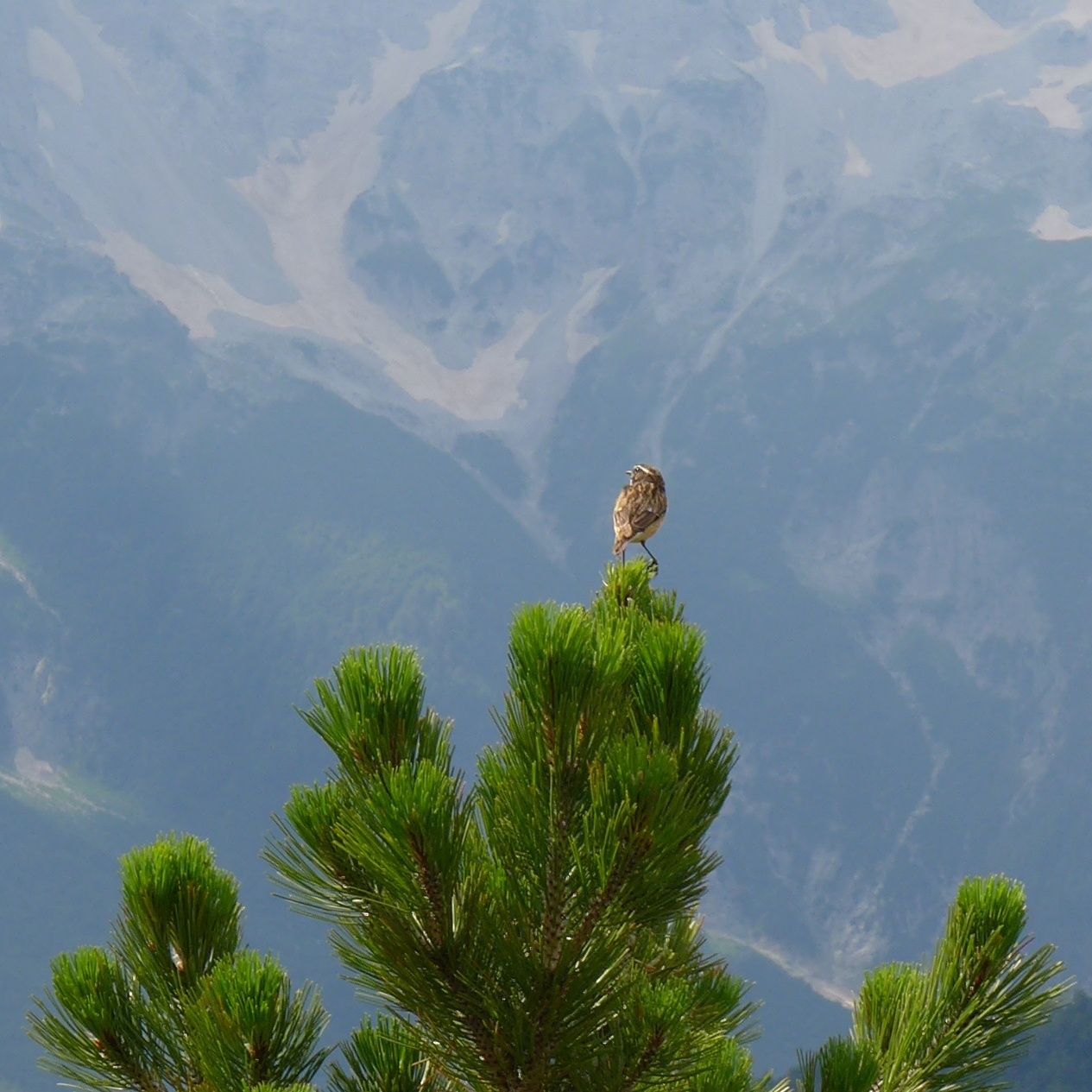
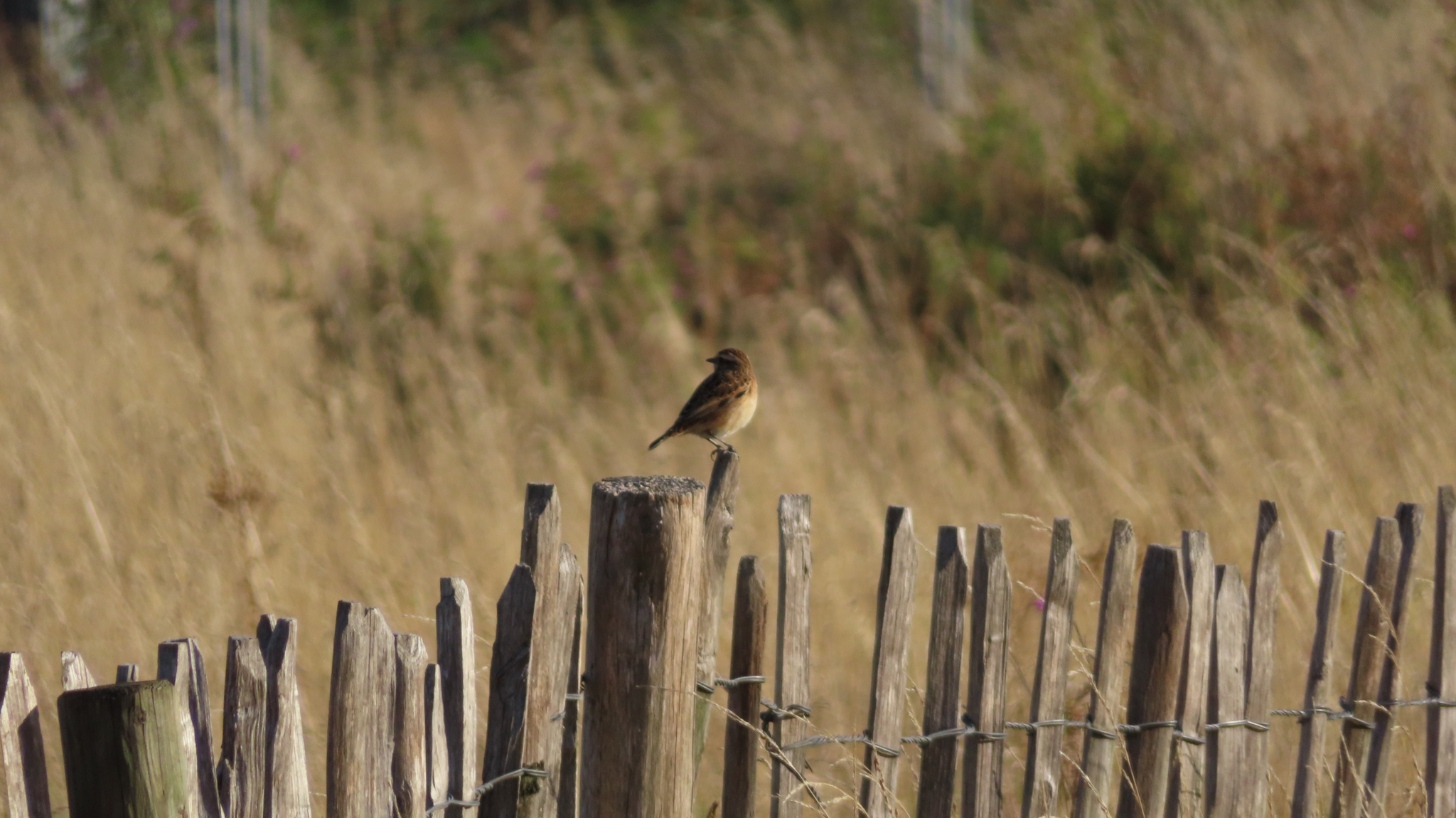
Whinchat
Saxicola rubetra
草原石䳭
Introduction
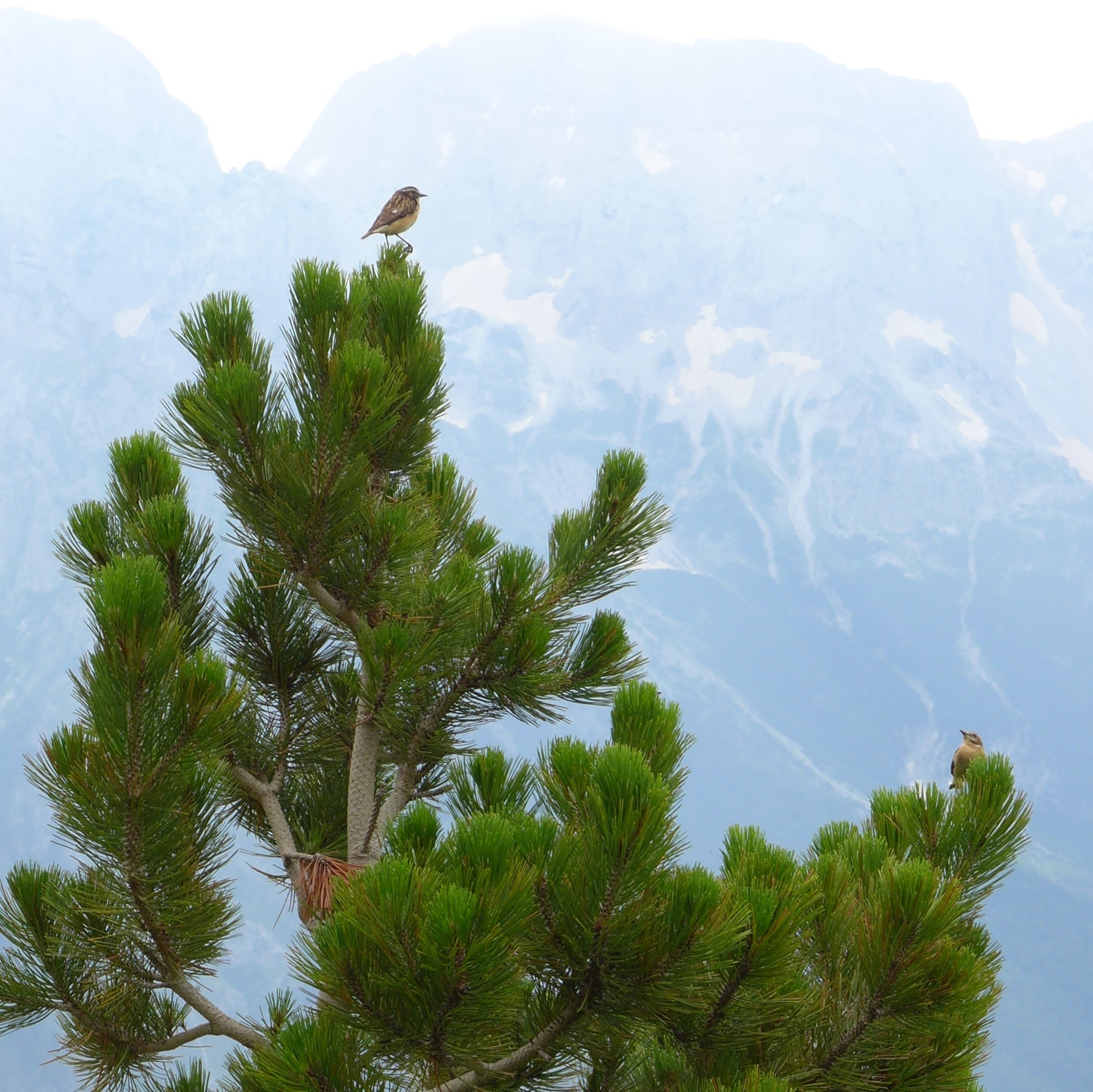
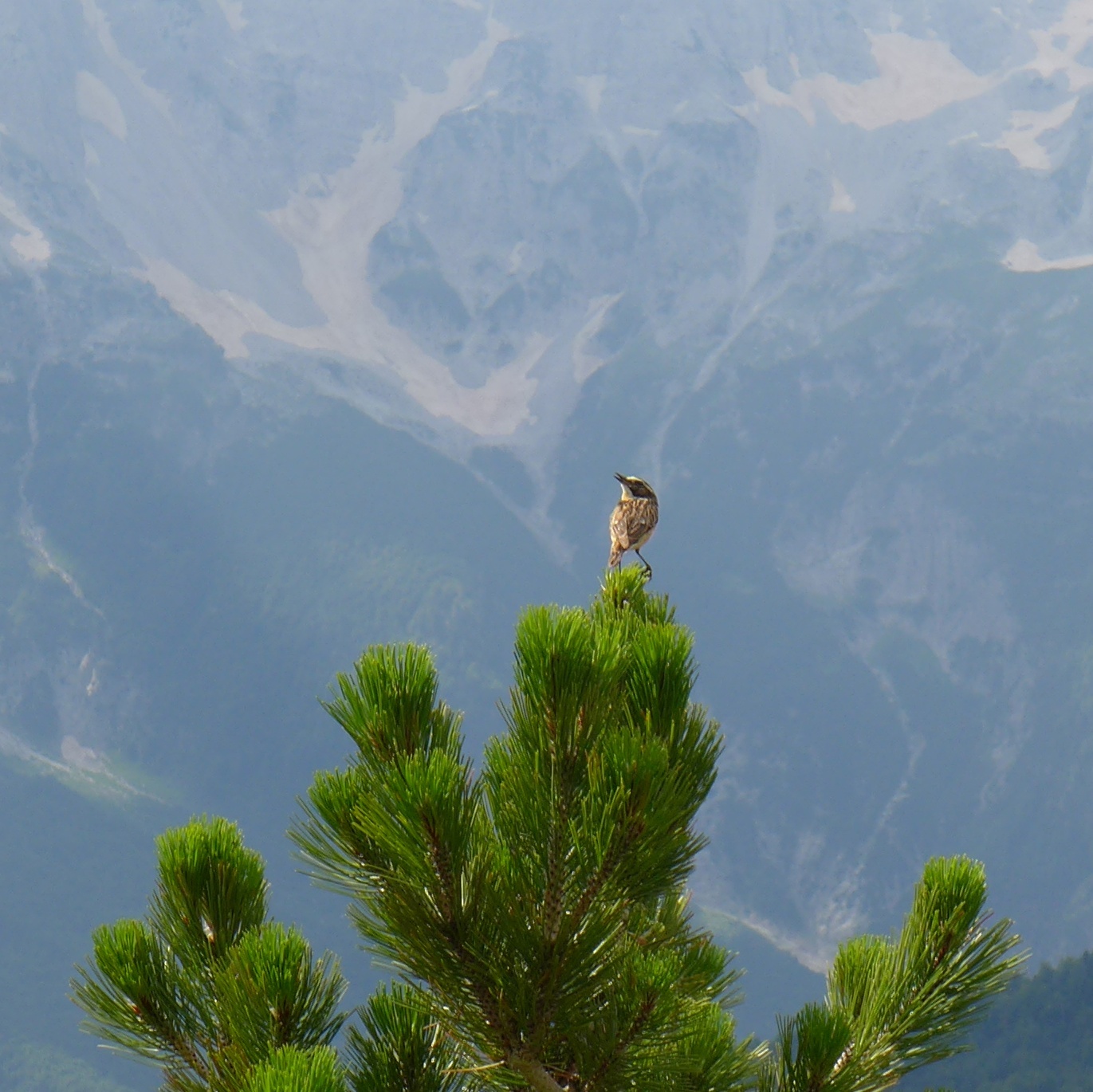
A small migratory passerine bird (Saxicola rubetra) in the Old World flycatcher family Muscicapidae, formerly classified in the thrush family Turdidae. It breeds across Europe and western Asia from Ireland and Portugal east to the Ob River basin near Novosibirsk, and winters primarily in tropical sub-Saharan Africa from Senegal east to Kenya and south to Zambia. The species favours open grassy country with rough vegetation and scattered small shrubs, perching on elevated locations to pounce on insects and other invertebrates. Though common across its wide range, populations in western Europe are declining due to agricultural intensification. The IUCN classifies it as a species of 'least concern'.
Description
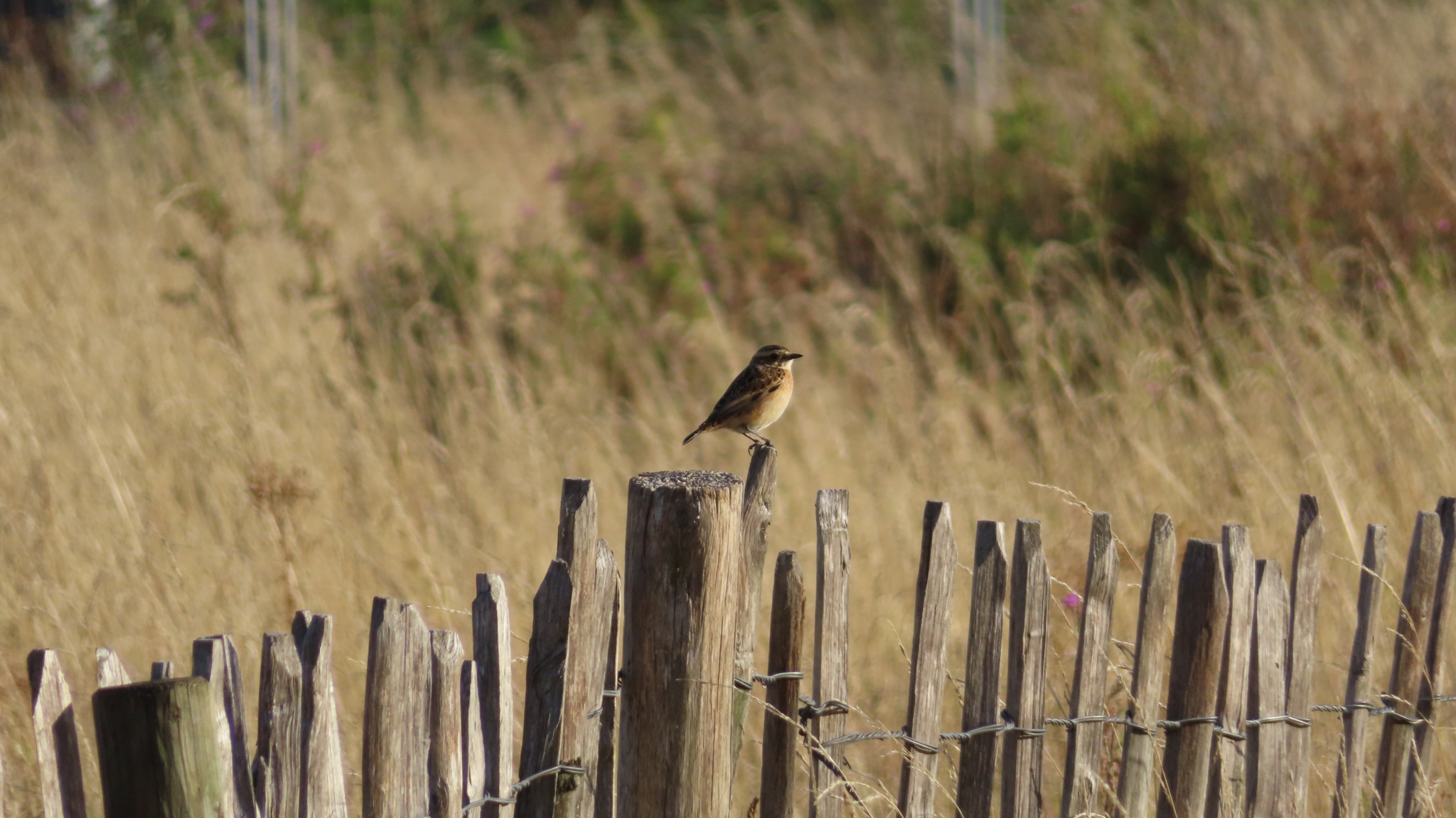
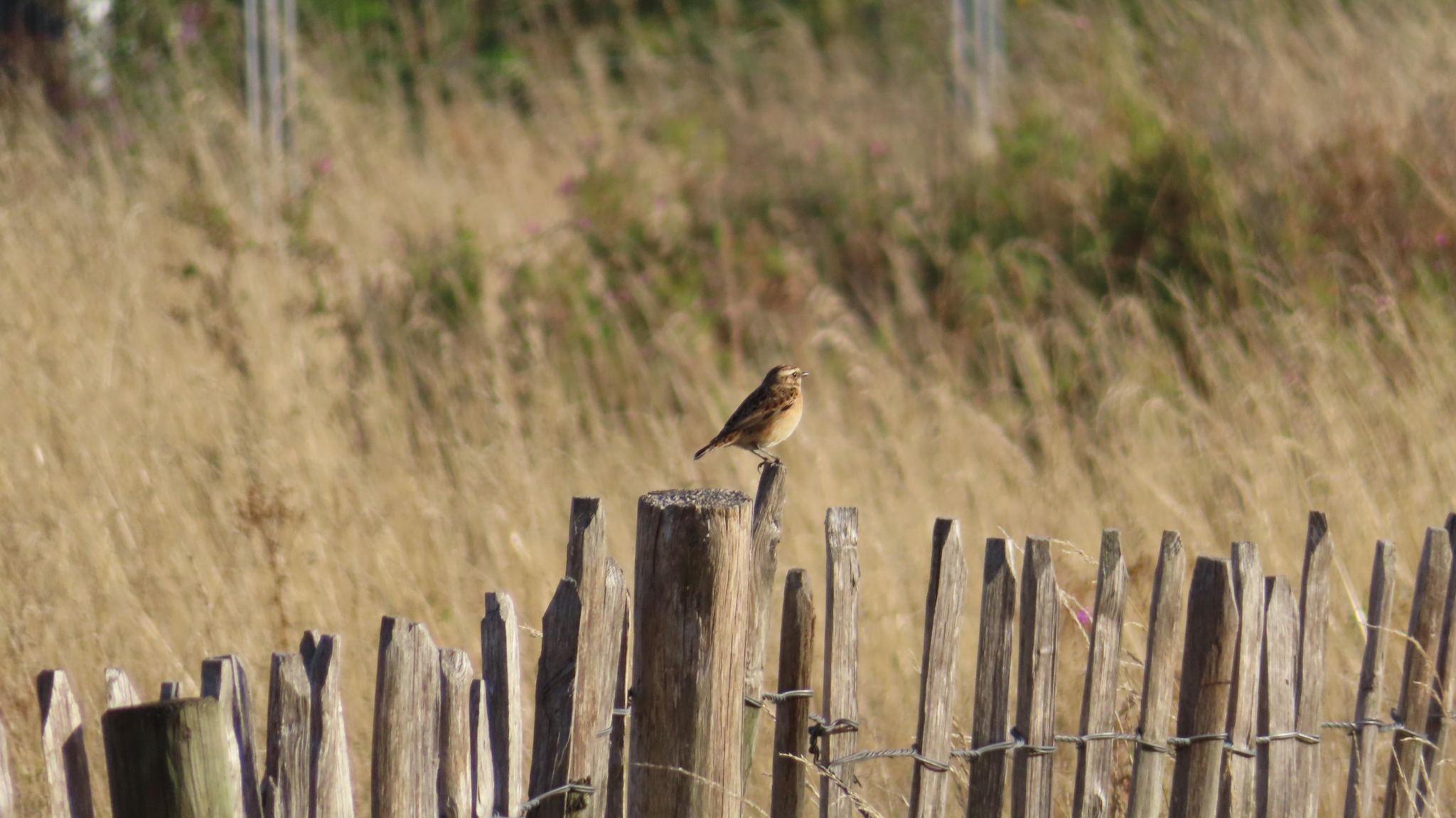
A short-tailed bird similar in size to the European robin, measuring 12 to 14 cm in length and weighing 13 to 26 g. Upperparts are brownish mottled darker, with a pale throat and breast and a pale buff to whitish belly. The tail is blackish with white bases to the outer tail feathers. Breeding males have a blackish face mask bordered by a strong white supercilium and malar stripe, a bright orange-buff throat and breast, and small white wing patches. Females are duller overall with a browner face mask, pale buffy-brown breast, and a buff supercilium and malar stripe with smaller or no white wing patches. The species moves with small, rapid hops on the ground and frequently bobs and flicks its wings and tail.
Identification
Distinguished from the similar European stonechat by its conspicuous supercilium and whiter belly, and in western Europe by its paler overall appearance. It is slimmer and less dumpy with longer wingtips adapted to long-distance migration. Confusion is possible with female or immature Siberian stonechat, but that species has a conspicuous unmarked pale orange-buff rump whereas the whinchat has a rump the same mottled brown colour as the back. The call is a hue-tac-tac, with the 'tac' softer and less grating than the European stonechat. The song is a whistling, crackly but soft mixture of whistles and tacs, often mimetic including phrases from at least 12 other bird species.
Distribution & Habitat
Breeds across Europe and western Asia from Ireland and northern Portugal east to the Ob River basin near Novosibirsk, and from northern Norway south to central Spain, central Italy, northern Greece and the Caucasus Mountains. Arrives on breeding grounds late April to mid-May and departs mid-August to mid-September. Winters primarily in tropical sub-Saharan Africa from Senegal to Kenya and south to Zambia, arriving late September to November and leaving February to March. Small numbers winter in northwestern Africa in Morocco, northern Algeria and Tunisia. Vagrants have reached Iceland, the Canary Islands, Cape Verde and northern South Africa. Stopover sites are important for migration across the Sahara and Mediterranean barriers.
Behavior & Ecology
A largely solitary bird though may form small family groups in autumn. Inhabits rough low vegetation habitats such as open pasture with scattered small shrubs, bracken or heather stands, and new conifer plantations. Always requires perching points for scanning and song posts. Breeds late April to May; the female builds a ground nest in dense low vegetation and incubates four to seven eggs for eleven to fourteen days. Both parents feed the young, which leave the nest at ten to fourteen days and fledge at seventeen to nineteen days, remaining dependent for another two weeks. Insectivorous, feeding largely (80-90%) on insects plus spiders, snails, worms and some fruit. Adults have a complete moult in late summer before migration and a partial moult in spring on wintering grounds. Typical lifespan is two years, maximum recorded just over five years.
Conservation
Classified as 'least concern' by the IUCN but some populations are in serious decline, particularly in western Europe. In Britain, Ireland, France, Belgium, the Netherlands, Denmark and Germany, agricultural intensification is the primary threat. Britain has amber-listed the species with an unfavourable conservation status; it has disappeared from former lowland breeding areas in the south and east, remaining common only in upland areas of the north and west. Ireland classifies it as 'rare'. Main threats include silage cutting, livestock trampling, nest predation by crows and magpies, and parasitism by the common cuckoo.
Culture
The English name derives from 'whin' (common gorse) and 'chat' referring to the nature of its calls. The scientific name Saxicola rubetra means 'small rock-dweller', from Latin saxum ('rock') and incola ('dwelling'). The specific epithet rubetra is a Latin term for a small bird.
Source: Wikipedia · CC BY-SA 3.0
Taxonomy
- Order
- Passeriformes
- Family
- Muscicapidae
- Genus
- Saxicola
- eBird Code
- whinch1
Distribution
breeds Western Palearctic; winters to tropical and southern Africa
Data Sources
CBR Notes: 2023年5月17日,新疆阿勒泰,李思琪,张雪莲(张雪莲等,2023)
Species description from Wikipedia, licensed under CC BY-SA 3.0.
Bird images and sounds sourced from GBIF, contributed by citizen scientists worldwide under Creative Commons licenses.
Taxonomy data from AviList 2025.