
Siberian Stonechat
Saxicola maurus
黑喉石䳭
Introduction
Species of Old World flycatcher family (Muscicapuridae) recently validated as distinct. Breeds in the East Palearctic including easternmost Europe, and winters in the Old World tropics. Six subspecies recognized across northern and central Asia. Molecular genetic studies indicate separation from common stonechat complex during Late Pliocene or Early Pleistocene, roughly 1.5-2.5 million years ago. Western sister species is the European stonechat.
Description
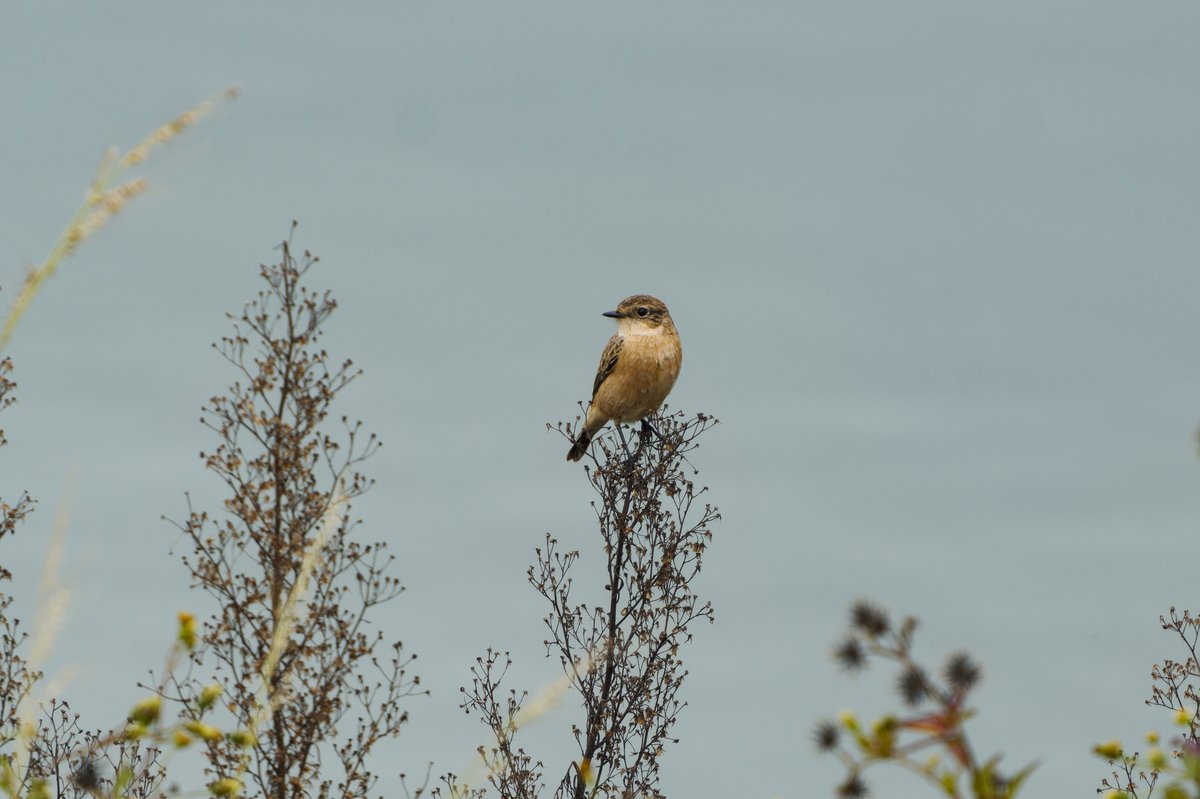
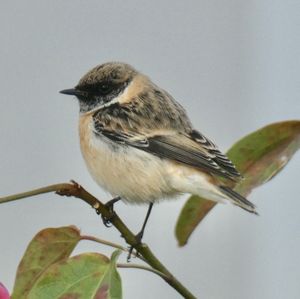
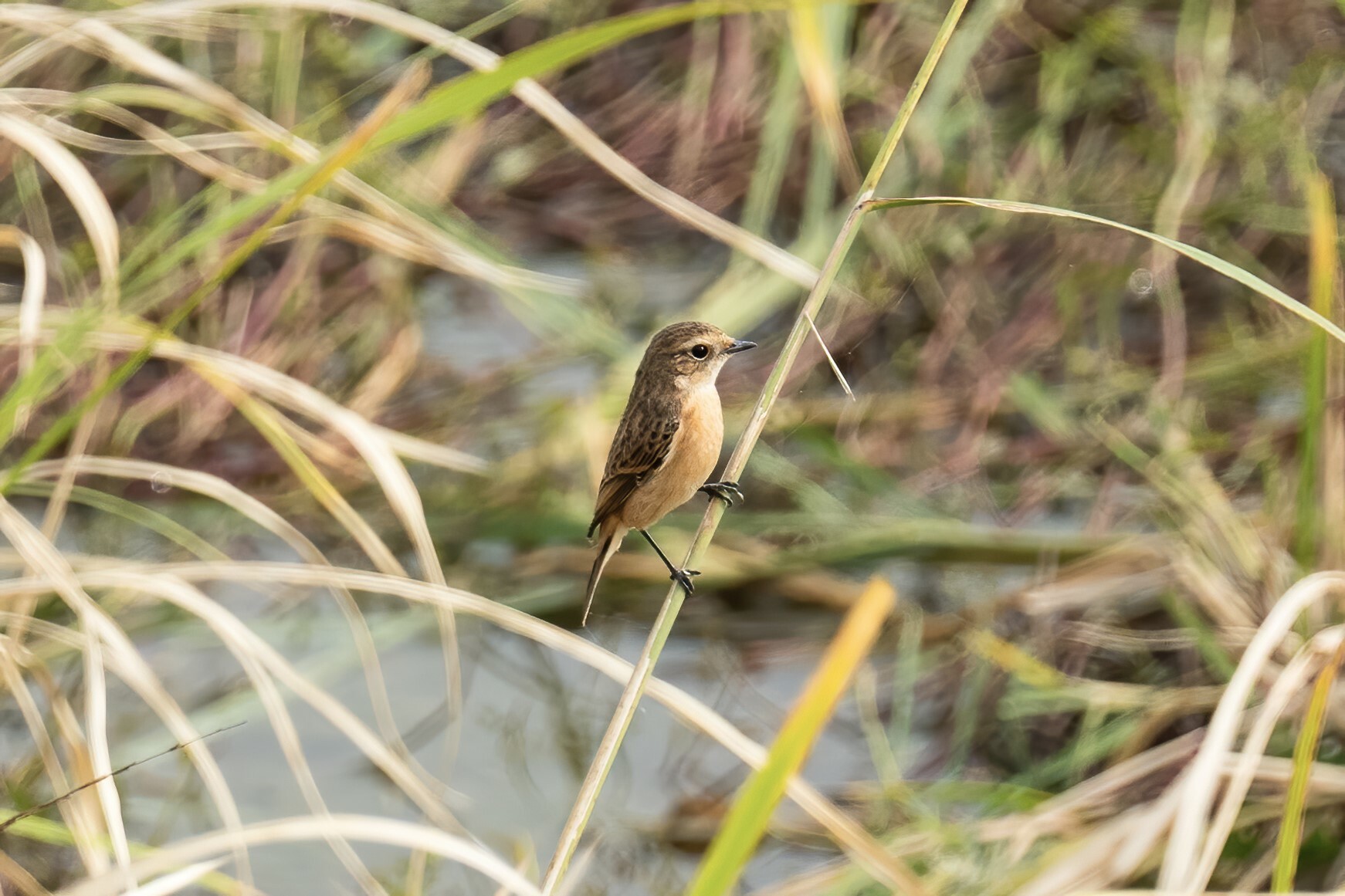
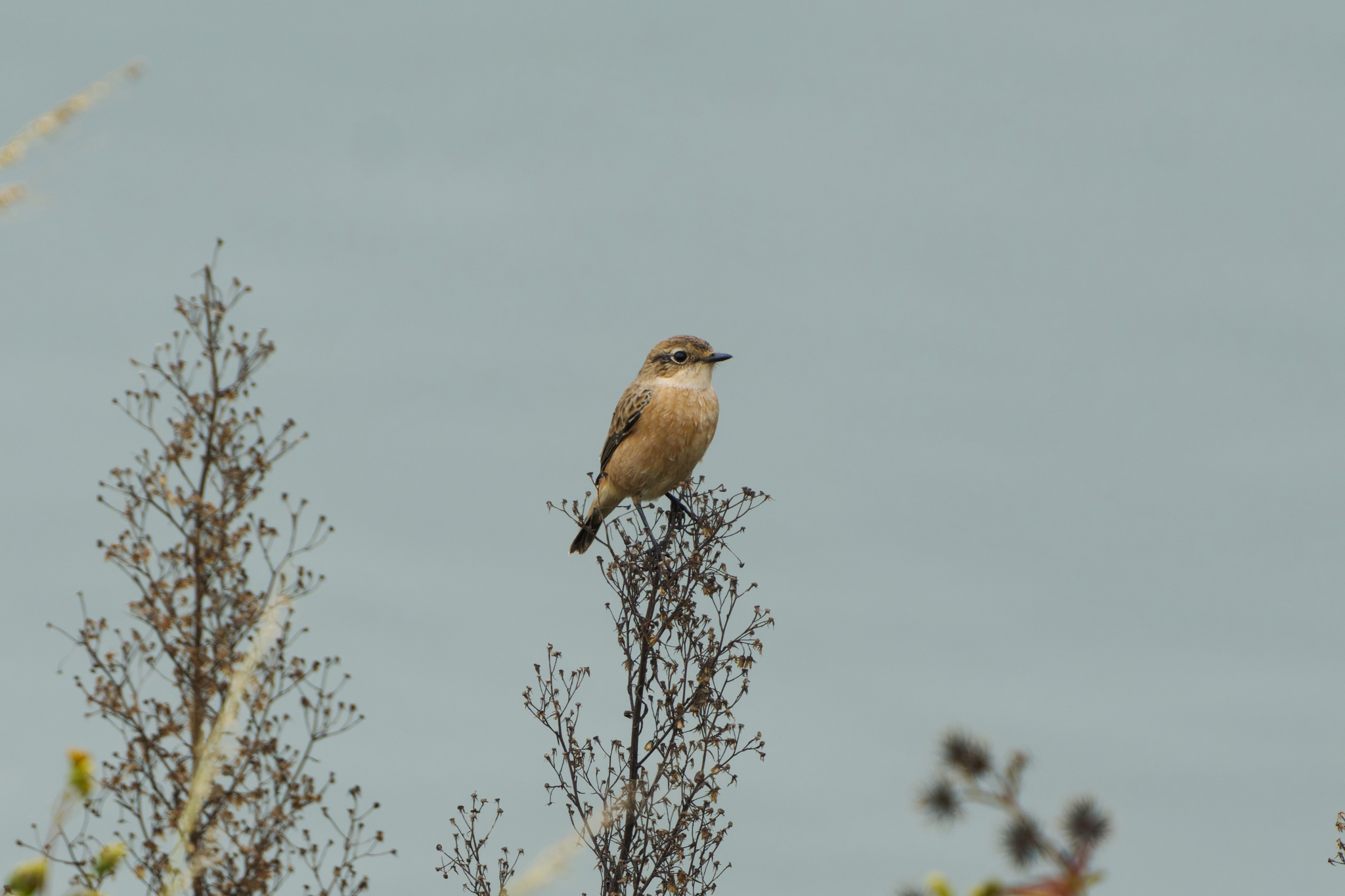
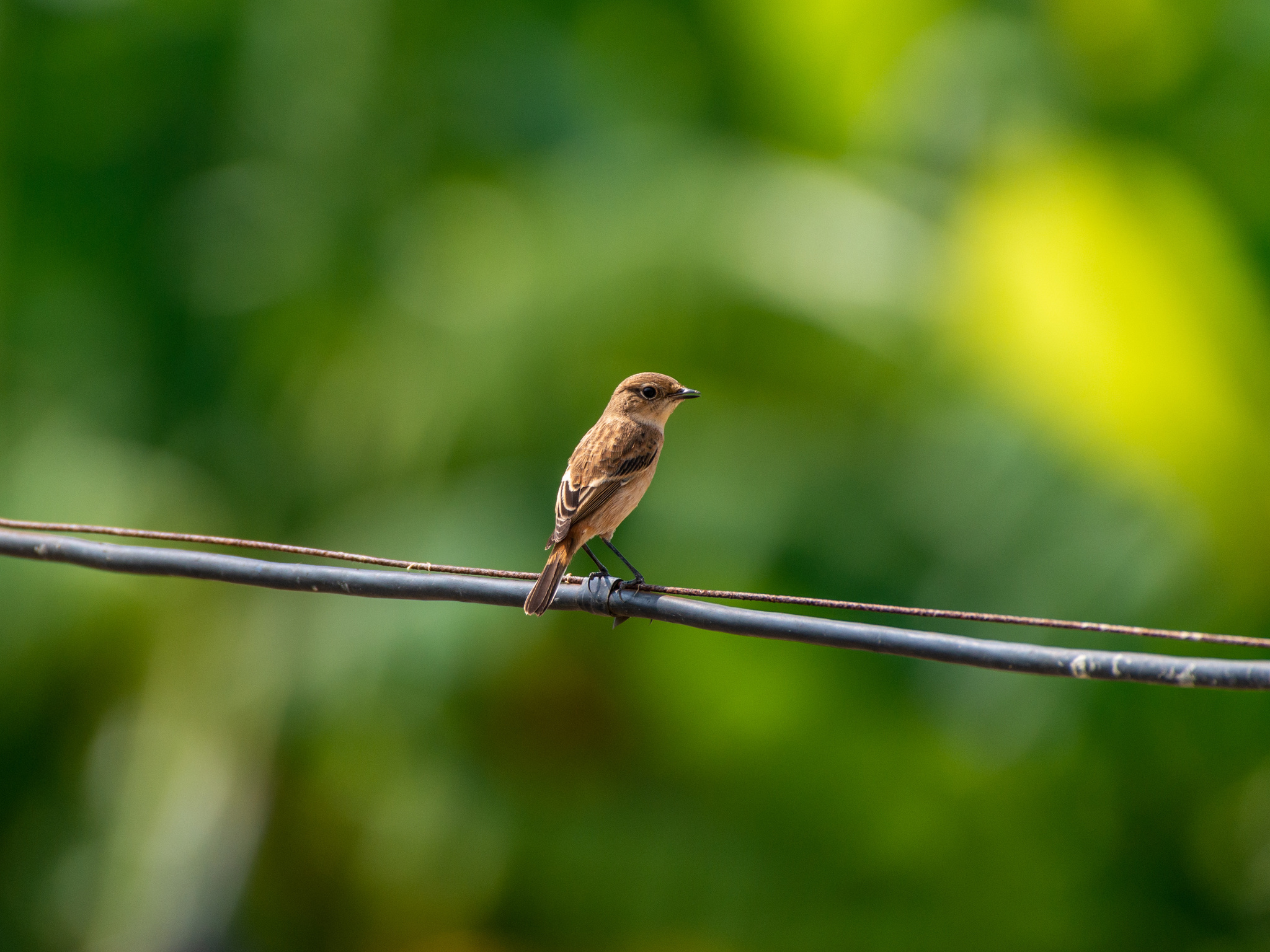
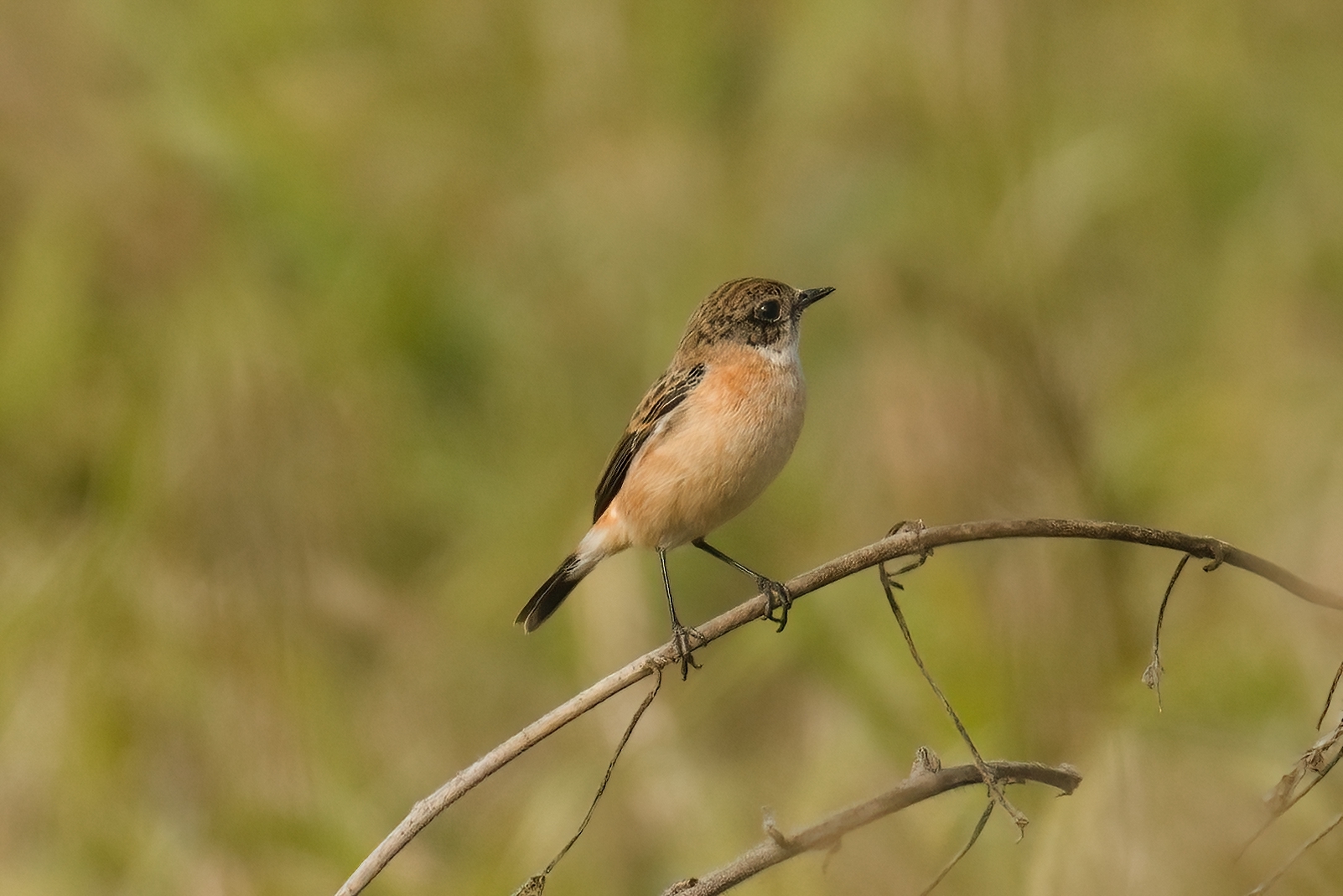
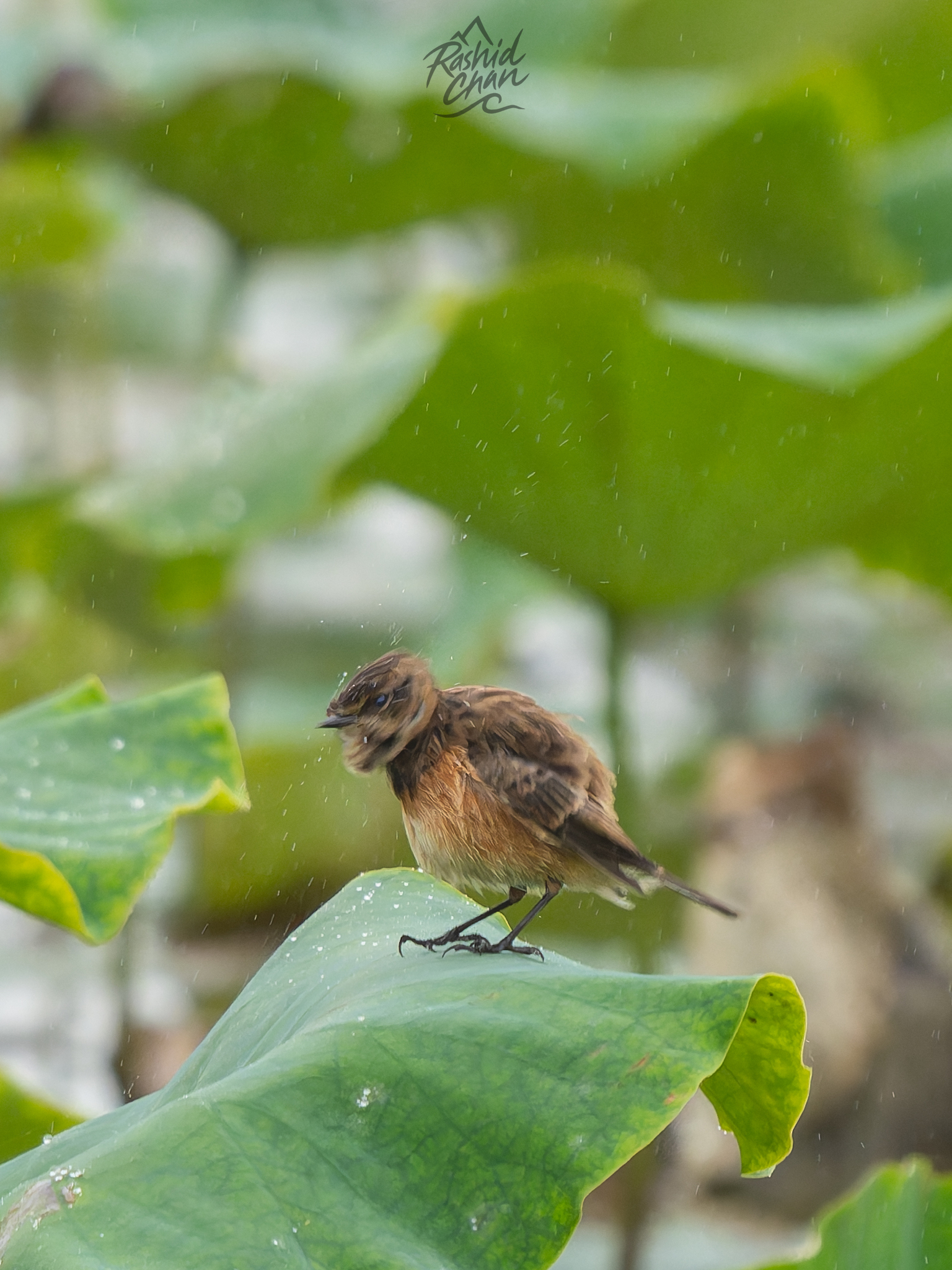
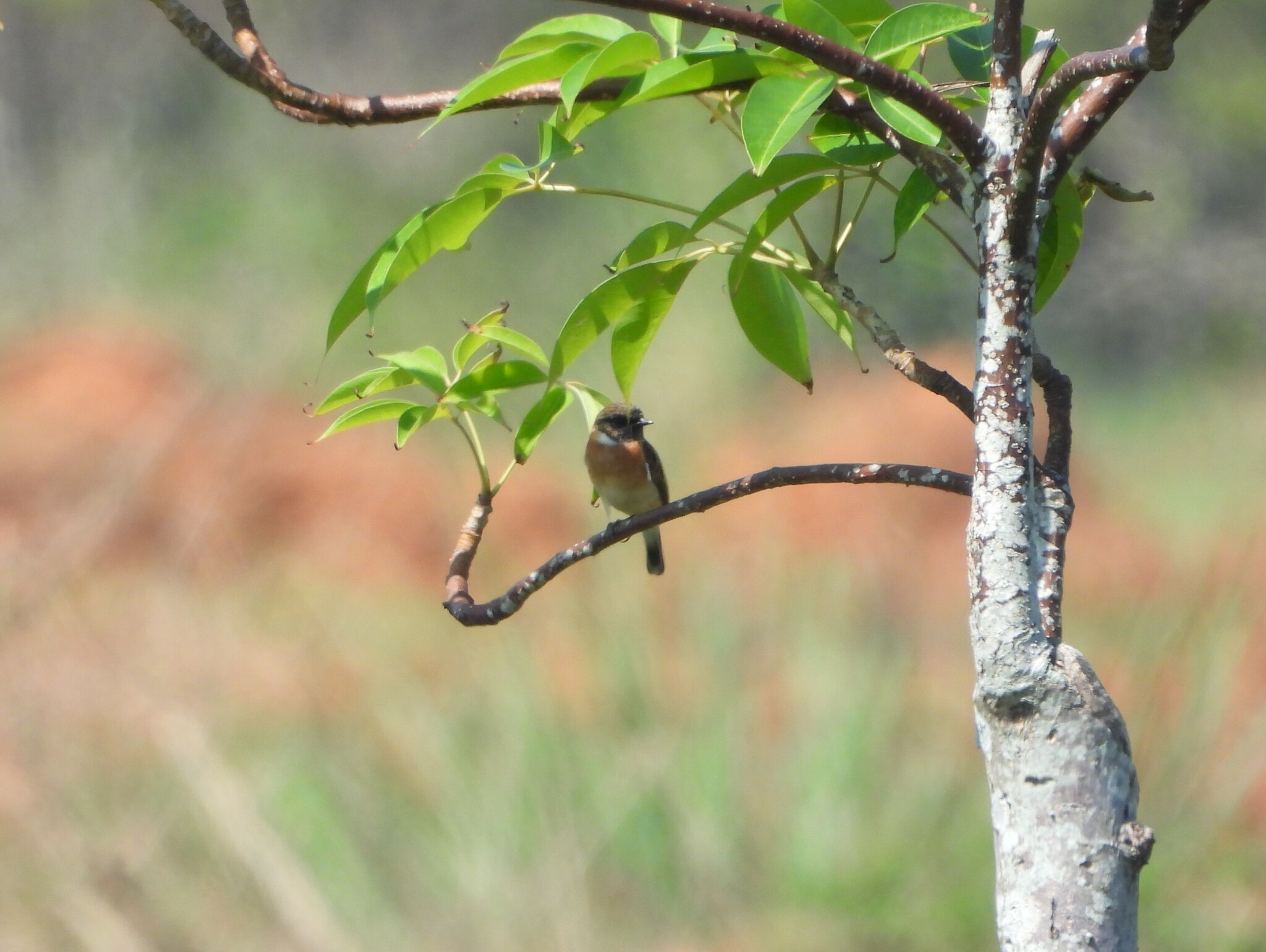
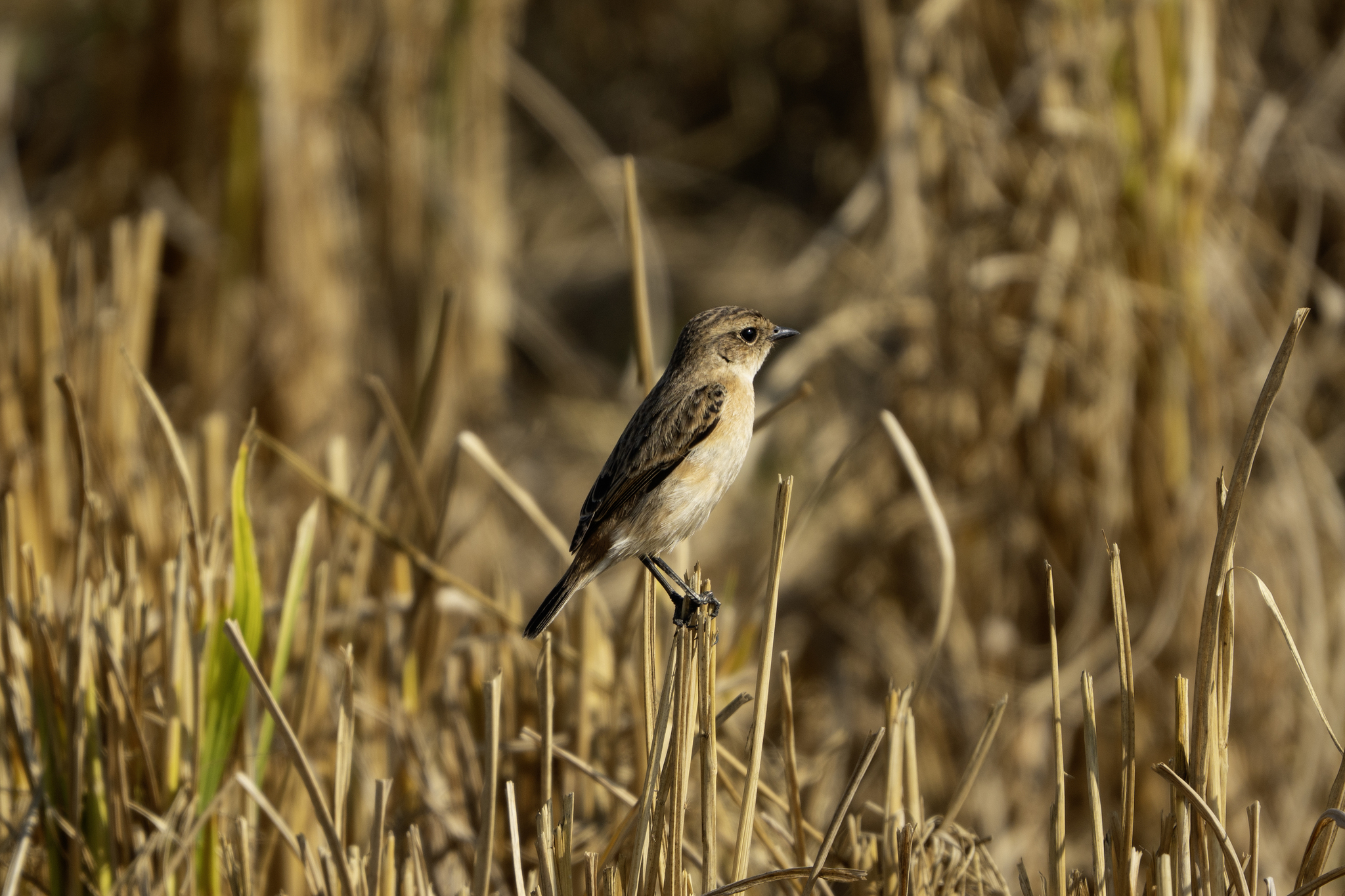
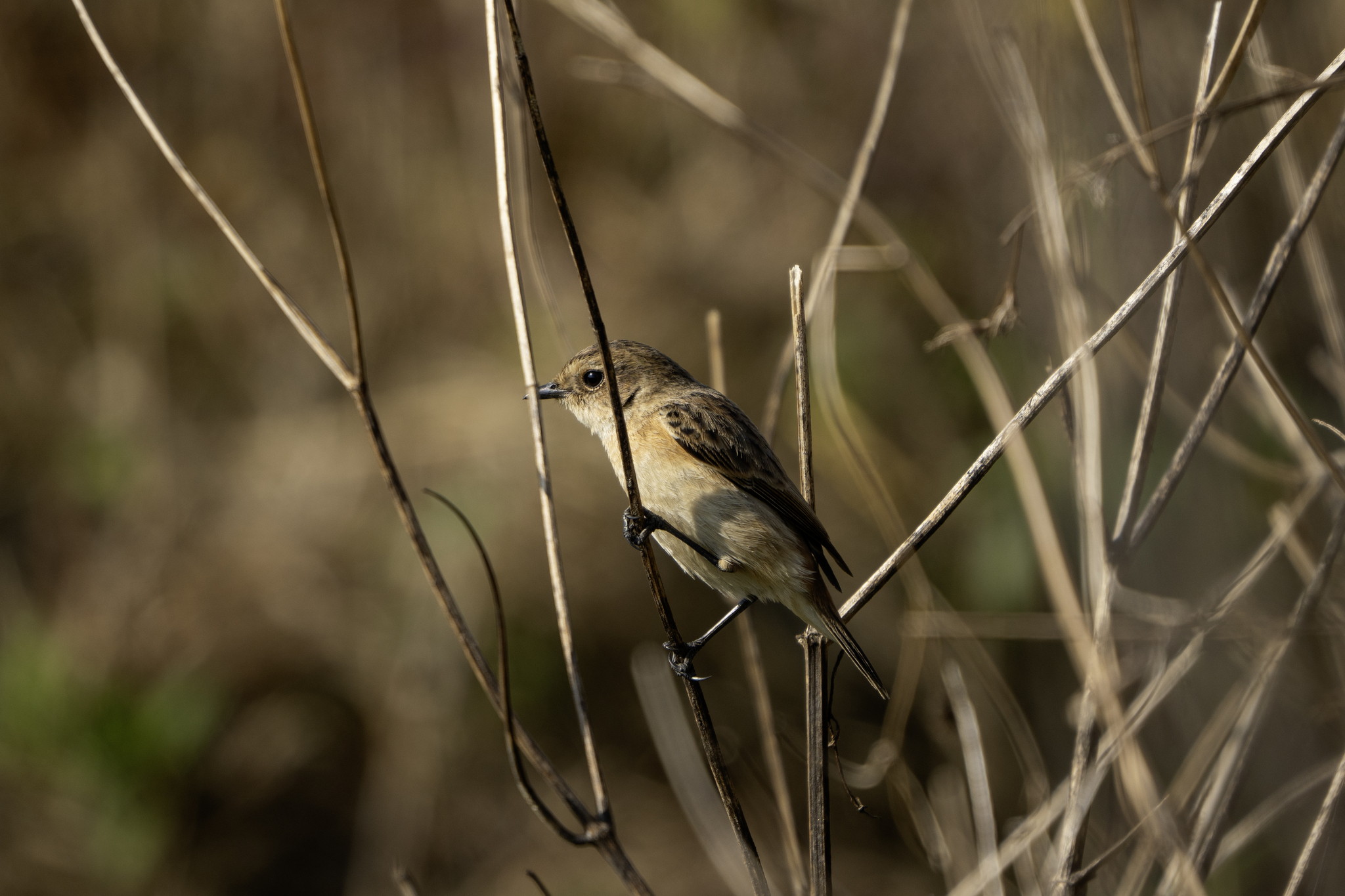
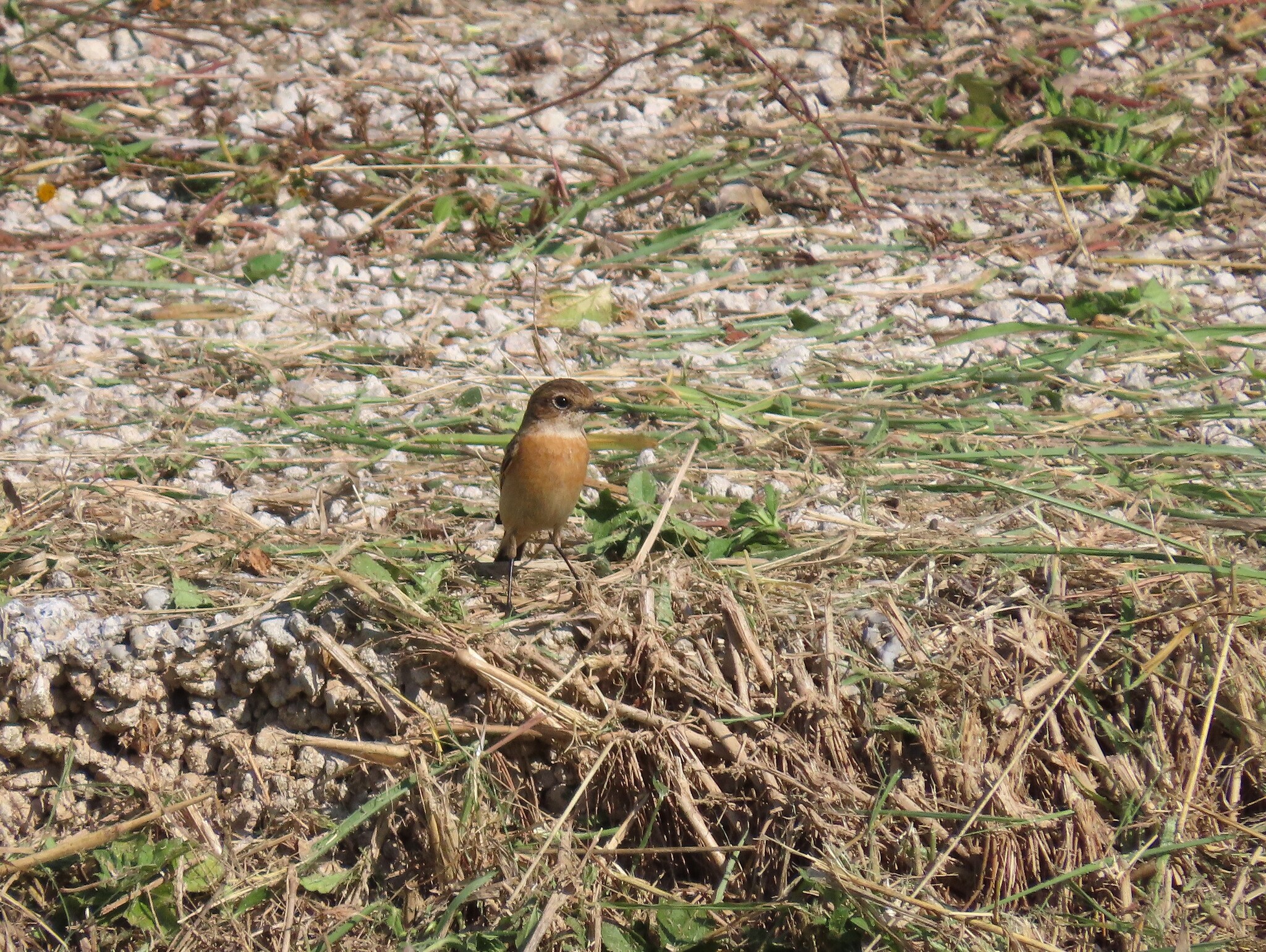
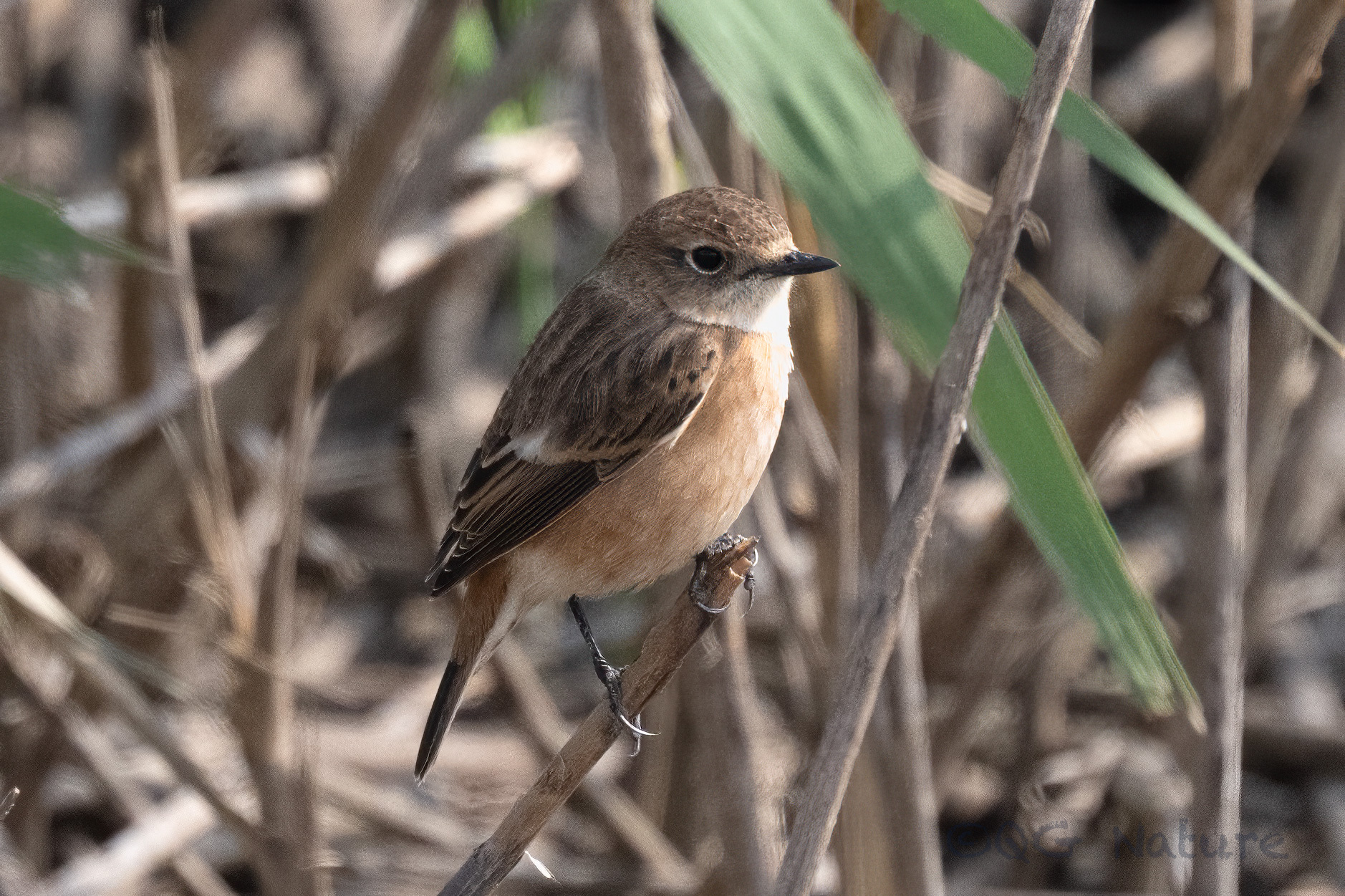
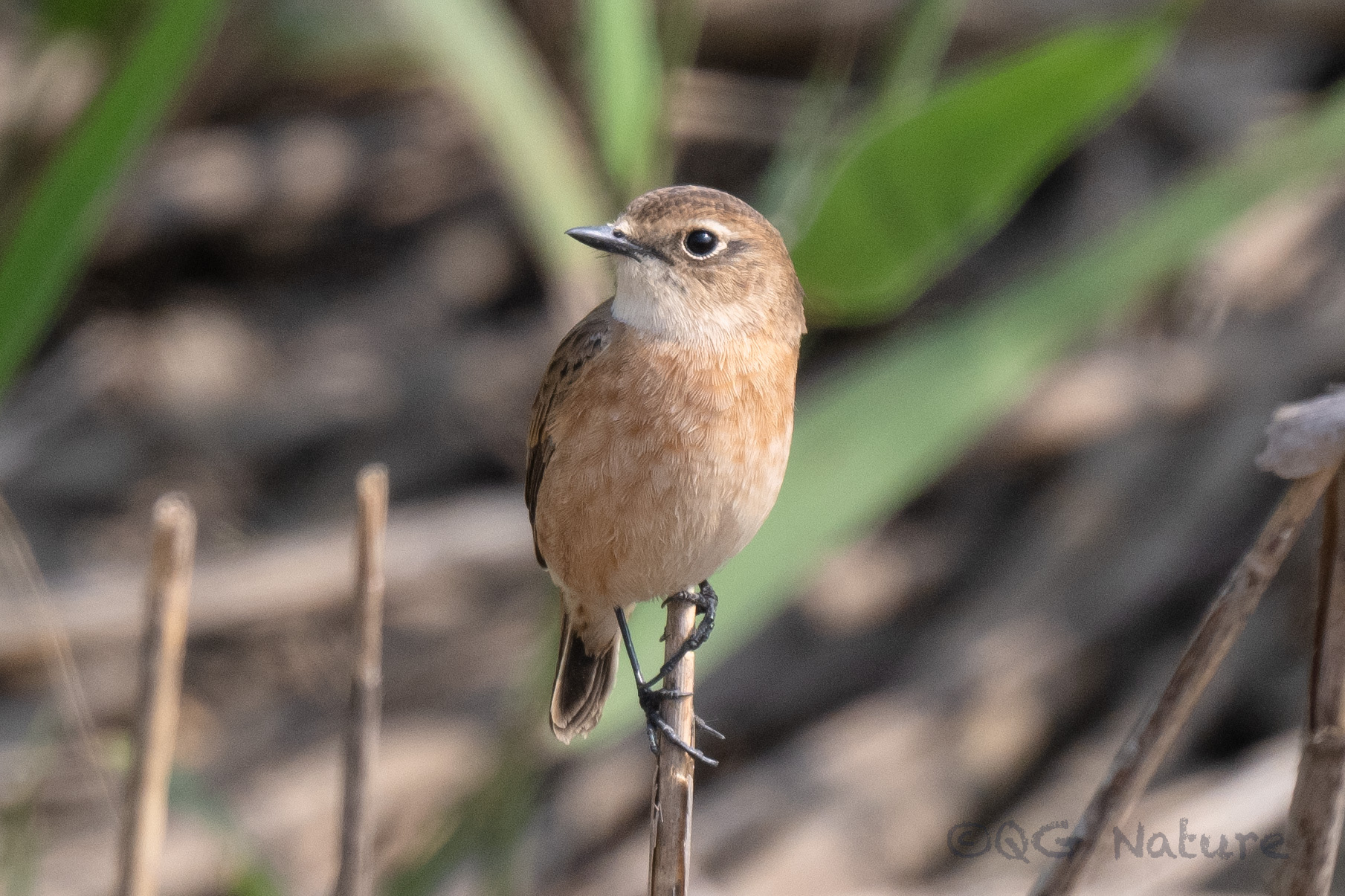
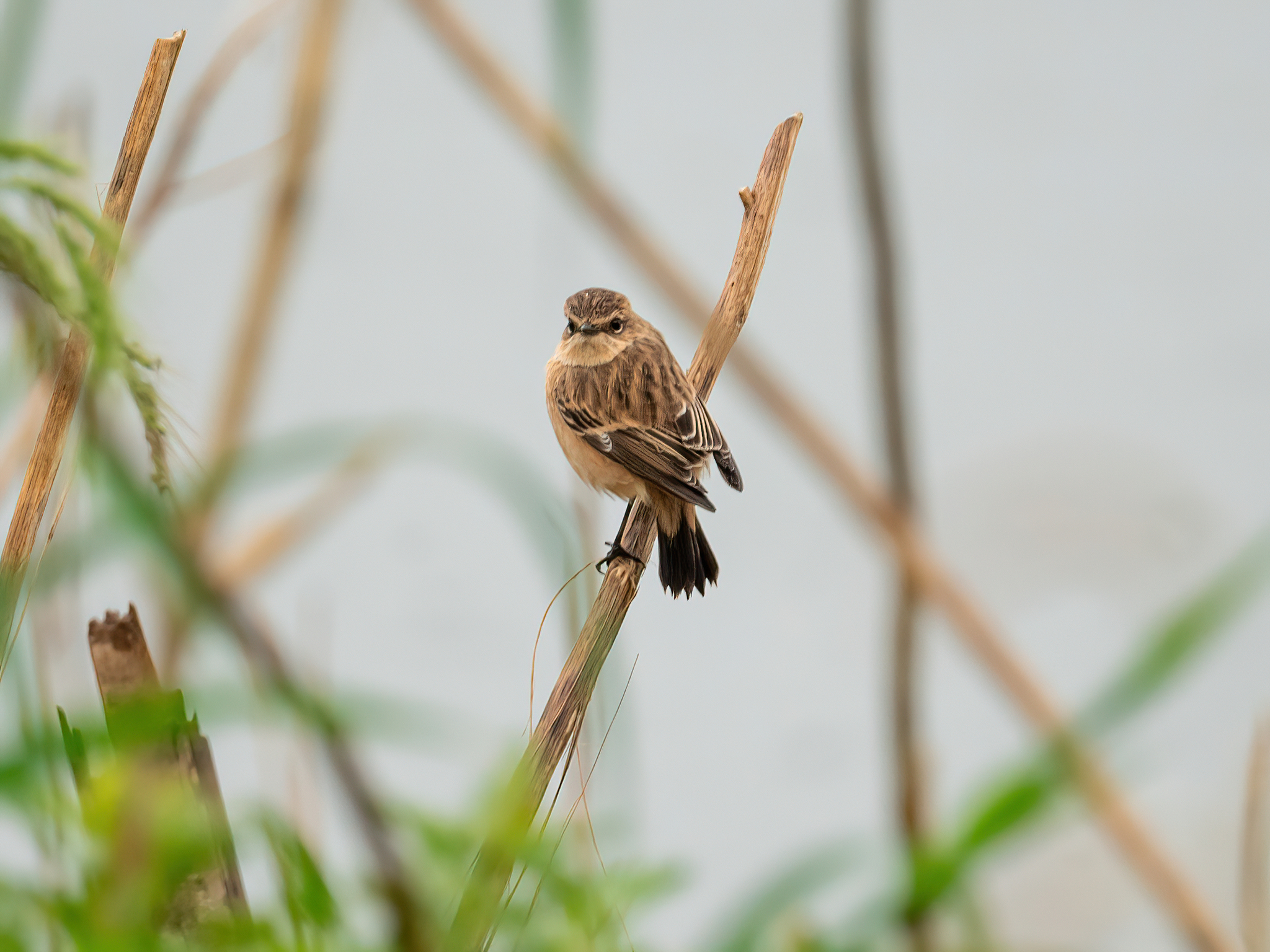
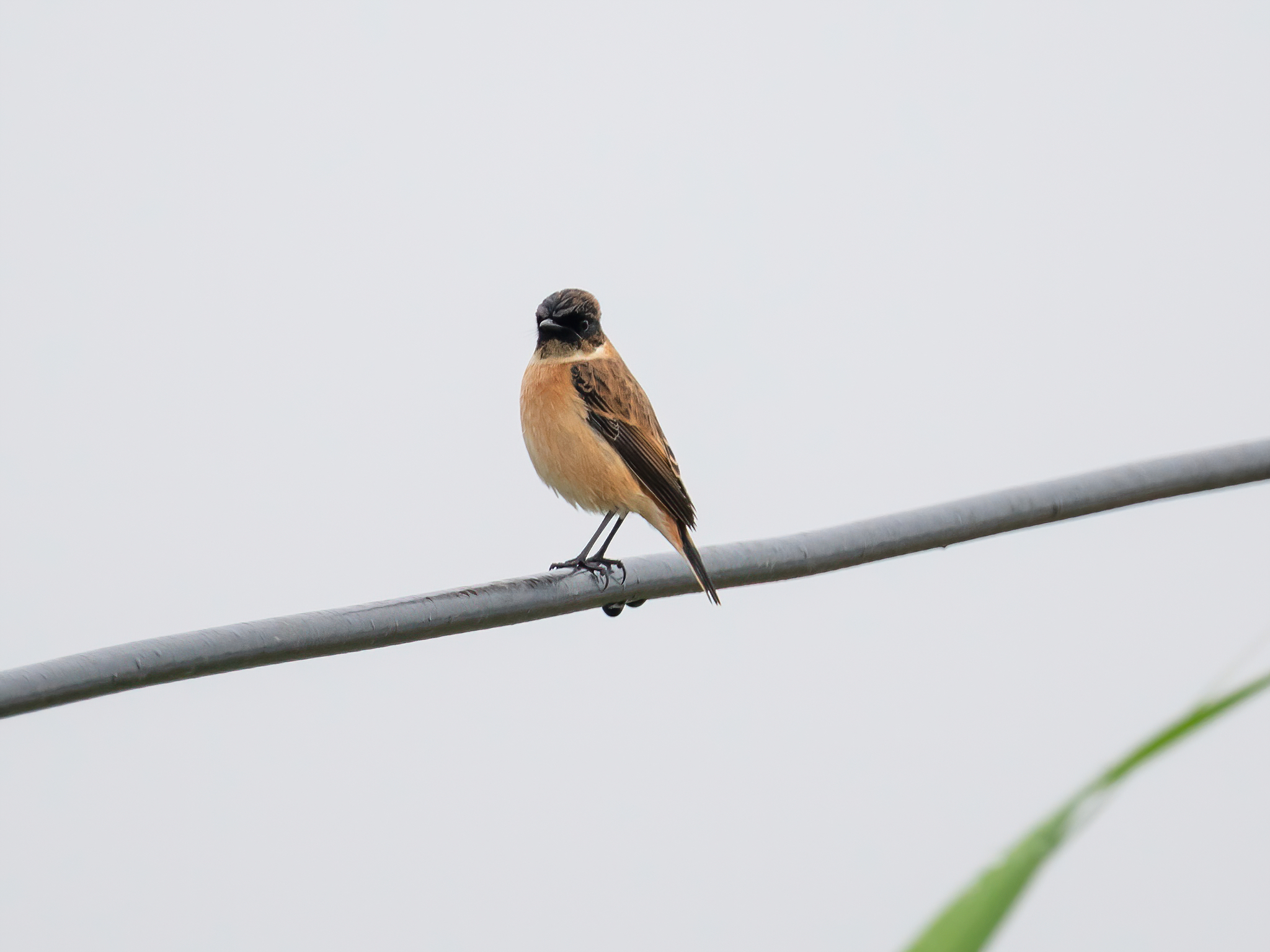
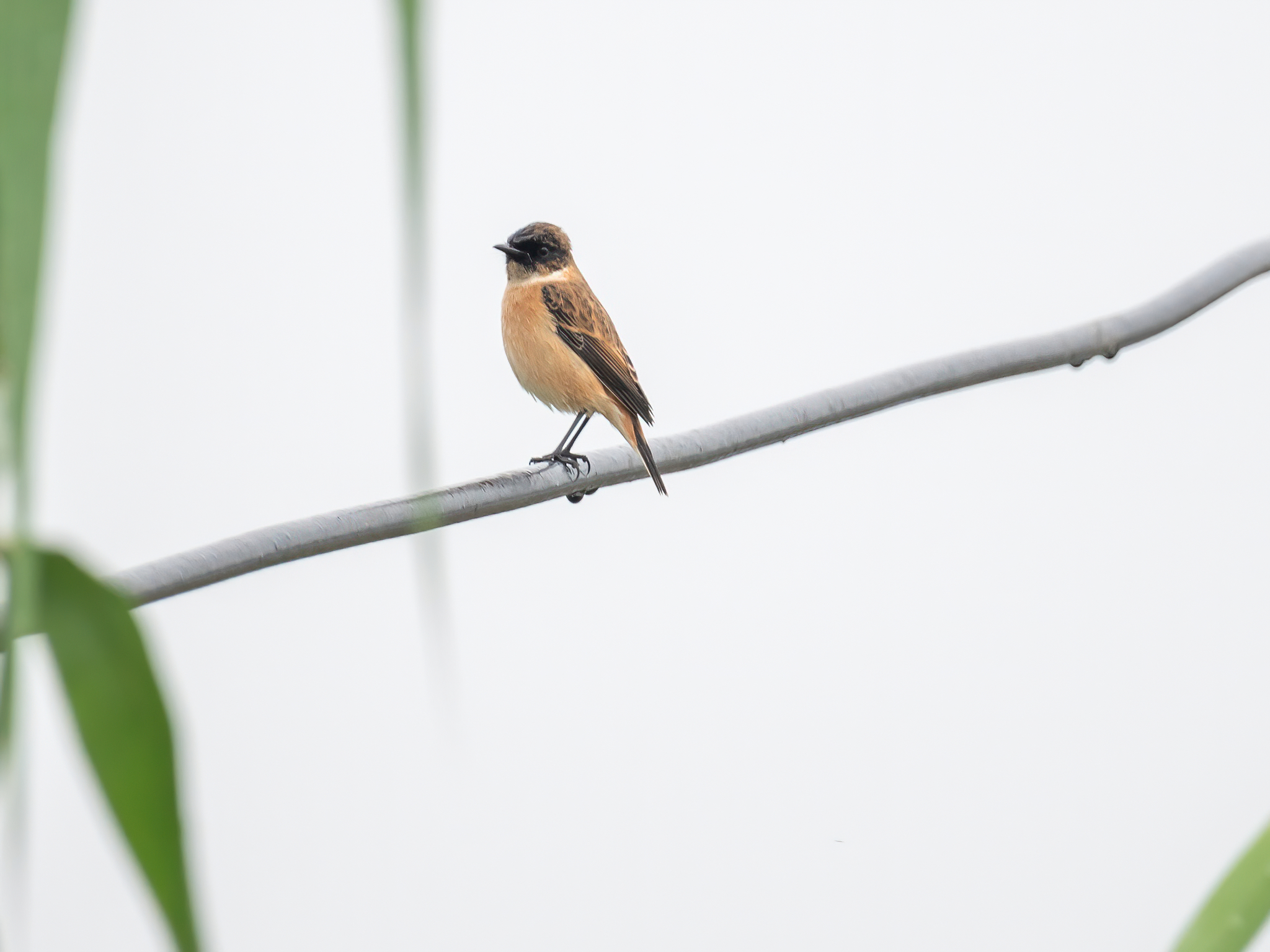
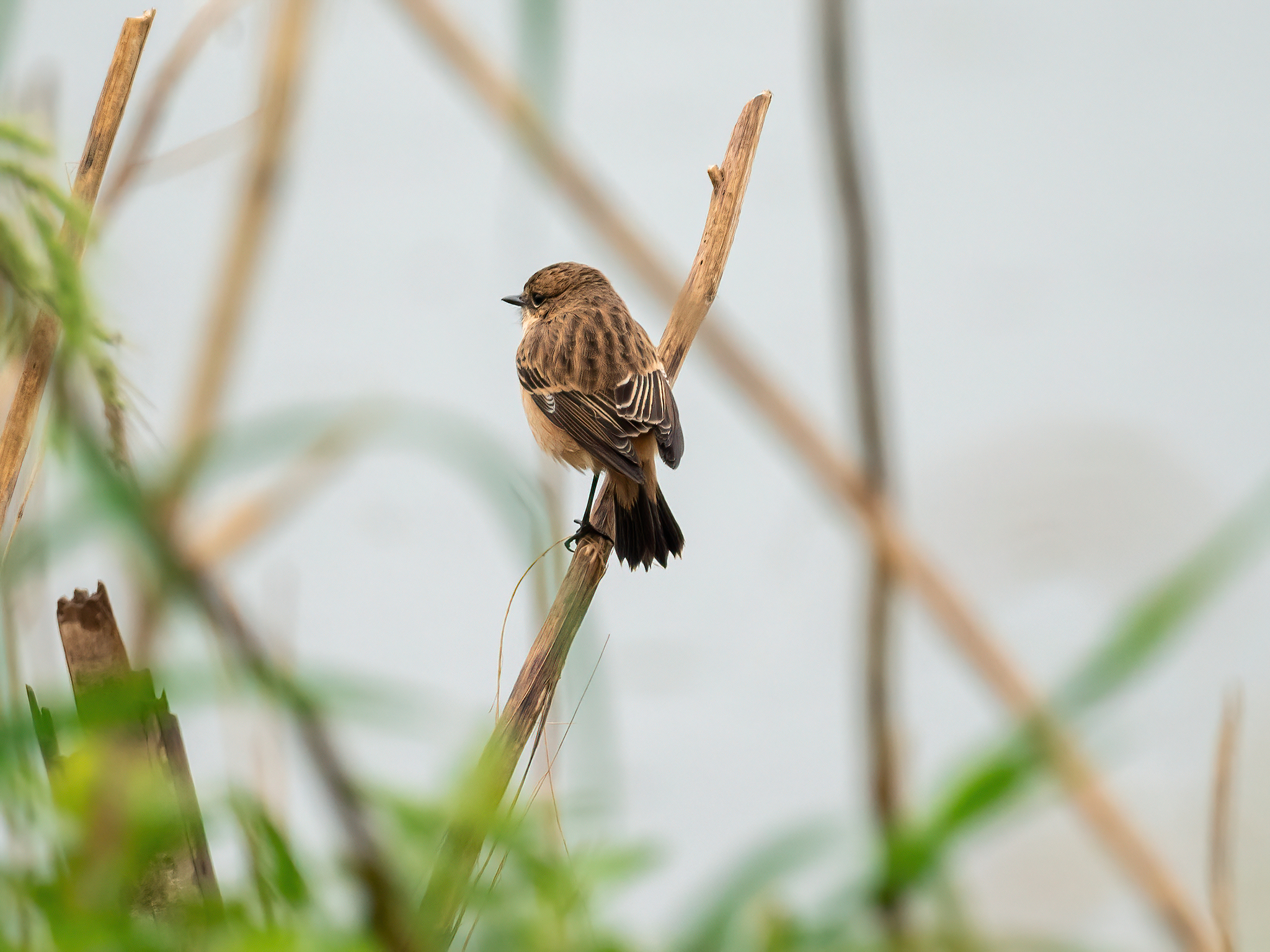
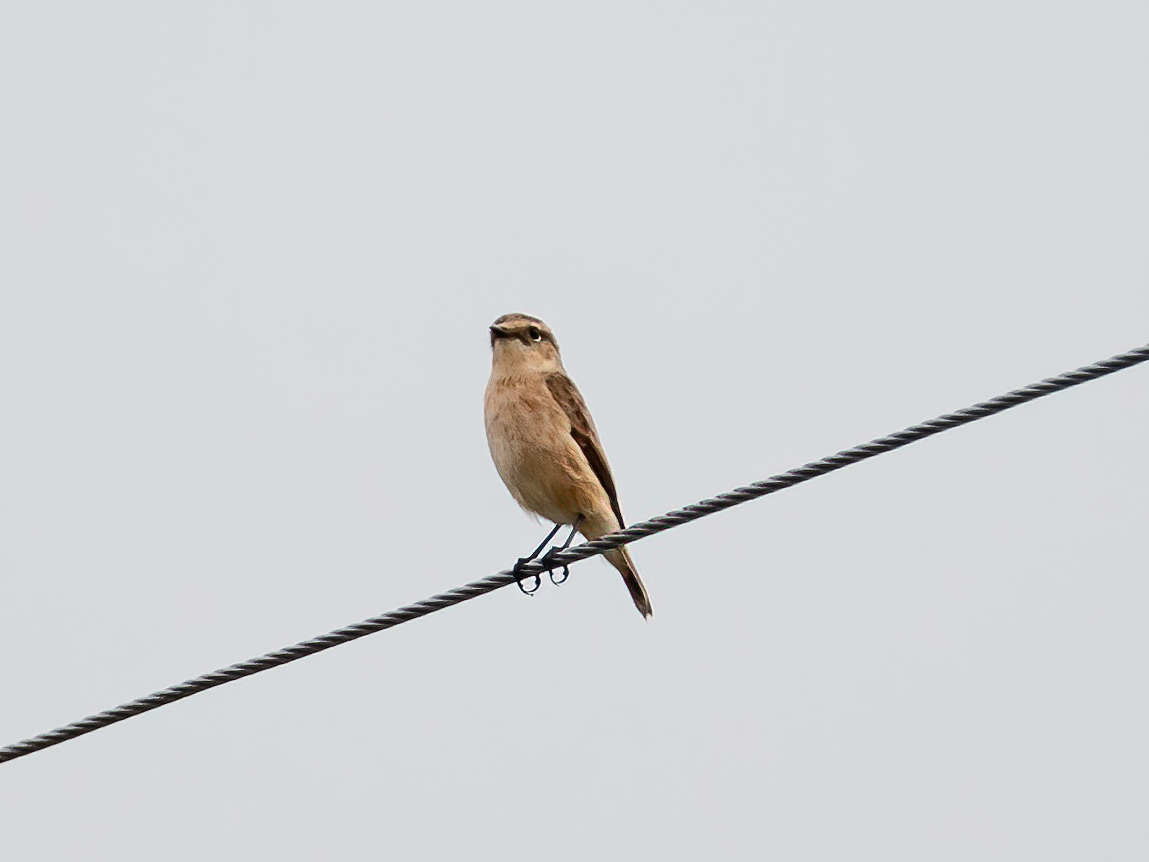
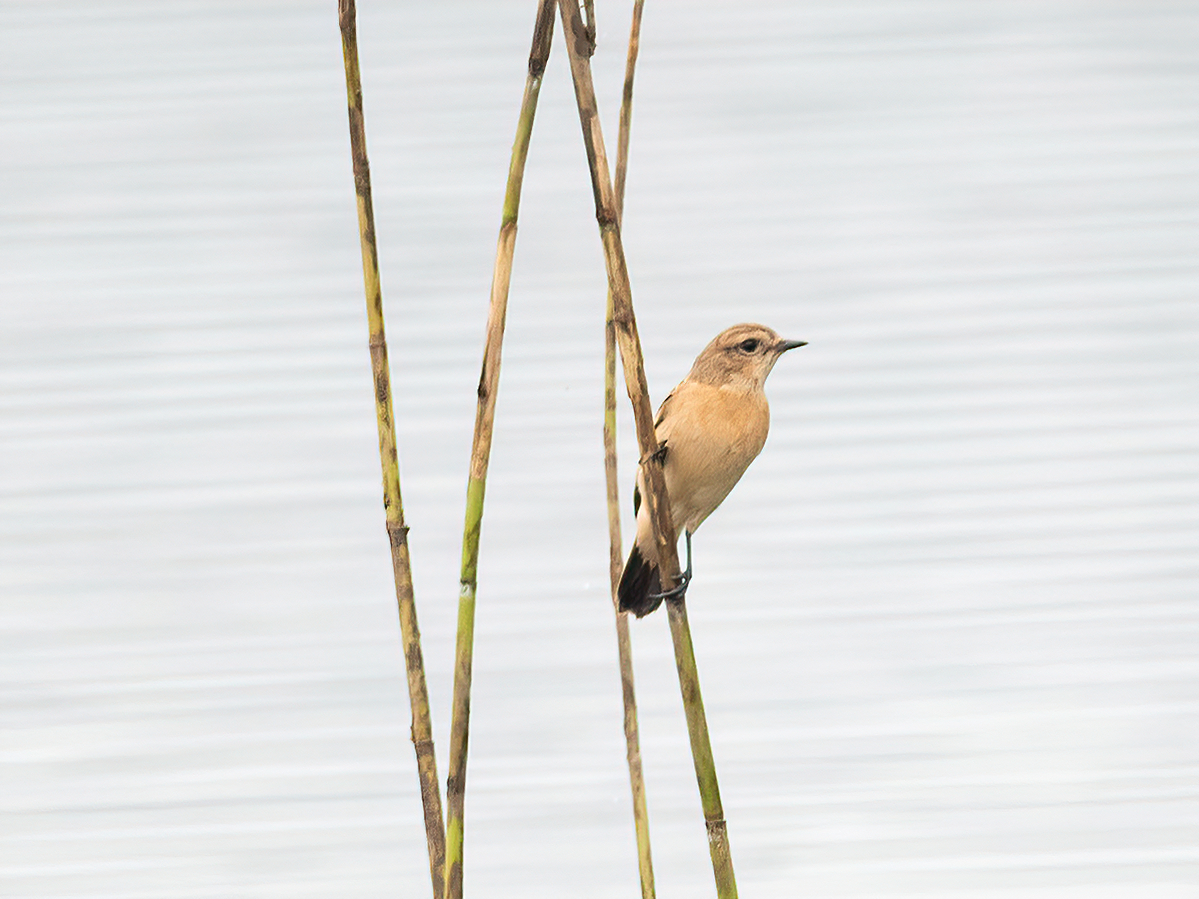
Small passerine bird resembling the European stonechat but typically darker above and paler below. Male breeding plumage has black upperparts and head lacking brownish tones, conspicuous white collar, scapular patch and rump, with restricted orange on throat. Female has pale brown upperparts and head, white neck patches rather than full collar, and pale unstreaked pinkish-yellow rump. Primary remiges distinctly longer than European stonechat, adaptation for long-distance migration. Male has clicking call like two pebbles knocked together; song is high and twittering.
Identification
Darker upperparts and paler underparts distinguish it from European stonechat, with less orange on breast. Longer primary remiges visible at close range; males in winter plumage show supercilium resembling whinchat but distinguished by full white collar. Six subspecies vary in extent of white plumage areas, with S. m. stejnegeri being distinct but similar across eastern Siberia to Japan and Korea.
Distribution & Habitat
Breeding range covers temperate Asia from latitude 71°N in Siberia south to Himalayas and southwest China, west to eastern Turkey and Caspian Sea area. Also breeds in far northeast Europe (Russia, occasionally Finland). Winters from southern Japan south to Thailand and India, west to northeast Africa. Migration brings small numbers to western Europe; exceptionally reaches Alaska. Inhabits open rough scrubland or rough grassland with scattered shrubs from sea level to about 4,000 m ASL.
Behavior & Ecology
Insectivorous, breeding in open rough scrubland or rough grassland with scattered shrubs up to 4,000 m ASL. Birds avoid cool temperate conditions, staying in northern breeding areas only during hot continental summer. In Himalayan Bhutan, migrants sometimes forage in fields and pastures above 2,000 m but most move further down and south to winter in tropical regions. Male has distinctive clicking call like pebbles knocked together; song is high and twittering resembling dunnock.
Conservation
Not considered a threatened species despite not being assessed separately by IUCN. Widespread and common throughout its extensive range. Previously included in Saxicola torquatus as part of the common stonechat complex, but now recognized as distinct species based on mtDNA cytochrome b sequence and nDNA microsatellite fingerprinting data combined with morphological, behavioral and biogeographic evidence.
Source: Wikipedia · CC BY-SA 3.0
Taxonomy
- Order
- Passeriformes
- Family
- Muscicapidae
- Genus
- Saxicola
- eBird Code
- y00427
Vocalizations
Subspecies (6)
-
Saxicola maurus hemprichii
steppes of lower Volga and mouth of Ural River to eastern Caucasus
-
Saxicola maurus indicus
breeds Himalayas (Kashmir to Sikkim and Assam); winters to India
-
Saxicola maurus maurus
breeds eastern Russia to central Asia; winters to Iran, Iraq, and northern India
-
Saxicola maurus przewalskii
breeds mountains of western China; winters to Myanmar and northern India
-
Saxicola maurus stejnegeri
breeds eastern Siberia to Japan and Korea; winters to southern China and Indochina
-
Saxicola maurus variegatus
mountains of eastern Türkiye to Transcaucasia and Iran
Data Sources
Species description from Wikipedia, licensed under CC BY-SA 3.0.
Bird images and sounds sourced from GBIF, contributed by citizen scientists worldwide under Creative Commons licenses.
Taxonomy data from AviList 2025.