


Passeriformes / Muscicapidae / Saxicola
Pied Bush Chat
Saxicola caprata · 白斑黑石䳭
Introduction
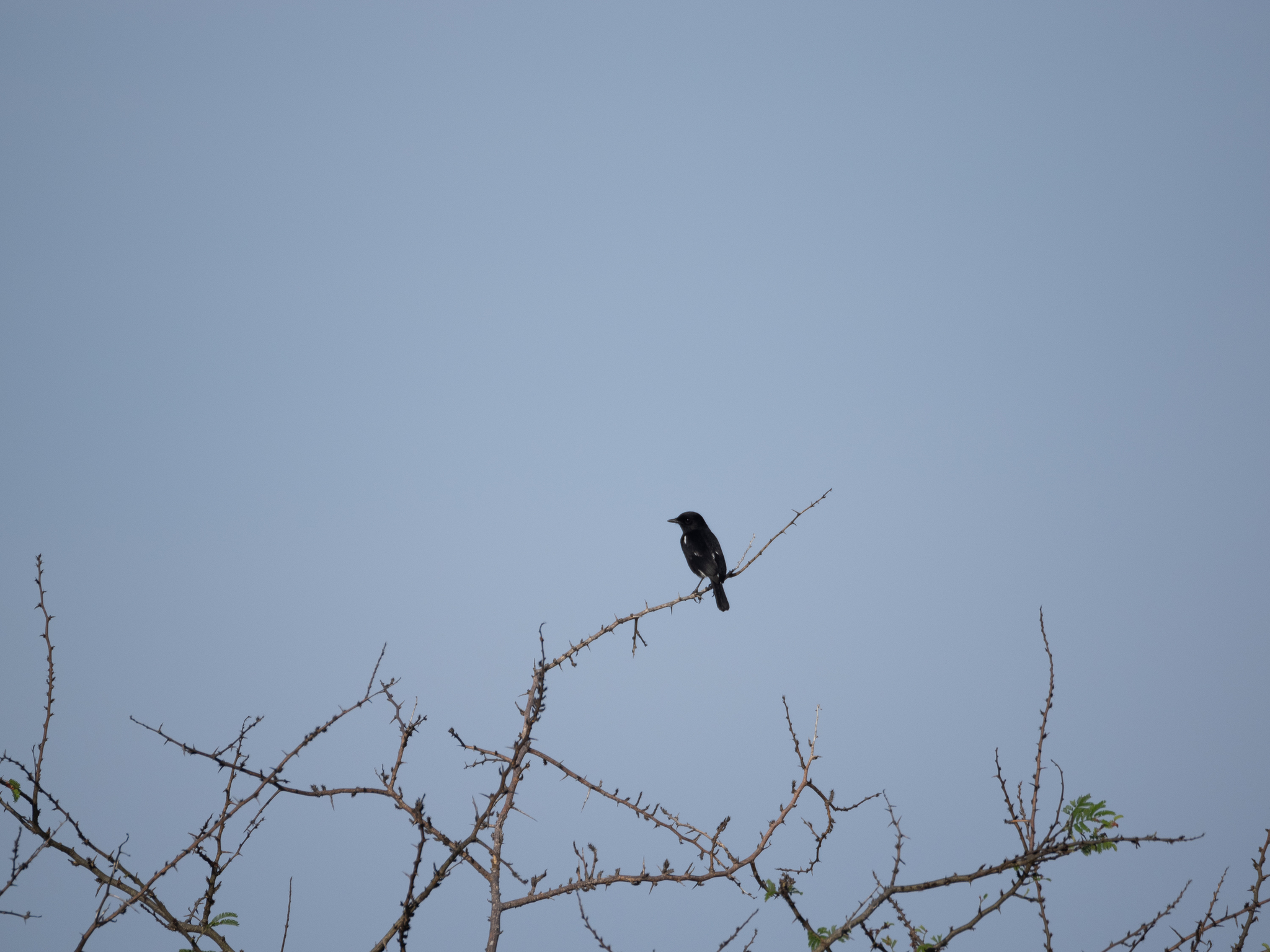
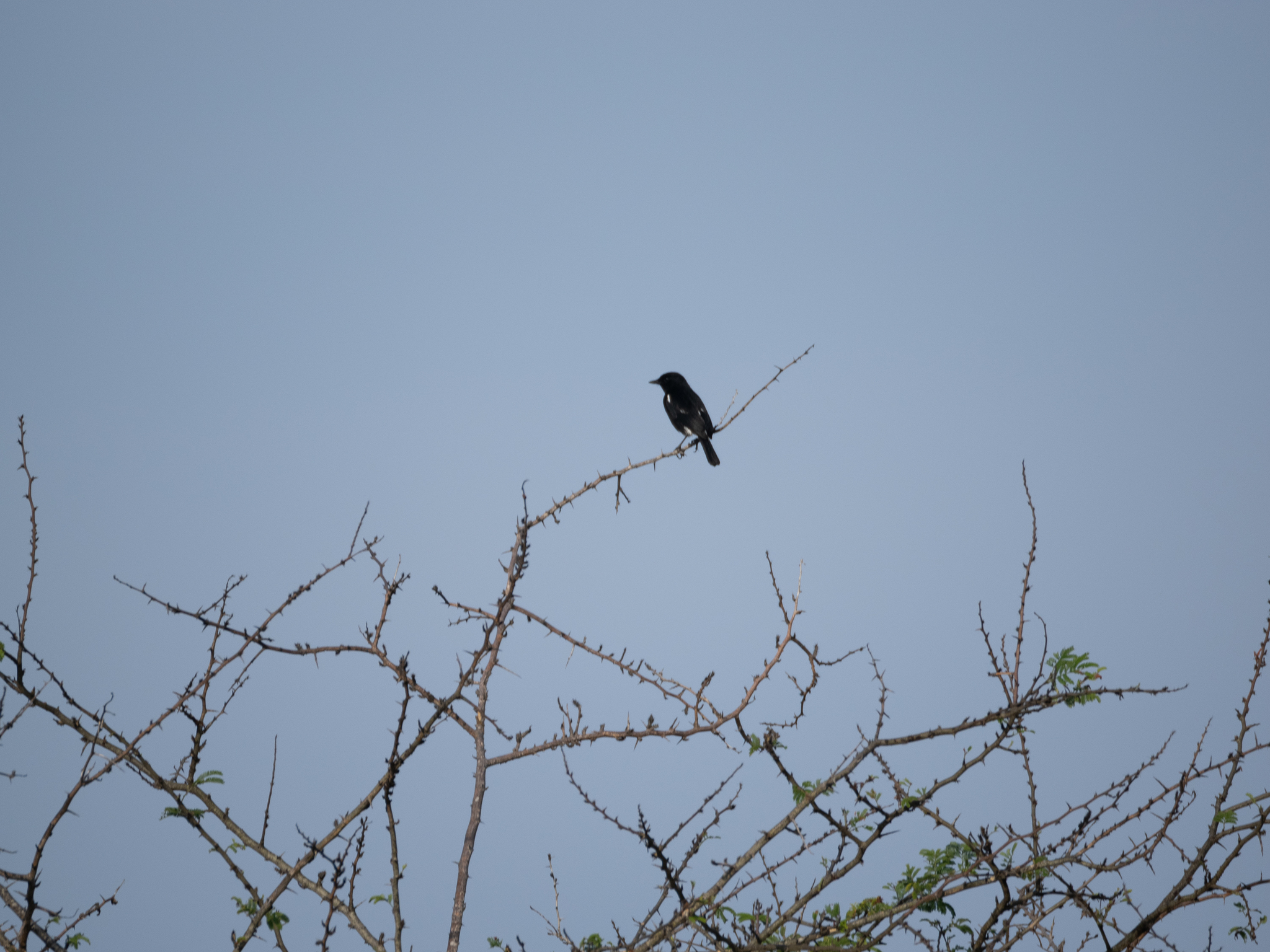
A small passerine in the genus Saxicola, formerly placed in Turdidae but now classified with Old World flycatchers. It ranges from West and Central Asia through the Indian subcontinent to Southeast Asia and Papua New Guinea. The species inhabits open scrub, grassland, and cultivation, often perching on short thorn trees or shrubs to hunt insects. About sixteen subspecies are recognized.
Description
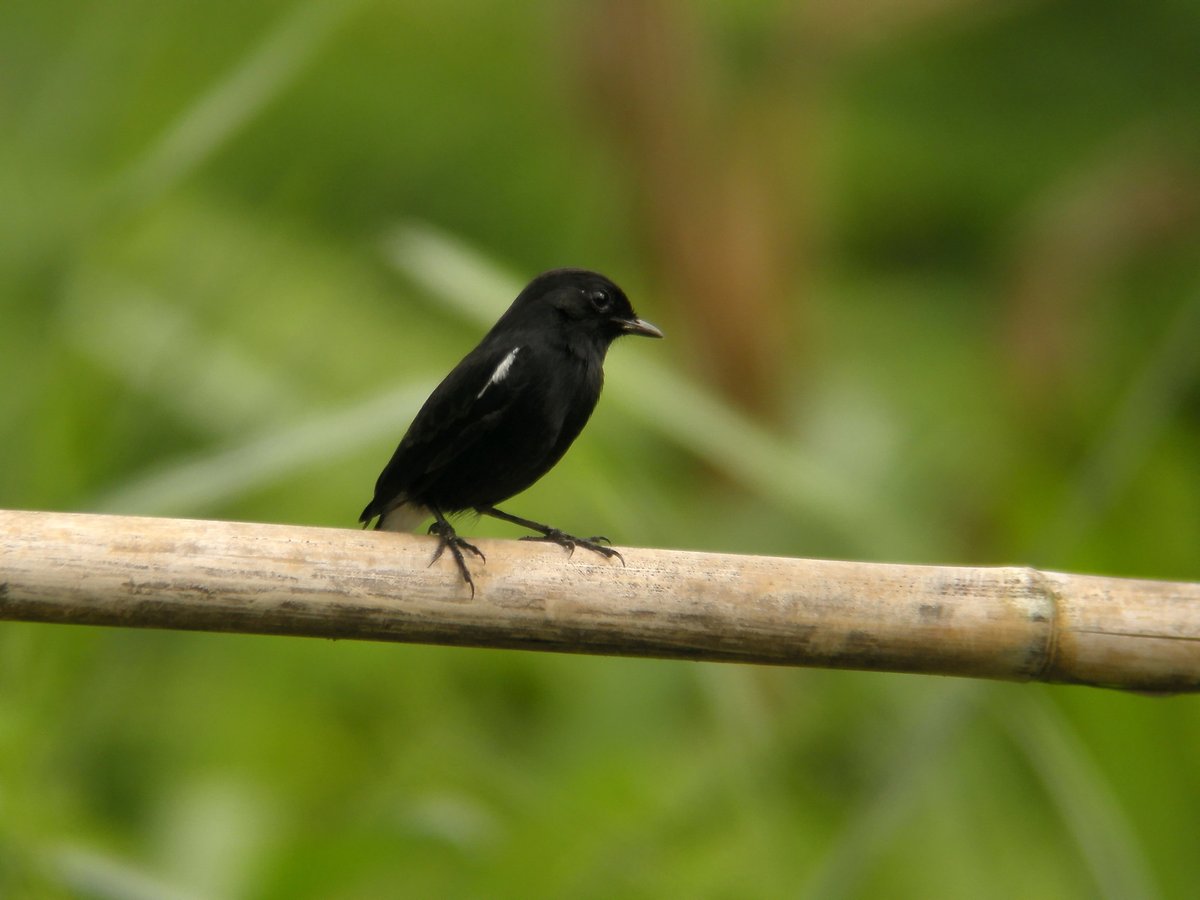
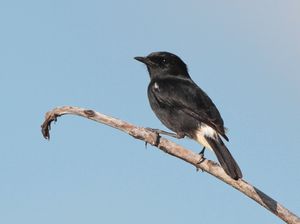
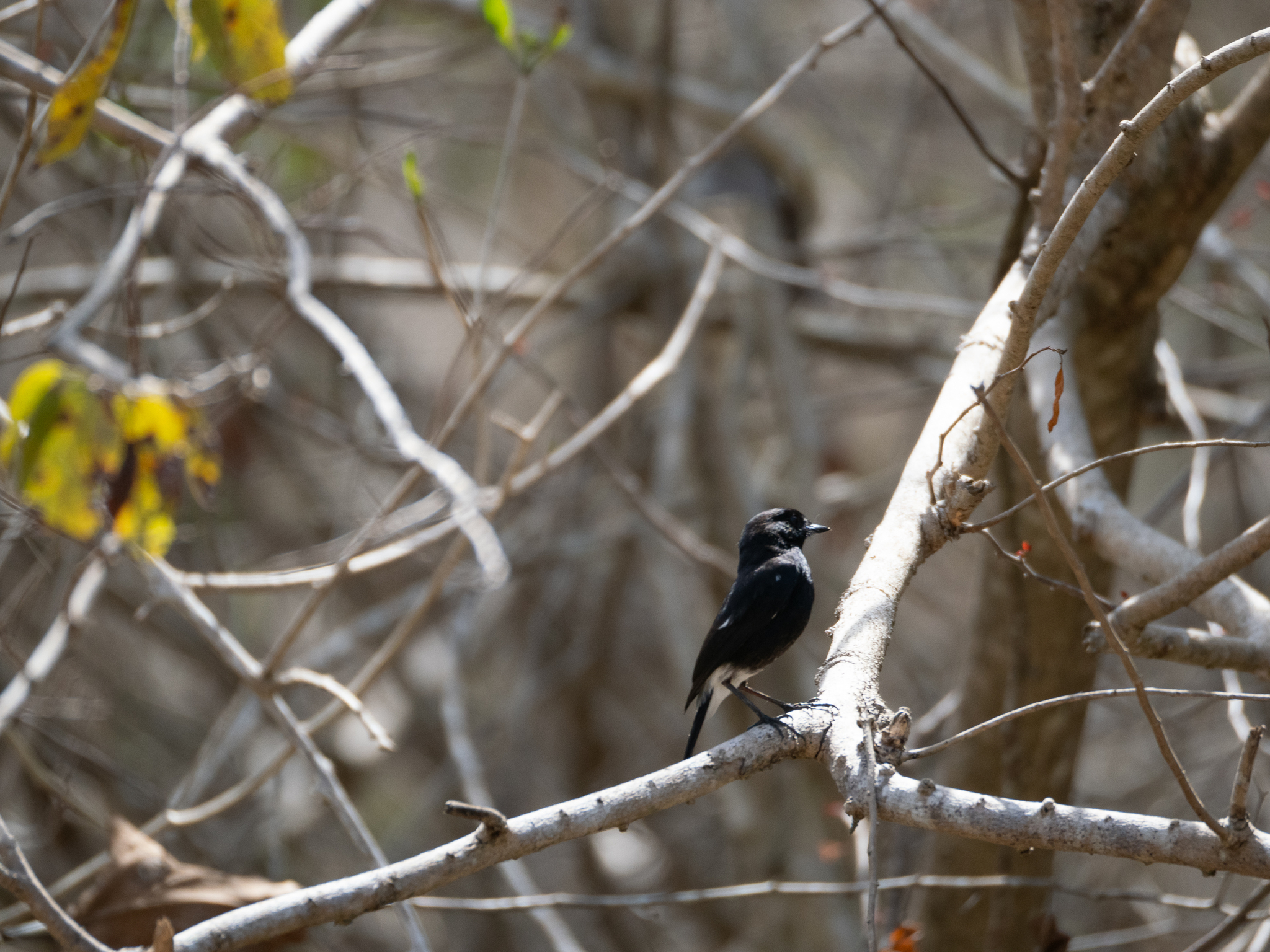
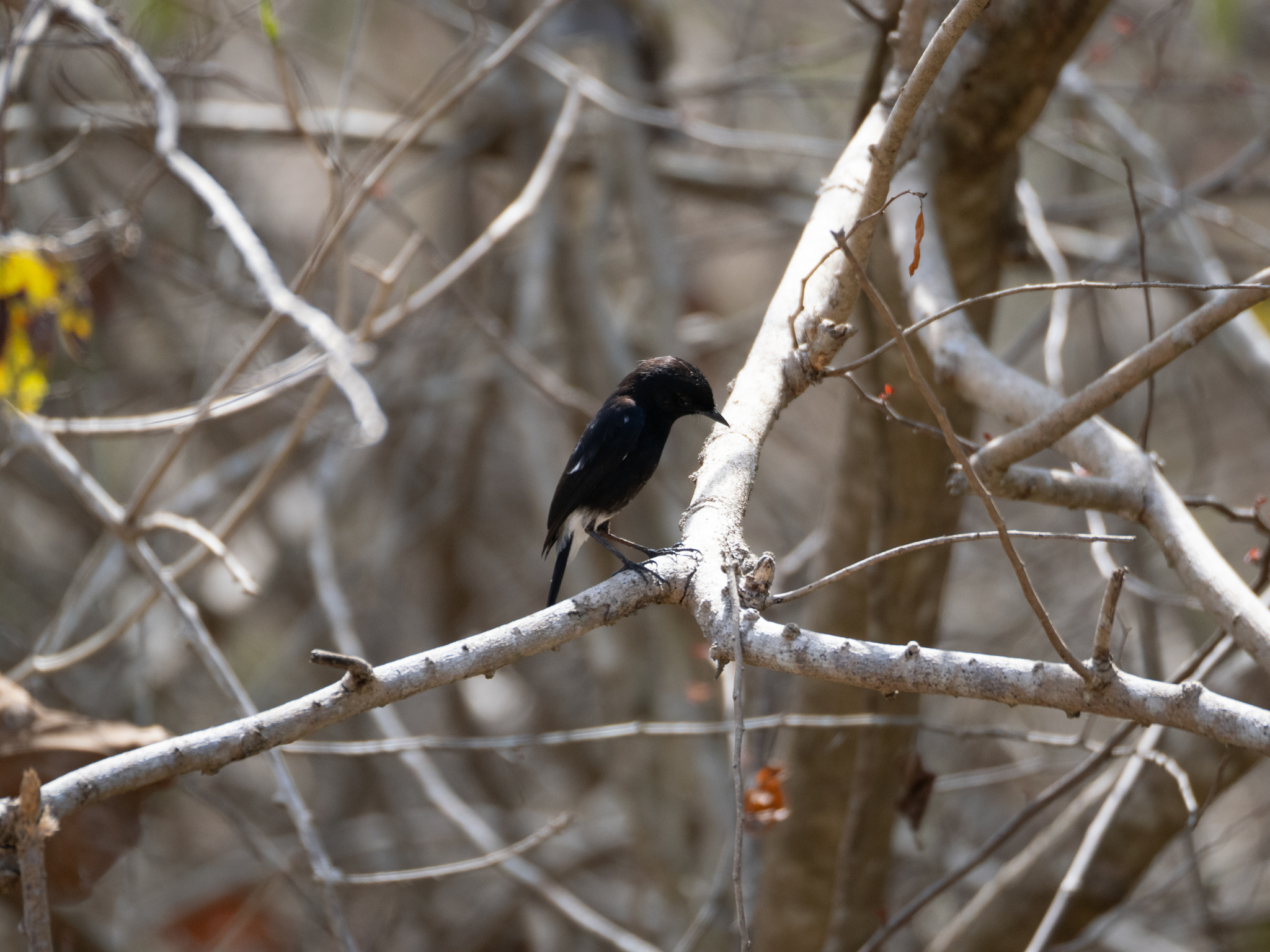
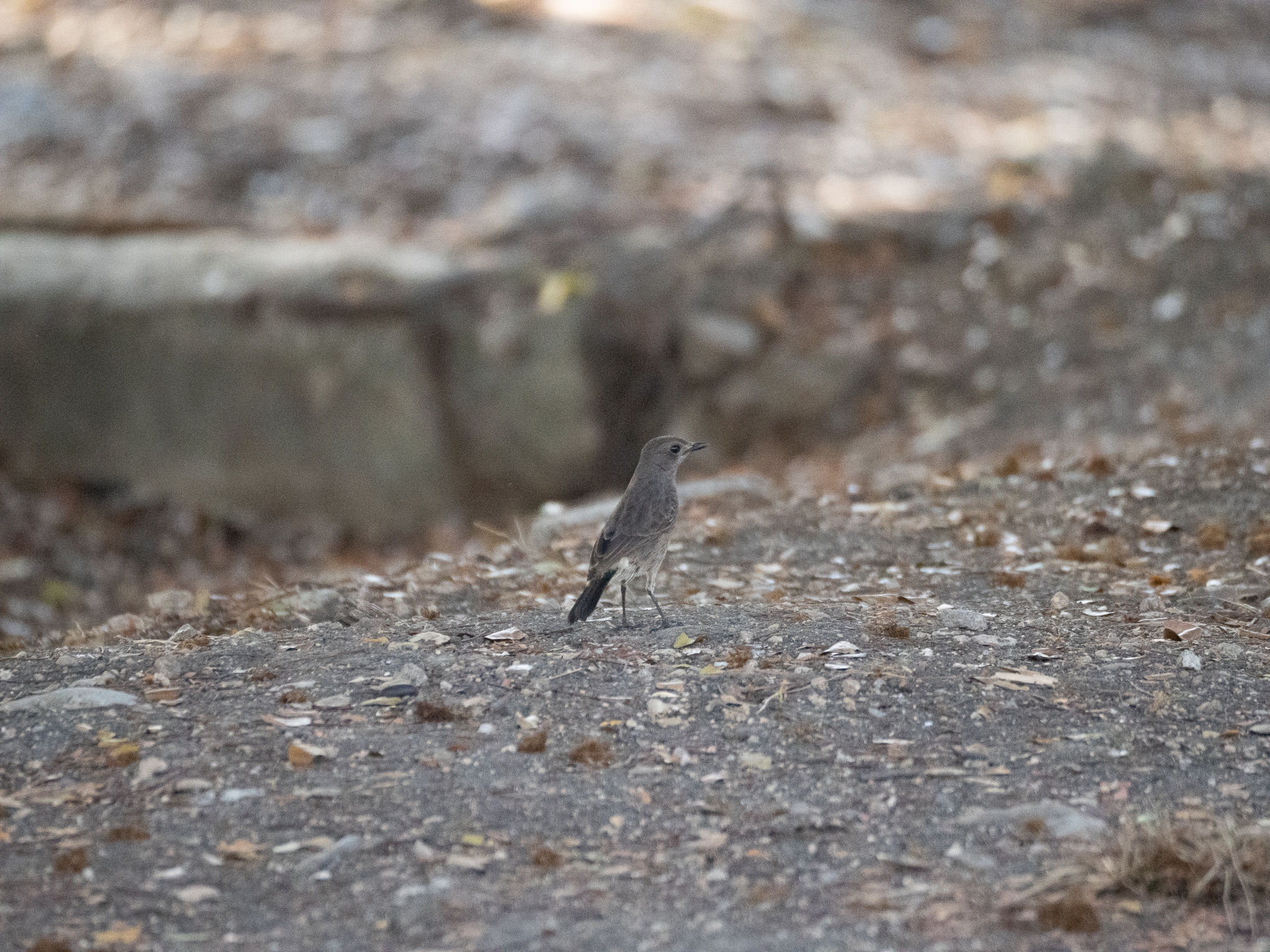
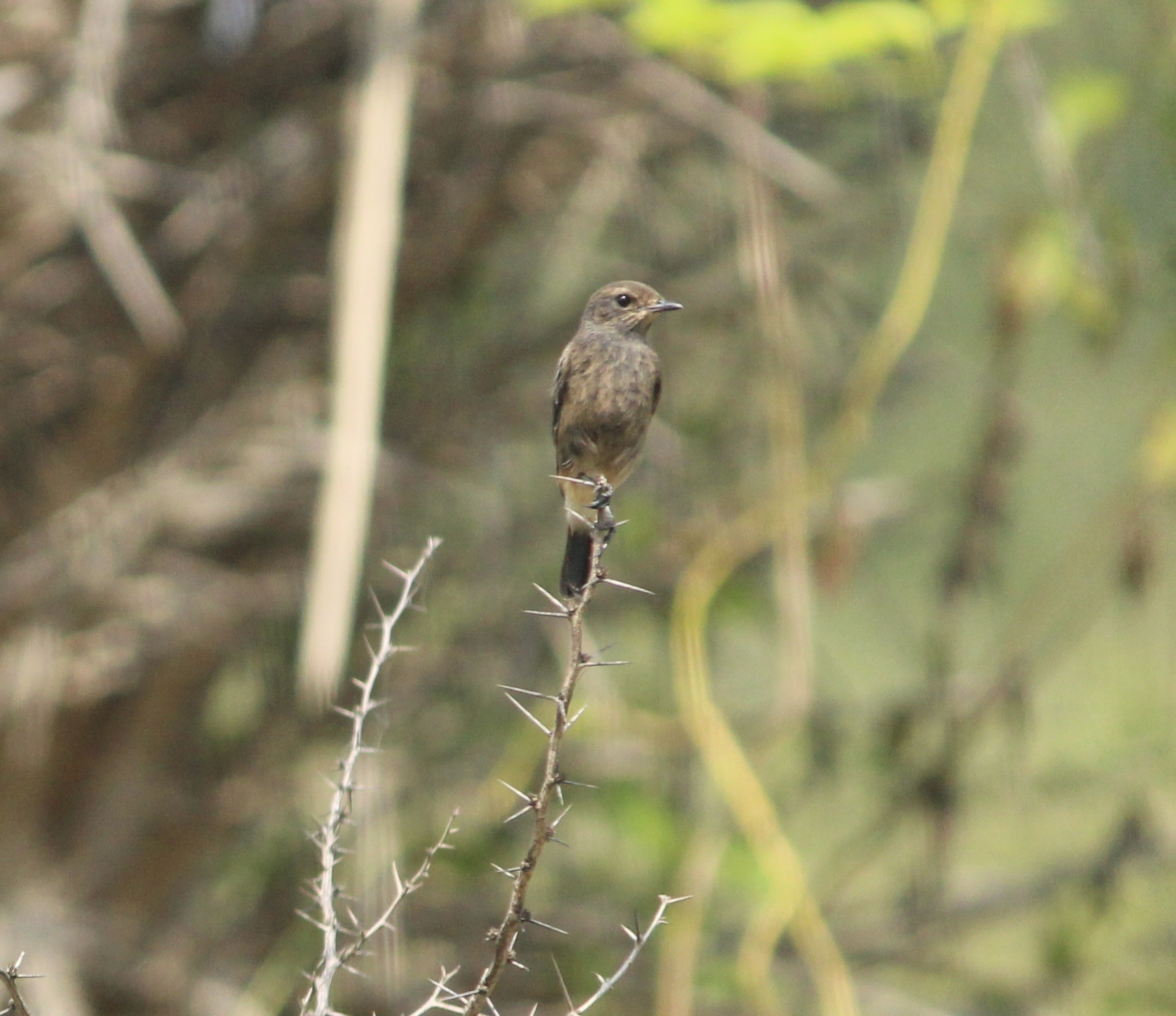
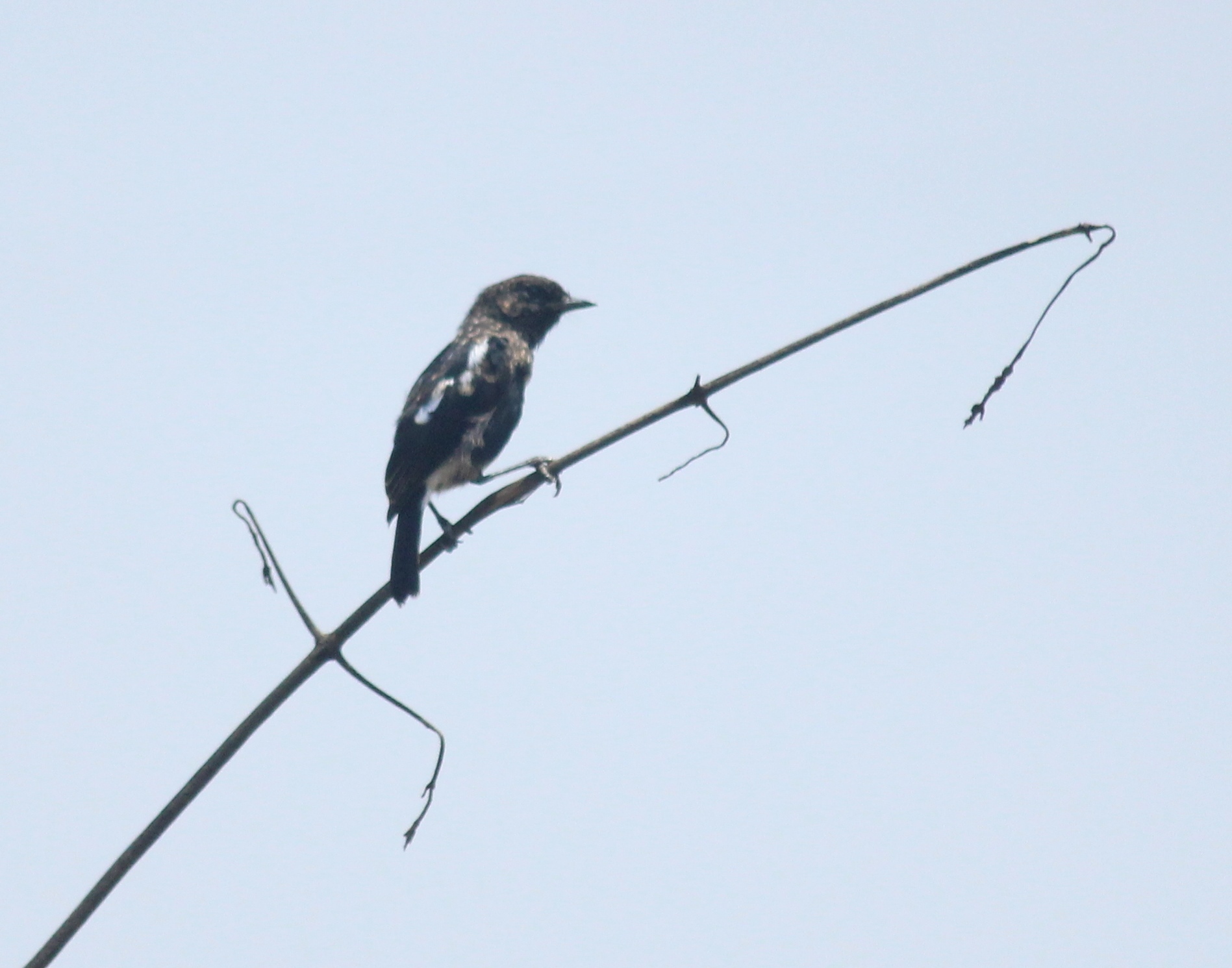
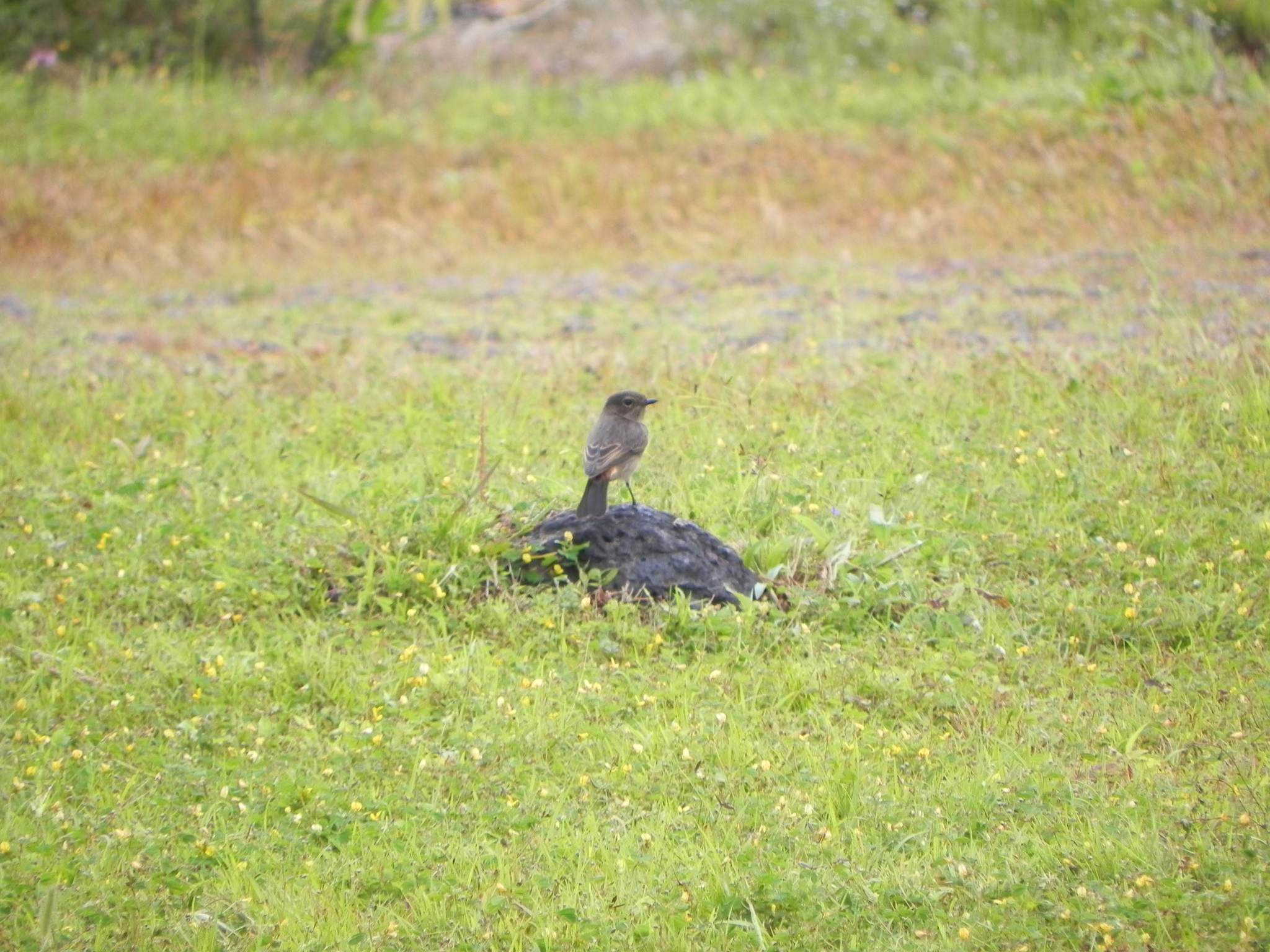
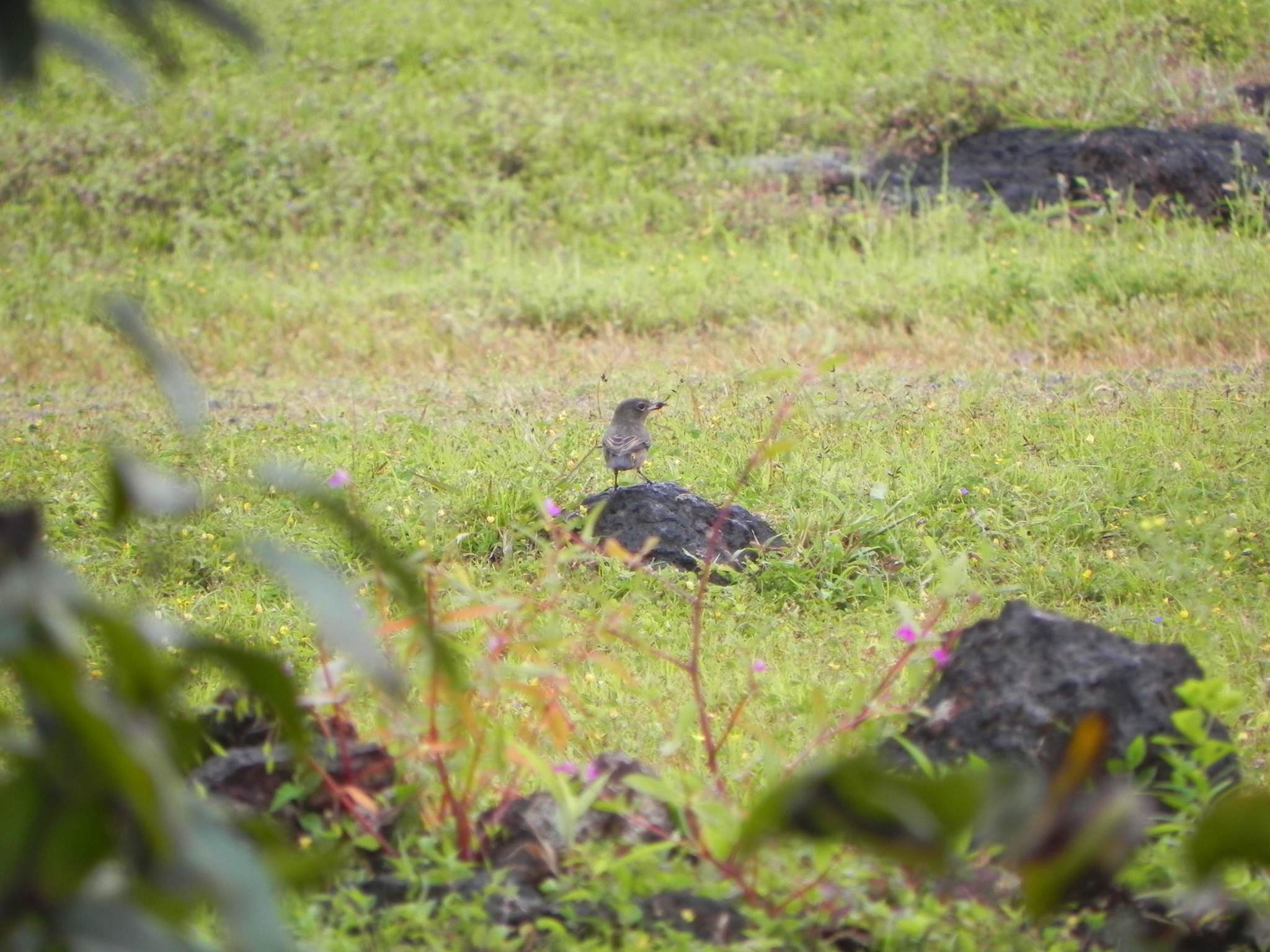
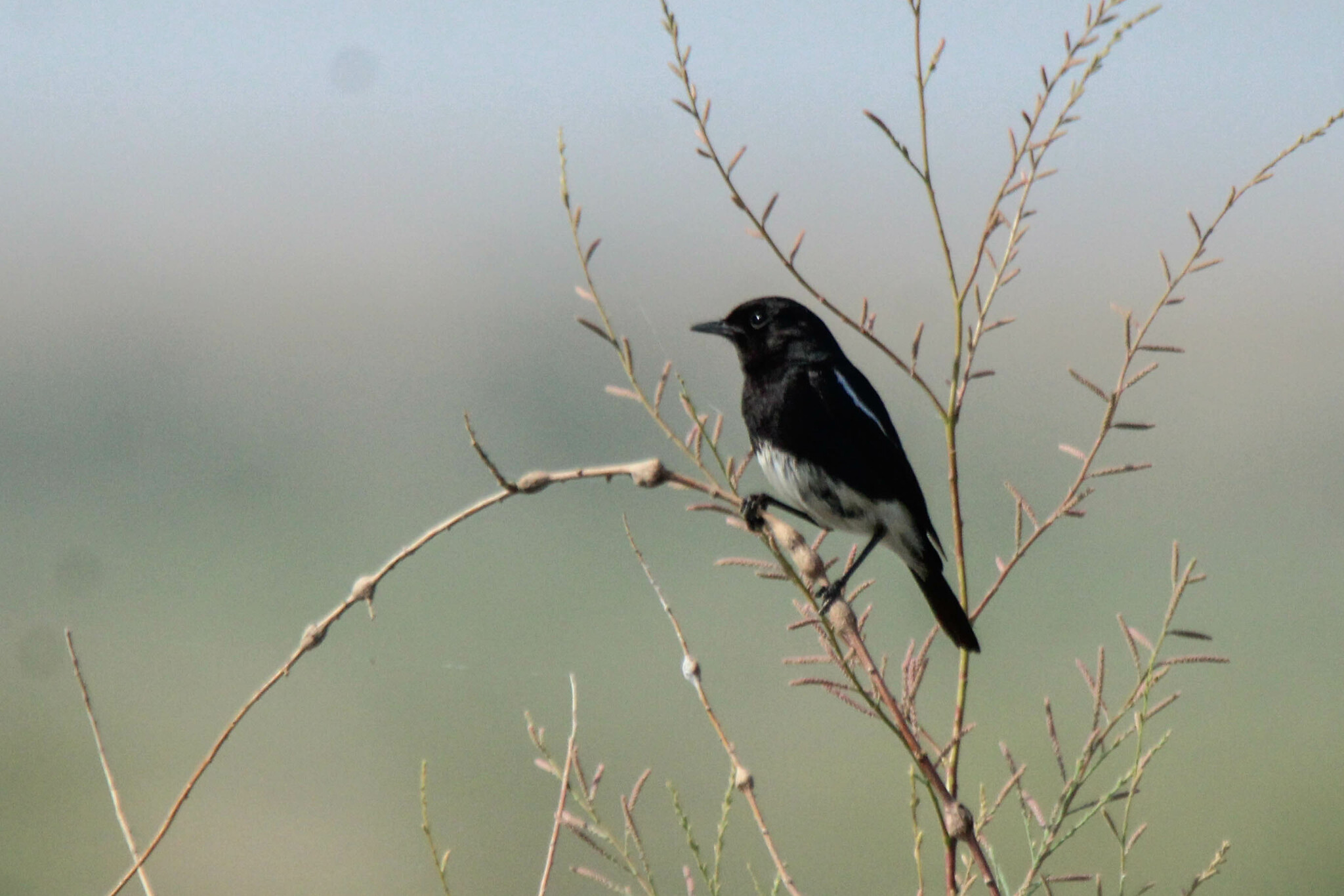
Measures 13 cm (5.1 in) with a dumpy structure and upright stance. Males are black with a white rump, wing patch, and lower belly; the extent of white varies among populations. The iris is dark brown, and the bill and legs are black. Females are drab brown and slightly streaked, lacking white wing patches, with rufous underparts and rump in some descriptions. Juveniles resemble females but have a scaly appearance on the underside.
Identification
Slightly smaller than the Siberian stonechat. Key field marks include the male's black plumage contrasted with white shoulder and vent patches. Females are distinguished by their plain brownish appearance without white wing markings. Vocalizations include a whistling call transcribed as 'we are tea for two,' with the syllable 'tea' at a higher note, similar to the Indian robin.
Distribution & Habitat
Resident breeder in tropical southern Asia, from the Greater Middle East through the Indian subcontinent eastwards to Indonesia. Colonized Papua New Guinea around 1950. Found in open habitats including scrub, grassland, and cultivation. Some populations are partially migratory; subspecies rossorum is a migrant in SW Asia, and bicolor moves within India. Seasonal movements occur in regions like Karwar and Baluchistan.
Behavior & Ecology
Insectivorous, hunting from prominent low perches; prey includes Pyralid moths and whitefly. Breeding season spans February to August, peaking March to June. Nests are built in cavities in stone walls or embankments, lined with grass and animal hair. Clutches contain two to five pale bluish-white or pinkish eggs with speckles, incubated chiefly by the female for 12–13 days. Males sing from perches and display by splaying the tail and puffing white scapular feathers. Brood parasitism by the common cuckoo occurs in Burma. Predators include bats and wintering Asio flammeus.
Culture
Considered a bird of omen by the Toda people of the Nilgiris, with folklore explaining its white wing patches. The Kotas of the Nilgiris view it as foretelling good omens. The Kalam people of Papua New Guinea regard it as a divine messenger. Historically popular as cage birds in Bengal and still present in the local bird trade in parts of Southeast Asia.
Source: Wikipedia · CC BY-SA 3.0
Taxonomy
- Order
- Passeriformes
- Family
- Muscicapidae
- Genus
- Saxicola
Subspecies (16)
-
Saxicola caprata aethiops
northern New Guinea and New Britain (southeastern Bismarck Archipelago)
Data Sources
Species description from Wikipedia, licensed under CC BY-SA 3.0.
Bird images and sounds sourced from GBIF, contributed by citizen scientists worldwide under Creative Commons licenses.
Taxonomy data from AviList 2025.