

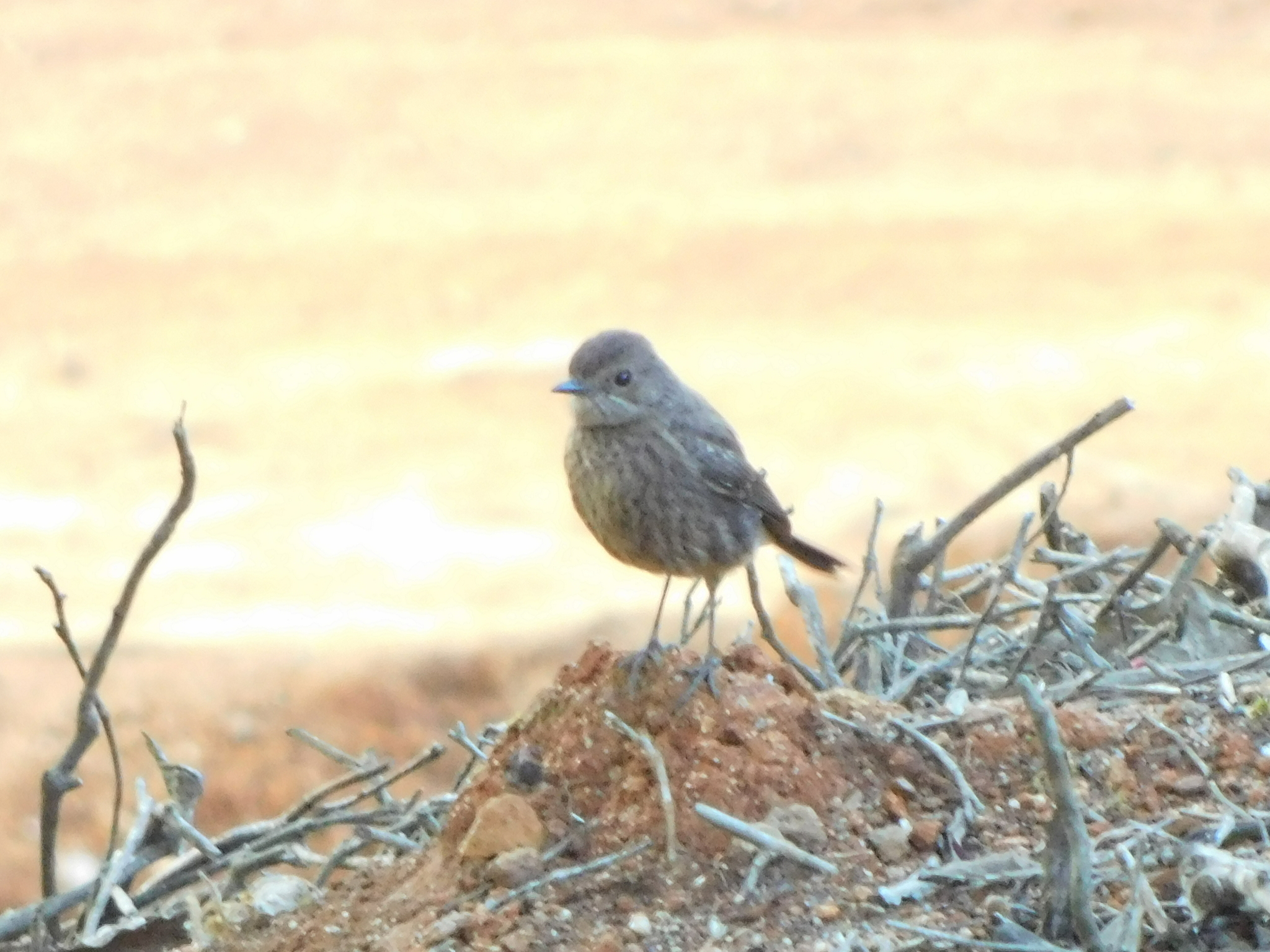
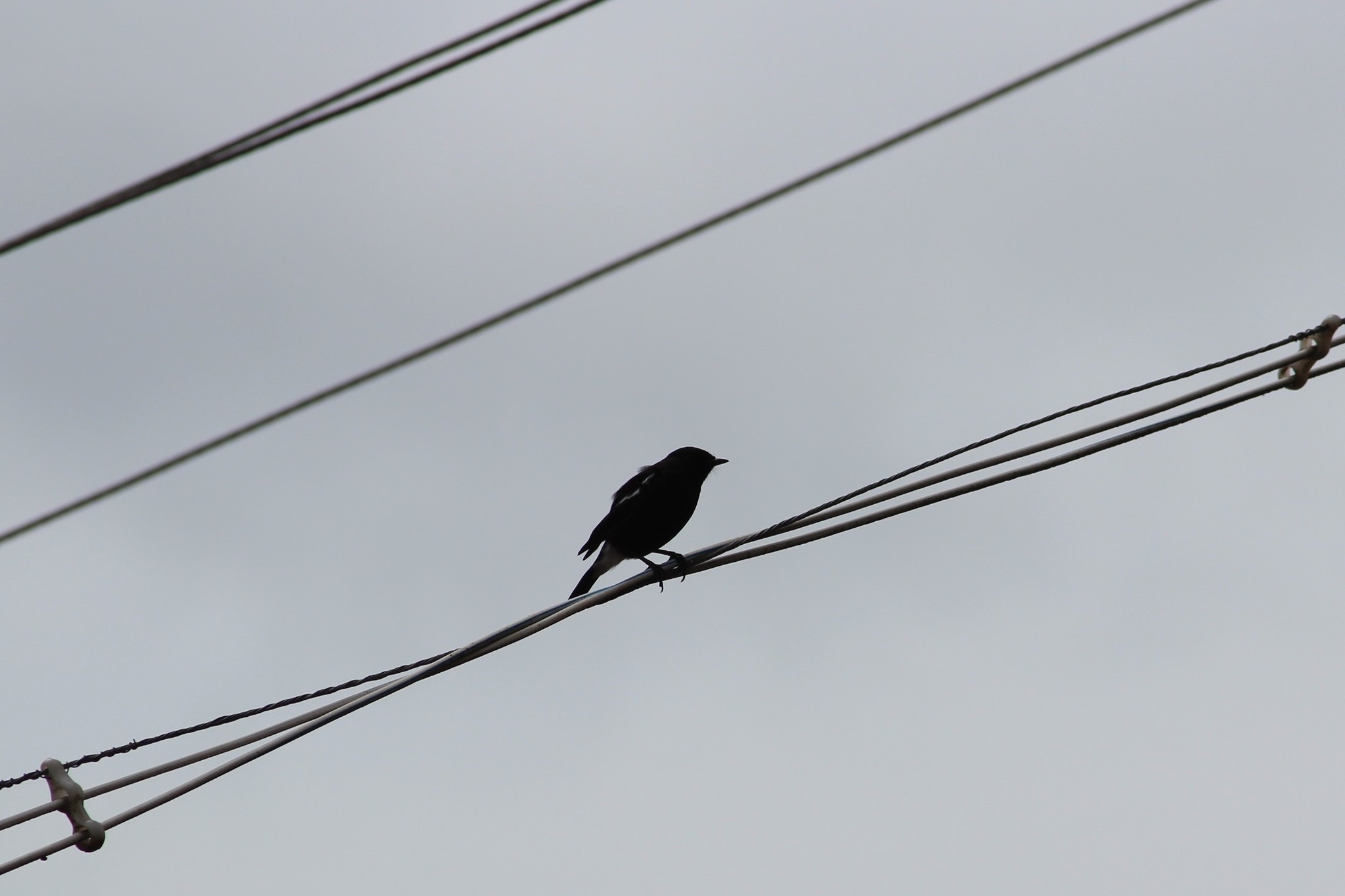
Pied Bush Chat
Saxicola caprata
白斑黑石䳭
Introduction
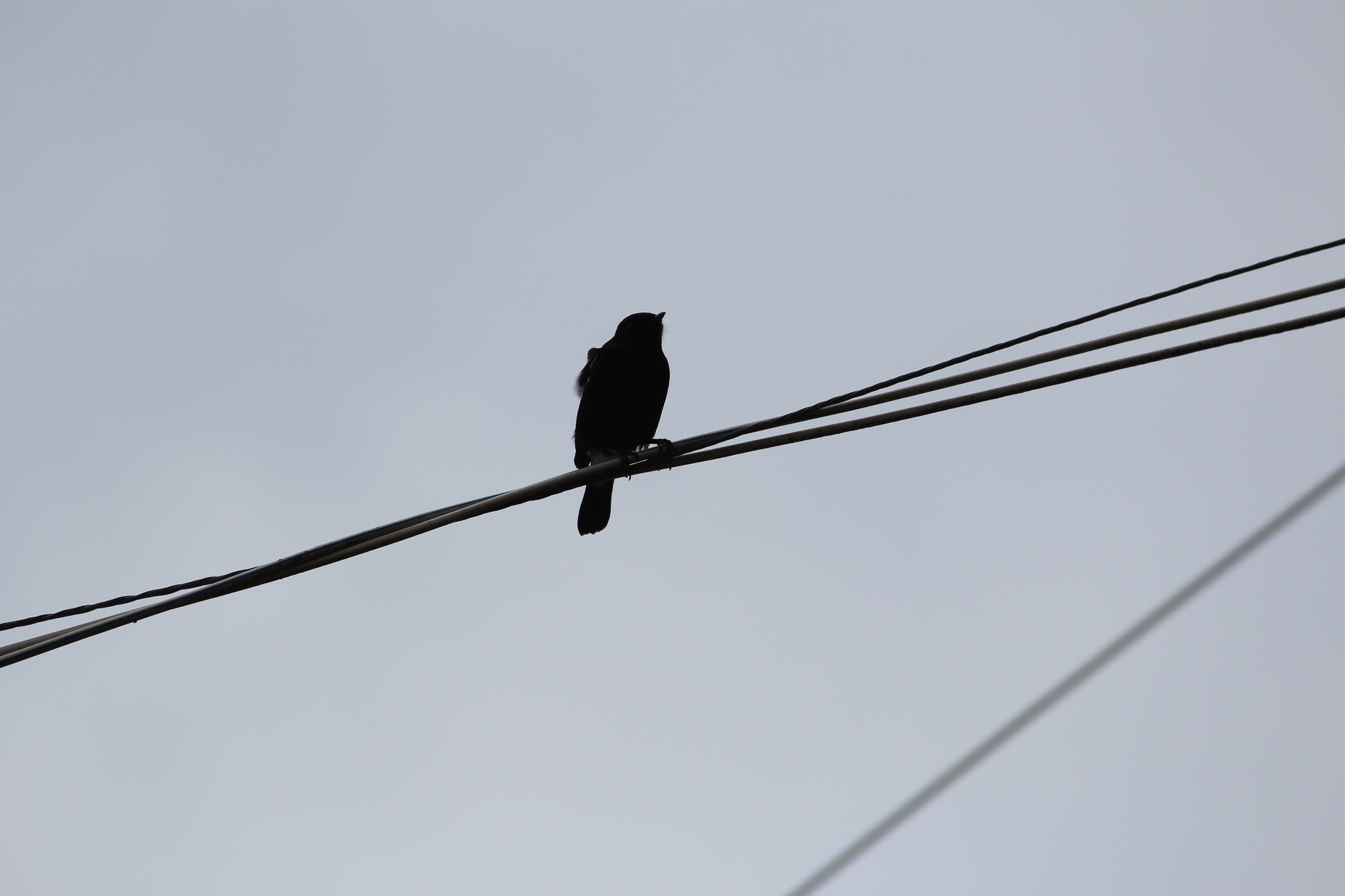
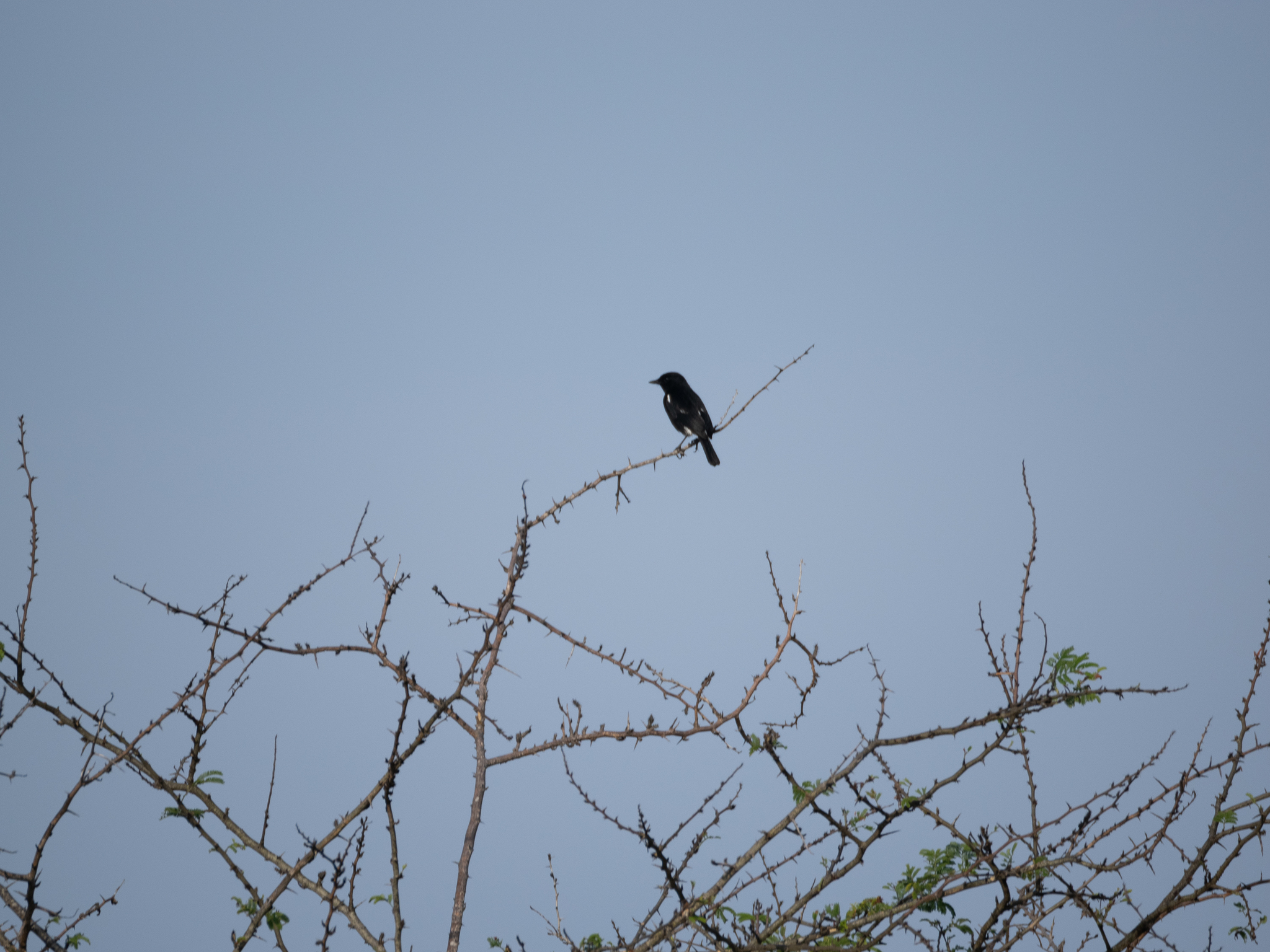
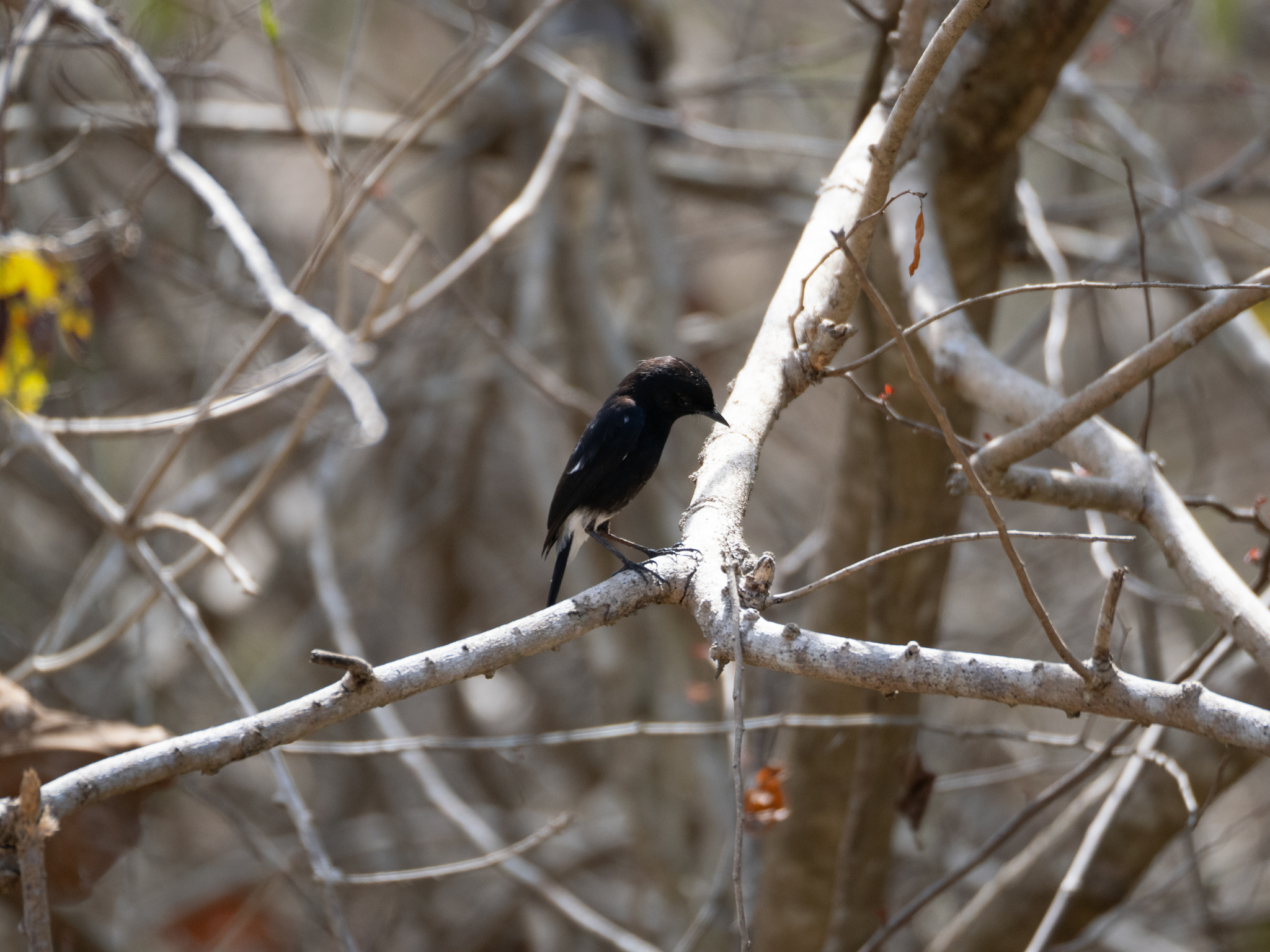
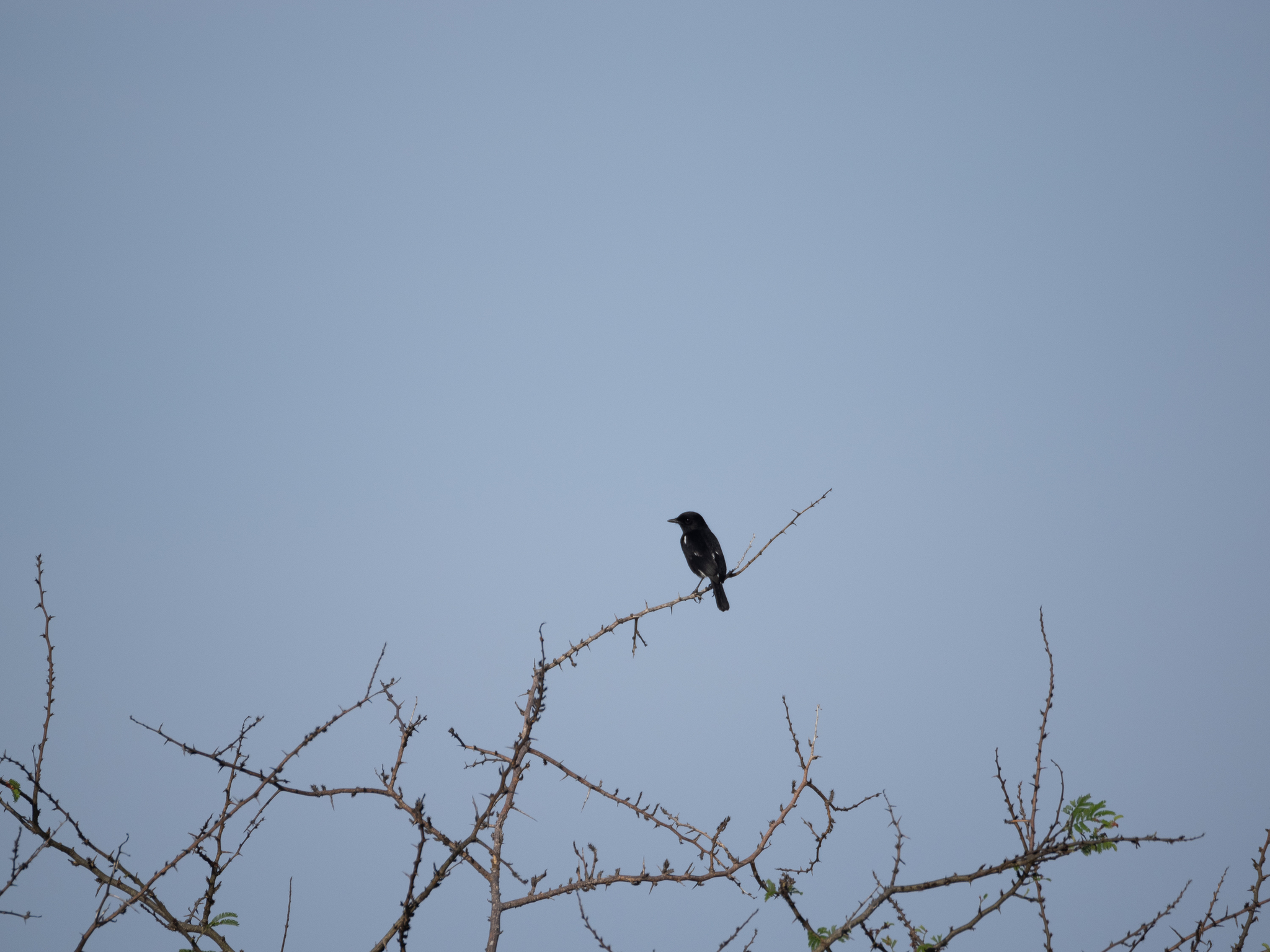
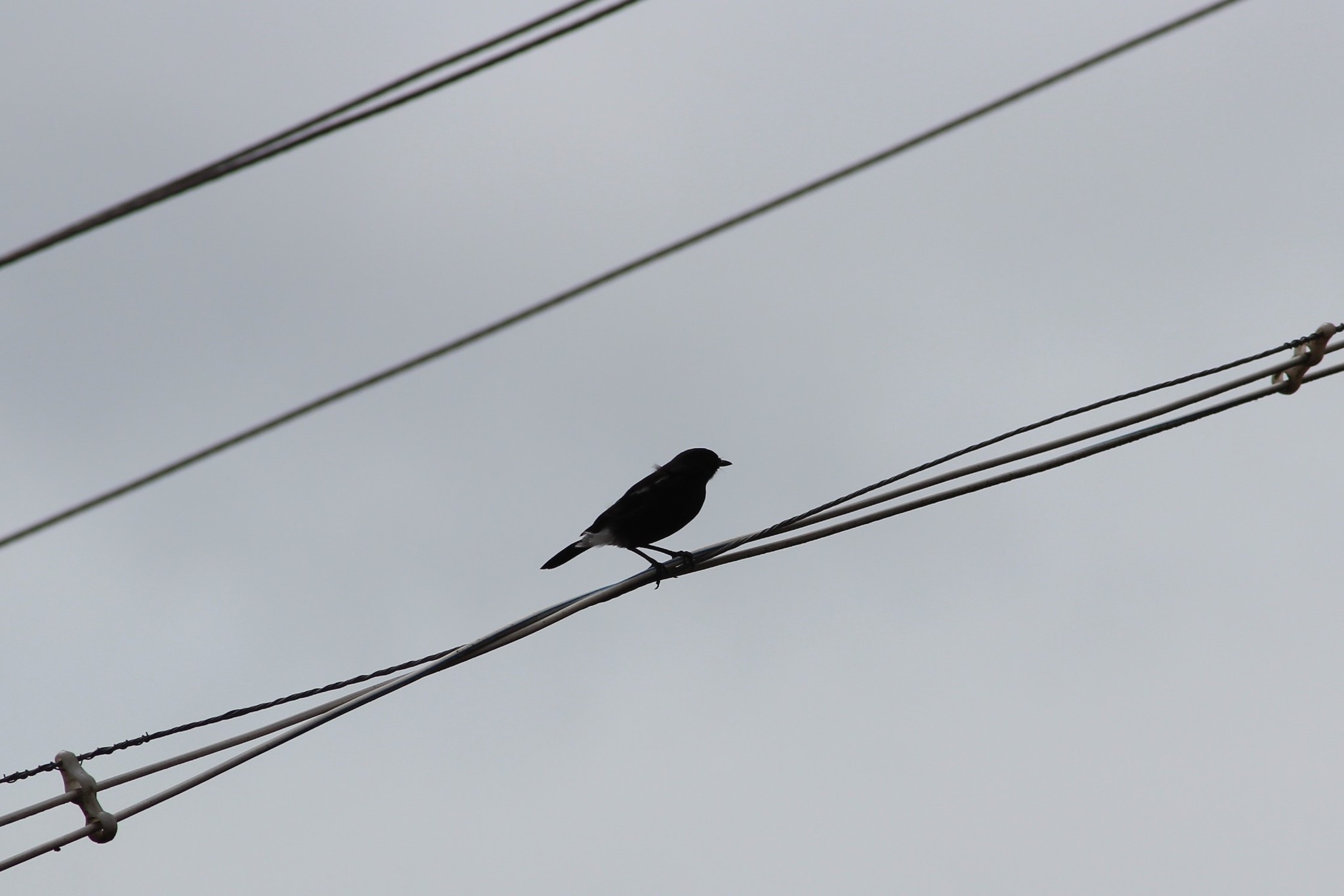
Small passerine bird, formerly placed in Turdidae but now classified as an Old World flycatcher. Found across West Asia, Central Asia, the Indian subcontinent, and Southeast Asia. About sixteen subspecies are recognized through its wide range with many island forms. A familiar bird of countryside and open scrub or grassland, typically perched at the top of short thorn trees or shrubs, scanning for insect prey. Feeds mainly by picking insects from the ground. Nests in cavities in stone walls or holes in embankments, lining the nest with grass and animal hair. Males are black with white shoulder and vent patches whose extent varies among populations. Females are predominantly brownish while juveniles are speckled.
Description
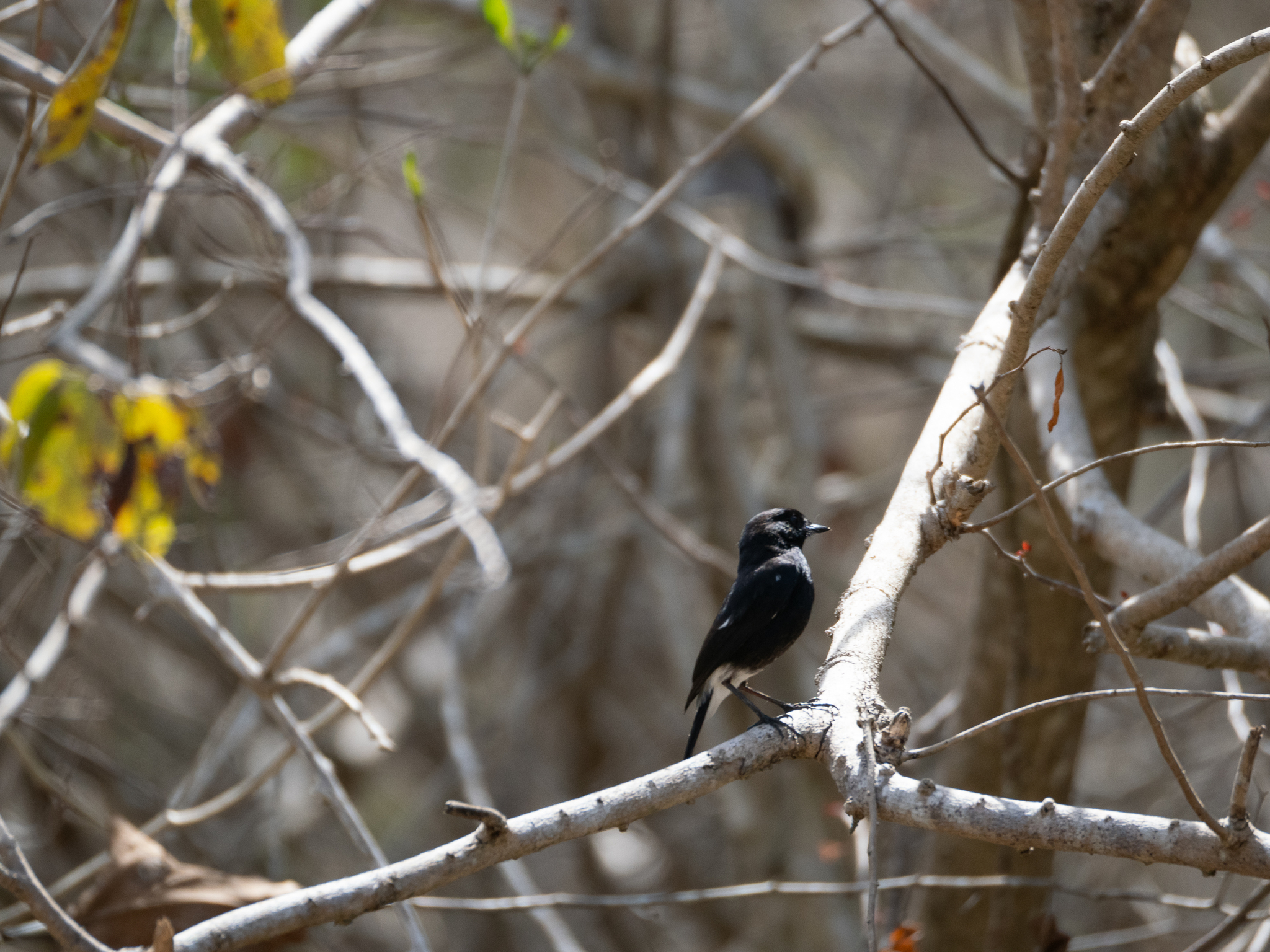
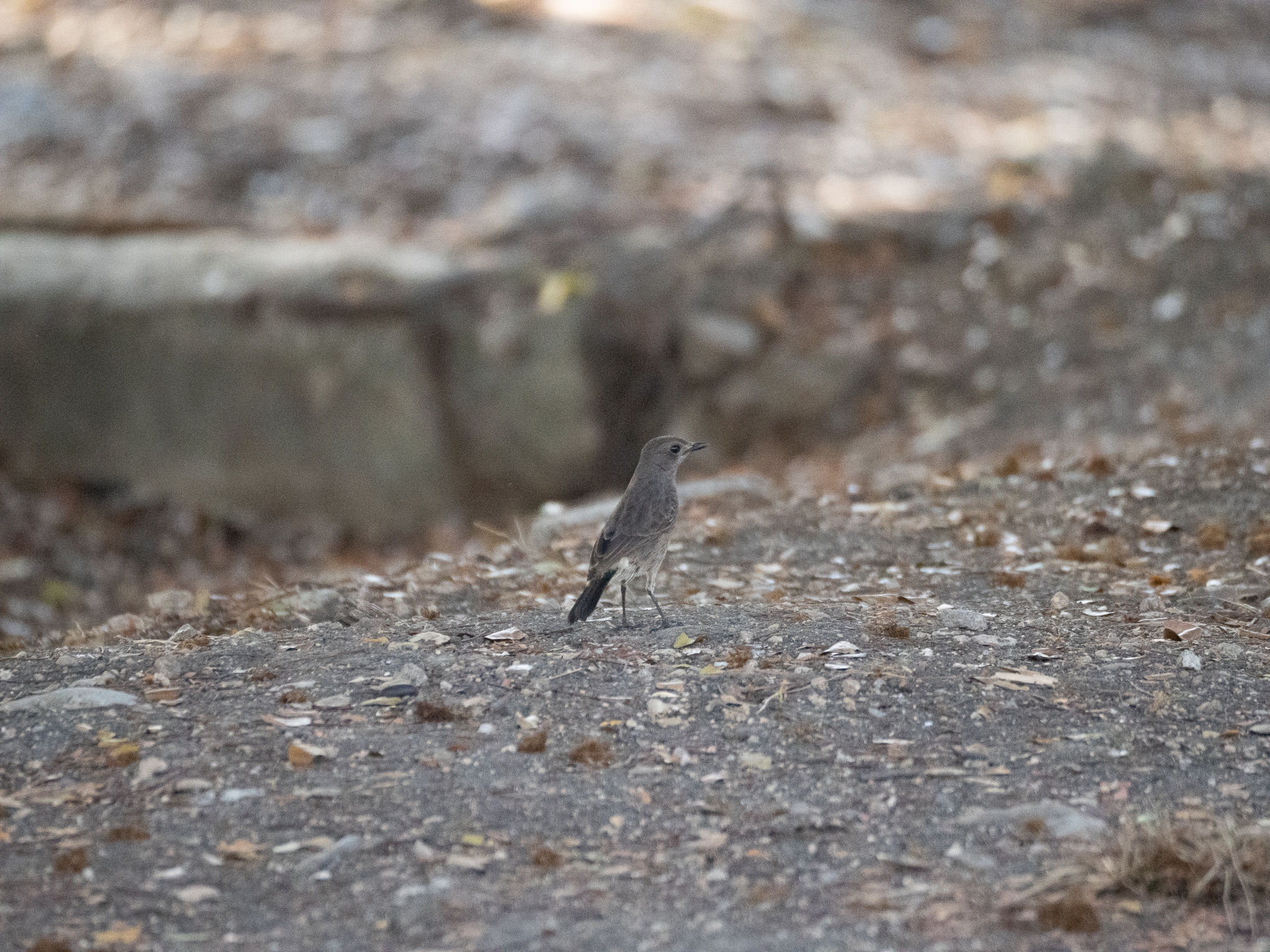
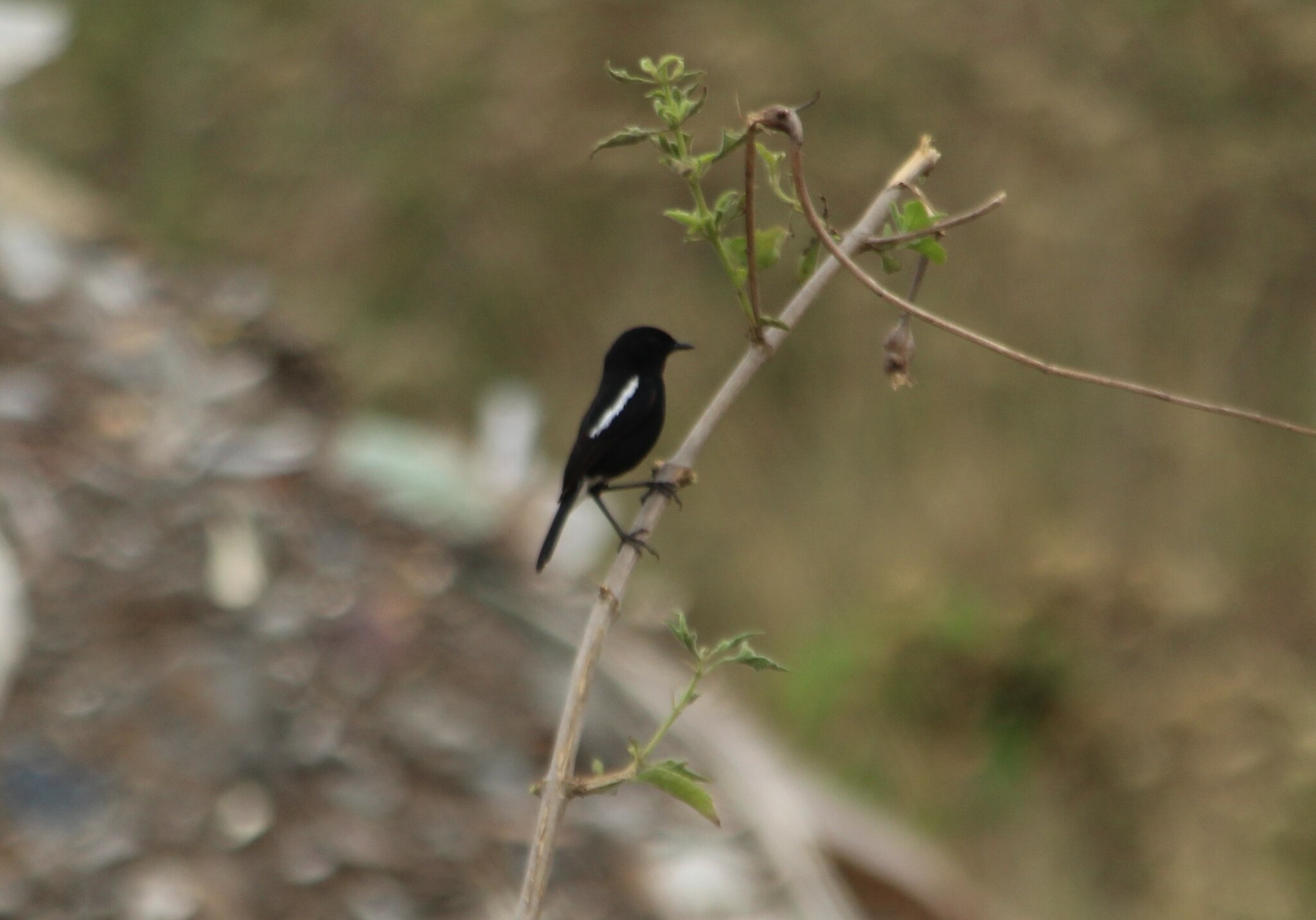
Length 13 cm (5.1 in), slightly smaller than the Siberian stonechat with a similar dumpy structure and upright stance. Males are entirely black except for a white rump, wing patch, and lower belly. Iris is dark brown; bill and legs are black. Females are drab brown and slightly streaked with rufous underparts and rump, lacking white wing patches. Juveniles have a scaly appearance on the underside but are dark above like females.
Identification
Males are distinctive with black plumage and white rump, wing patch, and vent area. Females are brown and may be confused with other female chats but lack distinctive markings. Compared to the Siberian stonechat, this species is slightly smaller but structurally similar. Geographic variation in white patch extent helps distinguish subspecies, with rossorum showing more white below than bicolor, and burmanicus having white on the abdomen restricted towards the vent.
Distribution & Habitat
Resident breeder across tropical southern Asia from the Greater Middle East through the Indian subcontinent eastwards to Indonesia. Colonized Papua New Guinea around 1950. Inhabits open habitats including scrub, grassland, and cultivation. Some populations are partially migratory: subspecies bicolor occurs in peninsular India in winter, and rossorum migrates through southwest Asia. Ringed individuals of rossorum have been recovered from Israel. Seasonal movements in Indian populations are noted but patterns are unclear.
Behavior & Ecology
Breeding season runs February to August with a peak in March to June. Males sing from prominent perches with a whistling call transcribed as 'we are tea for two.' The nest is built in holes in walls or similar sites, lined with grass and hair, with two to five eggs laid. Eggs are small, broadly oval, measuring about 0.67 by 0.55 inches (1.7 by 1.4 cm), pale bluish-white or pinkish with speckles and blotches. Incubation is chiefly by the female for 12 to 13 days. Insectivorous, hunting from prominent low perches; feeds on moths and whitefly. Brood parasitism by the common cuckoo has been noted in Burma.
Conservation
IUCN assessment not provided in source. However, the species was once popular as a cage bird in Bengal and remains found in local bird trade in parts of Southeast Asia. Limited predation noted from bats and short-eared owls during winter.
Culture
Among the Toda people of the Nilgiris, this bird is considered an omen. A story explains the origin of the white wing patches involving a dairy priest named Piu.f who, during a ritual of churning milk, disregarded the bird's warning and met his death. The white spots on the bird are said to result from flicked butter. The Kota people have an origin story to explain sexual dimorphism and consider the bird a good omen. The Kalam people of Papua New Guinea regard these birds as divine messengers.
Source: Wikipedia · CC BY-SA 3.0
Taxonomy
- Order
- Passeriformes
- Family
- Muscicapidae
- Genus
- Saxicola
- eBird Code
- piebus1
Subspecies (16)
-
Saxicola caprata aethiops
northern New Guinea and New Britain (southeastern Bismarck Archipelago)
-
Saxicola caprata albonotatus
Sulawesi region, including Salayar and Buton islands (off southeast)
-
Saxicola caprata anderseni
southern Philippines (Mindanao, Camiguin Sur, Leyte and Biliran)
-
Saxicola caprata atratus
Sri Lanka
-
Saxicola caprata belensis
central mountains of New Guinea (Wissel Lakes to Snow Mountains)
-
Saxicola caprata bicolor
Pakistan to Baluchistan and Kashmir; winters to central India
-
Saxicola caprata burmanicus
central India to southwestern China, Myanmar, northern Thailand, and Indochina
-
Saxicola caprata caprata
northern Philippines (Luzon, Lubang, and Mindoro)
-
Saxicola caprata cognatus
Babar Island (Lesser Sundas)
-
Saxicola caprata francki
Sumba (Lesser Sundas)
-
Saxicola caprata fruticola
Java, Bali, Lombok, Sumbawa, Flores, Lomblen, and Alor (western and central Lesser Sundas)
-
Saxicola caprata nilgiriensis
southern India (western Madras and Kerala)
-
Saxicola caprata pyrrhonotus
eastern Lesser Sundas (Kisar, Wetar, Sawu, Semau, Rote, and Timor)
-
Saxicola caprata randi
central Philippines (Negros, Bohol, Masbate, Ticao, Cebu, and Siquijor)
-
Saxicola caprata rossorum
Transcaspia to eastern Iran, Afghanistan, and northern Kashmir
-
Saxicola caprata wahgiensis
central highlands of New Guinea to Huon Peninsula and southeastern mountains
Data Sources
Species description from Wikipedia, licensed under CC BY-SA 3.0.
Bird images and sounds sourced from GBIF, contributed by citizen scientists worldwide under Creative Commons licenses.
Taxonomy data from AviList 2025.