
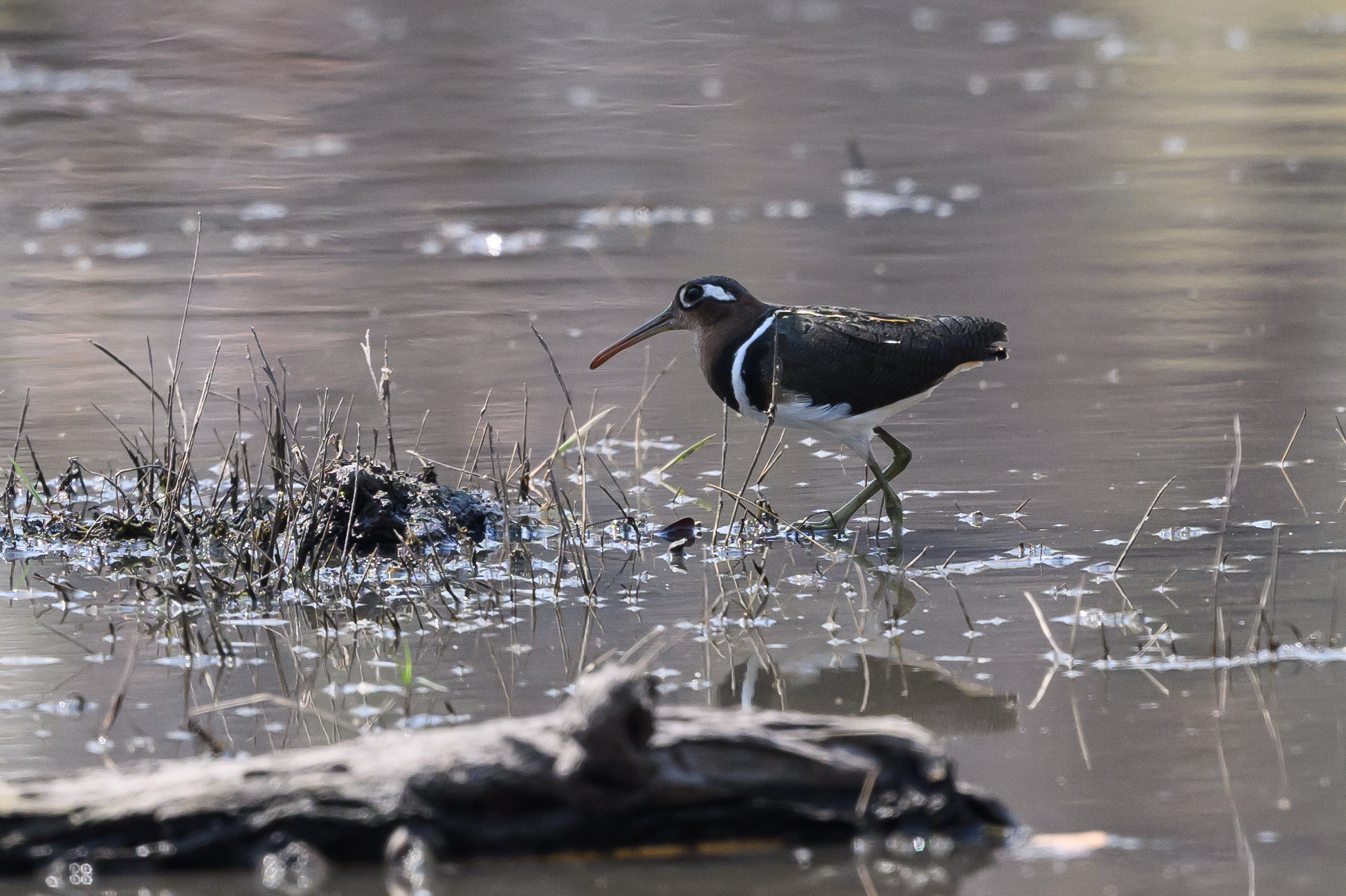
Charadriiformes / Rostratulidae / Rostratula
Greater Painted-snipe
Rostratula benghalensis · 彩鹬
Introduction
A wader in the family Rostratulidae, widely distributed across Africa and southern Asia. It inhabits wetland habitats including swamps and edges of lakes and rivers. The species is sexually dimorphic with females larger and more brightly colored than males. Females are normally polyandrous, while males incubate eggs and care for young. Listed as Least Concern by the IUCN.
Description
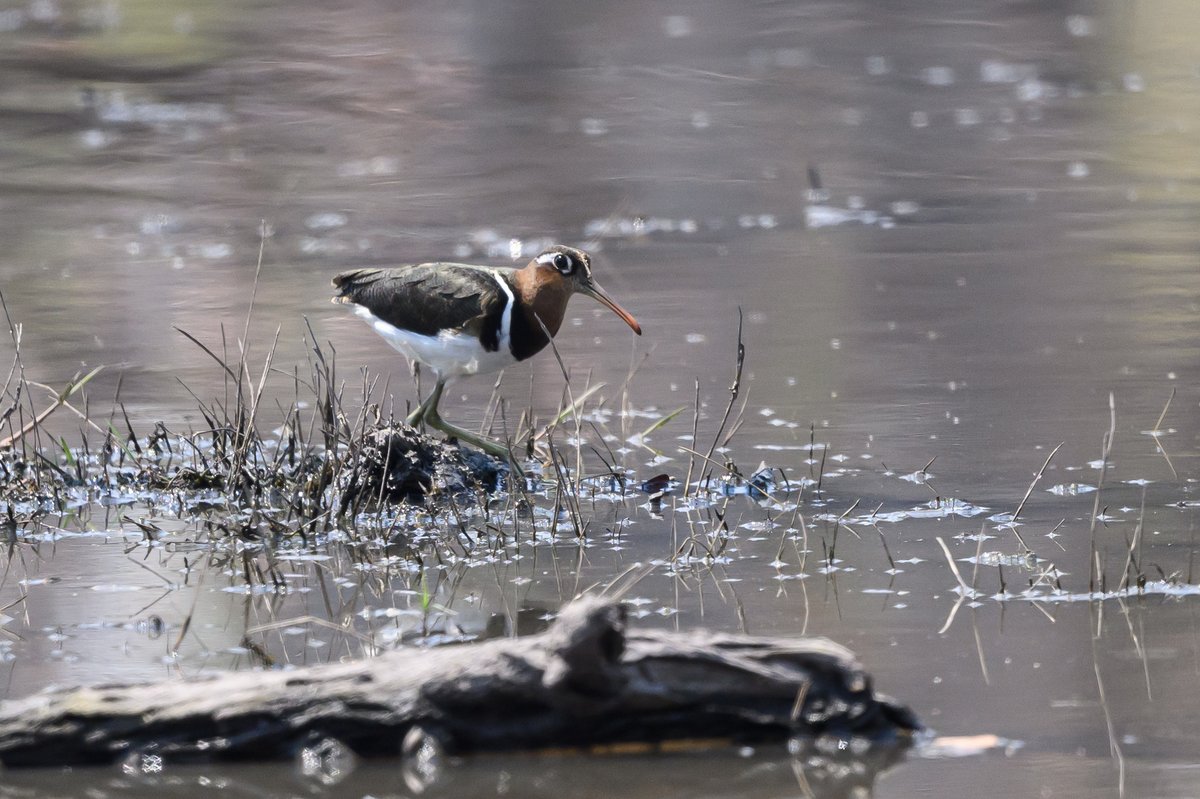
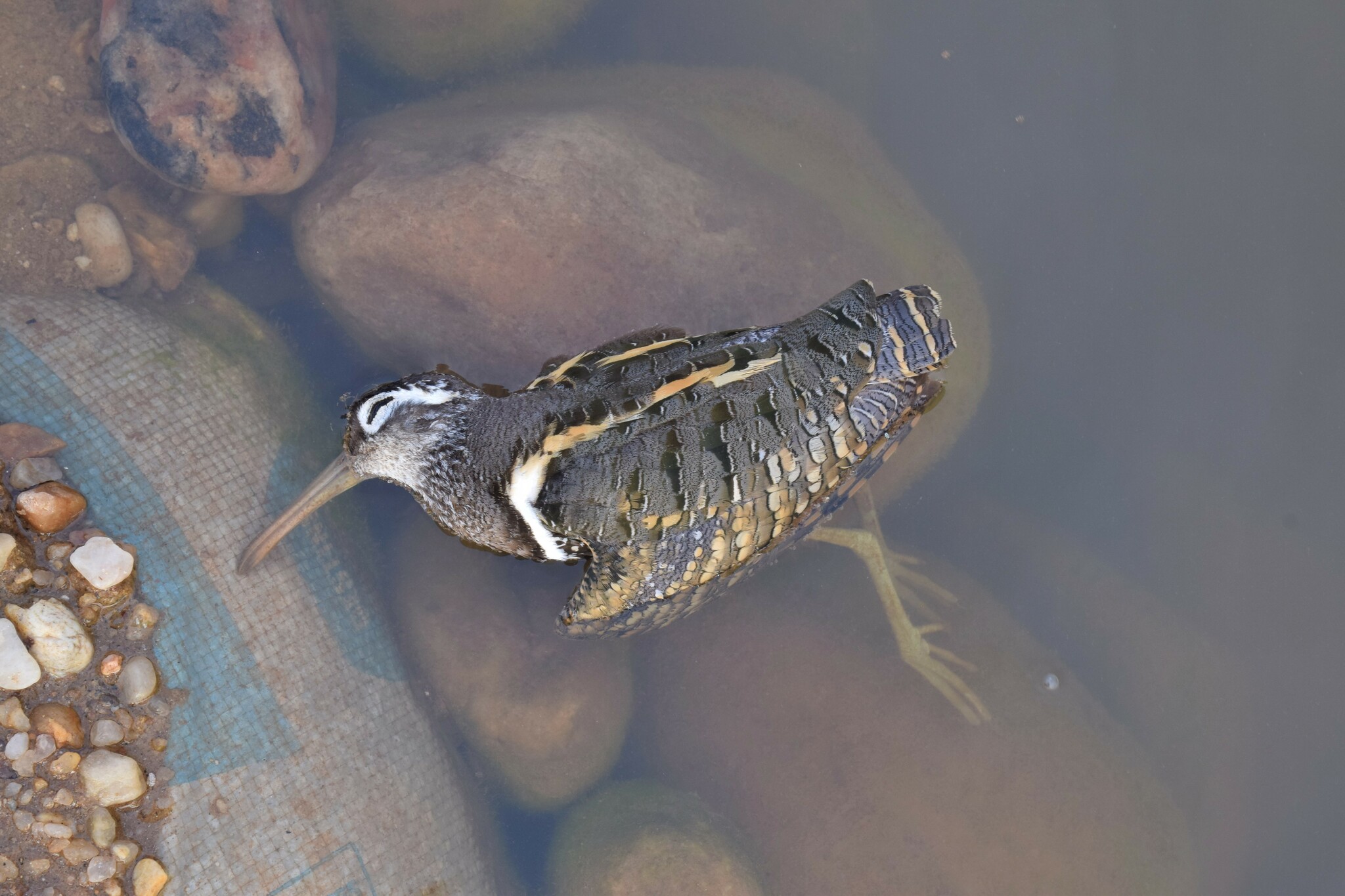
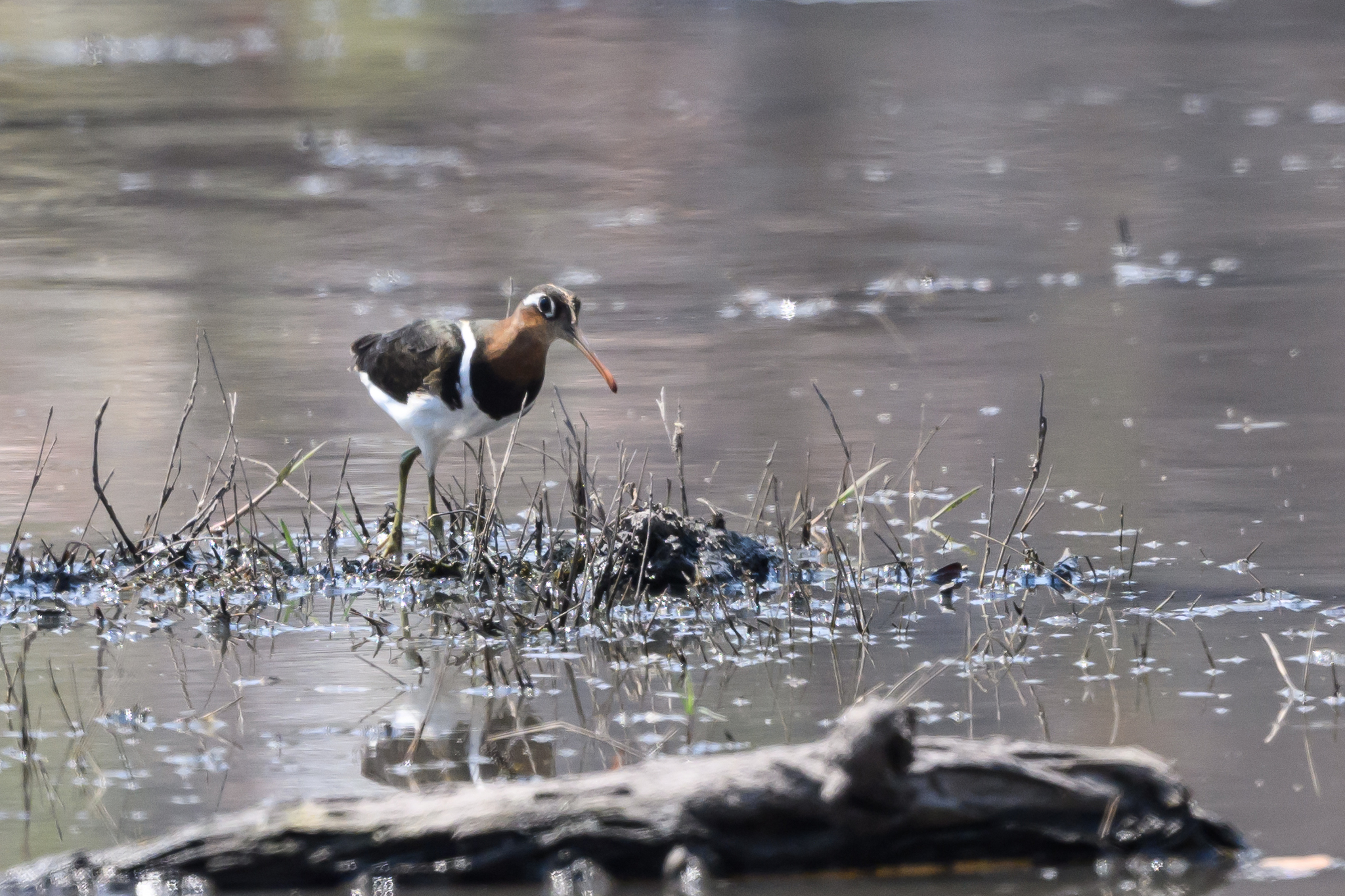
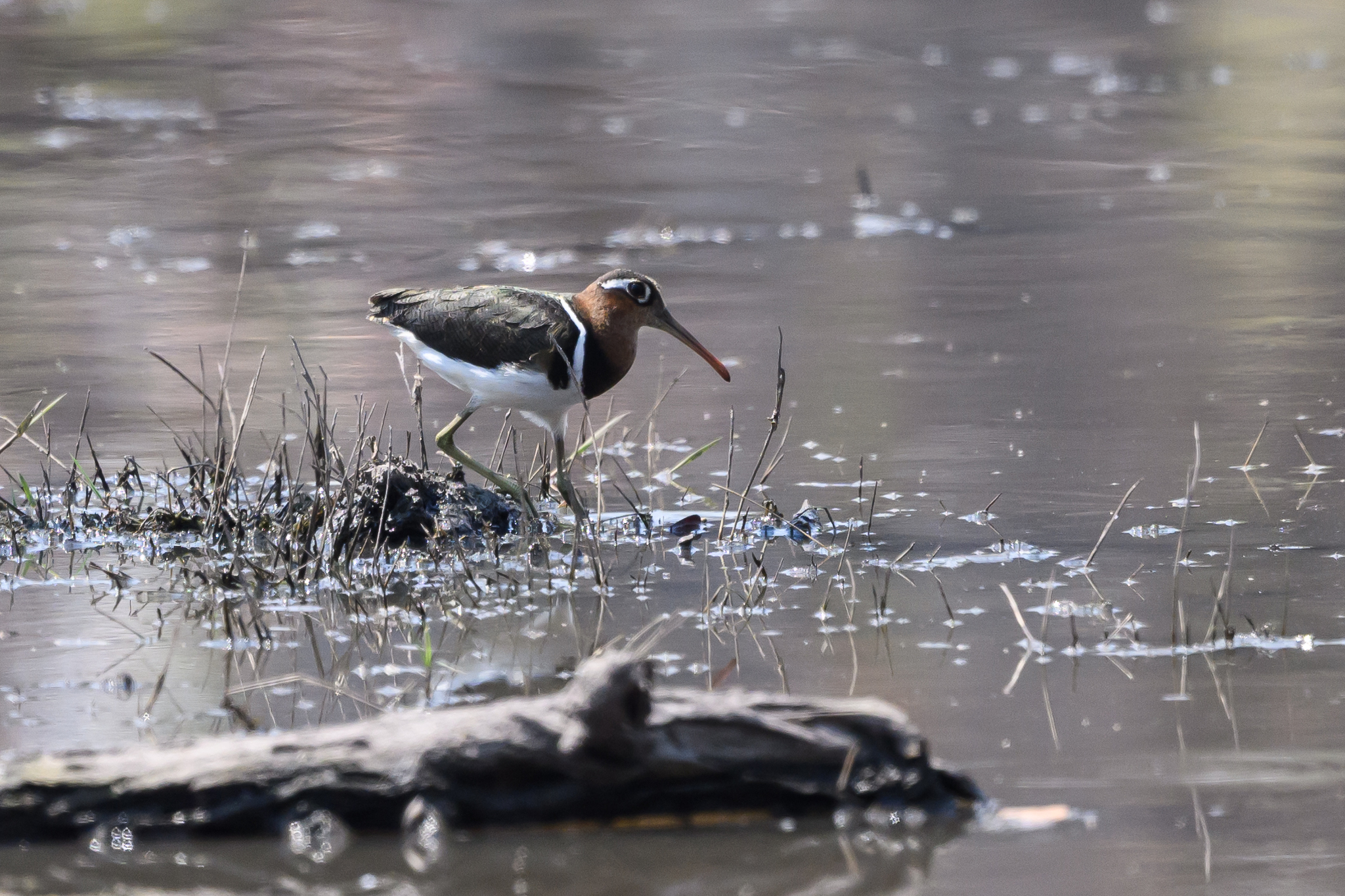
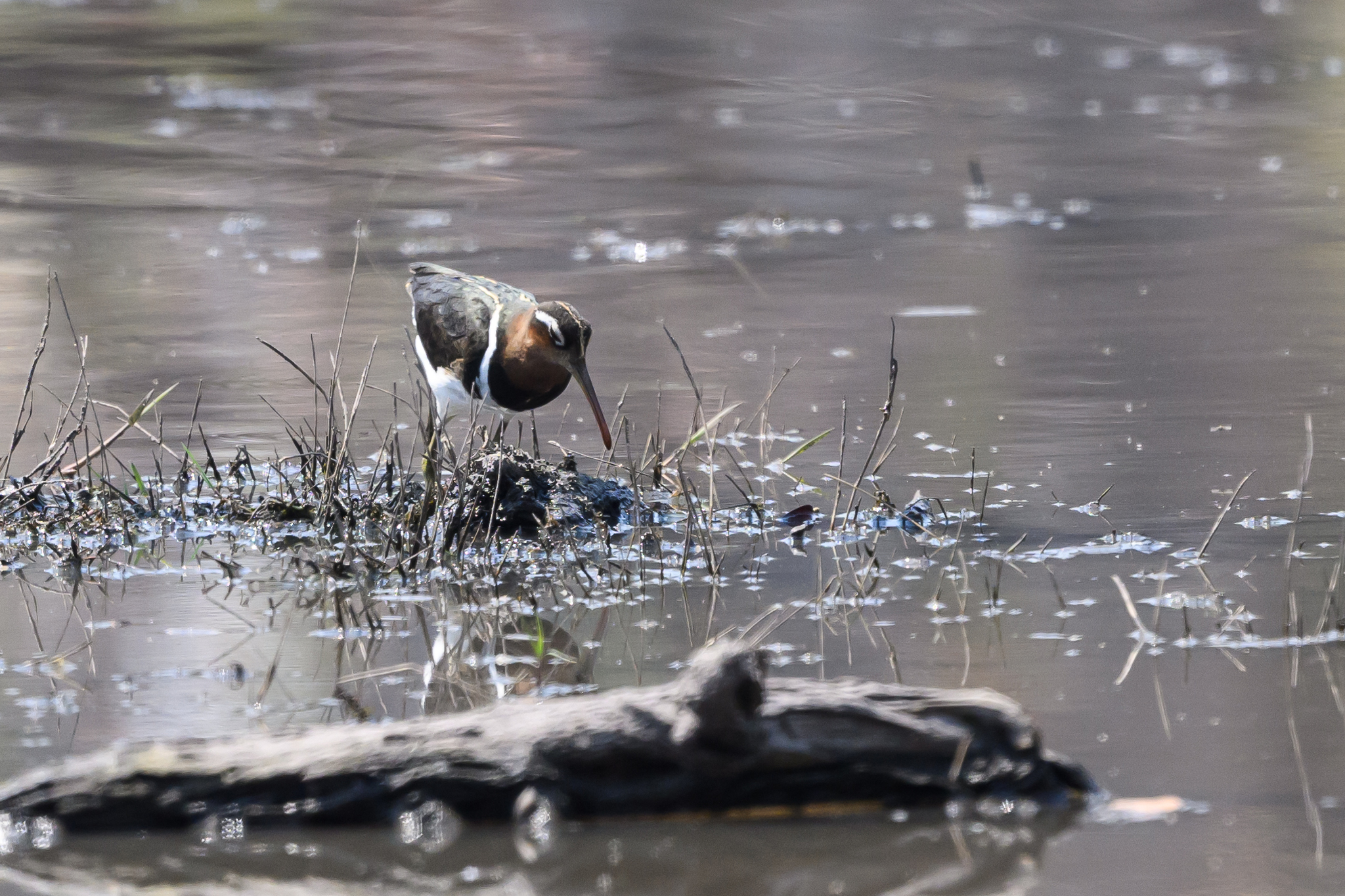
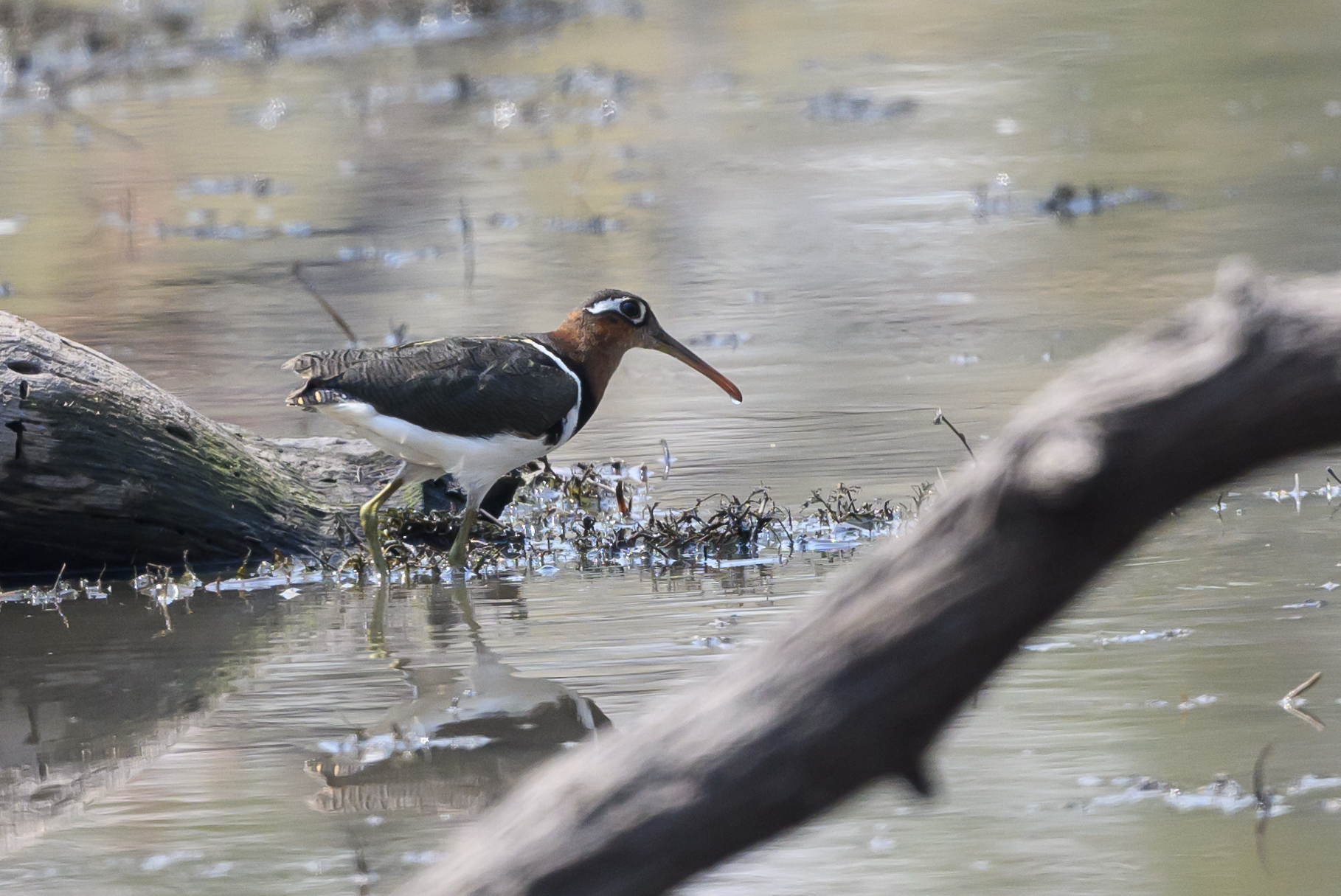
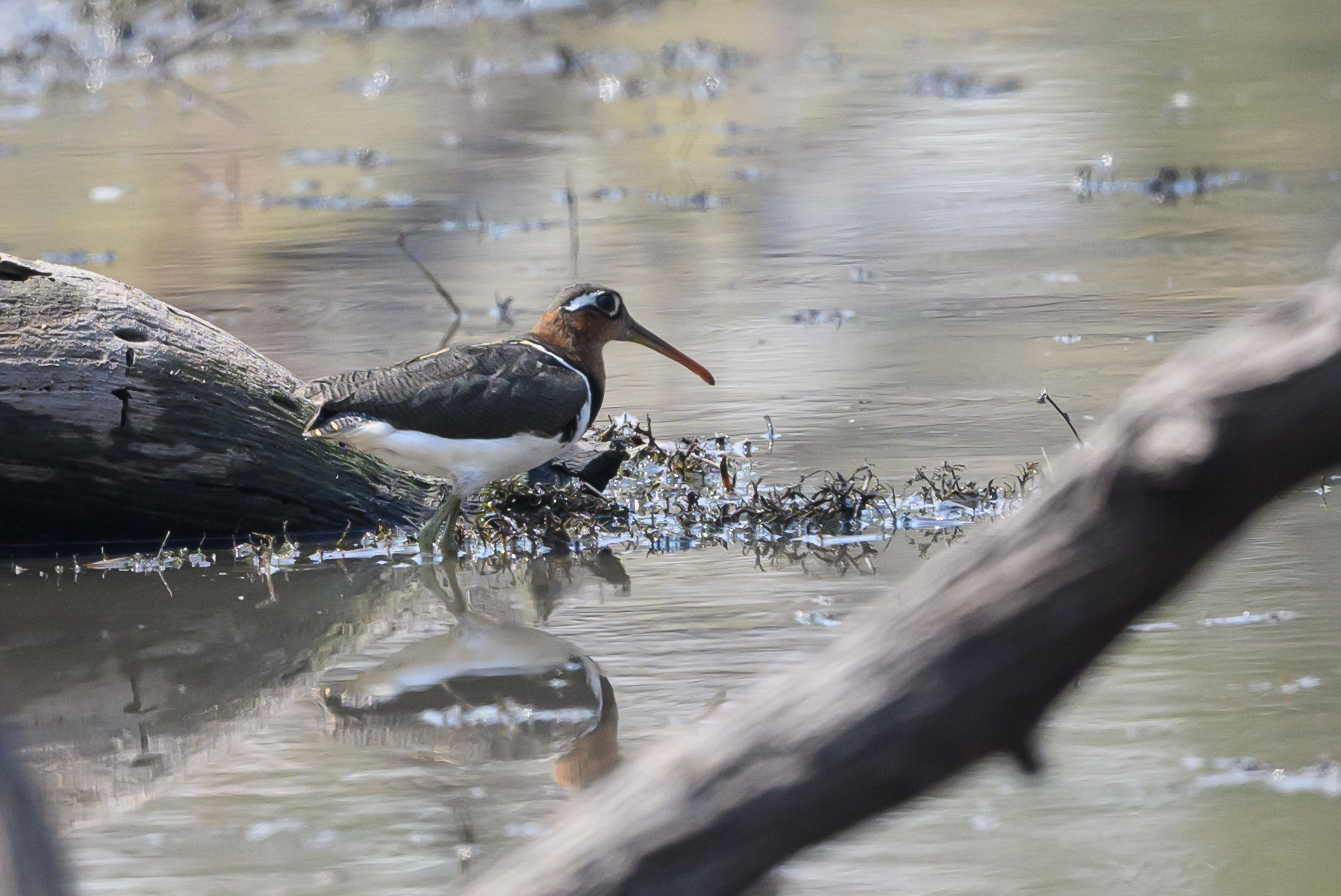
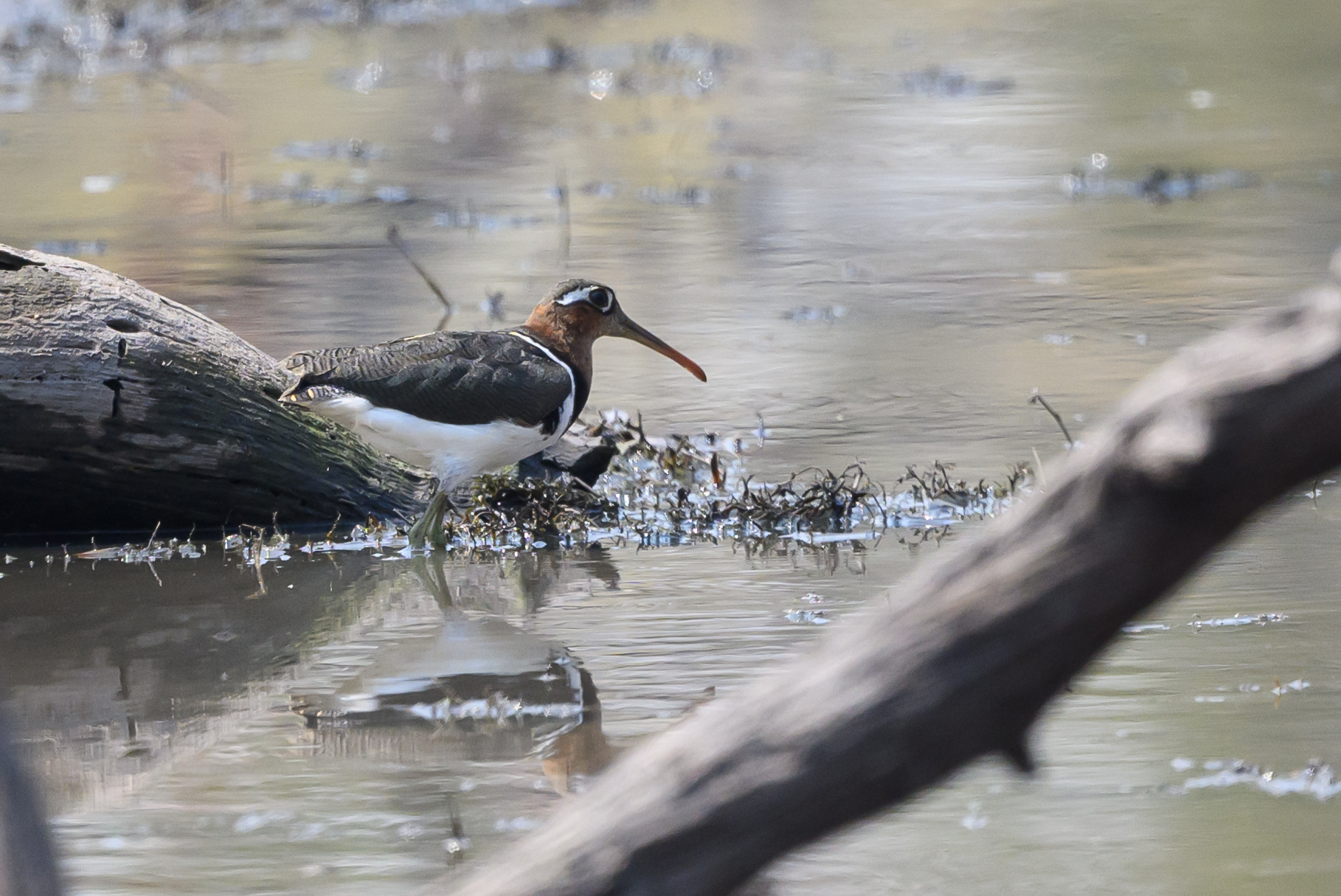
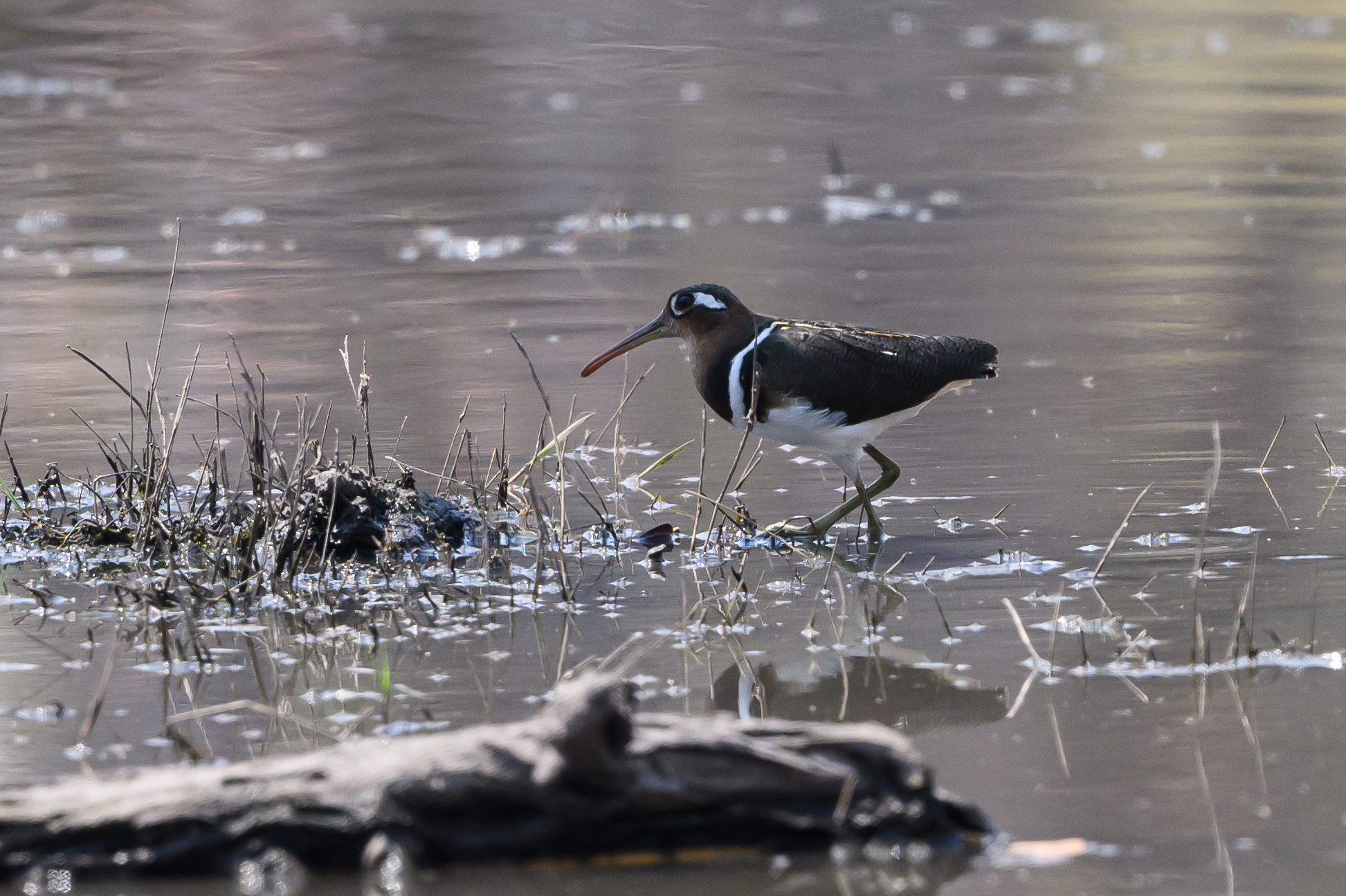
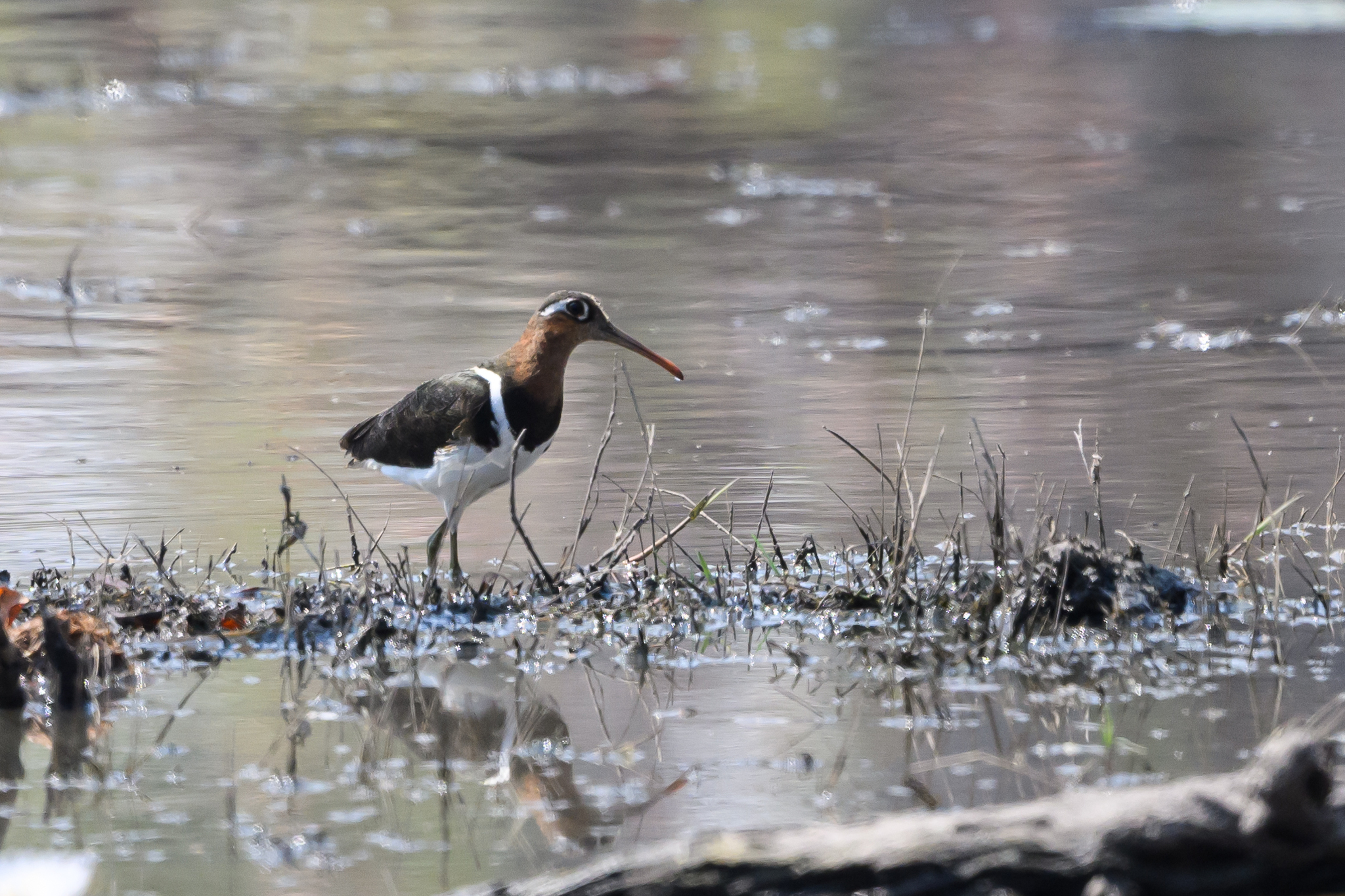
Medium-sized shorebird with an overall length of 23–28 cm (9.1–11.0 in). Sexually dimorphic: females are larger, heavier, and have bolder plumage. The female has a black head with a buff stripe and white eye-patch, dark rufous neck, and upperparts that are mostly dark bronze-green finely barred with black. A white stripe curves around the shoulder mantle, and the underbody is white. The male is much paler and less uniform with barring on the scapulars and wing-coverts. Juveniles resemble the male but lack the darker band around the chest.
Identification
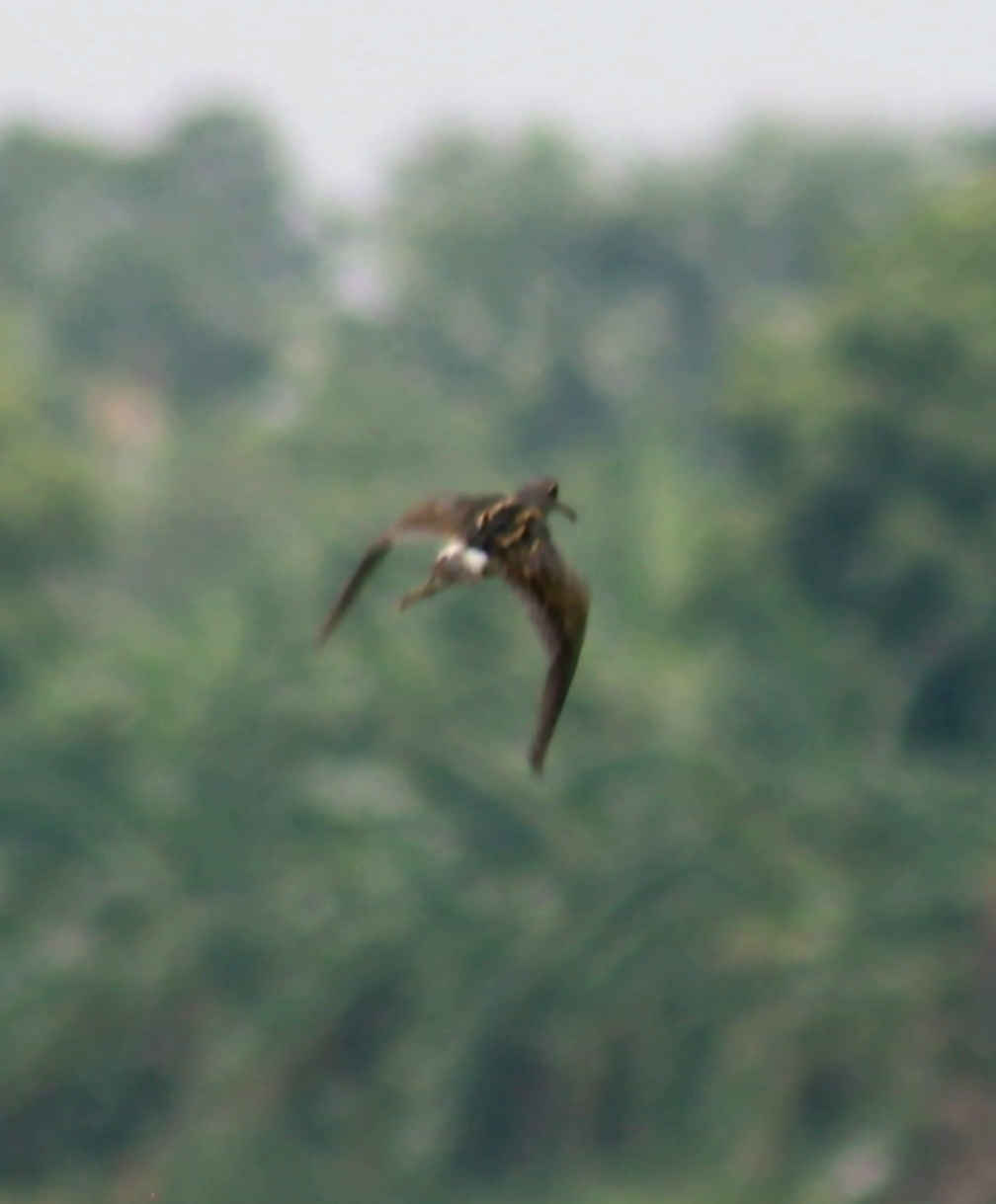
Not a vocal species; mostly silent apart from the breeding season when the female may make a mellow hooting or booming sound. When flushed, flies like rails with legs dangling.
Distribution & Habitat
Widely distributed in mainland Africa, Madagascar, Seychelles, India, and Southeast Asia. In Africa, found in the Nile River Valley and non-rainforested areas of Sub-Saharan Africa, but absent from eastern Somalia, desert areas of Namibia, and parts of Botswana and South Africa. Prefers muddy wetland areas with vegetation cover, such as marshes, swamps, ponds, streams, and edges of lakes and rivers.
Behavior & Ecology
Usually solitary or in pairs, sometimes in large groups. Shy and retiring, skulking close to vegetation. Feeds on insects, snails, earthworms, crustacea, and plant seeds using a scythe-like action of the head and bill in shallow water. Generally crepuscular, feeding in early morning and near dusk. Almost always polyandrous; females initiate courtship and may mate with up to four males in a season. Males incubate the clutch of normally 4 eggs for around 19 days and provide parental care. Nests are shallow scrapes in soft ground, lined with plant material and concealed among grass or reeds at the water's edge. Young are precocial and nidifugous, buff colored with black stripes.
Conservation
Listed as Least Concern by the IUCN due to its large range and relatively slow rate of population decrease. BirdLife International estimates between 31,000 and 1,000,000 mature individuals.
Source: Wikipedia · CC BY-SA 3.0
Taxonomy
- Order
- Charadriiformes
- Family
- Rostratulidae
- Genus
- Rostratula
Distribution
locally in inland Africa, Madagascar, and Oriental region from Indus Valley (central Pakistan) to Japan, Philippines, and eastern Lesser Sundas
Vocalizations
Data Sources
Species description from Wikipedia, licensed under CC BY-SA 3.0.
Bird images and sounds sourced from GBIF, contributed by citizen scientists worldwide under Creative Commons licenses.
Taxonomy data from AviList 2025.