
Passeriformes / Rhipiduridae / Rhipidura
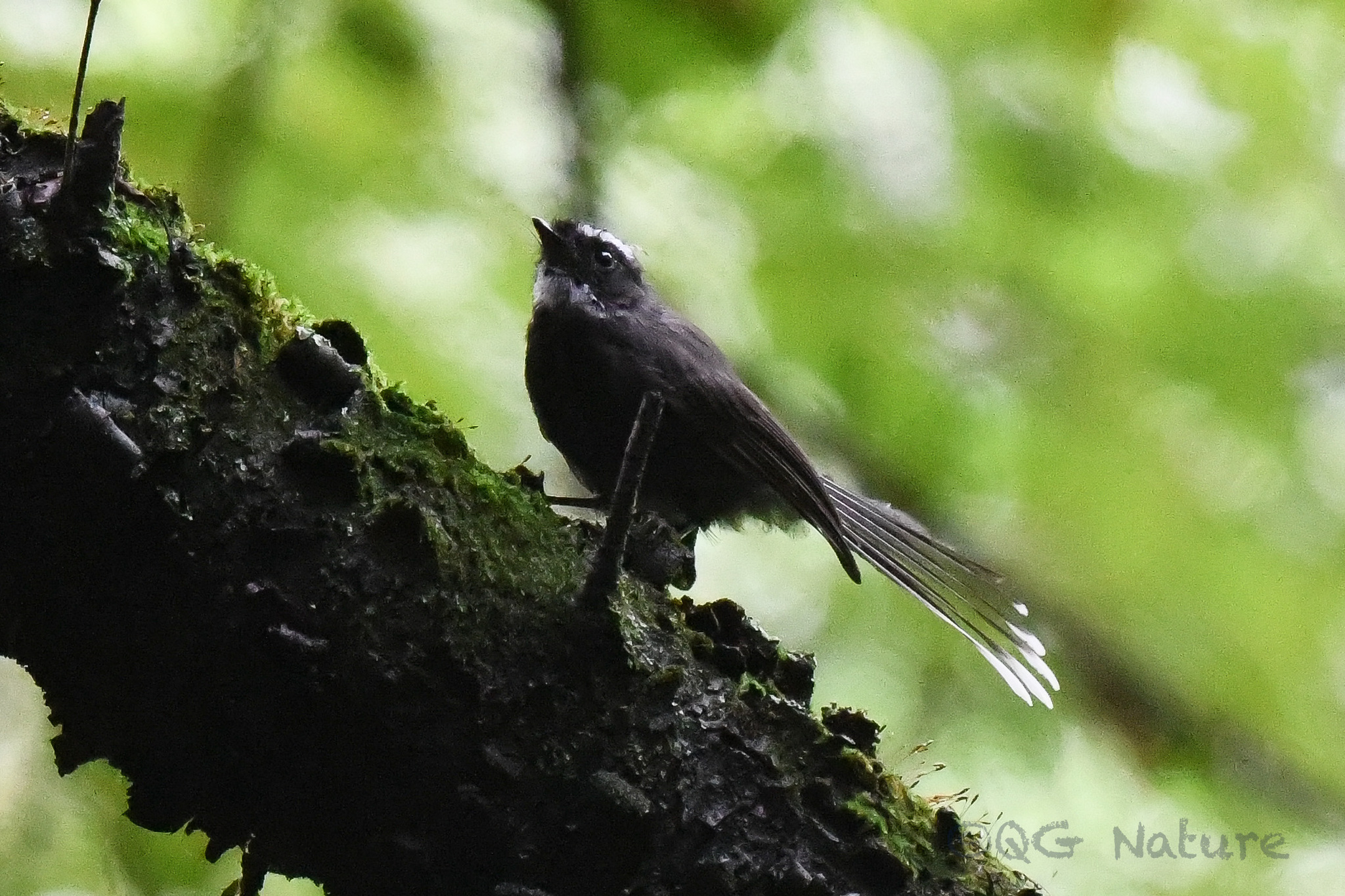
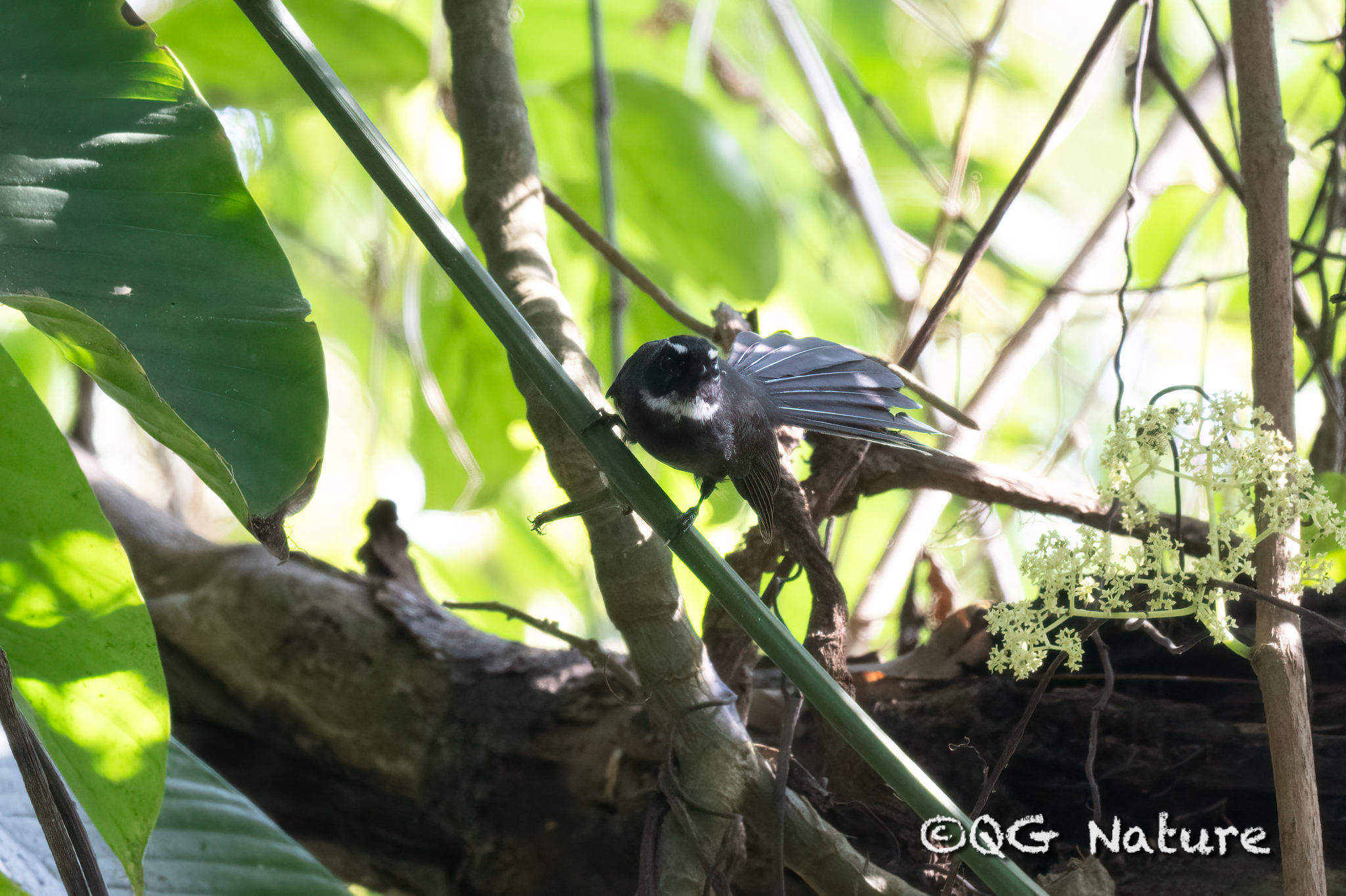
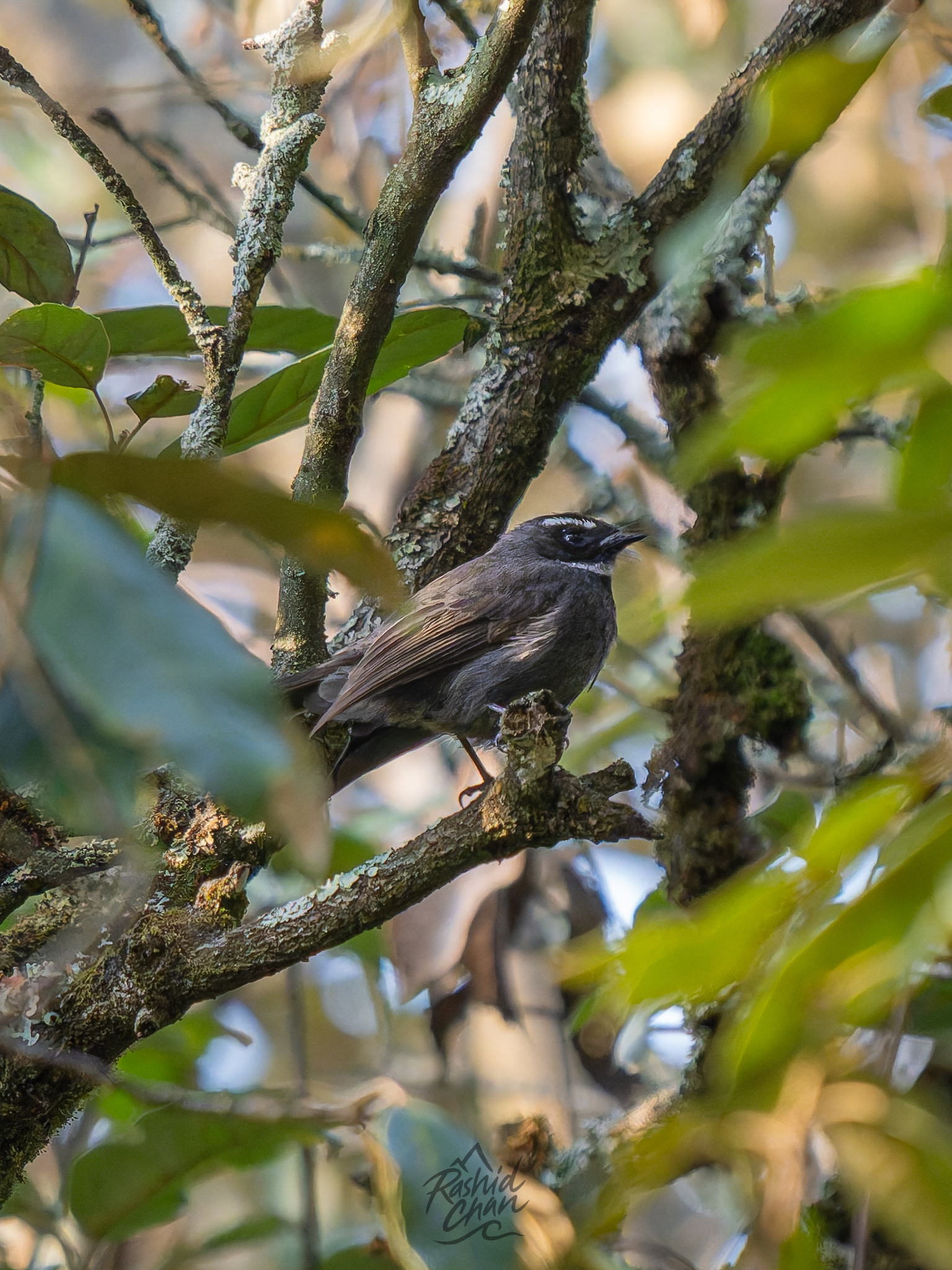
White-throated Fantail
Rhipidura albicollis · 白喉扇尾鹟
Introduction
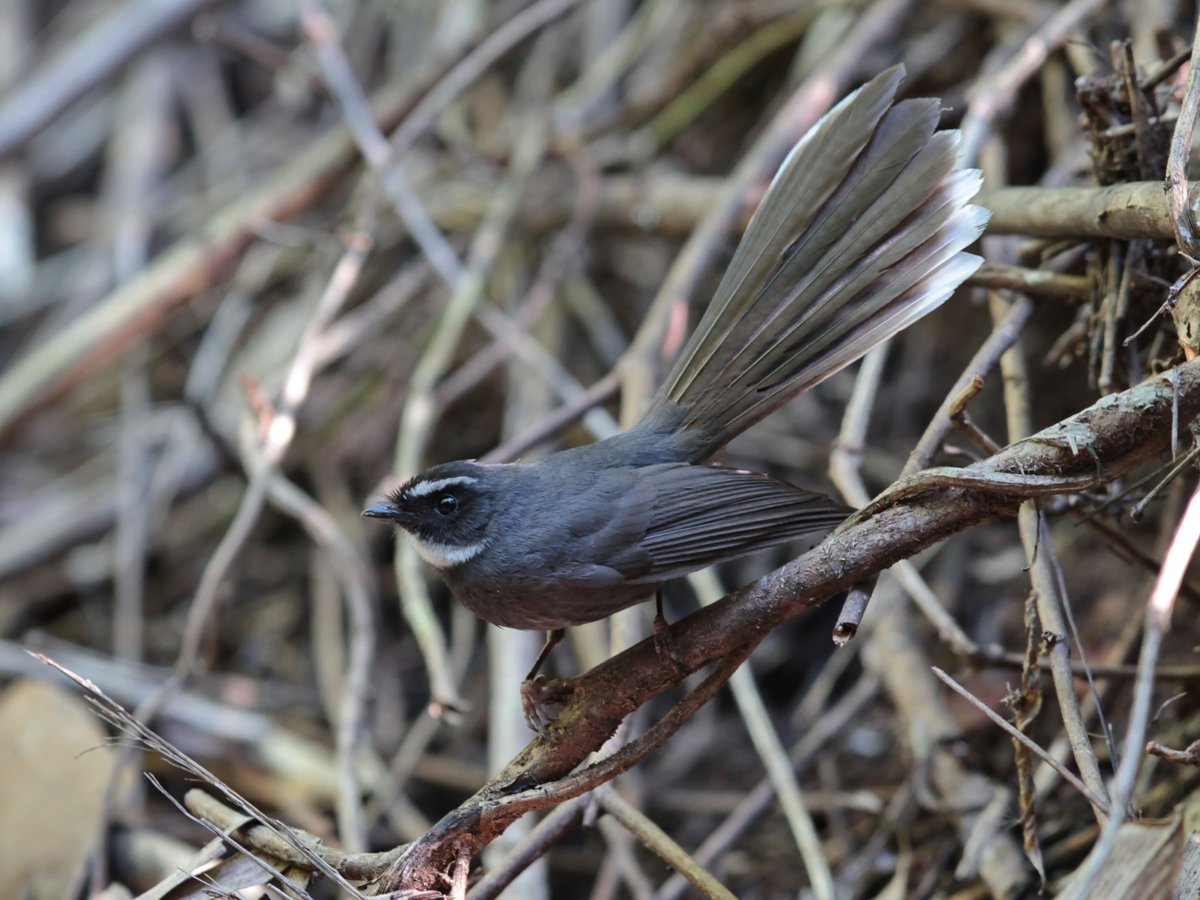
Small passerine bird found in forest, scrub, and cultivation across tropical southern Asia from the Himalayas, India, and Bangladesh east to Indonesia. Distinctive for fanning its dark tail while moving through undergrowth and for insectivorous diet.
Description
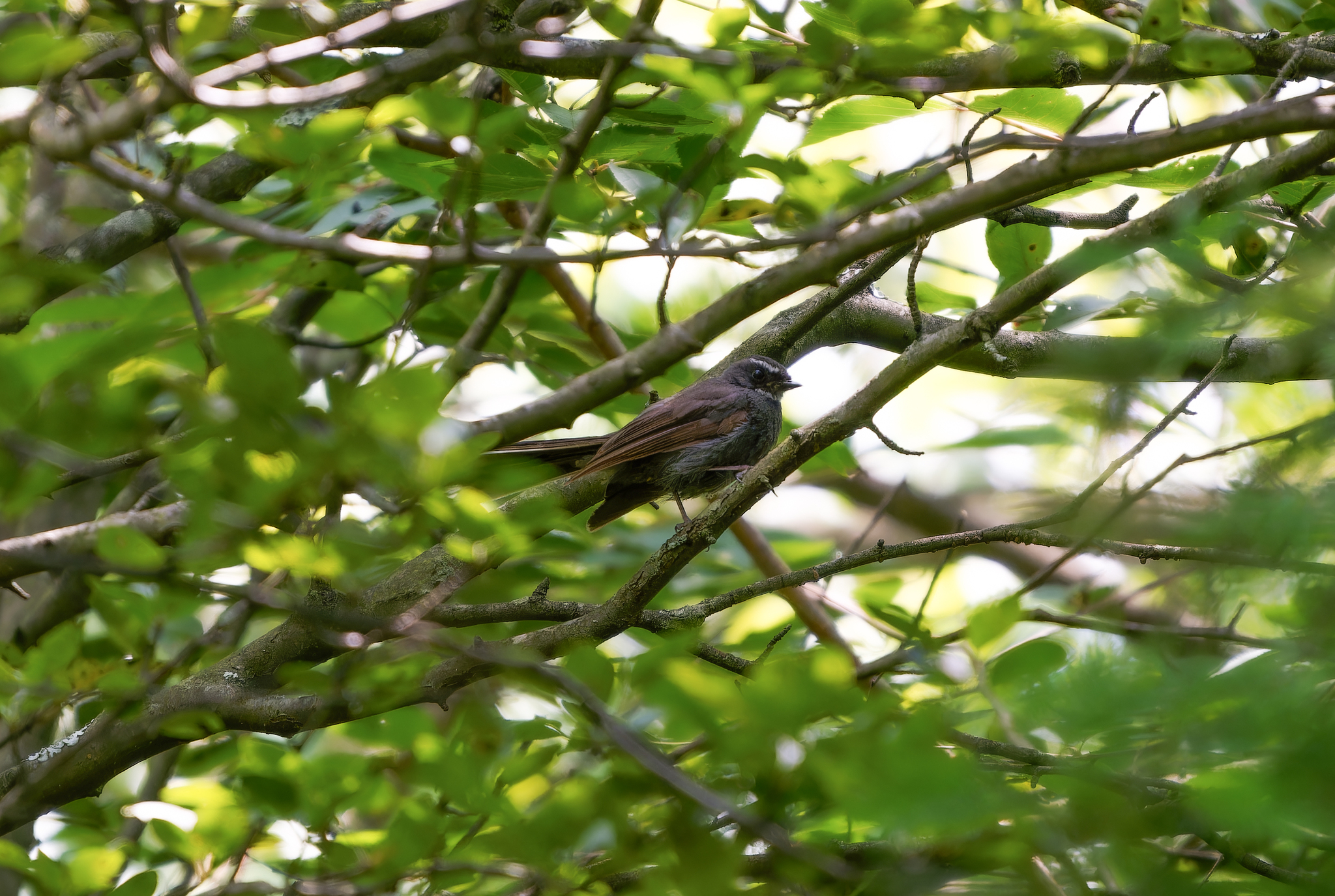
Adult is about 19 cm (7.5 in) long. Features a dark fan-shaped tail edged in white, white supercilium, and white throat. Plumage varies between races; most resemble the Himalayan subspecies R. a. canescans, which is primarily slate grey above and below with a black eye mask.
Identification
Often confused with white-browed fantail (R. aureola) where ranges overlap. The latter has light underparts and prominent spots in two rows on the wings. Male's call is a valuable tool for detection and identification.
Distribution & Habitat
Range extends from the Himalayas, India, and Bangladesh east to Indonesia. Inhabits forest, scrub, and cultivation areas. Nine recognized subspecies include R. a. albicollis, R. a. atrata, R. a. canescens, R. a. celsa, R. a. cinerascens, R. a. kinabalu, R. a. orissae, R. a. sarawacensis, and R. a. stanleyi.
Behavior & Ecology
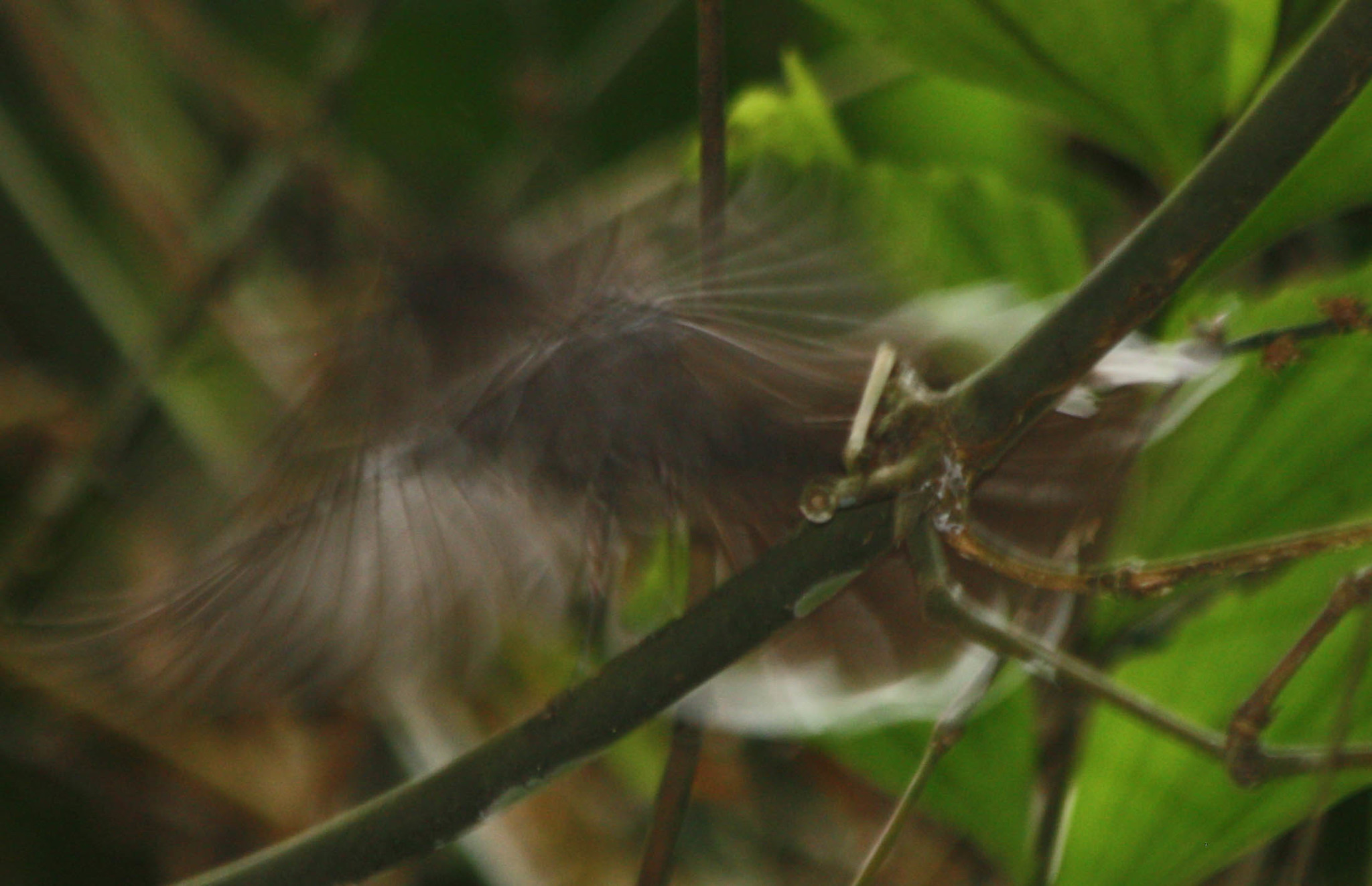
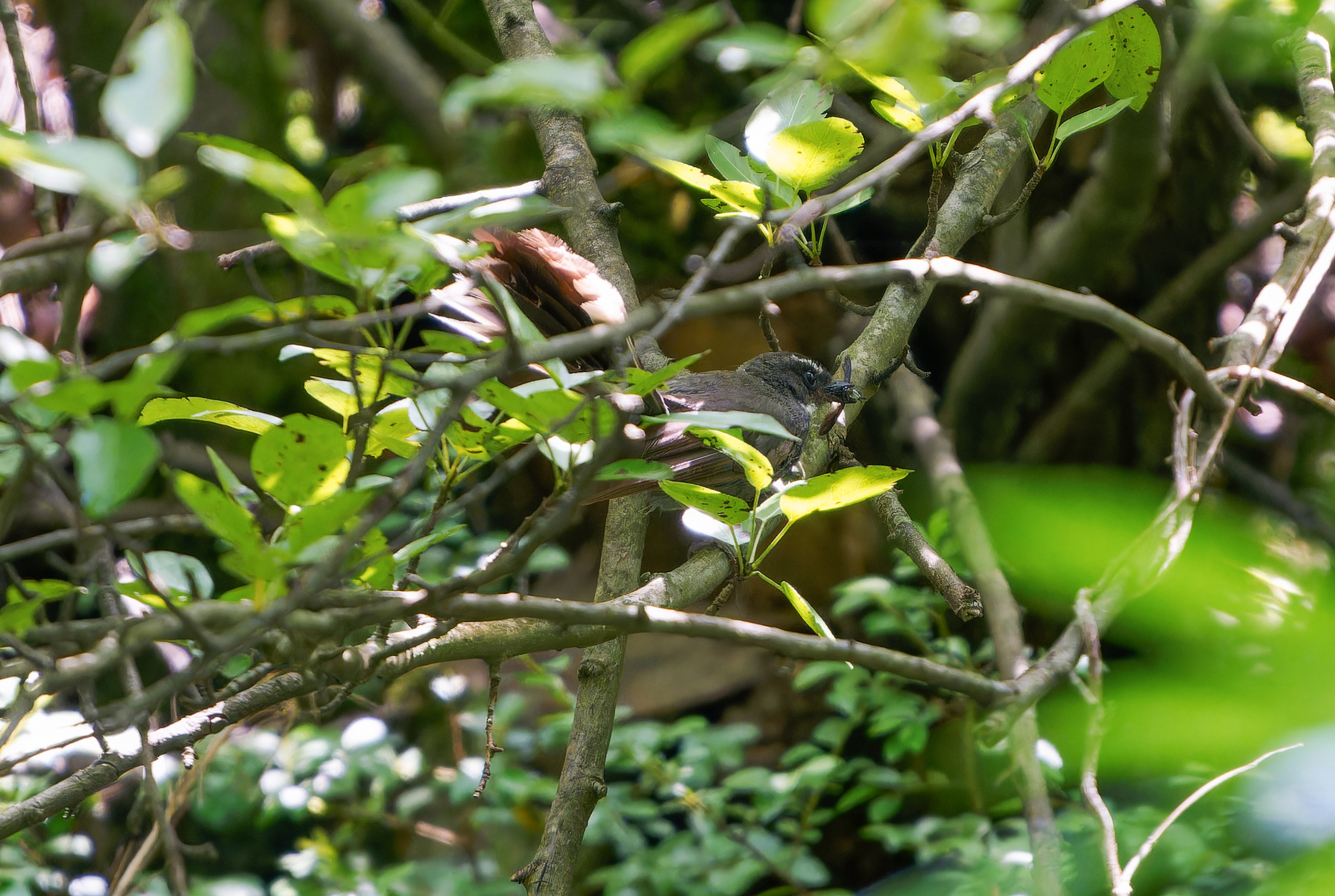
Insectivorous; often fans tail while moving through undergrowth. Builds a small cup nest in a tree, laying three eggs. Eggs are approximately 2 cm (0.79 in) long, white with a band of brown spots around the middle closer to the base. Birds use the same song year after year with progressively small changes, resulting in significant difference after 4–5 years.
Source: Wikipedia · CC BY-SA 3.0
Taxonomy
- Order
- Passeriformes
- Family
- Rhipiduridae
- Genus
- Rhipidura
Vocalizations
Subspecies (9)
-
Rhipidura albicollis albicollis
Himalayas (western Nepal and Sikkim)
Data Sources
Species description from Wikipedia, licensed under CC BY-SA 3.0.
Bird images and sounds sourced from GBIF, contributed by citizen scientists worldwide under Creative Commons licenses.
Taxonomy data from AviList 2025.