White-throated Fantail
Rhipidura albicollis
白喉扇尾鹟
Introduction
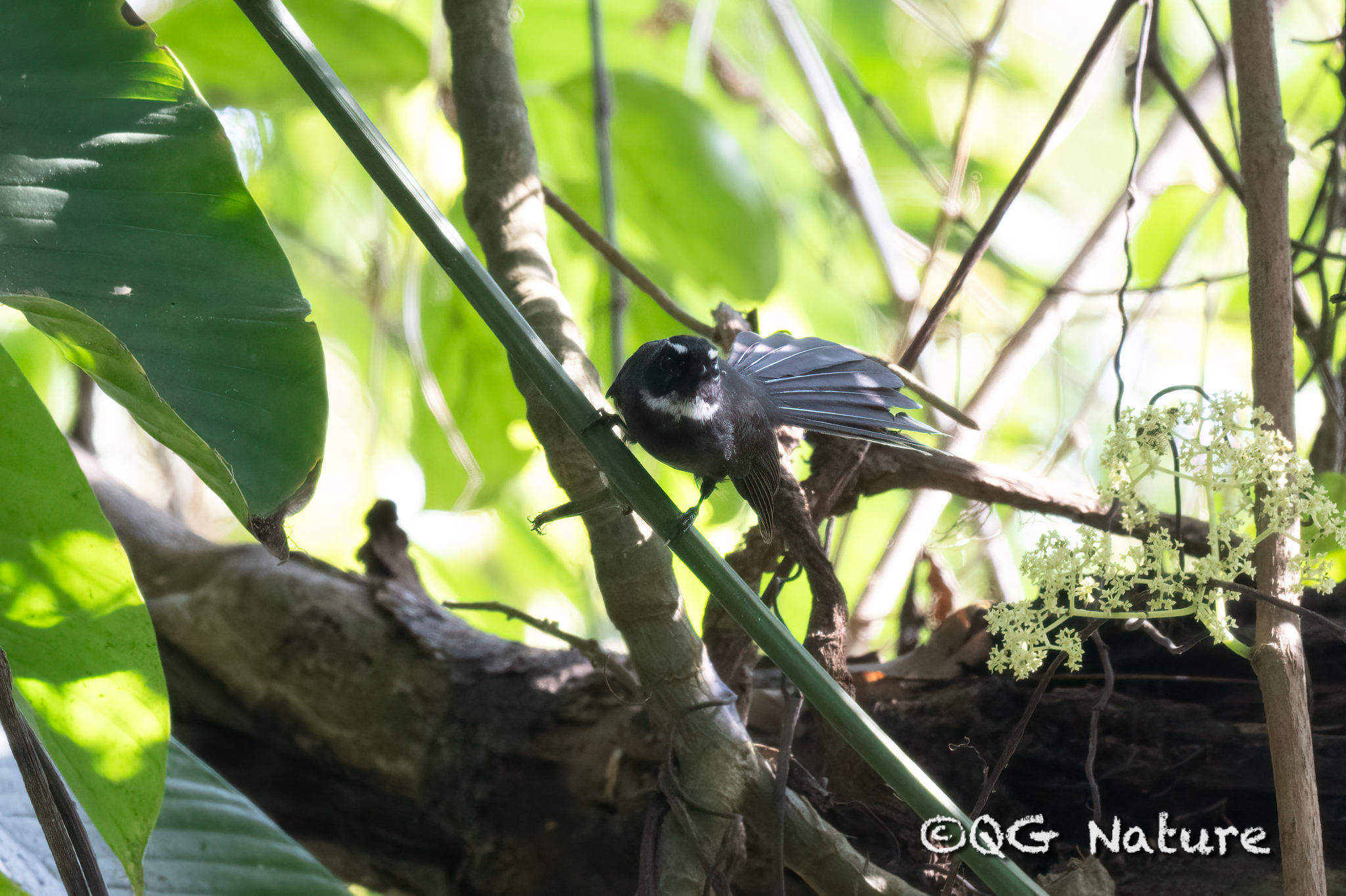
A small passerine bird belonging to the family Rhipituridae. Found in forest, scrub, and cultivation across tropical southern Asia, from the Himalayas, India, and Bangladesh east to Indonesia. Primarily insectivorous. Notable for frequently fanning its distinctive dark tail while moving through undergrowth. Formerly considered the white-spotted fantail (R. albogularis) as a subspecies. Conservation status not assessed.
Description
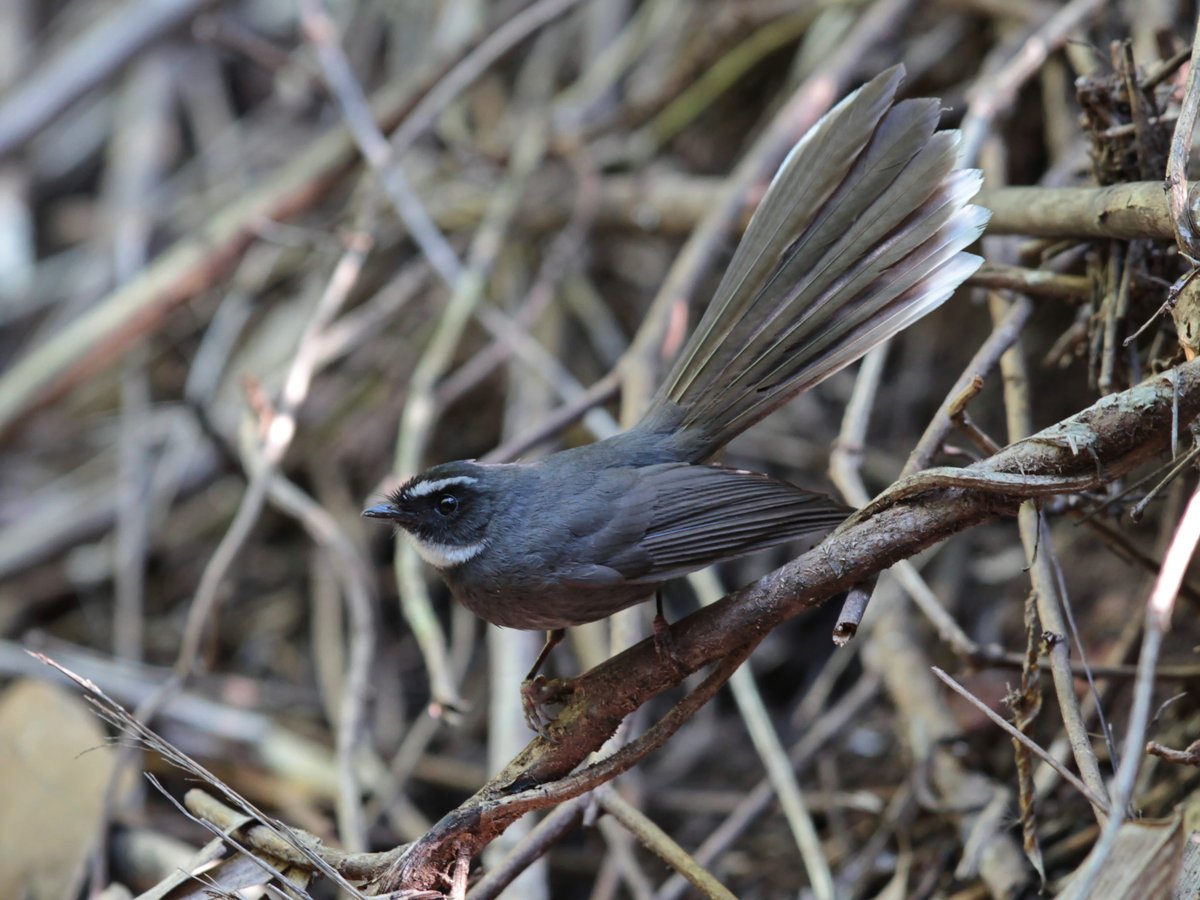
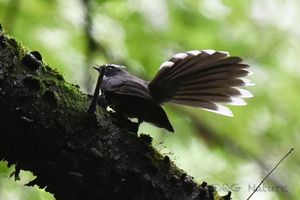
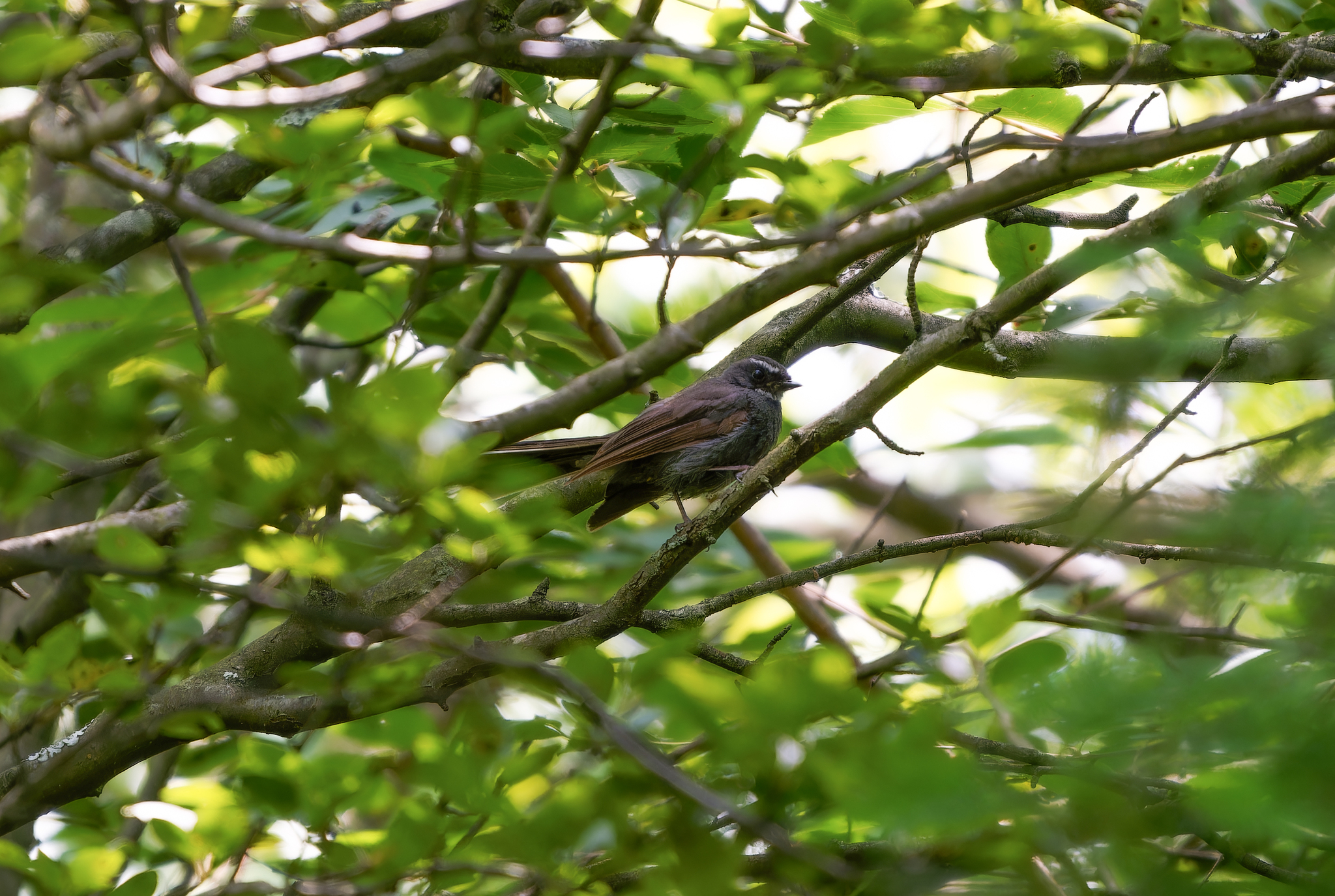
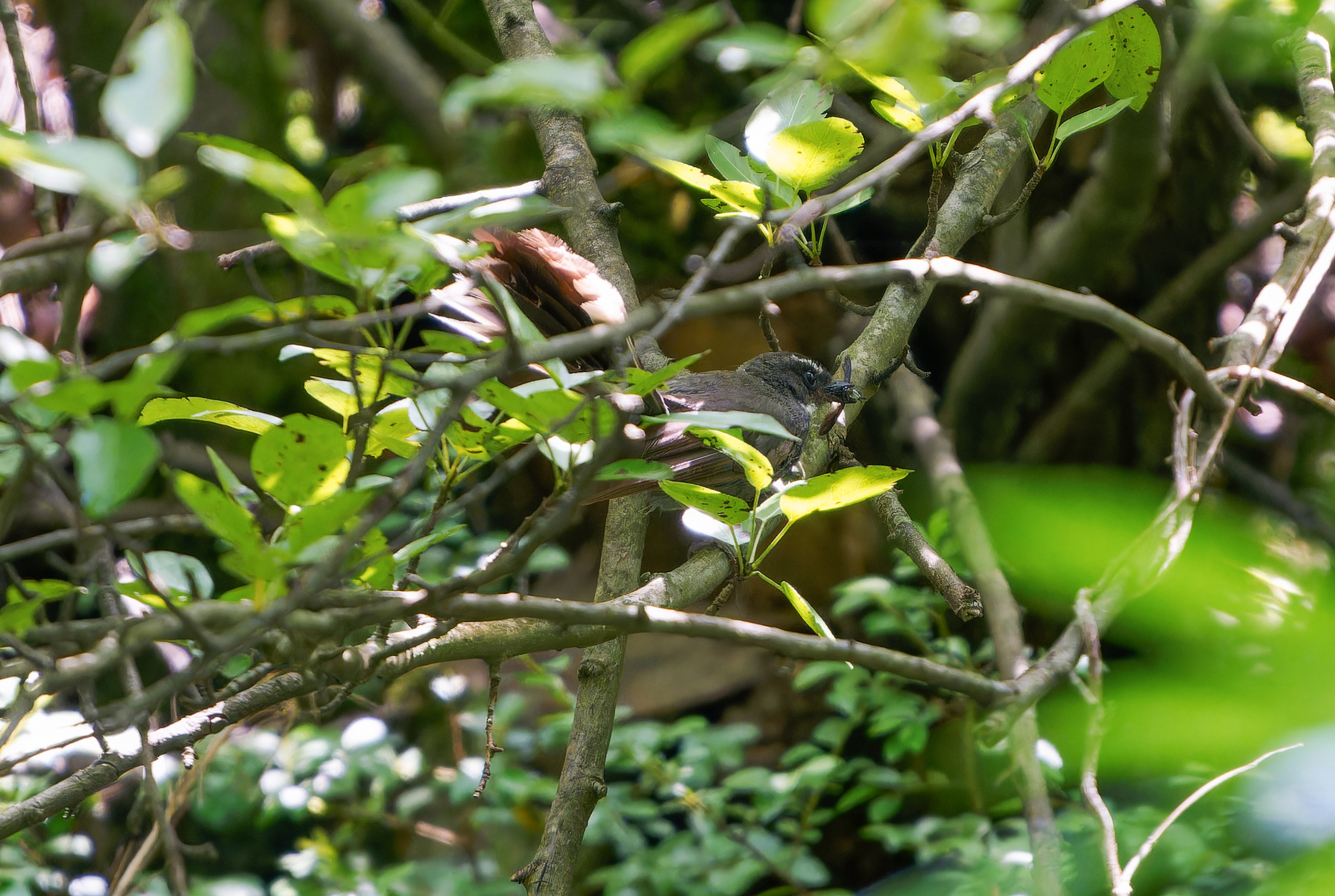
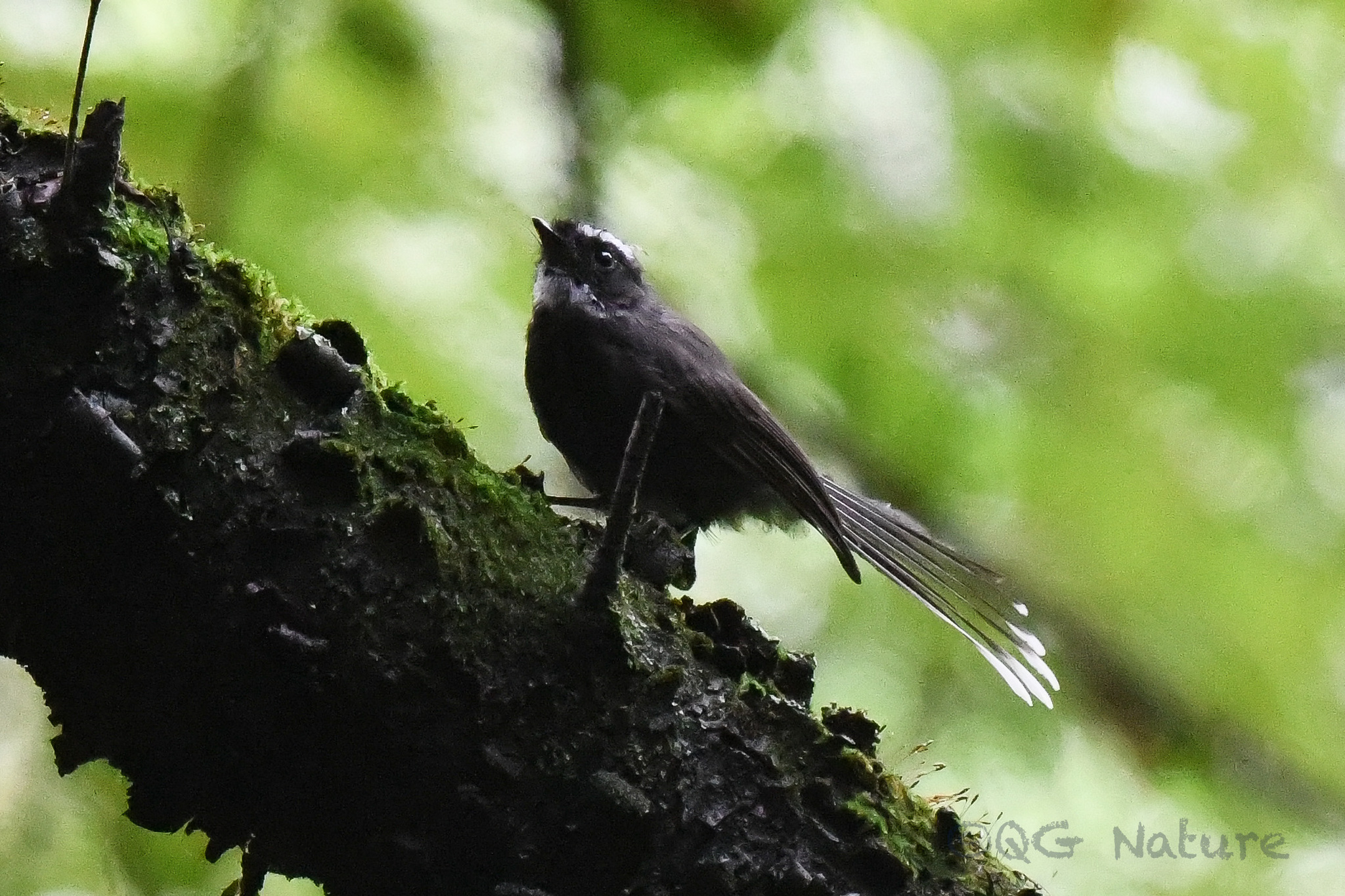
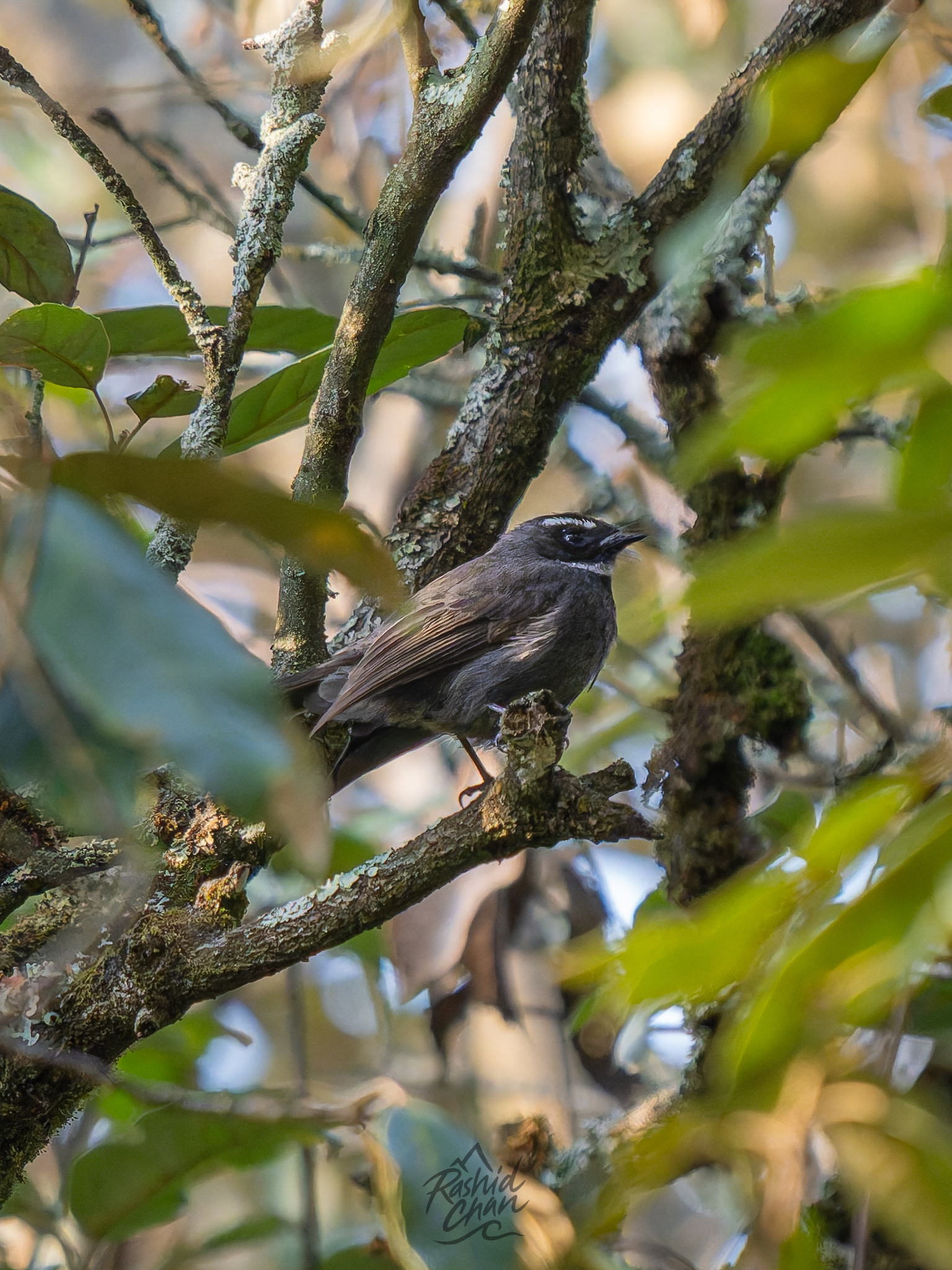
Approximately 19 cm (7.5 in) in length. Characterized by a dark fan-shaped tail with white edges, white supercilium, and white throat. Plumage varies considerably among races, though most resemble the Himalayan R. a. canescans, which is primarily slate grey above and below with a black eye mask. The white throat and eyebrow provide contrasting markings against the otherwise dark plumage.
Identification
Confusion possible with the white-browed fantail (R. aureola) where ranges overlap. The white-browed fantail can be distinguished by its light underparts and prominent spots arranged in two rows on the wings. The white-throated fantail's dark fan-shaped tail with white edges and white throat and supercilium are key distinguishing features.
Distribution & Habitat
Occurs across tropical southern Asia from the Himalayas, India, and Bangladesh east through Southeast Asia to Indonesia. Inhabits forest, scrub, and cultivation areas. Nine subspecies are recognized according to the IOC: albicollis, atrata, canescans, celsa, cinerascens, kinabalu, orissae, sarawacensis, and stanleyi.
Behavior & Ecology
Insectivorous species that actively forages by moving through undergrowth, often fanning its tail. Breeding occurs in spring and summer. Lays three eggs in a small cup nest constructed in a tree. Eggs measure approximately 2 cm (0.79 in) in length, are white with a band of brown spots around the middle. Males possess a distinctive song that is used annually but undergoes progressive small changes, resulting in markedly different songs after 4-5 years.
Culture
Known locally as 'Nasoni sorai' in Assamese language in India.
Source: Wikipedia · CC BY-SA 3.0
Taxonomy
- Order
- Passeriformes
- Family
- Rhipiduridae
- Genus
- Rhipidura
- eBird Code
- whtfan1
Vocalizations
Subspecies (9)
-
Rhipidura albicollis albicollis
Himalayas (western Nepal and Sikkim)
-
Rhipidura albicollis atrata
southern Thailand to Malaya and Sumatra
-
Rhipidura albicollis canescens
western Himalayas (Pakistan and Kashmir to western Nepal)
-
Rhipidura albicollis celsa
southeastern Tibet to southern China, Hainan, western Thailand, and northern Indochina
-
Rhipidura albicollis cinerascens
southern Indochina
-
Rhipidura albicollis kinabalu
mountains of northern Borneo (Kinabalu to Murud and Mulu)
-
Rhipidura albicollis orissae
northeastern India: Chota Nagpur plateau and north Eastern Ghats
-
Rhipidura albicollis sarawacensis
northern Borneo (Poi Mountains)
-
Rhipidura albicollis stanleyi
eastern Himalayas to Assam and Myanmar
Data Sources
Species description from Wikipedia, licensed under CC BY-SA 3.0.
Bird images and sounds sourced from GBIF, contributed by citizen scientists worldwide under Creative Commons licenses.
Taxonomy data from AviList 2025.