
Passeriformes / Regulidae / Regulus
Goldcrest
Regulus regulus · 戴菊
Introduction
A very small passerine in the kinglet family with a distribution across much of the Palearctic, including Macaronesia and Iceland. It breeds in coniferous woodlands and gardens, migrating south from northern and eastern ranges in winter. Distinctive traits include constant movement while foraging for insects and association with tit flocks in winter. Classified as Least Concern on the IUCN Red List.
Description
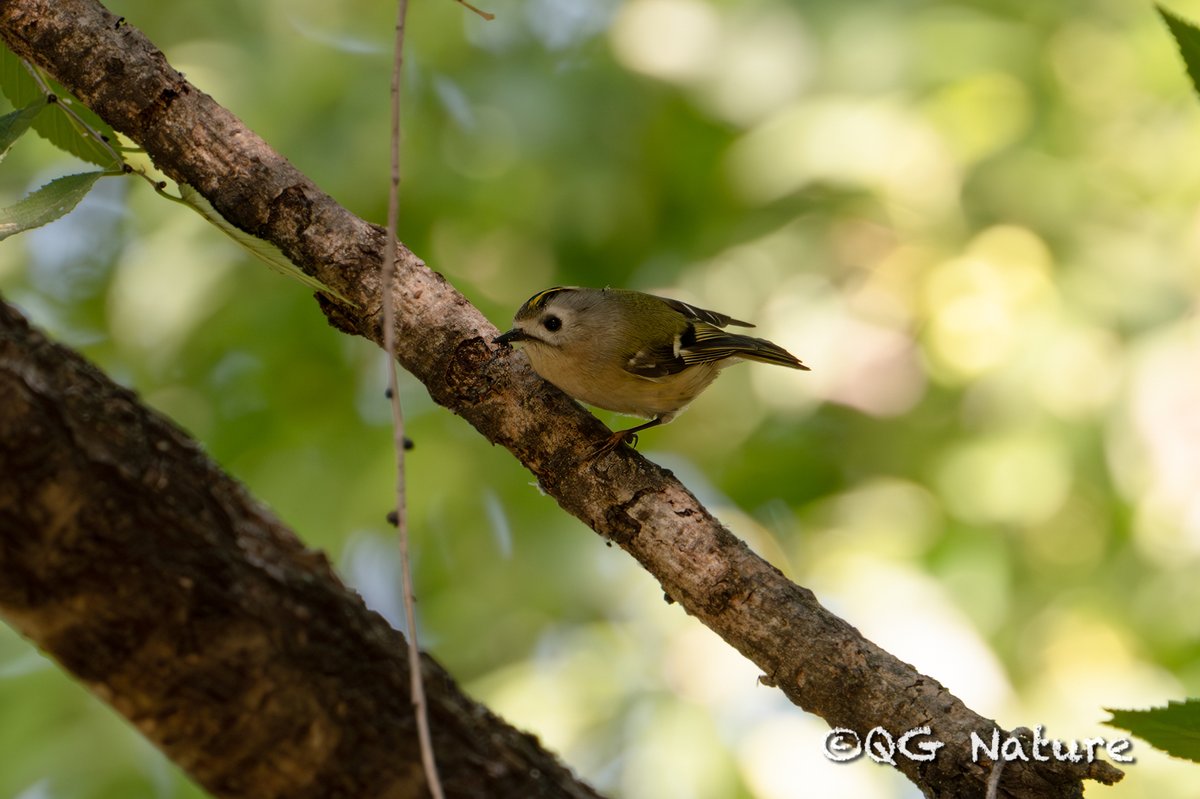
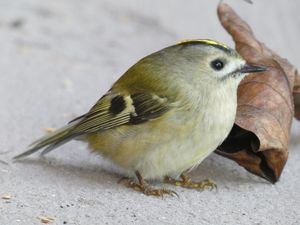
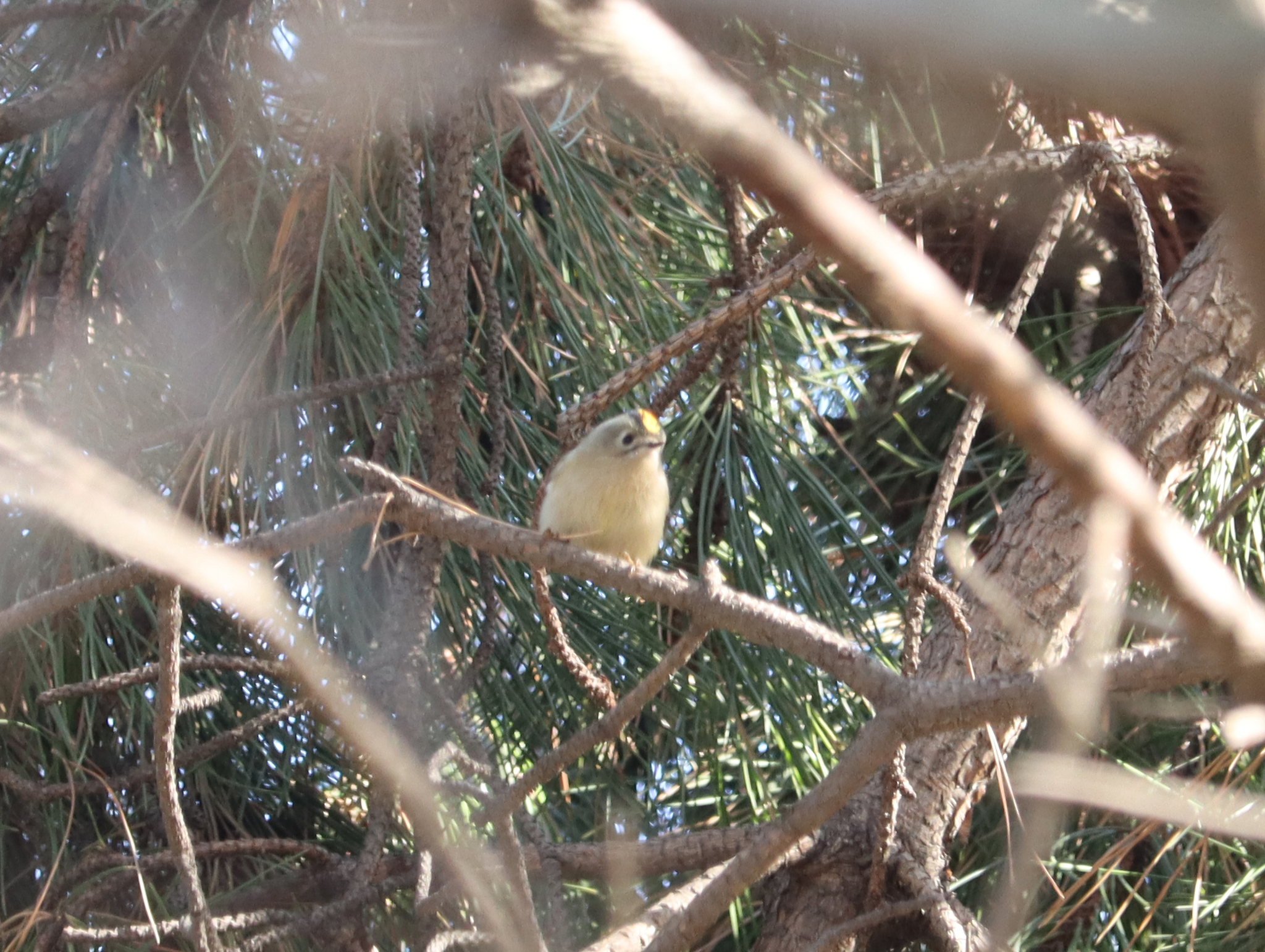
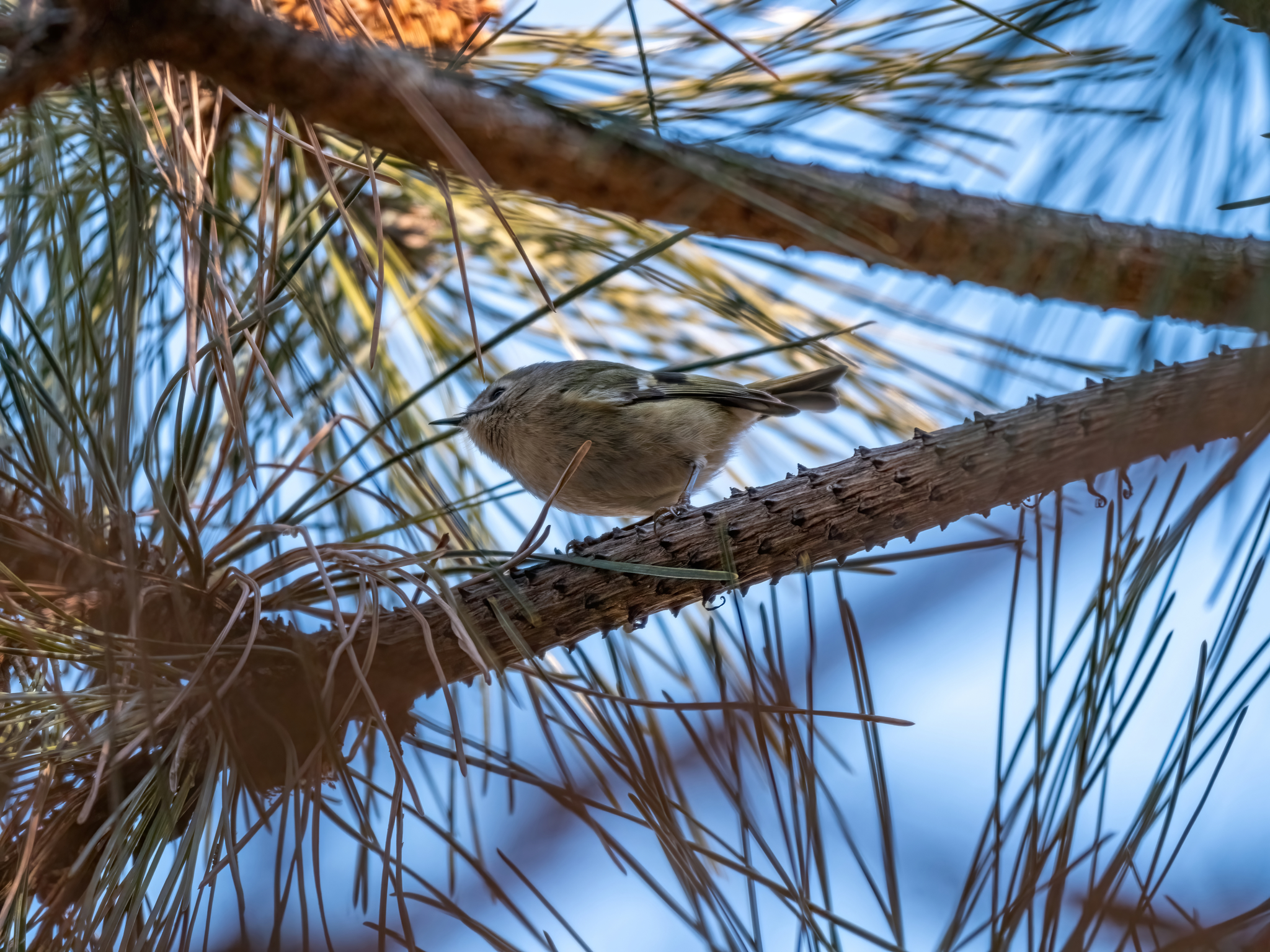
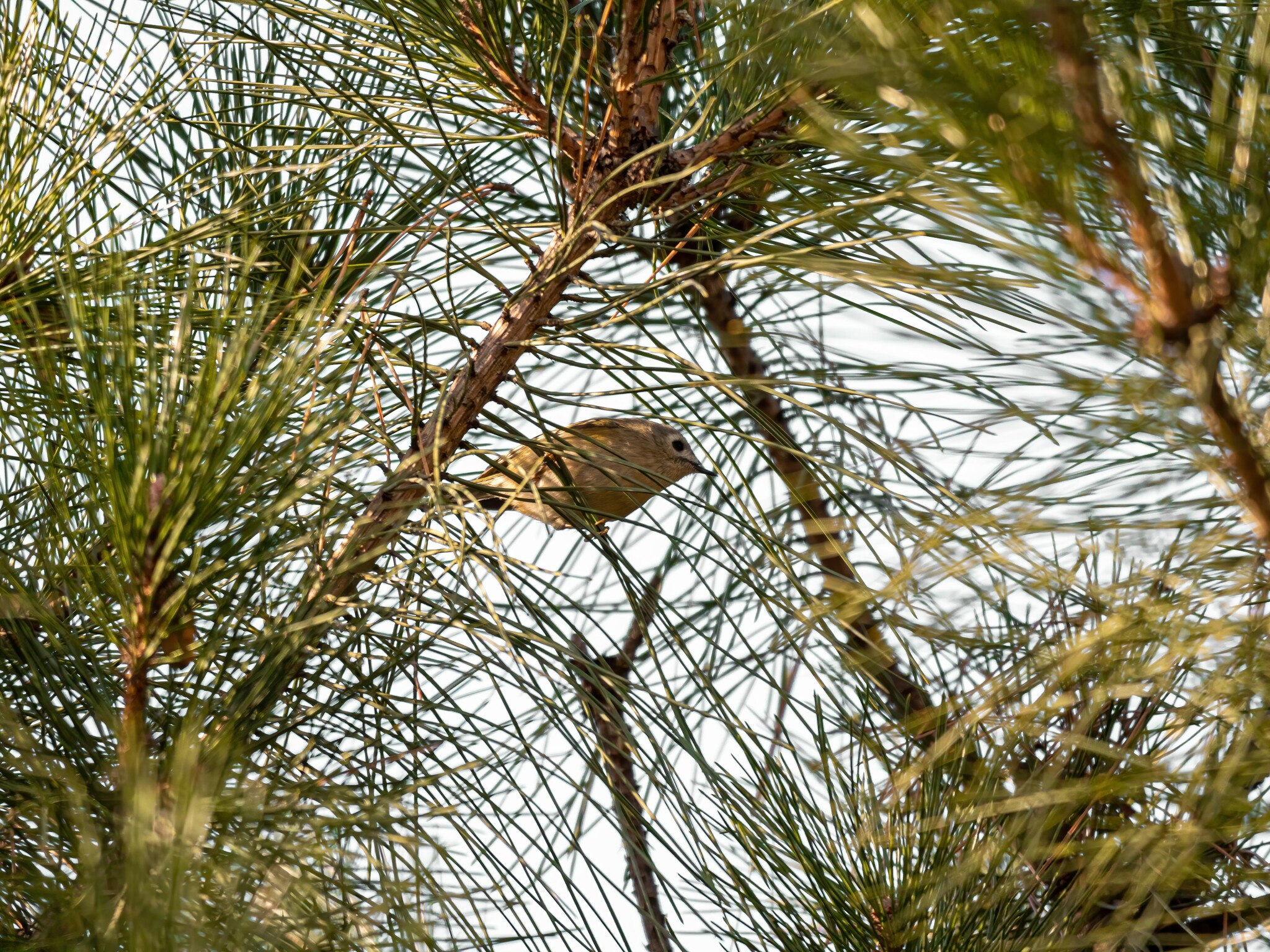
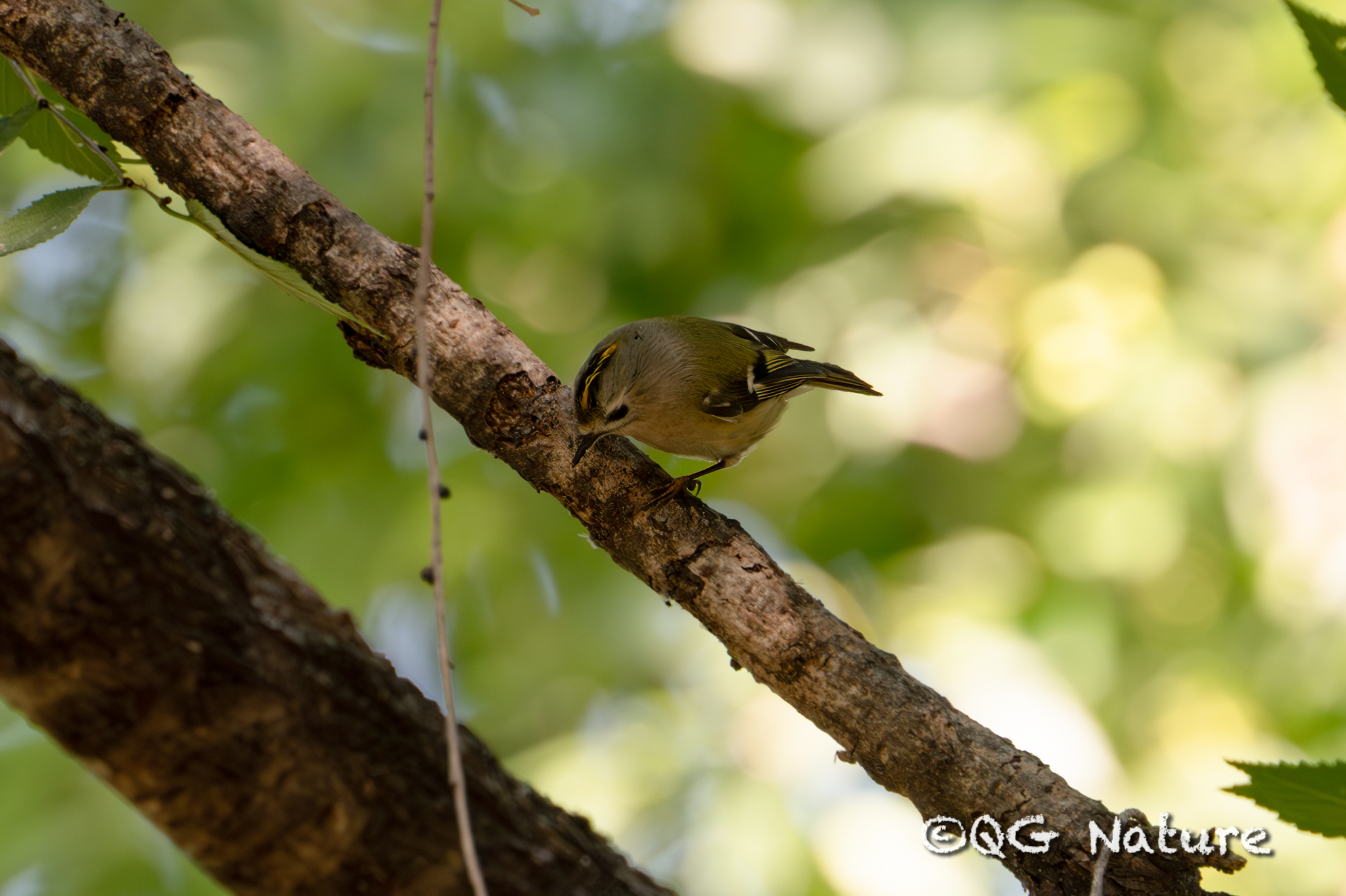
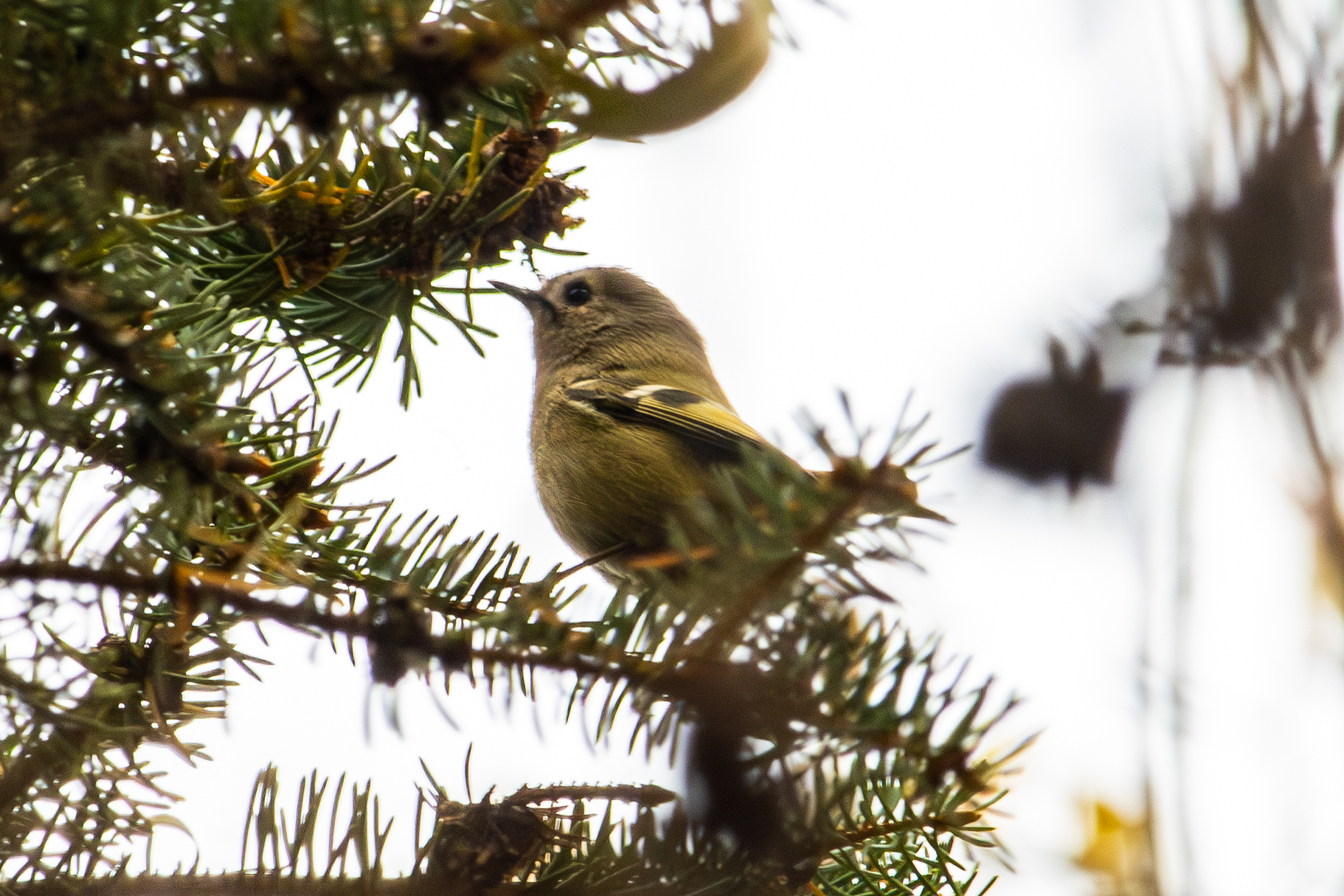
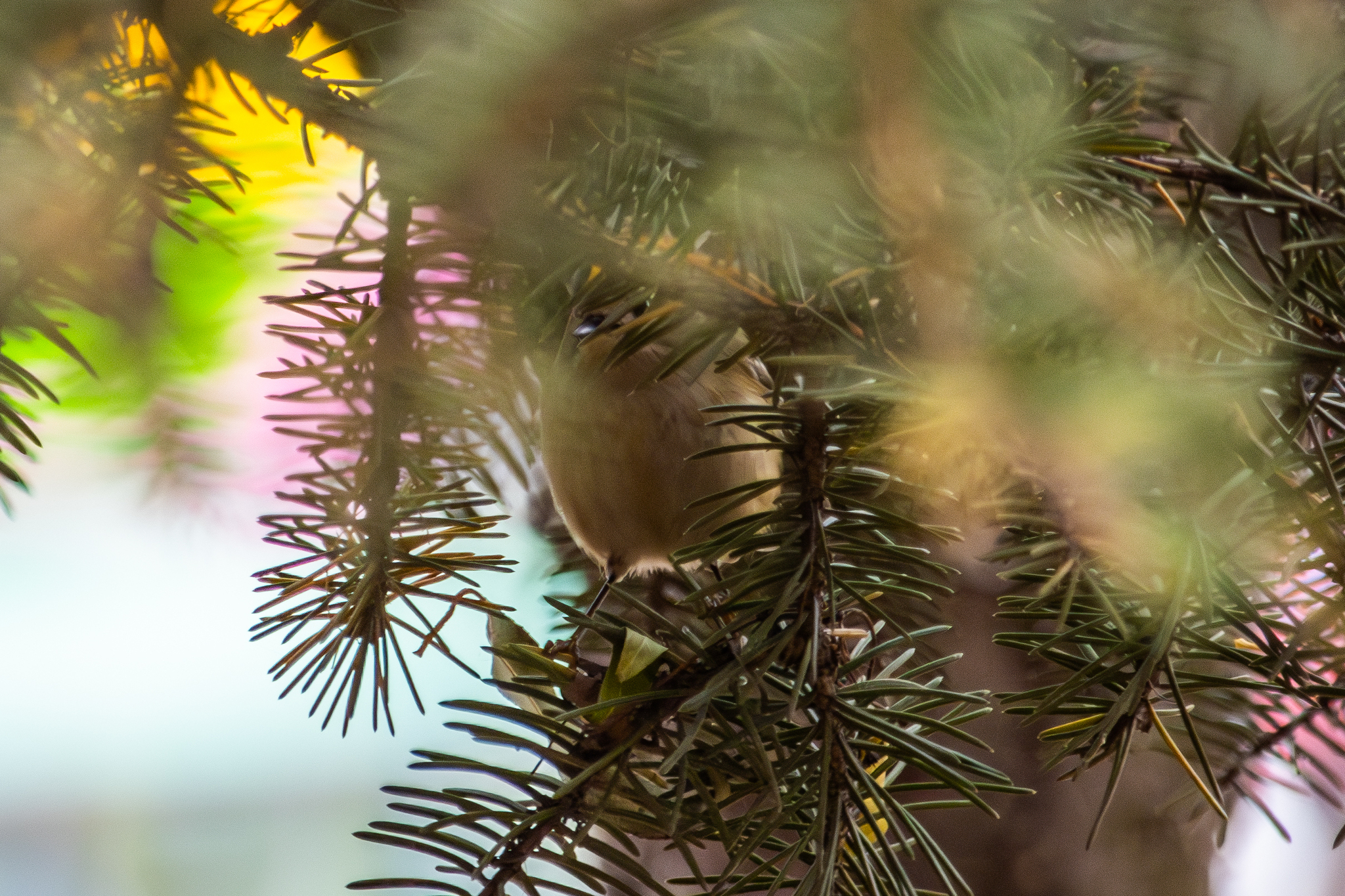
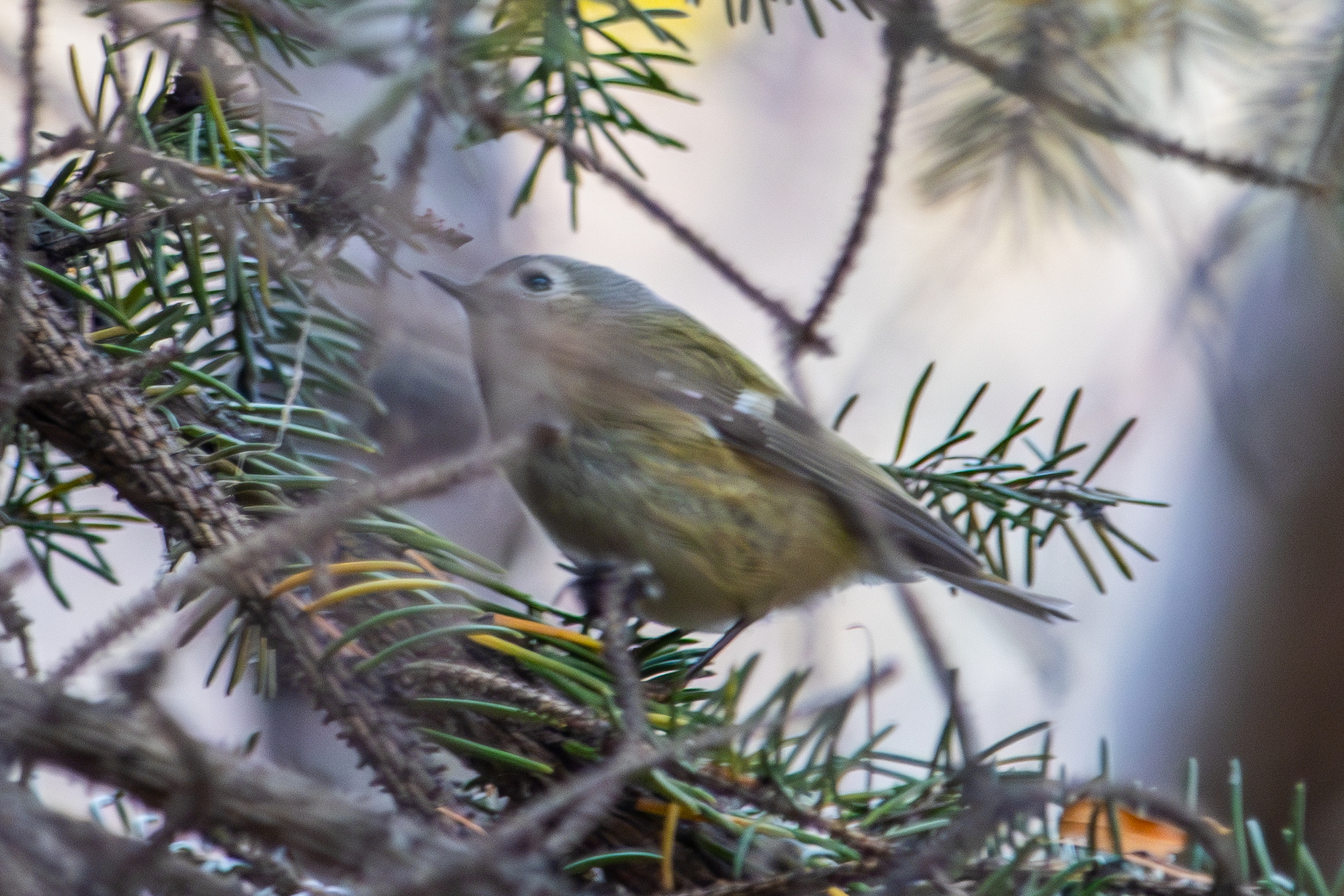
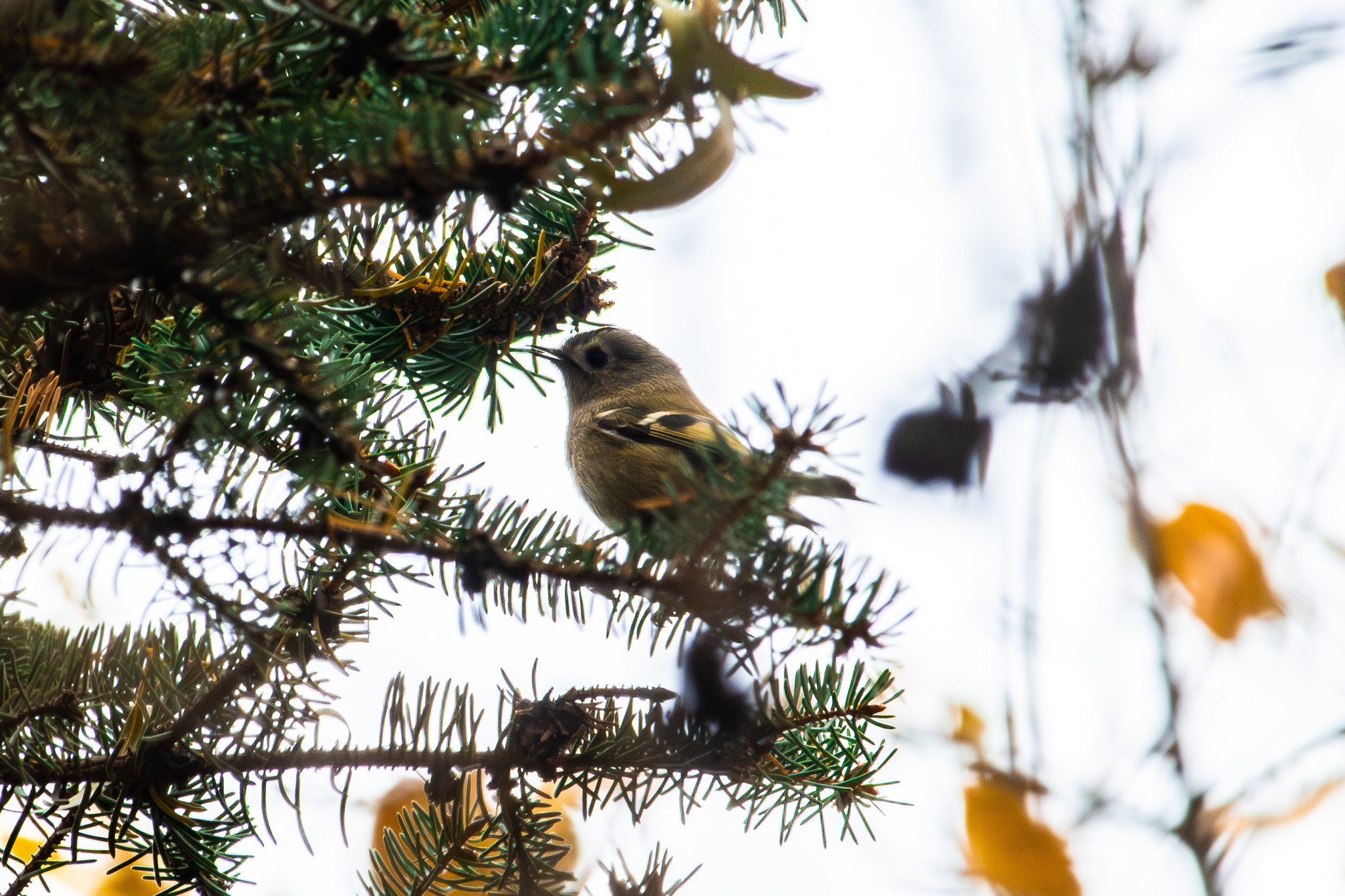
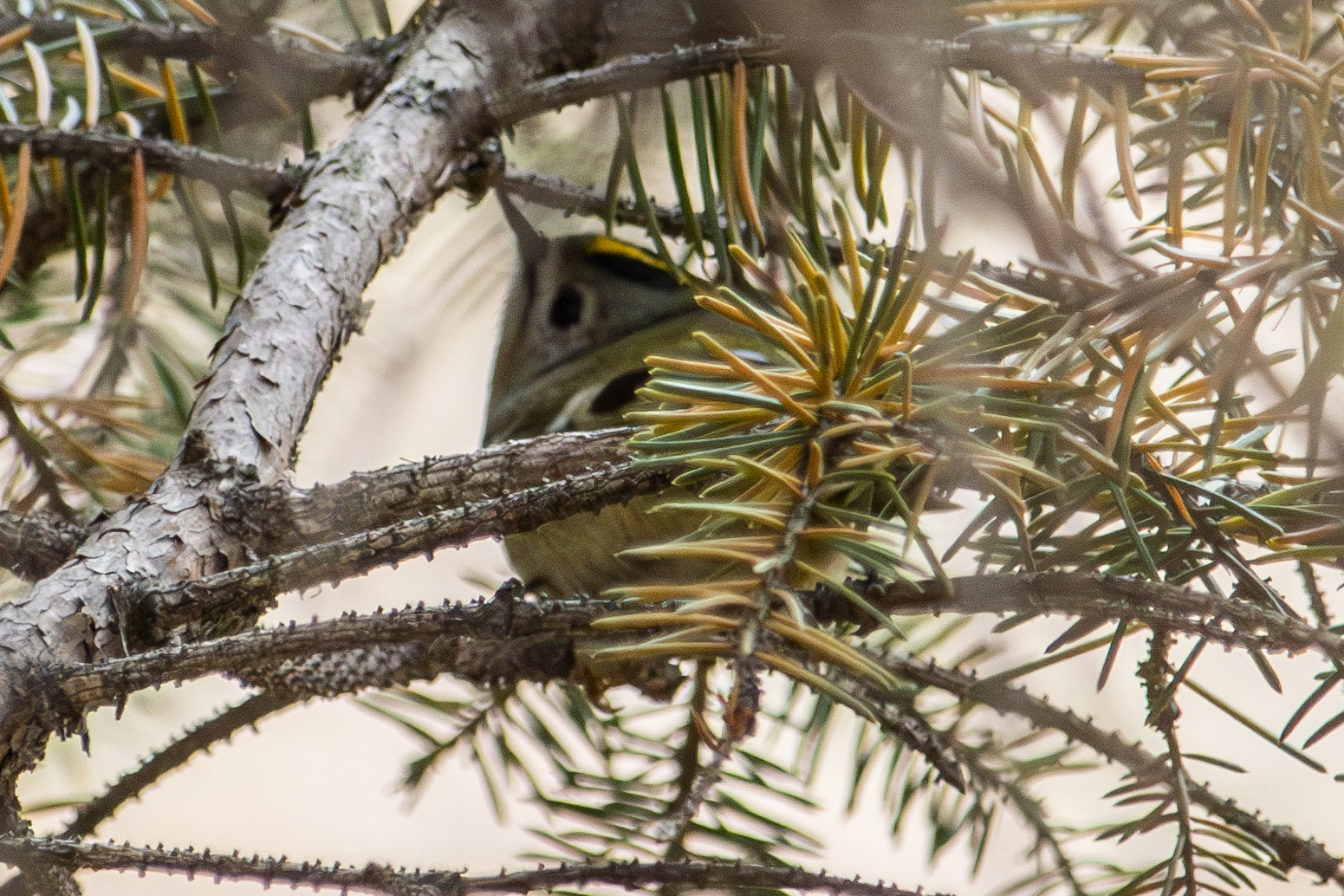
The smallest European bird, measuring 8.5–9.5 cm (3.3–3.7 in) in length, with a 13.5–15.5 cm (5.3–6.1 in) wingspan and weighing 4.5–7.0 g (0.16–0.25 oz). It has olive-green upper-parts, buff-white underparts, two white wing bars, and a plain face with conspicuous black irises. The crown features black sides and a narrow black front, with a bright crest that is yellow with an orange center in males and entirely yellow in females. The bill is small, thin, and black; legs are dark flesh-brown. Juveniles have duller upper-parts and lack the colored crown.
Identification
Distinguished from the common firecrest by a plain face lacking the firecrest's bright white supercilium and black eye-stripe, and by the absence of bronze shoulders. The song is a very high, thin double note repeated 5–7 times, ending in a flourish, lasting 3–4 seconds. The contact call is a thin, high-pitched 'zee' given at 1–4 second intervals, higher and less rough than the firecrest's call. Flight consists of whirring wing-beats with sudden direction changes.
Distribution & Habitat
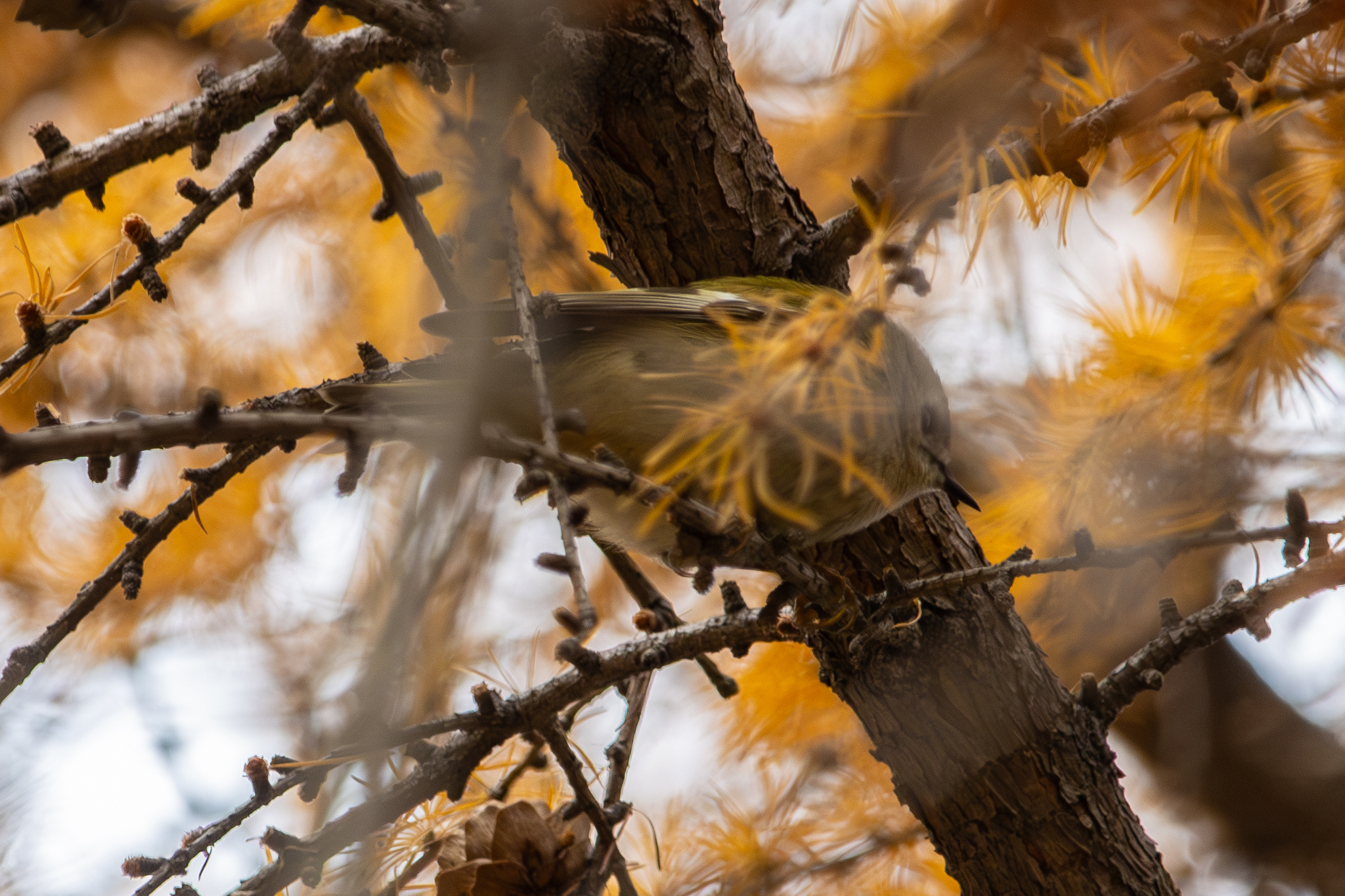
Breeds in mature lowland and mountain coniferous woodlands up to 3,000 m (occasionally 4,800 m), using spruce, larch, pine, and fir. Range extends from Macaronesia to Japan, covering middle and northern temperate and boreal latitudes of Europe, southern Siberia, Sakhalin, Japan, Tian Shan, northern Iran, and the Himalayas to central China. Northern populations migrate south for winter; birds in northern Fennoscandia and Russia leave between late August and early November. Breeding has occurred in Iceland since 1999 and intermittently in the Faroes.
Behavior & Ecology
Insectivorous, feeding on small arthropods like springtails, aphids, spiders, and caterpillars, often hovering to catch flying insects. Forages on undersides of branches and leaves. Monogamous; the nest is a three-layered cup of moss, twigs, cobwebs, lichen, feathers, and hair, suspended from a branch. The female incubates 9–11 eggs for 16–19 days; chicks fledge in 17–22 days. Second broods are common. In winter, joins mixed-species flocks with tits. Survives cold nights by collective roosting in dense foliage or snow holes.
Conservation
Classified as Least Concern on the IUCN Red List due to a large range (13.2 million km²) and population estimated at 80–200 million individuals. Population is currently stable, though harsh winters can cause heavy mortality and temporary declines. Northward range expansion occurred in the 20th century in Scotland, Belgium, Norway, and Finland due to conifer plantation spread.
Culture
Known as the 'king of the birds' in European folklore, linked to a legend where a small bird hid under an eagle's feathers to fly highest. This title was also applied to the wren. An old English name is 'woodcock pilot,' based on the belief it preceded woodcock migration. Suffolk fishermen called it 'herring spink' or 'tot o'er seas' because migrants landed on herring boat rigging in the North Sea.
Source: Wikipedia · CC BY-SA 3.0
Taxonomy
- Order
- Passeriformes
- Family
- Regulidae
- Genus
- Regulus
Subspecies (14)
-
Regulus regulus azoricus
São Miguel Island (Azores)
Data Sources
Species description from Wikipedia, licensed under CC BY-SA 3.0.
Bird images and sounds sourced from GBIF, contributed by citizen scientists worldwide under Creative Commons licenses.
Taxonomy data from AviList 2025.