




Goldcrest
Regulus regulus
戴菊
Introduction
The Goldcrest (Regulus regulus) is the smallest bird in Europe. It inhabits mature coniferous forests across a vast range extending from Macaronesia to Japan, and also occurs in introduced conifer plantations. Northern and eastern populations are migratory, moving south for winter, while temperate populations remain year-round. It forages for insects and spiders by actively searching through conifer branches and foliage. In winter, it forms loose foraging flocks with tit species and other small passerines. Its high-pitched 'zee' contact calls and distinctive whirring flight are characteristic features. The species occurs at high densities in suitable spruce and fir woodlands.
Description
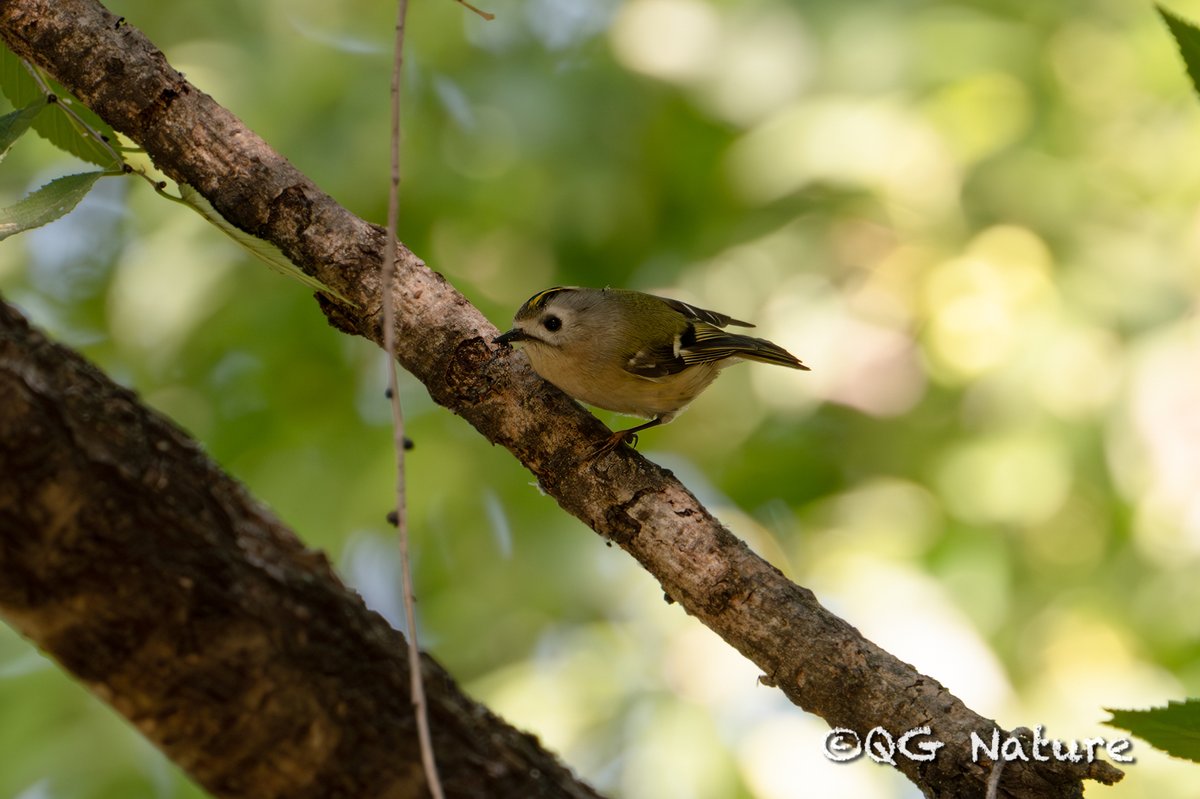
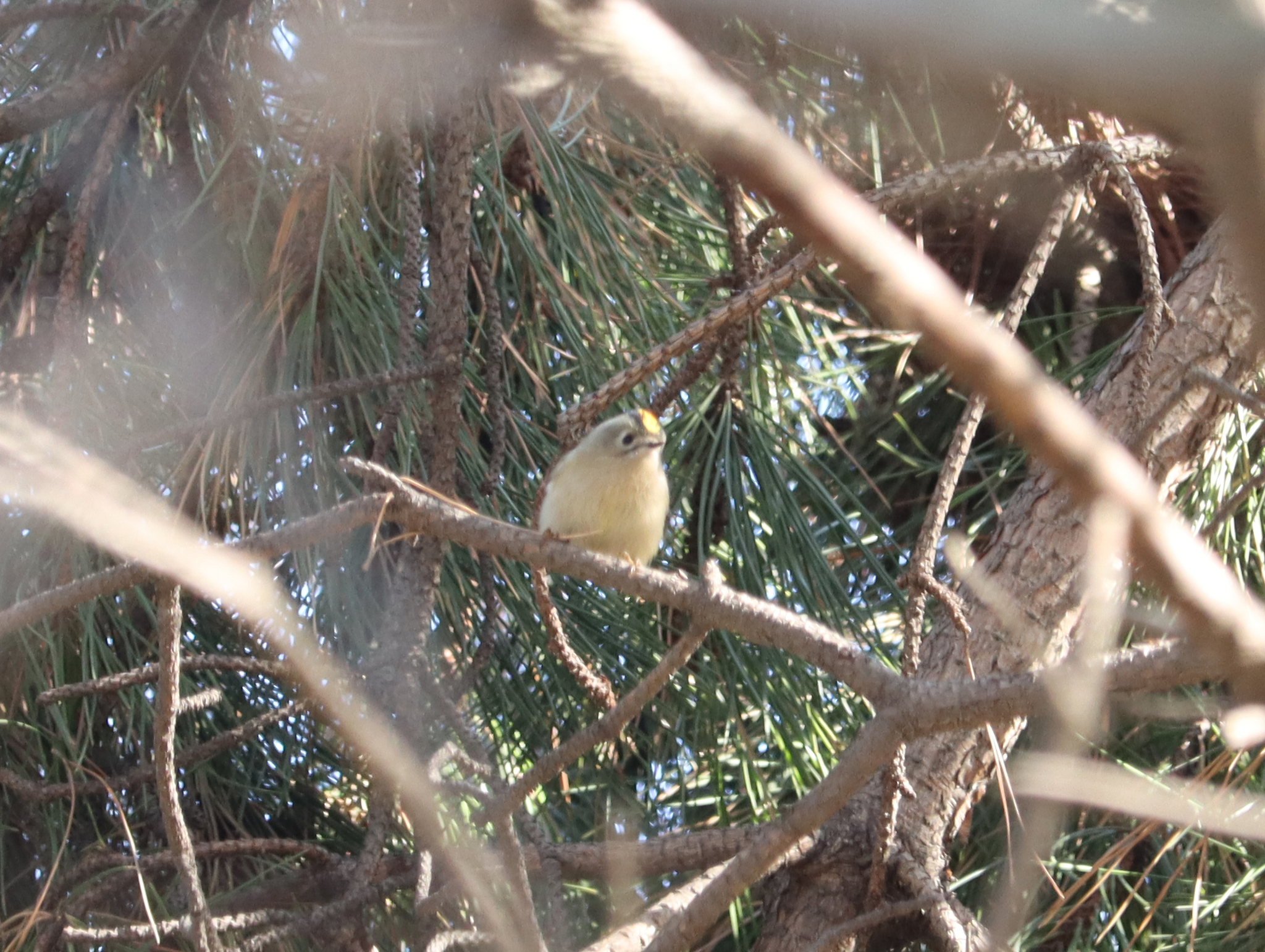
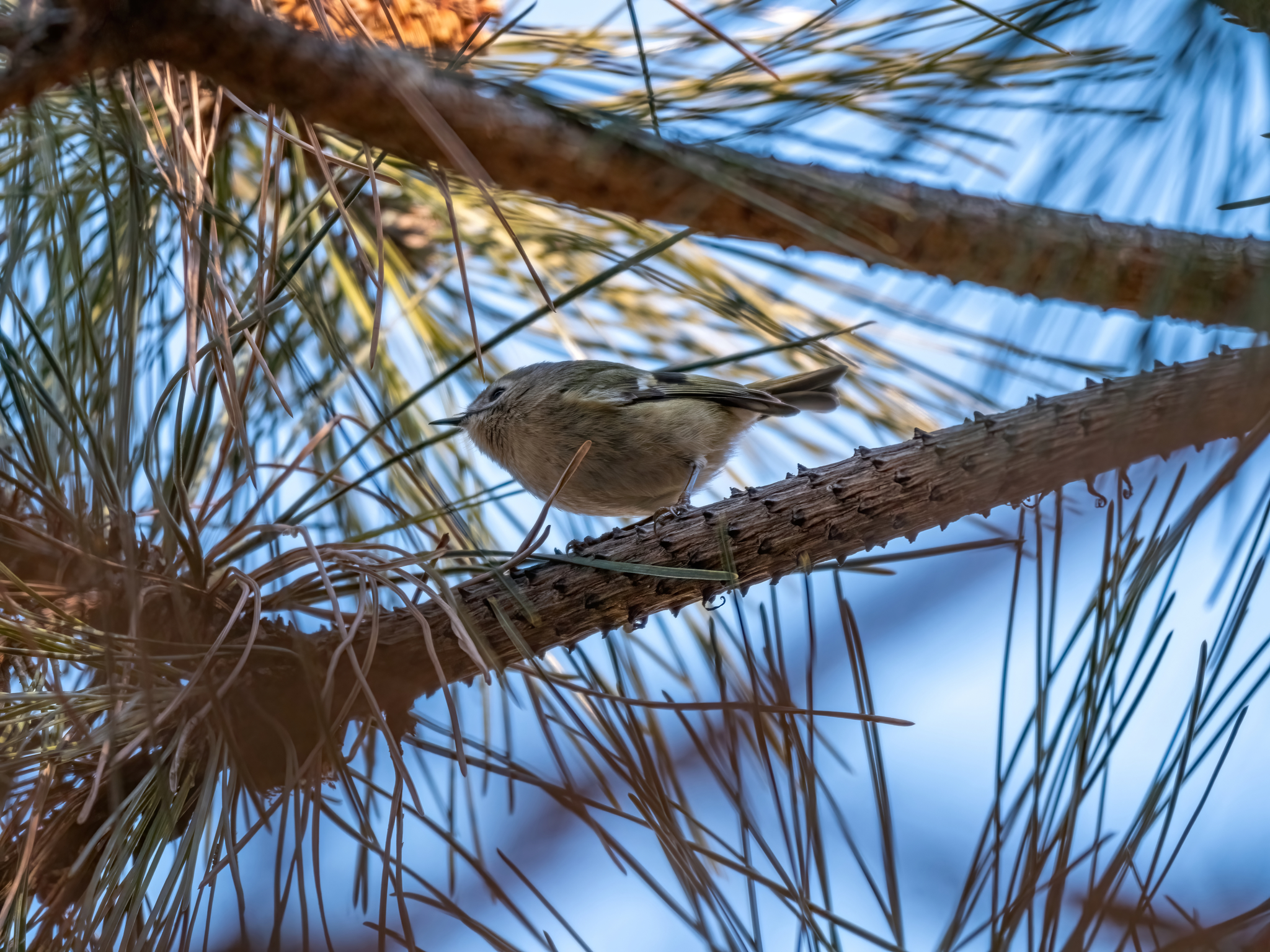
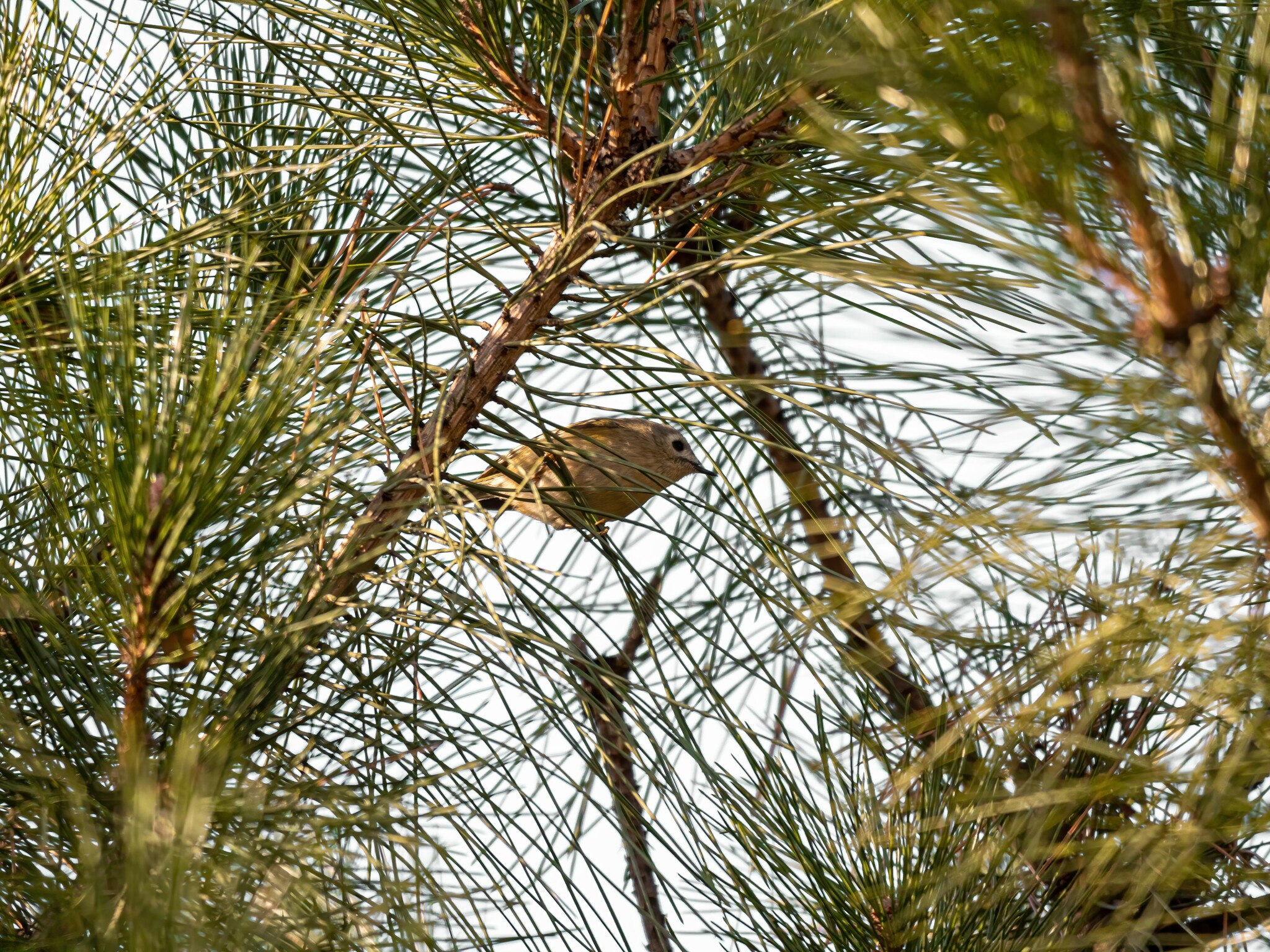
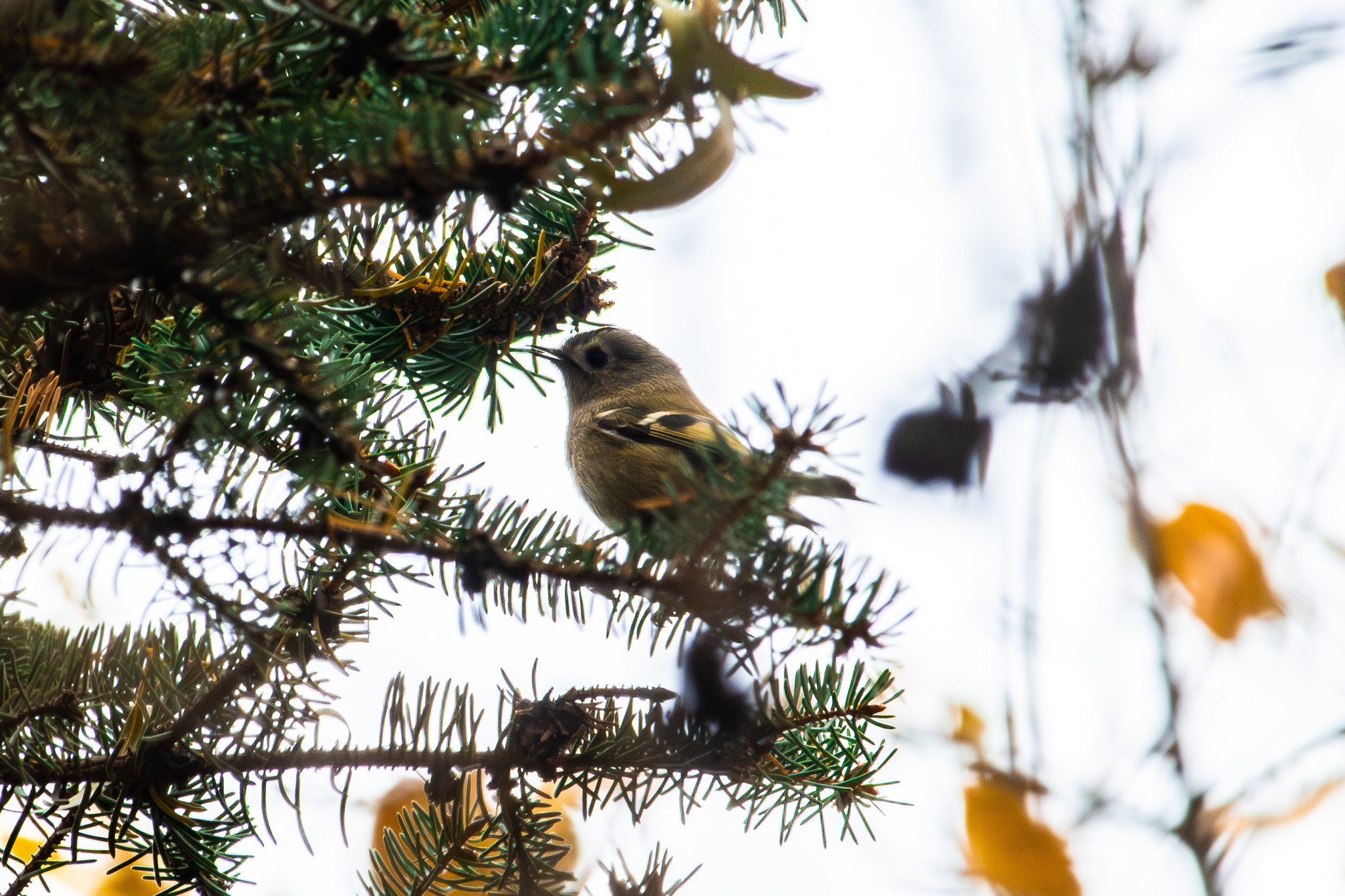
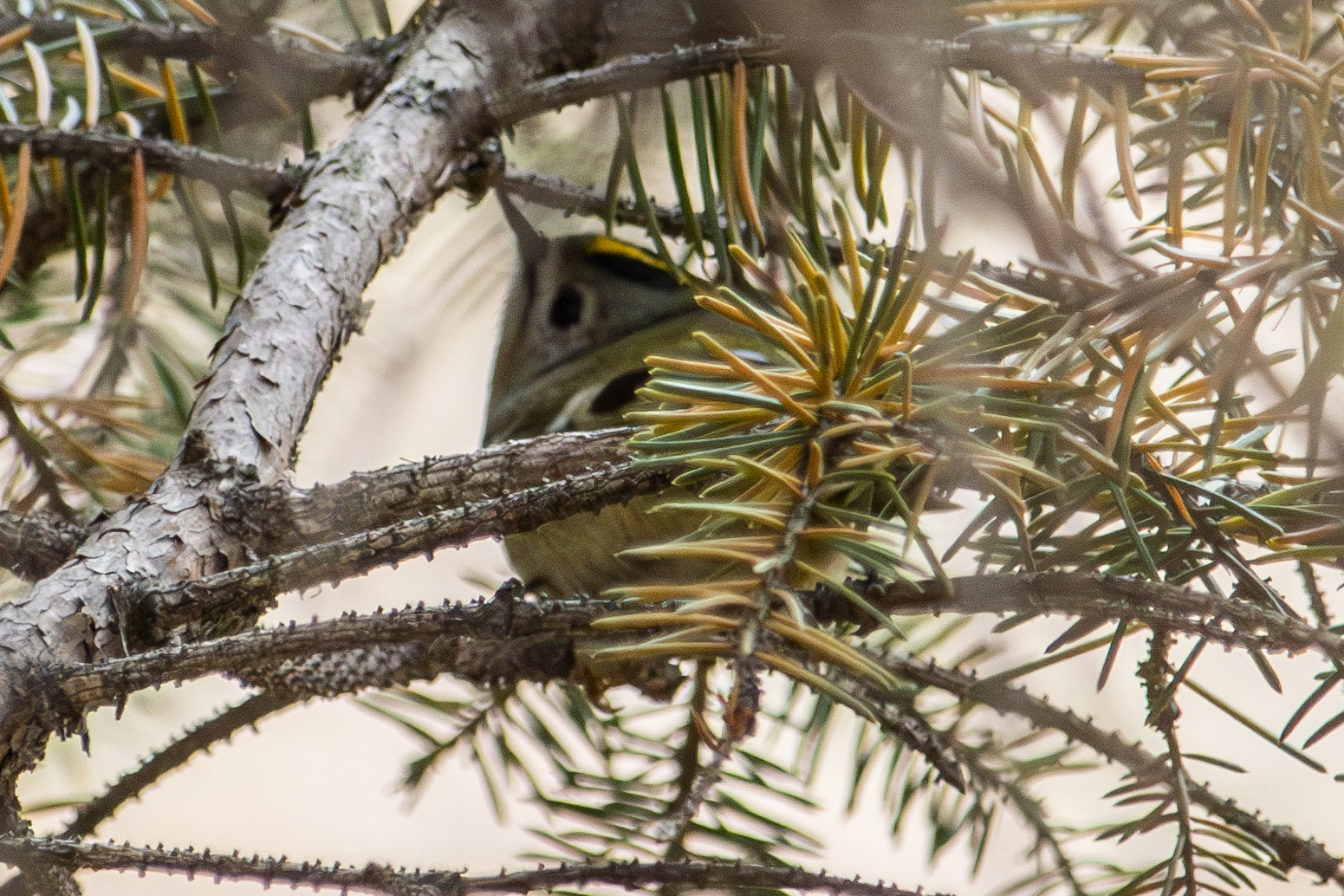
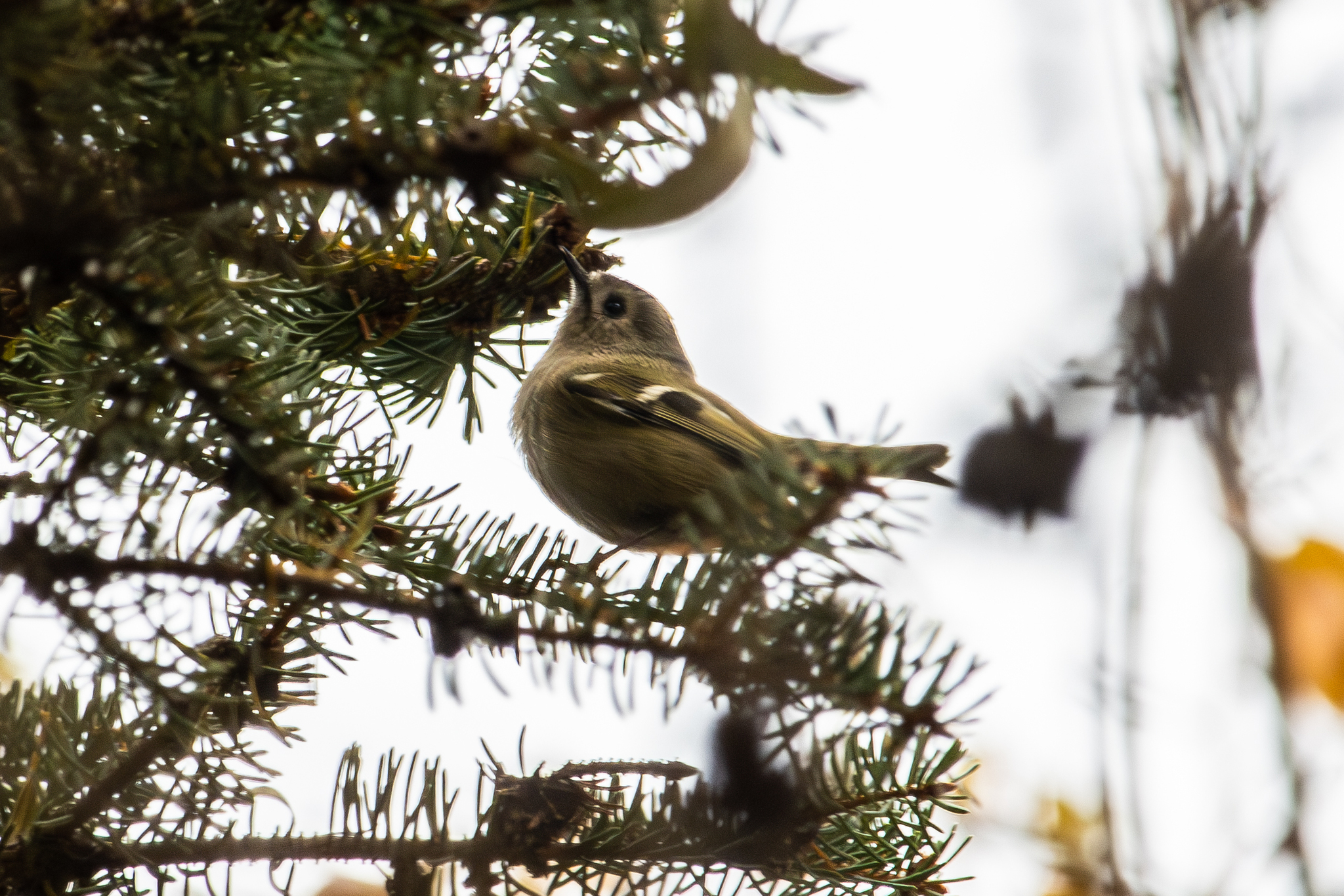
The goldcrest measures just 8.5–9.5 cm in length, making it Europe's smallest bird, with a wingspan of 13.5–15.5 cm and weighing a mere 4.5–7.0 g. Its plumage is olive-green above and buff-white below, with two distinctive white wing bars. The plain face features conspicuous black irises that contrast sharply with the head. The crown has black sides and a narrow black front, with a bright crest that is orange-centered in the male and entirely yellow in the female. When displayed during breeding, the crest becomes conspicuously raised. The species has a small, thin black bill and dark flesh-brown legs. Juveniles resemble adults but have duller upperparts and lack the coloured crown entirely. The flight is characterized by whirring wingbeats with sudden changes of direction, while feeding flights involve a mix of dashing, fluttering, and hovering.
Identification
In good views, the goldcrest is unmistakable due to its tiny size and distinctive head pattern with the coloured crest. However, poor views may lead to confusion with the common firecrest, which shares much of its European range. The firecrest is distinguished by its bright white supercilium and black eye stripe, a face pattern that even juveniles usually show. The yellow-browed warbler is separated by its yellowish supercilium and pale crown stripe. The ruby-crowned kinglet, a rare American vagrant, has a plain face like the goldcrest but males show a red crest without yellow or a black border. Female and juvenile ruby-crowns lack the red patch but are larger with an obvious whitish eyering and yellowish wing bars, unlike the crestless juvenile goldcrest.
Distribution & Habitat
The goldcrest breeds across most of the Palearctic, from Macaronesia through Europe to Japan, inhabiting mature coniferous woodlands up to 3,000 m elevation. It favors spruce, larch, Scots pine, silver fir, and mountain pine, and readily uses introduced conifers such as Douglas fir. Breeding densities can reach 591 pairs per square kilometer in Norway spruce plantations. Northern populations from Fennoscandia and Russia migrate southward between late August and November, with birds capable of traveling 250–800 km daily. The species has bred in Iceland since 1999 and occasionally in the Faroes. Vagrants have occurred in Jordan and Morocco. It is common in temperate and boreal latitudes of Europe, with more scattered populations further east through Siberia to Sakhalin, Japan, the Tian Shan, and Himalayas.
Behavior & Ecology
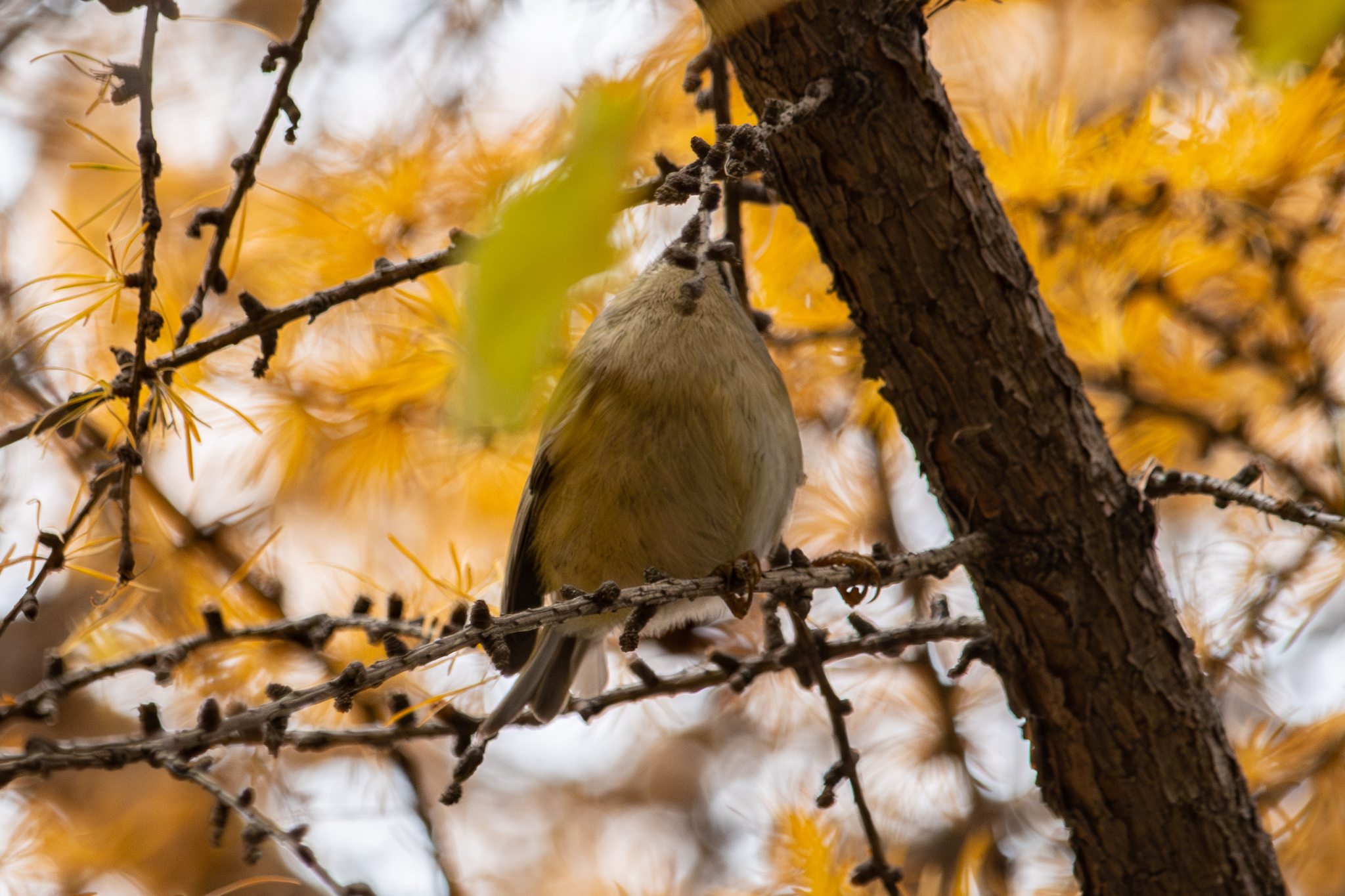
The goldcrest is insectivorous, feeding almost exclusively on small arthropods including springtails, aphids, spiders, caterpillars, bugs, and flies. It forages actively on foliage, frequently on undersides of branches and leaves, and catches flying insects while hovering. This species is monogamous, with the male singing while foraging and performing a display that involves bowing and raising the crest. The nest is a three-layered cup built from moss, twigs, cobwebs, and lichen, lined with feathers and hair. Clutches contain 6–13 eggs, incubated by the female for 16–19 days, with fledging occurring 17–22 days later. Second broods are common. Outside breeding season, small groups maintain exclusive winter feeding territories and join mixed flocks of tits and warblers. During cold nights, birds huddle together in dense foliage or snow holes to conserve heat.
Conservation
The goldcrest is classified as Least Concern on the IUCN Red List, with an estimated population of 80–200 million individuals across a vast 13.2 million km² range. Populations expanded northward during the 20th century as conifer plantations spread. Numbers are currently stable, though harsh winters can cause temporary but severe declines. In Finland, winter survival rates of just 10% have been recorded after particularly cold spells. The species benefits from conifer plantation expansion but suffers heavy mortality during severe winters due to its small size and high metabolic demands. Predation by Eurasian sparrowhawks, merlins, and owls, along with parasites such as the louse Philopterus reguli and various feather mites, present ongoing natural pressures.
Culture
European folklore describes a contest among birds to determine who could fly highest, with the title of king awarded to the victor. According to the legend recorded by Aristotle and Pliny, an eagle initially led but tired, revealing a small bird that had hidden beneath its tail feathers and flew higher to claim the title. This tale gave rise to the goldcrest being called the 'king of the birds.' The species' fiery crown made it a likely original bearer of such royal associations, though the title was later transferred to the wren due to their similar tiny size. In England, the bird was historically called the 'woodcock pilot' because migrating goldcrests arrived a few days before Eurasian woodcocks. Suffolk fishermen knew them as 'herring spink' or 'tot o'er seas' because exhausted migrants often landed on herring boat rigging in the North Sea. The species inspired Charles Tennyson Turner's 1868 poem 'The Gold-crested Wren.'
Source: Wikipedia · CC BY-SA 3.0
Taxonomy
- Order
- Passeriformes
- Family
- Regulidae
- Genus
- Regulus
- eBird Code
- goldcr1
Subspecies (14)
-
Regulus regulus azoricus
São Miguel Island (Azores)
-
Regulus regulus buturlini
breeds Crimea, Caucasus, and Azerbaijan; winters to northern Iran
-
Regulus regulus coatsi
breeds western Siberia to Altai Mountains; winters to southern Nan Shan Mountains
-
Regulus regulus ellenthalerae
western Canary Islands (La Palma and El Hierro)
-
Regulus regulus himalayensis
Himalayas of Afghanistan to Pakistan and Nepal
-
Regulus regulus hyrcanus
eastern Türkiye (Elburz Mountains) to northern Iran (southern Caspian District)
-
Regulus regulus inermis
western Azores (Flores, Faial, Pico, São Jorge, and Terciera)
-
Regulus regulus japonensis
mountains of Manchuria to northern and eastern China, Korea, and Japan
-
Regulus regulus regulus
breeds Europe to Türkiye and western Siberia; winters to Mediterranean
-
Regulus regulus sanctaemariae
Santa Maria Island (Azores)
-
Regulus regulus sikkimensis
Himalayas of Nepal to southeastern Tibet and western China
-
Regulus regulus teneriffae
west-central Canary Islands (La Gomera, Tenerife)
-
Regulus regulus tristis
breeds mountains of central Asia; winters to Transcaspia and western Iran
-
Regulus regulus yunnanensis
mountains of western China (southern Gansu and Shaanxi to Sichuan and Yunnan)
Data Sources
Species description from Wikipedia, licensed under CC BY-SA 3.0.
Bird images and sounds sourced from GBIF, contributed by citizen scientists worldwide under Creative Commons licenses.
Taxonomy data from AviList 2025.